杭州汽车西站公交枢纽站 / 浙江大学建筑设计研究院
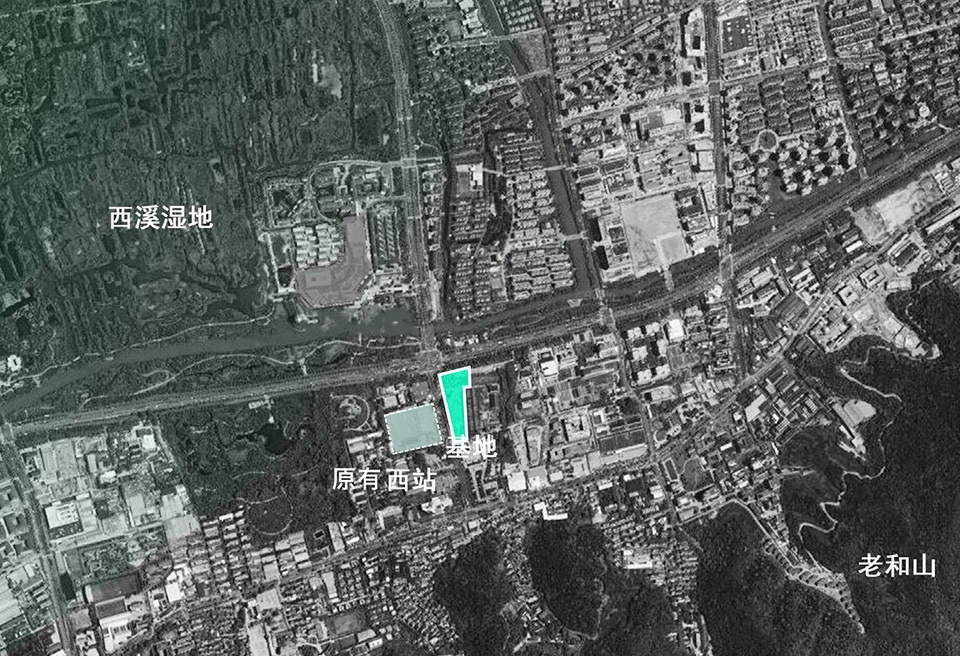
沿着杭城东西交通动脉天目山路,西溪湿地与老和山的葱茏绿意逐渐取代人工打造的天际线。杭州汽车西站公交枢纽站便位于两种景致过渡的交叠地带。设计试图通过楔形区块延续绵延的自然景观,同时延续场地西侧的杭州汽车西站和地铁站,为过往的旅客提供换乘便利。
Along Tianmushan Road, the east-west transportation artery of Hangzhou, the lush greenery of Xixi Wetland and Laohe Mountain gradually replaces the artificially created skyline. The Hangzhou West Bus Station Bus Hub is located in an overlapping area where two different scenic spots transition. The design attempts to extend the natural landscape through wedge-shaped blocks, while also extending the Hangzhou West Bus Station and subway station on the west side of the site, providing convenient transfer for passing passengers.
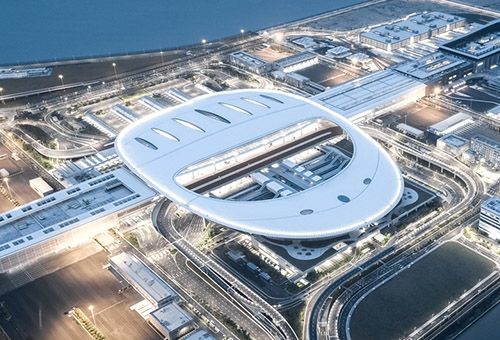
▼鸟瞰,aerial view
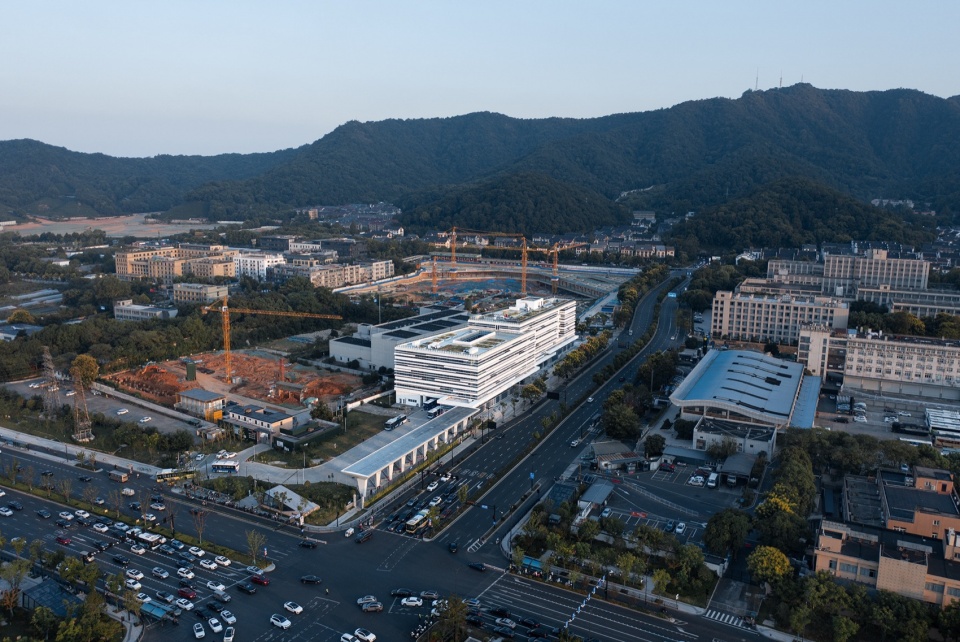
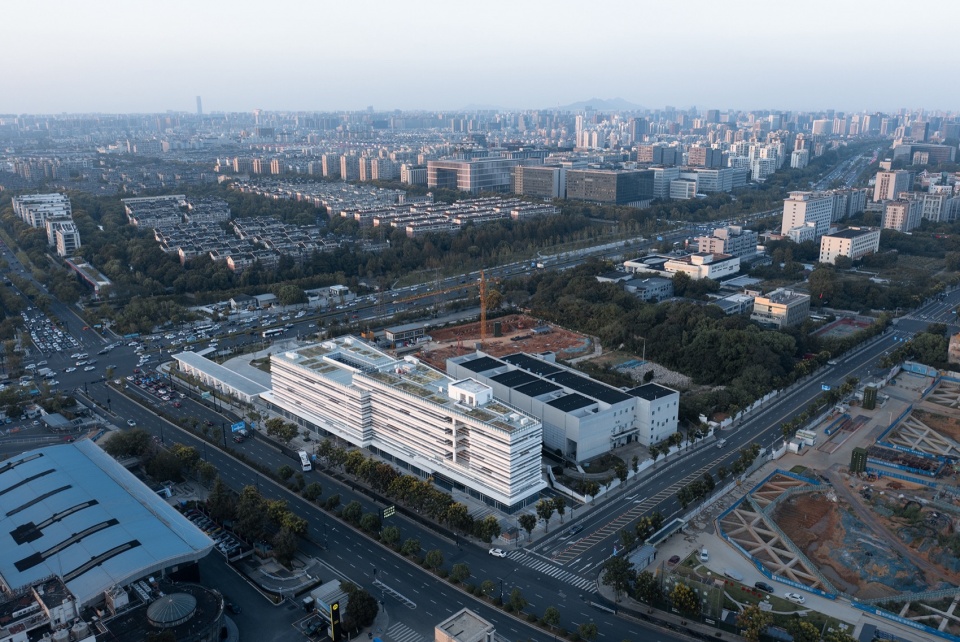
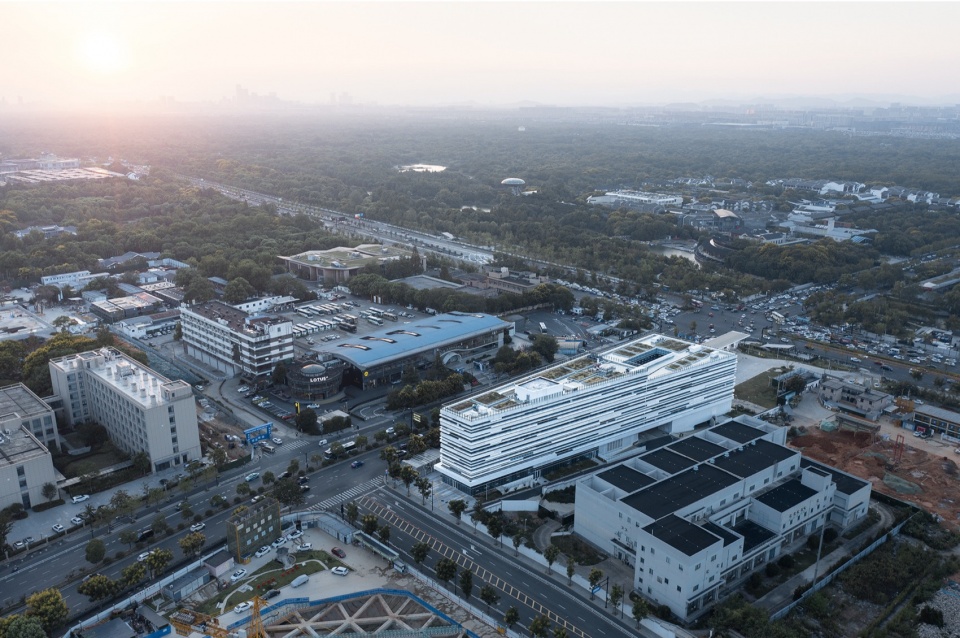
杭州汽车西站公交枢纽站总建筑面积为25739.4 m2,可容纳公交线路7条,共设21个公交待发车位,主要功能包括公交枢纽站及公交调度管理,换乘中心。该设施提高了杭城西侧城市片区旅客的出行便捷性和舒适性,创造了一个清晰而又令人愉悦的交通换乘流线。伞状的候车岛顶棚为枢纽站赋予轻盈的印象,成为联系城市与自然的纽带,实现形象与功能的一体化设计。
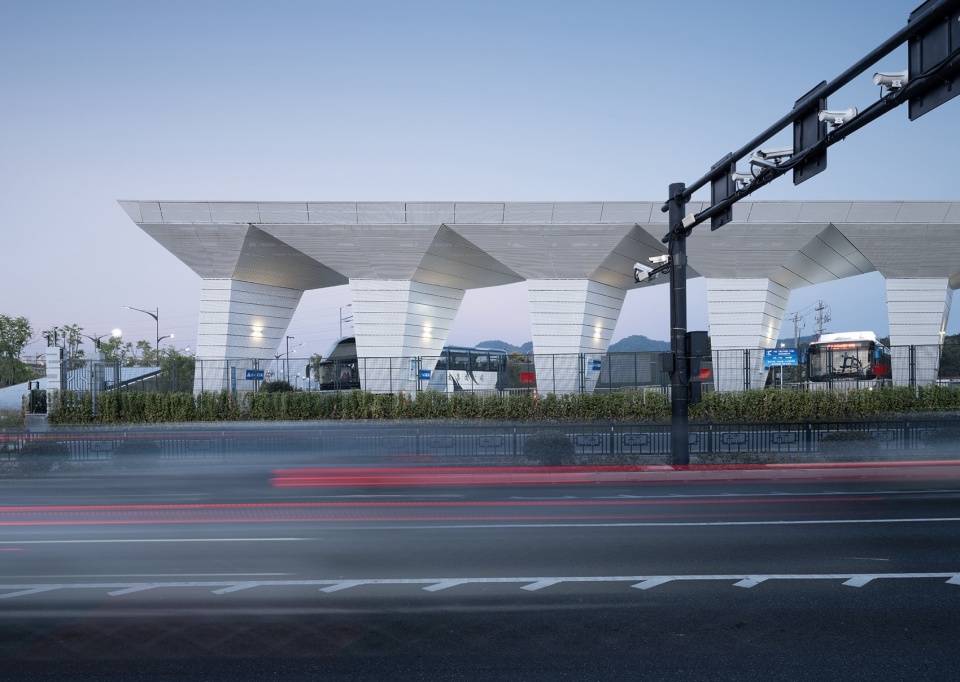
The total construction area of Hangzhou West Bus Station Bus Hub Station is 25739.4 m2, which can accommodate 7 bus routes and has a total of 21 bus waiting spaces. Its main functions include bus hub station, bus dispatch management, and transfer center. This facility has improved the convenience and comfort of travel for passengers in the western urban area of Hangzhou, creating a clear and pleasant transportation transfer flow. The umbrella shaped roof of the waiting island gives a light impression to the hub station, becoming a link between the city and nature, achieving an integrated design of image and function.
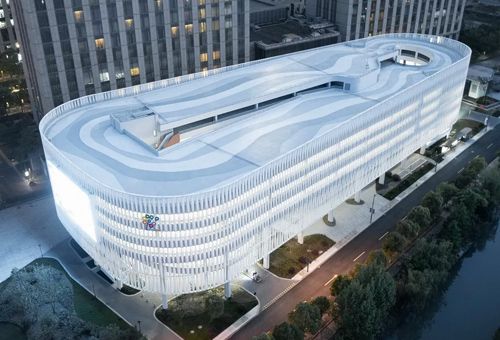
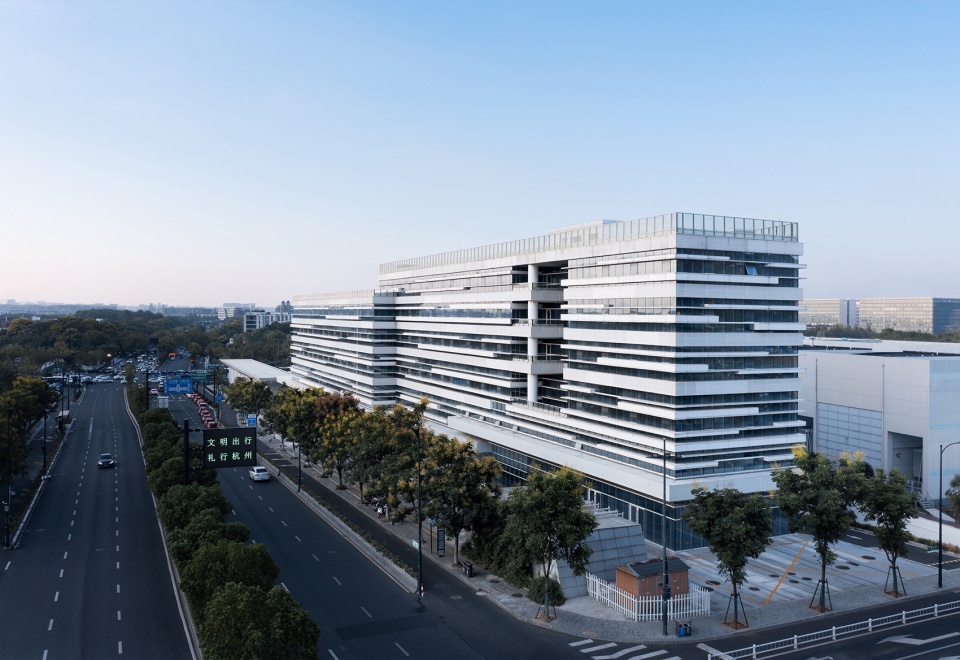
▼建筑外观,building exterior
▼伞状的候车岛顶棚,umbrella shaped roof of the waiting island
极简高效流线efficient streamline
枢纽站主要定位为汽车西站片区公共交通配套设施,从功能上承载了地铁、大巴、公交等换乘功能。场地视野开阔,遥望西溪湿地与老和山,是杭州城市西大门的重要形象。场地限制条件较多,隧道、变电缆沟、过街地道及地铁出入口都造成了一定影响。因此解决限制要素,满足结构功能与城市环境协调,梳理出极简高效的流线,营造一个现代化的换乘枢纽,是设计的主要目标。
The hub station is mainly positioned as a public transportation supporting facility in the West Bus Station area, which functionally carries transfer functions such as subway, bus, and public transportation. The site has a broad view, overlooking the Xixi Wetland and Laohe Mountain from afar, and is an important image of the west gate of Hangzhou city. There are many site restrictions, such as tunnels, cable trenches, underpasses, and subway entrances and exits, which have caused certain impacts. Therefore, the main goal of the design is to address the limiting factors, meet the coordination between structural functions and urban environment, streamline minimalist and efficient flow lines, and create a modern transfer hub.
▼建筑立面,building facade
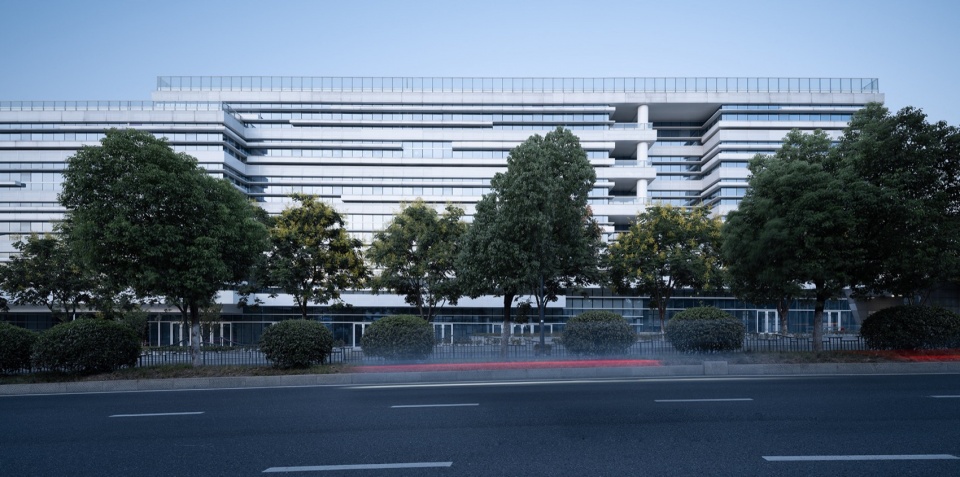
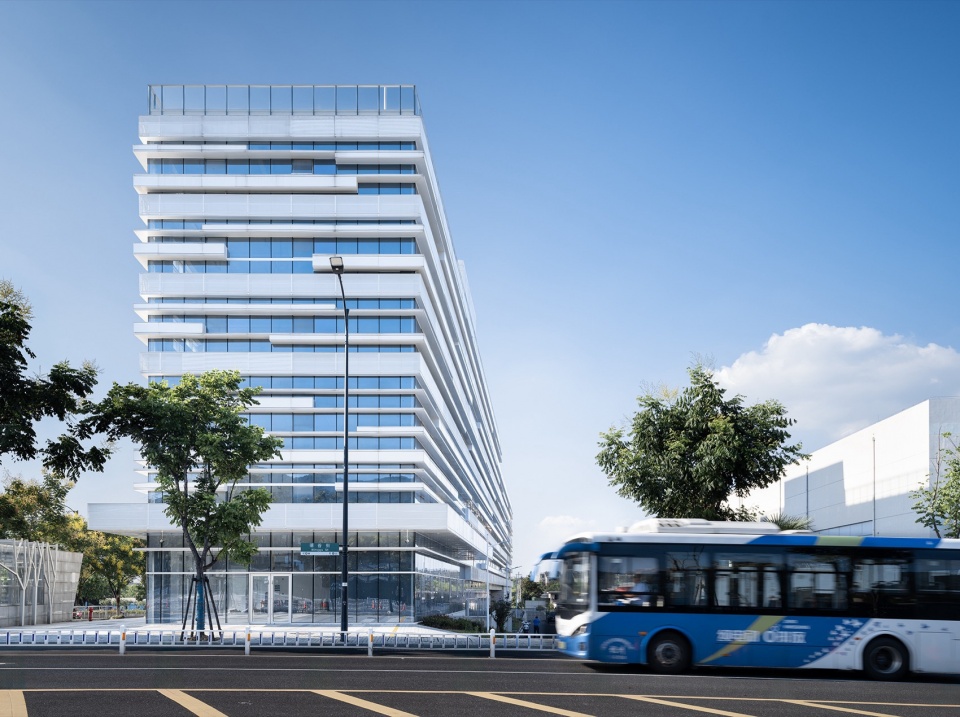
为了顺应项目狭长的场地特性,设计体量与原有汽车西站相近,再在实现建筑与汽车西站体量平衡的同时,维持道路纵向界面的和谐。在场地内部,设计对比候车岛式、集中式、斜列式多种模式,从中选出斜列式公交停车模式,平层换乘、线路清晰,完全人车分流。斜列式模式最大程度的减少公交流线、小汽车流线和旅客流线的相互干扰,可达性强,真正实现高效便捷的交通流线。
In order to adapt to the narrow and elongated site characteristics of the project, the design volume is similar to the original West Bus Station, and while achieving a balance between the building and the West Bus Station, the longitudinal interface of the road is maintained in harmony. Within the venue, various modes such as waiting island, centralized, and diagonal bus parking are designed and compared, and the diagonal bus parking mode is selected from them, with level transfer, clear routes, and complete separation of pedestrians and vehicles. The diagonal mode minimizes the interference between bus, car, and passenger flow lines to the greatest extent possible, with strong accessibility, truly achieving efficient and convenient traffic flow lines.
▼斜列式公交停车模式,diagonal bus parking mode
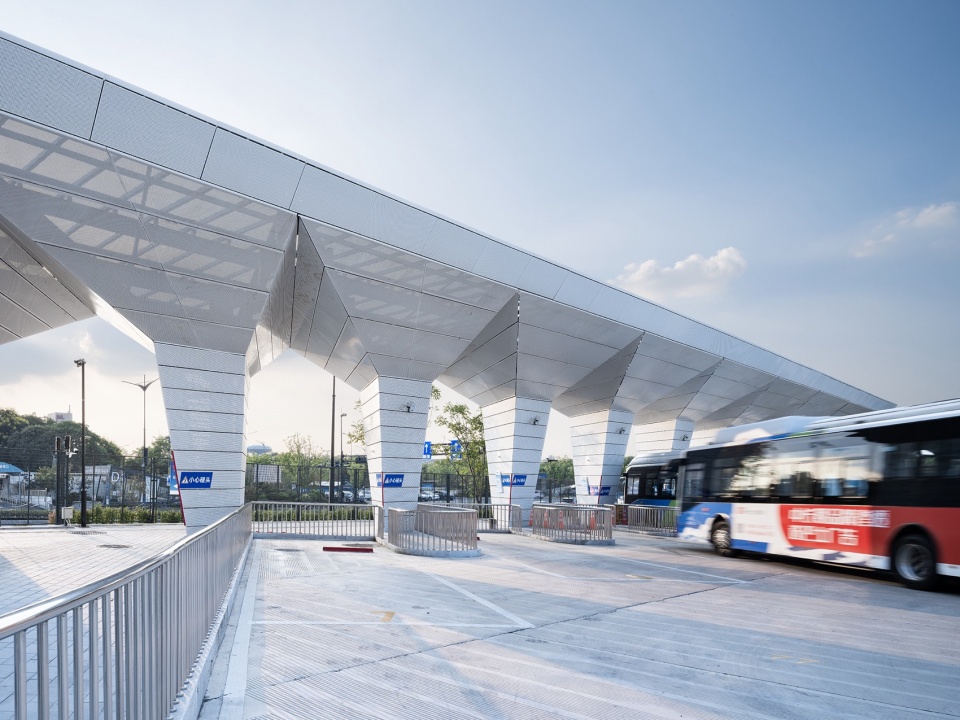
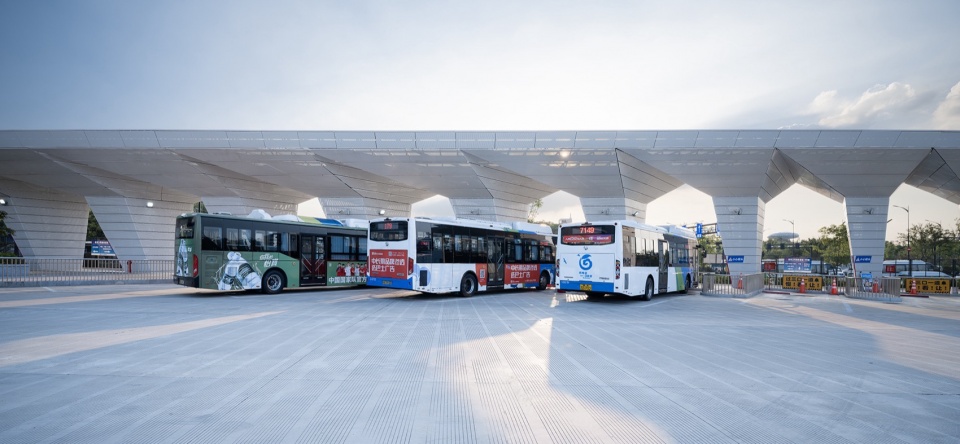
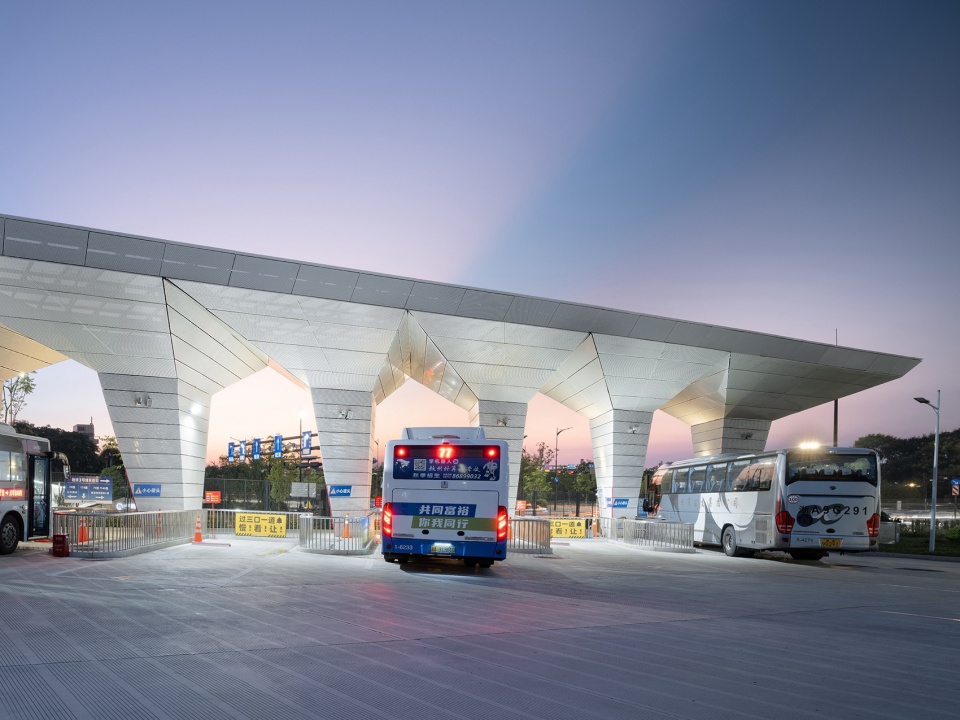
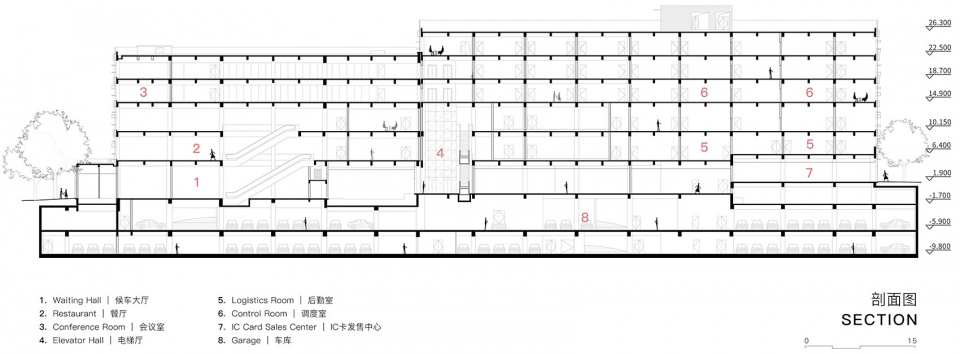
景观设计遵循应地制宜,顺势而为的利用策略,为交通空间提供更多的使用余量。配套调度用房入口处通过台阶与坡道的结合设计,化解了场地高差。顺应西溪湿地到老和山由低到高的景观趋势,主体建筑亦为北低南高,全面享受景观,丰富城市天际线。同时利用场地的高差设置地下夹层作为非机动车库,建筑出入口顺应地形标高错层布置。在场地北侧结合公交出口布置天目山沿路30米绿化带的完整性,缓解公交场站对城市街道的干扰和影响。环绕着旅客上下休憩的边沿,布置多样化的绿化景观,做到地形利用最优化,营造一条舒适休闲的乘车路径。
Landscape design follows a strategy of adapting to local conditions and utilizing resources in line with the trend, providing more utilization space for transportation. The entrance of the supporting dispatch room is designed with a combination of steps and ramps to resolve the height difference of the site. Following the landscape trend from Xixi Wetland to Laohe Mountain from low to high, the main building is also low in the north and high in the south, fully enjoying the landscape and enriching the urban skyline. At the same time, utilizing the height difference of the site, an underground mezzanine is set up as a non motorized garage, and the building entrances and exits are arranged in staggered layers according to the terrain elevation. On the north side of the site, a 30 meter green belt along Tianmushan Road will be arranged in conjunction with the bus exit to enhance its integrity and alleviate the interference and impact of the bus station on the city streets. Surrounding the edge where passengers rest up and down, a variety of green landscapes are arranged to achieve optimal terrain utilization and create a comfortable and leisurely riding path.
▼城市街道景观,urban street landscape
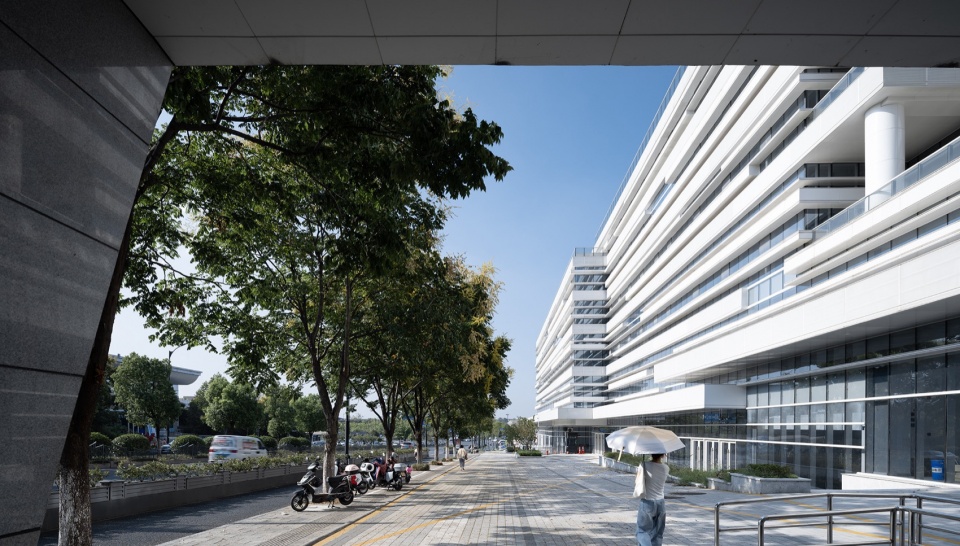
一体化的换乘体验Integrated experience
设计极度关注枢纽站的布局与细节,希望建立一个清晰、简洁的汽车站换乘体系。建筑利用底层局部架空为公交车通行提供条件,并设置司机休息、调度、候车等功能。公交停泊功能与后勤调度功能相互独立又融为整体,既解决了用地紧张的限制,又能做到最优化的人车可达性,实现建筑与交通的一体化。
The design pays extreme attention to the layout and details of the hub station, hoping to establish a clear and concise bus station transfer system. The building utilizes a partially elevated ground floor to provide conditions for the passage of buses, and sets up functions such as driver rest, scheduling, and waiting. The bus parking function and logistics scheduling function are independent of each other and integrated as a whole, which not only solves the limitation of land shortage, but also achieves optimal accessibility for people and vehicles, realizing the integration of architecture and transportation.
▼从街道望向建筑,street view of the building
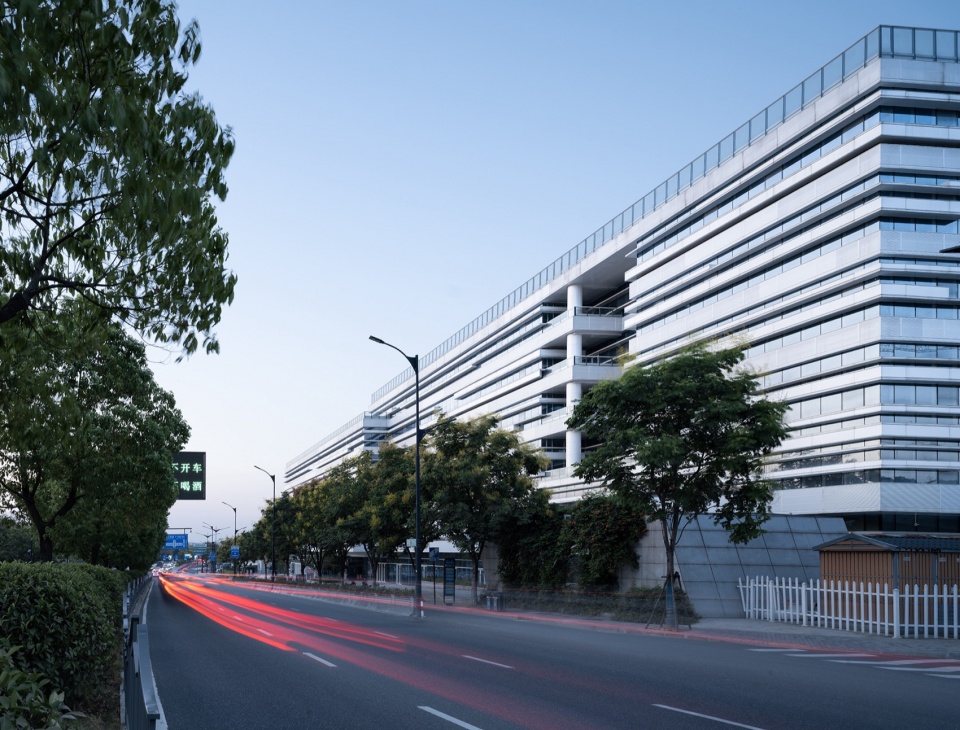
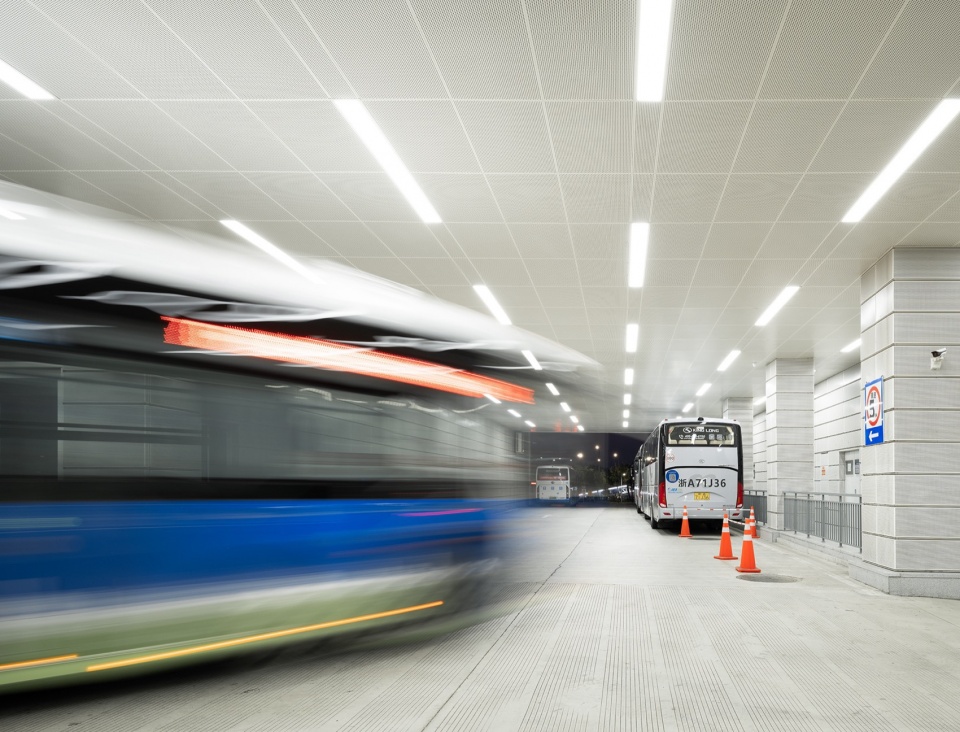
为实现一体化的换乘体验,枢纽站依据功能可分为三部分区域,分别为公交换乘中心,候车大厅和配套调度。换乘中心位于场地北侧,充分考虑公交与旅客的人车分流,以及停车发车的效率。靠西侧道路沿线设置候车岛,满足多条线路的首末站停靠,每条线各占一岛,排列清晰,与旅客入口直接联系,换乘便捷。
To achieve an integrated transfer experience, the hub station can be divided into three functional areas, namely the bus transfer center, waiting hall, and supporting dispatch. The transfer center is located on the north side of the site, fully considering the separation of buses and passengers, as well as the efficiency of parking and departure. Set up waiting islands along the west side of the road to meet the needs of stopping at the first and last stations of multiple lines. Each line occupies an island, arranged clearly, and directly connected to the passenger entrance, making transfer convenient.
▼换乘中心内部,transfer center interior
▼候车大厅,The waiting hall
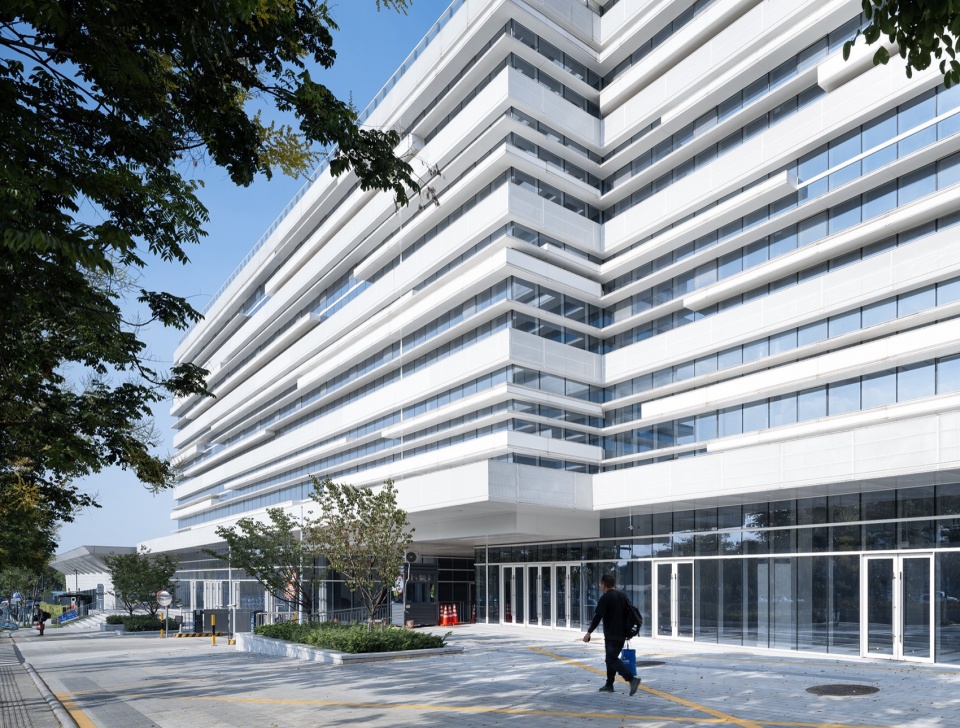
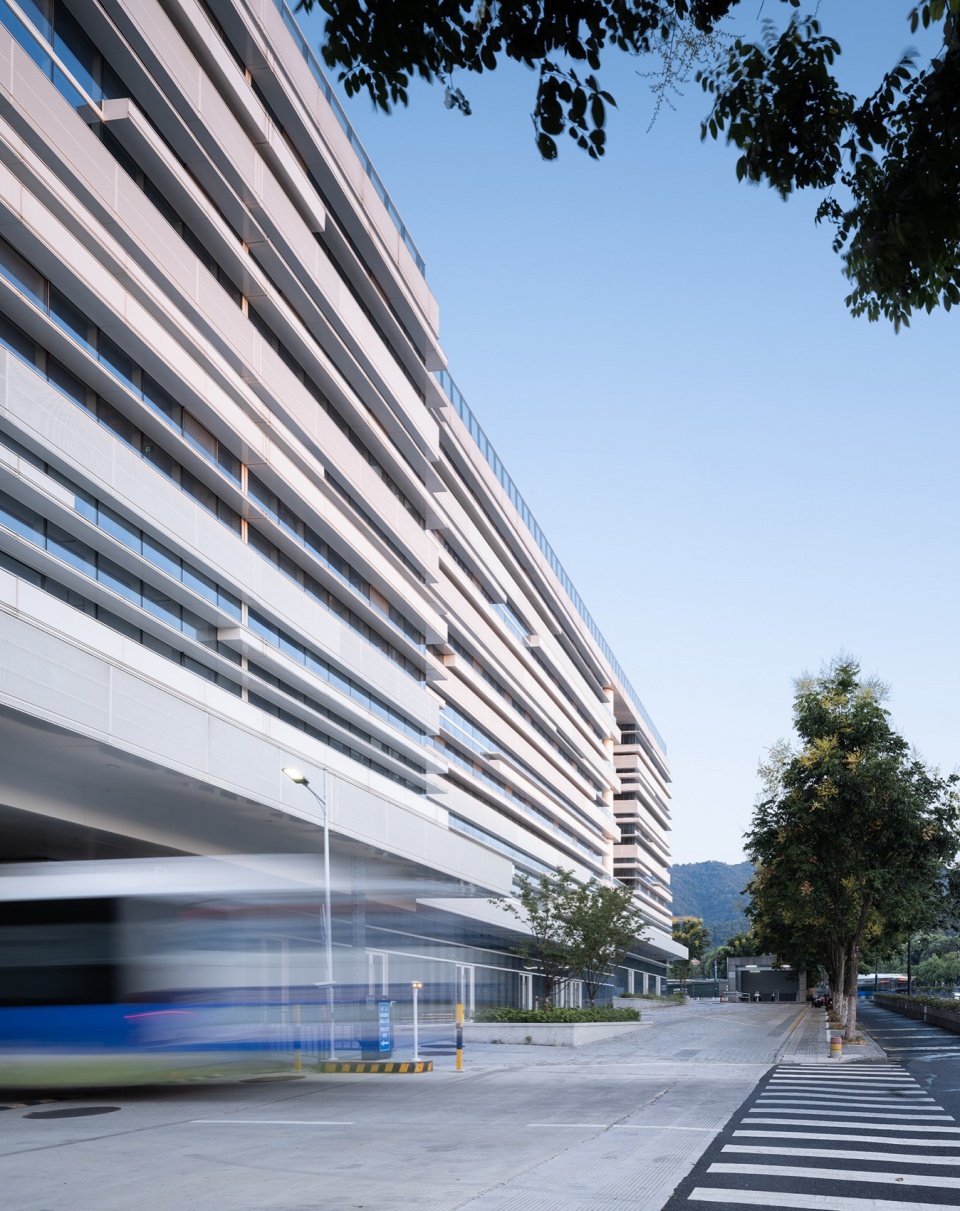
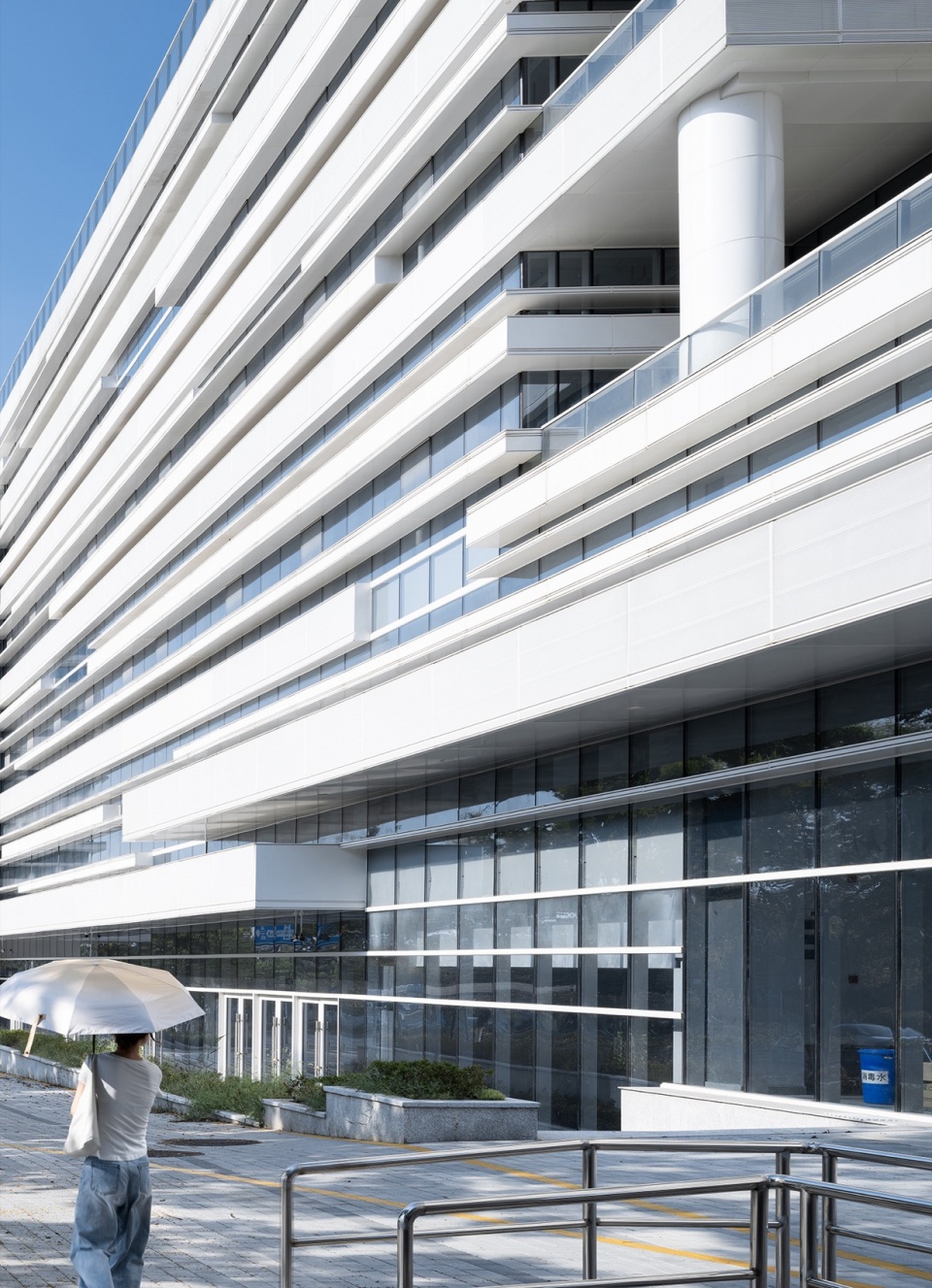
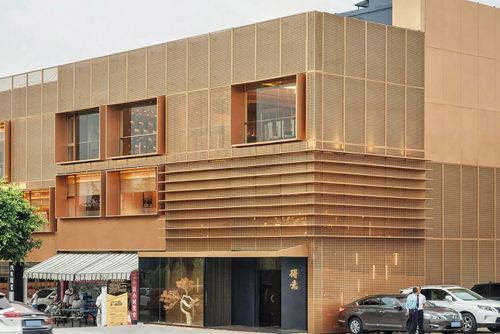
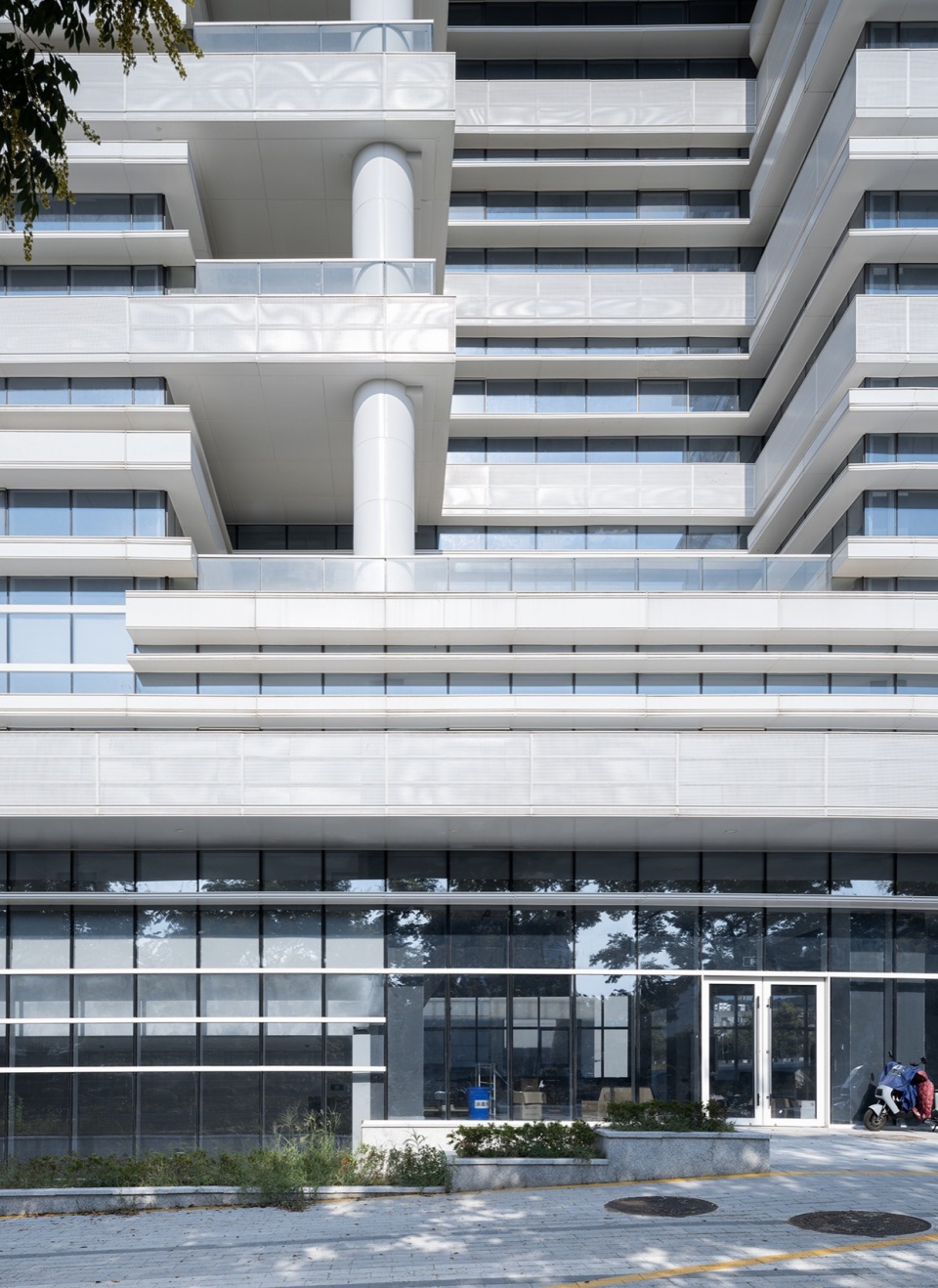
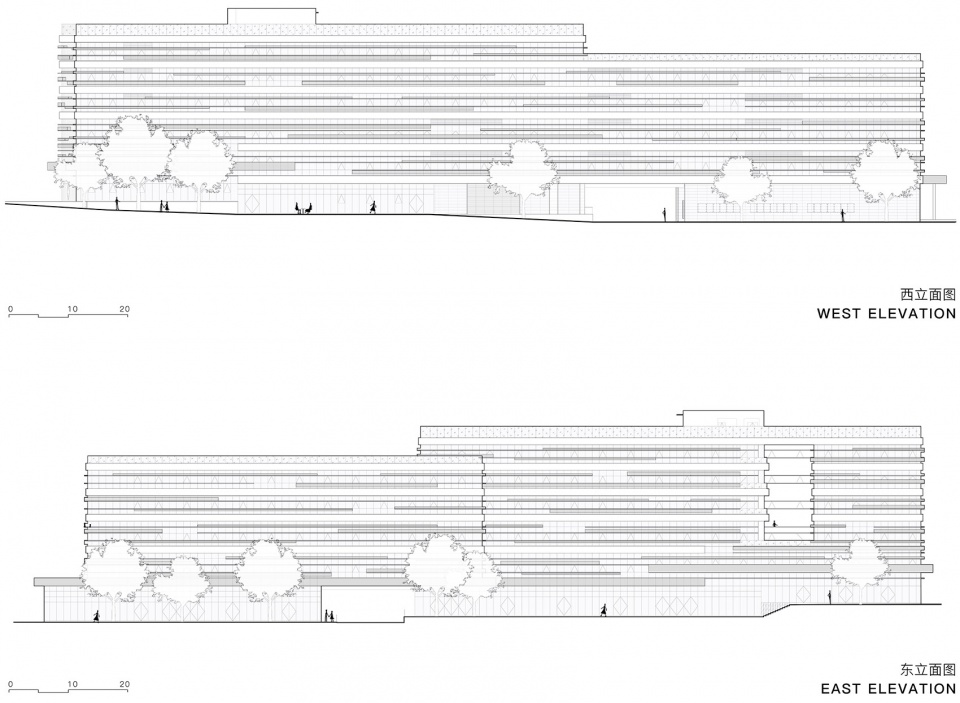
建筑形体较为狭长,为了削弱强烈的体量感,设计将裙房和高层体块进行咬合穿插,并辅以虚实对比的立面。虚体部分则采用玻璃幕墙设计,整体大气。实体部分采用白色金属穿孔板及落地窗,创造出富有韵律的立面肌理,通透而不杂乱,并可有效阻挡西晒阳光。宽阔的候车岛罩棚覆盖了整个公共汽车站台和候车区域,旅客可以在遮风避雨的条件下上下车。罩棚采用钢框架,表层覆盖穿孔金属铝板,照明设备安装在表层。在视觉观感上,律动与立面与富有节奏感的伞状罩棚产生优雅地共鸣。
The architectural form is relatively narrow, and in order to weaken the strong sense of volume, the design interweaves the podium and high-rise blocks, supplemented by a facade that contrasts reality and virtuality. The virtual part adopts a glass curtain wall design, creating an overall atmosphere. The solid part adopts white metal perforated panels and french window to create rhythmic facade texture, which is transparent but not messy, and can effectively block the sun from the west. The wide waiting island canopy covers the entire bus platform and waiting area, allowing passengers to board and disembark under sheltered conditions. The canopy adopts a steel frame, covered with perforated metal aluminum plates on the surface, and the lighting equipment is installed on the surface. Visually, the rhythm and façade resonate elegantly with the rhythmic umbrella shaped canopy.
▼立面细部,facade detail
结语SUMMARY
我们希望由空间设计的手法,缓解换乘过程中匆忙带来的焦虑,以及候车时间给予的无趣与消极。杭州汽车西站公交枢纽站以极简的流线与一体化的换乘体验,将时间与空间最大化地归还于旅客,构建出一个清晰而又不失趣味的公共交通空间。不止于公共交通,它将成为城市与景观,人与人之间的标志性枢纽,等候更舒适,联结更高效,化为自然的过客。
We hope to alleviate the anxiety caused by rushing during the transfer process and the boredom and negativity caused by waiting time through spatial design techniques. The Hangzhou West Bus Station Bus Hub Station maximizes the return of time and space to passengers with its minimalist flow and integrated transfer experience, creating a clear and enjoyable public transportation space. Not just public transportation, it will become a landmark hub between cities and landscapes, between people, waiting more comfortably, connecting more efficiently, and turning into natural travelers.
▼区位,location
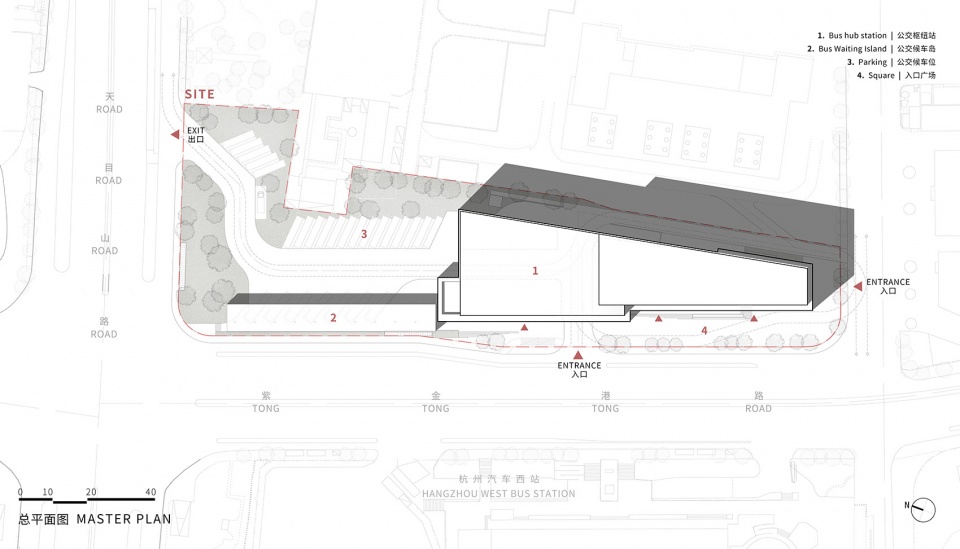
▼总平面图,master plan
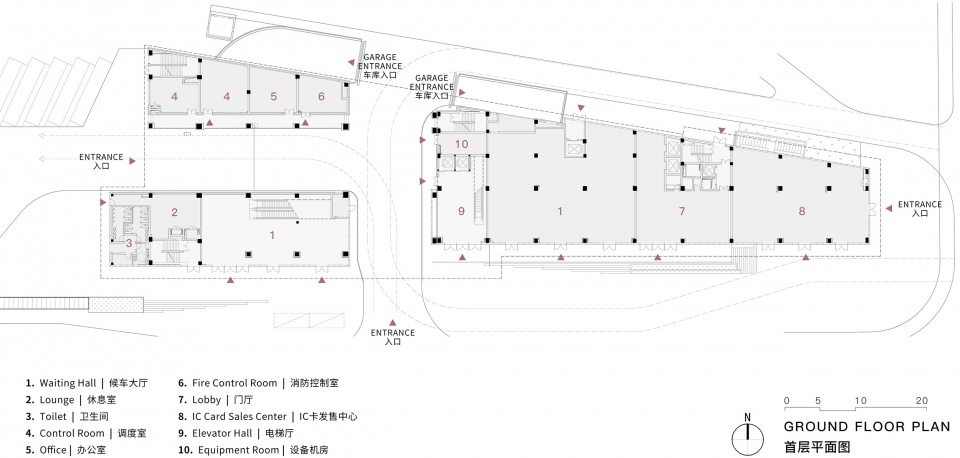
▼首层平面图,ground floor plan
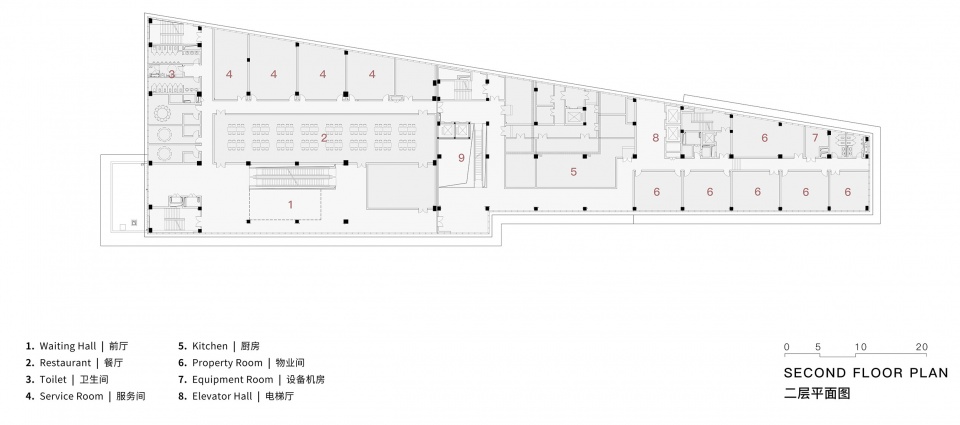
▼二层平面图,second floor plan
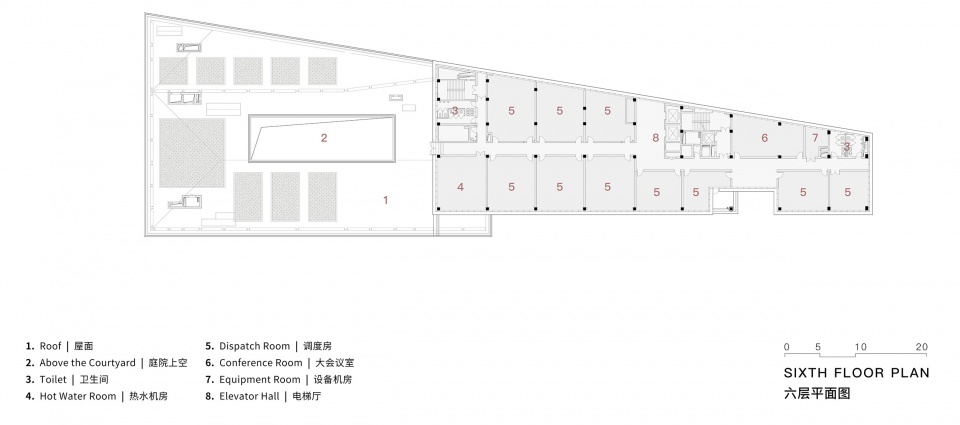
▼六层平面图,sixth floor plan
▼立面图, elevations
▼剖面图, section
Project name: Hangzhou West Station Bus Hub
Project type: Architecture
Design: The Architectural Design & Research Institute of Zhejiang University
Website: http://www.uad.com.cn/
Contact e-mail: uadg4media@163.com
Design year: 2015/03
Completion Year: 2024/09
Lead Architects: Qian Xidong
Collaborating Architect(s): Qian Xidong, Huang Kejie, Hu Pinfei, Yu Xuejing
Structural Engineer: Ding Ziwen, Dong Kai, Jin Tao
Drainage Design: Yi Jiasong, Shao Yuran
Heating and Ventilation Design: Pan Dahong, Yi Kai
Electrical Design: Wu Xuhui, Yi Hongyan
Intellectualized Design: Lin Minjun, Zhang Wubo
Curtain Design: Bai Qi’an, Jiang Hao, Ji Shaobo
Geotechnical Design: Liao Kewu
Landscape Designer: Zhang Xunhan, Xu Wei, Luo Yunxiang, Shao Weifeng, Chen Wen, Zhang Wuyang
Photography: Zhao Qiang
Project location: Hangzhou, Zhejiang
Gross built area: 25702.6 ㎡
Photo credit: Zhao Qiang
Clients:Hangzhou Public Transportion Group