Atlas足球俱乐部,墨西哥 / Sordo Madaleno Arquitectos
Sordo Madaleno事务所为墨西哥历史悠久的足球俱乐部——位于瓜达拉哈拉的阿特拉斯足球俱乐部(Atlas FC)设计了一座新基地。该项目被命名为“阿特拉斯学院”(Academia Atlas),服务于六块专业足球场地,配备俱乐部会所、运动科学应用设施及行政办公区域。项目的重要目标之一是为来自弱势背景的年轻球员提供住宿与训练资源。Sordo Madaleno与Atlas FC及Orlegi Sports合作,采用本地采购材料并结合传统建造工艺,将这片占地七公顷的场地改造成一个充满活力、年轻与健康氛围的校园式基地,通过足球——这个墨西哥最受欢迎的运动——连接人们。
Sordo Madaleno have designed a new home for one of Mexico’s most long-lived football teams Atlas FC based in Guadalajara. Called Academia Atlas, the building serves six professional football fields and includes clubhouses, applied sport science facilities and administrative offices. A key role of the project is to offer accommodation and resources to young players from less privileged backgrounds. Using locally-sourced materials and embracing traditional construction techniques, Sordo Madaleno worked with Atlas FC and Orlegi Sports to transform the seven-hectare site into a collegiate-style campus full of vibrant, young and healthy people connecting through the most popular sport of the country.
▼项目概览,overview of the project
▼项目鸟瞰,aerial view of the project
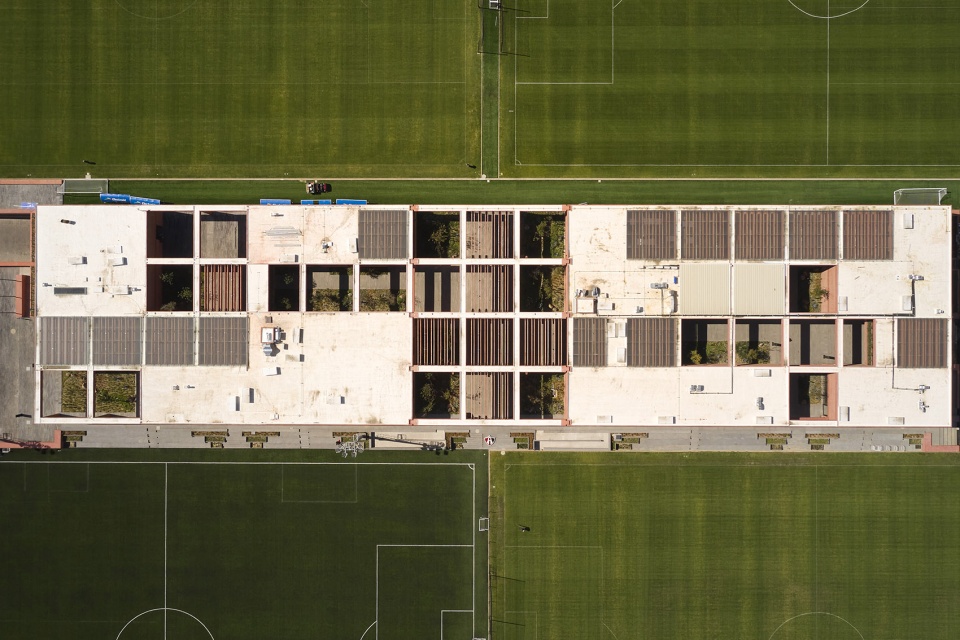
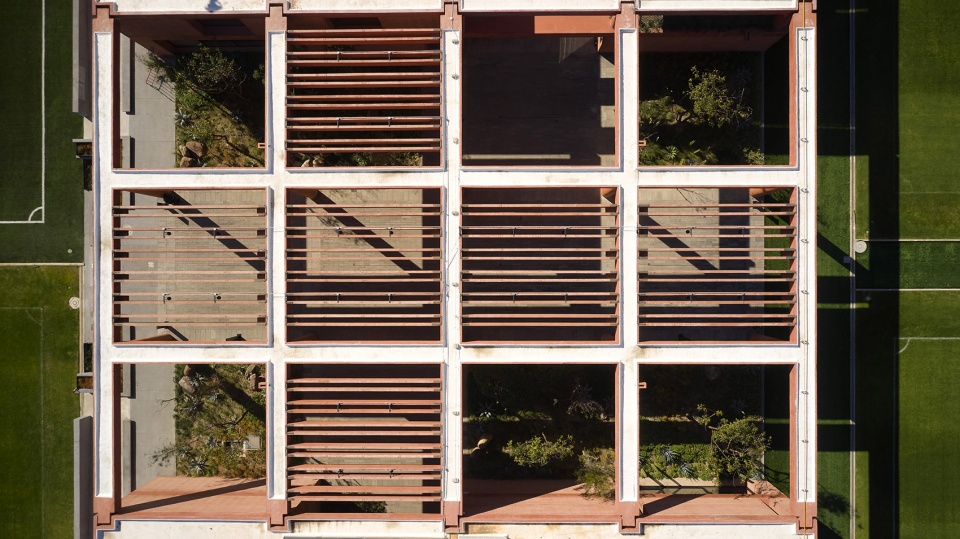
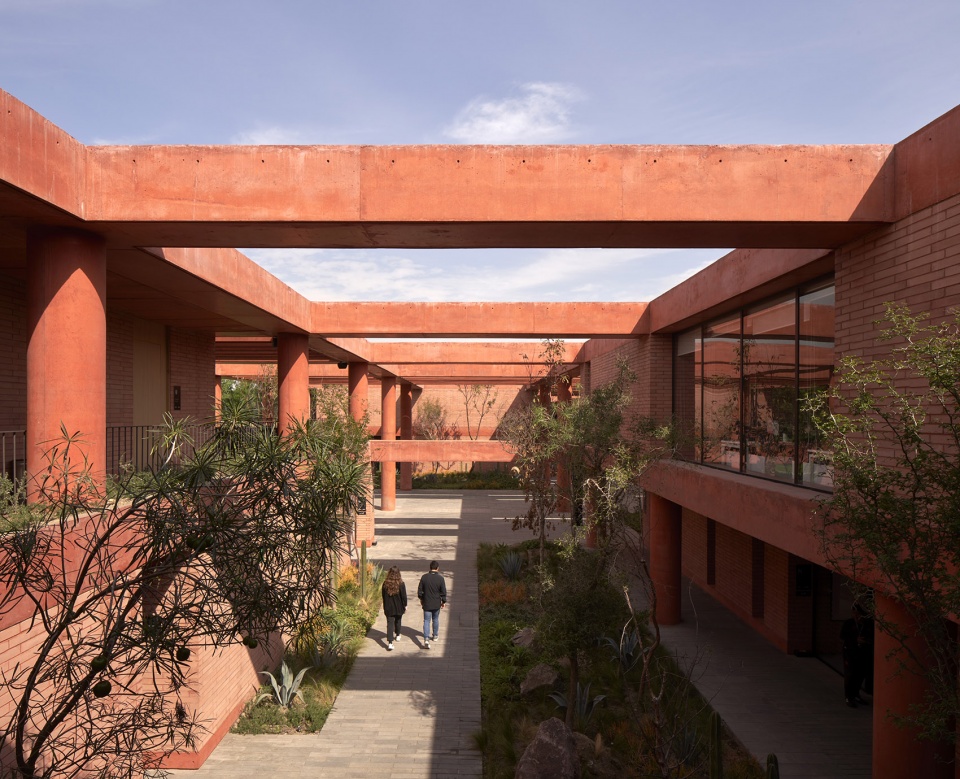
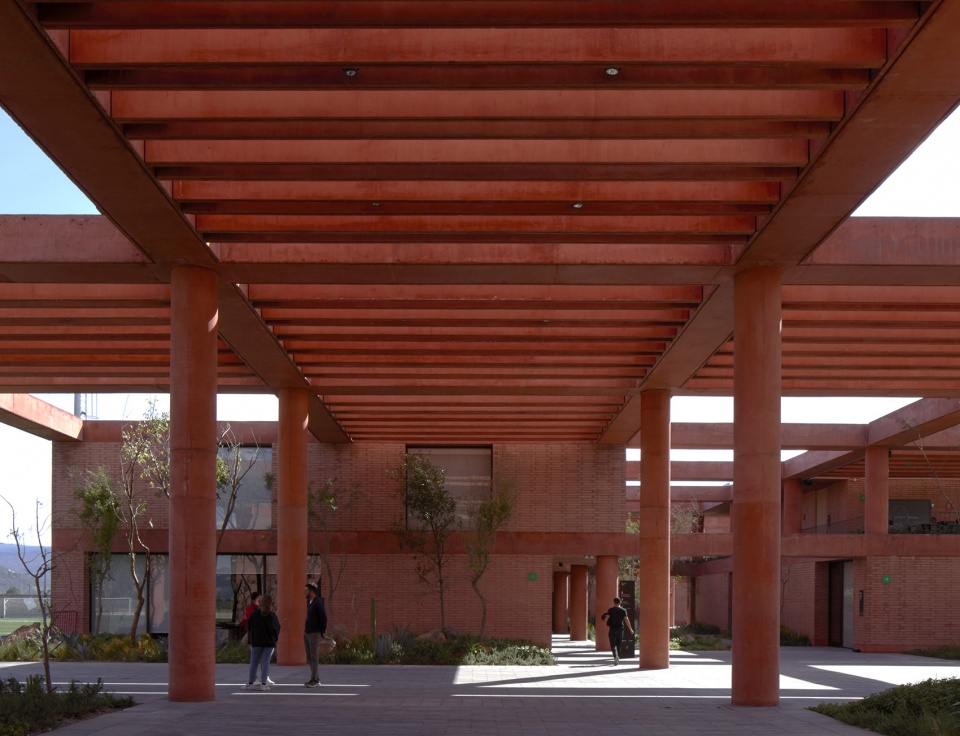
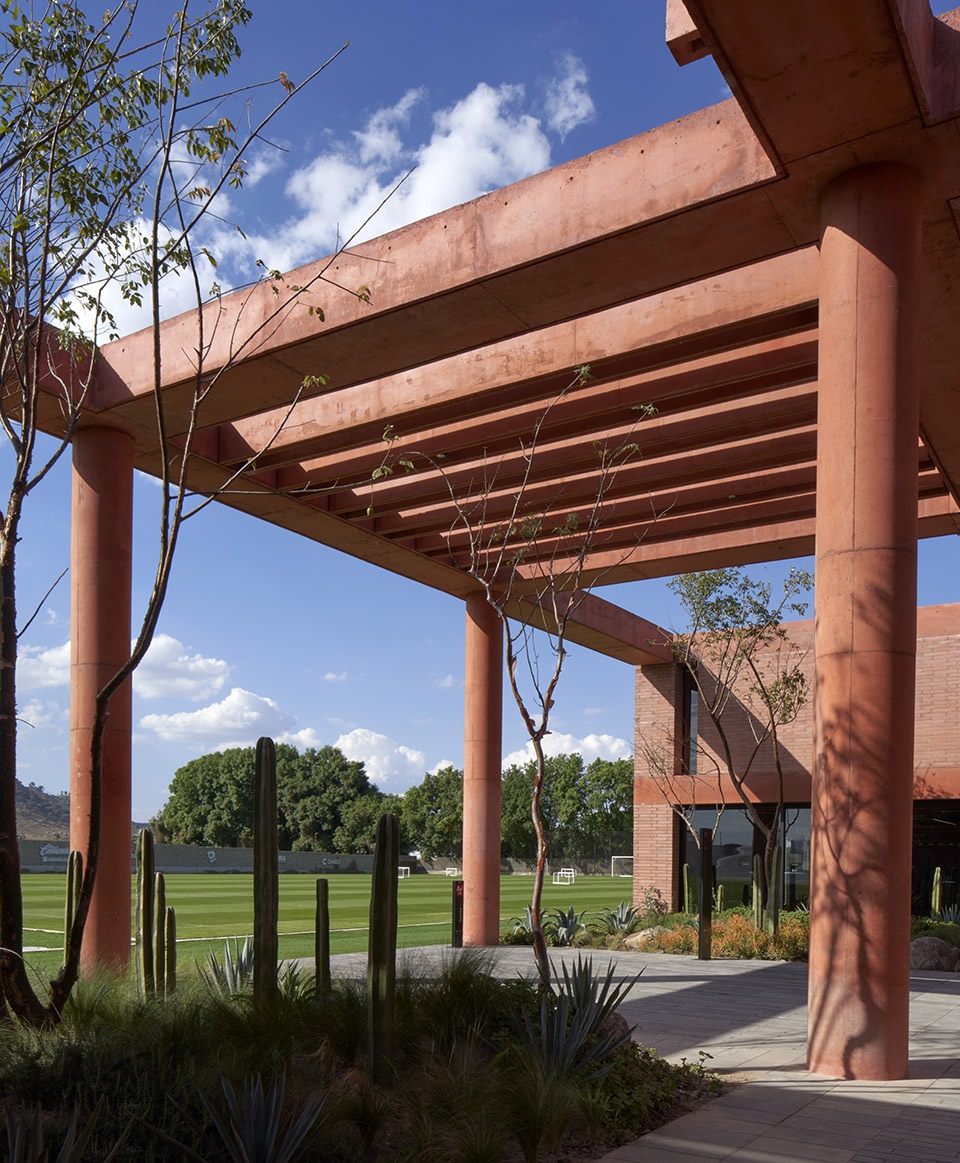
整座运动设施围绕模块化系统设计而成。在开敞空间中,基本的柱梁结构相互交汇,形成框架并营造出网格状的效果。在密集建造区域,网格状屋顶起到遮阳板的作用。这种统一的模块化体系赋予建筑未来灵活扩展和空间转变的可能,同时优化了材料使用效率。
The sport facility was designed around a modular system. Open-air voids where elemental column and beam structures meet to frame the building that establish a grid-like effect. The reticulated roof works as a brise-soleil in the more densely constructed areas of the building. This consistent modular system allows the flexibility to transform or grow the interior spaces according to the club’s future needs while optimizing the use of materials on the project.
▼基本柱梁结构形成框架并营造出网格状效果,column and beam structures meet to establish a grid-like effect
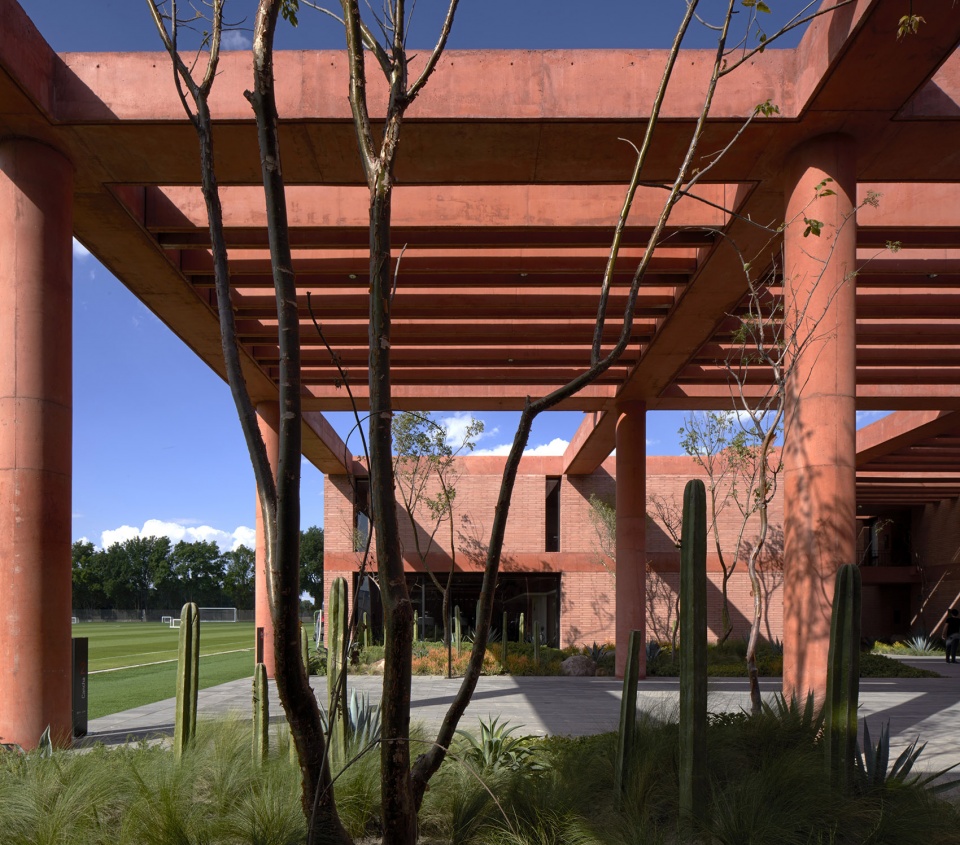
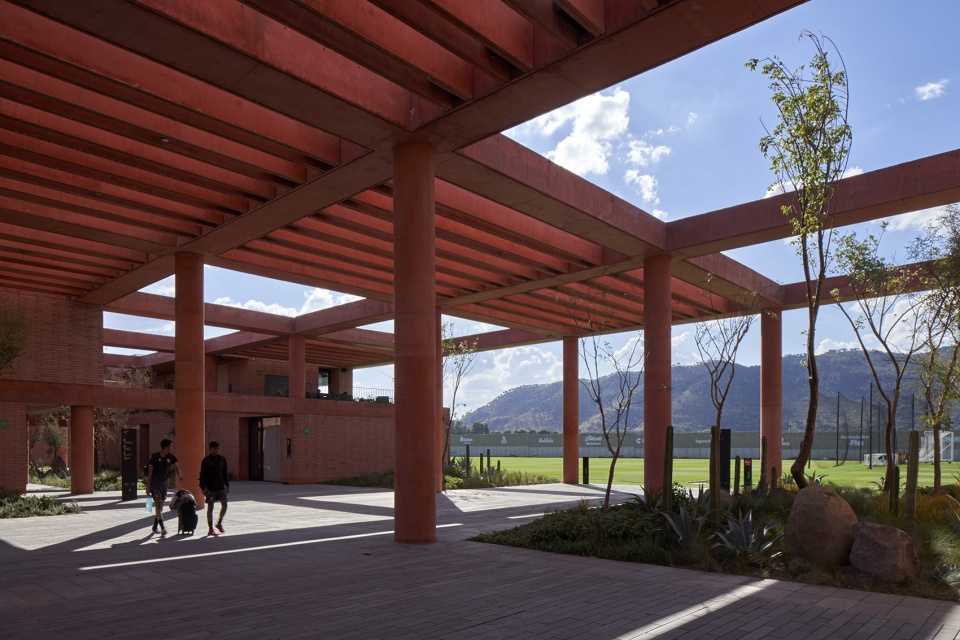
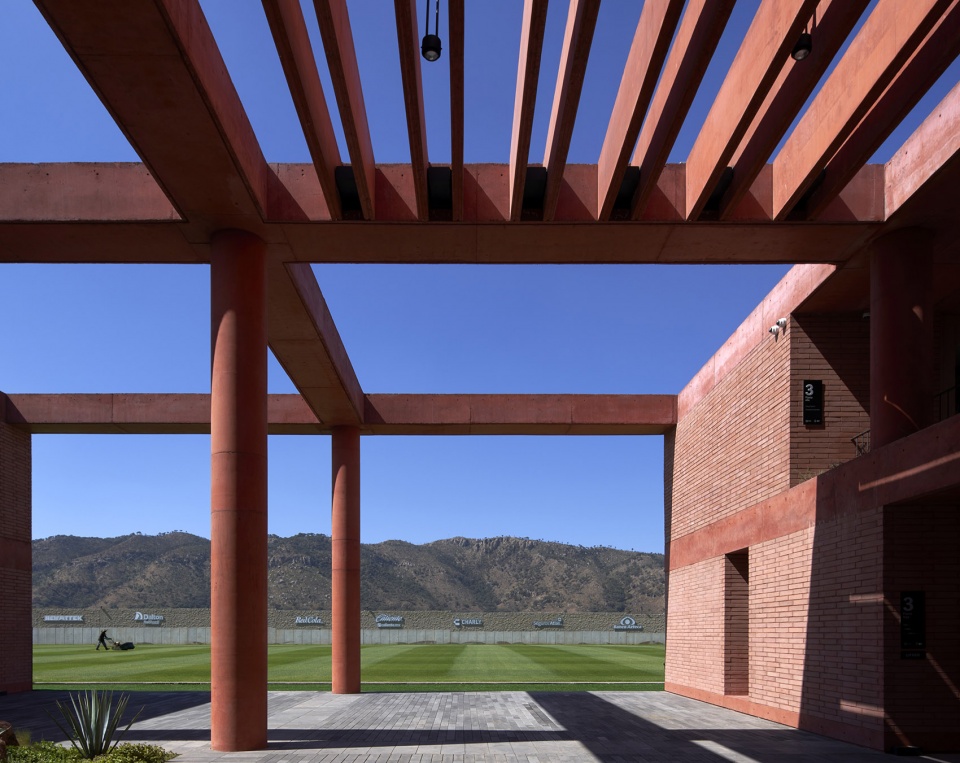
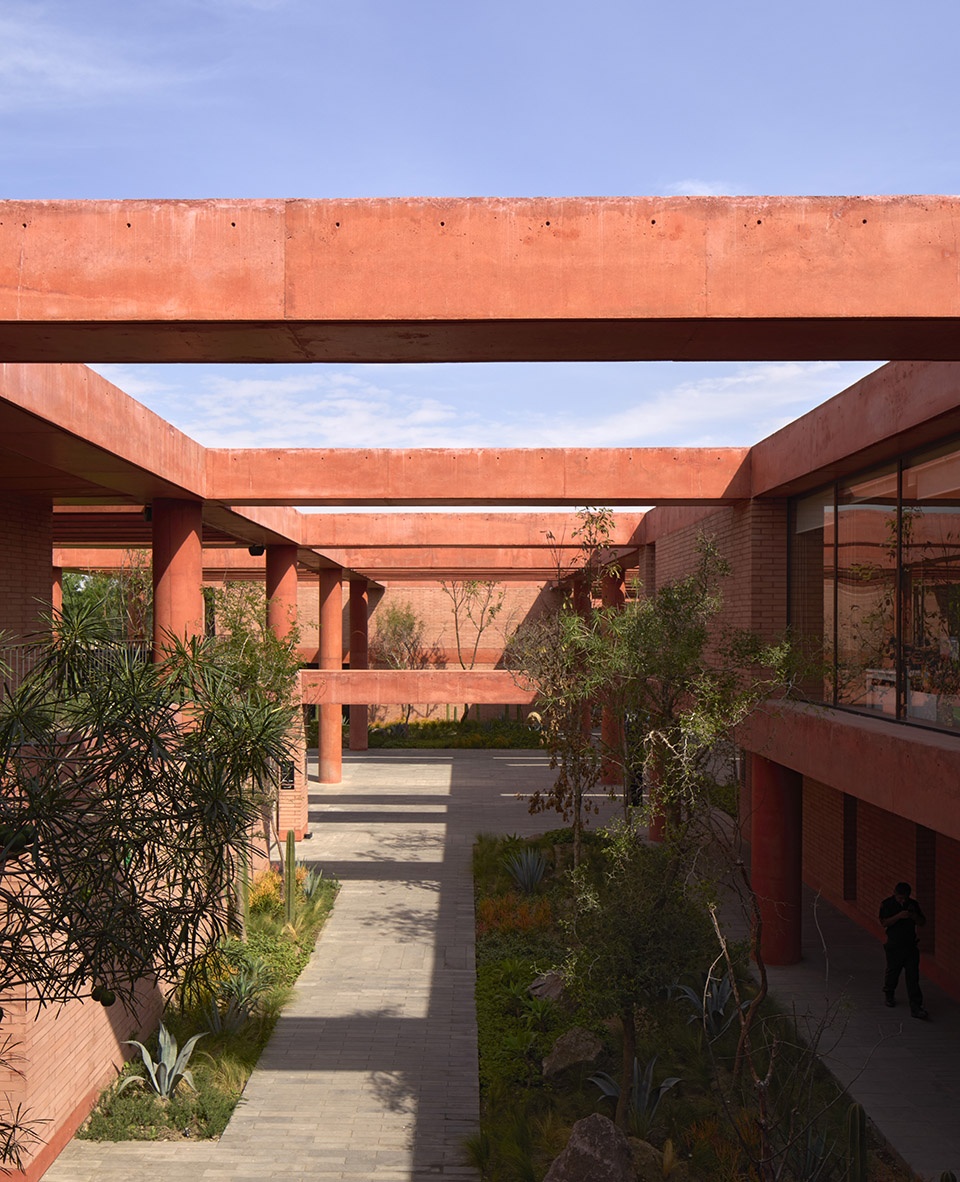
在8,300平方米的矩形体量中,建筑引入了丰富的外部空间,形成了温和遮荫的动线。这些空间宛如街巷、亲密的庭院与小型社区广场。穿插其中的外部楼梯,进一步加强了内外空间的交流与流动感。
▼概念生成,concept diagram

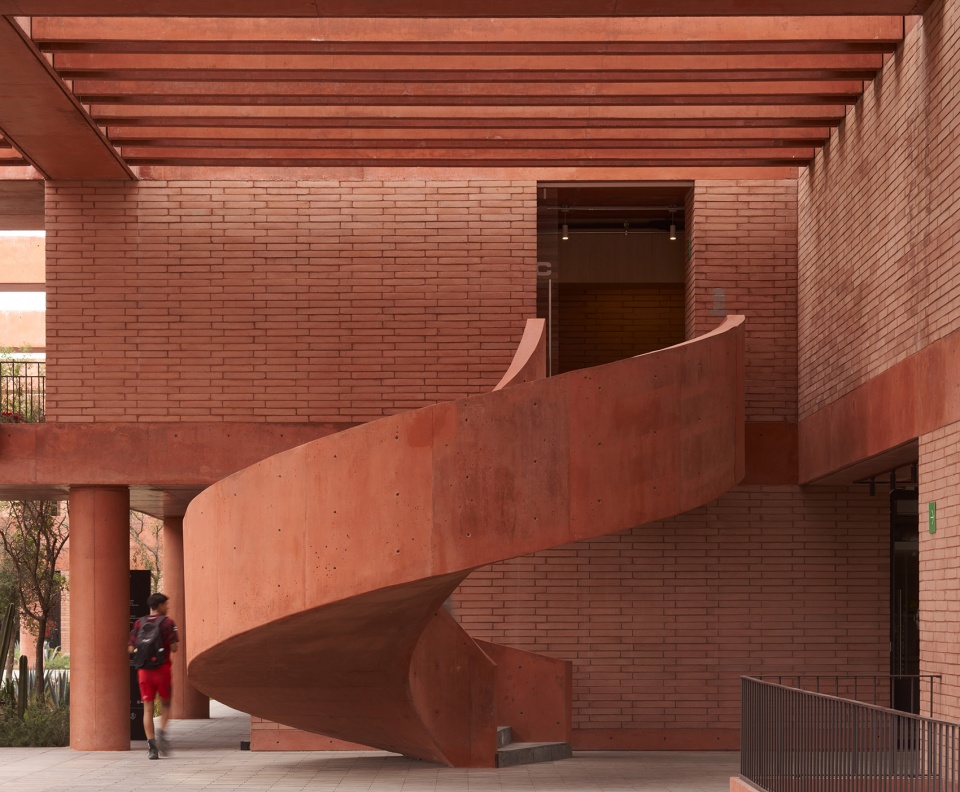
Within its defined rectangular 8,300 sqm volume the building incorporates external spaces providing gently shaded routes through the complex. These read like street passages, intimate courtyards and small town garden squares. External staircases punctuating these spaces create a strong rapport and foster a sense of fluidity between the interior and the exterior environments.
▼温和遮荫的外部空间,providing gently shaded external spaces
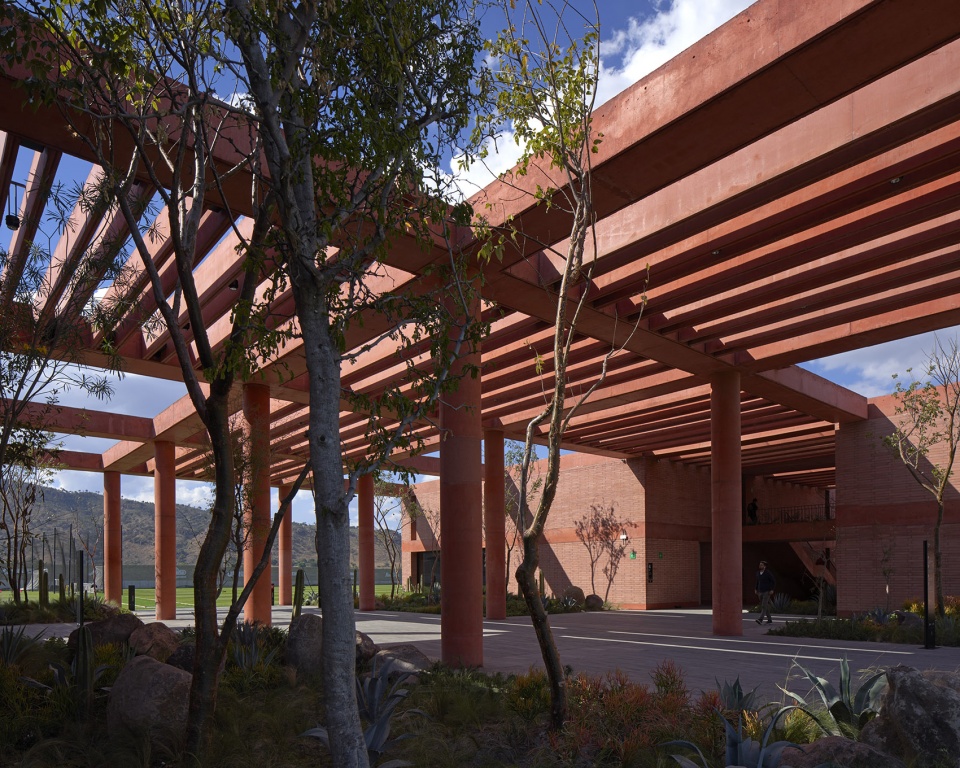
▼穿插其中的外部楼梯,external staircases punctuating these spaces
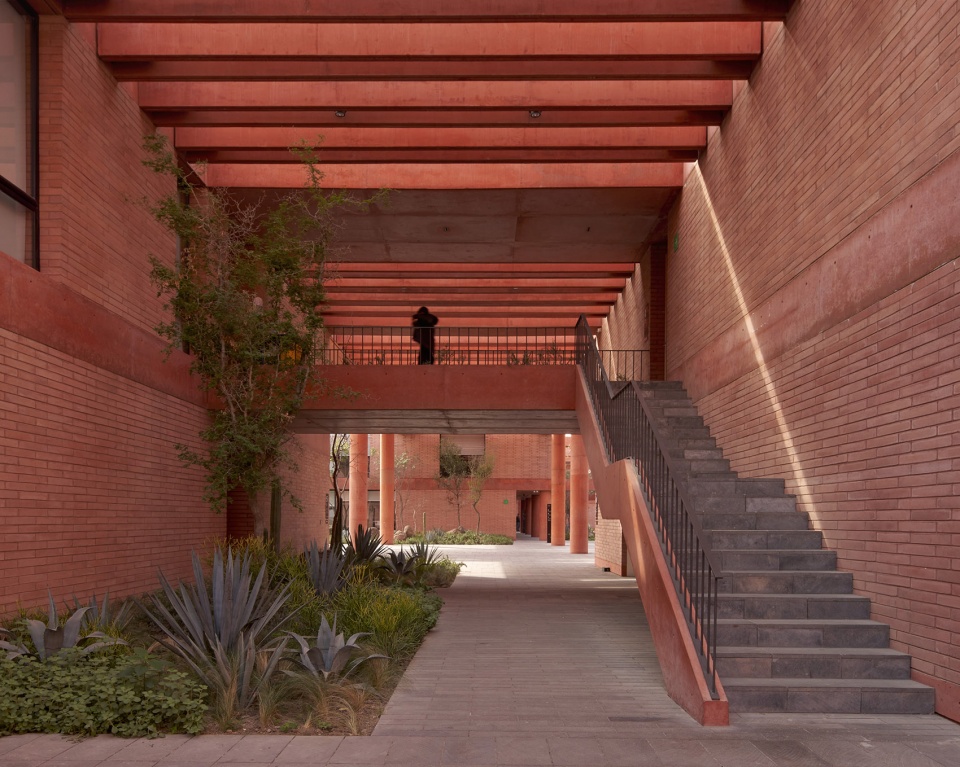
▼宛如街巷的空间,street passages
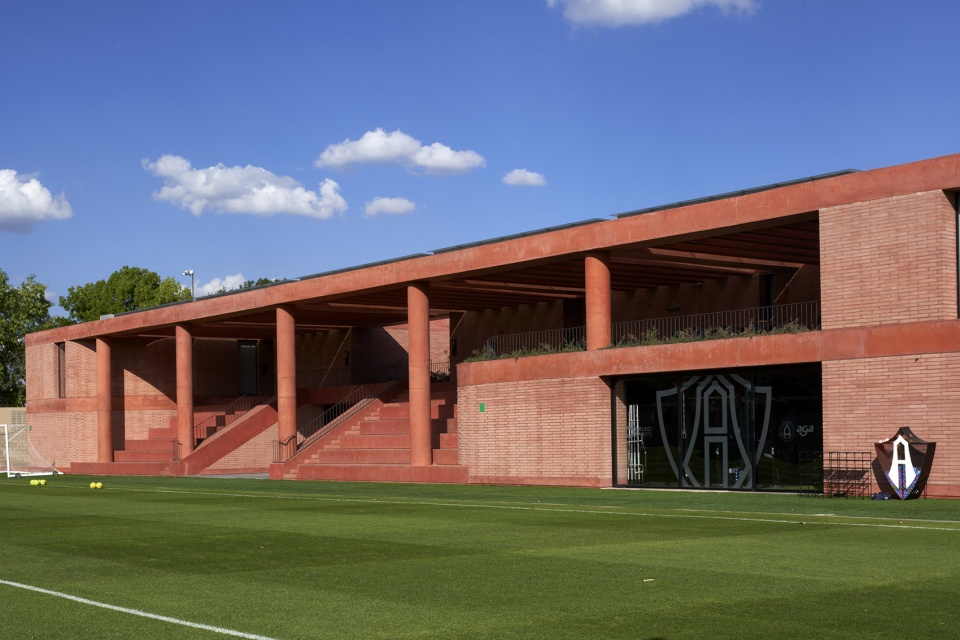
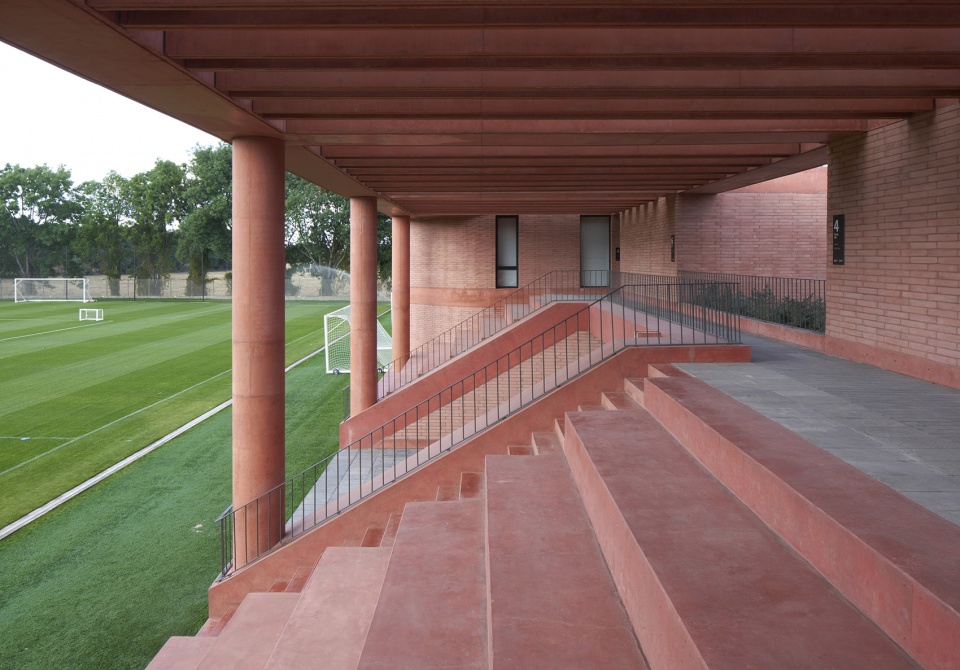
观众看台区位于建筑西立面,也强化了内外连通性。这里是一个极具弹性的空间——空闲时可作为静思或休憩之地;比赛时,家人、朋友与公众聚集于此,为球员们加油助威,使其成为充满活力的场所;训练期间,运动员们也在这片阶梯状空间中进行热身活动。
The spectators seating area also supports this interior-exterior connection along the west façade. It turned out to be a very flexible space, when empty, serves as a contemplative area or a place to relax. If there is a match, family, friends, and general public come to support their favourite players and transforming into a very vibrant place. During training, athletes use this stair-like volumes to warm up.
▼看台区,seating area
▼旋转楼梯,spiral staircase
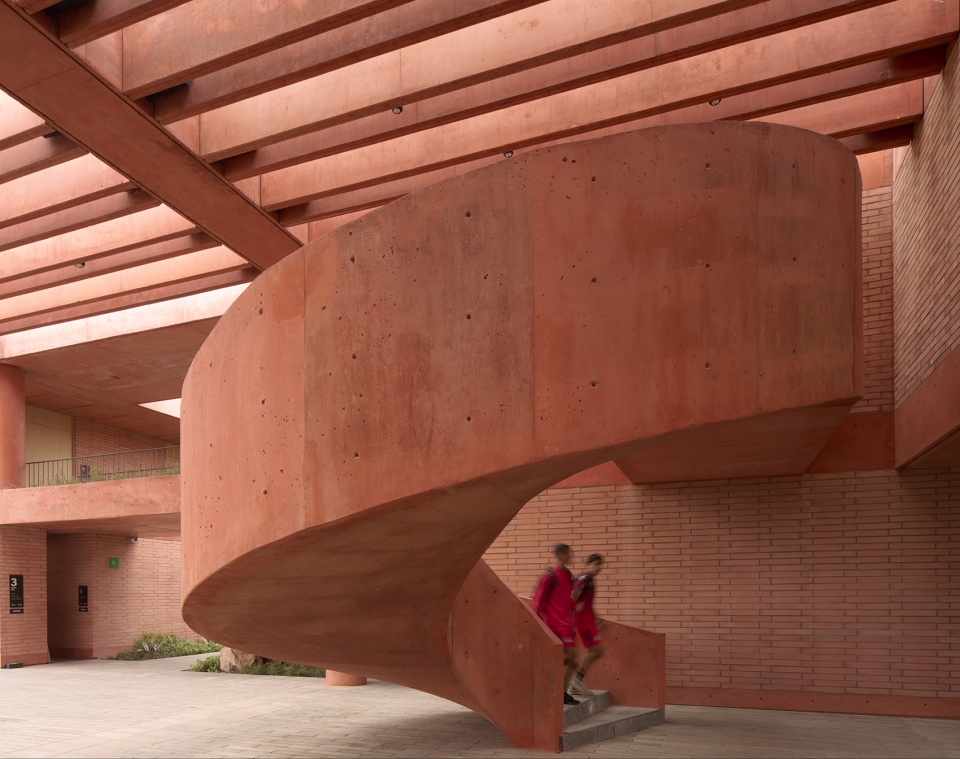
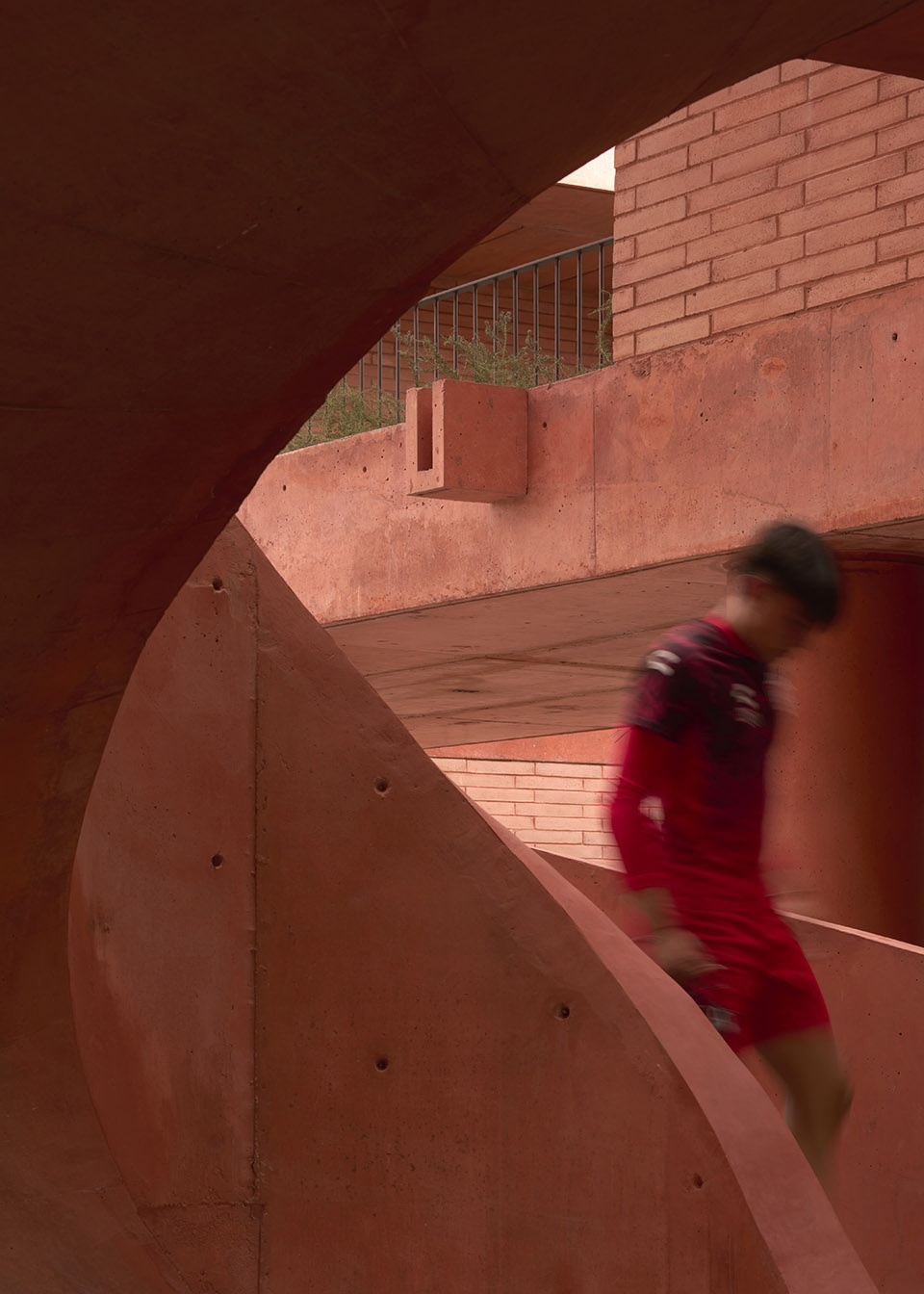
项目采用了单色调的红色,呼应了Atlas俱乐部的标志性形象,同时也致敬了传统墨西哥砖的材质与色彩。现场浇筑的染色混凝土结构与预制的地面板相结合,加快了施工速度。专为本项目定制的红砖,不仅在比例、尺寸、色泽上经过特别设计,还兼具结构功能,大大减少了施工过程中的材料浪费。
▼草图,sketch
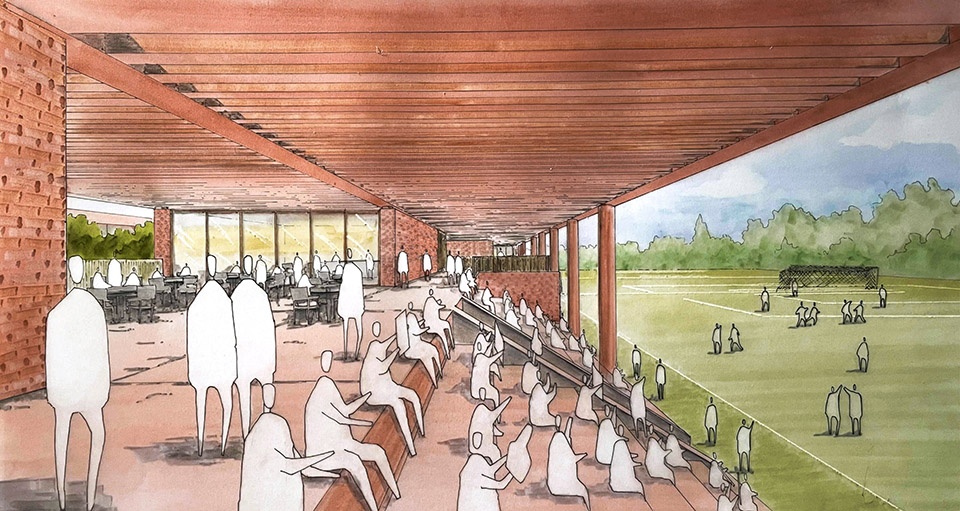
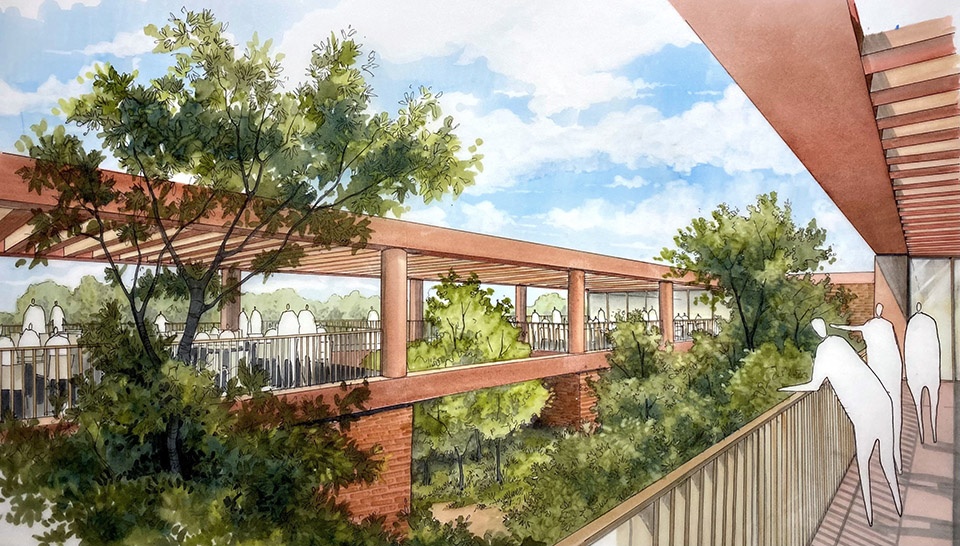
The monochromatic red colour used across the project relates to the football team identity and to the use of the traditional Mexican brick. The pigmented concrete structure was cast on site, while the floor concrete pre-slabs were pre-cast for a fast assembly on site. The red bricks were designed especially for the building in terms of proportion, measures, colour and structural functions. As a result, the contractor benefitted from significant waste reduction during the construction process.
▼染色混凝土筑成的楼梯,staircase built by pigmented concrete
▼楼梯细部,staircase detail
景观设计仅选用了本地原生植物,以确保全年在不同季节中都能良好生长。由于引入的是区域内物种,因此植物养护和用水量都较低。部分植物被鼓励攀爬建筑结构,赋予基地一种超越时间感的氛围,为这片原本缺乏尺度与文化参照物的平坦土地,塑造出独特而有力的场所感。
The landscape design was conceived to incorporate only endemic species so it would thrive in the surroundings through the different seasons of the year. Also, by bringing species from the region, the planting has low maintenance and water consumption. Some planting is encouraged to climb the structure, this introduces a deliberate timeless quality helping to create a powerful sense of place on a site that does not offer immediate points of reference in terms of scale or cultural precedent.
▼景观选用了本地原生植物,The landscape was conceived to incorporate only endemic species
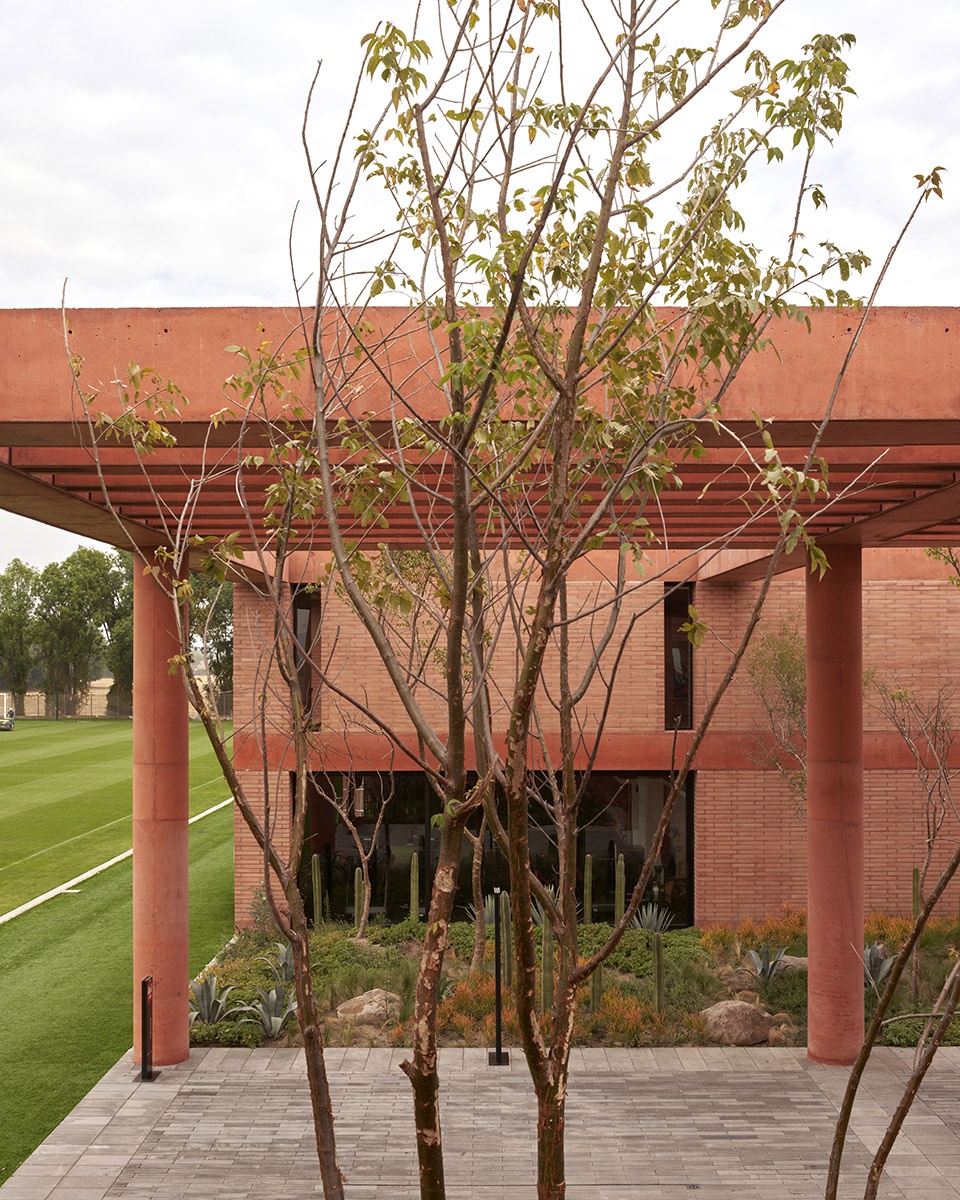
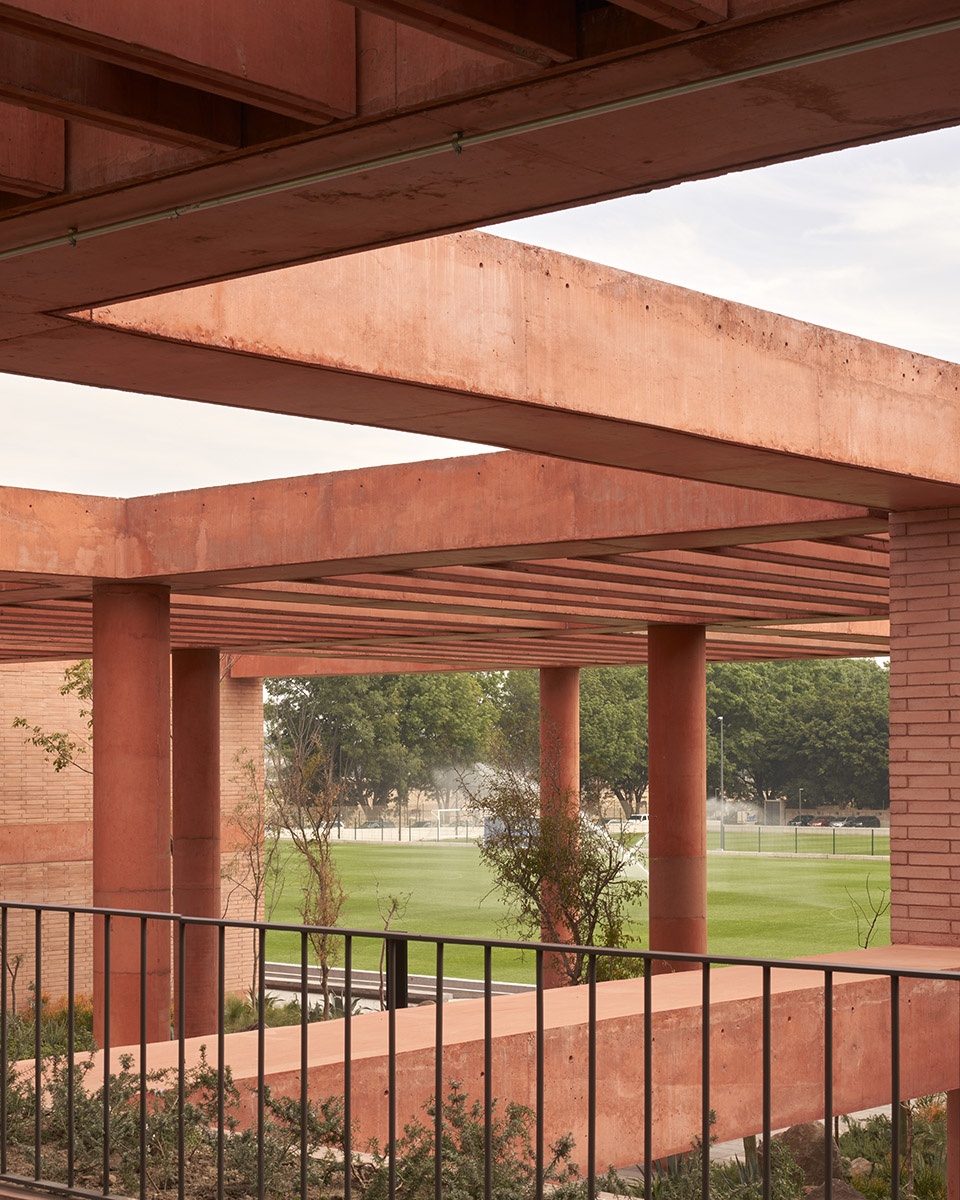
▼创造具有包裹感的空间,create an enclosure space
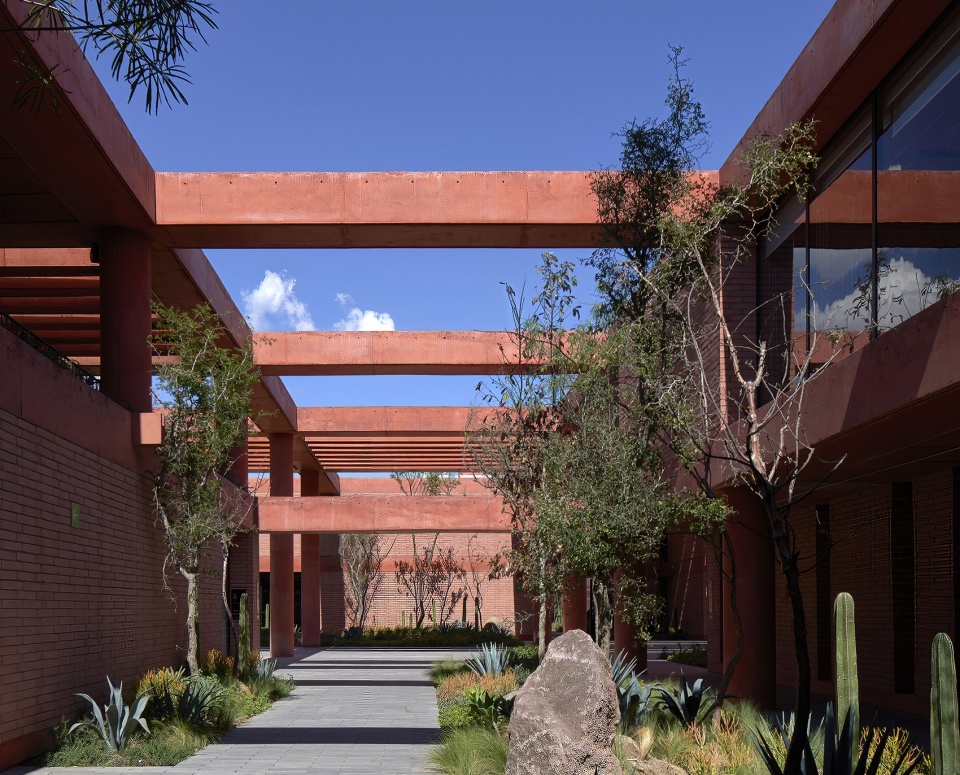
这一项目成为了模块化系统在建筑中应用的有趣案例——通过8.4米×8.4米的严谨网格,最终呈现出灵活、动态且富有空间丰富性的建筑作品。同时,它也展现了如何通过设计重新定义传统体育建筑的可能性。
The project is an interesting case study in how a rigid 8.4 m by 8.4 m modular system can be applied to result in a building that is flexible, dynamic, and engaging through the richness of its spatial qualities. It is also exemplary of how to redefine conventional sports architecture building typologies.
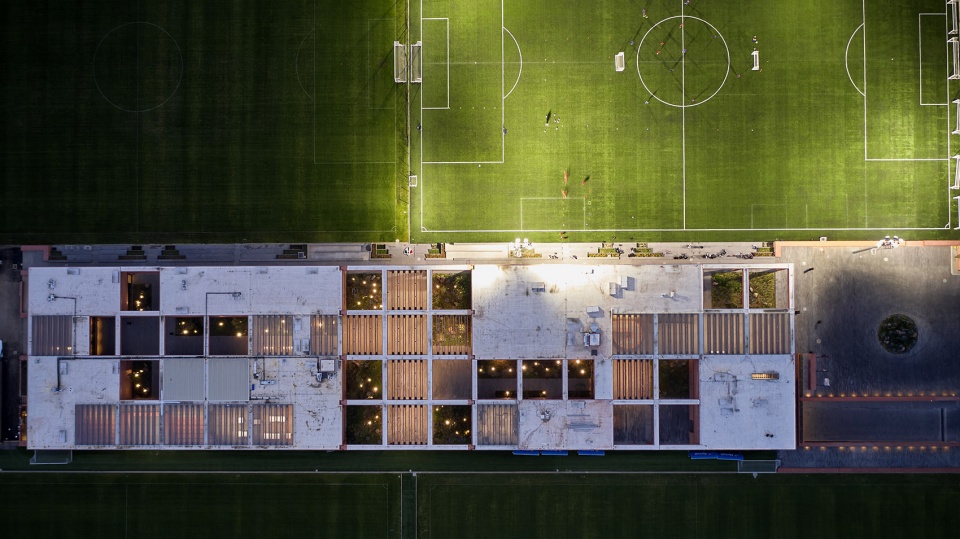
▼夜间鸟瞰,aerial view at night
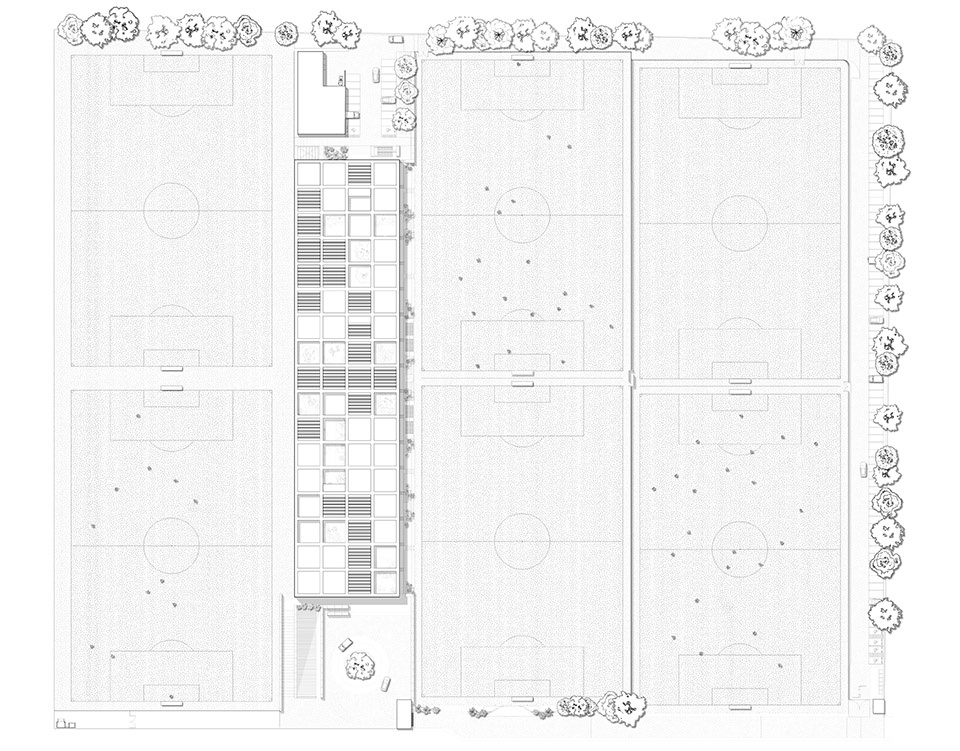
▼场地平面,site plan
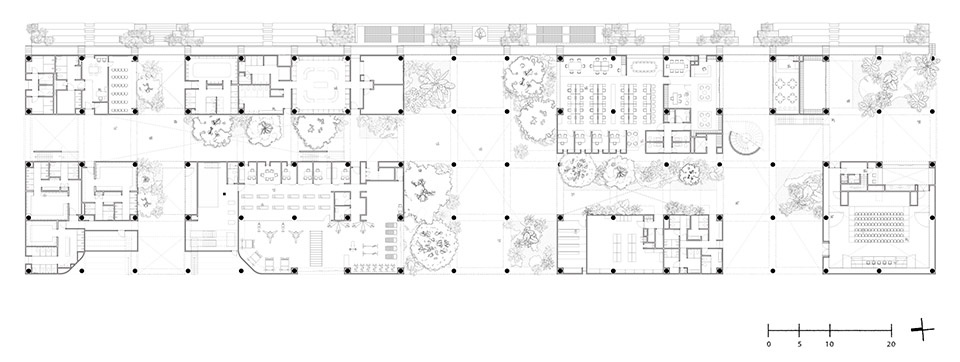
▼一层平面,ground floor plan
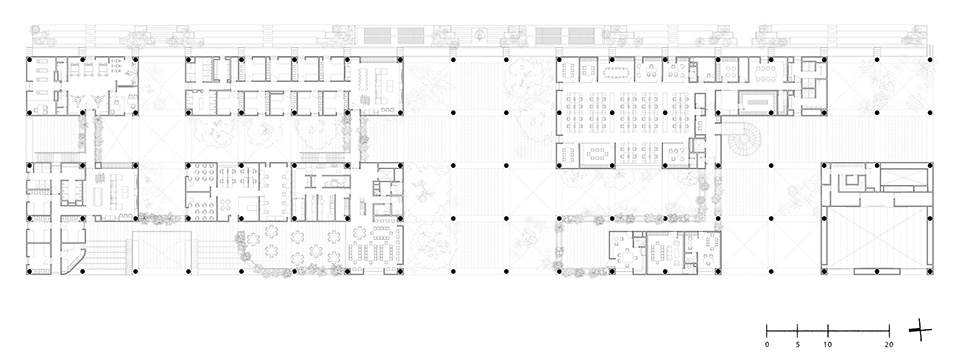
▼二层平面,first floor plan
▼剖面,section


Architectural Project:
Sordo Madaleno
Partners:
Javier Sordo Madaleno Bringas, Javier Sordo Madaleno de Haro, Fernando Sordo Madaleno de Har
Architecture Director:
Andrés Muñoz Alarcón, Edgar Beltrán Navas
Sordo Madaleno Design Team:
Daniel Laredo García, Josué Palacios Palma, Marisol Flores González, Enrique Contreras, Ricardo Mondragón
Structural Engineering:
GGaxiola y Asociados
Electric Engineering: GRUCO
Electric Engineering:
GRUCO
A/C Engineering:
SENSAIRE
Systems Engineering and Special Installations: DINETSYS
Systems Engineering and Special Installations:
DINETSYS
Hydrosanitary Engineering: IPLA- Instalaciones Planificadas
Hydrosanitary Engineering:
IPLA- Instalaciones Planificadas
Lighting Consultant:
LUA- Luz en Arquitectura
Landscape Consultant:
Plantica- Roberto Huber
Construction:
Anteus Constructora
PROJECT DATA
Program:
Sports
Construction Area:
8,300 sqm
Site Area:
66,047 sqm
Year:
January 2024
Status:
Built
Location:
Zapopan, Jalisco
Photographs:
Edmund Sumner