海口新海港片区“二线口岸”货物集中查验场所 / 华阳国际设计集团
为落实海南自贸区建设,稳步推进封关运作,响应“一线放开、二线管住”政策要求,作为自贸区与内地之间的衔接边界,二线口岸的规划建设尤为重要。在此背景下,华阳国际承担“二线口岸”货物集中查验场所设计,立足政策使命与功能需求,以创新设计赋能口岸高效通关。
To support the construction of the Hainan Free Trade Zone and steadily advance sealed customs operations, responding to the policy of “opening the first tier, controlling the second tier,” the planning and development of second-tier customs facilities, as a critical link between the Free Trade Zone and the mainland, are of paramount importance. Against this backdrop, CAPOL undertook the design of the “Second-Tier Customs” Cargo Inspection Facility, rooted in policy mandates and functional needs, empowering efficient customs clearance through innovative design.
▼一抹白浪下的时空洄游,
A Temporal Voyage Under White Waves
01 缘起 – 琼州海峡的黄金纽带Origin – The Golden Link Across the Qiongzhou Strait
与常规口岸不同,为更高效承担全岛绝大部分往内地的货运物流,海口将新海港和南港的货运查验任务功能前置,集中建设海口新海港和南港“二线口岸”(货运)集中查验场所建设项目及海南综合型寄递物流监管中心建设项目(以下简称“二线口岸查验所项目”),项目通过“物流+监管”双核驱动,集约化布局20万+平方米查验场地,高效完成对货运及寄递物流的查验及监管服务。
Unlike conventional customs ports, to more efficiently handle the majority of cargo logistics from Hainan to the mainland, Haikou has proactively centralized the cargo inspection functions of New Port and South Port. The project encompasses the construction of the Haikou New Port and South Port “Second-Tier Customs” (Cargo) Centralized Inspection Facility and the Hainan Comprehensive Express Logistics Supervision Center (collectively referred to as the “Second-Tier Customs Inspection Project”). Driven by a dual-core model of “logistics + supervision,” the project efficiently organizes over 200,000 square meters of inspection space, streamlining inspection and supervision services for cargo and express logistics.
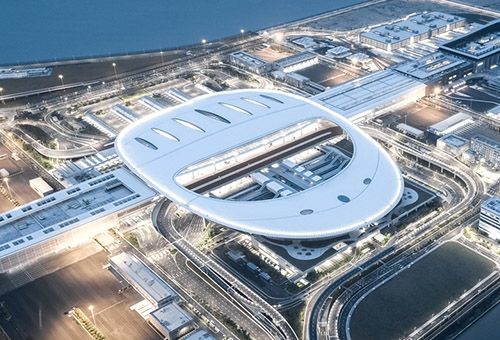
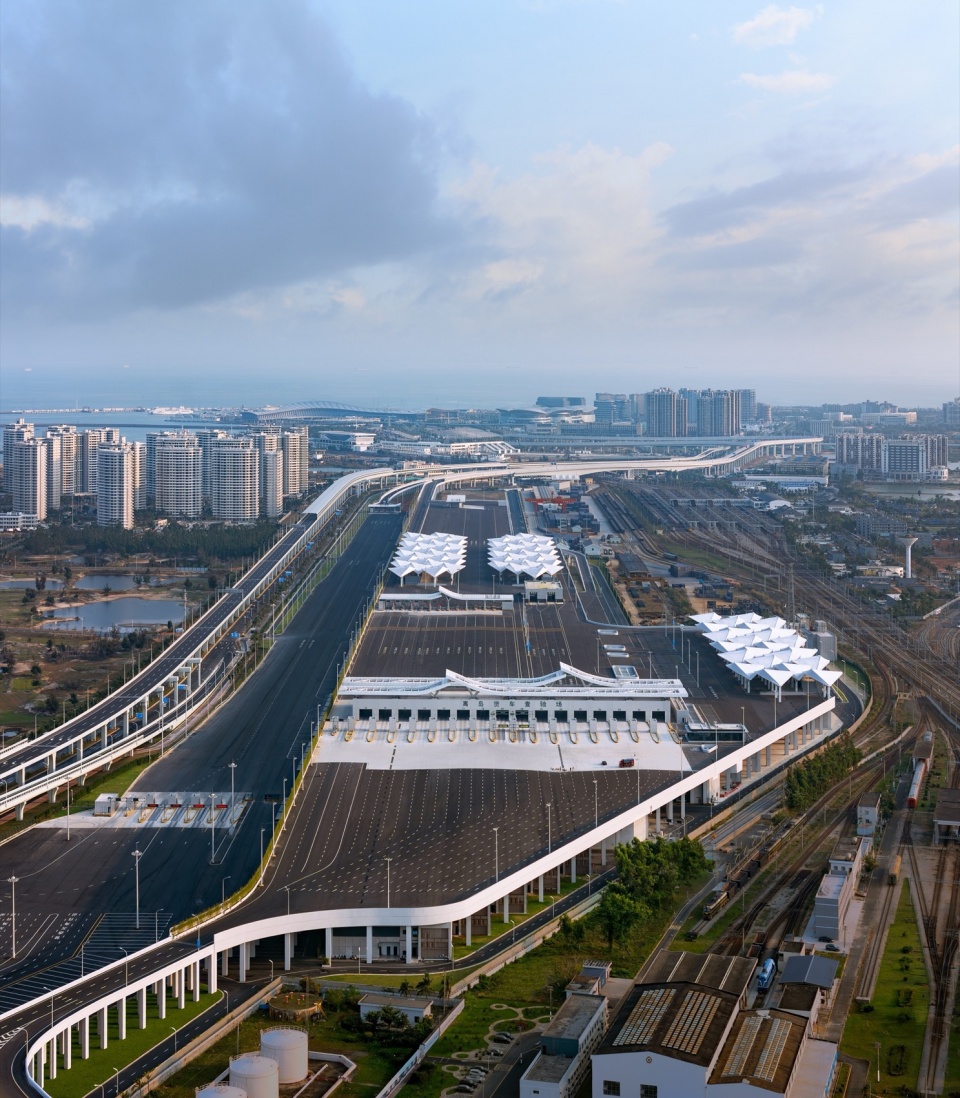
▼远眺海峡湾,View of the Strait Bay
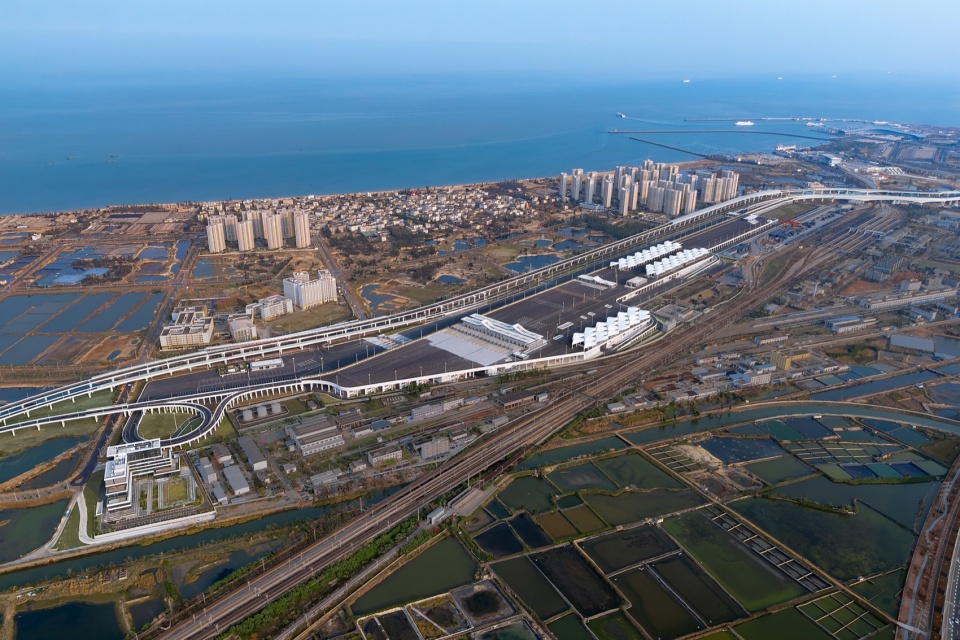
▼总平面俯瞰,Master Plan Overhead View
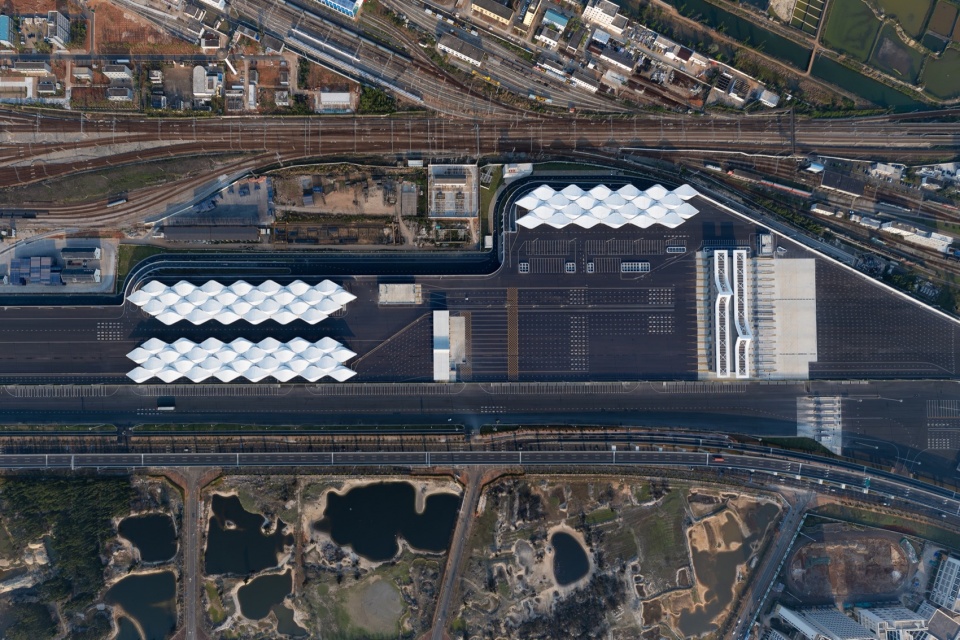
设计团队针对货运场景特性重构空间逻辑:不同于客运口岸的行人尺度,项目通过超尺度货运流线设计和持续优化,高效保障货车和货物的单向快速通行与查验。
The design team restructured spatial logic tailored to cargo scenarios: unlike the pedestrian scale of passenger ports, the project employs oversized cargo flow designs and continuous optimization to ensure unidirectional, rapid passage and inspection of trucks and goods.
▼查验场地鸟瞰,Bird’s-Eye View of Inspection Area
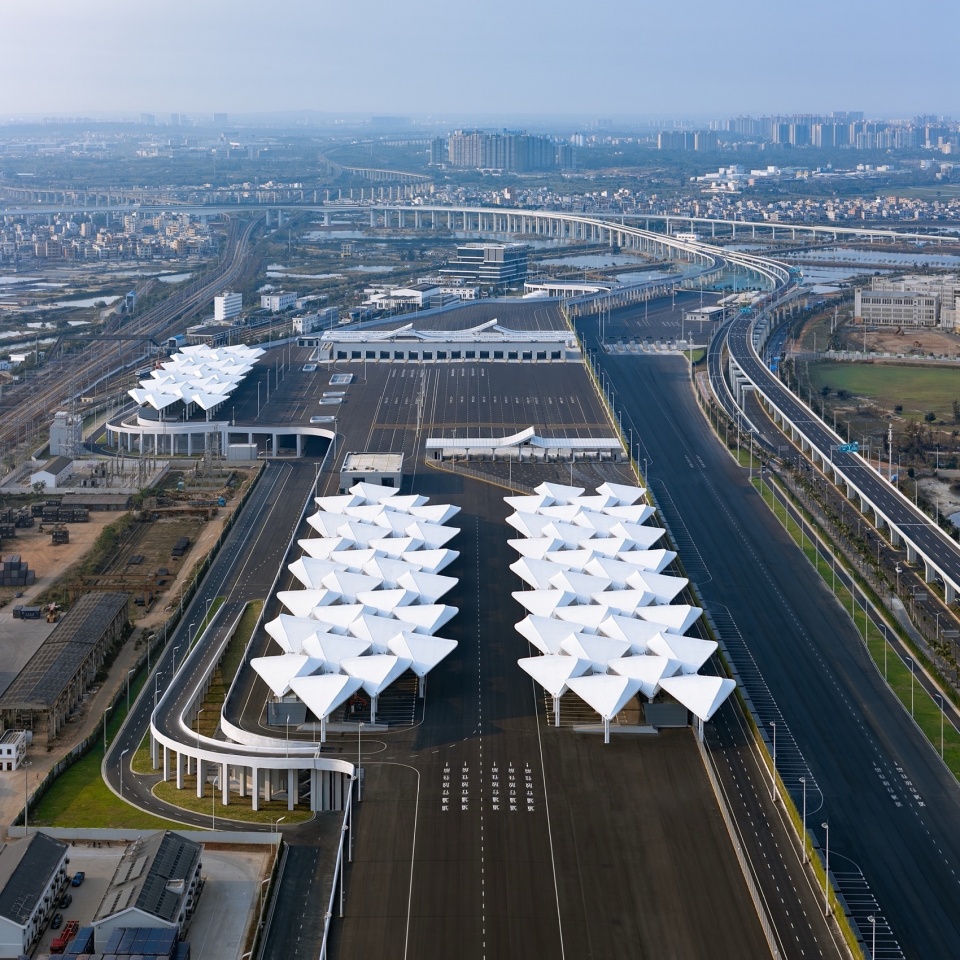
▼双层查验体系,Dual-Layer Inspection System
同时考虑台风季韧性设计,提前规划蓄车场地等应急方案。在满足口岸全天候运营需求的同时,以参数化设计实现琼岛地域文化元素与现代工程美学的有机融合。
The design also incorporates resilience for typhoon seasons, with pre-planned truck holding areas and other contingency measures. While meeting the port’s 24/7 operational needs, parametric design integrates Hainan’s regional cultural elements with modern engineering aesthetics.
▼屋顶参数化设计,Parametric Roof Design
▼规划蓄车场地,Planned Truck Holding Area
02 空间 – 从弹性预留到立体跃迁Space – From Flexible Reservation to Vertical Leap
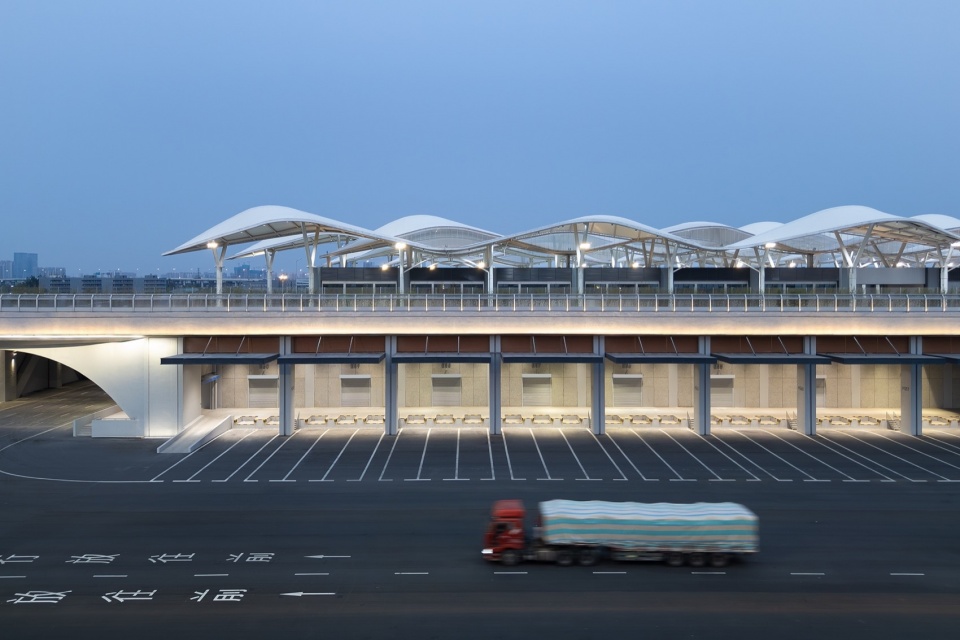
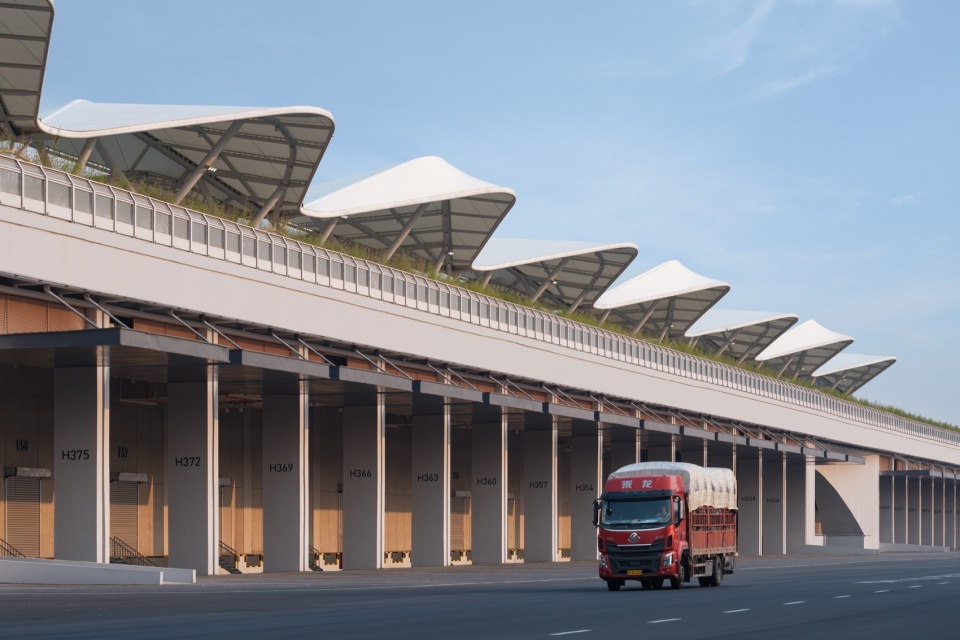
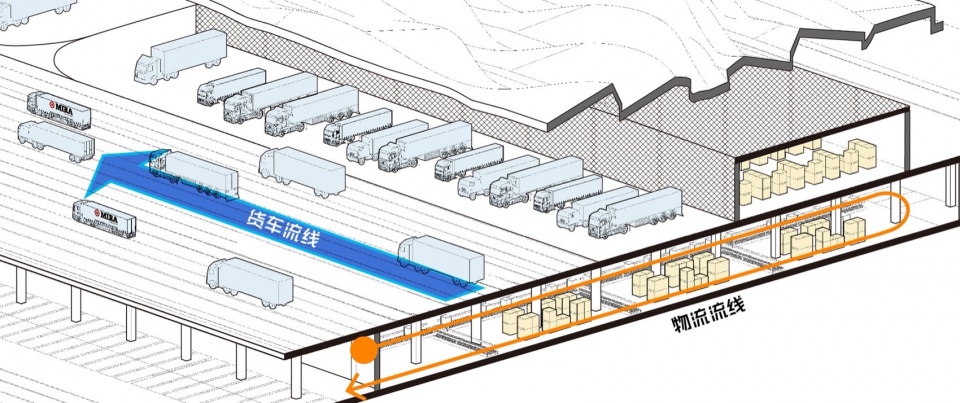
为满足货物快速安检需求,建筑采用立体垂直布局:二层布置货物运输集中查验中心打造快速检验区,离岛货车(包括邮快件)完成查验后由封闭的附属专用快速通道到达港区登船离岛;首层集中设置邮快件处理场所及查验仓库形成分拣检验区,重点查验、抽检不合格车辆到达首层进行进一步查验等处理。通过上下分层实现”快慢分流”,避免流线交叉拥堵,提升整体运行效率。
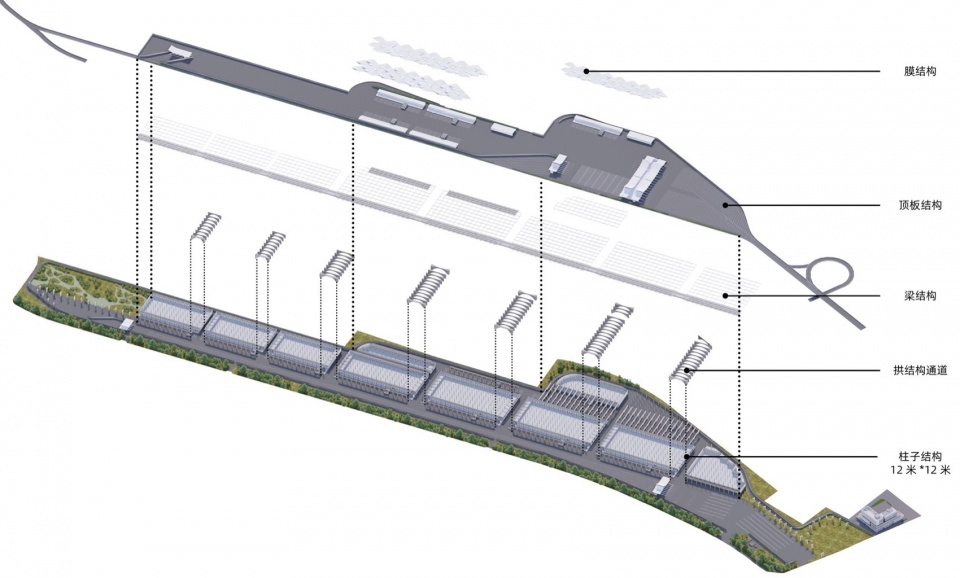
▼结构体系分析,Structural System Analysis
To meet the demand for rapid cargo security checks, the architecture adopts a vertical, layered layout: the second floor houses the Centralized Cargo Inspection Center, forming a rapid inspection zone. Trucks leaving the island (including express parcels) complete inspections and proceed via a dedicated, enclosed rapid passage to the port for embarkation. The ground floor centralizes express parcel processing and inspection warehouses, forming a sorting inspection zone. Vehicles requiring detailed checks or failing initial inspections are directed to the ground floor for further processing. This upper-lower layer “fast-slow segregation” prevents flowline congestion, enhancing overall operational efficiency.
▼二层快速检验区,Second-Floor Rapid Inspection Zone
▼首层分拣检验区,Ground-Floor Sorting Inspection Zone
设计突破传统平面模式,考虑复合功能空间的弹性发展:通过首层疏导通道保障基本作业、屋顶整合场地形成弹性查验场地、立体叠加预留发展用地三个阶段打造垂直弹性生长体系,既能满足当前货车的通关需求,又为未来发展储备了临时蓄车功能区,以备应对未来极端天气及日益增长的通关压力。
▼上下层“快慢分流”,Upper-Lower Layer “Fast-Slow Segregation”
Breaking from traditional flat layouts, the design considers elastic development for composite functional spaces: a three-stage vertical growth system includes ground-floor diversion channels for basic operations, roof-integrated spaces for flexible inspection areas, and vertically stacked reserved land for future expansion. This meets current truck clearance needs while reserving temporary truck holding zones for future extreme weather and growing customs pressures.
▼首层疏导通道,Ground-Floor Diversion Channel
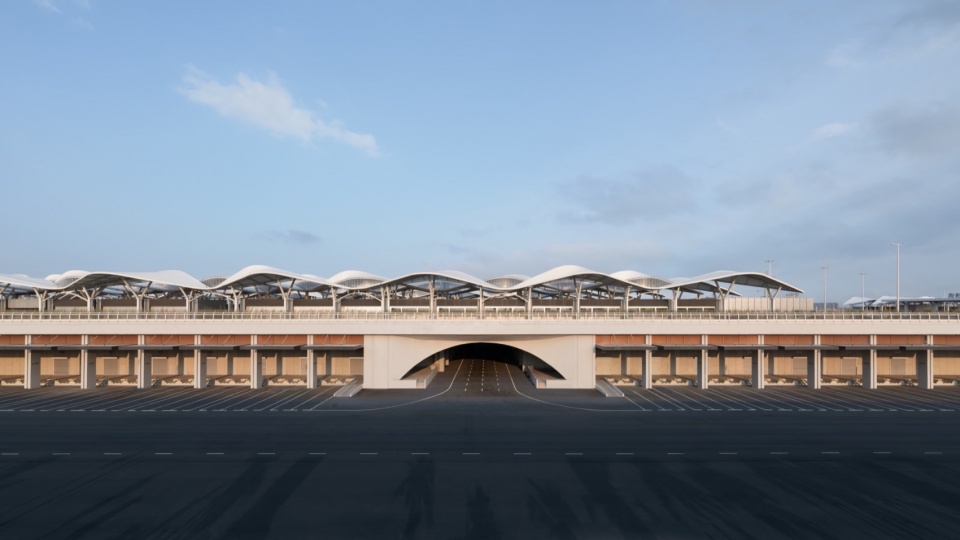
▼二层离岛货车查验场,Second-Floor Truck Inspection Area
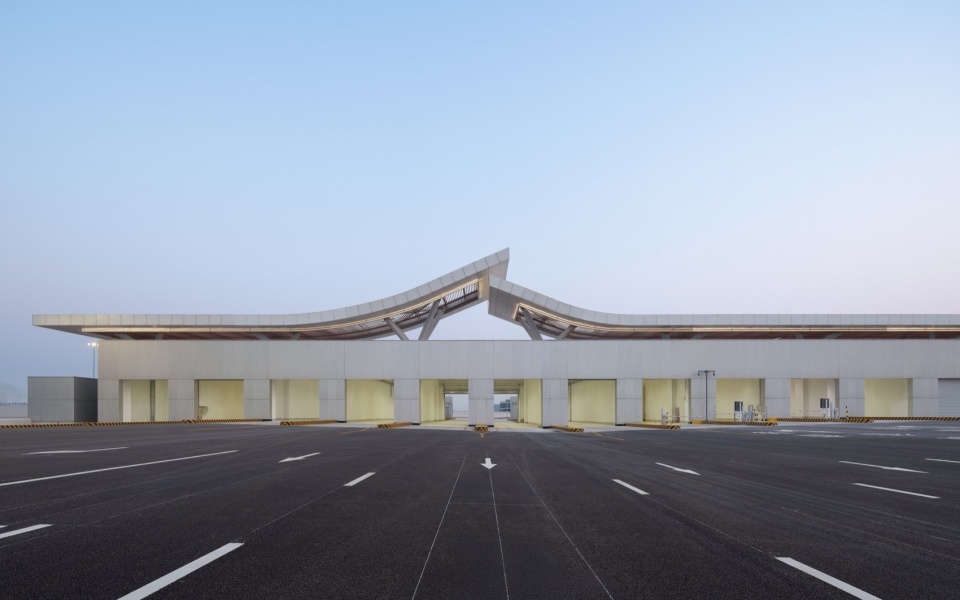
▼二层弹性查验场地,Second-Floor Flexible Inspection Area
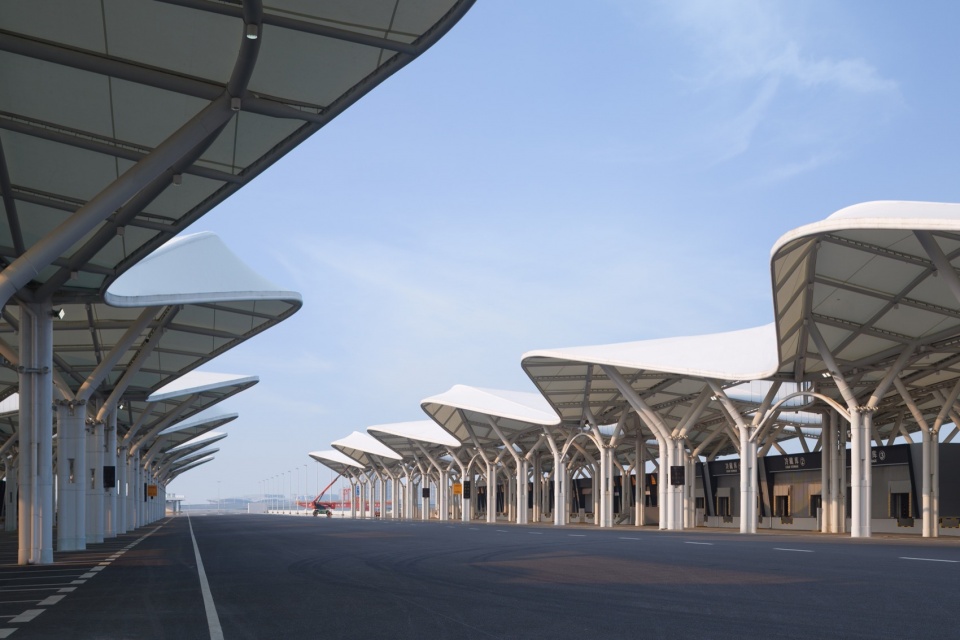
03 尾奏 – 白浪与骑楼的美学共生Coda – Symbiosis of White Waves and Arcade Aesthetics
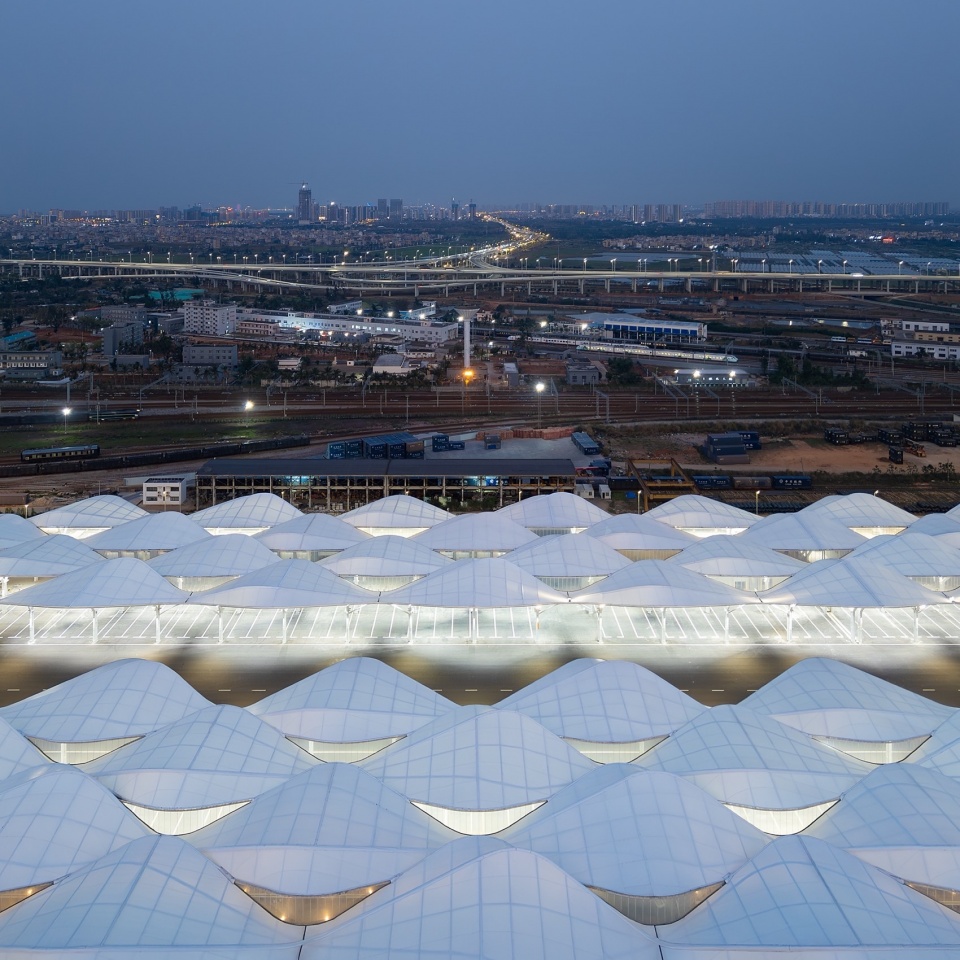
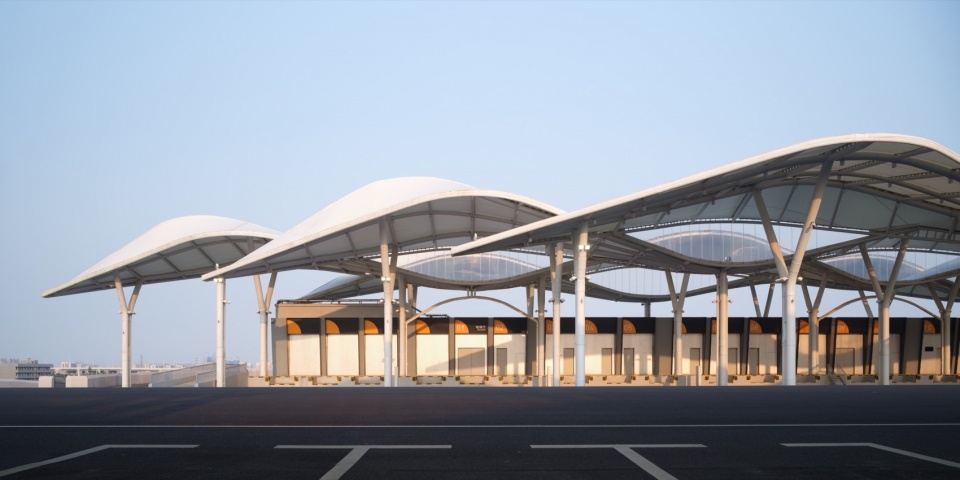
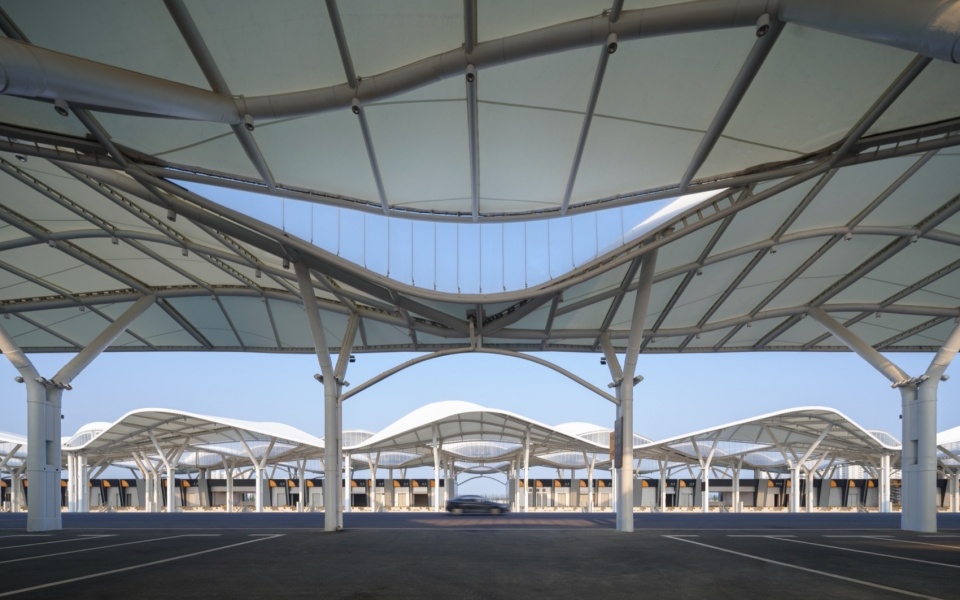
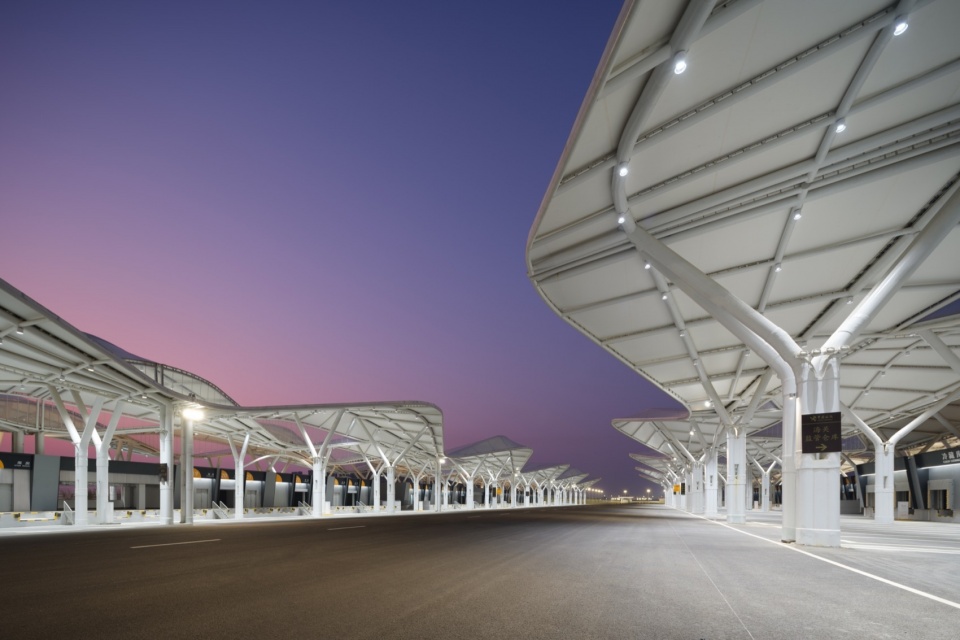
设计深度回应热带海岛气候特征,将遮阴避雨功能与在地文化转译融合:首层延续海口骑楼街廊的空间风格,通过连续拱廊形成光影交织的物流通道;二层轻盈的膜结构顶棚以海口市花三角梅形态为原型,纯白曲面既遮蔽烈日暴雨,又以海浪般的柔美曲线重塑口岸建筑表情。
▼膜结构,Membrane Structure
The design deeply responds to the tropical island climate, blending shade and rain protection with local cultural translation: the ground floor extends Haikou’s arcade street corridor style, with continuous arches creating a logistics channel interwoven with light and shadow. The second floor’s lightweight membrane roof, inspired by Haikou’s city flower, the bougainvillea, uses pure white curves to shield against sun and rain while reshaping the port’s architectural expression with wave-like elegance.
▼回应热带海岛气候,Response to Tropical Island Climate
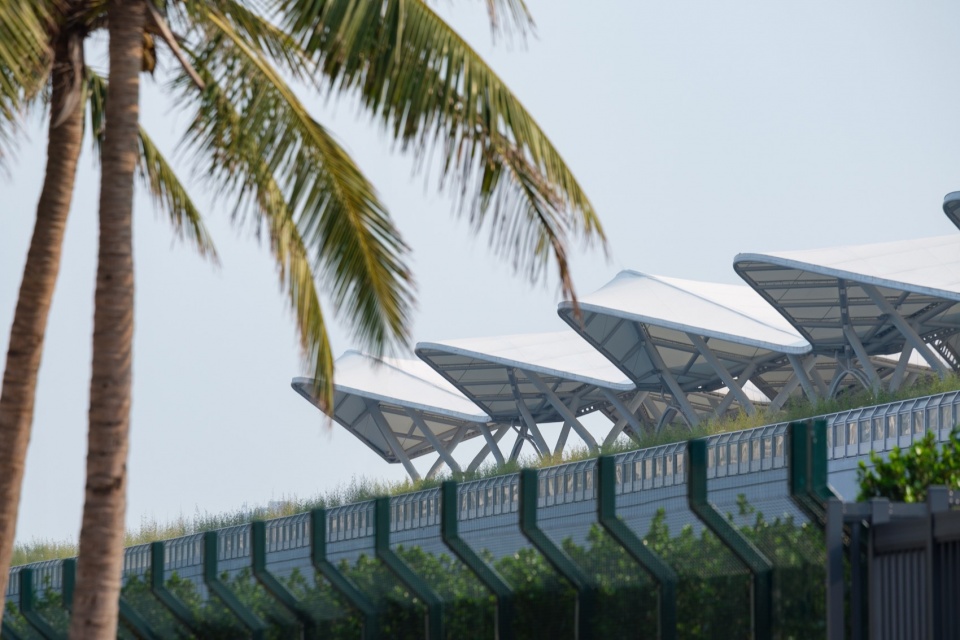
▼夕阳下曲线屋面,Curved Roof at Sunset
▼屋面仿“三角梅”形态,Roof Inspired by Bougainvillea
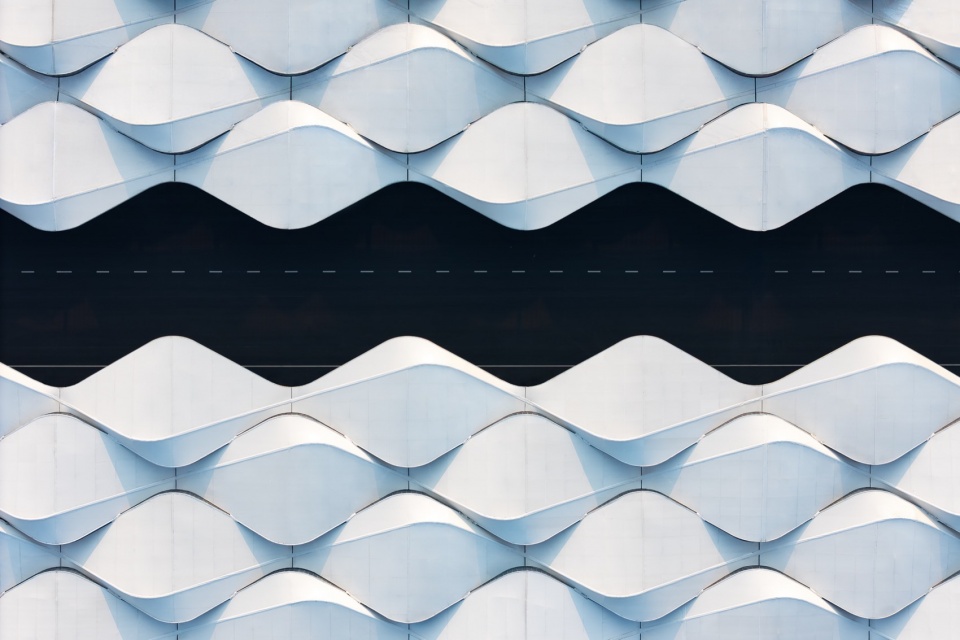
▼屋面膜结构,Membrane Roof Structure
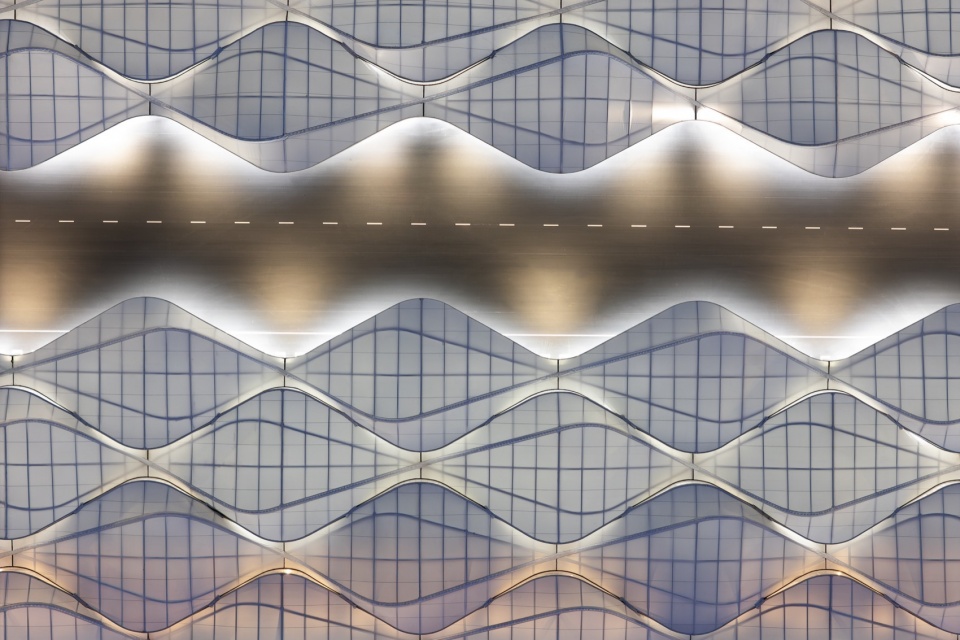
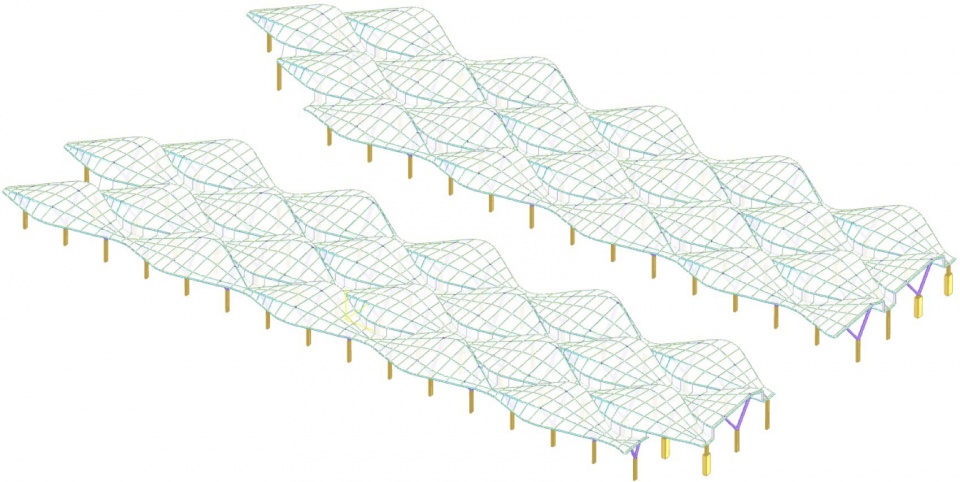
结构体系呈现”上轻下重”的智慧平衡:底层厚重拱廊承担主要荷载,顶部张拉膜展现技术轻盈感,二者通过抗震支座柔性连接。针对超大超长超高尺度建筑空间挑战,创新采用”分区消防+虹吸排水”复合系统,应对极端天气排水和板下消防难题,确保极端情况下的疏散安全。
The structural system achieves a wise balance of “light above, heavy below”: the ground floor’s robust arches bear primary loads, while the tensioned membrane roof exudes technical lightness, connected flexibly via seismic bearings. Addressing the challenges of oversized, ultra-long, and ultra-high spatial scales, the design innovatively adopts a “zoned fire protection + siphon drainage” composite system to tackle drainage and under-slab fire safety in extreme weather, ensuring evacuation safety.
▼结构“上轻下重”,“Light Above, Heavy Below” Structure
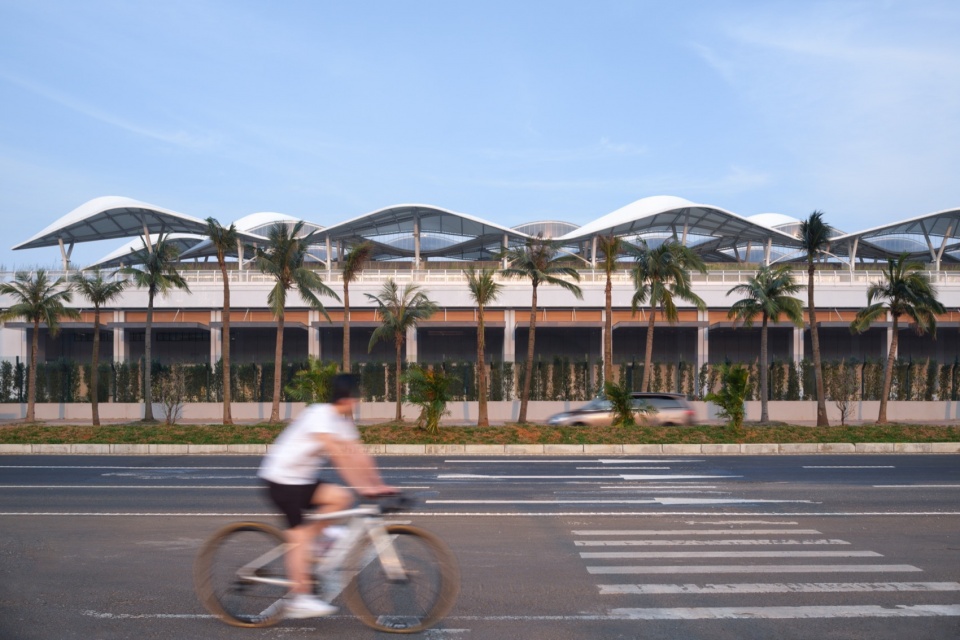
在未来,华阳将持续探索关于功能与美学、技术与人文的双向平衡,为城市建设打造兼具国际视野与地域特色的时代坐标。
In the future, CAPOL will continue exploring the dual balance of function and aesthetics, technology and humanities, creating urban landmarks with both global vision and regional character.
▼夕阳下轻盈的张拉膜,Lightweight Tensioned Membrane at Sunset
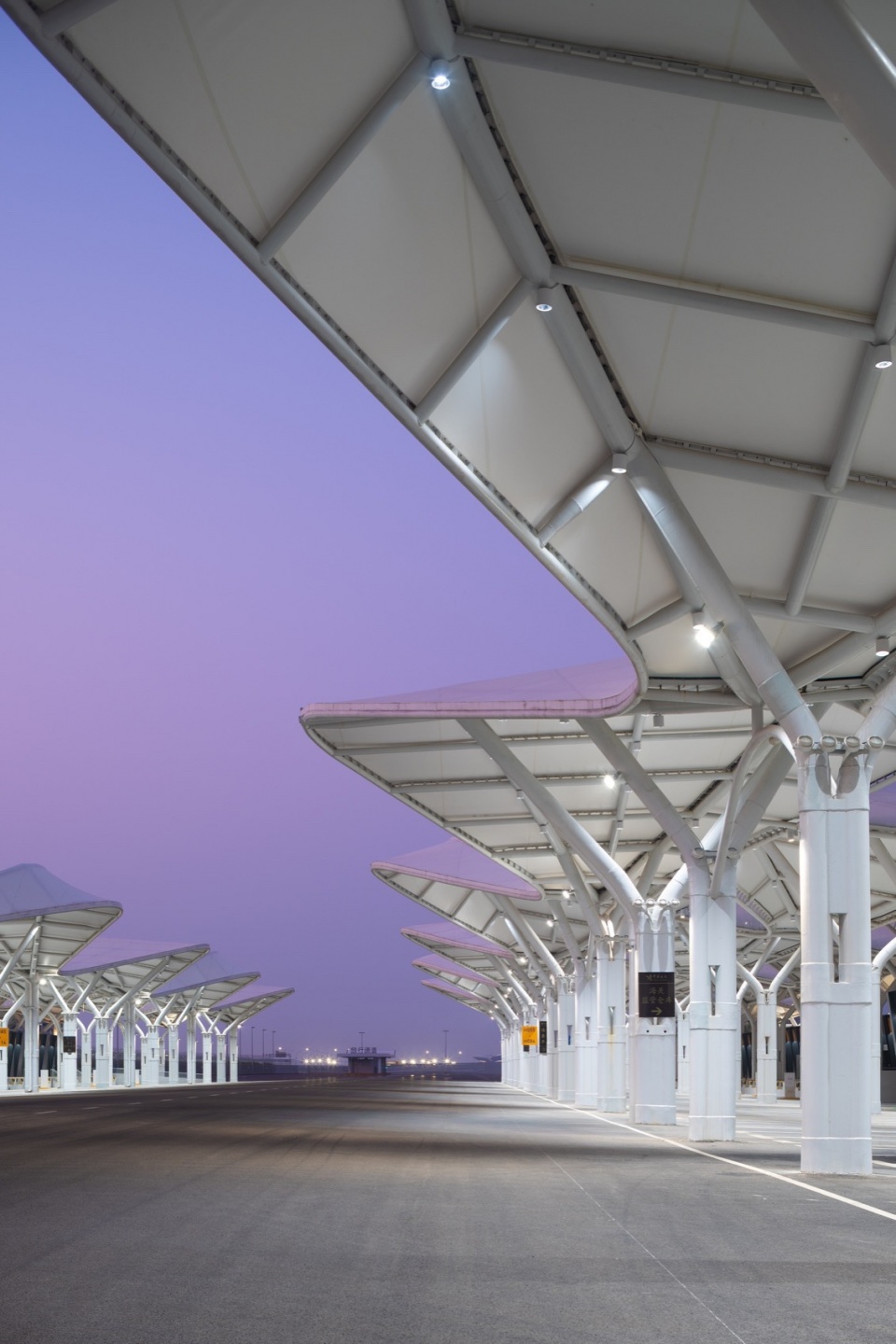
Project Profile:
Project Name: Haikou New Port and South Port “Second-Tier Customs” (Cargo) Centralized Inspection Facility and Hainan Comprehensive Express Logistics Supervision Center
Project Type: Transportation Architecture
Location: Haikou, Hainan
Site Area: 526,908.314 m²
Total Floor Area: Inspection Facility: 233,740 m²; Logistics Supervision Center: 81,520 m²
Design Period: 2021–2023
Completion Date: 2024
Client: Haikou Comprehensive Bonded Zone Management Committee
Design Firm: CAPOL Design Group
Concept Design: Li Wei, Zhang Sheng, Cai Guozhu, Jiang Yu, Zhang Jingyuan, Wang Xin, Hu Zhenkang, He Zhipan, Yang Jiaming, Meng Xiangru
Architecture: Lü Zhu, Qin Jing, Zhang Shengqiang, Yan Lihuan, Wu Fan, Liu Xiaoqiu, Wang Bingquan, Li Li, Zhu Xingzheng, Fu Chuanfa, Fu Cekang
Master Planning: Li Dezhen
Structure: Chen Shixue, Li Wenbin, Zhang Fan, Liu Le, Lin Fen, Lin Peitong, Long Danyang
Water Supply and Drainage: Liang Jianhao, Xie Jun, Lin Jiaqian, Li Shubiao, Wang Deng, Gao Yang, Li Longbo
HVAC: Li Chunyan, Yan Fukang, He Zhicheng, Zhao Lei, Lu Jianwen, Huang Bangyi
Electrical: Gong Deming, He Shuhai, Zhang Kai, Sun Hairong
Smart Systems: Zhang Dingyun, Hu Jingyun
Interior Design: Ma Xu, Wang Chen, Lin Haoliang
Landscape: Lin Guoliang, Yi Peifeng, Li Xiaobo, Jiang Lü, Ye Xiangqian
Architectural Photography: Zeng Tianpei