湖畔之家,加拿大 / Atelier Échelle
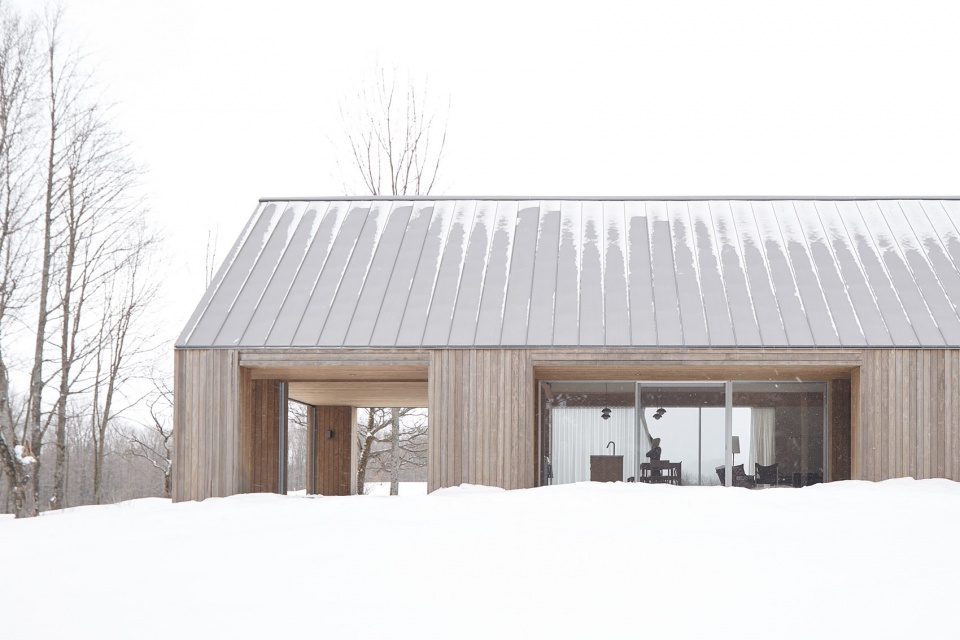
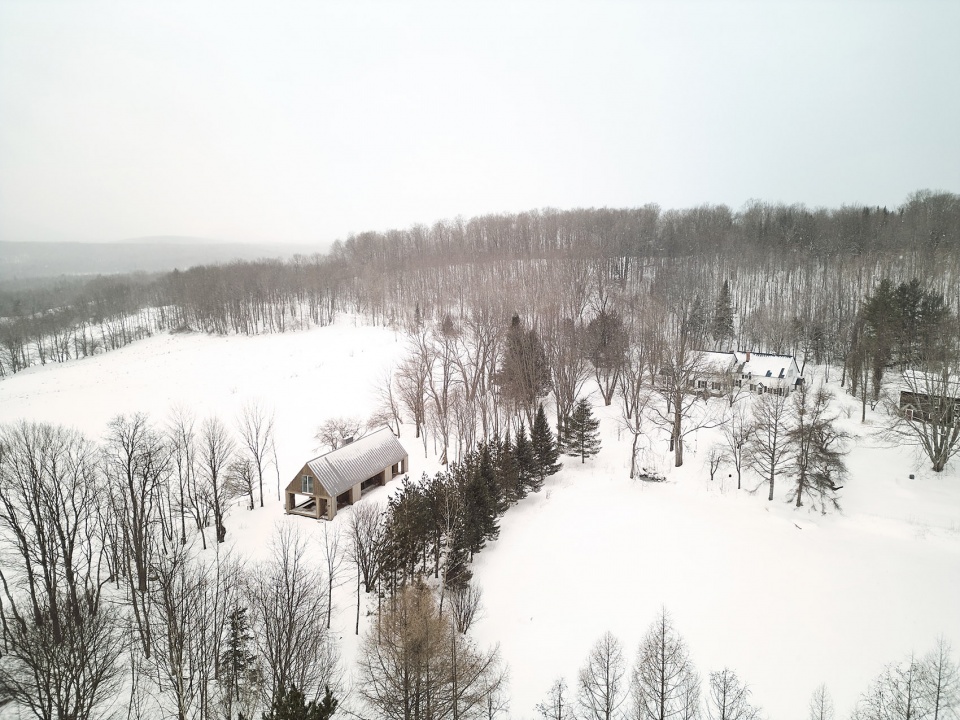
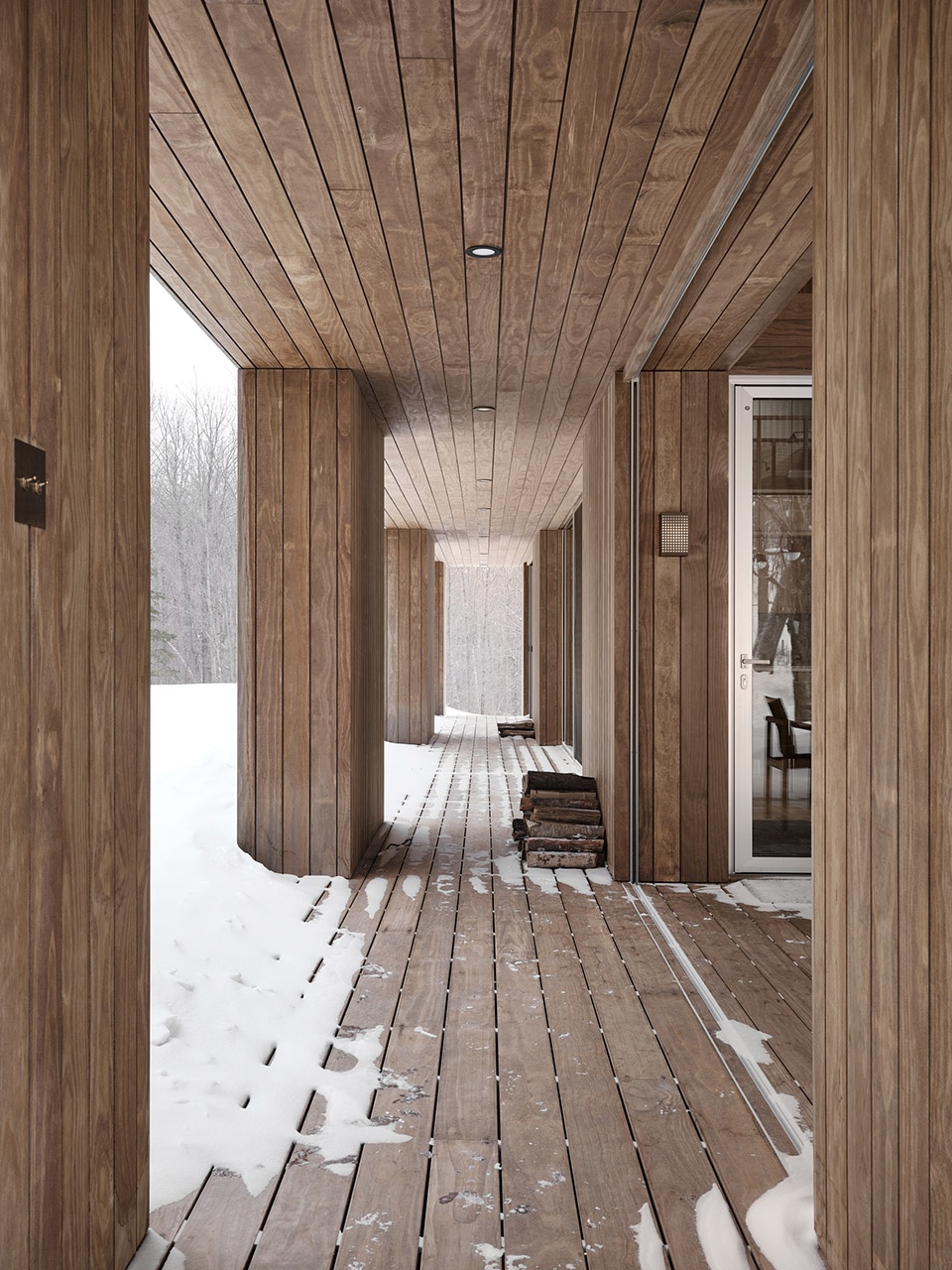
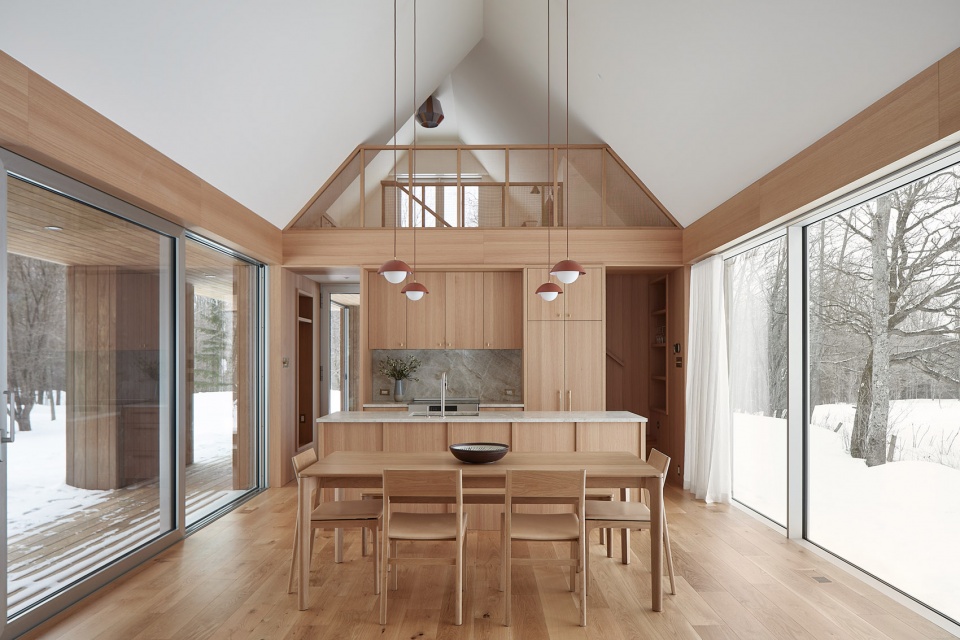
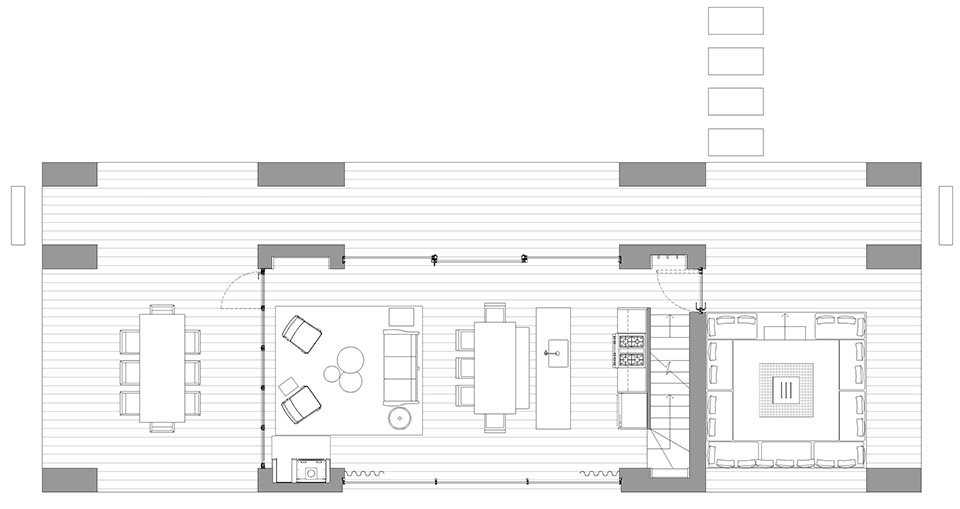
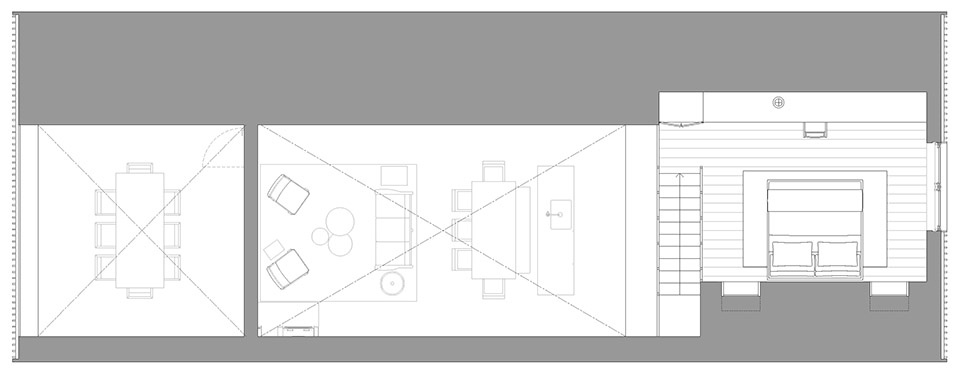
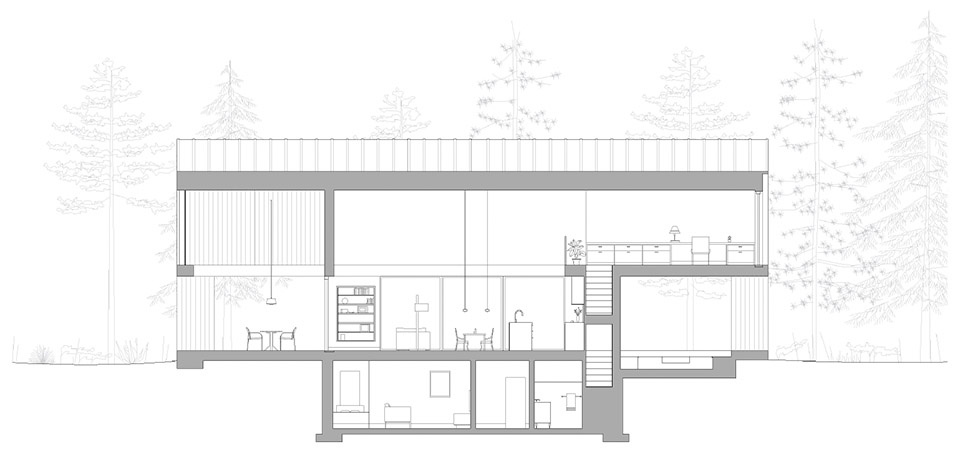
湖畔之家是为一个四口之家设计的辅助住宅,位于业主祖屋所在的同一块地上。每当气候宜人时,它也可以作为池塘旁的小型休闲凉亭使用。这个住宅被设想为一个“珠宝盒”般的存在——紧凑而灵活,同时又不失奢华感。根据当地法规,新建筑的占地面积不得超过50平方米,夹层面积最多为20平方米。为应对这一严格的空间限制,Atelier Échelle通过扩大覆盖式露台的设计,巧妙地将室内空间嵌套在三面露台之中:东侧设有环绕式的下沉式座位区,可围炉取暖,适合较凉的夜晚使用;北侧的长廊连接各个房间,同时也通向池塘;西侧则是一个可容纳八人的露天用餐区,可以打开与主起居室连通。夹层内设有主卧室,并悬挑于下沉式座位区上方,从而让整个起居空间呈现出挑高的双层通高空间。
House on the Pond is designed as a secondary dwelling for a family of four to complement the client’s ancestral home at the same property. In favorable seasons, it doubles up as a cabana for the pond located within the site boundary. Envisioned as a jewel box of sorts, the design is flexibly compact but luxurious at the same time.The local regulations required that the building footprint does not exceed 50 sqm and the mezzanine only to be a maximum of 20 sqm. To work around the tight size constraints for new construction, Atelier Échelle maximized the covered terraces, nesting interior spaces on three sides. To the east is a sunken seating around a fire-pit for cooler nights. To the north, a gallery links all the rooms and serves as a passage towards the pond. To the west is an 8-seat al fresco dining area that can be opened and joined with the main living room. The mezzanine level houses the primary bedroom and extends over the sunken seating, so that the entire living area is reserved by a double-height space.
▼项目概览,overview of the project
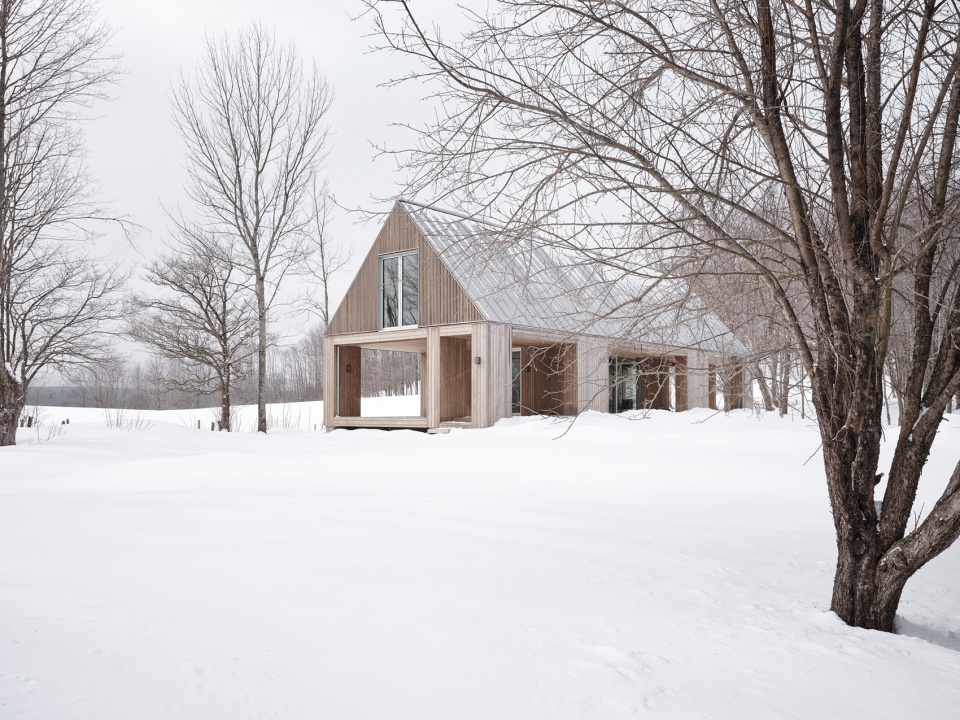
▼项目鸟瞰,aerial view of the project
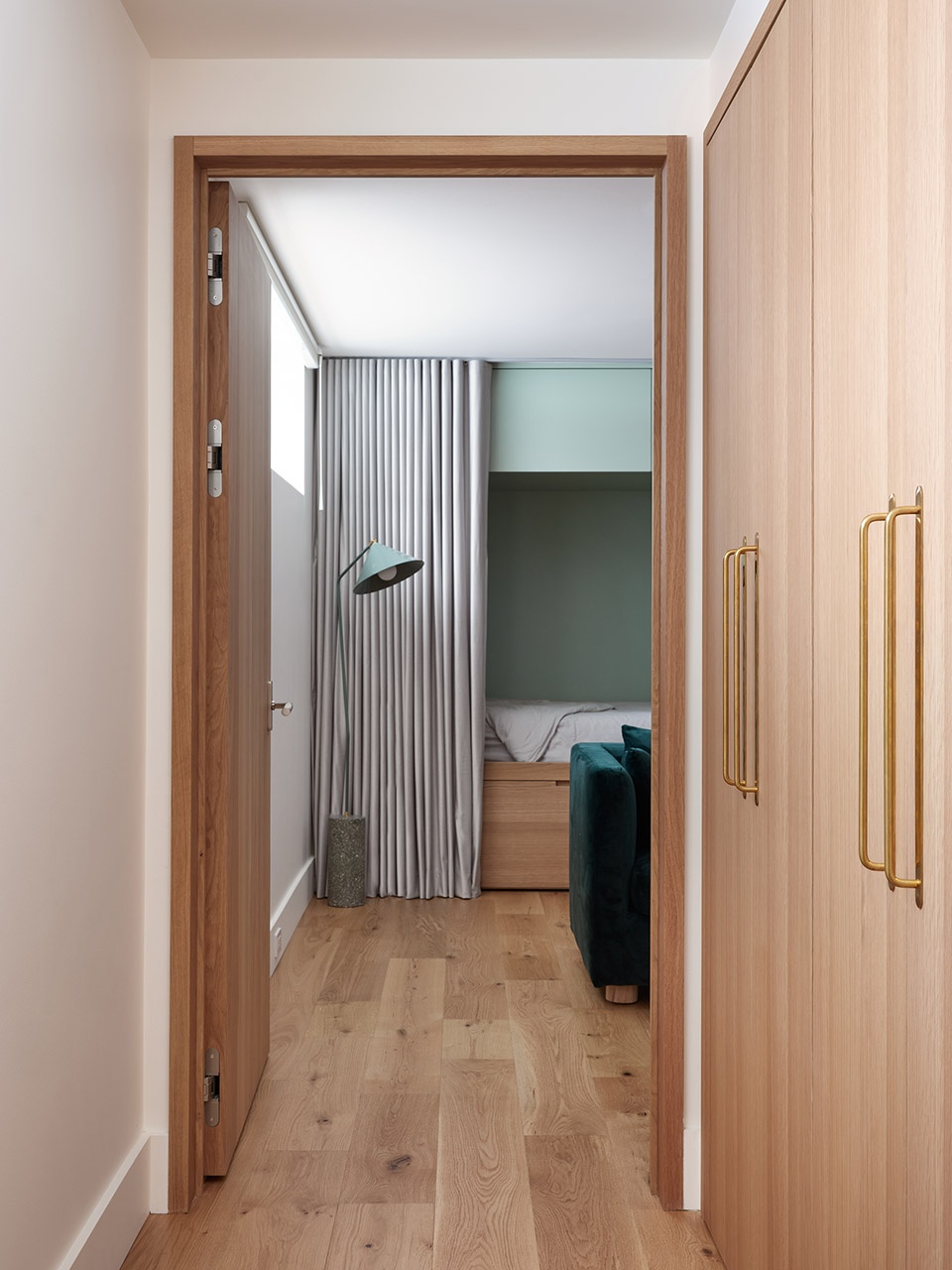
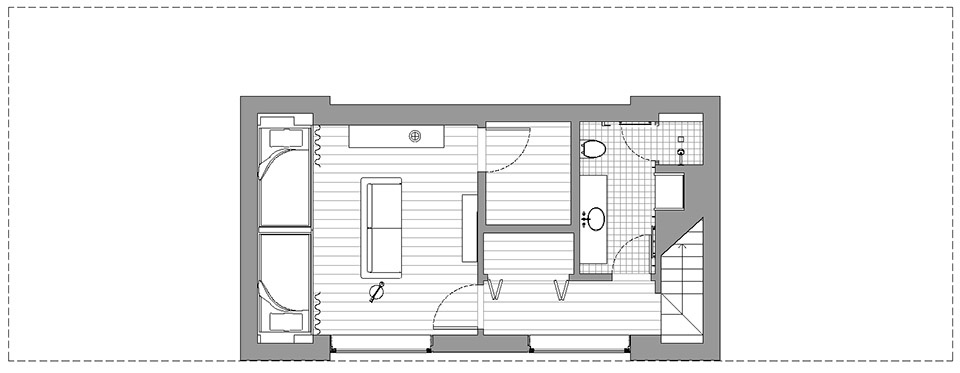
建筑采用保温混凝土块作为基础,最低层被嵌入地面之中。地下空间通过高窗引入自然光,内部设置了儿童上下铺房间、电视休闲区以及浴室。
Supported on a foundation of insulated concrete blocks, the building carves the lowest floor level into the ground. Lit by a band of clerestory windows, the basement houses the children’s bunk room, TV lounge, and bathroom.
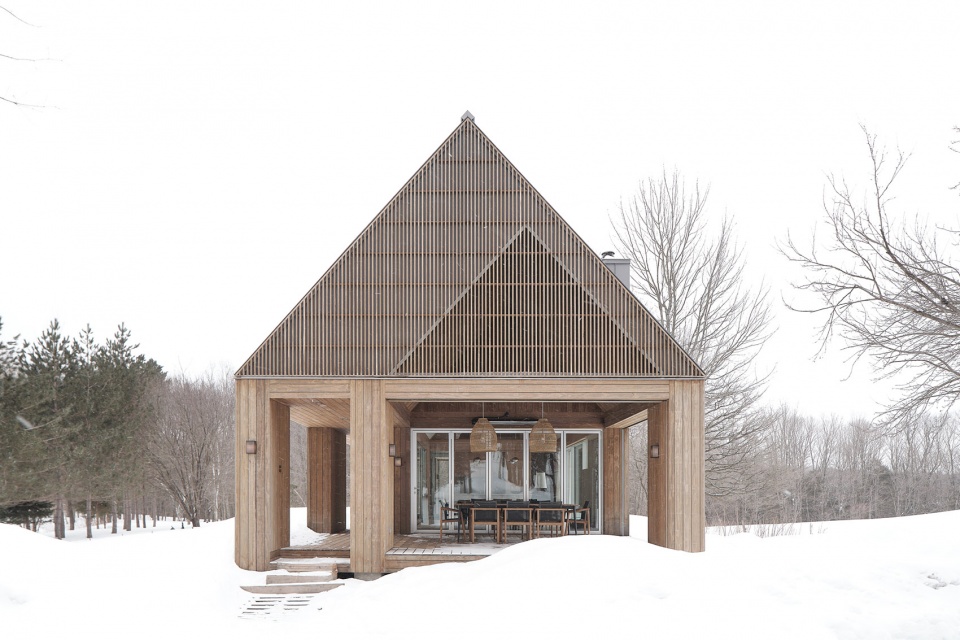
▼项目外观,exterior of the project
▼户外廊道,the exterior gallery
引入阳光与自然,该建筑以“视野交汇”为设计核心,边界开敞通透,随时间流转与季节更替呈现出不同的空间体验。为尽可能引入阳光,建筑南侧采用整面固定玻璃,增强通透性;北侧面向户外廊道的部分则设有可开启的玻璃墙。透过邻近农田延展至远山的视野,将广袤自然景观引入室内,而壁炉的木柴火光则营造出温暖舒适的氛围。
Inviting in sunlight and natureDesigned as an intersection of vistas with a porous perimeter, the architecture itself is experienced differently with the passage of time and change in seasons. To invite as much sunlight in as possible, the building’s south side is fixed glass for maximum transparency and the north side, which gives to the exterior gallery is lined with operable glass walls. The expansive view through the adjacent farm to the distant mountains invites the impressive natural landscape into the home while a wood burning fire lends a sense of warmth and coziness.
▼开敞通透的边界,a porous perimeter
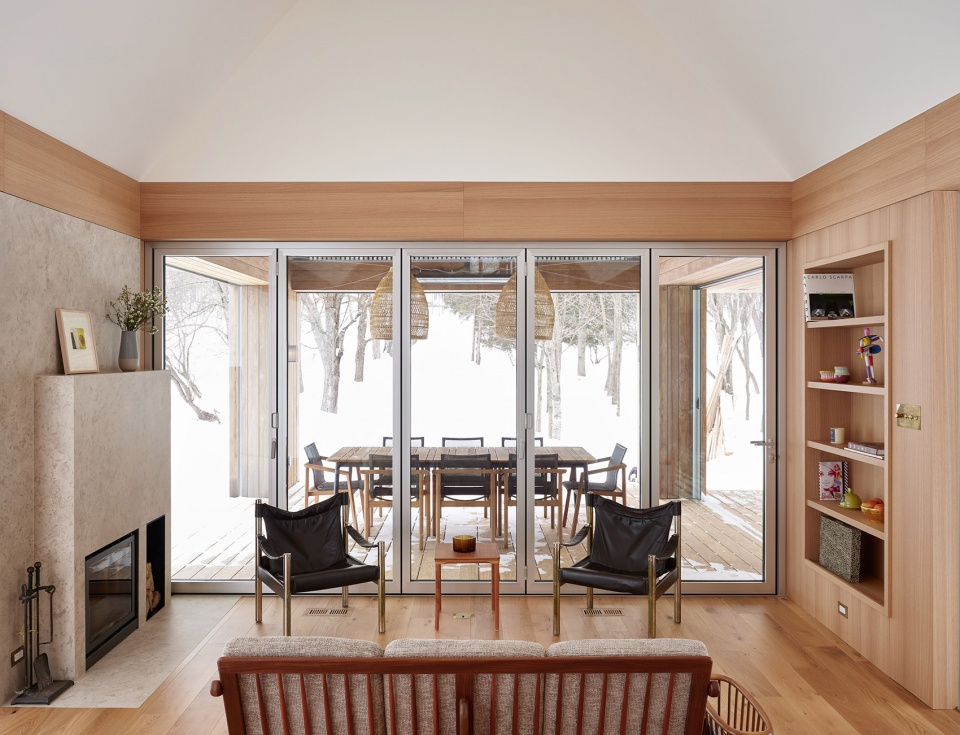
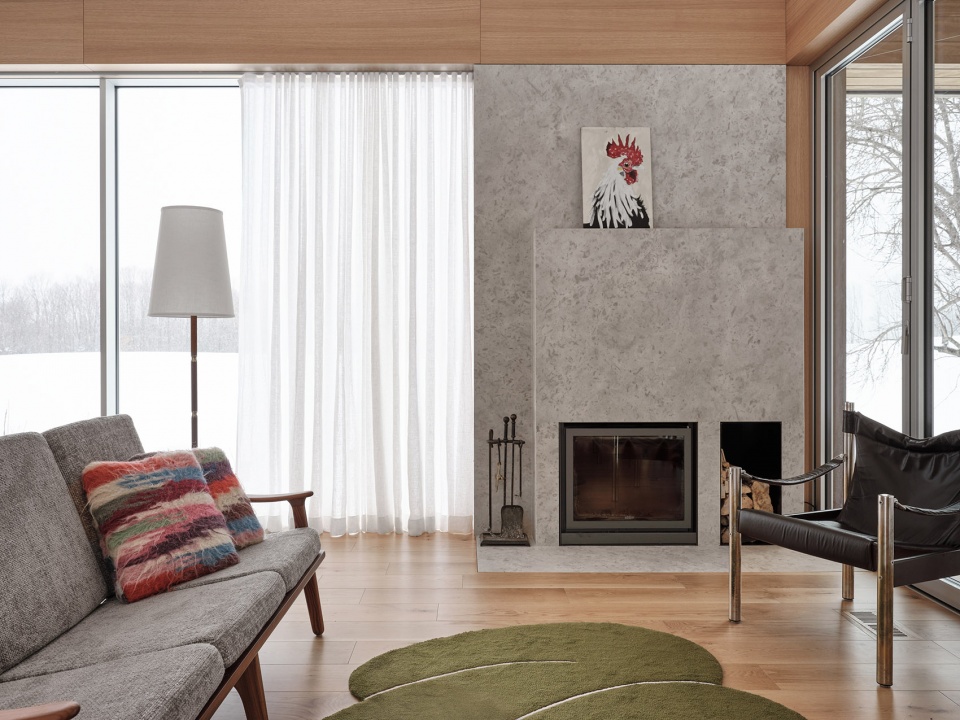
▼可开启的玻璃墙引入阳光与自然,operable glass walls introduced lights and nature
▼地下空间,the basement space
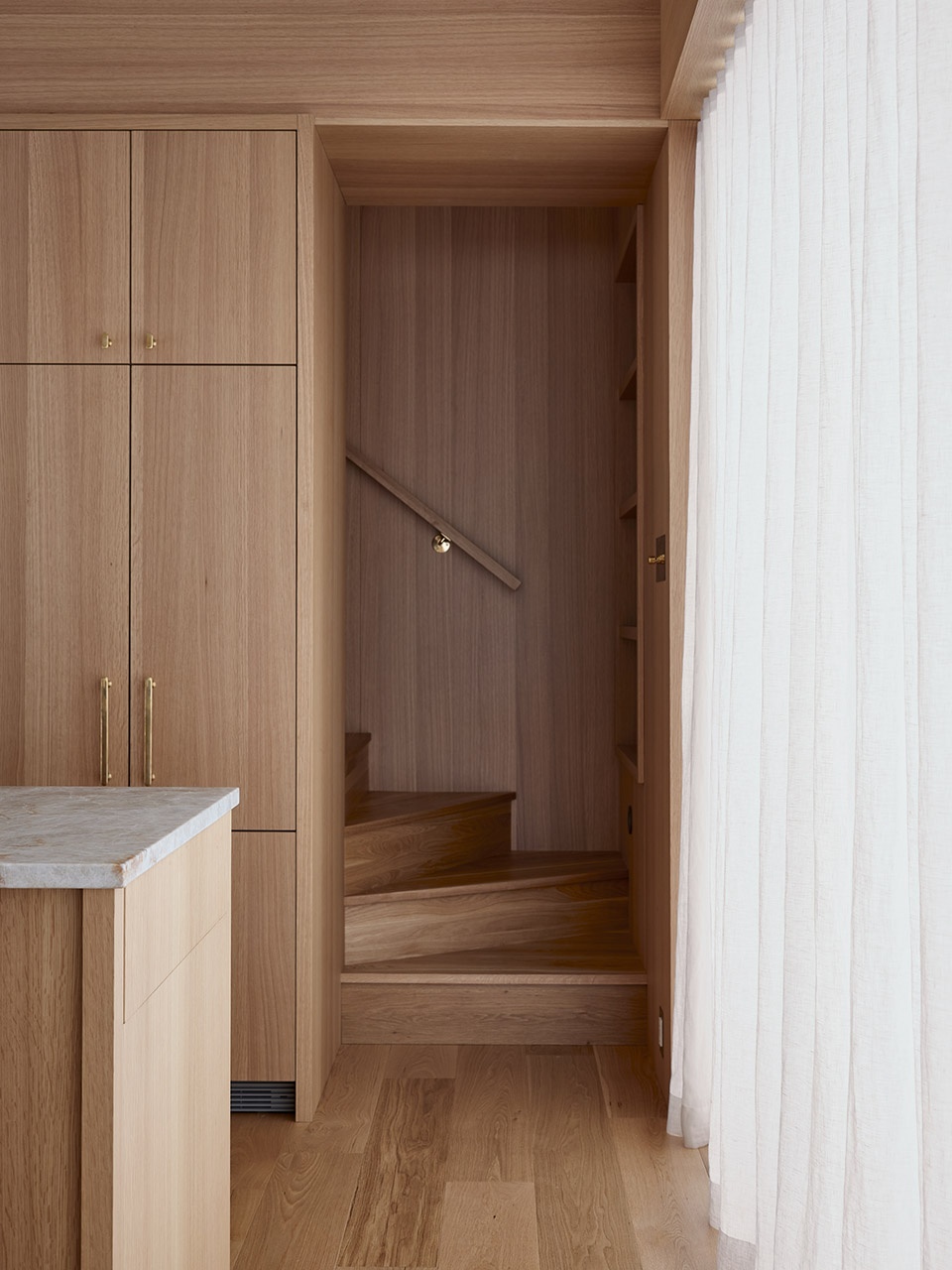
▼通往二层的楼梯,staircase towards the upper level
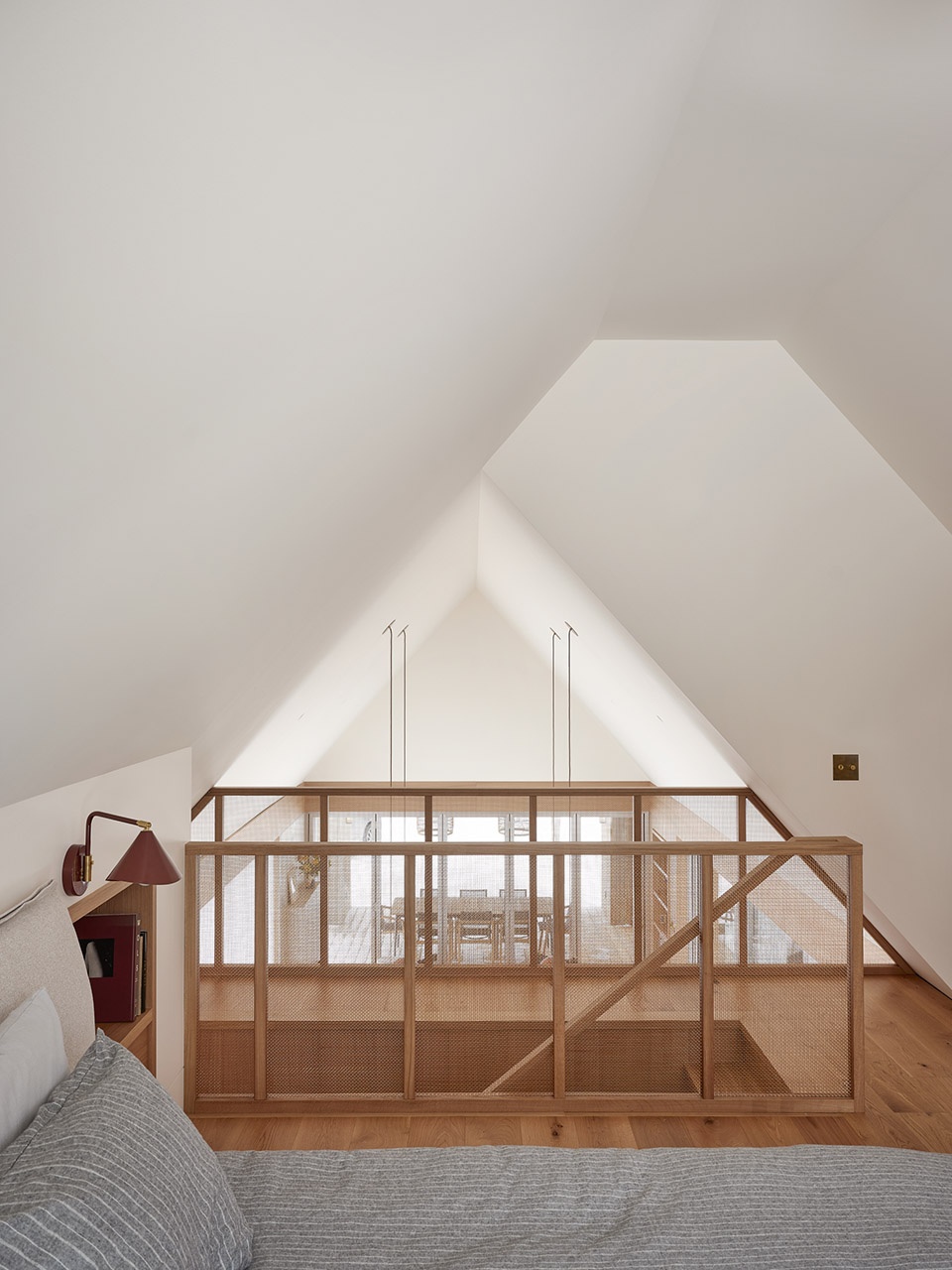
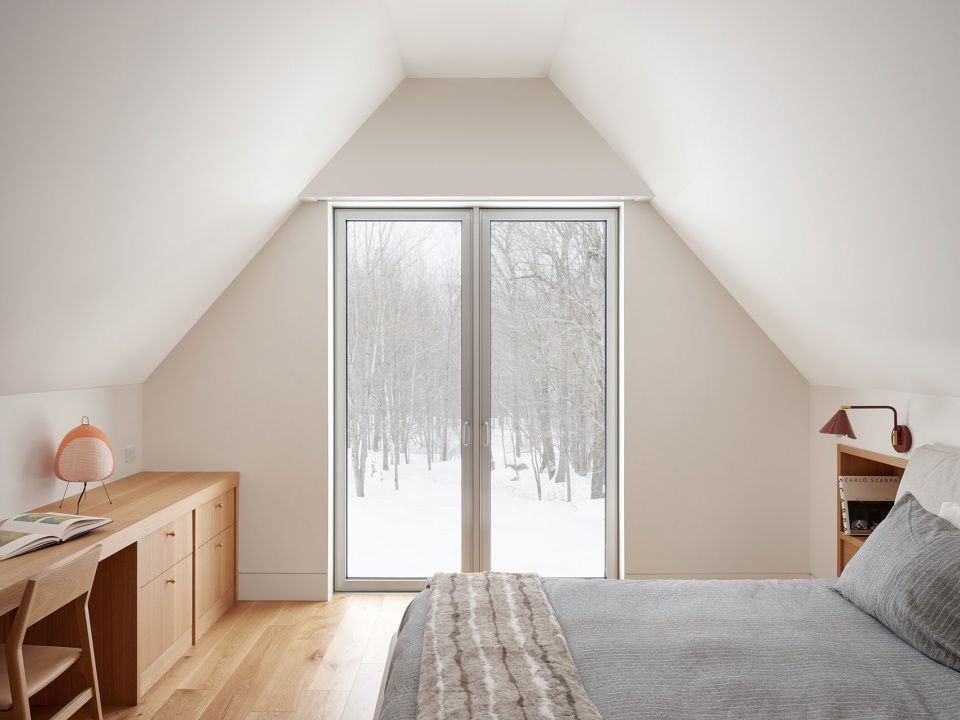
▼卧室区域,bedroom
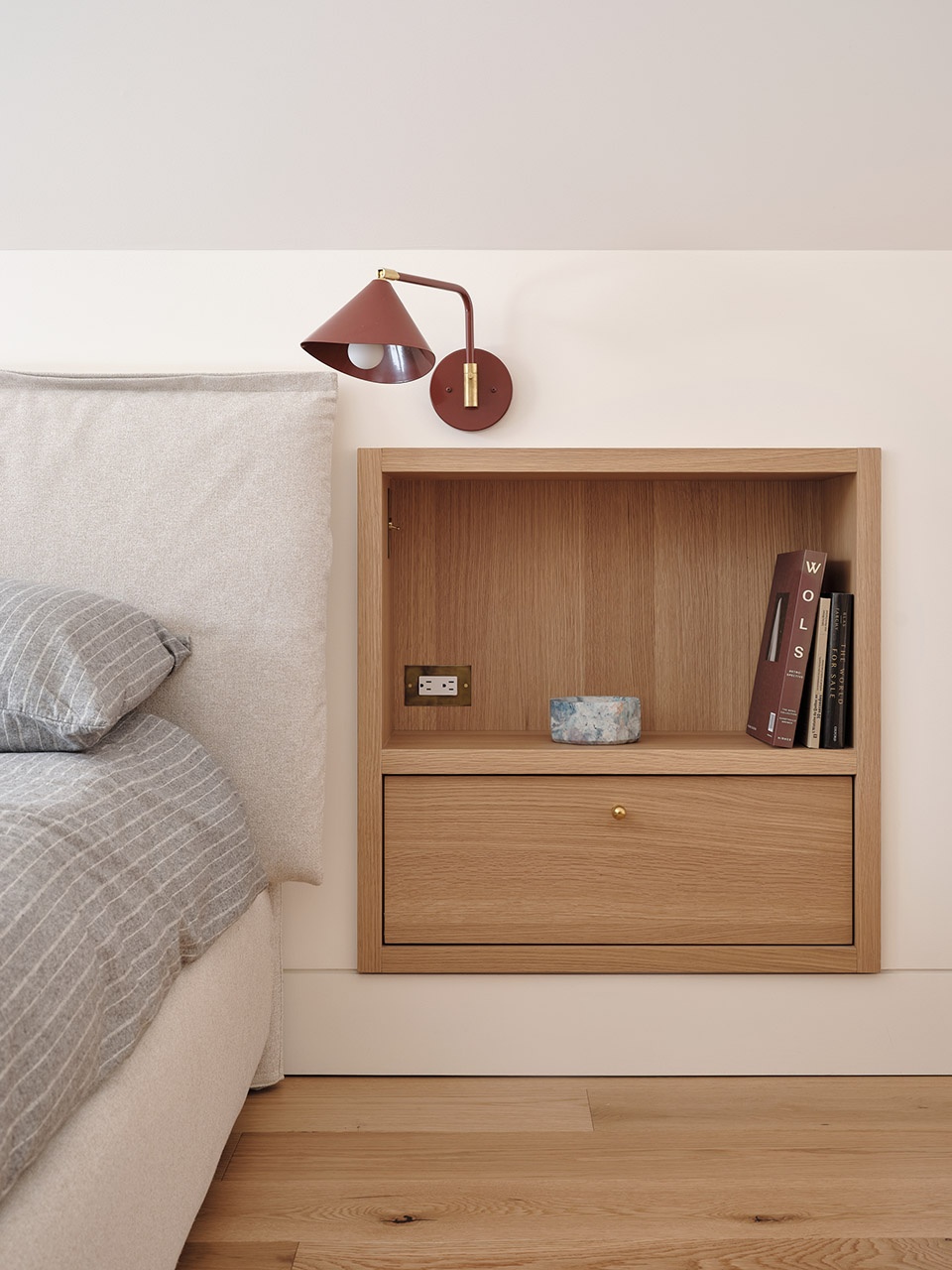
▼卧室局部,bedroom detail
▼浴室区域,bathroom
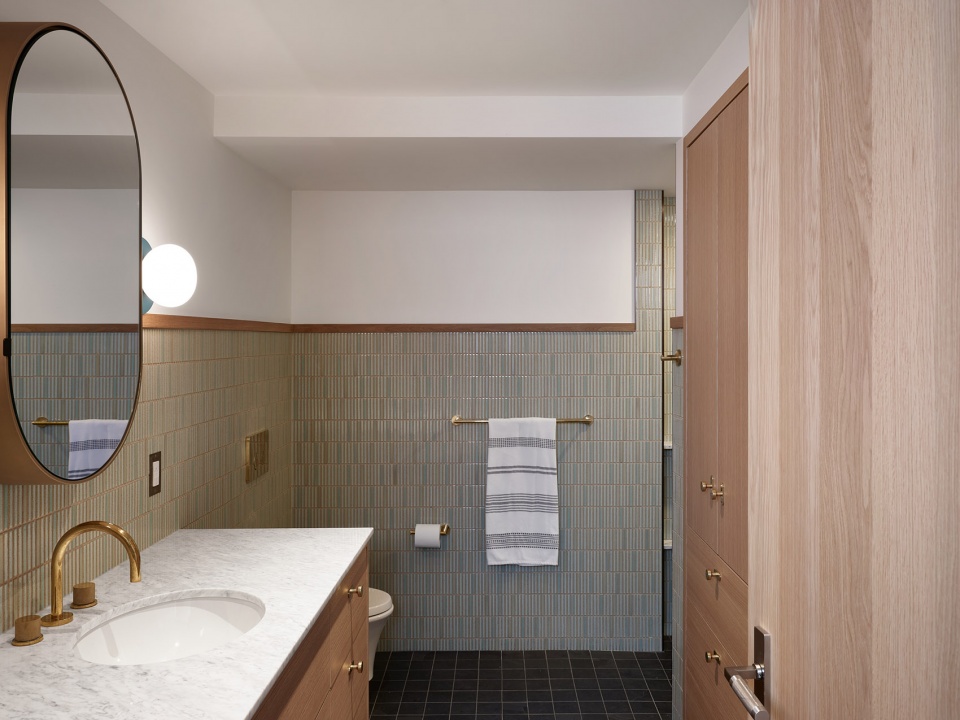
这座住宅的形态与材料灵感来源于魁北克地区的乡土农业建筑,传达出温润与永恒的气质。外立面和露台采用Kebony木材——一种由加拿大研发的可持续改性木材。室内则以锯纹白橡木定制木作和专属照明装置为特色。厨房台面使用带金色纹理的白色石英石,与室内木作形成对比;而户外的火坑则选用柔和的灰褐色砂岩。装饰五金则采用未经上漆的黄铜,随着时间的推移将自然氧化,形成岁月痕迹,映射代际传承的温度与质感。
Drawing vernacular inspiration Embodying warmth and timelessness, the building’s form and materials are inspired by the local agrarian architecture of Québec. The wood cladding and decks are made of Kebony, a sustainable modified wood product developed in Canada. The interiors are characterized by rift-cut white oak millwork and bespoke lighting fixtures. Contrasting with the interior millwork is the kitchen counter made of gold-streaked white quartzite and the fire-pit is a soft, putty colored sandstone. The decorative hardware is unlacquered brass that will develop a patina over time and reflect the effects of weathering over generations of use.
▼地下一层平面,basement plan
▼一层平面,ground floor plan
▼夹层平面,mezzanine floor plan
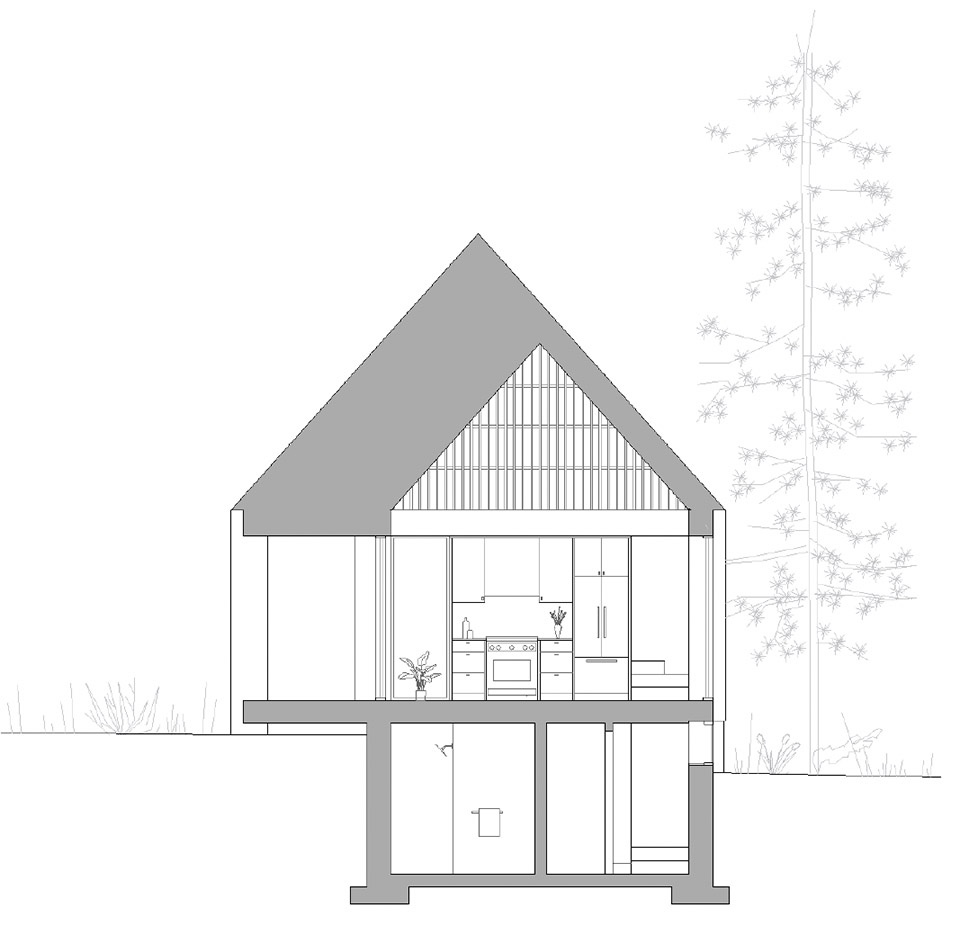
▼剖面图,section
Project name: House on the pond
Location: Austin, Québec, Canada
Area: 120 sqm
Teamarchitect: Atelier échelle
Interior designer: Atelier échellegeneral
Contractor: Menuiserie simon fortin
Millworker: Atelier notre-dame
Photographer: Maxime brouillet