福冈VECTORS办公楼,日本 / SAKO Architects
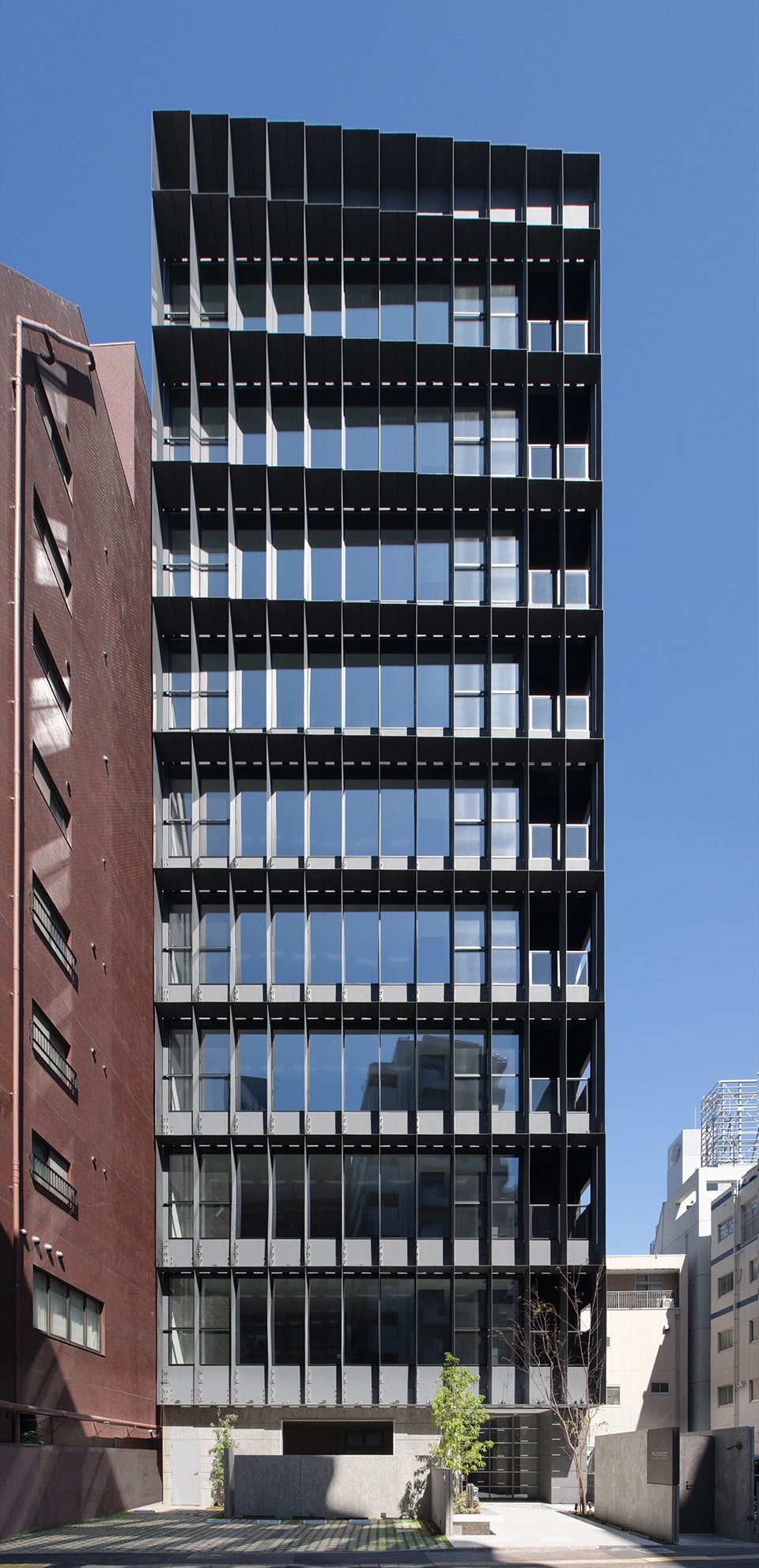
福冈的VECTORS大楼是一座位于日本福冈市天神区的十层可持续办公楼,由SAKO建筑设计事务所的佐古庆一郎(Keiichiro Sako)设计。项目重新审视了中等规模办公楼在经历快速城市转型的区域城市中的潜力,提出了一种整合建筑性能、环境策略与城市连接性的新型空间系统。
“VECTORS in Fukuoka” is a ten-story sustainable office building located in the Tenjin district of Fukuoka, Japan. Designed by Keiichiro Sako of SAKO Architects, the project reconsiders the potential of mid-scale office buildings in regional cities undergoing rapid urban transformation. It proposes a new spatial system that integrates architectural performance, environmental strategy, and urban connectivity.
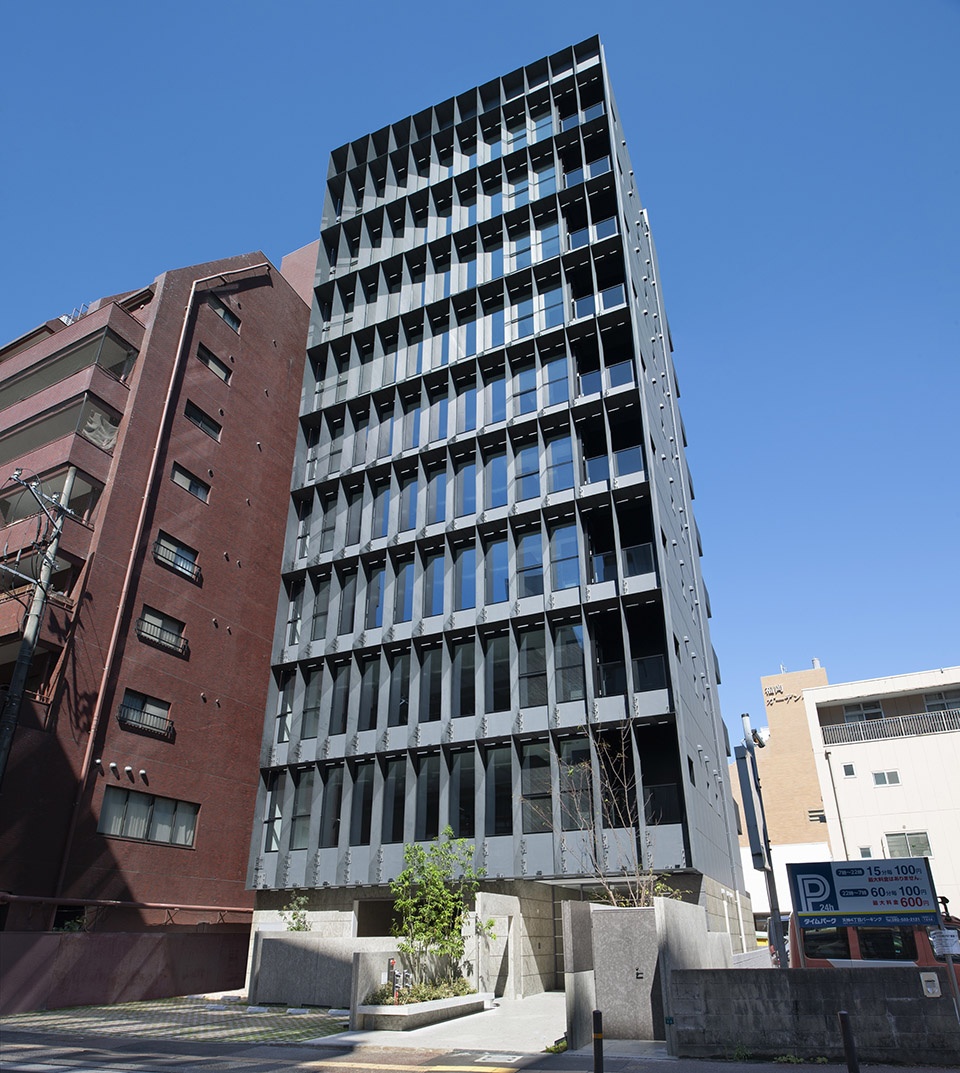
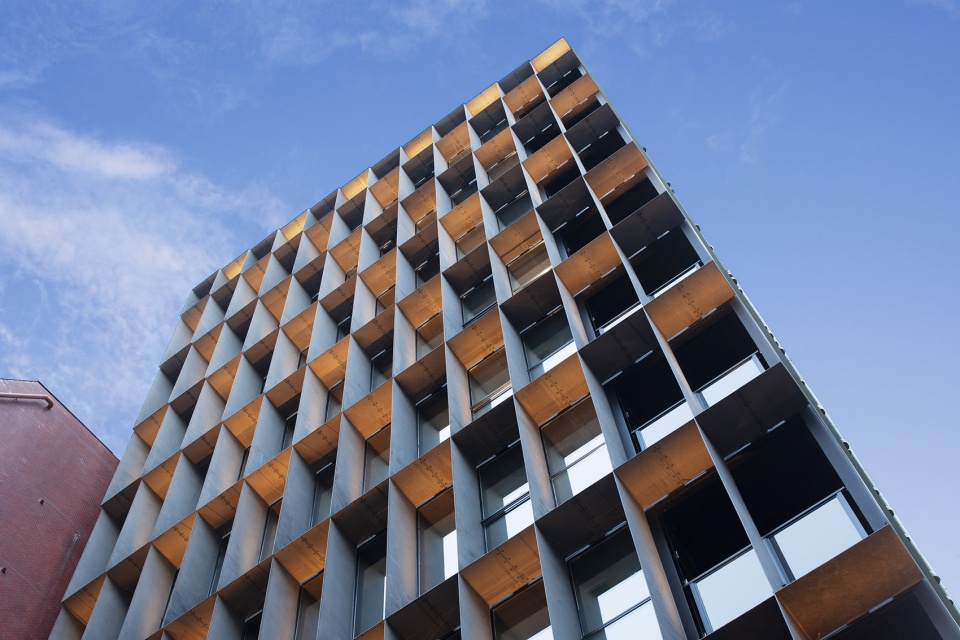
▼大楼概览,overview of the building
城市语境与设计挑战
Urban Context and Design Challenge
项目位于天神区,探索中等规模办公建筑在城市更新背景下的可能性。福冈是日本增长最快的政令指定城市,正在经历一波城市核心区的再生浪潮,办公空间面临越来越多元的需求。为应对气温与湿度升高、能源成本增加、热岛效应加剧等复杂挑战,项目通过统一建筑设计、环境性能与空间响应性,提出了新型城市办公空间的模型。
Situated in the Tenjin district, this project explores the possibilities of mid-scale office architecture within regional cities experiencing redevelopment. Fukuoka, the fastest- growing designated city in Japan, is undergoing a wave of central urban revitalization, resulting in increasingly diverse demands on the workplace. In response to complex challenges—including rising temperatures and humidity, increasing energy costs, and the urban heat island effect—this project offers a new model for urban workplaces by unifying architectural design, environmental performance, and spatial responsiveness.
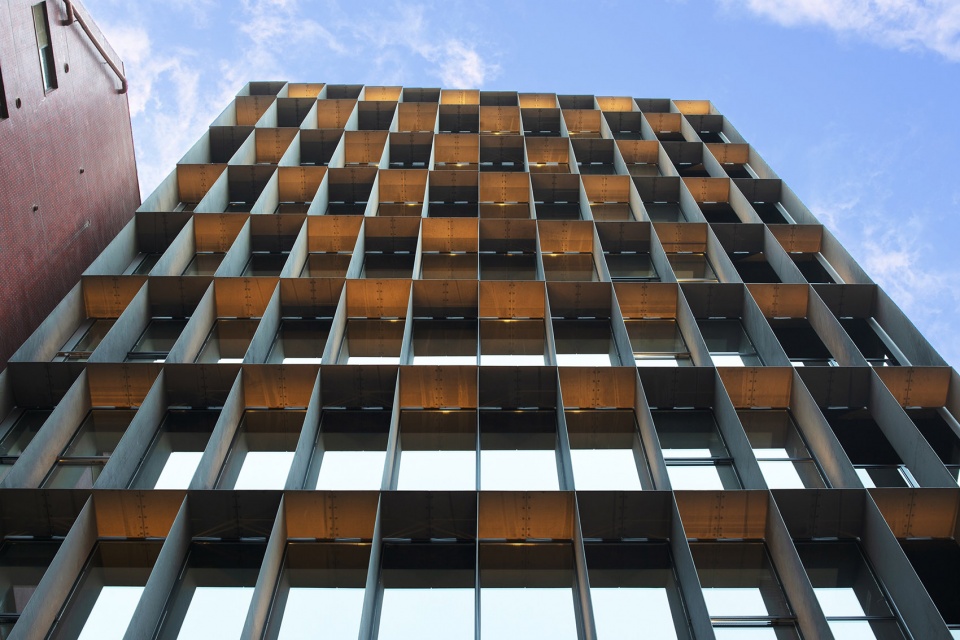
▼大楼仰视,look up to the building
立面系统与环境性能
Façade System and Environmental Performance
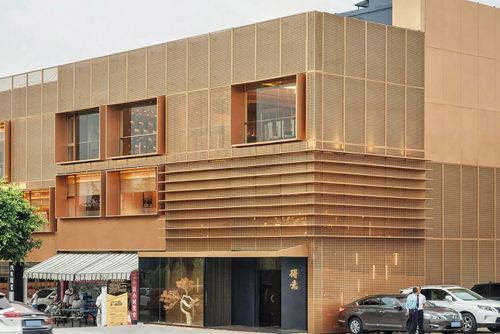
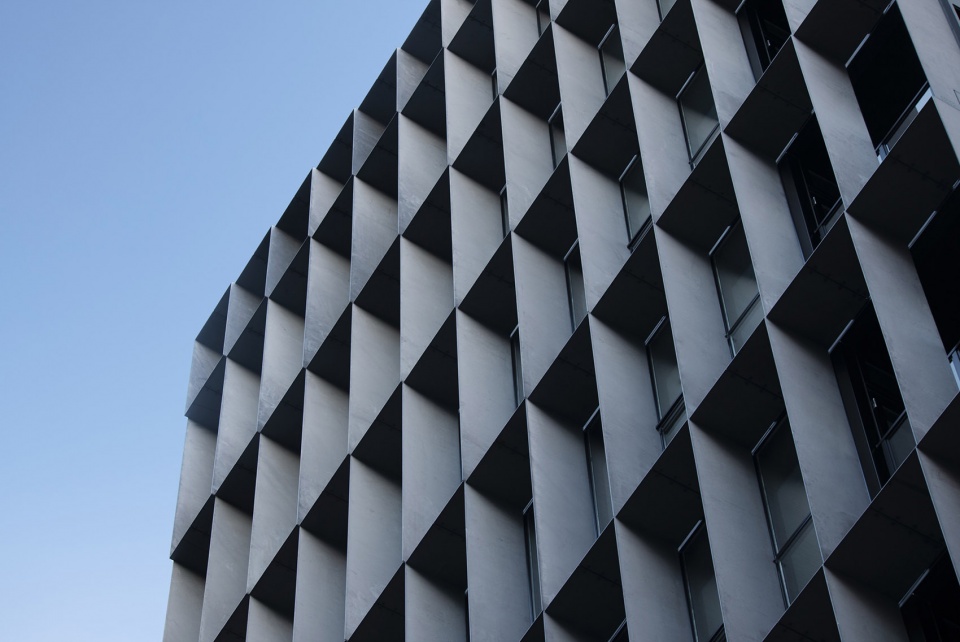
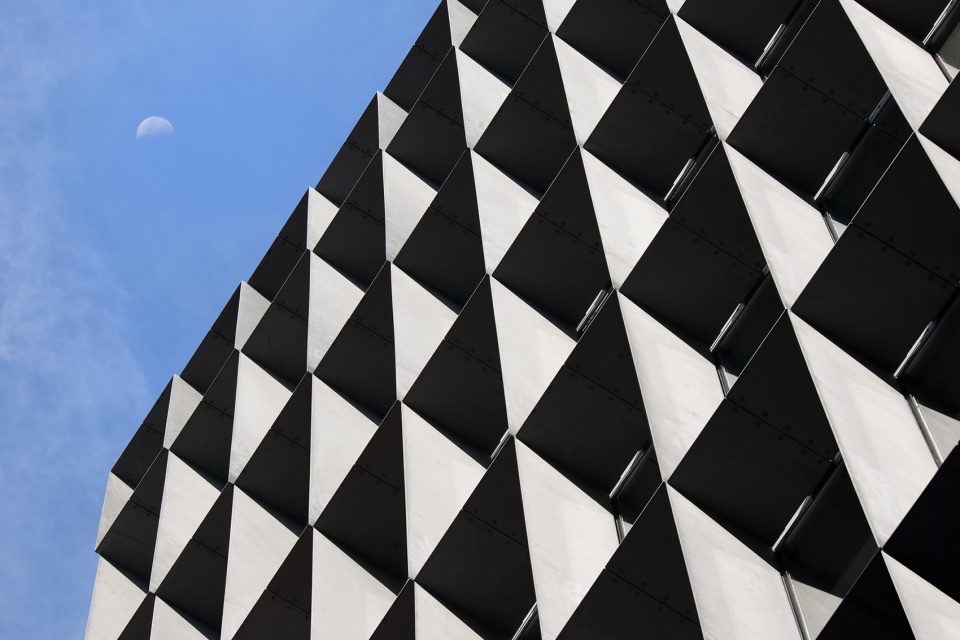
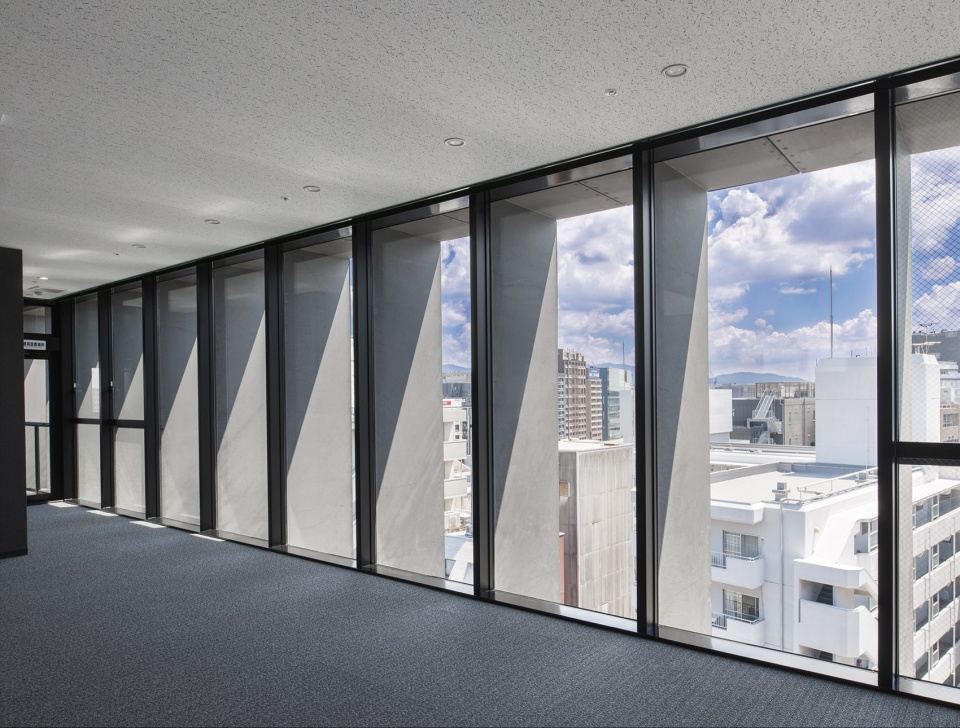
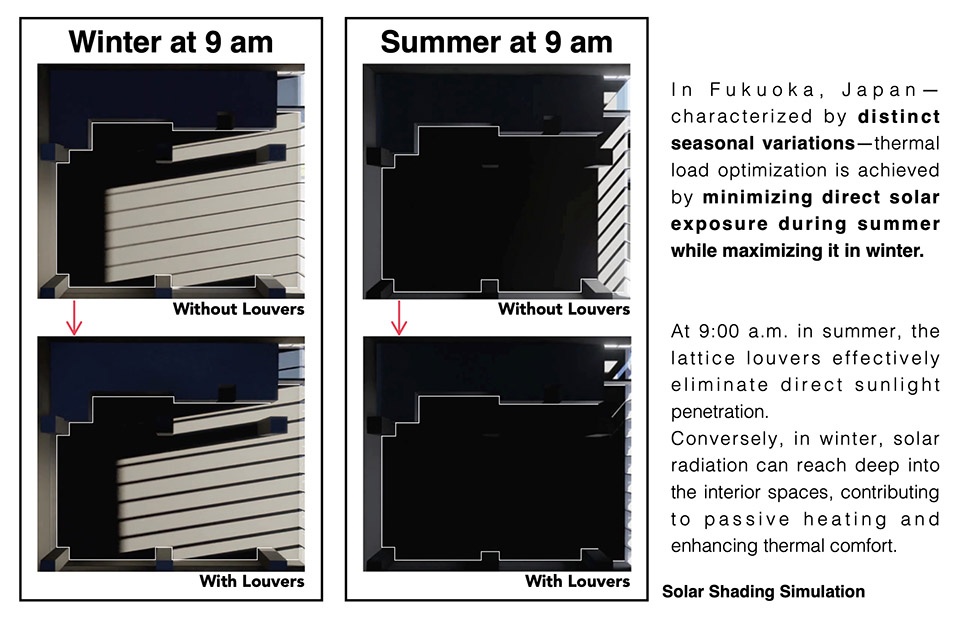
建筑最具特色的部分是其立面:一个由9毫米厚钢板构成的格栅状百叶系统。该系统由120个模块化单元组成,三维方向上略微弯曲,通过毫米级的深度变化产生动态阴影。尽管百叶的朝向保持一致,其深度会根据太阳角度、周边建筑与视野通廊的变化进行调整,从而形成空间最优化的遮阳系统。这些依据太阳模拟与场地分析进行的精密调整,预计可使全年空调能耗降低约4.3%,充分体现了环境策略与设计意图的融合。
The building’s defining feature is its façade: a lattice-like louver system made from 9mm- thick steel plates. Comprising 120 modular cells, the grid subtly curves in three dimensions, generating dynamic shadows through millimeter-scale depth adjustments. While the orientation of the louvers remains consistent, their depth varies across the façade in response to solar angles, surrounding buildings, and view corridors—forming a spatially optimized shading system. These calibrations, informed by solar simulations and contextual analysis, are expected to reduce the building’s annual HVAC energy load by approximately 4.3%, exemplifying the fusion of environmental strategy and design intent.
▼立面的光影变化,Light and shadow changes in the façade
光影、材质与昼夜转化
Light, Material, and Day-Night Transformation
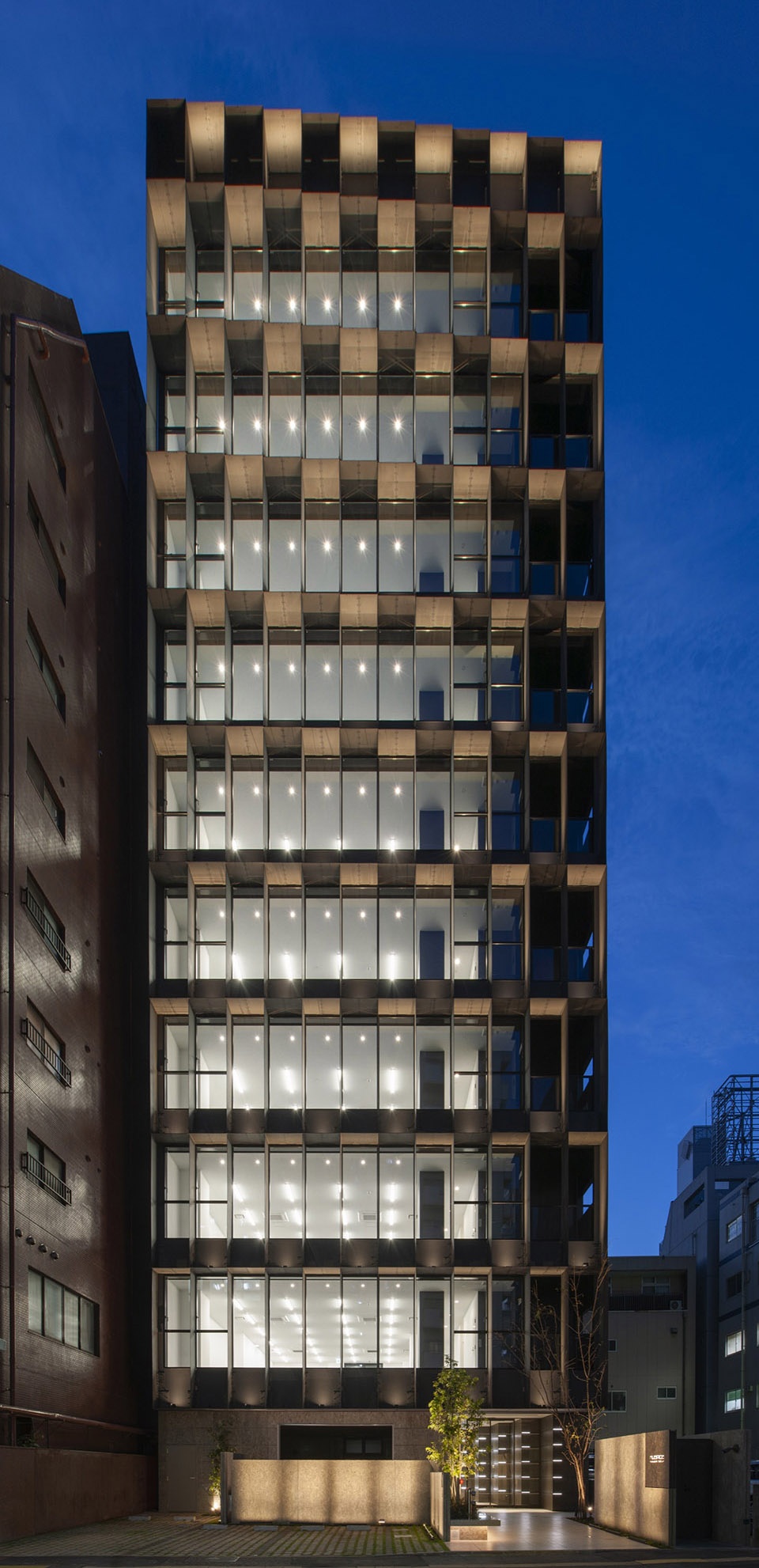
立面在白天与夜晚展现出双重特质。白天,锋利的钢板边缘投下清晰而优雅的阴影,使建筑呈现出精致感;夜晚,每个百叶单元底部嵌入的LED上射灯以棋盘格样式点亮百叶。由于薄钢板边缘对直射光的折射作用,钢材本体隐去,仅留下浮动的光矩阵——形成光与质感的反差视觉效果。这种昼夜间的感知转换,改变了城市体验,也重新定义了建筑在时间与光线中的解读方式。
The façade presents a dual character between day and night. During daylight, the razor- thin edges of the steel plates cast sharp, elegant shadows, giving the building a refined presence. At night, LED uplights embedded at the base of each cell illuminate the louvers in a checkerboard pattern. As the thin plate edges deflect direct light, the steel’s material presence recedes, leaving only a floating matrix of light—a visual phenomenon that contrasts the hardness of steel with the weightlessness of illumination. This shift in perception between day and night transforms the urban experience, inverting how the building is read across time and light.
▼材质与光影的昼夜转化,Light, material and day-night transformation
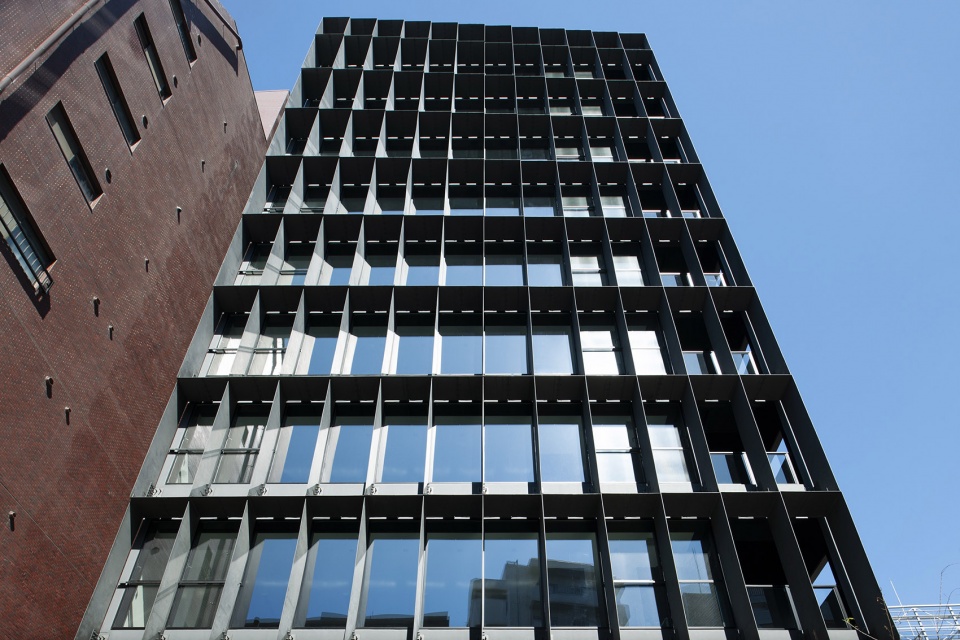
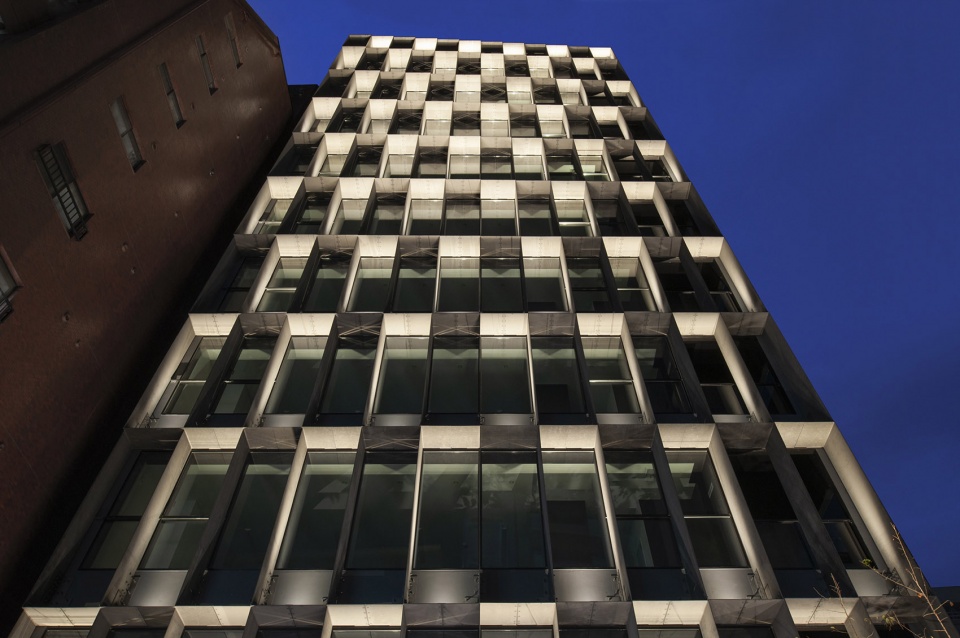
▼材质与光影的昼夜转化,Light, material and day-night transformation
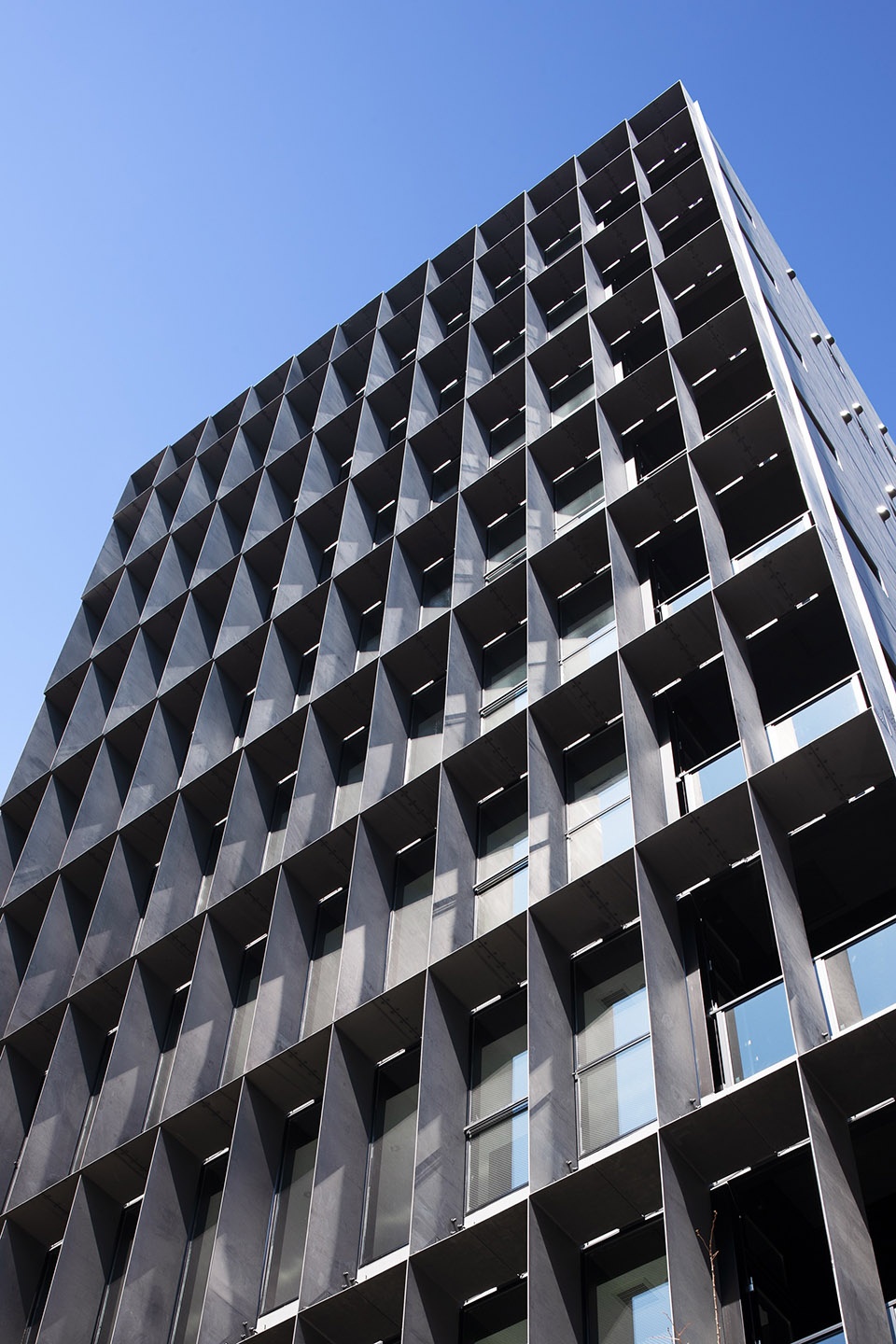
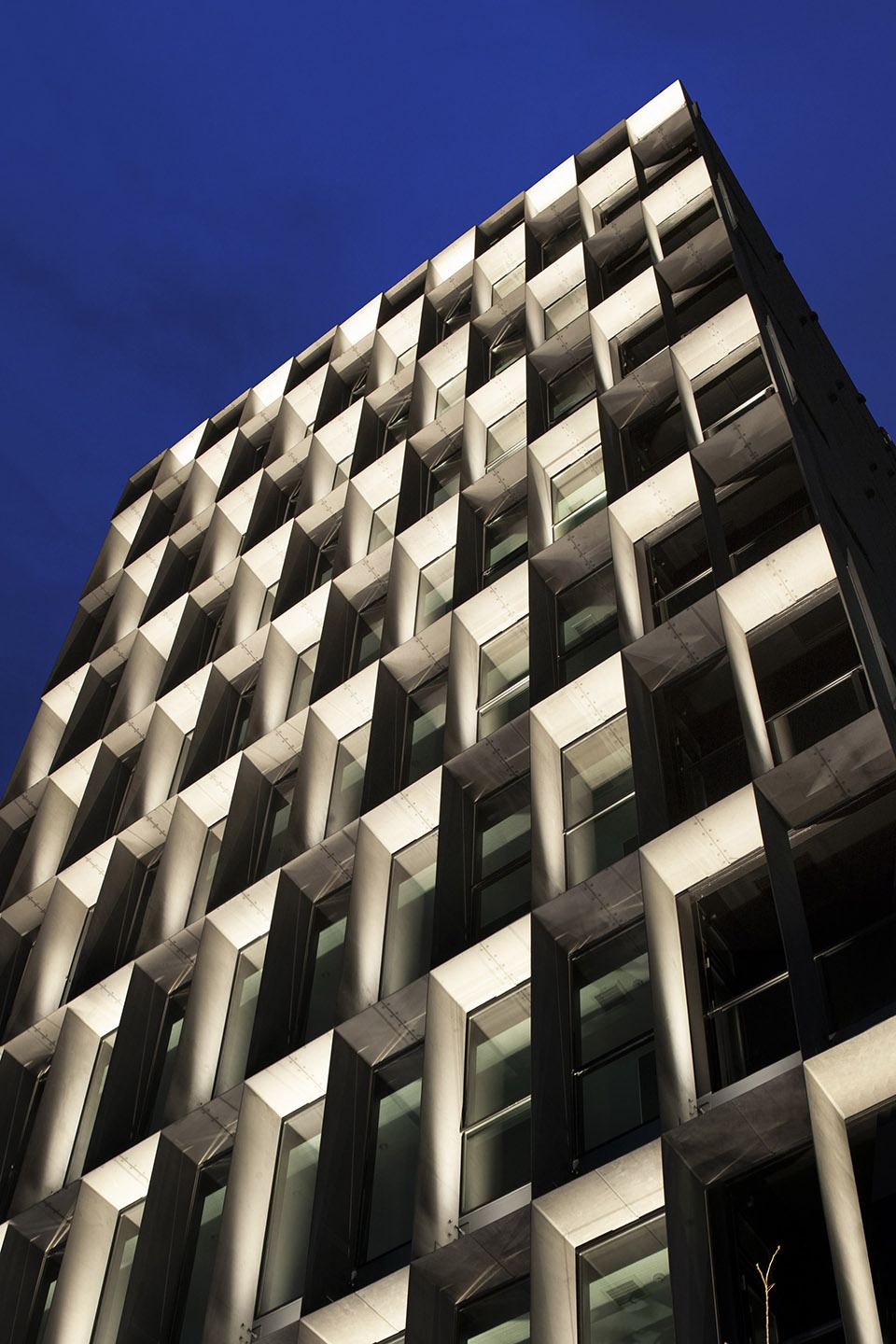
▼形成光与质感的反差视觉效果,a visual phenomenon that contrasts the hardness of steel with the weightlessness of illumination
材料策略与钢材创新
Material Strategy and Steel as Innovation
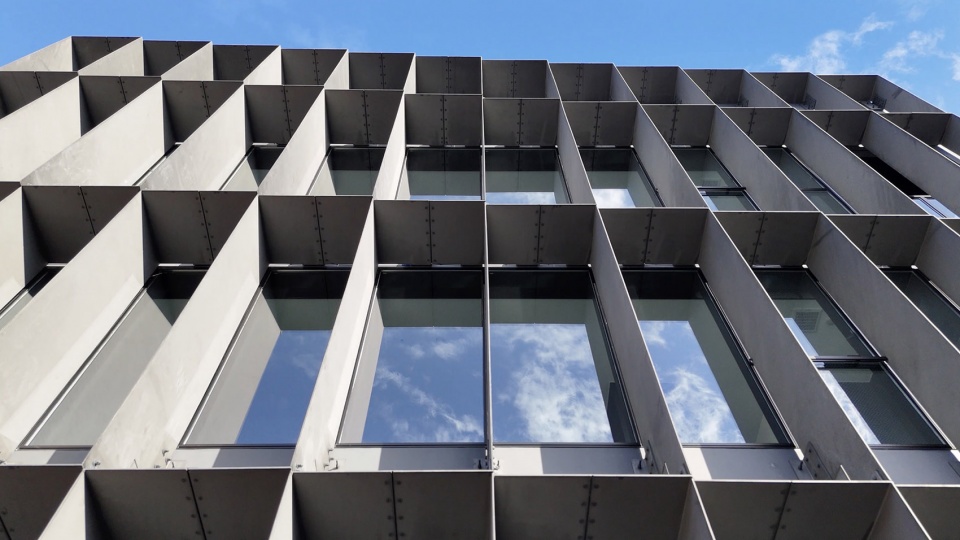
项目的另一项关键创新在于选用了钢材而非传统铝板作为主要材料。钢的杨氏模量约为铝的三倍,可实现更薄、更精致的百叶设计,同时保障结构稳定性;其热膨胀系数仅为铝的一半,可减少伸缩缝数量;此外,钢材在耐候性、可加工性与表面处理方面也更具优势。该项目采用热浸镀锌与磷化处理,使表面呈现出深邃的哑光质感。借助全国钢构厂的协作网络,项目在控制成本的同时实现了高精度的定制化细节。
▼立面细部,facade detail
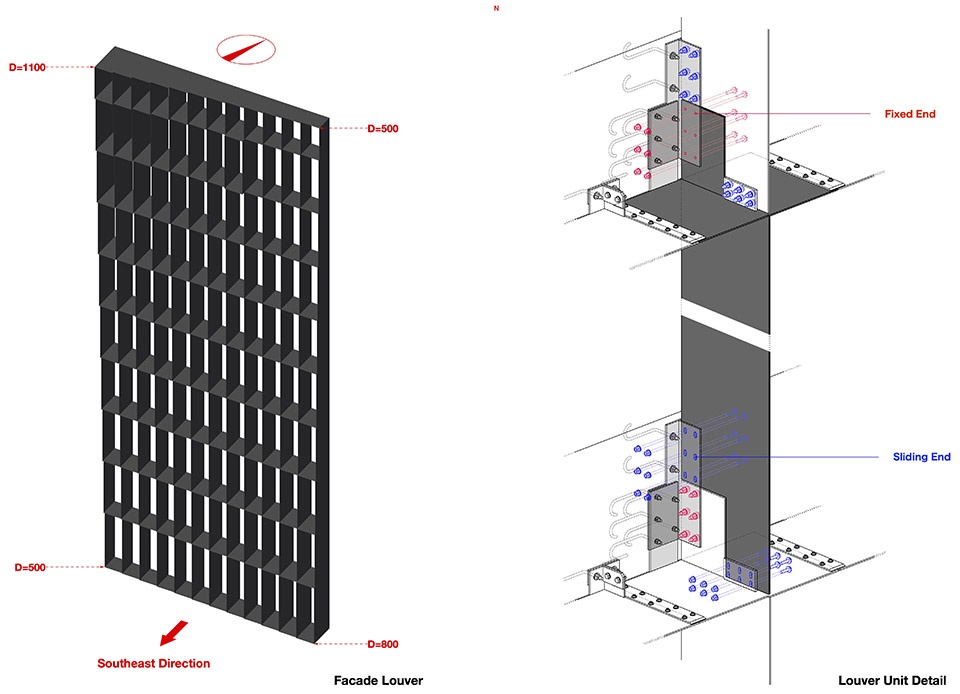
One of the project’s key innovations lies in its choice of material: steel rather than conventional aluminum cladding. With a Young’s modulus roughly three times that of aluminum, steel enables thinner, more delicate louvers while ensuring structural stability. Its thermal expansion coefficient is about half that of aluminum, minimizing the number of required joints. Steel also offers superior weather resistance, workability, and finish options. For this project, hot-dip galvanization followed by a phosphate treatment was used to create a deep, matte texture. Leveraging a nationwide network of steel fabricators allowed for highly precise custom detailing while maintaining cost efficiency.
▼超薄钢板细部,Ultra-thin steel sheet detail
城市融合与空间组织
Urban Integration and Spatial Configuration
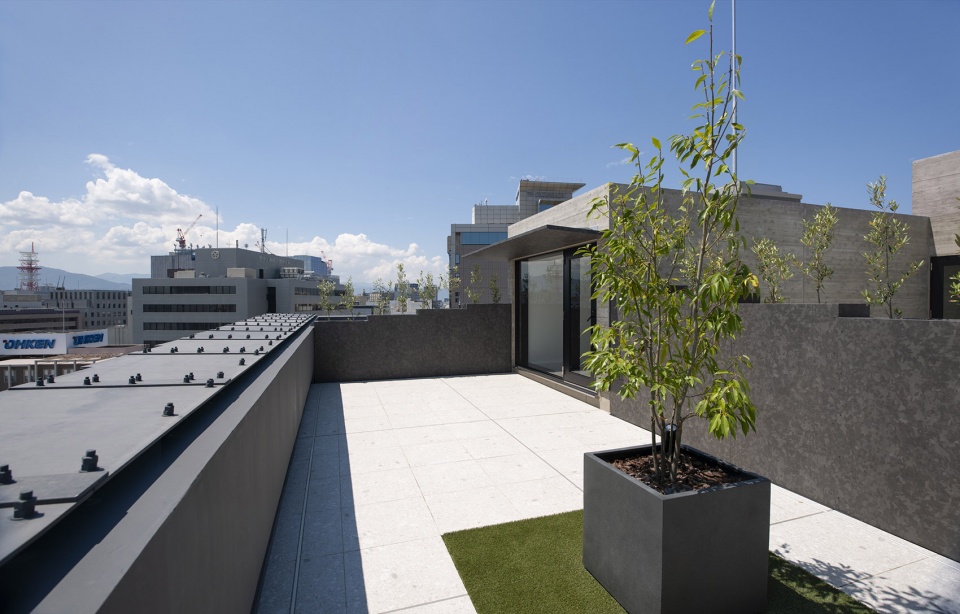
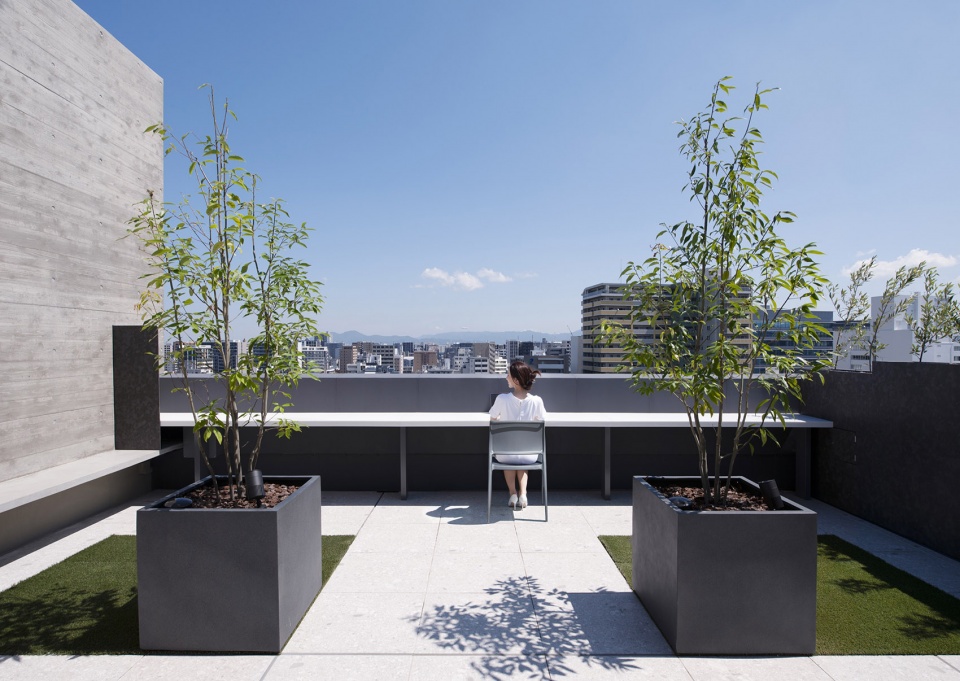
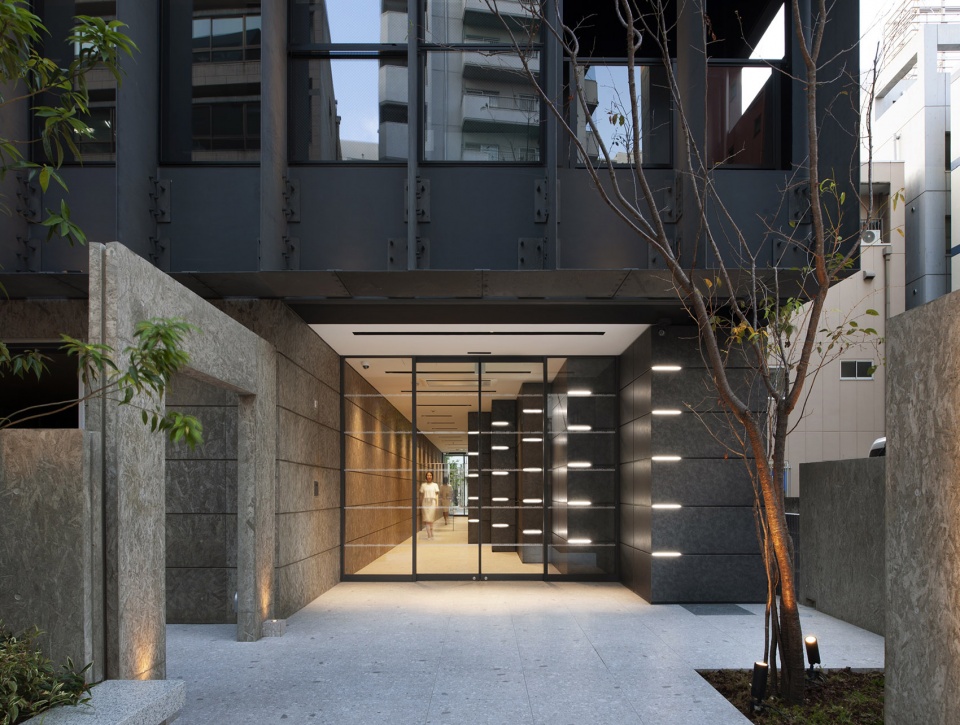
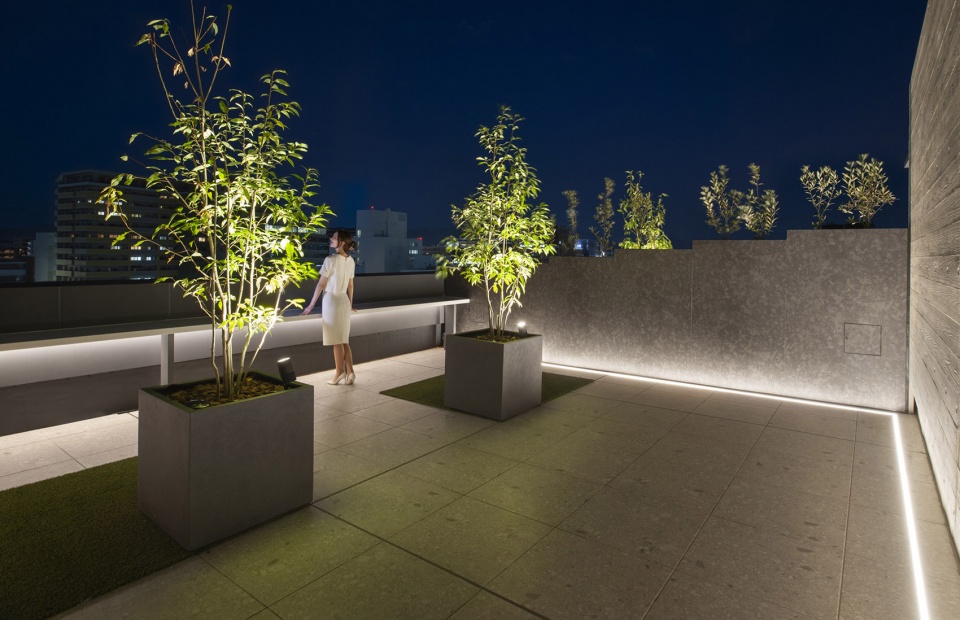
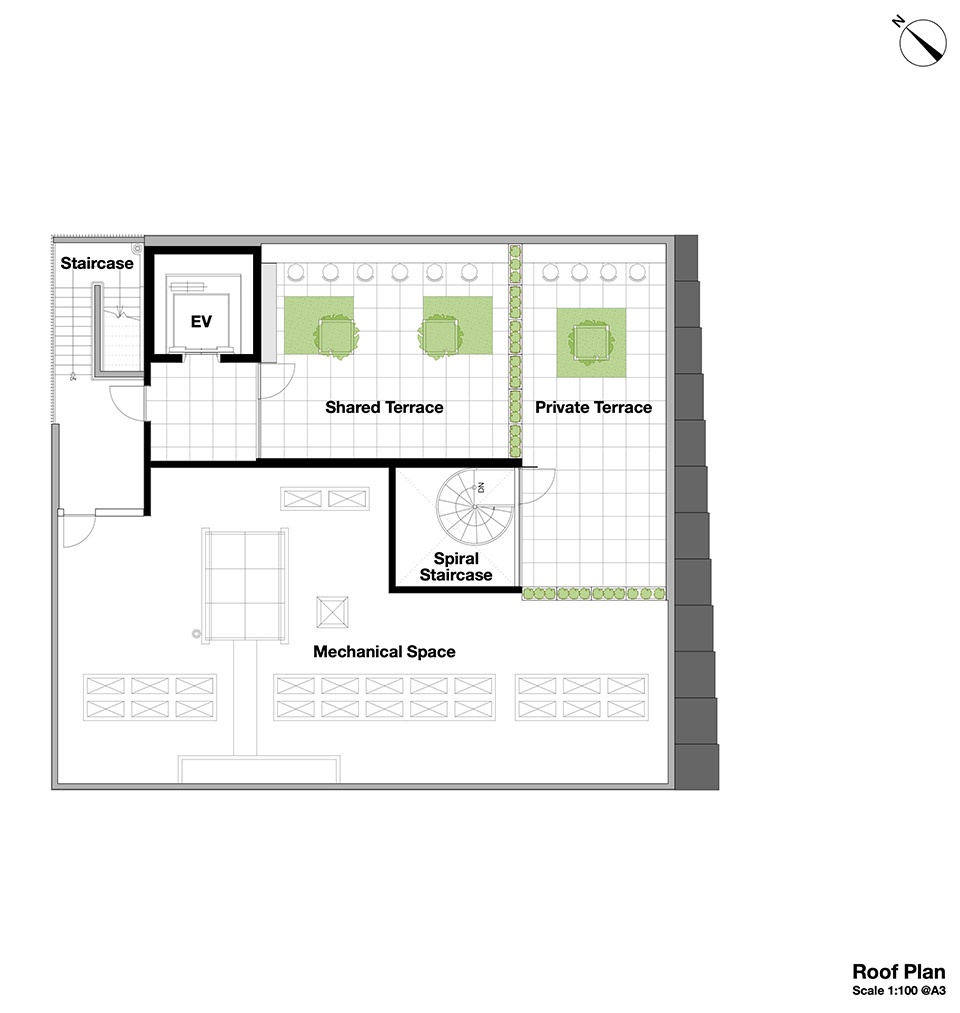
项目也巧妙地融入其城市环境。通过最大化建筑与天空的比例,设计避免了退线限制,营造出简洁规整的体量与立面形象。一层设有绿化步道与座椅,成为步行网络中的口袋公园。屋顶则设有共享露台,配备面朝博多湾的吧台,同时第十层租户也享有私属露台,实现从街道到天际线的全层级城市连接与使用舒适性。
The building is also carefully integrated into its urban context. By maximizing the building- to-sky ratio, the design avoids setback constraints while achieving a clean, rectilinear massing and refined elevation. The ground floor features a landscaped approach with benches, serving as a small pocket park within the pedestrian network. On the rooftop, a shared terrace with a counter facing Hakata Bay is accompanied by a private terrace for the tenth-floor tenant—ensuring comfort and a connection to the city across all levels, from street to skyline.
▼屋顶则设有共享露台,a shared terrace on the rooftop
▼入口庭院,courtyard at entrance
建造过程与概念框架Construction Process and Conceptual Framework
在建造方面,百叶直接固定于结构框架上,几乎无需额外安装五金件。通过激光扫描实现精准误差校正,使现场调整几乎为零,体现出极高的施工精度。项目还获得了DBJ绿色建筑认证体系中的四星评级——这在中型办公楼中并不常见,表彰其在抗灾能力及对本地社区的贡献。
In terms of construction, the louvers were directly anchored to the structural frame, minimizing the need for mounting hardware. Laser scanning enabled accurate error correction, reducing on-site adjustments to nearly zero. This technical precision is reflected in the project’s high level of execution. Additionally, the building received the 4 rating under the DBJ Green Building certification system—an uncommon achievement for a mid- scale office—recognizing its disaster resilience and contributions to the local community.
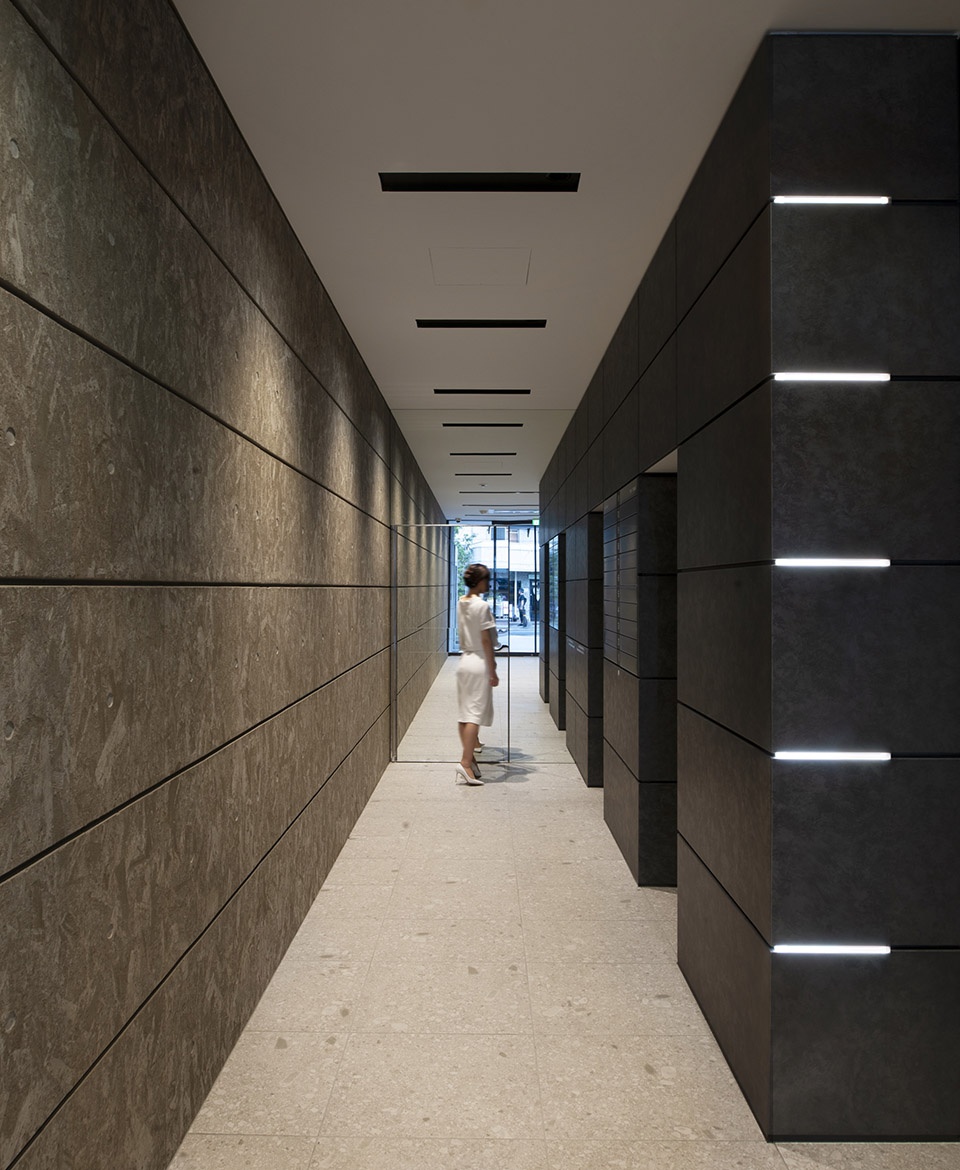
▼一层电梯间,lift room at ground floor
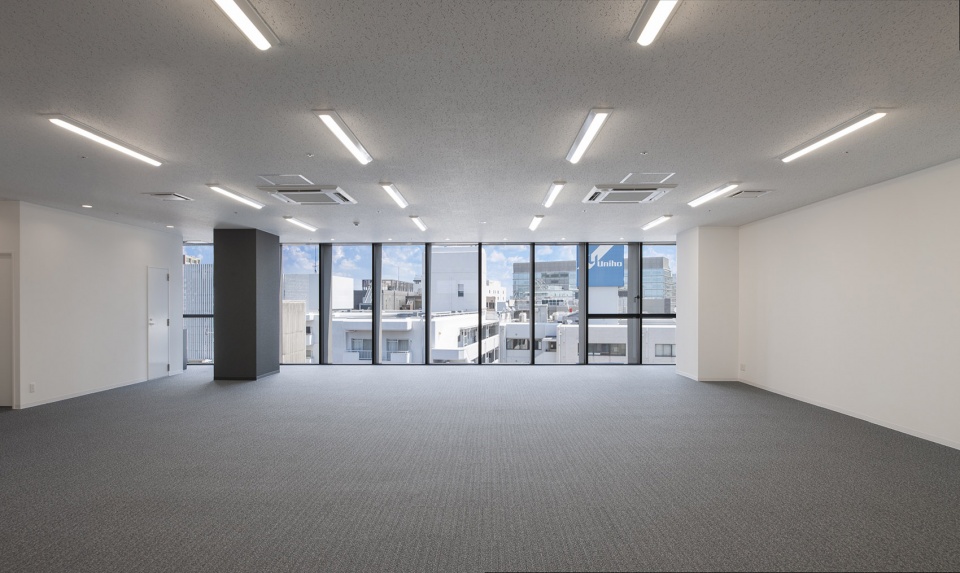
▼办公空间的开阔视野,Open views of the office space
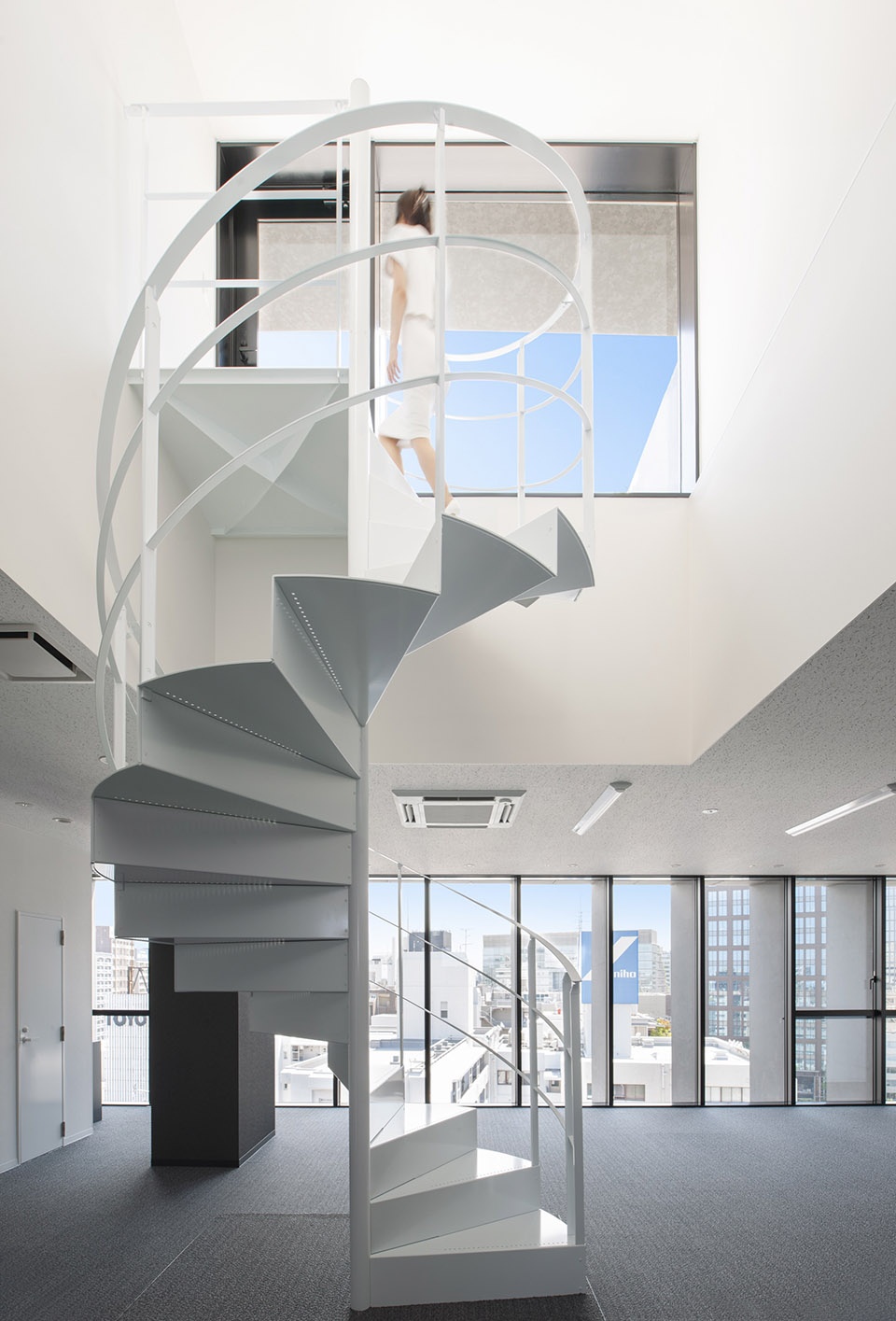
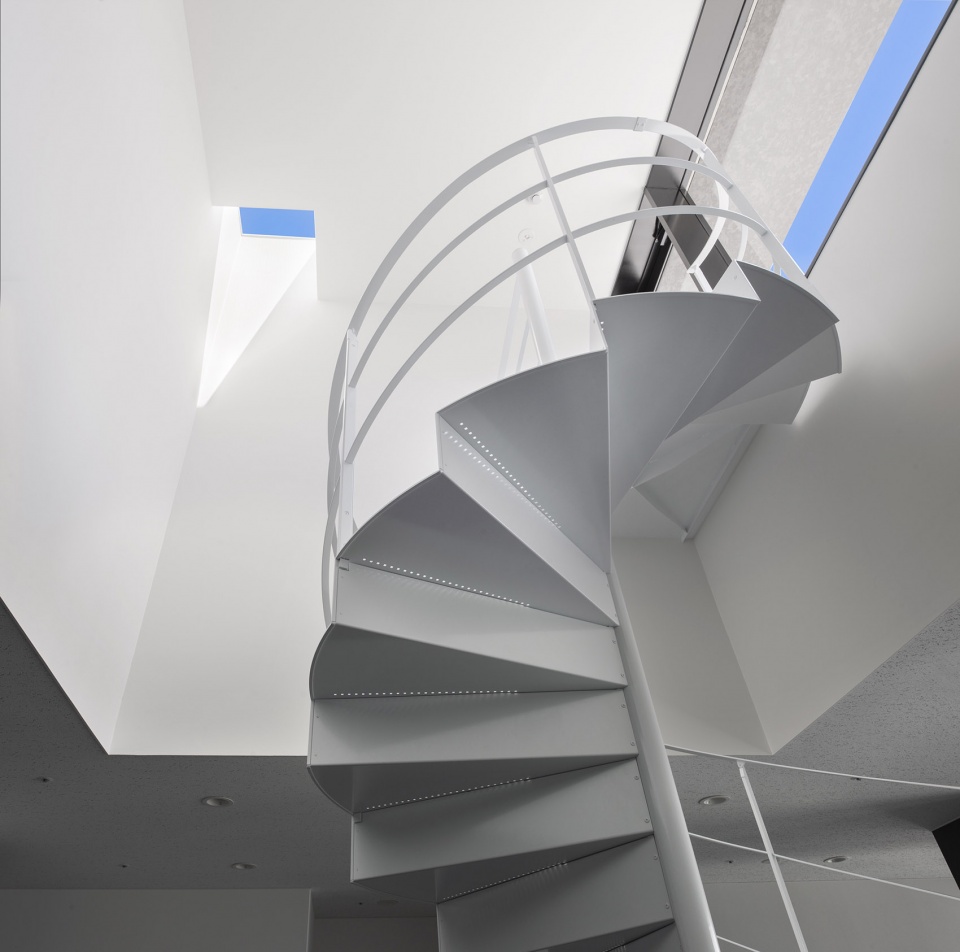
▼办公空间的螺旋楼梯,Spiral staircase in the office space
VECTORS in Fukuoka这一项目名称,概括了其概念精髓:一种汇聚于城市织构中的方向性力量——无论是字面还是象征意义。百叶随日照角度变化而深浅不一、投影与光影不断流转、内外与昼夜的转化,共同构成一个静谧而精密的“向量集合”。这是一种建筑上的复杂回应——在中型办公建筑的限制条件下,融合了城市敏感性、结构智慧与环境逻辑的设计探索。
The project title, “VECTORS in Fukuoka,” encapsulates its conceptual essence: a confluence of directional forces—both literal and metaphorical—interacting within the urban fabric. The varying depths of louvers that respond to solar angles, the ever-changing shadows, and the transformations between interior and exterior, day and night, together form a quiet yet intricate accumulation of vectors. This is architecture as a sophisticated response—merging urban sensitivity, structural ingenuity, and environmental logic—within the constraints of a modest office building.
▼露台夜景,terrace at night
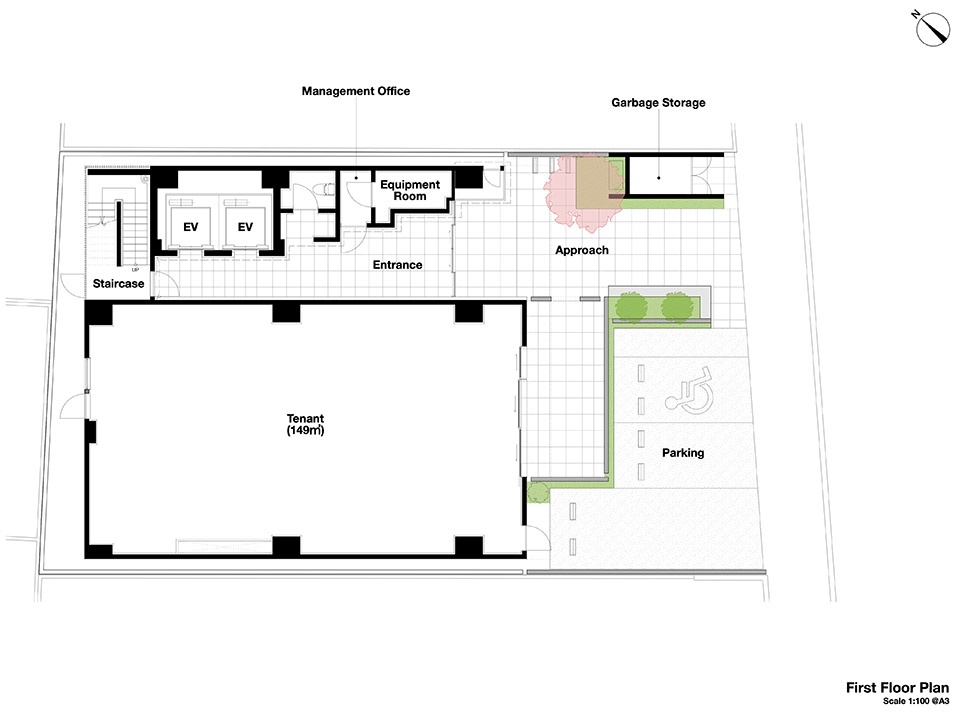
▼一层平面,first floor plan
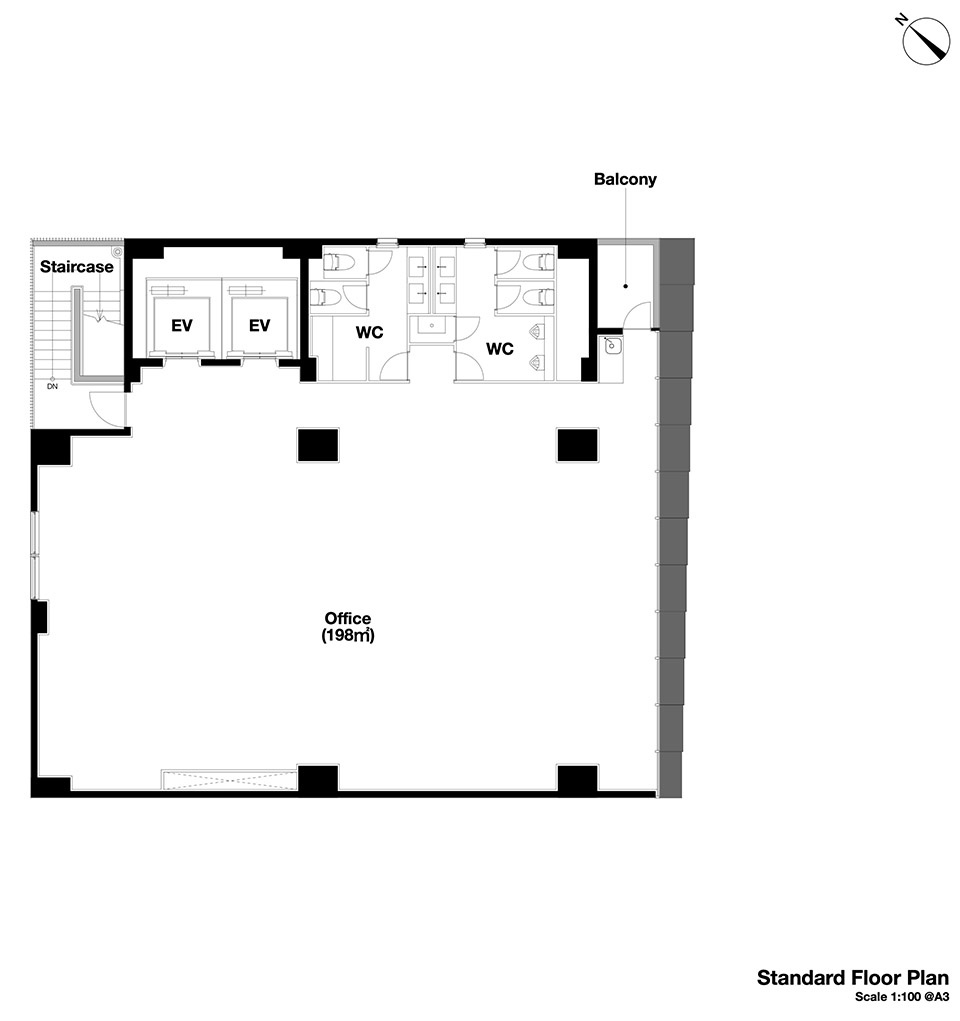
▼标准层平面,standard floor plan
▼屋顶平面,roof plan
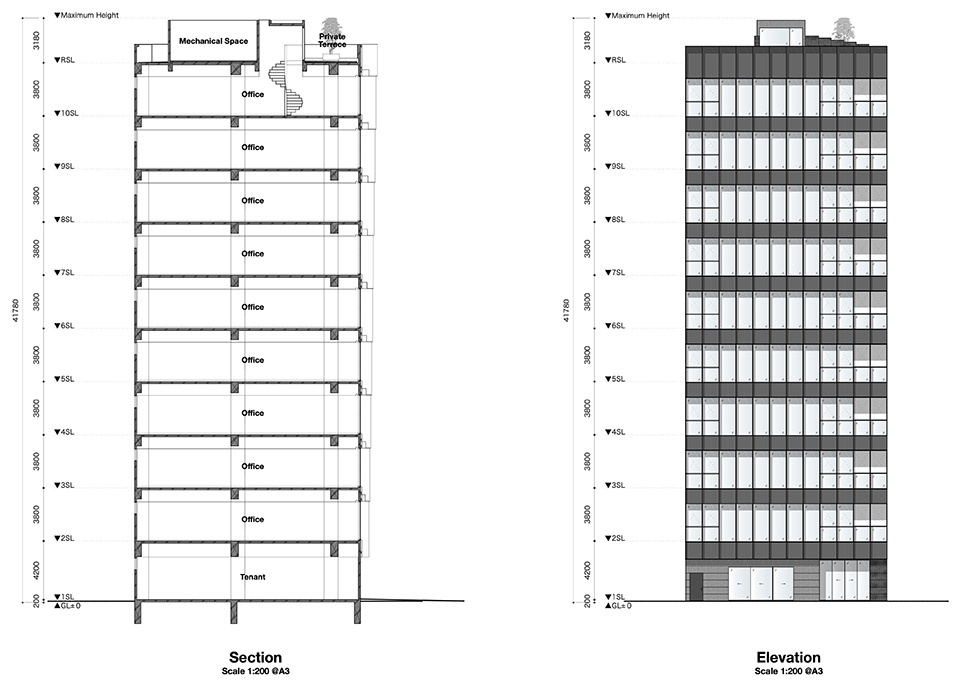
▼剖面及立面,section & elevation
▼立面百叶窗分析,louver effect analysis
Project Name: VECTORS in Fukuoka
Type: Office
Design Type: Architecture, Interior, Lighting, and Landscape Design
Location: Fukuoka, Japan
Address: 4-7-5 Tenjin, Chuo-ku, Fukuoka, Japan
Google Maps: 33°35’40.1″N 130°24’01.4″E
Floor Area: 2,137㎡
Completion Year: 2024
Design Firm: SAKO Architects
Principal Architect: Keiichiro Sako
Architectural Design : SAKO Architects
Interior Design: SAKO Architects
Lighting Design: SAKO Architects
Landscape Design: SAKO Architects
Photo Credit: Misae Hiromatsu
Client: Ascot Corp.
Website: https://www.sako.co.jp/
Contact e-mail: info@sako.co.jp