土耳其国家铁路局临时办公室及画廊,伊斯坦布尔 / Erhan Vural Architecture + Urban Design Office
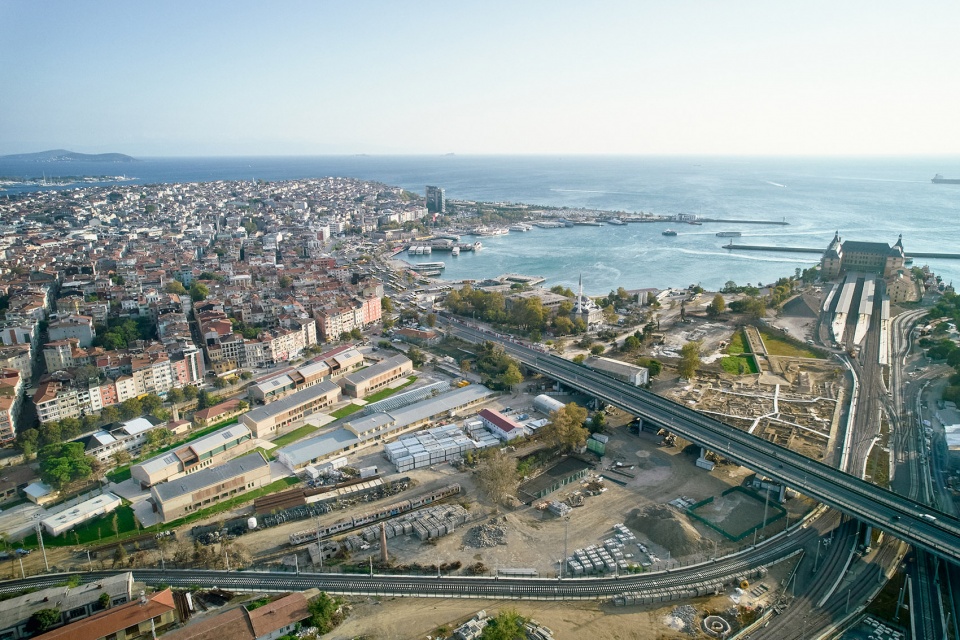
位于海达尔帕夏火车站(Haydarpaşa Train Station)后区的五座新建筑,坐落在原有已老化、使用寿命终结的建筑遗址之上。建筑及其间的开放空间均以敏感的方式设计,旨在延续这些历史痕迹。这一设计策略源于项目场地毗邻一处历经多年逐步发掘的重要考古遗址——由于海达尔帕夏区域内曾存在历史悠久的卡尔刻冬河与港口,这片土地在漫长的历史中一直是众多文明的聚居地。
Located within the rear zone of Haydarpaşa Train Station, these five new buildings are positioned upon the traces of existing, obsolete structures that had reached the end of their lifespan. The buildings and the open spaces between them were designed with a sensitive effort to sustain these traces. This approach arises from the fact that the project area lies adjacent to an important archaeological site that has been gradually unearthed over many years. Due to the presence of the historical Kalkhedon Stream and Port within the Haydarpaşa grounds, the area has long been a significant settlement that hosted many civilizations throughout history.
▼项目鸟瞰,aerial view of the project
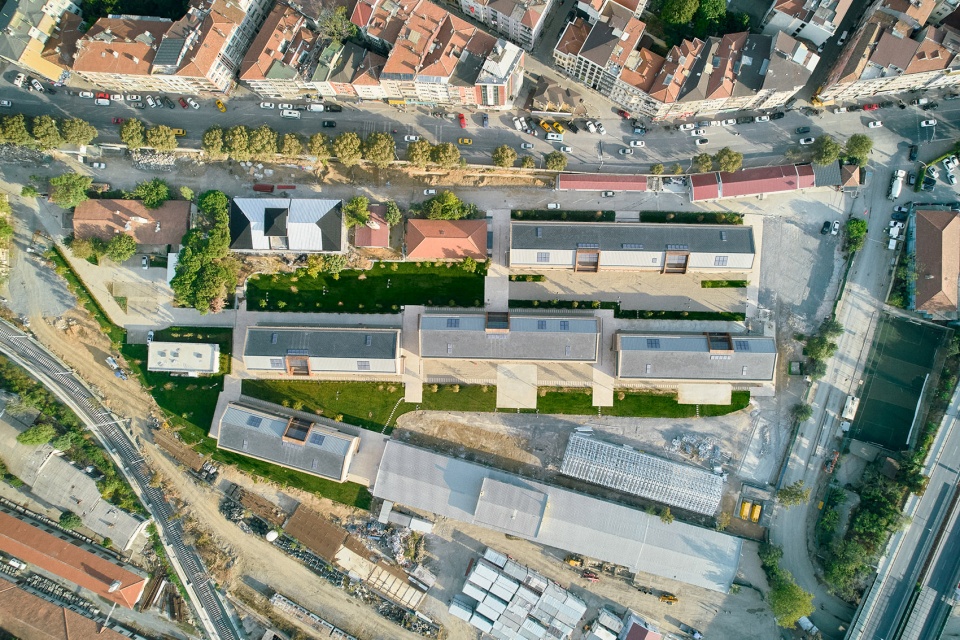
除位于海达尔帕夏火车站范围内外,场地还与卡德柯伊(Kadıköy)区内最具代表性、最具国际化特征的社区之一——Yeldeğirmeni直接相邻。项目沿奥根纳勒·沙哈普·居尔勒尔街展开,具有与耶尔代尔梅尼建立对话的巨大潜力。后者如今已发展为一个以文化、艺术、美食及创意生产为核心的充满活力的城市肌理。
In addition to its location within the Haydarpaşa Station area, the site directly interacts with Yeldeğirmeni, one of Kadıköy’s most prominent and cosmopolitan neighborhoods. Stretching along Orgeneral Şahap Gürler Street, the site holds great potential to establish a dialogue with Yeldeğirmeni, which has evolved into a lively urban fabric focused on culture, art, gastronomy, and creative production.
▼建筑外观,exterior view of the project
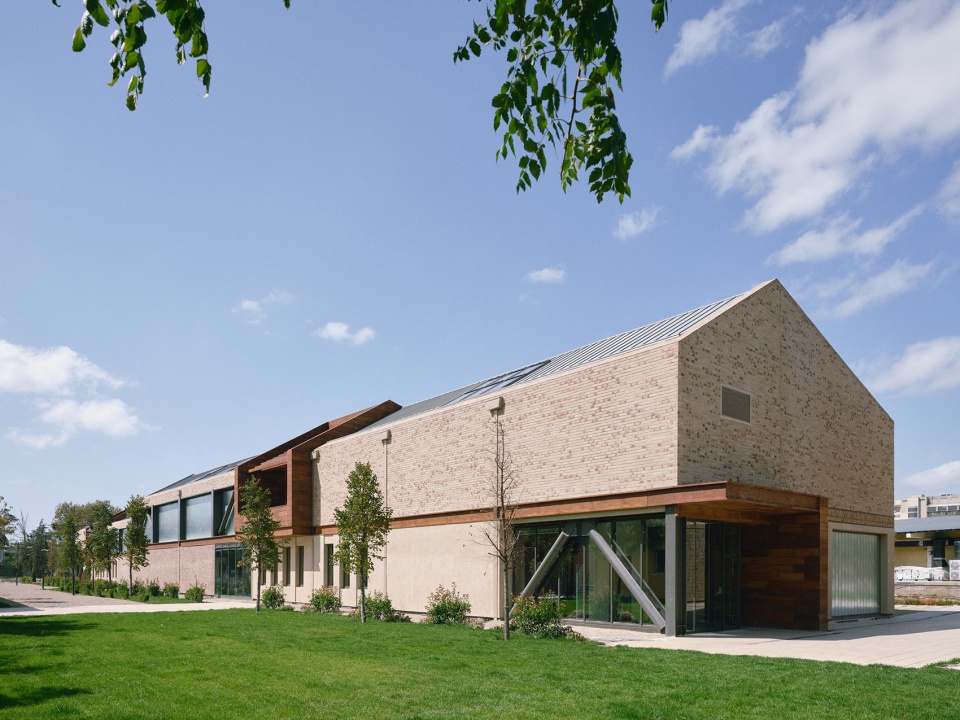
这五座建筑最初被设计为土耳其国家铁路局(TCDD)员工的临时办公空间,未来将在“海达尔帕夏车站文化与艺术项目”框架下改造为公共艺术画廊,面向全城开放。设计之初,团队的目标是修复并再利用现有建筑,而非新建。然而,原有建筑采用临时结构体系建造,用作仓储与技术用途,随着时间推移因腐蚀与地基沉降而严重损坏,已无法再利用。因此,新建筑采用钢结构体系,并严格沿原建筑基址重建。建筑外围护结构以坚实材料覆盖钢框架,而室内隔断则设计为轻质、经济、灵活且可拆卸的系统,以便未来实现功能转换。
▼轴测图,axonometric
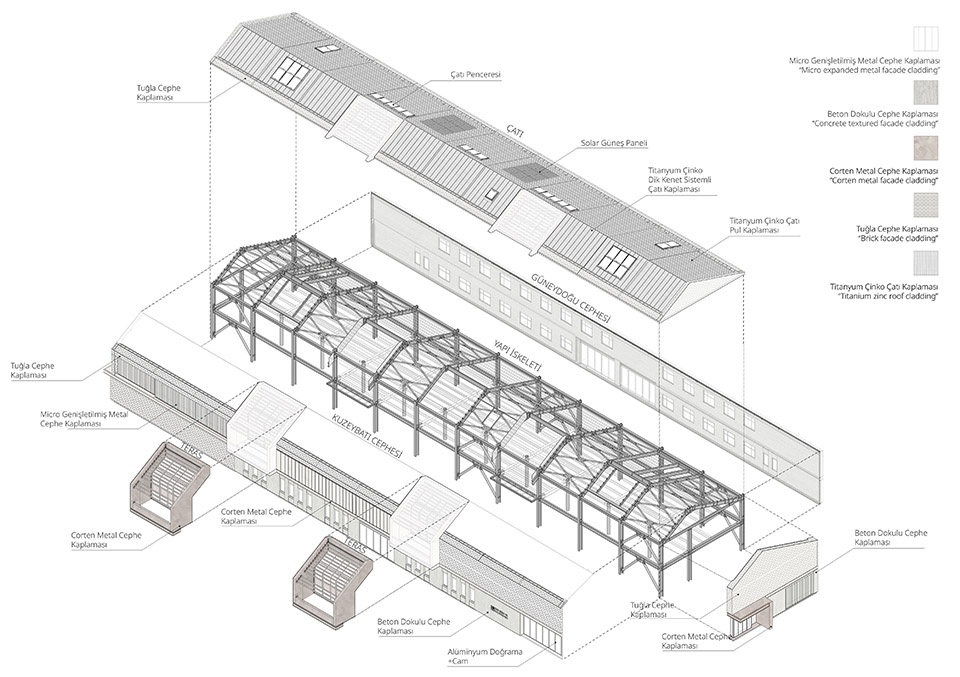
Initially designed to serve as temporary offices for TCDD personnel, the buildings are planned to be converted into art galleries within the framework of the larger “Haydarpaşa Station Culture and Arts” project. They will be opened to the public, serving the entire city. When design work began, the initial aim was to rehabilitate and reuse the existing structures rather than construct new ones. However, the former buildings—originally erected with temporary structural elements to serve warehouse and technical needs—had suffered severe deterioration over time due to corrosion and ground settlement, making reuse impossible. Therefore, new steel-framed buildings were designed upon the preserved footprints of the former ones. The building envelopes were constructed with rigid materials over structural steel frames, while interior partitions were designed as economical, lightweight, flexible, and demountable systems, allowing for future functional transformation.
▼新建筑采用钢结构体系,new steel-framed buildings were designed
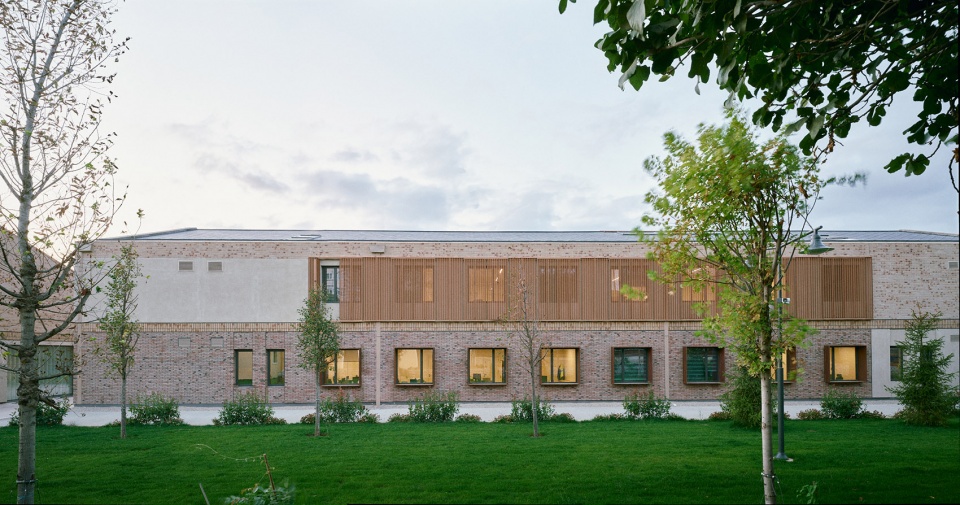
▼围护结构以坚实材料覆盖钢框架,envelopes were constructed with rigid materials over structural steel frames
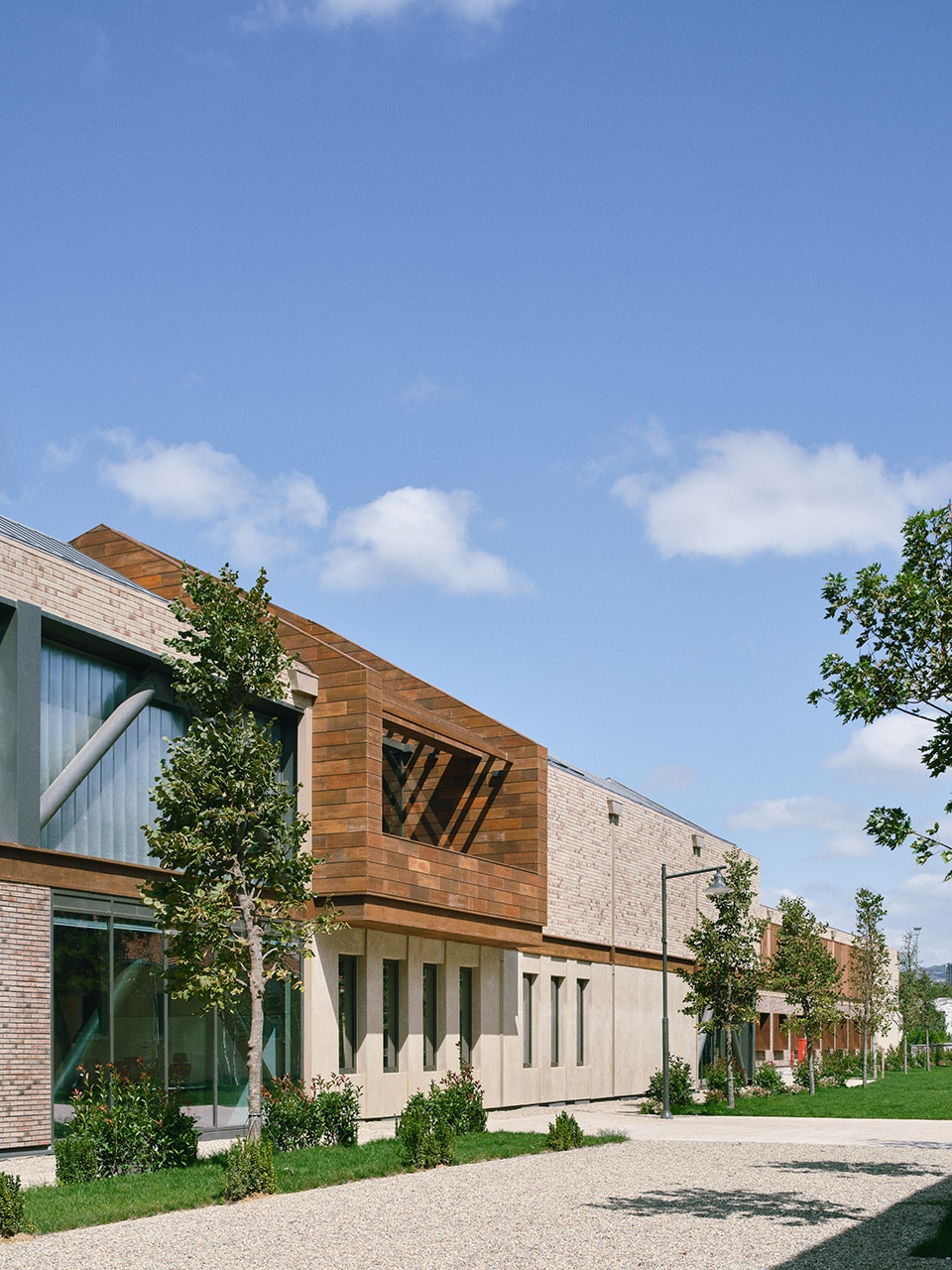
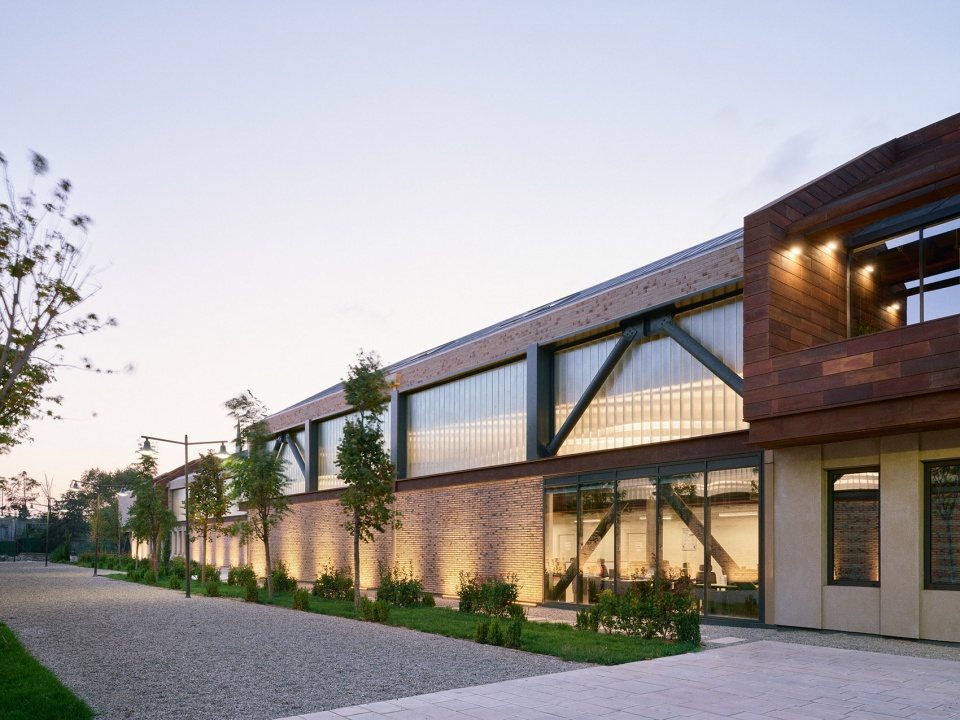
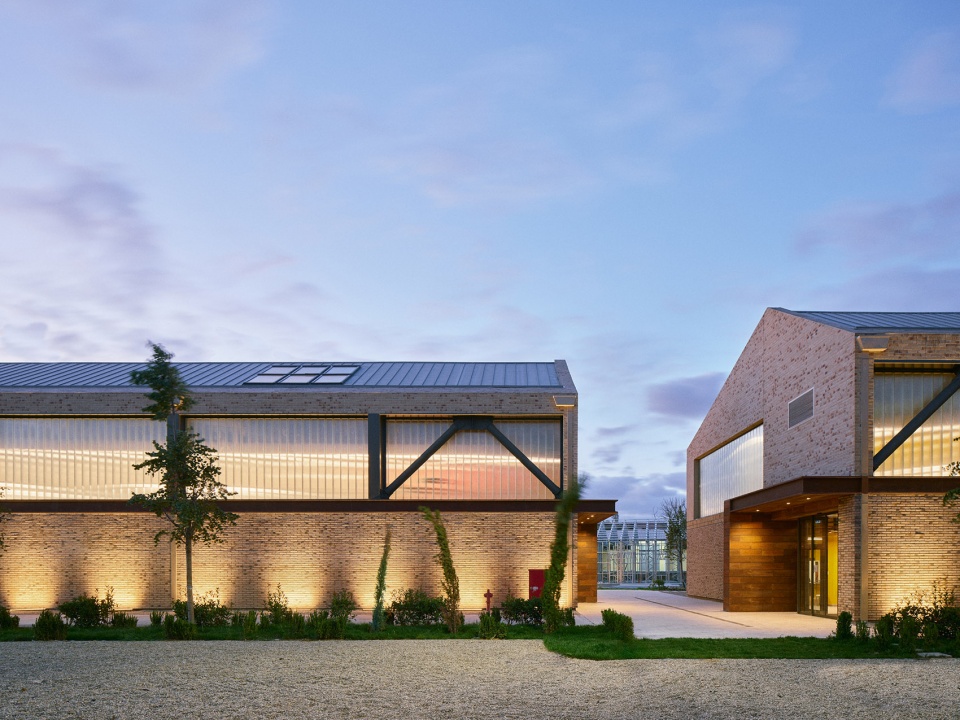
五座钢结构建筑以统一的建筑语言设计,其长度因结构轴线布置而异。各栋建筑的模块化体量由不同的体块与材料组合构成,依据采光与空间需求组合排布。所有建筑的共同特征是入口处的耐候钢雨棚——其厚度逐渐延展为水平带状元素直至阳台位置,形成统一的视觉韵律,也为不同材料与肌理的组合提供基准。建筑立面灵感源于场地记忆中原有的质感、色彩与材料:砖、肌理灰泥、耐候钢、U 型玻璃、涂漆拉伸金属网与钛锌板等,通过竖向分缝的方式在长立面上交织,形成丰富多样的表皮构成。
▼模块化体量由不同的体块与材料组合构成,Modular volumes composed of various mass and material combinations
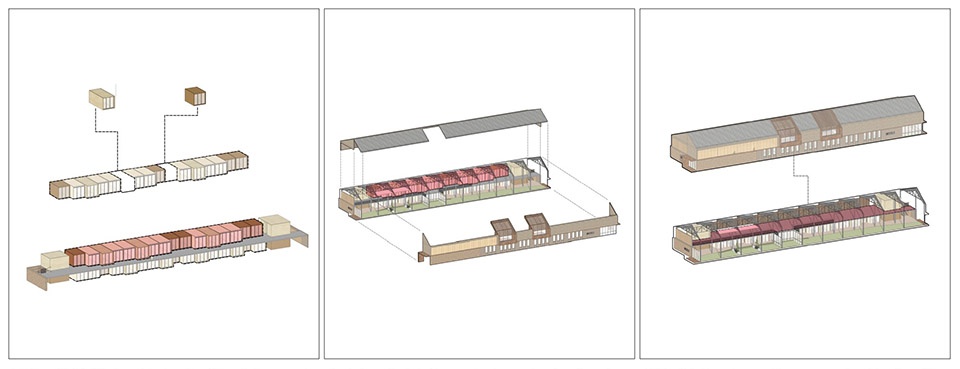
Designed with a consistent architectural language, the five steel-structured buildings differ in length according to their structural axis layouts. Modular volumes composed of various mass and material combinations come together according to daylight and interior spatial needs. A common feature of all buildings is the corten entrance canopy, which thickens into a horizontal band extending up to the balconies—creating a unified visual rhythm and serving as a base for diverse material and texture combinations. The façades take inspiration from the original textures, colors, and materials embedded in the site’s memory. Brick, textured plaster, corten steel, profilit (U-glass), expanded painted metal mesh, and titanium-zinc cladding, along with their variations in color and texture, are articulated across the long façades through vertical joints, forming diverse surface compositions.
▼形成统一的视觉韵律,creating a unified visual rhythm
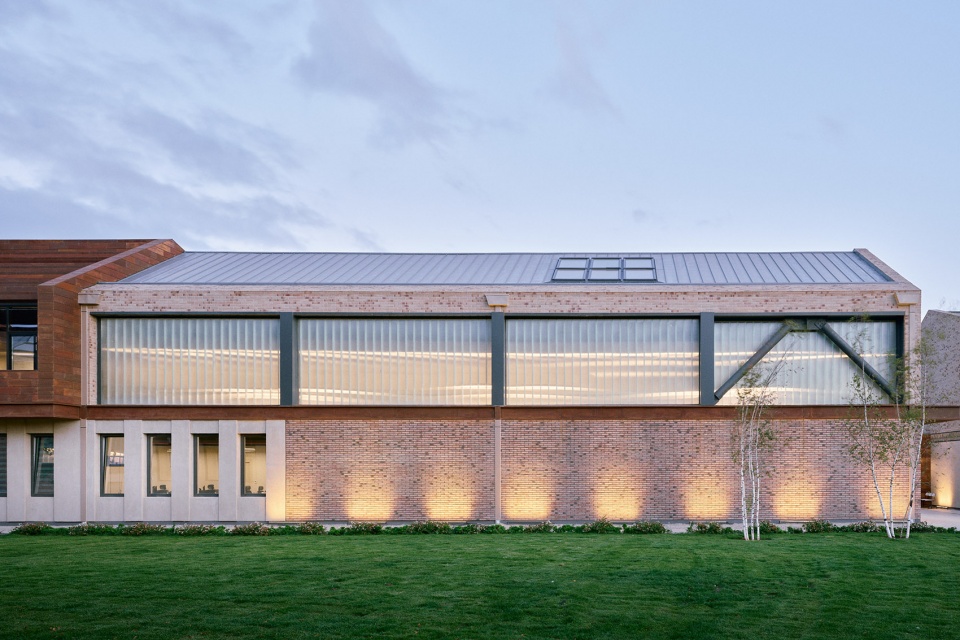
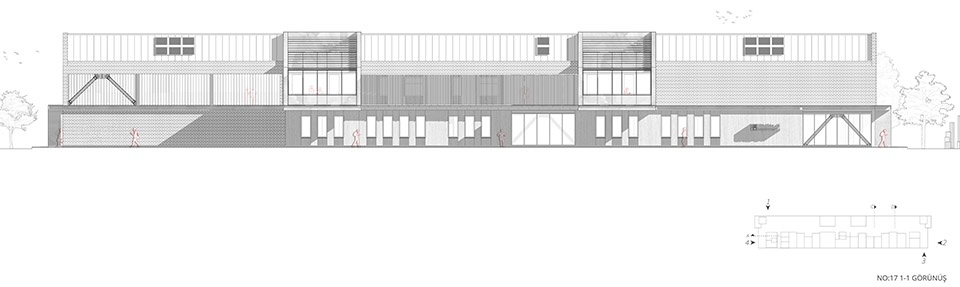
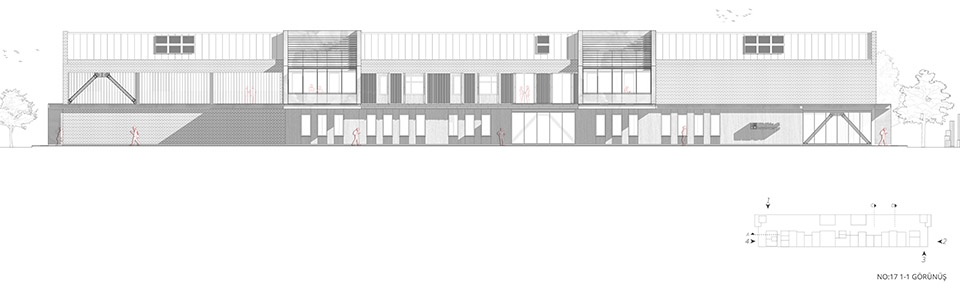
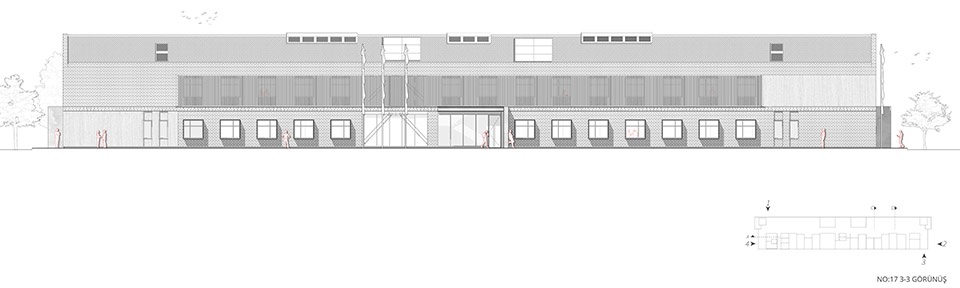
建筑的前后两侧立面呈现出截然不同的设计策略:一侧立面以上层悬挑阳台、竖向U型玻璃板、实心砖与灰泥墙面、入口雨棚及狭长窗为主要特征;另一侧立面则以方形模块化窗格为主——地面层窗洞由耐候钢框饰收边,上层立面布置了可开启的微孔扩张金属网遮阳板。钢制交叉支撑位于结构体系的首、中、末轴线上,贯穿上下两层,并被有意裸露表达,成为显著的建筑构件。
The long front and rear façades display two distinct design approaches. On one façade, cantilevered balconies on the upper floor, vertical U-glass panels, solid brick and plaster surfaces, entrance canopies, and narrow elongated windows dominate. On the opposite façade, modular square windows framed with corten reveals define the ground floor, while operable micro-expanded painted metal mesh sun-shading panels characterize the upper floor. Steel cross-bracings— positioned on the first, middle, and last axes of the structural system across both floors—are left exposed and intentionally expressed as defining architectural elements.
▼上层悬挑阳台,cantilevered balconies on the upper floor
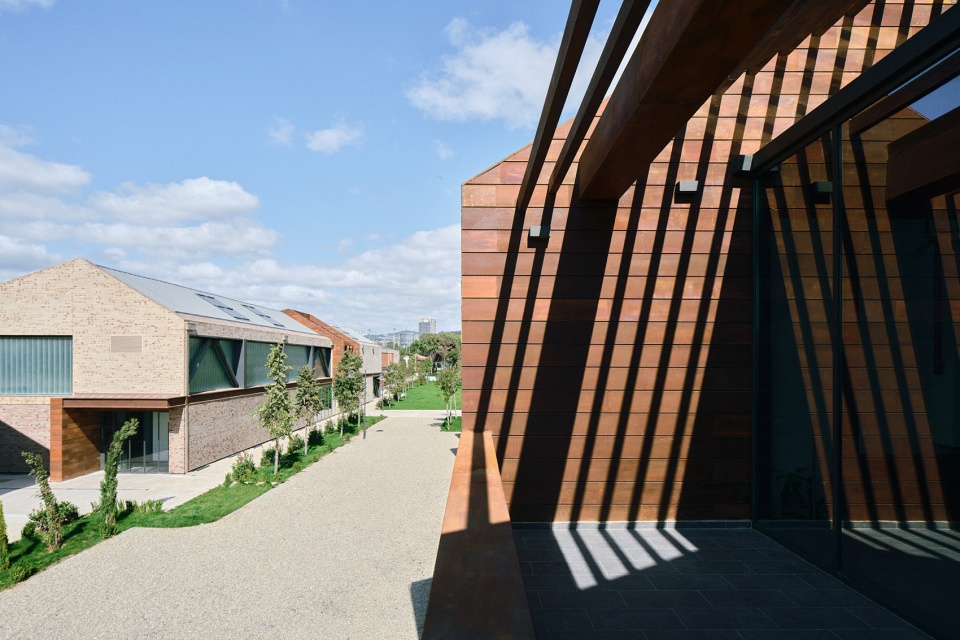
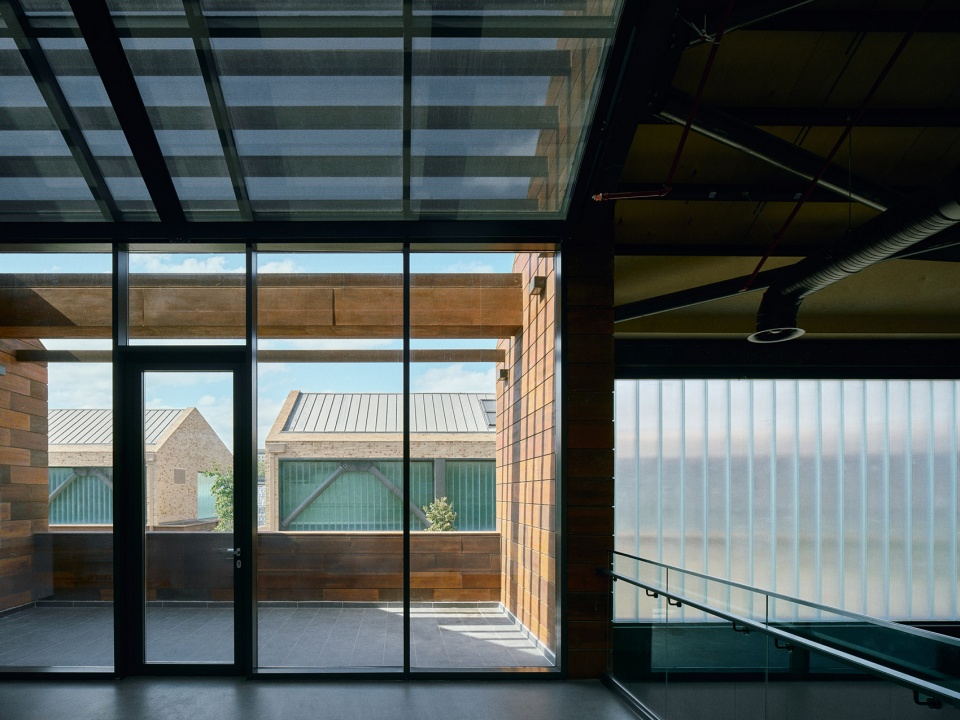
立面与屋顶处的悬挑阳台形成半开放的遮蔽空间,为上层提供户外延展,兼具办公与展览功能。这些阳台增强了相邻建筑及使用者之间的视觉与空间互动,强化了建筑群作为统一校园的整体感。未来将在户外空间布置新的艺术装置,同时,经过修复的老式通勤列车也将重新陈列于场地中。通过这些阳台,人们可从新的视角体验这些展品与空间关系。建筑由底层与夹层组成,其内部空间以轻质、经济的隔断系统划分,结合开放式共享办公区与画廊式通透空间,以满足临时办公需求。待办公使用期结束后,临时隔墙与吊顶将被拆除,空间将转化为无遮挡的开放展厅。
▼功能轴测图,function axonometric
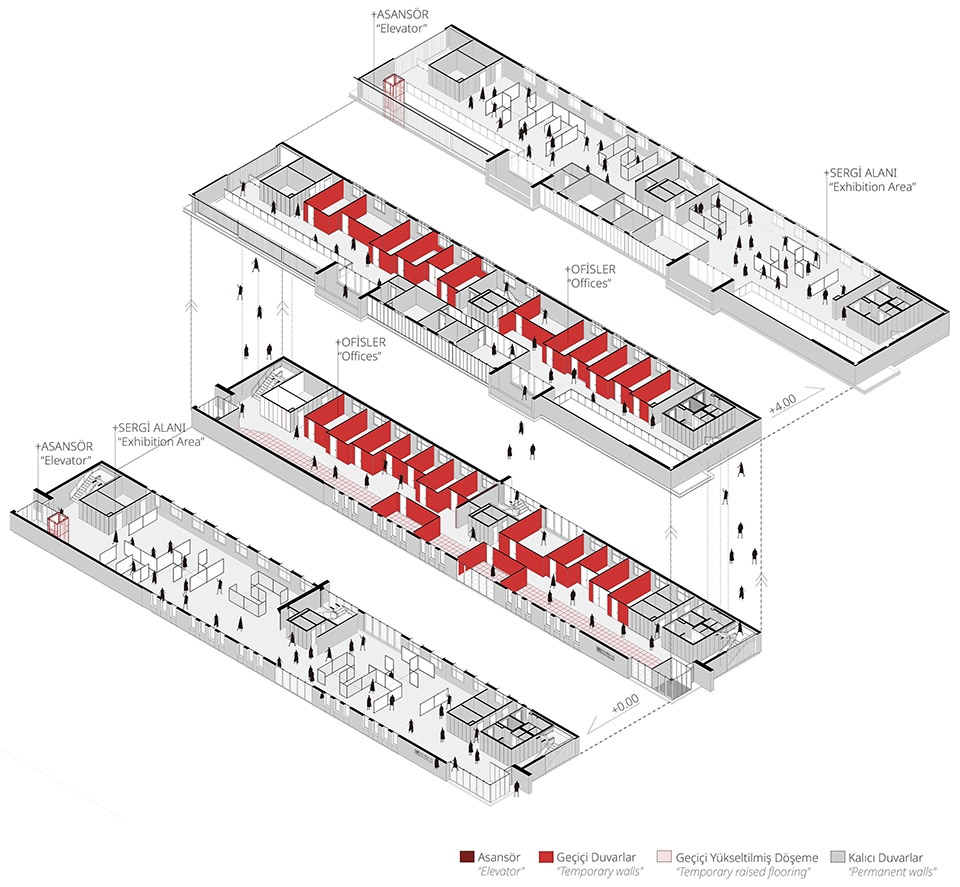
The cantilevered balconies projecting outward from the façade and roof act as sheltered semi-open areas for the upper floors, serving both the office and gallery functions. They enhance spatial interaction between facing buildings and their users, reinforcing the sense of a unified campus. New artworks to be placed in the open spaces, together with the old suburban trains that have been removed for restoration and will later be exhibited on-site again, can be experienced from new perspectives through these balconies. Consisting of a ground floor and a mezzanine, the buildings are organized to serve the temporary office function through a combination of enclosed management offices—built with lightweight and economical partition systems—and open-plan shared working areas enriched with gallery-like spaces. After their office use period, the temporary partitions and suspended ceilings will be removed, transforming the interiors into unobstructed open spaces ready to function as art galleries.
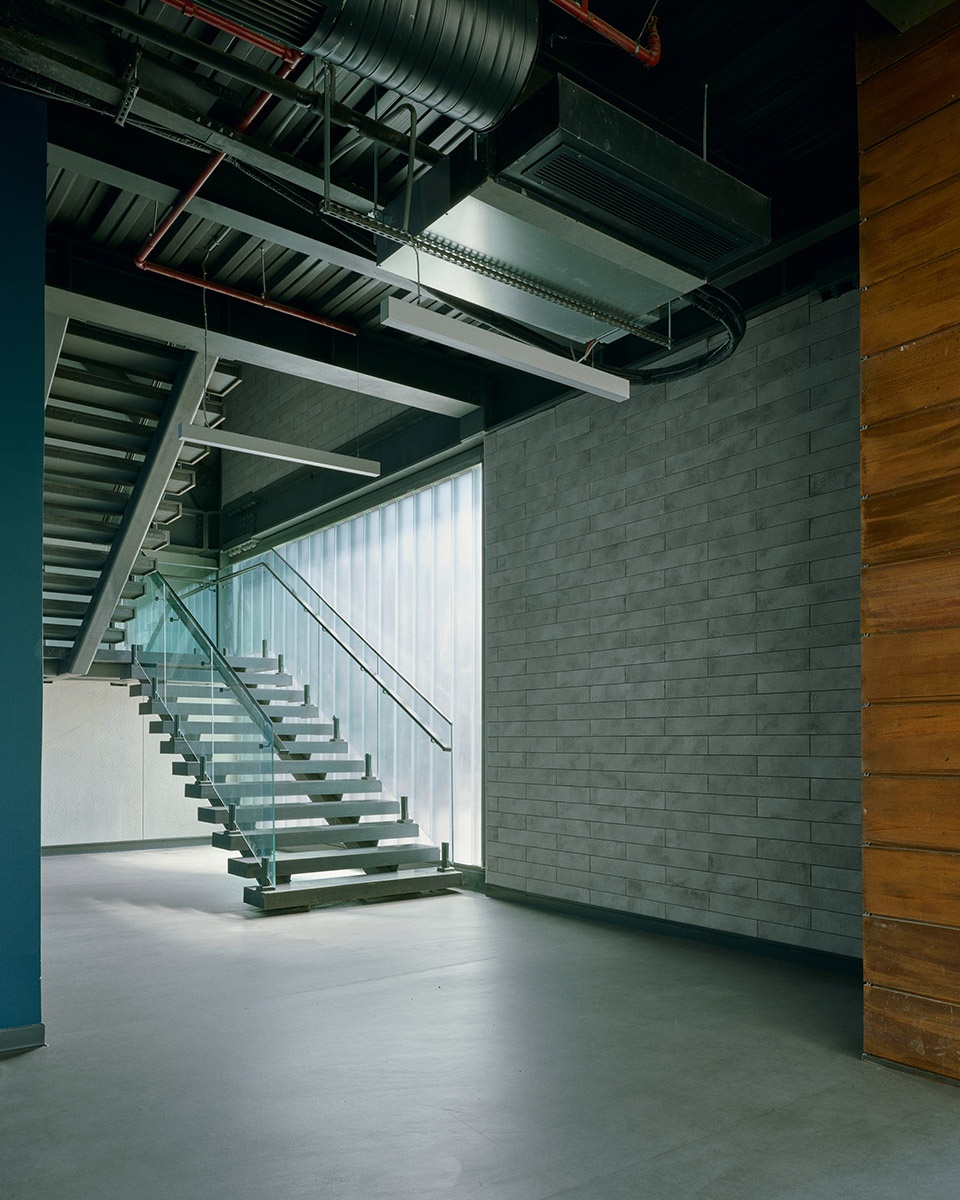
▼内部空间,interior space
▼夹层空间,mezzanine level space
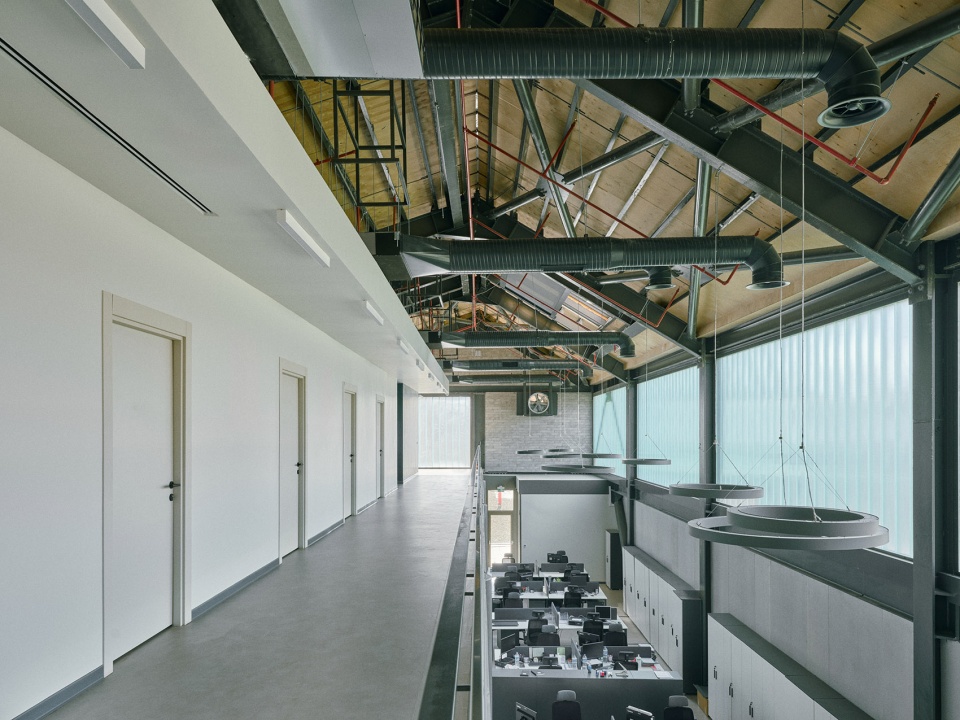
根据策展人或展览概念的需求,室内空间既可保持通透一体,也可重新分隔。所有机电系统在设计时已充分考虑双重功能的容量与布局灵活性。卫生间与技术用房等永久性服务空间被设计为色彩鲜明的“盒子”置于建筑内部——五栋建筑分别采用五种不同色彩,这些“盒子”作为视觉锚点,丰富了空间层次,避免了建筑群整体的单调感。
Depending on the curator’s requirements or the exhibition’s concept, the interiors can either remain as unified open spaces or be subdivided again. Accordingly, all mechanical and electrical systems have been designed to accommodate both functions in terms of capacity and layout. Permanent service areas such as restrooms and technical rooms are designed as colorful “boxes” within the buildings. Represented in five different colors across the five buildings, these permanent “boxes” act as symbolic reference points, ensuring spatial diversity and preventing monotony throughout the complex.
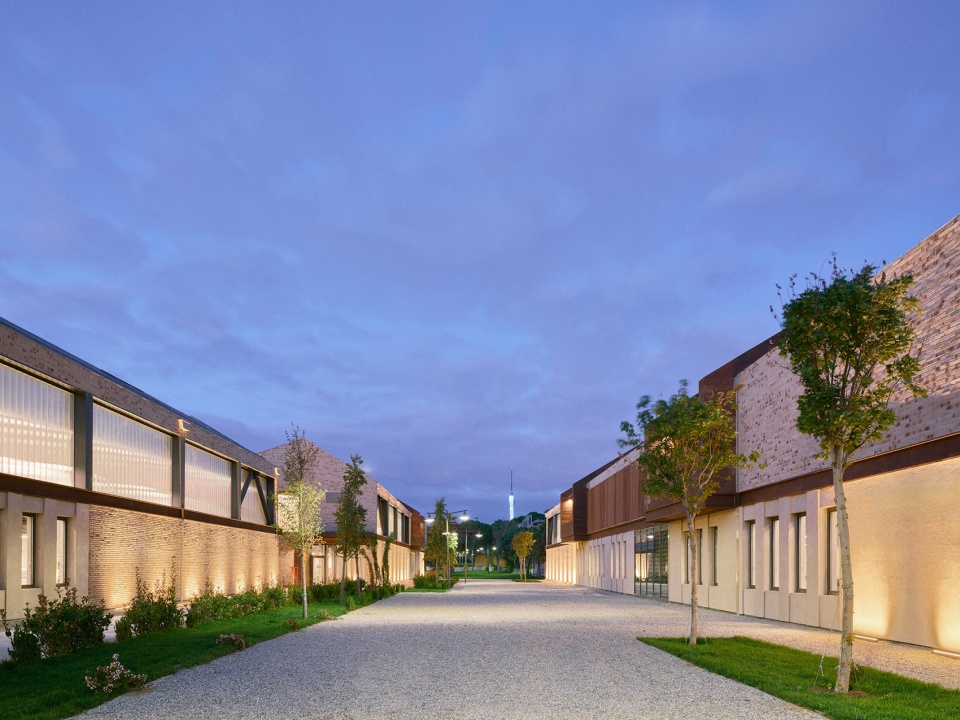
▼灯光下的建筑,building under lights
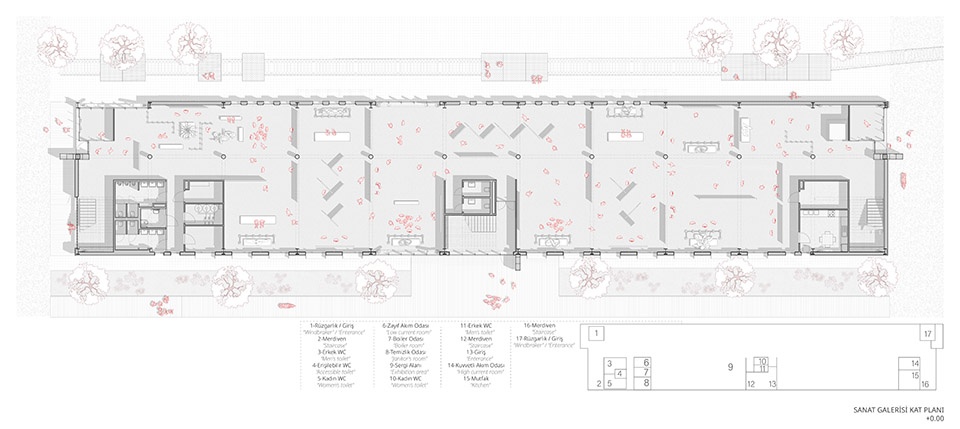
▼一层平面,ground floor plan
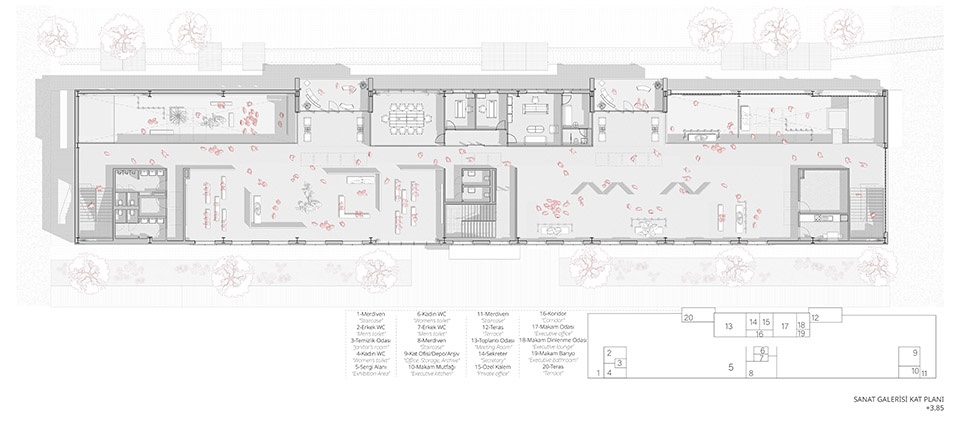
▼夹层平面,mezzanine floor plan
▼立面,elevation
Project Start Date: March 2024
Project Completion Date: December 2024
Construction Start Date: December 2024
Construction Completion Date: August 2025
Program: Temporary Office, Art Gallery
Open Area: 29,700 m²
Built Area: 6,104 m²
Client: Republic of Türkiye, Ministry of Culture and Tourism
Location: Haydarpaşa, Kadıköy, Istanbul, Türkiye
Status: Completed
Credits:
Architecture & Interior Design: E.V.A. – Erhan Vural Architecture + Urban Design Office
Concept Design: Erhan Vural
Architectural Design Team: İpek Saygılı, Z. Sezin Sever, Buket Özkılınç, Şule Toptan, Şimal Kalkan, Dilay Yucaltı
Landscape & Open Space Design : Caps Office – M. Cemil Aktaş, Pınar Kesim Aktaş
Structural Engineering : CSA Engineering – Can Sırlıbaş
Mechanical Engineering: Vektör Engineering – Eray Aydın
Electrical Engineering: Haskar Engineering – Hasan Çelik
Surveying & Documentation: Arkeoteknik Architecture & Restoration – Hasan Binay, Gizem Demirci : Tepta
Main Contractor: Abma Restoration & Construction Lighting Consultant
Drone & Architectural Photography : Egemen Karakaya