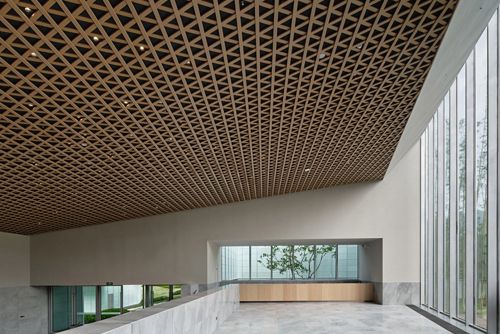
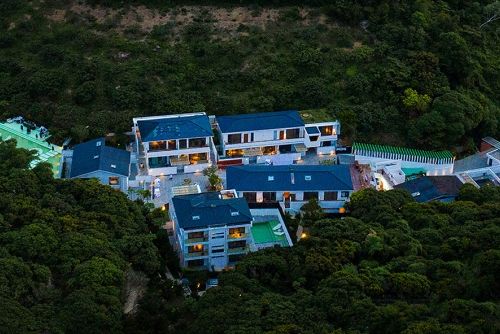
摆岁Bersure博物馆海景酒店,福建 / 蜚声设计
光之所在,工业遗产的诗意新生Where light resides, the poetic rebirth of industrial heritage
在福建霞浦——这座以蜿蜒海岸线、闪耀滩涂和“光影之城”美誉而闻名的半岛上,一座承载渔村工业记忆的建筑重获新生。由我们主导设计的摆岁Bersure博物馆酒店项目,将旧三沙芭蕾舞厂改造为海滨博物馆酒店。项目坐落于东壁海岸的红砂岩悬崖之上,不仅深度激活了闽南渔村的集体记忆,更在过往与当下之间,建立了深刻的叙事连续性。
In Xiapu, Fujian—a peninsula renowned for its winding coastline, shimmering mudflats, and the title “City of Light and Shadow”—an architectural landmark that carries the industrial memories of a fishing village is being reborn. The Bersure Museum Hotel project, led by our design team, transforms the old Sansha Ballet Factory into a seaside museum hotel. Situated atop the red sandstone cliffs of Dongbi Coast, this project not only deeply revives the collective memory of the Minnan fishing village but also establishes a profound narrative continuity between the past and the present.
▼项目场地与原状,the site and original state
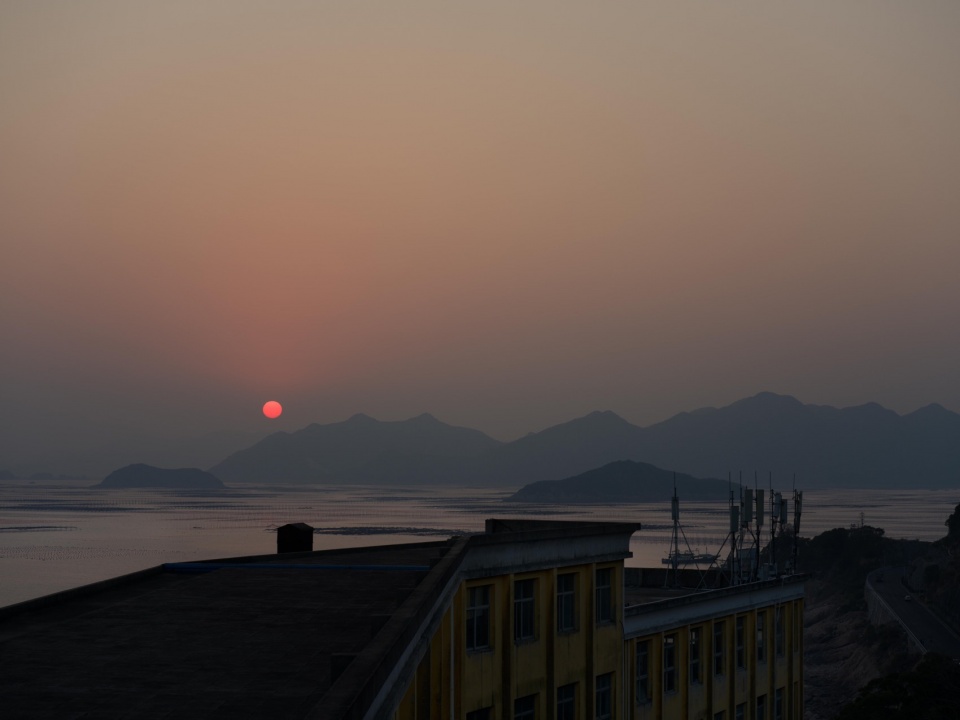
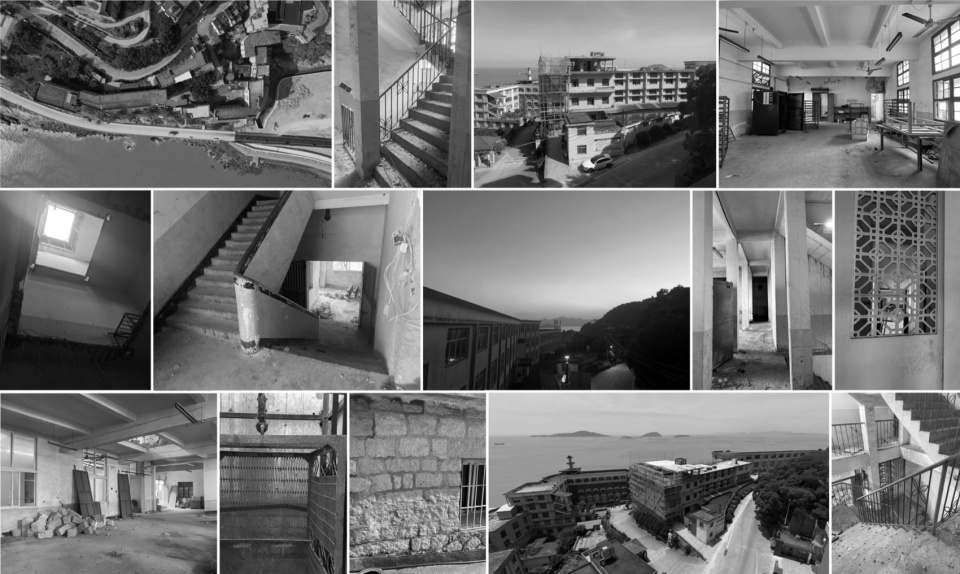
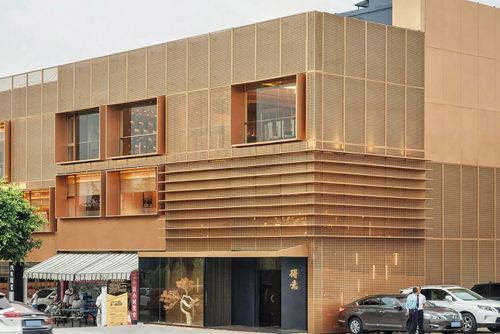
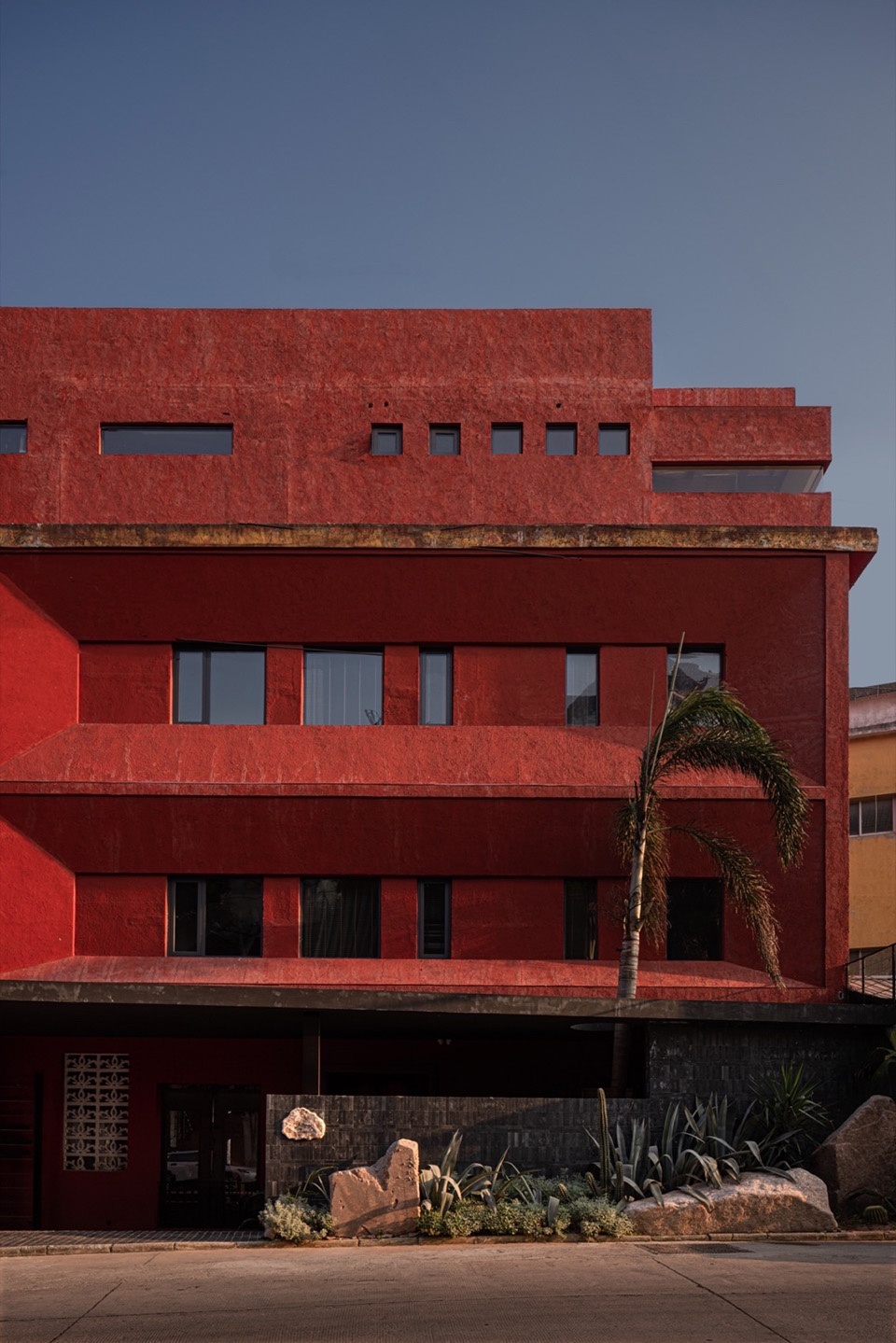
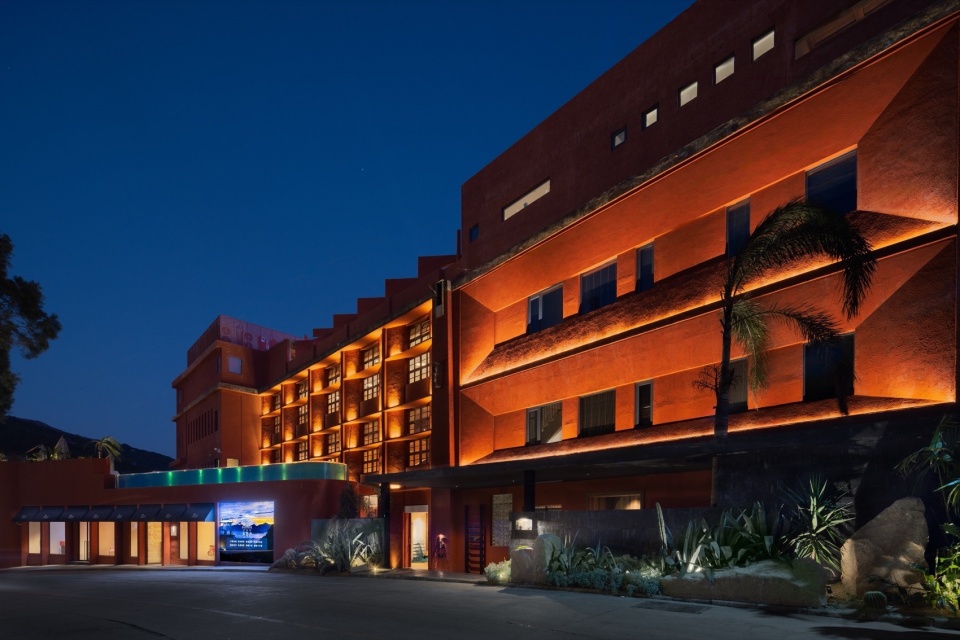
正如这些历史影像所记录的,建筑外部是项目历史根源最直观的表达。我们精心保留了原建筑中很多有趣的原始片段,并将新的设计语言牢牢锚定在其工业根基之中。壁柱和窗户的序列,清晰地勾勒出工厂原有的体量与结构秩序。然而,设计并非简单的复制,而是以巧妙地引入新的开口和雕塑般的空洞作为现代的对位元素。最终呈现出一个既熟悉又焕然一新的w外观,成为霞浦不断变迁的景观中延续性与集体记忆的物质见证,宛如一座“发光的悬崖”矗立于海岸。
As recorded in these historical images, the exterior of the building is the most direct expression of the project’s historical roots. We carefully preserved many interesting original fragments of the structure, anchoring the new design language firmly in its industrial foundation. The sequence of pilasters and windows clearly outlines the original volume and structural order of the factory. However, the design is not a simple reproduction, but rather a clever introduction of new openings and sculptural voids as modern counterpoint elements. The result is an appearance that is both familiar and refreshingly new, becoming a tangible witness to the continuity and collective memory within the ever-changing landscape of Xiapu, standing proudly like a “glowing cliff” along the coast.
▼外观,exterior view
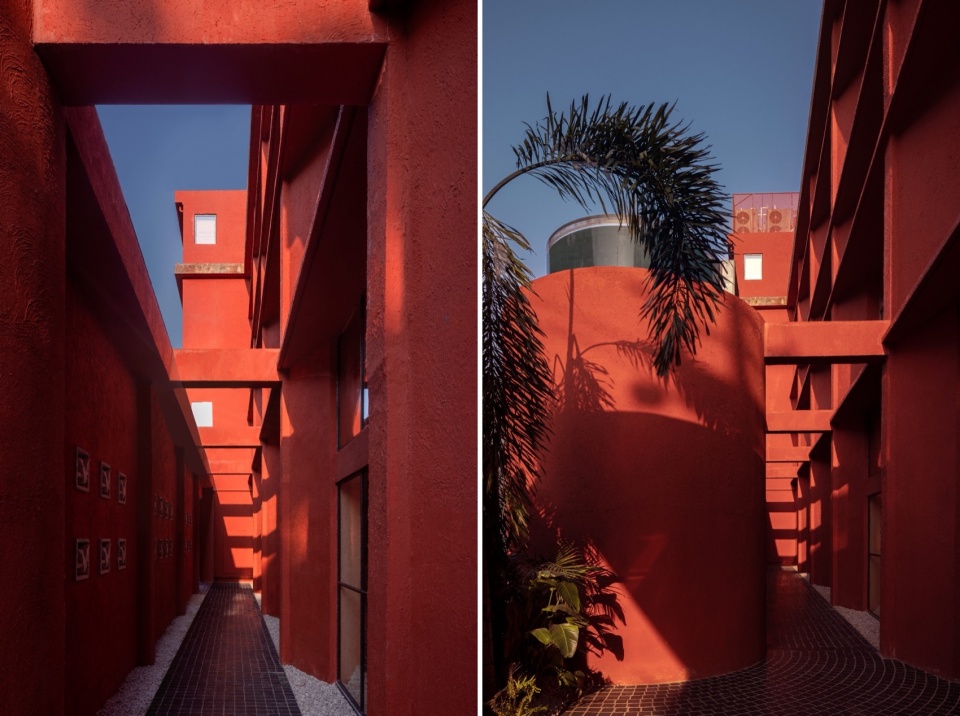
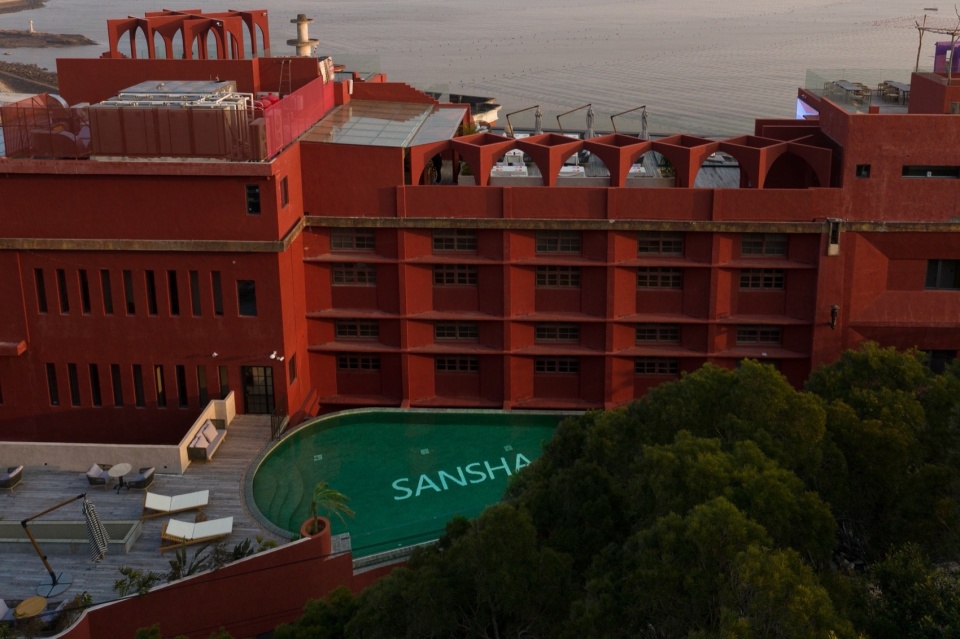
▼项目鸟瞰与细部,aerial view of the project and details
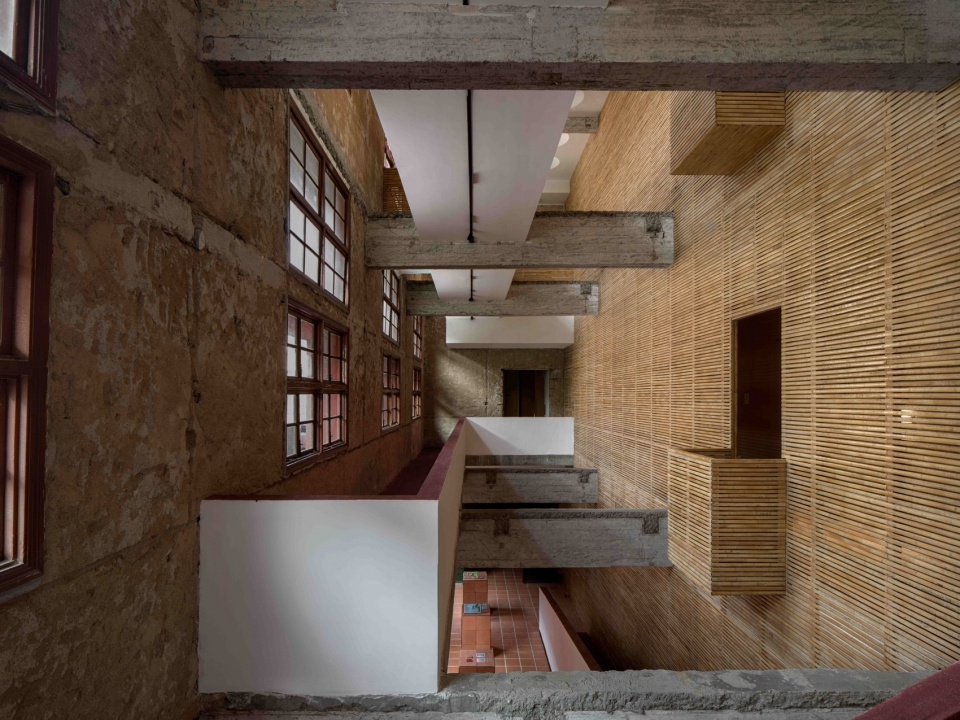
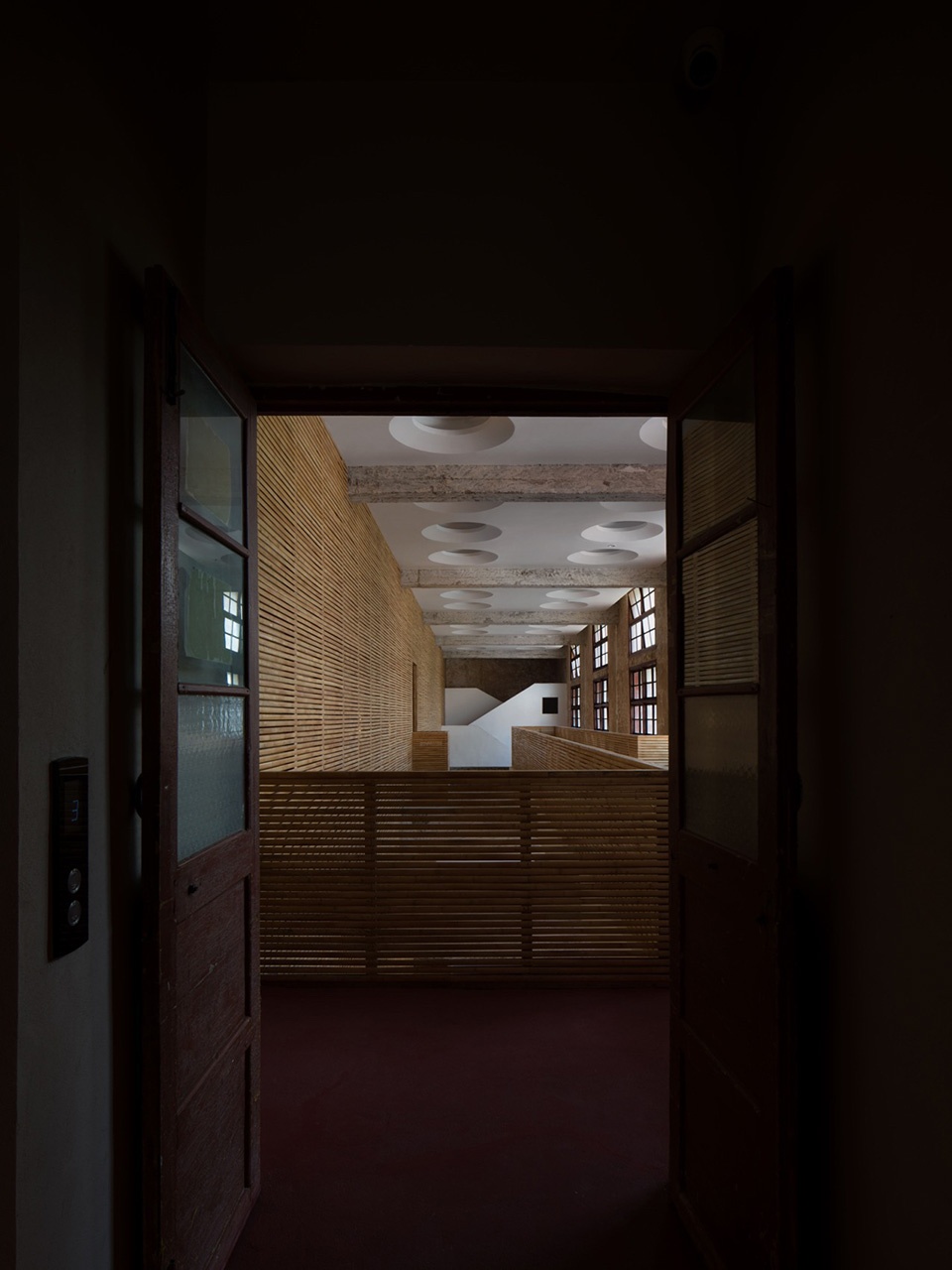
步入建筑的心脏,戏剧性的空间扑面而来。与业主深入沟通后,我们一致希望除了住宿,还可以承载更多的内容和故事,所以后面决定做一个三沙微型博物馆,并明确将博物馆和客房区域分开,基于这一共识,在设计上我们把四层楼板局部拆除,构建出四层通高宏伟气势的空间,将原楼板与粗犷而有力的混凝土结构自然面保留,如同暴露的骨骼,构成了这座博物馆核心空间的震撼骨架。暴露的结构瞬间将人拉回建筑的工业过往,奠定了雄浑而真实的空间基调,也正是这种坚实厚重的工业背景,为后续融入的有机元素与在地文化提供了强大的支撑。
Stepping into the heart of the building, the dramatic space immediately unfolds. After in-depth discussions with the client, we all agreed that, in addition to accommodation, the space should also carry more content and stories. Therefore, we decided to create a micro-museum of Sansha and clearly separate the museum area from the guest rooms. Based on this consensus, we partially removed the fourth-floor slab, creating a grand, open, four-story-high space. The original floor slab and the raw, powerful concrete structure were preserved, exposing the “skeleton,” which forms the striking framework of the museum’s core space. The exposed structure instantly pulls one back into the industrial past of the building, setting a strong and authentic spatial tone. It is precisely this solid and weighty industrial backdrop that provides a powerful foundation for the organic elements and local culture that will later be incorporated.
▼戏剧性的空间,the dramatic space
这些设计选择不仅出于美学考虑,更源于对当地传统与可持续性理念的深刻尊重。通过精心的架空结构,轻盈的当代构筑物仿佛悬浮于厚重的历史基底之上,新旧空间形成微妙的视觉脱离,在对话与并置中,共同诉说着这片场所的过去与新生。
These design choices are not only driven by aesthetic considerations but also stem from a profound respect for local traditions and sustainability principles. Through the carefully crafted elevated structure, the lightweight contemporary constructions seem to float above the heavy historical foundation. The old and new spaces form a subtle visual detachment, and in their dialogue and juxtaposition, they collectively tell the story of this place’s past and rebirth.
▼空间细部,details of the space
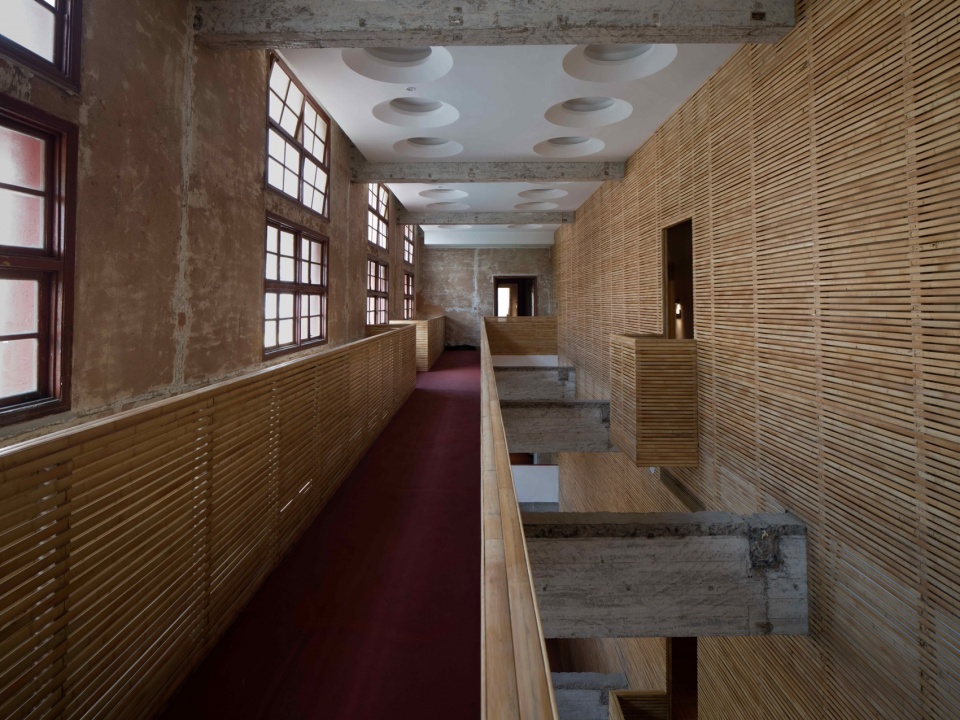
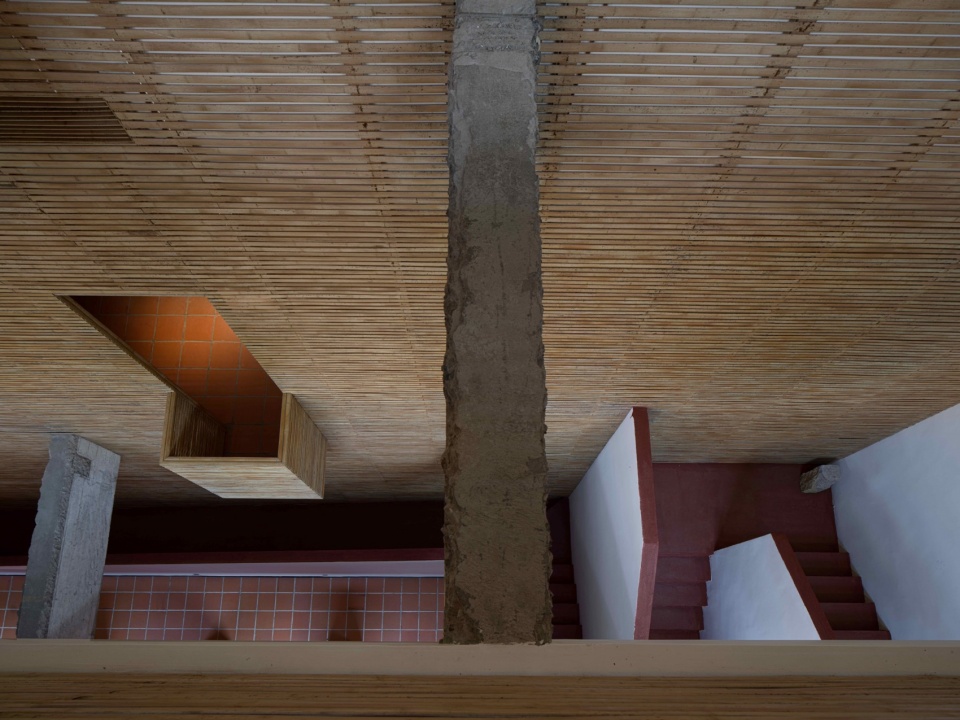
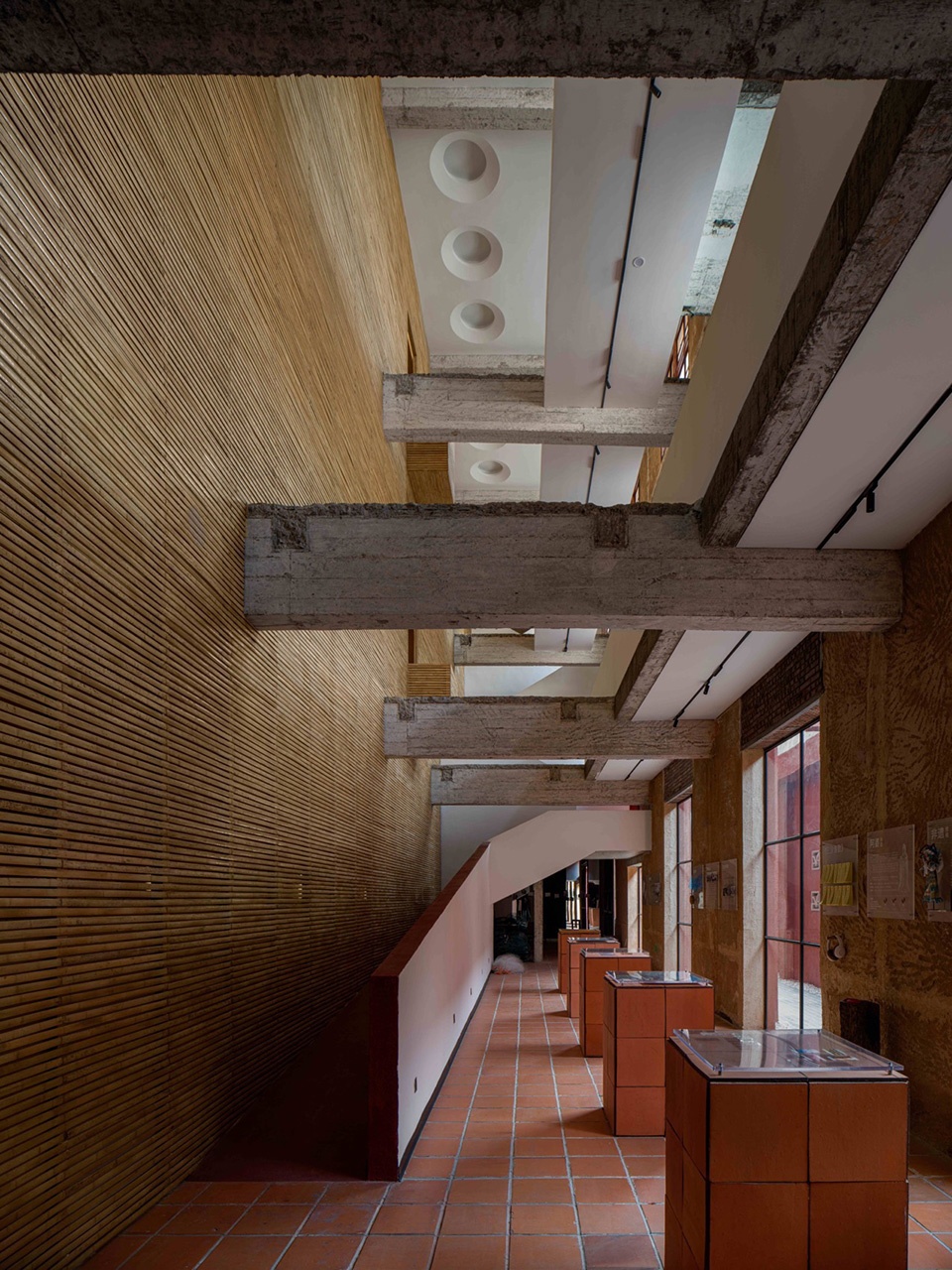
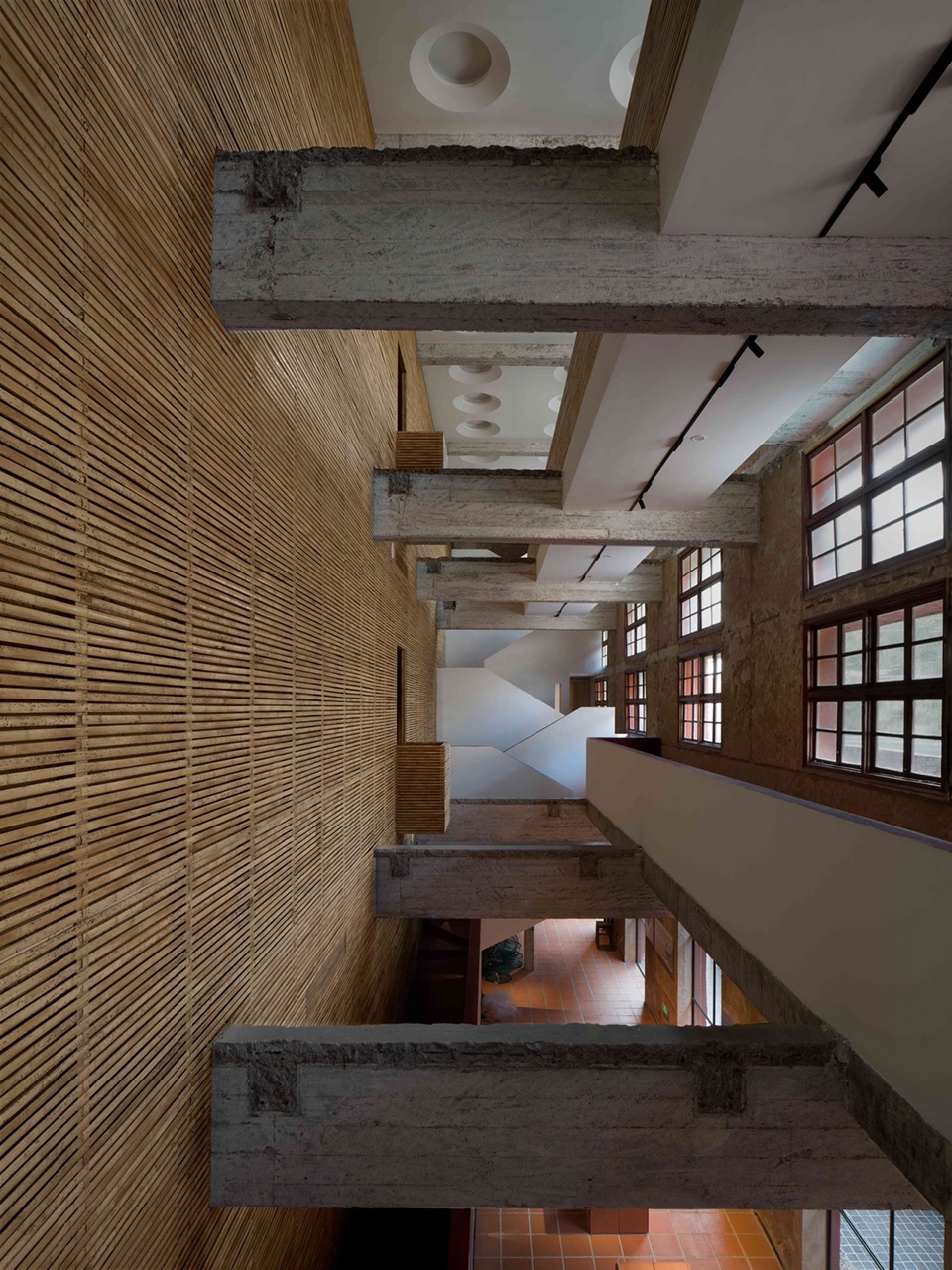
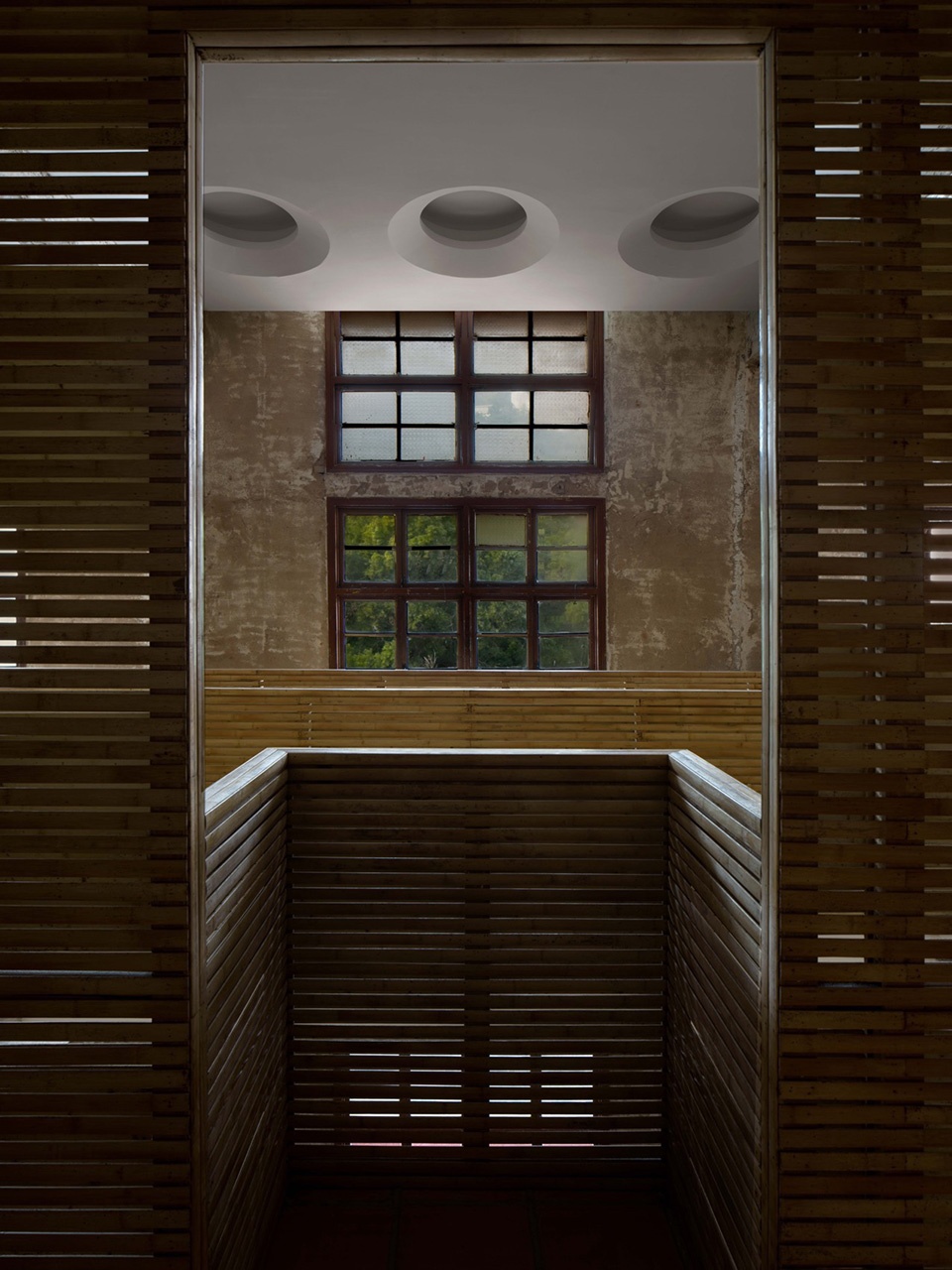
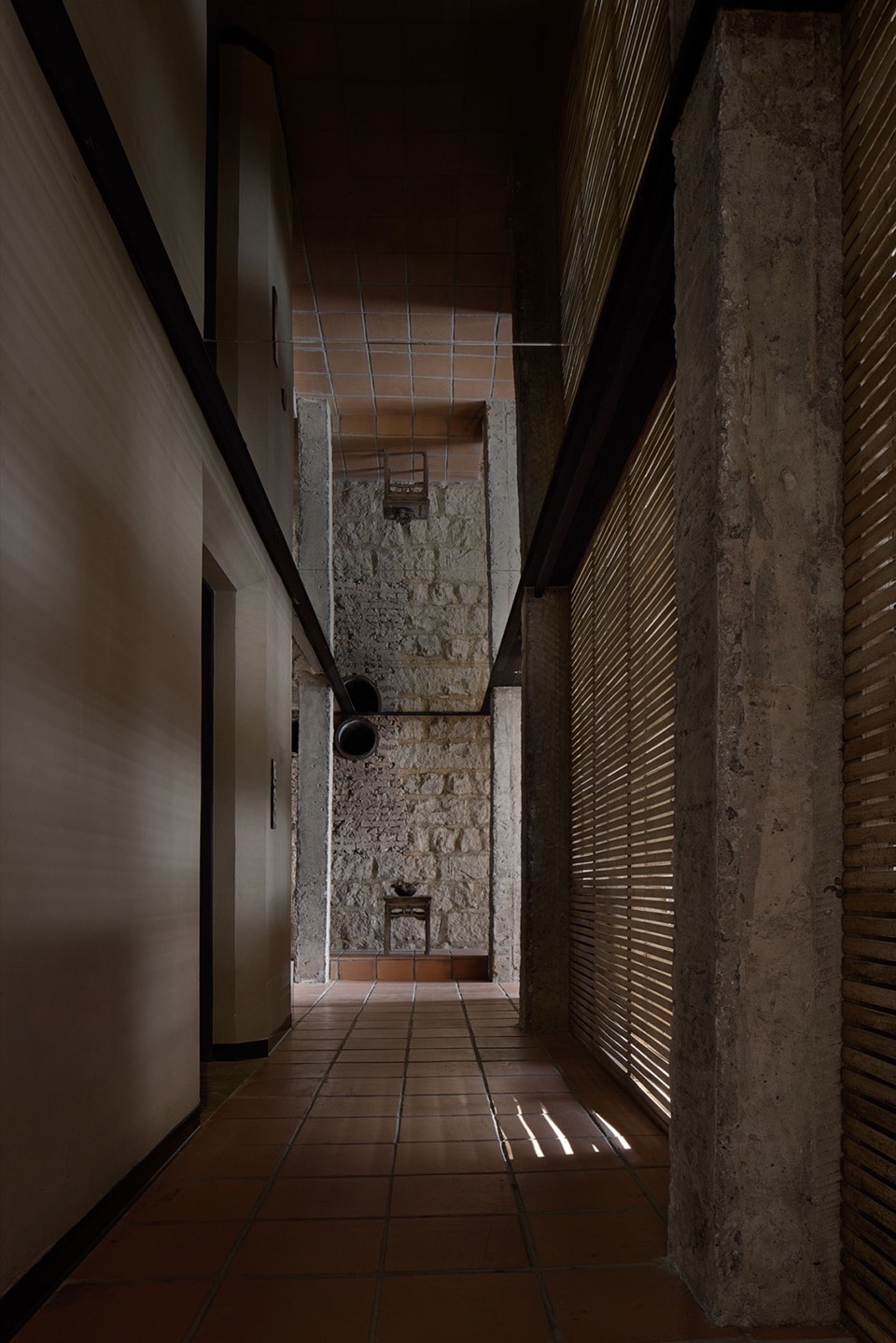
我们提炼了闽南三沙渔民文化的精髓,将“竹”元素以艺术化的编织语言融入空间,其灵动的形态隐喻着三沙渔民渔网的意象,以虚实结合的方式,静默致敬着这座海带紫菜之乡的悠久劳作传统。中庭的灵魂在用约50,000条竹片覆于其上编织的“渔网”,所有竹子均取自闽南本地,不仅因其可持续性和高抗拉强度,更因其能塑造出独一无二、充满生命力的有机肌理。竹子的柔韧性使其易于编织,创造出丰富流动的纹理,如同立体的书法虚实表达。这些竹帘环绕访客,散发着自然温暖与手工艺的智慧,与冷峻的混凝土骨架形成动人对比,在历史框架内注入勃勃生机。我们借助这些元素,旨在让客人“在寻觅独特设计的同时欣赏展品”。漫步于公共走廊,宛如穿行于当代艺术装置之中。
We have distilled the essence of Minnan Sansha fishermen’s culture, weaving the element of “bamboo” into the space through an artistic craftsmanship language. Its dynamic form metaphorically evokes the imagery of Sansha fishermen’s fishing nets, silently honoring the long-standing labor traditions of this land rich in seaweed and kelp, through a blend of solid and void. The soul of the atrium lies in the “fishing net” woven from approximately 50,000 bamboo strips, all sourced from local Fujian bamboo. Not only chosen for its sustainability and high tensile strength, but also for its ability to shape a unique, vibrant, organic texture. The flexibility of bamboo makes it easy to weave, creating rich, flowing patterns, much like the three-dimensional expression of calligraphy’s balance between solid and void. These bamboo curtains surround visitors, emanating natural warmth and the wisdom of craftsmanship, forming a captivating contrast with the stark concrete framework, injecting vitality into the historical structure. Through these elements, we aim to allow guests to “appreciate the exhibits while discovering unique designs.” Strolling along the public corridors feels like wandering through a contemporary art installation.
▼通高空间,the double-height space
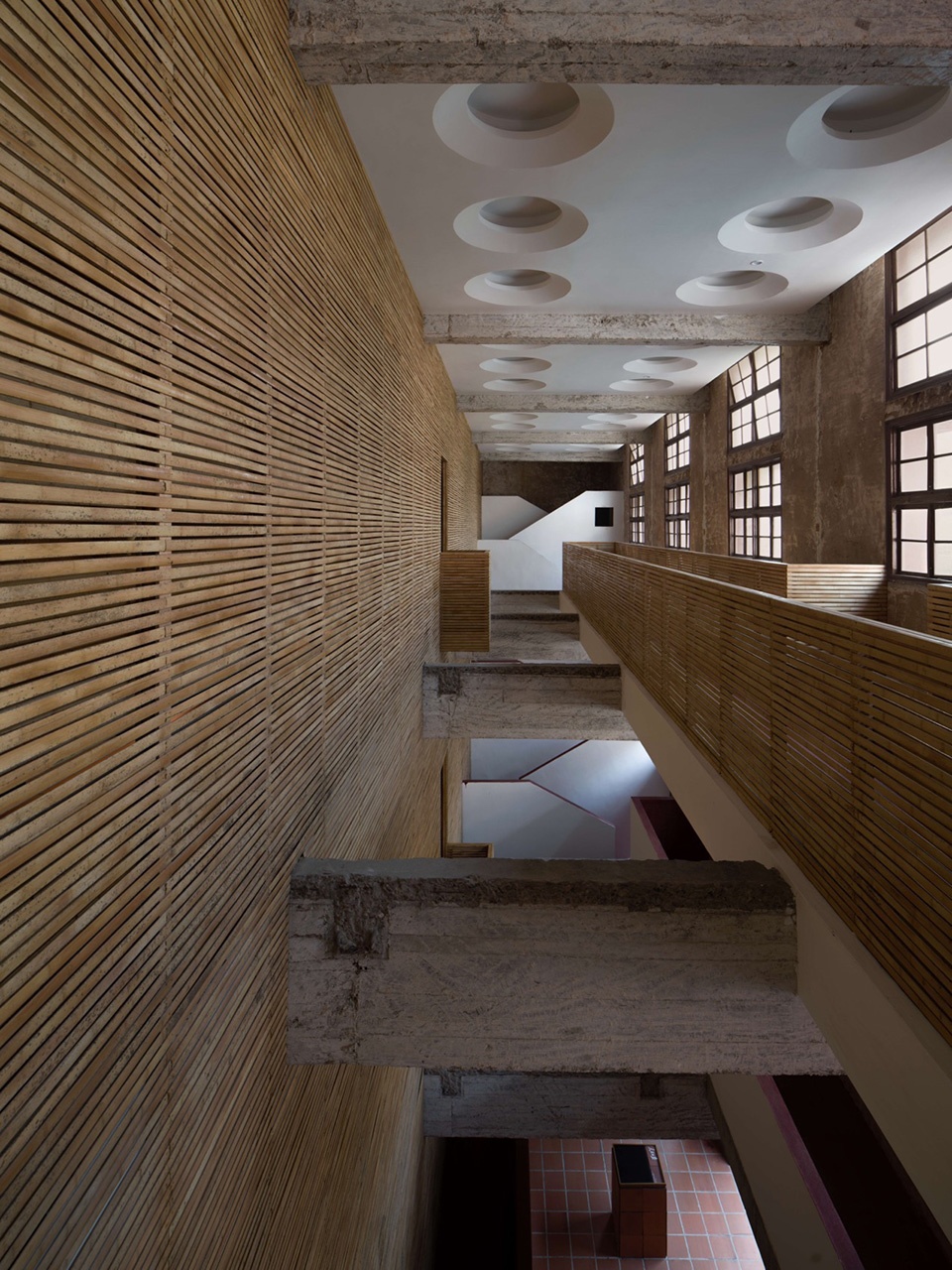
▼细部,details
▼竹帘环绕访客,散发着自然温暖与手工艺的智慧,the bamboo curtains surround the visitors, exuding a natural warmth and the wisdom of craftsmanship
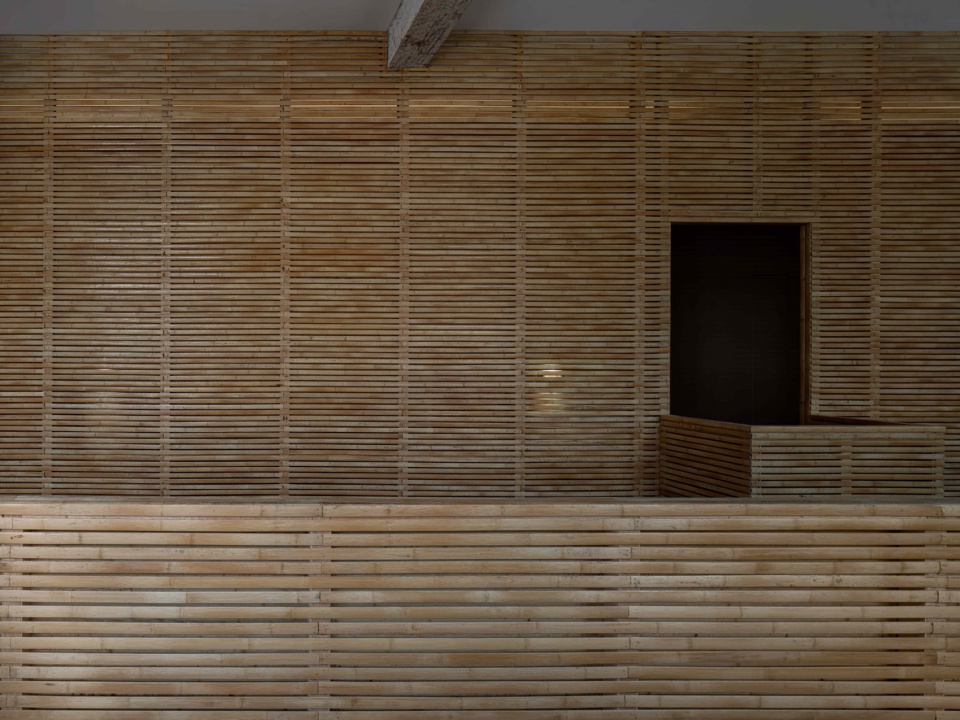
▼细部,details
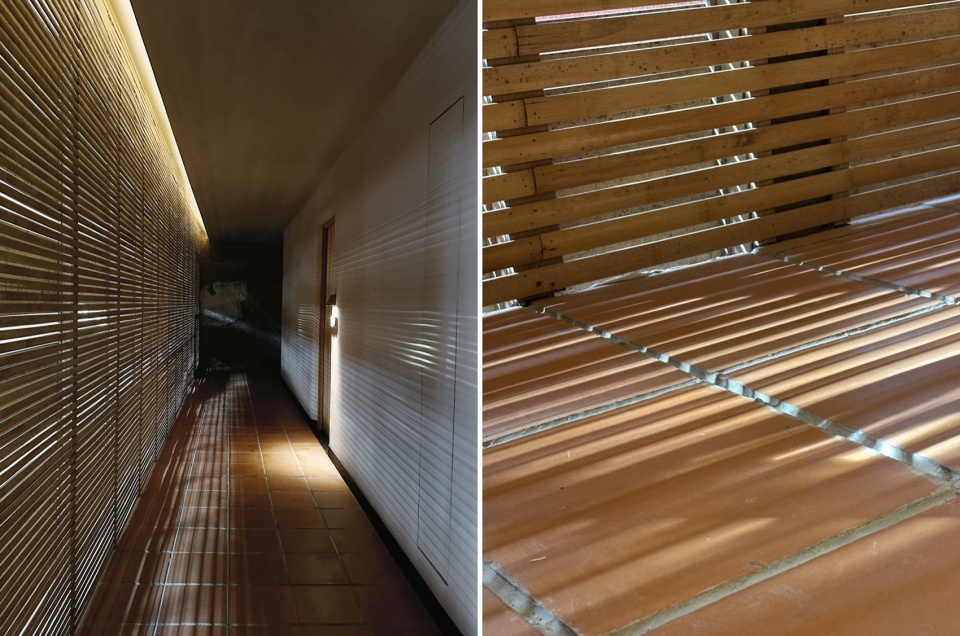
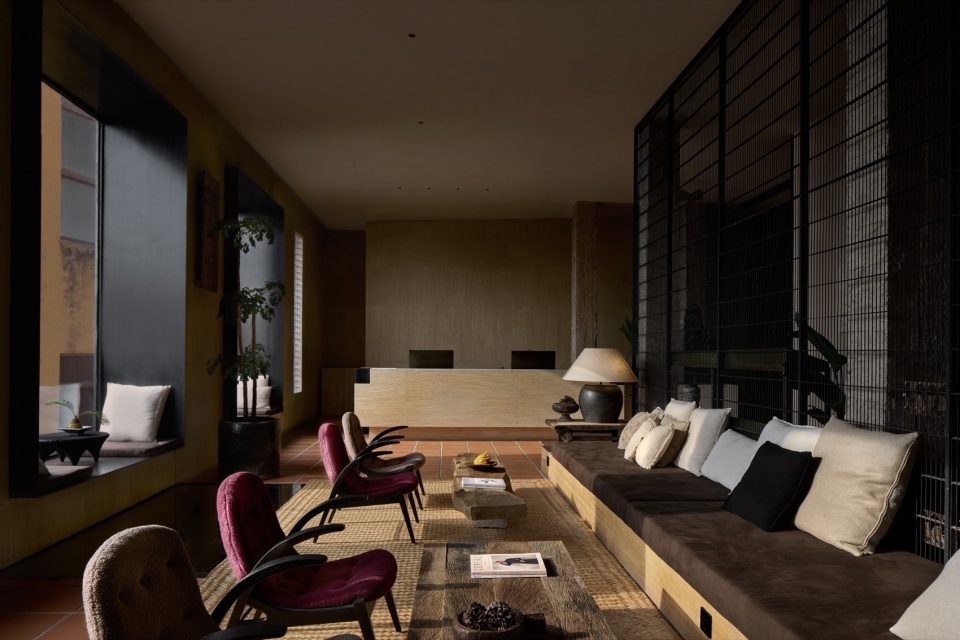
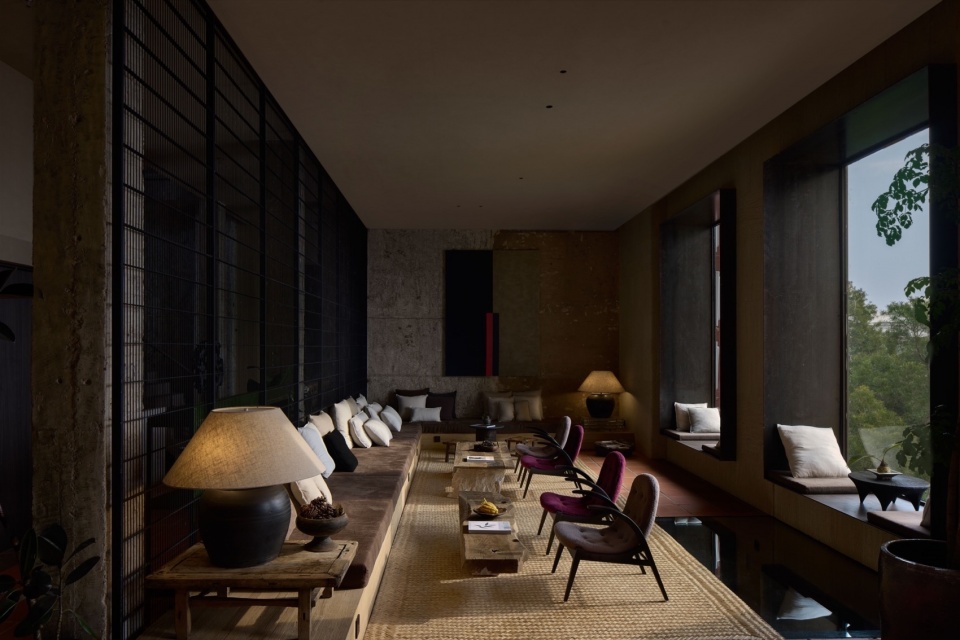
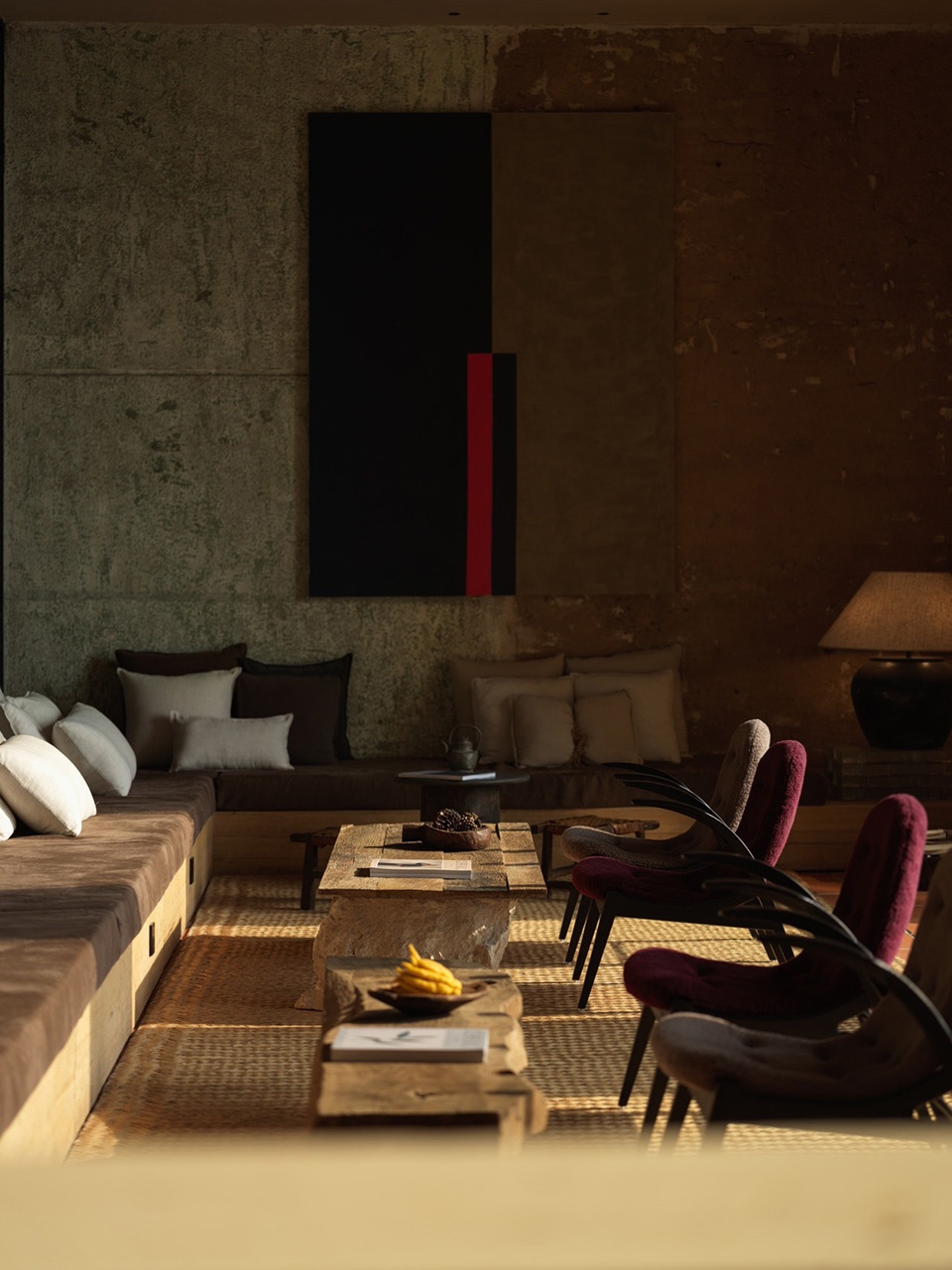
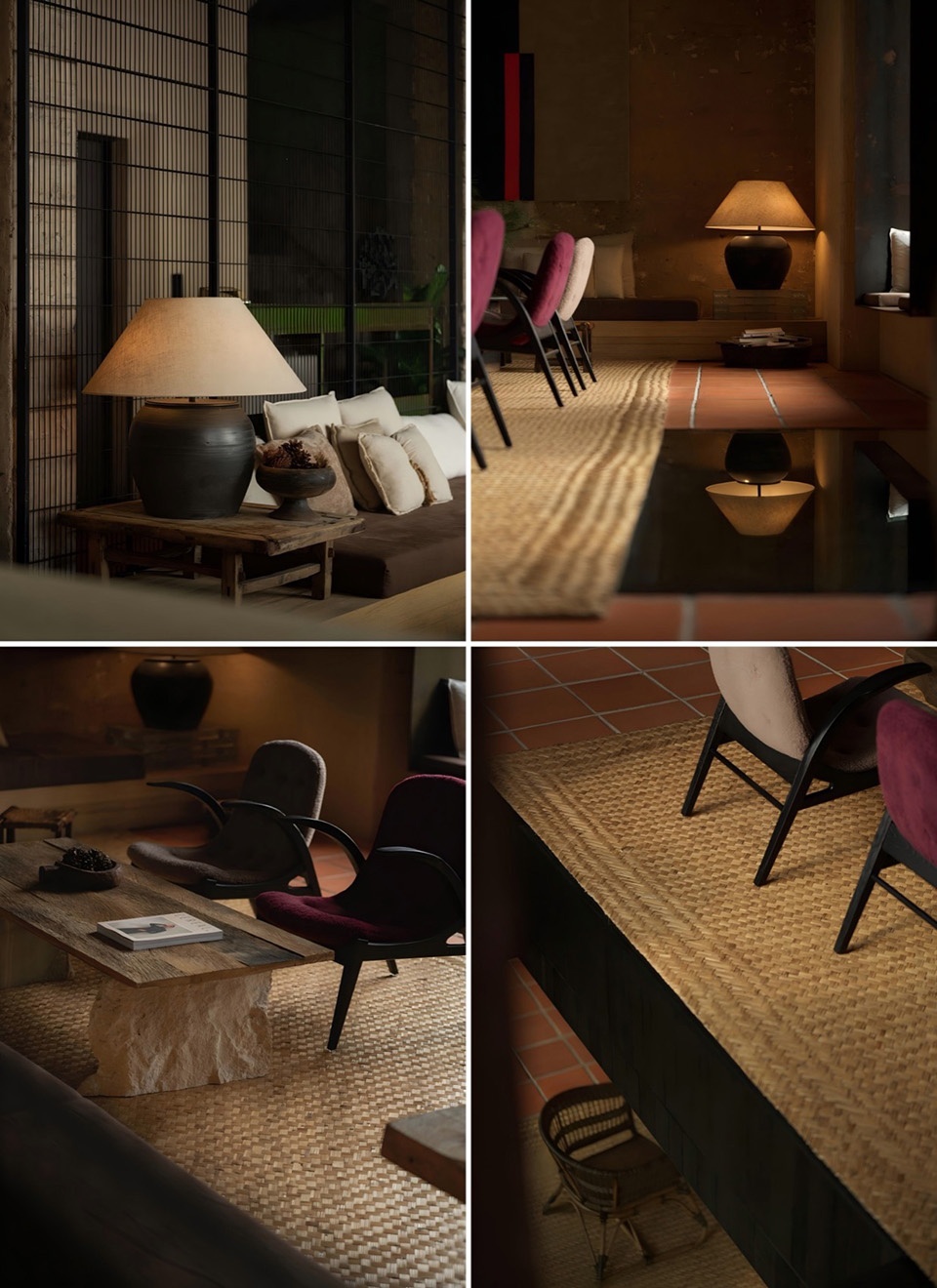
酒店的接待大堂,我们将其精心打造成一条通透、光线充盈的流动通道。整面的落地玻璃窗模糊了内与外的界限,开放的视野将内部休息区与壮阔的远海相连,邀请充沛的日光与清新的海风自由穿行。走廊沿途巧妙嵌入了私密的观景壁龛,为客人提供可驻足沉思、静赏海港风光的诗意角落。
In the hotel’s reception lobby, we have carefully crafted a transparent, light-filled passageway. The full-height glass windows blur the boundary between the interior and exterior, with an open view that connects the lounge area to the vast ocean beyond, inviting abundant sunlight and fresh sea breezes to flow freely through the space. Along the corridor, intimate viewing niches are cleverly embedded, providing guests with poetic corners to pause, reflect, and quietly enjoy the harbor scenery.
▼接待大堂,the reception lobby
▼细部,details
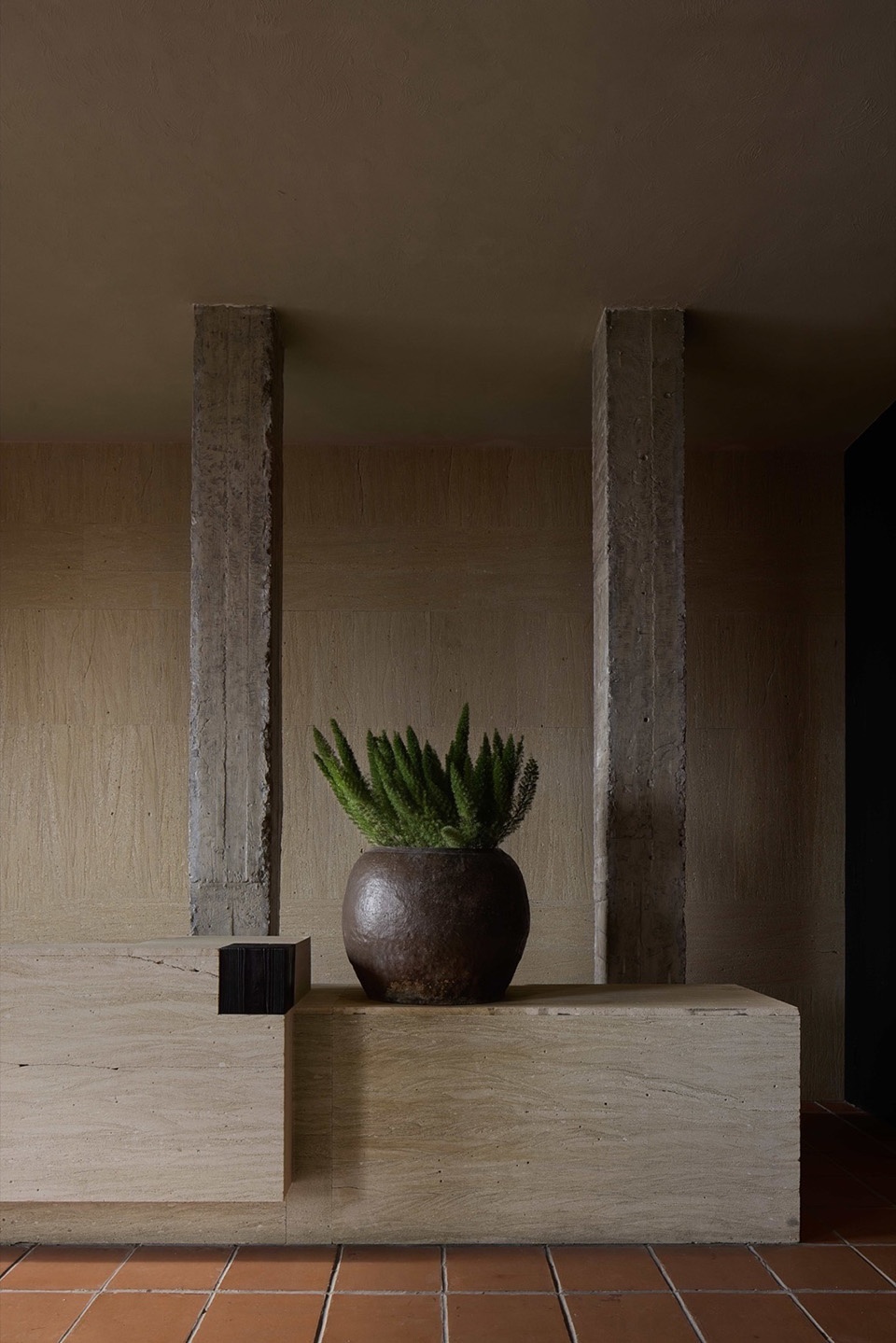
▼接待空间细部,details of the reception details
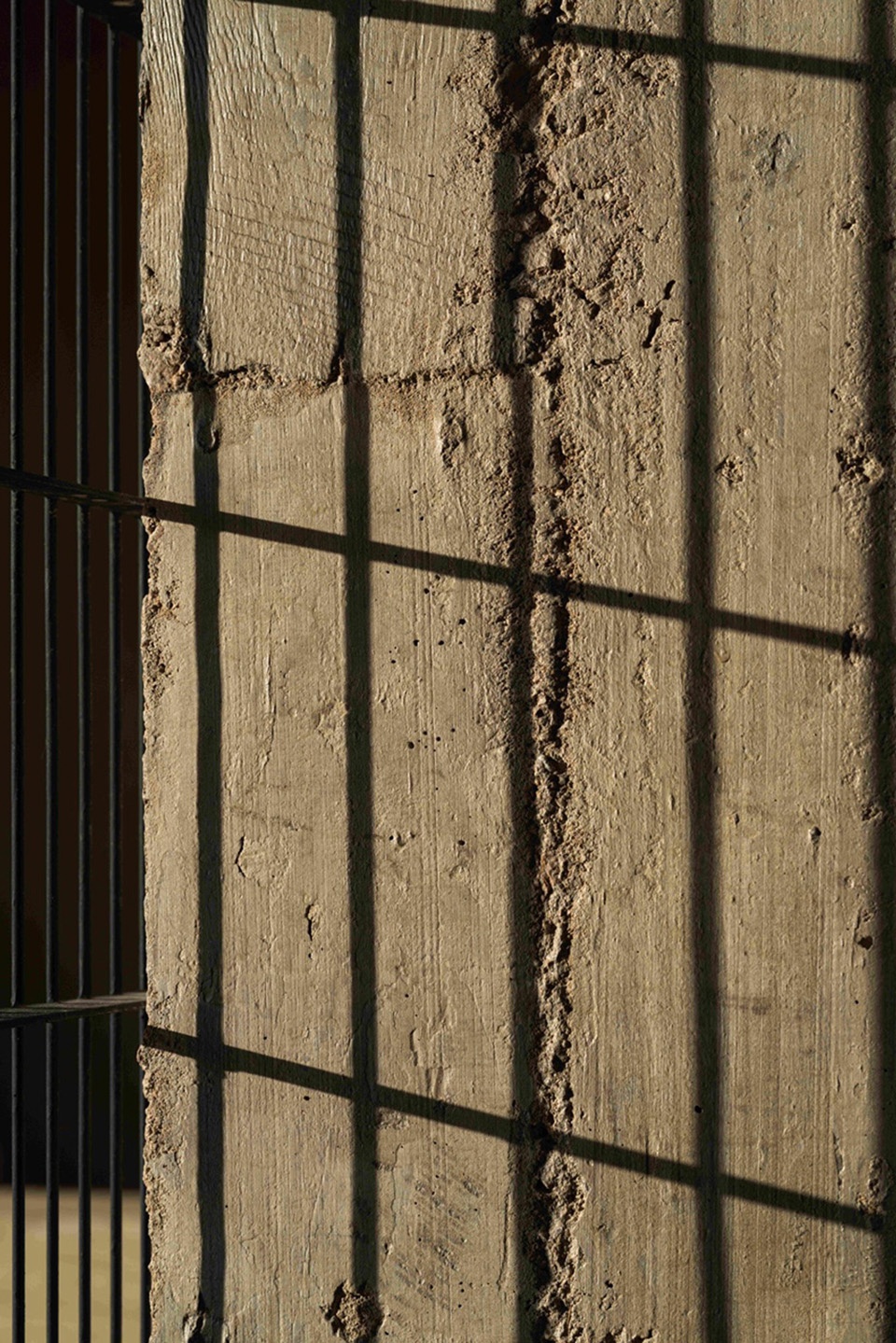
▼光影,light and shadow
当然空间不止于此Of course, the space goes beyond this
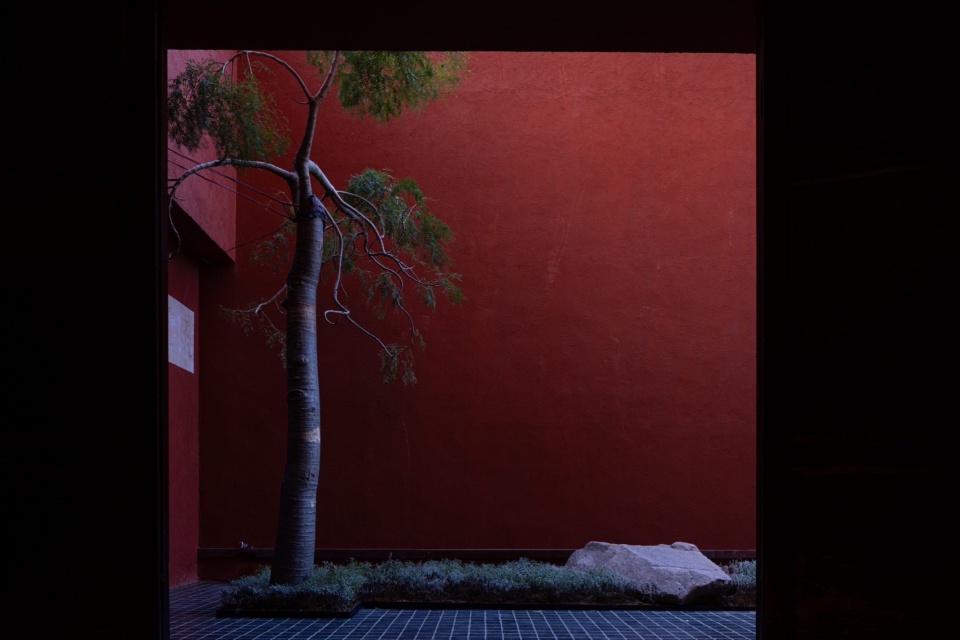
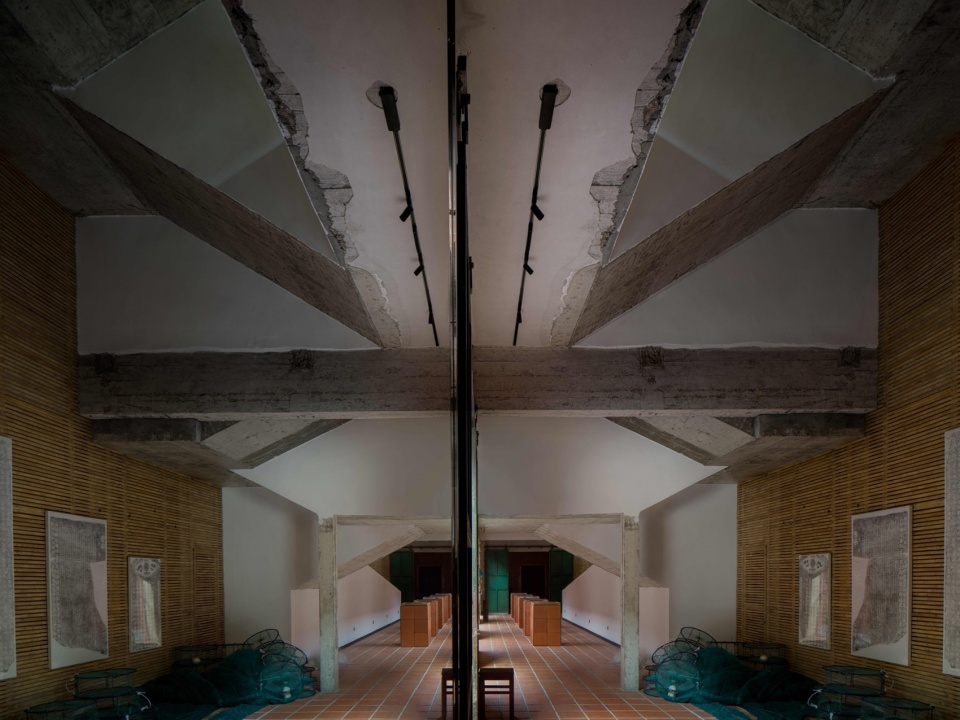
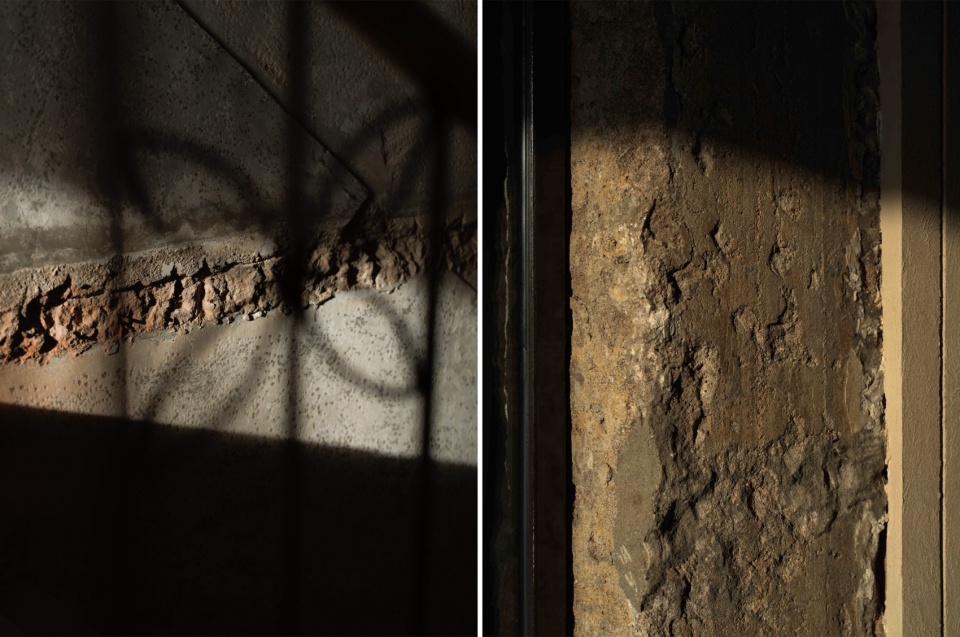
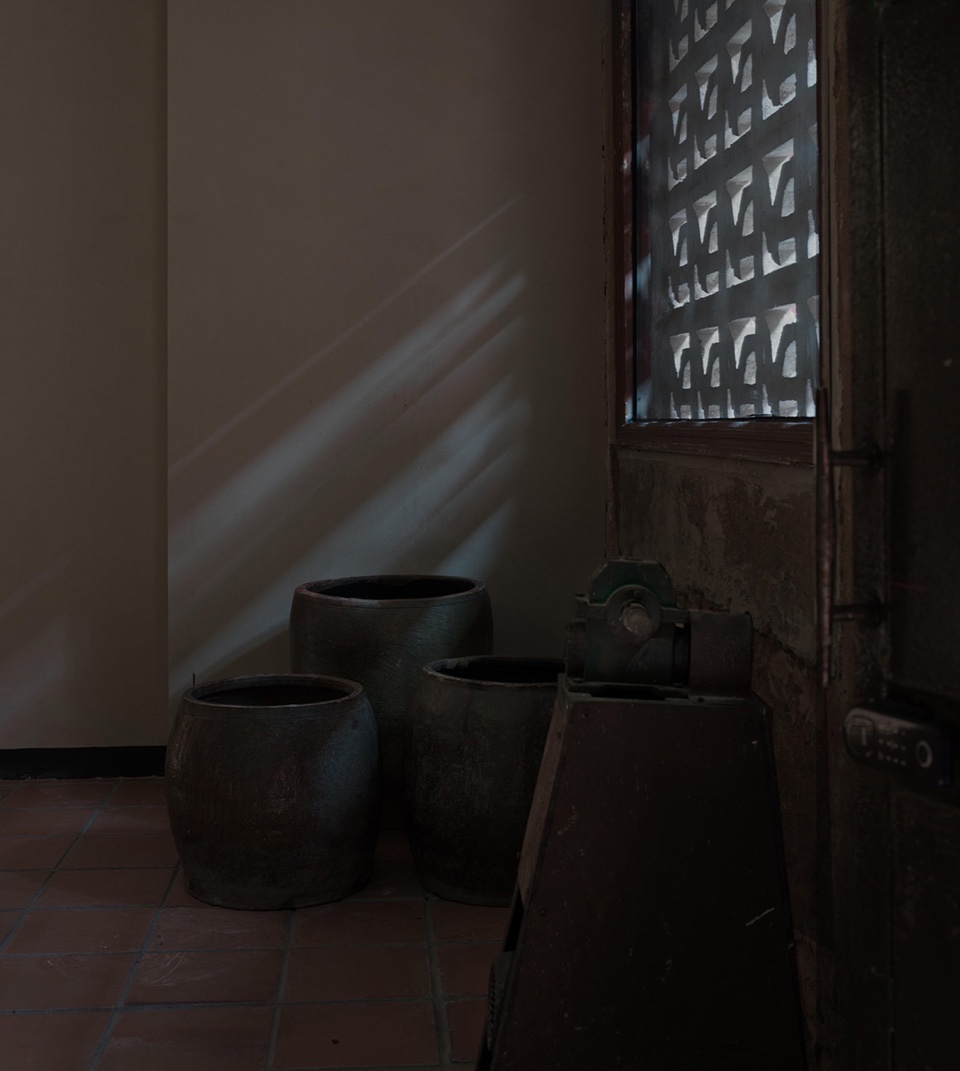
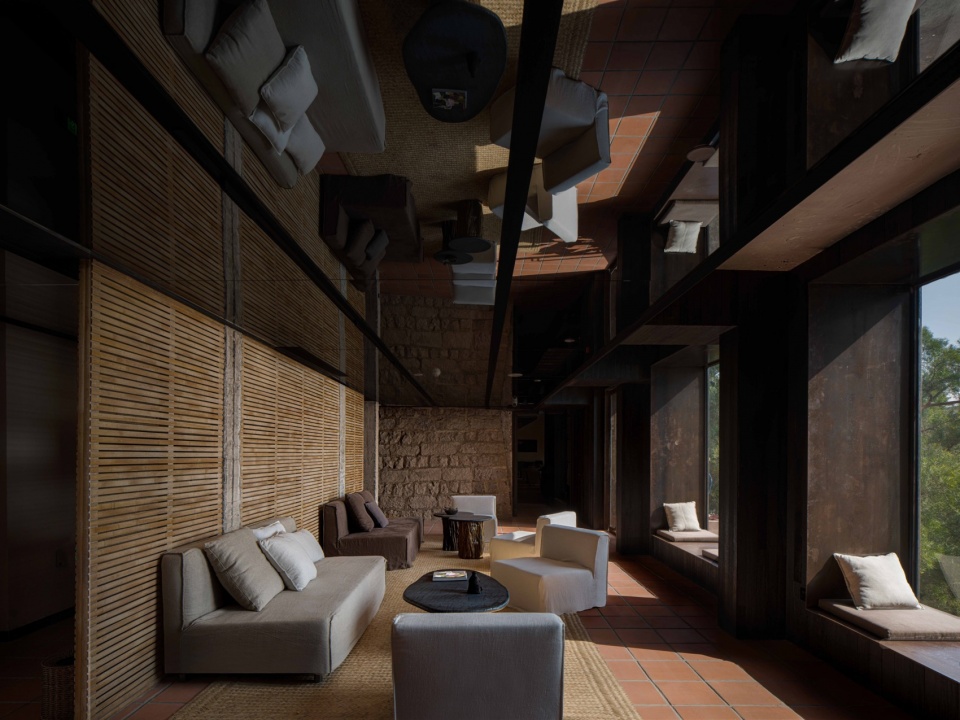
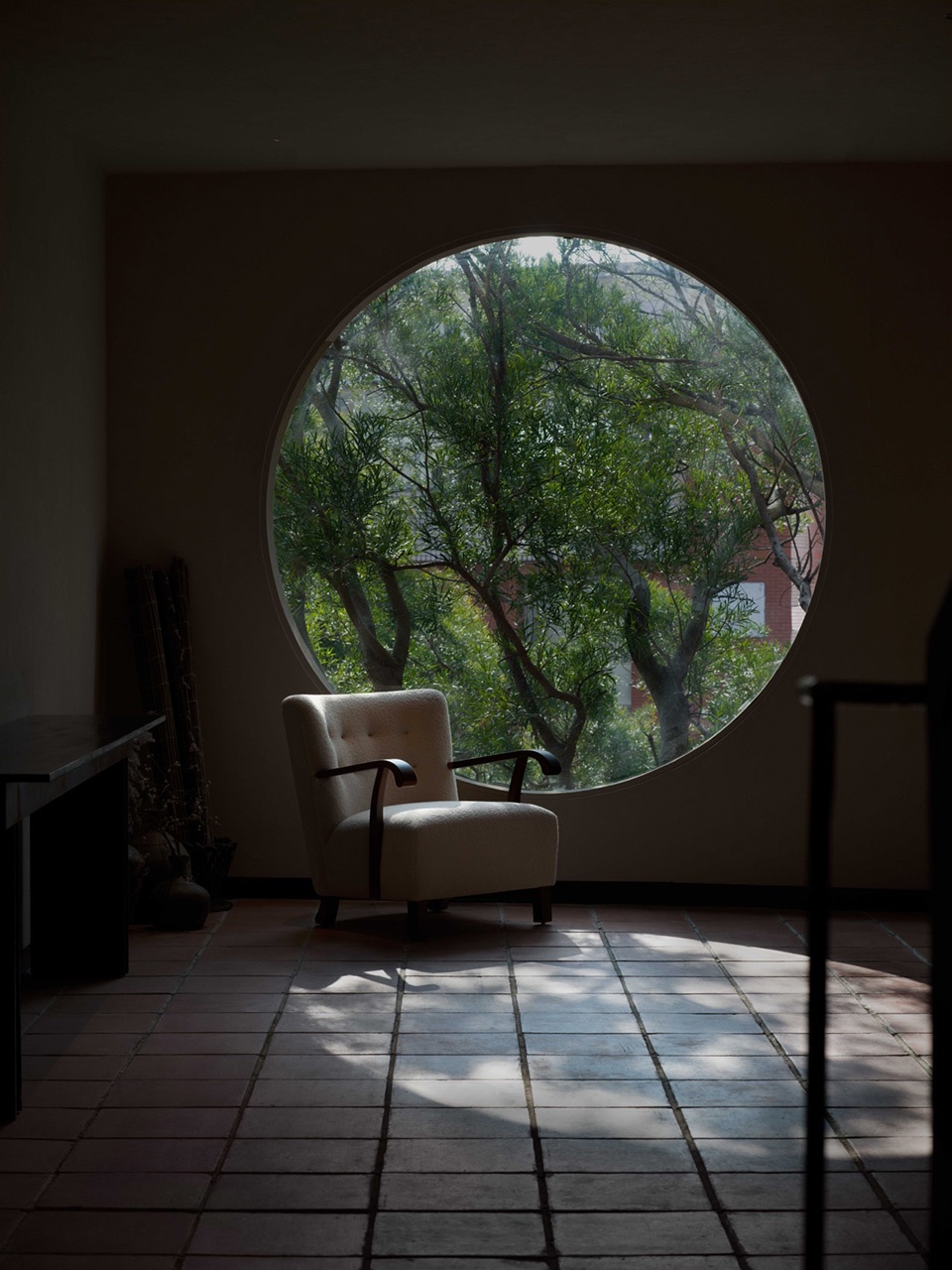
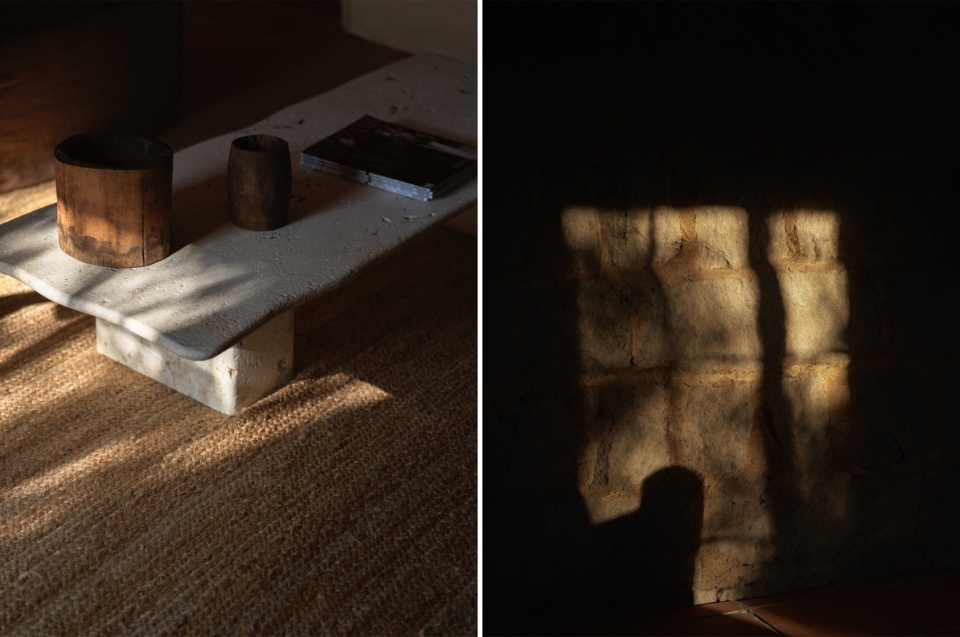
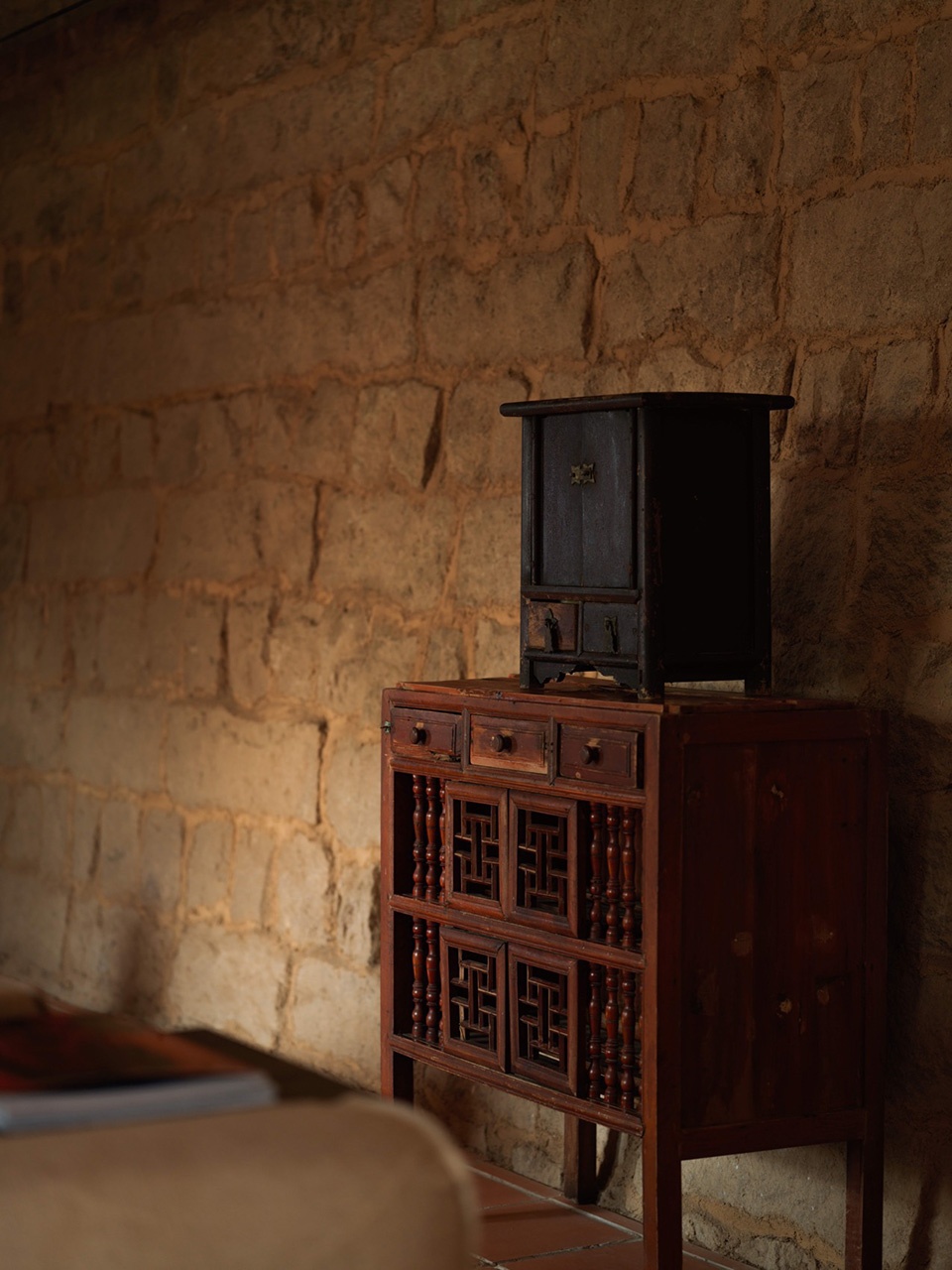
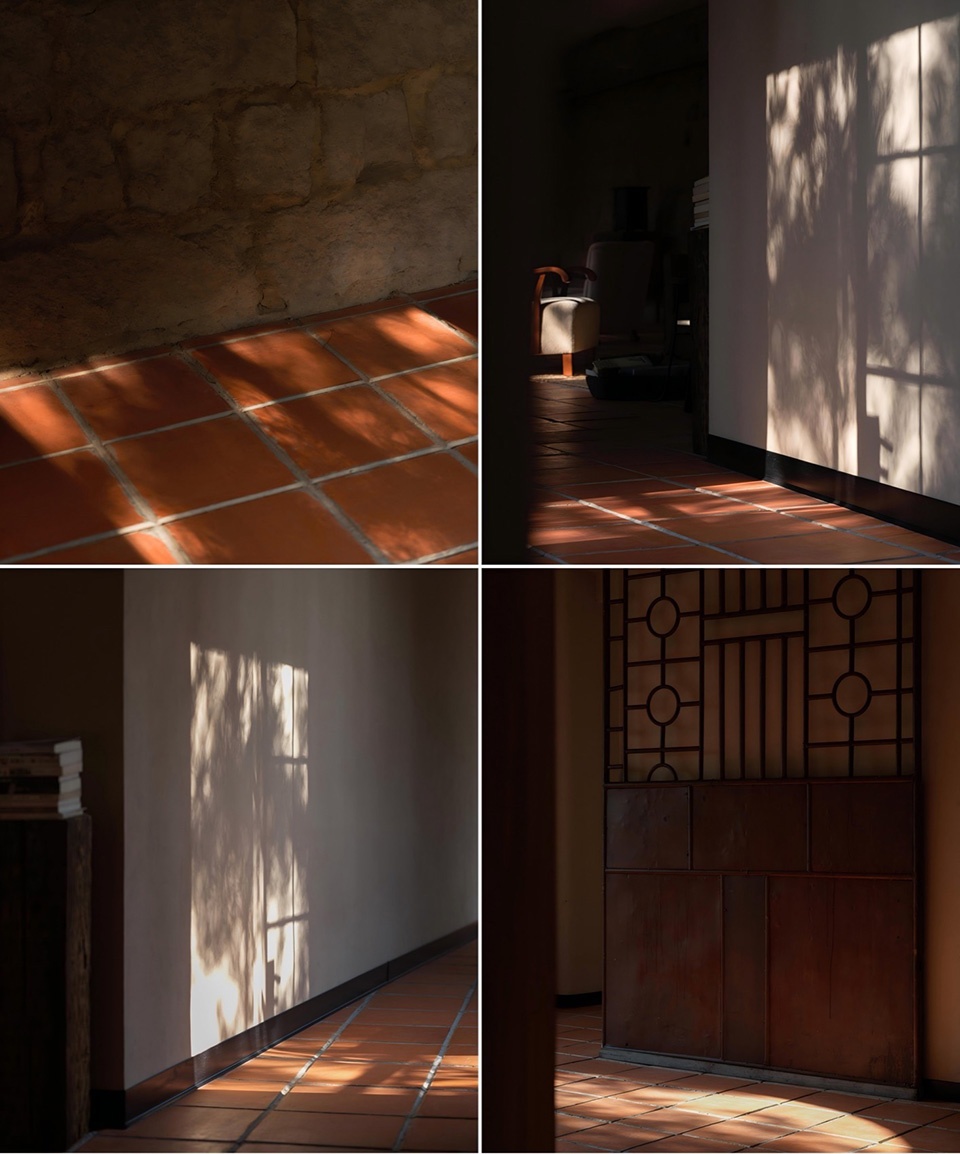
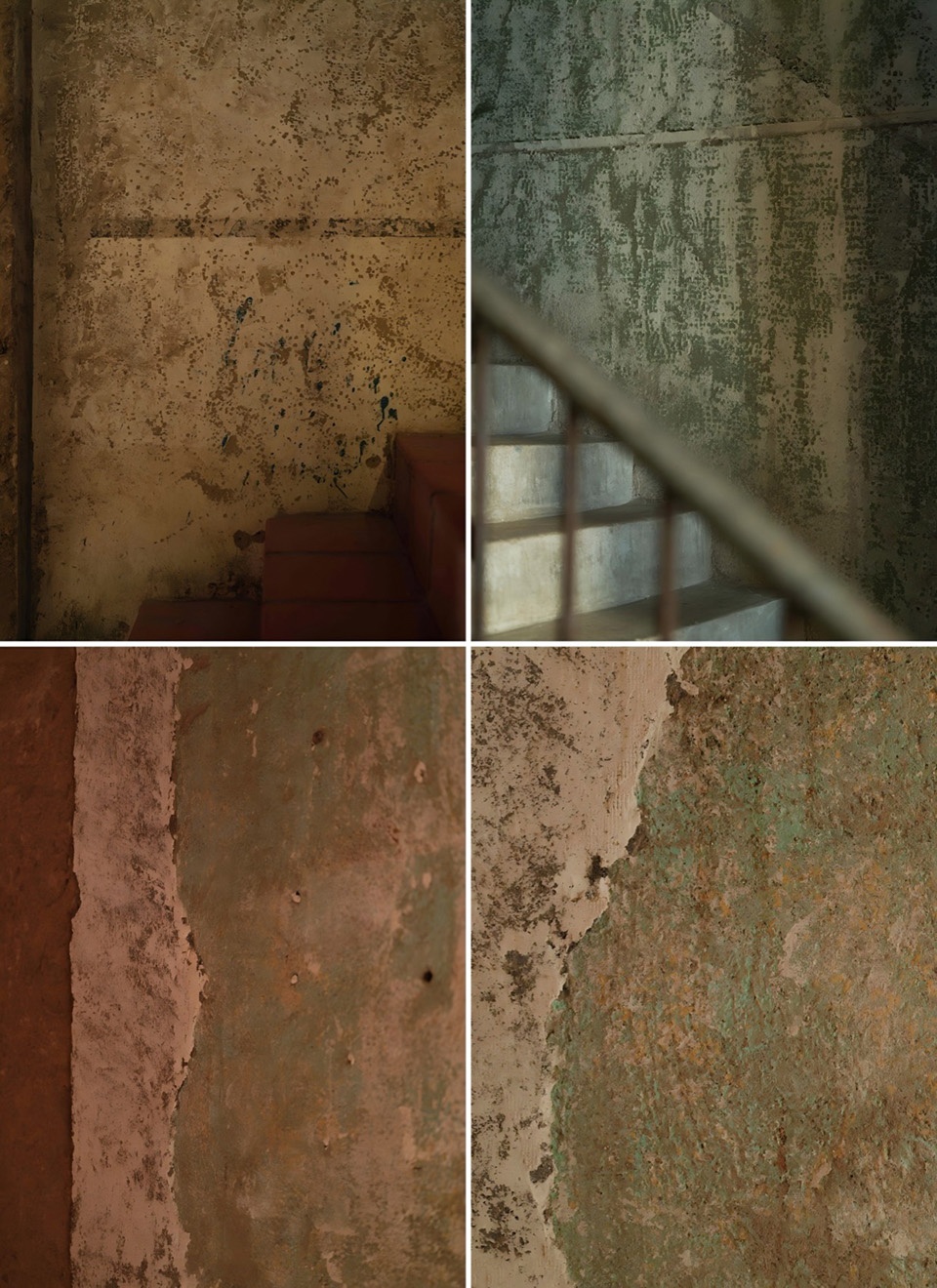
曾作为仓库的负一层,如今蜕变为酒店客房的第二客厅,一个专为入住客人打造的、更私密与放松的休闲停留空间。改造中我们铲除了原有的墙面,却刻意保留了其独特的岁月肌理。这里备有茶空间,书,及多功能会议室,并通过巧妙设置的镜面拉伸天花,将户外的大树与婆娑的树影邀请入室内——风起时,光影在斑驳的墙面上流动,描摹着风的轮廓;风静时,是你我在此品茗的静心恬淡时分。这些细节将现代室内空间根植于当地传说中,以文化的肌理丰富了客人的体验,让人沉浸其中,憧憬着关于海边生活的一切美好。
Once a warehouse, the basement level has now transformed into a second living room for hotel guests— a more private and relaxed space designed for leisurely stays. During the renovation, we removed the original walls but intentionally preserved its unique patina of time. This space features a tea area, books, and a multifunctional meeting room, and through cleverly placed mirrored ceilings, the outdoor trees and their swaying shadows are invited inside. When the wind rises, the play of light and shadow flows across the mottled walls, tracing the contours of the wind; when the wind is still, it becomes a tranquil moment for tea, a peaceful and serene time for guests. These details root the modern interior space in local legends, enriching the guest experience with the texture of culture, allowing visitors to immerse themselves in the space and dream of all the beauty of coastal life.
▼酒店客房的第二客厅,the second living room for hotel guests
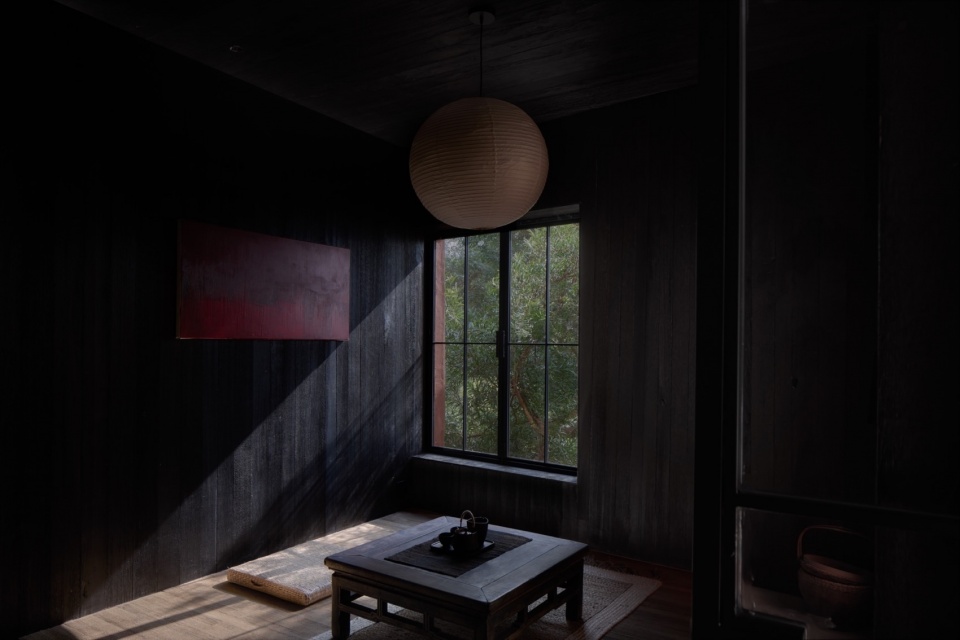
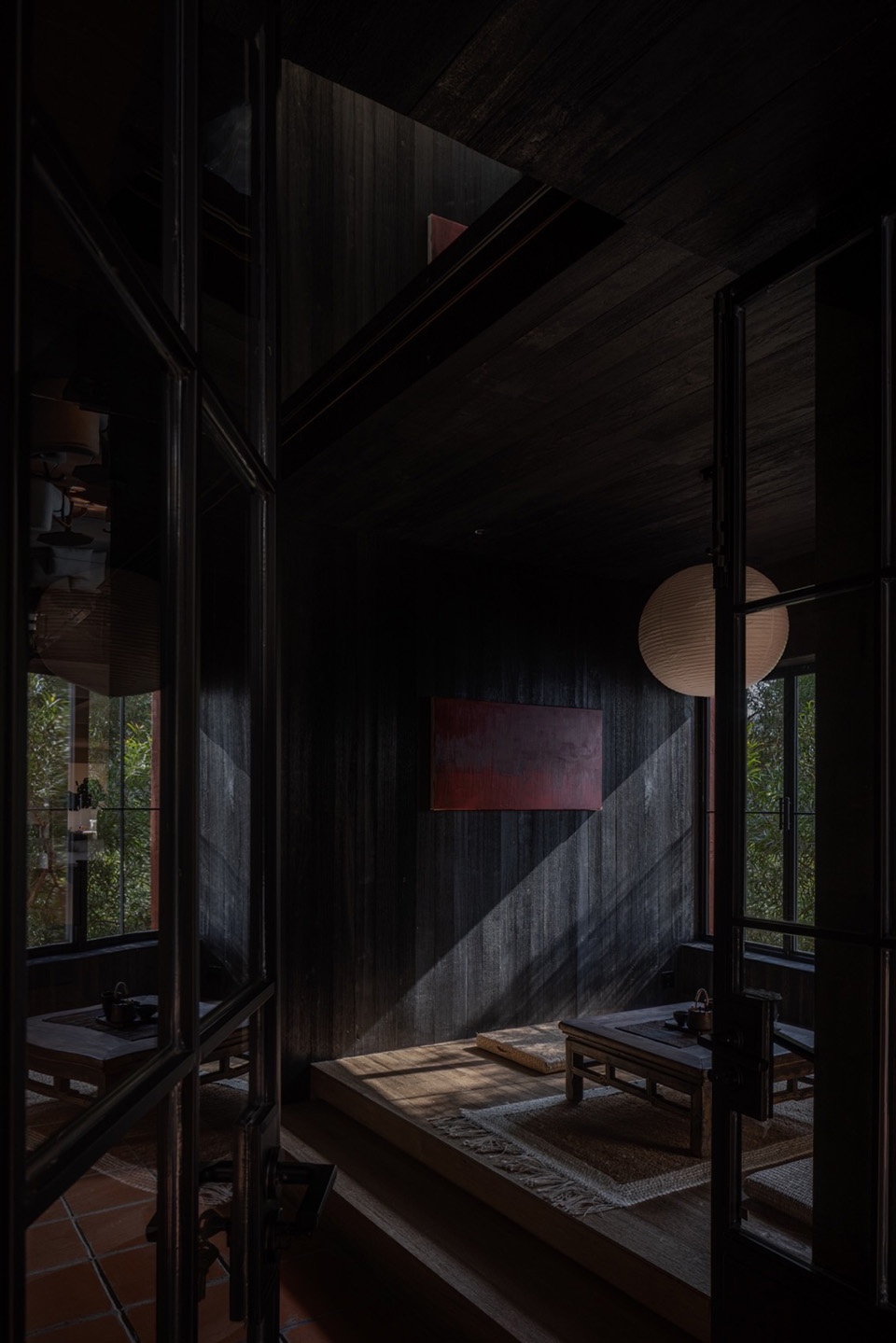
▼圆窗,round window
▼细部,details
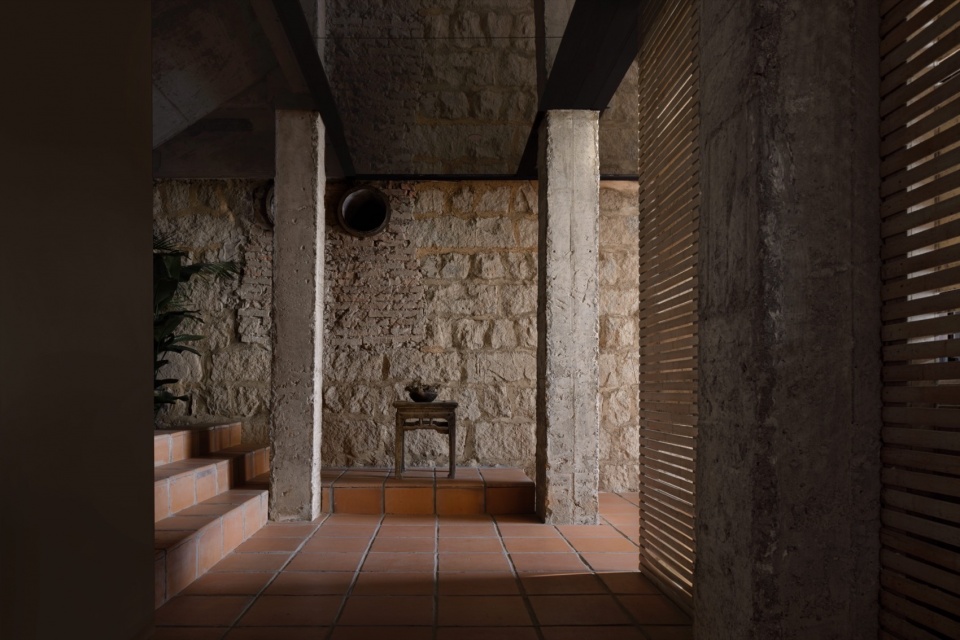
在地面铺陈上,我们融入闽南文化精髓的红色地砖,或保留原厂历史痕迹进行修复,或重组为记忆拼图,或铺就新制传统纹样,无声地诉说着这片场地的文脉。裸露的钢梁与悬浮展示的老构件碎片清晰可见——既是对原厂房工业遗存的致敬,又创造出一种虚实相映、过去与现在从容对话的独特空间体验。
In the flooring design, we incorporated red tiles that capture the essence of Minnan culture, either preserving and restoring the original factory’s historical traces, reassembling them into a mosaic of memories, or laying down newly crafted traditional patterns—silently telling the story of the cultural lineage of this site. Exposed steel beams and suspended fragments of old components are clearly visible—paying homage to the industrial relics of the original factory while also creating a unique spatial experience where the interplay of solid and void allows the past and present to converse in harmony.
▼红色地砖,red tiles
▼细部,details
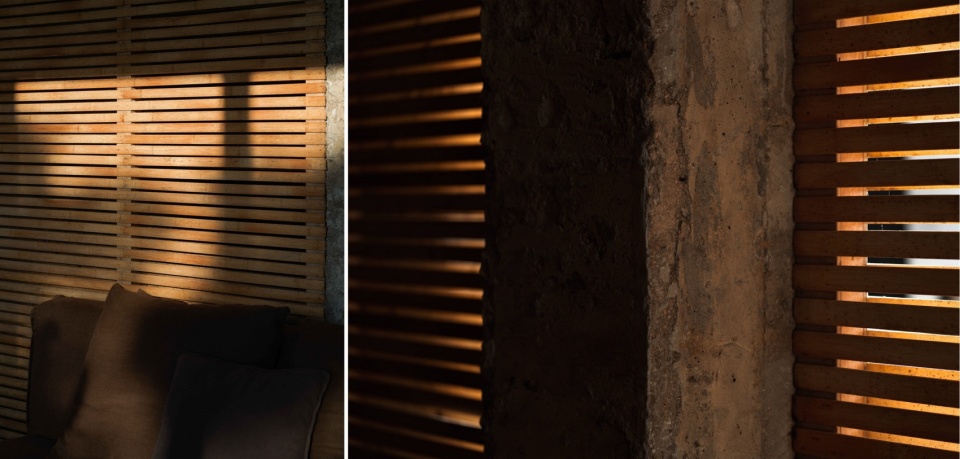
▼酒店客房的第二客厅,the second living room for hotel guests
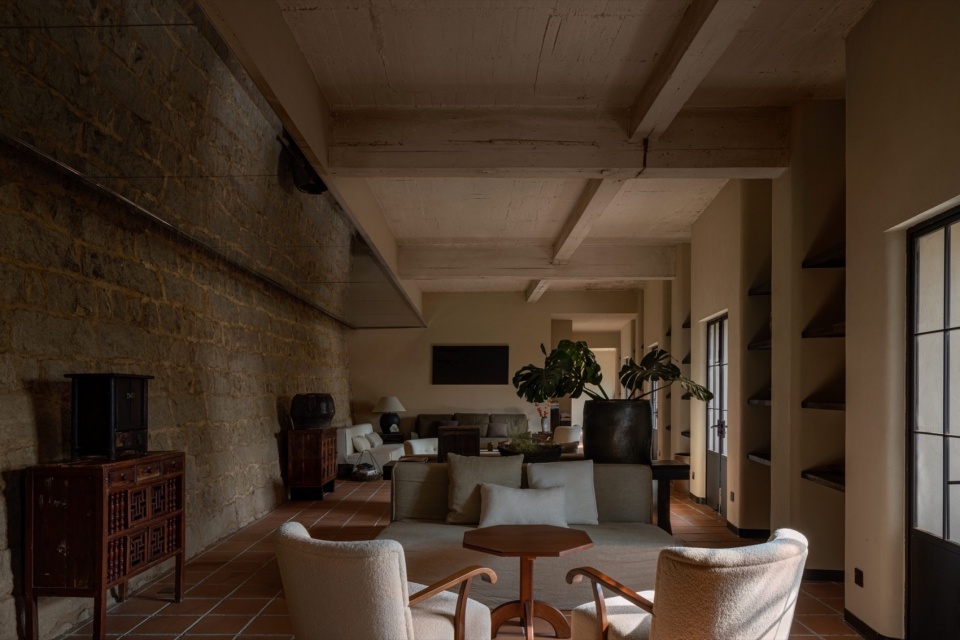
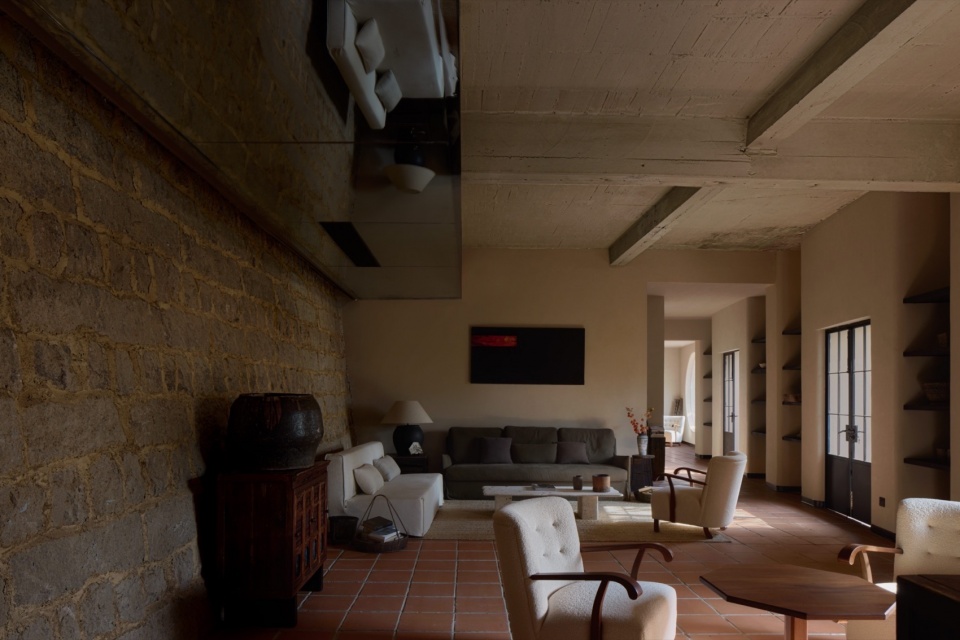
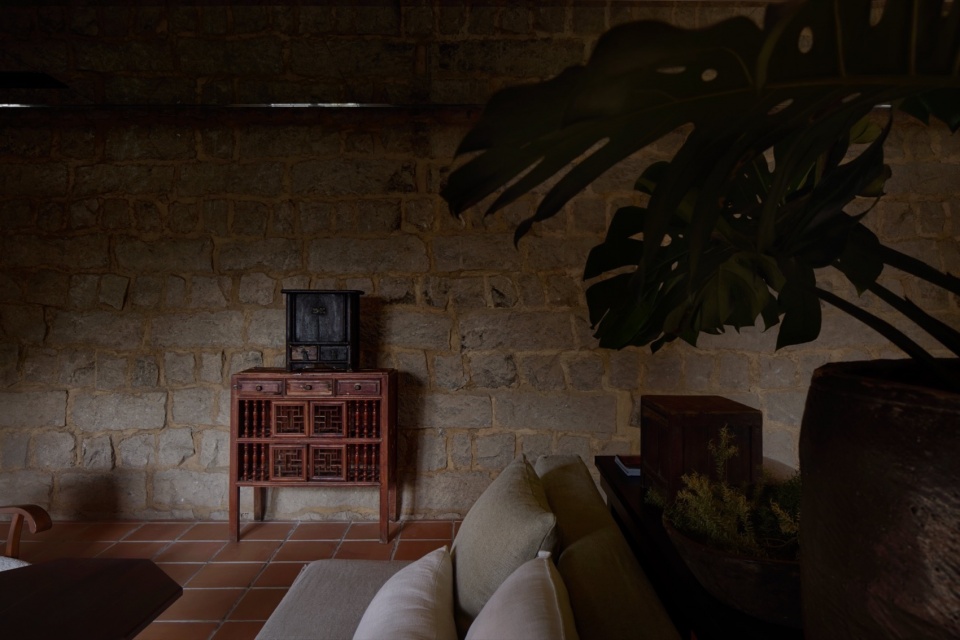
▼细部,details
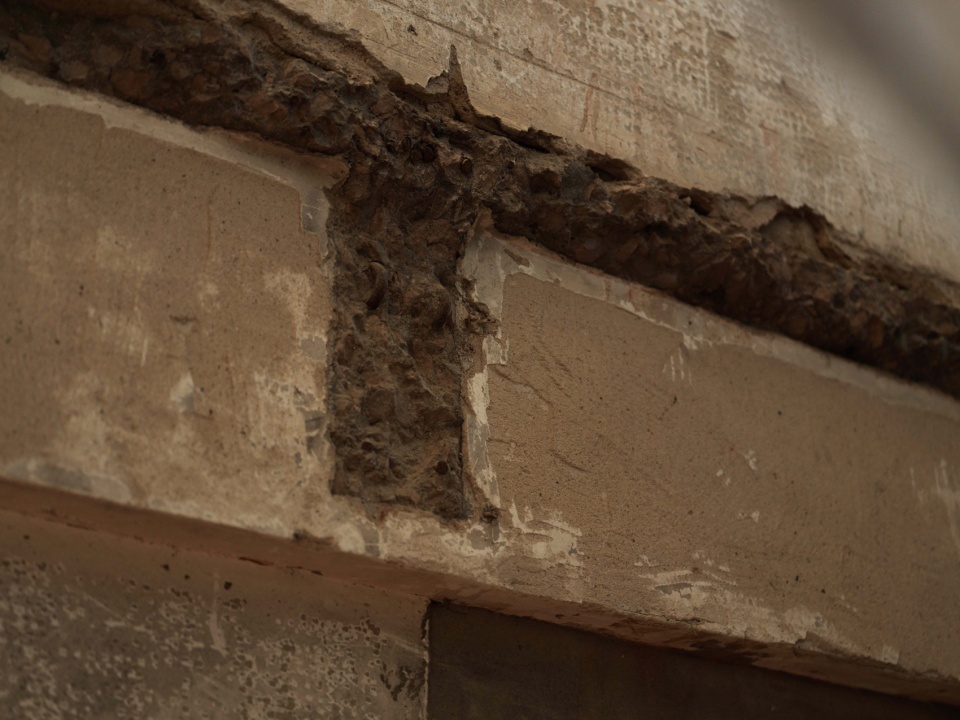
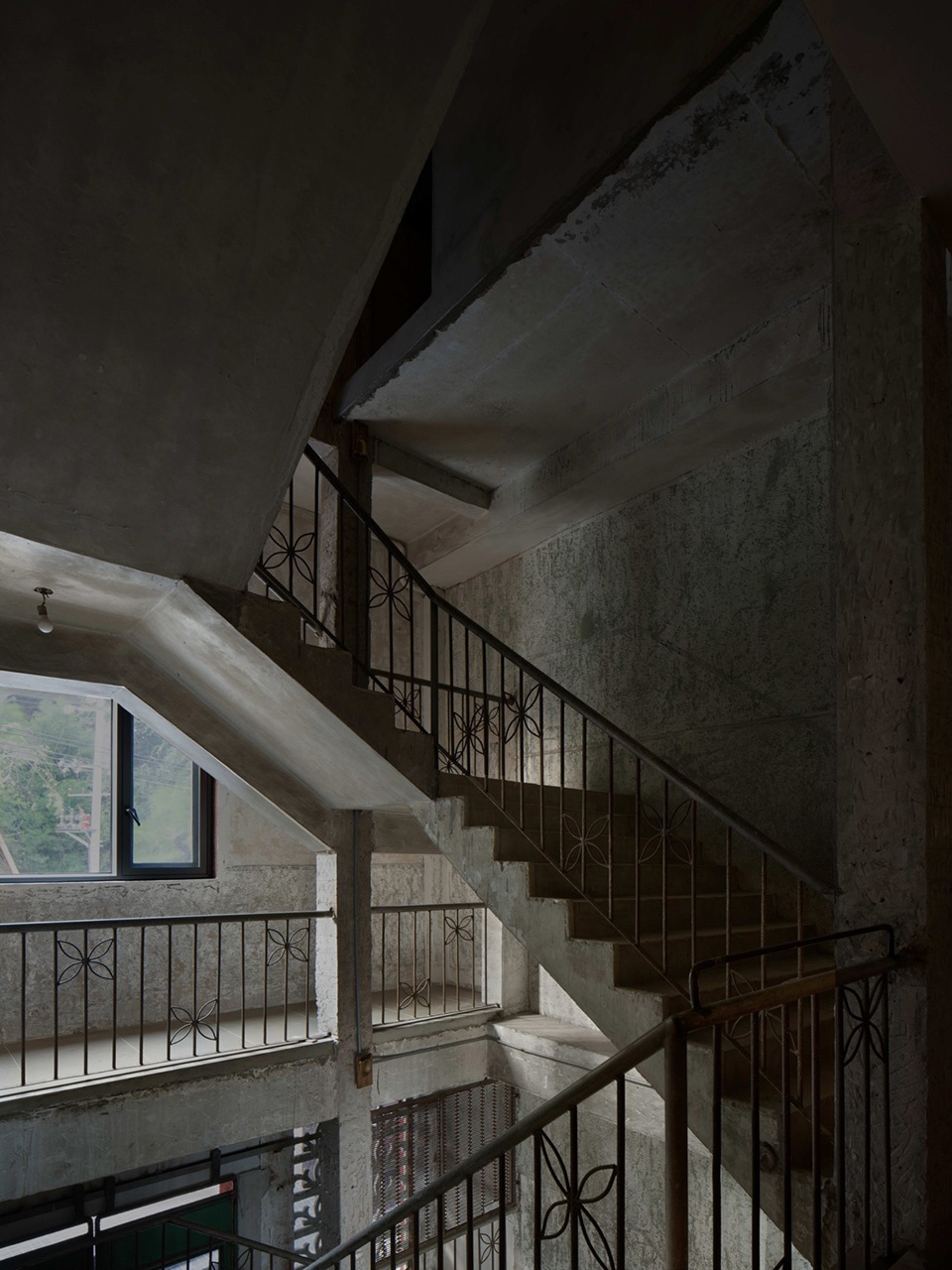
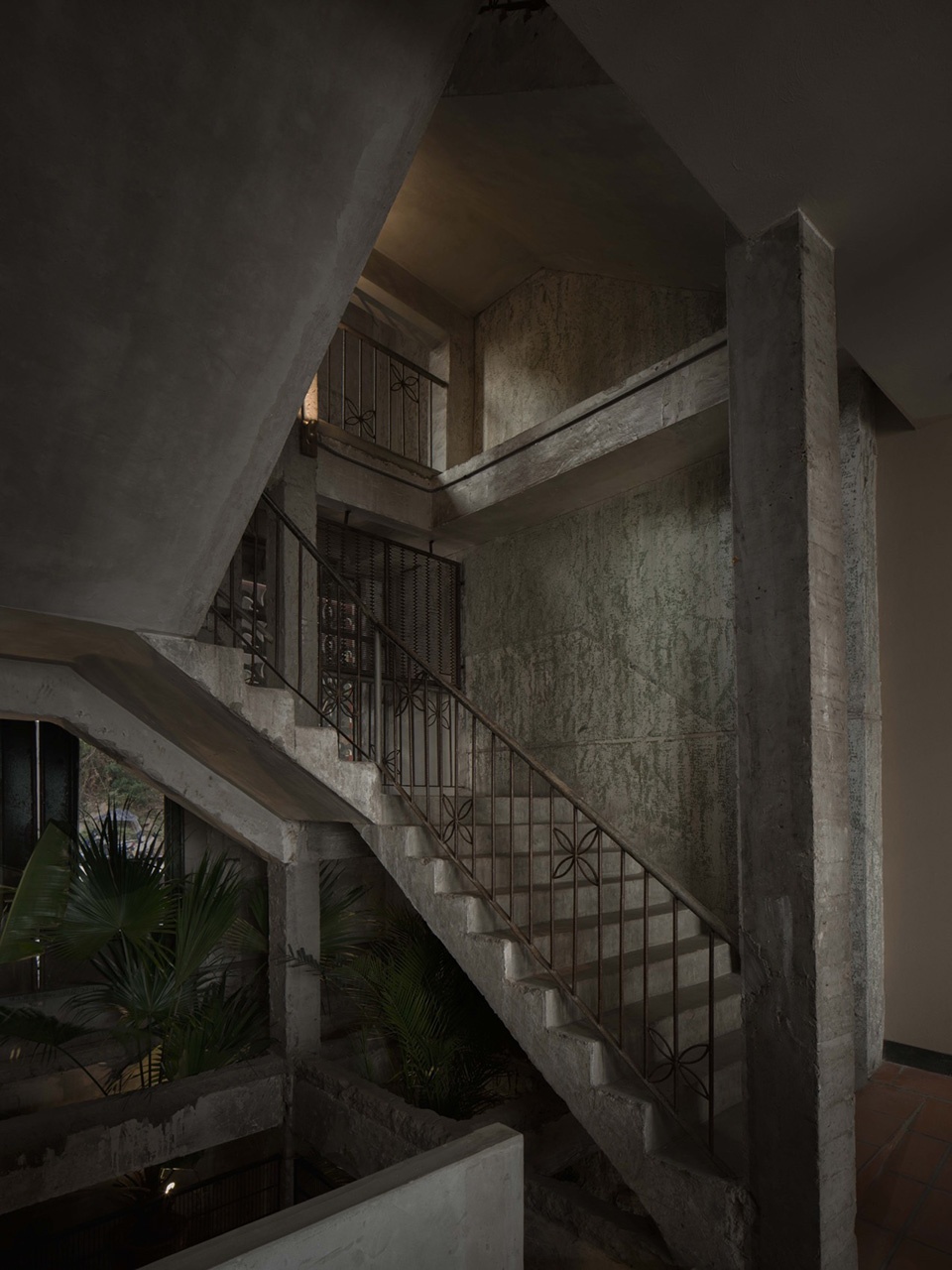
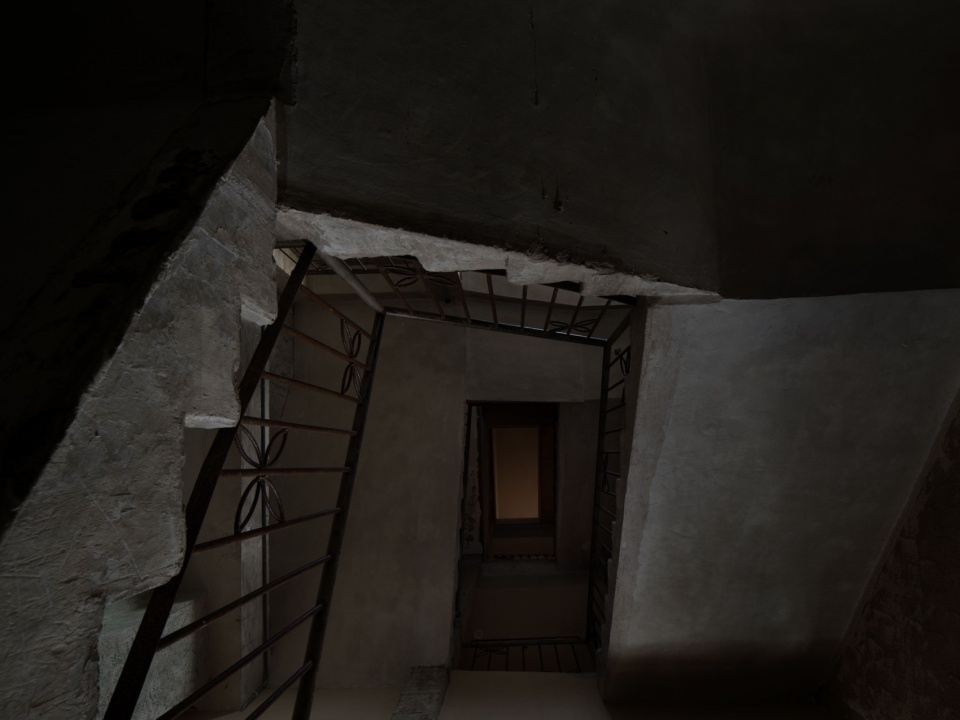
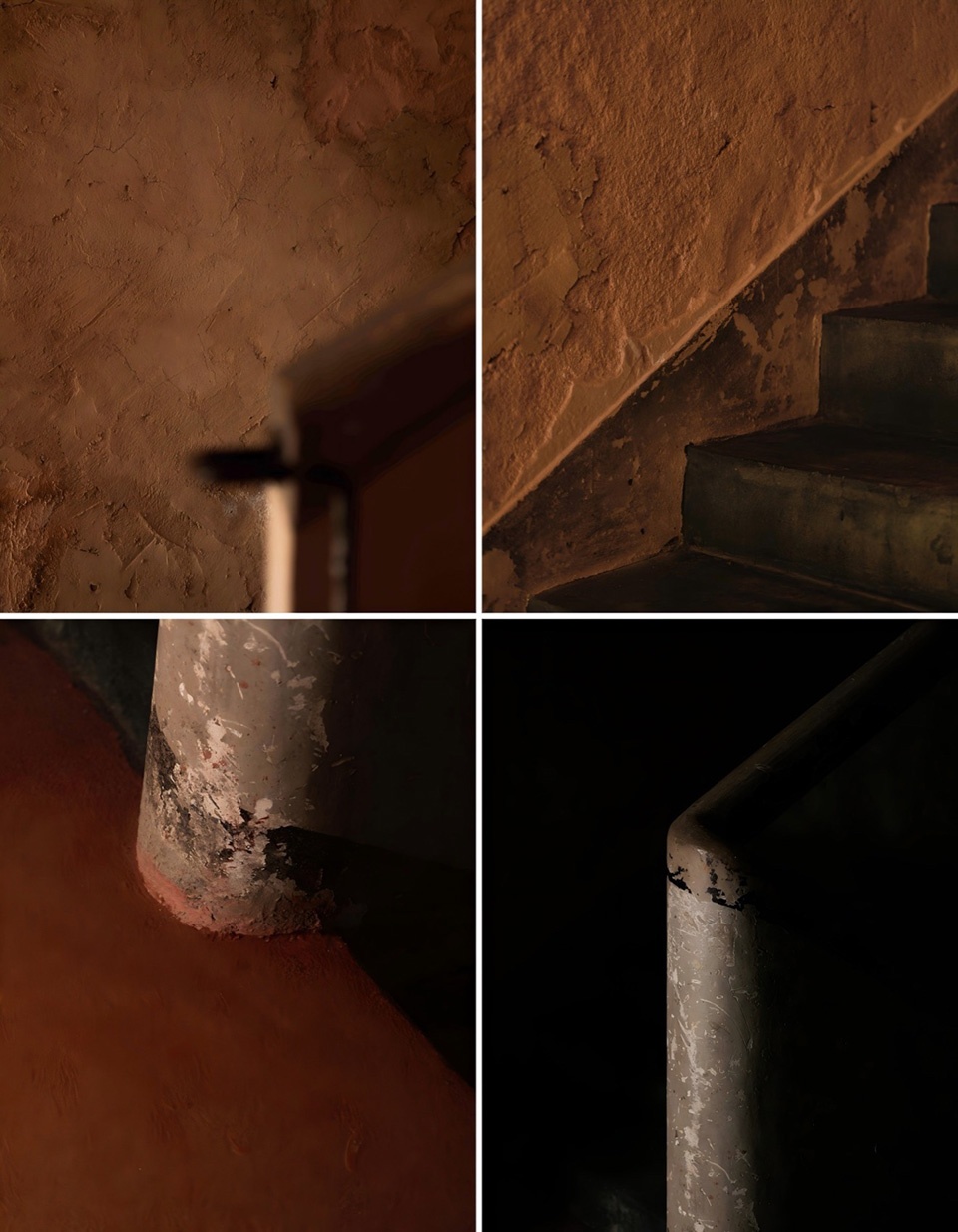
在垂直动线上,我们保留了原有楼梯,设计师Josh亲自示范了表面肌理的处理方式,确保在保留这份厚重历史感的同时,契合当代的安全与审美。温暖而富有层次的灯光从高处洒下,轻柔地洗过粗糙的墙面,激活了挑高空间。光与影在起伏的肌理上舞蹈,极大地强化了空间的雕塑感,揭示其岁月包浆,也让每一次上下穿梭都成为一场触及历史的感官之旅。
In the vertical circulation, we retained the original staircase, with designer Josh personally demonstrating the treatment of the surface texture to ensure that while preserving its rich historical feel, it also meets contemporary safety and aesthetic standards. Warm, layered lighting spills down from above, gently washing over the rough walls, activating the high-ceilinged space. Light and shadow dance across the undulating textures, greatly enhancing the sculptural quality of the space, revealing its patina of time, and turning every ascent and descent into a sensory journey that touches history.
▼楼梯间,staircase
▼细部,details
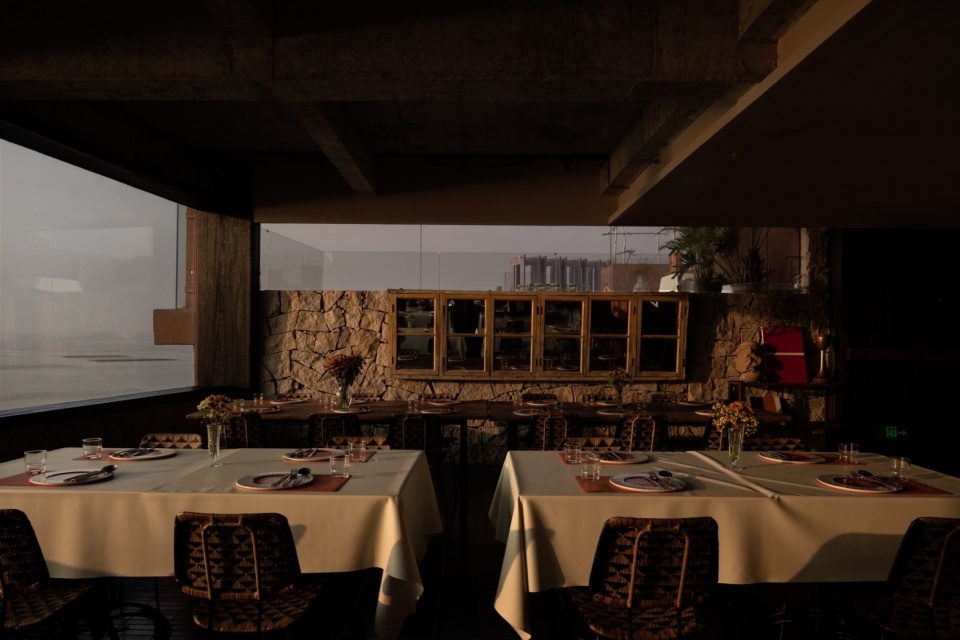
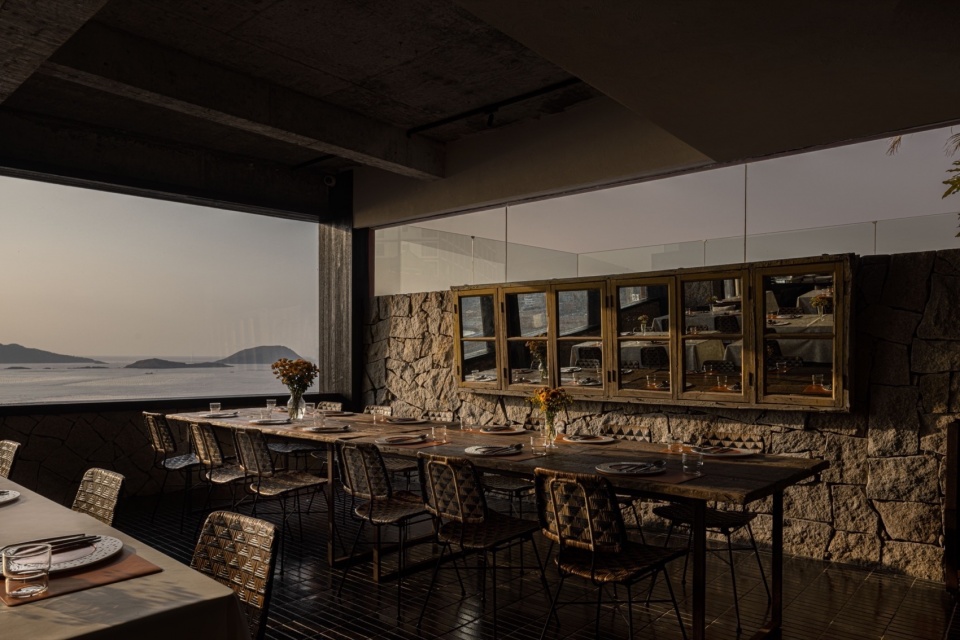
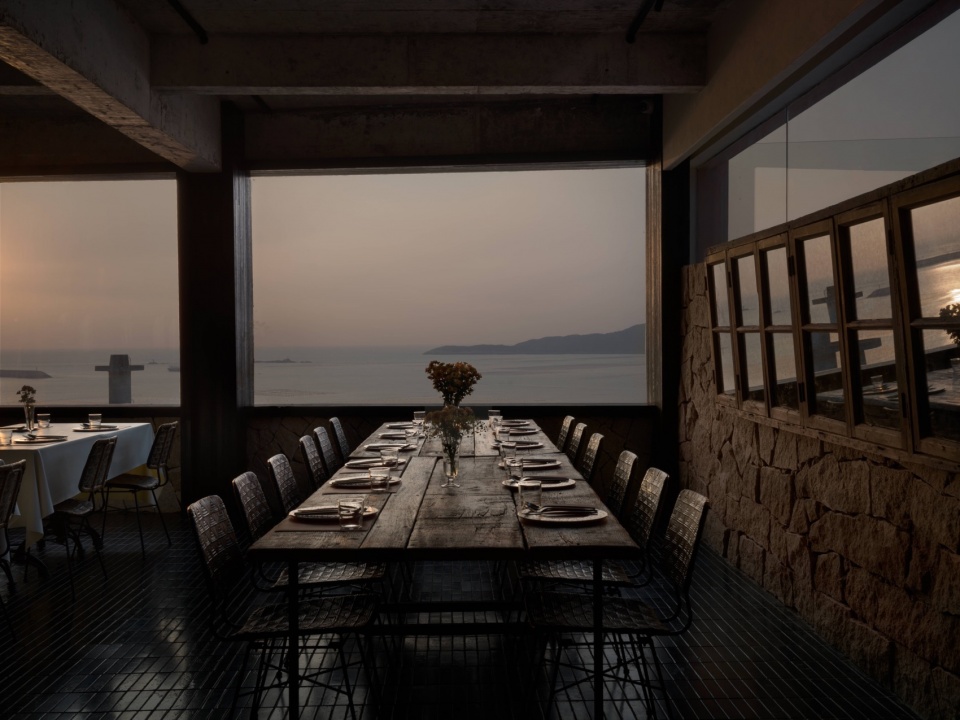
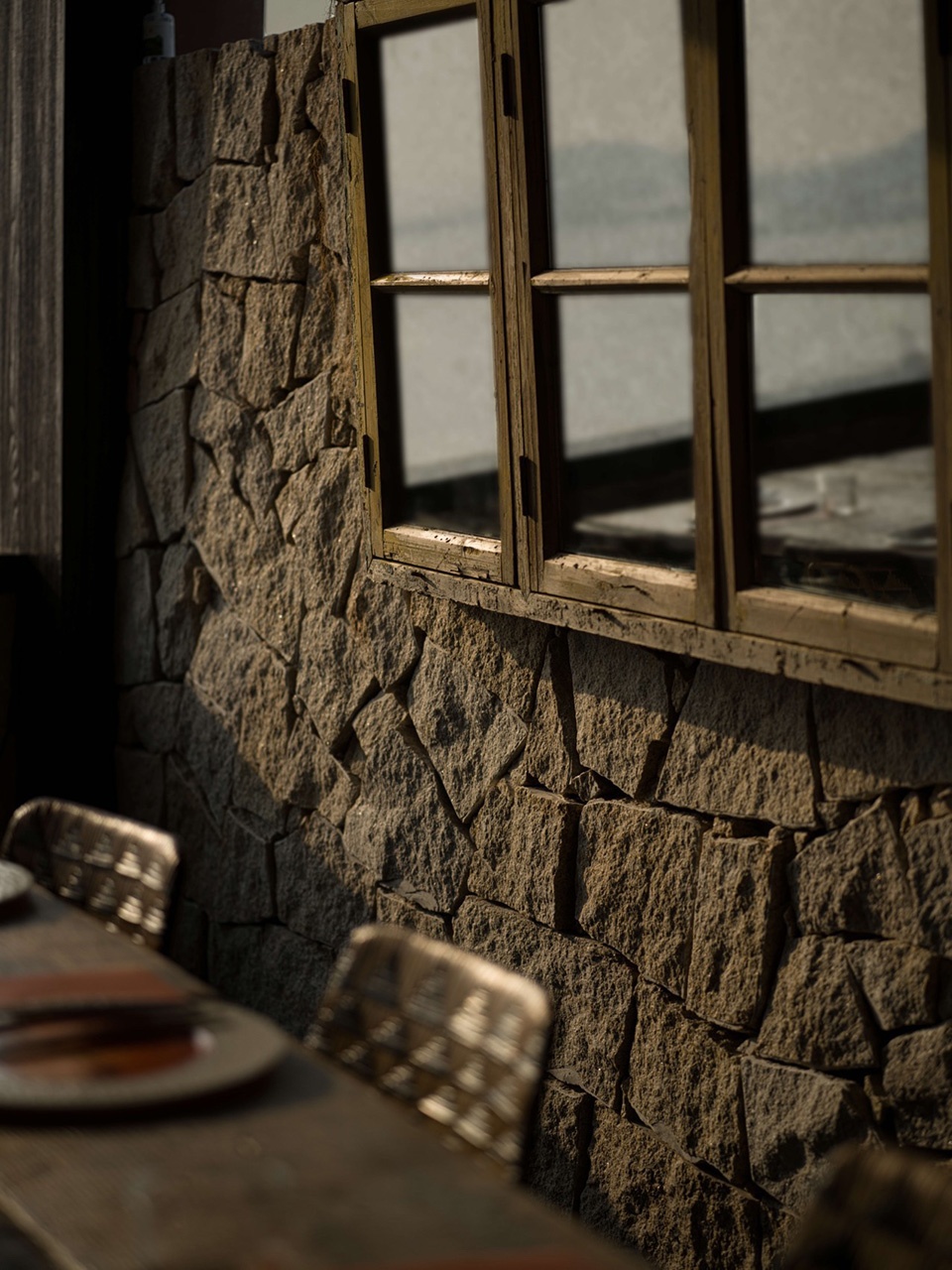
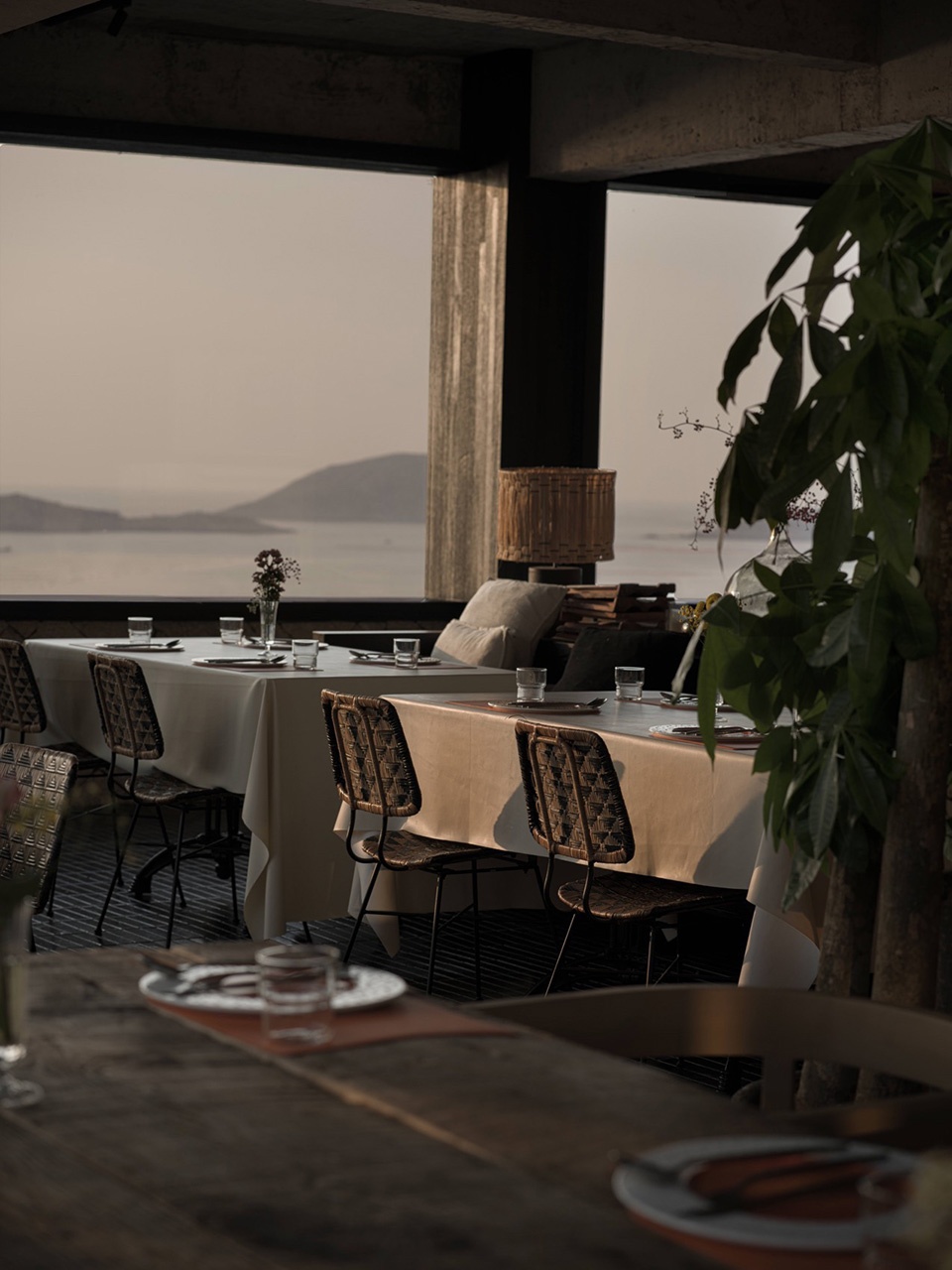
登上顶楼,您会发现位于四层的海景餐厅,既可享用美食,也可凭栏远眺。屋顶餐厅名为“无尽日落”,充分利用了其全景视野:整面的落地窗可让您从日出到日落,以180度无死角地饱览大海。在这里,宾客可以欣赏清晨柔和的阳光洒落海面,眺望渔船静静地驶向远方的动人画面。
On the top floor, you will find the ocean-view restaurant on the fourth level, where you can enjoy exquisite food while gazing out at the scenery. The rooftop restaurant, named “Endless Sunset,” fully takes advantage of its panoramic view: the floor-to-ceiling windows allow you to enjoy a 180-degree, unobstructed view of the ocean from sunrise to sunset. Here, guests can appreciate the soft morning sunlight spilling over the sea and watch as fishing boats quietly sail toward the distant horizon, creating a captivating scene.
▼海景,ocean-view
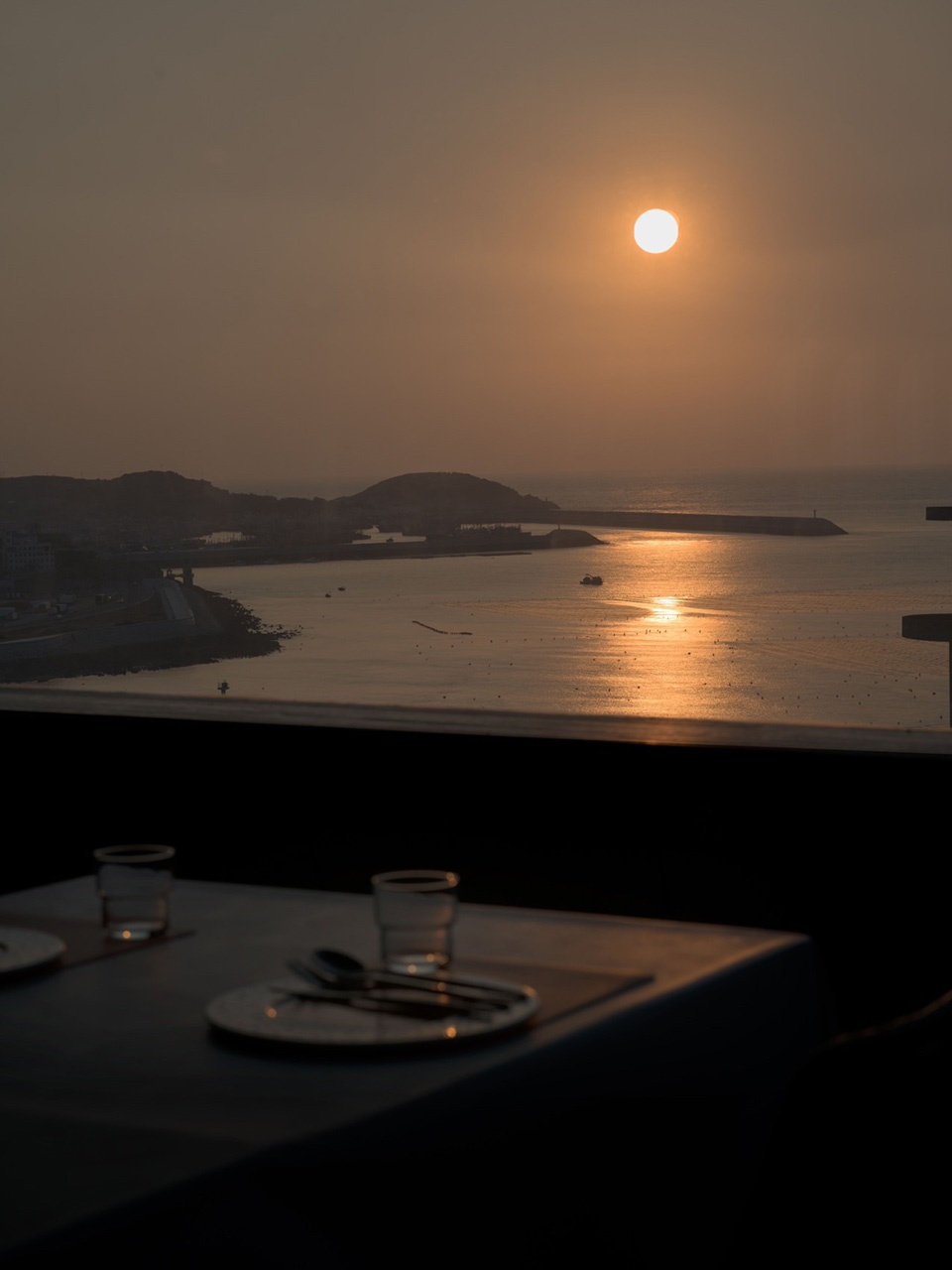
▼位于四层的海景餐厅,the ocean-view restaurant on the fourth level
▼细部,details
▼餐厅,restaurant
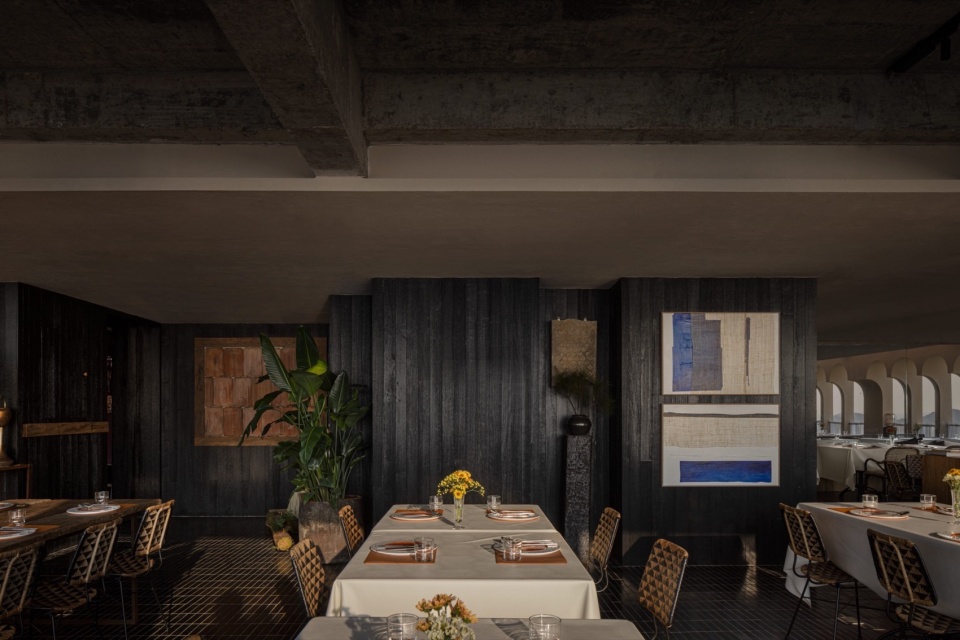
▼细部,details
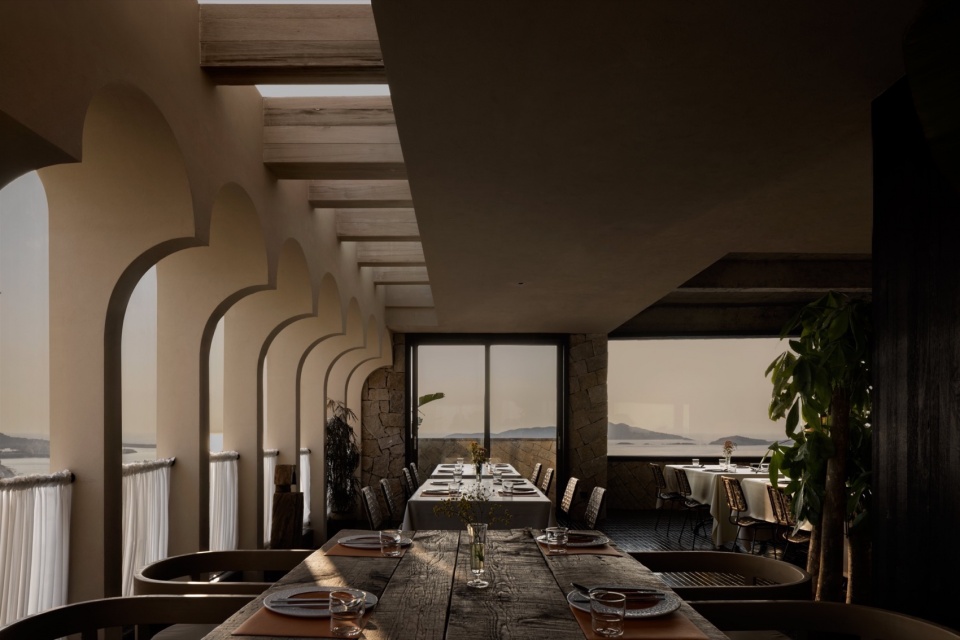
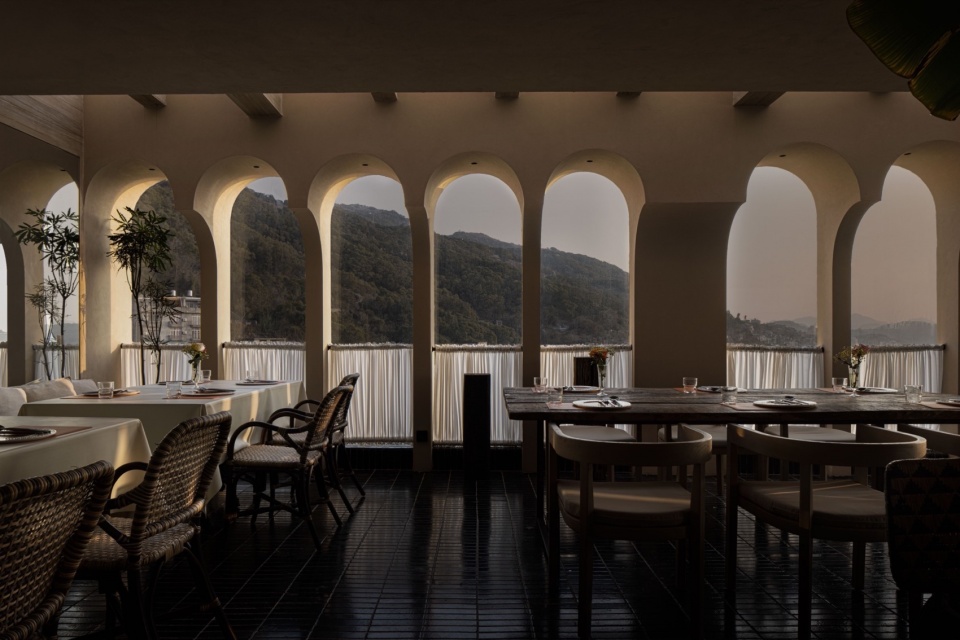
客人们坐在餐厅光滑弯曲的石拱门下,着直面美丽的海景。宽大的窗户将海景尽收眼底,也让室内充满自然光线。在此,宾客可以欣赏日出日落的更迭,享受大海的宁静与美丽。
Guests sit beneath the smooth, curved stone archways of the restaurant, directly facing the beautiful ocean view. The large windows offer an unobstructed view of the sea, flooding the interior with natural light. Here, guests can enjoy the changing of the sunrise and sunset, basking in the tranquility and beauty of the ocean.
▼光滑弯曲的石拱门,the smooth, curved stone archways of the restaurant
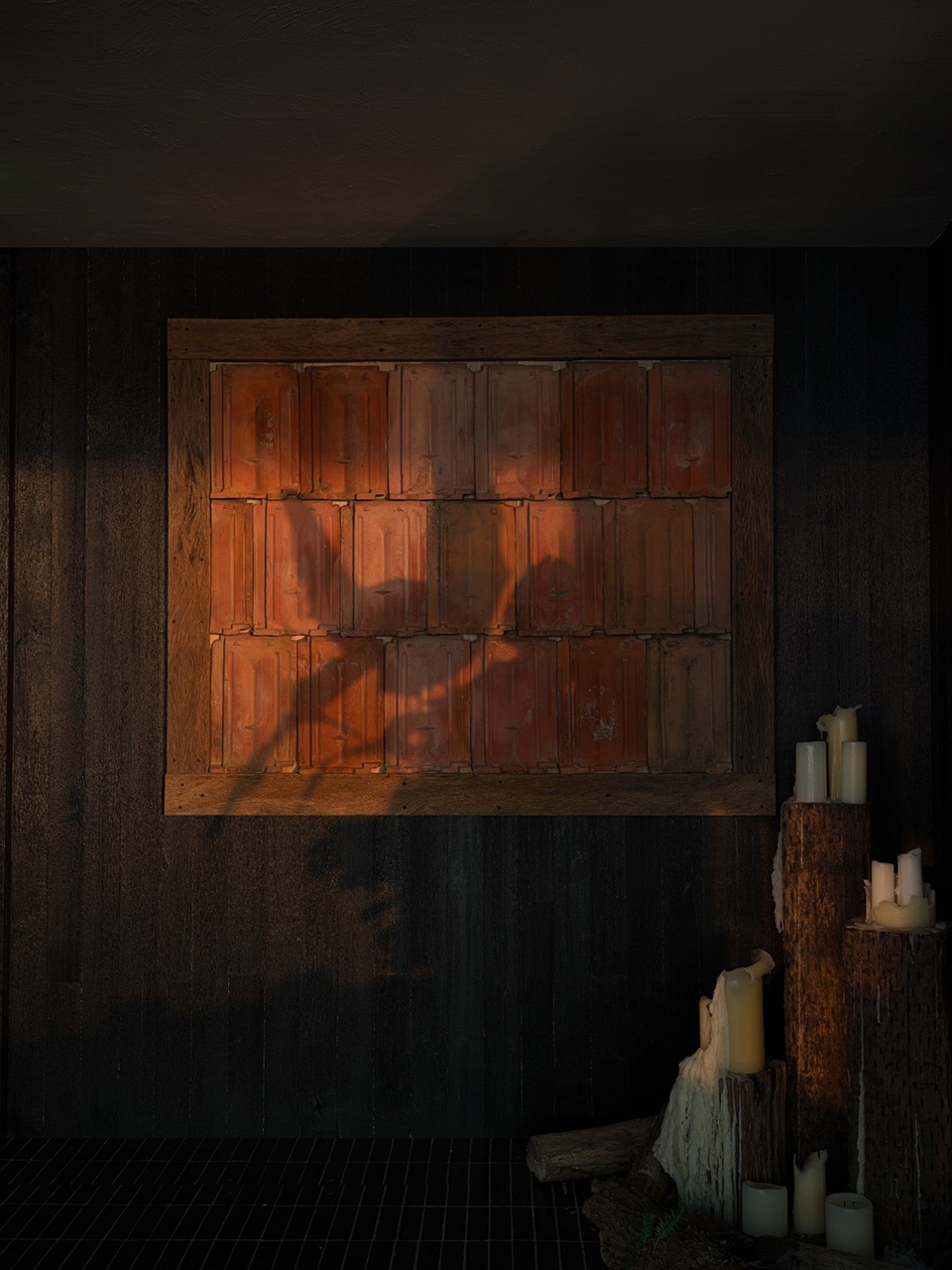
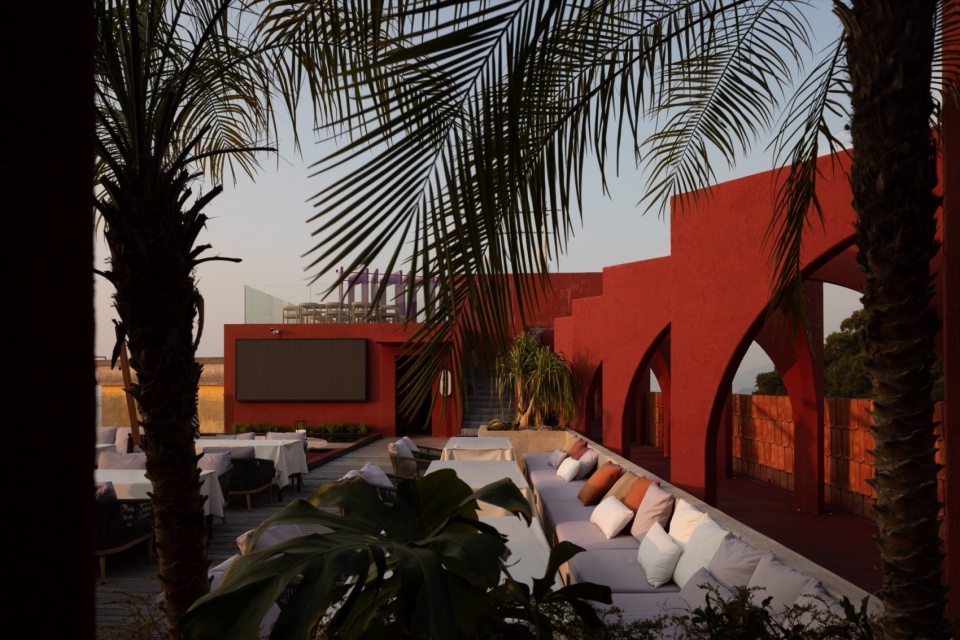
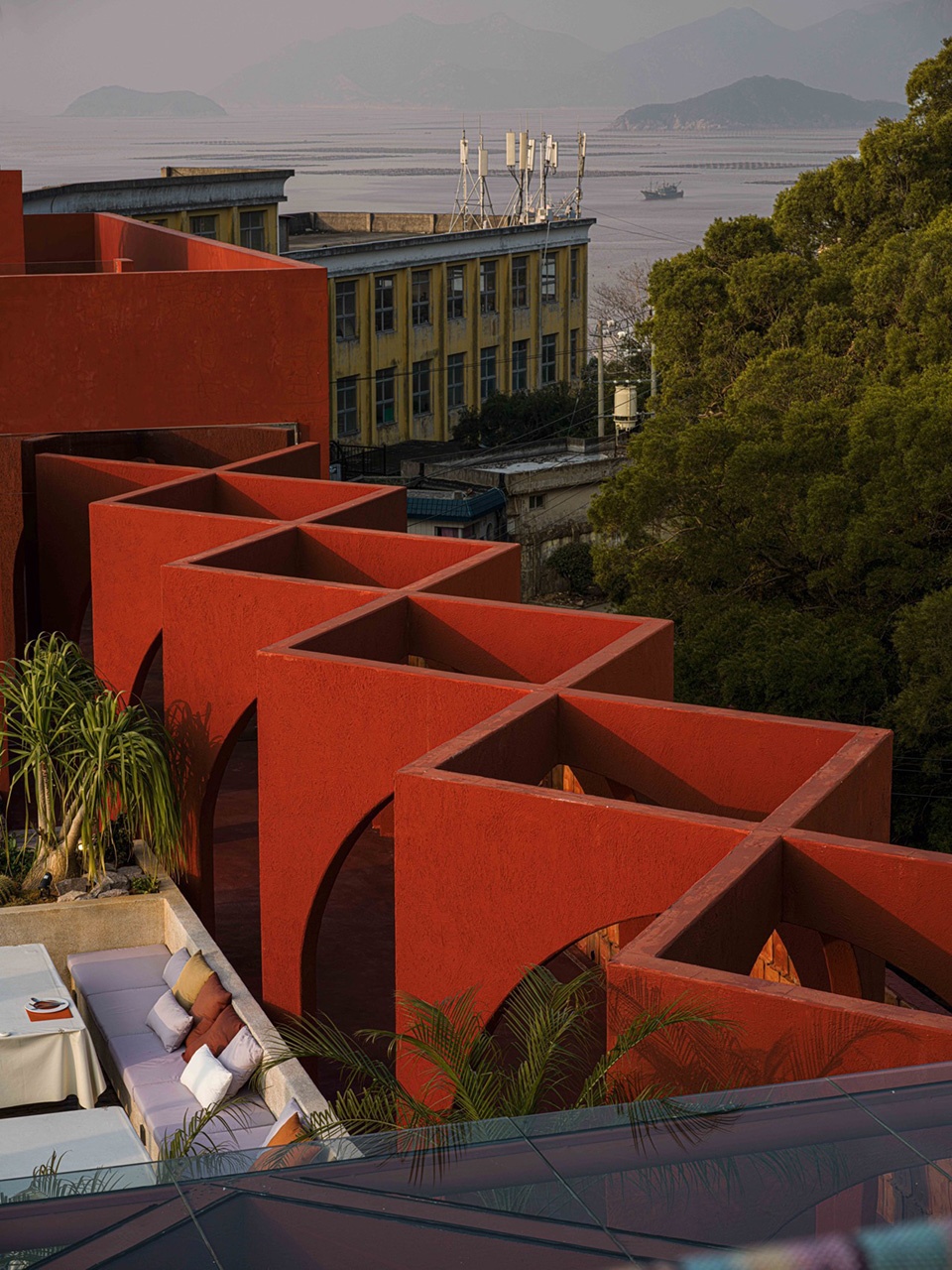
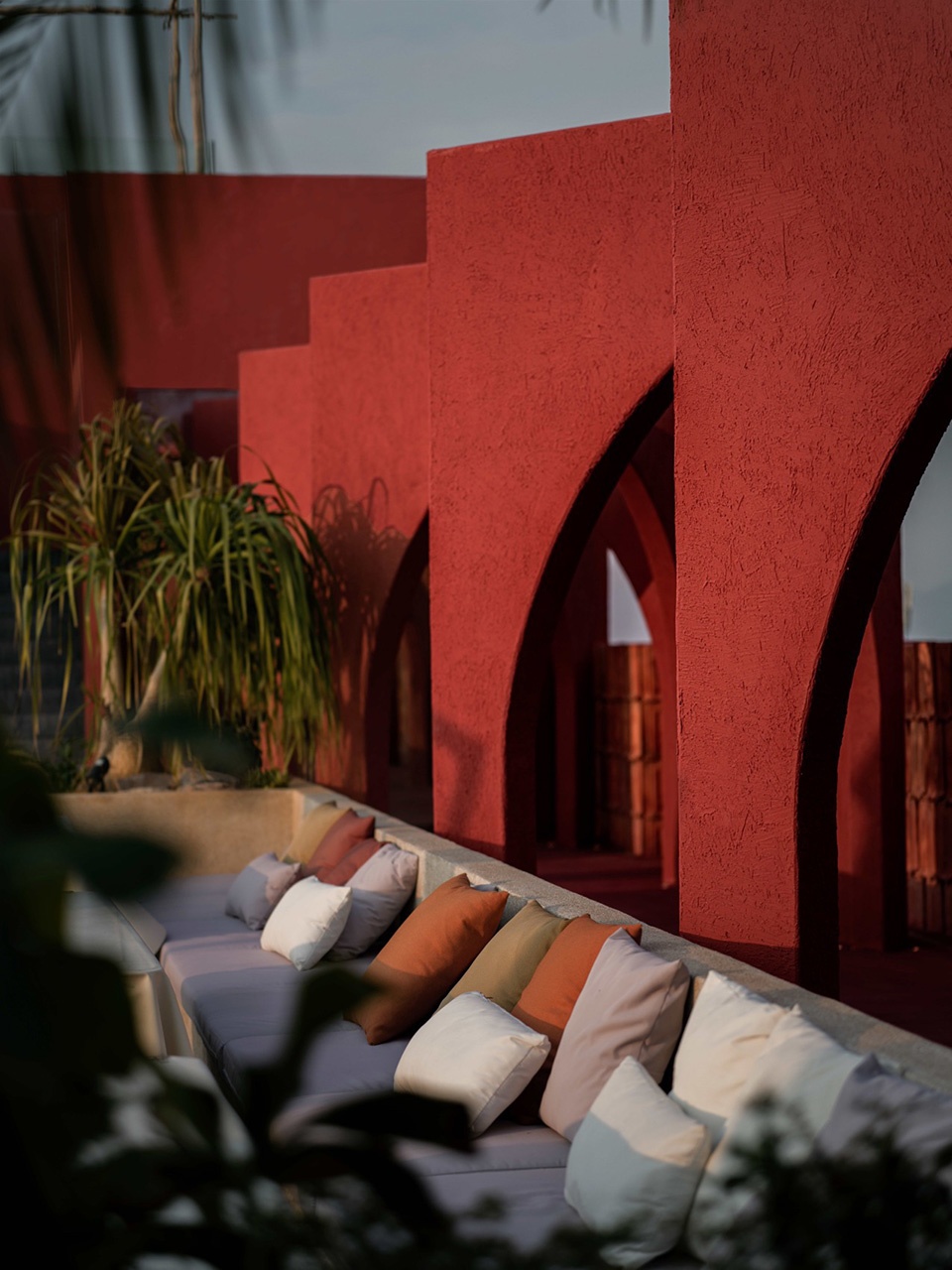
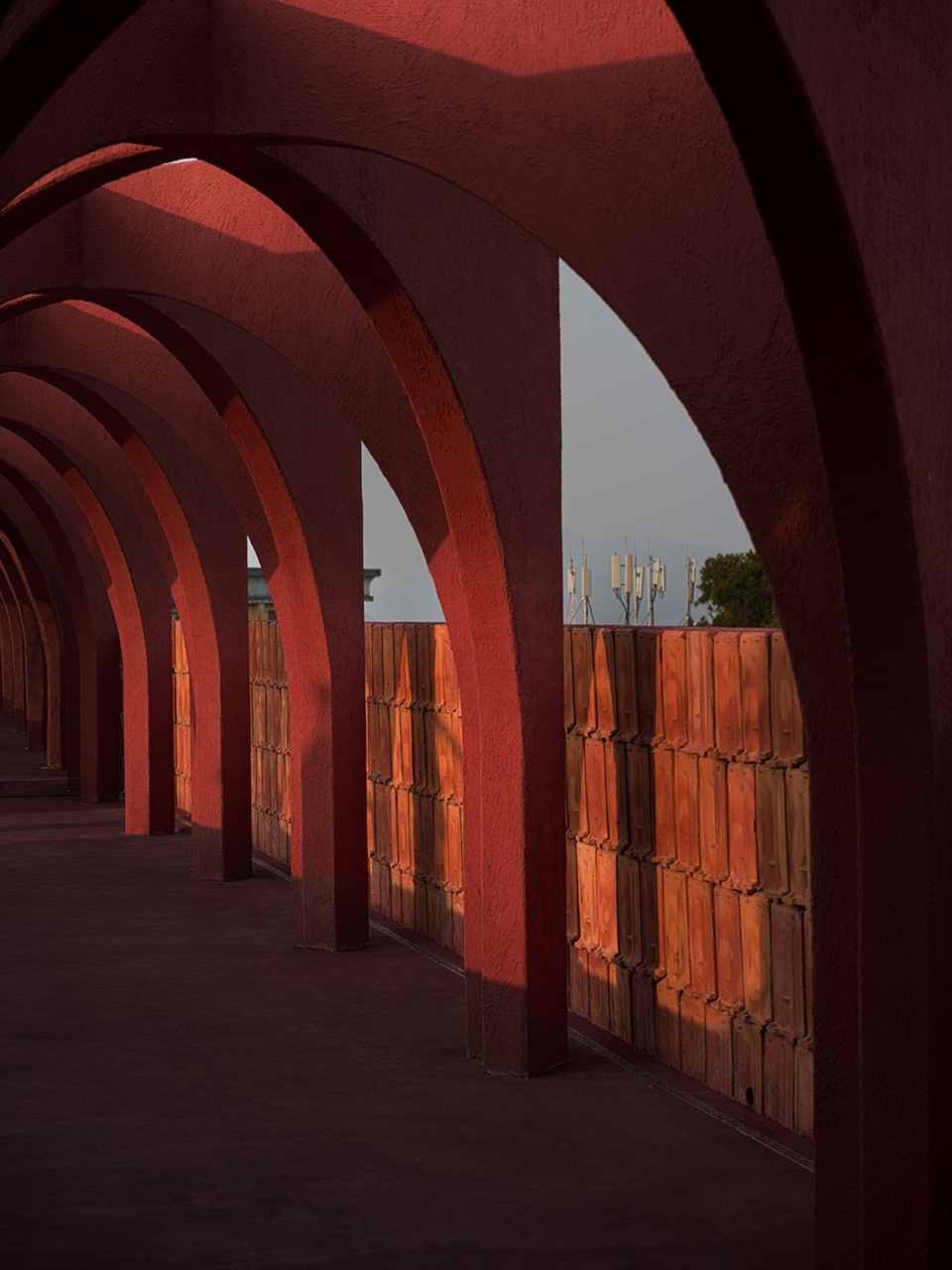
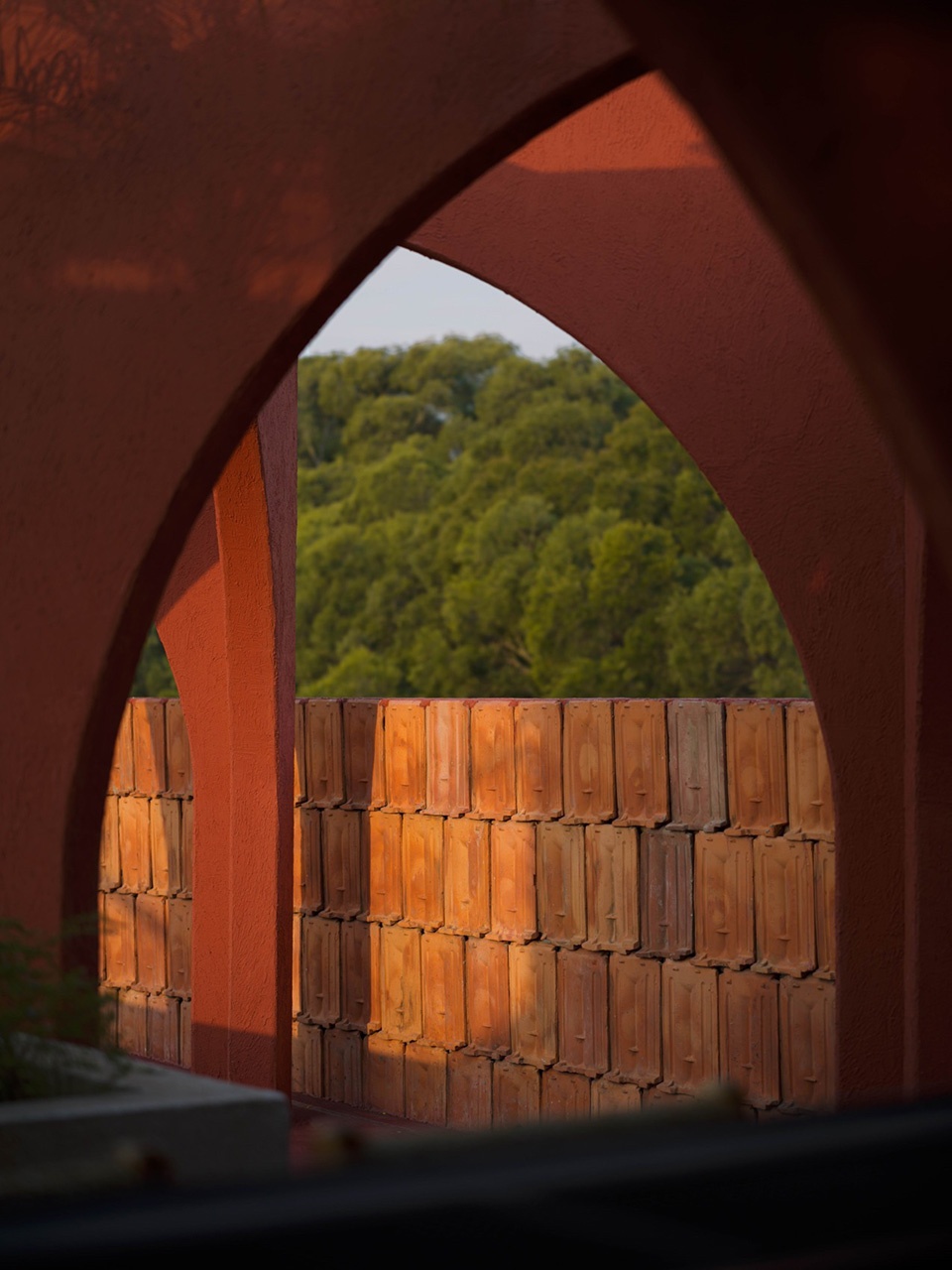
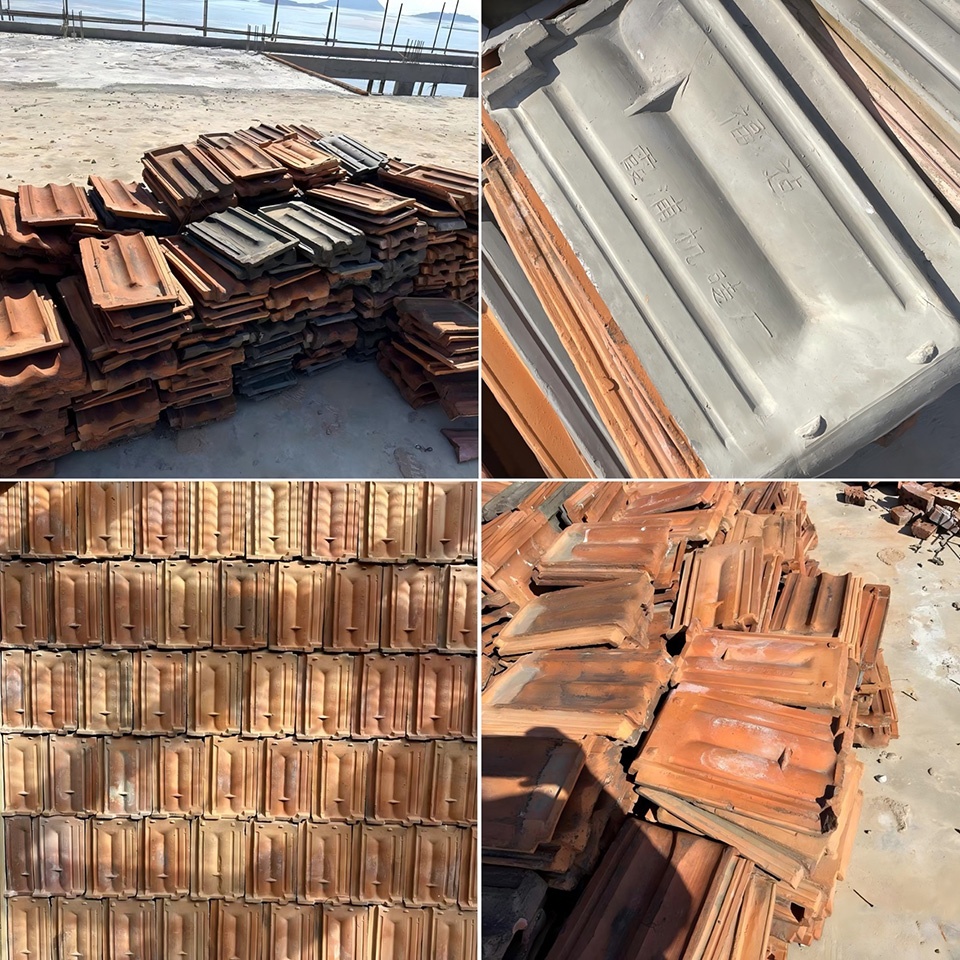
露台的照片清晰捕捉到建筑的精妙构思:挑檐与藤架的布局,精准顺应海岸的日照轨迹,在四季更迭中优雅地过滤光线。 材料调色板凝结着在地智慧——闽南质朴的红砖、做旧的金属、温暖的木材、竹编遮阳与当地的石材——将项目的叙事悄然延续至屋顶。露台墙面上,我们利用原建筑预留下的红瓦片作为围墙装饰,上面还保留的老厂房瓦片仍镌刻着“霞浦磚瓦廠”的字样,它们与质感丰富的自然饰面一同,在广阔的露台空间中,将天空与水景温柔相融,静静地诉说着时光的故事。
The photos of the terrace clearly capture the architectural ingenuity: the layout of the eaves and pergola precisely follows the trajectory of the coastal sunlight, gracefully filtering the light throughout the changing seasons. The material palette embodies local wisdom—simple Minnan red bricks, aged metal, warm wood, bamboo sunshades, and local stone—quietly continuing the narrative of the project up to the rooftop. On the terrace walls, we utilized the original red tiles left by the building as decorative elements for the boundary wall. The old factory tiles still bear the inscription “Xiapu Brick Factory,” and together with the richly textured natural finishes, they gently merge the sky and water in the vast terrace space, quietly telling the story of time.
▼露台,the terrace
▼红色露台,the terrace in red
▼材料,material
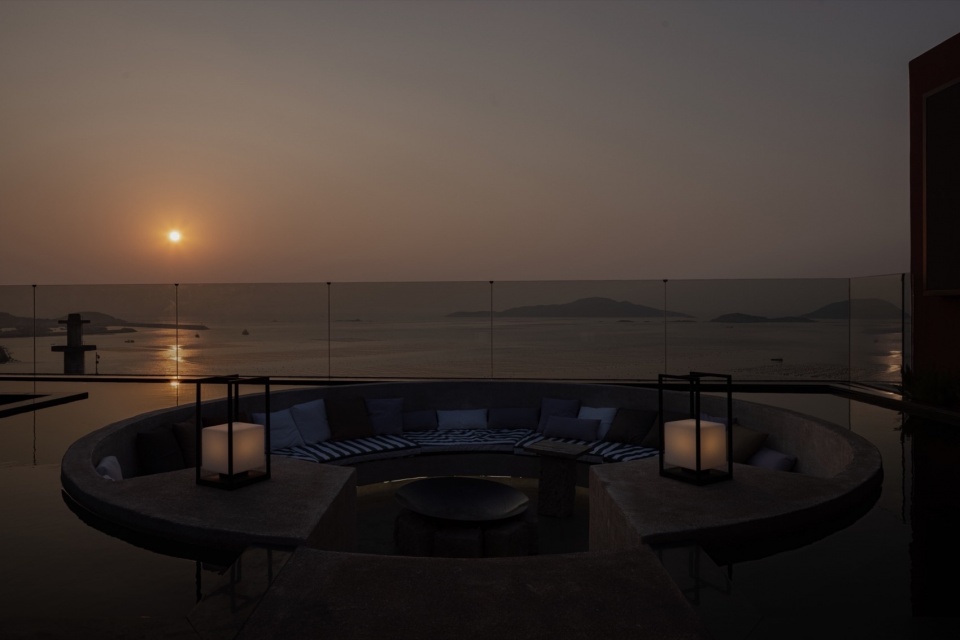
对于那些厌倦了城市喧嚣的人来说,这里正是一处能够真正放慢脚步的地方。你可以欣赏阳光洒在泥滩上,聆听宁静岛屿周围轻柔的海浪声,感受清新的海风拂过脸庞。从宁静的海岸漫步到静谧的日落,这里的每一刻都会让你感到宁静与安逸。
For those weary of the hustle and bustle of the city, this is a place where you can truly slow down. You can enjoy the sunlight spilling over the mudflats, listen to the gentle sound of waves around the peaceful island, and feel the refreshing sea breeze against your face. From a tranquil stroll along the coast to a serene sunset, every moment here will bring you a sense of calm and tranquility.
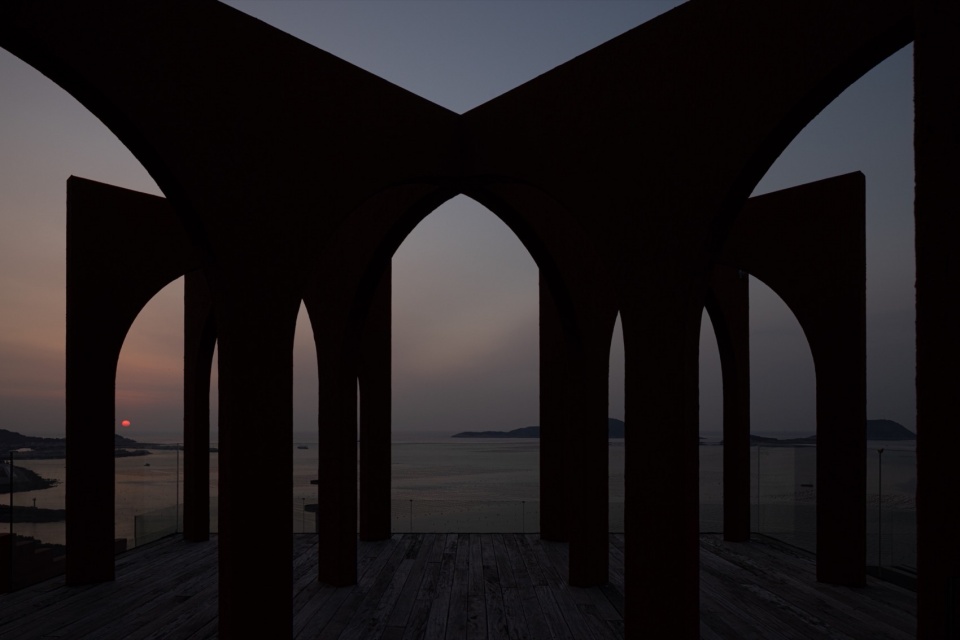
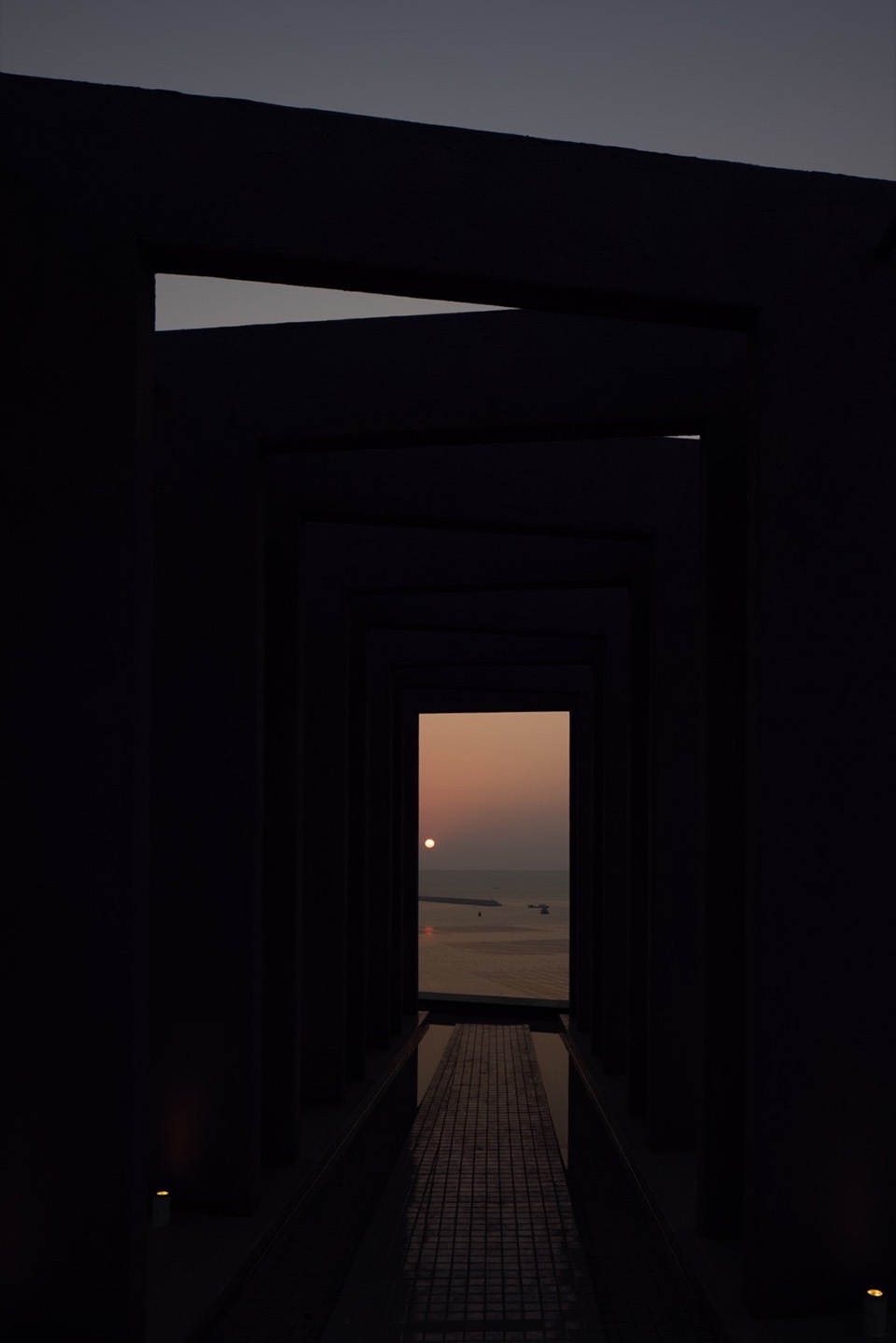
▼夜景,night views
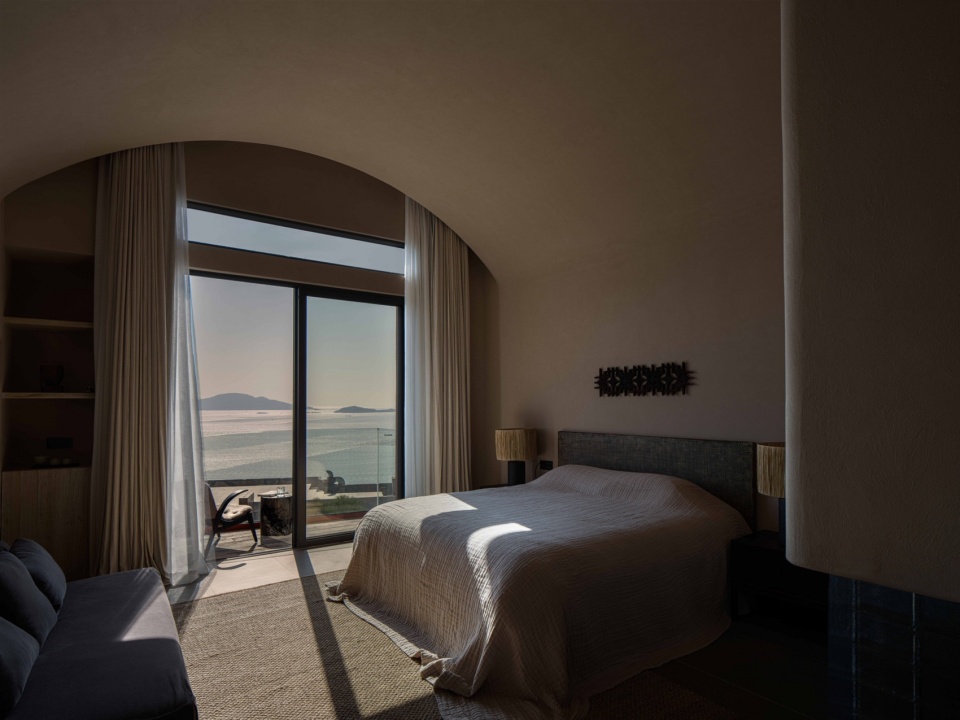
环绕中央中庭的是29间客房,每间都设计成开放、通透的阁楼式空间。宽敞的玻璃窗引入滩涂和海洋的无遮挡景色,使大海仿佛成为房间的自然延伸。海景房位于较高楼层,设有落地窗以提供极致的视野,高达4米的天花板让人联想到传统崖边民居的空间尺度,而室内则采用精致、简约的色调。
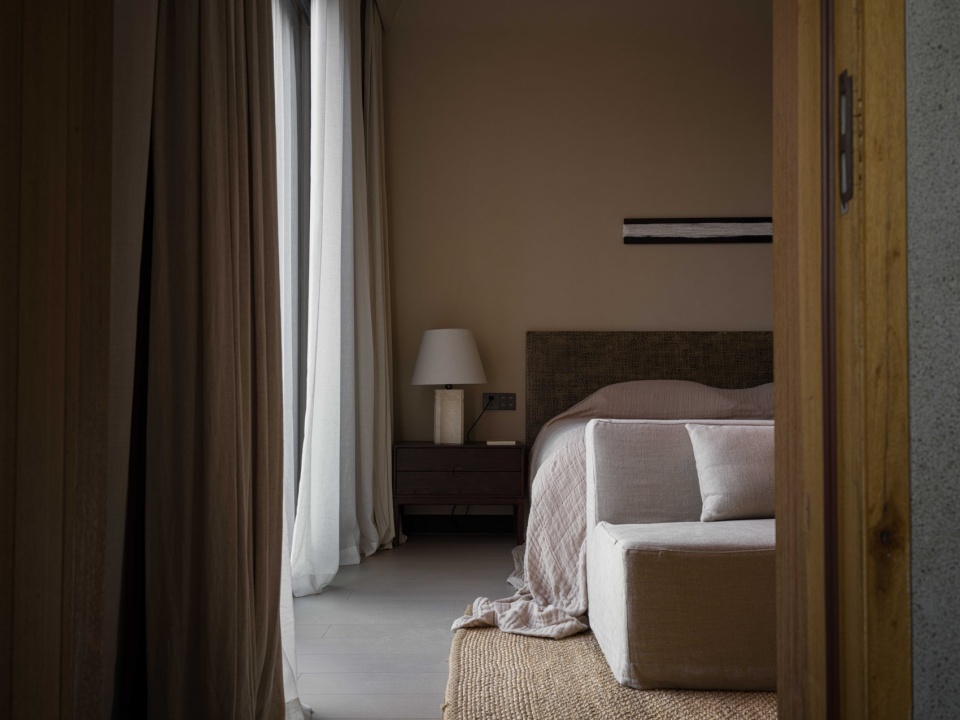
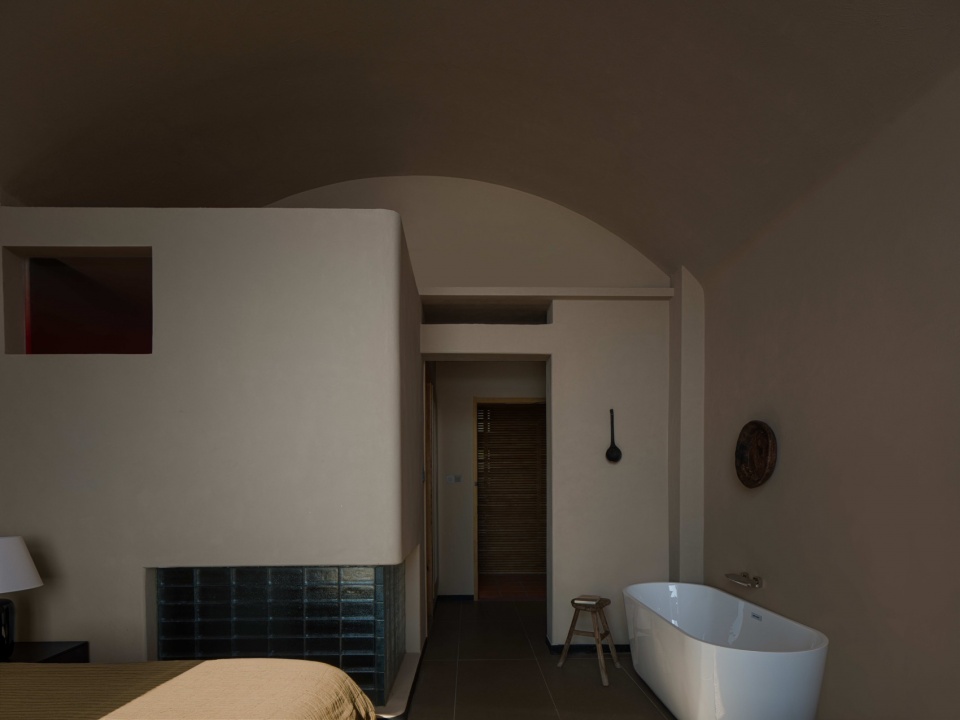
Surrounding the central atrium are 29 guest rooms, each designed as open, transparent loft-style spaces. Spacious glass windows invite unobstructed views of the mudflats and ocean, making the sea feel like a natural extension of the room. The ocean-view rooms are located on higher floors and feature floor-to-ceiling windows for the ultimate view. The 4-meter-high ceilings evoke the spatial scale of traditional cliffside homes, while the interior employs refined, minimalist color tones.
▼客房,the guest room
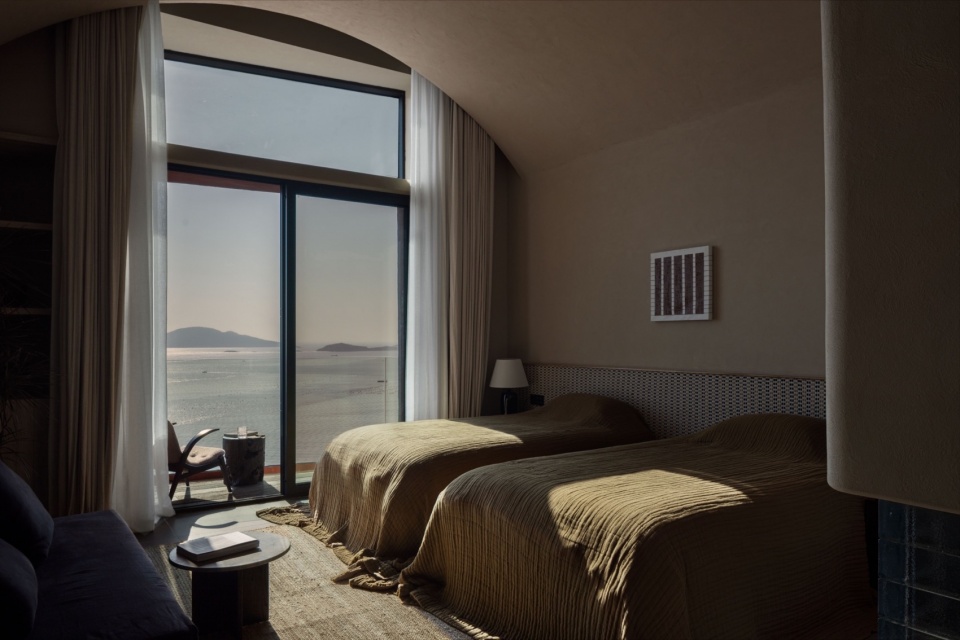
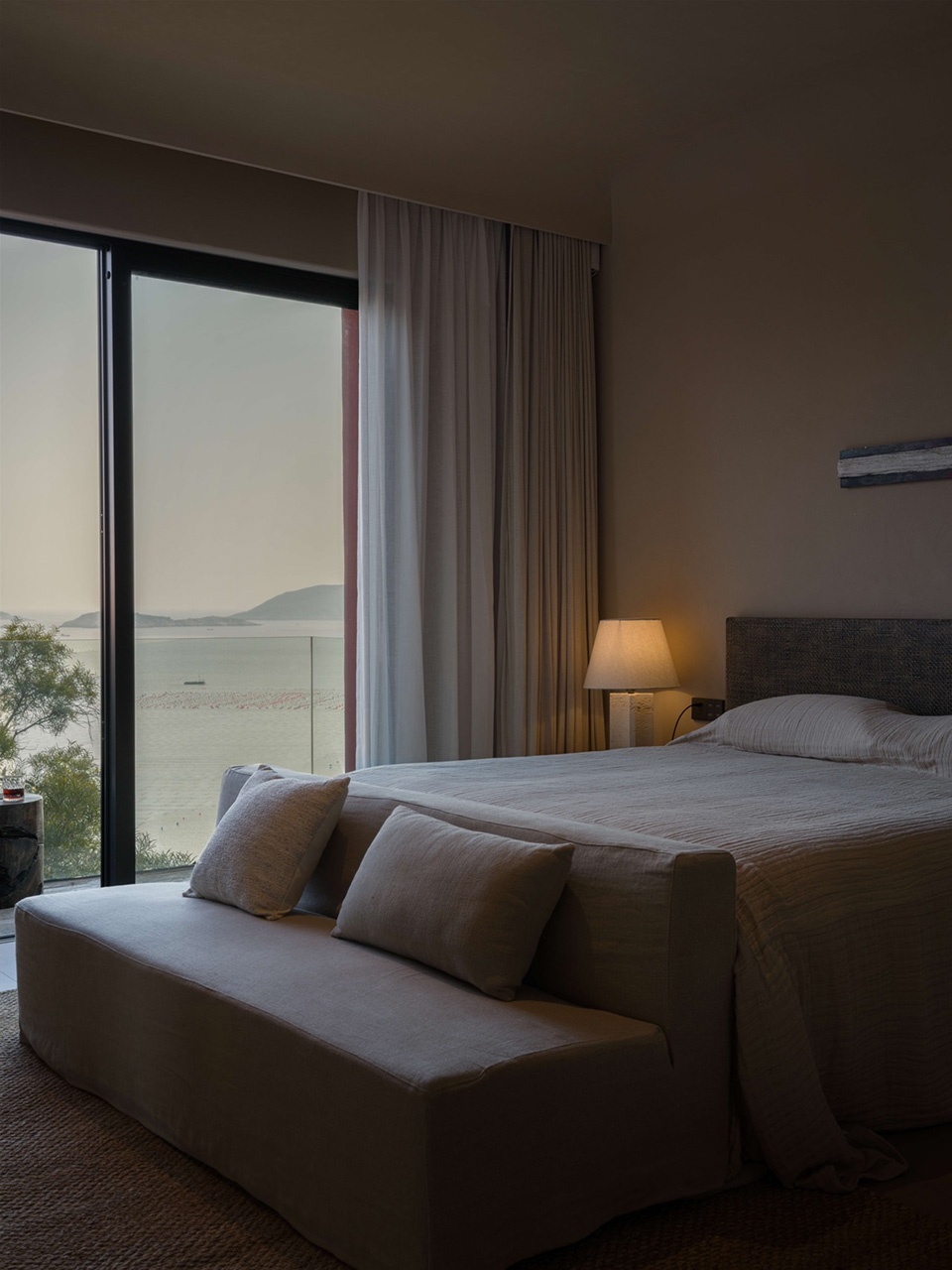
▼客房细部,details of the guest room
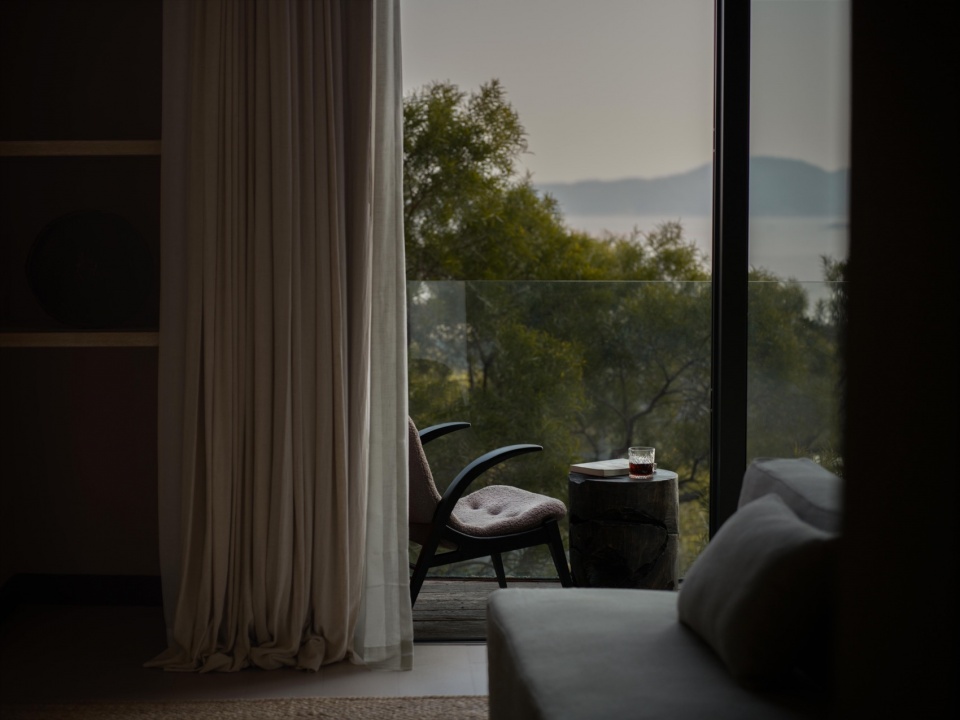
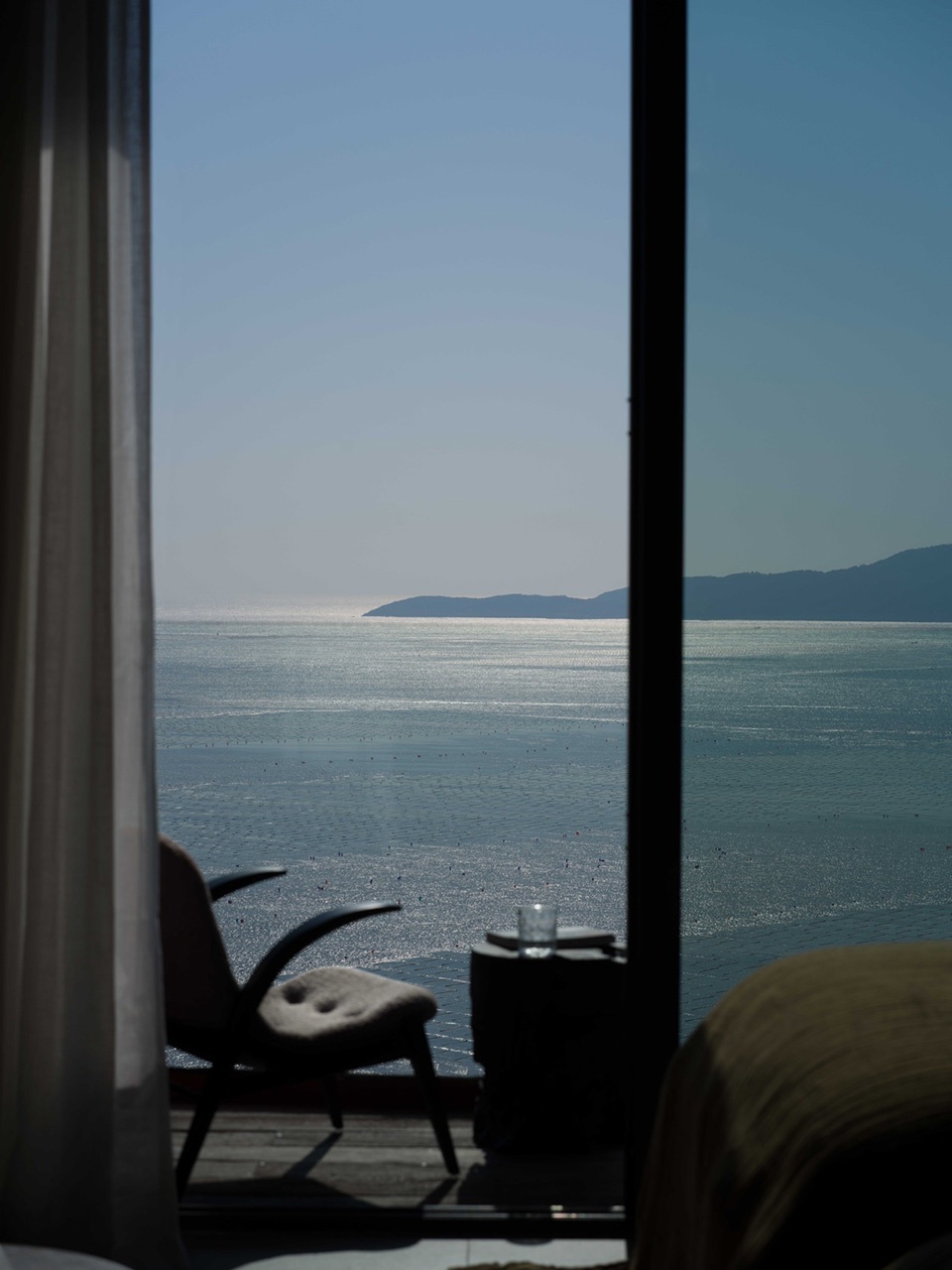
客房内部肌理漆墙面、家具和温暖的台灯共同诠释了侘寂美学。这种克制——避免过度精致或过多装饰——让原始质感和自然光成为主角。柔和的客房、沙质般的饰面以及不事张扬的风格,引导客人关注光影的变化和材料的本真品质,而非装饰本身。
The textured painted walls, furniture, and warm table lamps inside the guest rooms together interpret the aesthetic of wabi-sabi. This restraint—avoiding excessive refinement or decoration—allows the raw textures and natural light to take center stage. The soft ambiance of the rooms, sandy-like finishes, and understated style guide guests to focus on the changing light and the authentic qualities of the materials, rather than the decoration itself.
▼客房,the guest room
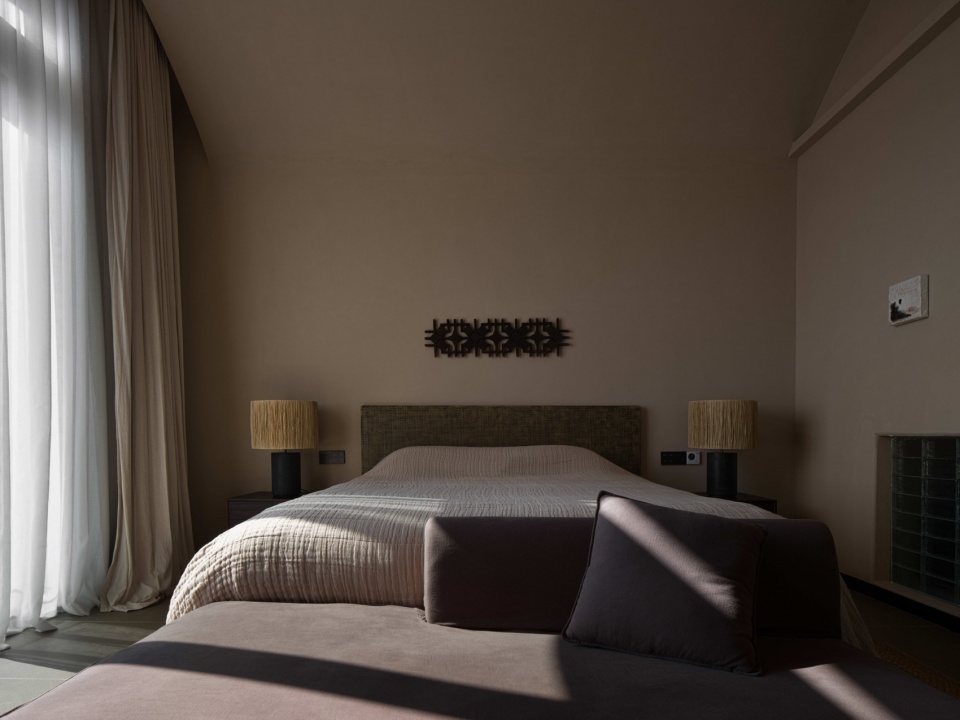
▼细部,details
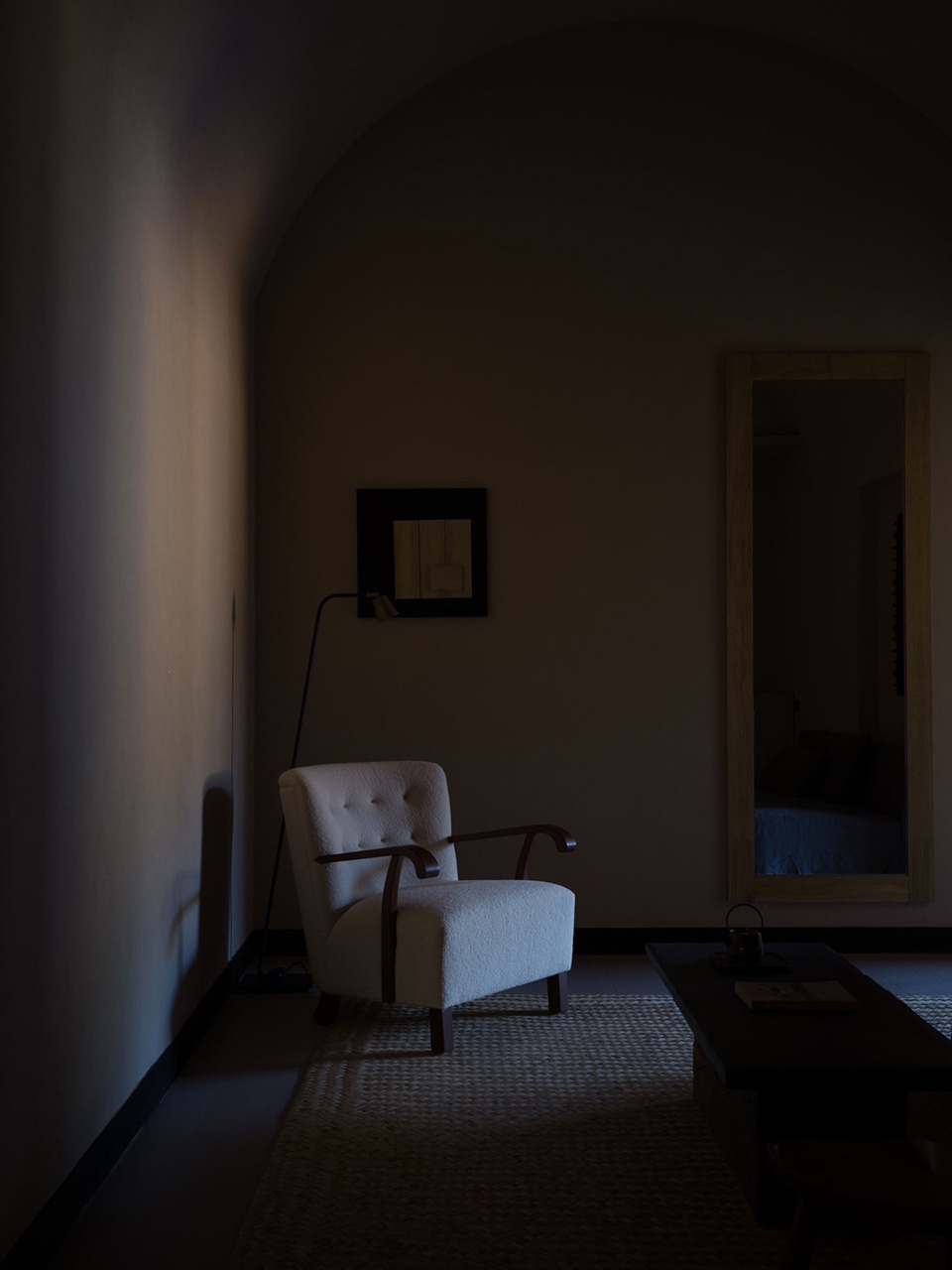
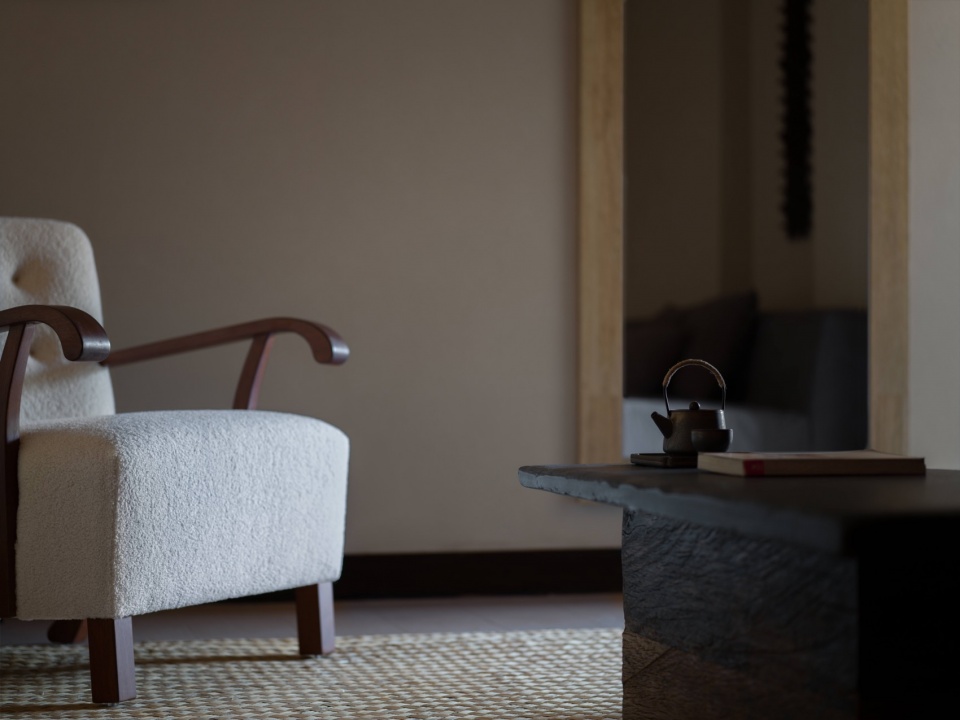
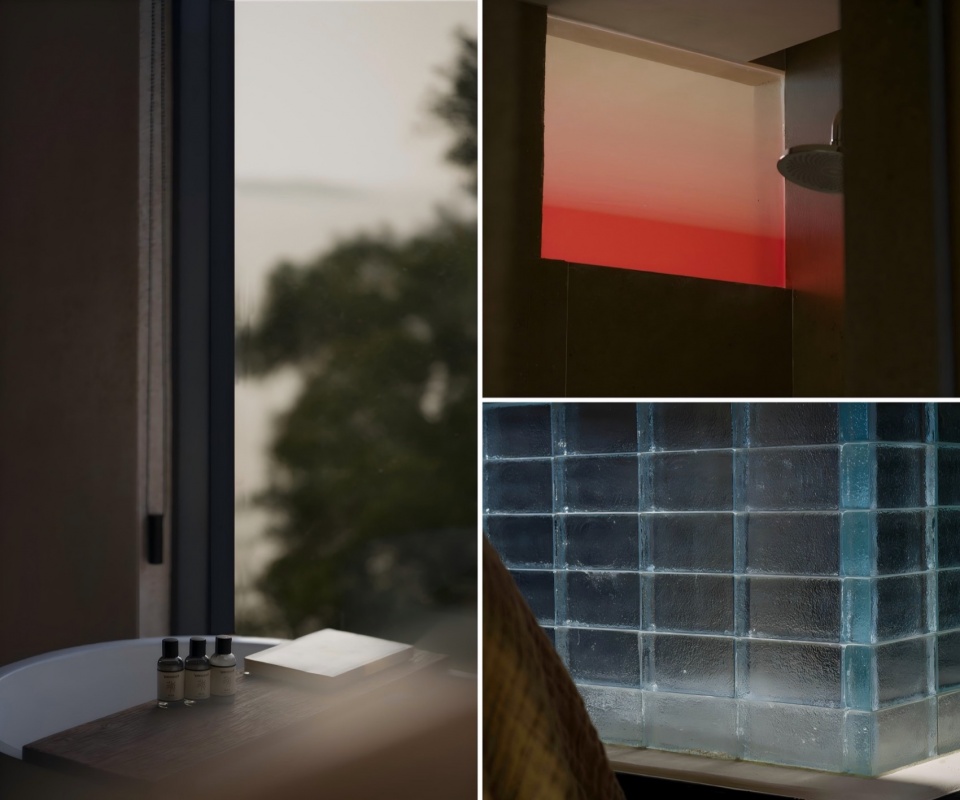
正如这组光影定格所揭示,Bersure霞浦摆岁酒店生动演绎了工业遗产的重生。设计师坚定保留了旧鞋厂厚重的混凝土与红砖骨骼,并以本地材料、精湛工艺和深刻的地域文化叙事,赋予其全新的灵魂与诗意,在粗犷的历史肌理与现代的宁静栖居之间建立了流畅而深刻的延续性。
As revealed by this series of light and shadow captures, the Xiapu Bersure Hotel vividly portrays the rebirth of industrial heritage. The designer firmly retained the heavy concrete and red brick skeleton of the old shoe factory, and through local materials, exquisite craftsmanship, and a profound regional cultural narrative, gave it a new soul and poetry. In doing so, a smooth and deep continuity was established between the rugged historical textures and the modern tranquility of the space.
▼海景,ocean view
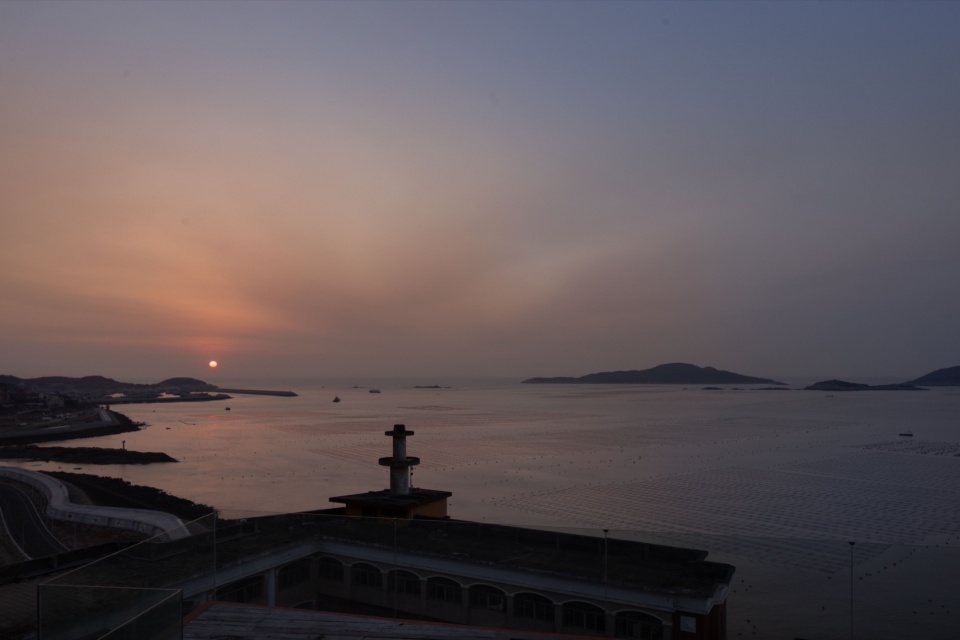
从致敬工业秩序的外立面,到竹艺编织的震撼;从沐浴海光的公共区域,到坐拥“无尽日落”的屋顶;直至简约宁静的海景客房——每个空间都邀请客人冥想光影,静观潮汐,感受四季流转。这里,建筑本身化作了一首关于光、海与记忆的可见诗篇。
From the façade that pays homage to industrial order, to the stunning bamboo craftsmanship; from the public areas bathed in sea light, to the rooftop that embraces the “Endless Sunset”; and down to the minimalist and tranquil ocean-view rooms—each space invites guests to meditate on light and shadow, quietly observe the tides, and experience the changing of the seasons. Here, the building itself transforms into a visible poem about light, the sea, and memories.
▼一层平面图,1F plan
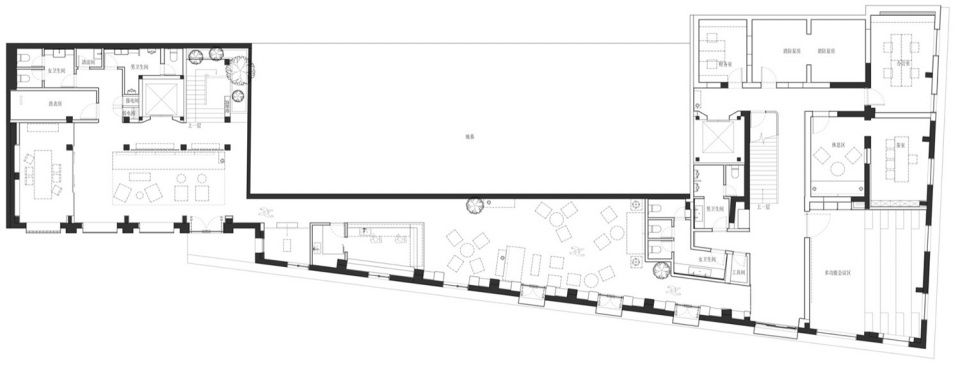
▼二层平面图,2F plan
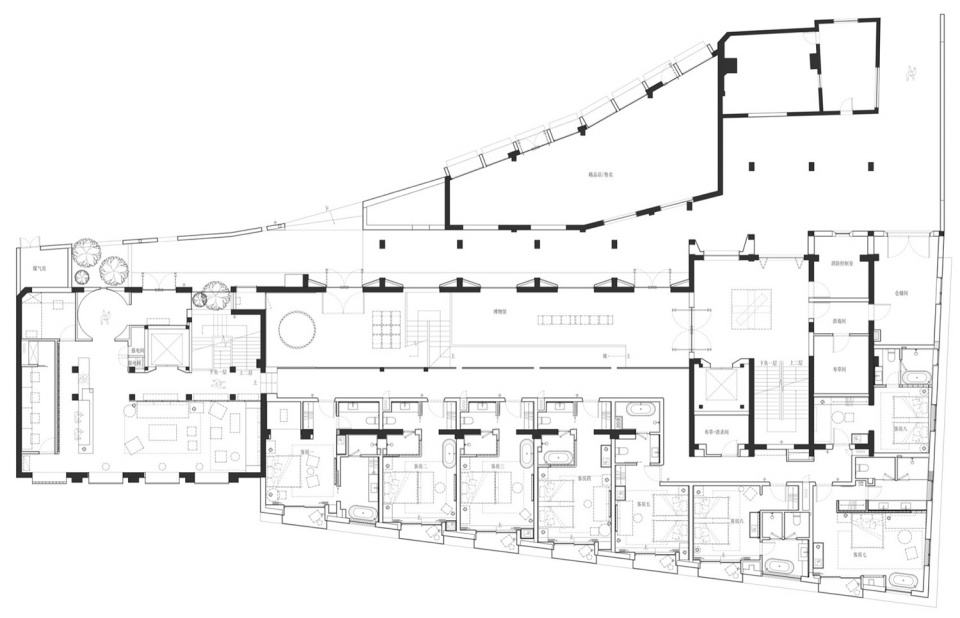
▼三四层平面图,3&4F plan
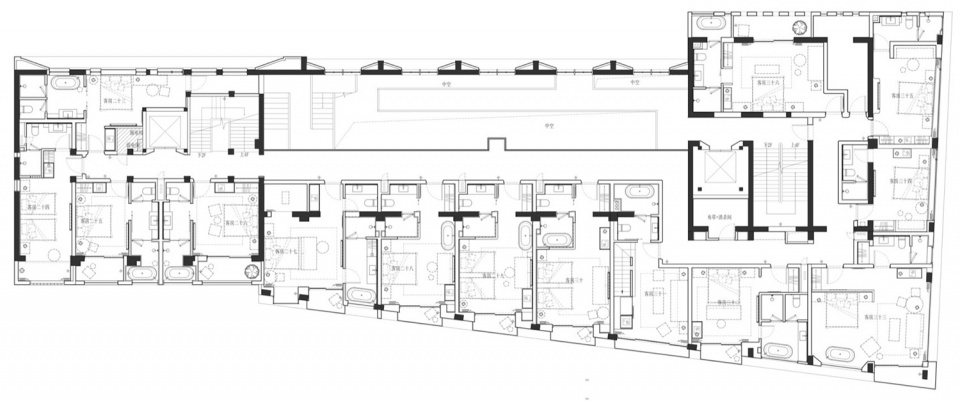
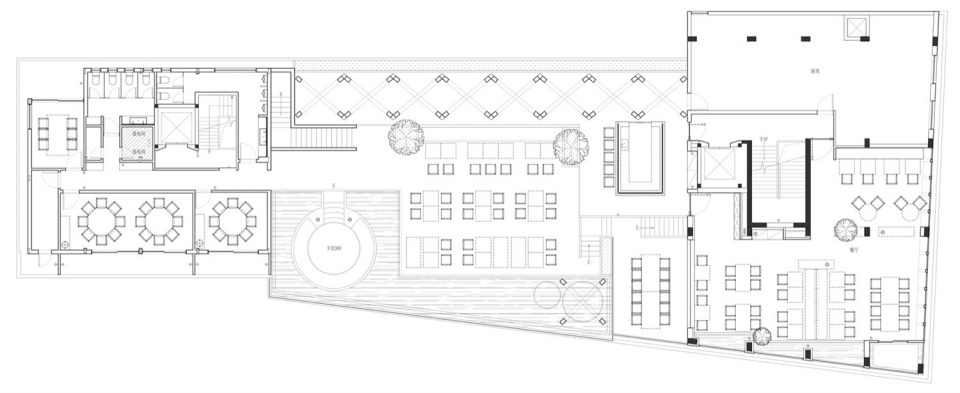
▼五层平面图,5F plan
Project name: Bersure Museum Sea View Hotel
Project type: Architectural Renovation / Interior Design / FF&E Design
Design: Fusion Design
Website: Fusion Design (WeChat Official Account)
Contact e-mail: contacts@fusiondesign-studio.com
Design year: Josh Wen、Suki
Completion Year: 2024
Leader designer & Team: Xiang Weifang、Zhang Wenyao、Xiao Zuohui、Tian Yang、Hu Jianmei、Li Yan、Li Junwei、Liu Lu
Project location: Xiapu, Fujian Province, China
Gross built area: 5000㎡(Interior area)
Photo credit: Ouyang Yun – Yinxiang Architectural Photography
Clients: Fujian Linwu Jiusan Cultural Tourism Development Co., Ltd.
Materials: Concrete, textured paint, red brick, bamboo weaving、Stone