半山1994青年创客社区,绍兴 / 九樟营造事务所
营造新的“地方” Constructing a New “Locality”
中国的城市化进程进入下半场,闲置资产的盘活成为政府、开发商、设计师、运营方都无法绕开的一个话题和工作对象。位于绍兴上虞老城腹地的“半山1994青年创客社区”,正是这样一个区县城市的存量更新案例。我们认为,地方性是可以被不断书写和创造的,它不是一成不变的。改造更新便是设计一种”开源系统”,这个系统和场地的多个时间、风景、生活相联,是具体的、连续的、层叠的。
▼半山1994手绘各层平面,”Banshan1994 Hand-drawn Floor Plans of Each Level”
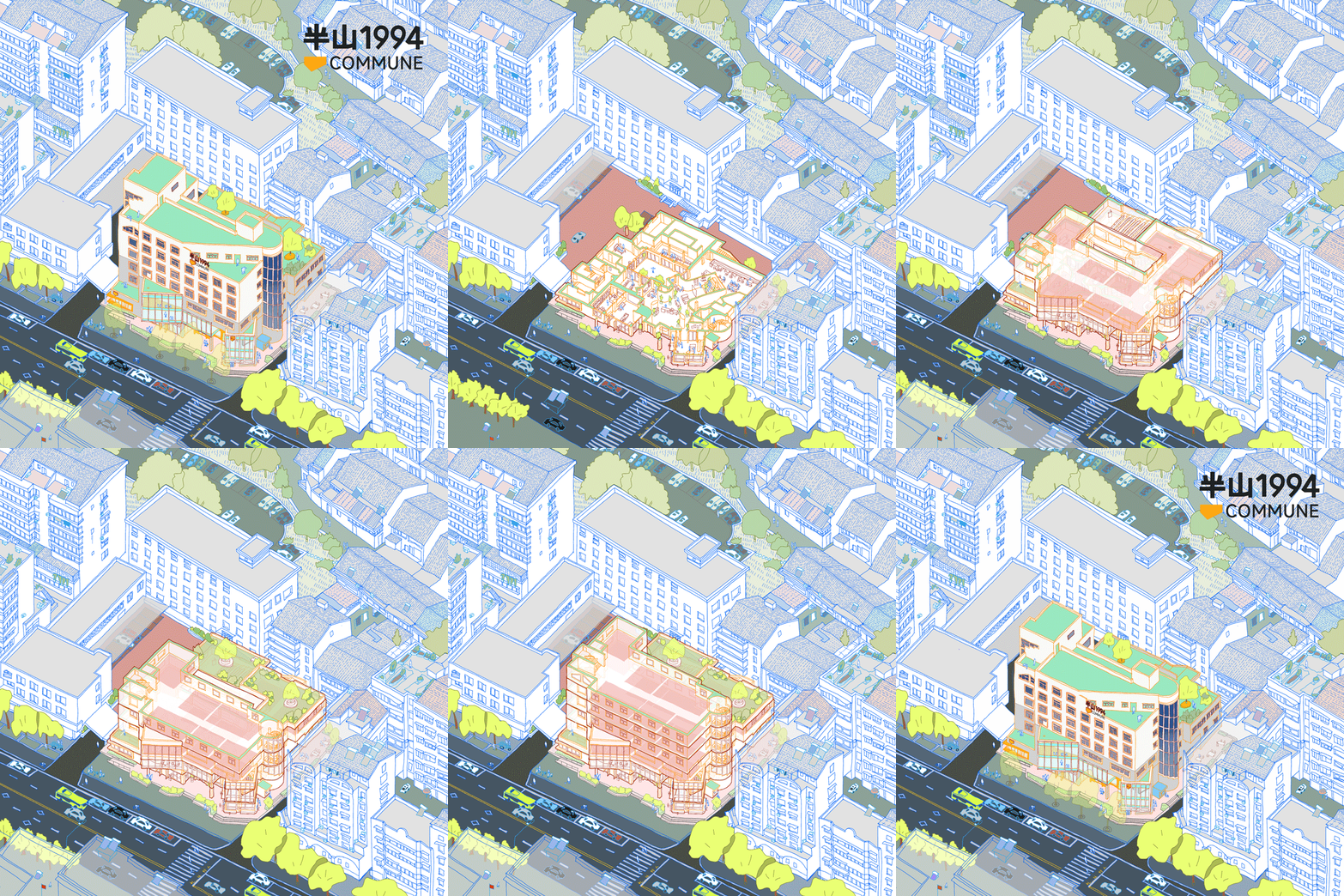
As China’s urbanization enters its “second half,” the revitalization of underutilized assets has become an inevitable challenge for governments, developers, and designers alike. Located in the heart of the old city of Shangyu, Shaoxing, the Banshan1994 Commune serves as a critical case in the stock renewal of county-level cities. We believe that locality is not a static relic but a continuous process of writing and creation. In this project, renovation is conceived as an “open-source system” –a framework that interfaces with multiple timelines, landscapes, and lifestyles, resulting in a site-specific, continuous, and layered architectural condition.
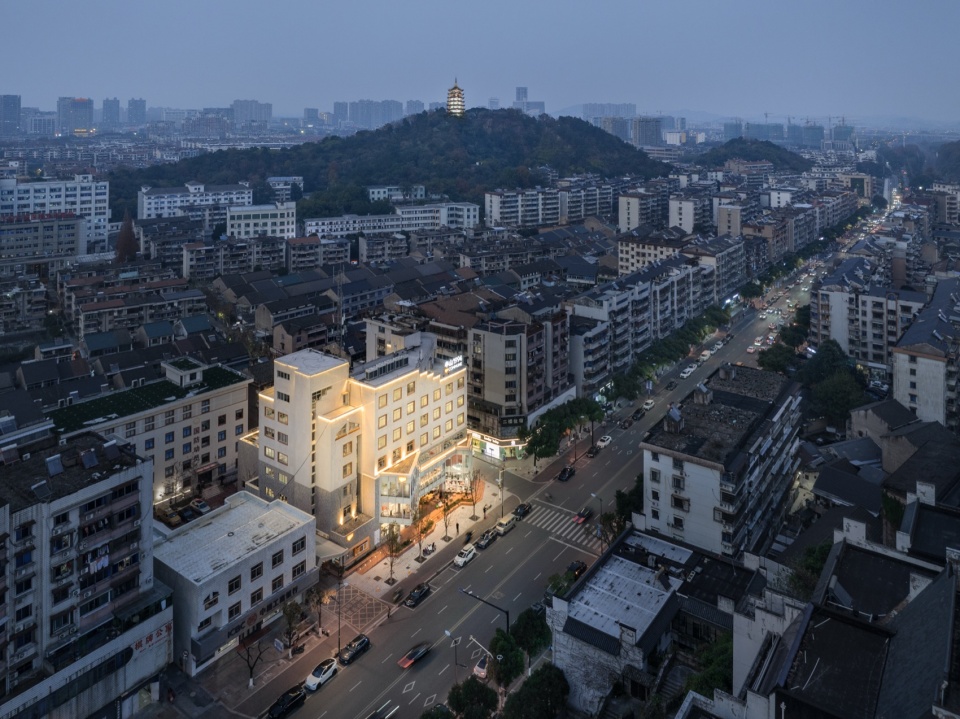
▼鸟瞰,aerial view
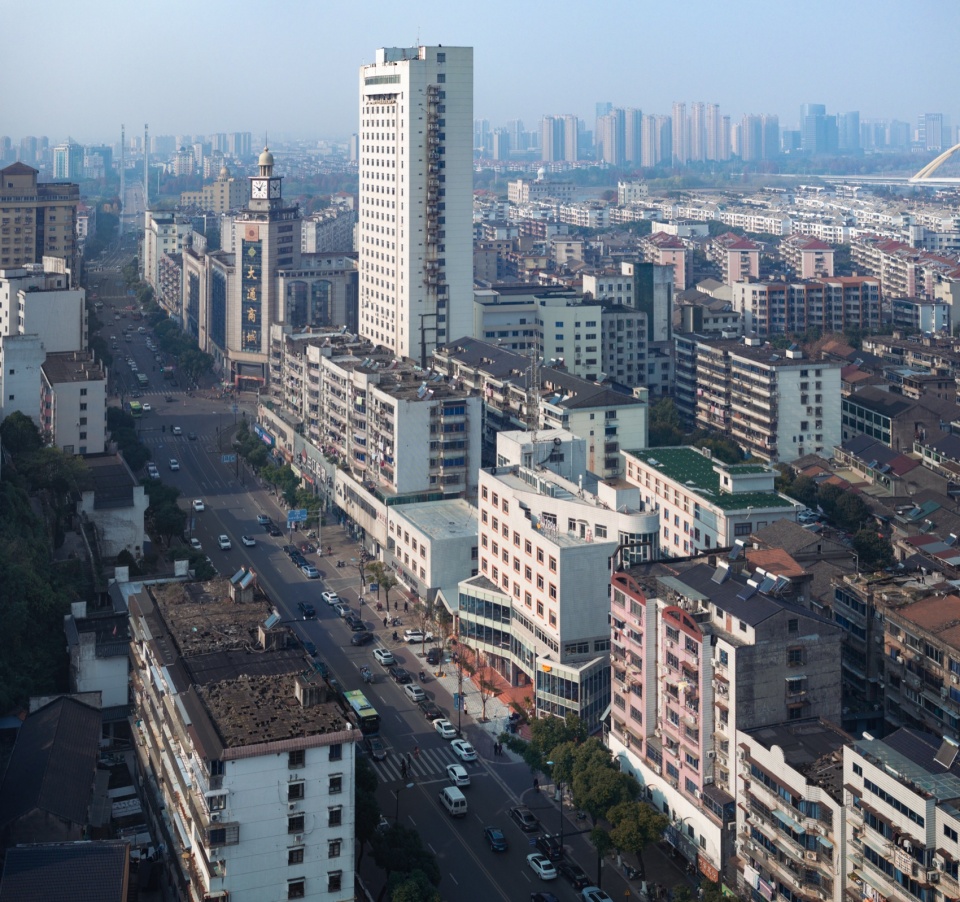
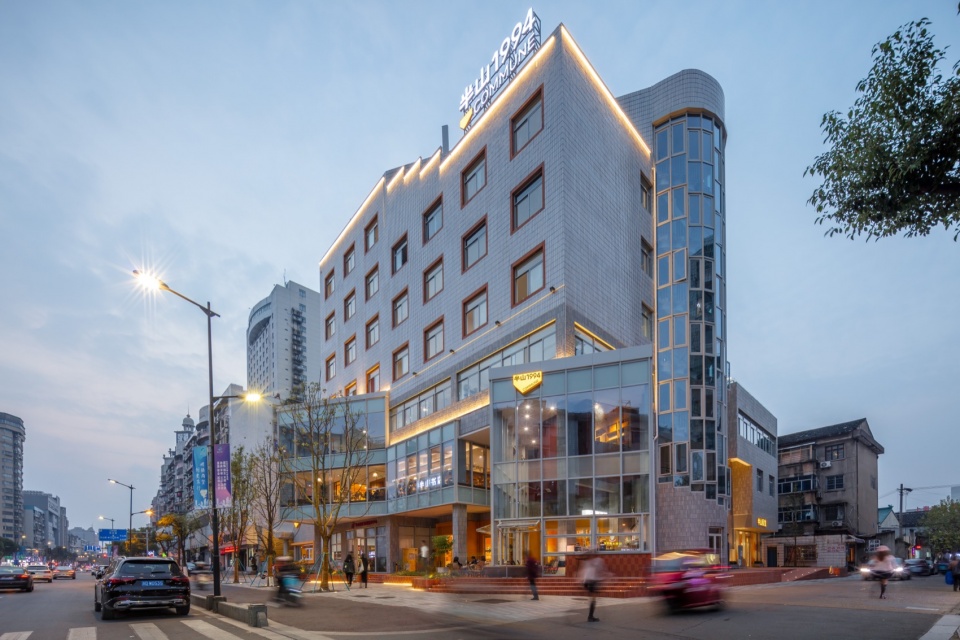
▼改造更新后,繁忙的街角,After the renovation and update, the busy street corner
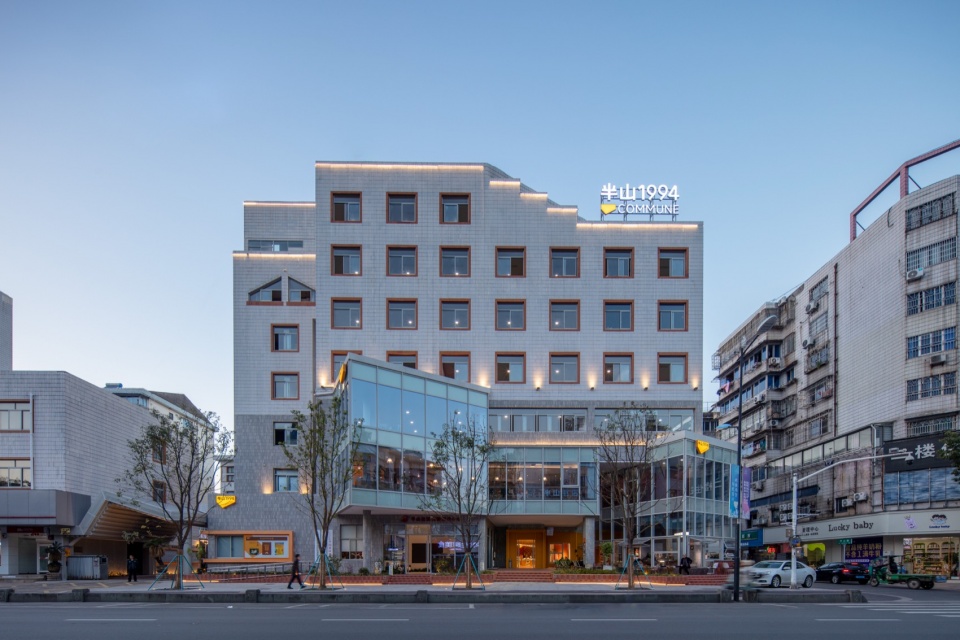
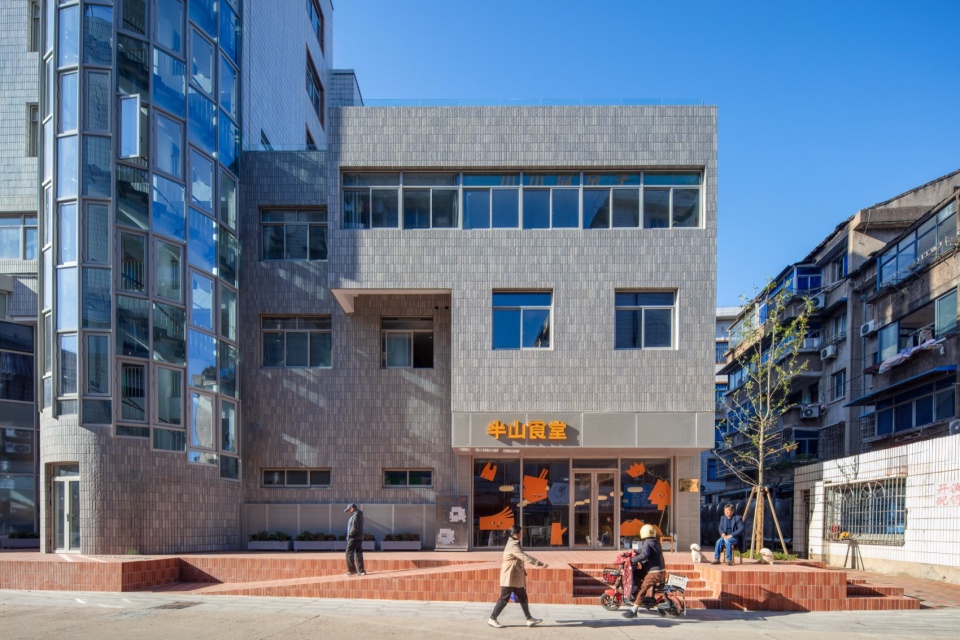
▼沿街南立面,The south-facing facade along the street
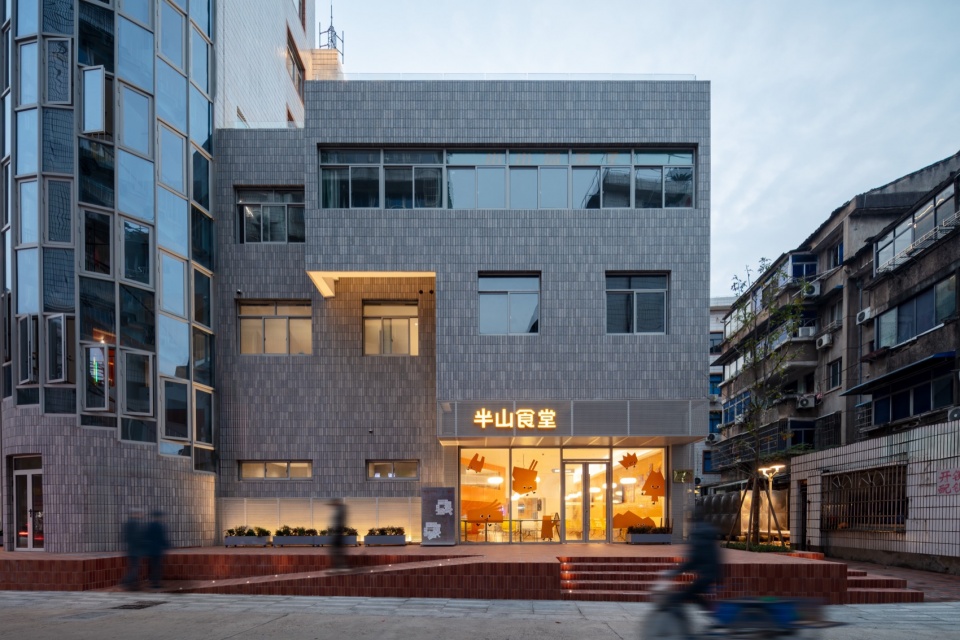
▼半山食堂,Banshan Cantee
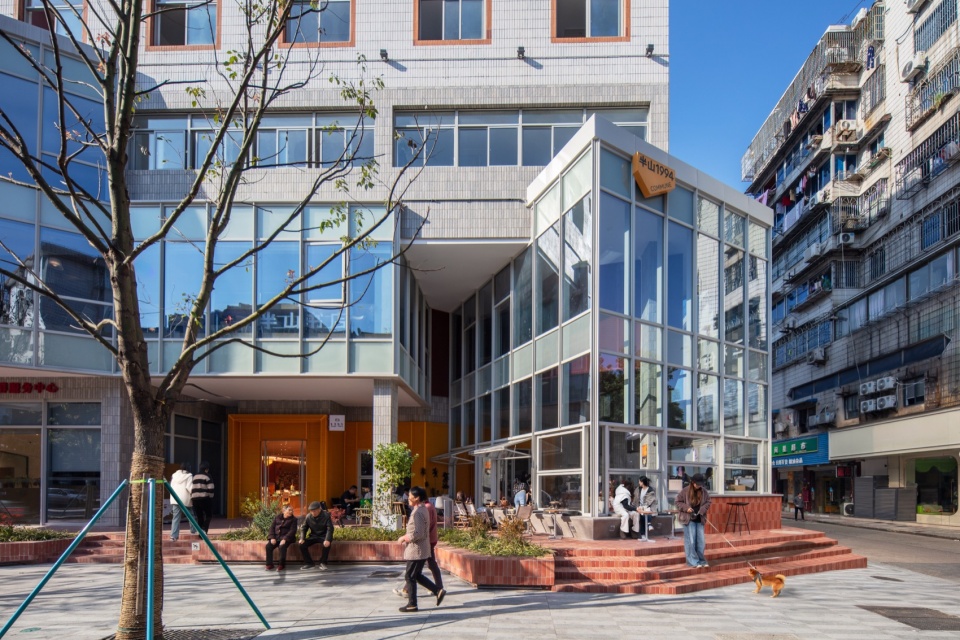
▼建筑前的红砖地台,The red brick platform in front of the building
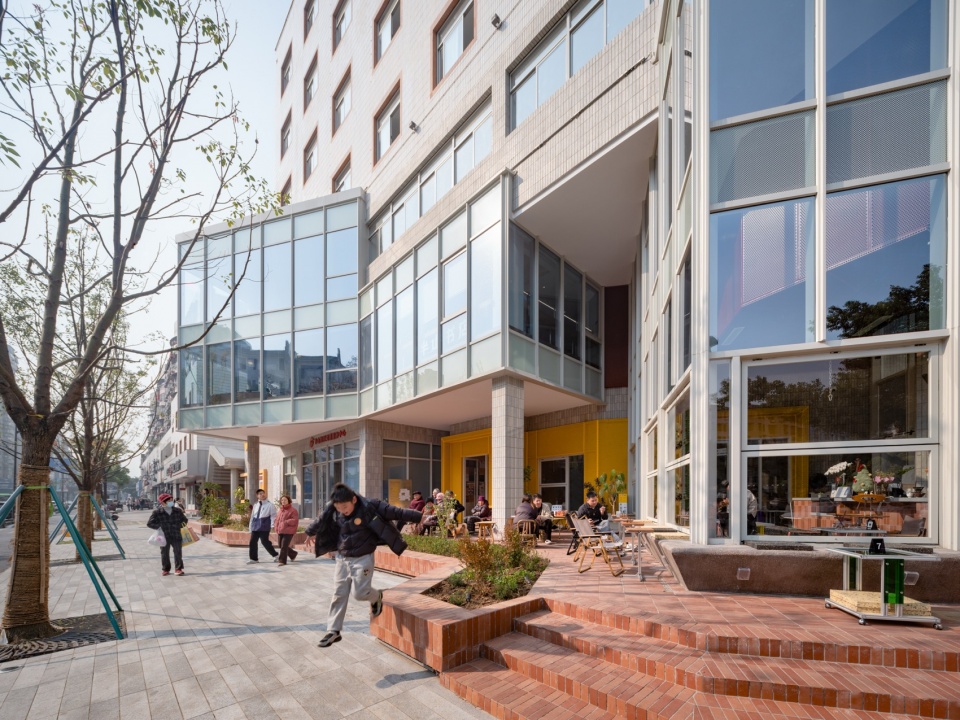
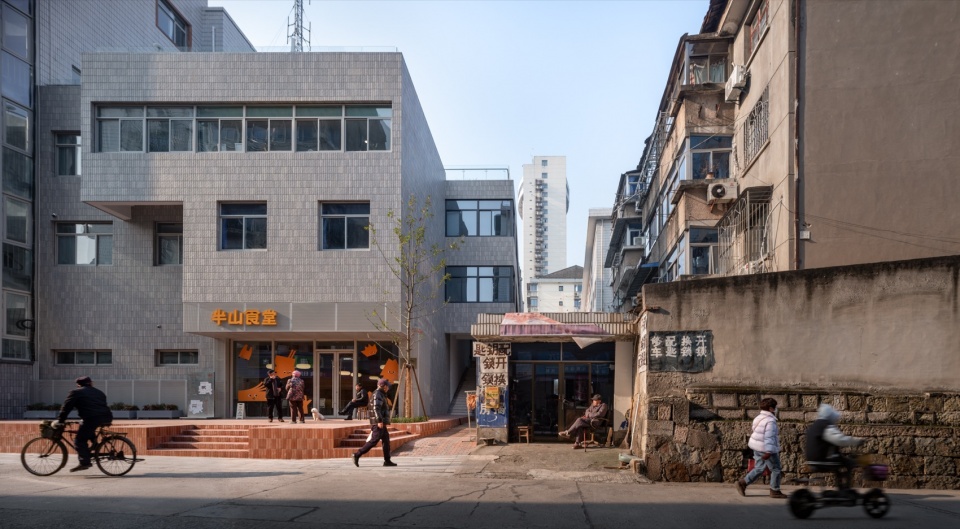
▼建筑东侧,半山食堂和临时钥匙铺 ,
On the east side of the building, there is the Banshan Canteen and the Temporary Key Shop
项目背景 一栋被遗忘30年的老党校,重新回到视野 Project Background: A Forgotten Landmark Re-emerges
这座建于1994年的原上虞区委党校(后称老党校),在理想城镇团队发起的《百官城市记忆研究》计划中被提及而重新回到百官街道政府的视野。2023年3月,九樟营造事务所受百官街道委托,将一座闲置多年的老党校,改造为一处带动“老城焕新”,面向新型城市邻里生活及返虞青年创客的社区商办综合体。
▼改造前,Before renovation
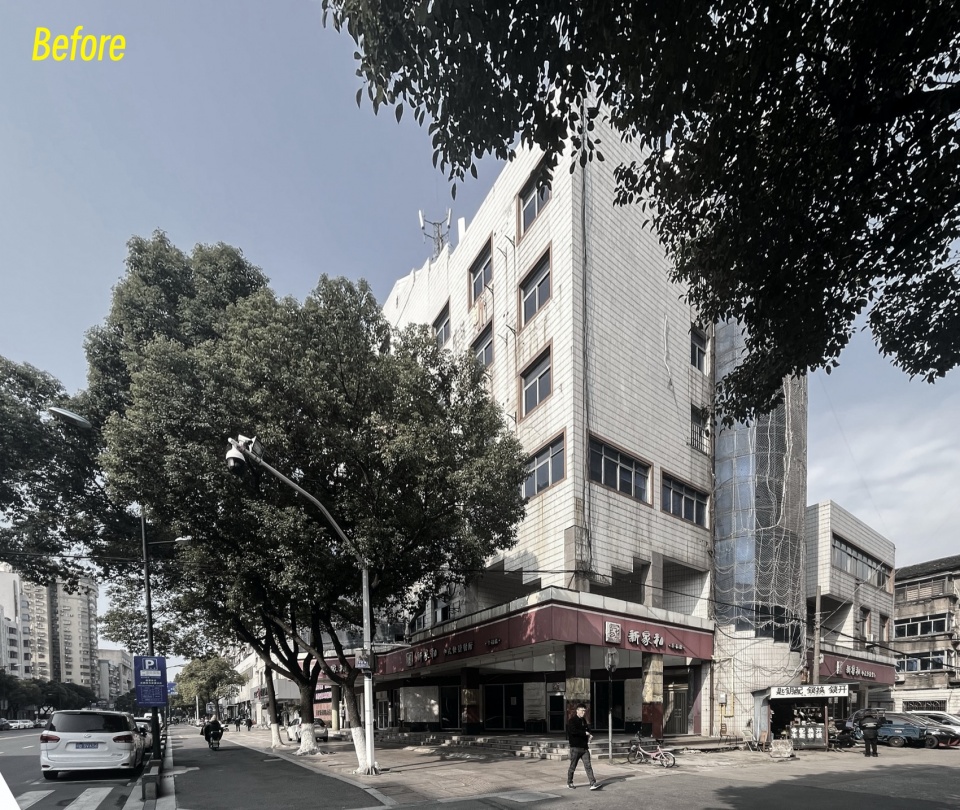
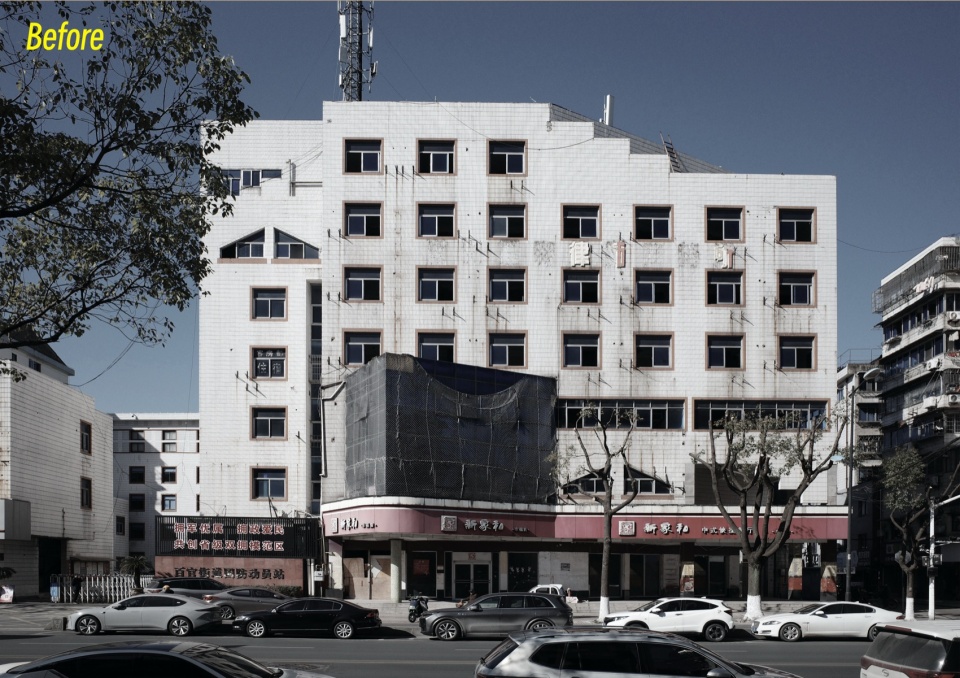
The former Shangyu District Committee Party School, built in 1994, had been neglected for 30 years. It was rediscovered through the “Baiguan Urban Memory Research” (©TOPICA) initiative. In March 2023, Office Canopy of Architecture was commissioned by the Baiguan Subdistrict to transform this vacant structure into a community-based commercial and office complex. The goal was to catalyze “Old City Renewal” while catering to modern neighborhood life and young “returnee” entrepreneurs.
▼建筑街景,Street view of the building
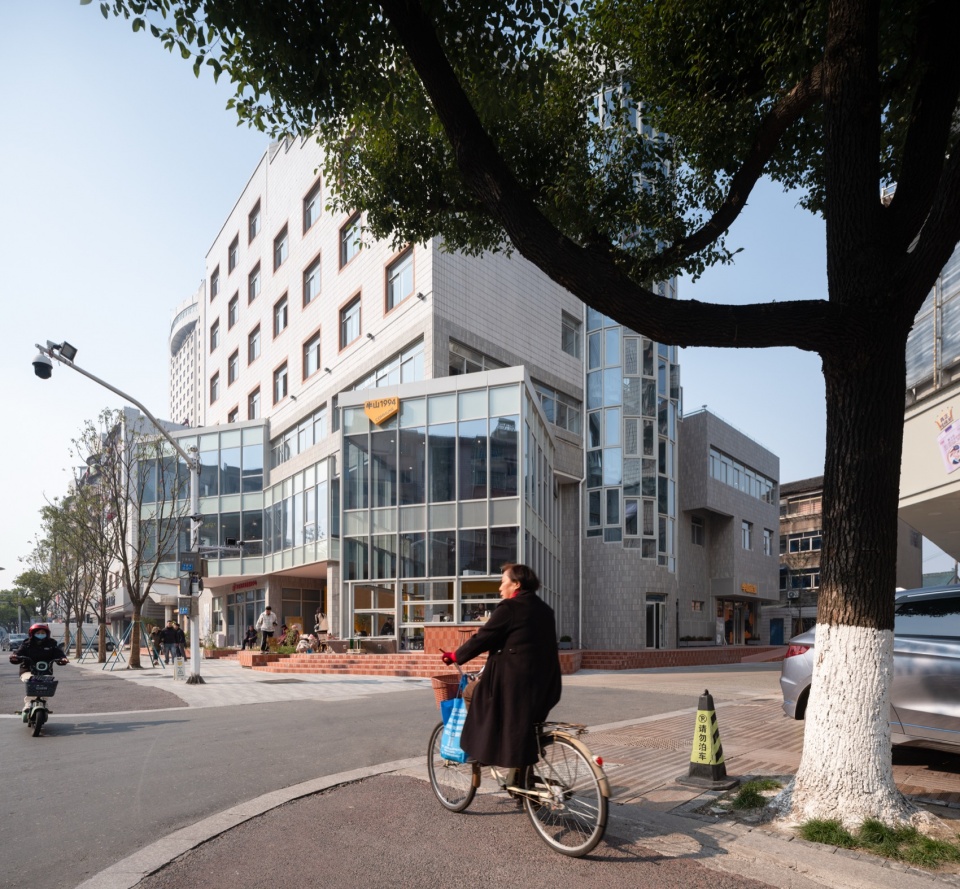
▼从周边老社区看向建筑东侧 ,
Looking from the surrounding old neighborhoods towards the east side of the building
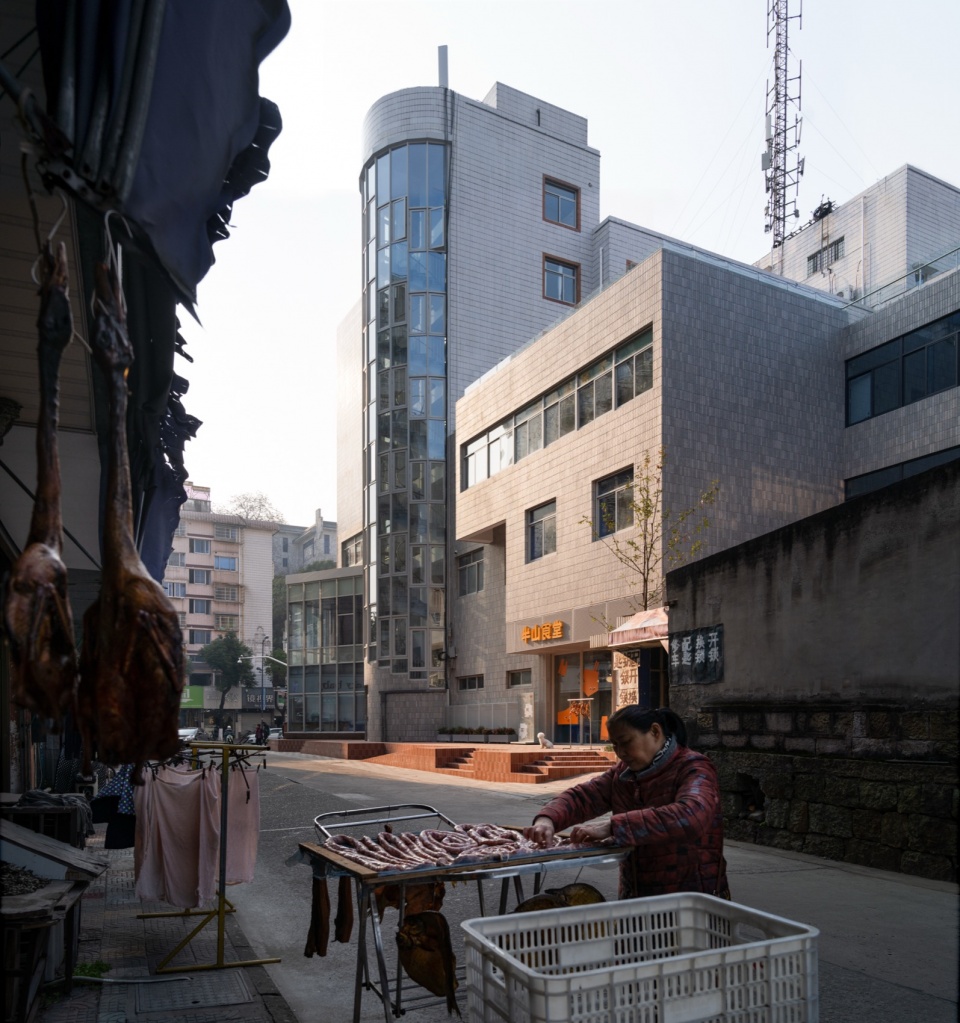
▼从老小区的过道看向半山食堂,
Looking from the corridor of the old neighborhood towards the banshan cafeteria
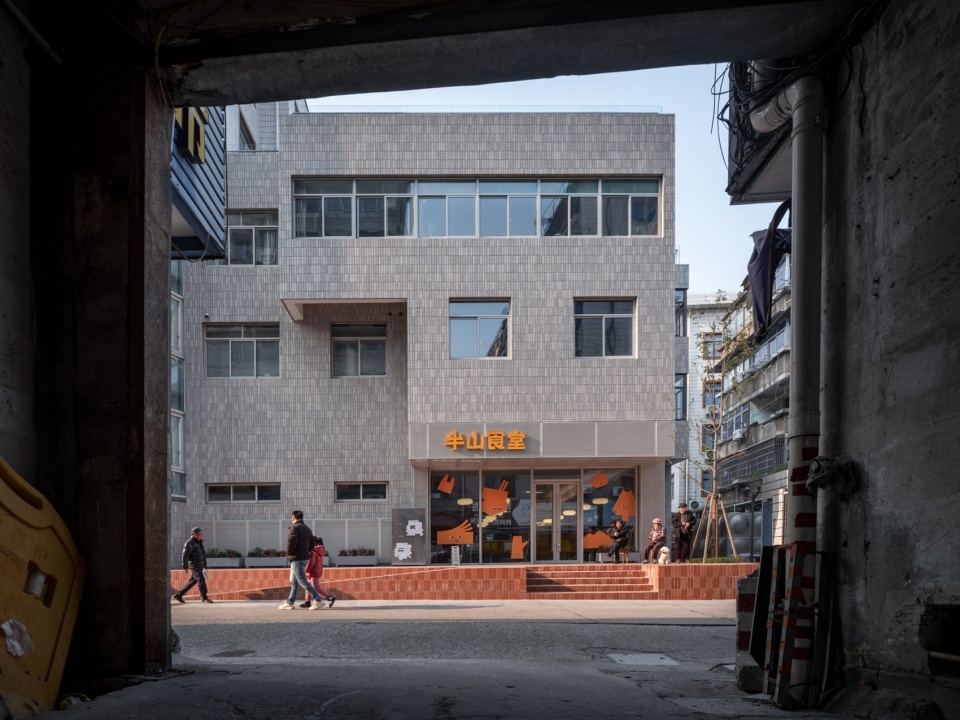
城市界面 城市界面的再设计,与城市持续对话 Redefine the Urban Interface: Continuous Dialogue with the City
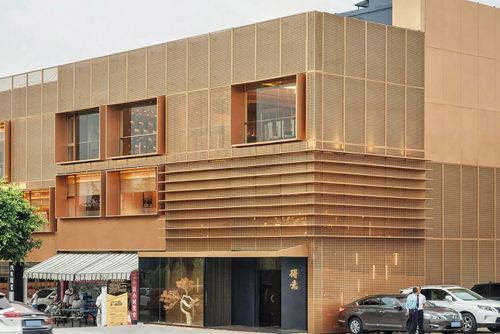
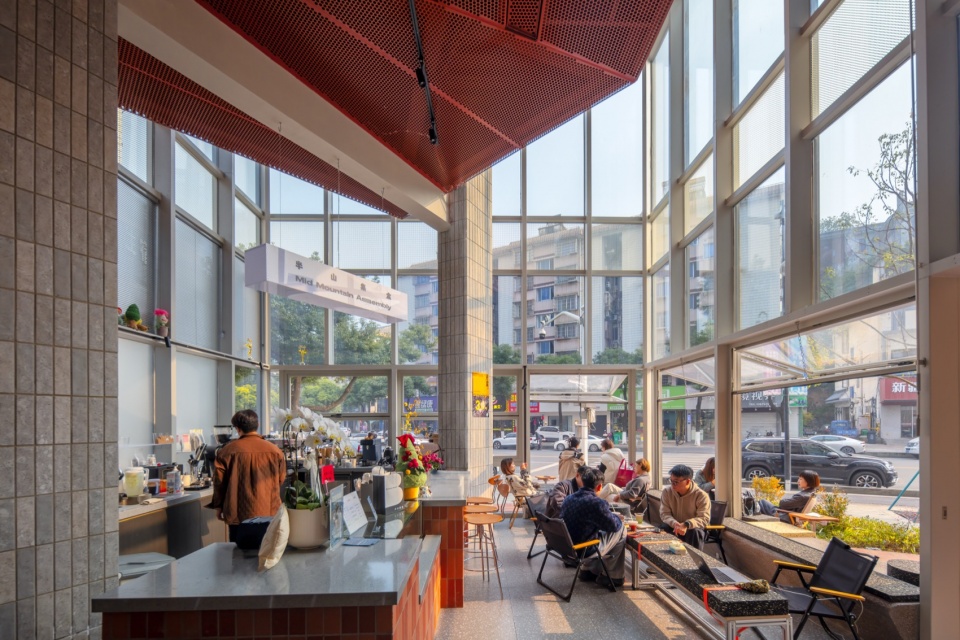
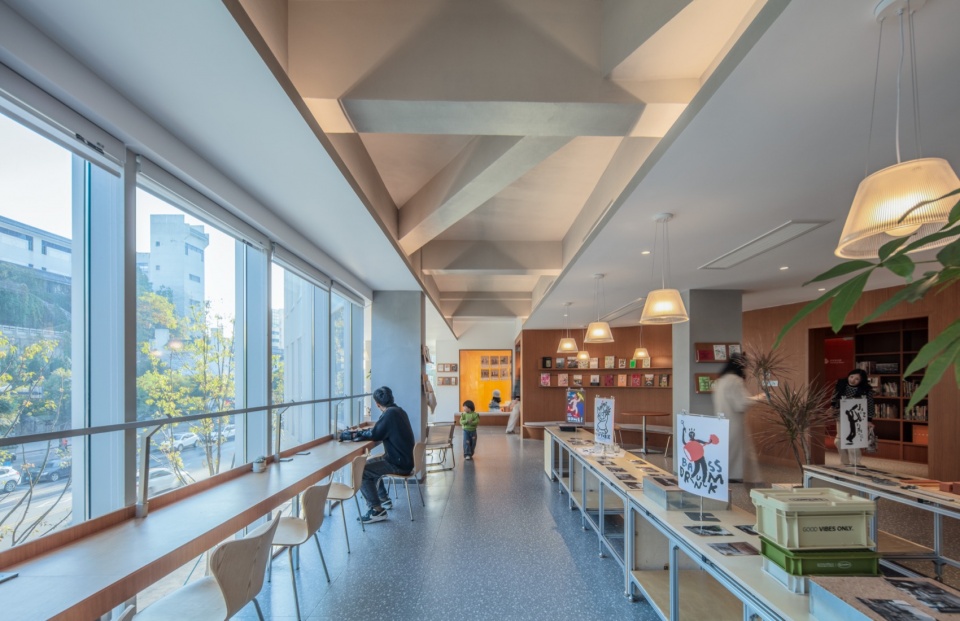
面对老城环绕的周边关系,我们希望建筑外观的亮点是城市性的,而非单纯的造型处理或材料堆砌。第一步是将原本内退消极的玻璃幕墙全部拆除,处理为更多凹凸转折和门窗开口的城市界面,让室内空间向城市延展。最突破的是在东南角增加了二层通高的玻璃盒子,形成180°环视老城的咖啡店,二层的图书走廊也冲出街角,架在玻璃盒子上空。从南至东的建筑退让区域,处理成连续的红砖地台,串联了坡道、花坛、座椅、咖啡外摆,细化了人行道至建筑的空间层次,呈现出更为开放欢迎的姿态。
In response to the contextual features of the old town, the originally recessed glass curtain wall was demolished and reconstructed into an undulating, folded urban interface, extending the indoor spatial experience outward to the city. A double-height glass volume is newly added at the southeast corner, accommodating a café with a 180° panoramic view of the old town. The building setback area stretching from the south to the east is renovated into a continuous red brick terrace that integrates ramps, flower beds and outdoor furnishings, shaping a more open and welcoming urban facade.
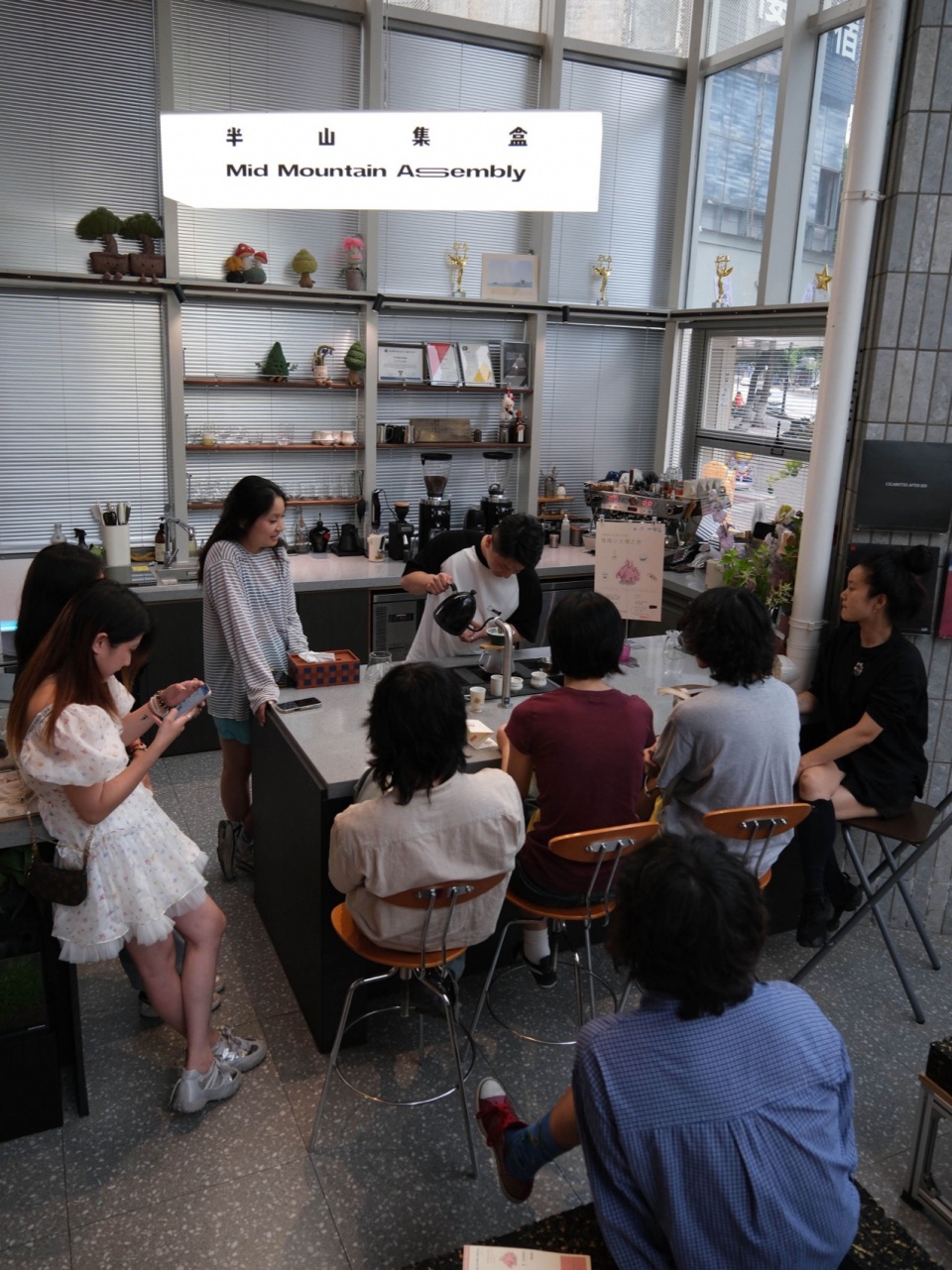
▼置身老城的咖啡馆“半山集盒”,Staying in the coffee shop “Banshan Collection Box” in the old town
新旧层叠 时间的层叠,包容的形式 Layering the Time
建于1994年的老党校,完整经历了三十年快速城市化。新与旧的取舍成为改造的起点——如何在一个空间中并置不同时间。我们让立面底部呈 “新”、上部呈 “旧”,远处看仍是老党校,走近才知是新建筑。这种一半一半的处理,兼顾老记忆与新形象,平衡了本地居民的情感距离与返虞青年对新事物的好奇心。有时间层叠的事物更具包容性,不同年龄层人群能在建筑的时间痕迹中各取所需,获得去中心化的归属感。
The building facade adopts “a new base and old upper”. This approach inherits the historical memory of the old town while presenting a contemporary architectural image, balancing the emotional attachment of local residents and the exploratory curiosity of returning young generations. It enables people of all age groups to gain decentralized sense of belonging from the temporal traces embedded in the architecture.
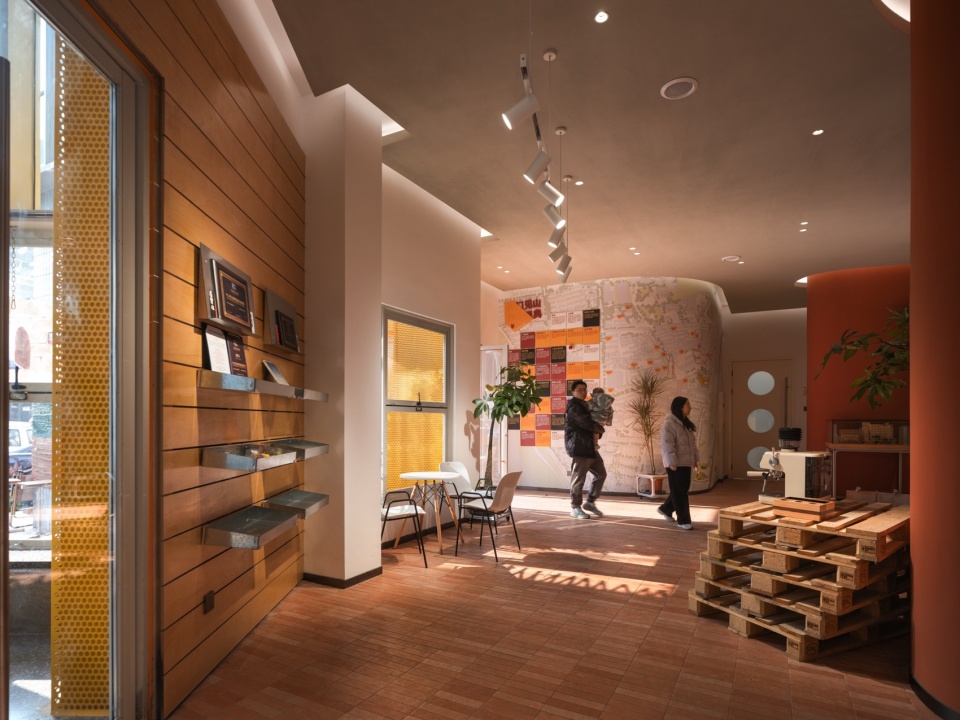
▼一层城市客厅,A floor of urban living room
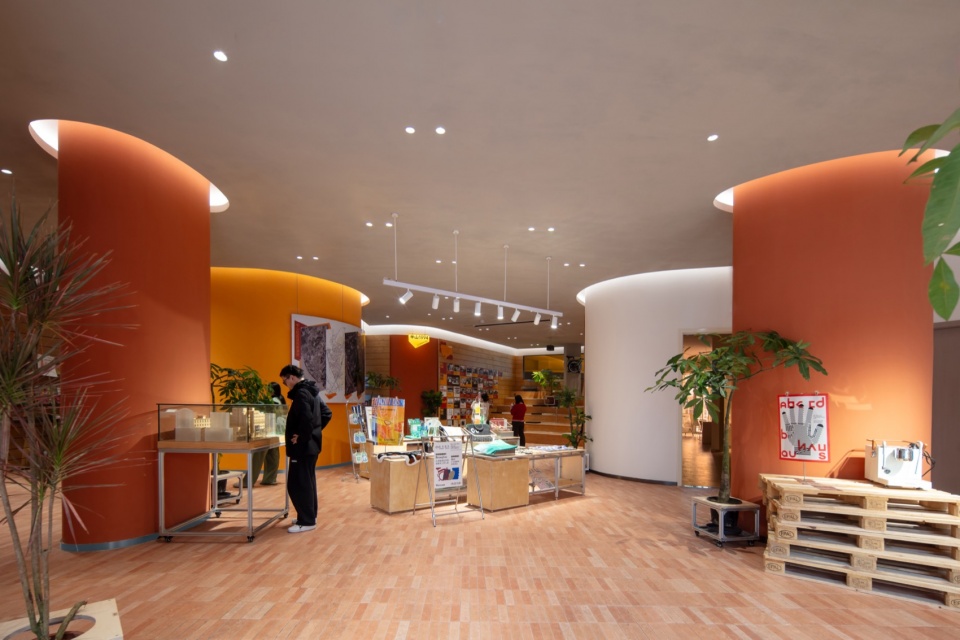
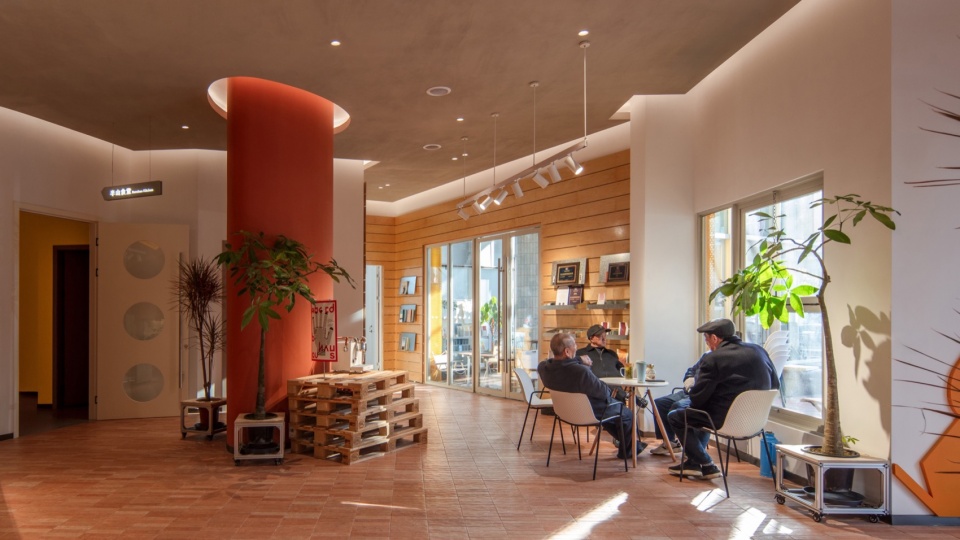
▼一层城市客厅,A floor of urban living room
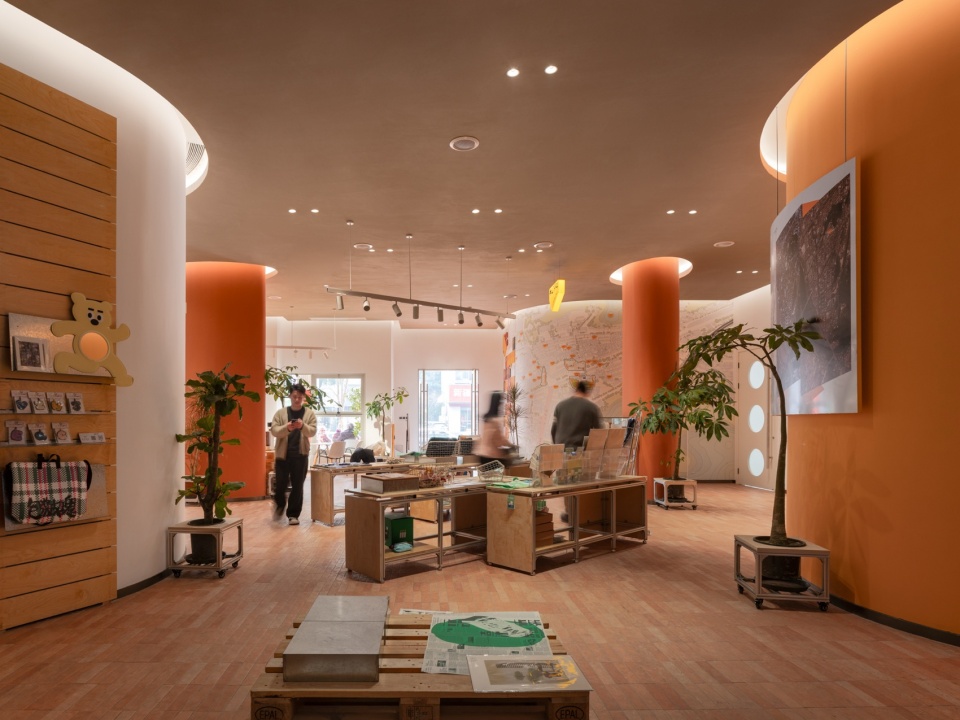
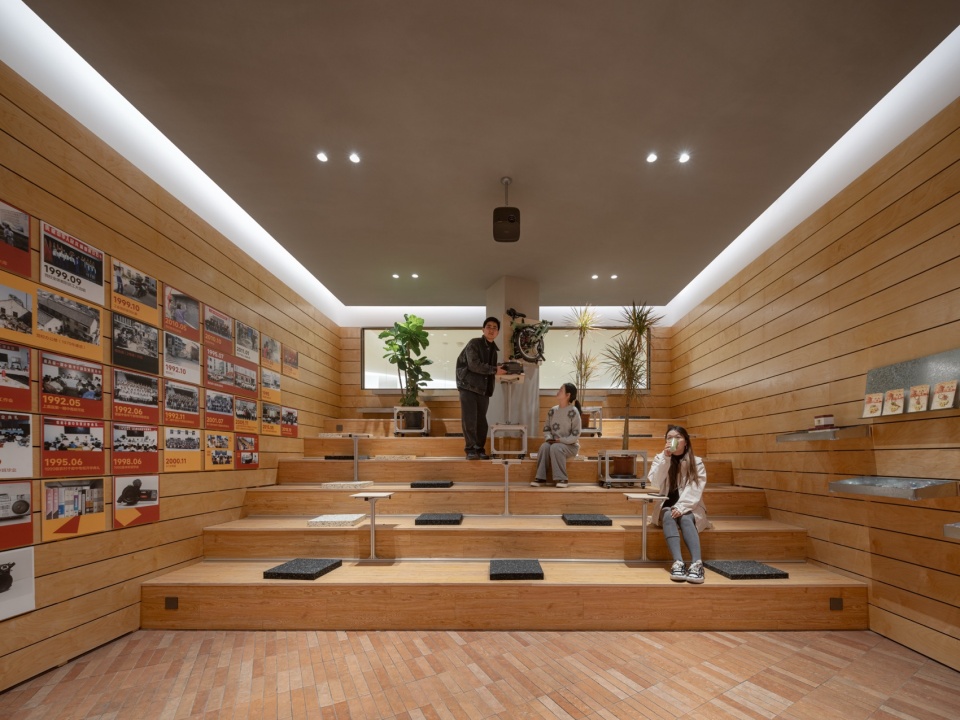
▼一层阶梯活动区,A step-ladder activity area
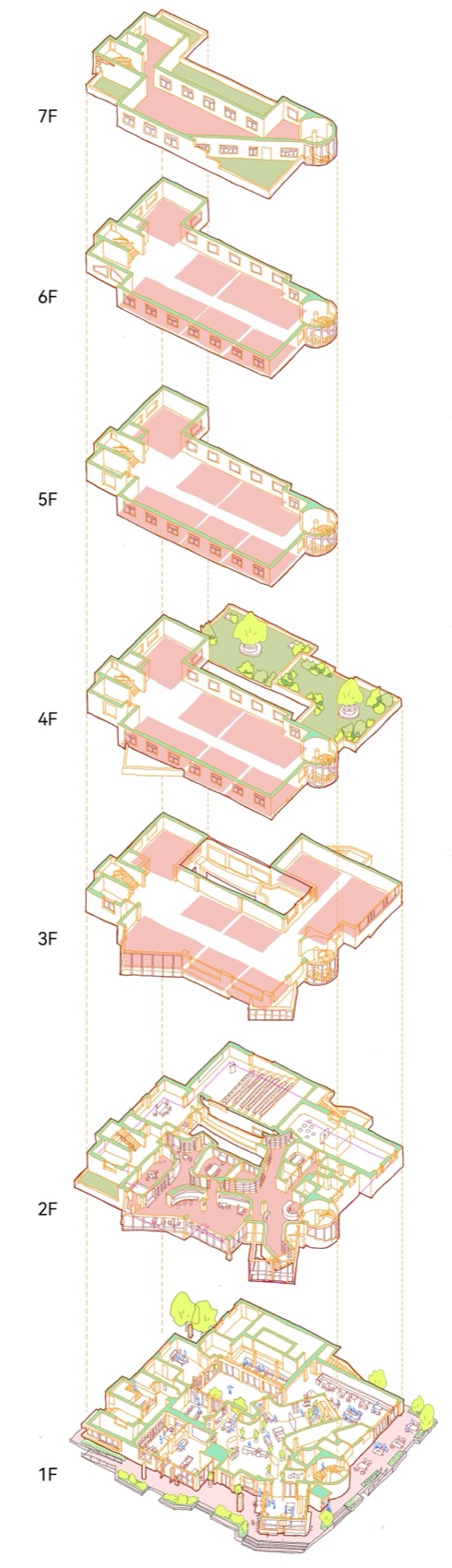
▼各层爆炸图,Elevation explosion diagrams of each layer
空间并置 非线性的室内空间组织 Space Organization: Non-linear Interior
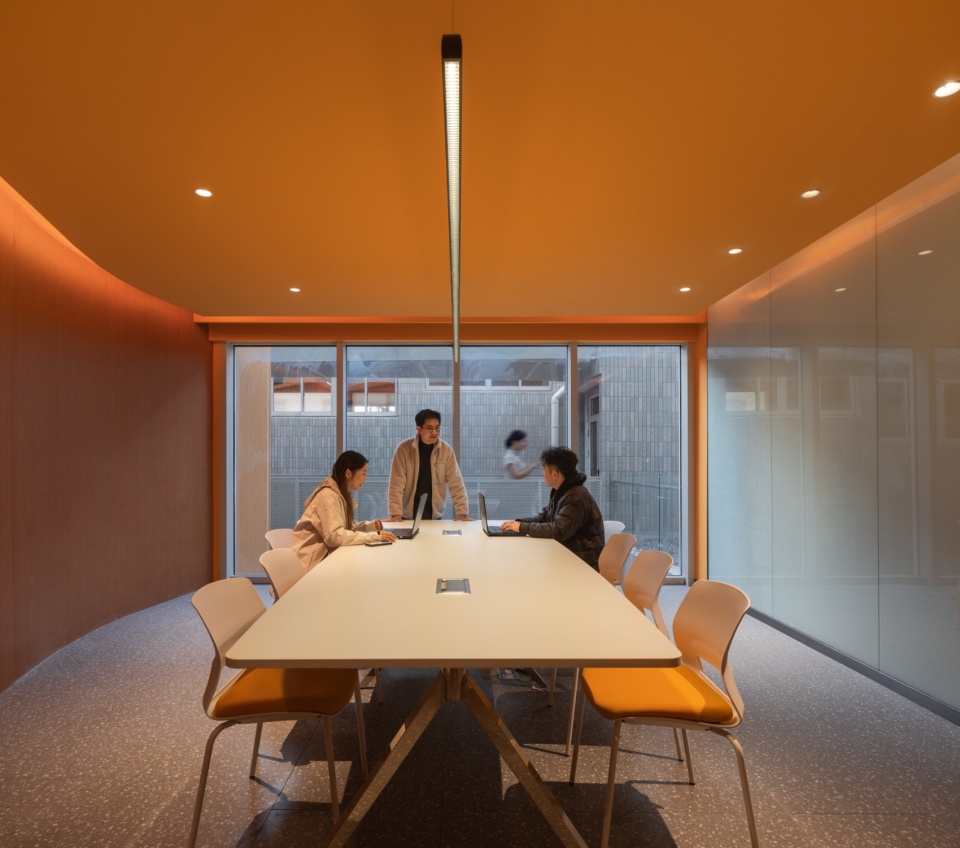
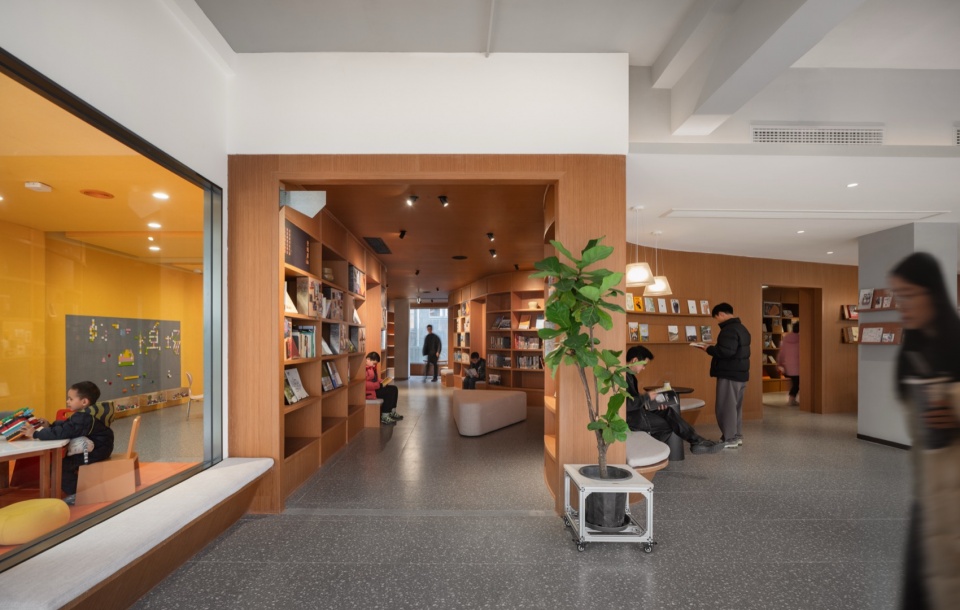
1、2层的室内设计,以另一种方式表达时间的”层叠”。我们从绕开柱网与打破矩形空间入手,用弧形片墙进行相对自由地分割,通过洞口设置、墙体弯曲来强化空间之间的互动与咬合,使其”分而不割裂、联而不互扰”。这里创造了一种同时身处多个空间的感受,或者是身处某个空间时还可以感受到多个相邻空间的状态。这些都是非线性的室内空间组织带来的体验“溢价”。曾有同行来访时说,这是”没有园林要素,却有园林体验的空间”,是一种将对园林的视觉要素全部瓦解为日常功能并重构的结果。
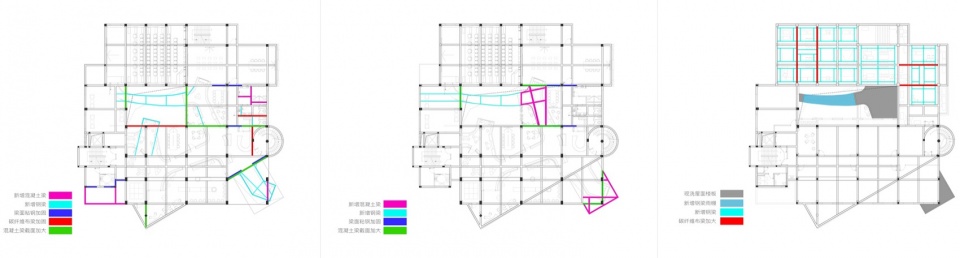
▼结构加固示意图,Structural reinforcement schematic diagram
The interior space is flexibly divided by curved partition walls. Reasonably arranged window openings ensure the spaces are partitioned yet connected, integrated yet independent, creating a unique spatial experience of multi-scene coexistence within a single interior environment.
▼二层会议室,Second-floor meeting room
▼从二层阅读区看向其他空间,Looking from the second-floor reading area into the other spaces
▼二层半山书店,The Second Floor Banshan Bookstore
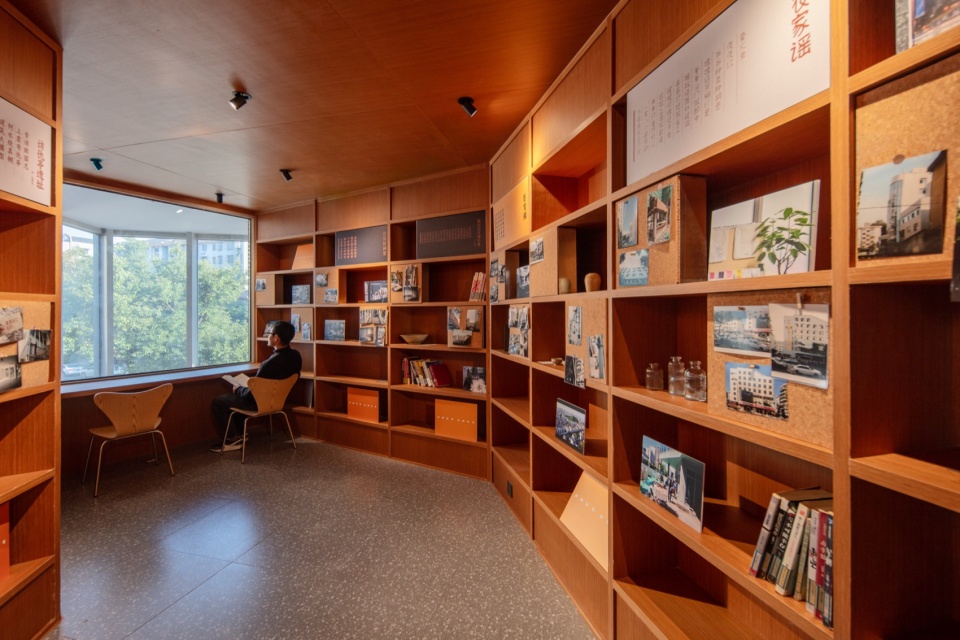
▼图书走廊的端头是老城的风景,At the end of the book corridor is the scenery of the old town.
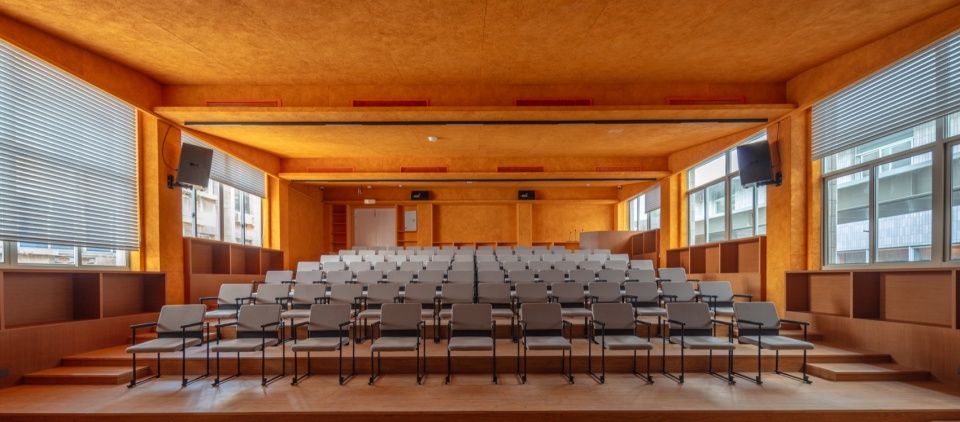
▼二层剧场,Second-floor theater
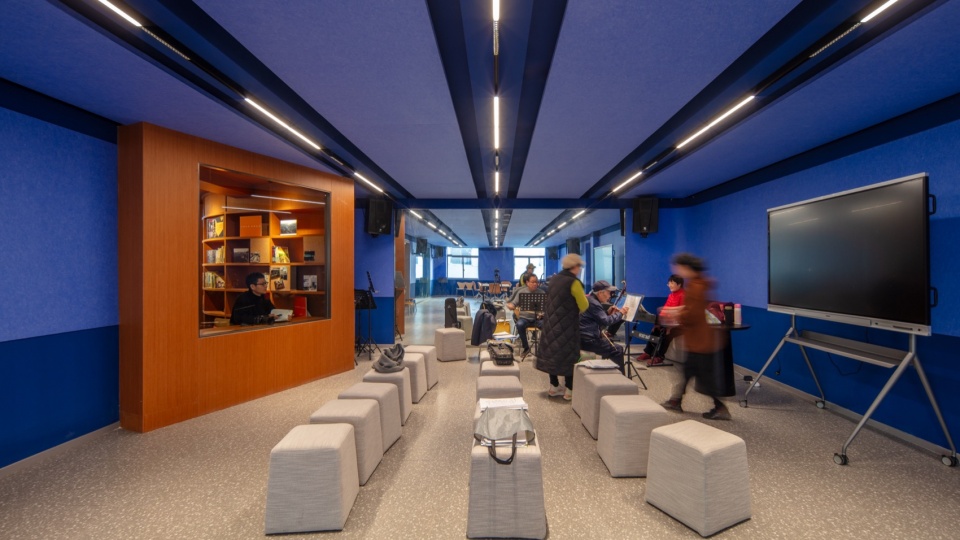
▼二层排练室,Second floor rehearsal room
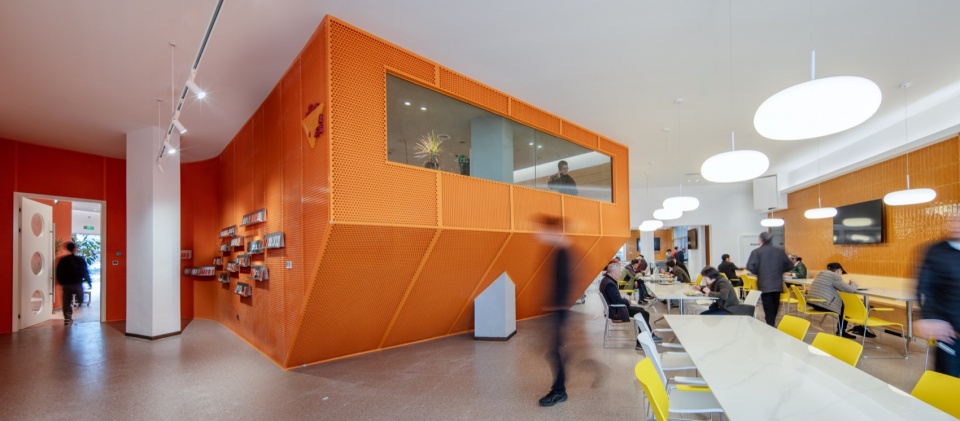
▼阶梯屋台穿入半山食堂,The terraced pavilions pierce through the Banshan cafeteria
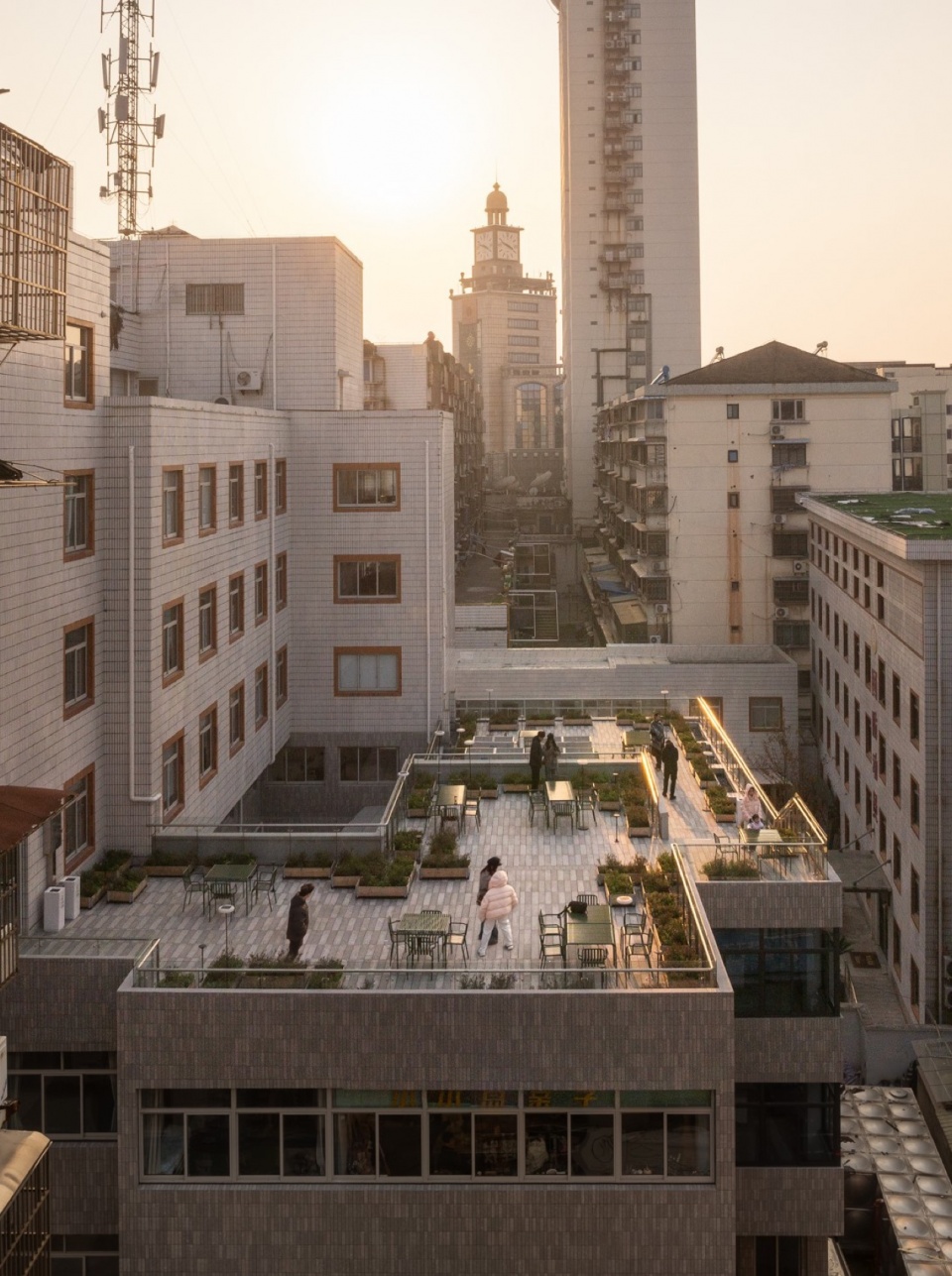
屋顶露台 全新的老百官视角 Roof Terrace: A Brand-new Perspective of Old Baiguan
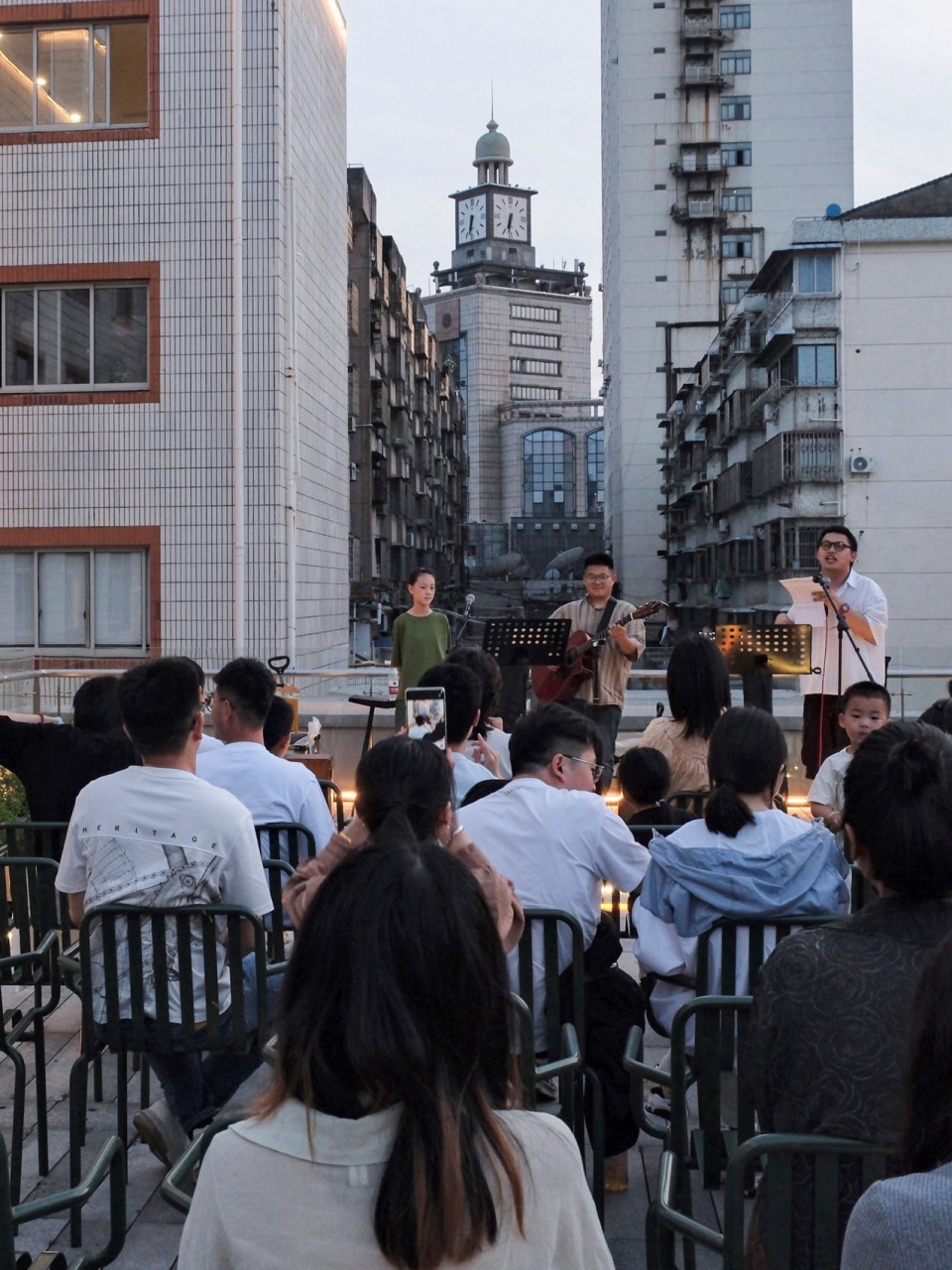
改造前,北侧裙楼是设备平台,管线凌乱。但我们发现,被年代感建筑环绕的感受令人印象深刻——向西可以看到老大通钟楼,向东北可以远眺半山上的重华塔。这些城市地标一直在那里,但这个视点从未被发现。我们几乎没有新增任何有形设计,只是将设备屋顶改为上人屋面,就创造了让本地人重新发现老百官的场所。后来这里举办过社区音乐会、水枪大战,背景是一眼就能认出的上虞老城。
Previously a cluttered equipment platform, the rooftop site boasts exclusive views overlooking the Laodatong Bell Tower to the west and the Banshan Chonghua Pagoda to the northeast. By converting the maintainance rooftop into a pedestrian terrace, the project creates a distinctive public space that allows local residents to rediscover the unique charm of old Baiguan.
▼屋顶露台看向老大通钟楼,The rooftop terrace overlooks the Great Bell Tower
中庭 老城的“万花筒” The Atrium: An Urban Kaleidoscope
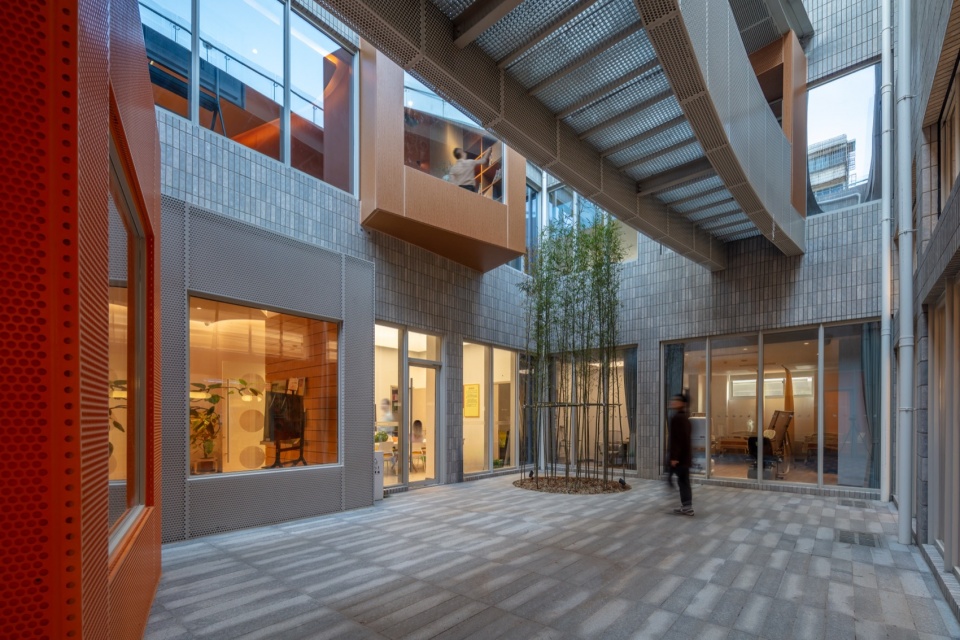
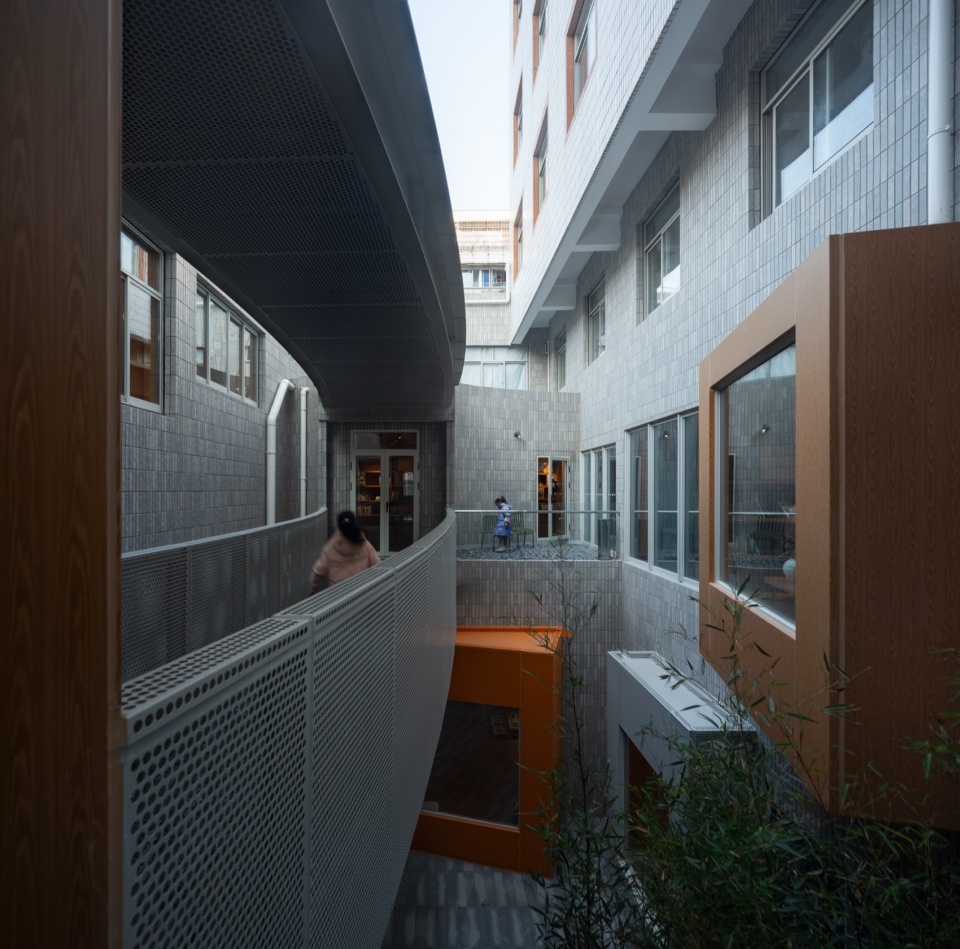
老党校一层曾是快餐店,中庭被封作厨房。改造中,我们拆除覆盖中庭的铁皮棚,让阳光洒进来,又让一座拐弯的弧形廊桥划过上空。这道弧线划过了四周玻璃上的虚影,与窗内的光亮、倒映的老公房,在不大的中庭里形成时间与空间的叠加——如同层叠了新老百官的”万花筒”,虚实相生。
The iron canopy originally covering the atrium was removed to introduce natural daylight. A curved corridor bridge spans across the atrium space, overlaying with the virtual reflections on the surrounding glass facades and the silhouettes of adjacent old buildings, forming an integrated superposition of time and space.
▼从中庭看向各空间,Looking from the atrium to each of the spaces
▼穿越中庭的弧形桥,The curved bridge spanning the atrium
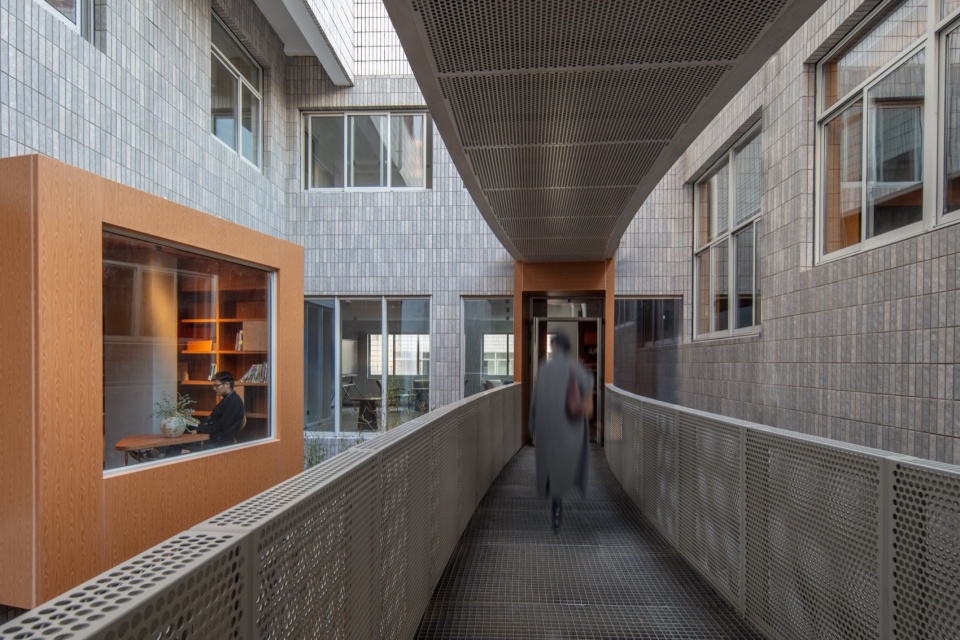
▼穿越中庭的弧形桥,The curved bridge spanning the atriums
人地纽带 Bond Between People and Place
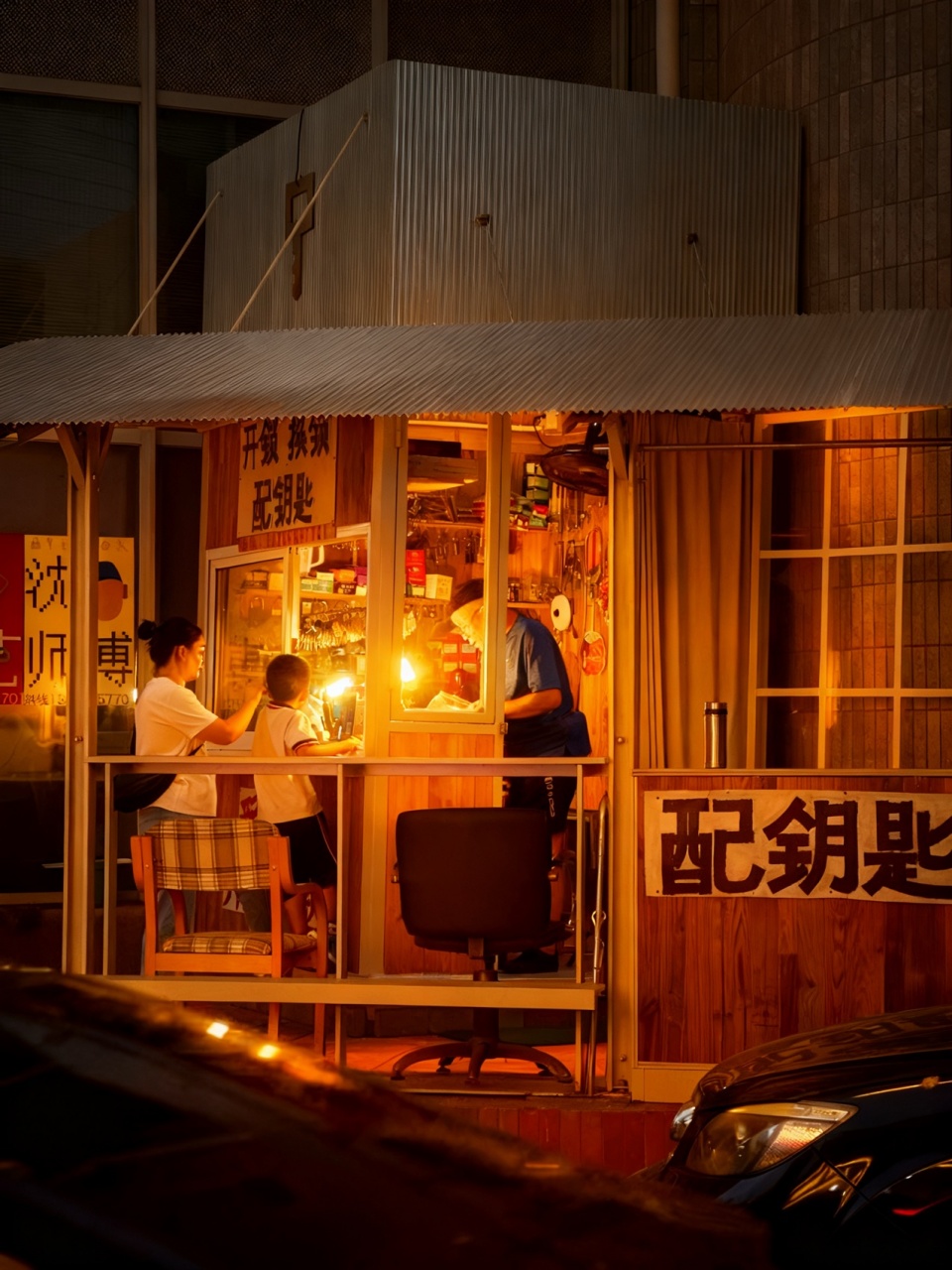
城市更新的颗粒度,可以小到2平米,具体到1个人。项目前期考察,最让我们印象深刻的是老党校旁 2 平米的钥匙铺及店主沈师傅。这间有合法经营许可的铺子,沈师傅在此经营 30 年,为社区居民配钥匙、修自行车,是与这片社区 “长” 在一起的灵魂人物。建设一旦启动,沈师傅便需要被 “移除”,这让我们体会到城市更新与新建开发的最大不同 —— 对既有关系的悉心体察与妥善处理,这种颗粒度可以小至 2 平米,具体到 1 个人。
Adjacent to the project stands a 2-square-meter key-cutting shop run by Master Shen, who has operated the store for 30 years and become an indispensable spiritual symbol of the local community. The shop was temporarily relocated during construction and reconstructed in its original position with public welfare sponsorship upon project completion, bringing the time-honored local business back to the vicinity of the former Party School site.
▼重新回到老位置的钥匙铺,The key shop that has returned to its original location
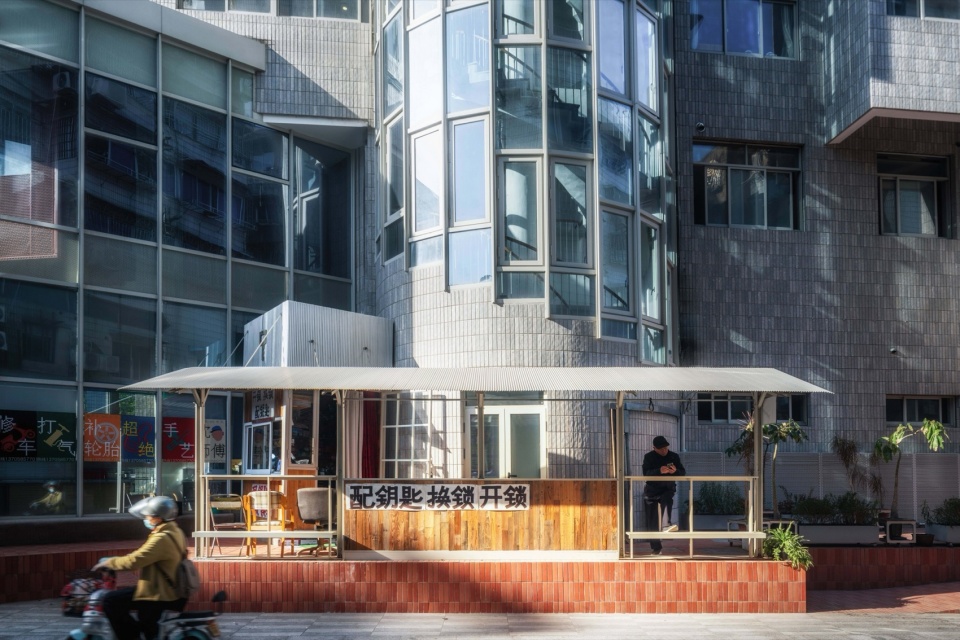
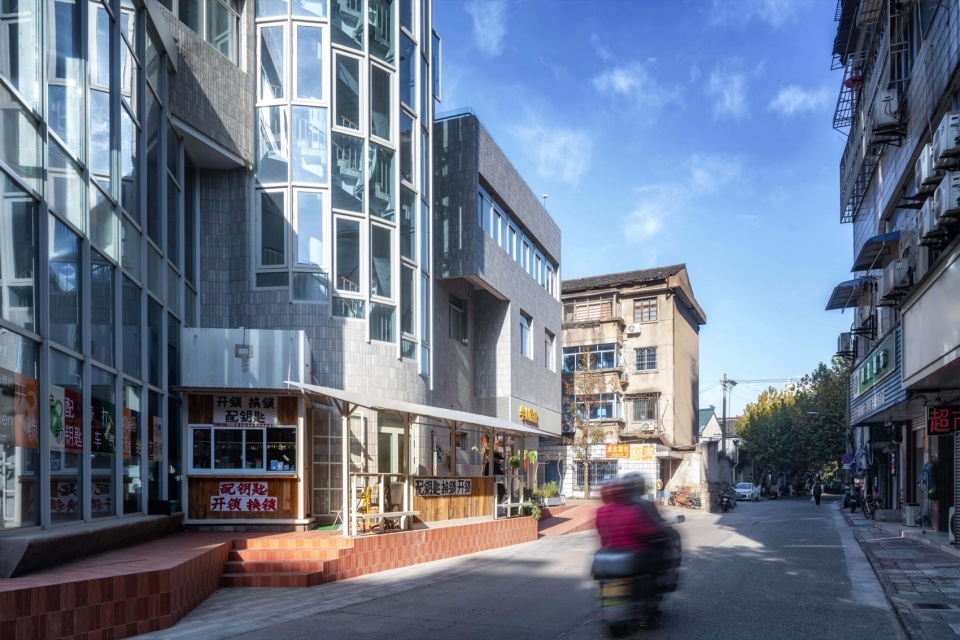
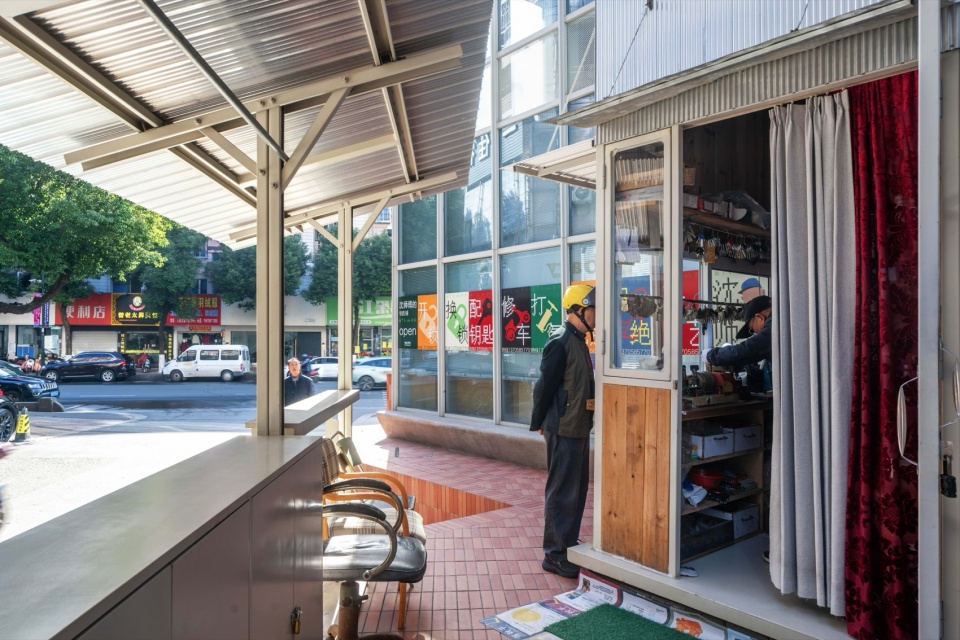
建设期间,钥匙铺暂移至场地东北角水泵房;竣工后,在原位重建新铺,让沈师傅重回老党校身旁。时至今日,他仍在为这栋楼提供修门、修椅子、修锁、安装标牌等帮助。建设是一种自上而下的强烈意志,在这种意志面前,现状树、老房子、原住民都成了开发的障碍。更遗憾的是,快速城市化建设缺乏处理人情网络的机制,只能靠 “人” 来协调,没有这个人,问题便无人知晓。
During construction, the key shop temporarily moved to the northeast pump house. Upon completion, it was rebuilt on site, bringing Master Shen back to the old Party School. Today, he still helps the building with repairing doors, chairs, locks, and installing signs. Construction represents a strong top-down will, before which existing trees, old houses, and local residents often become obstacles. Regrettably, rapid urbanization lacks mechanisms to handle human networks; it relies solely on individuals to coordinate, without whom the problems would remain unknown.
▼工作中的钥匙铺沈师傅,The locksmith Shen in the workplace
时光的切片,VI及标牌设计 Slices of Time: VI and Signage Design
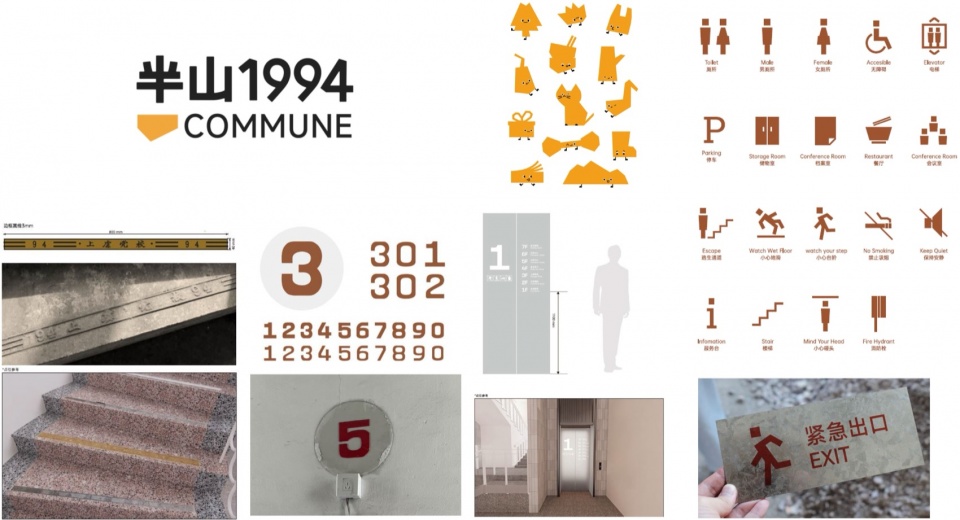
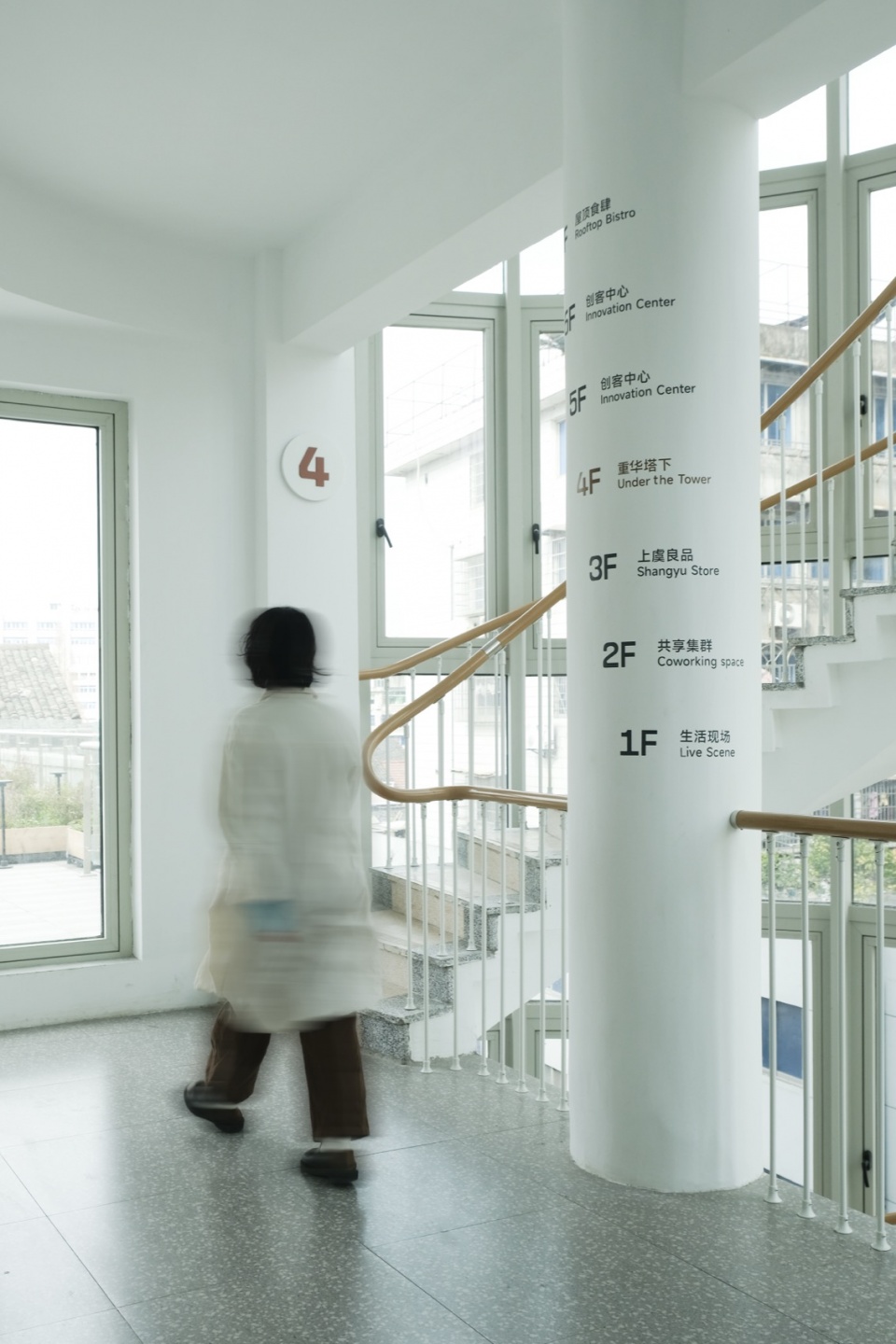
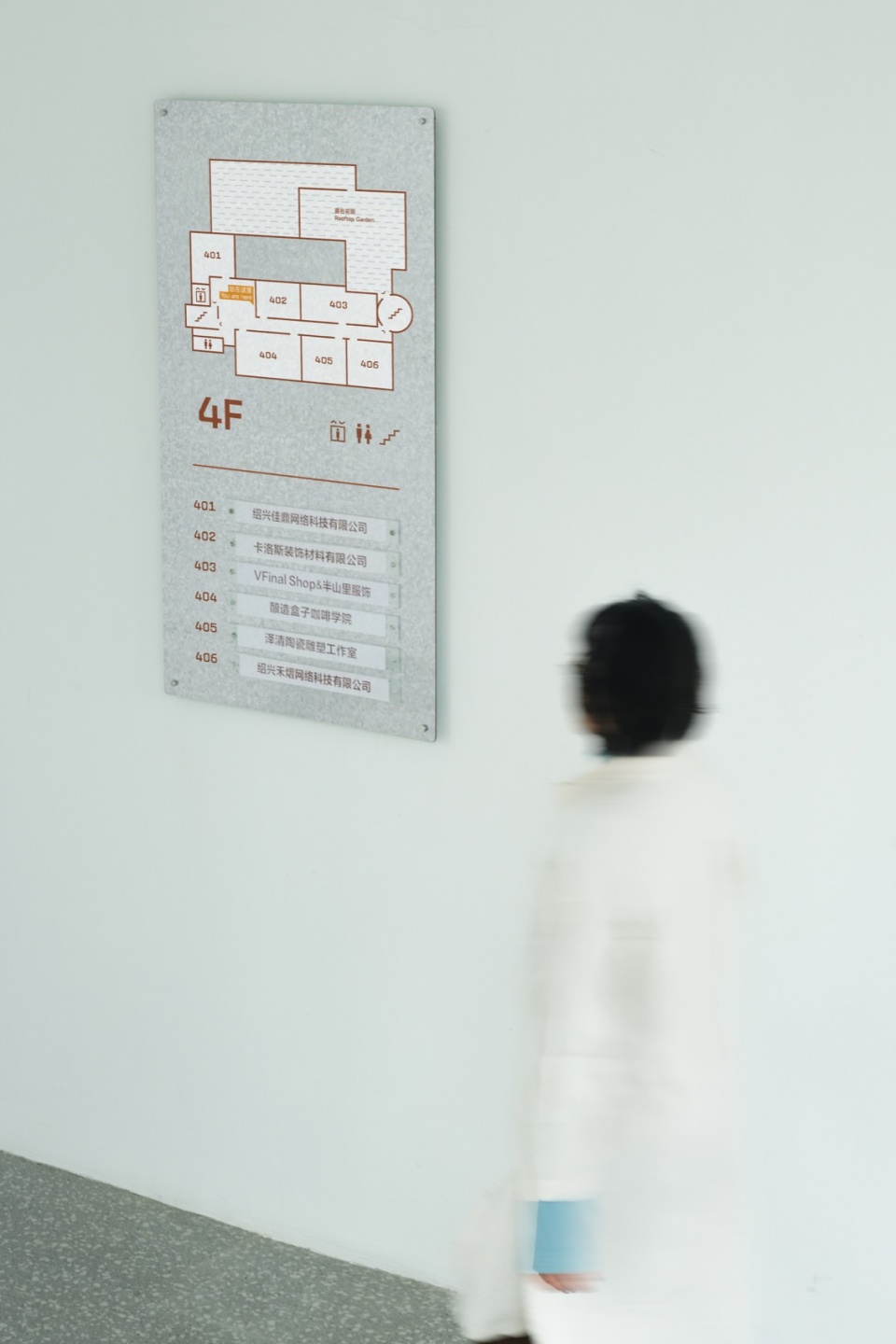
品牌重塑是九樟在建筑改造更新中尤其重视的维度。VI 及导视系统虽微小,却是最直观、理解门槛最低的空间要素。本次设计中,我们与揣揣设计合作,提取老党校留存的视觉形象,延展应用于新 LOGO、字体及色彩系统;导视牌采用花纹镀锌板、黄铜等具小城气质与年代感的材料,与空间氛围相衬;旋转楼梯防滑条处复刻 “94 上虞党校” 字样,而非统一使用 “半山 1994”,让空间承载建筑的前世今生。我们依托丰富的空间基底,巧妙布局 LOGO、图标、标牌及展陈内容。这些标牌如同空间的时光切片,营造出新中有旧、旧中有新的独特气质。
Brand renaming and repositioning is a dimension that Office Canopy of Architecture highly values in architectural renovation. Although VI and signage systems are small, they are the most intuitive and accessible spatial elements. In this project, cooperating with Chuan Chuan Design, we extracted the historical visual images of the old Party School to develop the new LOGO, typography, and color system. The signage adopts patterned galvanized sheets, brass, and other nostalgic materials reflecting small-town characteristics, perfectly matching the spatial atmosphere. The words “94 Shangyu Party School” were engraved on the anti-slip strips of the spiral staircase instead of a uniform “Banshan 1994,” allowing the space to carry the building’s past and present. Relying on the rich spatial foundation, we subtly arranged the LOGO, icons, signs, and exhibition contents. Like slices of time, these signs create a unique atmosphere where the new and old intertwine.
▼半山1994VI系统设计及导视设计,Banshan1994 VI System Design and Wayfinding Design
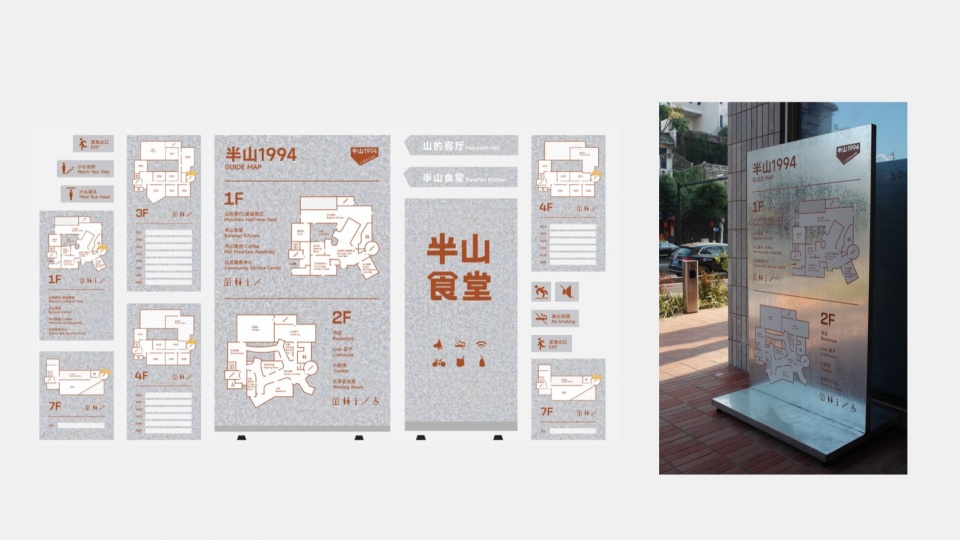
▼半山1994的导视牌效果,The signage effect of Banshan1994
运营成果 首个策划设计招商运营,一体化的落地项目 Operation: An Integrated Lifecycle
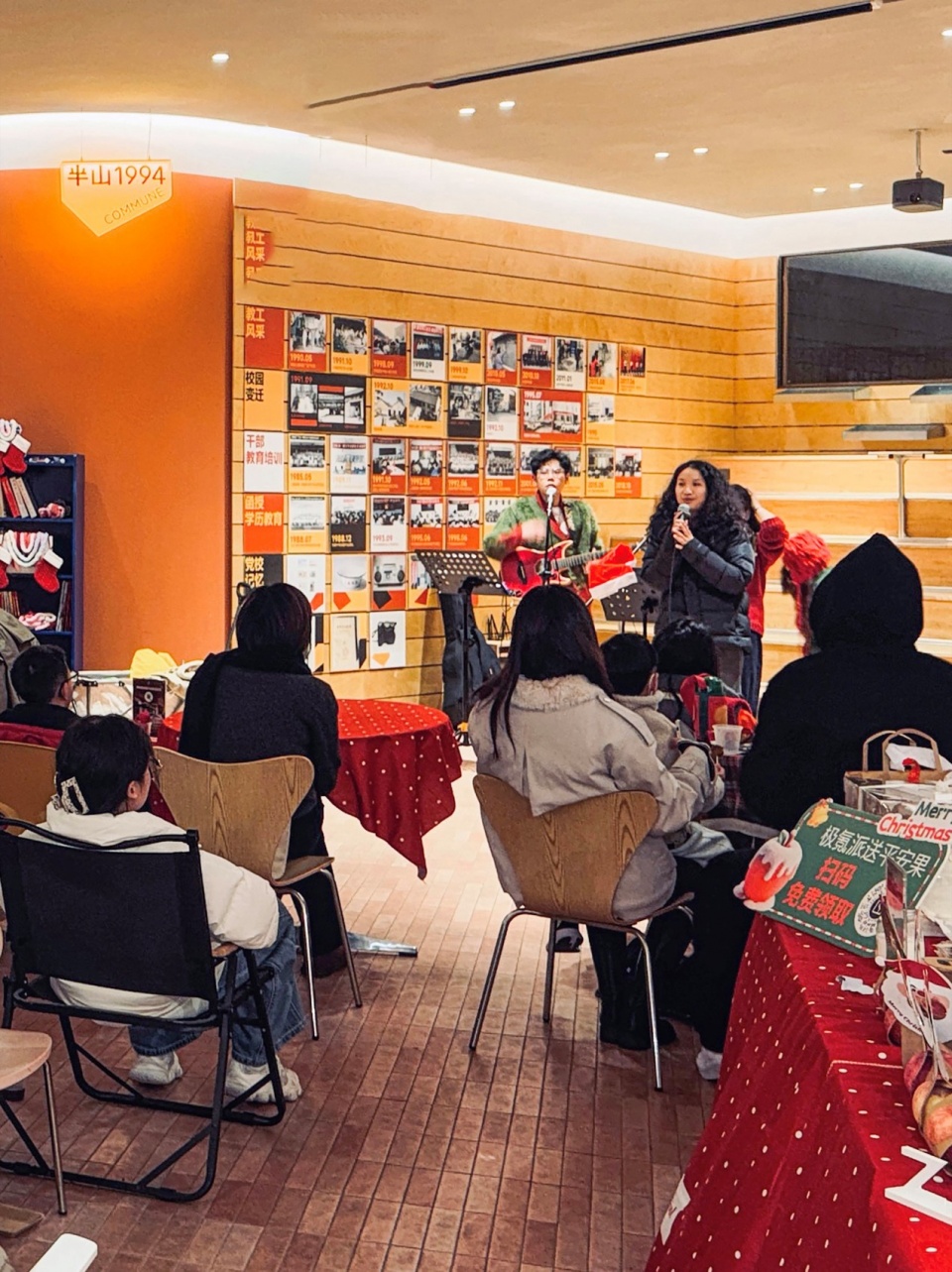
半山1994是一座党群服务中心,但我们与业主都认为,有必要突破固有形象——打造一处没有宏大叙事、没有说教的,回归百姓日常使用的社区空间。半山1994是九樟首个从策划、空间、视觉、招商、运营全链打通的城市更新综合营造项目。通过”楼下租时间(公区、剧场)+楼上租空间(办公)”的模式组合,实现收益基本面,保证项目长期活跃。竣工即七成入驻率,开业两月满租,一年内无退租。29户青年创客入驻,平均年龄28岁,全部为上虞本地商户,其中不乏从上海、杭州返虞的年轻人。开业至今已举办 60 余场活动,联动商户形成线上线下社群。当场域氛围年轻化,高高在上的说教被隐去,年轻的上虞人会用脚投票来到这里。
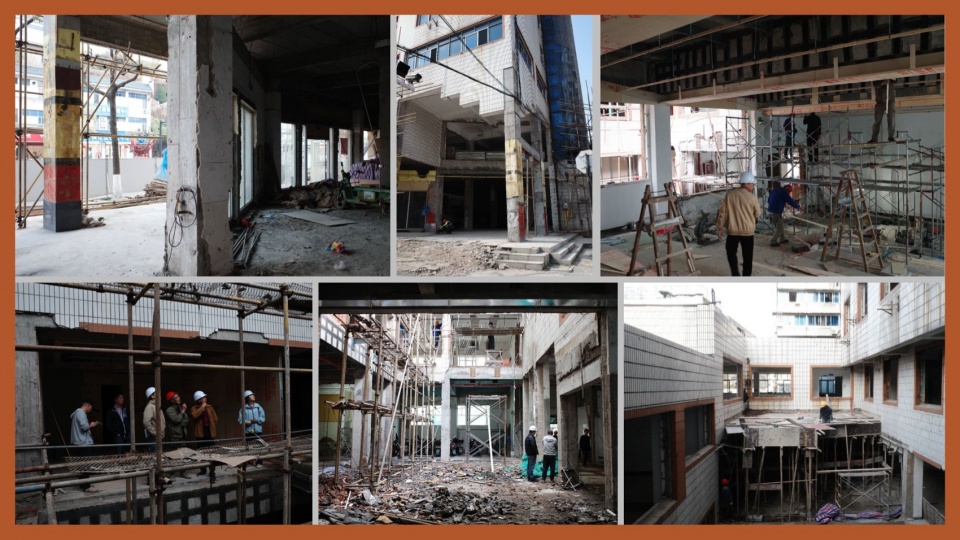
▼施工过程,construction process
Banshan1994 represents an integrated approach encompassing planning, design, branding, leasing, and operations. Rejecting “grand narratives,” we aimed to create a space for daily use. By combining a model of “renting time downstair” and “renting space upstair”, we ensured long-term vitality. The project achieved 70% occupancy upon completion and was fully leased within two months. It now houses 29 youth-led businesses, with an average age of 28, successfully attracting local talent back from cities.
▼运营活动,operational activities
▼鸟瞰上虞老百官全貌,A bird’s-eye view of the entire Old Officials’ Quarter in Shangyu
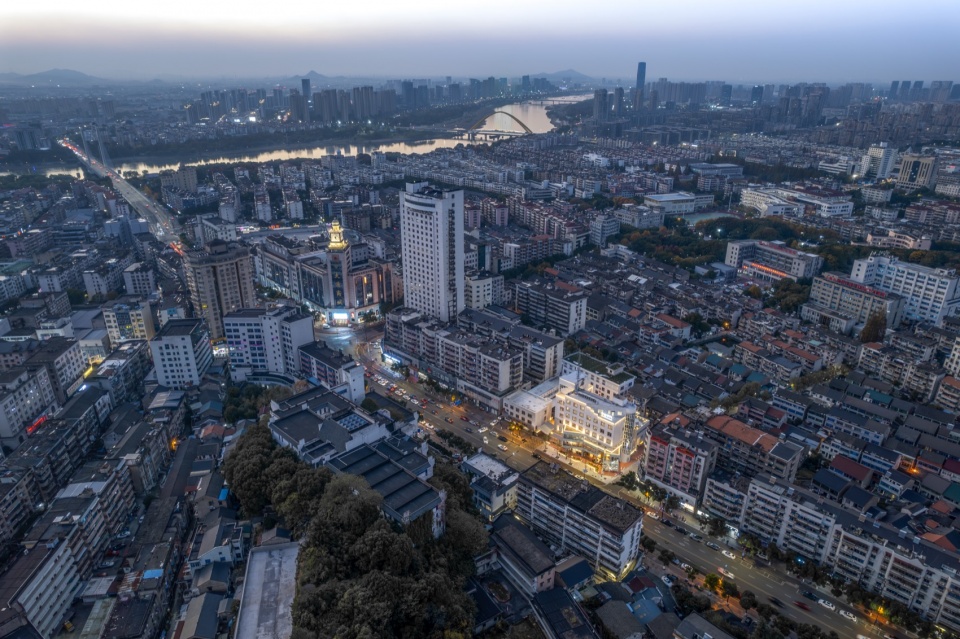
▼夜景,night view
结语 Conclusion
不只是物理改造,更是情感与记忆的重新激活。自2024年11月投入使用至今,半山1994已成为百官本地居民日常生活的一部分,也逐渐成为返虞城市候鸟的温暖归宿。城市更新需要思考的,不仅是对一栋老建筑的物理改造,更是对一个社区、一座城市情感和记忆的重新激活。
Since its opening, Banshan 1994 has become a cornerstone of daily life for residents and a “warm harbor” for returning youth. Urban renewal is more than a physical transformation; it is the reactivation of the emotions and memories of a community.
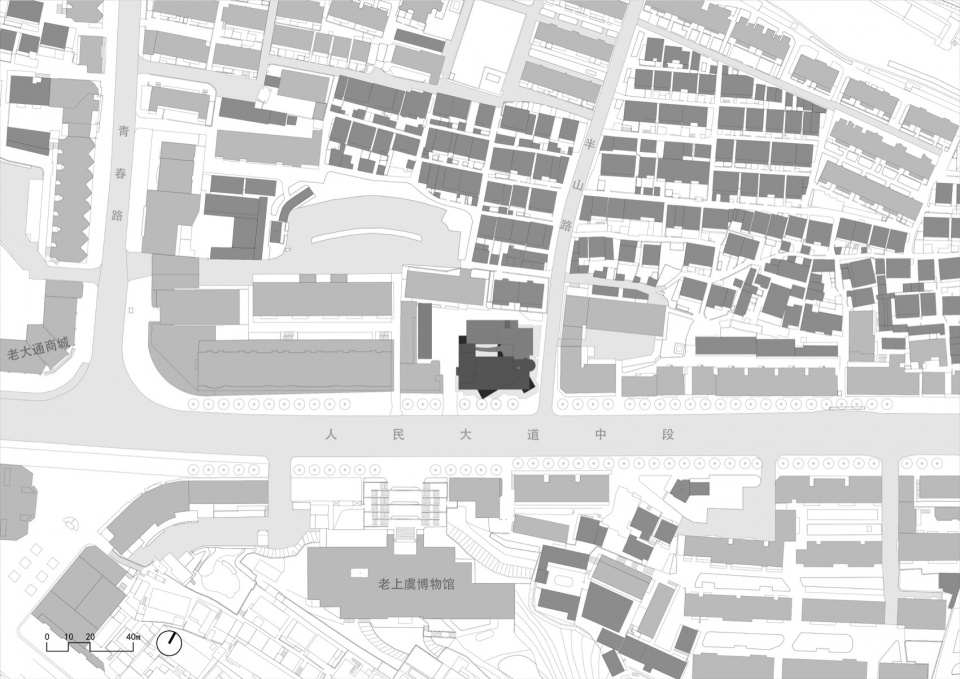
▼总平面,master plan
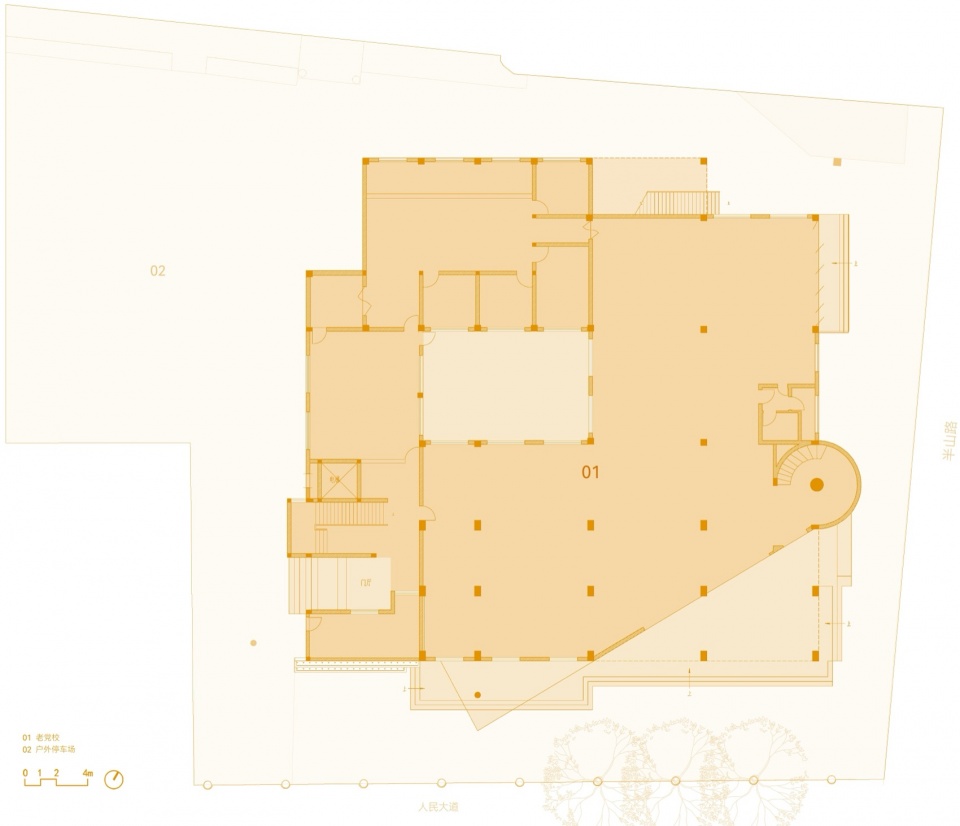
▼改造前一层平面图,Before renovation, the floor plan of the ground floor
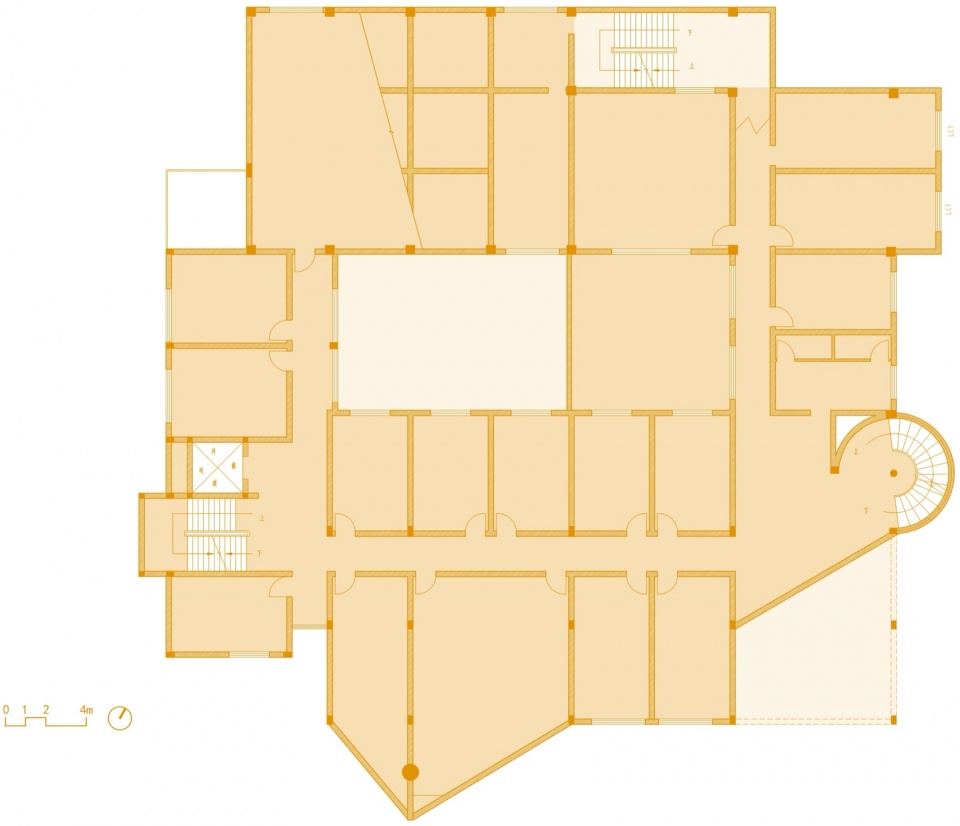
▼改造前二层平面图,Before renovation, the floor plan of the first floor
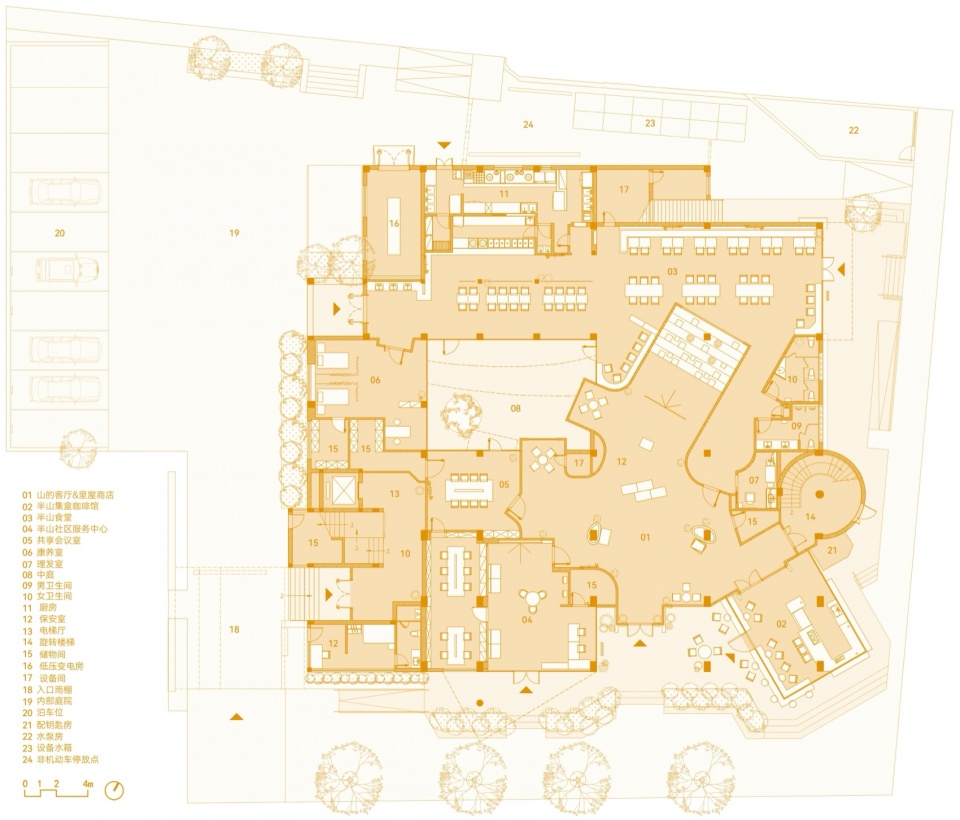
▼改造后一层平面图,After renovation, the floor plan of the ground floor
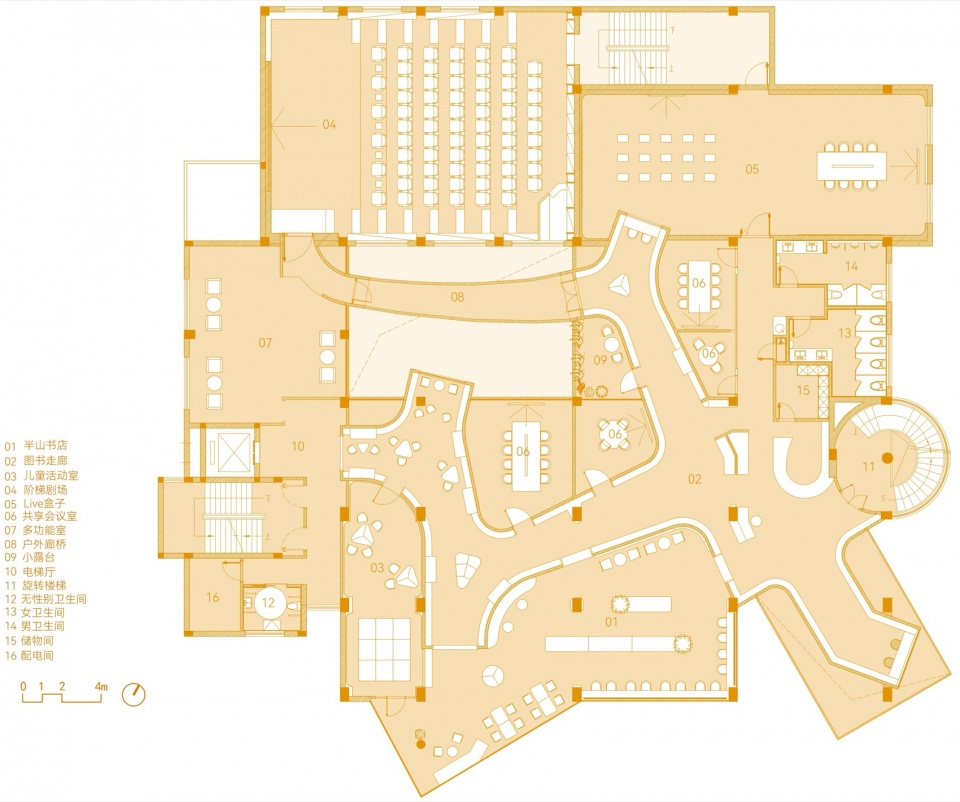
▼改造后二层平面图,After renovation, the floor plan of the first floor
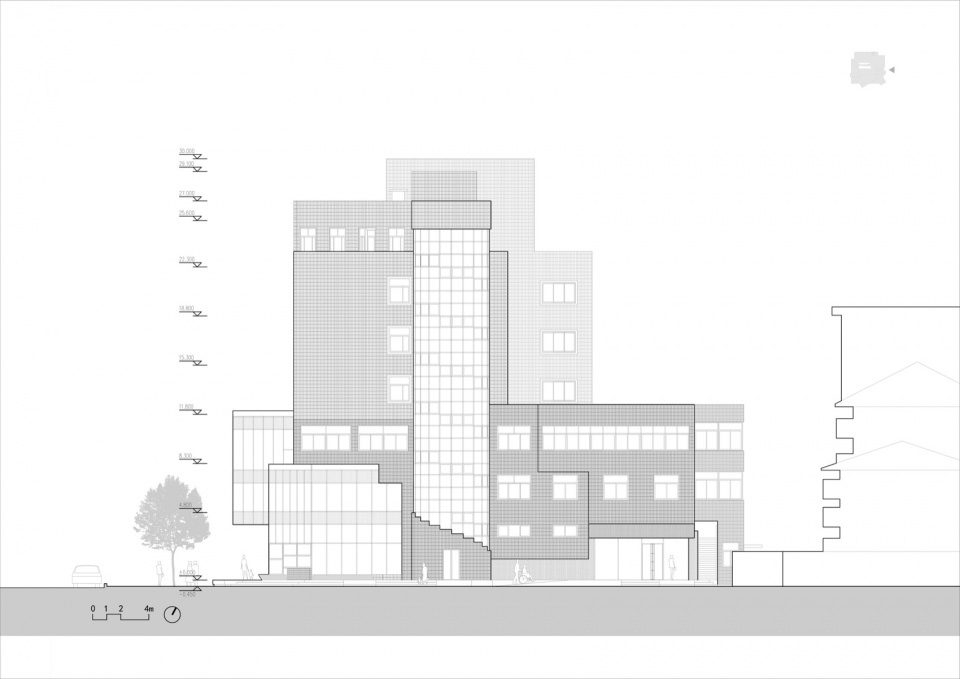
▼东立面图,east elevation
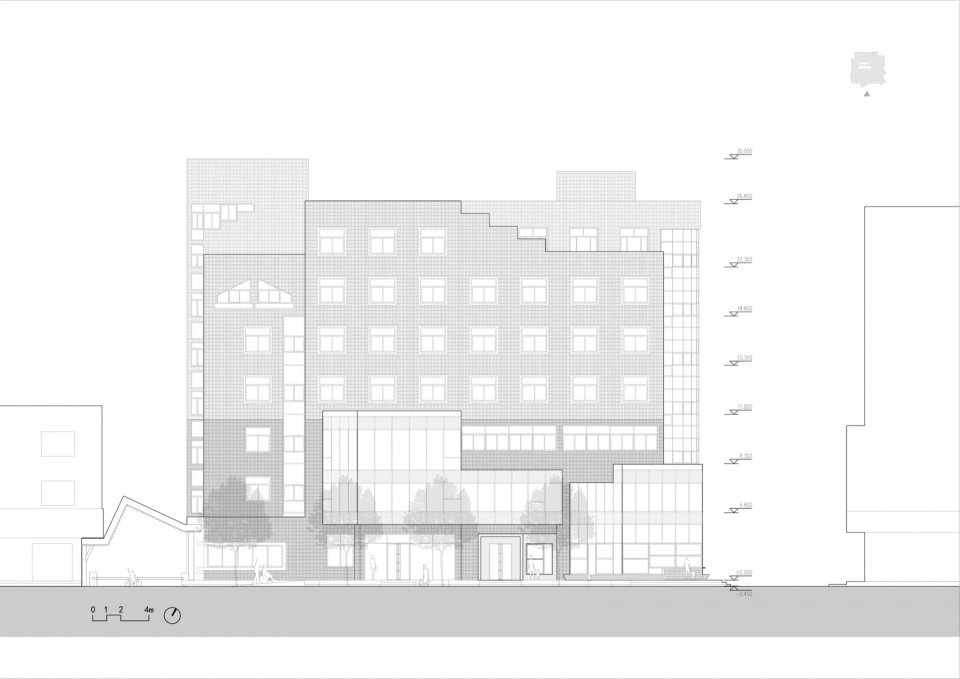
▼南立面图,south elevation
Project name:Banshan1994 Commune
Project type: Architecture Renovation, Landscape, Interior Design,VI
Design: Office Canopy of Architecture
Contact e-mail:jiuzhangsociety@gmail.com
Design year:2023-2024
Completion Year:2025
Leader designer :Xu Tianxin
Design Team: Ma Yuqian, Li Wei, Zhang Zhang, Wu Chunchun, Xu Xinyi, Yang Jiaying, Li Qi, Hu Junmin, Dong Danchi
Project location:Baiguan Subdistrict, Shangyu District, Shaoxing City, Zhejiang Province
Building area: Building renovation 4,416 square meters (including 1,846 square meters of interior high-end decoration and 2,570 square meters of simple renovation); facade renovation 3,620 square meters
Landscape area: 1,570 square meters
Structural Consultant: Junye Structural Consulting, Hu Yi, Yu Feixiang
Mechanical and Electrical Consultant: Zhao Rui Mechanical and Electrical, Wu Zhijie, Guo Lili
Lighting Consultant: Shi Xuefei, Shu Fangjian
VI system and signage design: Conceptual design (Weng Dongdan, Zhu Jiayi)
Urban Studies: Ideal Towns Ju Zefeng, Li Jianbo
Photography Copyright: Zhai Jian Architecture Photography, Zhao Sai; Shanjian Images, Wu Qingshan
Client: Baiguan Sub-district Office of Shangyu District