日内瓦卢梭学院扩建与翻新,日内瓦 / Burckhardt Architektur AG
2025年4月5日,由 Burckhardt 负责扩建与全面翻新的卢梭学院(Collège Rousseau)将在日内瓦举行正式落成启用仪式。
On April 5, 2025, the official inauguration of the Collège Rousseau, which was extended and extensively renovated by Burckhardt, will take place in Geneva.
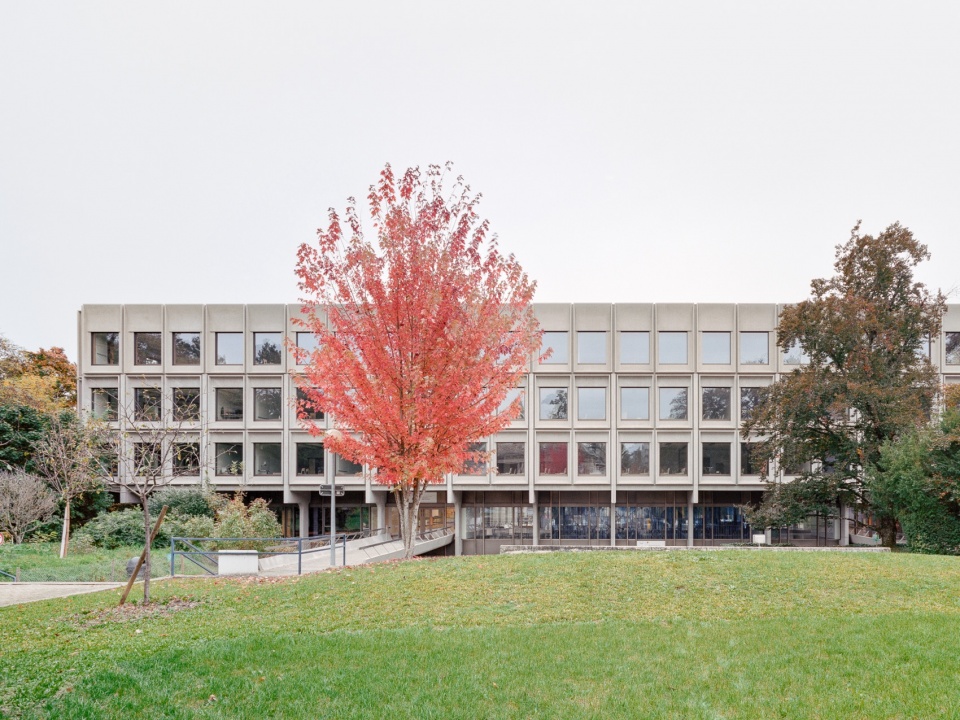
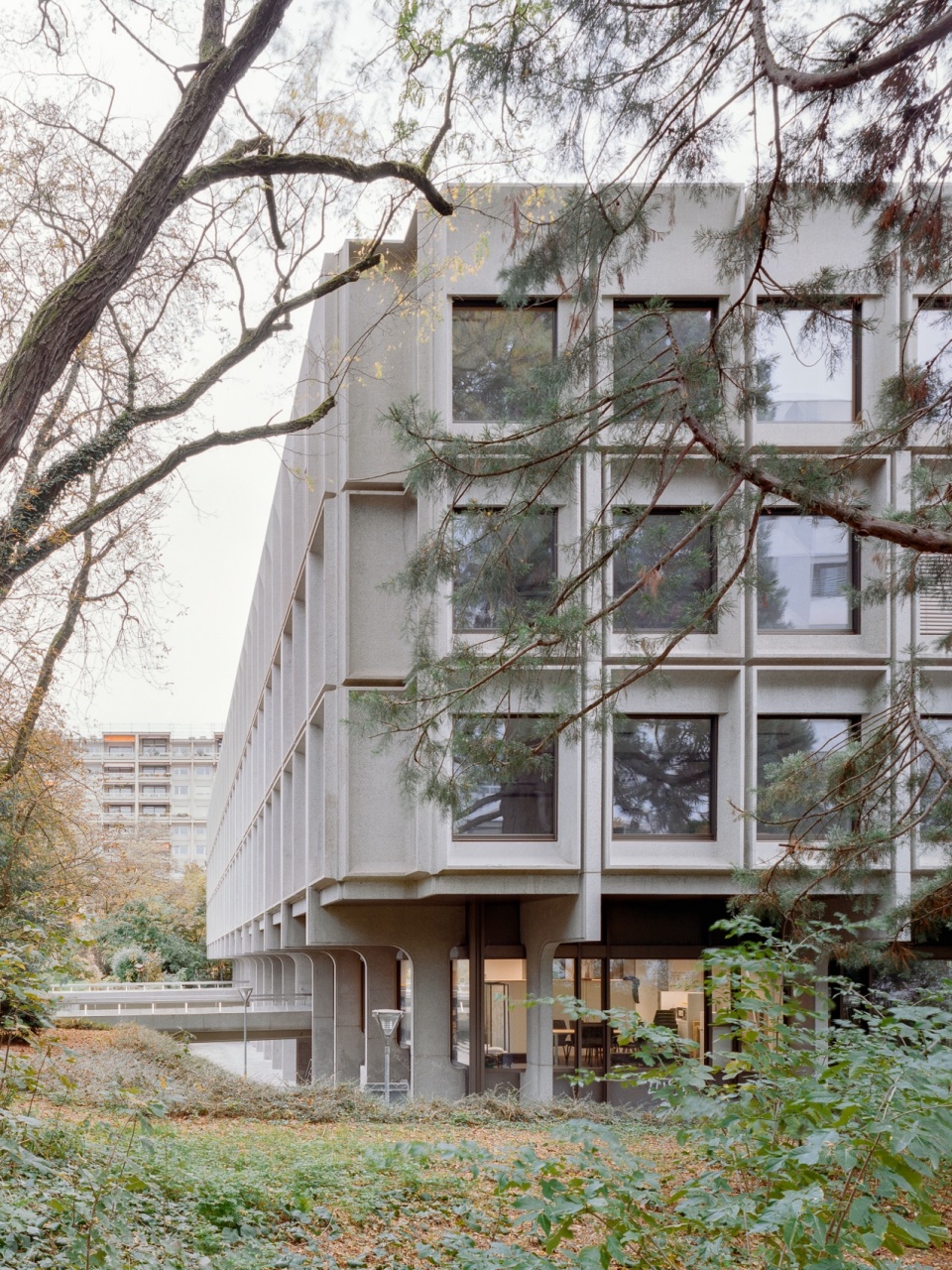
▼树木掩映下的校园建筑,Campus building framed by trees
外部延续,内部木构 Continuity on the Outside, Timber Construction Inside
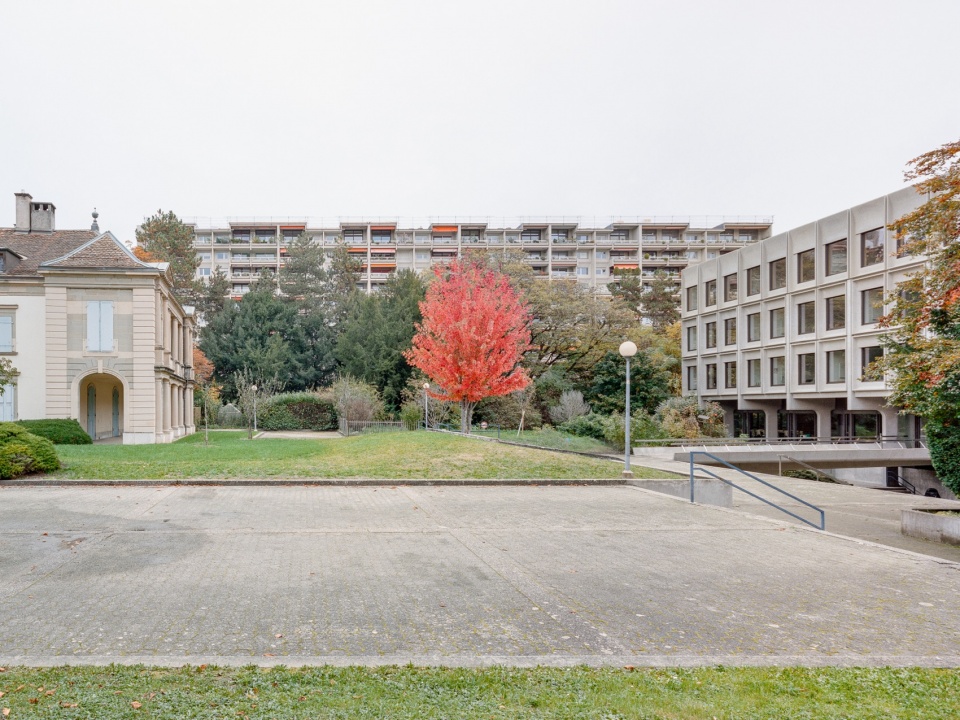
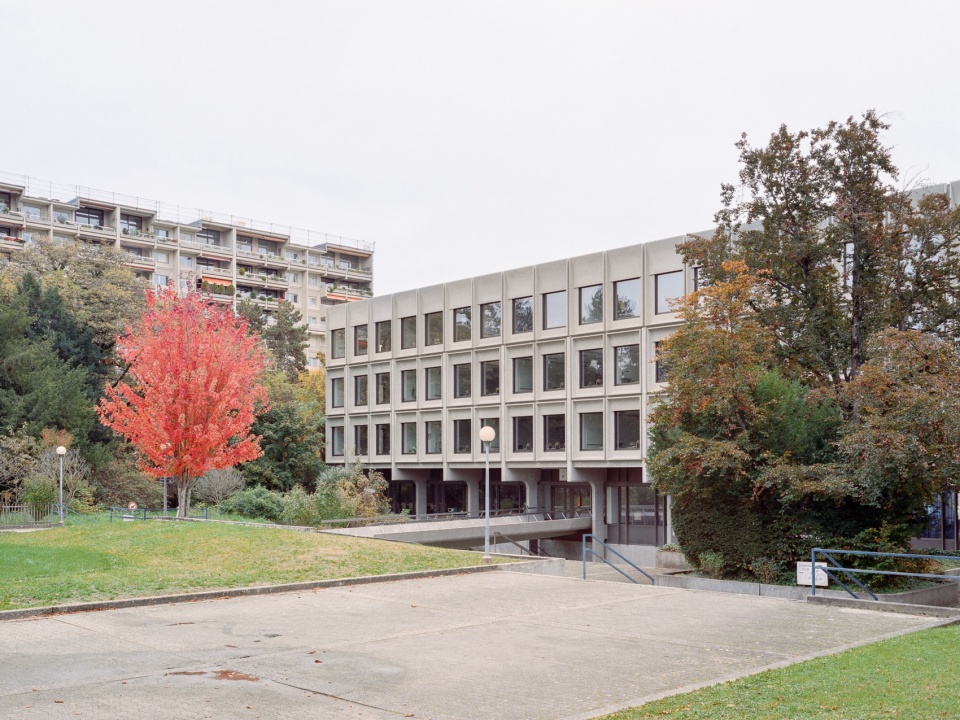
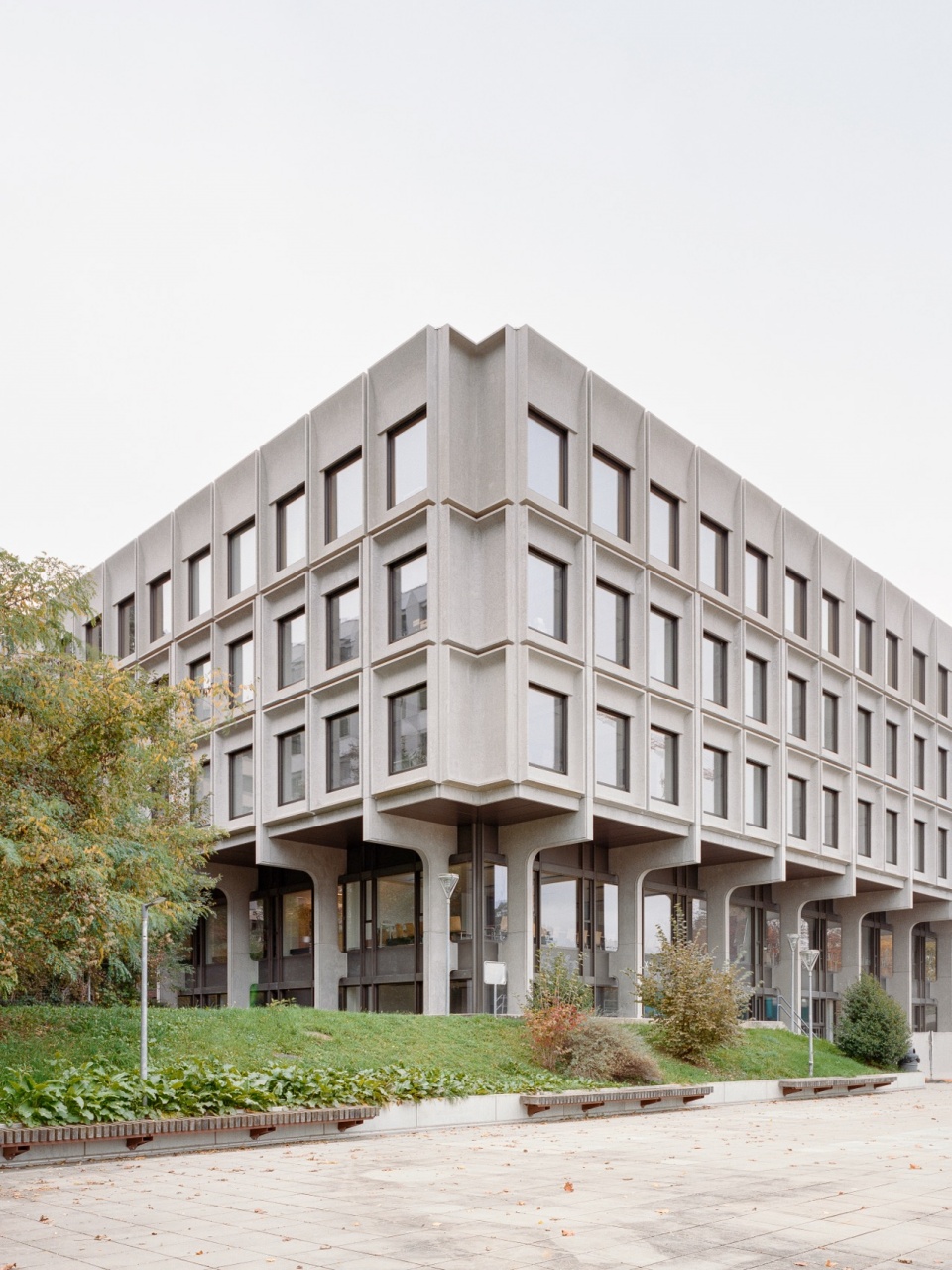
由阿兰·里特(Alain Ritter)于1969年设计建成、受到遗产保护的日内瓦卢梭学院,是粗野主义建筑的重要范例。随着建筑老化,不仅需要进行全面翻新,同时也必须扩建,以应对不断增长的学生人数。Burckhardt 在2018年的建筑设计竞赛中凭借一项既强调延续性又有所突破的方案胜出:从外部看,新增加的一层延续了原有立面鲜明的预制清水混凝土构件肌理,使扩建部分只有在仔细观察后才会被察觉;而在内部,这一介入则呈现为轻盈通透的木结构空间,营造出温暖而舒适的氛围。
The heritage-protected Collège Rousseau in Geneva, built in 1969 by Alain Ritter, is a remarkable example of Brutalism. Not only did the building’s condition require refurbishment, but an extension was also needed to cope with the increased numbers of students. Burckhardt won the architectural design competition in 2018 with a proposal that emphasizes continuity and yet breaks with it: From the outside, the added story extends the existing façade with its striking relief of finished concrete components in such a way that the addition is only recognizable at second glance. Inside, however, the intervention presents itself as a light and airy wooden construction that exudes a cozy atmosphere.
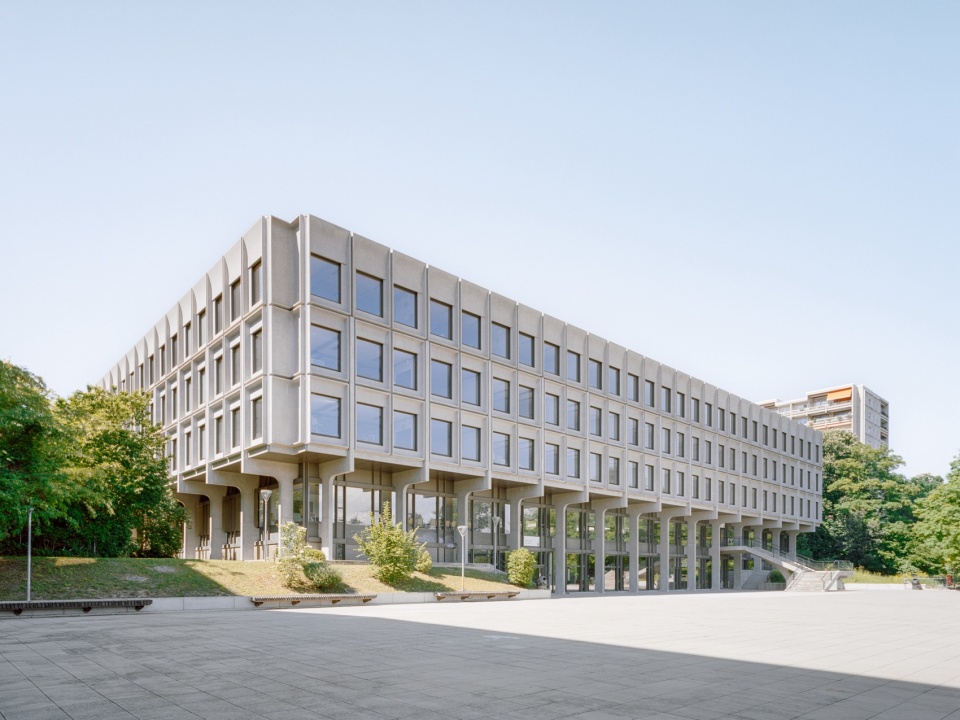
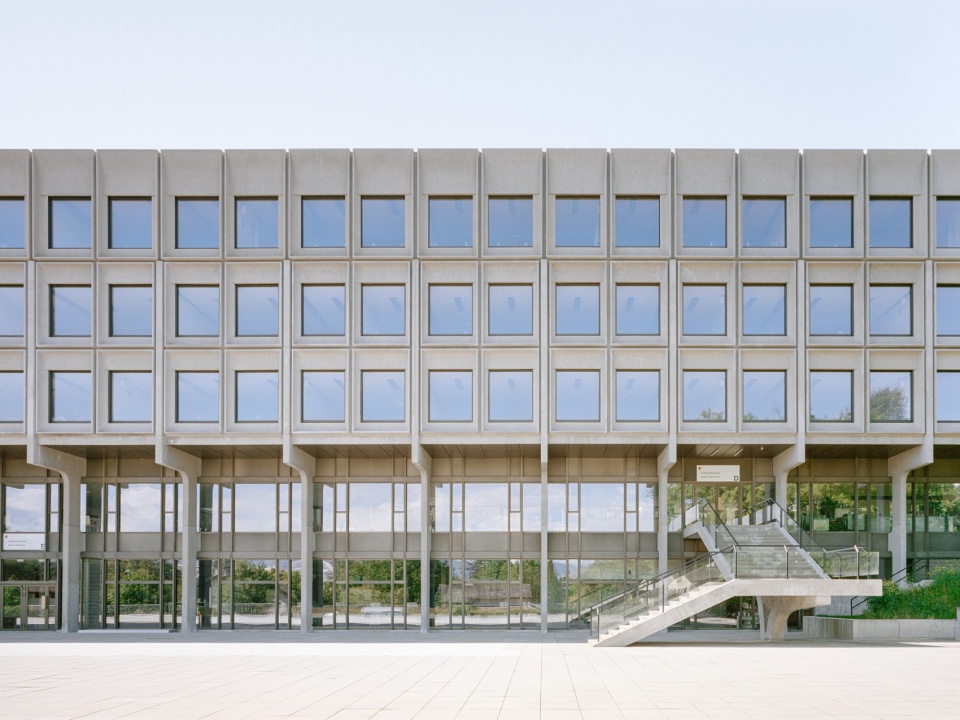
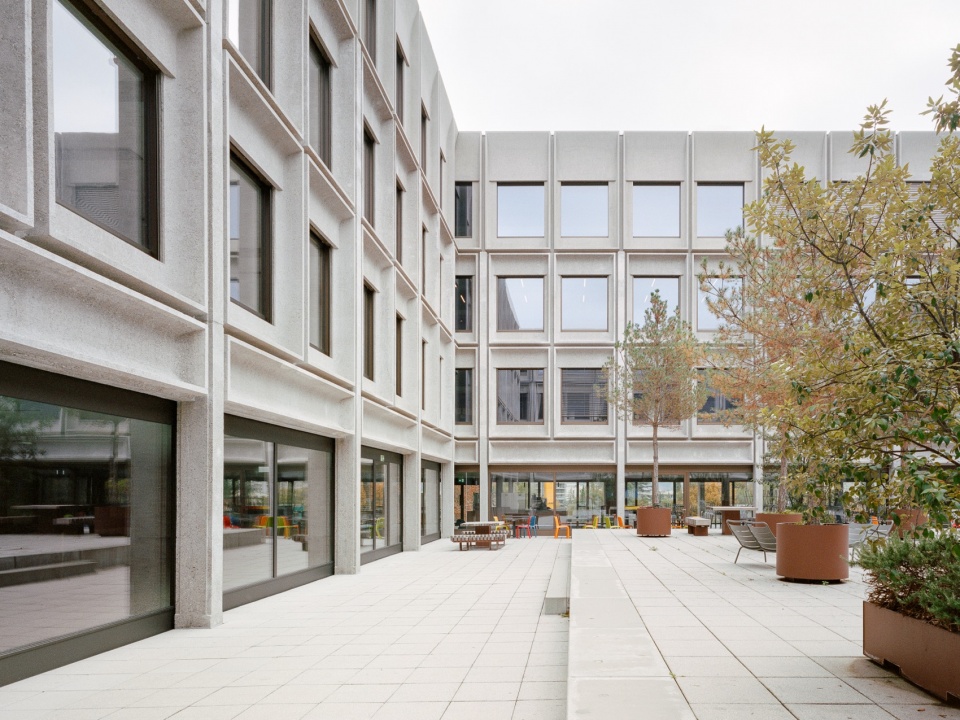
▼校园广场与建筑界面,Building frontage facing the plaza
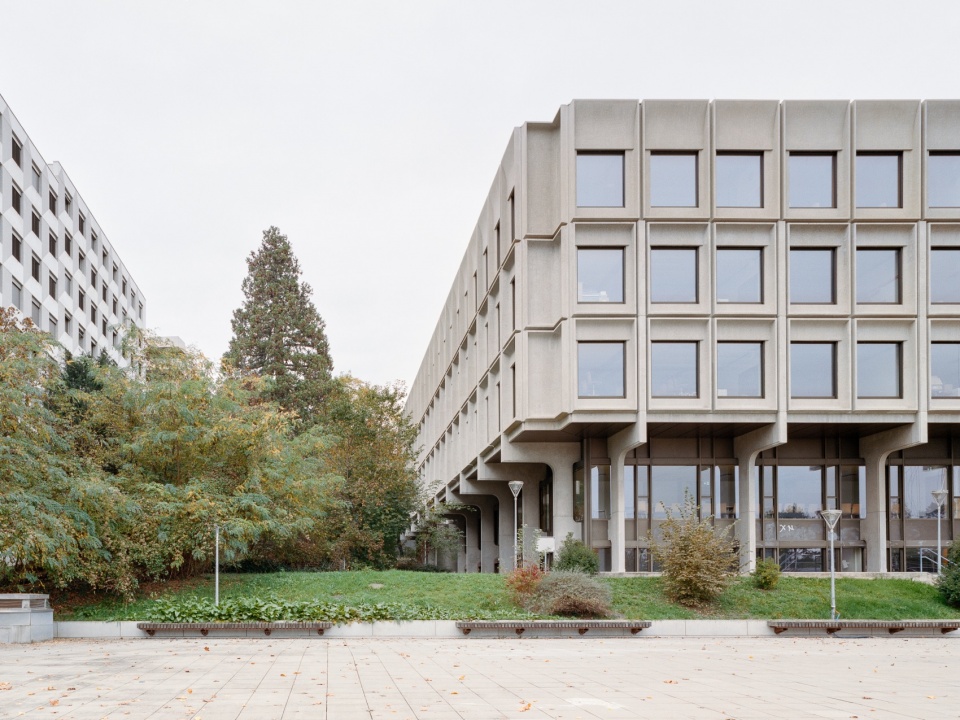
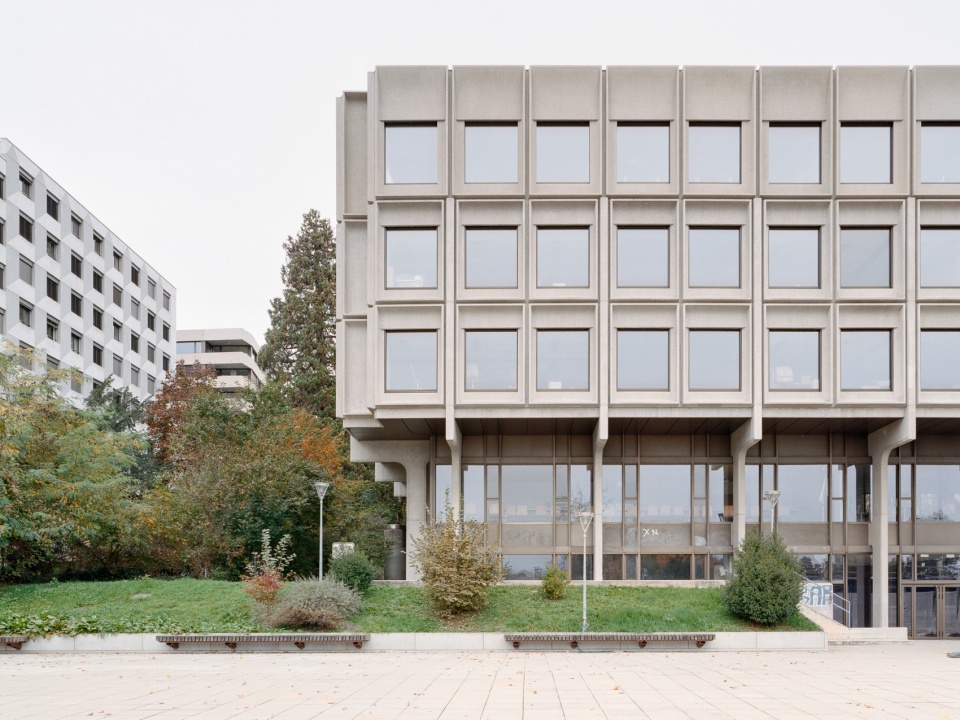
▼建筑与绿地关系,Building in relation to the landscape
解读立面 Reading the Façade
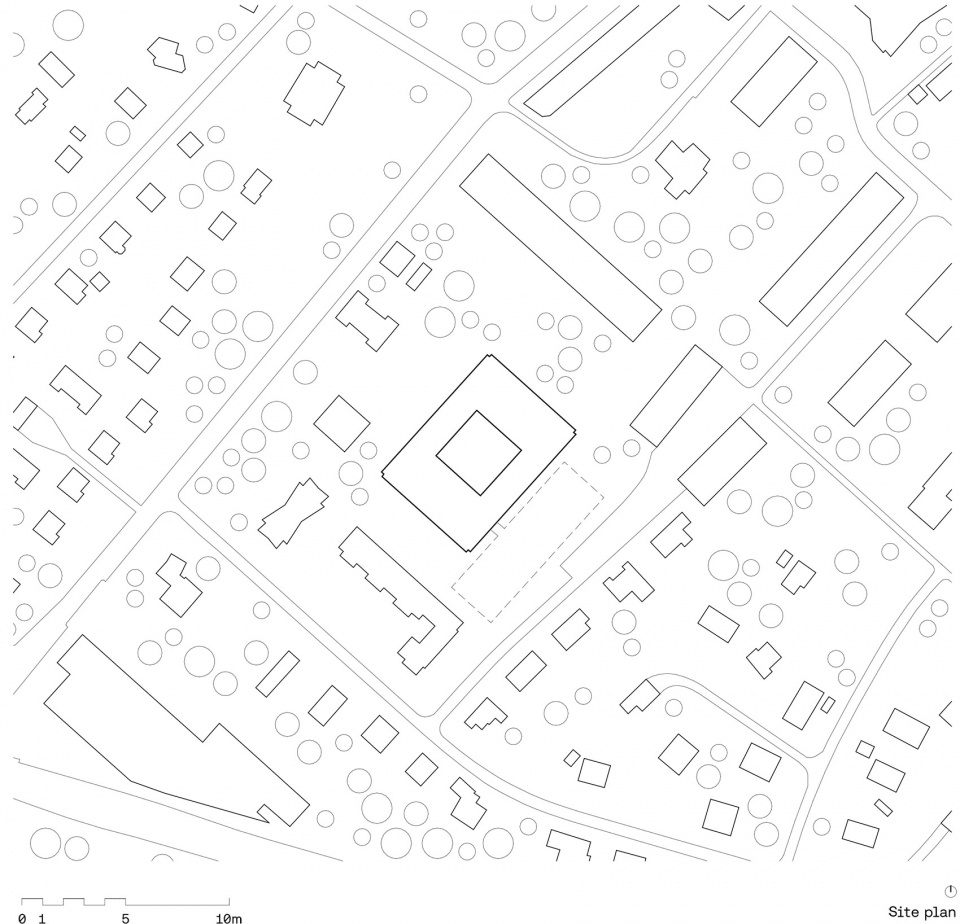
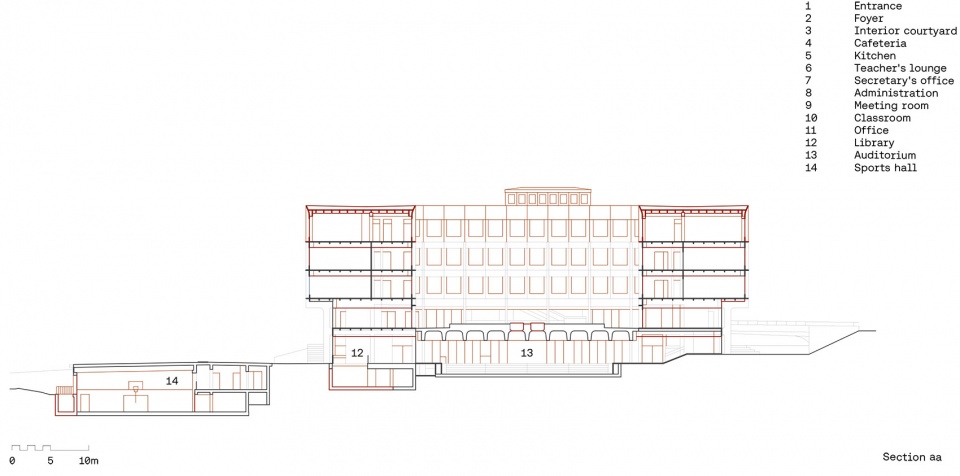
建筑远离道路布置,坐落于一处坡地之上。其南北两侧为简洁的住宅塔楼,东西两侧则分布着由多栋独立公寓楼组成的建筑群。在这样的环境中,学院建筑以沉稳而克制的姿态存在。其最显著的特征是清晰有力的结构秩序,以及围绕中央庭院组织的矩形体量。建筑的功能布局也能够从立面中直接读取:两层通透的底层空间容纳行政办公功能;其上的教学空间则以矿物质般厚重的体量悬挑于基座之上。
Set far back from the road, nestled between sober residential tower blocks to the north and south and a multi-part structure of detached apartment buildings to the east and west, the building asserts a calm presence on the sloping plot. Its most salient characteristics are its stark structure and rectangular shape with a central courtyard. The building’s organization can be made out on the façade: The administrative offices are housed in the two glazed basement stories. On the floors above, the classrooms project out over the base building as a mineral block.
▼扩建后的建筑转角,Corner of the extended building
▼庭院中的休憩与交流区域,Courtyard for gathering and relaxation
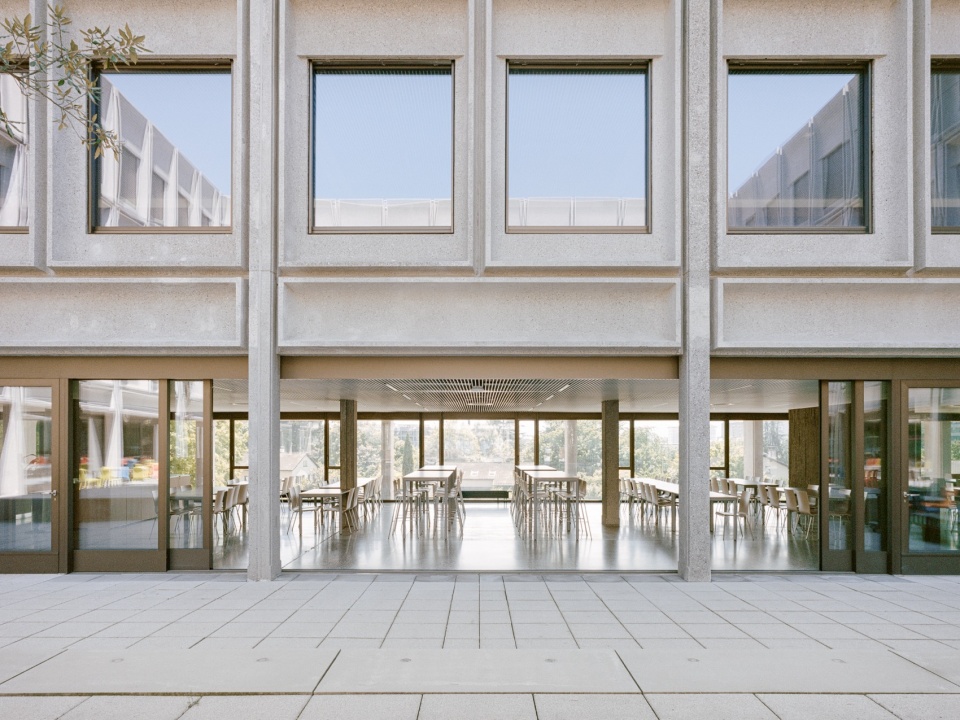
▼通透的一层公共界面,Transparent ground-floor frontage
明亮而通透的空间 Light and Airy Rooms
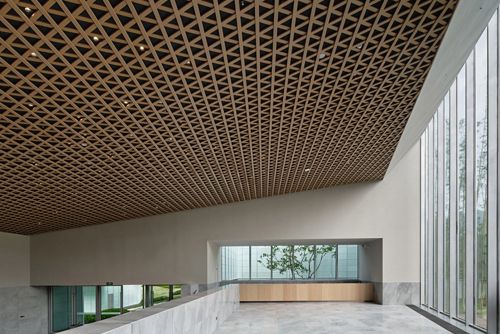
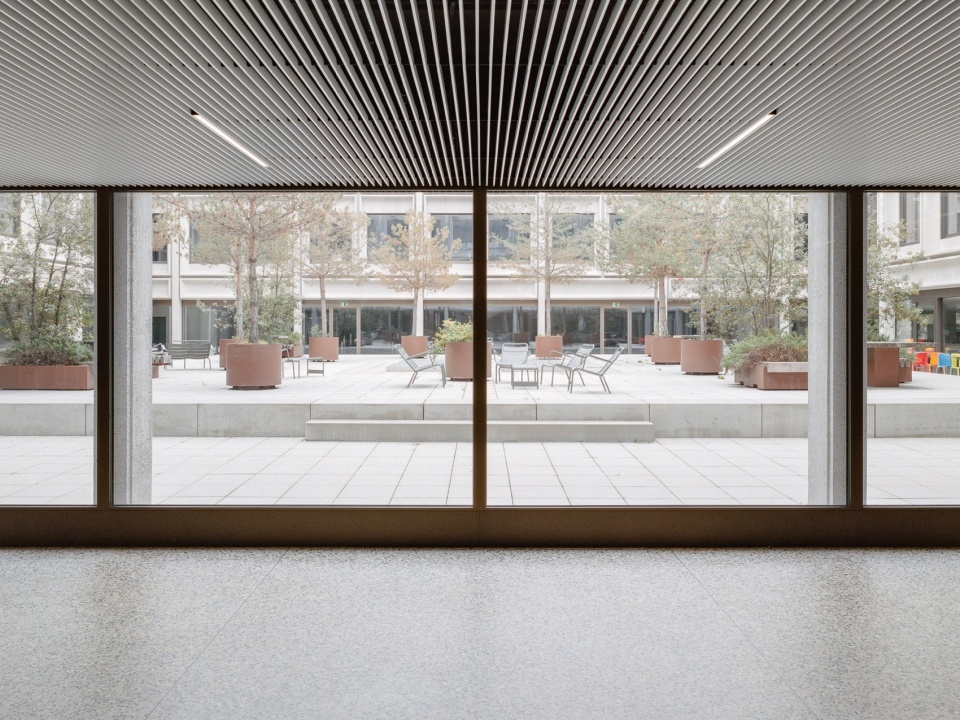
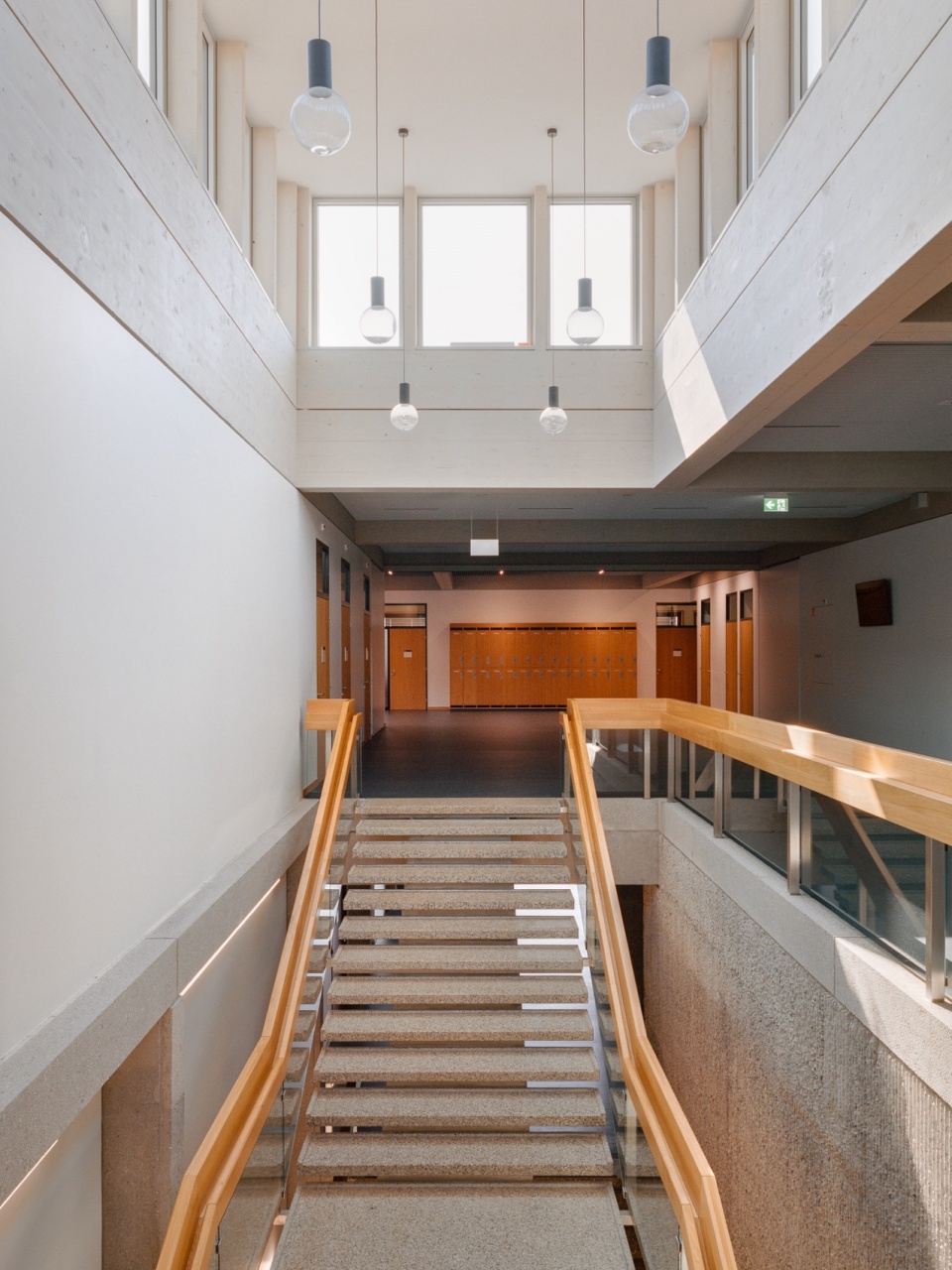
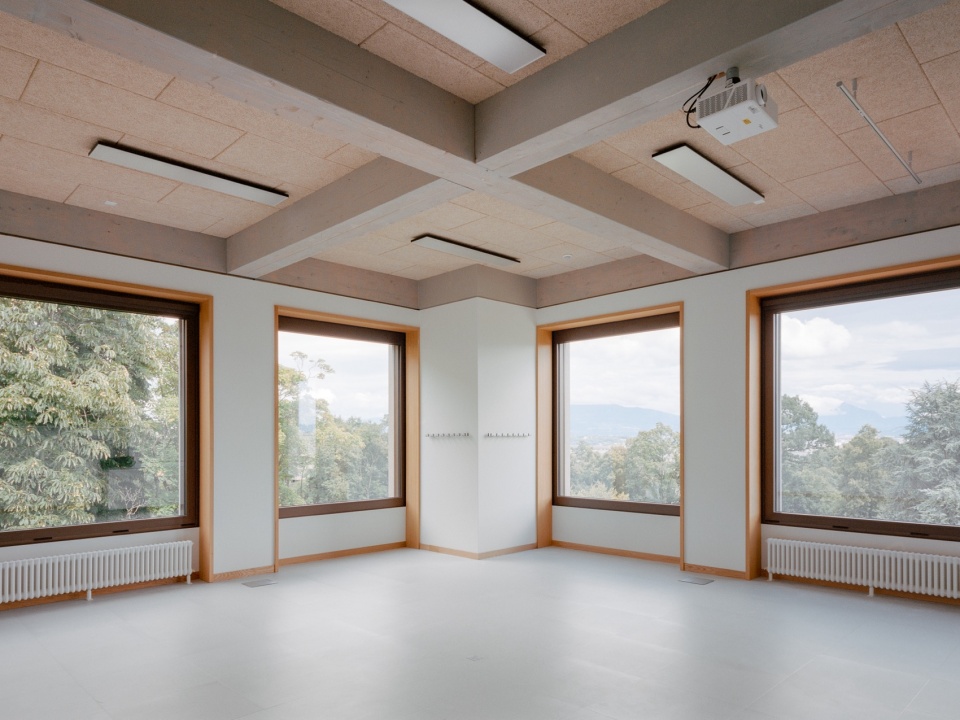
新增楼层延续了原有的平面布局,但空间体验却截然不同。更高的层高赋予空间更为开阔的感受,裸露的木结构则成为设计的重要特征。两处宽大的天窗将自然光引入主要楼梯间,使其沐浴在充足的日光之中。平面组织和各功能空间均围绕这些自然采光核心展开。与此同时,新建的首层食堂重新诠释并实现了建筑师阿兰·里特在原始设计中所设想的开放性。这里不仅是学生课间停留和交流的场所,也成为促进社交互动与非正式学习的重要空间。
The new story’s floor plan is the same, but the feeling of space is entirely different: The ceiling height is more generous and the timber structure is deliberately exposed. Two generous skylights bathe the large staircases in daylight. Floor plans and rooms are orientated around these natural light sources. The new ground-level cafeteria manages to capture the openness that architect Alain Ritter had envisaged in his original design. It is a place of socializing and informal learning, not just during breaks.
▼大面积玻璃引入自然景观,Glazing framing the courtyard landscape
▼连接各层的开放楼梯,Open staircase connecting the floors
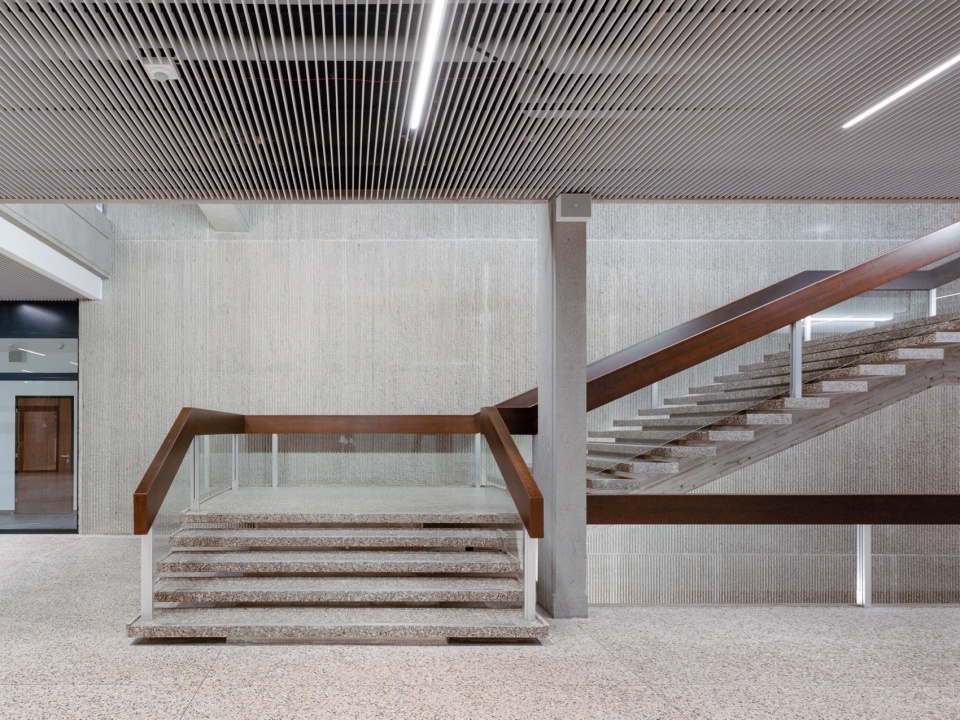
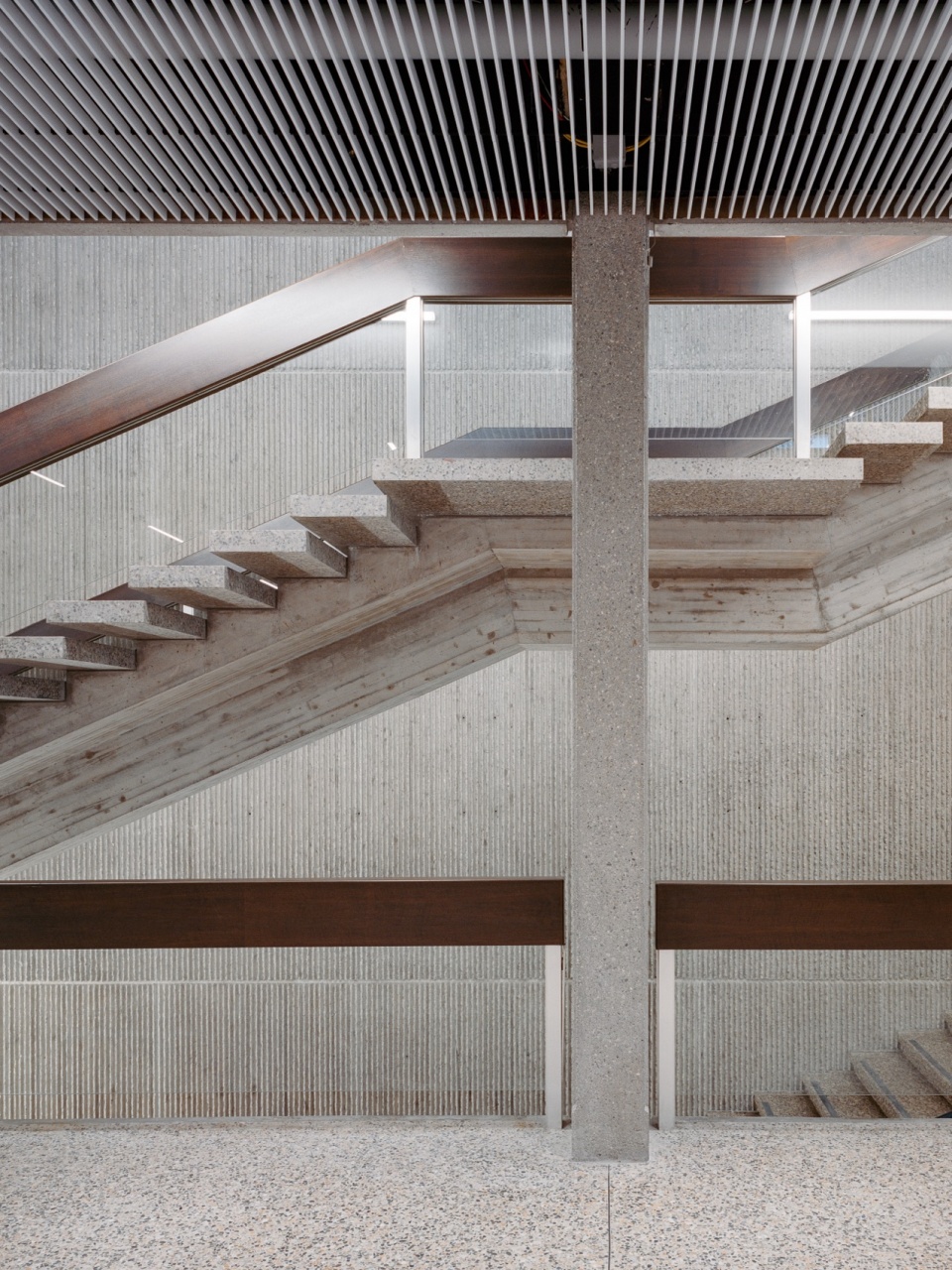
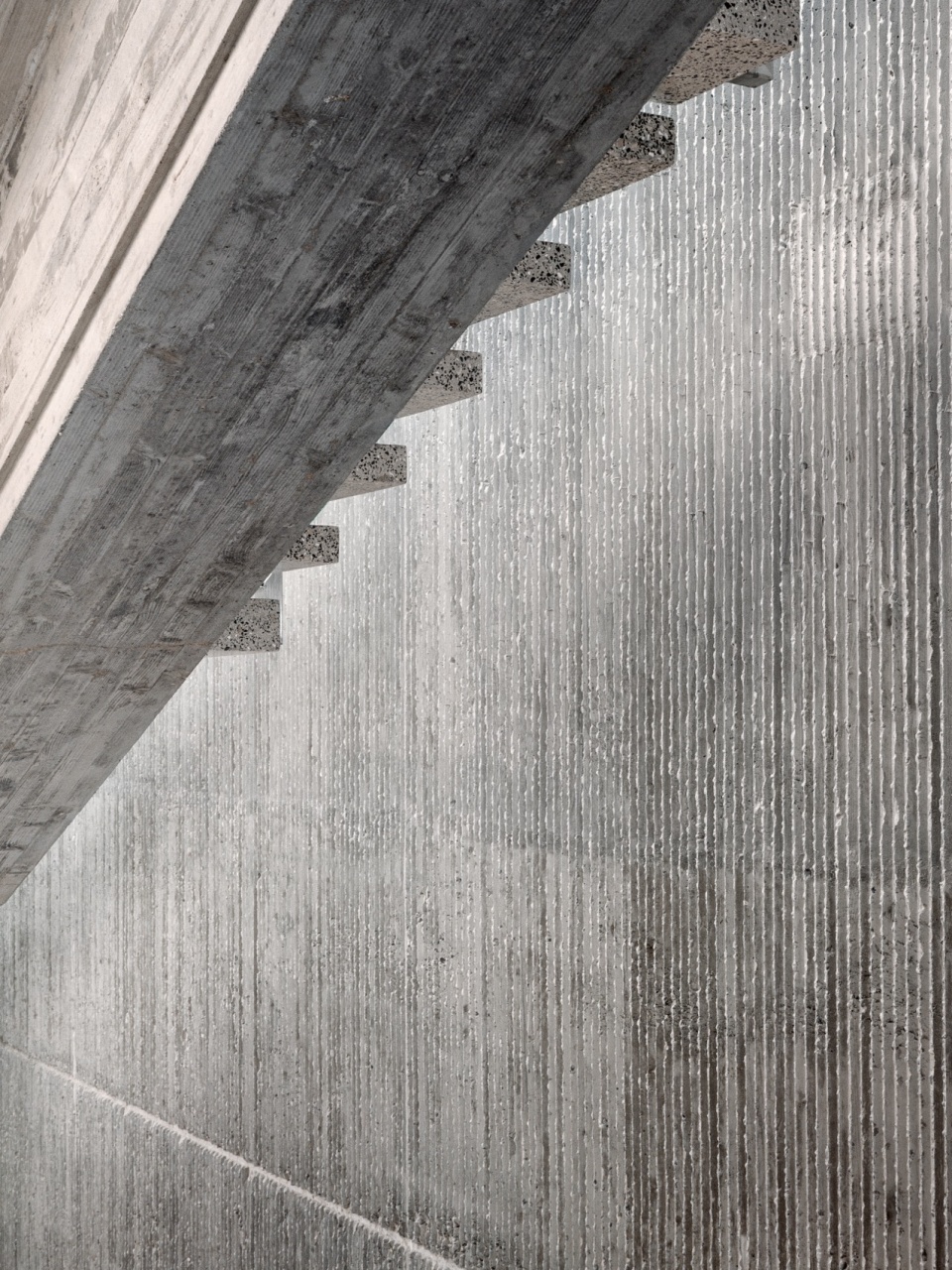
▼自然采光下的交通空间,Circulation space illuminated by daylight
尊重场地的策略 Respectful Approach
向上扩建不仅是一项设计决策,同时也是一种可持续发展的选择,因为它避免了进一步占用和硬化地面。通过增加建筑高度而非扩展占地面积,不仅控制了基础设施的延伸范围,也使技术系统的组织更加高效合理。更短的输送路径有效减少了荷载与热量损失。
The extension upwards was not only a design-related decision, but also one of sustainability, in that it avoided more of the ground being sealed. Making the building taller instead of wider also limits the infrastructure’s extent and rationalizes the technical systems. Shorter distribution paths prevent load and heat losses.
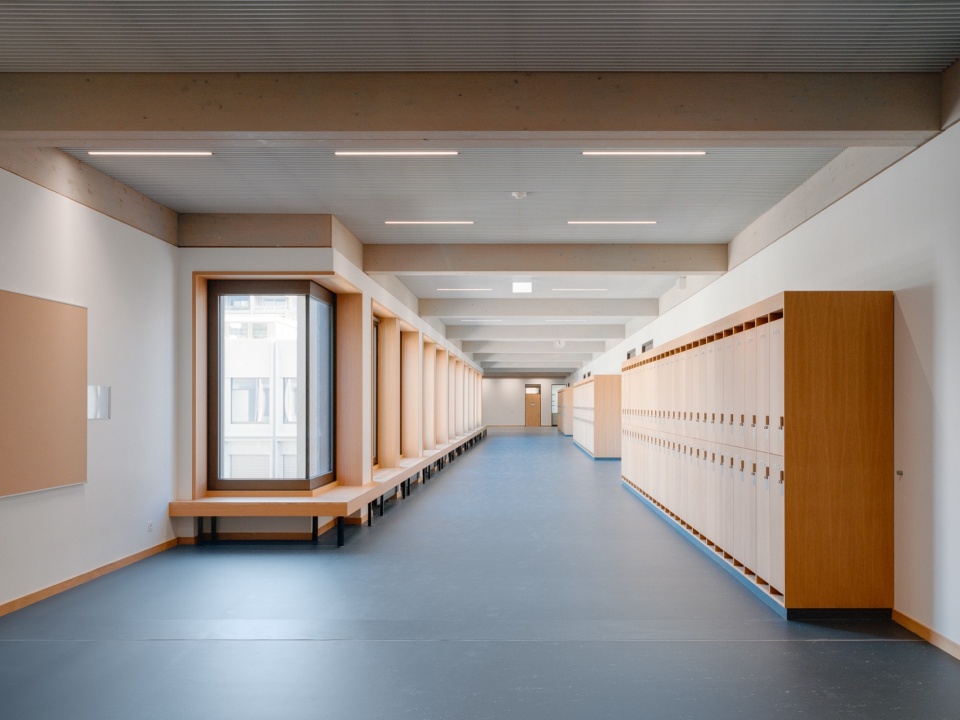
▼连续储物柜与休憩座椅,Lockers and integrated seating
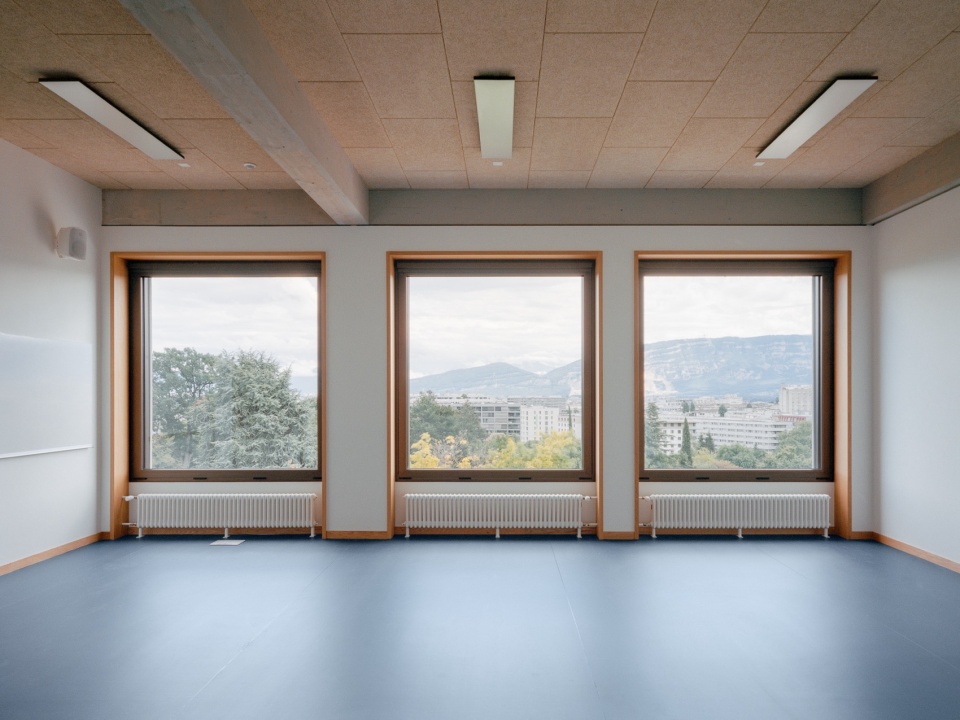
▼面向城市景观的教室,Classroom overlooking the cityscape
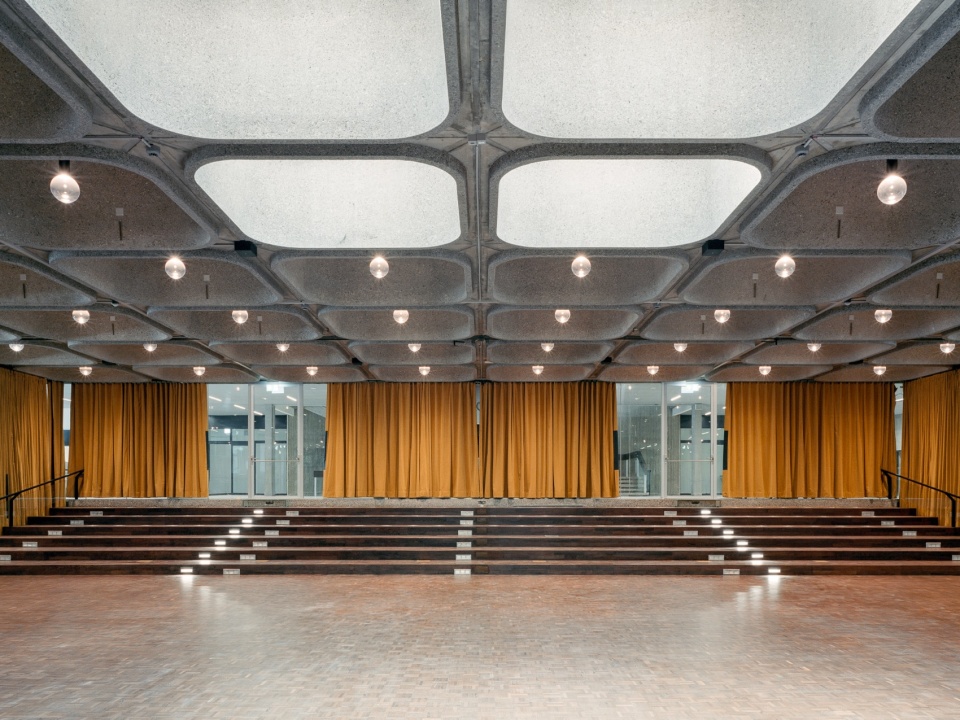
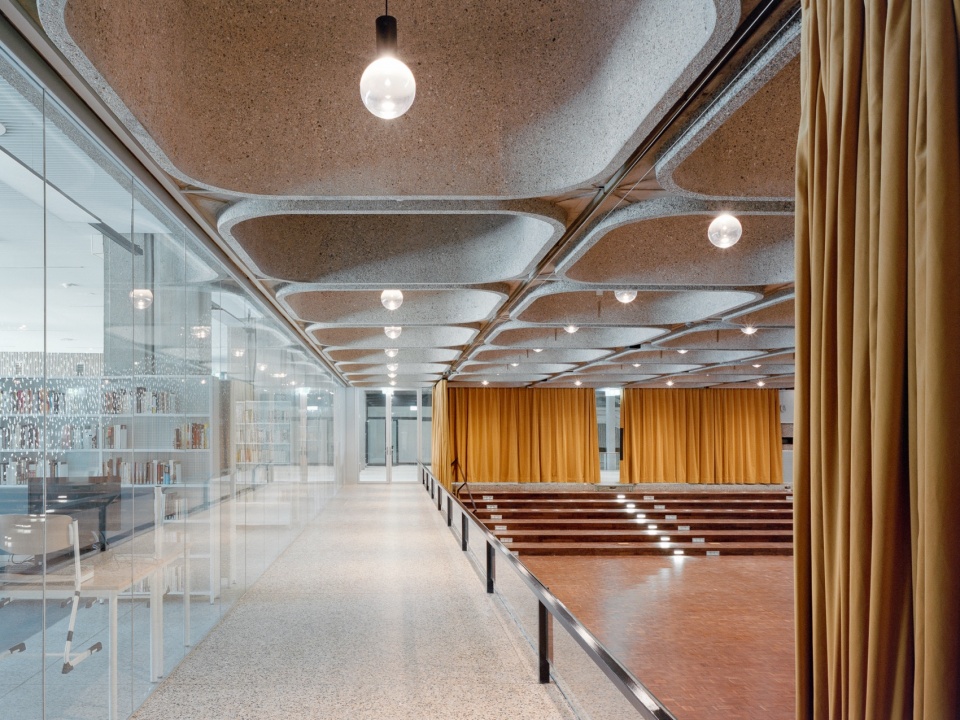
▼保留原有结构特征的礼堂,Auditorium retaining the original structure
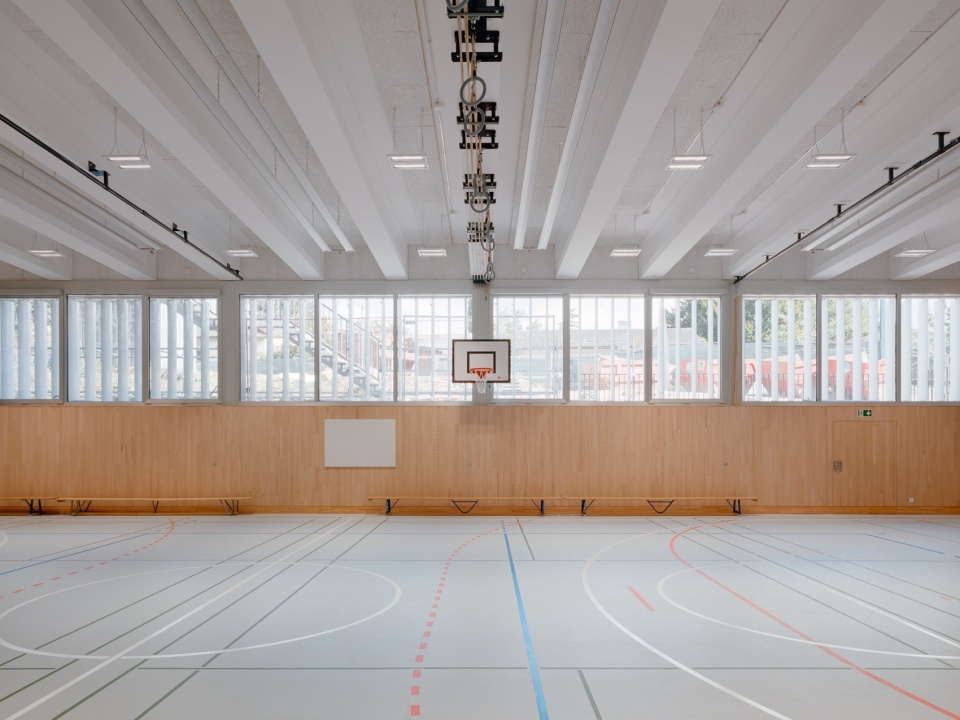
▼学校体育馆空间,School gymnasium interior
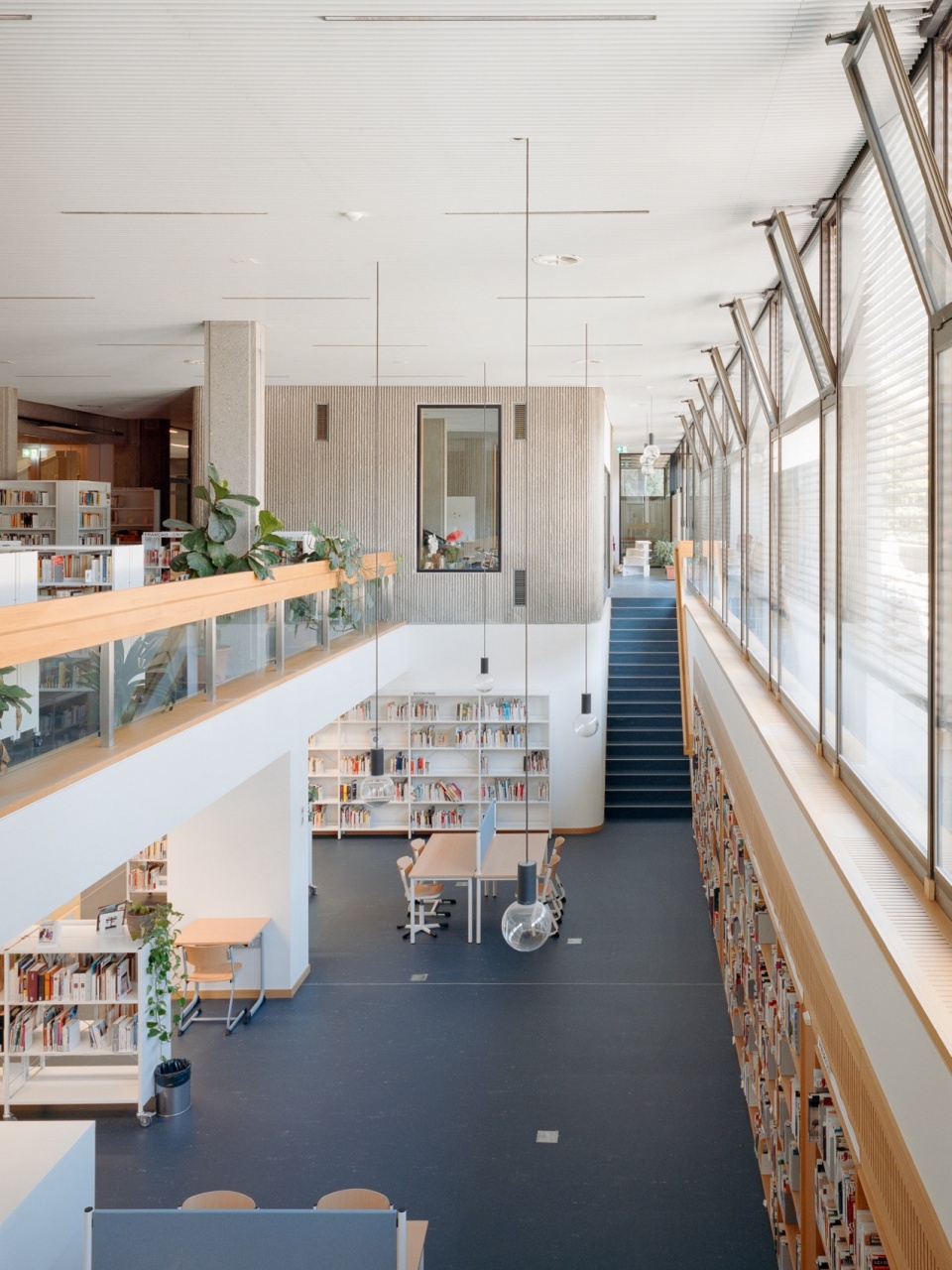
▼双层通高的阅览空间,Double-height reading space
▼项目区位图,Site plan
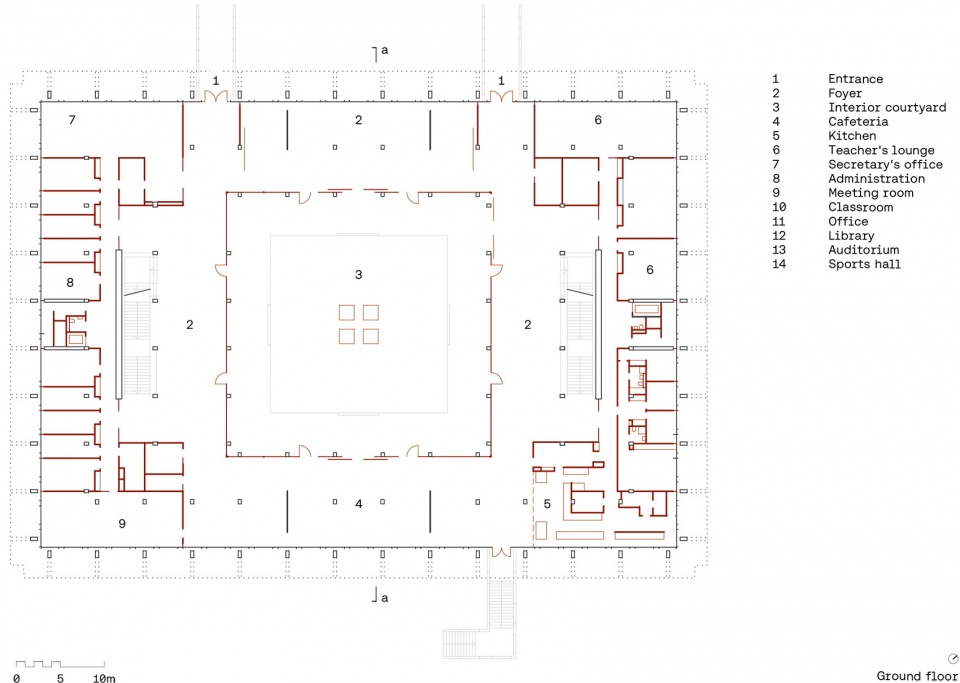
▼地面层平面图,Ground floor plan
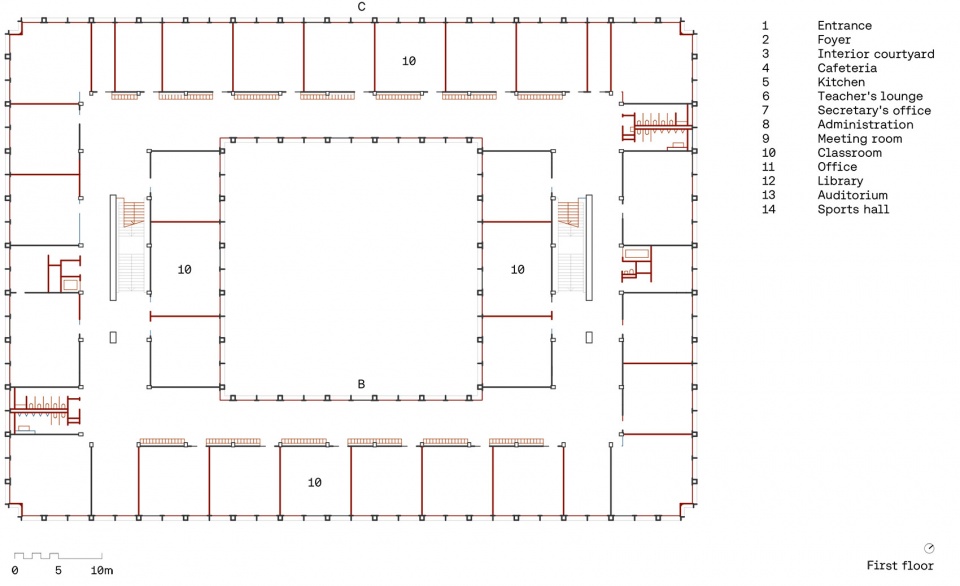
▼一层平面图,First level floor plan
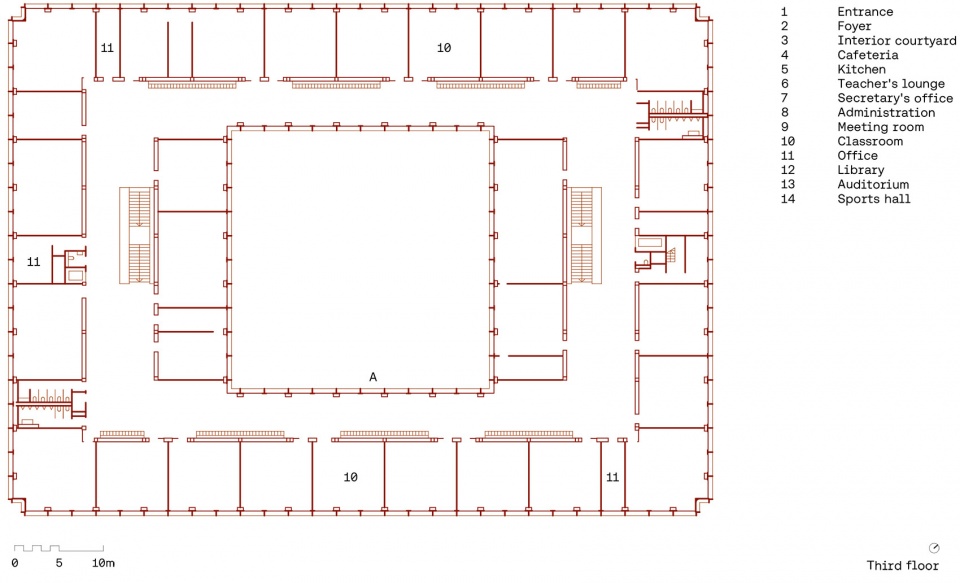
▼三层平面图,Third level floor plan
▼剖面图,Section
▼细节大样图,Detail
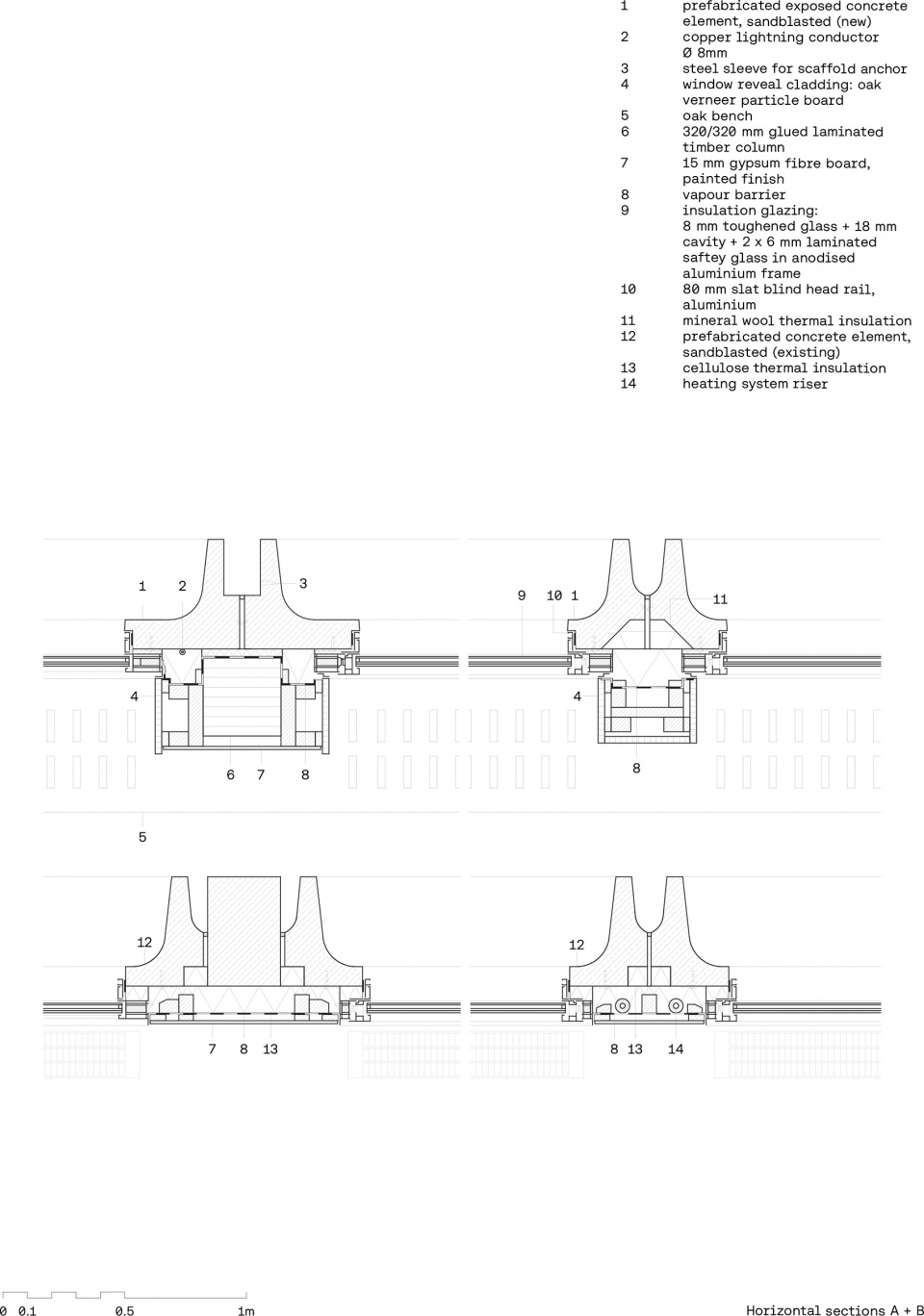
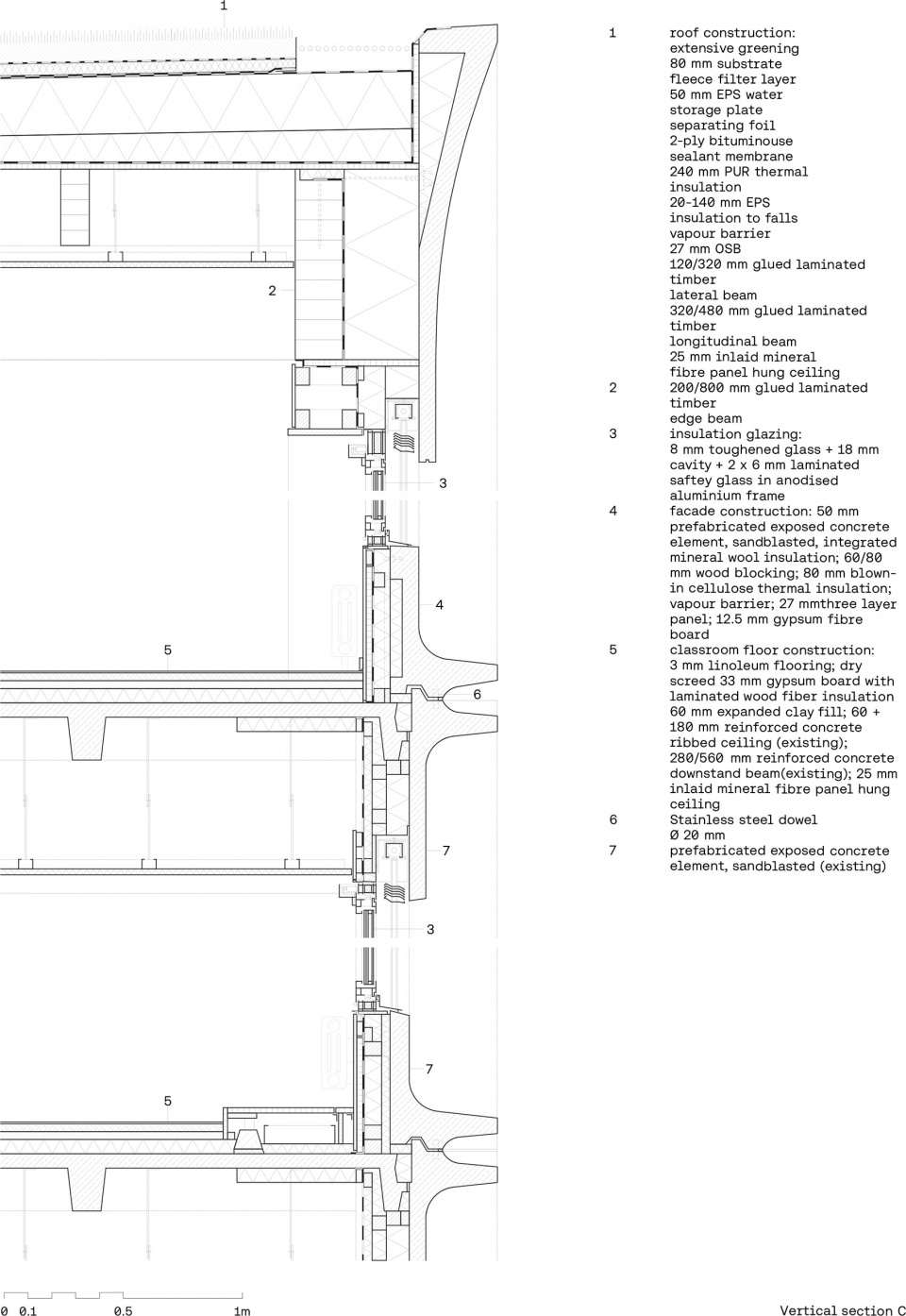
Client :État de Genève, Cantonal Buildings Office (OCBA)
Project address :Avenue du Bouchet 16A, 1209 Geneva
Competition :2018, 1st prize
Period of time :2018 – 2024
Contract :Architecture / SIA 31 – 53
Program/use :School building / Research & Education
Building Data
Building volume :92,000m³
Total area :21,850m²
Building length :79m
Building width :57m
Architect existing building Alain Ritter, 1969
Project team
Nicolas Vaucher (Head of Project), Alexandre Gilberto (Project
Manager), Antje Bittorf, Lou Boudias (Construction Management),
Abilio Rui Luis e Silva, Marcos Negreira, Philippe Noverraz
Specialist Planners
Structural design :Thomas Jundt Ingénieurs Civils SA
Building physics :ENPLEO Sàrl
Façade :Xmade
Electrotechnics :Betelec SA
Building services :Chammartin & Spicher SA
Acoustics :Batj SA
Heritage historian :Christian Bischoff
BIM/CDE :
Kairnial (Thinkproject)
Autodesk Construction CloudPage 2/2
Photos :
Olivier Di Giambattista
Construction Firms
Ceilings:Haufe Deckensysteme GmbH
Lighting:Lumiverre Plafonds SA
Prefabricated concrete façade: MFP Préfabrication SA
Carpentry
André SA
Metal construction CMA – Constructeurs Métalliques Associés SA