安吉山川乡村记忆馆,杭州/建筑
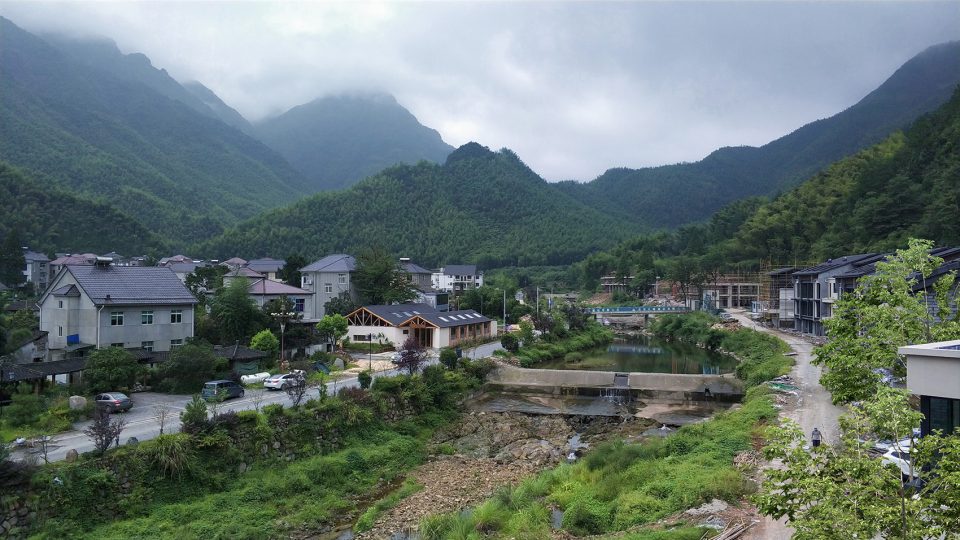
安吉山川乡船村,距杭州主城区西北方向约60公里,海拔约220米,四周群山环抱,中间形成一个盆地,良田千亩,一条溪流贯穿东西,流水长年不断。入村前是一条蜿蜒曲折的狭长小径,一边是竹林,一边是溪流,过后则豁然开朗。
Situated to the northwest of Hangzhou’s main urban area with a distance of about 60 kilometers, Chuan Village of Shanchuan Town, Anji County has an altitude of around 220 meters. It is surrounded by mountains, which makes a basin form in the middle part. With a stream crossing through the village, the flowing water has been in no absence for years and there are over one thousand mu of fertile fields. Before the village lies a meandering narrow path, of which one side is a bamboo grove and the other is the stream. And the sights will be broadened after finishing the path.
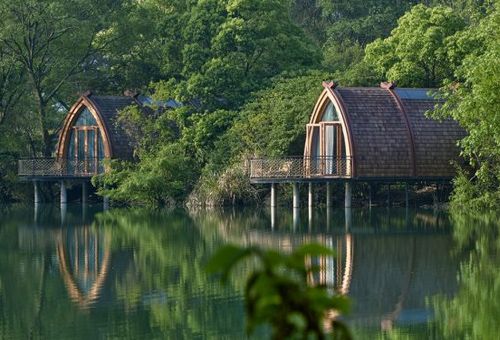
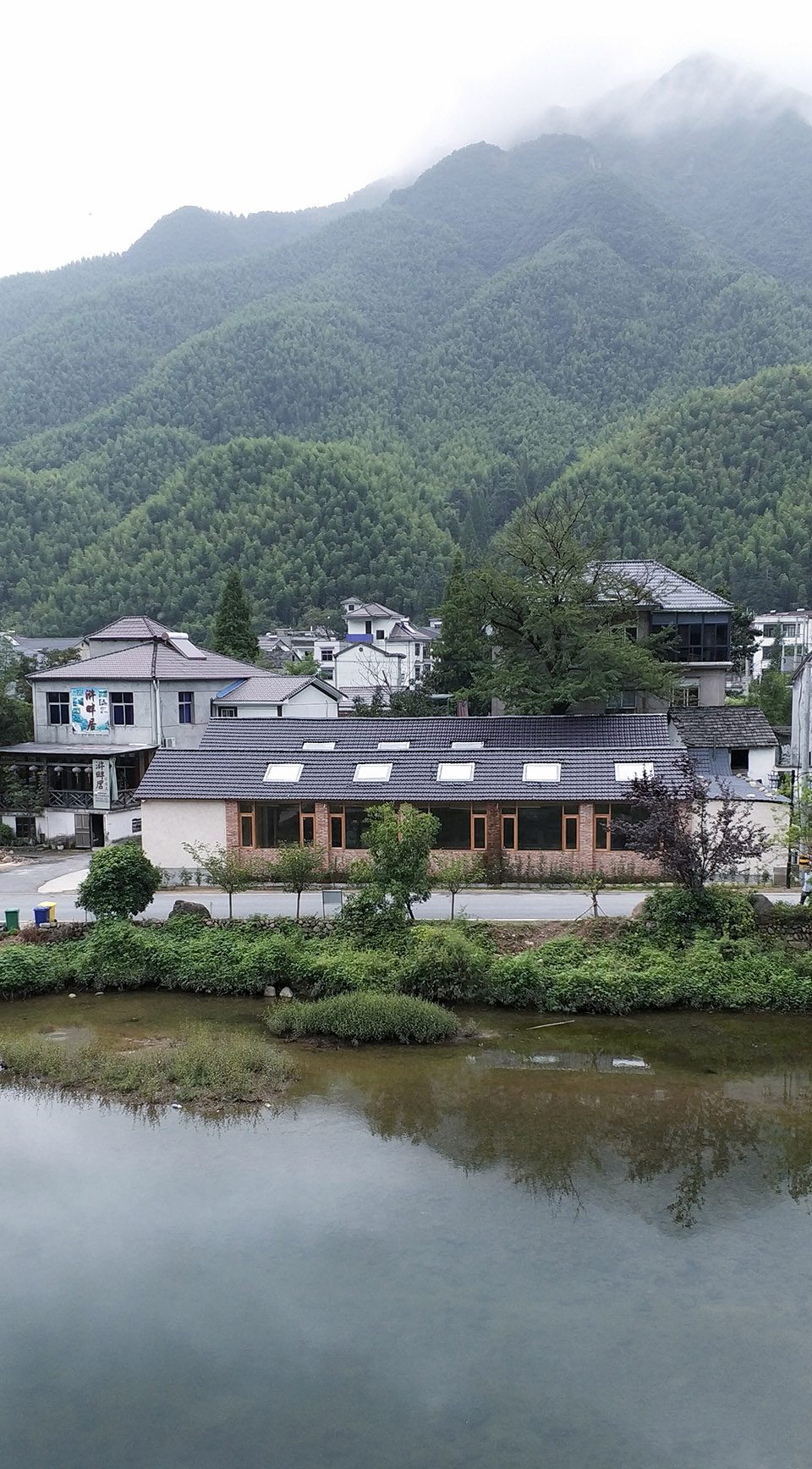
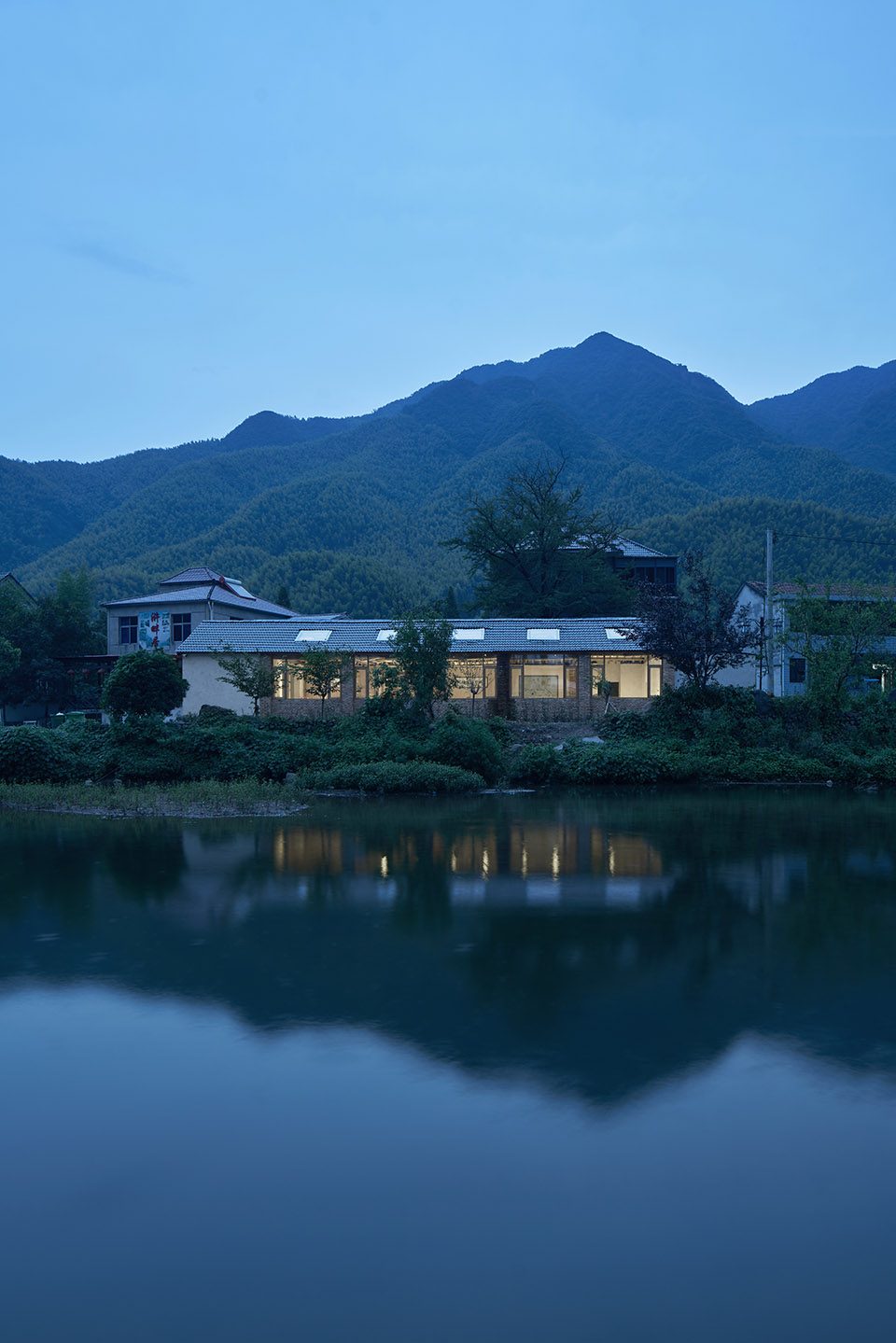
▼建筑于群山环抱,the architecture is surrounded by the landscape
▼入口,entrance
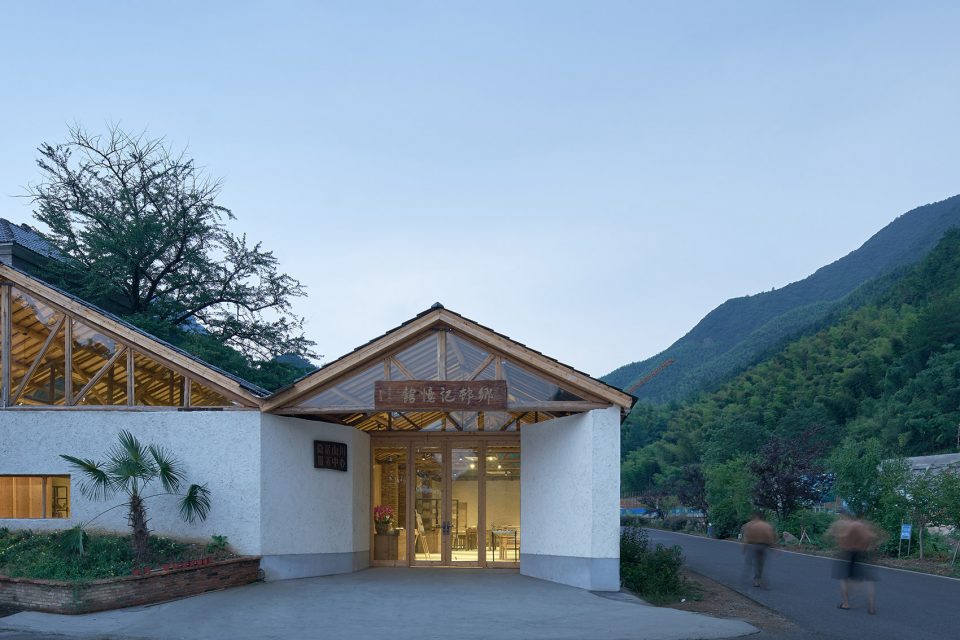
地块位于村主干道边,紧邻溪水,现状为废弃厂房,长约25米,宽16米,三面紧邻农居,一面隔路临溪水。建筑原始状态很差,屋面瓦、墙体基本报废,只有几根红砖柱和木屋架尚能加固使用。
Located on the side of the village main road, the place is near the stream and it is an abandoned fac-tory in actual with a length of 25 meters and a width of 16 meters. Three sides of it are close to the resi-dential area and one side approaches the stream across the road. Its original state was awful, for the walls and roof tiles were about scraped with only a couple of red-brick pillars and the wooden frame could be strengthened to be used.
▼区位图,site map
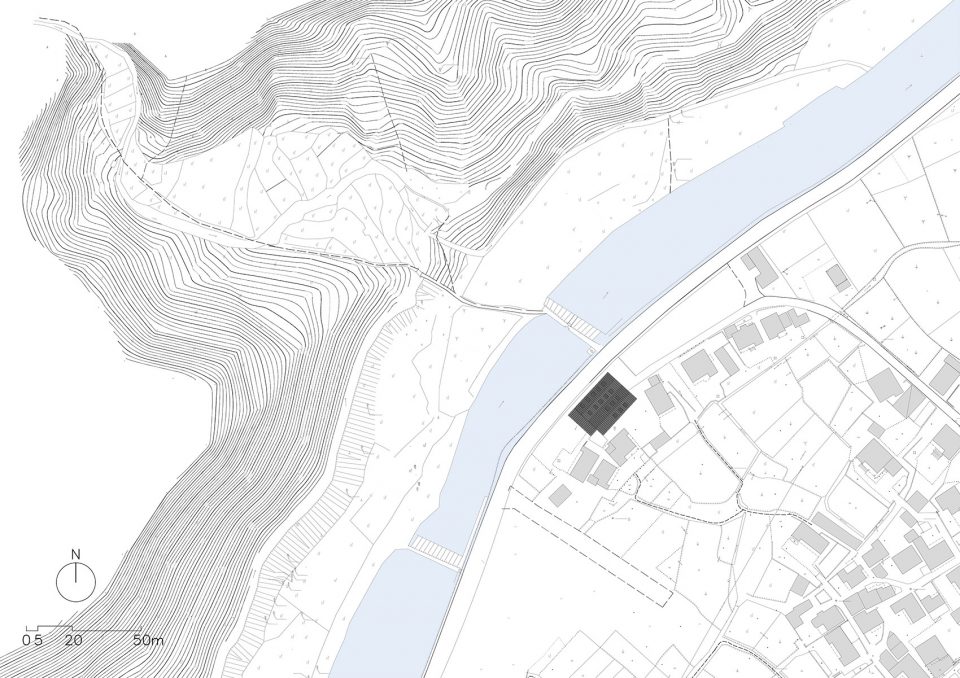
针对现状实际情况,我们提出3个问题,如何合理利用现状资源;如何引入青山绿水的风景;如何使建筑具有乡村特色韵味。为了避免相互干扰,与农居的相邻界面不开或尽量少开窗户,临马路墙面1.3米以上才开大窗,坐在里面可不受道路干扰,但依然能看到对面的山水景色。
Three questions were raised by us according to the status quo: first, how to utilize the factual re-sources properly; second, how to integrate the scenery which contains mountains and waters; third, how to introduce the village characteristics into the building. To avoid mutual interference, the sides close to the residential area are limited in the number of windows, that is, a bigger window can only be set over 1.3 meters high on the wall which approaches the road. When sitting in the house, a person will not be bothered by the noise of the road, but the scenery across the road can still be appreciated.
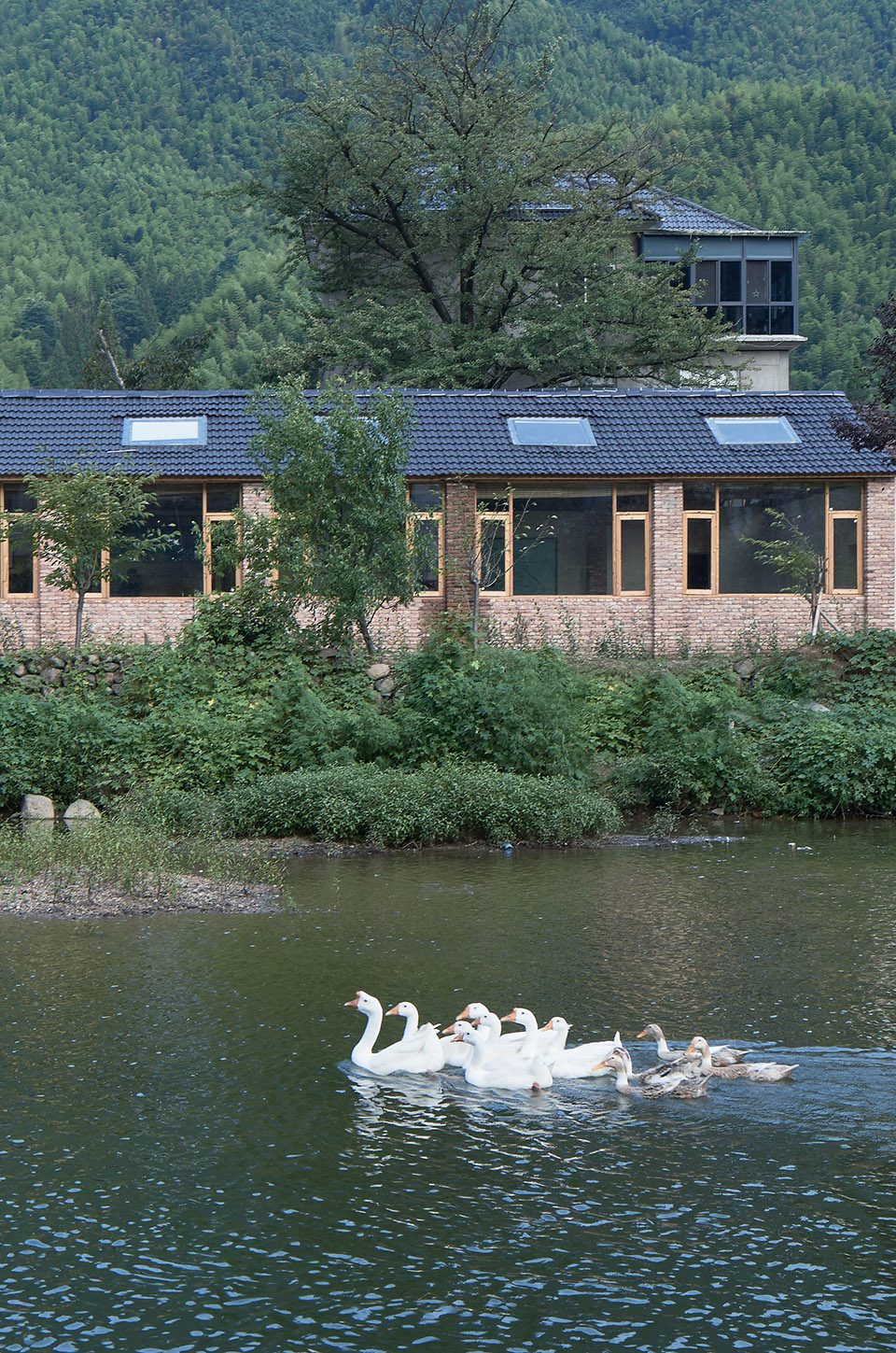
▼临马路墙面1.3米以上开窗避免道路干扰,windows are set 1.3 meters above the ground to avoid mutual interference
我们在大空间中尽量多的设置天窗,这样使得风景最大化的映入室内,也尽可能减少对周边民宅的干扰。我们找来村里的老工匠,认真听取他们的建议,就地取材,收集村民造房子剩下的红砖并以当地黄泥墙工艺做为建筑外表皮,门窗由木匠现场制作。因乡土材料的运用,建筑自然,朴素,融合于山水。
We tried to set more roof windows in a large space, which makes the most of the scenery be intro-duced into the house, and the interference to the houses around can be reduced as much as possible. Some senior craftsmen of the village were invited by us to present their ideas. Also, we took the lo-cal material and collected the red bricks which were left by the villagers for the house building, and we made the building surface by using the local yellow-mud technique. In addition, the doors and windows were made by the carpenters at present. Because of the use of the local material, this house seems to be natural and simple with a combination with the scenery.
▼天窗使风景最大化映入室内,roof windows are set to invite the scenery
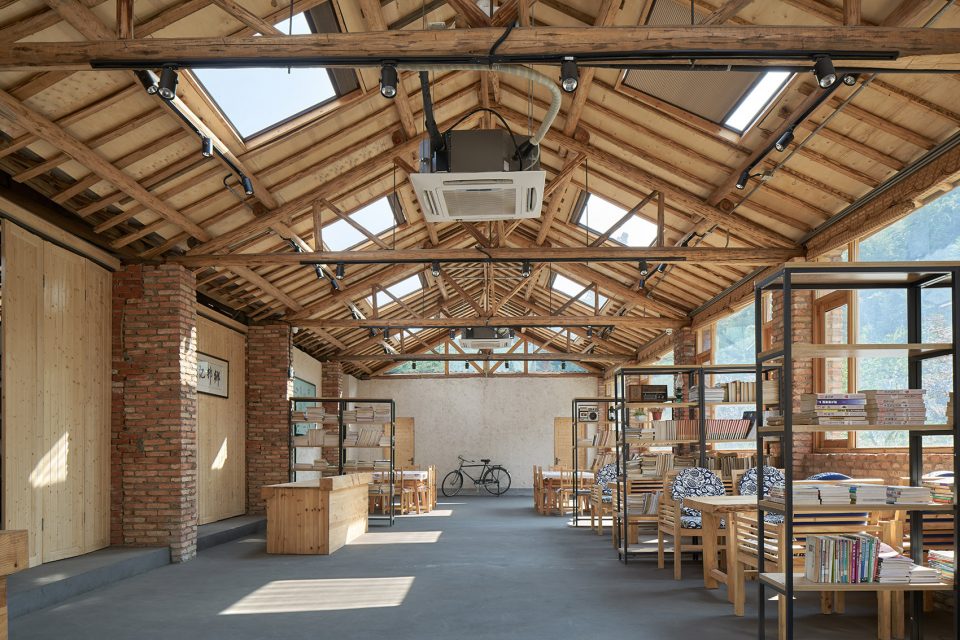
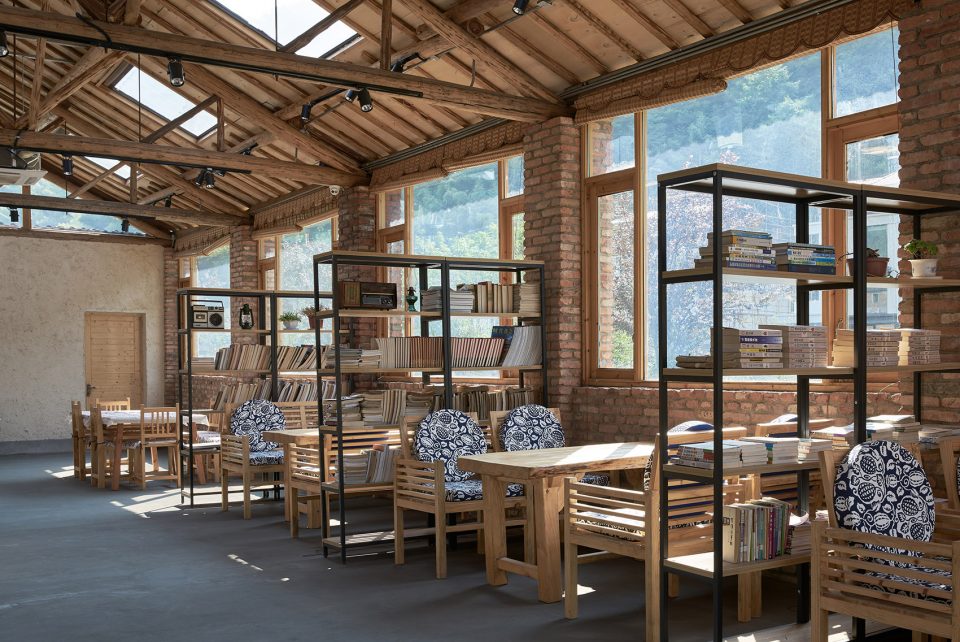
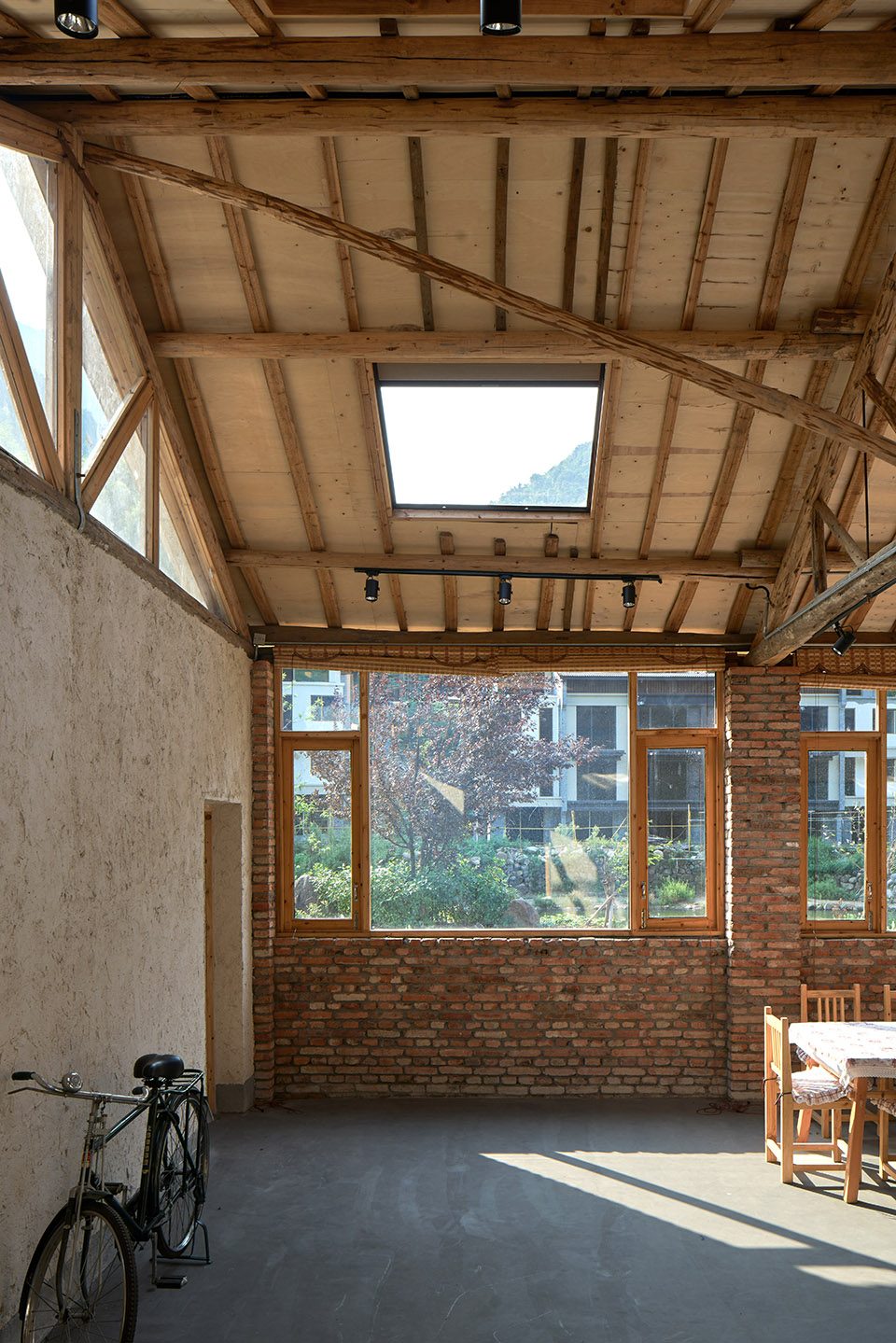
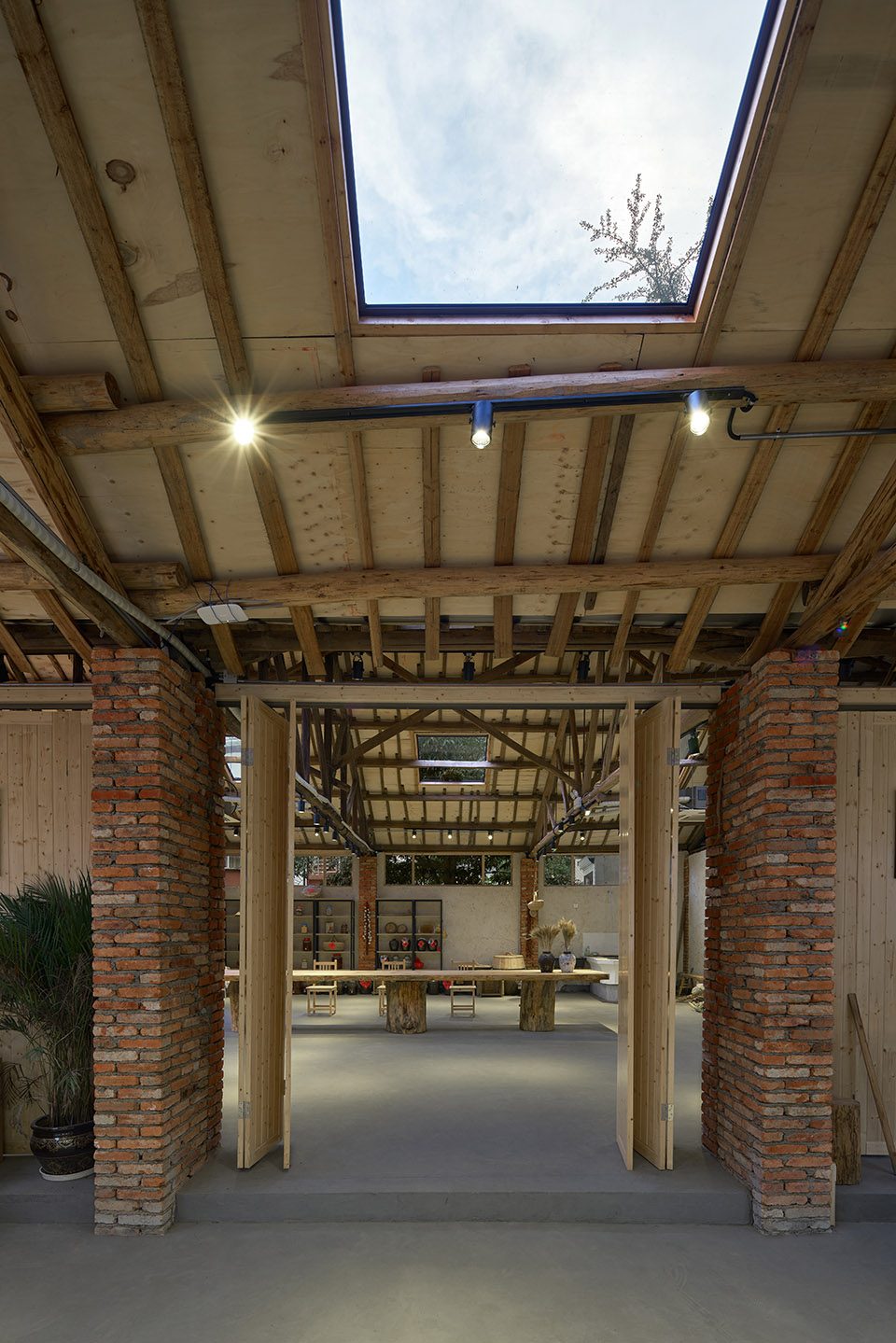
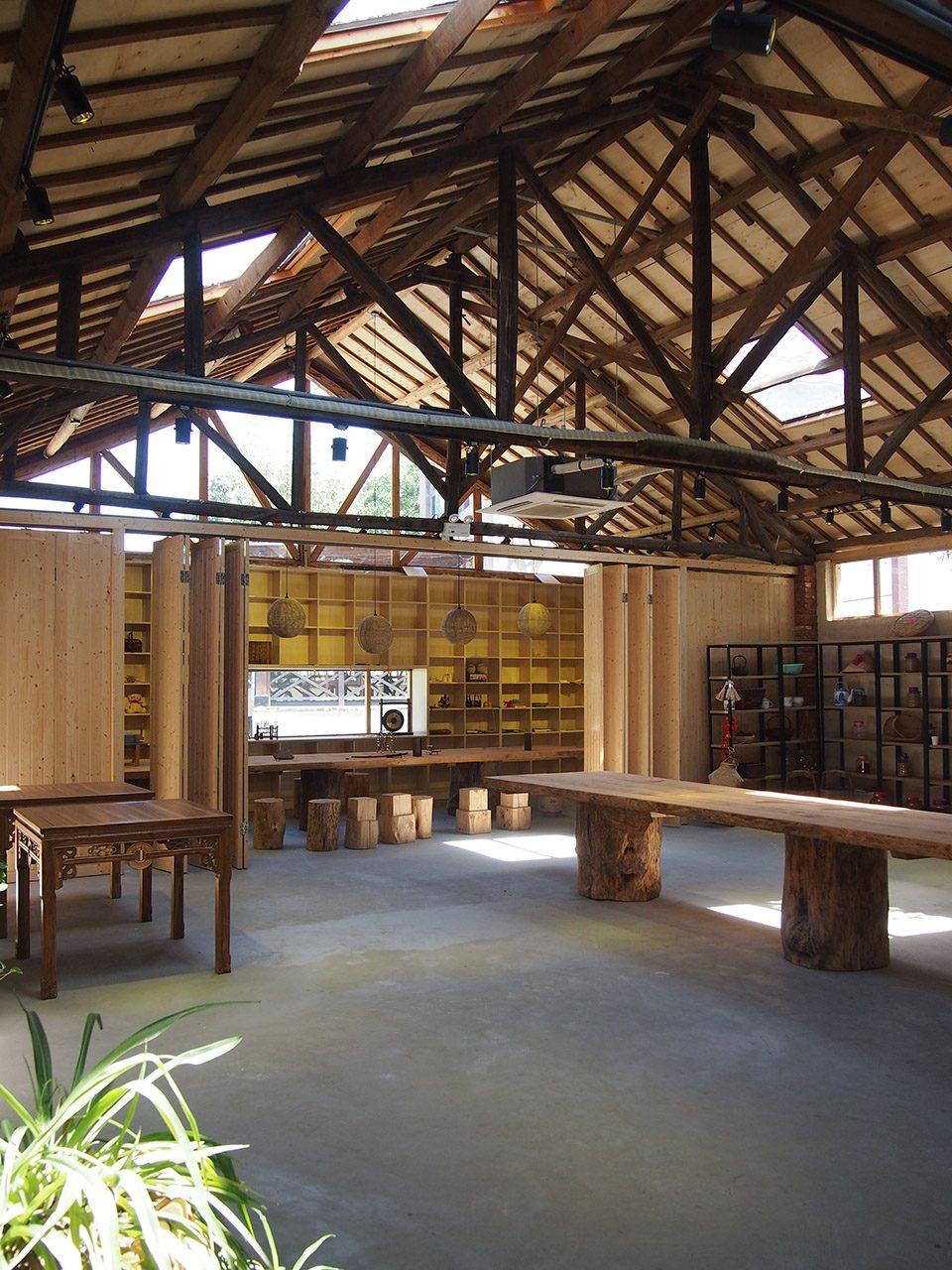
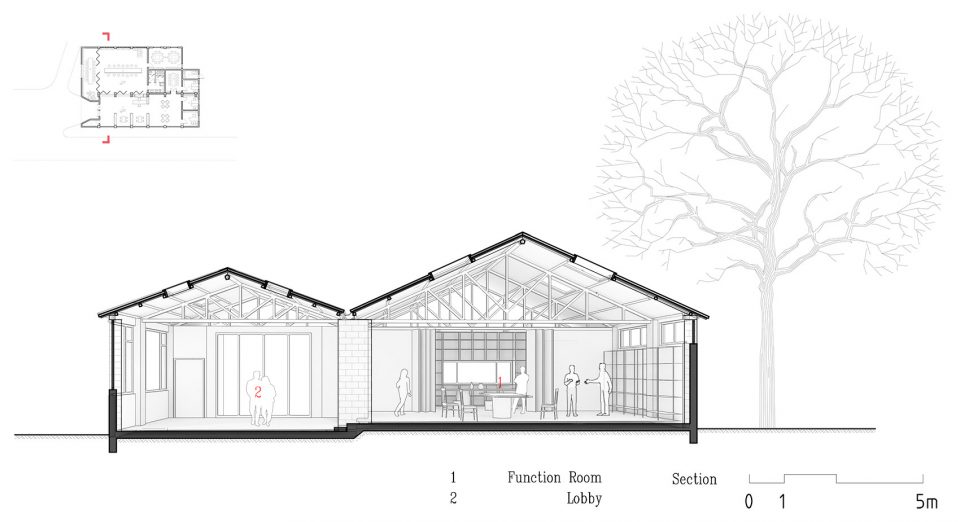
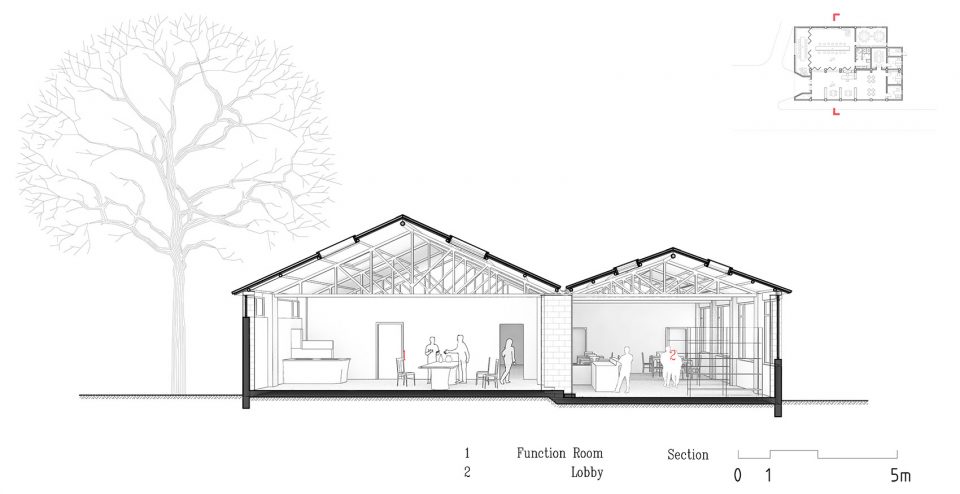
顶部每跨设置一个天窗,除了满足采光需要,更引入周边的山景,做为乡村记忆馆的核心功能空间,在这里能感受到自然山水和传统手艺,现代生活的融合。内部空间朴素自然,墙面内外一致,地面则用水泥做磨光处理,屋顶则是保留了原始木屋架的结构美感,软装也以原木为主,使建筑、室内融为一体。
A roof window was set every two pillars to introduce more mountain sights around except for light-ing. As the core functional space for this village memory house, it offers people the feeling of combining the natural scenery, traditional techniques and modern life. The internal space is plain and natural, whose walls are the same inside and outside, and the floor has been polished with cements, while the roof remains the beauty of the original wooden frame. The decoration also takes the wood in the main, which can integrate the building and the internal space.
▼顶部每跨设置一个天窗满足采光和景观引入需要
roof window was set every two pillars to introduce more mountain sights around besides lighting
▼室内与室外的融合,connection of the interior and exterior space
▼天窗,roof window
▼从休息室看内堂,view from the resting area to the hall
很多时候,建筑师的主要工作在现场,帮工匠把握一下比例、尺度等基本美学。由于全部是泥工和木工熟悉的材料和建造方式,工程进展相当顺利,不到三个月就建成投入使用。
The architect will work on the scene to help the craftsmen figure out some basic aesthetics as the proportion and scale for much time. The project was going quite smoothly as the cement workers and carpenters were familiar with the material and building methods, and we only spent less than three months finishing the project and putting it into use.
▼内堂 – 去雕饰设计,adorning-free design of the interior
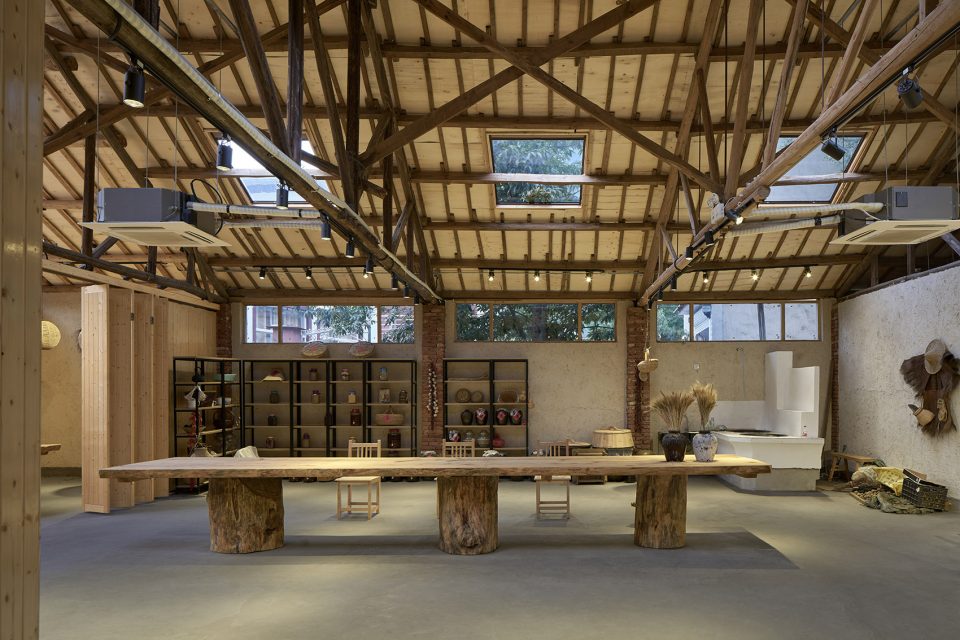
▼屋顶则是保留了原始木屋架的结构美感,the roof remains the beauty of the original wooden frame
相比于城市的项目,乡村项目的创造心态更轻松自然,乡村记忆馆建成开放后,村民和游客逐步参与其中,每逢节日,这里都会举办聚会,也成为了孩子们的乐园,乡村记忆馆展现的不仅是传承,更是新生!
Comparing with urban items, people would feel it more relaxing and natural to create rural items. The villagers and tourists have been gradually taking part in the activities of the house since its opening. There will be a party for every festival and it has also become a play land for children. Thus, the village memory house not only displays the tradition, but also delivers the new life!
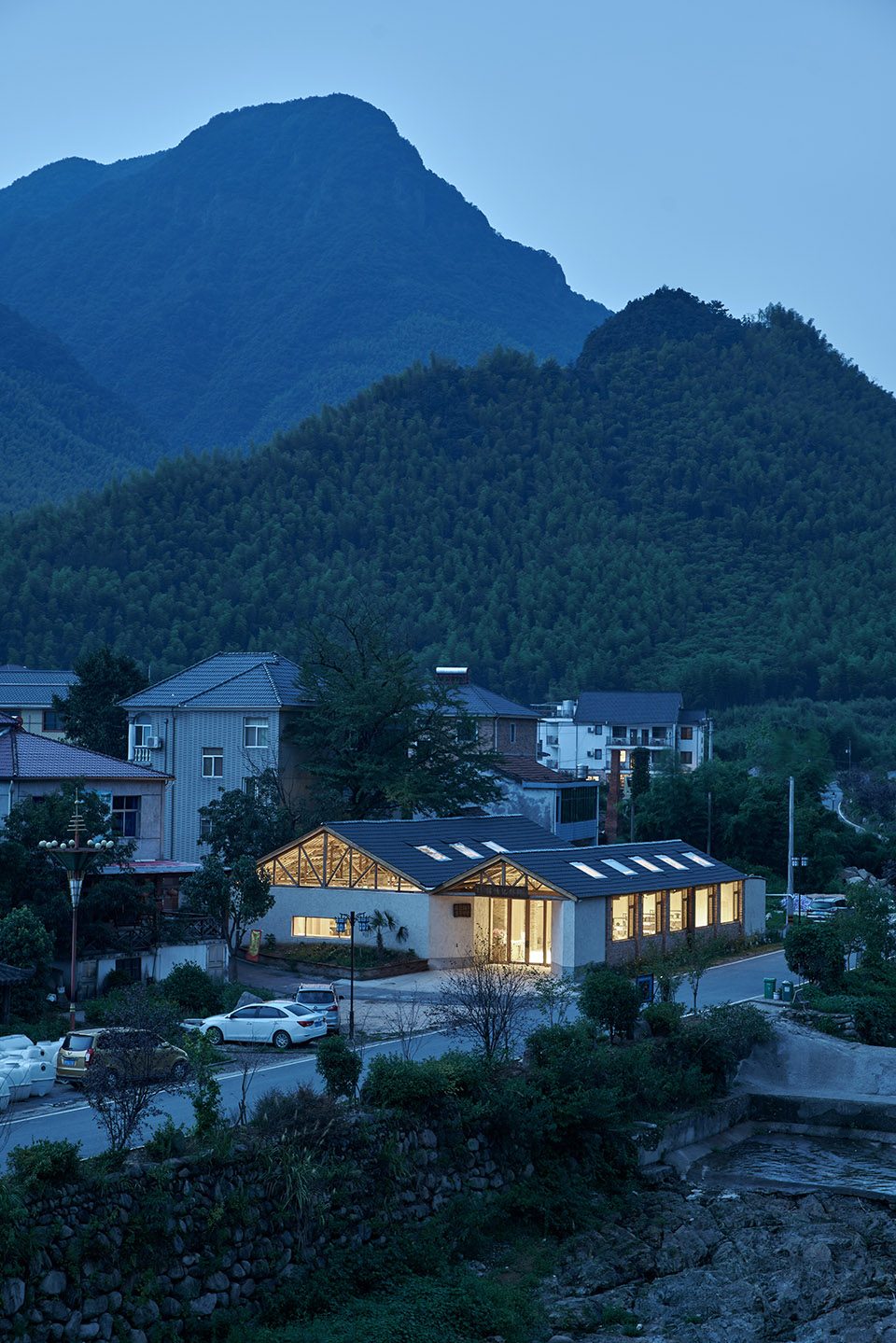
▼夜色中的记忆馆,the house in the dark
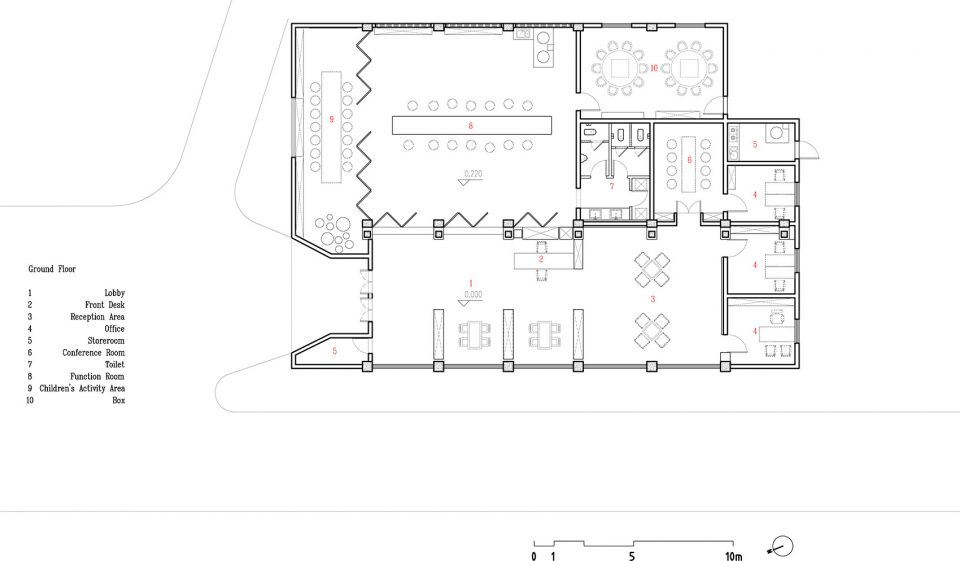
▼平面图,plan
▼剖透视,perspective section
Project name: 木头搭搭,黄泥刷刷,旧砖垒垒——(安吉山川乡村记忆馆)
Architect’ Firm:中国美术学院风景建筑设计研究总院 / The Design Institute of Landscape and Architec-ture China Academy of Art
Contact e-mail: 598120834@qq.com
Lead Architects: 陈夏未、王凯 / Xiawei Chen, Kai Wang
Project location: 安吉山川乡船村
Completion Year: 2017.6
Gross Built Area (square meters or square foot): 450㎡
Photo credits: 奥观建筑视觉 / Aoguan Performance of Architecture
Design Team:柯礼钧、金拓、虞光洁、董佳丽 / Lijun Ke, Tuo Jin, Guangjie Yu, Jiali Dong