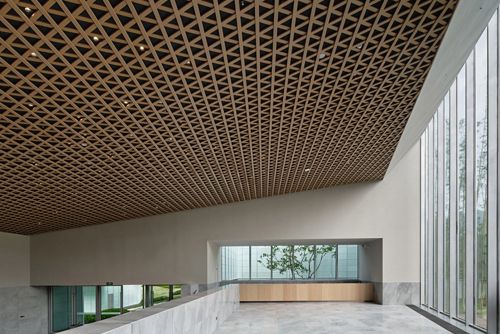
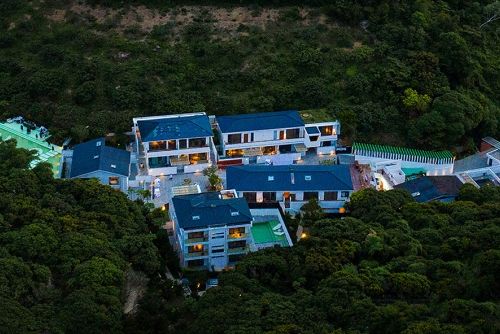
新长福 潇邦1999餐厅,长沙 / PLAT ASIA
项目位于长沙市湘江左岸九百米的城市街区,是上榜黑珍珠及米其林的餐饮品牌新长福旗下的湖湘文化园林餐厅。场地位于繁忙的城市交通路口一角,四周是数幢林立的百米高层住宅和商业裙房。改造前的体量是一座两层框架剪力墙结构建筑,其南侧及东侧院落停满车辆。PLAT ASIA接受委托由建筑师郑东贤带领团队完成其建筑改造、幕墙、景观、室内等设计内容。餐厅于2023年12月建成营业。
The restaurant stood in an urban street zone 900 meters from the left bank of the Xiangjiang River, Changsha. It belongs to XinChangFu, a brand included in the Black Pearl and Michelin guides, and features in HUXIANG Culture, Hunan cuisine, and Garden restaurant. The site posits a busy crossing surrounded by high-rise resident buildings and commercial buildings. The existing building is a two-layer structure with shear walls. The courtyard is full of cars in the building’s south and east. PLAT ASIA is designated to renovate the architecture and design the landscape and interiors, led by architect Jung Donghyun. The restaurant is completed and opened in December 2023.
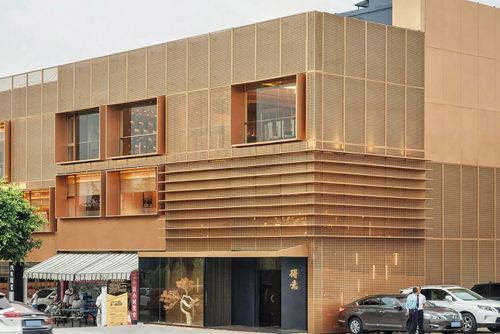
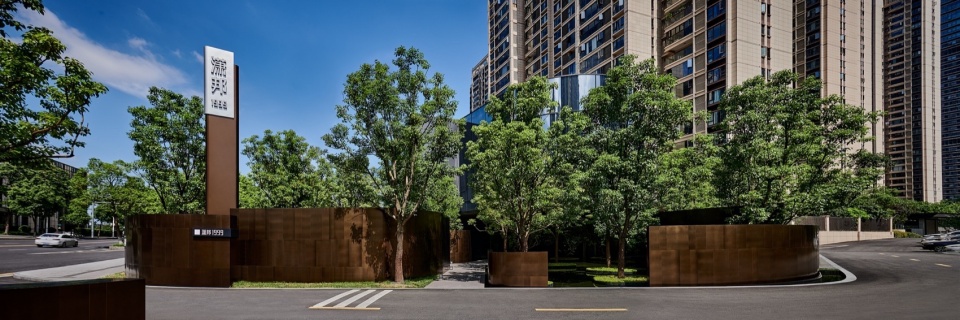
▼餐厅入口和城市环境,Restaurant entrance
水林与岛 Water Garden Around the Islands
在危楼百尺的城市环境中,紧密、俯视、噪音是踏勘现场的第一感受。本次设计将挑战转换将这些不利因素为积极影响。新的场所旨在消弭这些压抑氛围,为使用者创造具有心理安全感和私密性的诗意园林餐饮体验。设计用一片城市桃源景观取代紧邻马路的停车场,重新焕发场地活力。
▼项目改造前场地,Original site
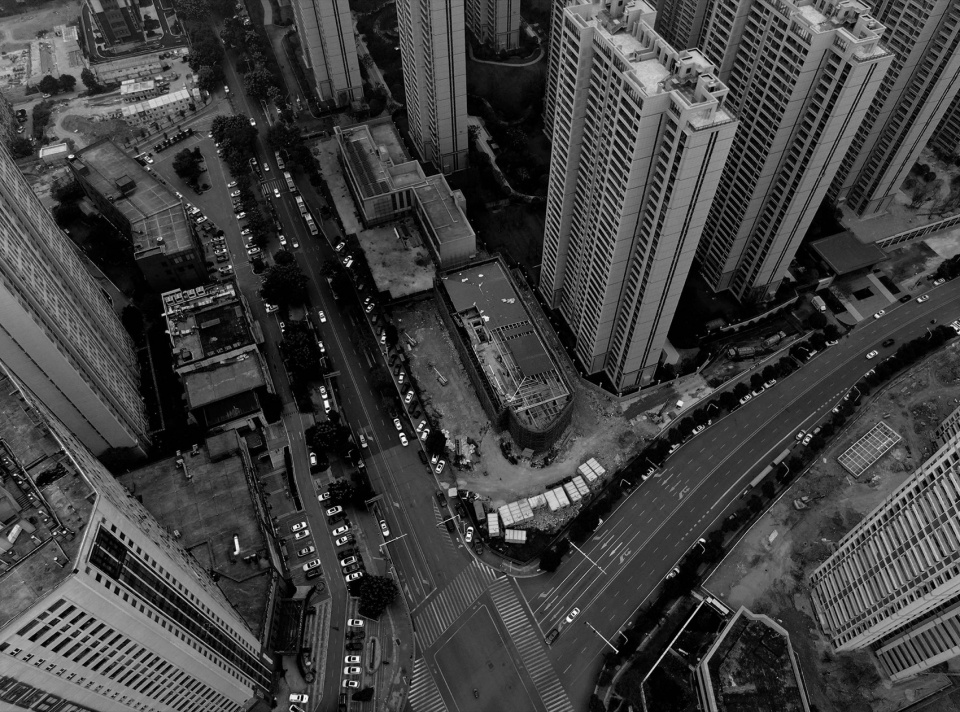
Surrounded by high-rise buildings, the first feeling is crowds, downward, and loud. The design would challenge the transformation of these negative issues into positive energy. The new place seeks to decrease depressing emotions, creating a safe and private space for dining in a poetry garden. An urban Peach Blossom Spring replaces the parking beside the street, reviving the vigor there.
▼餐厅园林入口,Approach to the garden
▼餐厅园林区,Garden
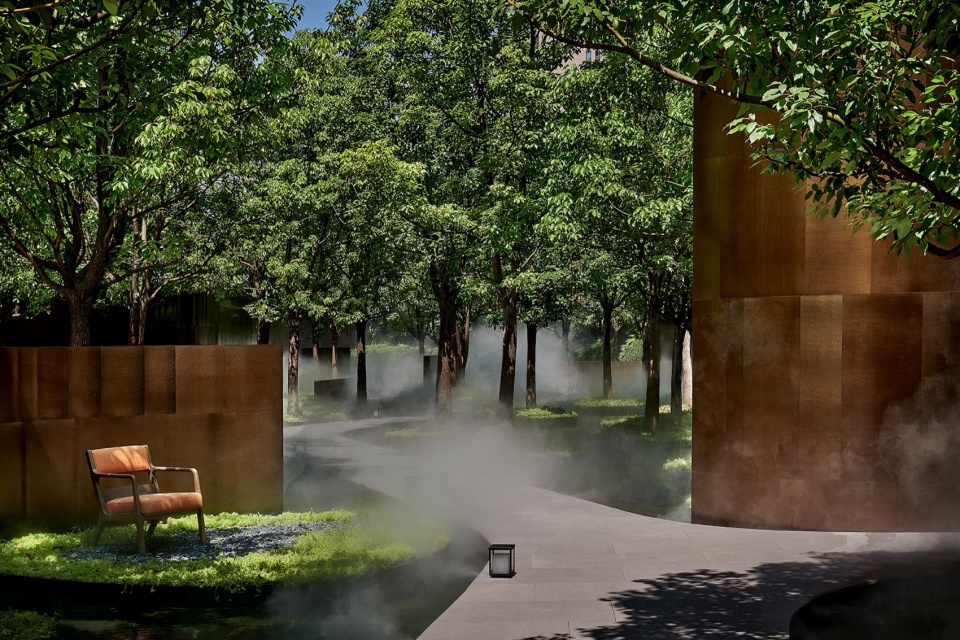
建筑师通过森林和水体表达当代语境下的园林。园林以岛屿为灵感,低浅的镜面水景从东南围合建筑。香樟林蓬蓬如盖,沿着建筑向道路方向布置逐次高株的树木,遮蔽行道和周围高层的视线,阻隔噪音,并为就餐者带来山水园林景致。
▼设计手稿-建筑与城市,Sketch – building, and surroundings
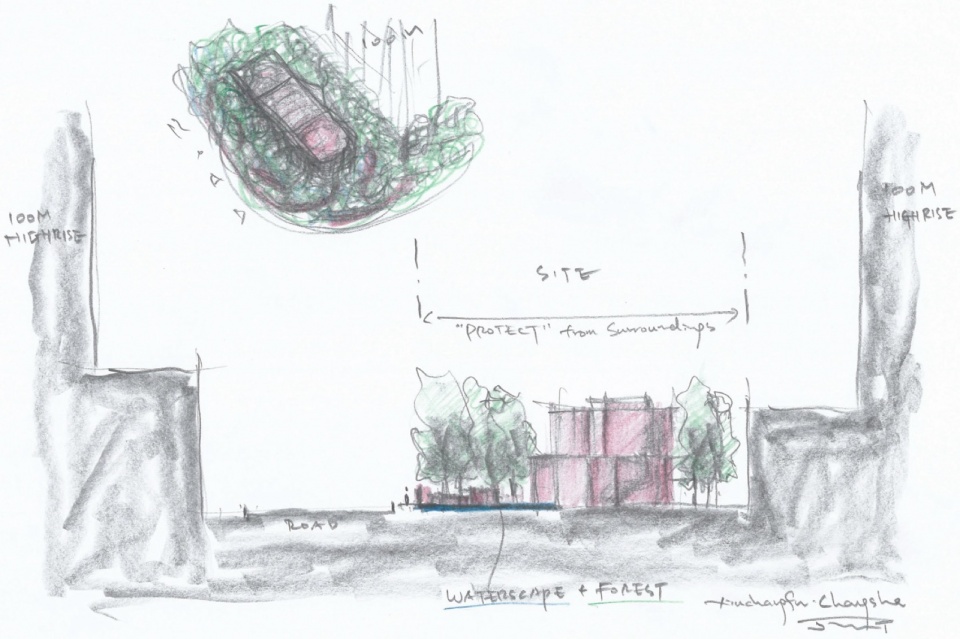
The architect creates a garden composite of forest and water in a contemporary context. The island inspires the garden—a shallow mirrored waterscape around the restaurant in the south and east. Camphor trees’ canopy covers the garden and gradually rises from the restaurant to the street. The trees cover the sights from the street and high-rise buildings, cut down the noise, and bring a SHANSHUI garden for people.
▼进入餐厅园林区,Garden area
▼水中树池,Tree pit in water
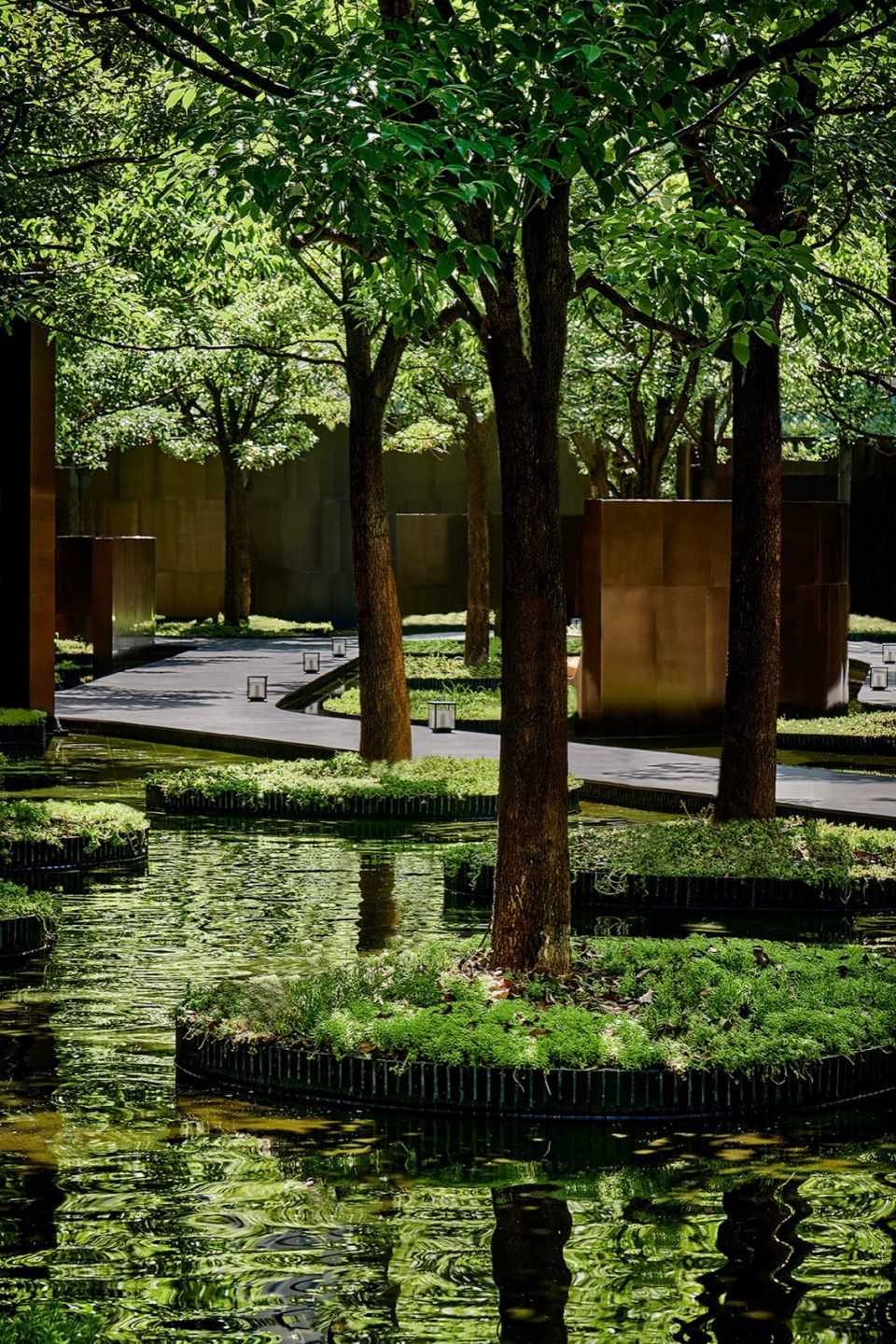
园林中设置十数组画屏景墙,错落层叠,引导路径的同时创造步移景异的观景体验。深色金属板的景墙画屏上反射树影,水影,光斑;水面则倒映林木画屏,泛起波纹涟漪。水景园林充分打开人的视、触、听感。
The garden set different screens from the wall, matched with trees to create routes and vistas, introduced to the road, and for sequence vision experience. The dark metal panel wall reflects the trees, waves, and spots; the water mirrors the trees, screens, and buildings, and the waves ripple several times. The waterscape highlights the sight, touch, and auditory sense.
▼园林中的树池,Trees in the garden
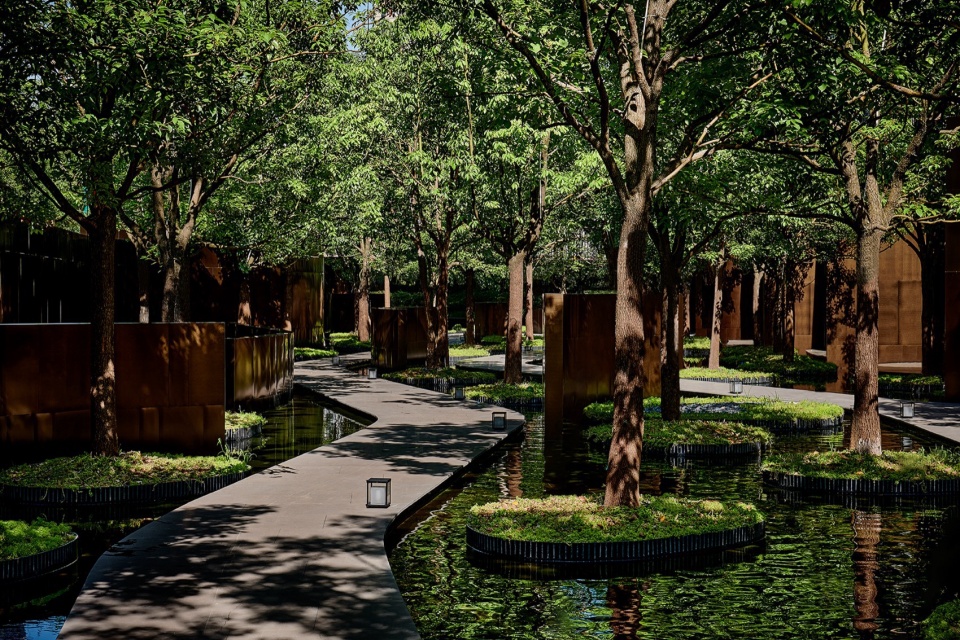
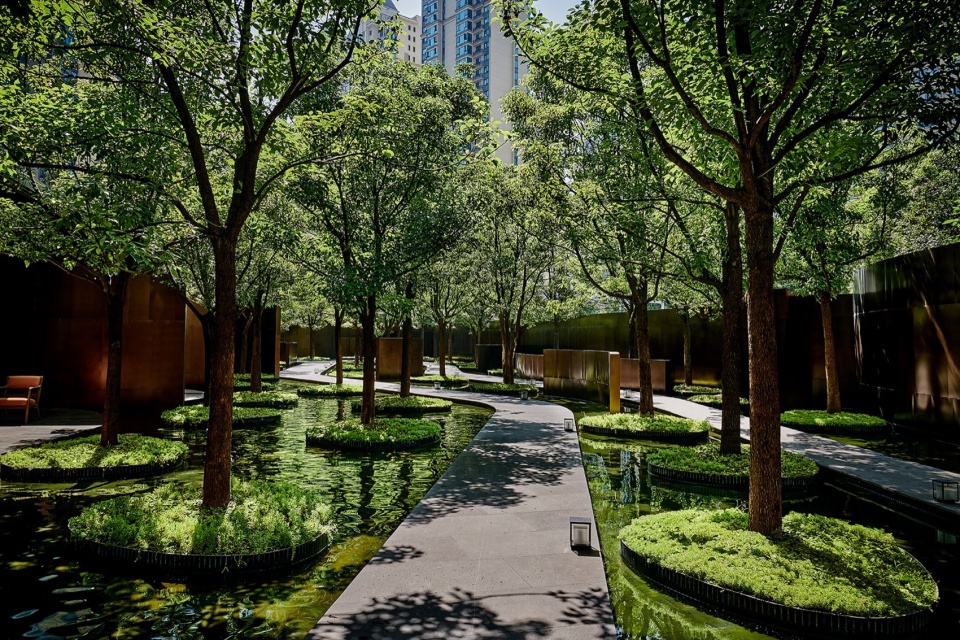
▼镜面水景,Mirrored waterscape
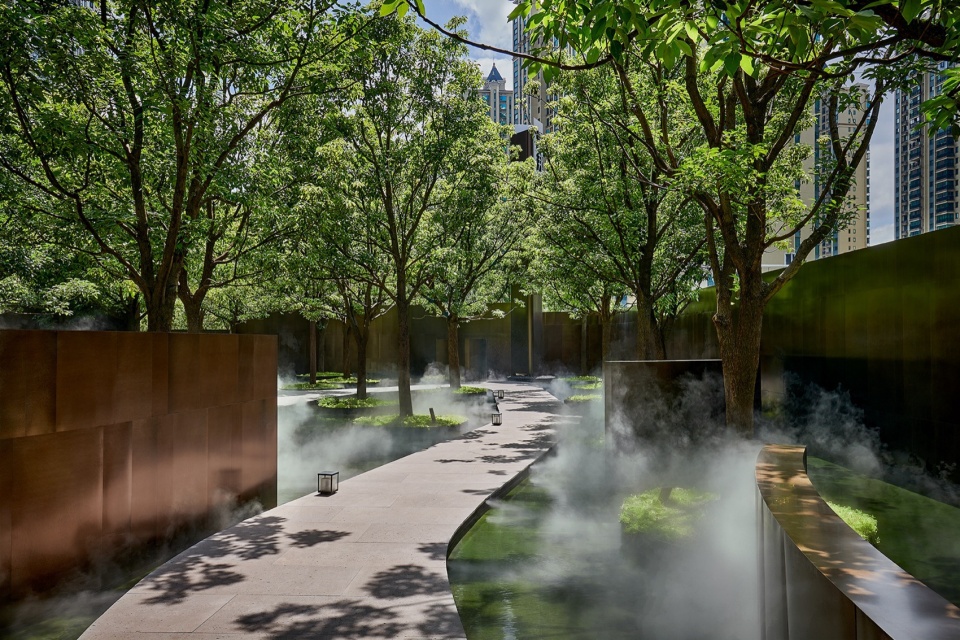
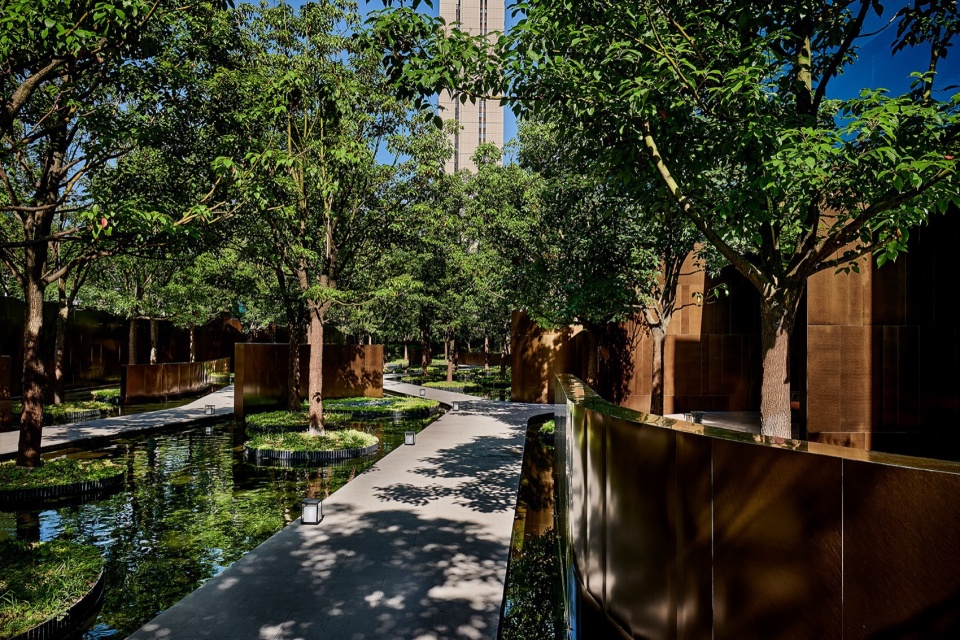
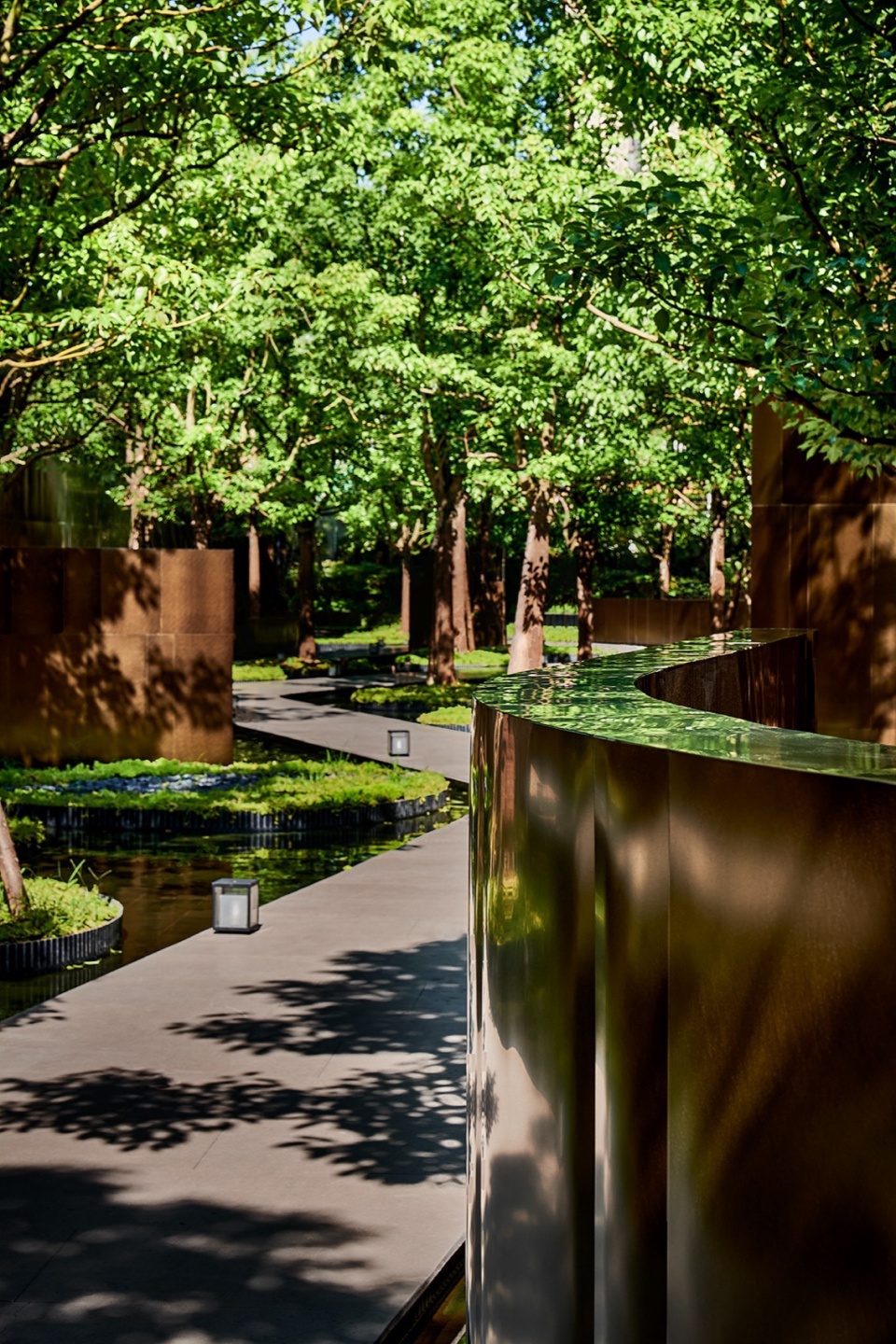
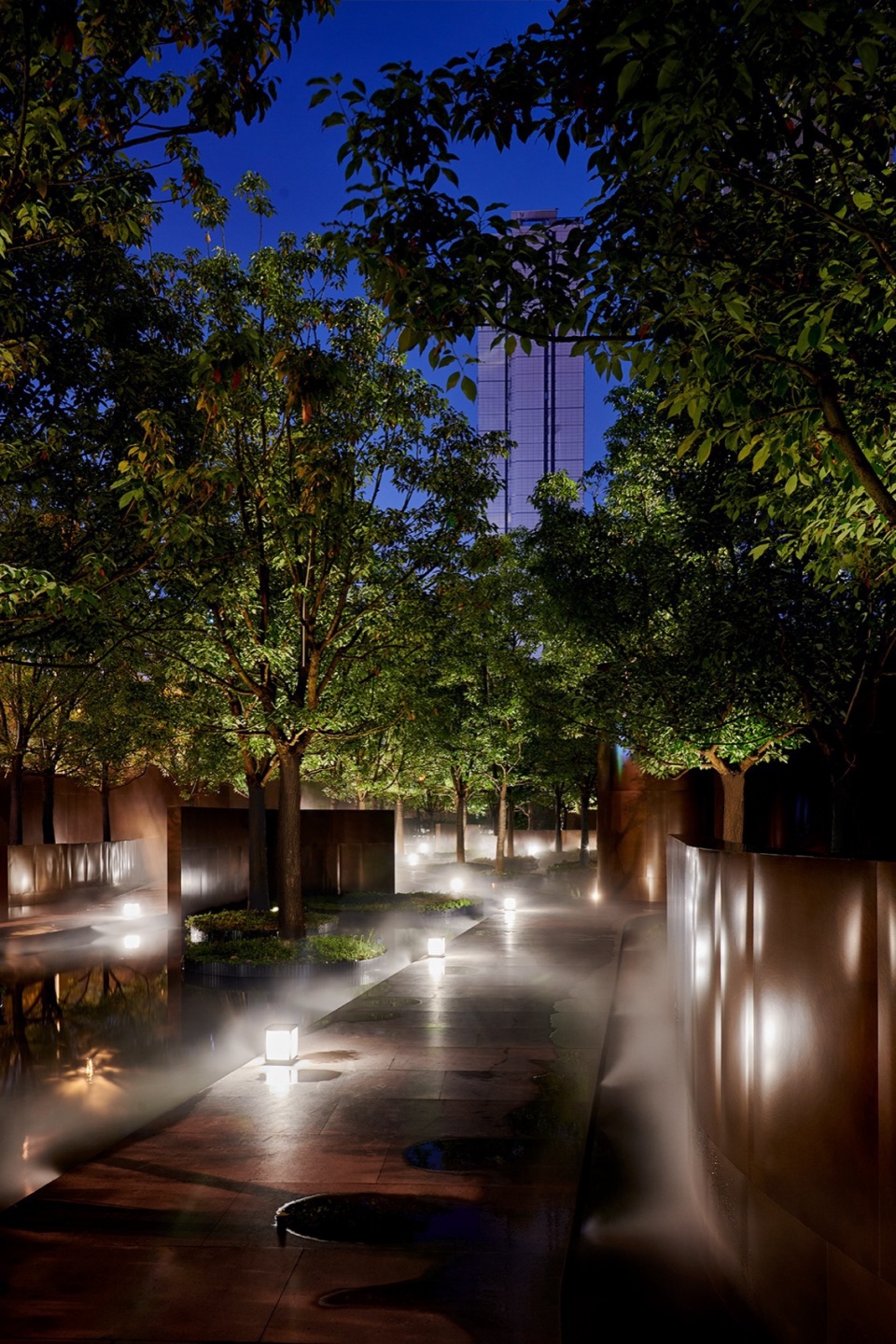
水中设有蜿蜒且宽窄不一的环路步道和小岛,创造丰富游境。水中树池植有香樟和佛甲草,形成星罗棋布的水中“树岛”。清晨的薄雾中可遇光线透过林隙落入水中的丁达尔现象。水景园林的边界面向城市裂开一两个小豁口,为匆匆而过的行人掠一抹园景。
A zigzag circle road of different widths with open islands flourishes as walk scenery. Tree pits plant camphor trees made of tree islands in the water. In the morning, the mist meets the light through the woods and falls into the water, occasionally creating the Tyndall Effect. The façade of the garden, cut several holes, shows a piece of vistas for passersby.
▼园林小径,Road of the garden
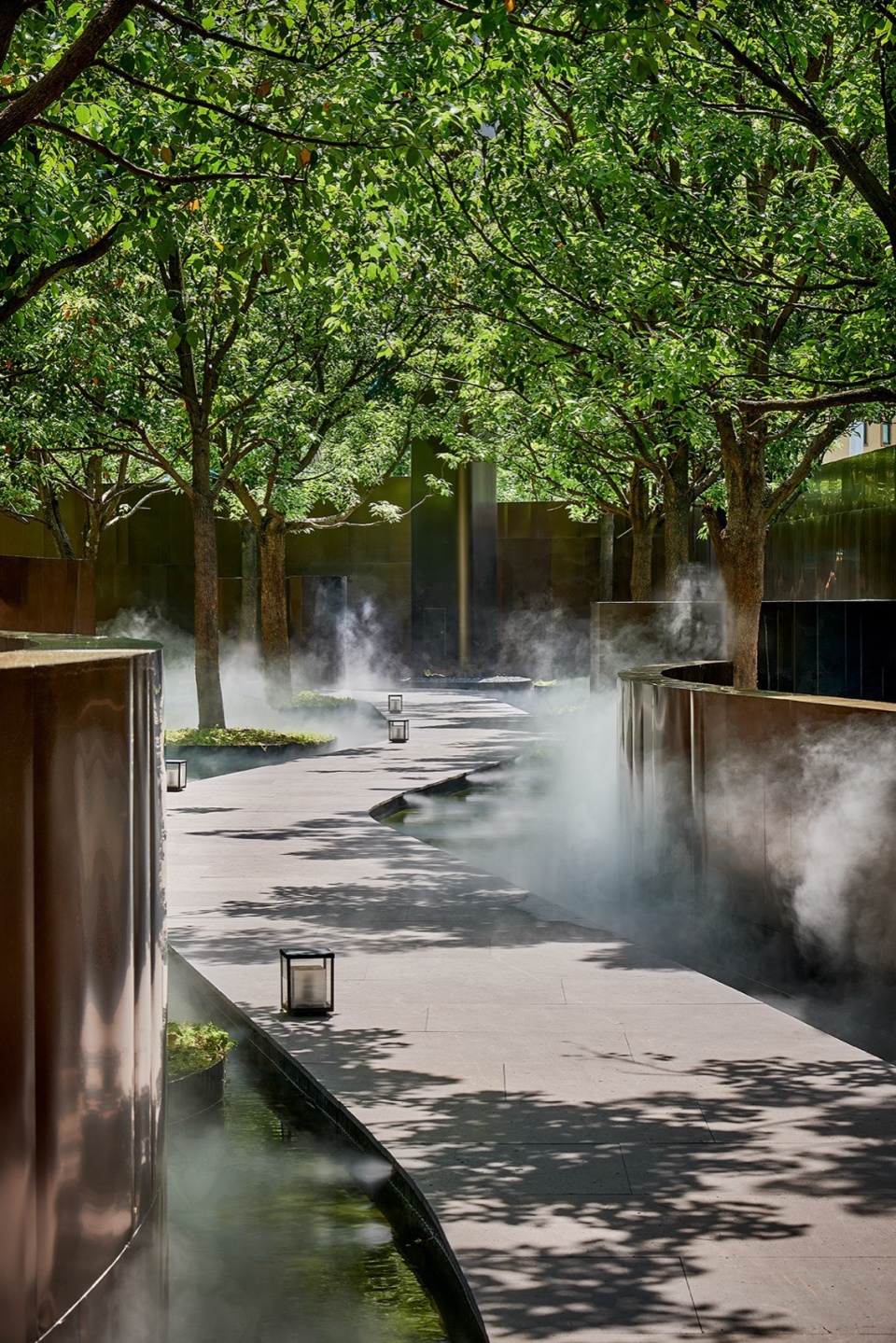
▼小径蜿蜒在水景园林中,Road in the garden
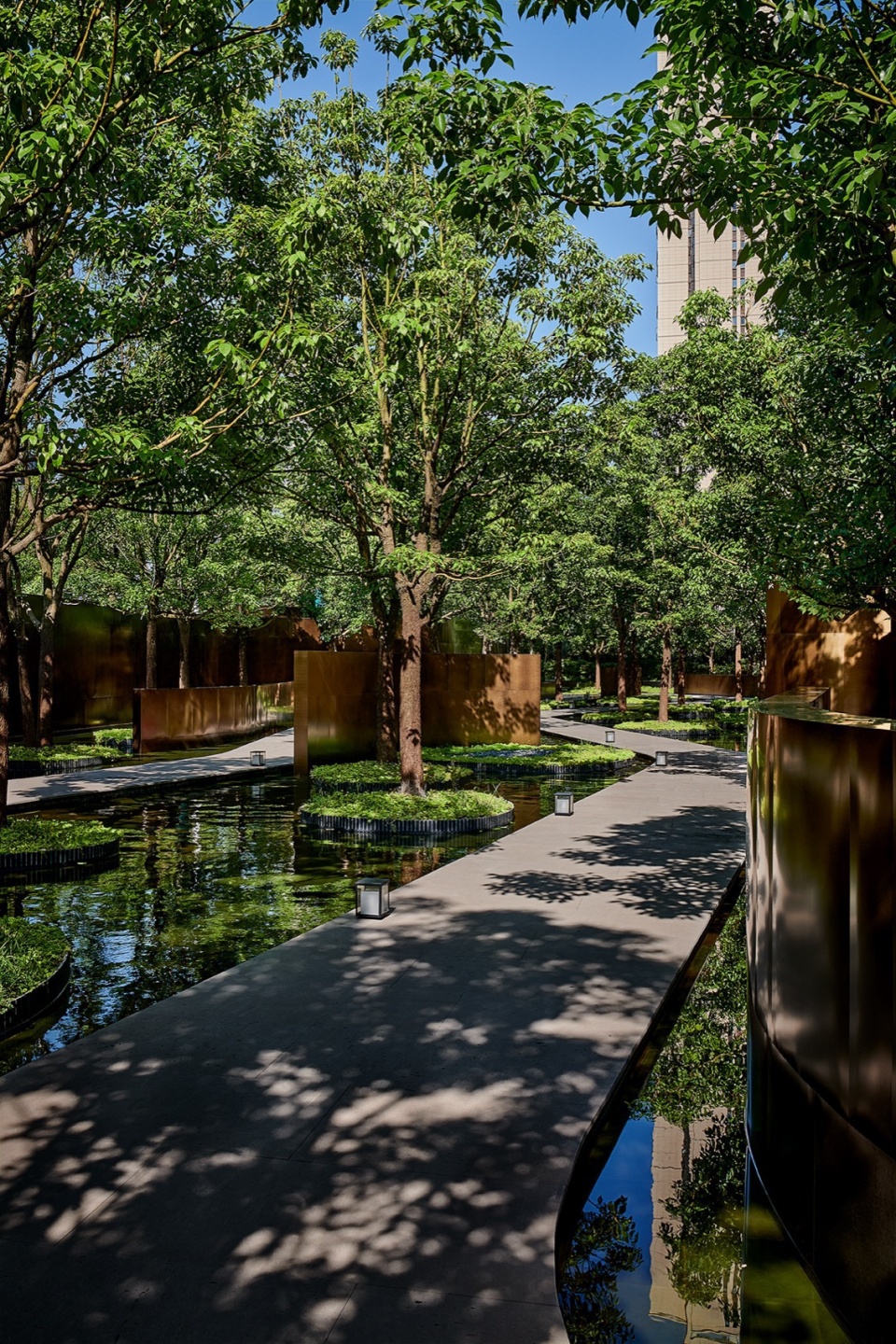
▼水中小径上的树荫,Trees shade the road
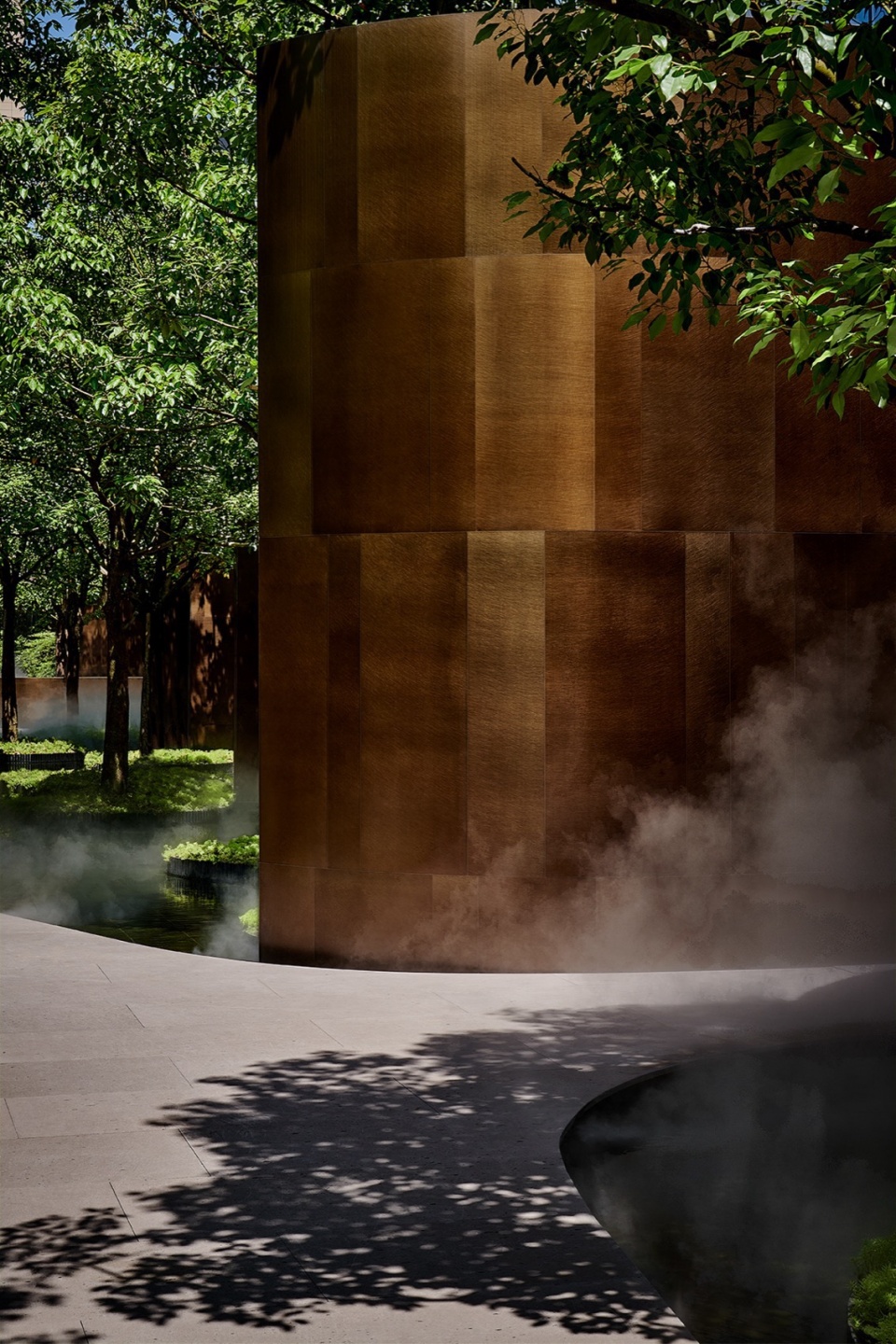
▼园林夜景,Night-view
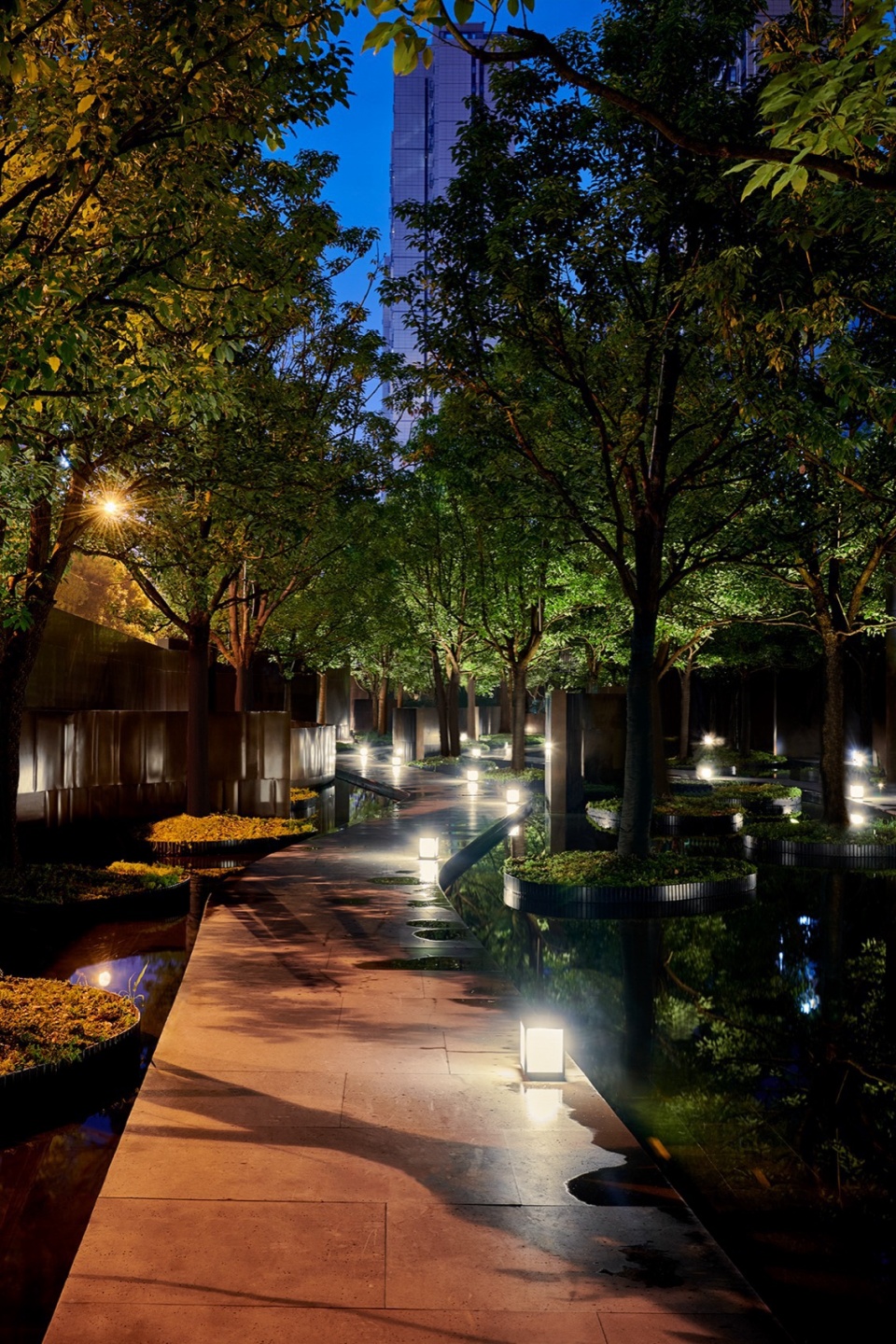
▼夜色小径,Night-view of the garden
山径与岛 Islands Shape the Mountain Road
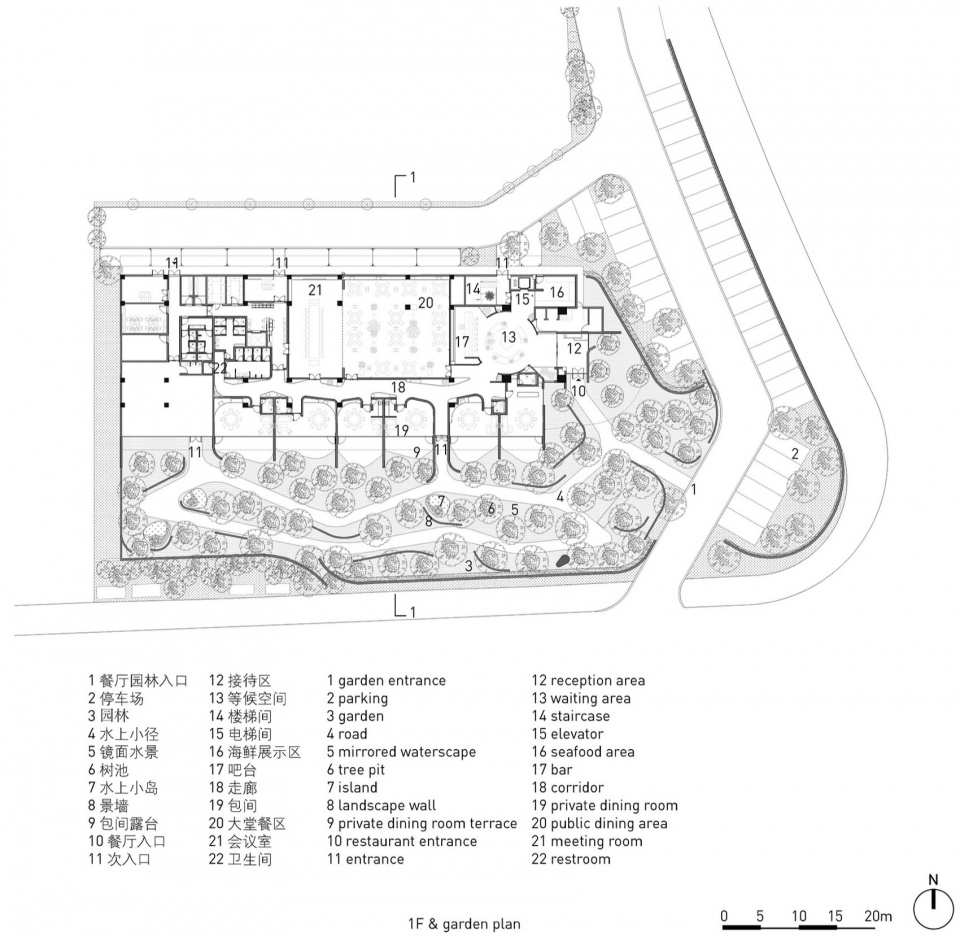
沿着水上步道穿越林荫曲径,以慢下来的心绪步入建筑。餐厅入口接待区以圆形空间整合多组流线,将人群分散至包间走廊,宴会厅,吧台,楼梯间,电梯间,展示区等。
▼设计手稿-建筑入口,Sketch – entrance
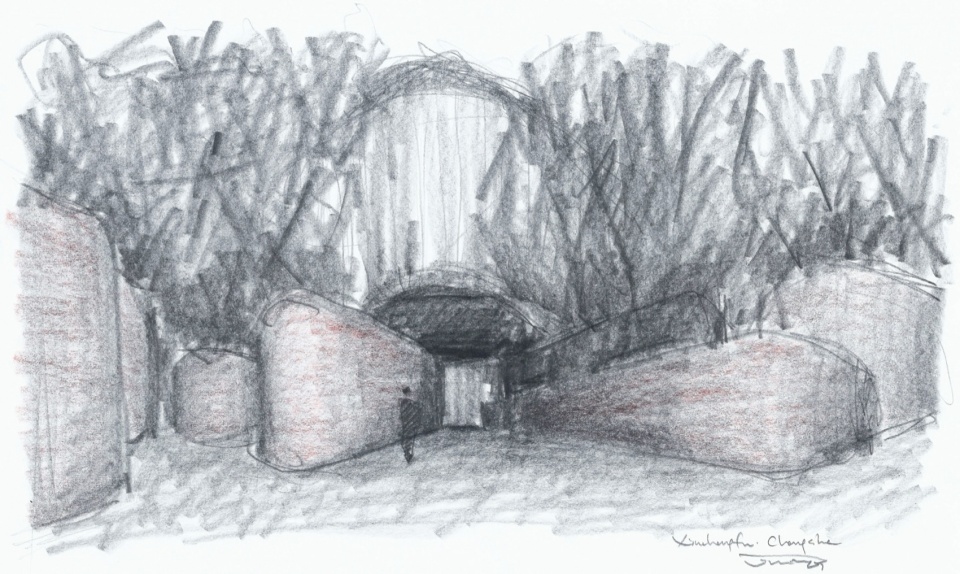
Stroll into the restaurant along the water walkway across the trees’ path. The entrance reception integrates diverse routes in a circle space. It introduces people to the corridor, the public dining area, the bar, the staircase, the elevator hall, and the seafood-showing area.
▼岛,Island
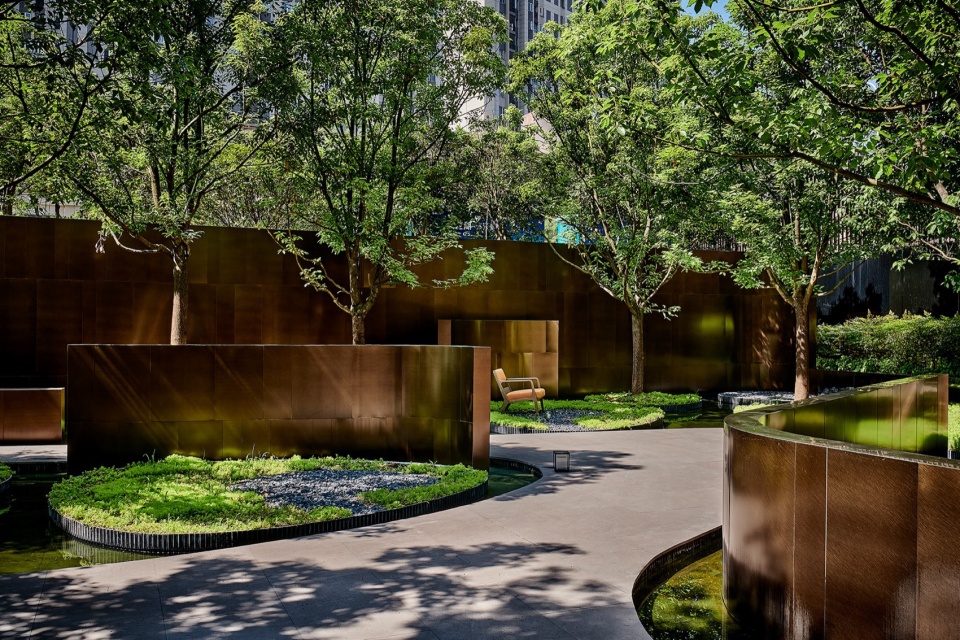
▼水中小岛,Island in the mirrored waterscape
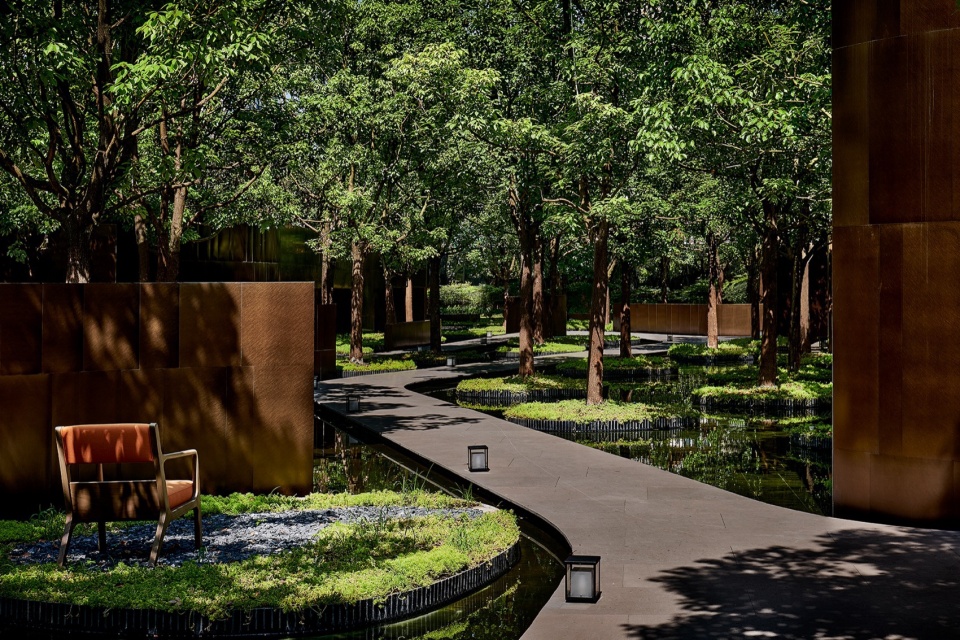
▼通往建筑的小径,Approach to the restaurant
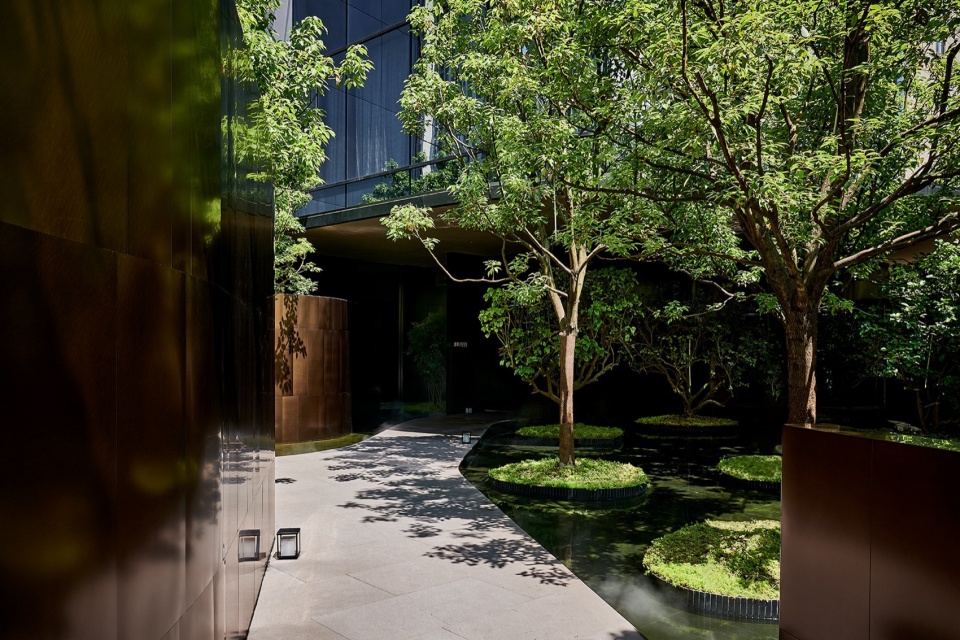
▼建筑入口的绿植如伞盖,Trees cover the garden
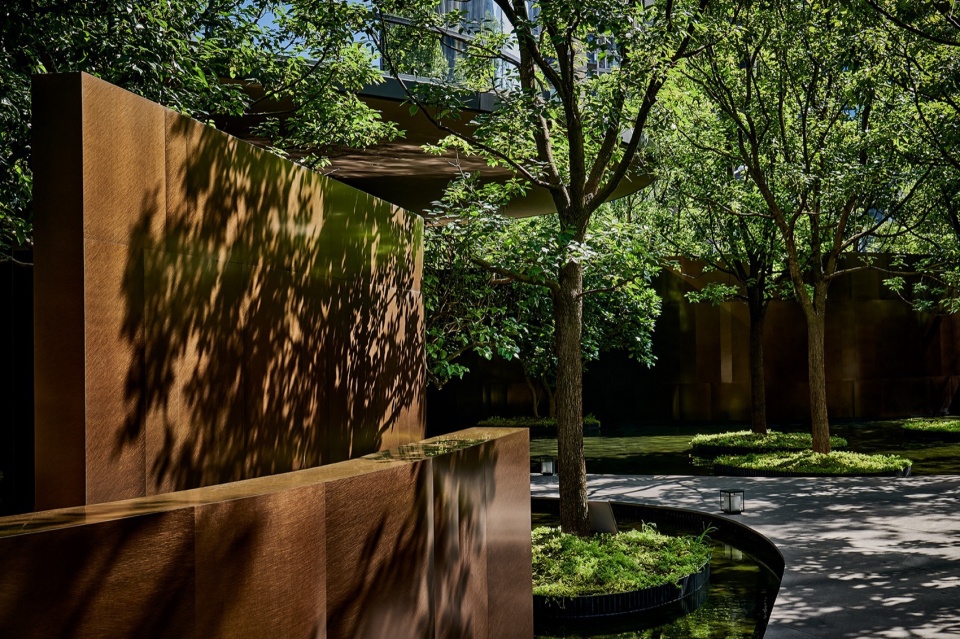
▼建筑入口,Restaurant entrance
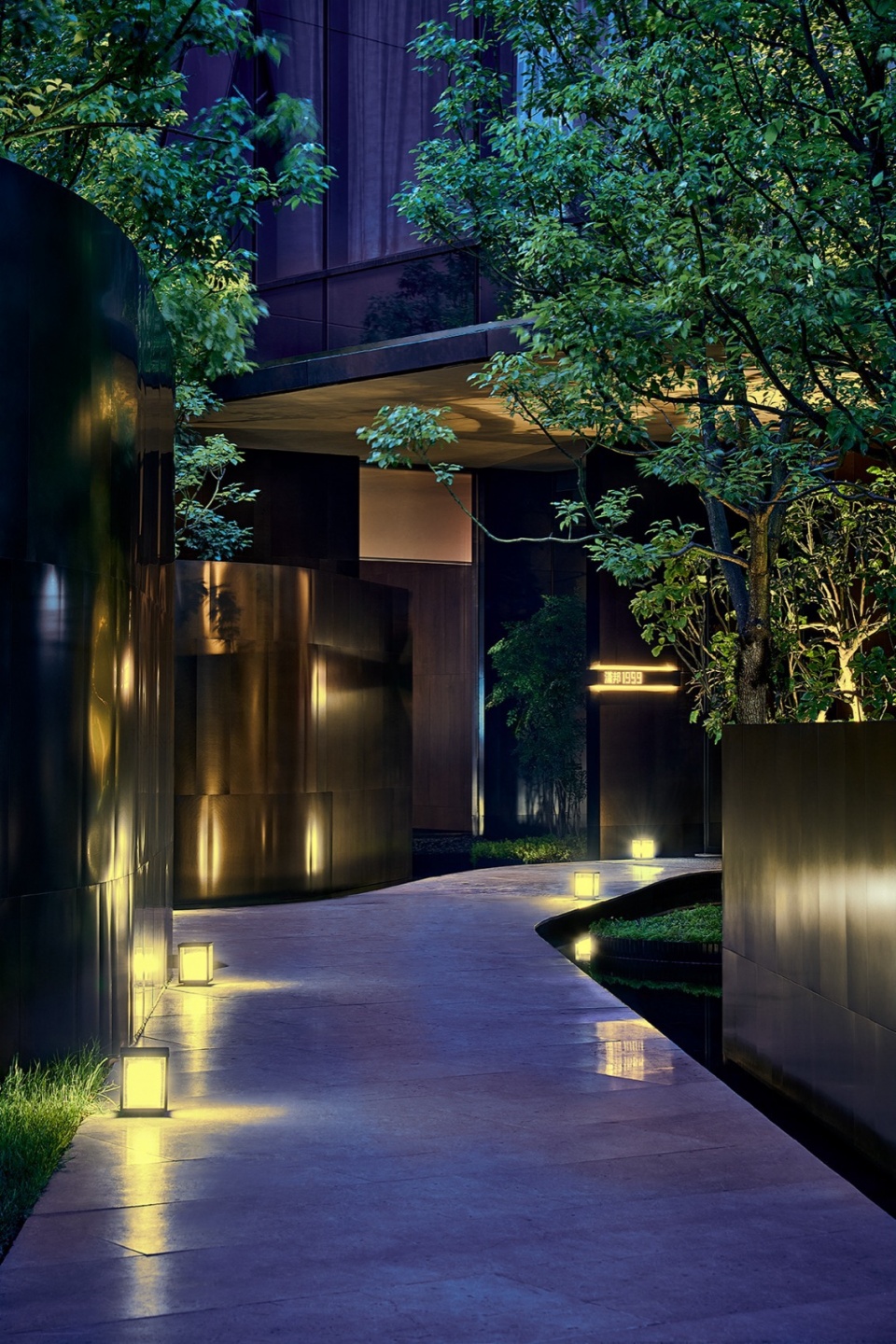
▼建筑入口檐下,Entrance under the eave
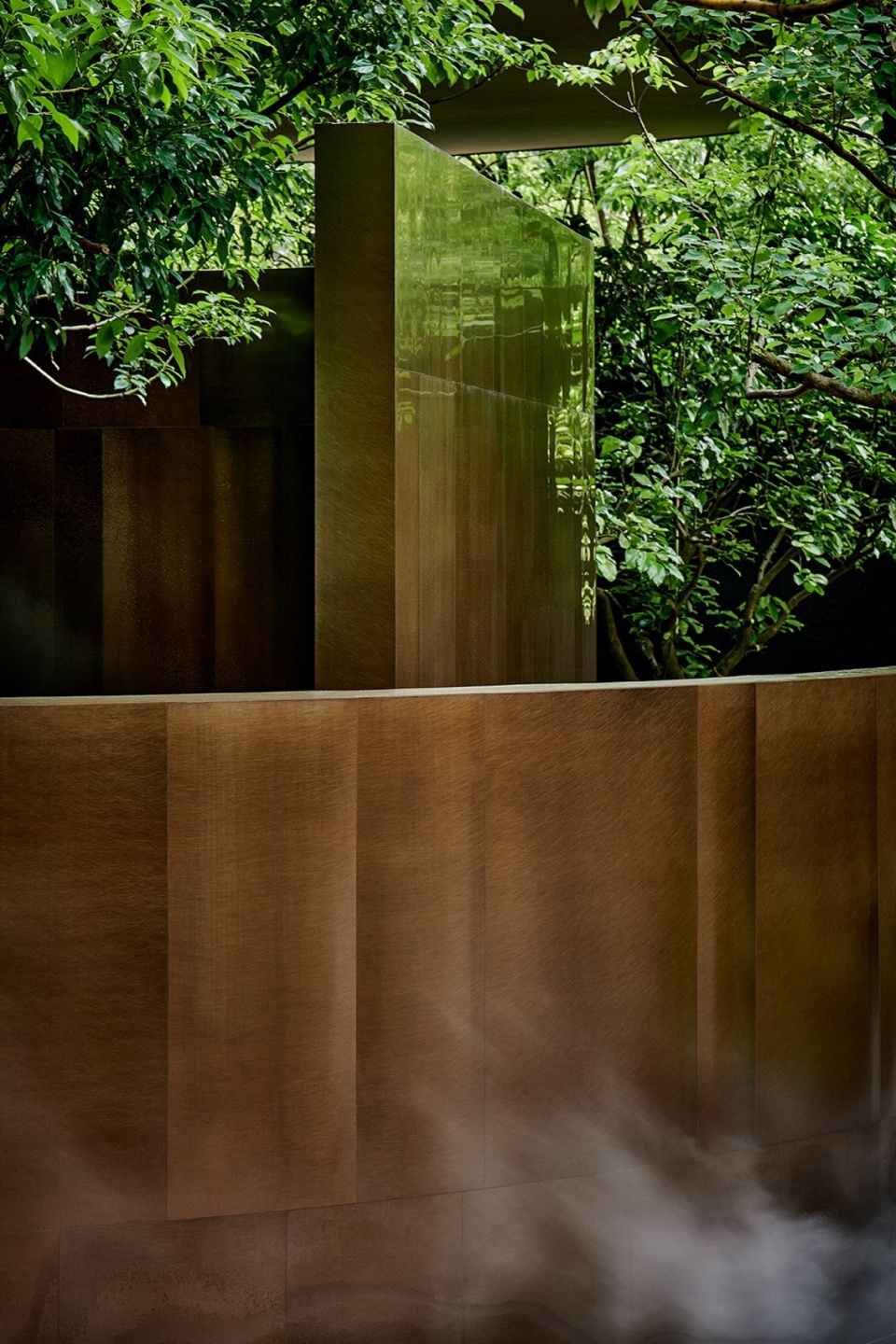
▼室内走廊入口,Enter the corridor
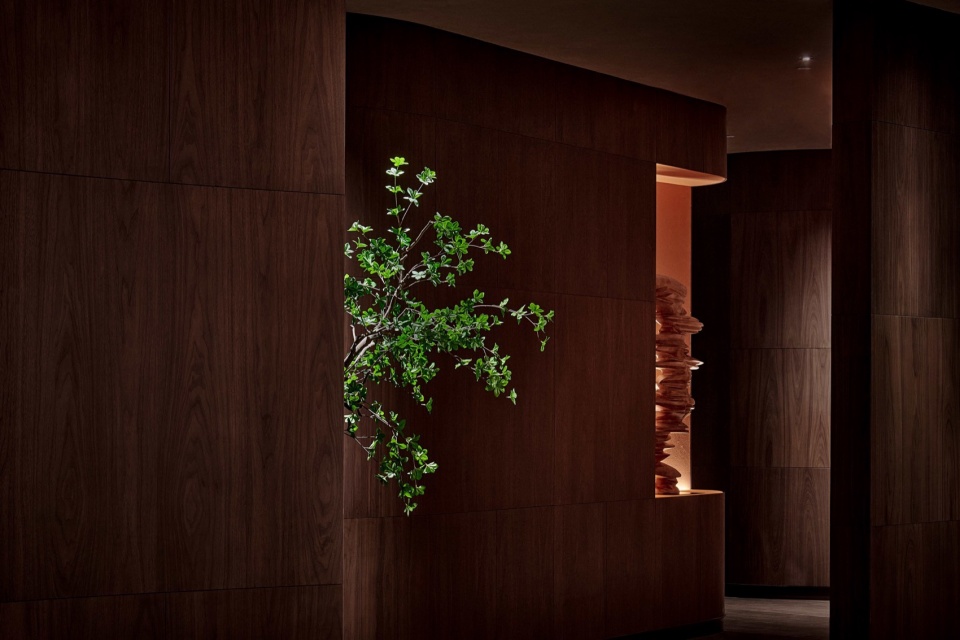
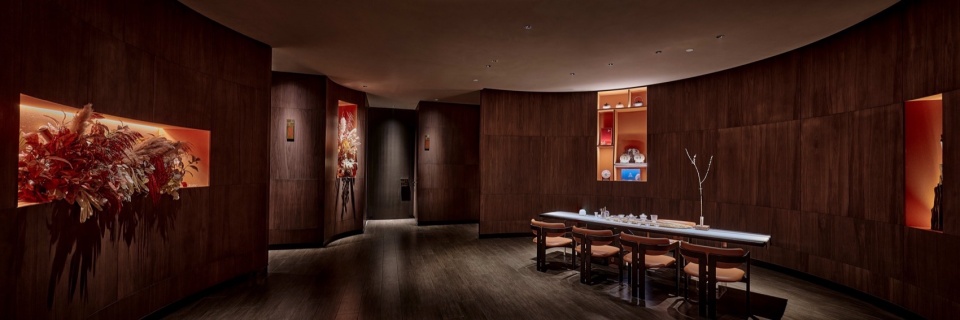
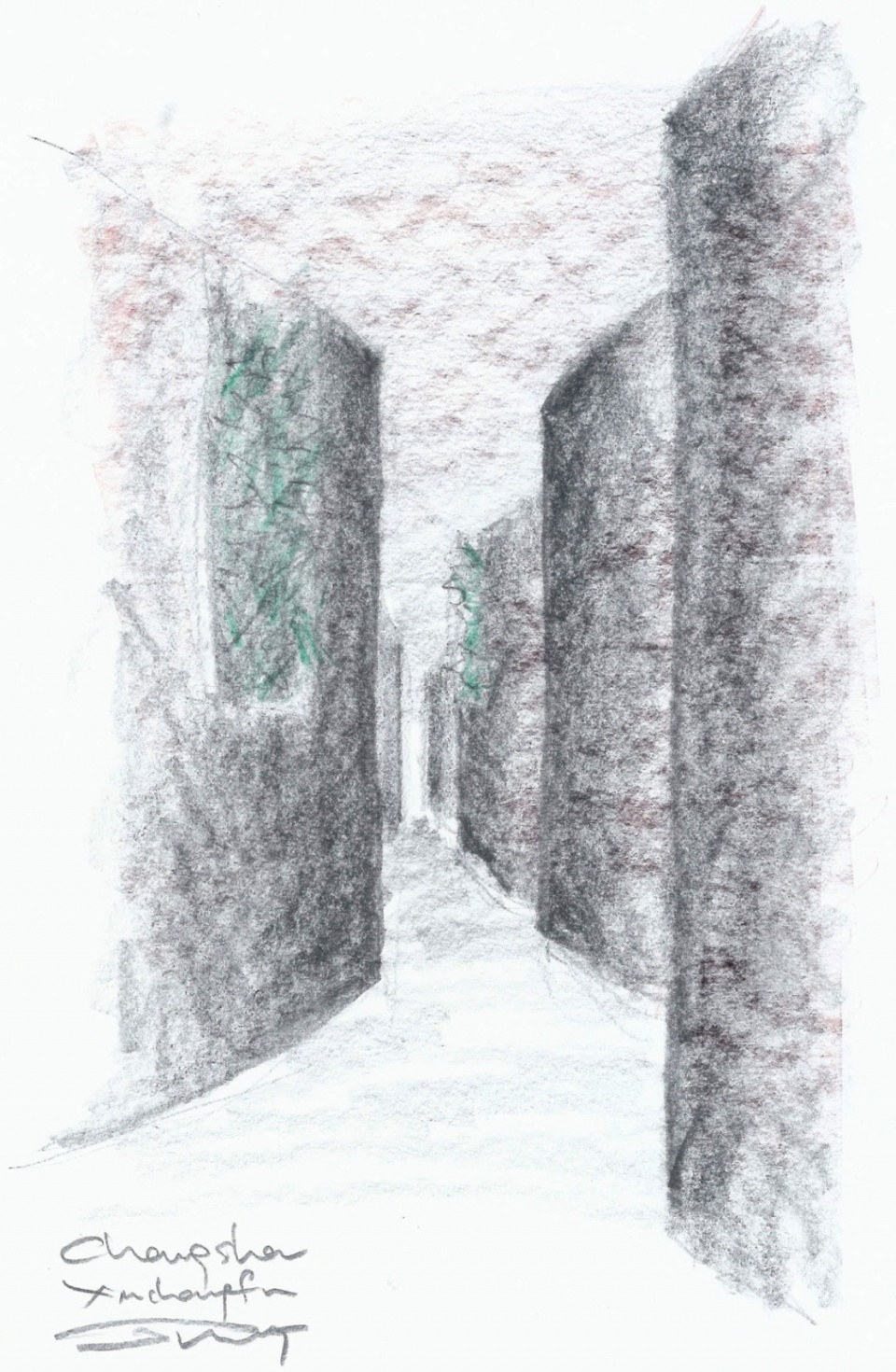
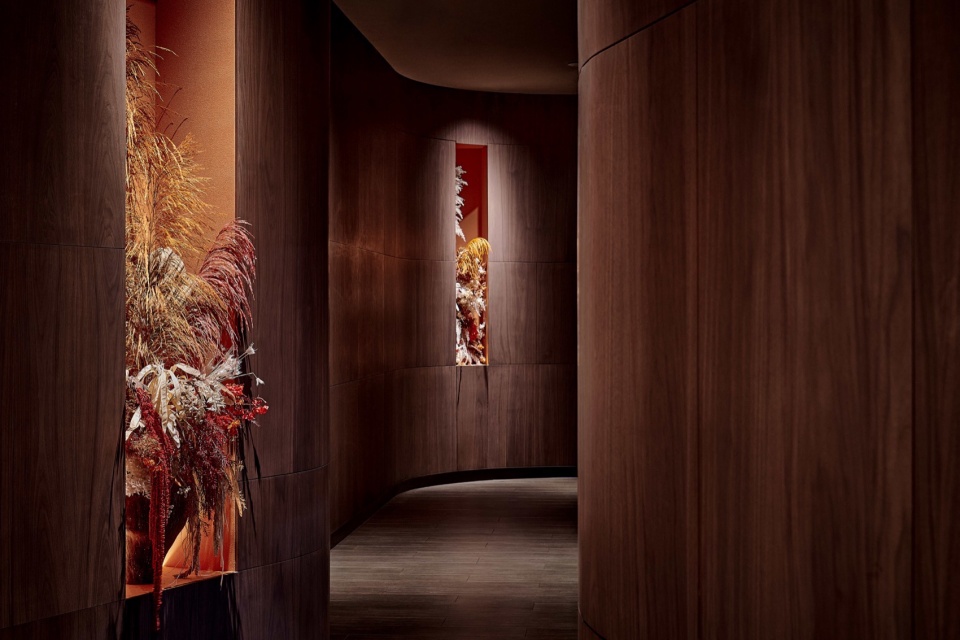
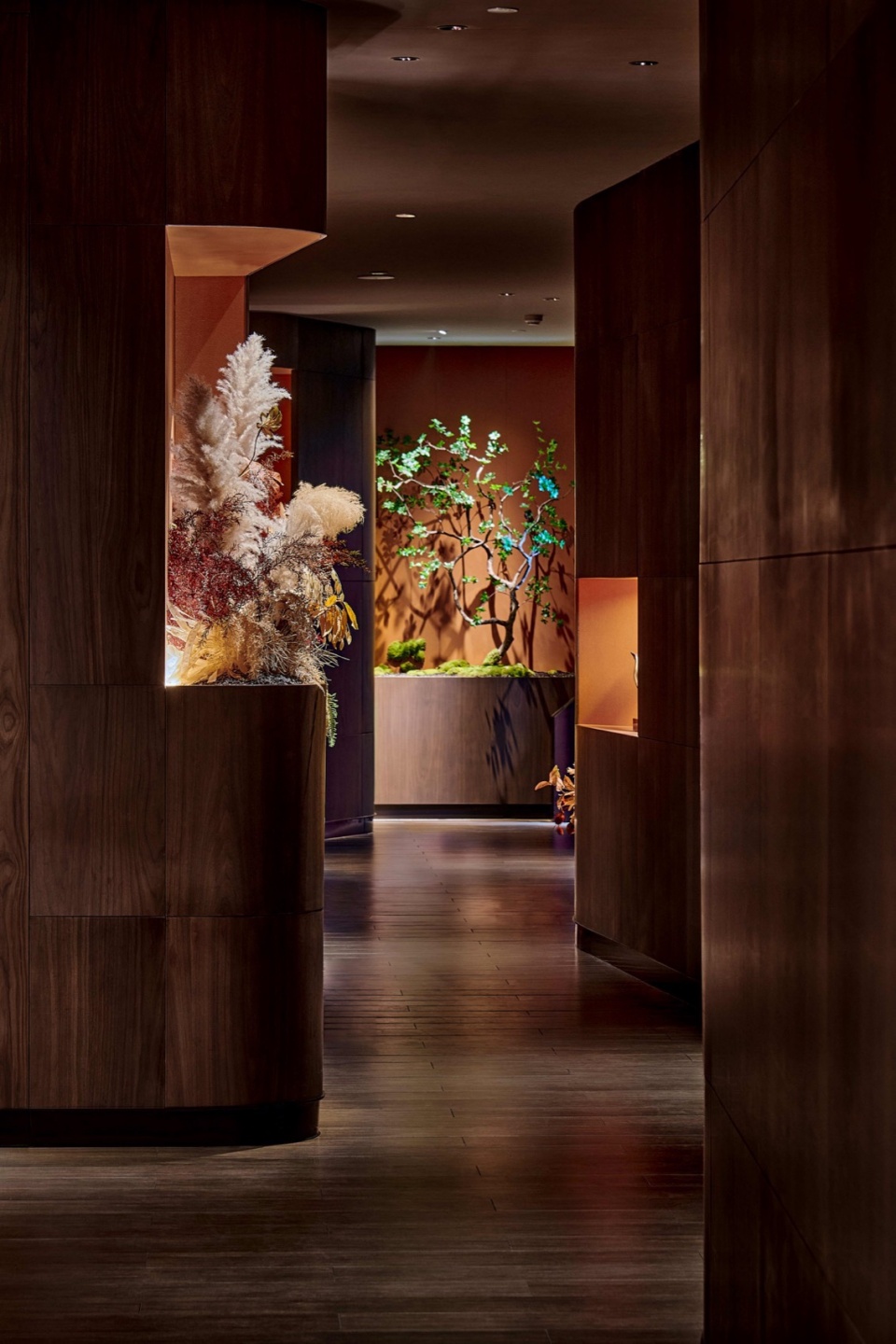
包间的露台伸向水中园林,玻璃的建筑外立面打破内外边界,将视野从室内拓展到室外,也反射景观。一个个独立的岛屿包间,通过露台连接园林和室内。弧形墙体由内向外围合岛屿空间,而包间室内一侧的弧形边界则定义着内部的动线。沿着岛的轮廓,室内廊道形成连续变化的游径,以旷奥的山为语言,廊道两侧墙体刻入壁龛凹槽,置以植物和艺术品。两边的入口隐藏在洞穴般的山径内,构成纯粹的风景。
The terrace of the private dining room spreads into the water garden. The façade of glass dispels its edge, extends the view from the interiors into the exteriors, and also reflects the landscape. These solo islands of private dining rooms connect the garden to the interiors with its terrace. The curved wall around the island from in to out and the inside surface defines the inner circulation. Following the island’s outline, the interior corridor forms a continuous space. Based on the elements of mountains, corridor walls carve out the alcove and niche, exhibiting in greens and artworks. The entrance of the private dining room, hidden in the curved corridor (like the cave), remains a purist scene for people.
▼ 一层园林包间,Private dining room with a terrace
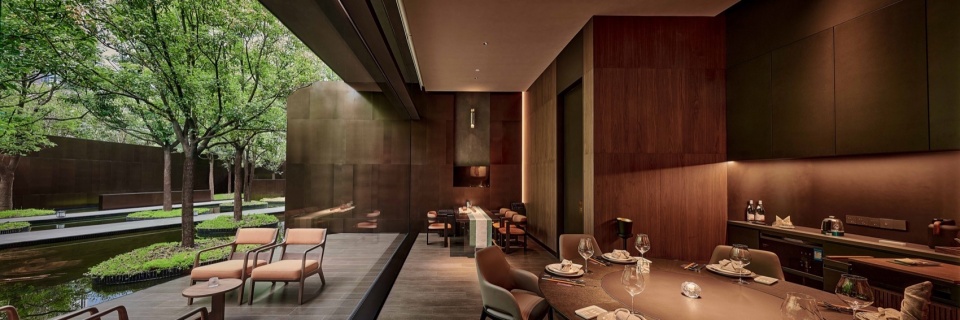
▼室内墙体延伸至室外园林,The wall extends to the garden
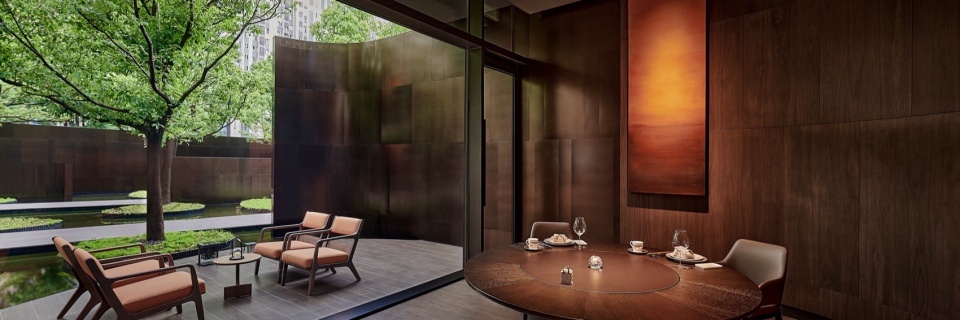
▼宴会厅全景,Panorama of the public dining area
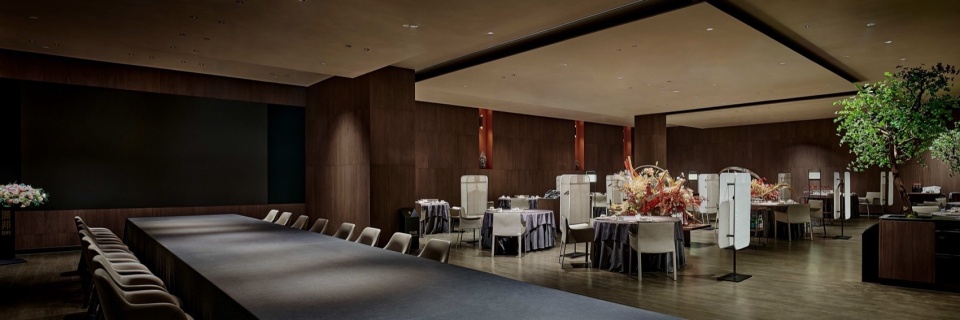
▼二层茶厅全景,Tea space panorama
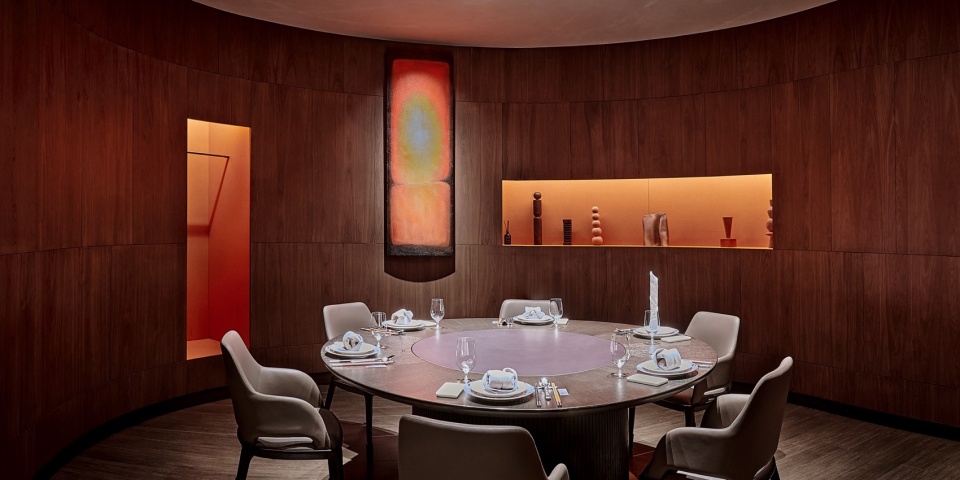
▼包间,Private dining room
▼茶厅,Tea space
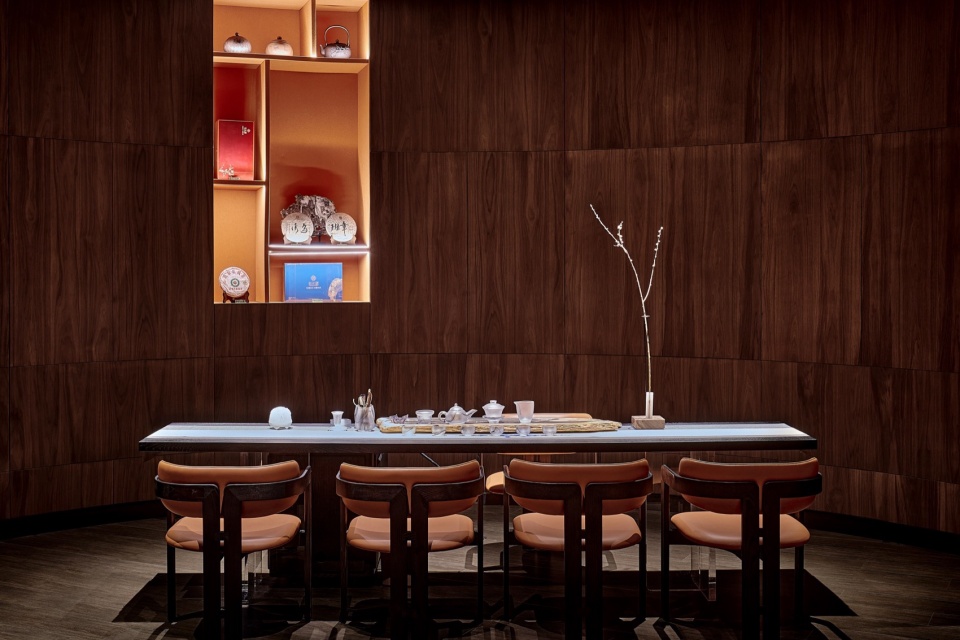
室内仅饰以木质和绒布。设计将几种基础纹理和模数的面板通过数字化拼贴模拟,组合出自然无重复的整块墙面,现场通过编号和点位进行施工。自然简约的物质构成将人的注意力留在空间和餐饮的感知上。深色地材和环境色调也让场所趋于静谧惬意,营造沉浸的空间体验。
▼设计手稿-走廊,Sketch – corridor
Interiors are decorated with timber veneer and velvet fabrics only. The wall surface is made of several mode panels in different textures. A digital collage process simulates and organizes the natural and random texture of the whole wall, which is constructed based on the numbers and coordinates of all materials on the site. Simple elements keep people’s attention on the space and dining sense. Dark flooring and surroundings’ colors make the place quiet, cozy, and immersed.
▼流动的走廊,Natural Corridor
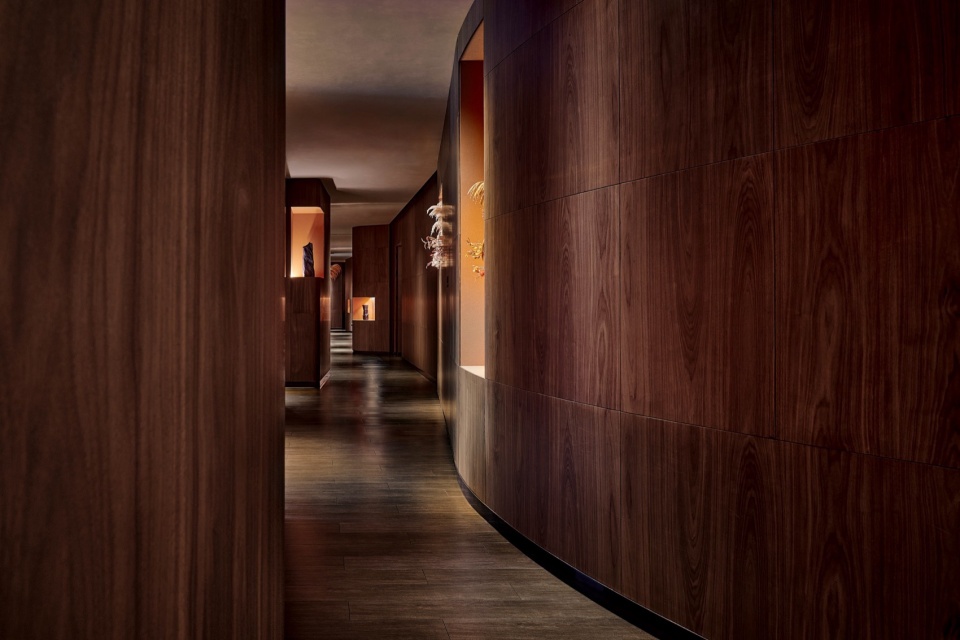
▼主走廊-岛的轮廓,Corridor – outline of the island
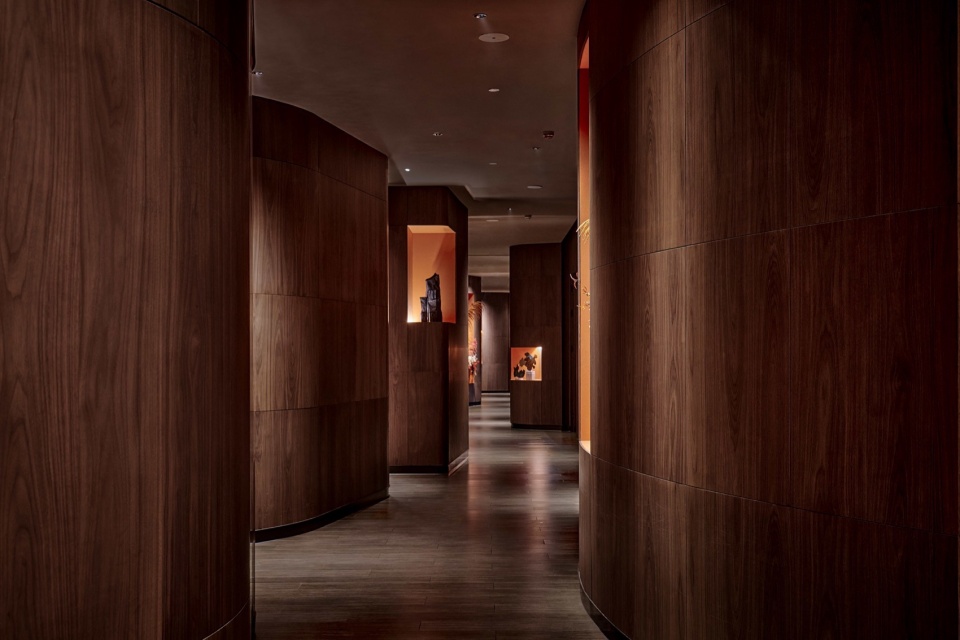
▼弯曲的走廊,Curved corridor
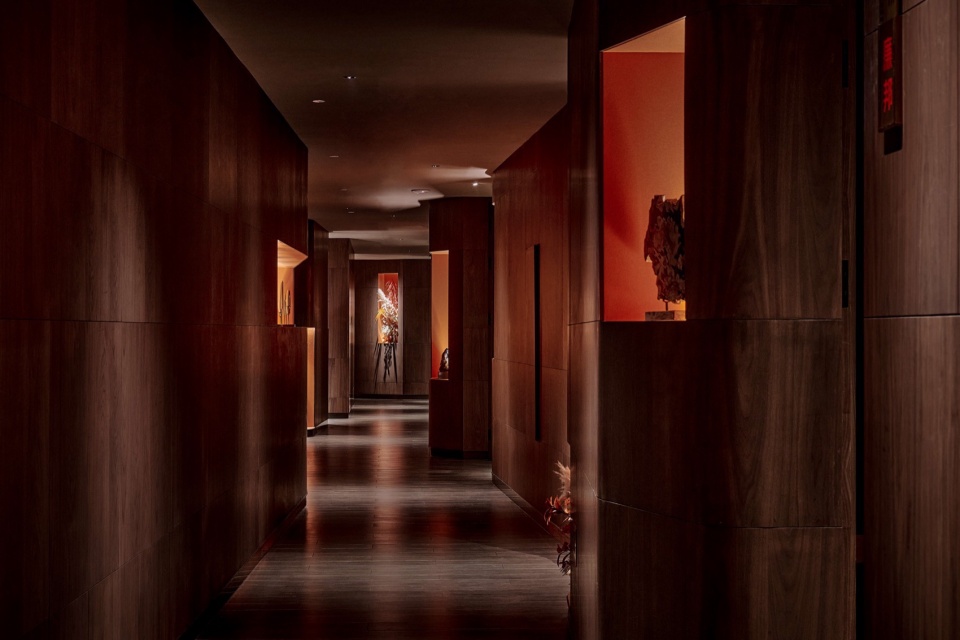
▼二层走廊,Second-floor corridor
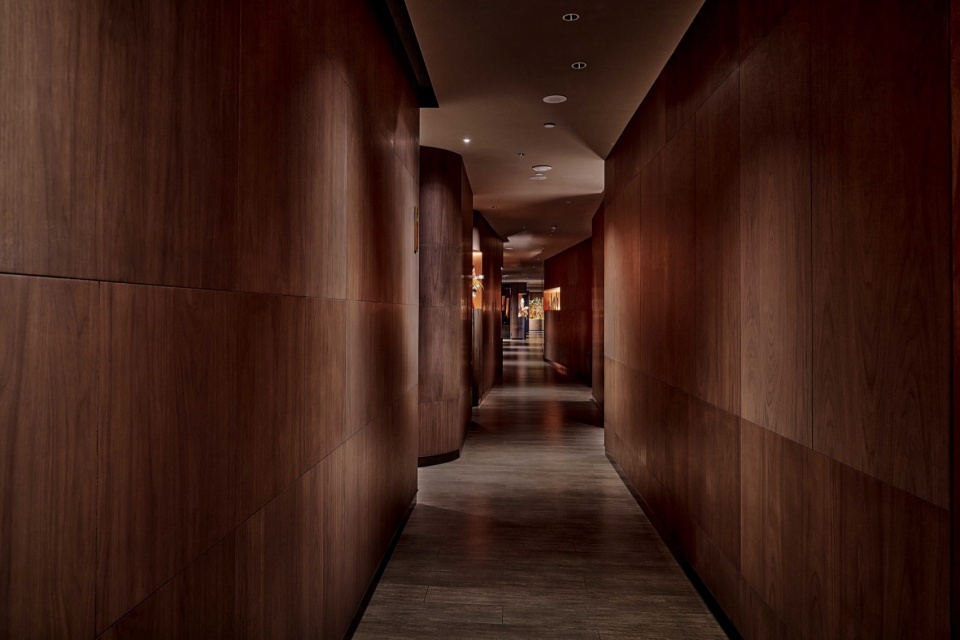
▼壁龛里的花艺,Floral in the niche
▼绿植嵌入壁龛,Plants in the niches
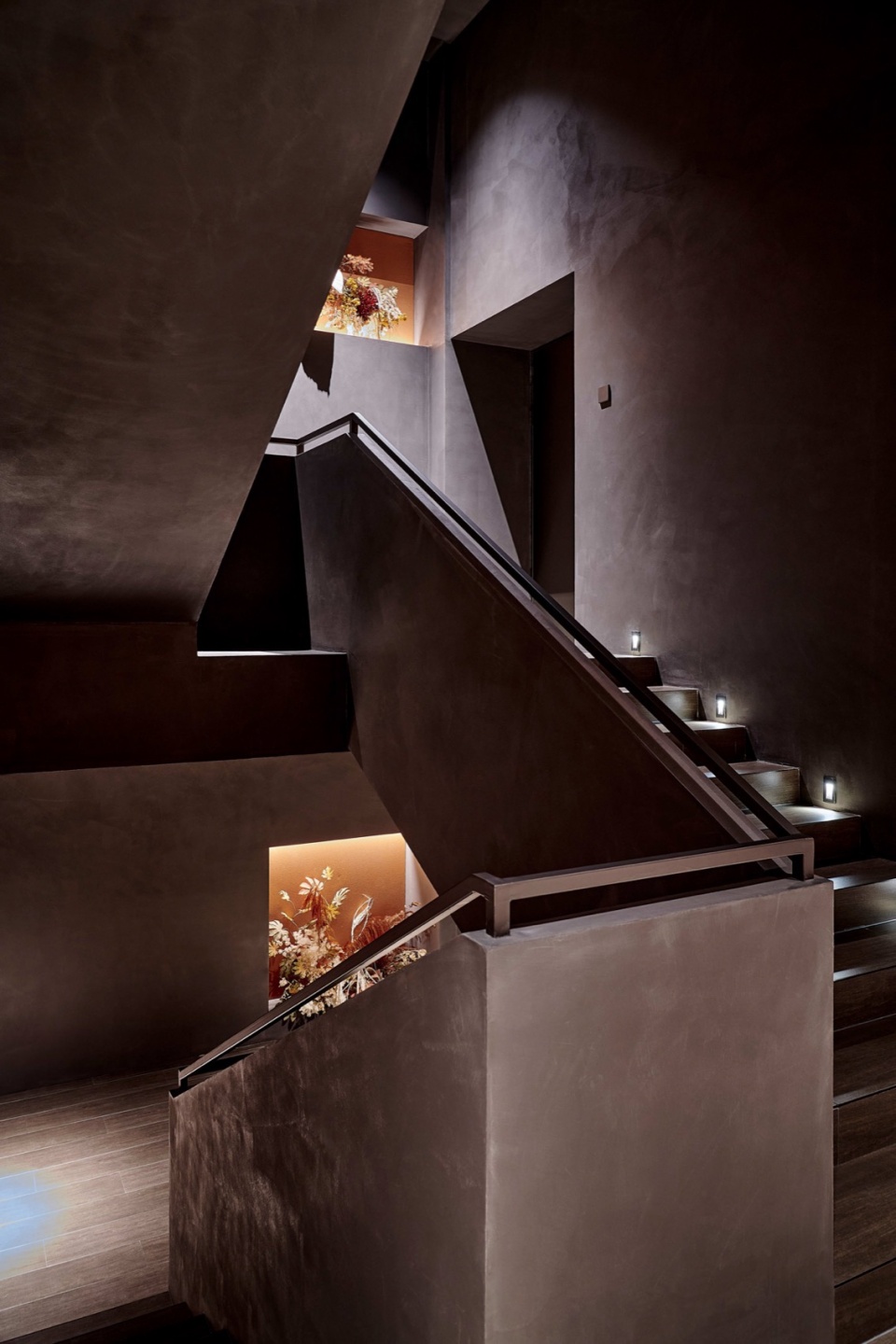
▼楼梯间,Staircase
项目以桃源意象构成建筑和城市之间的园林,解决场地问题的同时,放大景观体验和非城市的感知。以岛的元素统一园林和室内的表达,以山中小径和洞穴生成空间及功能,在城市中创造一处避世园林餐厅。
This project symbolized The Peach Blossom Spring as a garden between architecture and urban, resolving the existing issues and strengthening the landscape experience and un-urban sense. The island element cohesion the language in the garden and interiors; the mountain road and canyon shape the function, creating a secluded garden restaurant in the city.
▼一层和花园平面图,1F&Garden plan
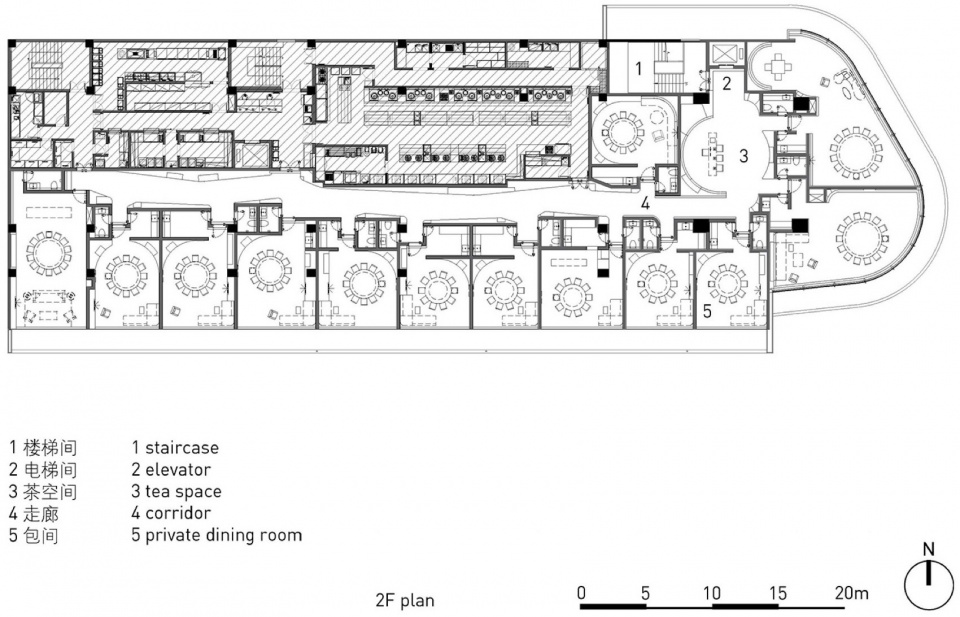
▼二层平面图,2F plan
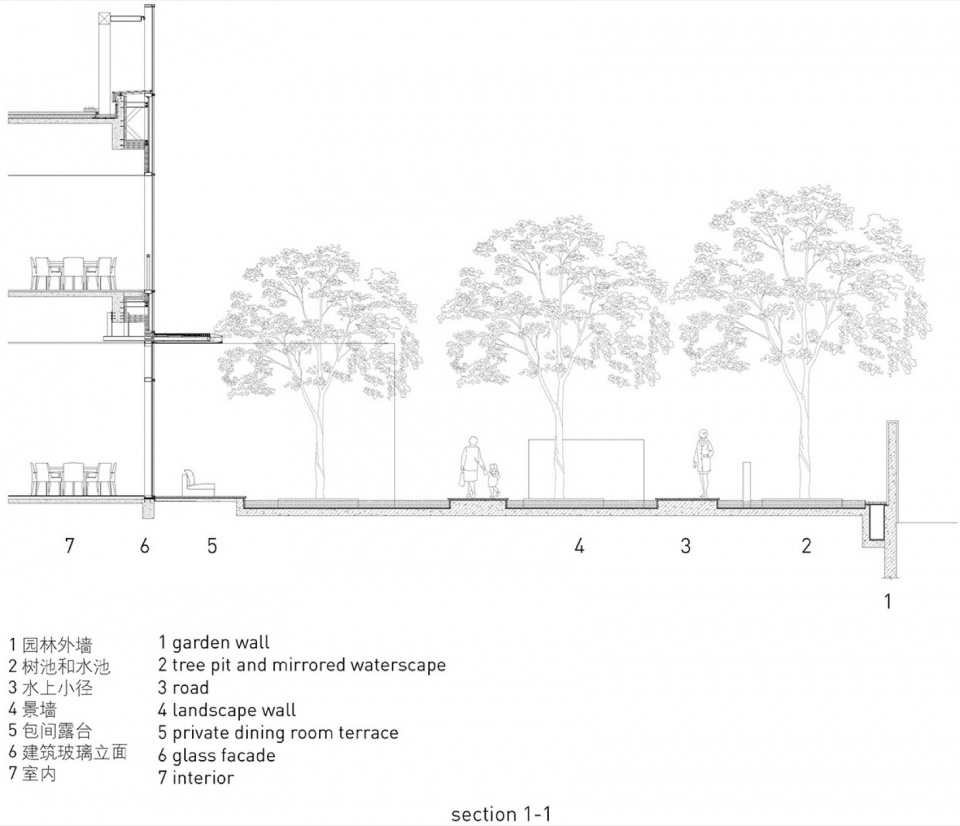
▼剖面图,section1-1
Project Name: XIAOBANG Since 1999 Hunan Cuisine Restaurant
Location: No. 108, Hanguang Rd, Yuelu District, Changsha, China
Site Area: 2600 sqm
Client: Hunan Xinchangfu Industrial Co., Ltd
Architects: PLAT ASIA
Scopes: Architectural Renovation, Curtain Wall, Landscape, Interiors, Lighting, Signage, Decoration
Principal architect: Donghyun JUNG
Project architect: Jingyun Lian
Scheme design teams: Guowei Liu, Yiyi Chen, Xiaozhan Zhang (Landscape), Wanglong Jin, Anqi Shang, Manying Li, Yuanyu Liao
Architecture LDI: ZhongTianYuan Architects & Engineers LTD.
Interiors LDI & Site designers: YiBoChuan (Shandong) Design Institute
Landscape LDI: PLAT ASIA
Curtain wall company: Wuhan Qizhe Engineering Design Co., Ltd
Lighting consultant: Zhu Haiyan
Photo & Video: DW KIM
Main materials: Stainless steel panel, stone, glass, micro-cement, timber veneer, bold velvet fabrics
Plant lists: Camphora officinarum, Citrus medica, Osmanthus fragrans, Sedum lineare, Lawn
Design period: Sep 2021 – Feb 2022
Construction period: Apr 2023 – Dec 2023
Completed: Dec 2023