Oasiz 块根植物店,深圳 / 如室建筑设计事务所
概念 Concept
项目始于对深圳高密度城市环境的回应。作为一座由钢筋混凝土快速生长而成的城市,深圳的空间经验往往呈现出高度秩序化与工业化的特征。Oasiz 新店尝试在这一背景下重新讨论工业建构与自然生命之间的关系,并非通过直接对比制造冲突,而是在同一套空间系统中建立二者的共存逻辑。
The project originated as a response to Shenzhen’s high-density urban environment. As a city rapidly built from reinforced concrete, Shenzhen’s spatial experience often exhibits a highly ordered, industrialized character. Oasiz’s new store attempts to re-examine the relationship between industrial construction and natural life within this context—not by creating direct contrast or conflict, but by establishing a logic of coexistence within a single spatial system.
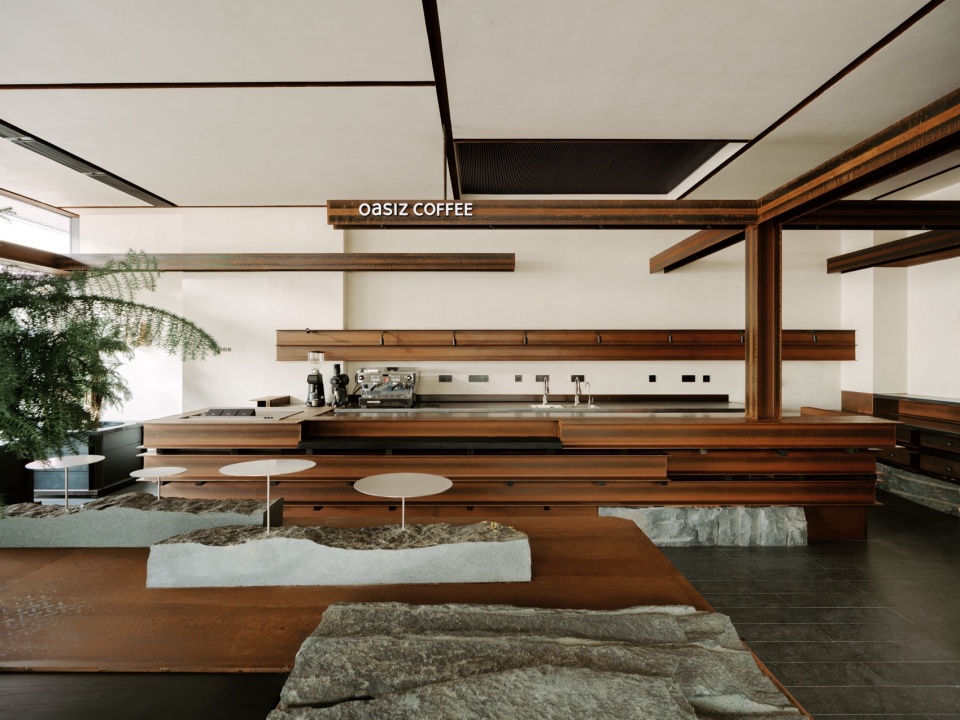
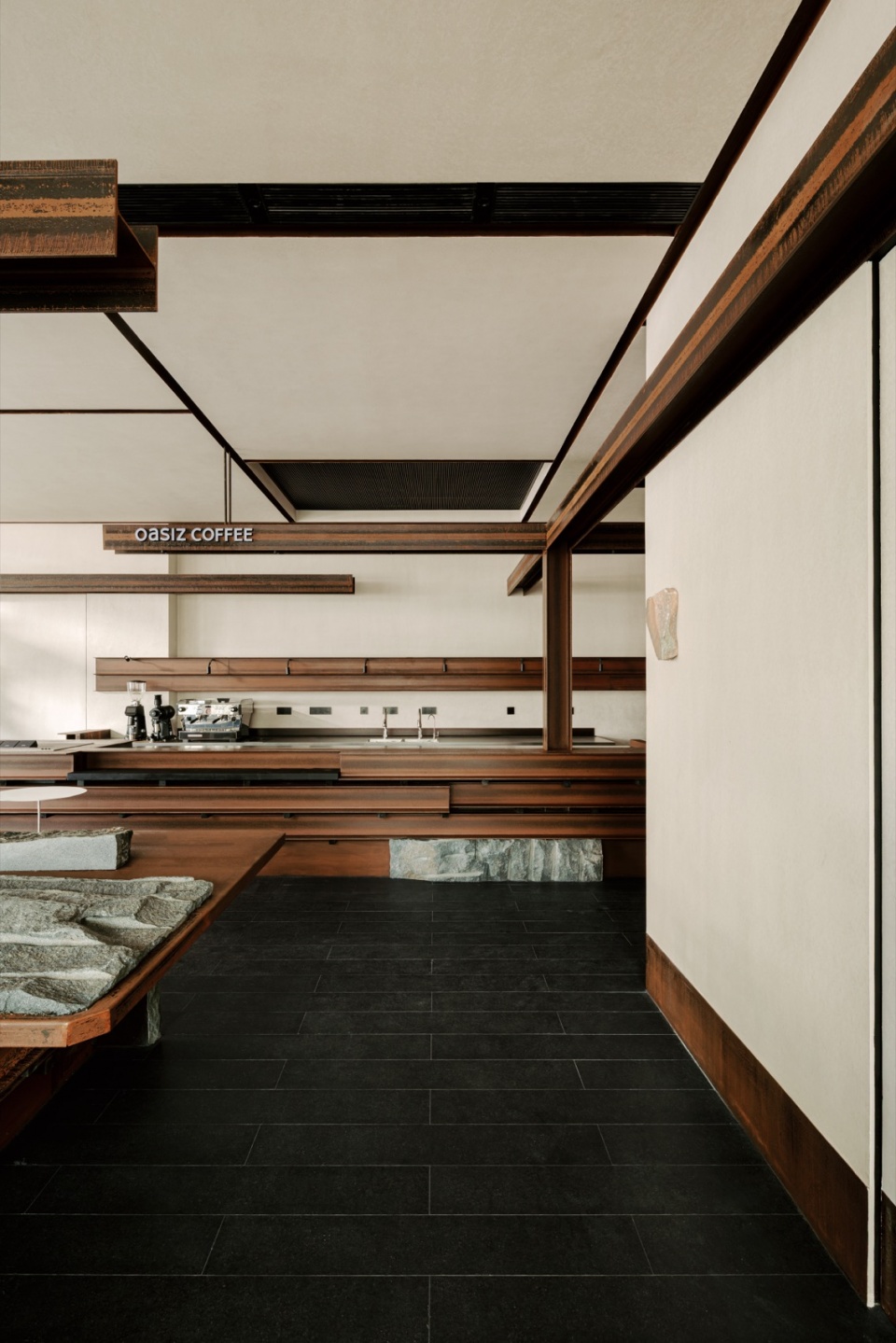
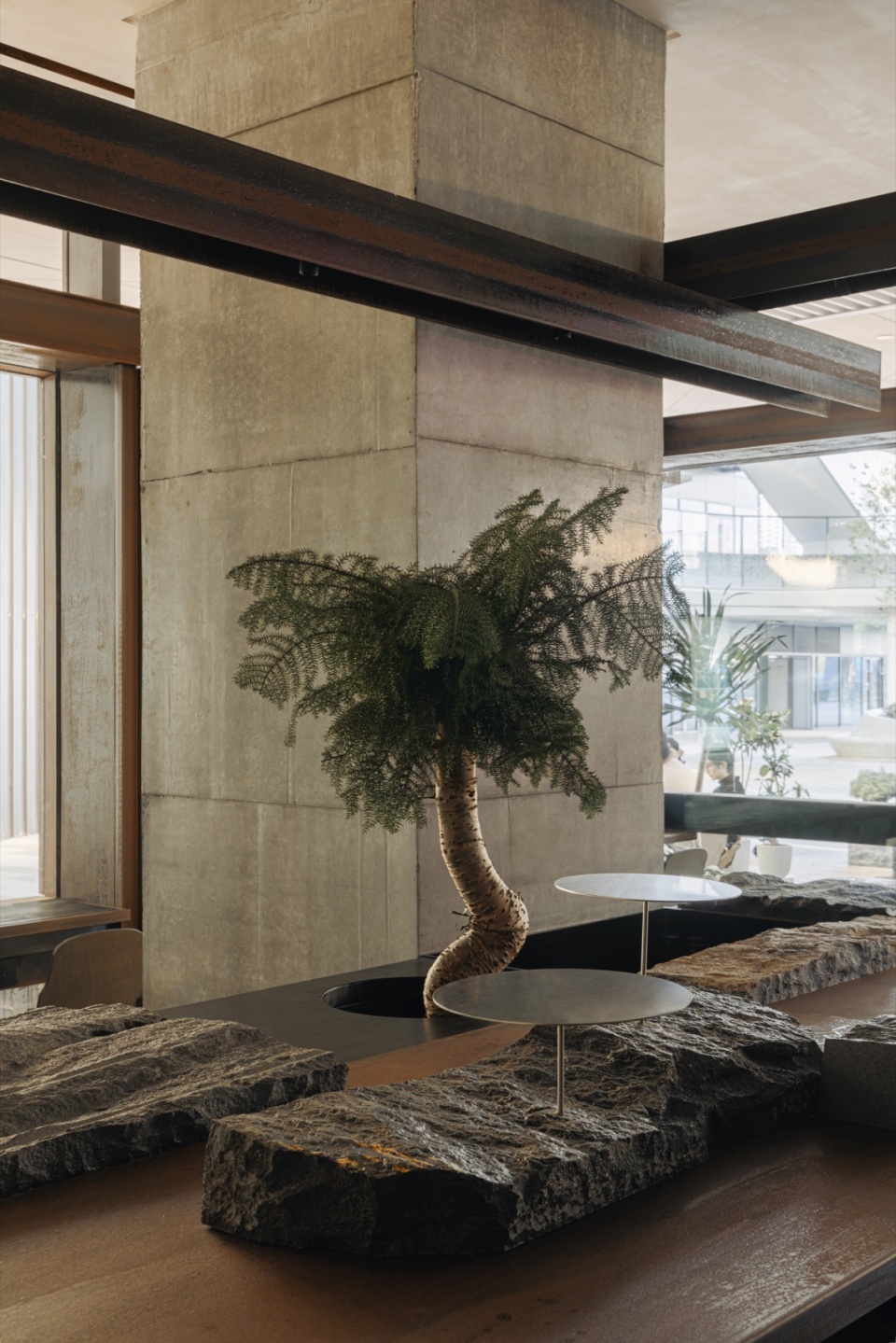
▼展示台与咖啡吧台相互关联,Display platform and coffee bar are interconnected
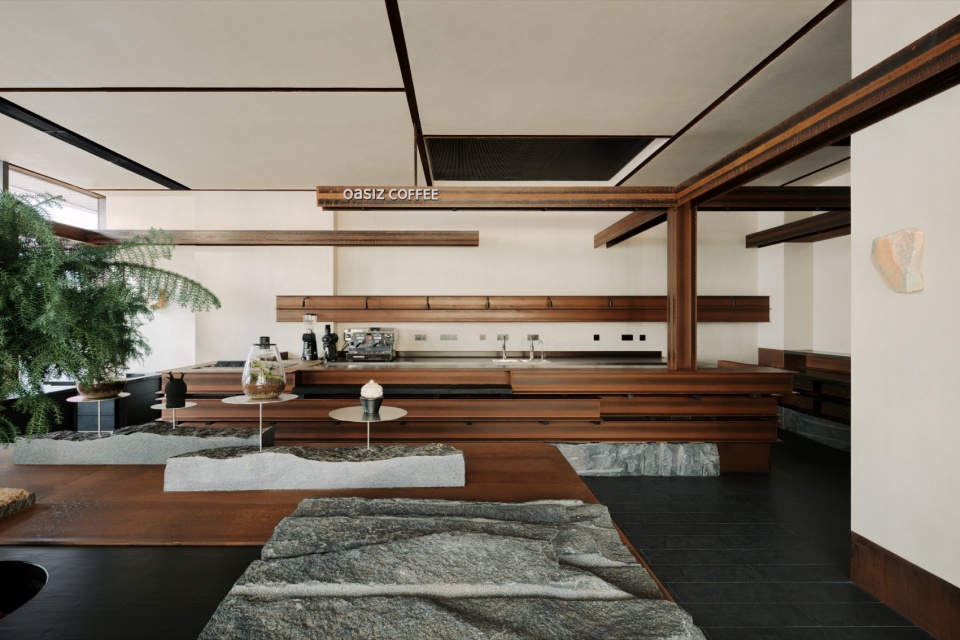
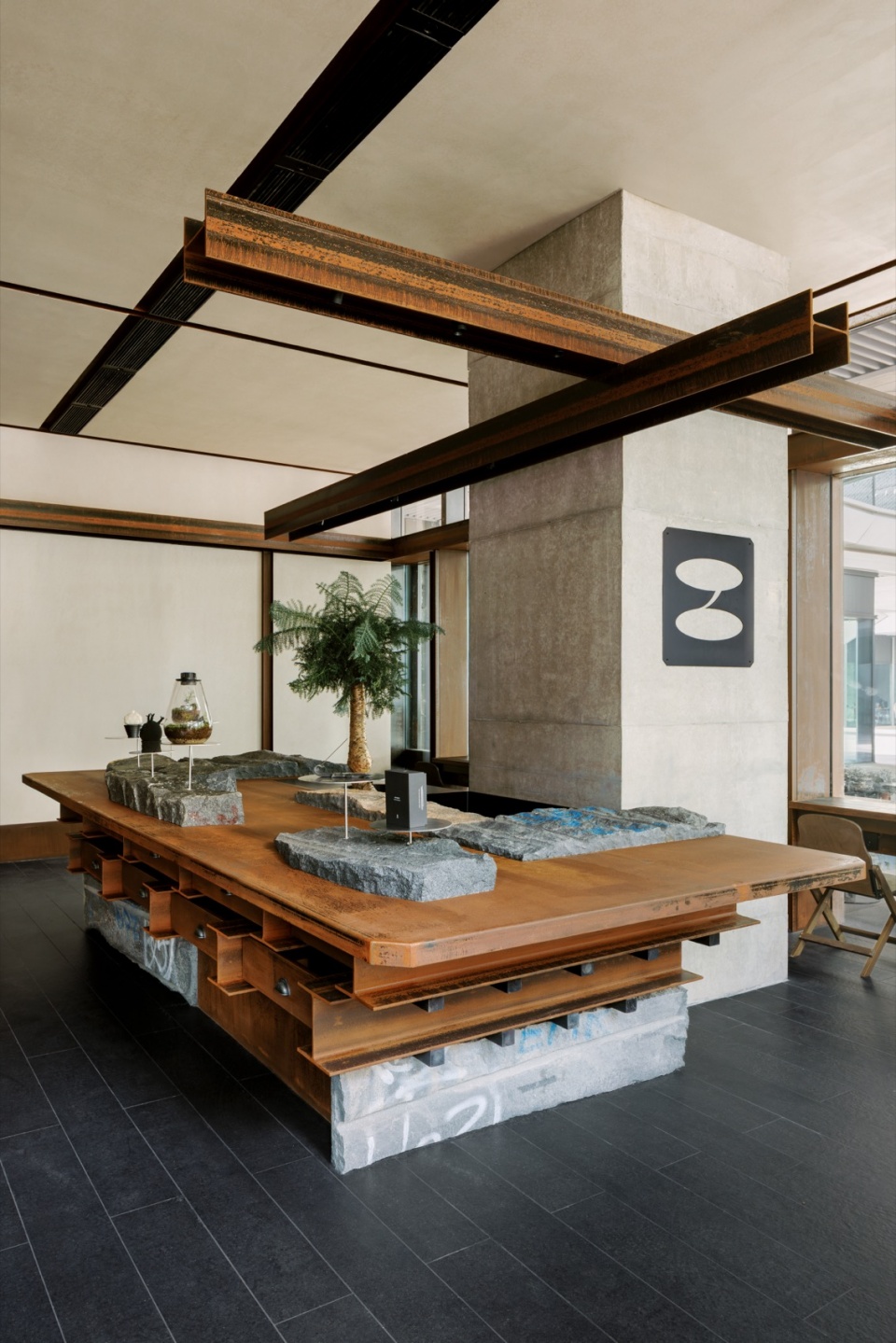
▼中央展示台组织空间视线,Central display table organizes visual focus
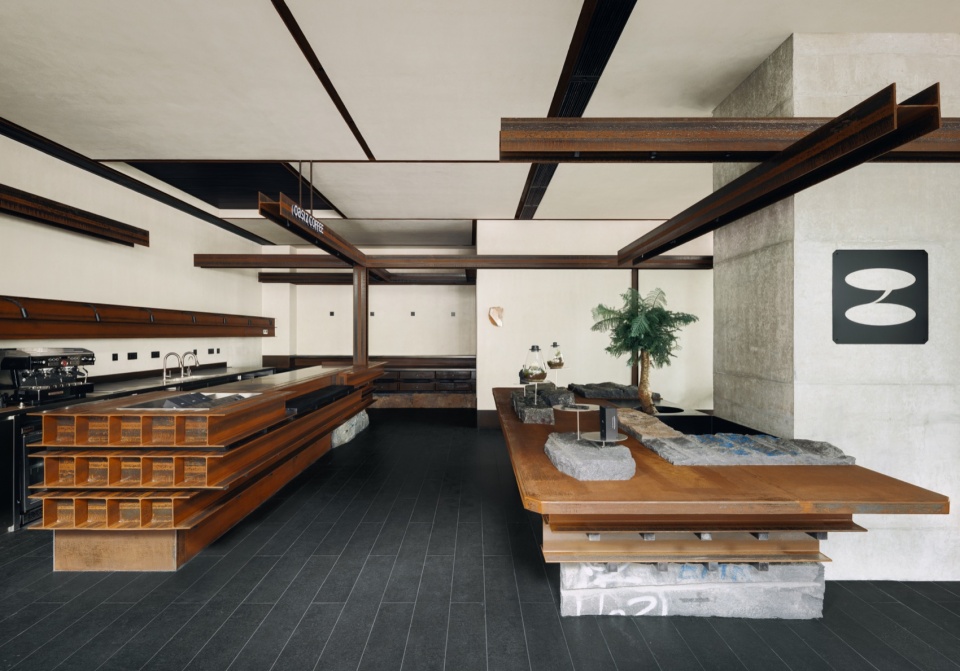
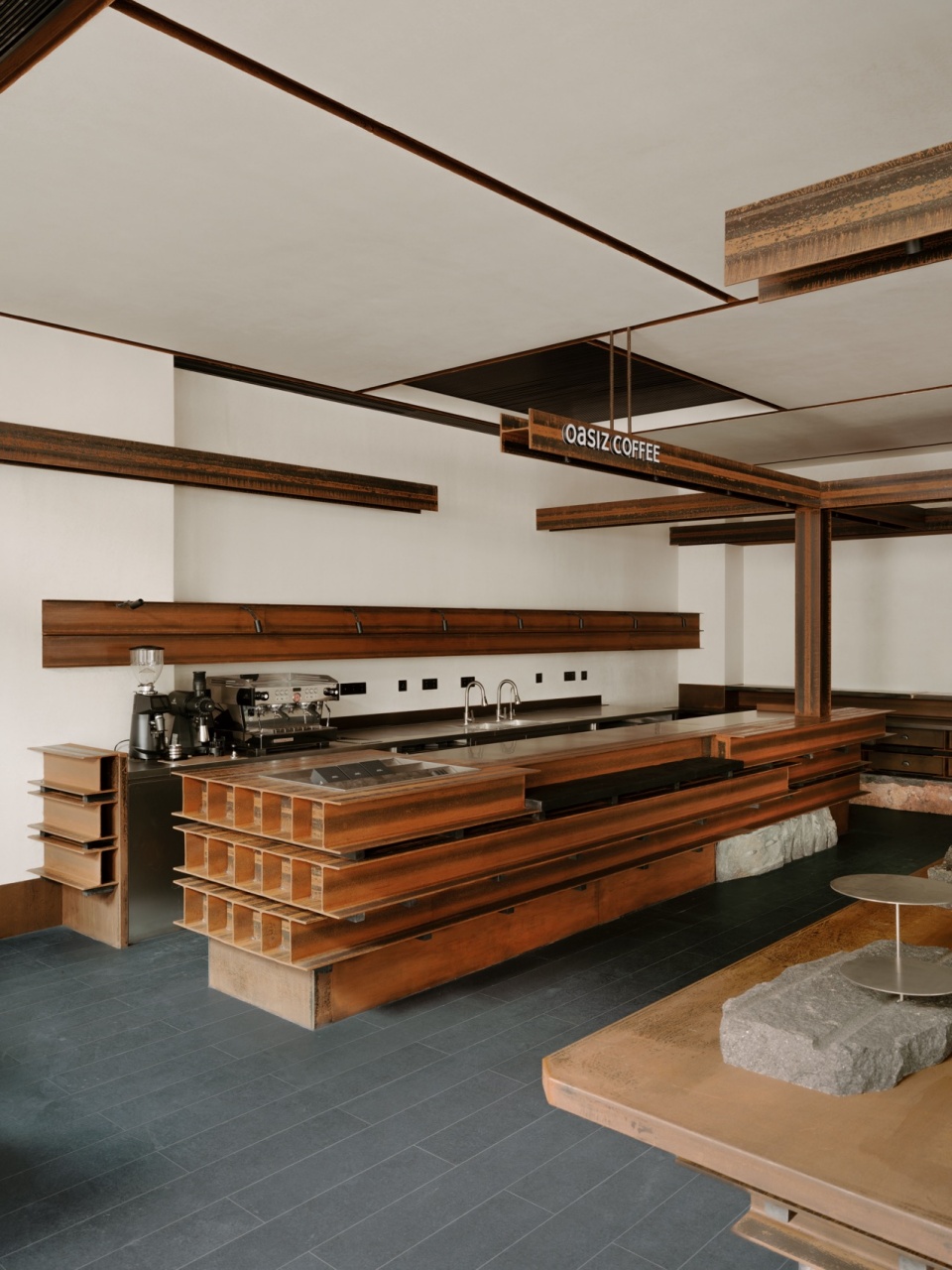
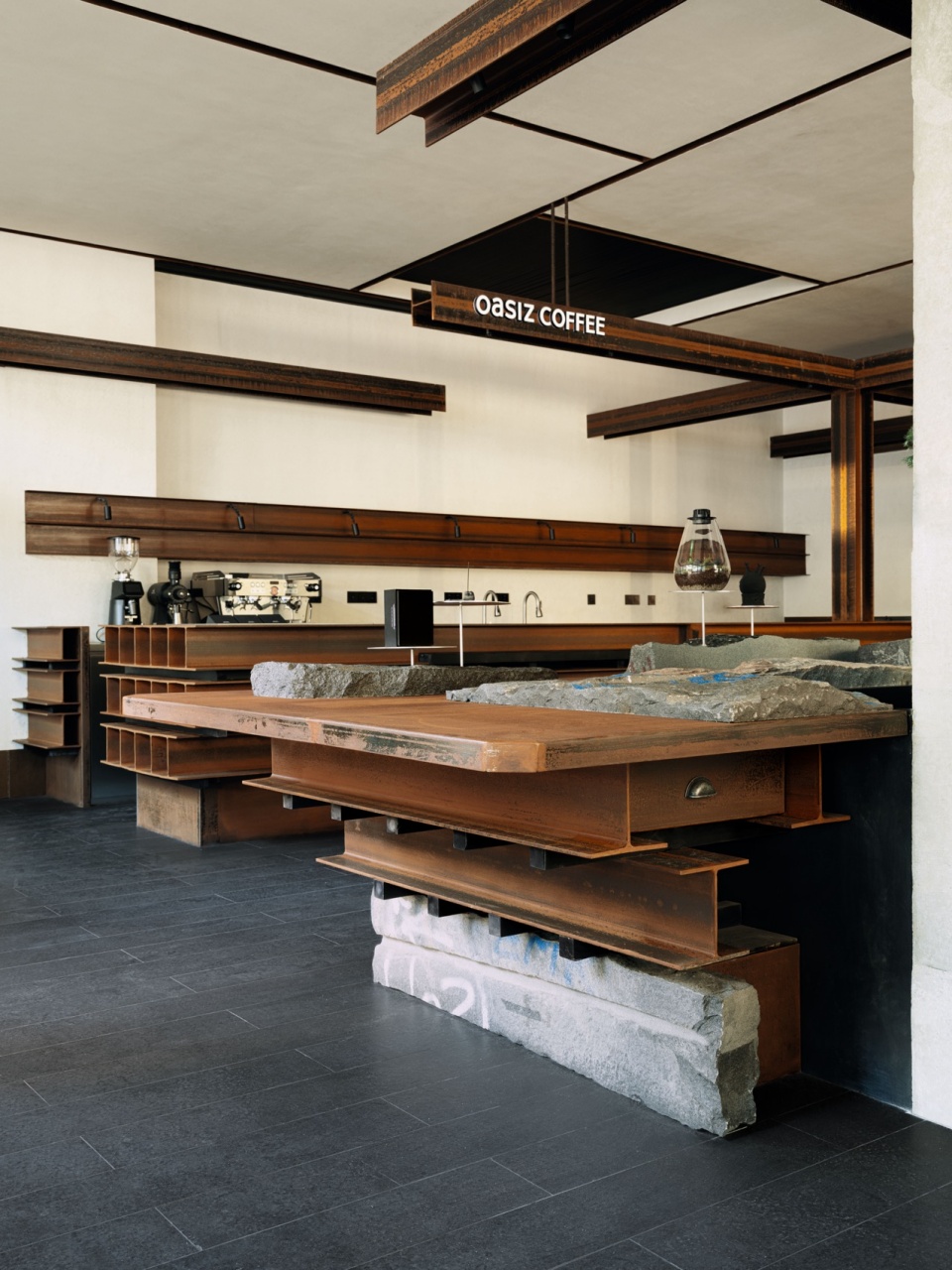
块根植物作为空间的核心对象,其具有强烈雕塑感的形态与缓慢生长的时间属性,成为设计的出发点。项目希望将这种近乎原始的生命状态置于一个高度理性的工业结构之中,使植物、结构与人的活动形成一种持续发生的空间关系。
Caudex plants, as the core subject of the space, possess a strongly sculptural form and a temporal quality of slow growth, which became the starting point of the design. The project seeks to place this almost primitive state of life within a highly rational industrial structure, allowing plants, structure, and human activity to form a continuously evolving spatial relationship.
▼槽钢吧台与展示台一体化设计,Integrated steel bar and display table
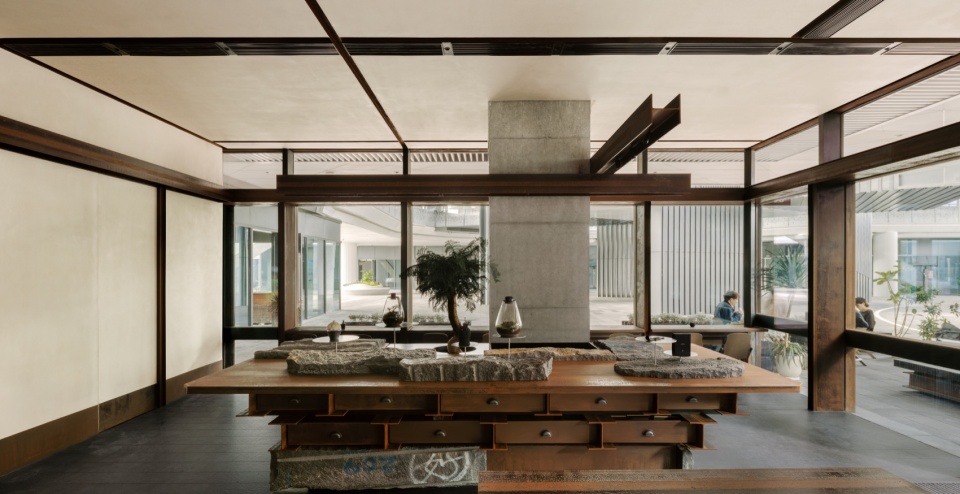
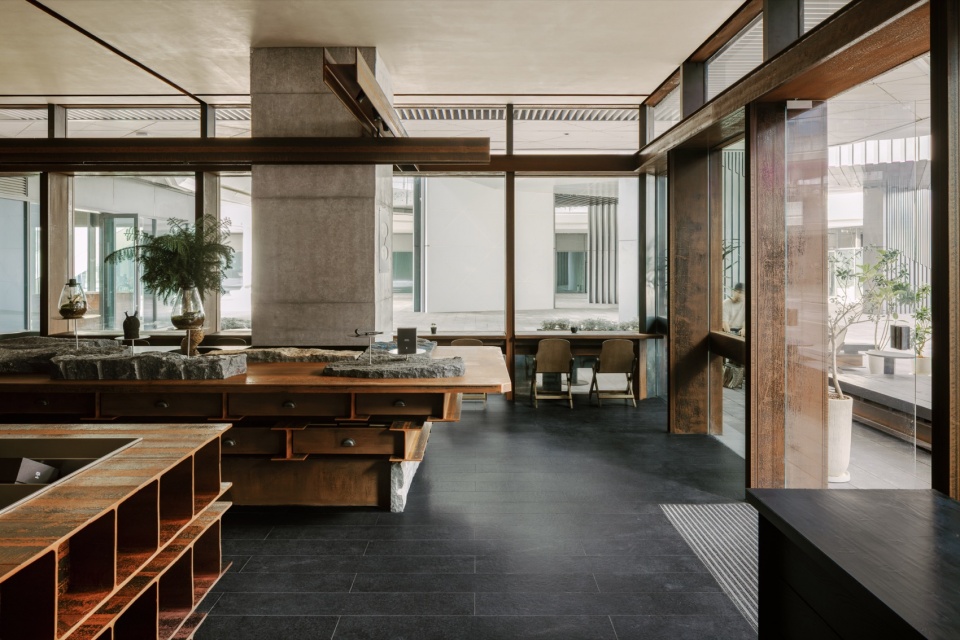
▼黑色地面引导空间流线,Dark flooring guides circulation
建构 Tectonics
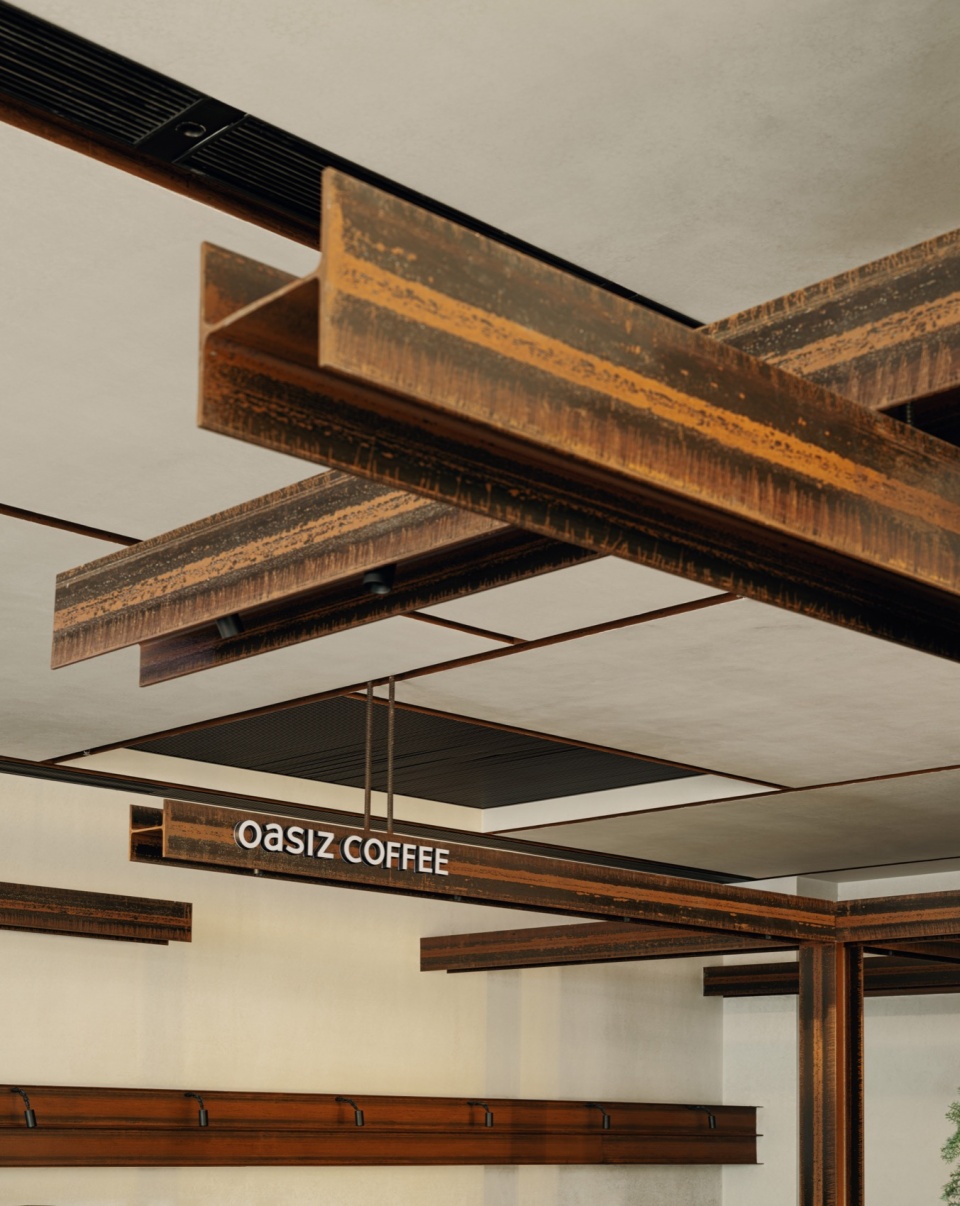
空间以一套统一且可重复的建构体系展开。设计团队选择标准工业H型槽钢作为核心结构语言,通过正交搭接、阵列与堆叠,构建覆盖全场的三维框架系统。槽钢不仅承担结构与展示功能,同时成为空间尺度、流线与家具生成的基础单元。H型槽钢在地面形成纵横交错的支架系统,种植模块被嵌入结构之中,使植物展示与支撑体系形成统一关系。结构既限定展示秩序,也为不同尺度的植物提供稳定的容纳方式。
The spatial language is developed through a unified and repeatable tectonic system. The design team selected standard industrial H-beam as the core structural vocabulary, using orthogonal interlocking, arraying, and stacking to build a three-dimensional framework that spans the entire site. The channel steel not only assumes structural and display functions but also serves as the basic unit for spatial scale, circulation, and furniture generation. The H-beam channel steel forms a crisscrossing support system at ground level, with planting modules embedded into the structure, creating a unified relationship between plant display and the supporting system. The structure both defines the display order and provides a stable accommodation for plants of varying scales.
▼槽钢框架,Steel frame
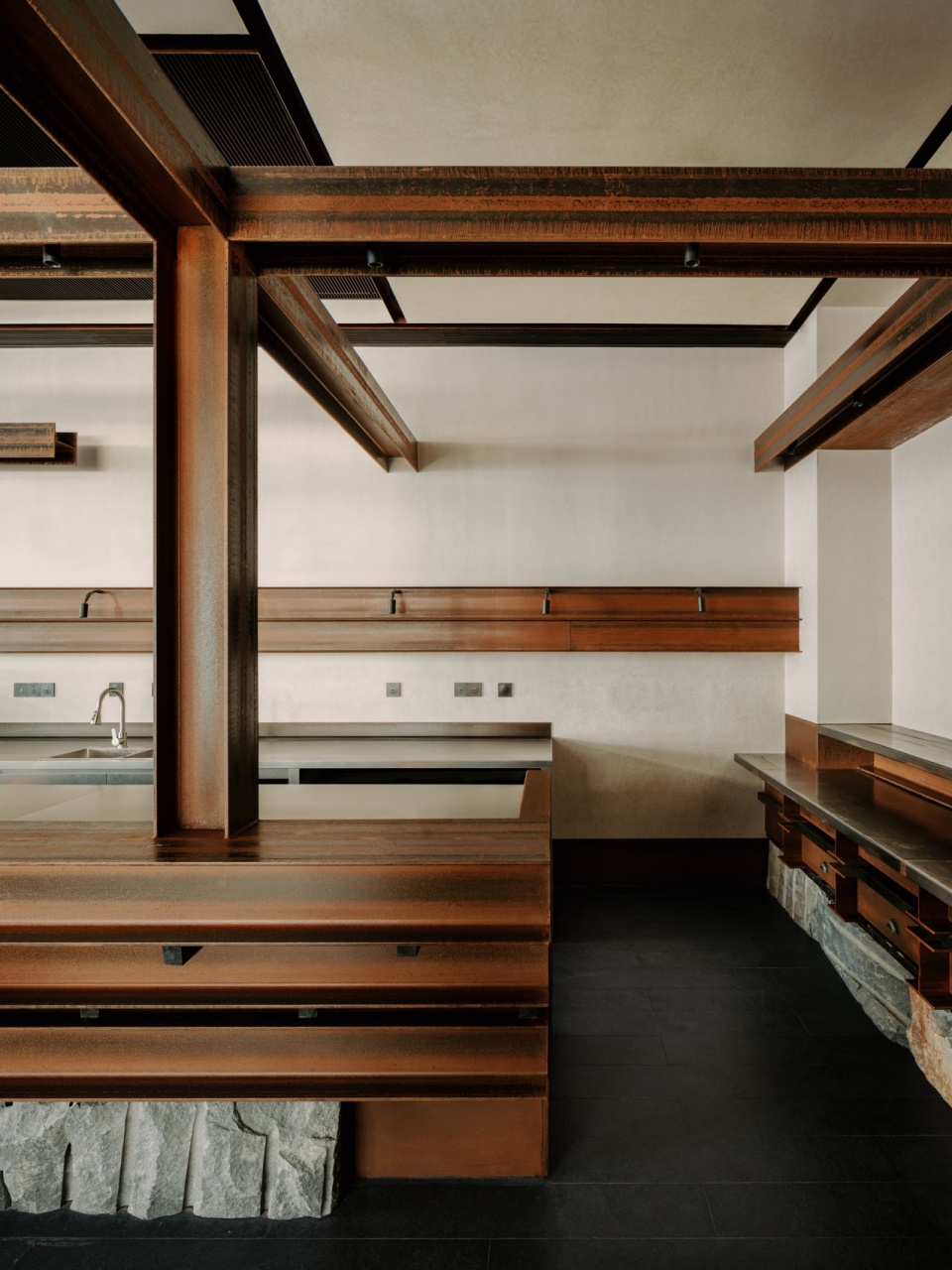
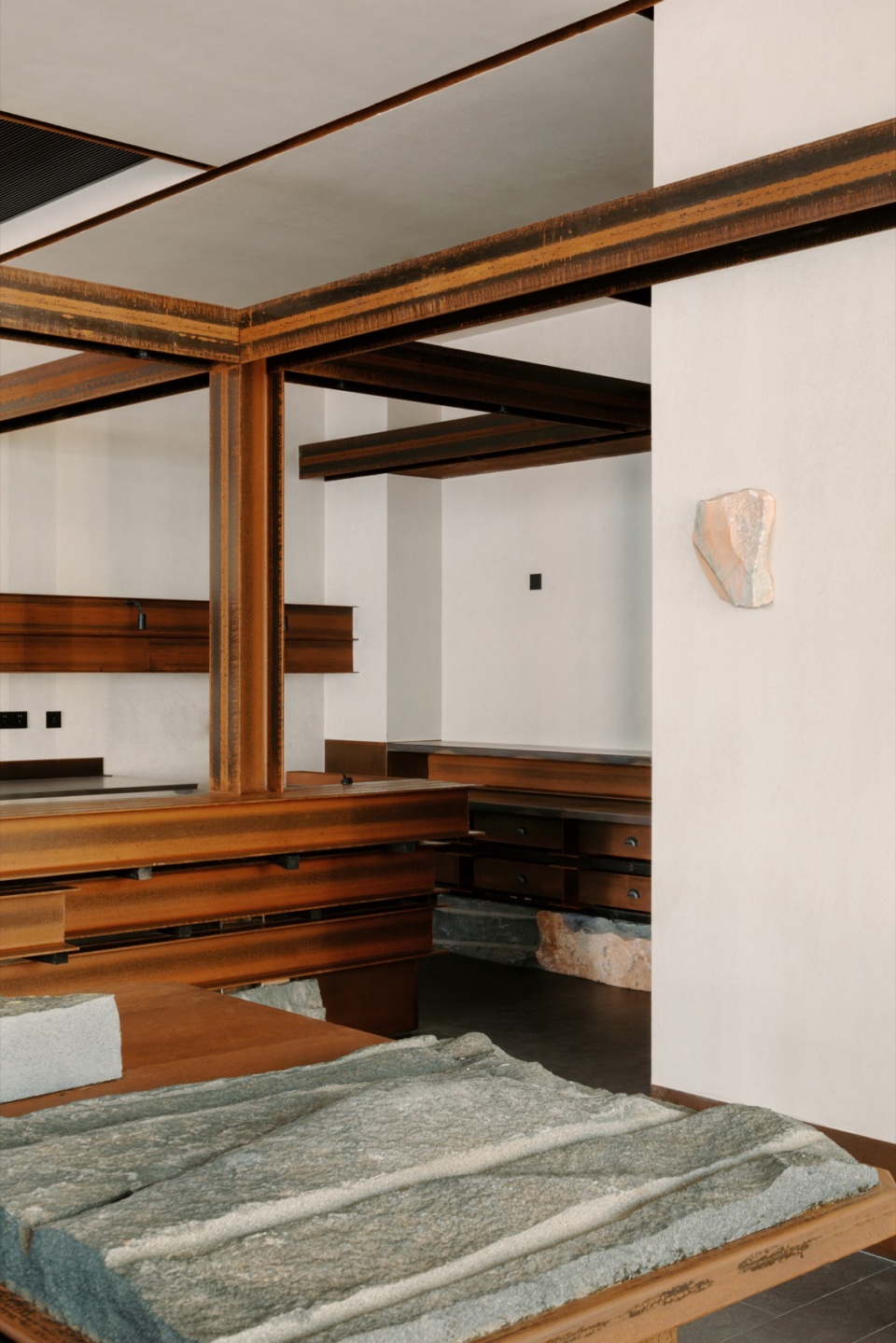
在主结构逻辑的延展下,吧台、座位区及咖啡操作区域由同一套槽钢系统生成。空间中的功能体量并非独立置入,而是通过结构堆叠自然形成。与此同时,项目进一步发展出可移动的咖啡模块,使运营场景能够根据需求进行调整。人工照明被整合至H型槽钢内部,以减少额外设备对结构完整性的干扰。光线从金属空腔中释放,强化了矩阵系统的秩序感,也使结构在不同时间条件下呈现出更轻盈的视觉状态。
Extending from the primary structural logic, the bar counter, seating areas, and coffee preparation zone are all generated from the same channel steel system. Functional volumes in the space are not independently inserted but naturally formed through structural stacking. At the same time, the project further develops mobile coffee modules, allowing the operational scenario to be adjusted according to needs. Artificial lighting is integrated into the interior of the H-beam, reducing interference with structural integrity from additional equipment. Light is released from the metal cavities, reinforcing the sense of order in the matrix system and giving the structure a lighter visual presence under different lighting conditions.
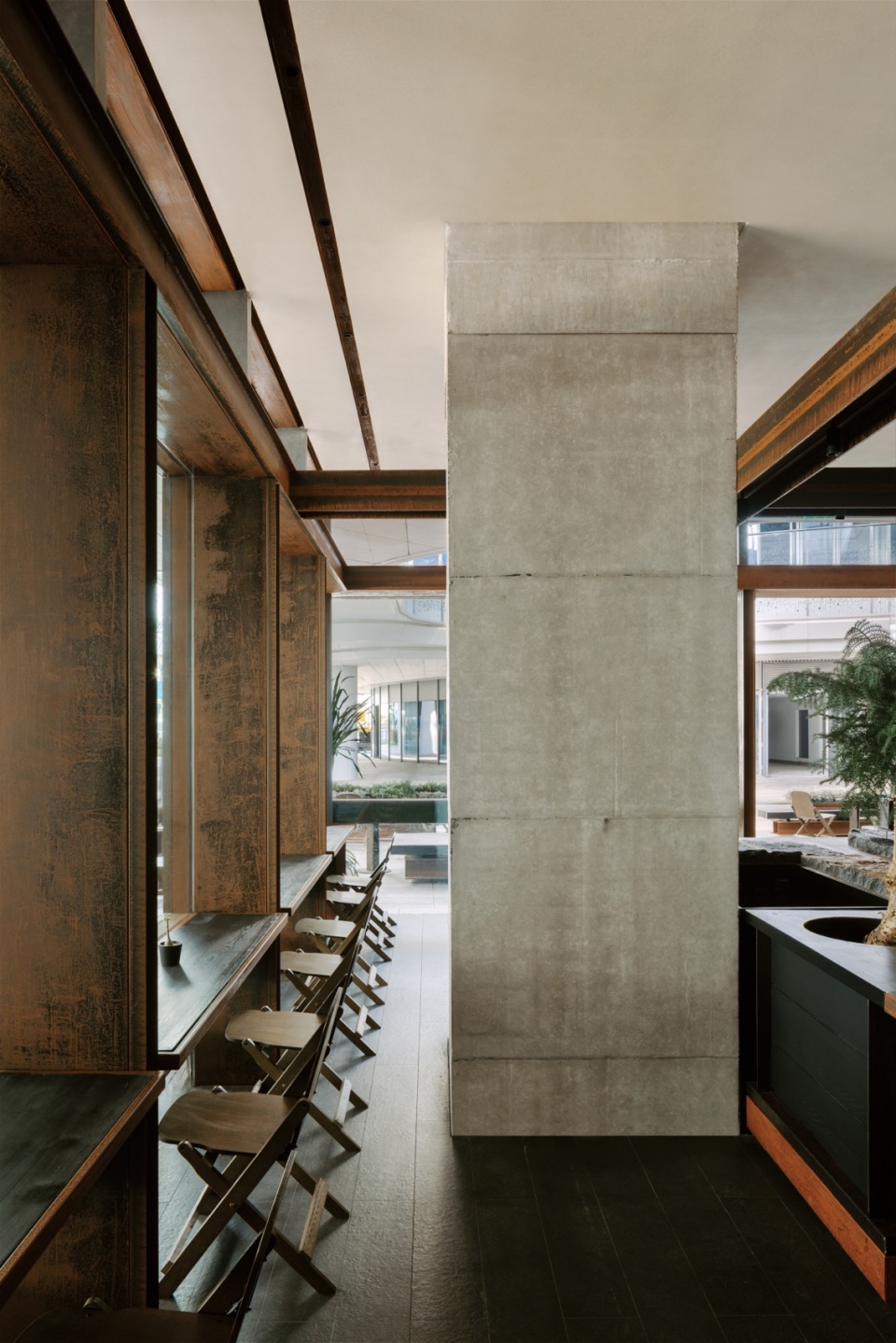
▼沿窗座位,Window-side seating
材料 Materials
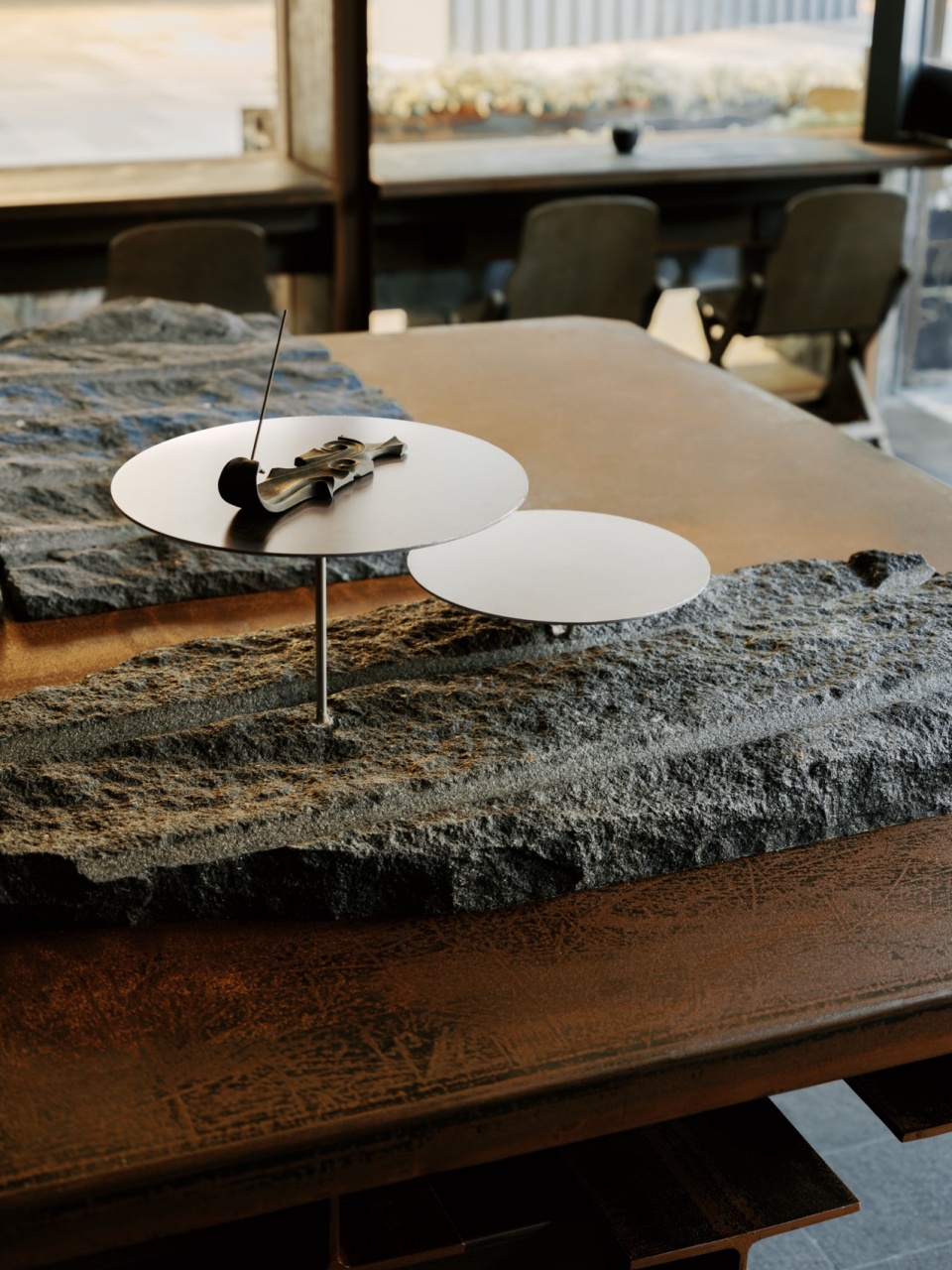
材料策略延续了项目对于工业与自然关系的讨论。H型槽钢构成空间的工业基底,与之形成对照的则是具有自然肌理与时间痕迹的材料:块根植物、回收枕木制成的休憩座椅,以及限定花槽边界的废料石材。不同材料之间保持原有属性,而非被过度加工,从而保留其真实质感。
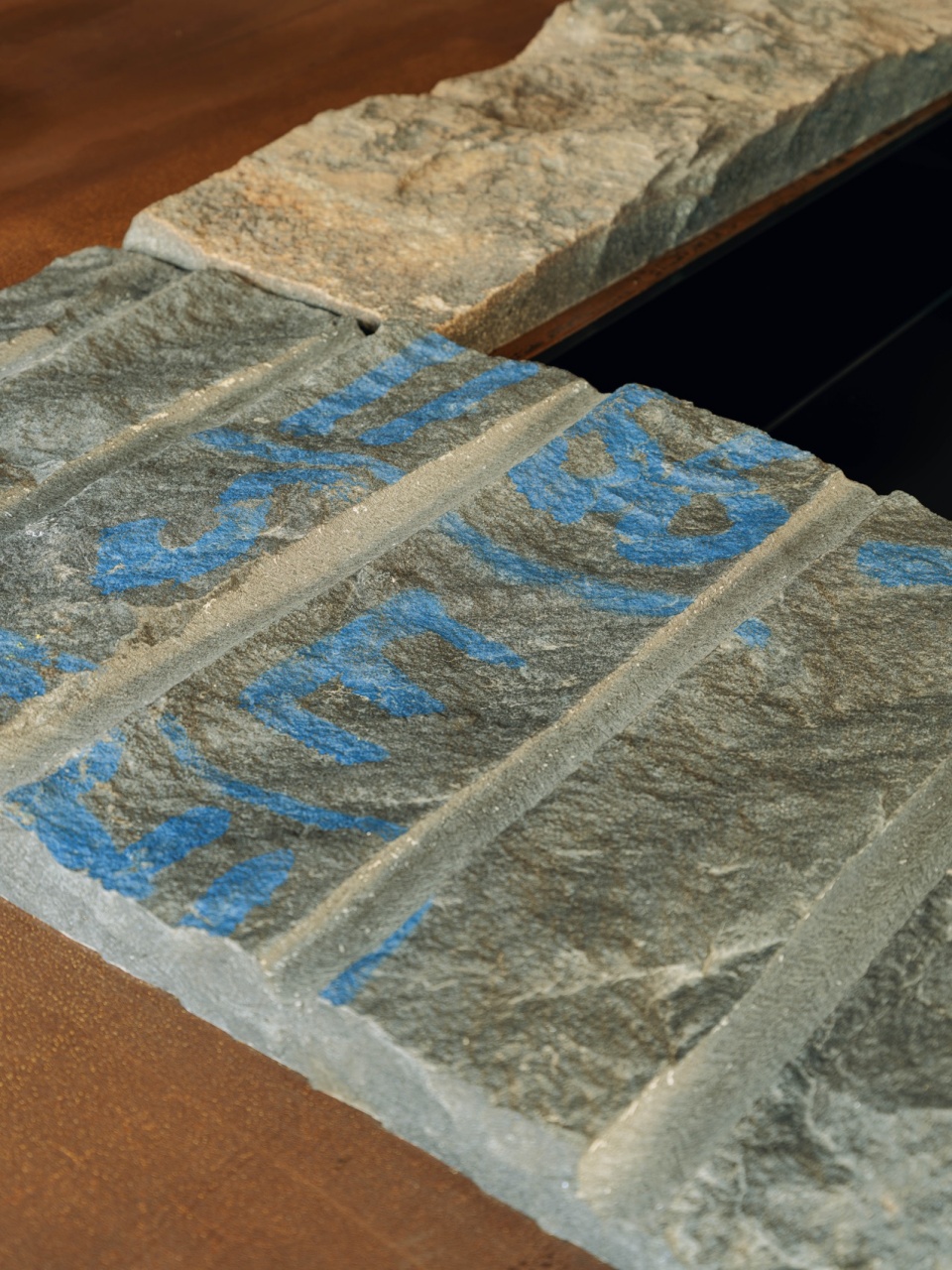
The material strategy continues the project’s exploration of the relationship between industry and nature. The H-beam forms the industrial base of the space. In contrast, materials with natural texture and traces of time are introduced: caudex plants, reclaimed railroad ties used as seating, and quarry waste stone that defines the edges of the planting beds. Each material retains its original properties without excessive processing, preserving its authentic tactility.
▼未经修饰的石材肌理,Unprocessed stone texture
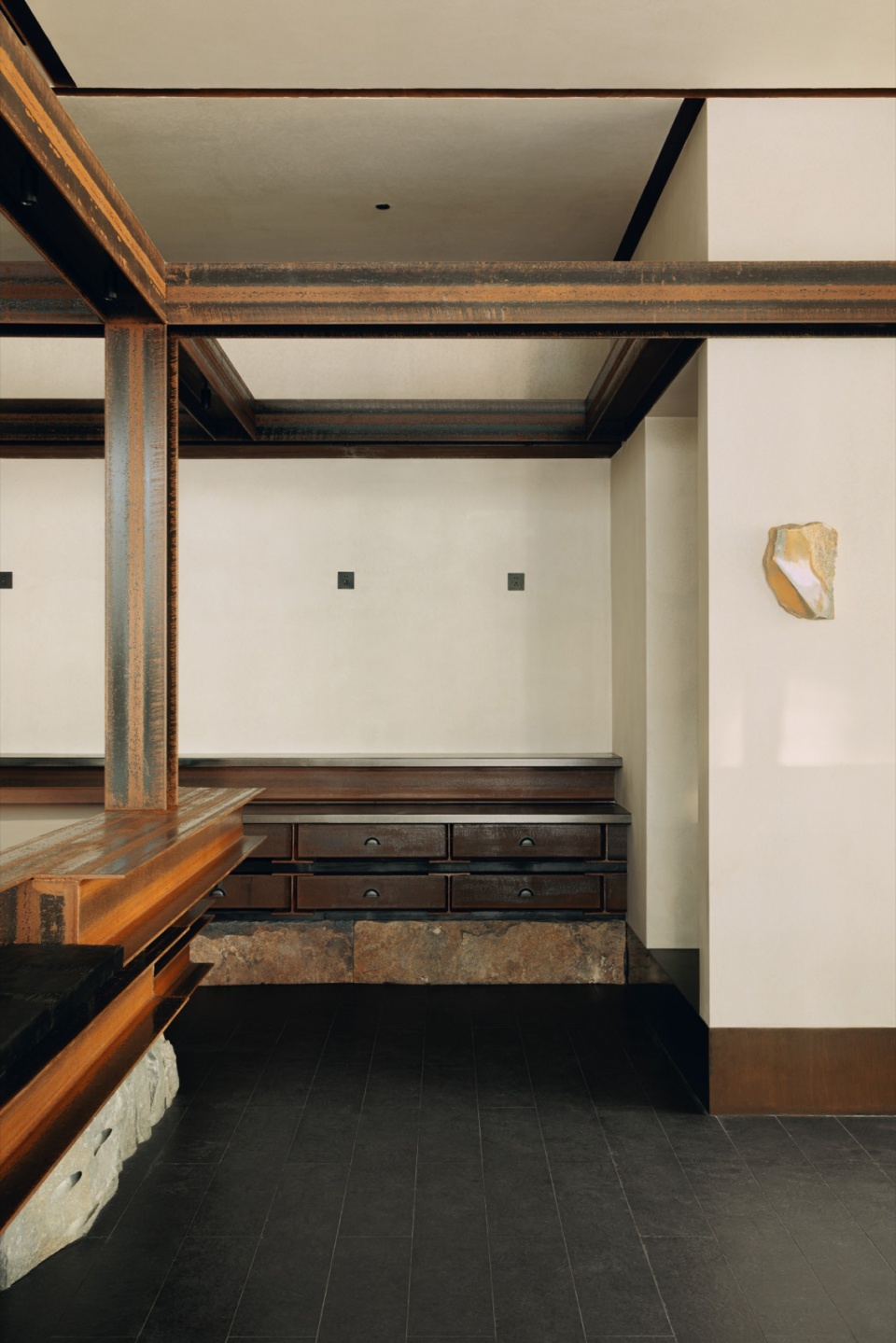
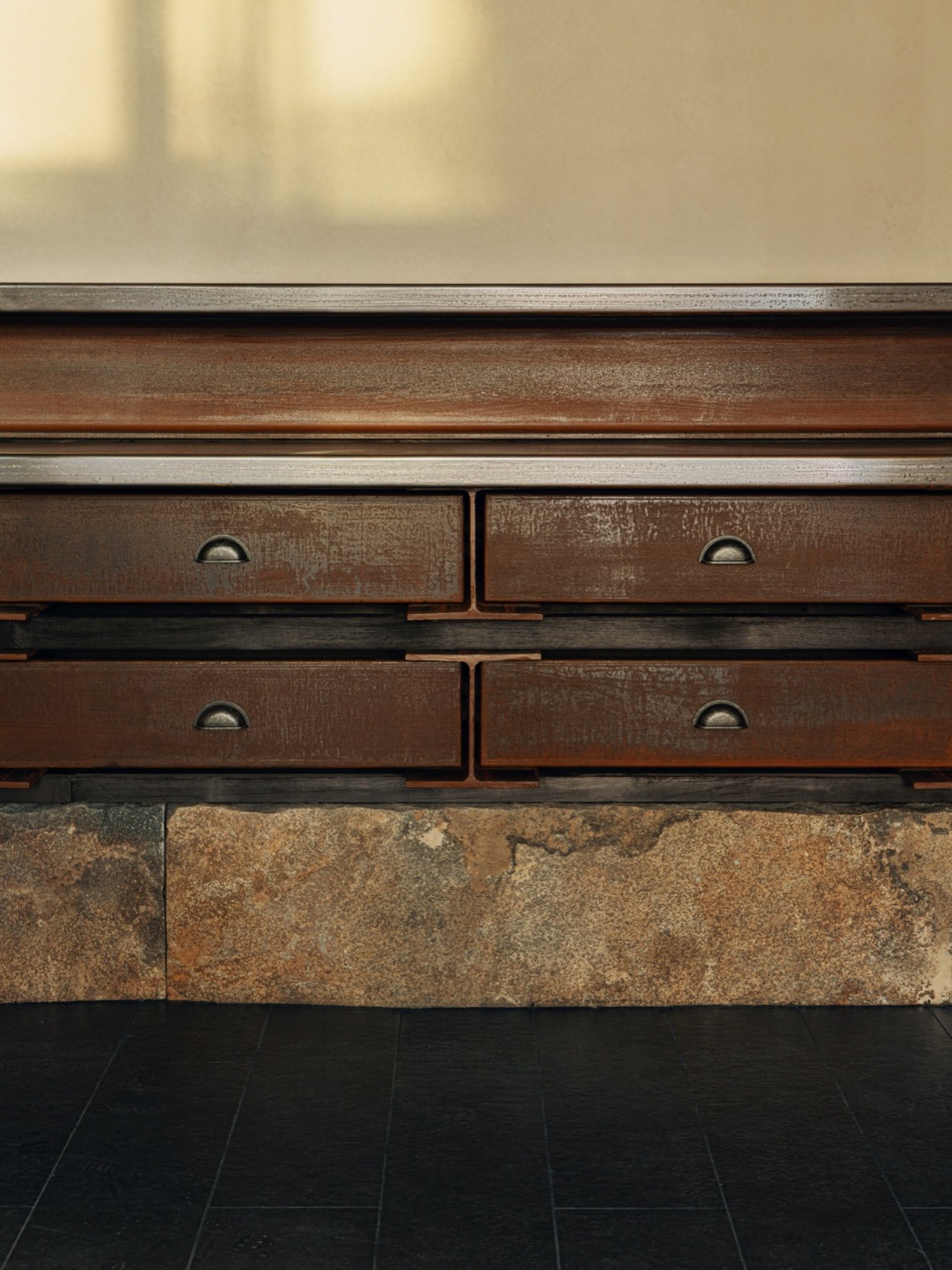
▼抽屉嵌入槽钢构件之中,Drawers integrated within steel members
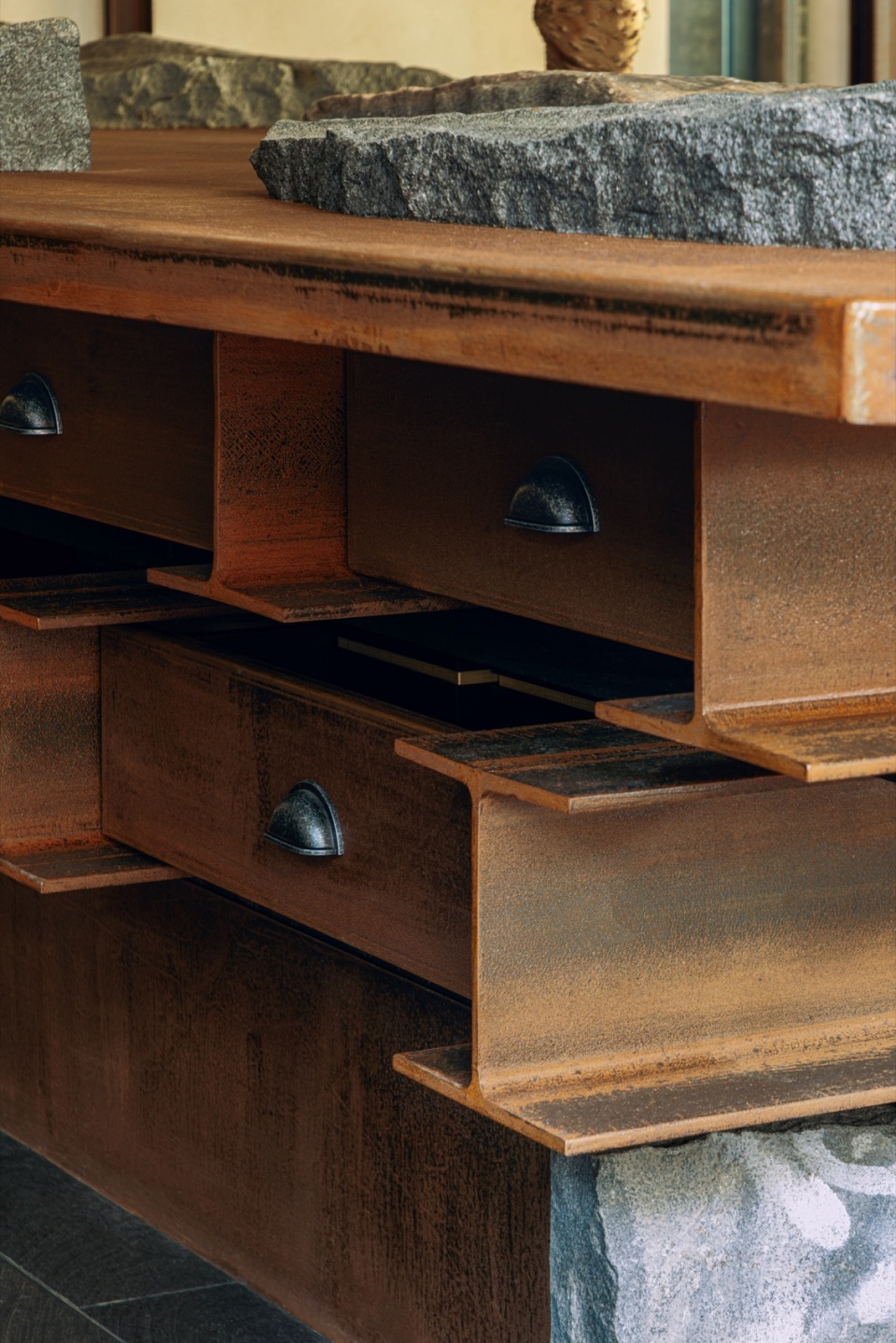
▼H型槽钢构件细节,H-beam structural detail
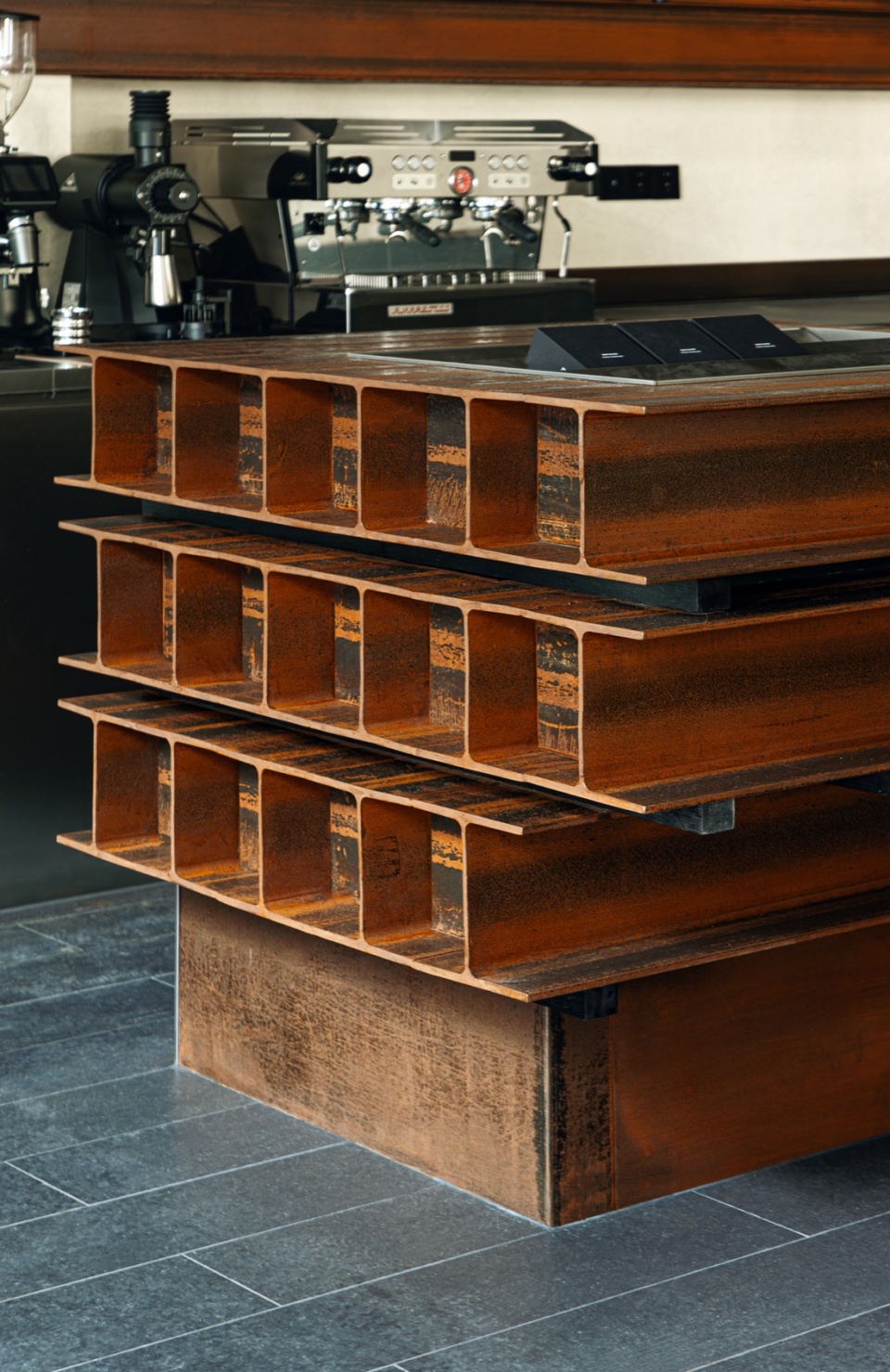
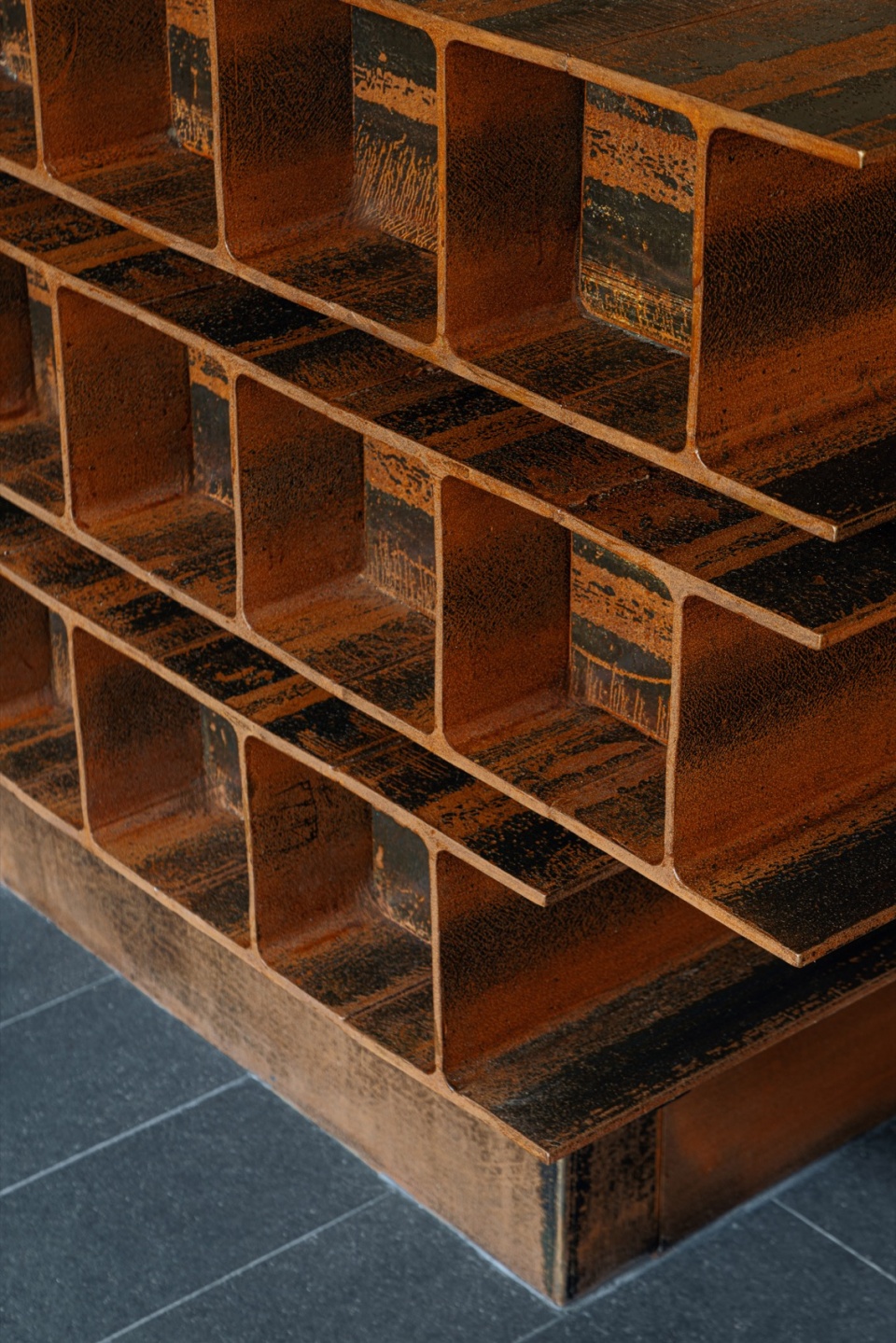
这一关系在吧台踢脚位置被进一步强化。嵌入式石场废料以粗粝、非规则的断裂界面介入精确的金属秩序之中,形成一种有意保留的张力,也回应了植物“生长”与“介入”的空间主题。在这一由黑色结构矩阵构成的场域中,植物不再只是陈列对象,而成为组织空间感知的重要媒介。项目试图在高密度商业环境中,提供一种介于零售、停留与观察之间的空间体验。
This relationship is further emphasized at the base of the bar counter. Embedded quarry waste stone—coarse and irregularly fractured—intervenes in the precise metallic order, creating a deliberate tension that also echoes the spatial theme of plant “growth” and “intervention.”Within this field defined by a black structural matrix, plants are no longer mere display objects but become a key medium for organizing spatial perception. The project attempts to offer a spatial experience in a high-density commercial environment that balances retail, lingering, and observation.
▼夜间灯光强化空间识别性,Night lighting enhances spatial identity
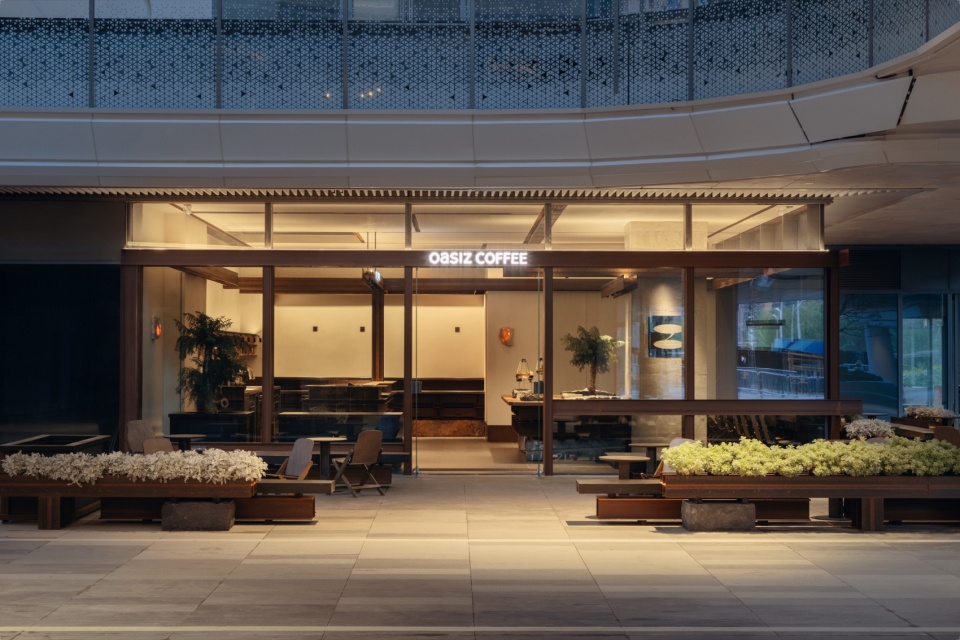
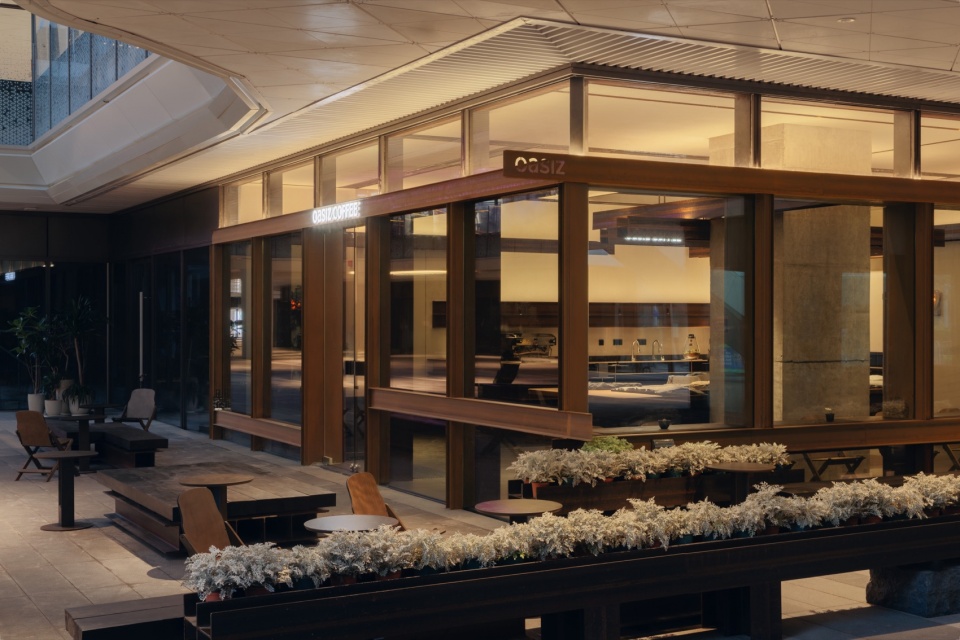
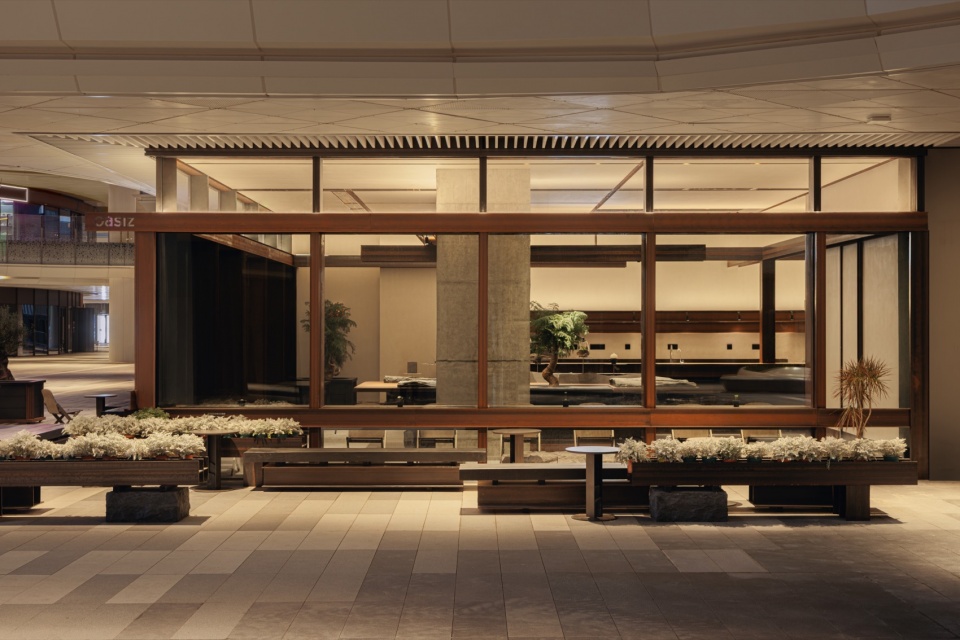
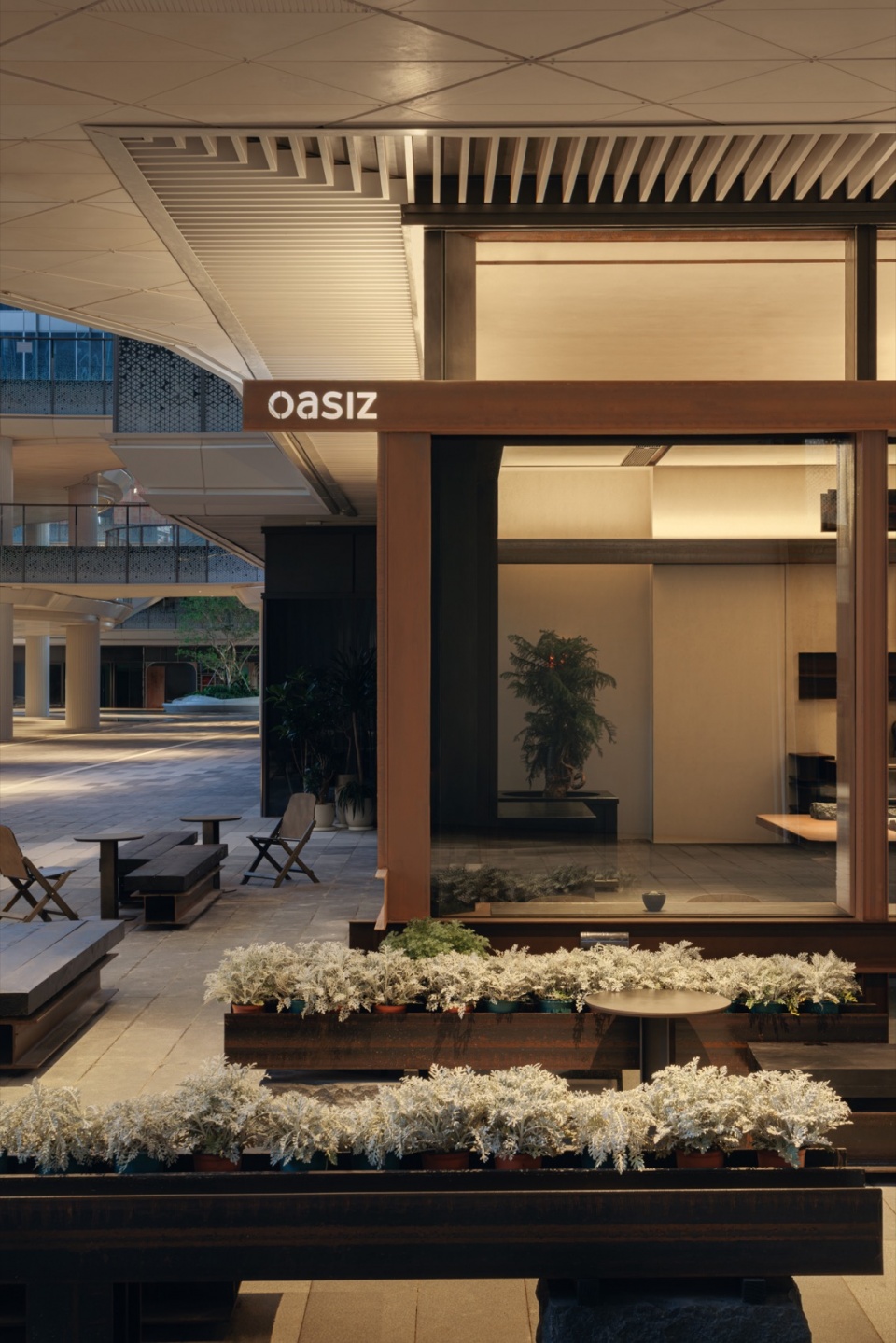
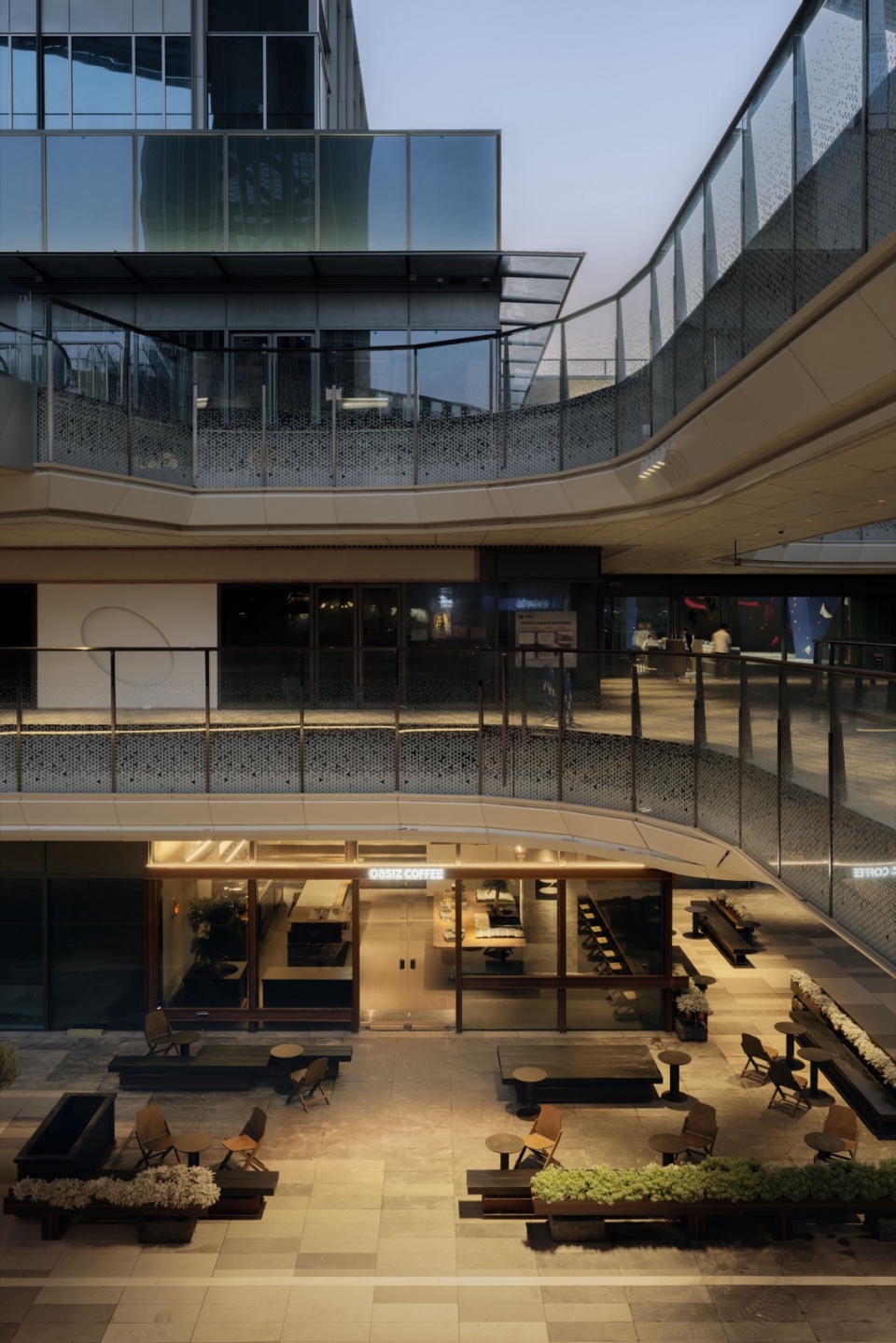
▼开放界面连接公共活动场所,Open frontage connects to the public gathering space
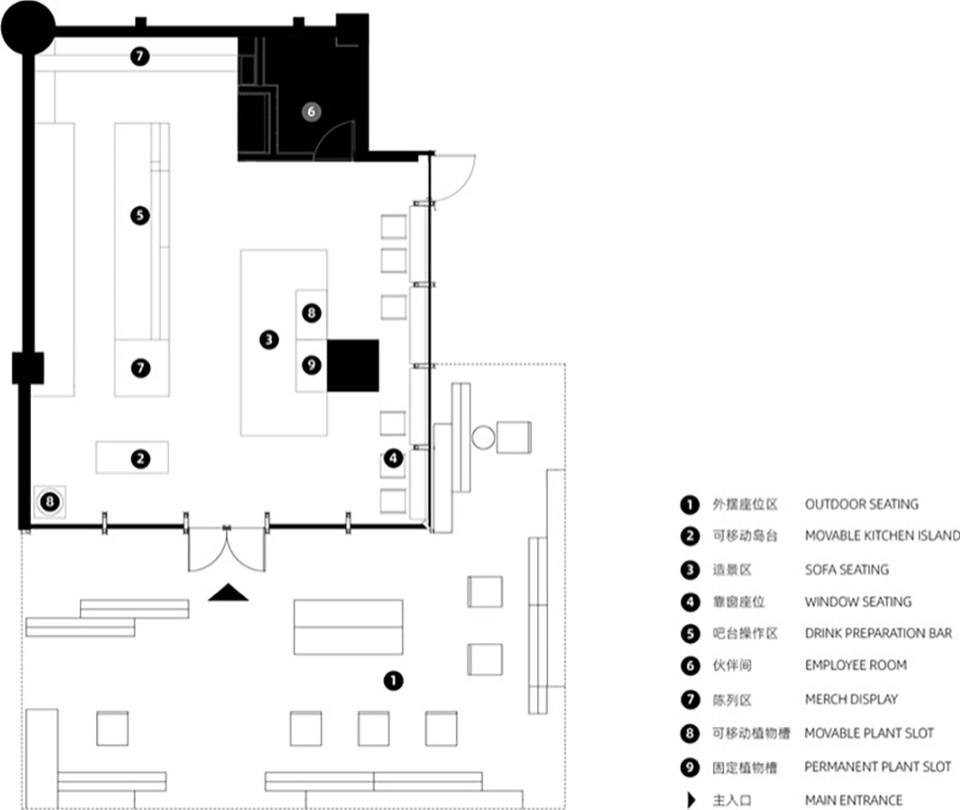
▼平面图,Floor plan
Project name: OASIZ | Caudex Plant Shop
Project type: Coffee / Hybrid Space
Design: Ruhaus Studio
Website: https://www.ruhaus-studio.com/
Contact e-mail: info@ruhaus-studio.com
Design year: 2025
Completion Year: 2026
Leader designer & Team: Yiru Wang, Dandan Zhu, Junke Huang, Connie Lu
Project location:ianhai Ice and Snow World Hyper-Sensory Park, 1st Floor Atrium, Shenzhen, Guangdong Province.
Gross built area: 165.5㎡
Photo credit: Xiaobin Lv, Hongfei Zhao
Clients: OASIZ
Materials: H-beam, Natural stone, Aged black iron plate