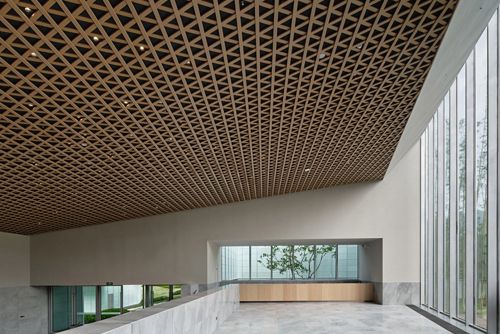
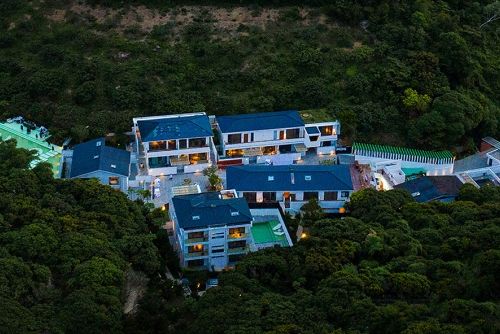
松山湖展演中心,东莞 / Zaha Hadid Architects
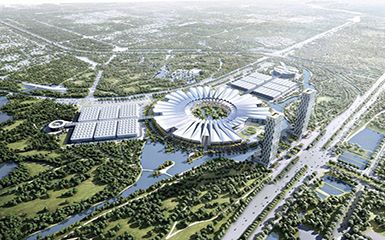
位于中国南部珠江口粤港澳大湾区核心区域的东莞,松山湖展演中心(Songshan Lake Exhibition and Performance Centre) 坐落于粤河湖(Yuehe Lake)滨水区更新总体规划的核心位置,是推动该区域复兴的重要组成部分。
Located in Dongguan within the Greater Bay Area of southern China’s Pearl River estuary, the new Songshan Lake Exhibition and Performance Centre is at the heart of a mixed-use masterplan to revitalize the Yuehe Lake waterfront.
▼项目概览,overview of the project
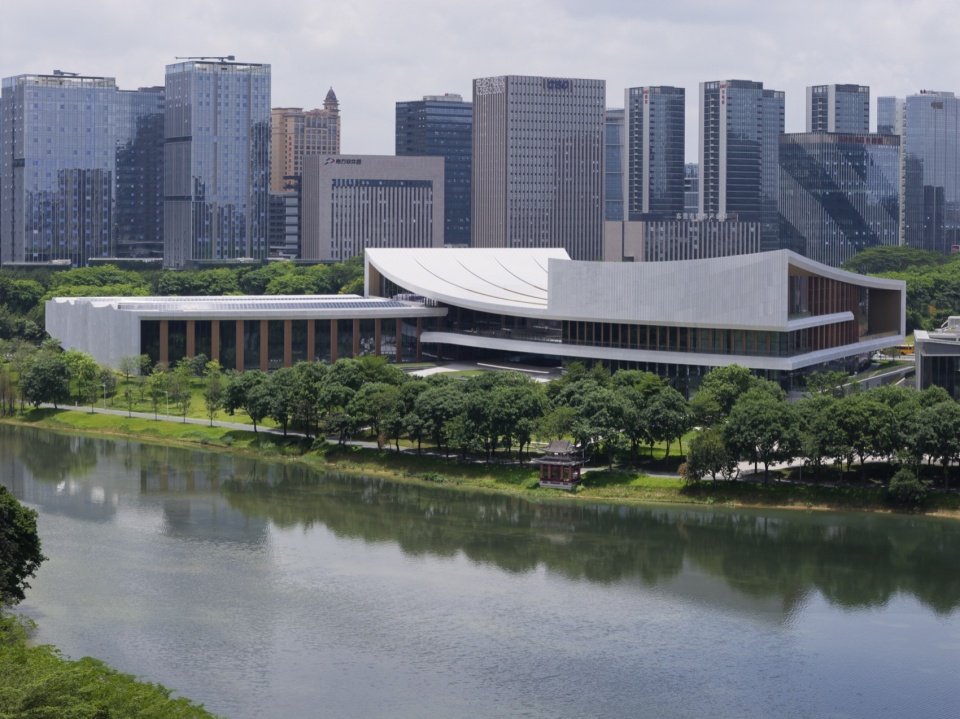
由ZHA设计的松山湖展演中心旨在成为不断发展社区的公共与文化核心。中心将举办各类面向不同年龄群体的国内外活动、展览及演出。随着开幕音乐会《松湖之声》(The Sound of Songhu)的举行——由中国国家交响乐团领衔演出——中心正式开启其公共活动计划。
Designed by ZHA to serve as a civic and cultural anchor of the growing community, the Songshan Lake Exhibition and Performance Centre (SSLEPC) will host a variety of national and international events, exhibitions and performances for audiences of all ages. The centre’s public programme was inaugurated with its opening concert ‘The Sound of Songhu’ led by the China National Symphony Orchestra.
▼鸟瞰,aerial view
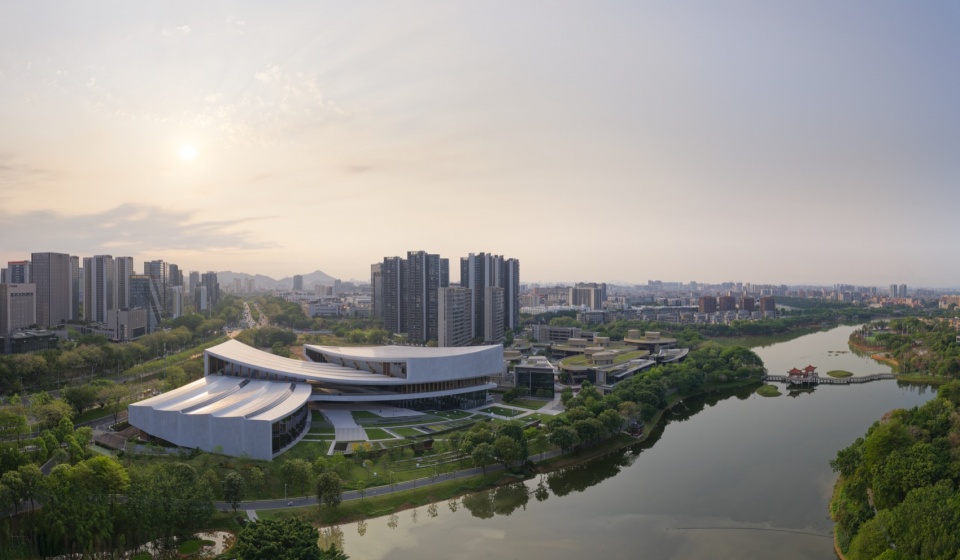
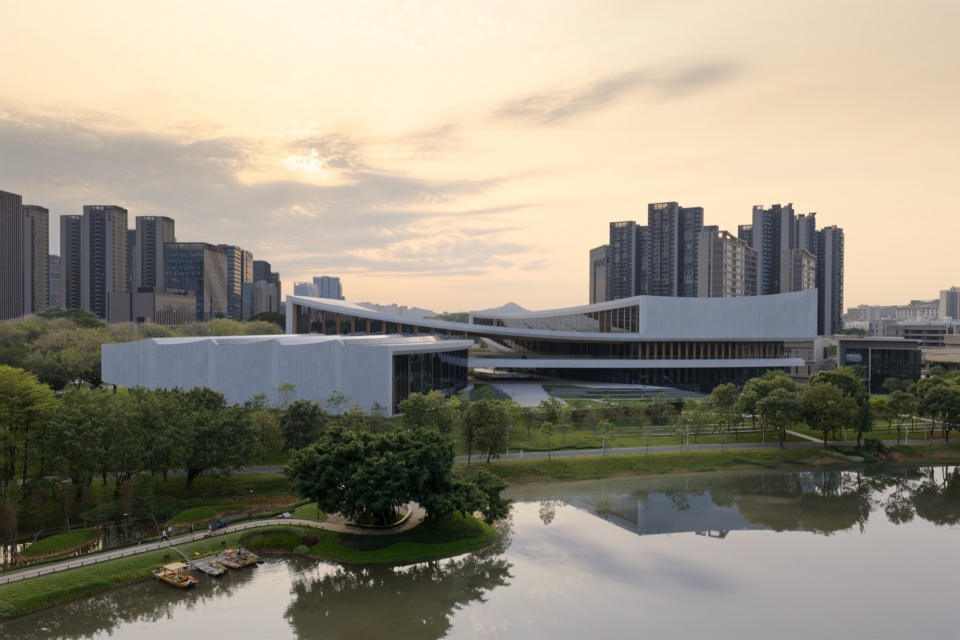
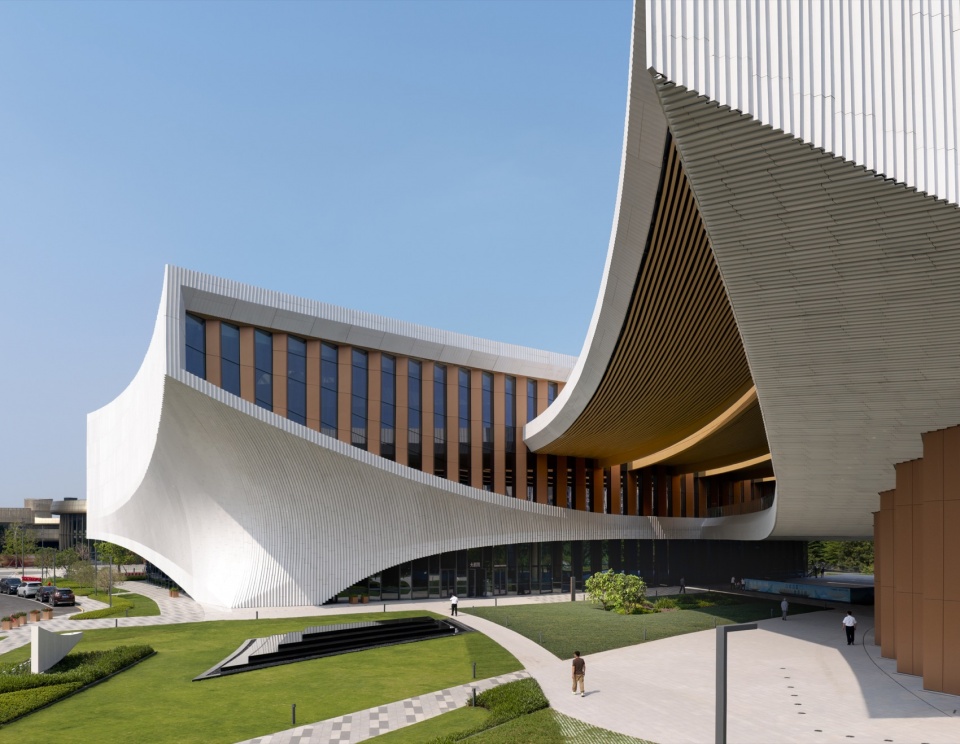
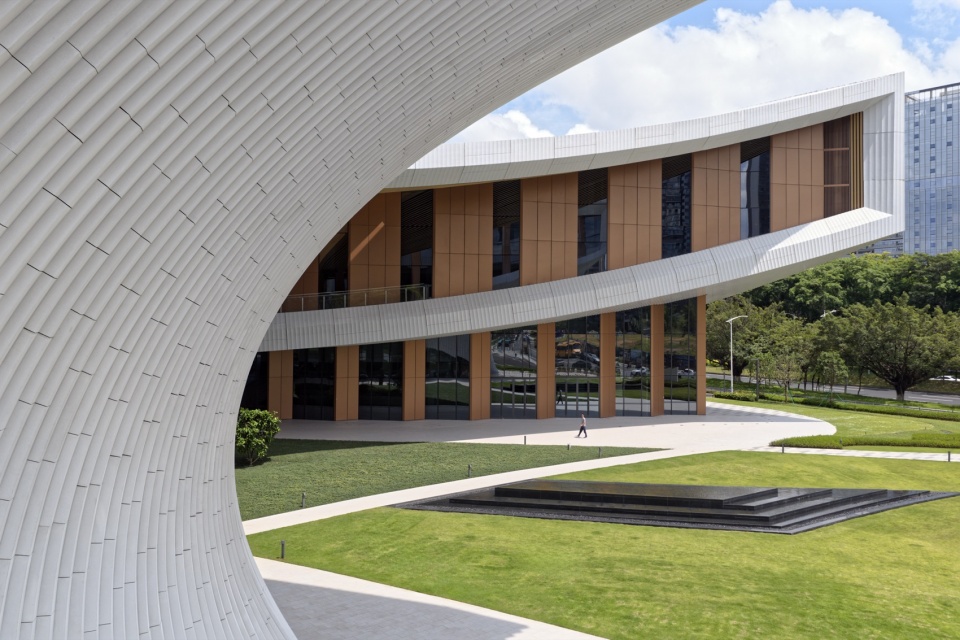
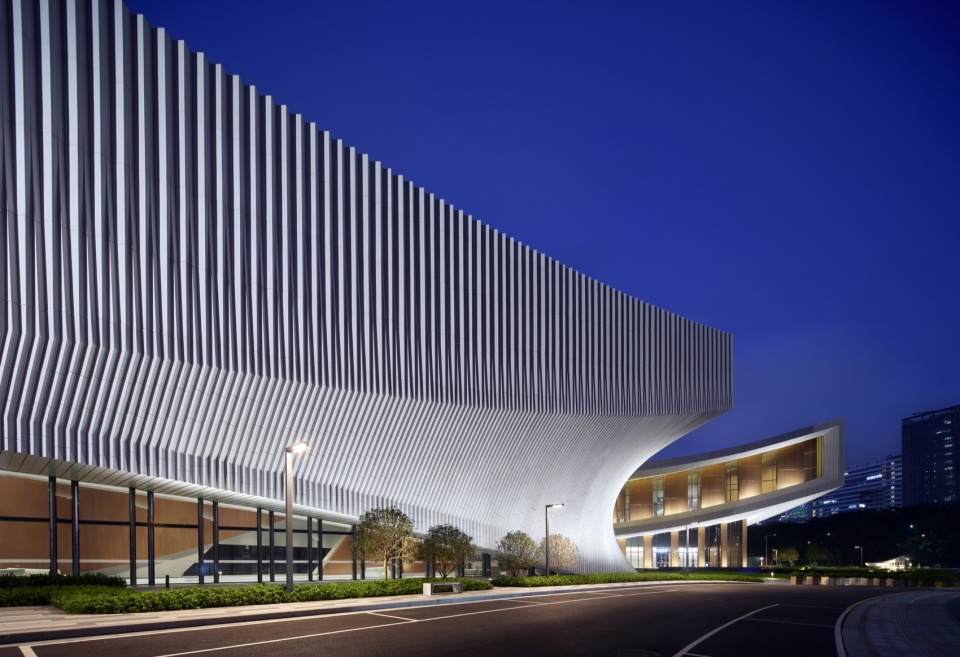
为致敬粤剧这一拥有七百余年历史、可追溯至宋代的艺术形式及其发源地之一,项目设计从粤剧传统戏服流动优雅的形态中汲取灵感。建筑形体呼应粤剧表演服饰中独具特色的“水袖”——即戏服袖口延伸出的白色长袖,演员通过其富有表现力的动作传递情感。展演中心的设计由多个彼此独立而又相互联系的建筑体量组成,这些体量逐渐抬升并向外舒展,在建筑西侧达到高潮,围合出主剧场与展览空间。
Honouring a birthplace of Cantonese Opera, an artform dating back over 700 years to the Song Dynasty, the flowing forms of its traditional costumes have inspired the centre’s design. Evoking the unique silk ‘water sleeves’ (the white extensions of robes worn by performers of Cantonese Opera who convey emotion with their animated gestures) the centre’s design incorporates multiple distinct structures that crescendo and flare, rising at its western edge to frame the main theatre and exhibition space.
▼建筑形体呼应粤剧表演服饰中独具特色的“水袖”,
Evoking the unique silk ‘water sleeves’
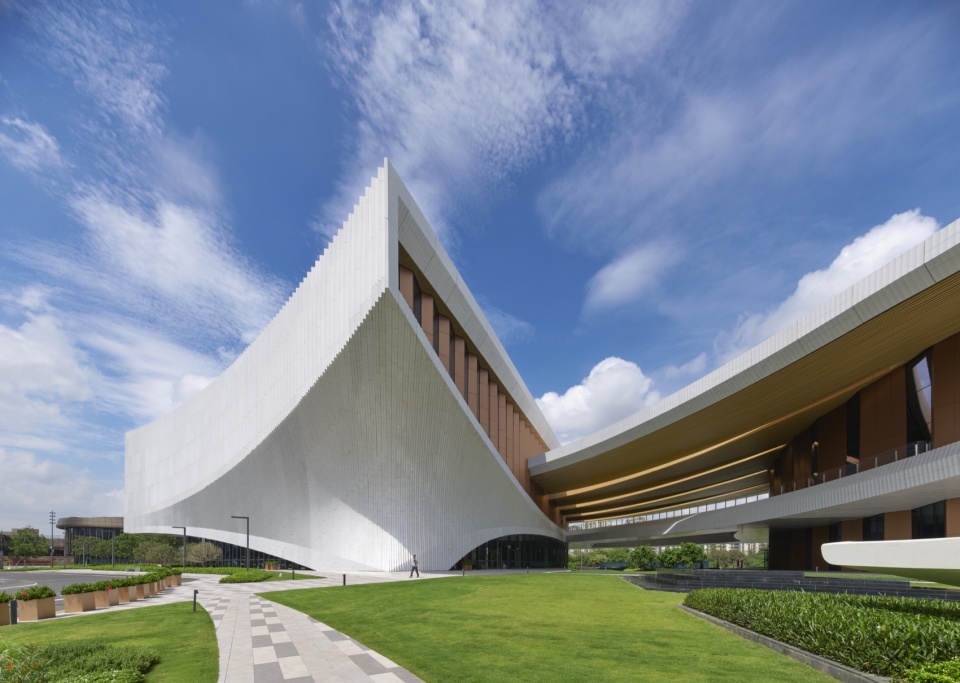
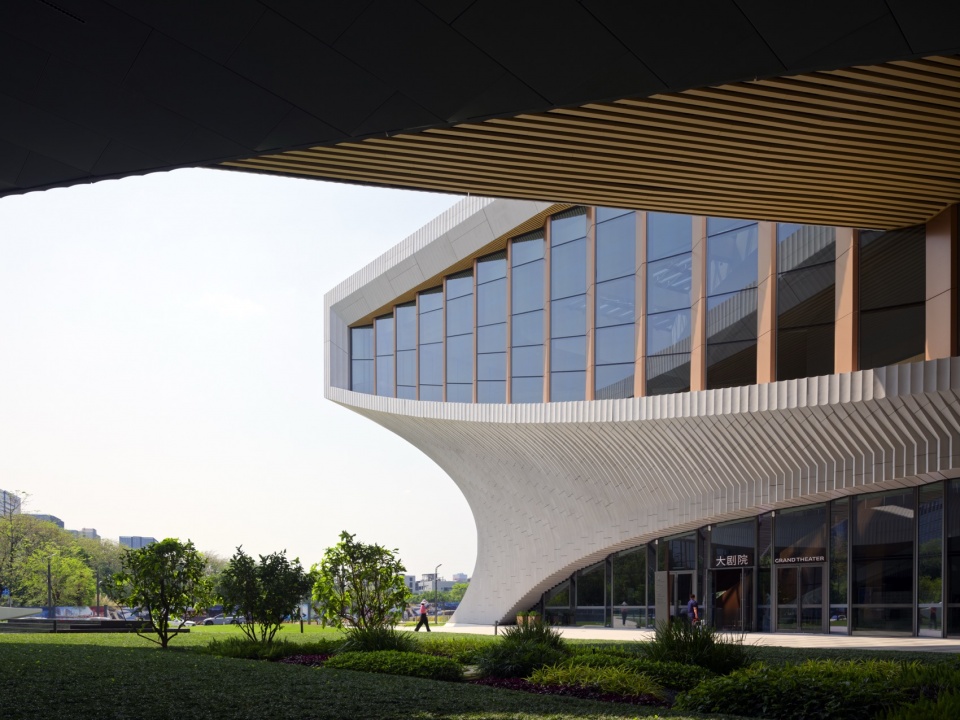
设计同时借鉴了岭南传统建筑飞檐翘角的形态特征。大尺度挑檐不仅确保室内空间始终获得充足自然采光,也为建筑及其户外空间提供遮蔽,使其能够更好地适应东莞湿润的亚热带气候环境。
Informed by the upturned eaves of the region’s traditional Lingnan architecture, the extended overhang of the centre’s roof maintains generous levels of natural light throughout the interiors while protecting the building and its outdoor spaces that are situated within Dongguan’s humid subtropical climate.
▼大尺度挑檐,the extended overhang
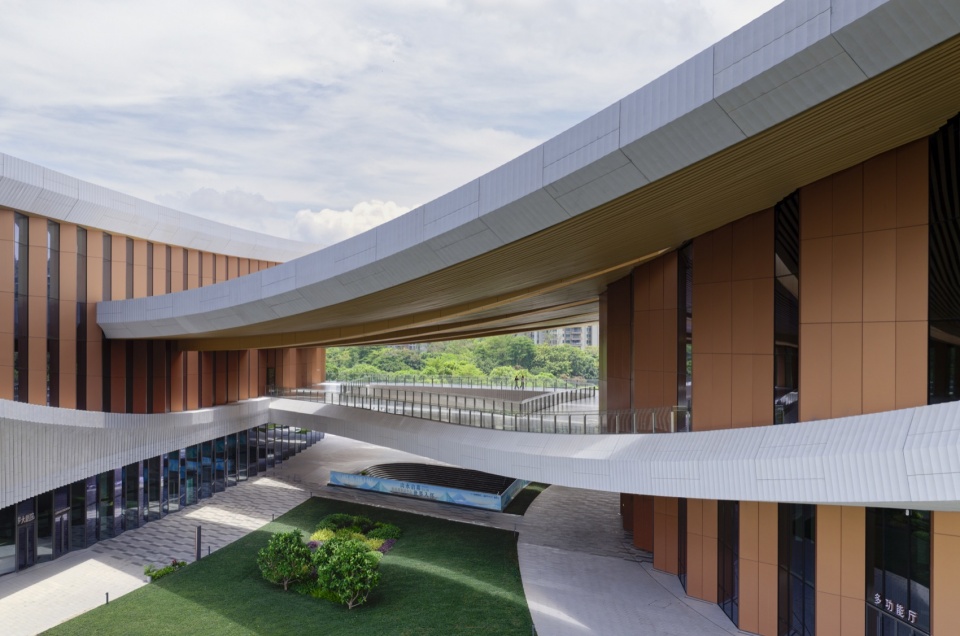
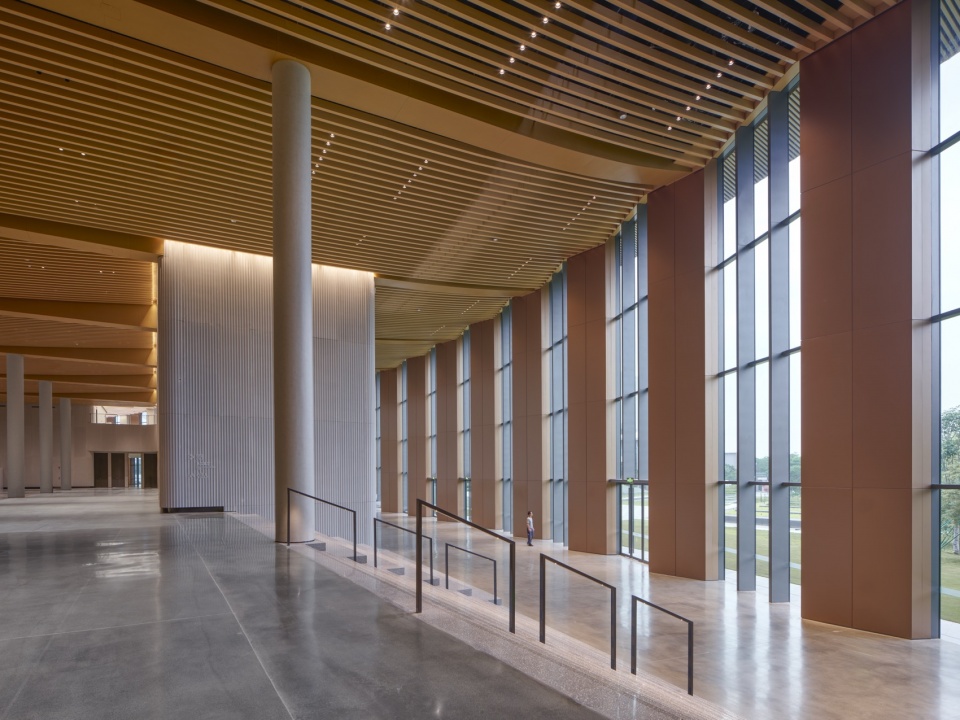
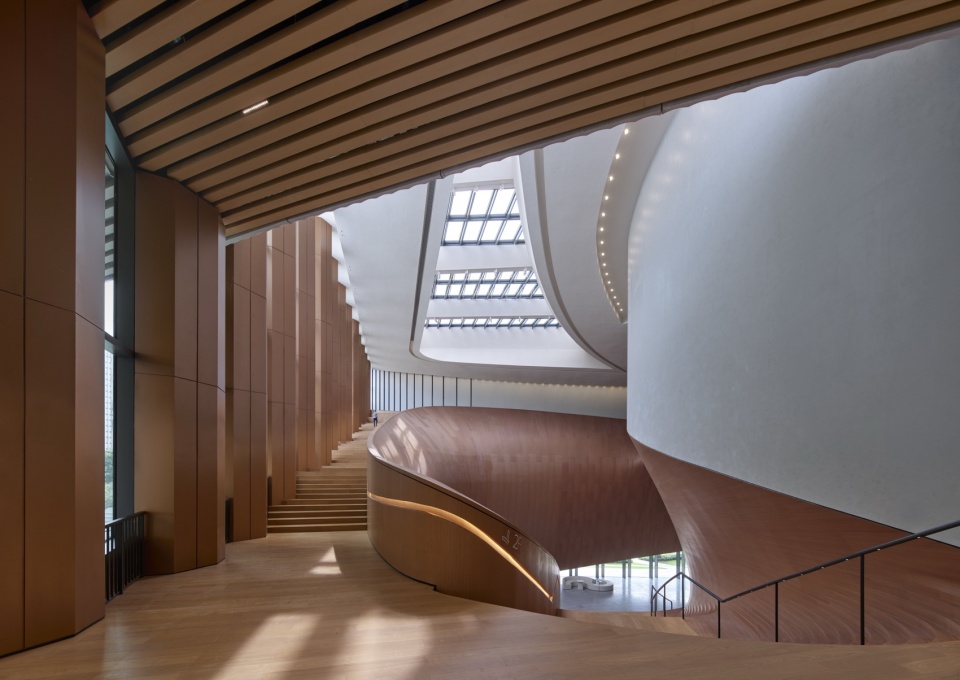
通过流畅衔接展演中心不同层级的室内外空间,建筑向其遮蔽式公共广场、花园露台以及松山湖滨水步道开放,为当地居民和游客提供全年可享用的公共活动场所。
Facilitating fluid transitions across multiple levels of SSLEPC’s interior and exterior, the design opens to its sheltered public plaza, garden terraces and waterfront promenade on Songshan Lake for local residents and visitors to enjoy year-round.
▼通过流畅衔接展演中心不同层级的室内外空间,
Facilitating fluid transitions across multiple levels of SSLEPC’s interior and exterior
中心内设有可容纳1200人的大剧院(Grand Theatre)及展览大厅(Exhibition Hall),可承办本地、全国乃至国际演艺团体的大型演出,同时满足会议、行业论坛、艺术展览及体育赛事等多元活动需求。另设可容纳400人的多功能厅(Multifunction Hall),用于举办规模较小的戏剧演出及儿童剧场活动。
The 1,200-seat Grand Theatre, along with the Exhibition Hall, is designed to host large-scale productions by local, national and international performers, in addition to conferences, industry forums, art exhibitions and sporting competitions. The 400-seat Multifunction Hall will host smaller theatrical productions and children’s theatre.
▼展览大厅,Exhibition Hall
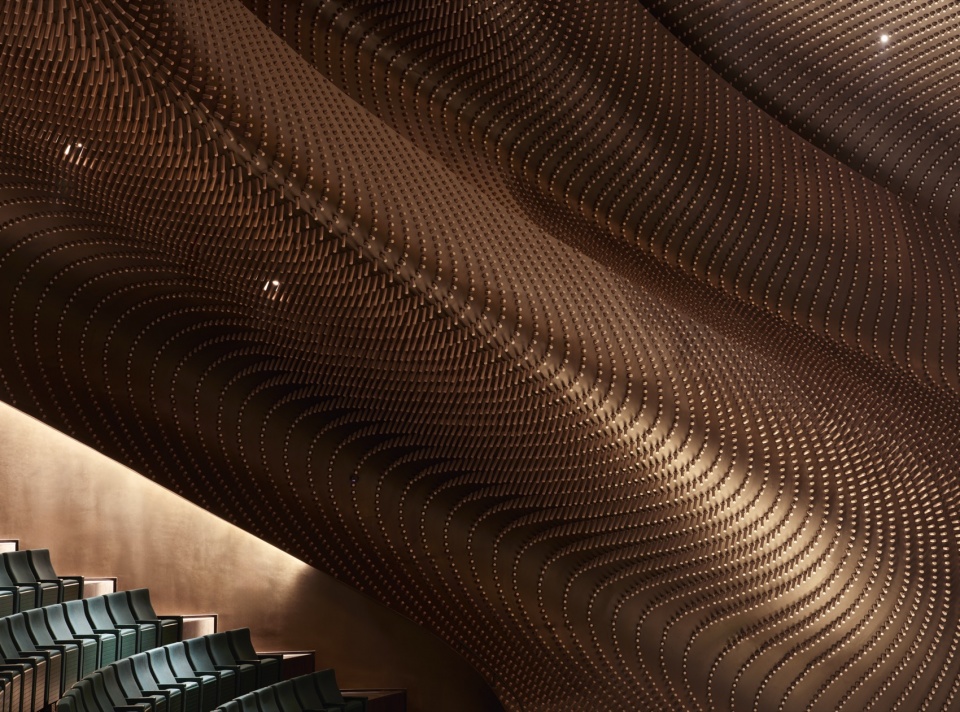
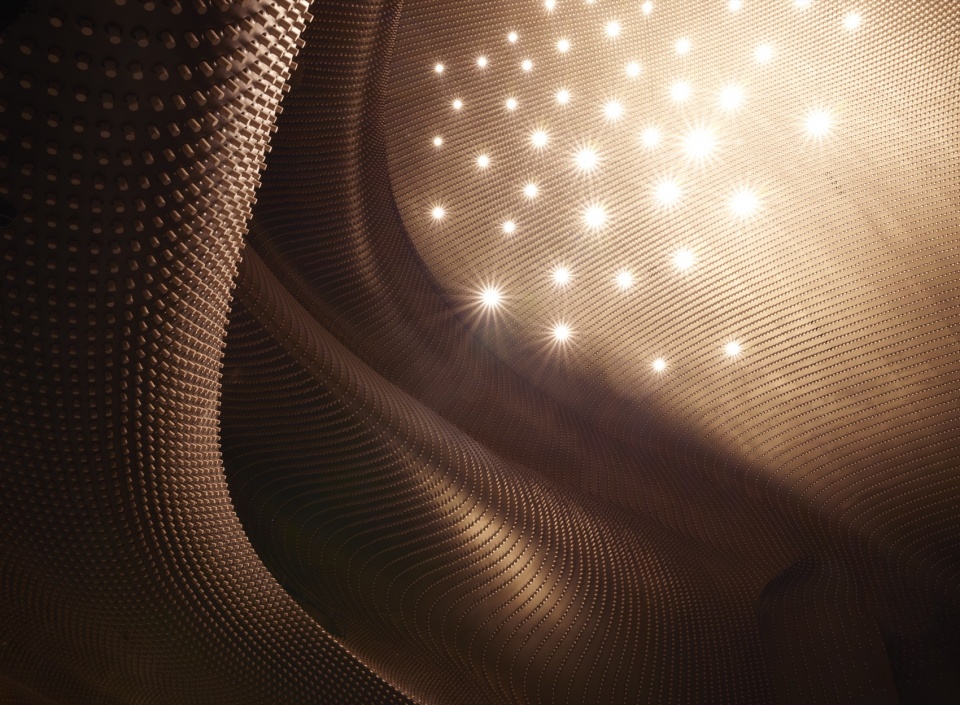
大剧院的墙面与天花由10万根纤细的声学肋条构成。这些构件能够增强声音扩散、控制混响时间,并消散驻波,从而提升声音清晰度,确保剧场内每一个座位都能获得均衡一致的听觉体验。长度、密度与色调各不相同的静态肋条共同构成一个富有层次感的空间场域,为室内赋予一种微妙而富有节奏感的动态活力。
The Grand Theatre’s walls and ceiling are defined by 100,000 slender spines that enhance sound diffusion, control reverberation and disperse standing soundwaves to enrich acoustic clarity, ensuring a consistent auditory experience for every seat in the house. This field of static spines that vary in length, density and tone animates the interior with the perception of a subtle, rhythmic vibrancy.
▼大剧院,Grand Theatre
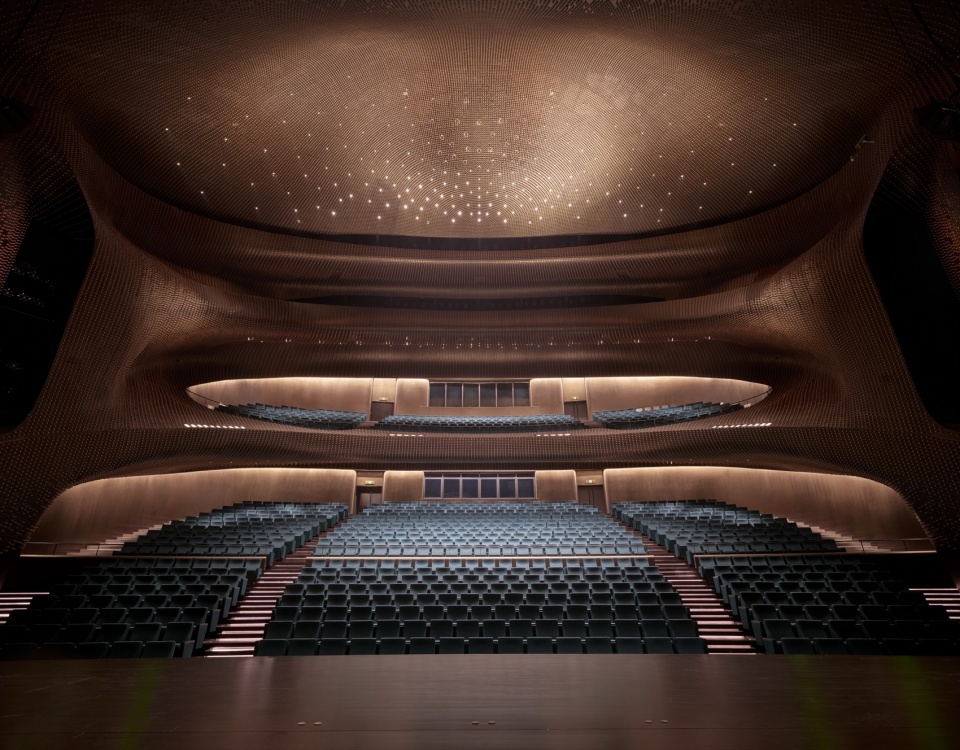
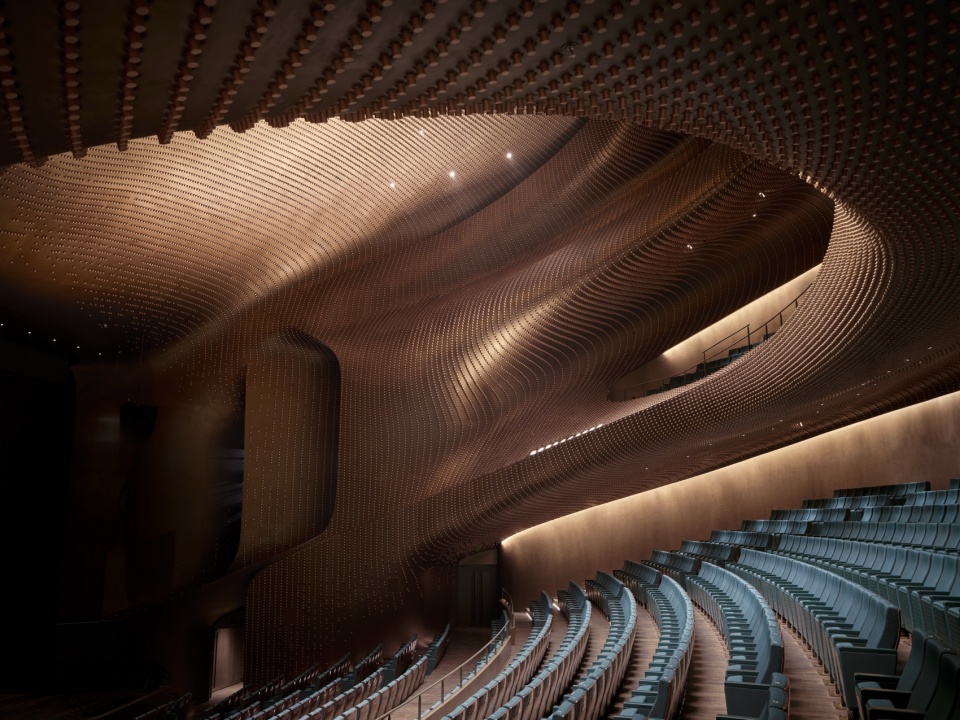
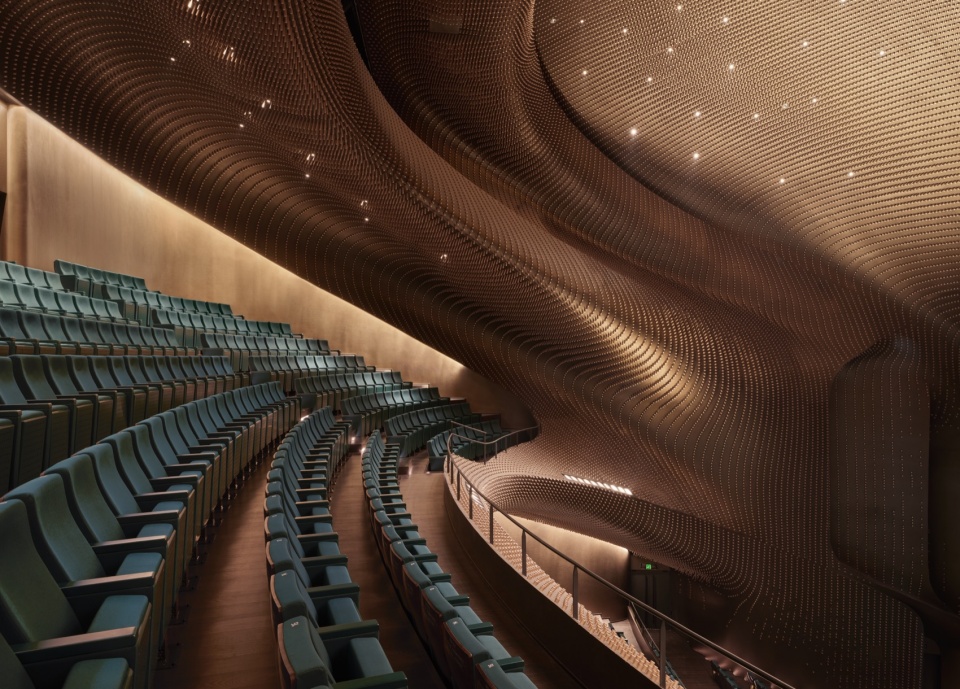
▼大剧院的墙面与天花由10万根纤细的声学肋条构成,The Grand Theatre’s walls and ceiling are defined by 100,000 slender spines that enhance sound diffusion
项目采用由可重复使用模具浇筑而成的预制超高性能混凝土(UHPC)幕墙系统,有效缩短施工周期、减少二氧化碳排放及建筑废弃物。预制铝制吊顶与屋面板采用浅灰色乳光饰面,以降低建筑在低纬度地区所承受的太阳热增益。室内空间则采用铝材以及玻璃纤维增强石膏(Glass Reinforced Gypsum)等材料,以降低维护需求、延长建筑生命周期并减少隐含碳排放。
The installation of prefabricated ultra-high-performance concrete cladding cast from reusable molds has reduced construction time, CO2 emissions and waste. Prefabricated aluminium soffits and roof panels feature a light grey opalescent finish to minimize solar heat gain at the centre’s low latitude location. Its interiors incorporate aluminium and glass reinforced gypsum for low maintenance operations while extending the building’s life-cycle and reducing embodied carbon.
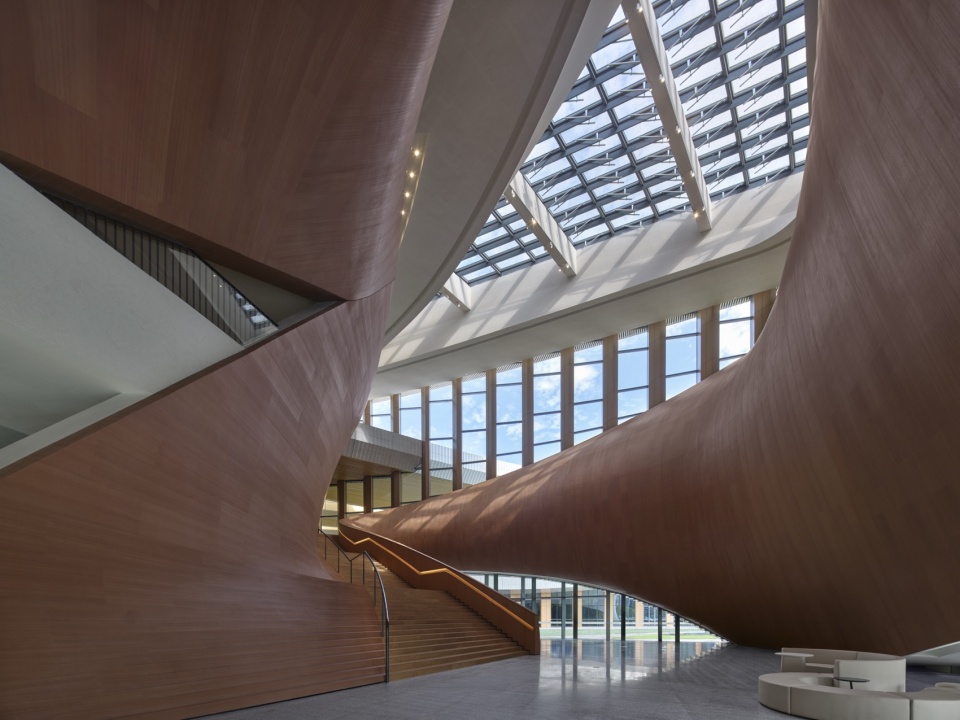
▼楼梯,staircase
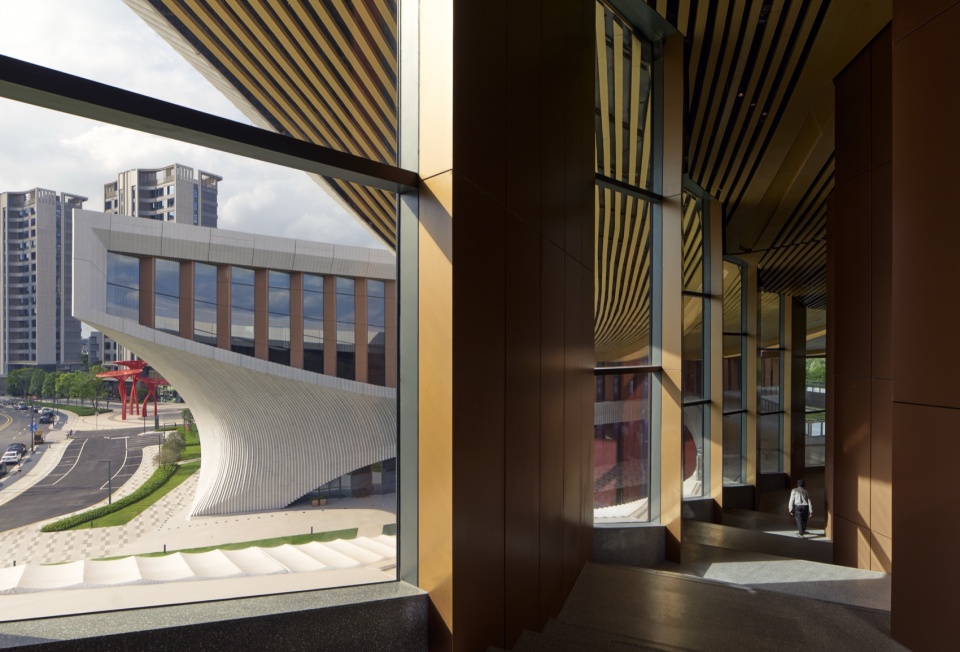
高性能建筑围护系统与智能暖通空调(HVAC)建筑管理系统共同确保建筑运营效率达到最佳状态。建筑屋顶设置光伏发电系统与雨水收集系统,以实现现场可再生能源利用并降低用水量。遮蔽式公共广场、花园露台及滨水公园结合透水铺装与恢复种植的湿地景观,在降低洪涝风险的同时提升当地生物多样性。
High-Performance façades and intelligent HVAC building management systems provide optimal operational efficiencies. The centre’s roof includes photovoltaic arrays and rainwater harvesting to generate on-site renewable energy and reduce water consumption. The sheltered public plaza, garden terraces and waterfront park combine permeable surfaces and re-planted wetlands to mitigate flood risk and enhance local biodiversity.
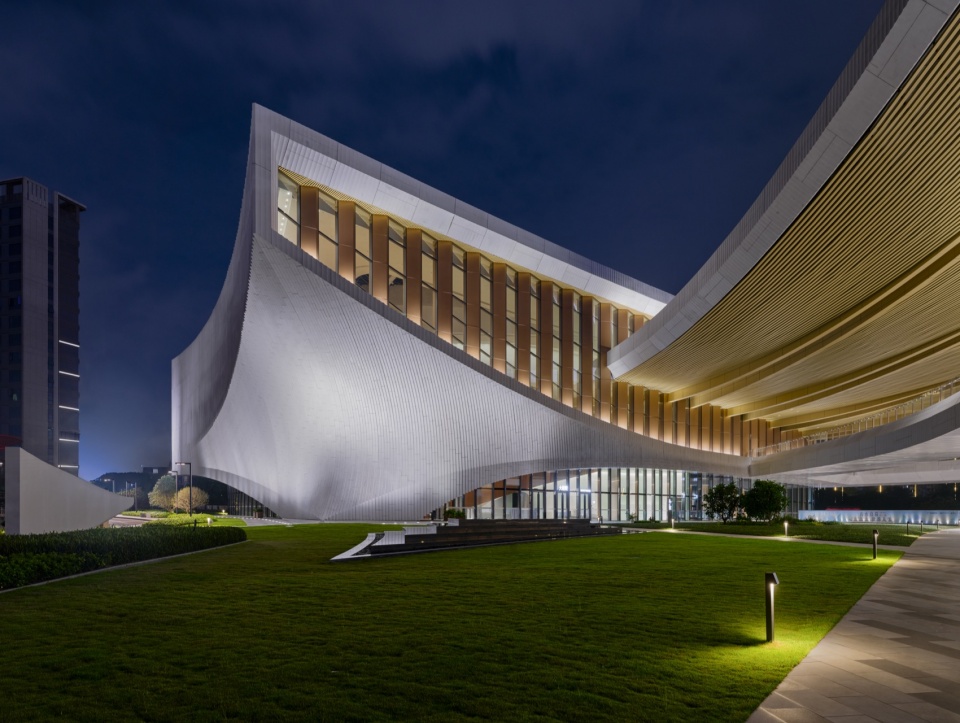
▼夜景,night view
Project Team
Client: Dongguan Songshan Lake OCT Investment and Development Co., Ltd
Design Architect: ZHA
ZHA Principal: Patrik Schumacher
ZHA Project Director: Johannes Schafelner
ZHA Project Architect: Martin Krcha
ZHA Project Leads: Yifan Zhang, Evgeniya Yatsyuk, Gizem Muhtaroglu
ZHA Local Team: Shao-wei Huang (Head of Shenzhen Office) , Haohao Chen (Local Project Lead)
ZHA Technical Support: Branko Svarcer, Armando Solano
ZHA Project Team: Erfan Pour Ahmad, Mahyar Rakeei, Nazanin Sharif, Kourosh Asgar Irani, Genci Sulo, Hazel Ozrenk, Chiara Baiocco, Dennis Brezina, Alessandra Lazzoni, Nassim Eshaghi, Xuanzhi Huang, Tommaso Casucci, Fangxingchi Du, Florentine Rockenbauer
ZHA Competition Project Directors: Johannes Schafelner, Shao-wei Huang, Charles Walker
ZHA Competition Project Architects: Ashwin Shah, Yifan Zhang
ZHA Competition Team: Valeria Mazzilli, Erfan Pour Ahmad