花盒咖啡,江苏 / SoBA
“花盒咖啡”位于江苏昆山花桥中央公园的一处湖边平台上,原址为一座老旧的遮阳亭。虽然地理位置优越,但因功能单一,长期被忽视。我们希望通过一次轻量、灵活的设计介入,让这个空间真正“活”起来,成为人们愿意停下来的地方。
The project is located on a lakeside platform in Central Park, Huqiao, Kunshan, Jiangsu. The site was originally occupied by an aging sunshade pavilion. Despite its prime location, the space had long been overlooked due to its limited functionality. Our goal was to bring this place to life through a lightweight and flexible design intervention—creating a spot where people genuinely want to pause and linger.
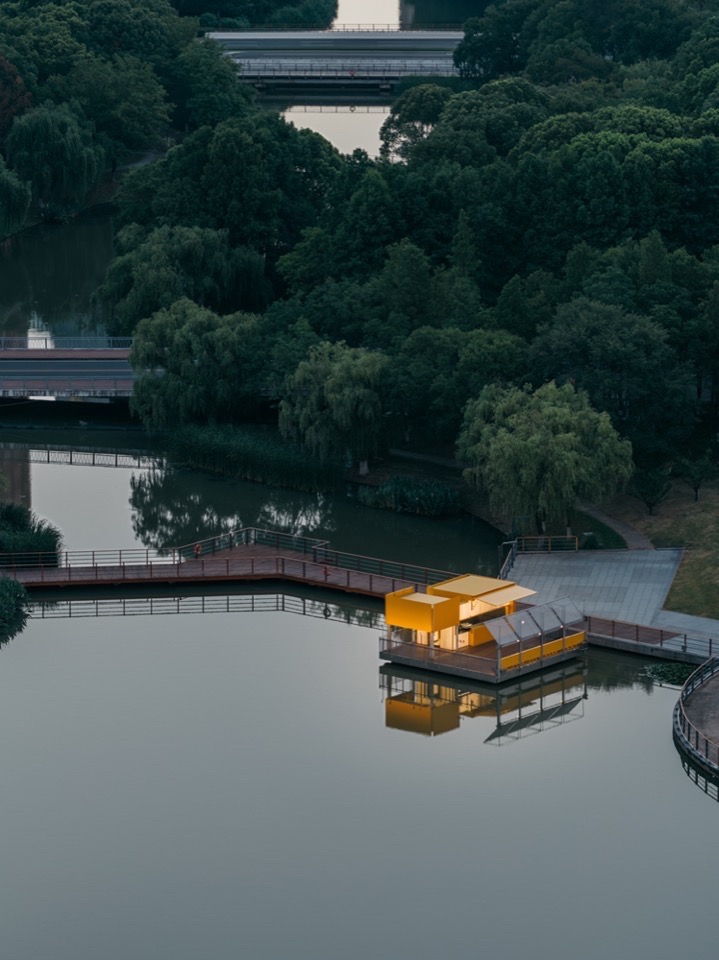
▼鸟瞰概览,Bird’s eye view
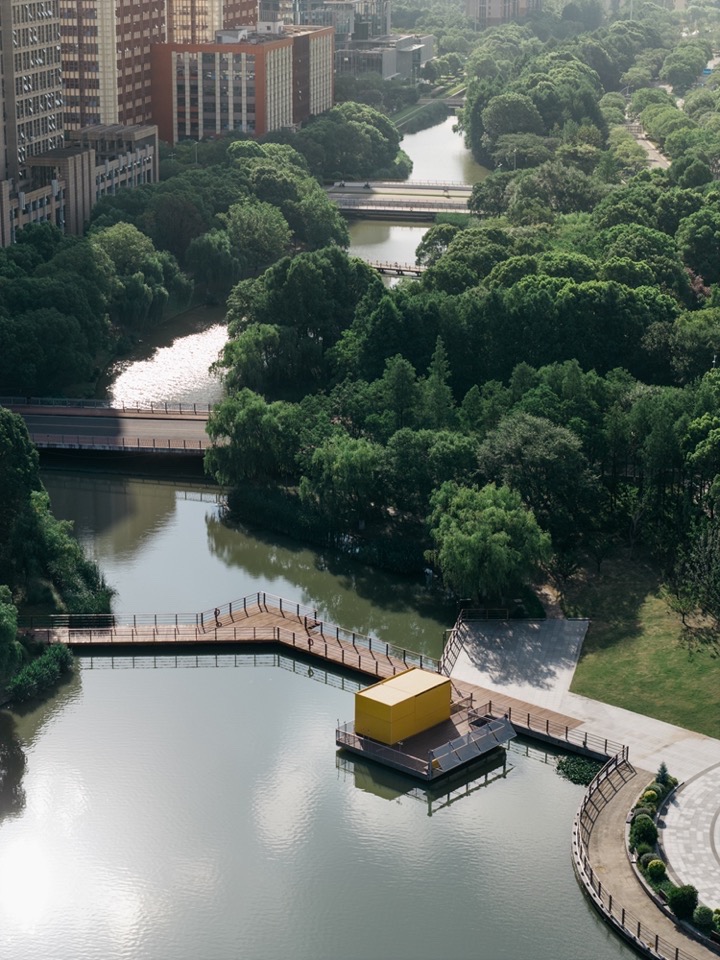
▼灵活的设计介入场地,a lightweight and flexible design intervention
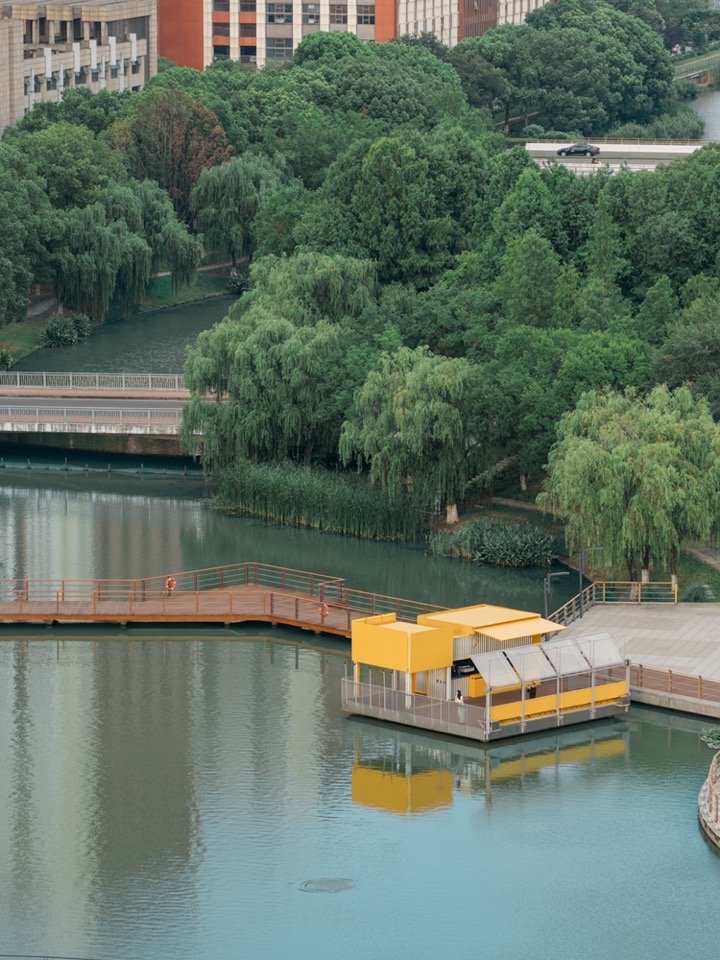
1. 从“机器”到“会动”的建筑From “Machine” to “Living” Architecture
早期的现代主义建筑常被称为“居住的机器”,强调功能明确、形式理性。而在这个项目中,我们更希望建筑是“活的”——它能根据时间、天气和使用需求,主动作出回应。为此,我们设计了一个可开合的盒子建筑:在营业时,它的墙面可以滑动、翻转、升起,将内部空间完全打开,吸引人们靠近、停留;而在闭店或非使用时,它又可以收拢为一个安静的体量。
▼建筑模型,model
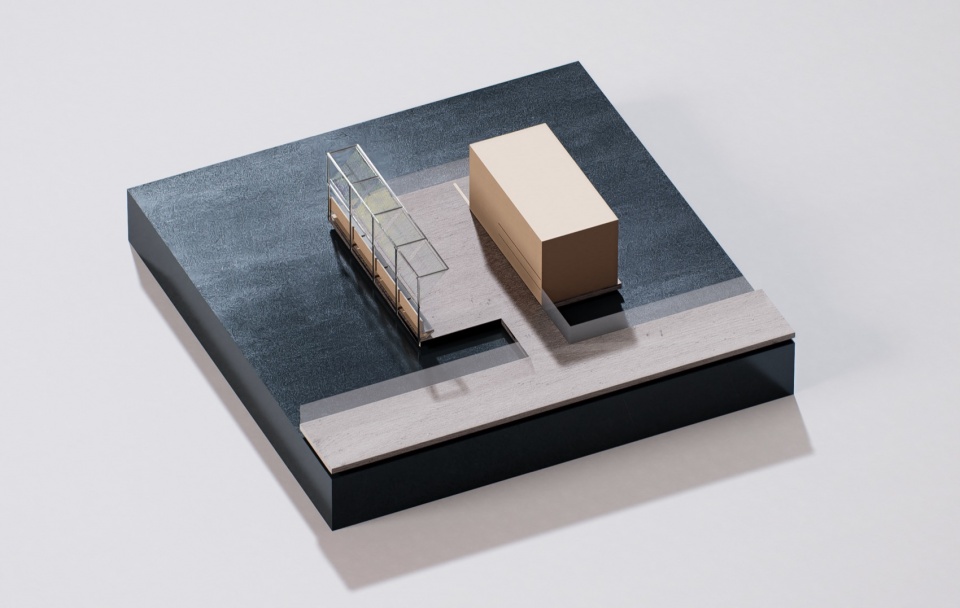
Early modernist architecture was often called a “machine for living,” emphasizing clear functions and rational forms. In this project, however, we sought a building that feels alive—one that actively responds to time, weather, and user needs. To achieve this, we designed a box-like structure with operable walls that slide, flip, and lift open during business hours, fully revealing the interior and inviting people to come closer and stay. When closed or not in use, it folds into a quiet, compact volume.
▼开与合的变化, act of opening and closing
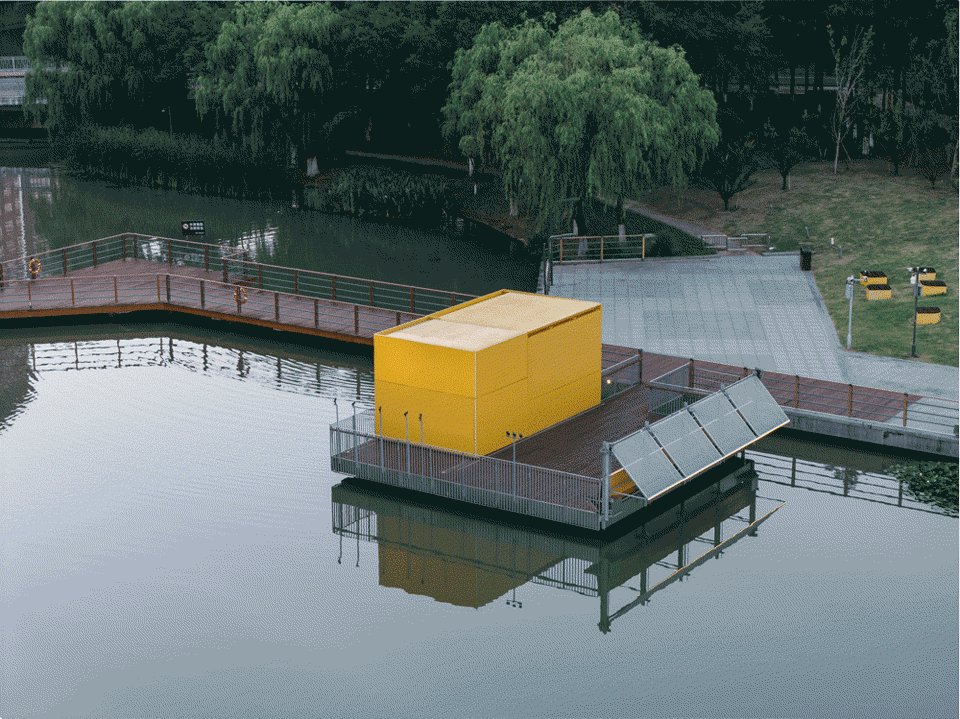
这种开与合的变化,不只是出于功能上的需要,更是一种空间表达方式:让建筑变得更像是城市节奏的一部分,而不是一个固定不变的物体。人们经过它,就能一眼看出现在是“开放”的时刻,建筑仿佛有了时间的感知能力。
This act of opening and closing is more than a functional response—it’s a spatial expression that makes the building part of the city’s rhythm rather than a static object. Passersby can immediately tell when it’s “open,” as if the building itself senses time.
▼感知时间的建筑,the building itself senses time
2. 与场地对话,创造灰空间Dialoguing with the Site: Creating “Gray Spaces”
我们没有把这个小房子设计成一个封闭的盒子,而是尽可能与场地融合,让它像一个愿意“打开自己”的存在。通过折叠的门板、可滑动的立面和透光的材料,我们创造了许多模糊室内外界限的灰空间——它们既能遮阳挡雨,又让风穿过、光透进来。
▼建筑分析图,Diagram
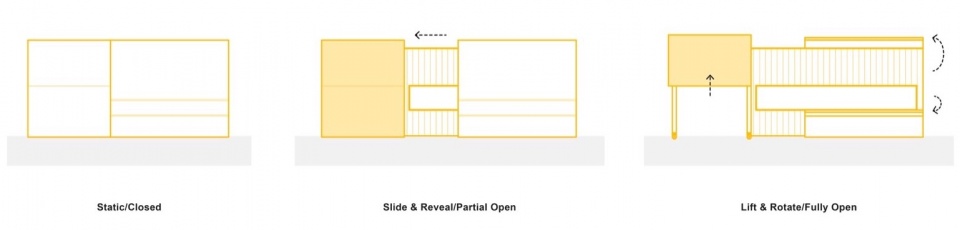
▼立面与遮阳系统开启机制,Facade opening mechanism
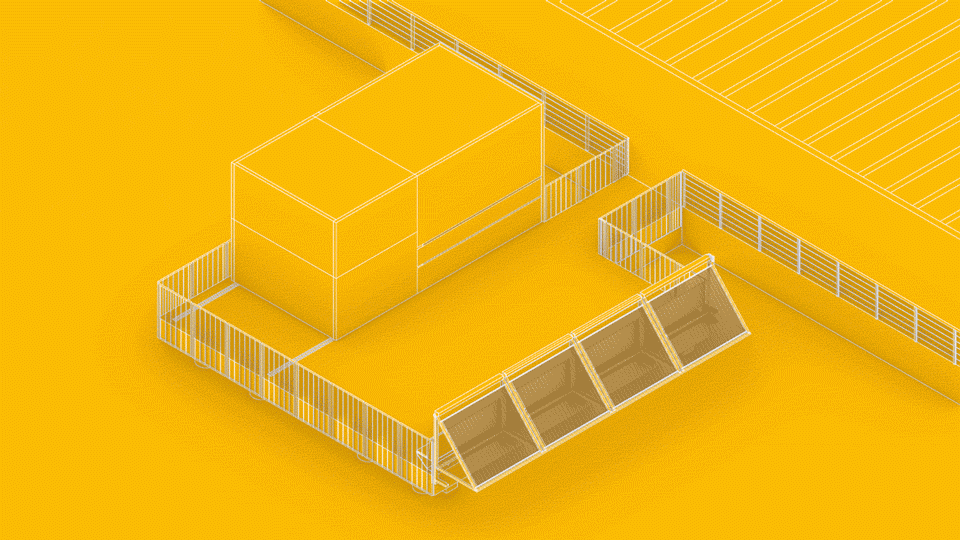
Instead of designing a closed box, we aimed to integrate the small structure with its surroundings, making it a presence willing to “open itself up.” Through folding doors, sliding façades, and translucent materials, we created a series of “gray spaces” that blur the boundary between inside and outside—providing shade and shelter while allowing breeze and light to pass through.
▼开放而包容的场所,an open & inviting space
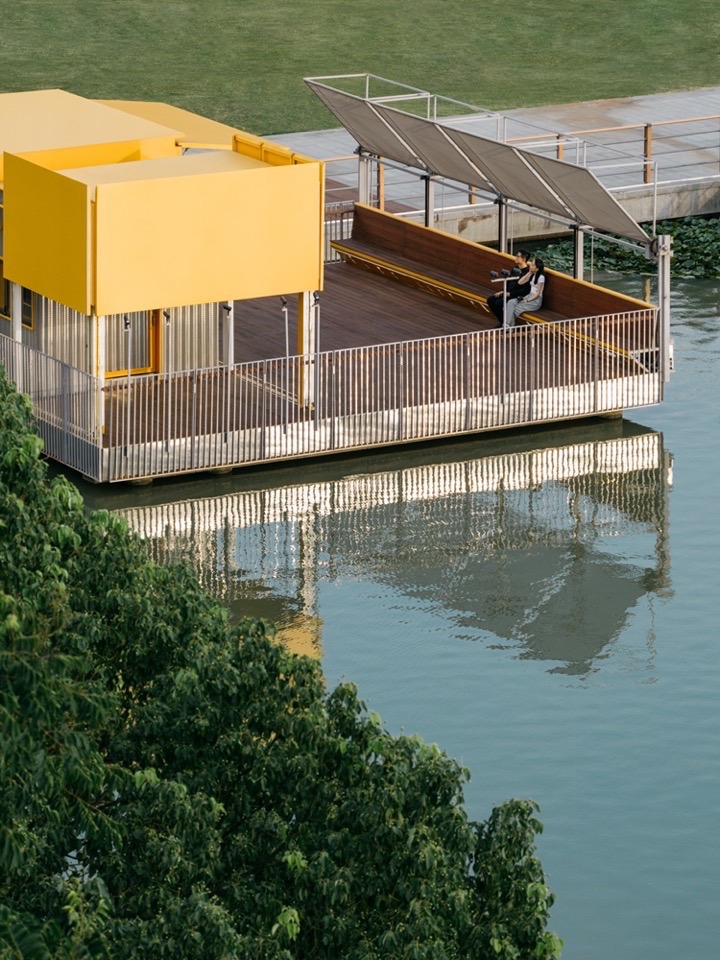
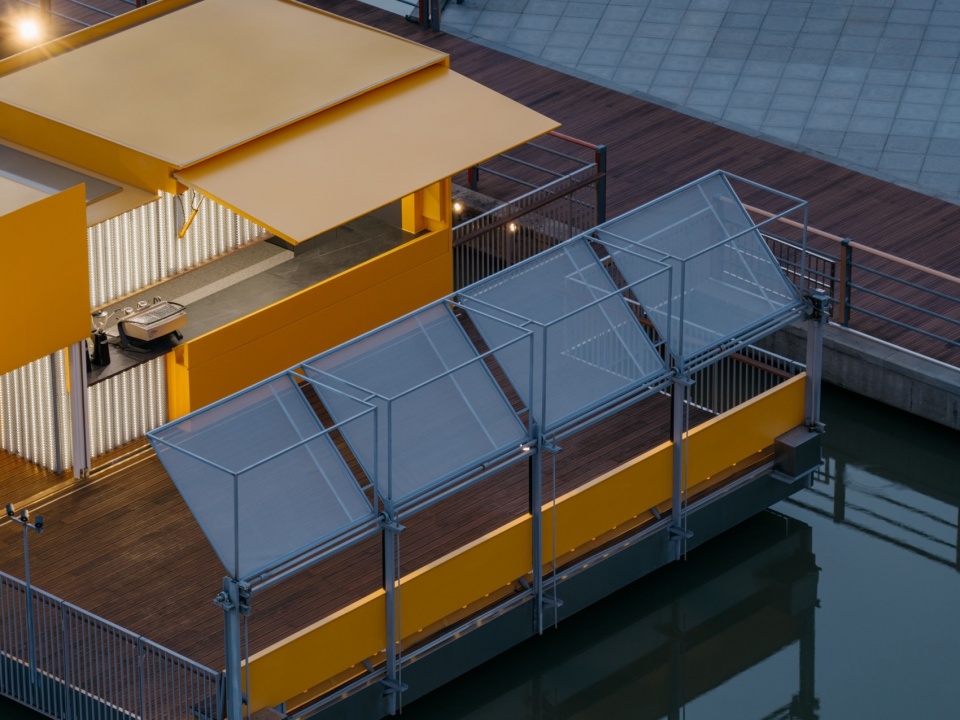
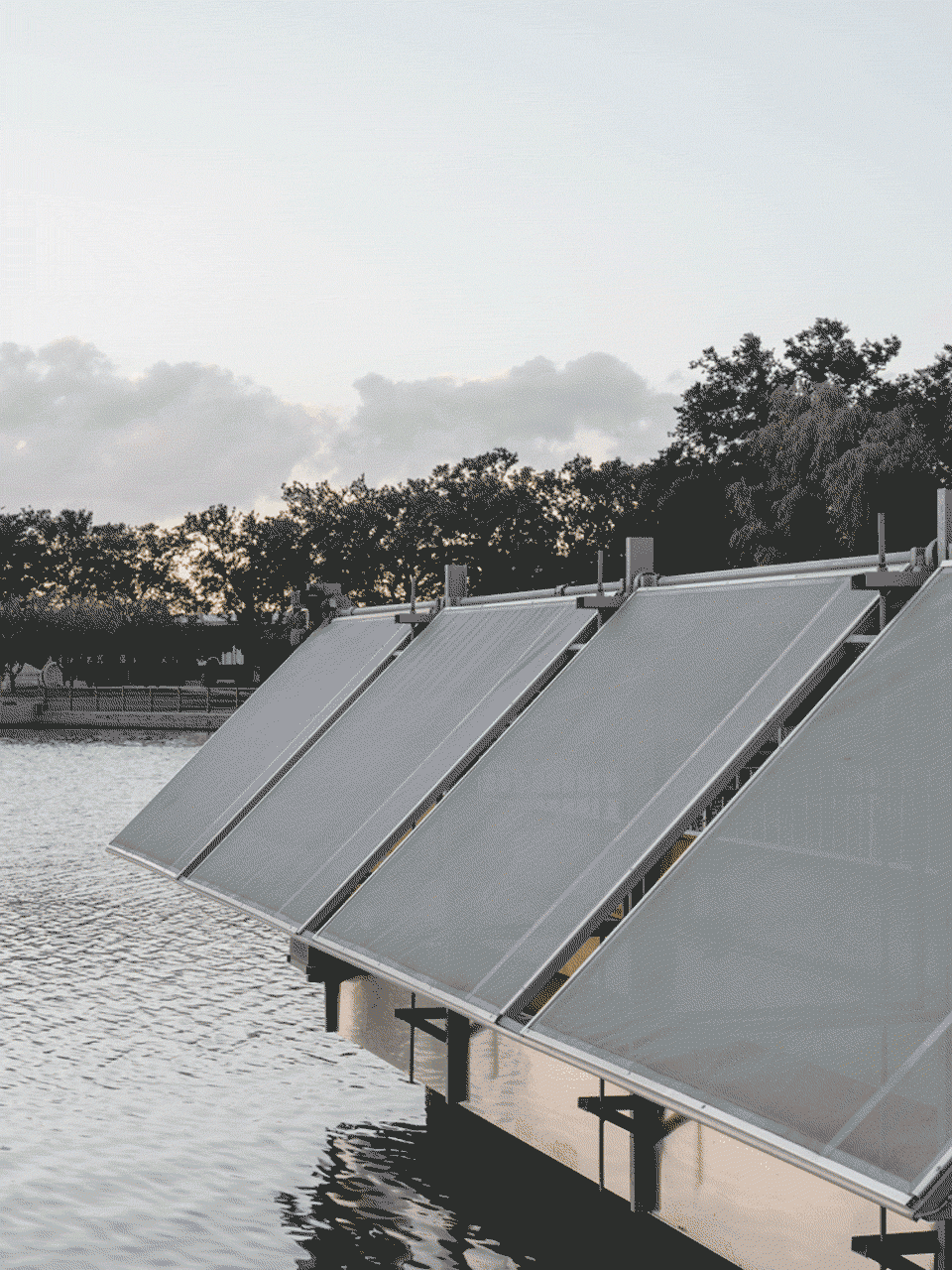
建筑对面的遮阳和座椅系统也与建筑形成互动,共同围合成一个开放而包容的场所。遮阳系统的可开合设计增强了空间的灵活性,为不同时间段和活动提供舒适的环境。
The sunshade and seating opposite the building work together to create an open, inviting space. The sunshade can open and close, making the area comfortable for different times and uses.
▼可开合的遮阳系统,The sunshade can open and close
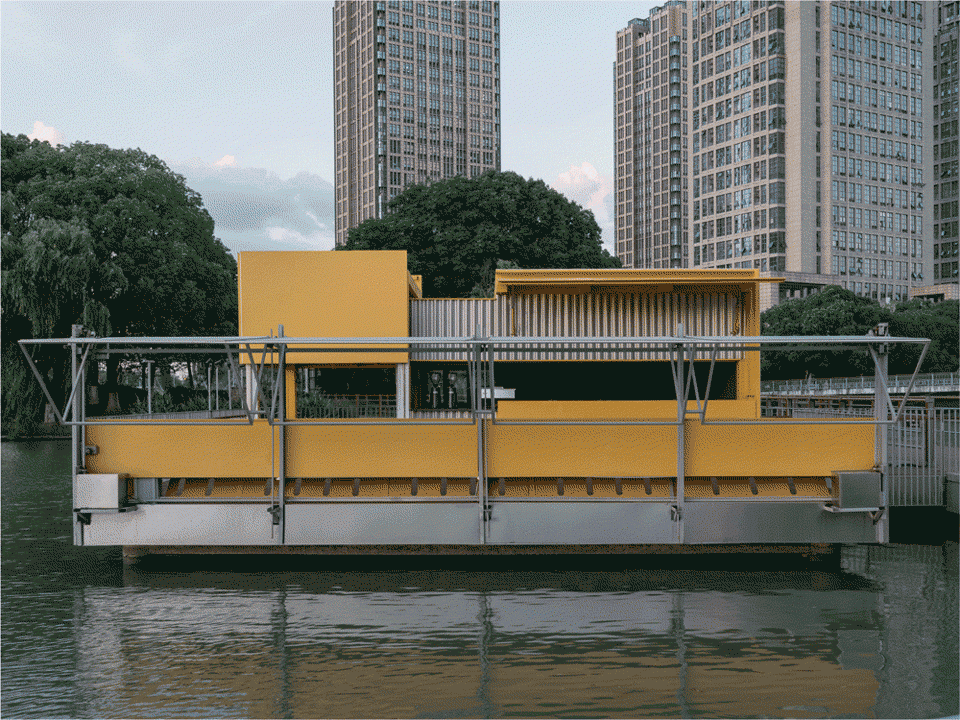
这让原本封闭的体量变得开放、互动,也丰富了人们在这里的使用可能性:从等咖啡、观景、到临时的集市和活动空间,建筑不再只是一个“物”,而是一个生活发生的“界面”。
This openness transforms the originally enclosed volume into an interactive space, enriching how people use it: whether waiting for coffee, enjoying the view, or hosting pop-up markets and events. The building becomes not just an object, but an interface where life unfolds.
▼生活发生的“界面”,an interface where life unfolds
3. 轻巧的构造与可持续思路Lightweight Construction and Sustainable Thinking
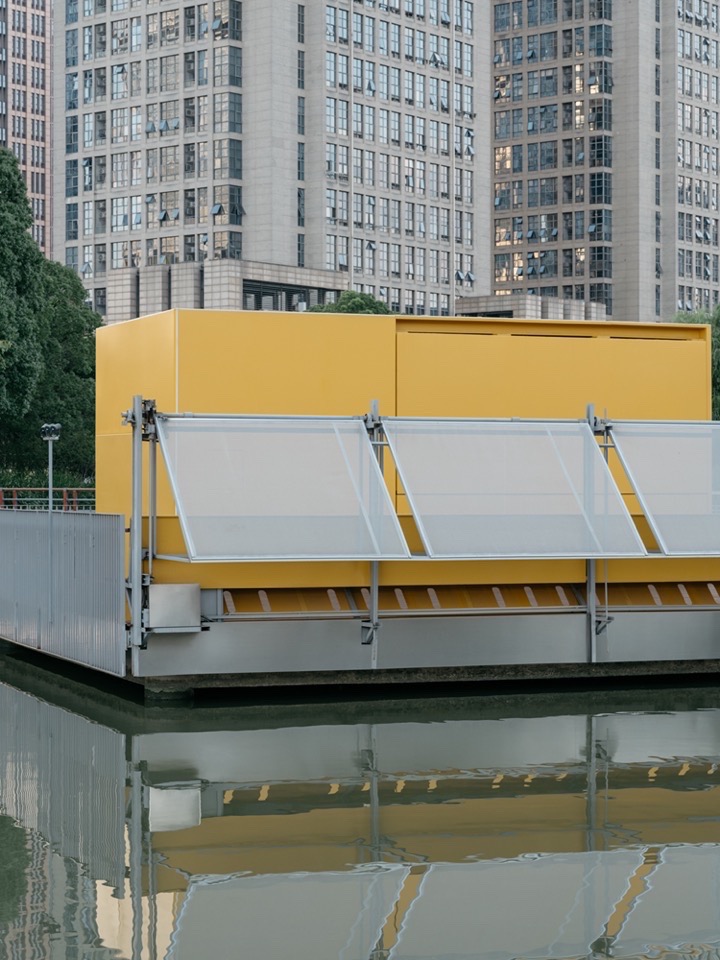
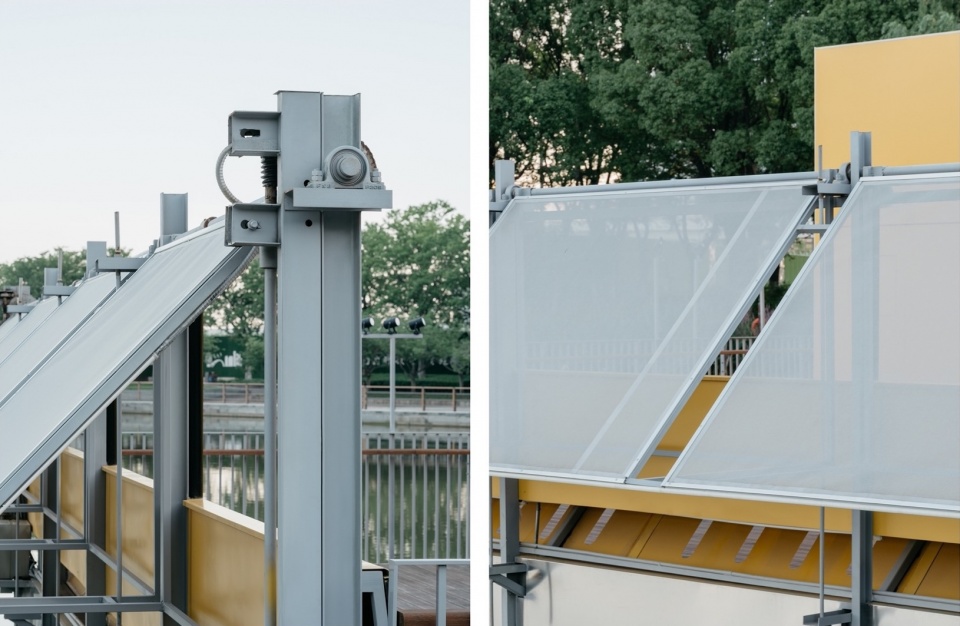
为了尽量减少对原有平台的干扰,项目采用轻钢结构体系外覆铝板,地面铺设竹木材料。主体结构为不可拆卸的整体固定式构造,以确保长期的稳定性与耐久性;与此同时,外立面可开合、可调整的界面系统使其能够在不同的运营场景、季节变化及光照条件下呈现多样化状态。这种“稳固的骨架 + 可变的表皮”的建构策略,不仅延长了建筑的生命周期,也赋予其在城市环境中持续适应与回应的能力。我们希望它不仅是一个功能空间,更是一种可以被持续使用、不断激活的空间框架。
To minimize disruption to the existing platform, we employed a lightweight steel frame clad in aluminum panels, with bamboo flooring. The main structure is fixed and non-removable to ensure long-term stability and durability; meanwhile, the façade features operable, adjustable elements that adapt to different operational scenarios, seasonal changes, and lighting conditions. This “stable skeleton + dynamic skin” strategy extends the building’s lifecycle while enabling it to continuously adapt and respond within the urban environment. Our aim is for this to be more than just a functional space—it’s a framework that can be continually activated and reused.
▼轻钢结构体系外覆铝板,a lightweight steel frame clad in aluminum panels
▼可调节的立面系统,adjustable elements of facade
4. 一个可以被重新定义的地方A Place That Can Be Redefined
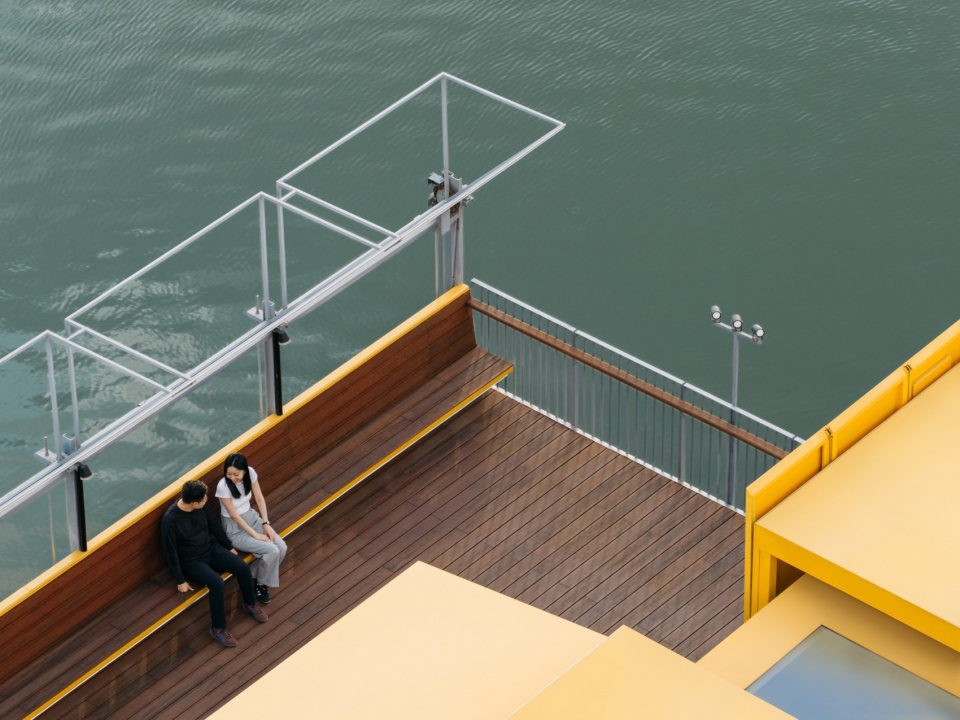
我们称它为“花盒咖啡”,但它远不止是一个咖啡店和花店。它可以是你旅途中偶遇的一杯热饮,是带孩子坐下看水的一段休憩,是周末花艺市集的起点,也是朋友聊天的小据点。
We call it The Bloom Box, but it’s far more than a coffee and flower shop. It can be a warm drink encountered on a journey, a comfortable spot where parents sit and watch the water with their kids, the starting point of a weekend flower market, or a cozy corner for friends to gather.
▼城市里的小据点,a cozy corner in city
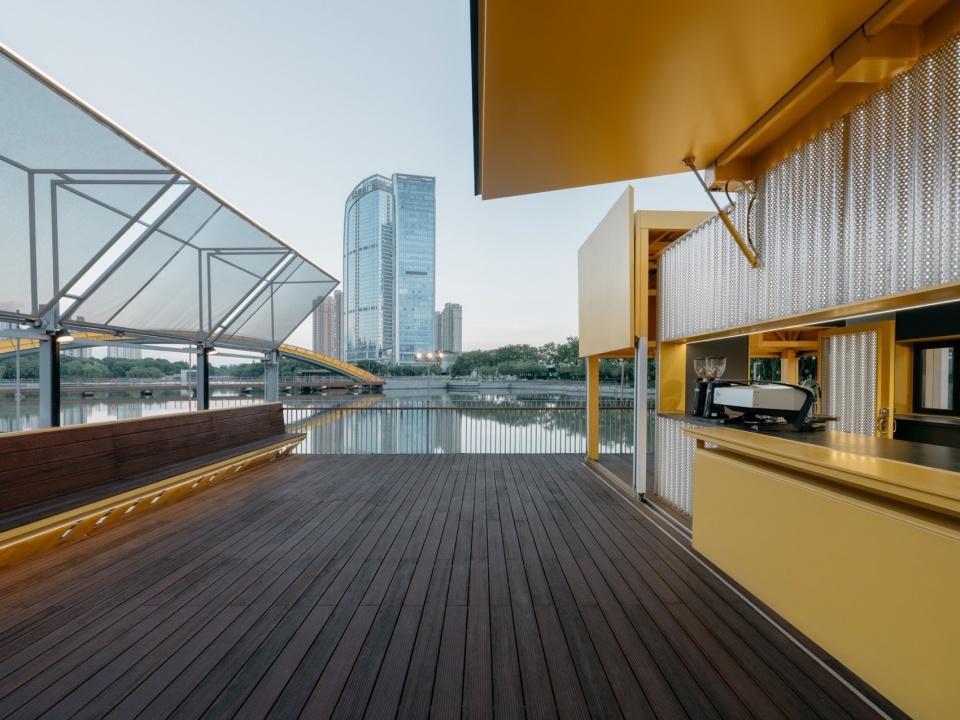
它没有明确的功能边界,而正是这种模糊性,让使用者可以自由地定义它。在这里,香气、光影、水面交织成一个柔软的城市角落。我们希望它不是一个“完成的建筑”,而是一个能随着人们的使用而不断变化的生活容器。
With no fixed programmatic boundaries, its ambiguity invites users to define it freely. Here, fragrance, light, and water combine to create a gentle urban nook. We envision it not as a “finished building,” but as a living container that evolves through use.
▼不断变化的生活容器,a living container that evolves through use
5. 小尺度,轻介入,大能量Small Scale, Light Touch, Big Impact
我们希望通过“花盒咖啡”探索一种小尺度介入城市的可能性——以轻盈、灵活的策略嵌入日常,从细节入手,让场地在使用中被重新激活,并促成人与自然、人与人之间的真实连接。我们相信,建筑的意义不仅存在于宏大体量与壮观形态之中,也可以体现在一个可开启、可呼吸、能够参与生活的小盒子里,让它在时间中持续回应环境与使用者的需求,并成为城市公共记忆的一部分。
Through The Bloom Box, we explore the possibility of small-scale urban intervention—embedding lightness and flexibility into everyday life. Starting from details, we aim to reactivate the site through use, fostering genuine connections between people and nature, and between people themselves. We believe architecture’s meaning isn’t confined to grand scales or monumental forms; it can also live in a small, openable, breathable box that participates in life, responding over time to its environment and users, and becoming part of the city’s collective memory.
▼小尺度介入城市的可能性,small-scale urban intervention
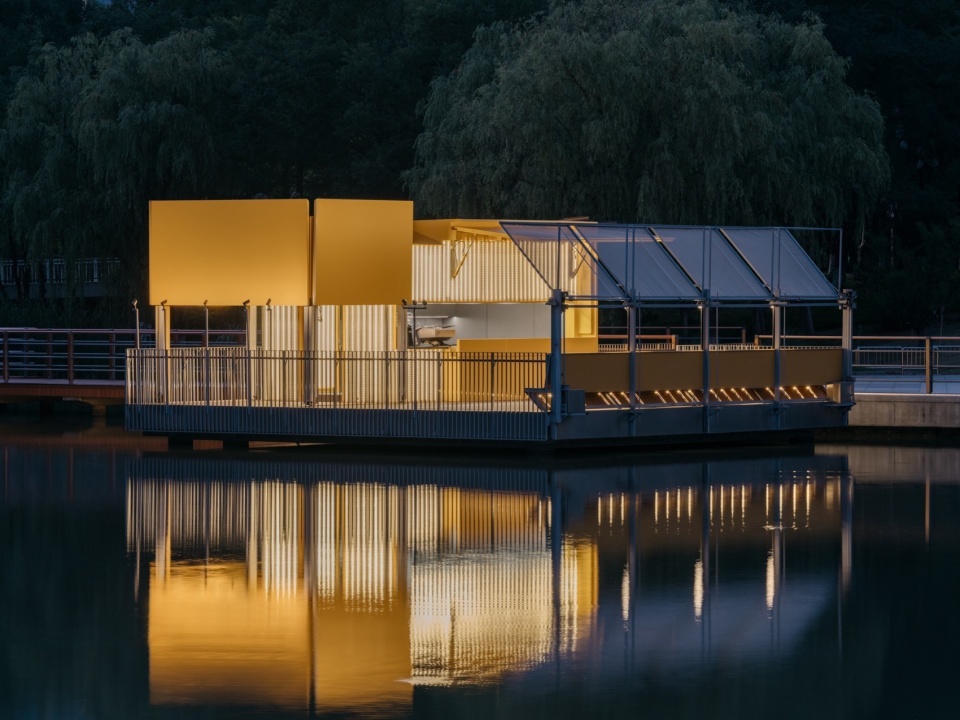
6. 一个小尺度的空间更新A Small-Scale Spatial Renewal
“花盒咖啡”以轻量、灵活、可参与的方式嵌入城市结构,在不增加空间负担的前提下回应真实的城市日常。它通过可变的表皮与开放的界面激活场地潜能,持续编织人与空间、人与自然、人与人之间的联系,并在日常流动中留下可被感知与记忆的城市片段。
The Bloom Box integrates lightly, flexibly, and participatively into the urban fabric, responding to the realities of daily city life without adding spatial burden. Through its adaptable skin and open interfaces, it activates the site’s potential and continuously weaves connections among people, space, nature, and each other—leaving behind urban fragments that are tangible and memorable amid the flow of everyday life.
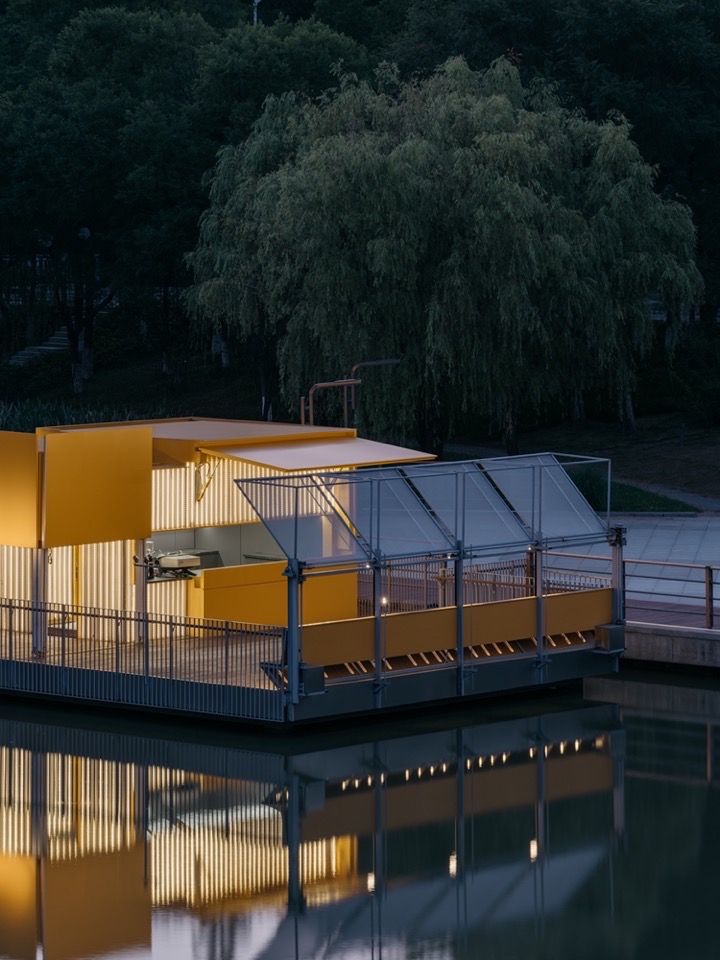
▼夜览,night views
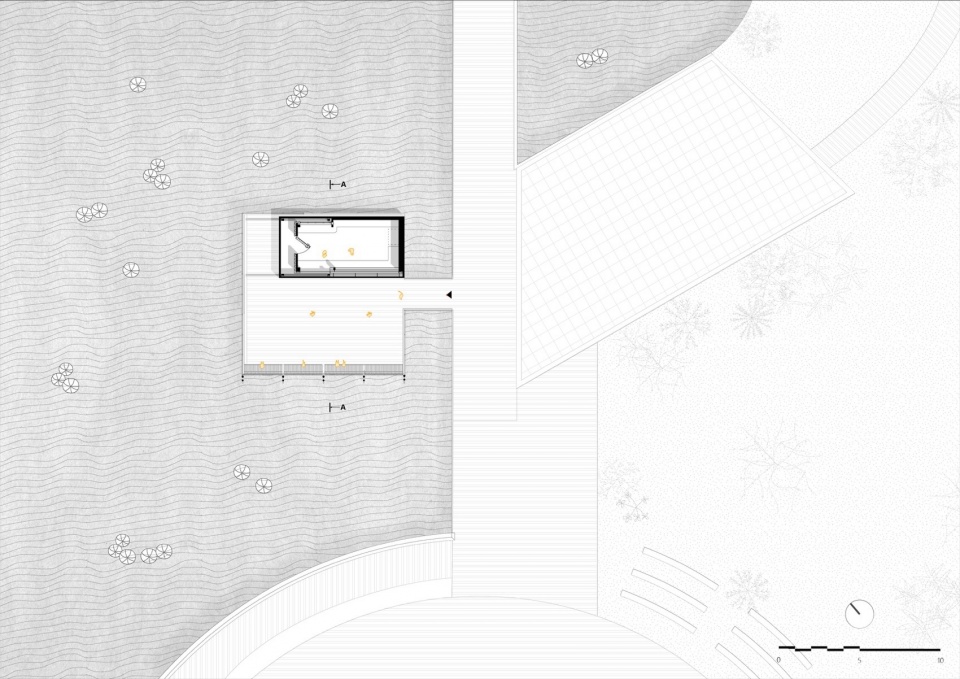
▼总平面图,site plan
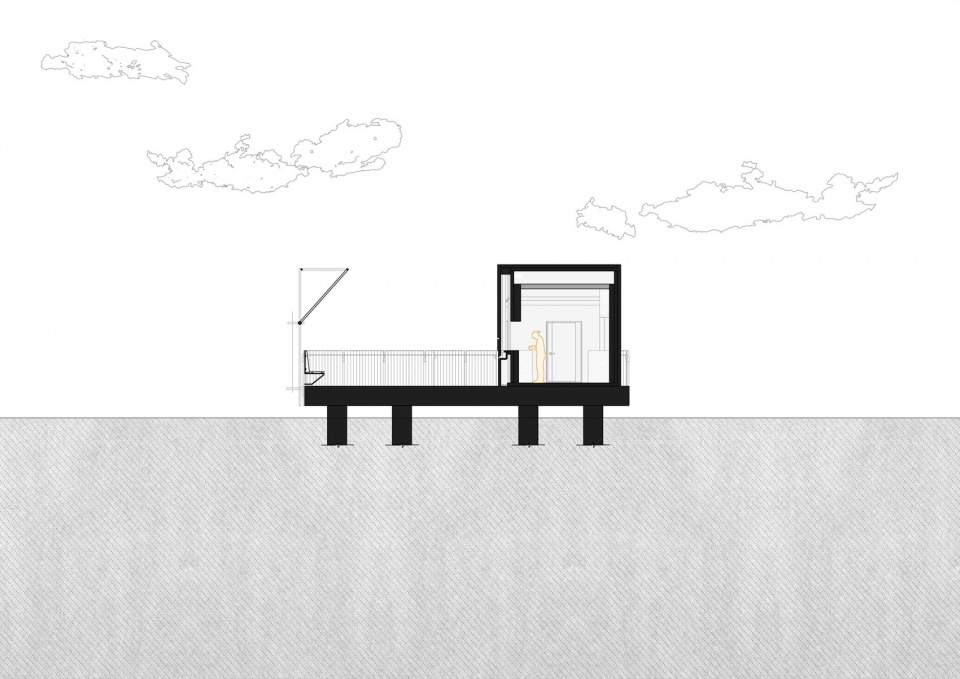
▼剖面图,section
项目信息
Project Information Project
Name: The Bloom Box
Project Type: Architecture and Interior Design
Project Location: Central Park, Huqiao, Kunshan, Suzhou, Jiangsu Province, China
Client: Huaqiao Town, Kunshan Municipal Government
Consultant: Huaqiao Economic Development Zone Planning and Construction Bureau Design
Period: September 2023 – July 2024
Construction Period: August 2024 – January 2025
Site Area: 100 sqm
Building Area: 40 sqm
Design & Construction Drawing Firm: SoBA
Design Firm Website: https://www.sobarchitects.com/
Design Firm Contact: office@sobarchitects.com
Lead Architects: Wang Ruo, Tang Haiyin Design
Team: Chen Tuo, Li Chuanzhang, Wang Yuan, Shen Yichen (Intern), Li Zizhen (Intern)
Lighting Consultant: Shanghai Guangyue Lighting Design Co., Ltd.
Structural Consultant: Zang Yuhong
Contractor: Wenshanglv Group Kunshan Chuanshi Hezhong Advertising & Decoration Engineering Co., Ltd.
Photographer: Wen Studio