T10A展亭,越南 / ODDO architects
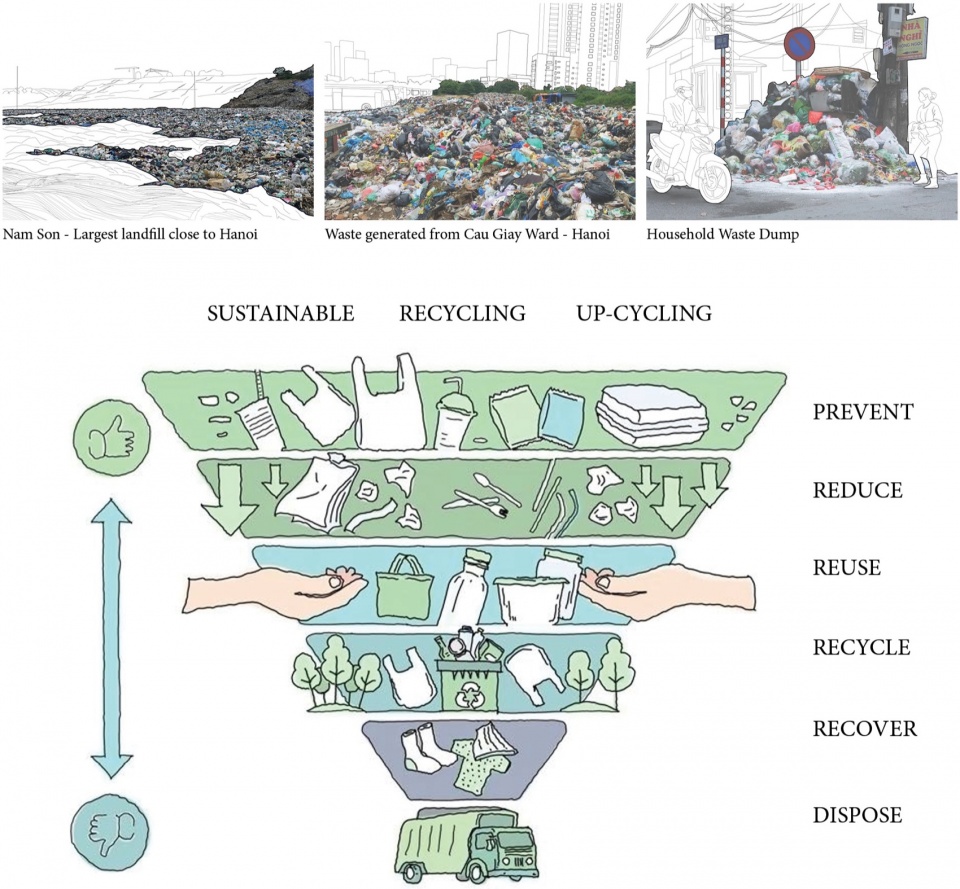
每年,越南都会产生约2500万吨生活垃圾——从拥挤的城市街巷到宁静的乡村田野。垃圾不仅仅是日常生活的副产品,它也反映了我们作为一个社会与环境互动的方式。针对这一现实问题,T10A展亭主要采用废弃塑料建造而成。超过四万个回收塑料袋被收集并转化为建筑材料,用于搭建这座展亭。这是一项由社区共同参与的行动,得益于众多志愿者的支持,他们不仅协助收集材料,也直接参与了建造过程。
▼轴测图,axonometric diagram
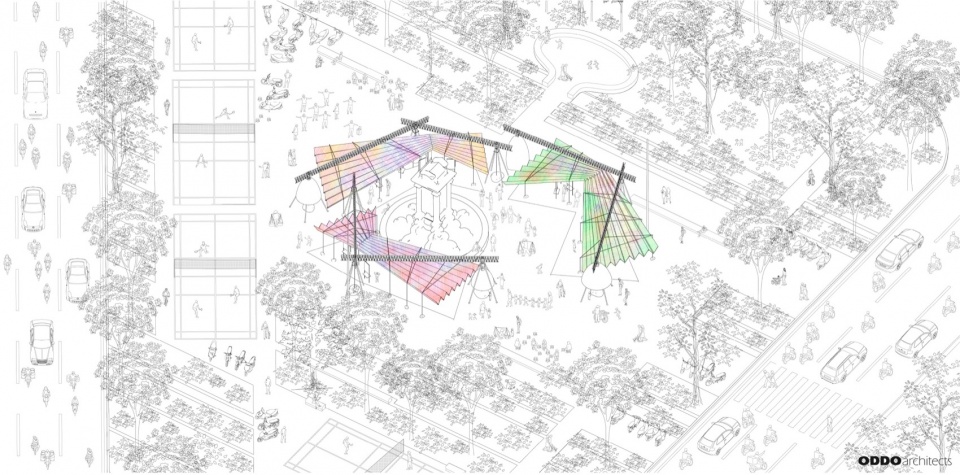
Every year, Vietnam generates around 25 million tons of household waste—from the cramped corners of its city streets to the quiet fields of the countryside. Waste is not merely a by-product of daily life; it reflects how we, as a society, interact with our environment. In response to this reality, the T10A Pavilion was constructed primarily from discarded plastics. More than forty thousand recycled plastic bags were collected and transformed to build the pavilion, a community-driven effort made possible thanks to the support of many volunteers who helped gather materials and participated directly in the construction process.
▼鸟瞰,aerial view
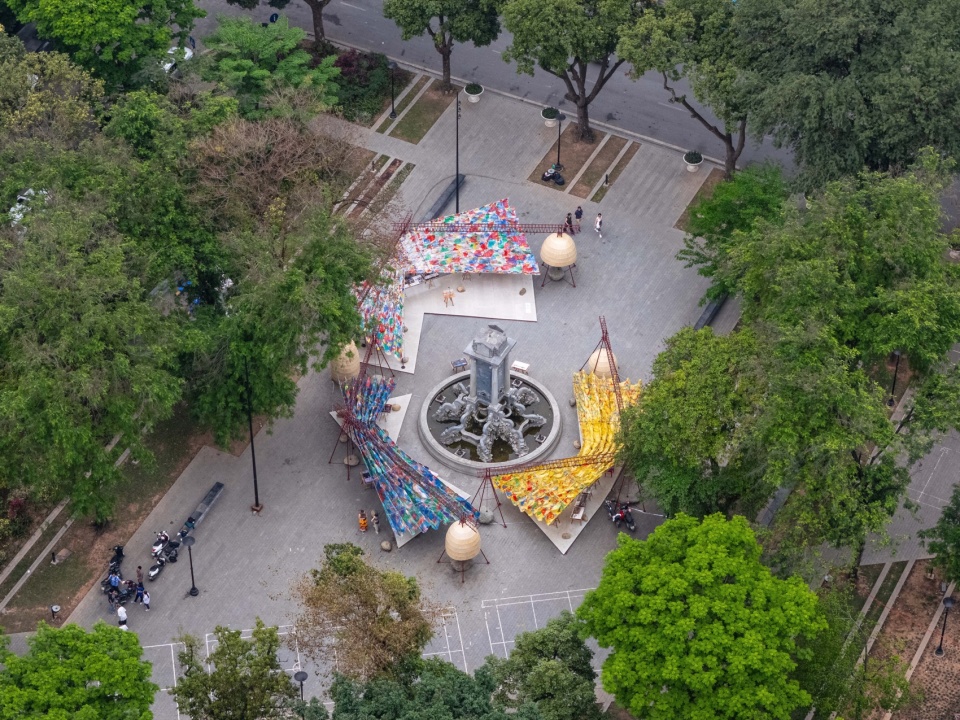
这座展亭既是一个展示精选获奖建筑项目的展览空间,也是一个向公众展示可持续设计与再生材料如何激发越南更加可持续建筑文化的实践案例。
The pavilion was created as both an exhibition space of selected awarded architecture projects and a public demonstration of how sustainable design and recycled materials can spark a more sustainable architectural culture in Vietnam.
▼项目概览,overview of the project
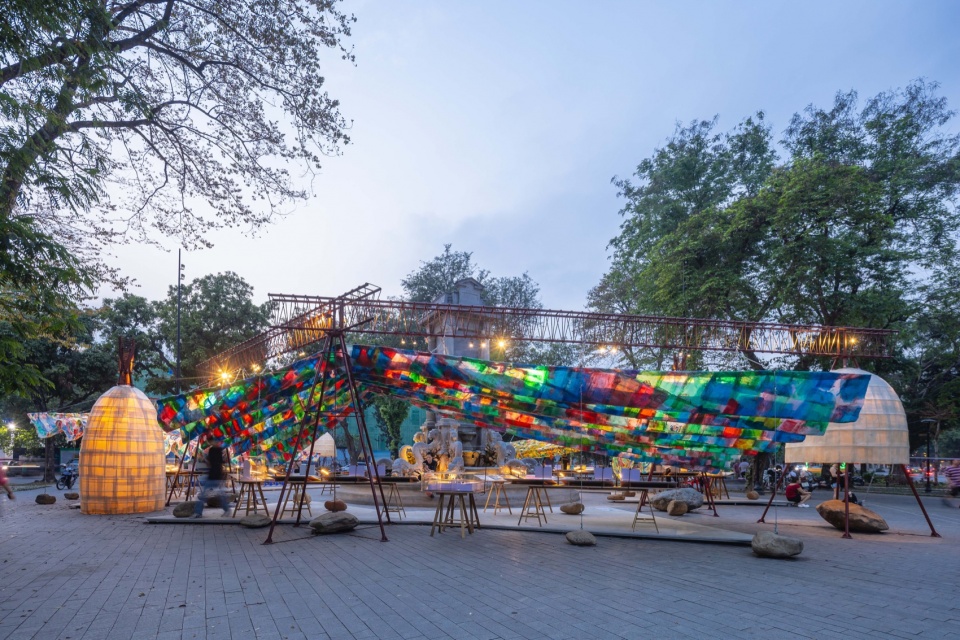
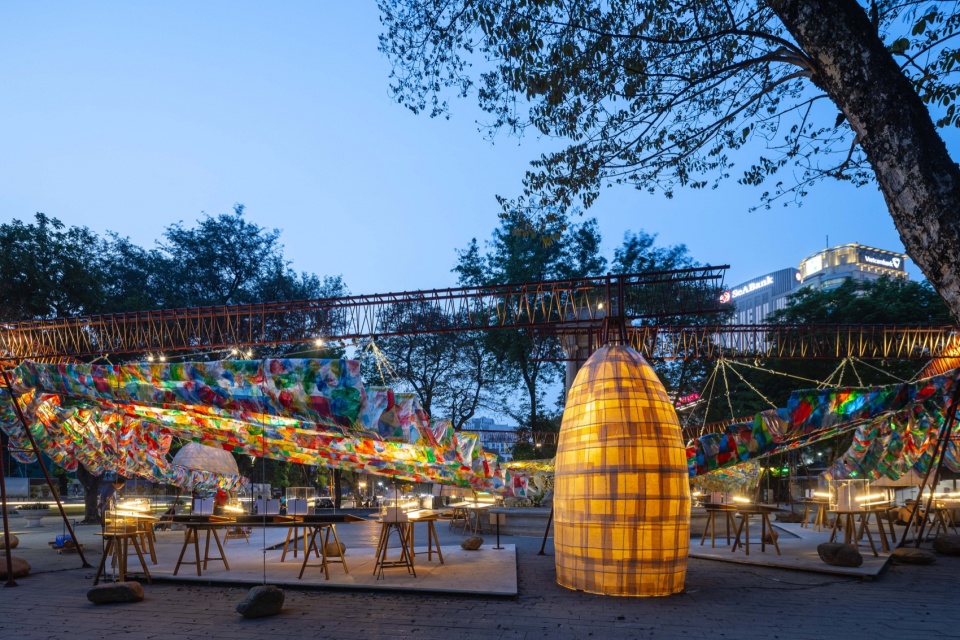
作为关于回收、升级再造(upcycling)与材料再利用的鲜明宣言,这座展亭体现了废弃物转化为有意义事物的潜力。作为一座临时却极具影响力的建筑,它展示了废弃材料——尤其是塑料——如何被转化为兼具美感与功能性的建筑构件。在越南,塑料废弃物极为普遍,但其作为资源的价值却长期被忽视。通过精细的工艺和创新性的思考,这座展亭赋予废弃材料新的生命,挑战公众既有认知,并启发人们迈向循环经济。
▼回收、升级再造(upcycling)与材料再利用,recycling, upcycling, and material reuse
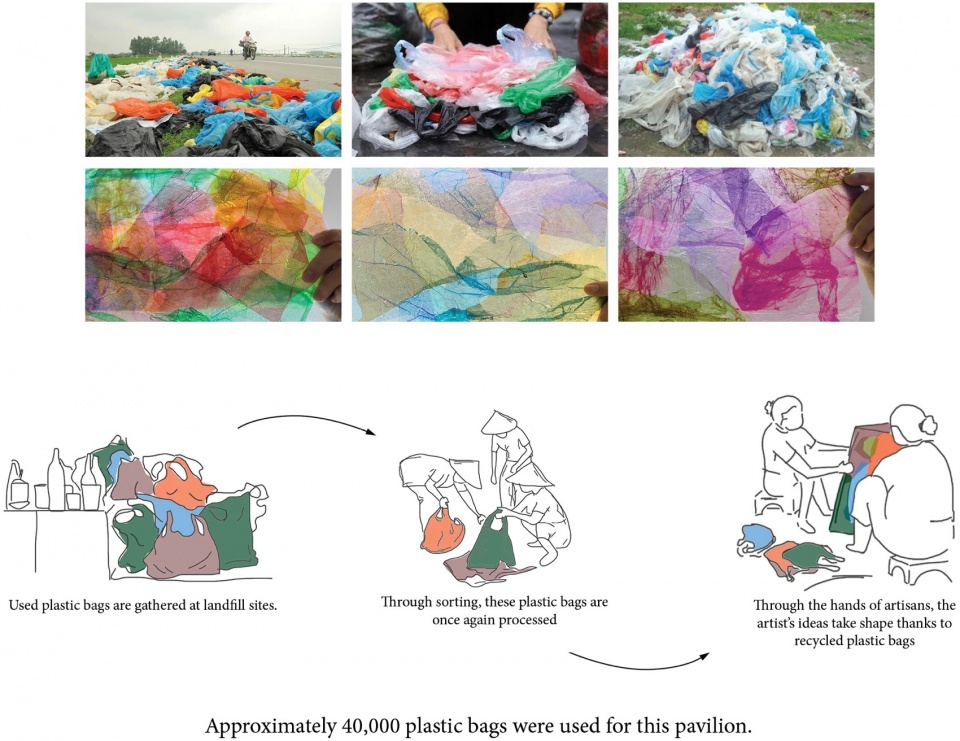
Envisioned as a bold statement on recycling, upcycling, and material reuse in contemporary architecture, the pavilion embodies the potential of waste to become something meaningful. Designed as a temporary yet impactful structure, it demonstrates how discarded materials—especially plastic—can be transformed into architectural elements of beauty and function. In Vietnam, plastic waste is abundant, yet its value as a resource remains largely overlooked. Through careful craftsmanship and innovative thinking, this pavilion gives new life to unwanted materials, challenging public perception and inspiring a move toward a circular economy.
▼展览空间,exhibition space
河内手工传统与材料创新的融合 Hanoi’s Craft Tradition Meets Material Innovation
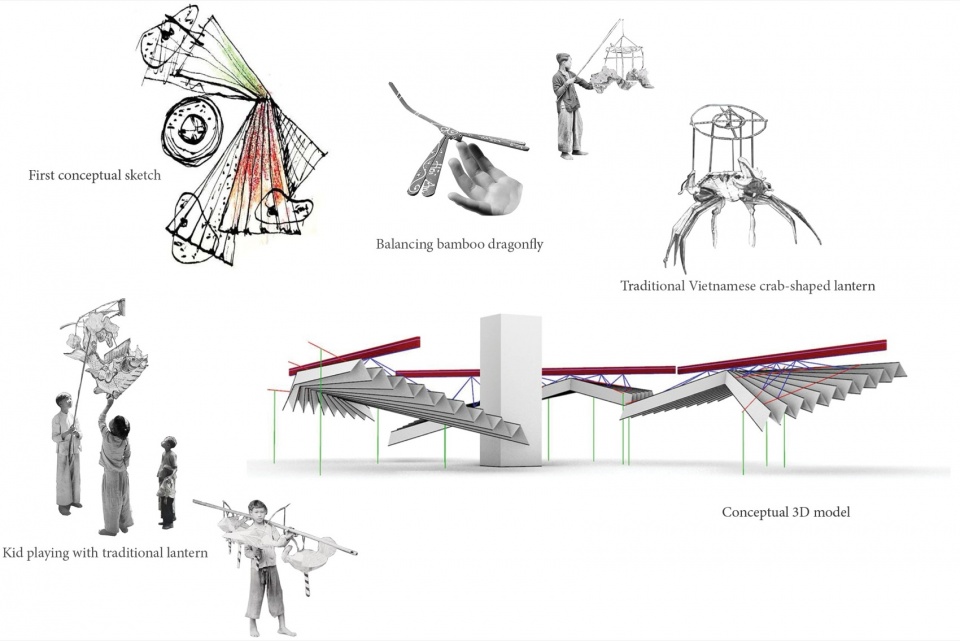
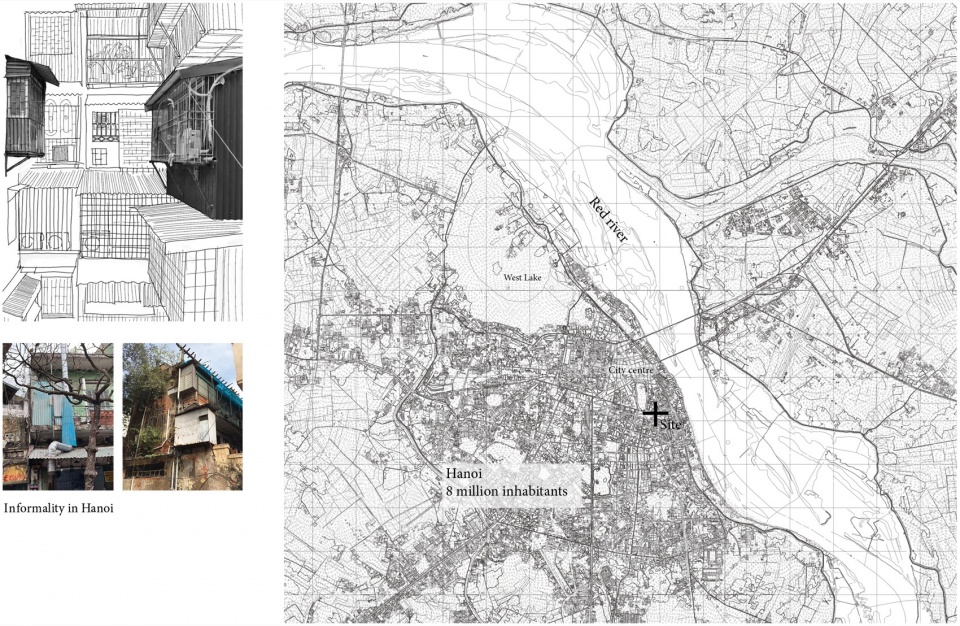
河内以其深厚的文化底蕴和周边众多手工艺村落而闻名,为材料实验提供了肥沃的土壤。展亭的灵感来源于当地悠久的手工纸(Giấy Dó)制作传统,以及广泛存在于城市社区中的非正式建造方式。通过将日常购物塑料袋回收再利用,并与传统手工纸相结合,这座建筑在过去与未来之间建立起联系——让地方工艺与当代可持续理念相遇。轻型钢结构框架将这些元素组织在一起,呼应了河内本土建筑适应环境、善用资源的特质。
▼区位分析,Location Analysis
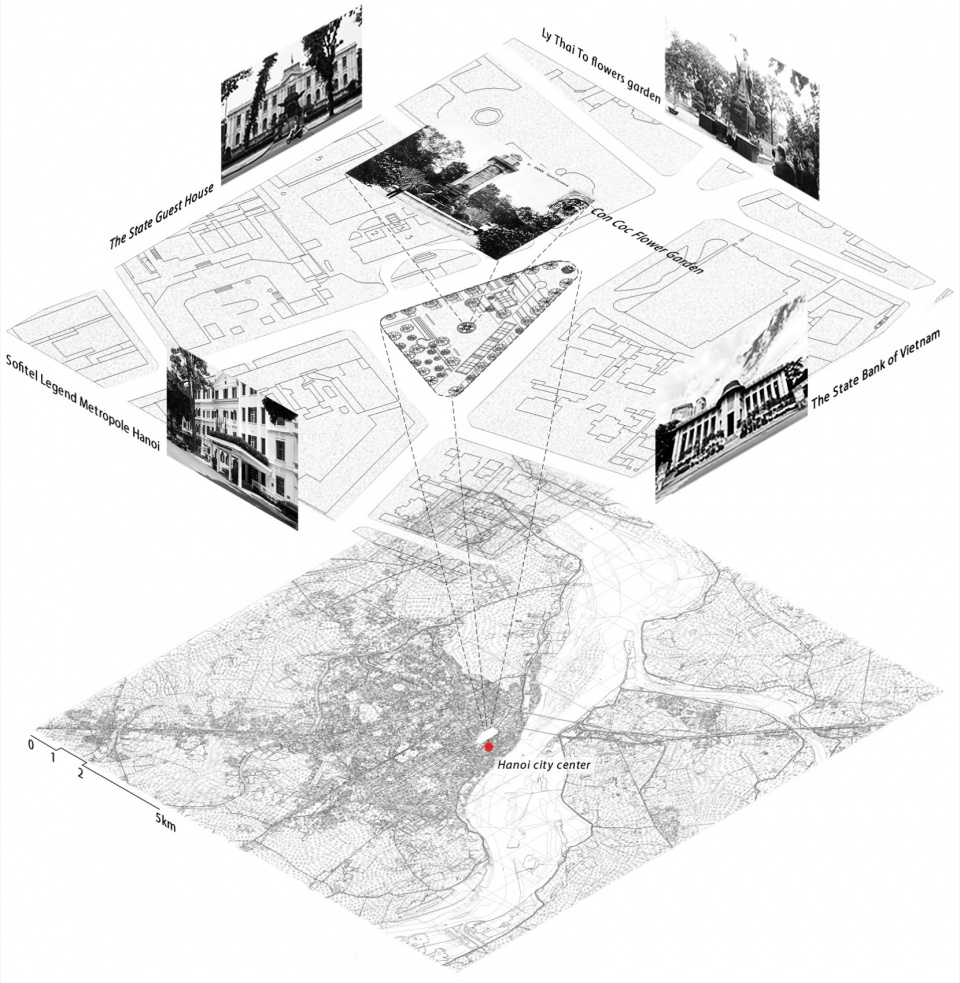
Hanoi, known for its deep cultural roots and surrounding artisan villages, offers fertile ground for material experimentation. The pavilion draws inspiration from the city’s longstanding tradition of handmade paper (Giấy Dó) and from the informal construction methods found across local urban communities. By merging recycled plastic from everyday shopping bags with traditional handmade paper, the structure bridges past and future—where local craft meets modern sustainability. A lightweight steel framework binds these elements, echoing the adaptive and resourceful character of Hanoi’s vernacular architecture.
▼T10A展亭,T10A Pavilion
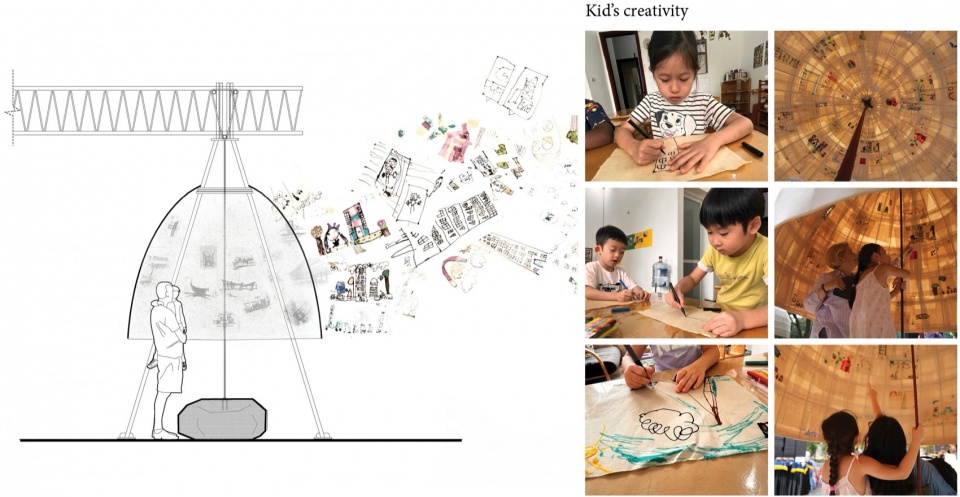
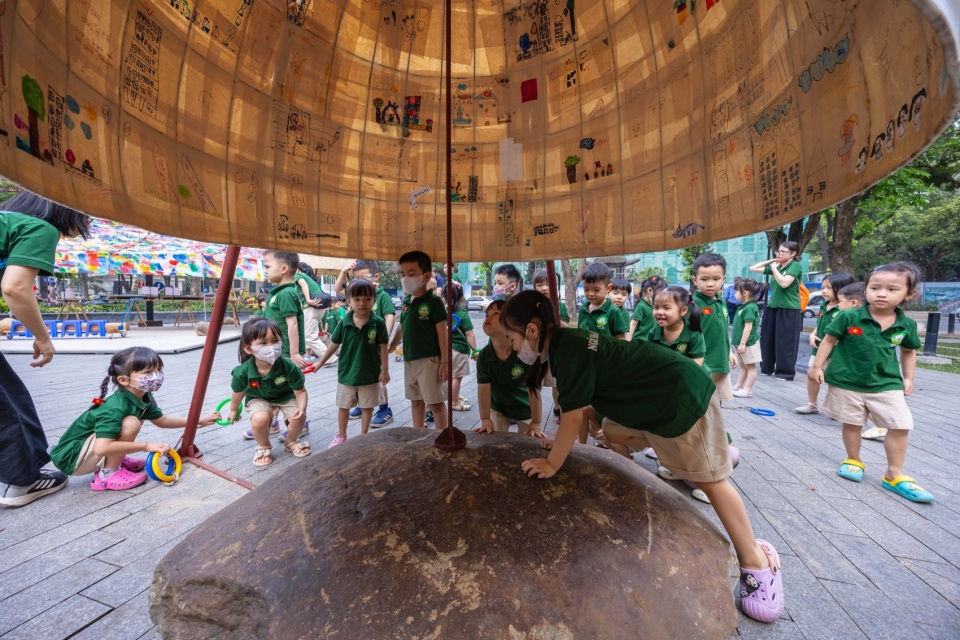
作为设计过程的一部分,建筑师邀请 Sky 幼儿园的孩子们在纸质穹顶上绘制自己对城市的想象。这些充满活力的作品为展亭增添了欢乐而富有人情味的层次,使其不仅是一件手工打造的作品,也成为一件由众人共同完成的艺术品。
As part of the design process, the architects invited Sky kindergarten children to decorate the paper domes with their own drawings—vivid interpretations of how they imagine the city. These contributions added a joyful, human layer to the pavilion, making it not only a crafted object but a collective artwork.
▼Sky 幼儿园的孩子们在纸质穹顶上绘制自己对城市的想象,Sky kindergarten children to decorate the paper domes with their own drawings—vivid interpretations of how they imagine the city
一个充满活力的建筑对话空间 A Dynamic Space for Architectural Dialogue
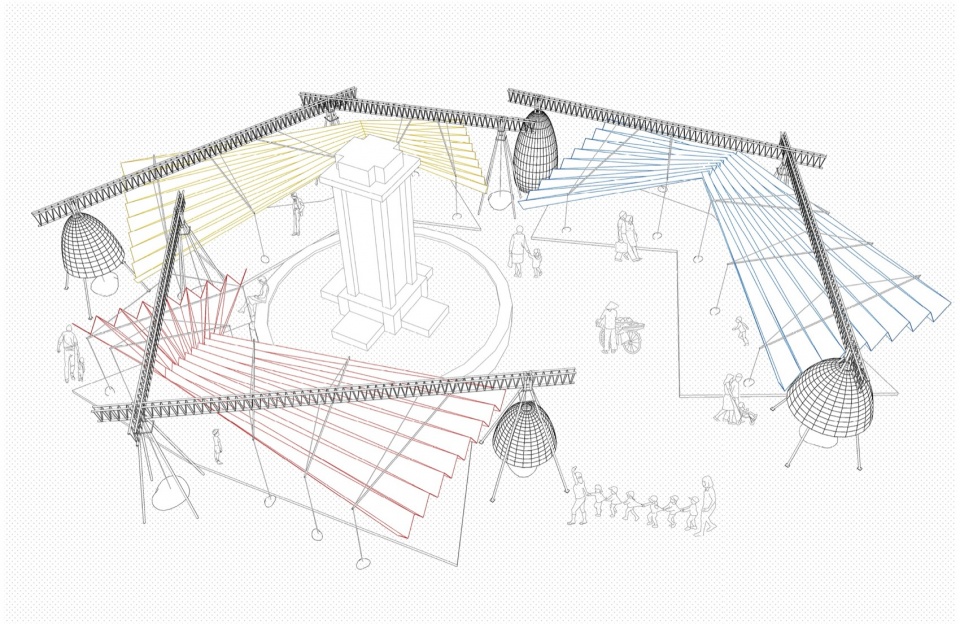
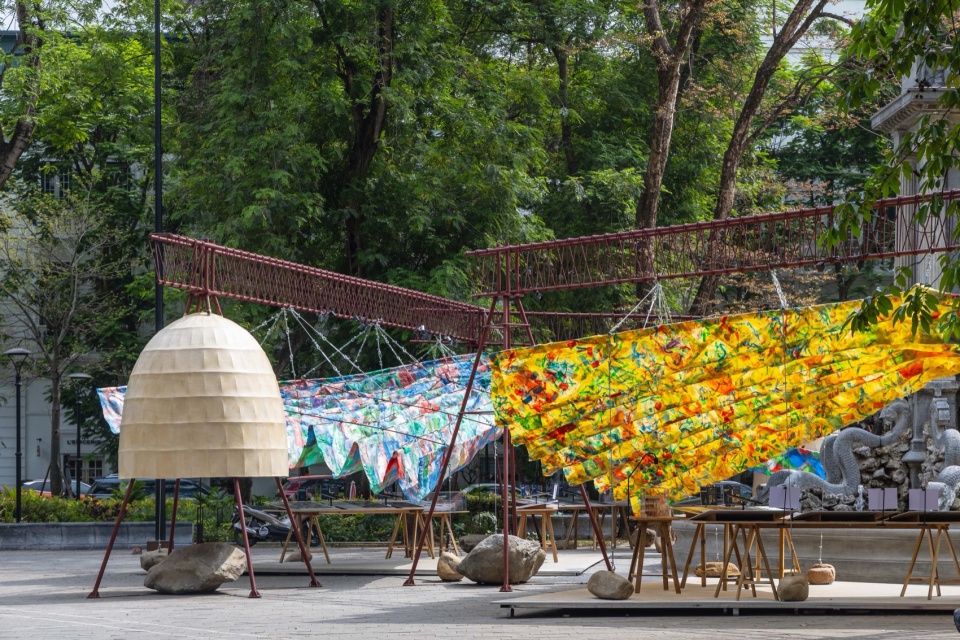
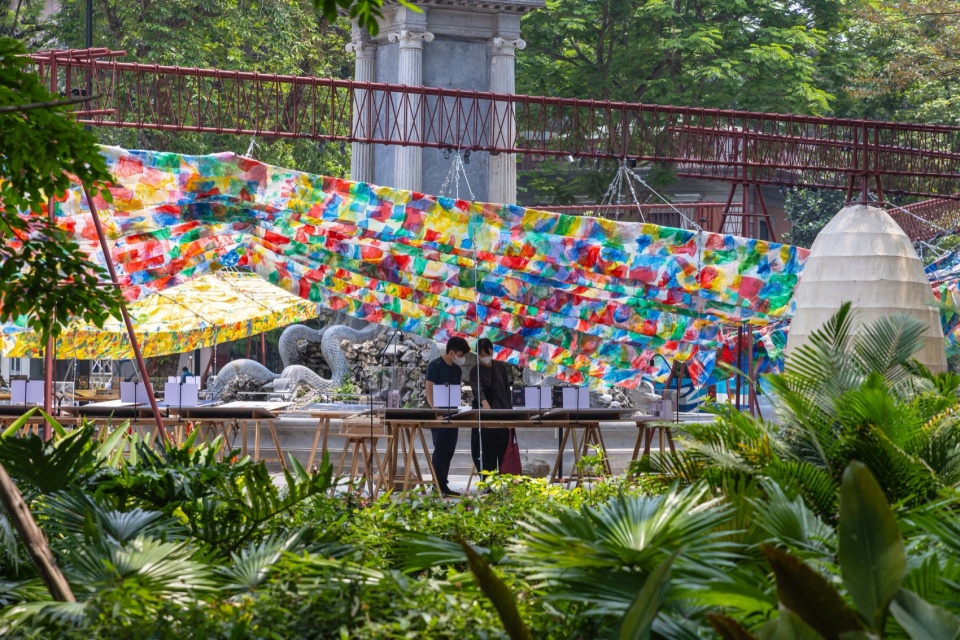
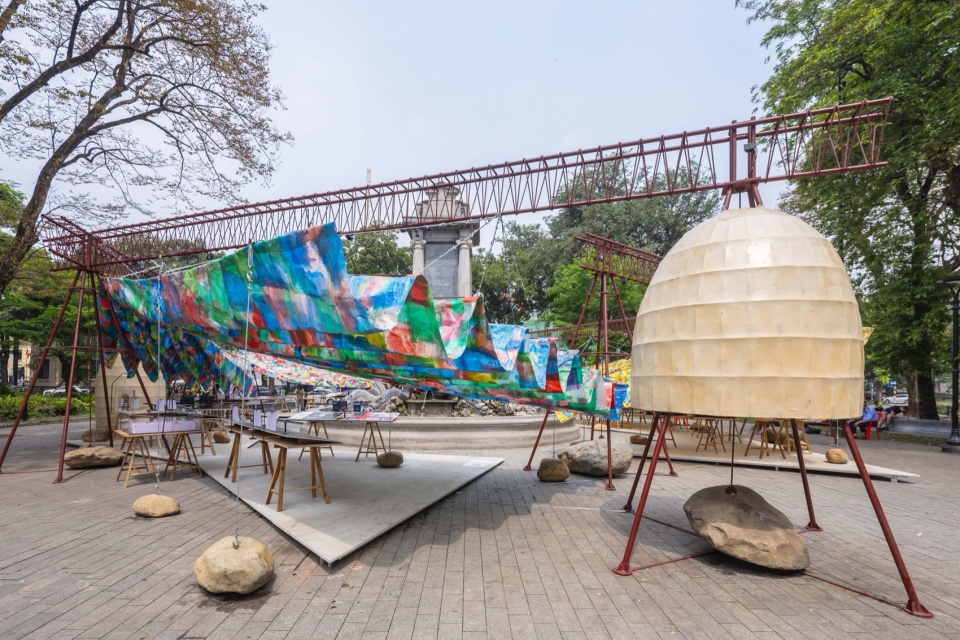
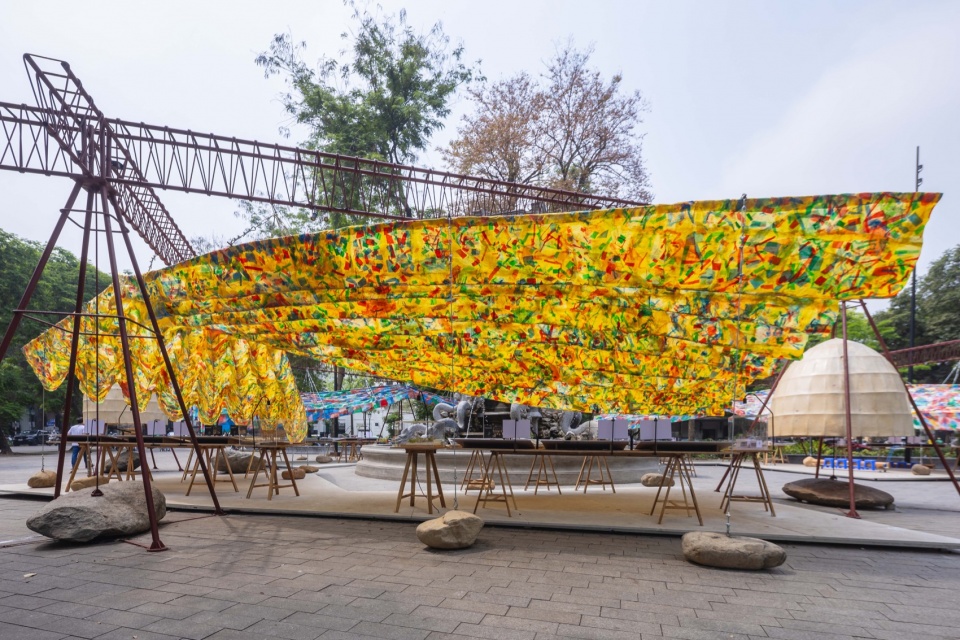
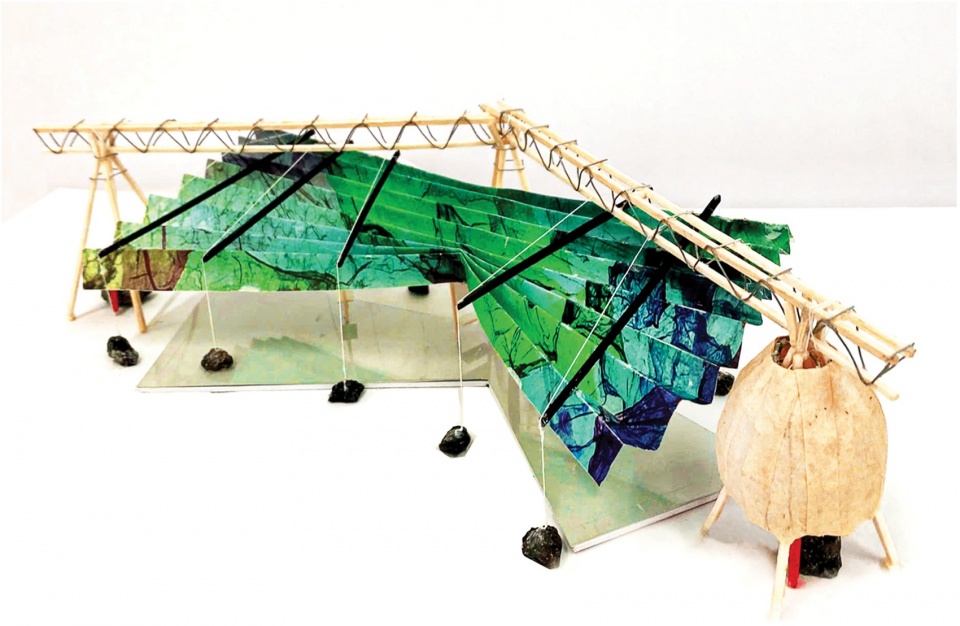
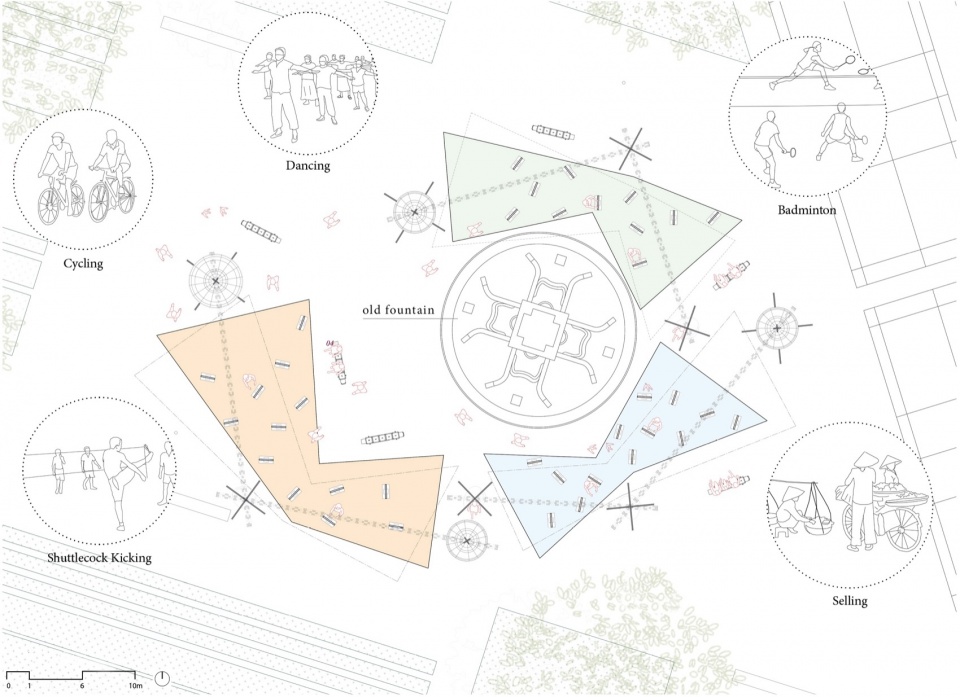
展亭由三个醒目的翼状屋顶构成,分别对应三个主要展区,展示越南入选建筑项目中的住宅、室内设计和可持续建筑类别。每个展区采用不同的色彩体系,引导观众自然地穿梭于空间之中。
The pavilion features three bold, wing-like roofs, representing the three main exhibition areas showcasing selected architectural projects from Vietnam in the categories of House, Interior, and Sustainability. Each wing uses a distinct color palette, guiding visitors intuitively through the space.
▼展亭由三个醒目的翼状屋顶构成,The pavilion features three bold, wing-like roofs
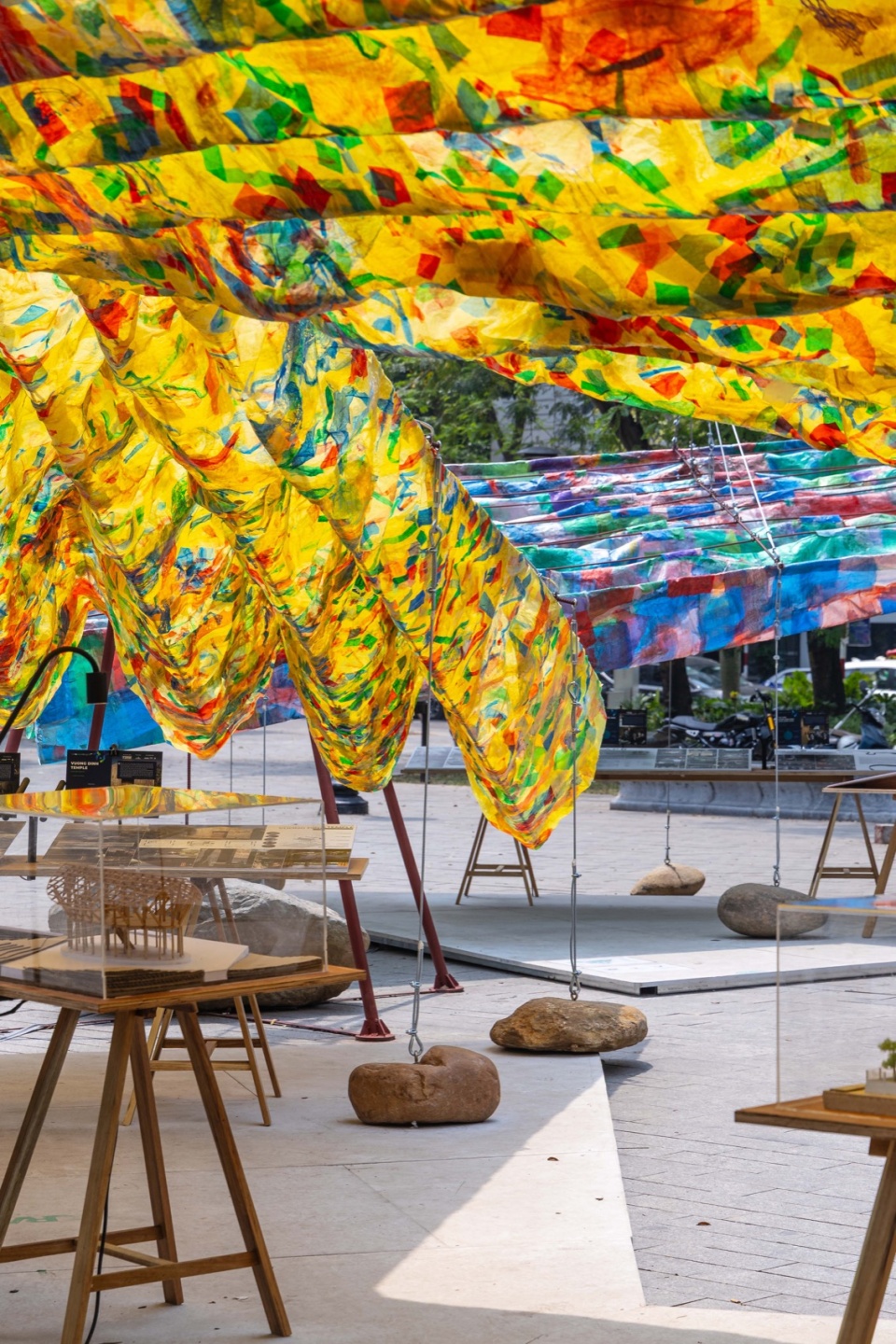
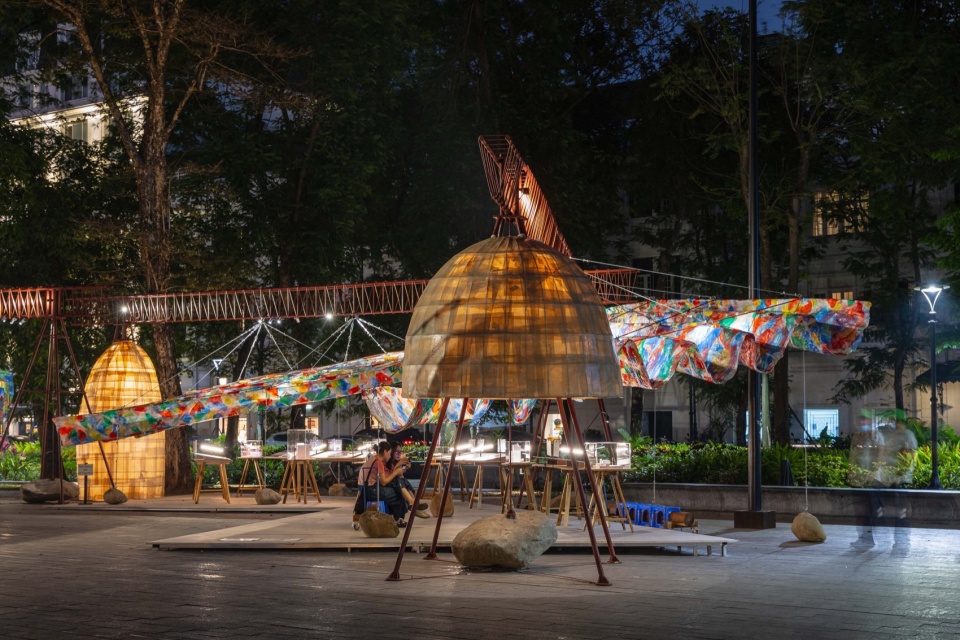
半透明的再生塑料板过滤自然光,在空间中投射出丰富而不断变化的彩色光影,增强了空间体验。到了夜晚,展亭犹如一盏灯笼,光线照亮具有肌理感的塑料表面,使建筑成为城市景观中的一处灯塔般的存在。
▼分析图,Analysis diagram
Semi-transparent recycled plastic panels filter daylight, casting vibrant, shifting shadows that enrich the spatial experience. At night, the pavilion glows like a lantern, with light illuminating the textured plastic surfaces and transforming the structure into a beacon within the urban landscape.
▼半透明的再生塑料板,Semi-transparent recycled plastic panels
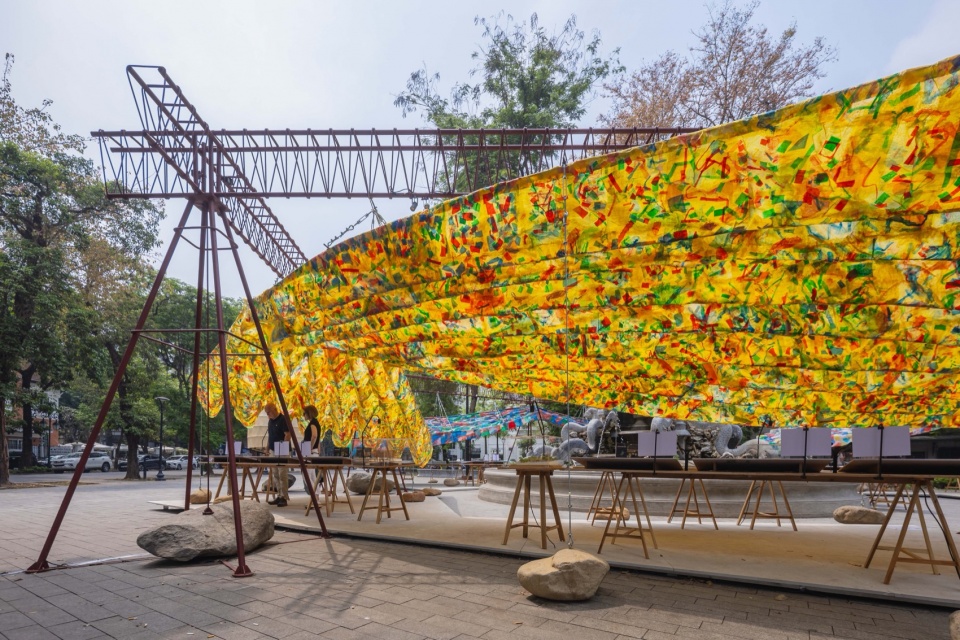
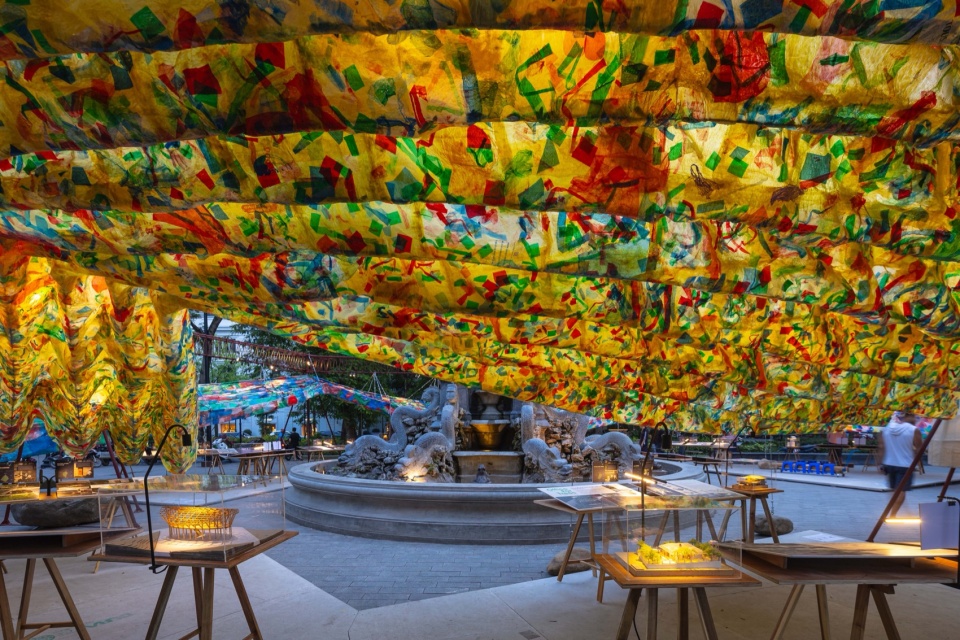
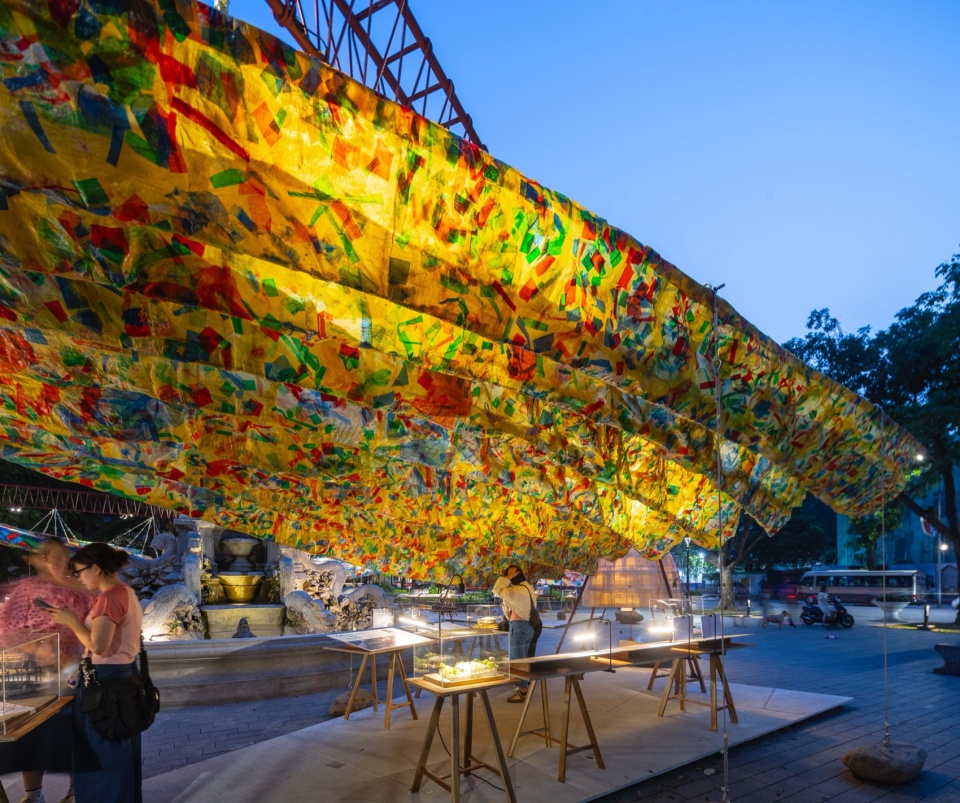
▼半透明的再生塑料板过滤自然光,Semi-transparent recycled plastic panels filter daylight
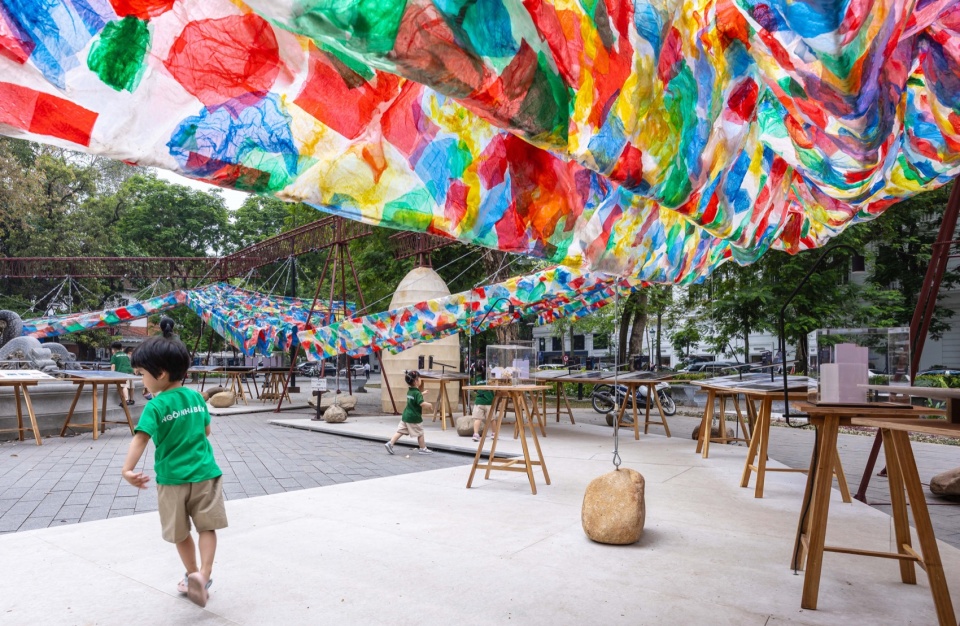
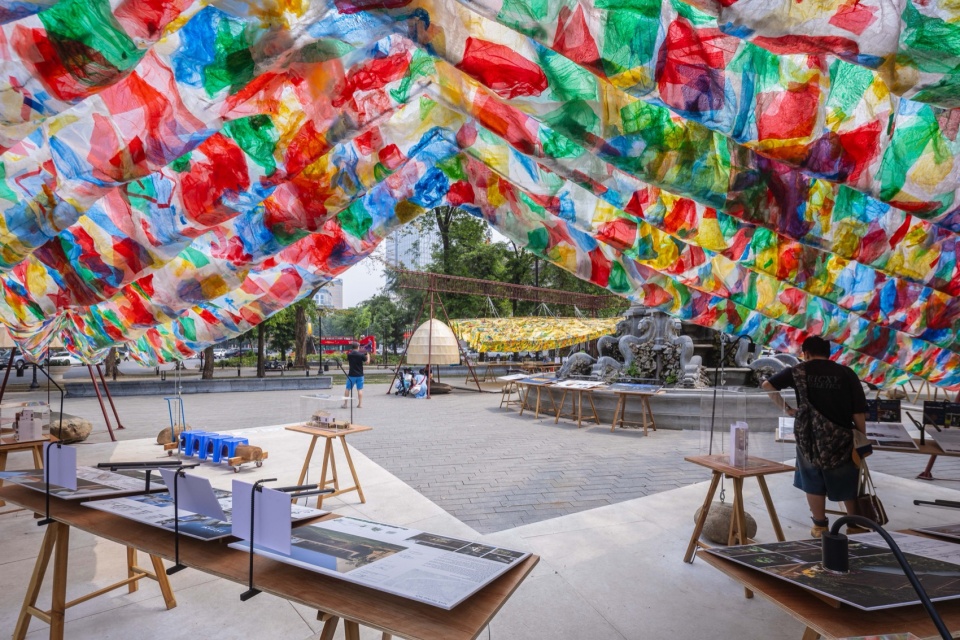
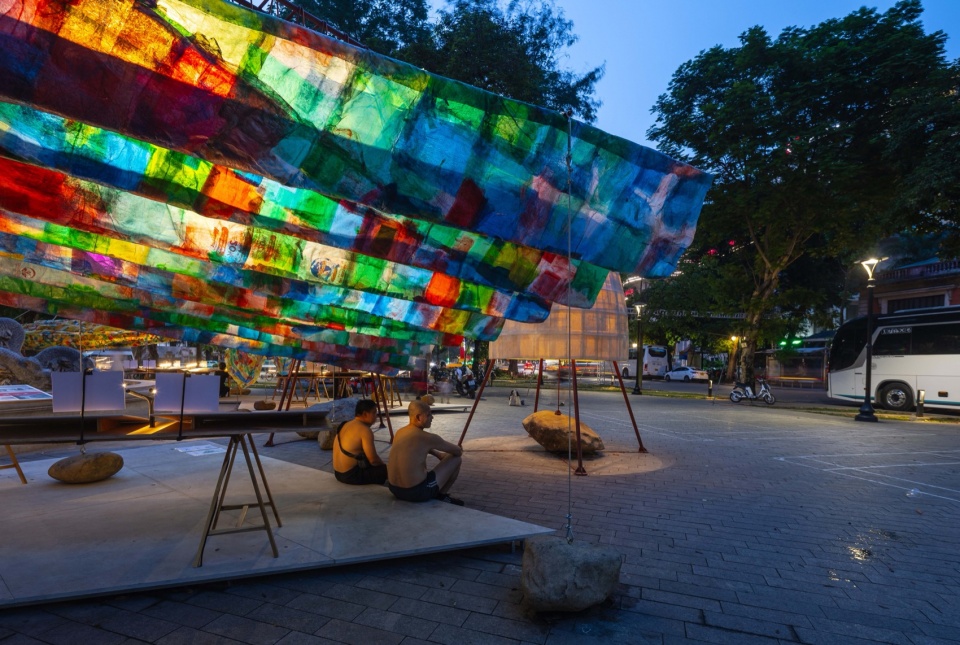
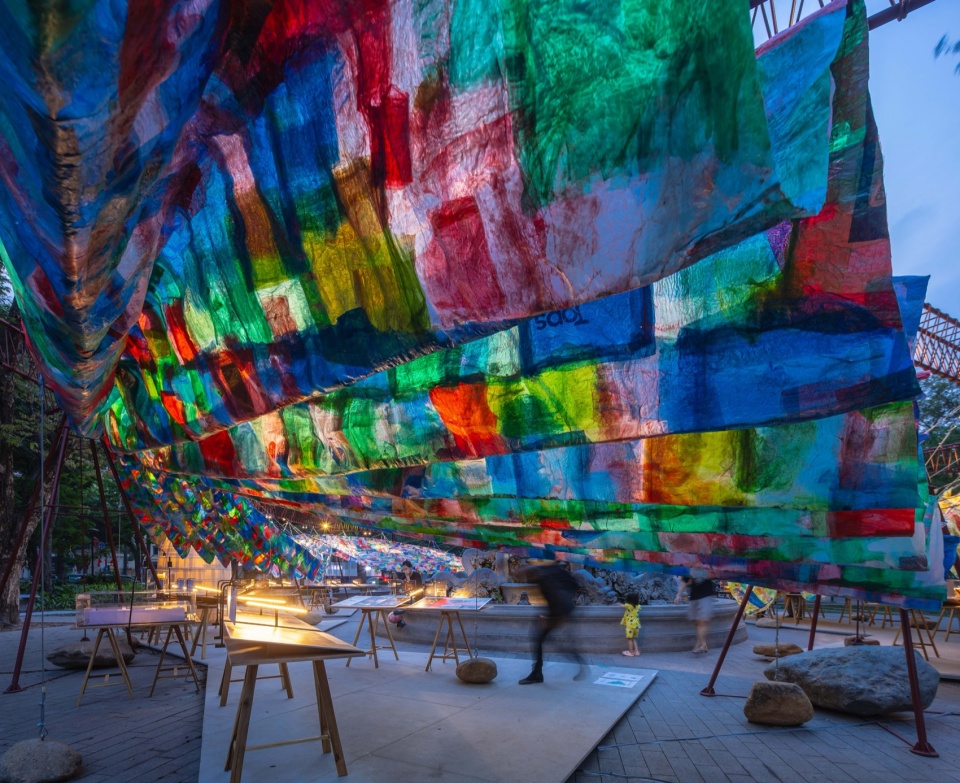
▼半透明的再生塑料板细部,
Semi-transparent recycled plastic panels details
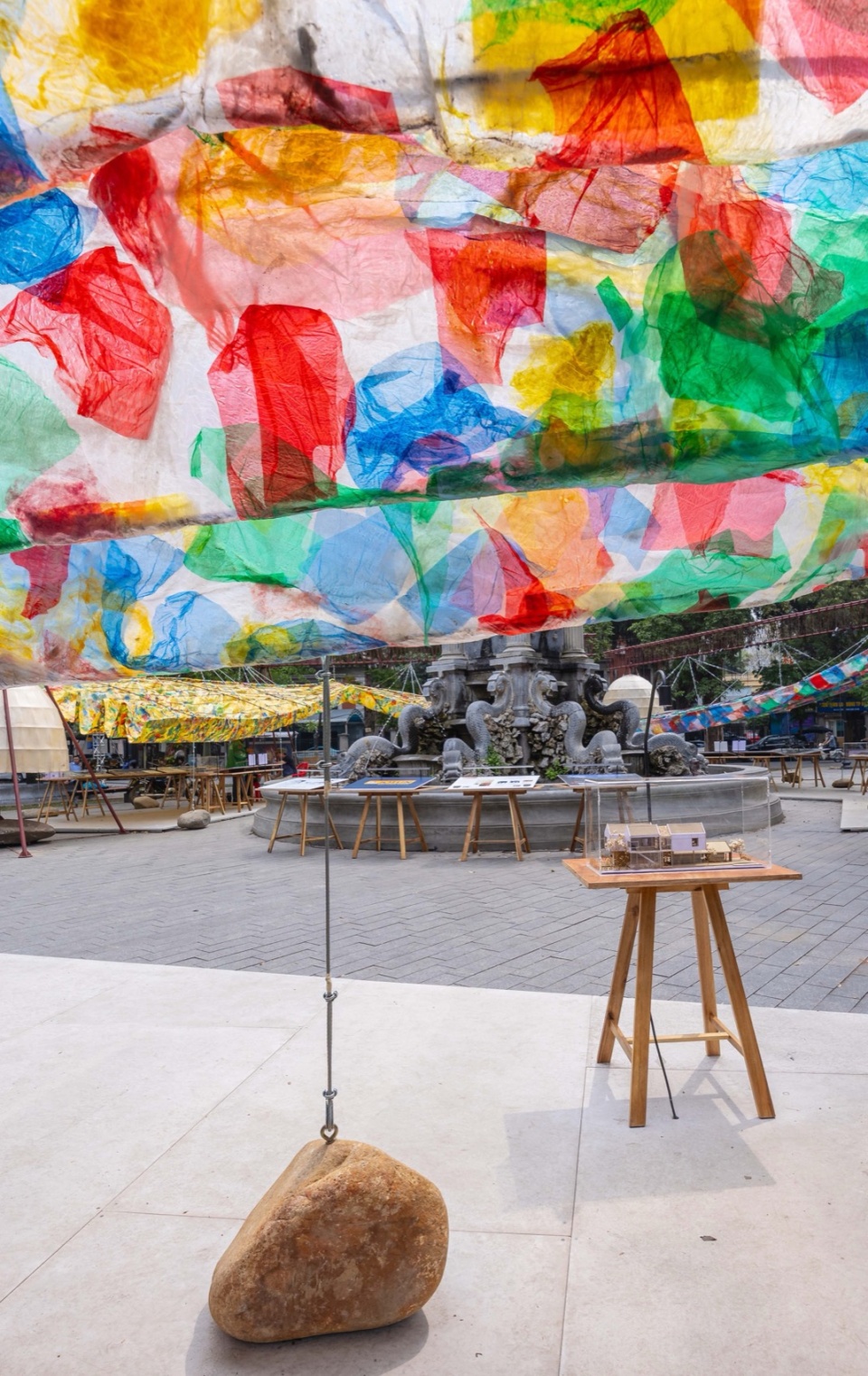
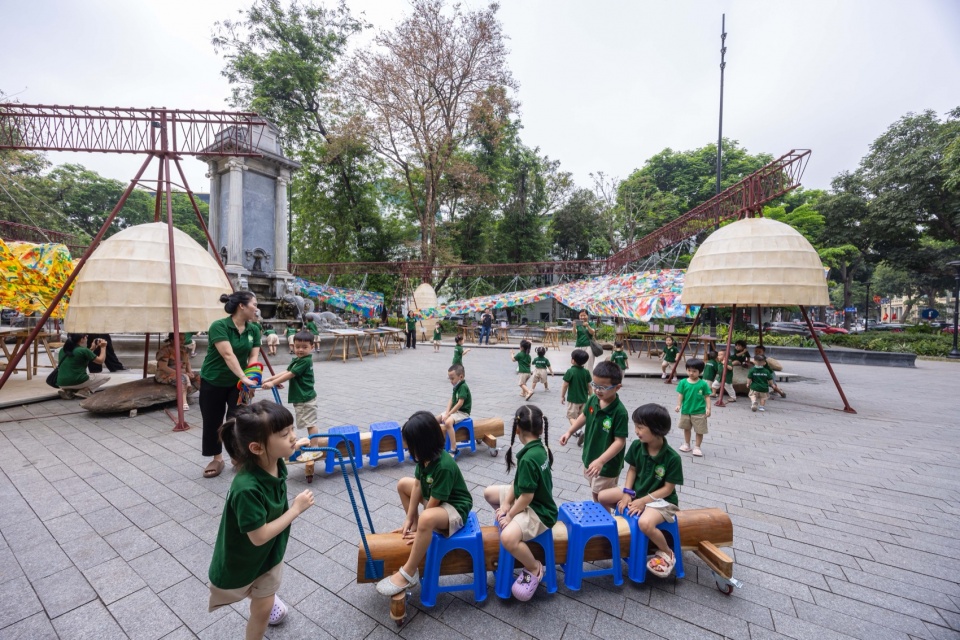
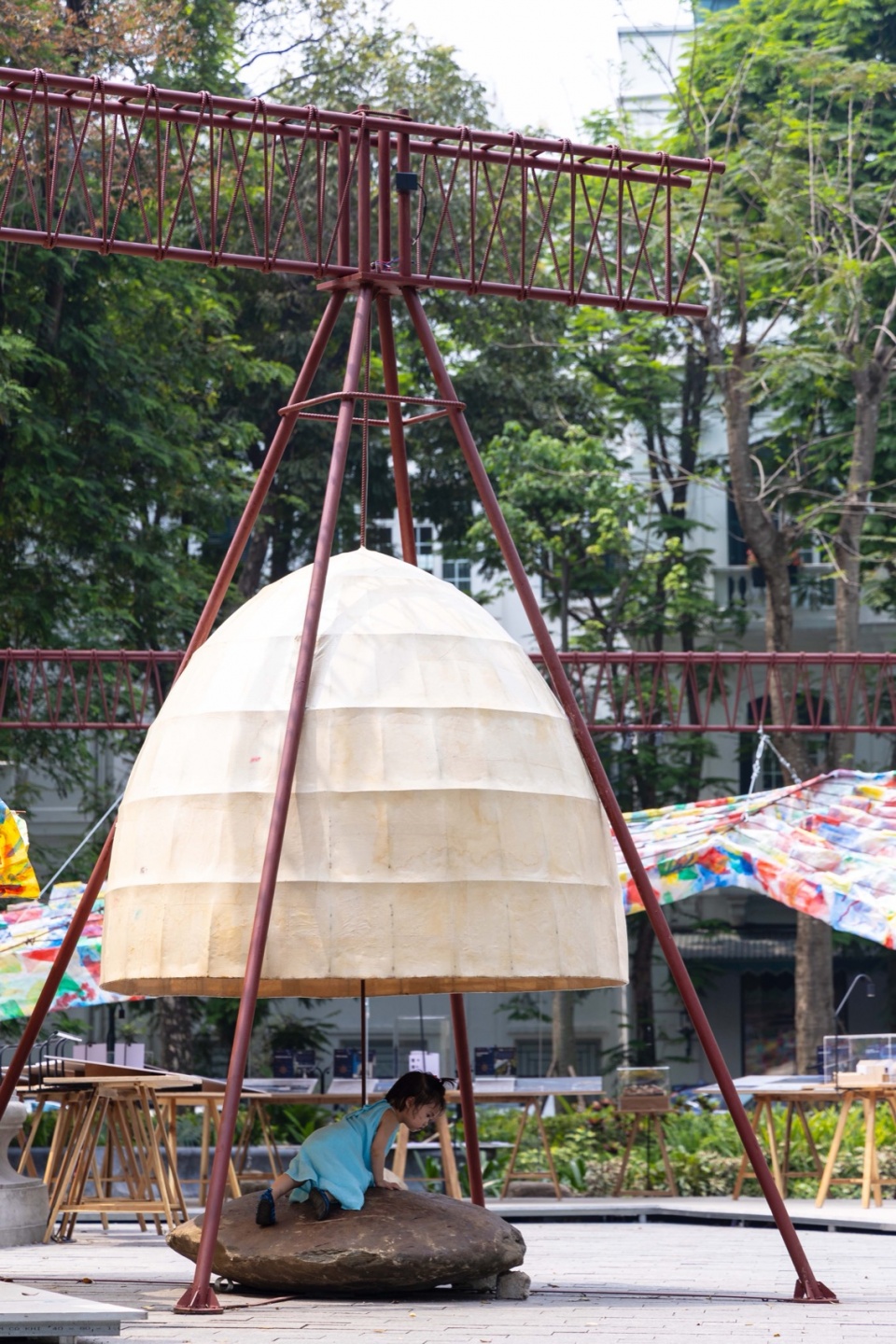
展览空间在这些翼状屋顶之下展开。其核心是由 Giấy Dó 手工纸制作而成的“纸穹顶”,这些穹顶构成了适合探索建筑图纸、示意图以及互动内容的亲密空间。大小和高度各异的穹顶鼓励人们在其中穿行、探索与发现。
Beneath these wings, the exhibition unfolds. At its heart are the “paper domes,” crafted from Giấy Dó, which act as intimate environments for exploring architectural drawings, diagrams, and interactive content. Varying in size and height, the domes invite movement, curiosity, and personal discovery.
▼“纸穹顶”,“paper domes”
一座面向公众的新建筑殿堂 A New Architectural Temple for the Public
T10A展亭不仅仅是一个展览空间,更被构想为一座当代建筑殿堂——一个用于思考、庆祝与分享灵感的场所。它重新定义了临时展亭的角色,展示了建筑如何同时兼具可持续性与诗意。
More than an exhibition space, the T10A Pavilion is conceived as a contemporary temple of architecture—a place for reflection, celebration, and shared inspiration. It redefines the role of a temporary pavilion, showing that architecture can be both sustainable and poetic.
▼T10A展亭,T10A Pavilion
展览结束后,再生塑料屋面板被进一步回收利用,制成新的设计产品,例如手提袋等,从而延续材料的生命周期,并进一步强化项目对于循环利用理念的坚持。
After the exhibition, the recycled plastic roof panels were further reused in the production of new design objects—such as bags—extending the material’s life cycle and reinforcing the project’s commitment to circularity.
▼夜景,night view
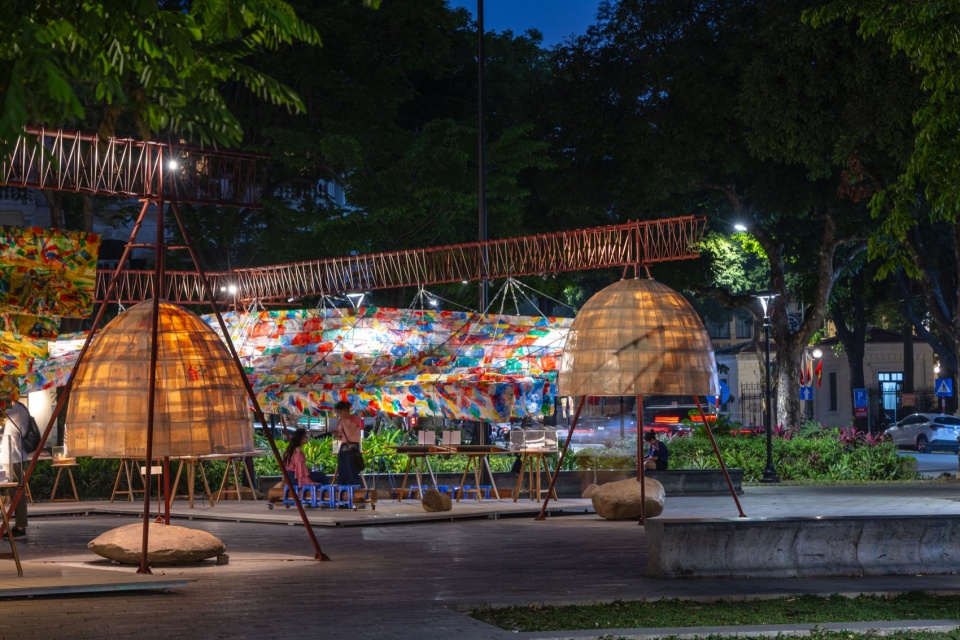
通过展示再利用材料所蕴含的潜力,展亭鼓励建筑师、设计师以及更广泛的公众重新看待废弃物——将其视为创新的机会,而非负担。
By demonstrating the potential of repurposed materials, the pavilion encourages architects, designers, and the broader public to view waste not as a burden but as an opportunity for innovation.
▼装配施工过程,assembly construction process
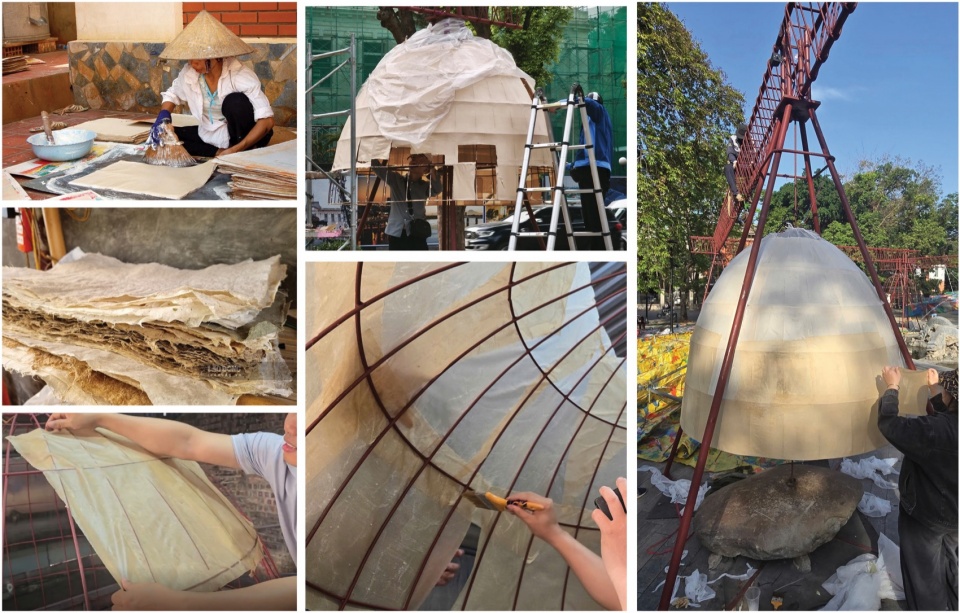
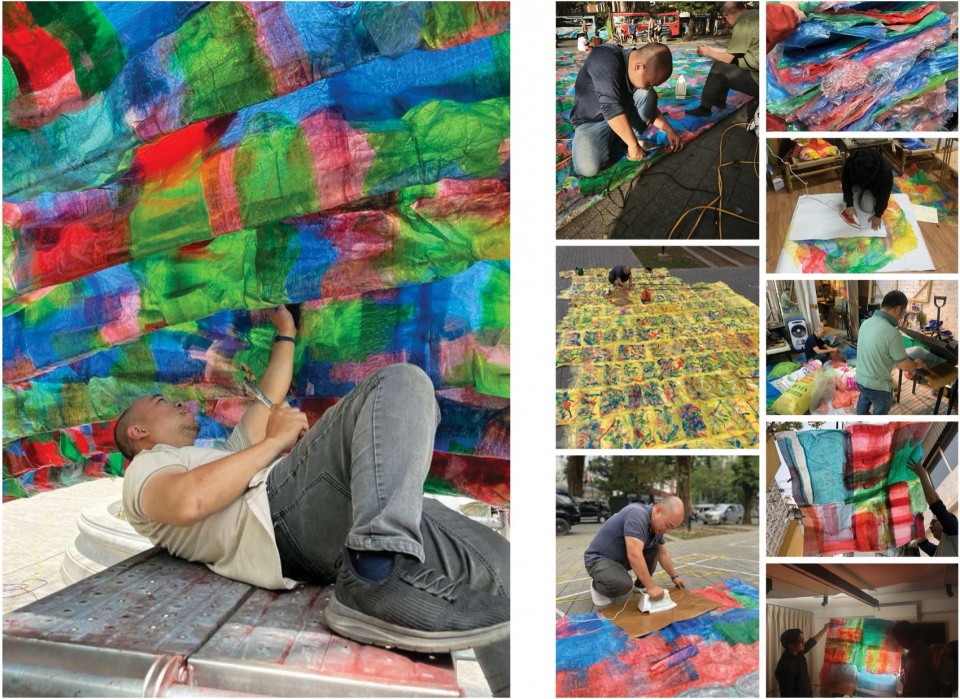
这座展亭不仅仅是一座建筑,它更是一种宣言,一份重新思考材料的邀请,以及一则面向越南更可持续建筑未来的倡议。
This pavilion is not just a structure—it is a statement, an invitation to rethink materials, and a call for a more sustainable architectural future in Vietnam.
▼模型,model
▼区位分析,Location Analysis
▼总平面,master plan
Office Name: ODDO architects / Mai Lan Chi, Marek Obtulovič, Nguyen Duc Trung
Office Website: www.oddoarchitects.com
Social Media Accounts: ODDO architects
Contact email: oddoarchitects@gmail.com
Firm address: 61 Ly Thuong Kiet, Hanoi, Vietnam
Project Name: T10A Pavilion
Completion Year: 2025
Gross Built Area (m2/ ft2): 320m2
Project location: Hanoi, Vietnam
Program: exhibition pavilion, community installation
Lead Architects: Mai Lan Chi, Nguyen Duc Trung, Marek Obtulovič
Architect in-charge of the project: Le Duy Huy ( ODDO architects )
Client: Kienviet.net
Recycled plastic sub-contractor: Red River Recycling, Duc Pham
Photographer
Photo Credits: Trieu Chien