Taj Rishikesh度假酒店,印度 / yh2
印度喜马拉雅山脉是一片陡峭壮阔的山地景观,神圣的恒河蜿蜒穿行其间。在这里,大自然的存在远远超越了任何人为建造之物。对于Taj Rishikesh度假酒店的开发而言,正是在面对这片场地宏伟自然景观时所持有的谦逊态度,成为了我们设计方法的指导原则。
The Indian Himalayas, a steep mountain landscape through which the sacred Ganges River meanders, is a nature that supersedes all human construction. For the development of the hotel complex Taj Rishikesh, it was this modesty in face of the grandiosity of the place that guided our approach.
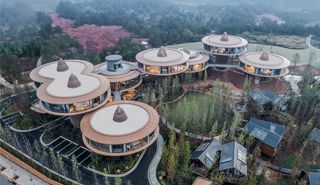
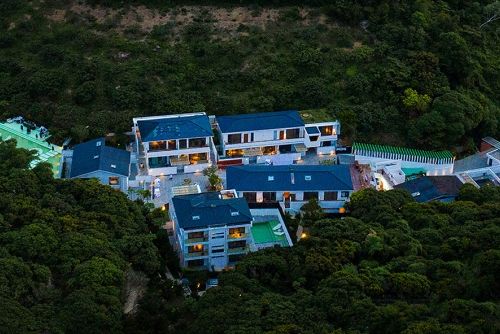
▼俯瞰梯田式别墅群,Terraced villa clusters aerial view
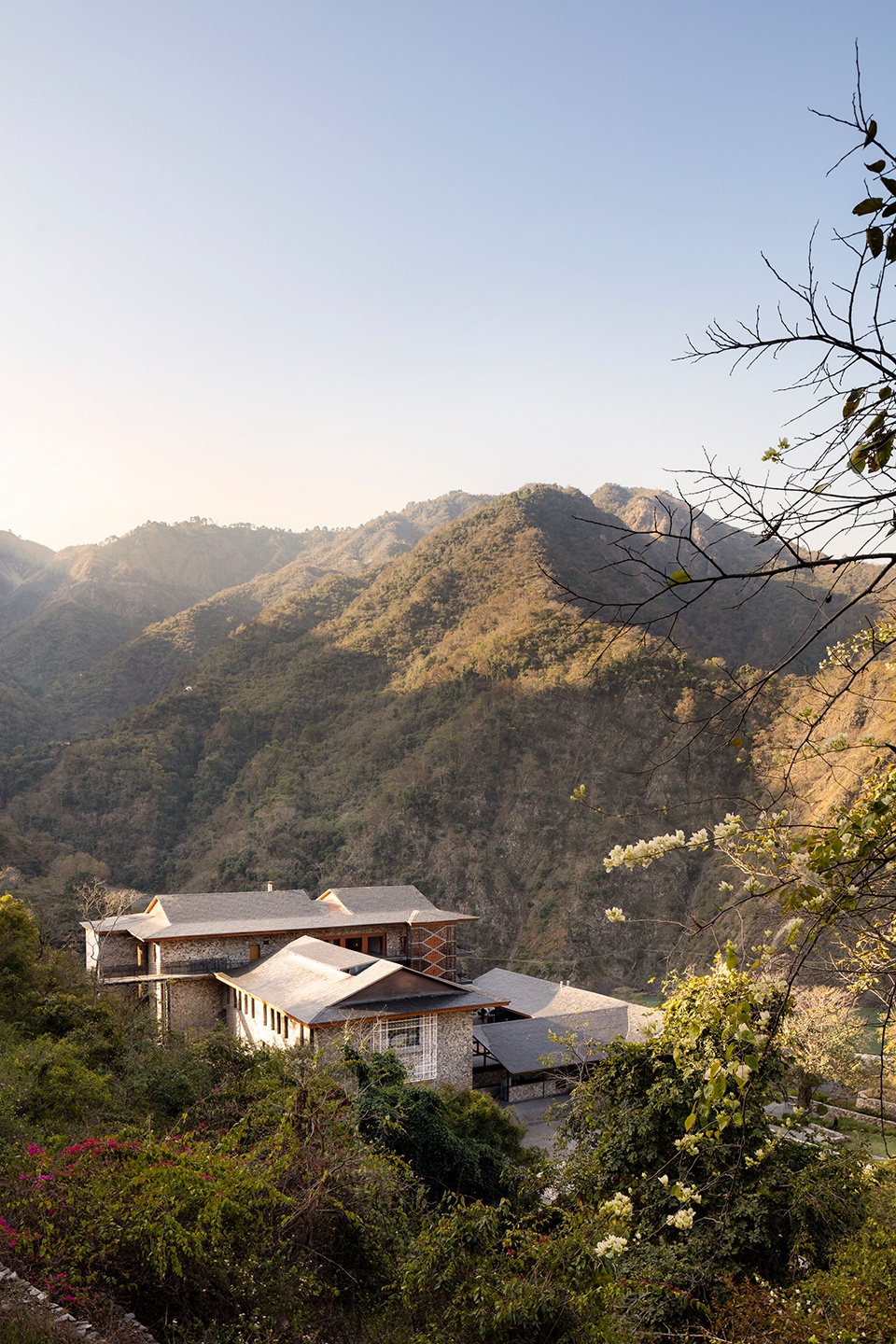
该项目是在一次前往印度喜马拉雅山区的考察之后展开设计的。在考察过程中,我们研究了历经数千年发展而形成的当地传统乡土建筑。这种建筑回应了崎岖的山地地形以及当地可获得的材料条件,并由此奠定了本项目的设计基础。度假酒店位于新德里东北方向约250公里处,由主体酒店建筑和一系列别墅组成,分布于一处广阔而陡峭、俯瞰恒河的场地之上。总体布局借鉴了传统喜马拉雅山地村落的组织方式,以Darbargadh——当地拉贾或领主的传统居所——为核心展开。Darbargadh兼具堡垒、宫殿与神庙的功能,其核心是一处围合庭院。在战争时期,它能够为村民提供庇护;而在和平时期,则成为社区生活与聚会活动的中心场所。
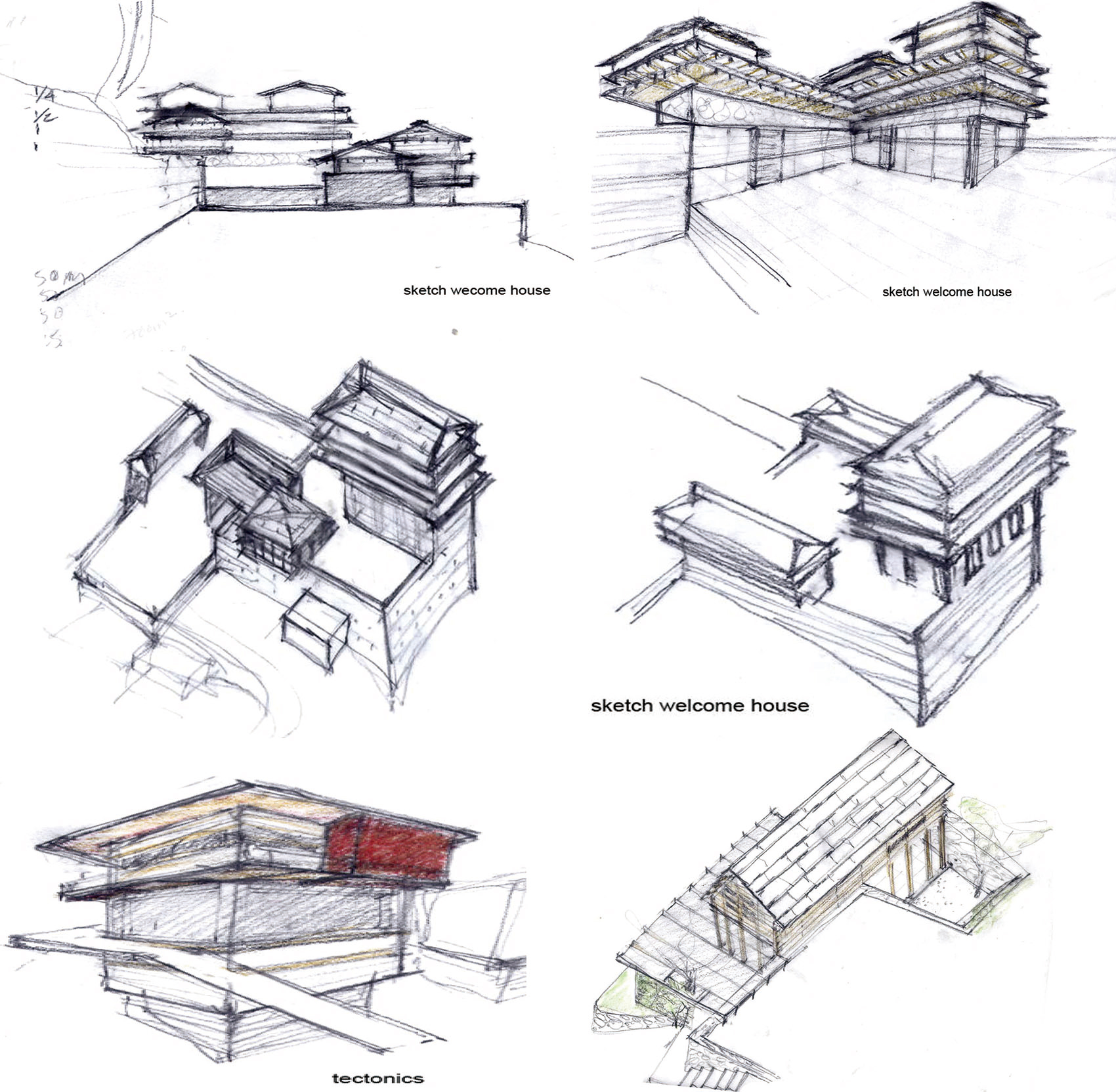
▼设计概念草图,Design concept sketch
The project was developed following a trip to the Indian Himalayas, where we studied the traditional vernacular architecture developed over millennia. This architecture evolved in response to the rugged mountain topography and the locally available materials, and this established the foundation of the project. The resort, located 250 km north-east of New Delhi, incorporates the main hotel block and a series of villas on a vast and steep site overlooking the Ganges River. The site layout is inspired by traditional Himalayan villages, anchored around a Darbargadh, the traditional residence of local rajas or lords. The Darbargadhs are used as a combination fortress-palace-temple, and offer at their heart a walled courtyard that ensures the protection of the villagers in times of war, and serves as a gathering place for community life in harmonious times.
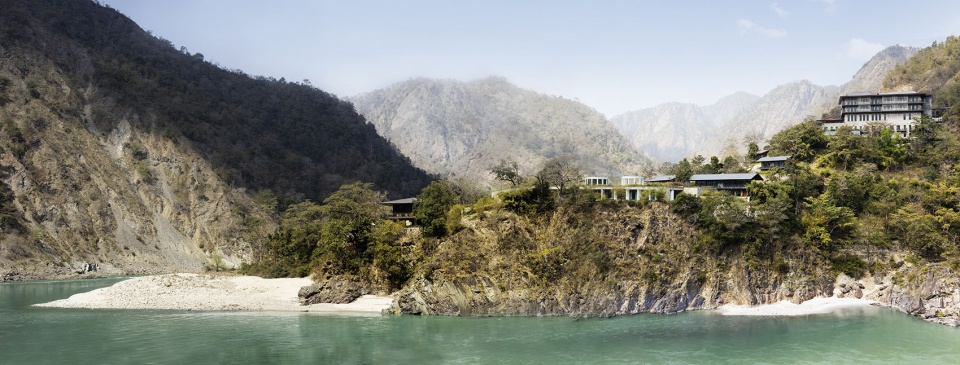
▼俯瞰恒河的建筑群,Resort overlooking the Ganges
▼建筑群顶视,Resort top view
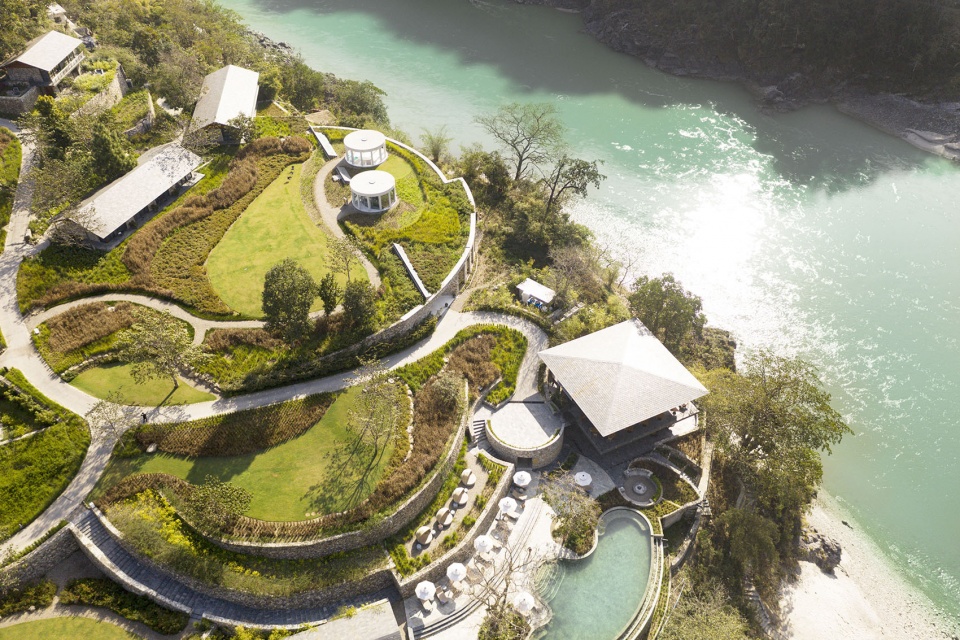
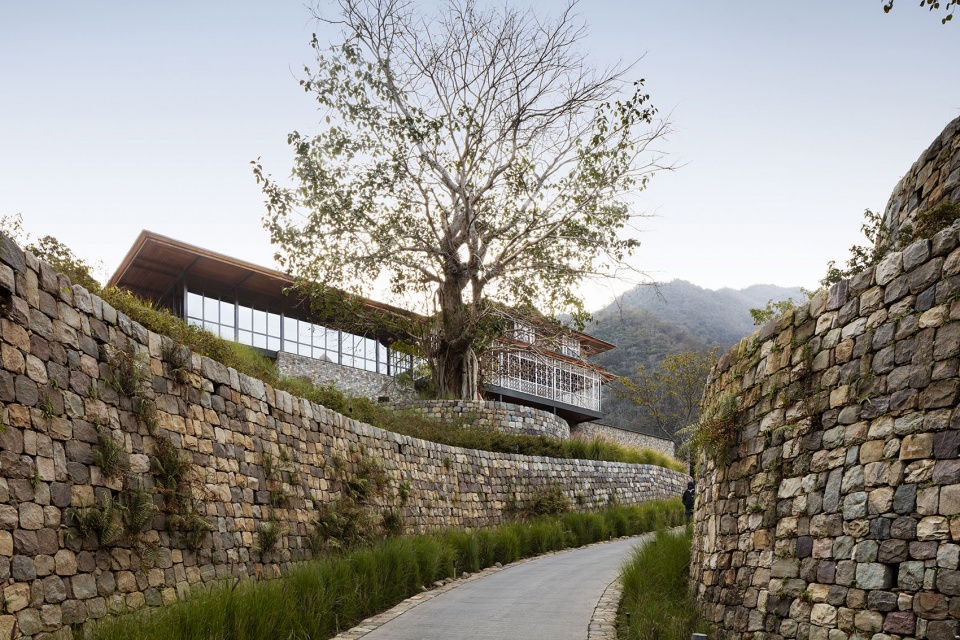
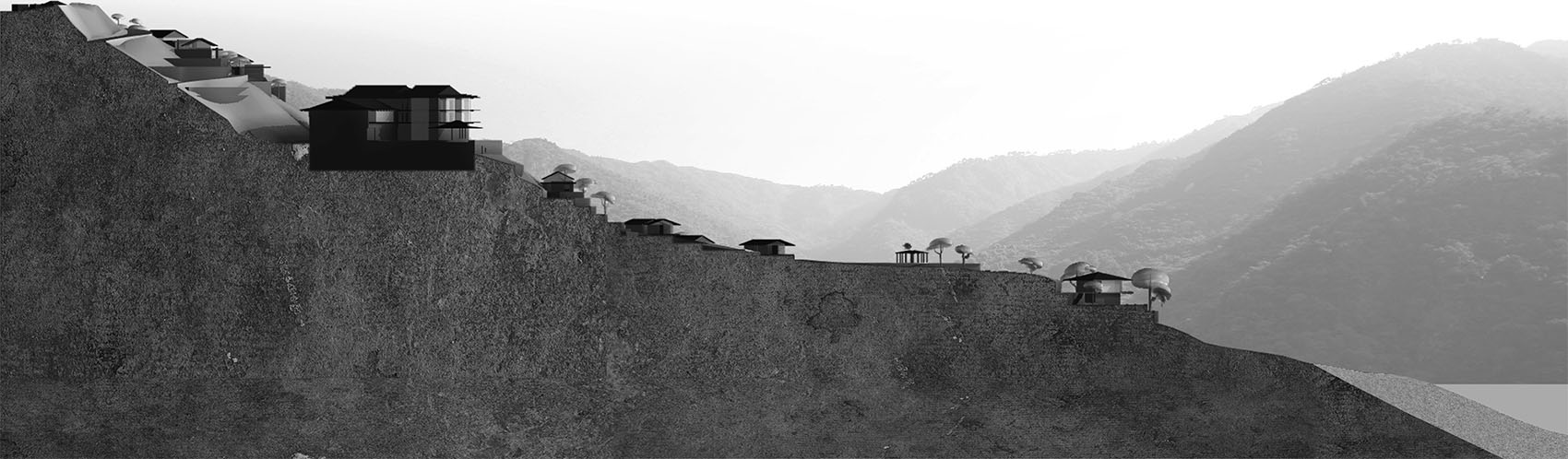
酒店主体建筑以传统Darbargadh为原型打造,坐落于俯瞰山谷的位置,并作为整个度假区的核心节点,集中容纳接待大厅、餐厅、酒吧、精品店、图书馆等主要公共服务功能。别墅则如同传统喜马拉雅村落一般,被组织成一系列亭阁式建筑,分布于层层退台式地形之上,并由厚重的石砌挡土墙加以支撑。这种层层叠置的场地组织方式,使每栋别墅都能拥有独立的山地景观视野,其中大部分还可远眺恒河。
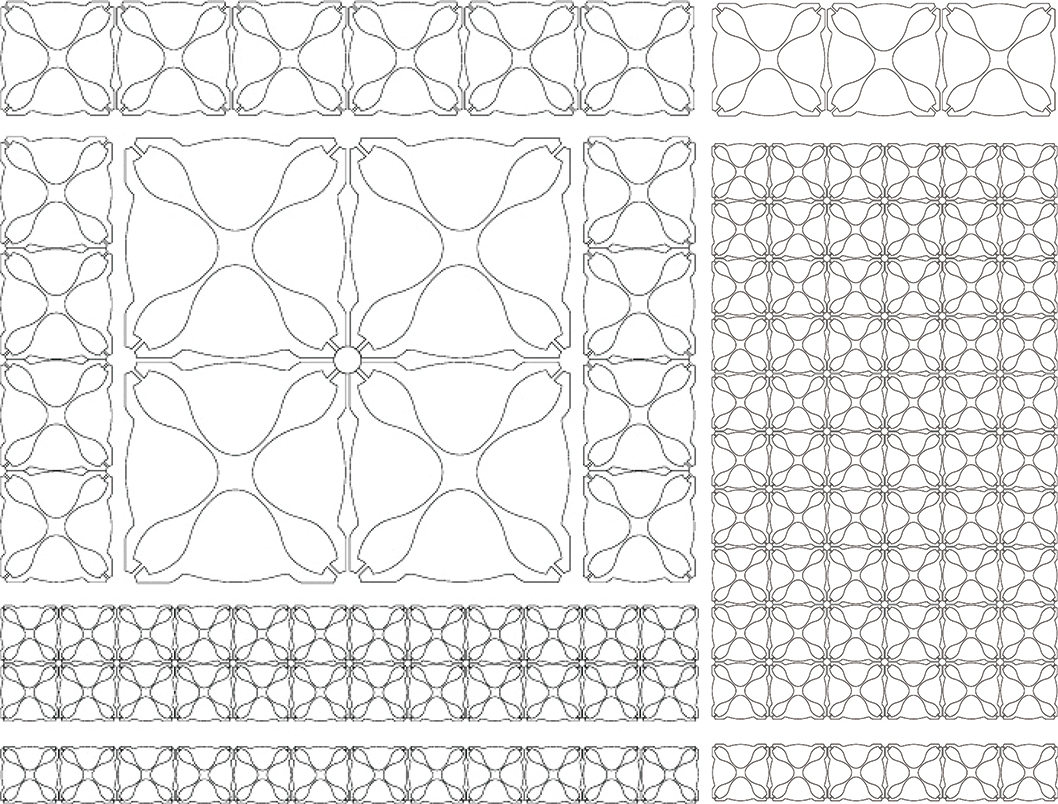
▼建筑纹样,Architectural pattern
Created in the image of a traditional Darbargadh, the main block of the hotel overlooks the valley and provides a central location for gathering all the main services of the resort: the reception, restaurant, bar, boutique, library, and more. The villas, as in a traditional Himalayan village, are laid out as a series of pavilions built on a succession of stepped terraces kept in place by massive stone retaining walls. This stratification of the site in successive levels offers each villa a private view of the mountain panorama and the majority with framed views of the Ganges River.
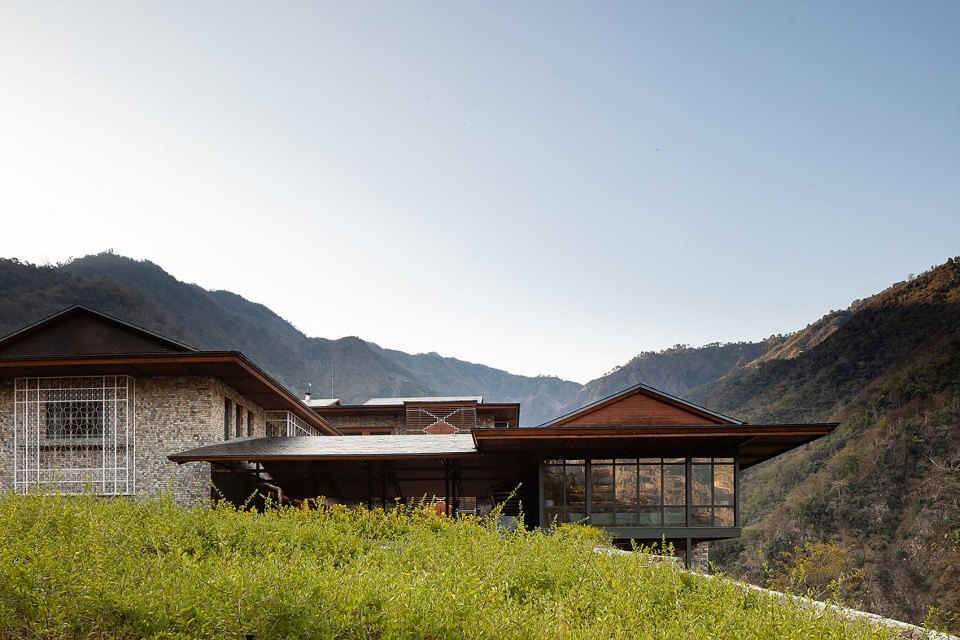
▼主体建筑外观,Main building exterior
▼挡土墙与建筑体量,Retaining walls and volumes
▼中央庭院空间,Central courtyard
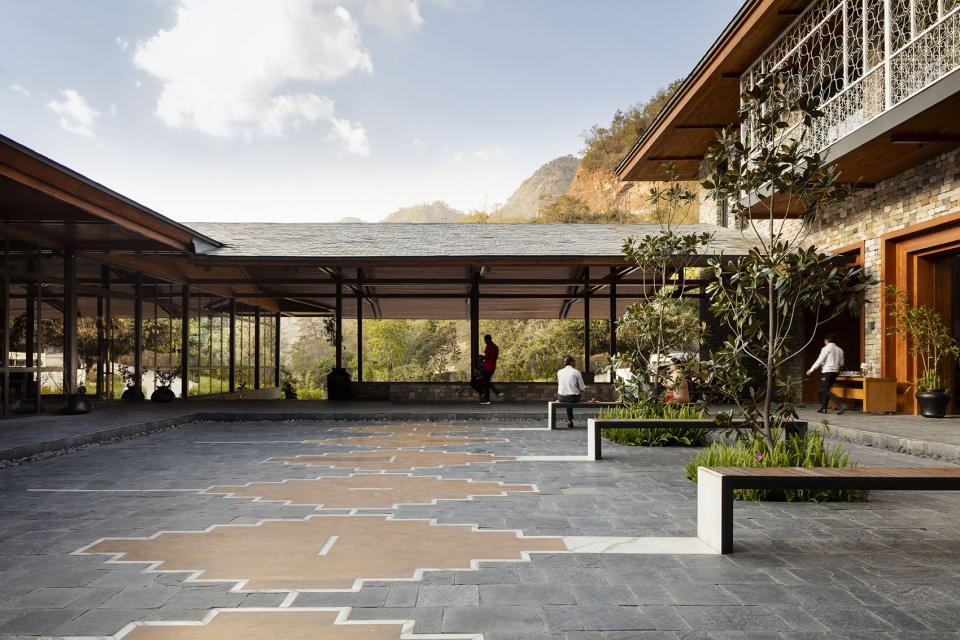
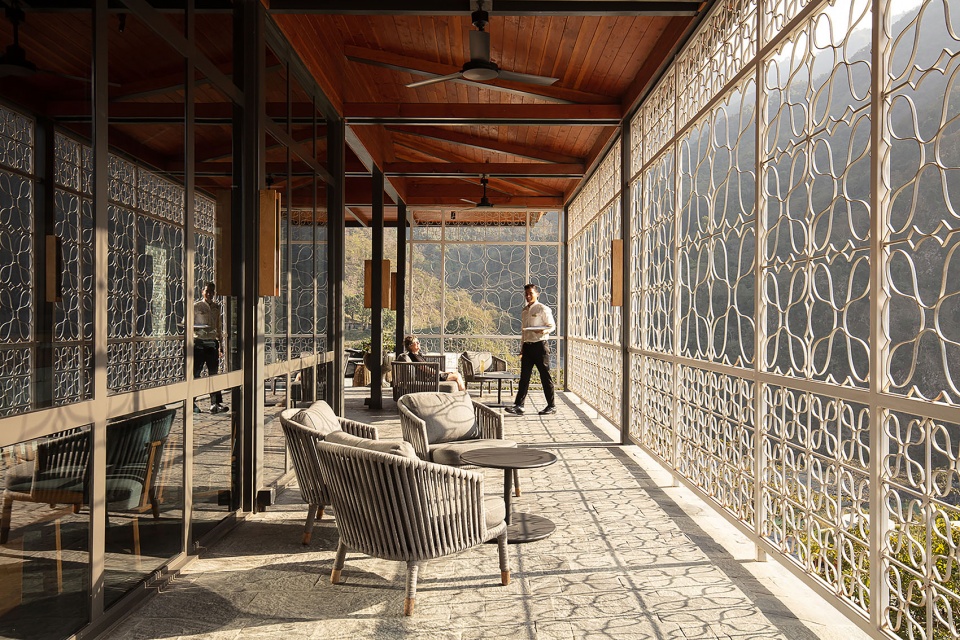
▼檐下过渡空间,Transitional space under the eaves
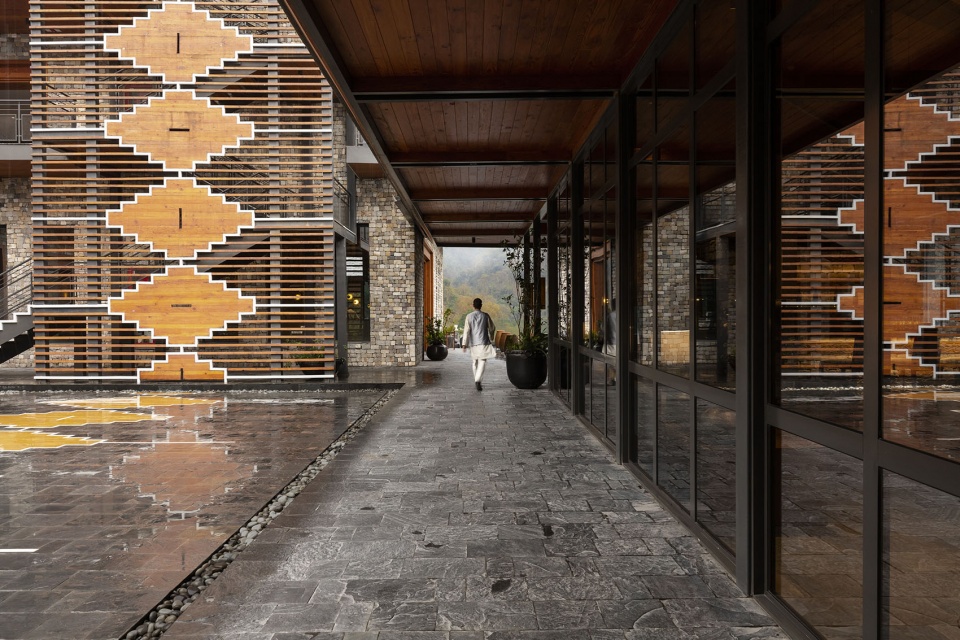
项目建筑充分利用当地材料建造:河石用于挡土墙,板岩用于屋顶和地面铺装,大型木构框架用于门窗构件。传统喜马拉雅建筑技术通常将石墙与大跨度悬挑雪松梁结合使用。这种被称为Kath-Kuni的传统建造方式在本项目中以现代材料重新诠释,以钢结构替代了如今已被禁止采伐的雪松梁。
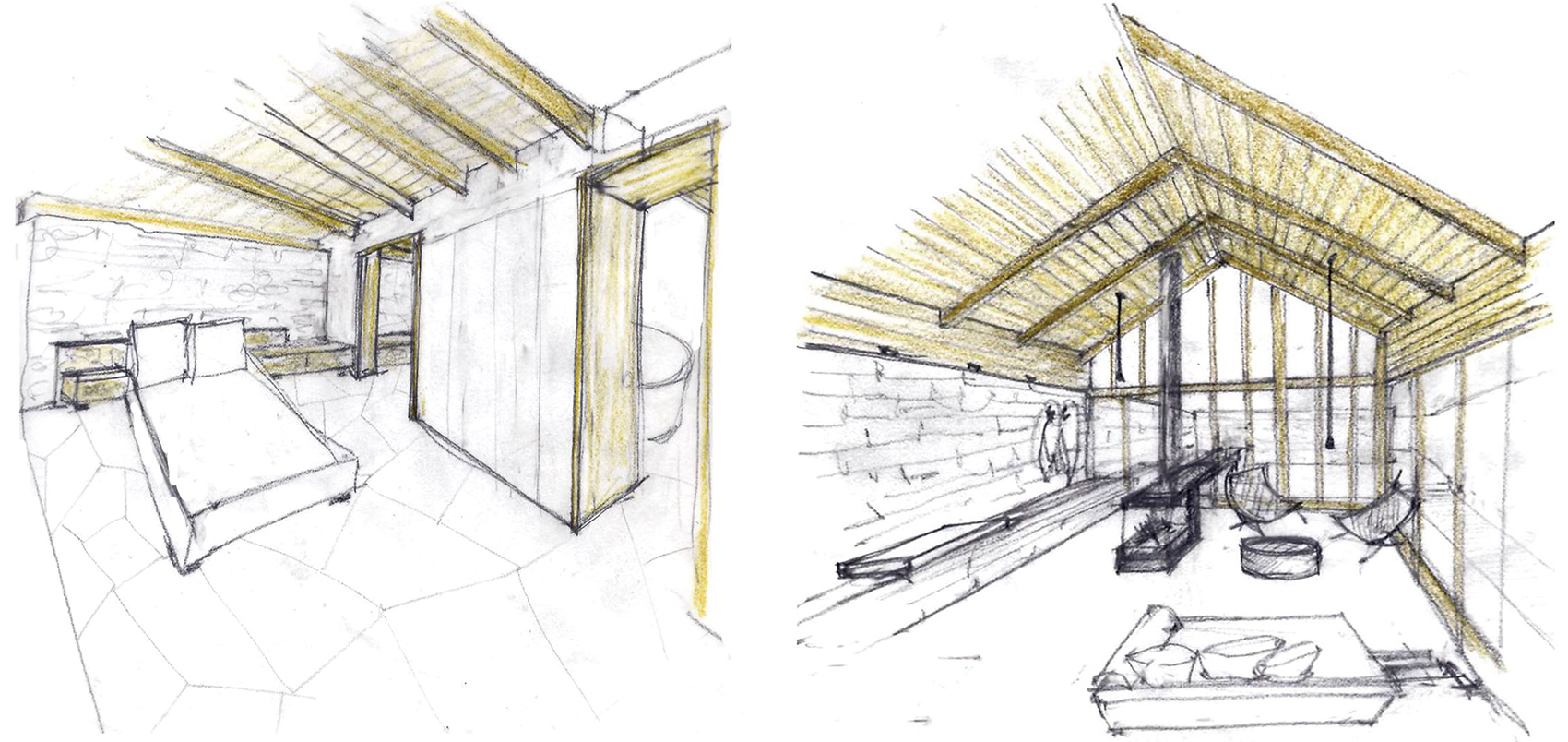
▼室内设计概念草图,Interior design concept sketch
The architecture of the project takes advantage of the materials found locally: river stones for the retaining walls, slate for the roofs and flooring, and large wooden frames for the joinery. Traditional Himalayan construction techniques intermix stone walls with vast cantilevered cedar beams. This traditional building style called Kath-Kuni has been reinterpreted here with modern materials, with steel replacing the cedar beams that are now banned from exploitation in the Himalayas.
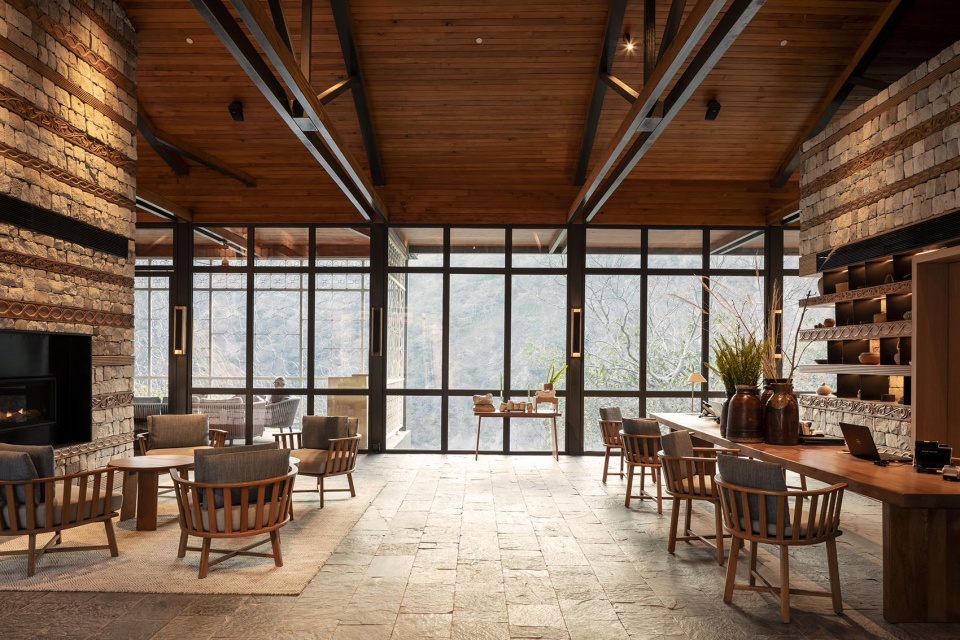
▼主体建筑室内,Main building interior
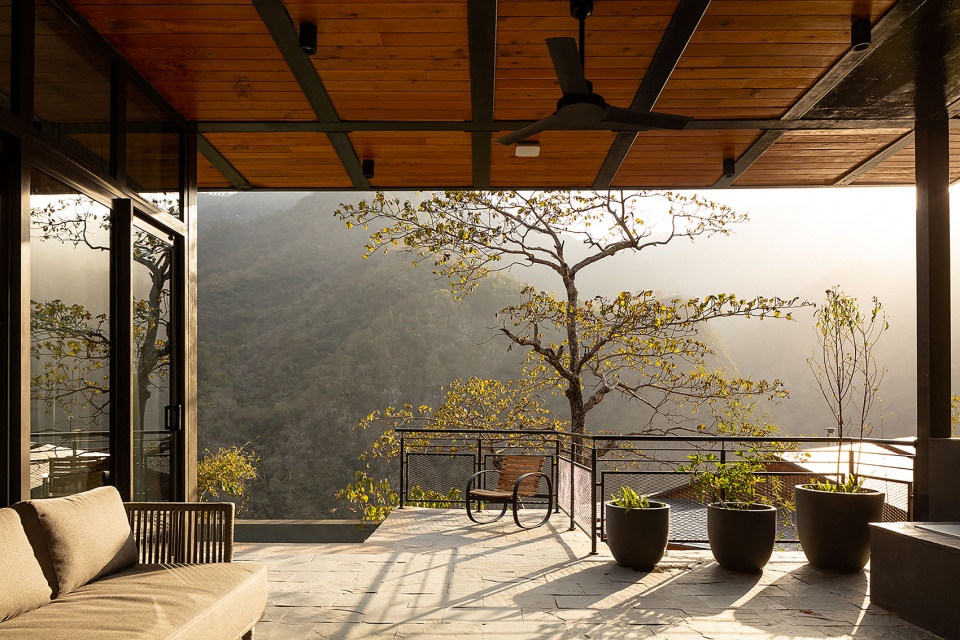
▼主体建筑露台,Main building terrace
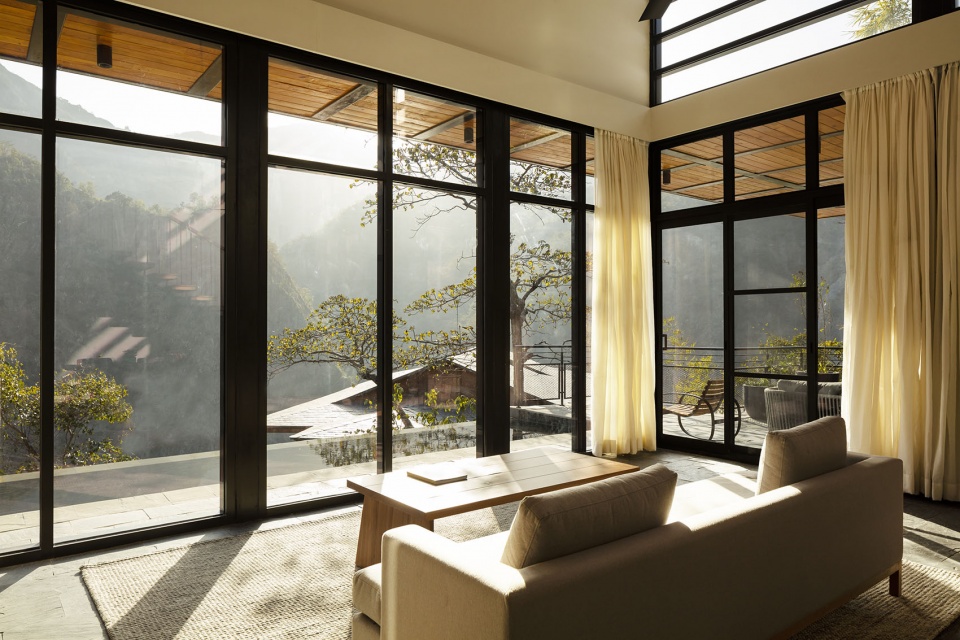
▼客房室内空间,Guest room interior
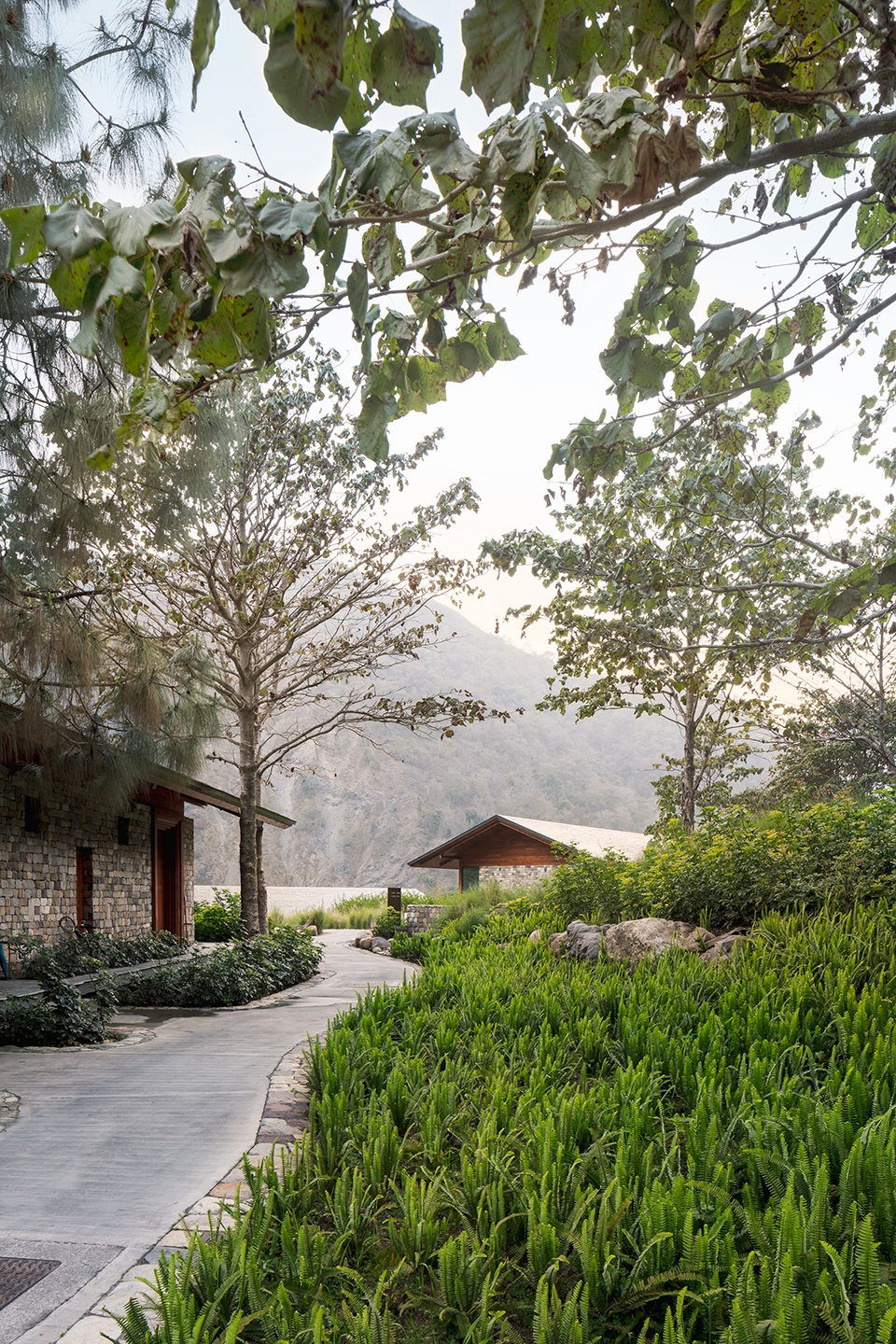
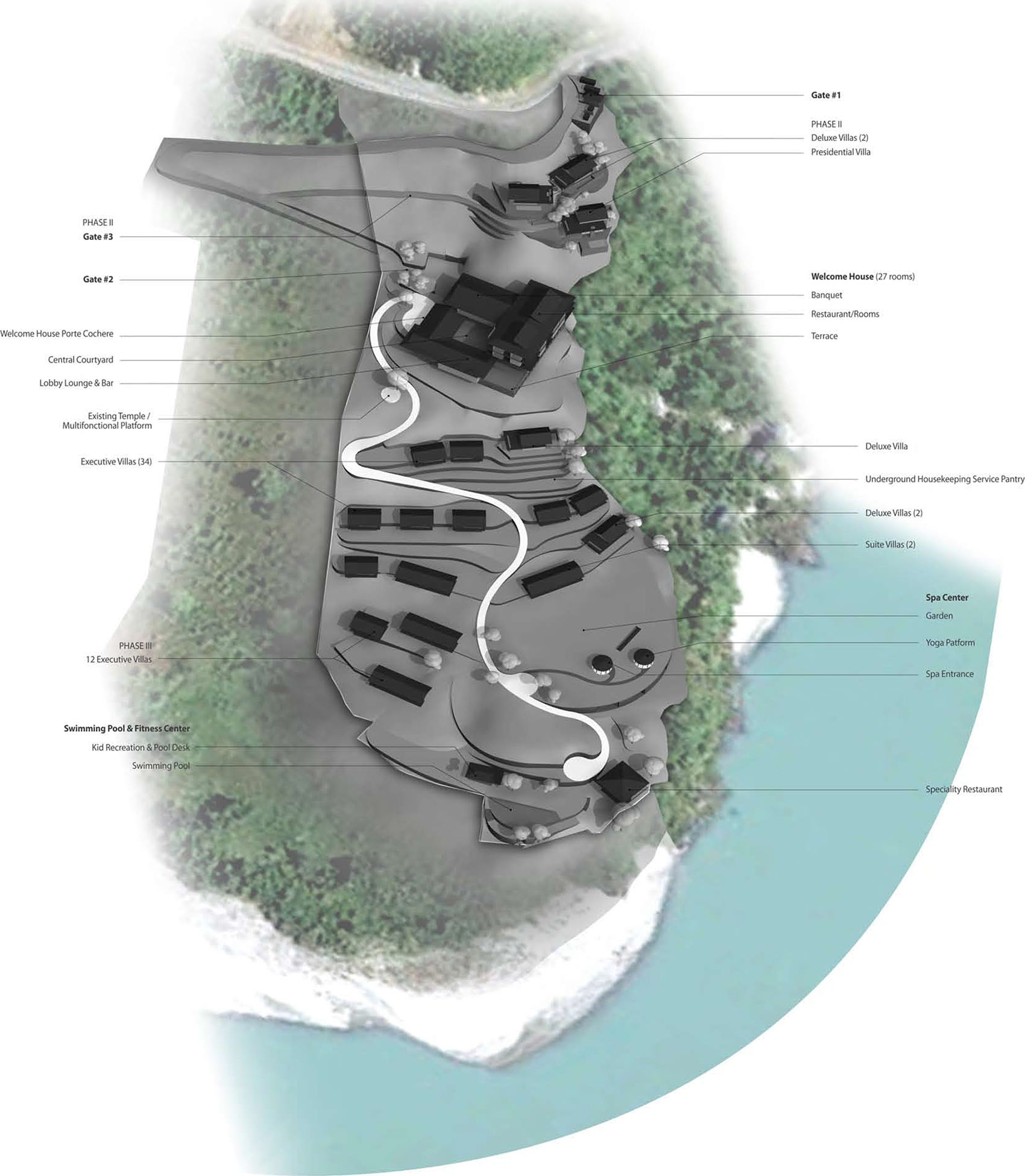
一条蜿蜒悠长的中央步道将整个度假区串联起来,穿越不同的平台高差,并通向综合体内各个建筑。从场地顶部连接国家公路的入口开始,这条长长的带状路径缓缓展开,将位于最高平台上的主体酒店与中间梯田平台上的别墅连接起来。随后,步道继续向下延伸至较低平台上的瑜伽馆与水疗亭,最终抵达紧邻恒河河岸沙滩的泳池与餐饮空间。这条浅色碎石铺就的蛇形路径优雅地穿梭于场地之中,正如恒河在印度喜马拉雅山脉间蜿蜒流淌一般。
A long sinuous central pathway unites the property, winding through the different plateaus and leading to the various buildings of the resort complex. From the national highway at the top of the site, this long ribbon gently unfolds, connecting the main hotel block on the top plateau to the villas on the intermediate terraces. The path then travels further down to the yoga and spa pavilions at a lower plateau, only to end its journey at the swimming pool and restaurants that directly overlook the beach on the banks of the Ganges. This serpentine line of light-colored gravel winds elegantly through the site, just as the Ganges meanders through the Indian Himalayas.
▼步道连接建筑群,Path connecting buildings
▼瑜伽与水疗亭,Yoga and spa pavilion
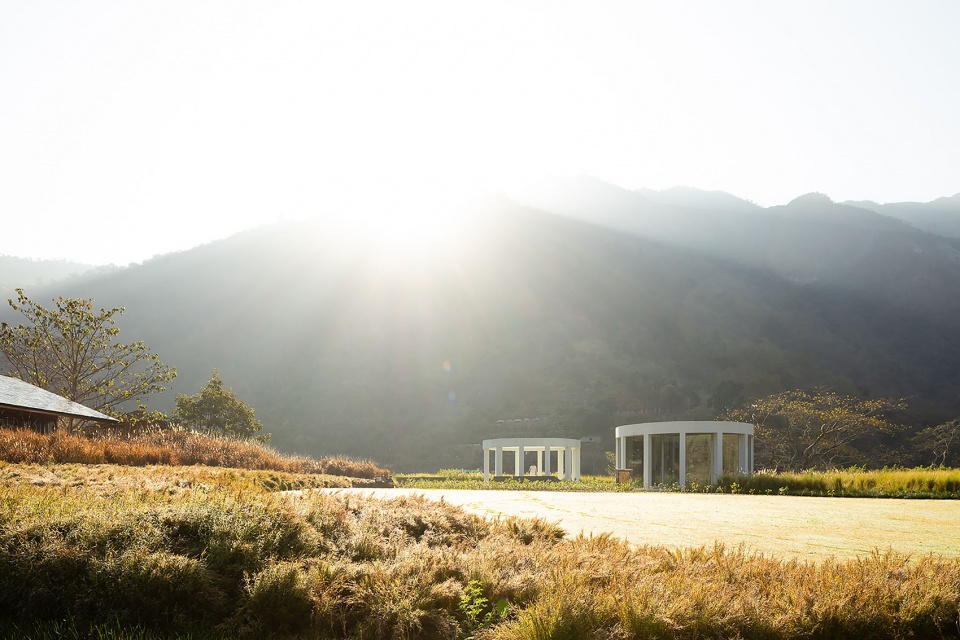
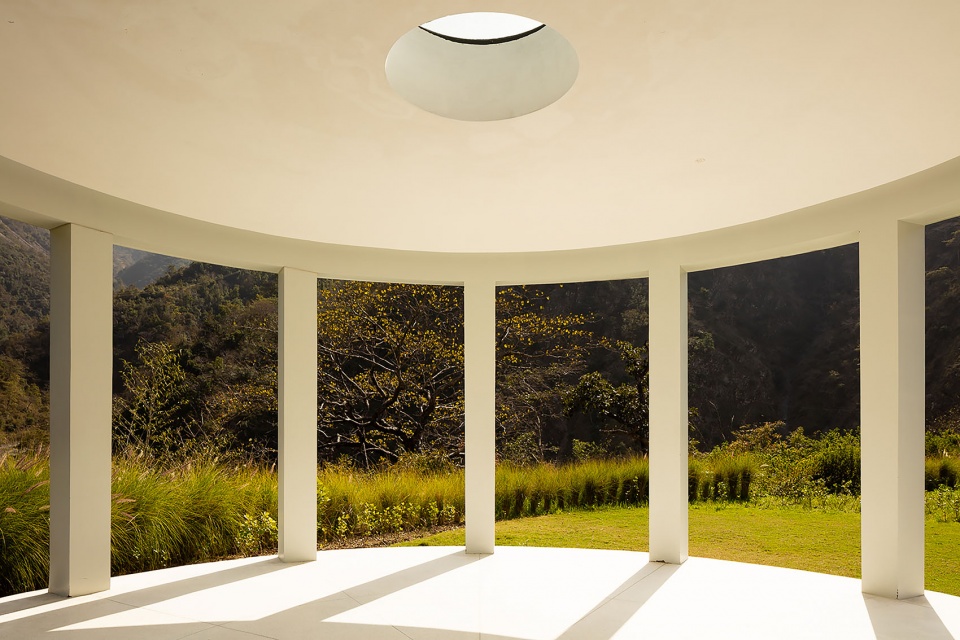
▼瑜伽亭内部,Yoga pavilion interior
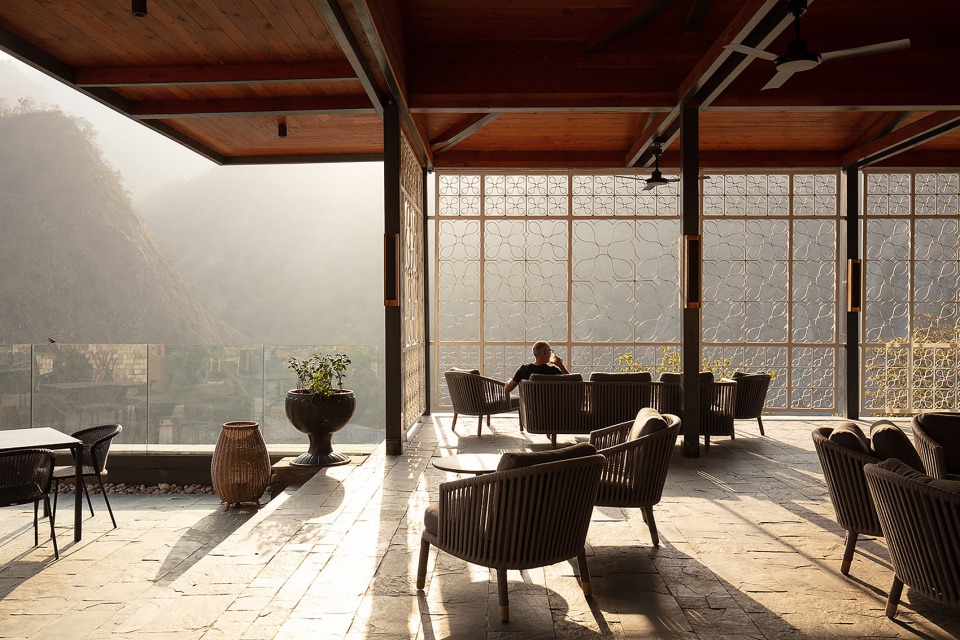
▼餐厅用餐区,Restaurant dining area
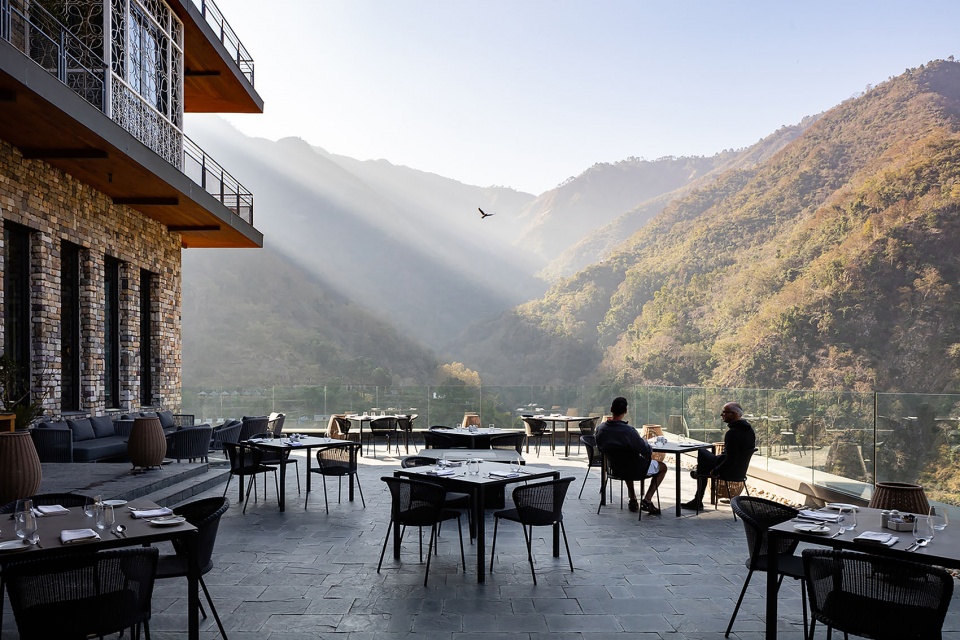
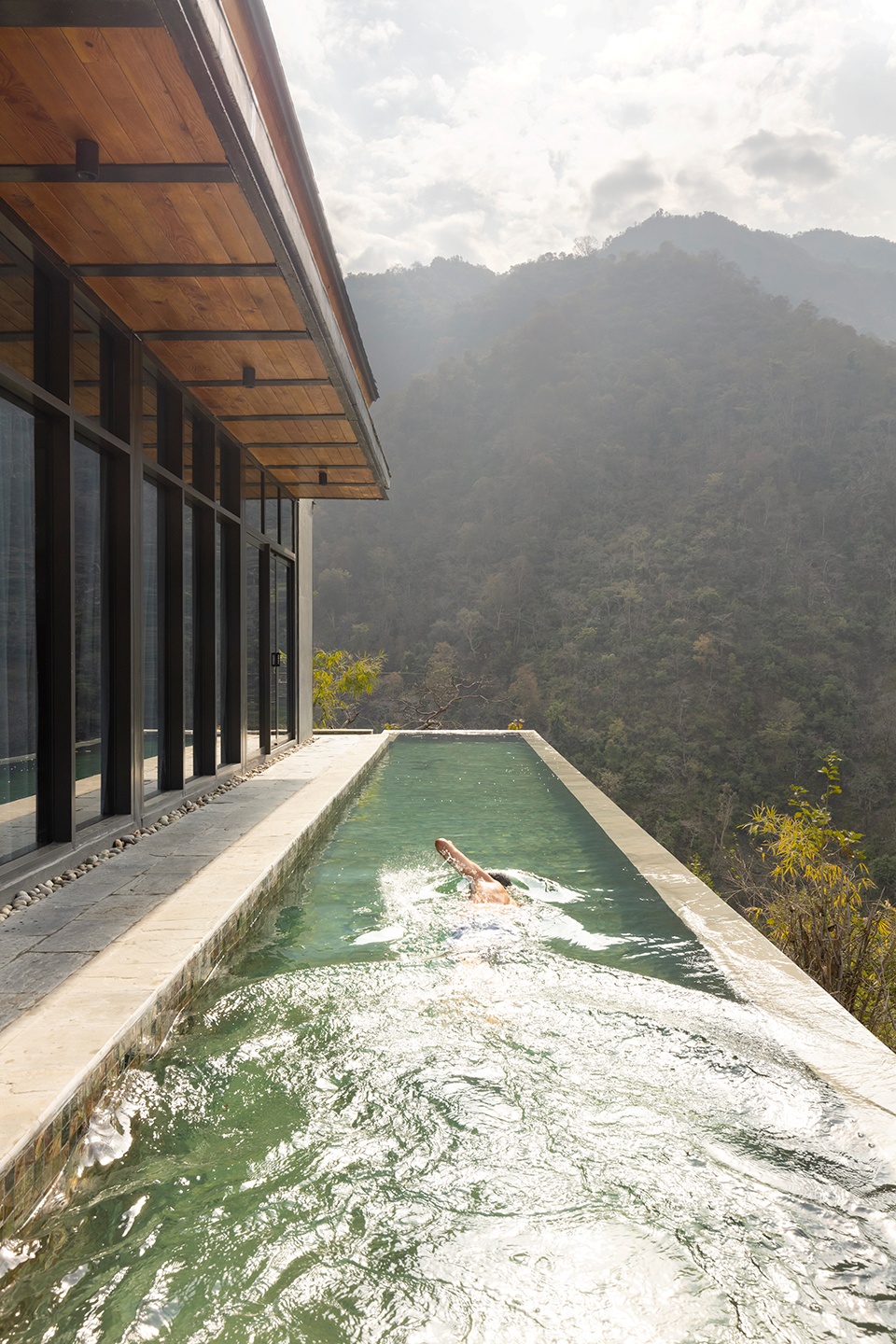
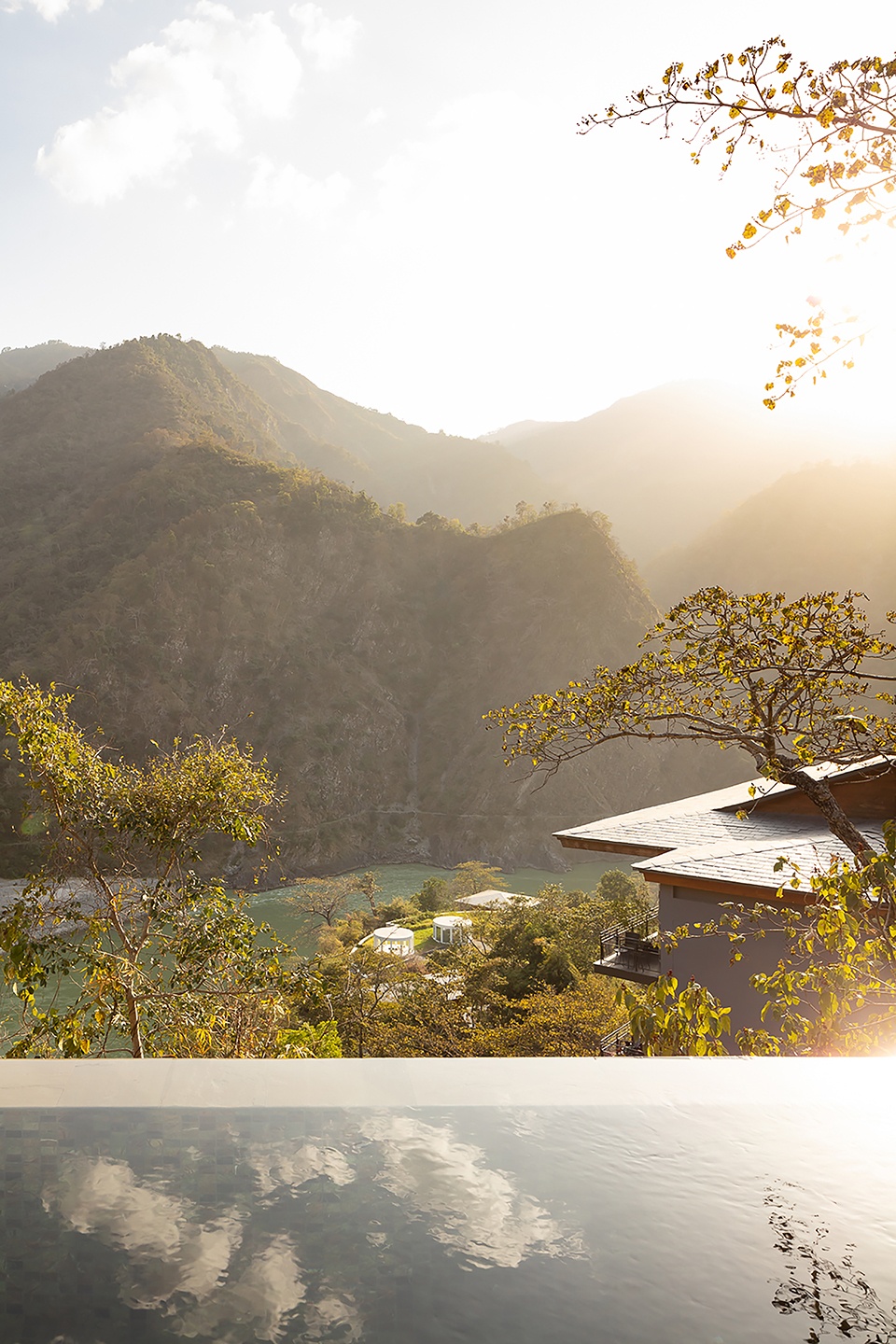
▼面向恒河的泳池平台,Pool terrace facing the Ganges
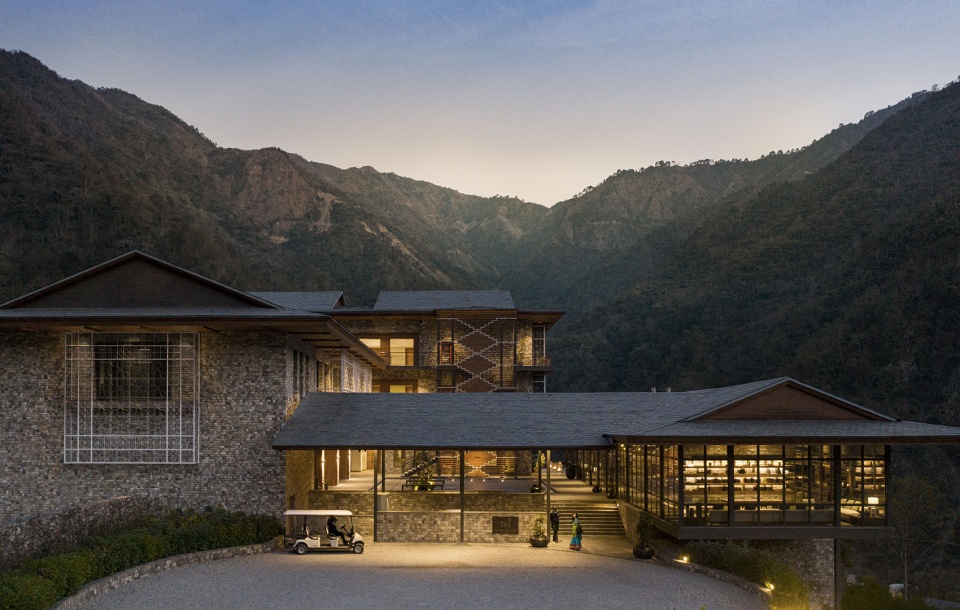
▼建筑外观夜景,Building exterior
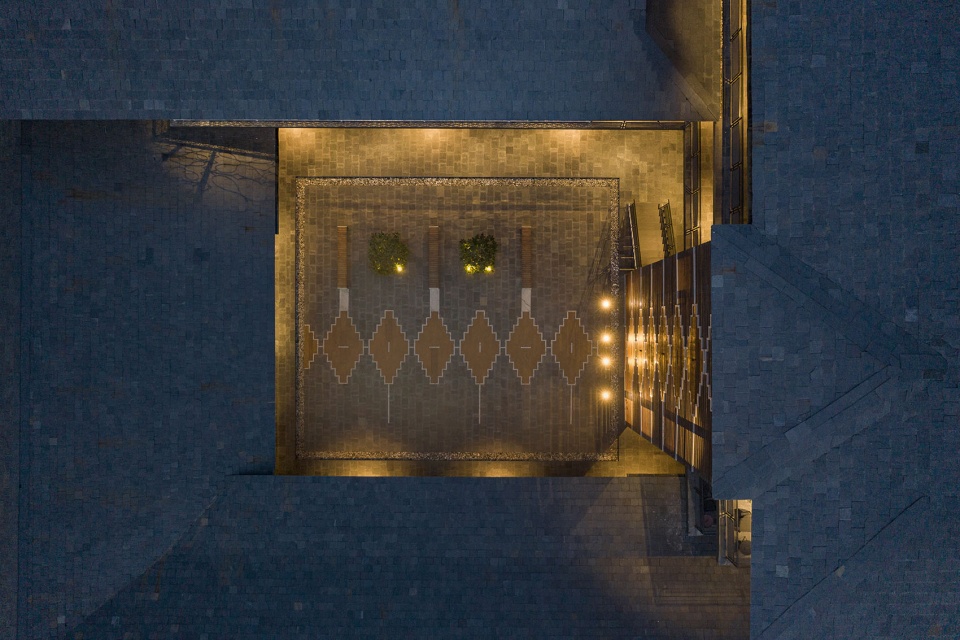
▼庭院顶视夜景,Courtyard top view at night
▼总平面图,Master plan
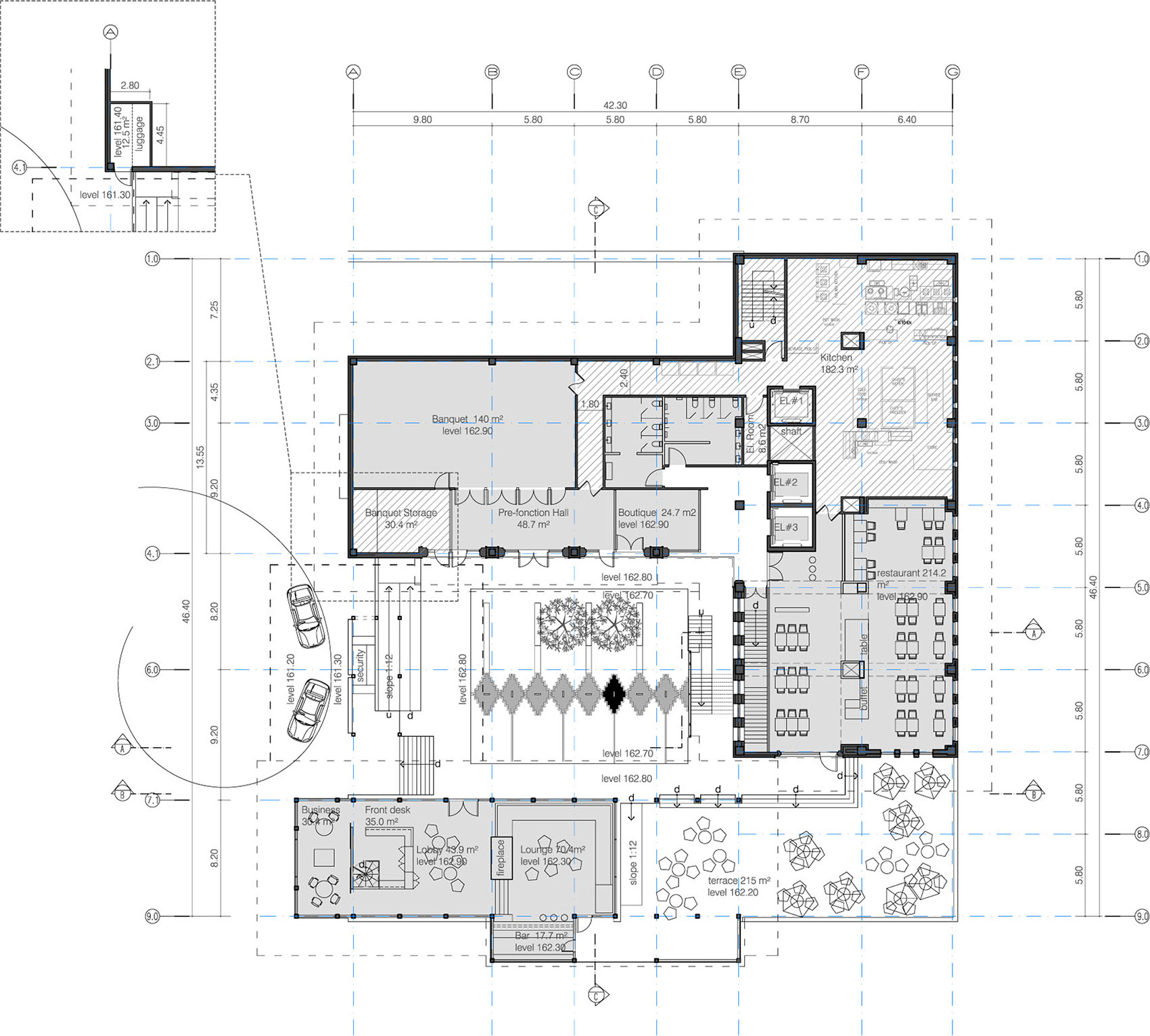
▼平面图,Plan
▼场地剖面图,Site section
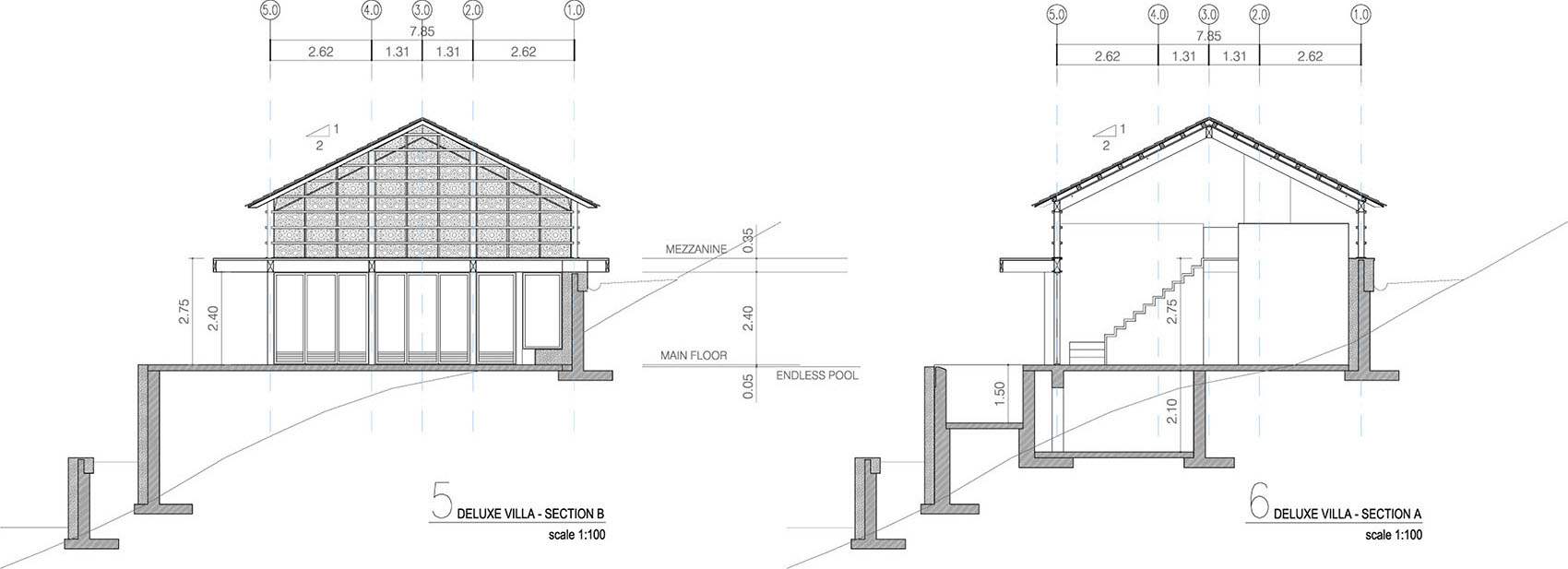
▼建筑剖面图,Building sections

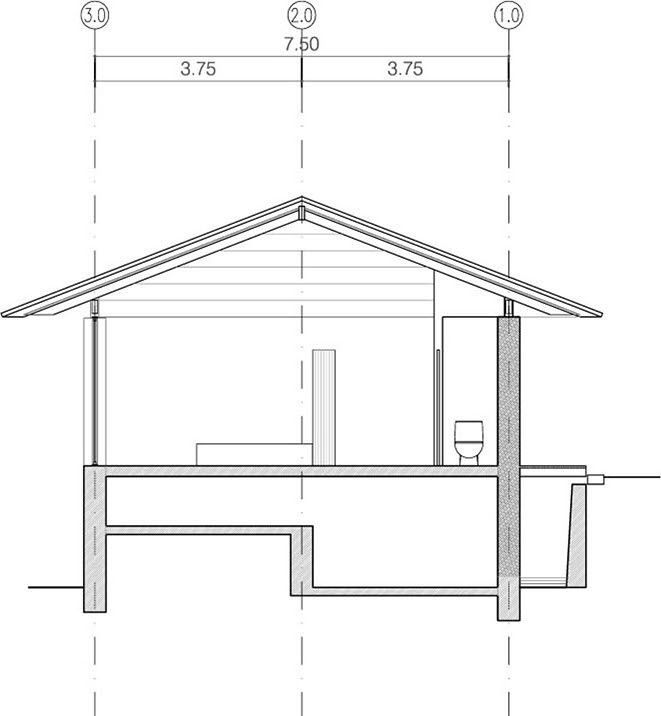
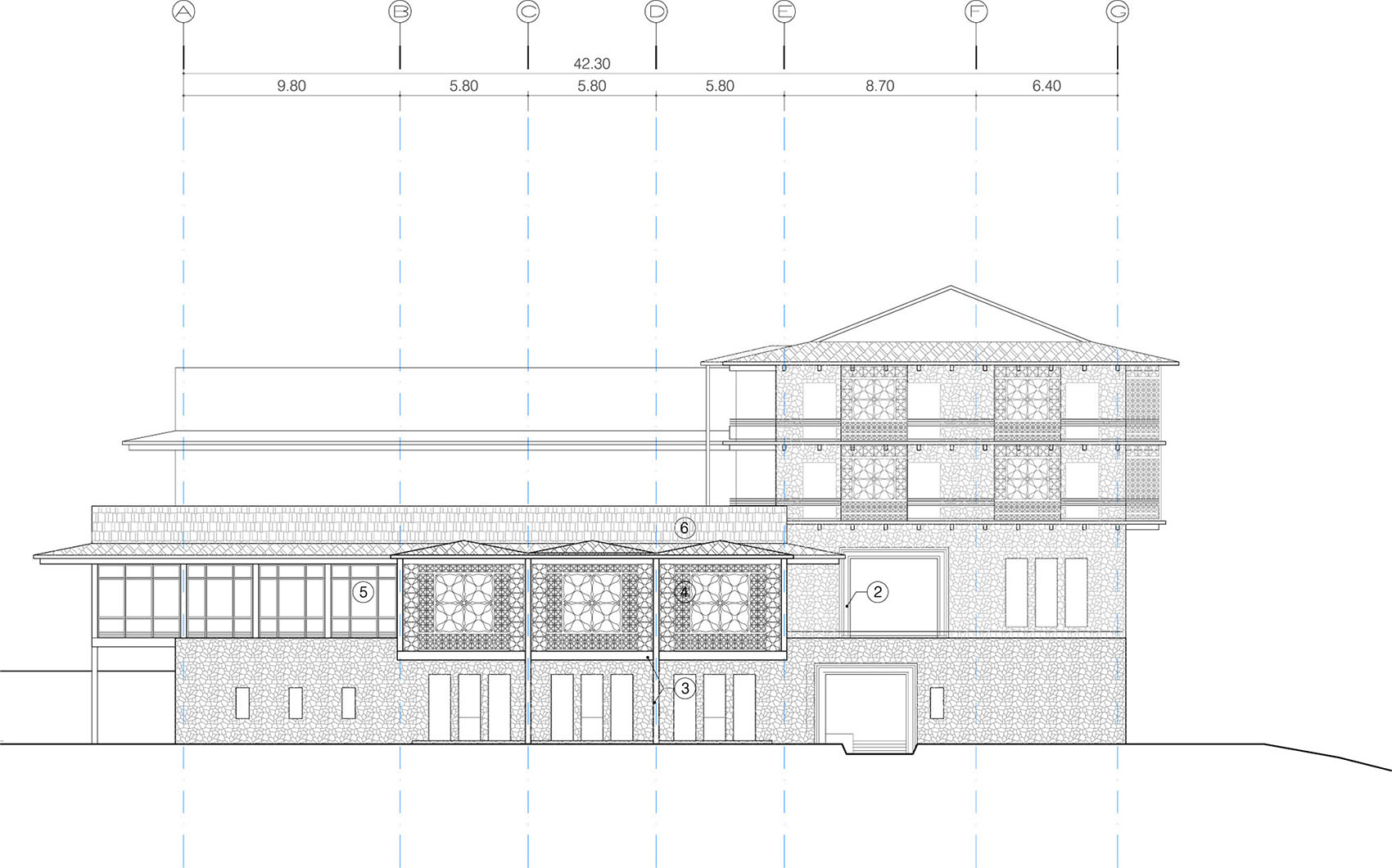
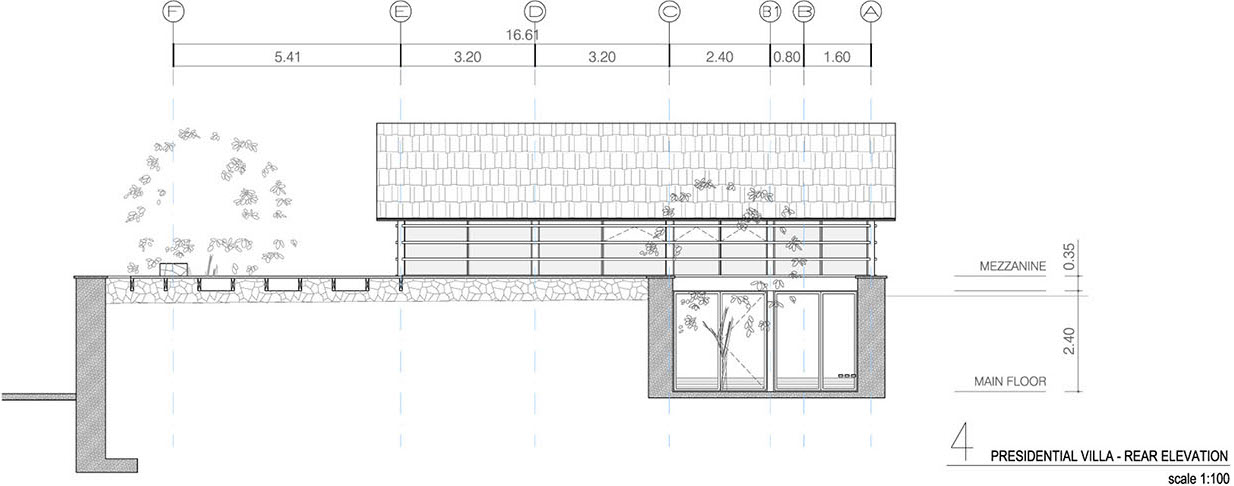
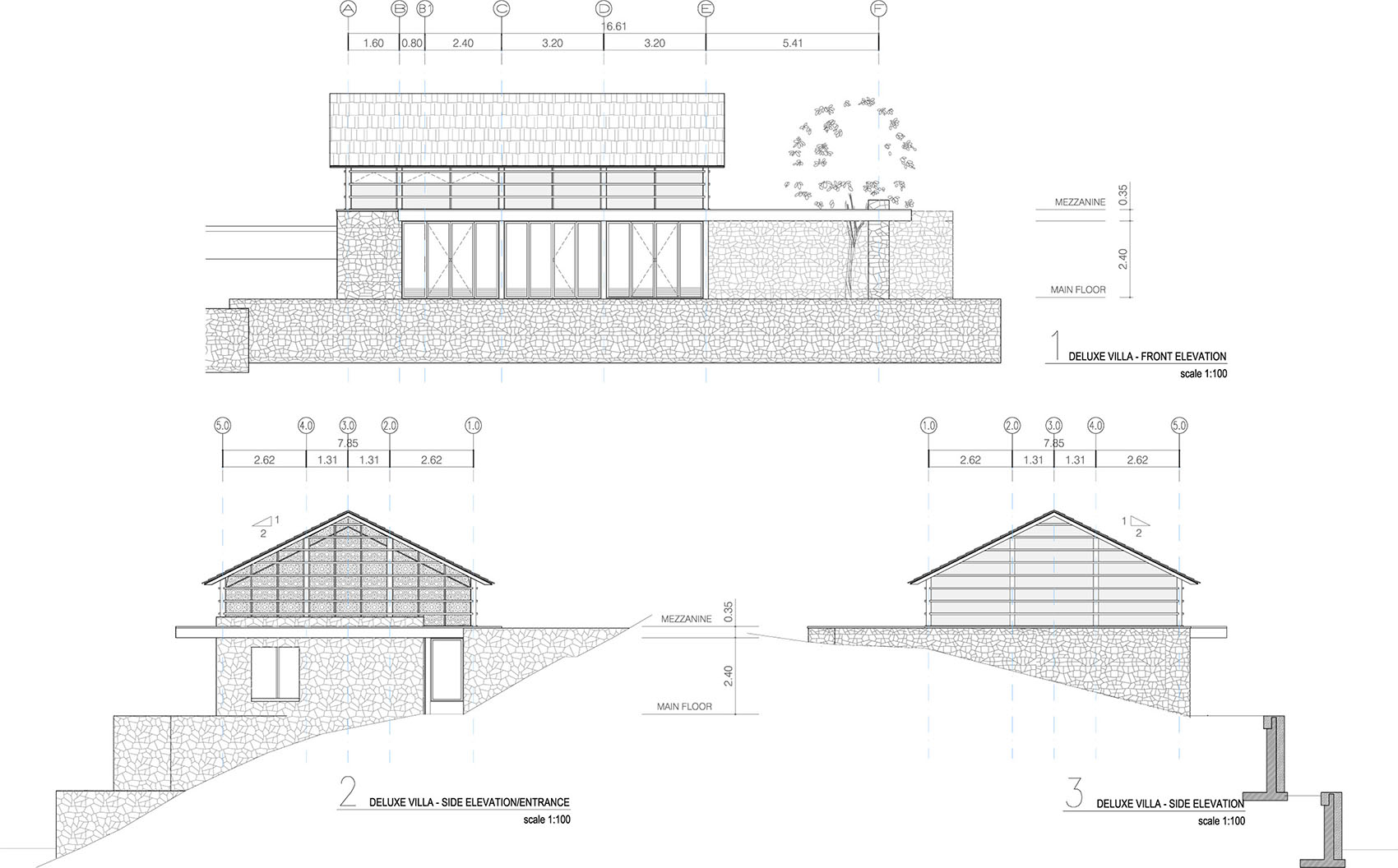
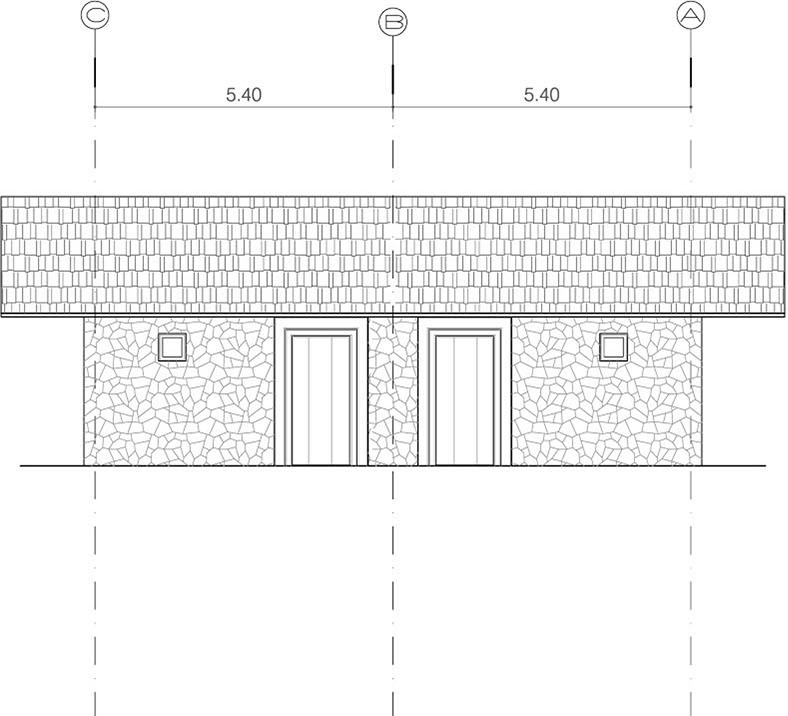
▼立面图,Elevations
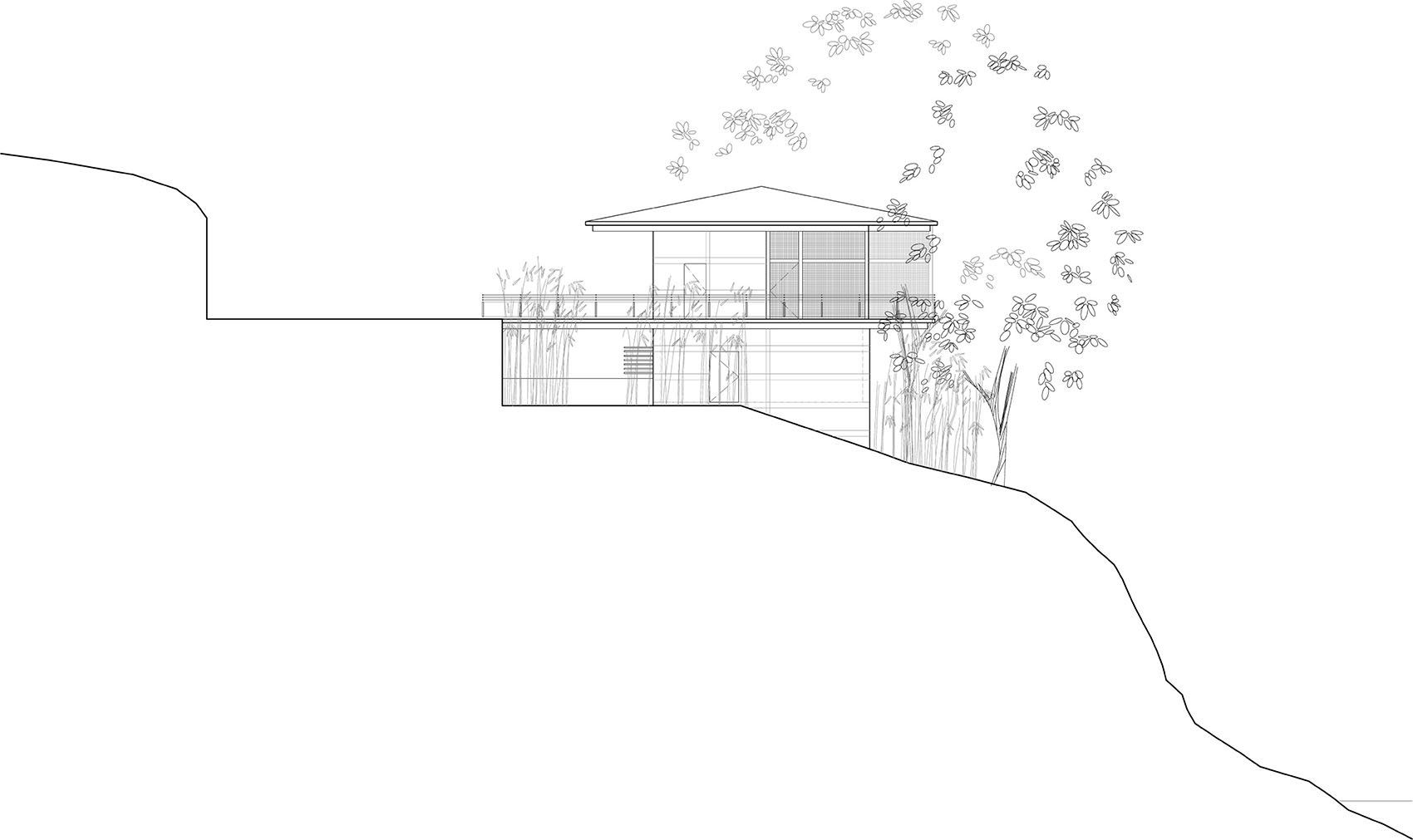
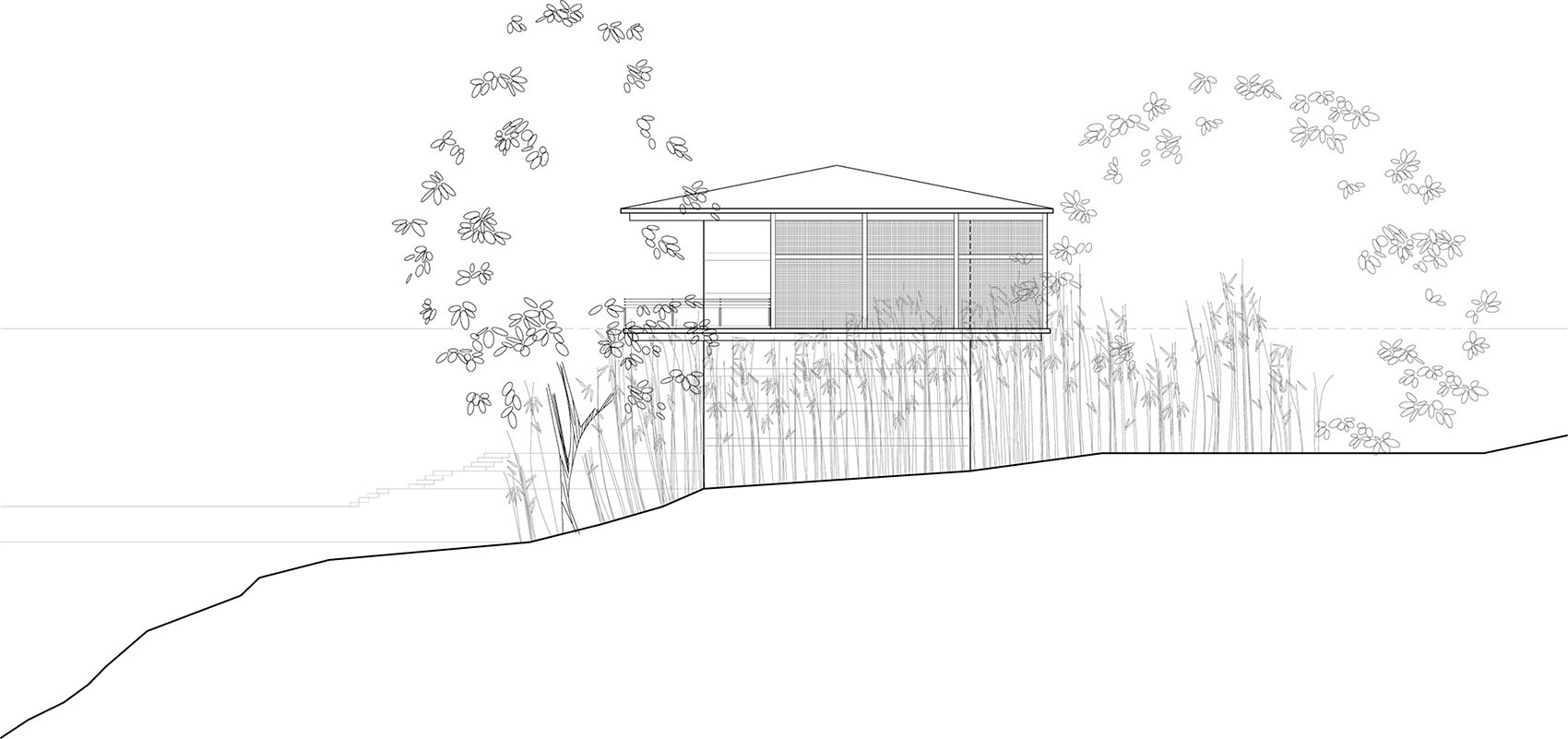
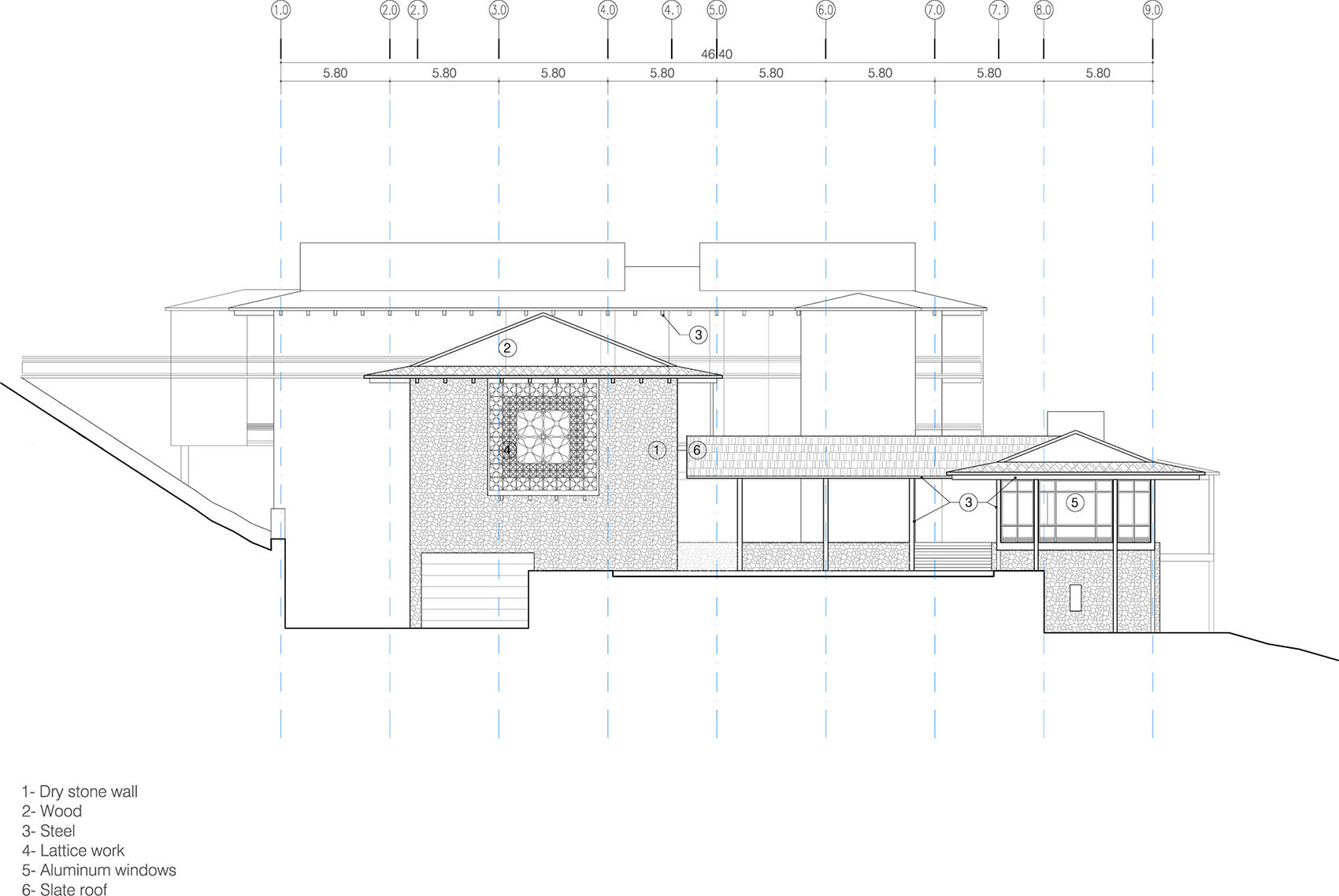
Proiect Data
Location: Rishikesh, India
Area: 79 rooms and villas – 150 000 sq ft
Construction period: 2011-2020
h2 design team: Marie-Claude Hamelin, Loukas Yiacouvakis, François Bélanger, Marianne Vézina Architects in India: Edifice consultant
Interior designer: Eco-id architects
Landscape architect: Burega Farnell
Lighting consultant: GA Design
Developer and contractor: Darrameks Hotels & Developers Pvt. Ltd Structural engineer: S.V. Damle Photographer: Maxime Brouillet