木守·朱泾,上海 / goa大象设计
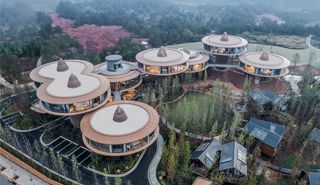
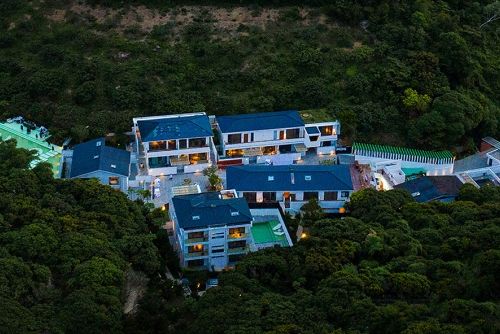
▼场地鸟瞰,Aerial View of the Site
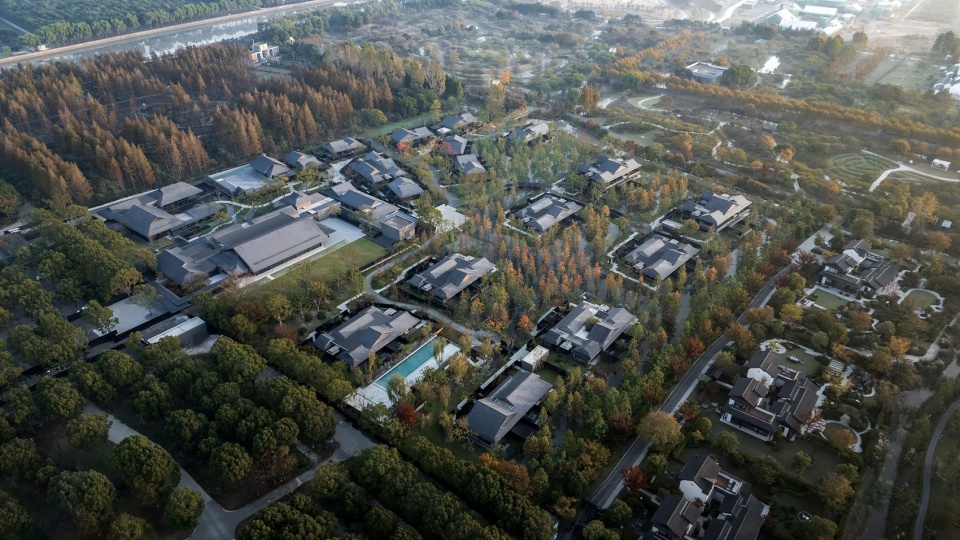
在上海建造一座度假酒店,最易期待的位置,或许是黄浦江边某处被城市记忆反复确认的街区。然而,木守·朱泾重新提出了一个关于上海的问题:现代都市的明亮表面之下,是否还存在一条更深远也更贴近乡土的根脉?它给出的回答,是让建筑伏低,水网展开,树木生长,让空间重新回到贴近身体与自然的尺度之中。
Located in Zhujing Town, Jinshan District, Shanghai, Muh Shoou Zhujing reconsiders the city from a perspective often obscured by its metropolitan image. Before Shanghai became a modern metropolis, it was a land defined by water: rivers, channels, wetlands, farmland and market towns formed the spatial foundation of everyday life. Set within this lesser-seen landscape, the hotel seeks to return architecture to a scale close to the body, the land and the memory of settlement.
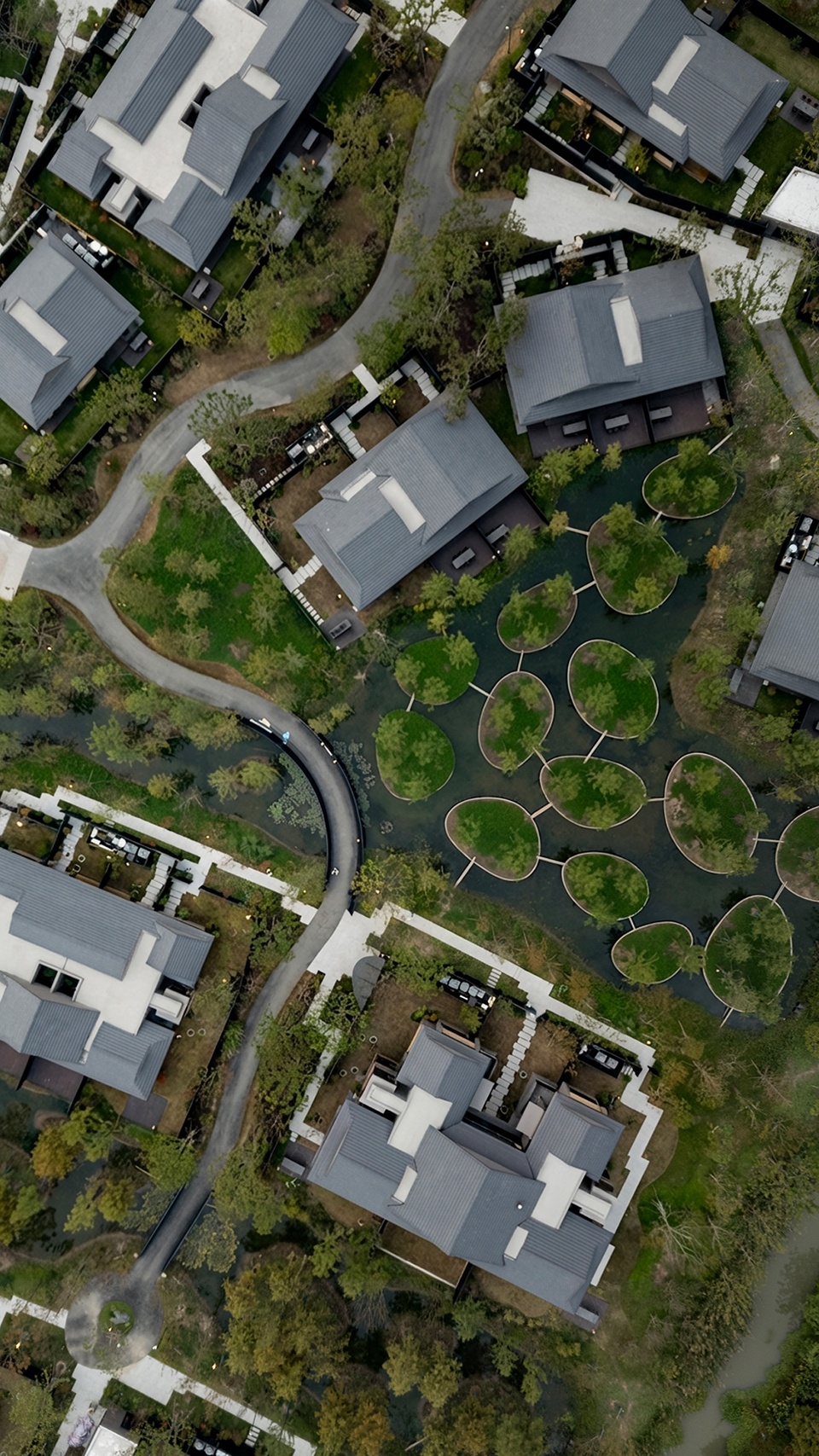
▼水杉、浮岛与客房,Dawn Redwoods, Floating Islands and Guest Rooms
01 寻找“另一个”上海 01 Looking for “Another” Shanghai
朱泾所在的金山、松江、青浦一带,延续了江南水乡的农耕传统。地质学意义上的“古冈身带”——一条由贝壳砂堤与古海岸线形成的自然高地,贯穿上海西南部。相比低洼的湿地,略高于周边水面的冈身地带更适合定居耕种,因此成为早期聚落与市镇形成的基础。朱泾正位于古冈身附近,“泾”字即意为纵横水网中的河道支流。
The project takes the ancient Gangshen belt—a natural ridge formed by shell-sand embankments and ancient shorelines—as a historical and geographical point of departure. Slightly raised above the surrounding wetlands, this terrain once supported early settlement and cultivation. Rather than treating the countryside as a picturesque backdrop, the design reconstructs a spatial order derived from water-town life.
▼由酒店遥望朱泾镇天际线,View Towards Zhujing Town Skyline from the Hotel
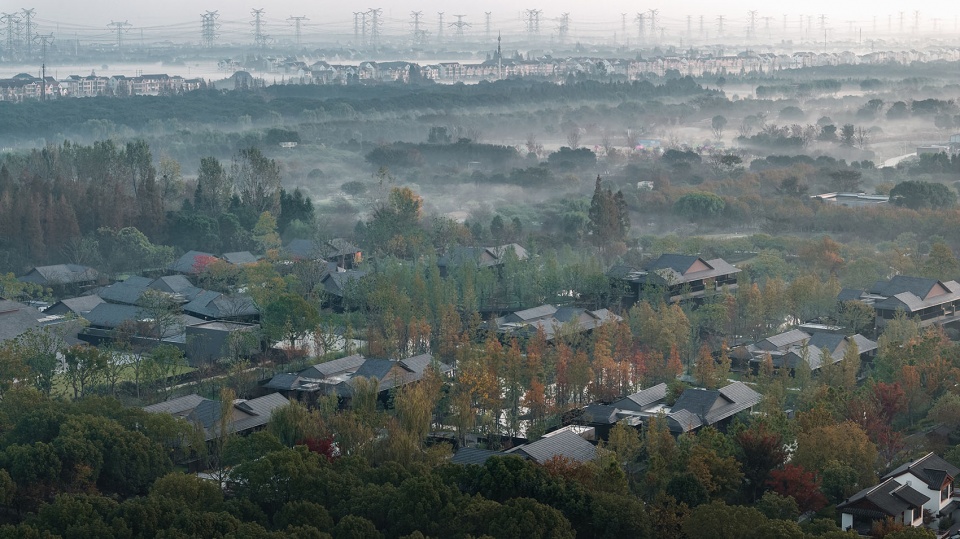
水运、集镇、农田与手工业的长期层累,使朱泾保留了一种不同于近代上海的江南集镇气质:缓慢、贴近土地,更接近水乡聚落的历史原型。朱泾之所以成为木守品牌第二家酒店的选址,不仅因为远离市区、接近自然,也因为它指向一种常被遮蔽的历史深度。来到朱泾,意味着回到一个易被忽略的“上海之前的上海”。对设计团队而言,这种“原乡”应当超越图像符号的怀旧或风物陈列,成为关于聚落尺度与身体感知的整体设计问题:65间别墅式套房散落于花海、水杉林与河道间,基于“寻根原乡秘境”的愿景,建筑师试图把乡土生活与当代度假体验重新编织。在这个意义上,木守·朱泾的设计过程与其说是在郊野中建一座奢华酒店,更像是“如何在都市之外重新发现都市的来处”。
Located in Zhujing Town, Jinshan District, Shanghai, Muh Shoou Zhujing reconsiders the city from a perspective often obscured by its metropolitan image. Before Shanghai became a modern metropolis, it was a land defined by water: rivers, channels, wetlands, farmland and market towns formed the spatial foundation of everyday life. Set within this lesser-seen landscape, the hotel seeks to return architecture to a scale close to the body, the land and the memory of settlement. Set within this lesser-seen landscape, the hotel seeks to return architecture to a scale close to the body, the land and the memory of settlement. In this sense, the design process of Muh Shoou Zhujing is less about building a luxury resort in the countryside than about rediscovering the origins of the city beyond the metropolis itself.
▼建筑、步道与视线转折,Architecture, Pathways and Shifting Sightlines
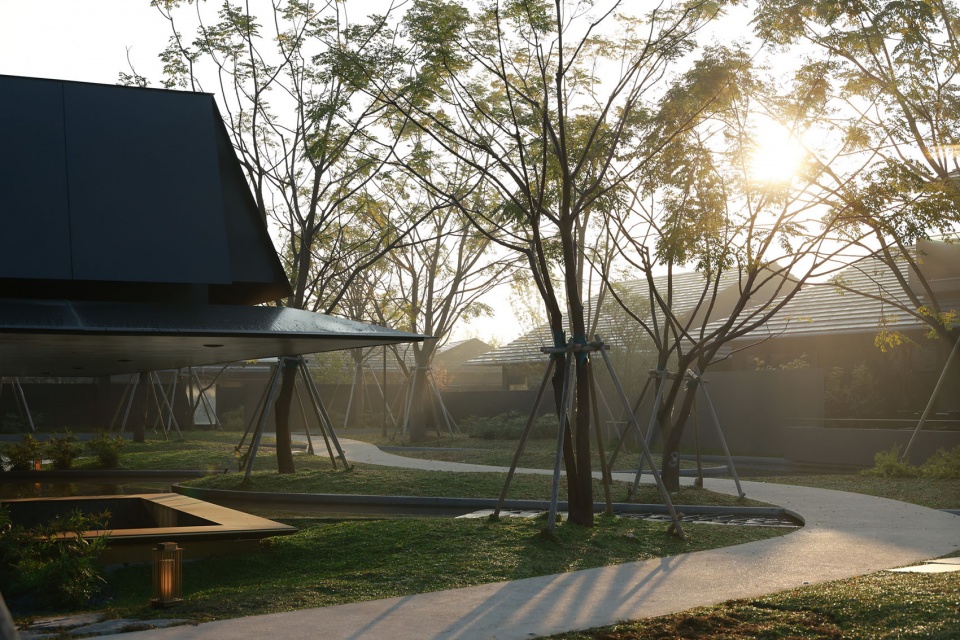
02 水网之间,村落生长 02 Between Water Networks, a Village Emerges
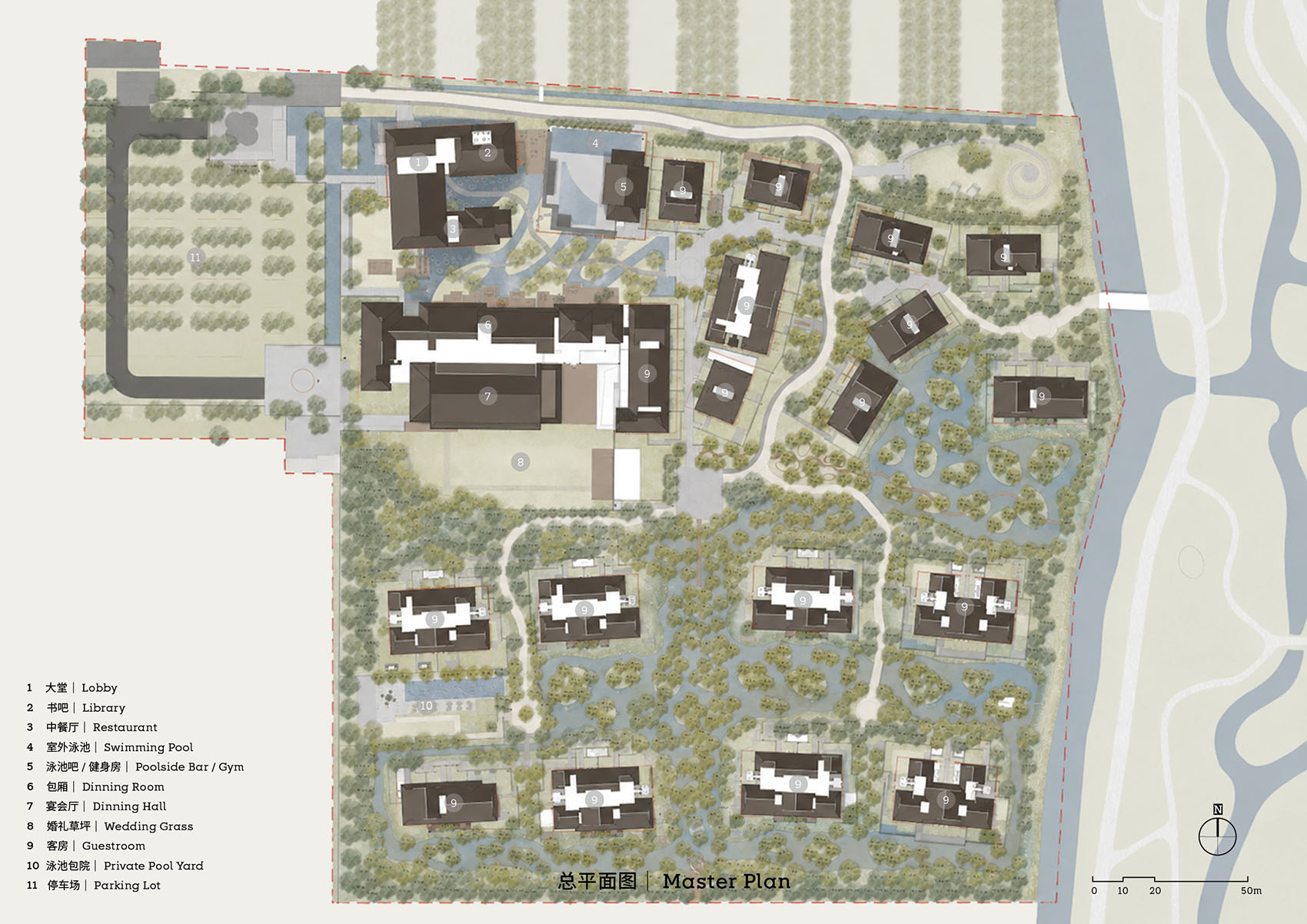
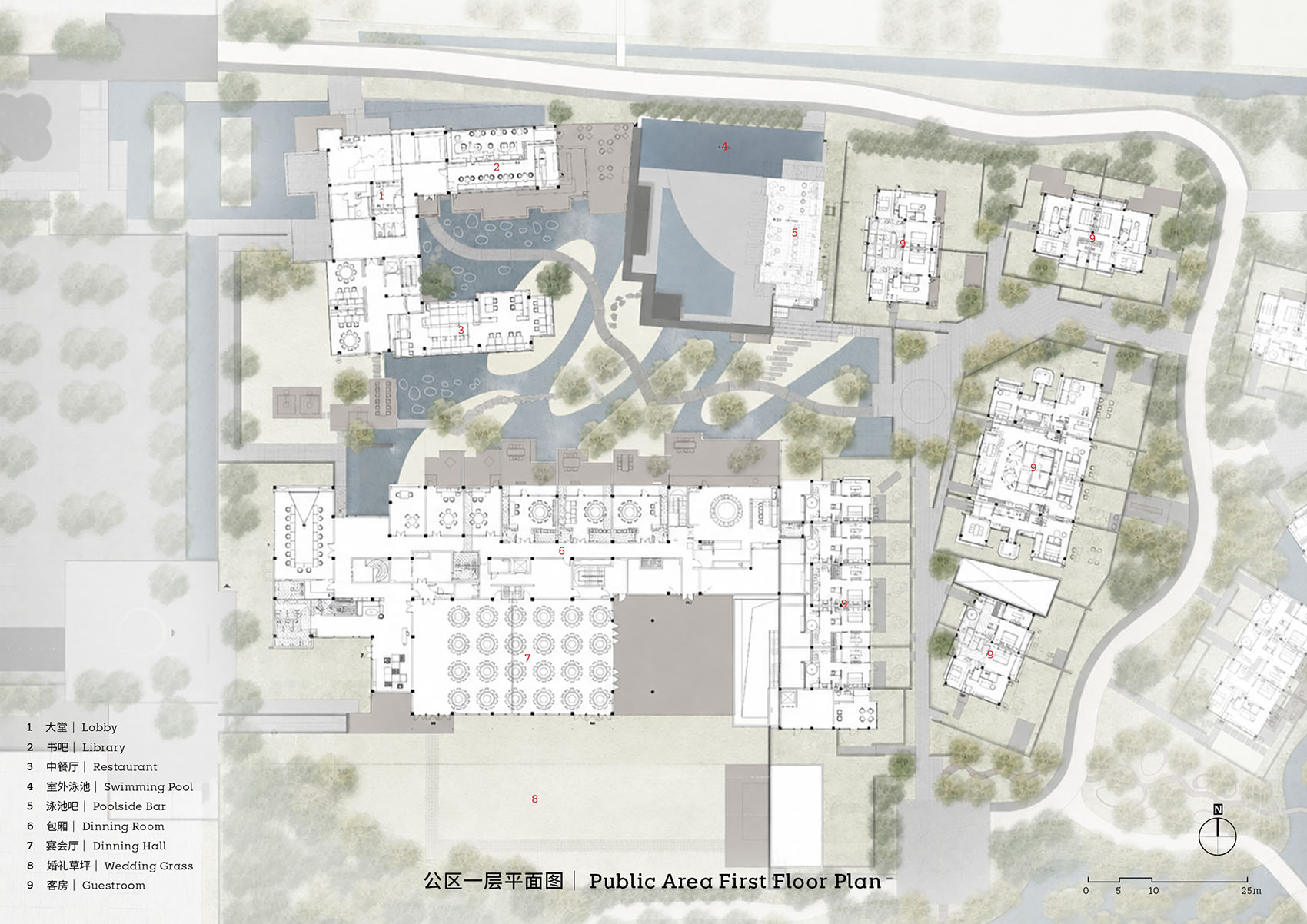
项目的平面空间结构以三个层次展开:西北侧展开落客、停车与后勤区域;中部集中布置大堂、餐厅、宴会厅与泳池等公共功能;东南侧则为低密度的客房组团。公共界面相对集中,客房区域则呈散点式分布,二者之间通过水院、步道与植物群落完成过渡。
The masterplan is organized into three zones: arrival, parking and service areas to the northwest; public programs such as the lobby, restaurant, banquet hall and pool in the center; and low-density guestroom clusters to the southeast.
▼联结公共区域的回廊与半透明界面,Corridors and Translucent Interfaces Connecting Public Areas
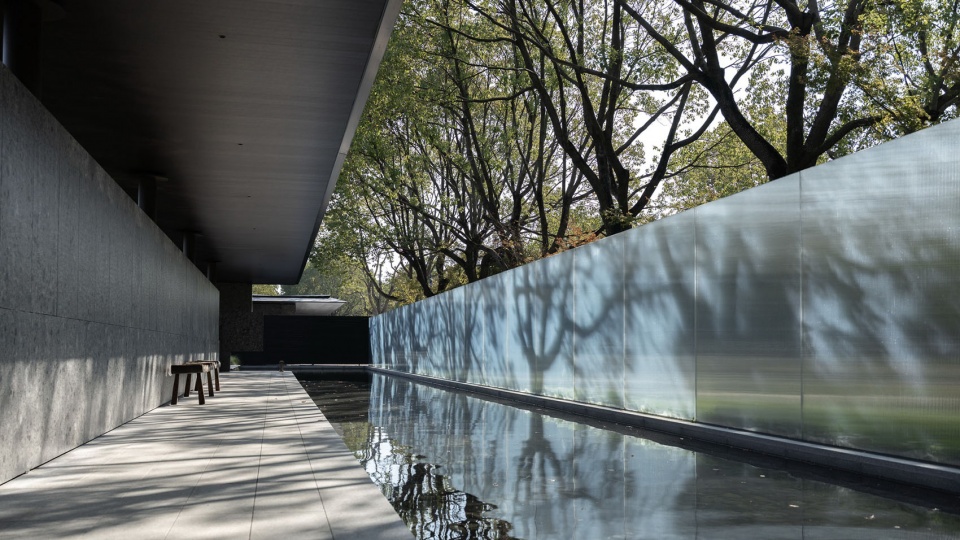
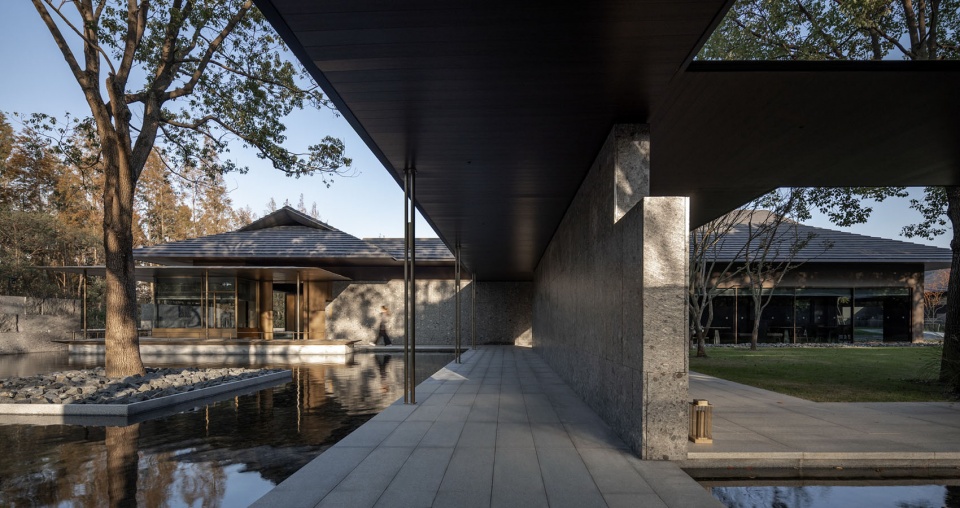
这种布局起初是对点状供地政策的回应。分散的建设用地使建筑无法连续铺展,却也让每一组客房天然获得了“岛”的属性。建筑、庭院、水岸与植物共同构成一个最小居住单元;多个单元再通过水体、路径与视线相互关联,形成一种介于单体与聚落之间的场地秩序。水体在平面布局中承担了多重角色。它取代了生硬的围墙,划分公共区域的功能边界;它组织步行体验,让抵达客房的路径曲折化为连续游走;它调节客房之间的距离,通过水面归置植物位置与建筑错动,形成柔和的边界;它也延续了湿地的地理记忆,使场地从后天形成的花海和苗圃等人工造物,转向水网、岛屿与乡土植物共同作用的自然生态结构。
Responding to the fragmented pattern of available land, the architects transformed each guestroom group into an “island” composed of architecture, courtyard, water edge and planting. Water replaces hard boundaries, organizes circulation, protects privacy and reconnects the site to its wetland memory.
▼水杉环绕中的客房组团,Guestroom Clusters Surrounded by Dawn Redwoods
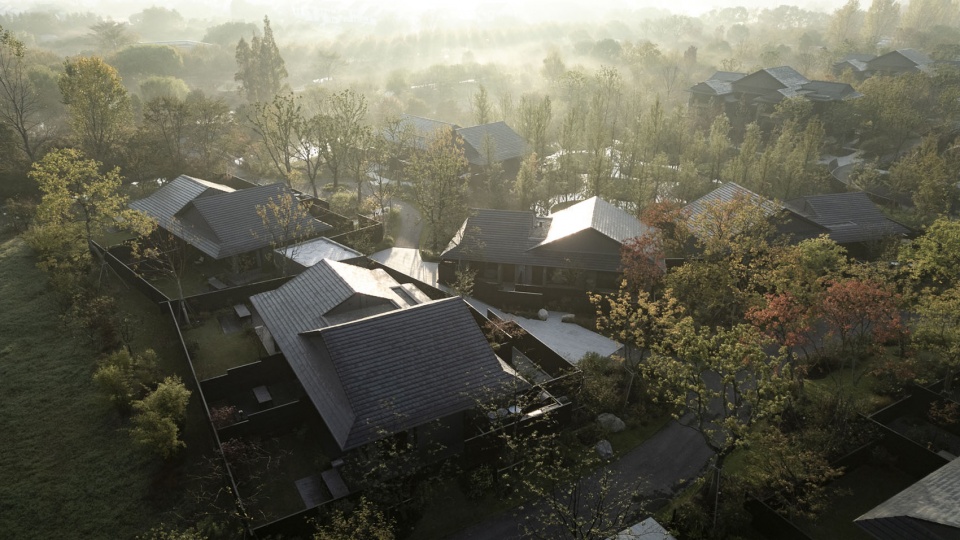
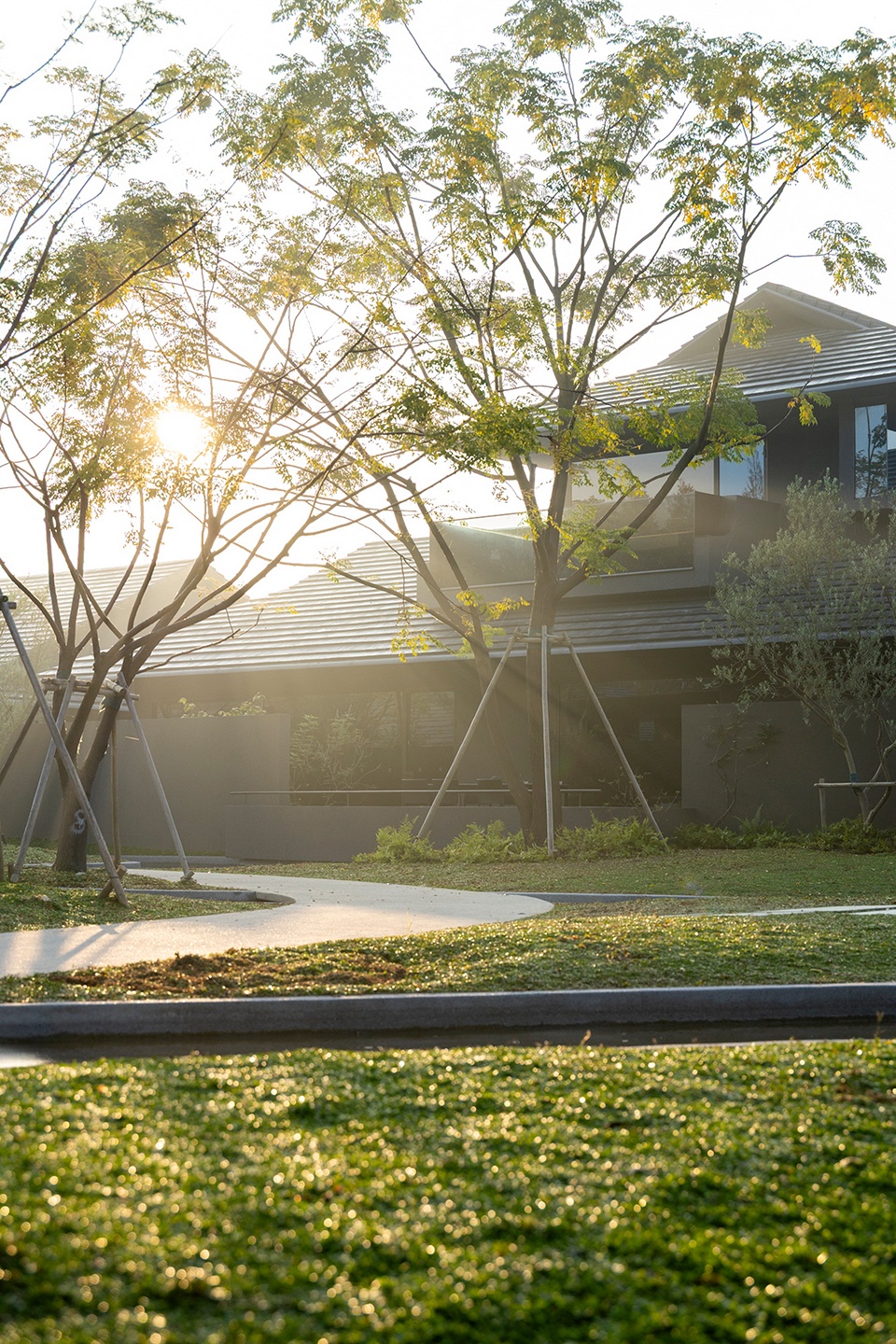
在此基础上,景观设计被视作布局生成的前提。水杉、柳树、楝树等乡土植物被组织在水岸、道路和院落边界中,塑造场地的竖向层次,也参与了尺度控制。树冠逐渐长成之后,建筑将“隐入”林下。所谓湿地村落,并非一种风格化的想象,而是在功能、交通、水位、植物特征与客房私密性之间逐步推导出的结果。
As dawn redwoods, willows and chinaberry trees mature, the buildings will gradually recede beneath the canopy, forming not a stylized rural image but a living wetland village.
▼植物群落,Plant Communities
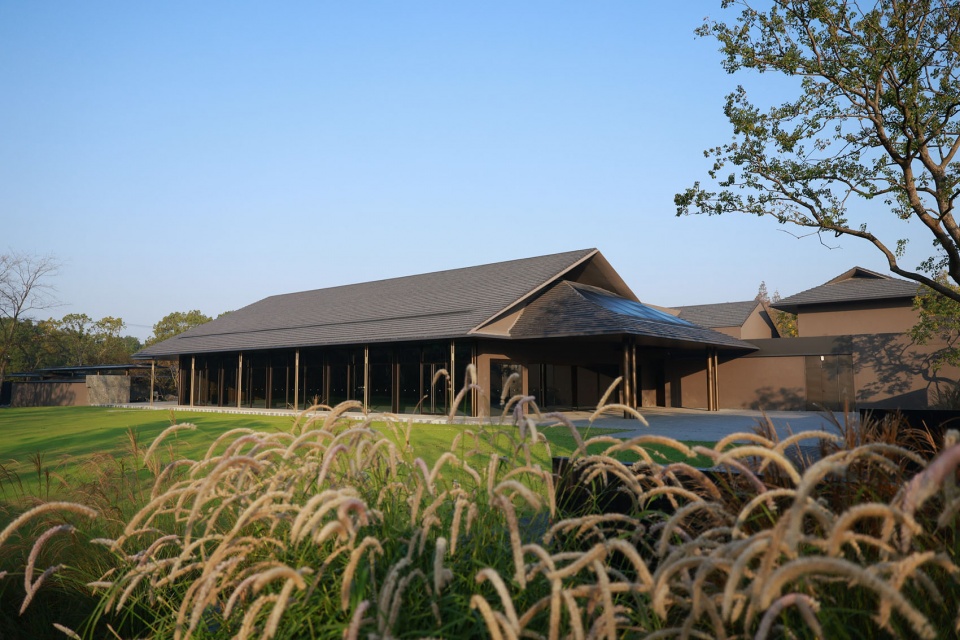
▼植物群落,Plant Communities
03 再造地方民居 03 Reworking Local Vernacular Typologies
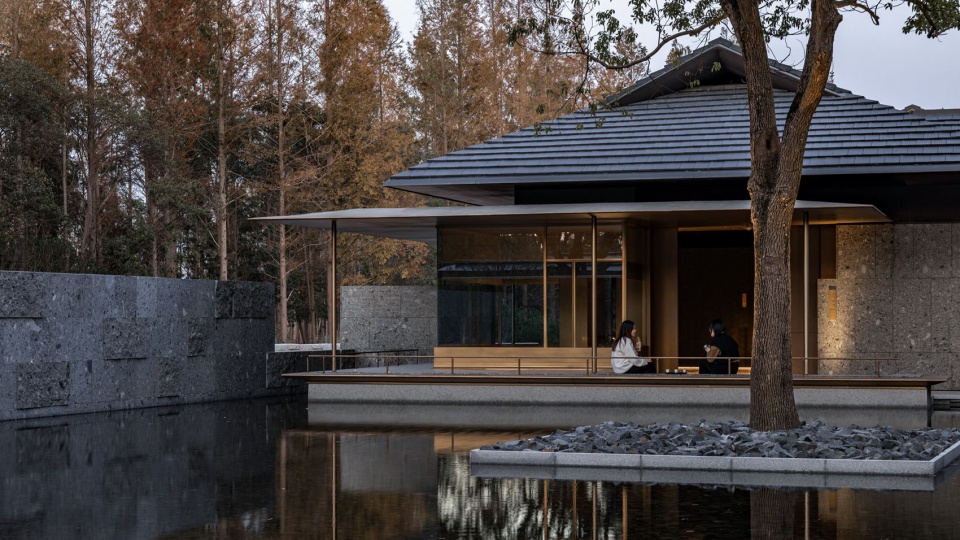
项目对地方传统的回应首先来自类型学层面的辨析。建筑师并未把“江南民居”作为一个笼统的地域风格处理,而是进一步追问:在上海西南部的水乡环境中,传统民居究竟通过哪些空间机制回应气候、地形、材料与聚落生活?建筑师踏勘过程中发现的“落戗屋”与“绞圈房”成为设计关注的两种原型。落戗屋是江南地区,特别是沪郊一带传统民居中常见的屋顶形式,其特征是屋面坡度舒缓、四角落戗,向下延展,形成低伏的大屋顶。由于东南沿海长期处于高湿、多雨的气候环境中,这种屋面能够迅速排水,并通过深远出檐保护墙体,减少侵蚀。低檐同时压低了建筑重心,使房屋在水乡环境中呈现出一种稳定的姿态,也让室内获得适合日常起居的尺度。
The project’s architectural language is rooted in a typological reading of local dwellings. Luoqiang houses, common in traditional Jiangnan settlements, are characterized by low, gently sloped roofs with deep eaves and turned-down corners. These roofs respond to the humid and rainy climate by draining water efficiently and protecting walls from erosion, while their low eaves produce a stable, intimate scale.
▼结合落戗屋与歇山顶特征的屋顶,
Roof Combining Features of Luoqiang Houses and Hip-and-Gable Roofs
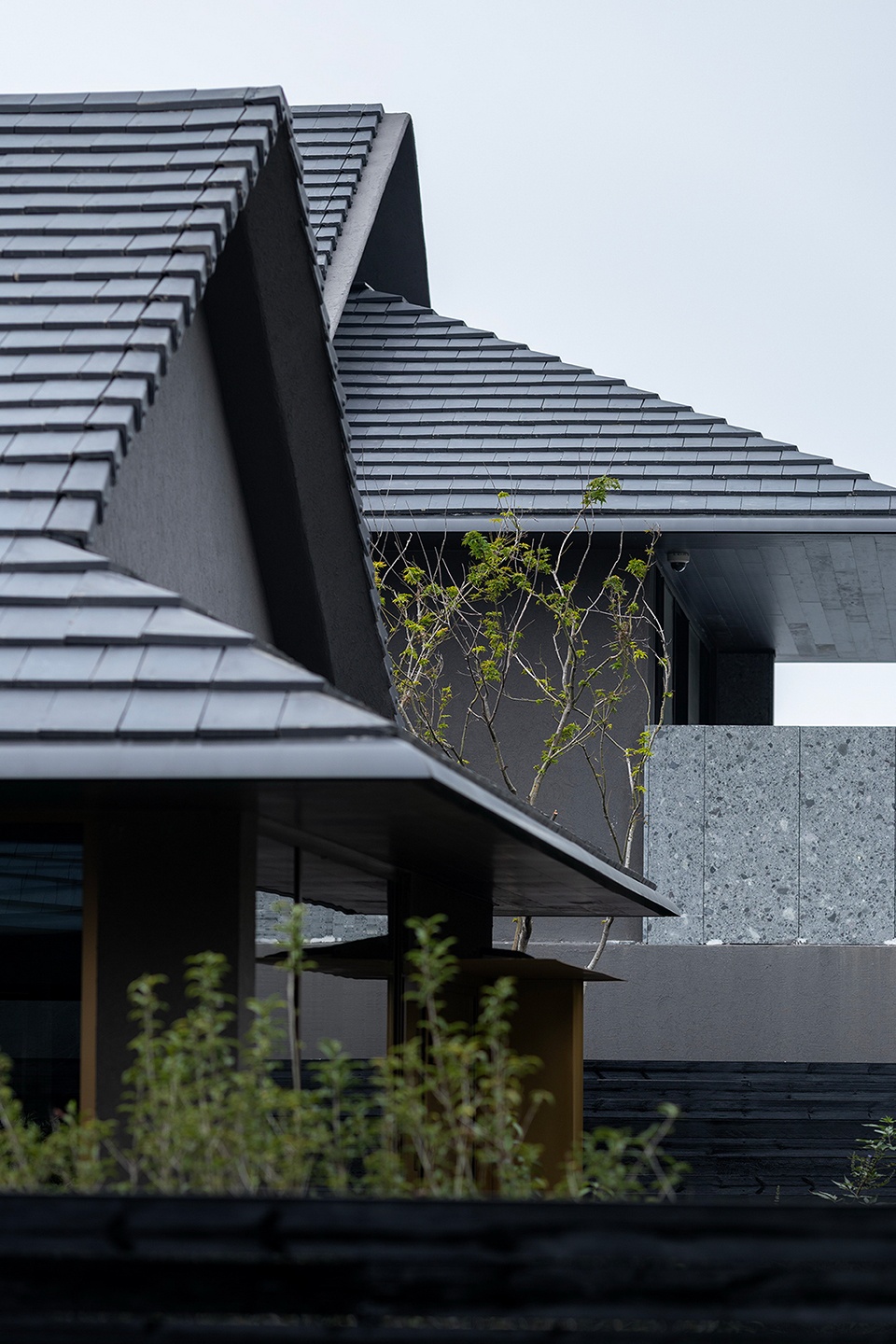
“绞圈房”则是一种聚落组织方式,通常由多个房间、院落与附属空间围绕天井连续围合,形成紧密的空间网络。这种布局回应了农村地区的有限宅基地条件,也适应家族聚居与生产生活混合的需求:不同体量之间通过檐廊、过道和院墙彼此连接,在遮风避雨的同时形成半开放的公共交往空间。设计相较于直接复刻古民居的形制,更关注类型背后的逻辑:传统原型被拆解为一系列关于气候、聚落与身体经验的空间机制。屋顶以落戗屋为原型重新设计,低檐压低建筑重心,使体量贴近地表;连续的大屋顶回应多雨环境,也在空间中制造出一种近乎基础设施般的覆盖感。公共区域的建筑则借用绞圈房的空间逻辑,通过若干尺度接近的体量彼此咬合,在水体与植被的间隙中形成松散但连续的聚落结构。
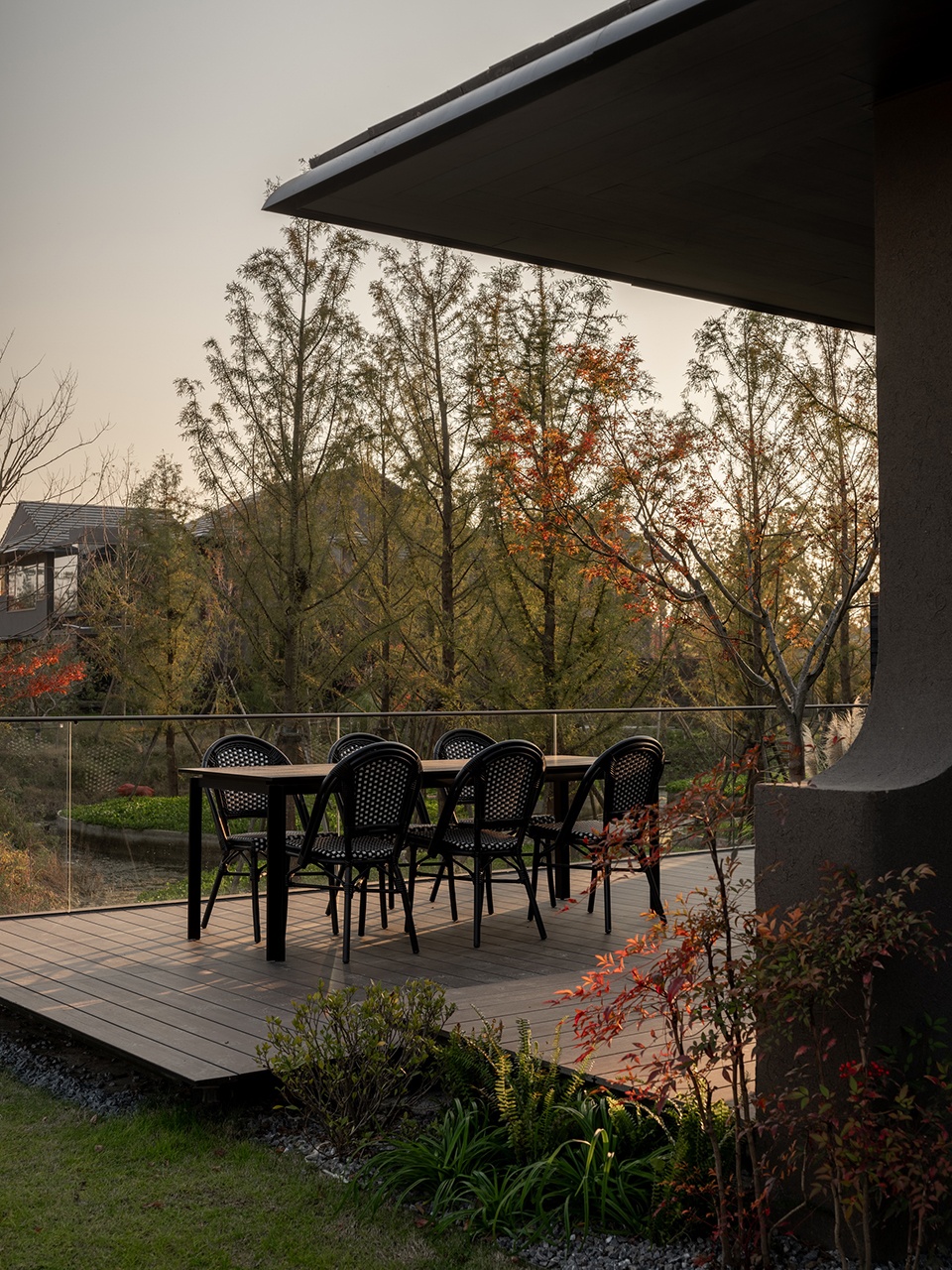
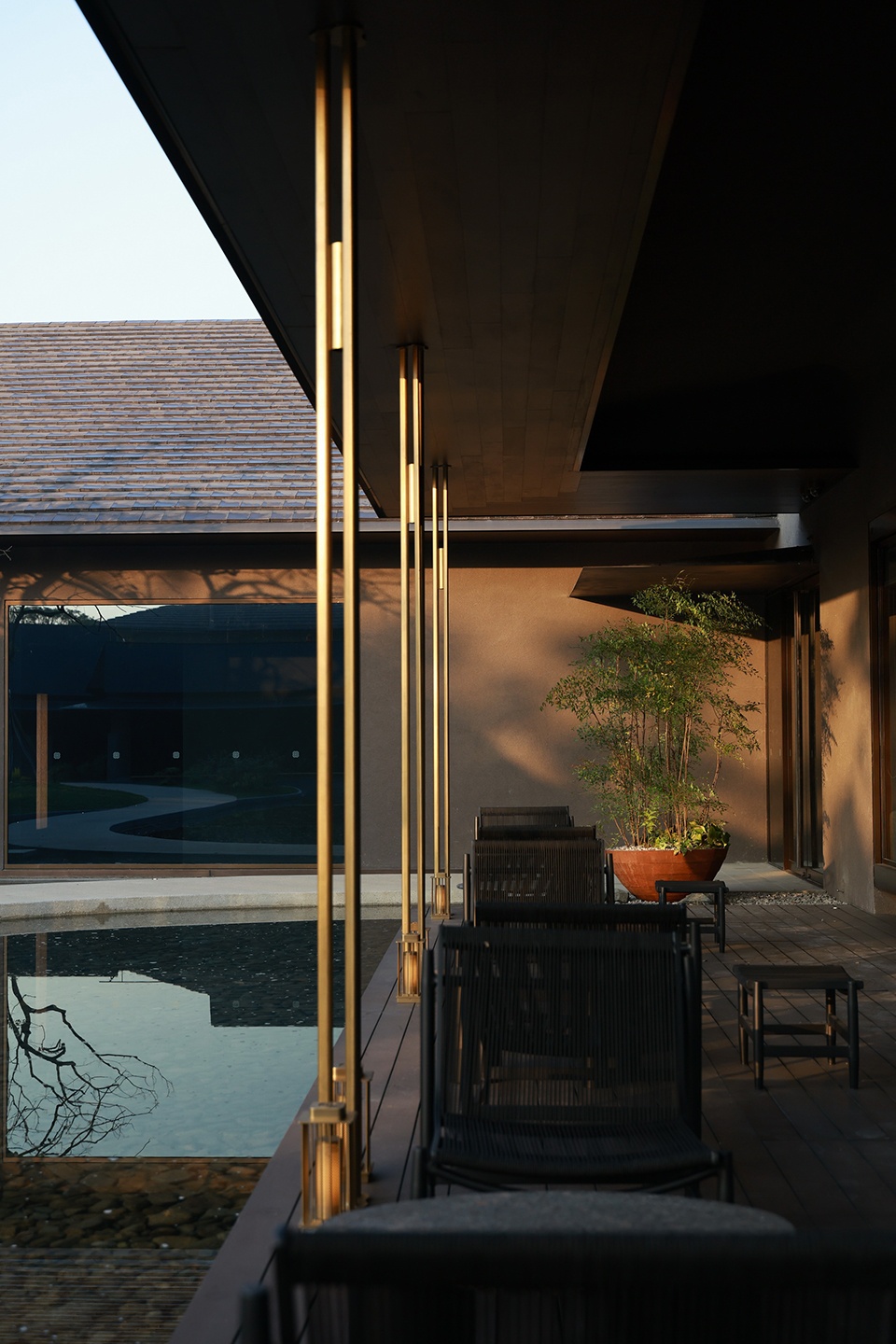
Jiaoquan houses offer another reference: a compact settlement pattern in which rooms, courtyards and ancillary spaces are arranged around a patio. This logic of enclosure, passage and semi-open exchange is reinterpreted throughout the hotel. Roofs combining the characteristics of Luoqiang houses and the hip-and-gable roof create generous semi-outdoor transitional spaces, linking interior rooms, courtyards and pathways under continuous shelter.
▼深远出檐下的灰空间,Transitional Grey Space Beneath Deep Eaves
▼深远出檐下的灰空间近景,
Transitional Grey Space Beneath Deep Eaves Close View
04 贴近身体的尺度 04 A Scale Close to the Body
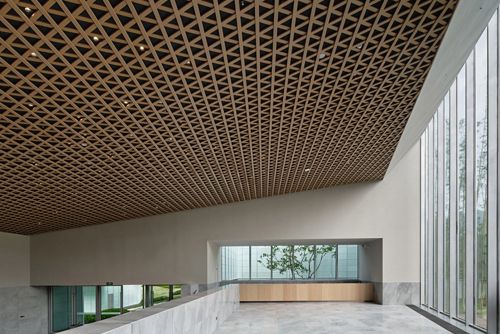
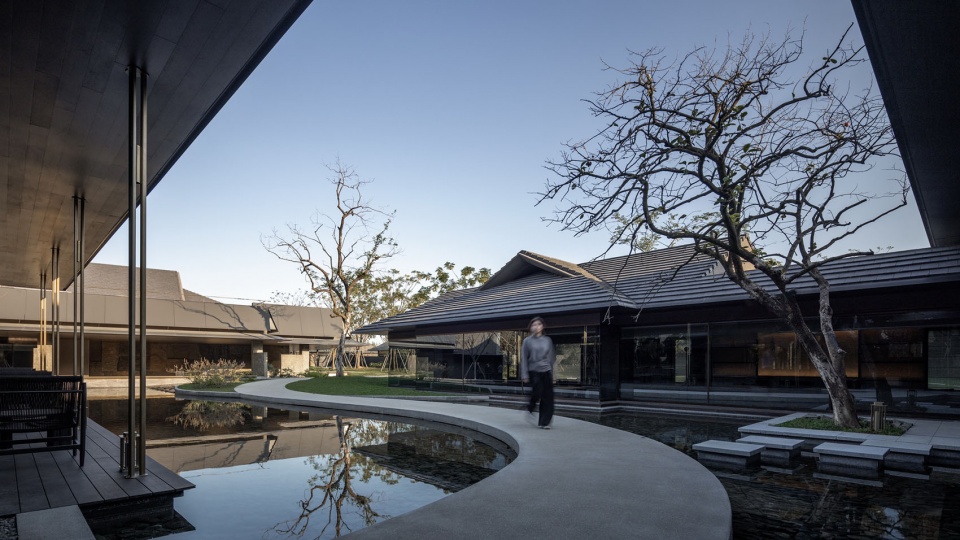
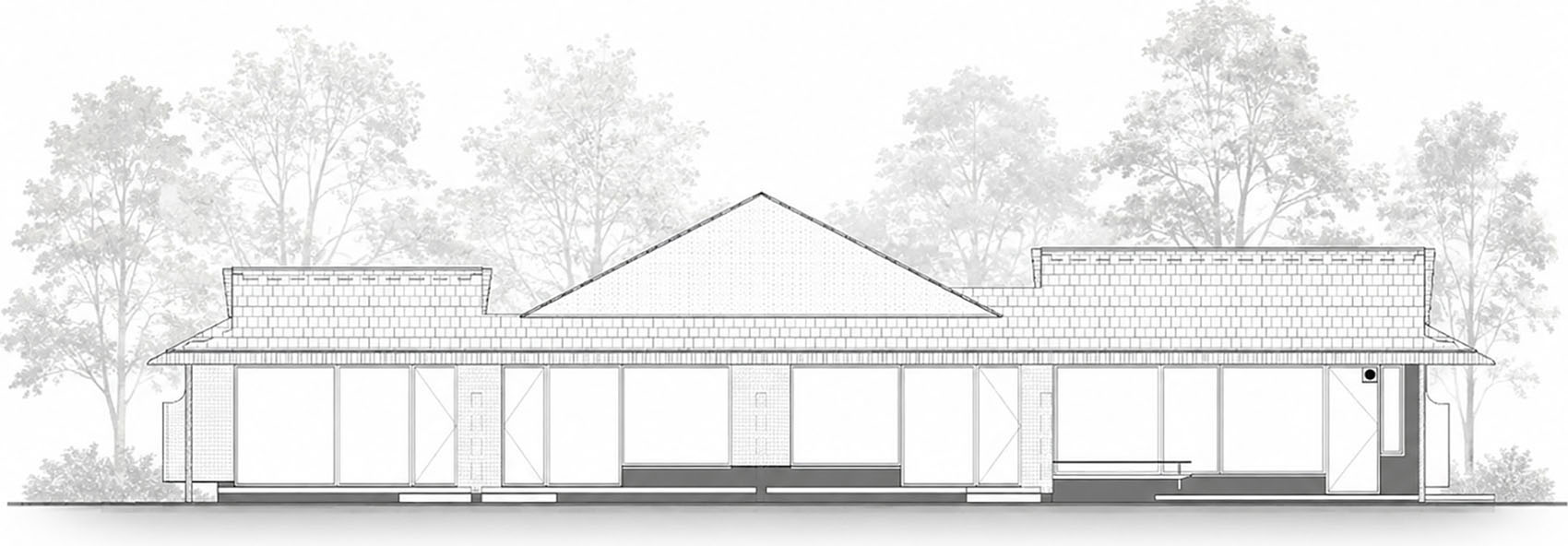
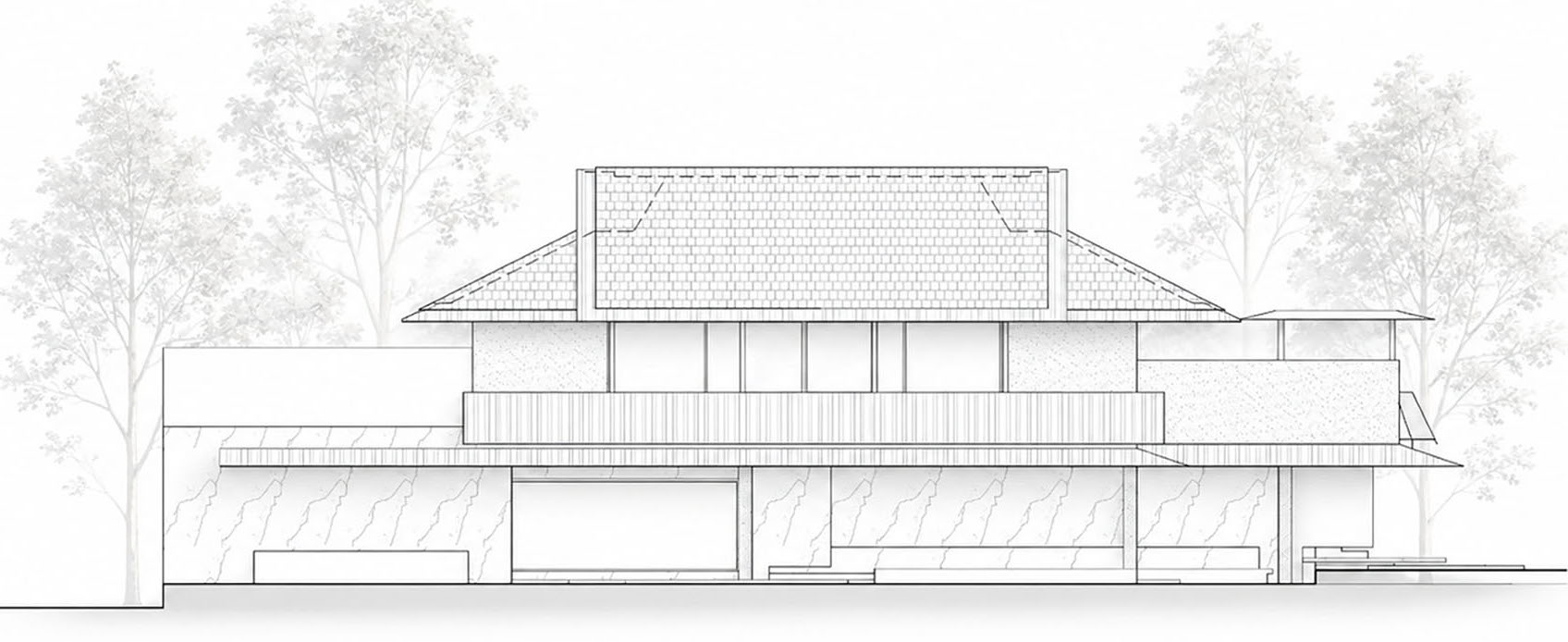
项目精细的尺度控制由平面布局延续至室内空间。人在场地中移动时,面对的不是开阔景观的一次性展开,而是近水、转折、遮蔽、再显现的连续变化。小半径路径、低矮院墙、贴近窗边的绿意,共同限定了一种适宜步行、停留和回望的身体尺度。公共区域高度控制在约2.4米的低檐口,则是尺度体系在建筑剖面上的集中表达。檐口高度控制回应了落戗屋低伏屋顶、深远出檐的范式,横向展开的玻璃界面使室内视线贴近地面。檐口被压低后,建筑并不追求以高度取得存在感,而是以屋顶水平延展投射的灰空间建立场所气质。
Scale control extends from the site plan to the section and interior. In the public areas, the eave height is kept at approximately 2.4 meters, bringing views close to the ground and emphasizing horizontal extension rather than vertical monumentality.
▼曲折步道与转角视线,Winding Pathways and Turning Views
同时,低檐并不意味着空间单一地向下压缩,坡屋顶的形态允许室内层高向上拓展。人在进入空间时,观感先被檐口收束,随后感受到屋顶上扬带来的释放。地面局部下沉至室外地坪之下,进一步强化了这种感受,使空间带有船舱般的包裹性。
The pitched roofs then allow the interiors to open upward, creating a sequence of compression and release. In some areas, sunken floors further enhance a boat-cabin-like sense of enclosure.
▼曲折步道与转角视线,Winding Pathways and Turning Views
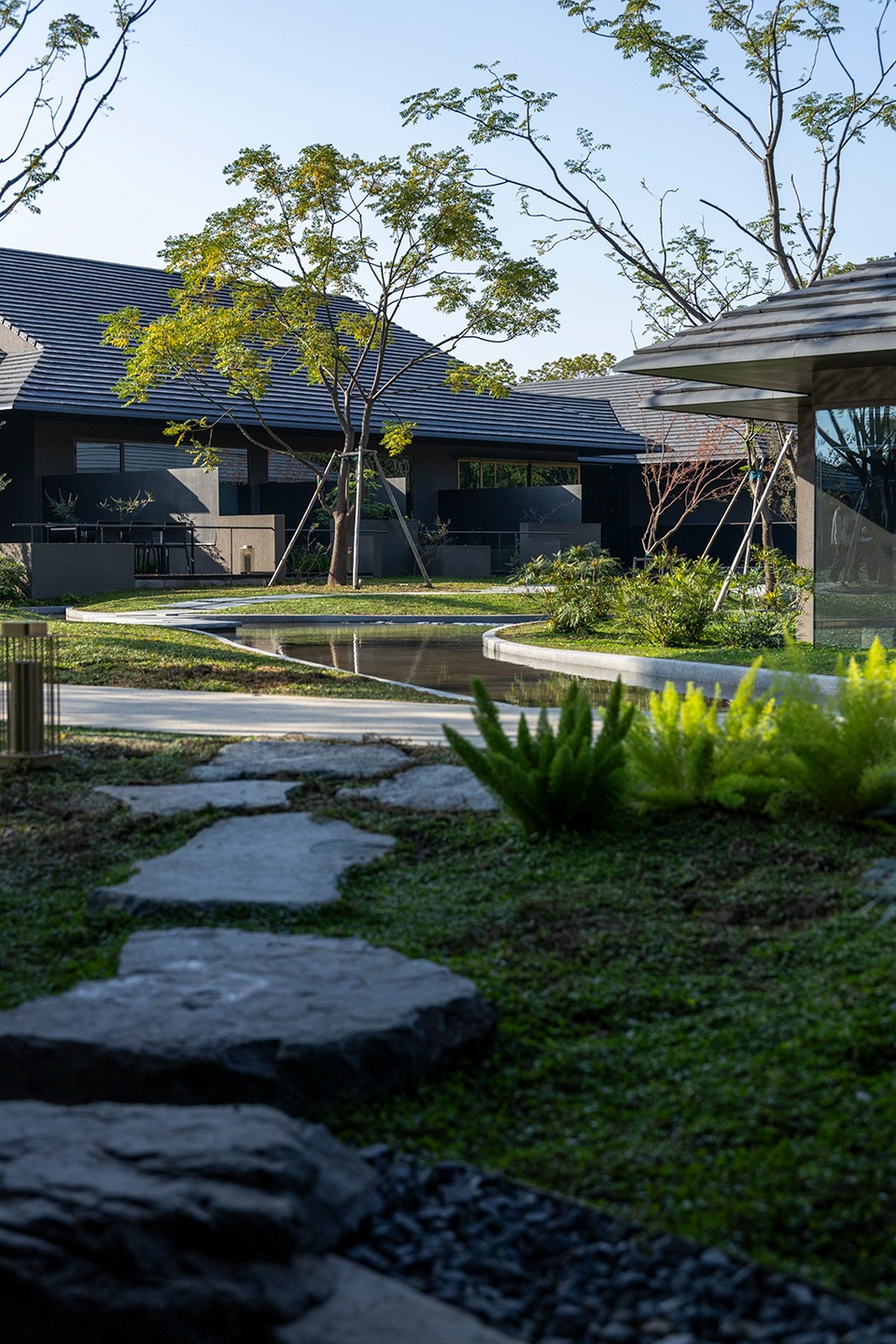
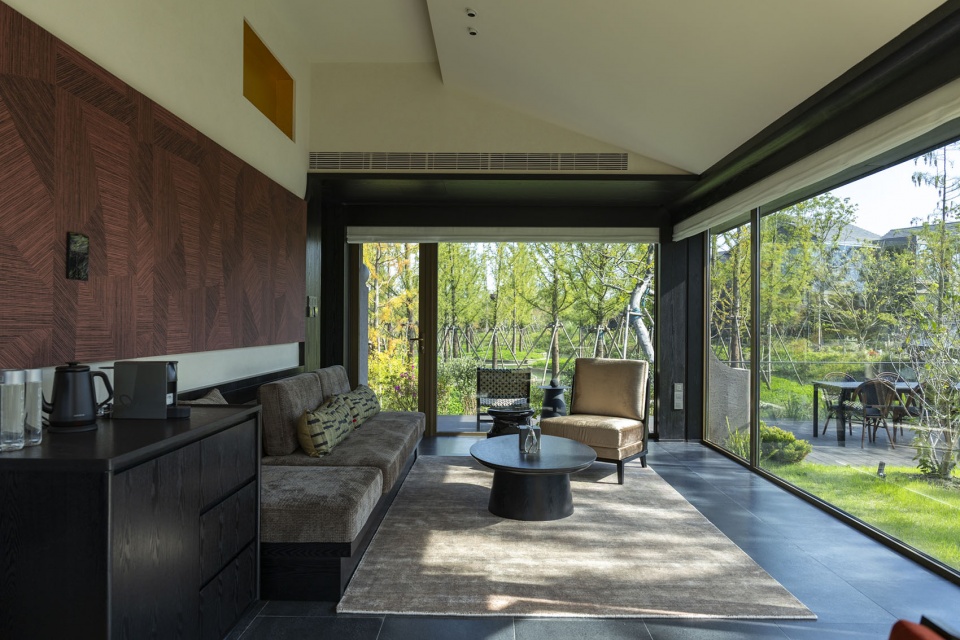
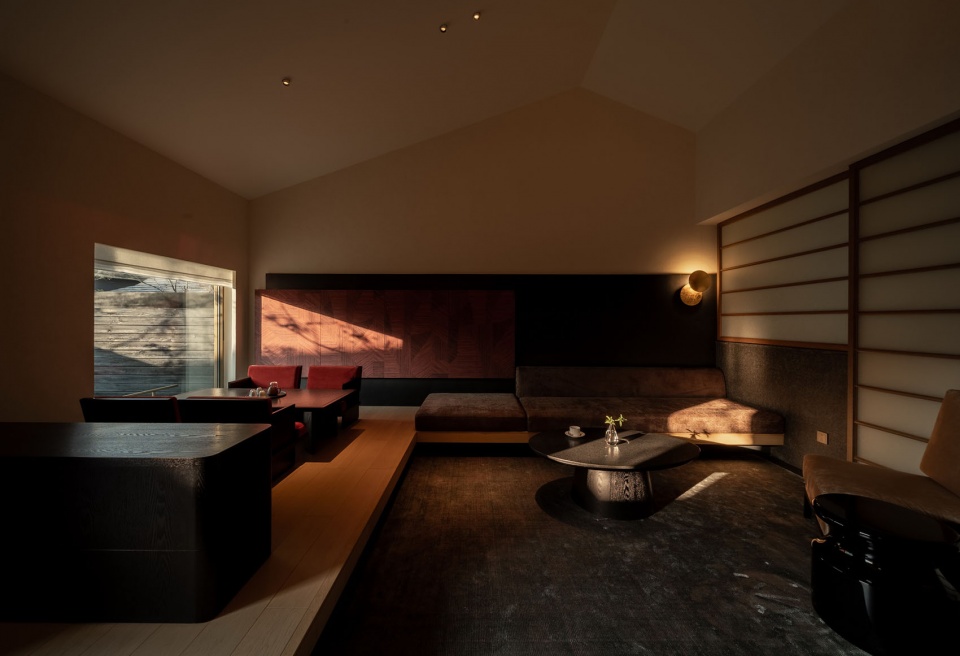
室内设计则以木、石、纸、织物与带有手作痕迹的表面,延续了建筑低伏、内敛的气质。帘幕与屏风将透明玻璃转化为可调节的界面,使光影在室内形成若隐若现的层次。建筑、景观与室内共同把度假空间从宏大景观的观看逻辑,转向贴近身体的感知逻辑。
Inside the guest rooms, wood, stone, paper, textiles and handcrafted surfaces continue the restrained atmosphere of the architecture.
▼如船舱般的空间观感,Cabin-like Spatial Experience
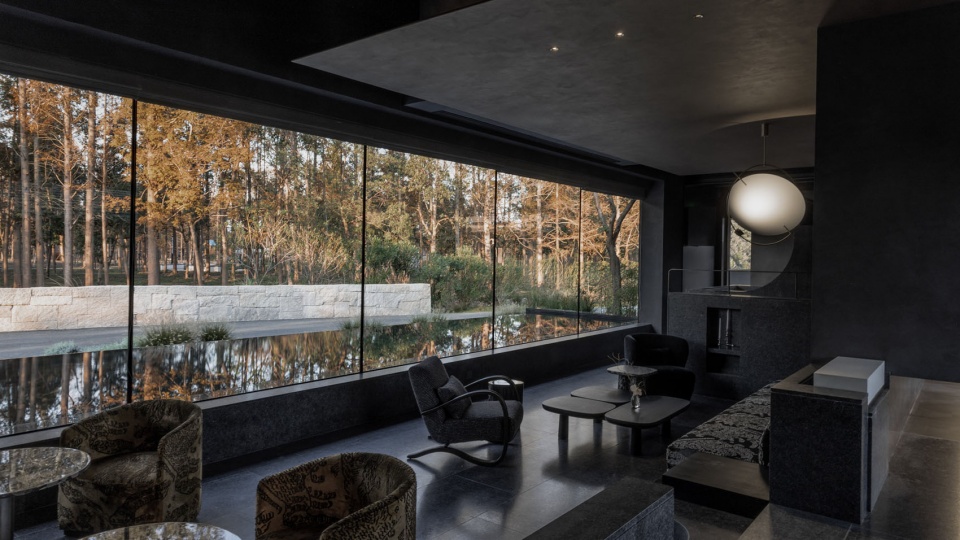
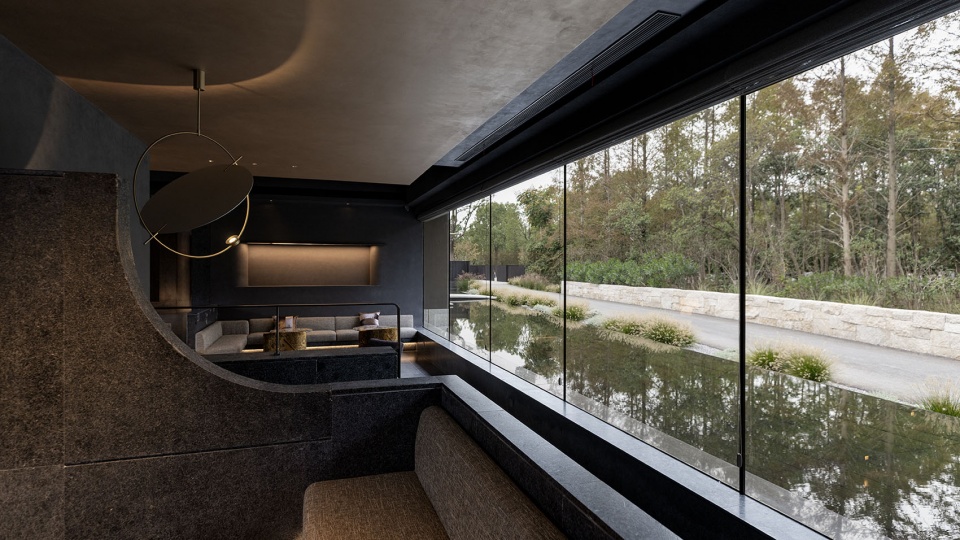
▼室内材料、光影与艺术陈设,Interior Materials, Light, Shadow and Artistic Furnishings
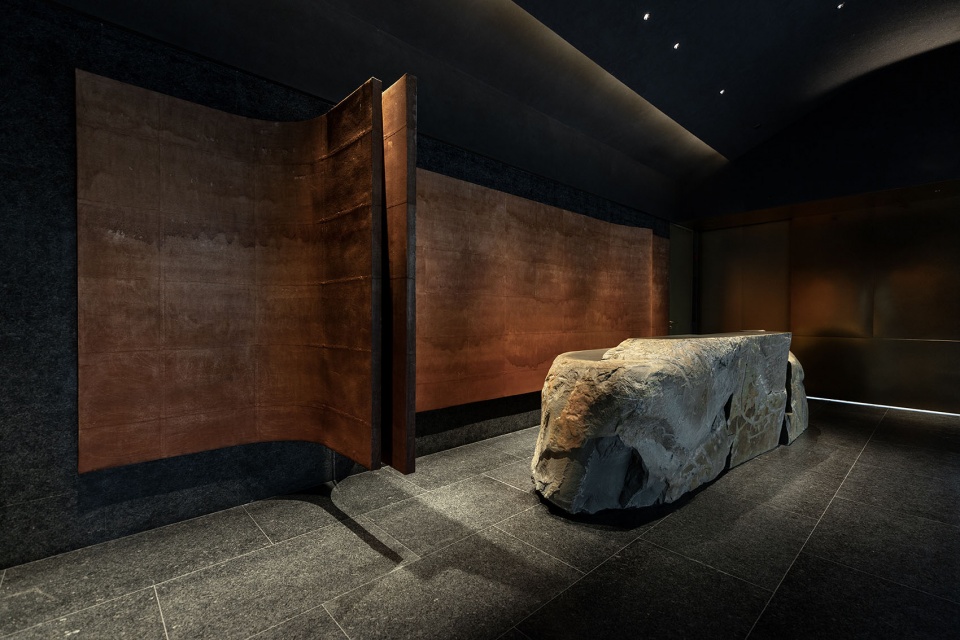
▼室内一角,A corner of interior
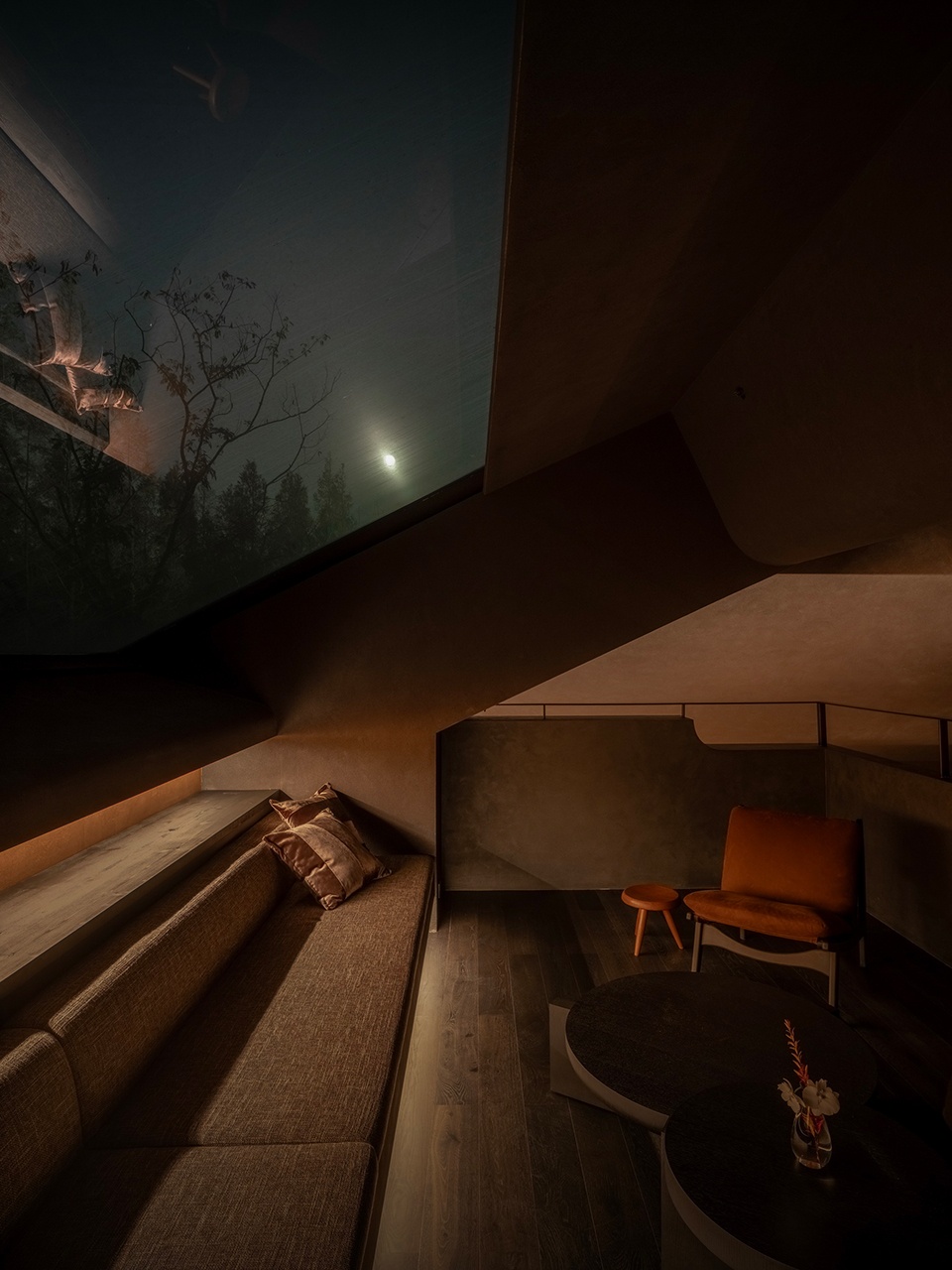
客房是酒店聚落结构中的最小单元。每组客房都拥有独立庭院,与室内空间共同构成完整的居住场景,其基本关系可以概括为“一房、一院、一岛”:房间提供庇护,院落调节私密与开放,水面和植物则将客房纳入更大的湿地环境。延续木守品牌对“中国式待客之道”的理解,客房内部的茶寮提供了饮茶、对谈、阅读与休憩的场所,也成为人与庭院发生联系的界面。水、院与茶寮共同构成松弛而有秩序的生活场景,也让每一间客房成为湿地聚落中的一个独立居住单元。
Each unit follows the relationship of “one room, one courtyard, one island”: the room provides shelter, the courtyard mediates between privacy and openness, and water and planting connect each dwelling to the larger wetland environment. The tea room becomes a quiet interface for drinking tea, reading, conversation and rest, extending Muh Shoou’s understanding of Chinese hospitality into a contemporary resort setting.
▼客房场景,Guest Room Scene
▼总平面图,Master Plan
▼公区一层平面图,Public Area Ground Floor Plan
▼客房立面图,Guest Room Elevation

▼泳池吧与健身房立面图,Pool Bar and Gym Elevation

项目信息
Project Info
Project Name: Muh Shoou Zhujing
Location: Jinshan, Shanghai
Design/Completion: 2021 / 2026
Floor Area: 9,800 m2
Client: Shanghai Muh Shoou Zhujing Hotel Co., Ltd.
Architectural Design: GOA
Landscape Design: Z+T Studio
Interior Design: Nature Times Art Design
Lighting Consultant: PROL
Photographer: Yida, TOPIA