117BOF住宅,西班牙 / Vallribera Noray Arquitectes
这座位于萨瓦德尔的住宅可以有许多种想象方式,但我们将其构想为围绕一个中央绿洲展开的空间,这一绿洲受到科尔多瓦庭院和古老回廊的启发。建筑由光线定义,追求宁静与私密。
There were many ways to imagine this house in Sabadell, but we conceived it around a central oasis inspired by the courtyards of Cordoba and ancient cloisters. An architecture defined by light that seeks calm and privacy.
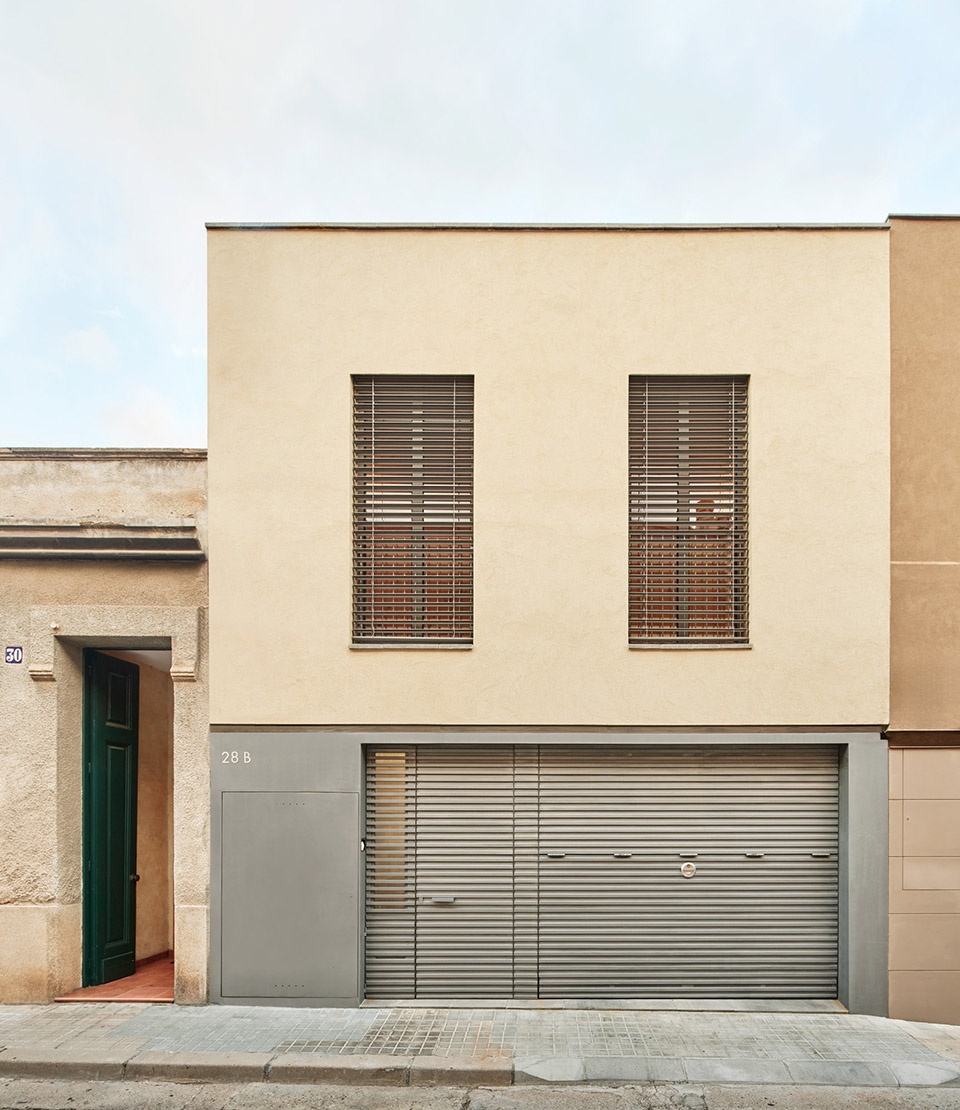
▼住宅外观,house facade
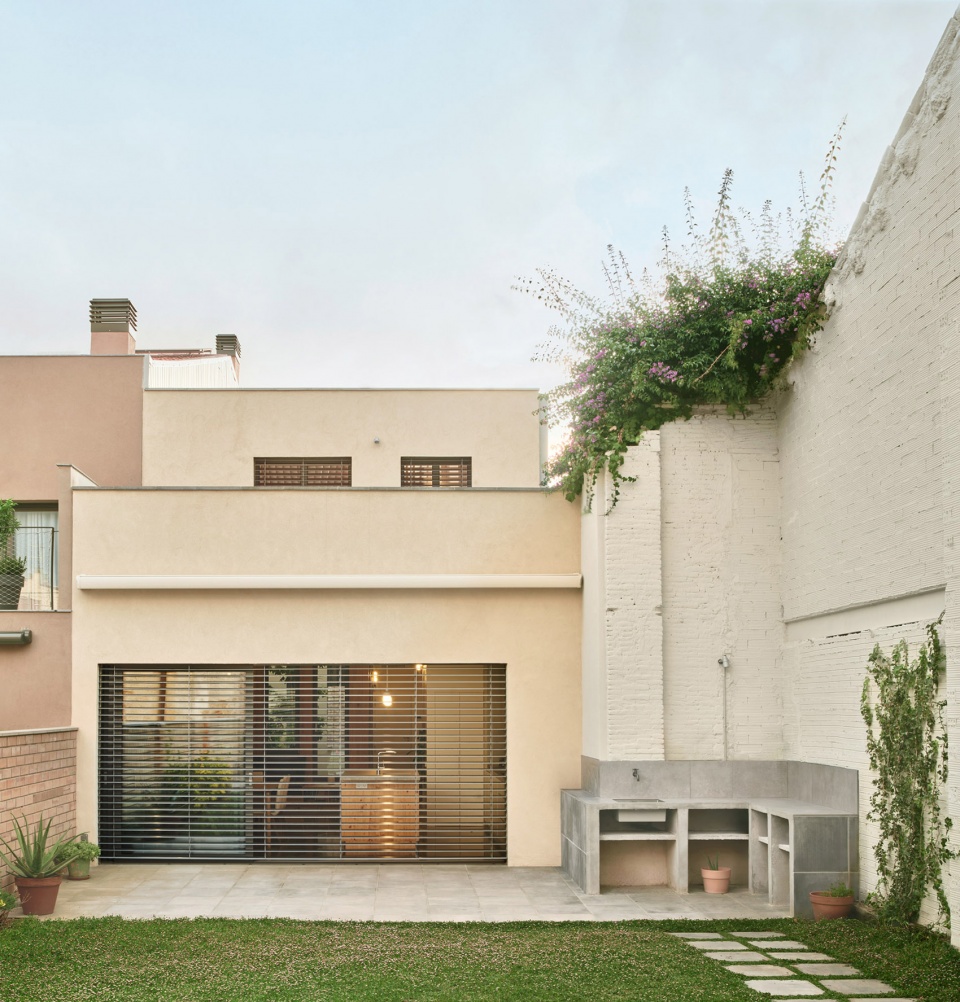
▼住宅庭院,house courtyard
一个我们非常熟悉的家庭委托我们为他们在萨瓦德尔设计住宅,并提出了非常明确的优先需求:他们希望获得身心舒适与平静,而非炫耀。我们决定提出一个两层的功能布局,并围绕一个中央生物气候庭院组织生活。这个宽敞的空腔中,一棵树在视觉上连接起所有房间。
▼剖透视效果图,perspective section rendering
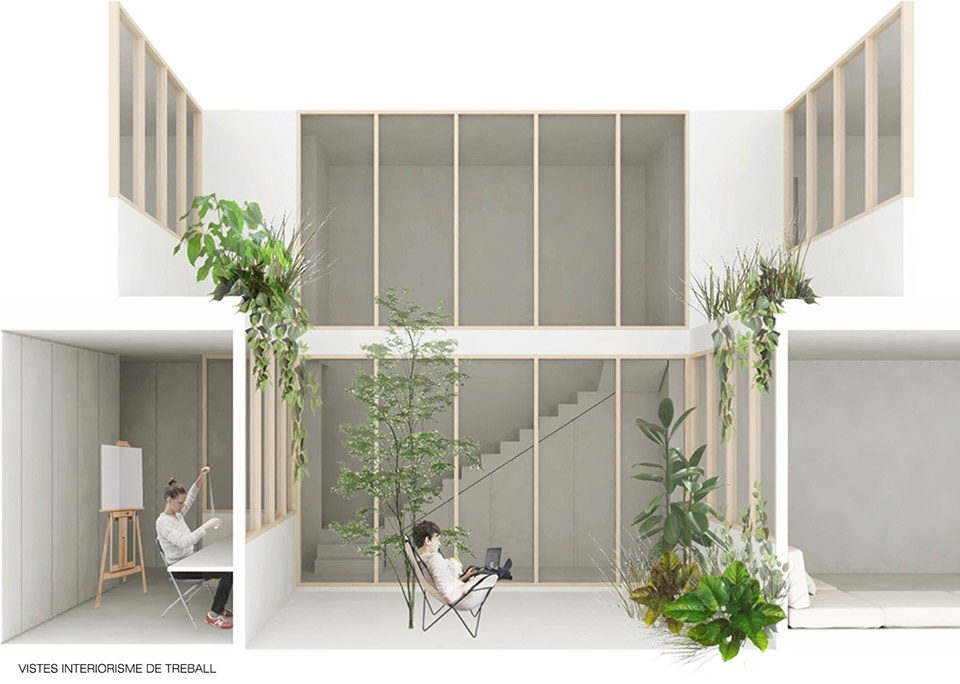
A family we know well asked us to design their home in Sabadell with very clear priorities: they want well-being and tranquility, without ostentation. We decided to propose a two-story program and organize life around a central bioclimatic courtyard. A generous void where a tree visually connects all the rooms.
▼一棵树在视觉上连接起所有房间,
a generous void where a tree visually connects all the rooms
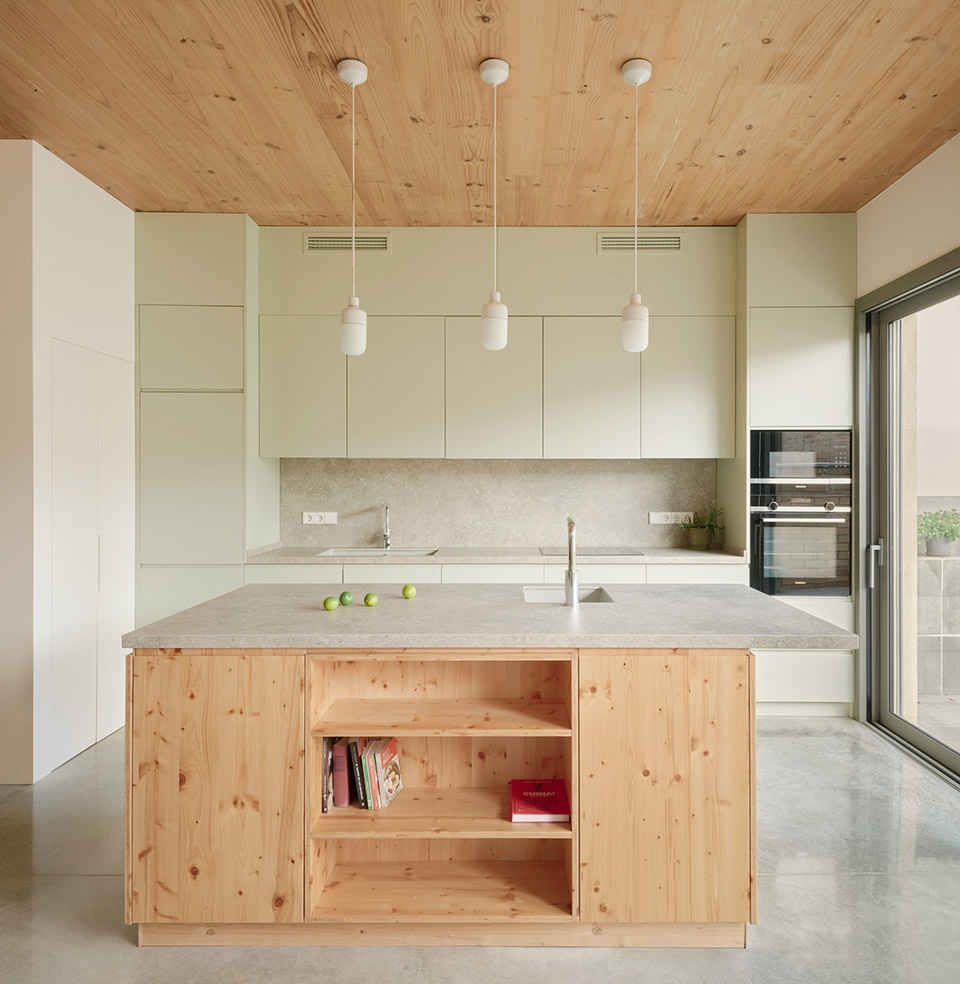
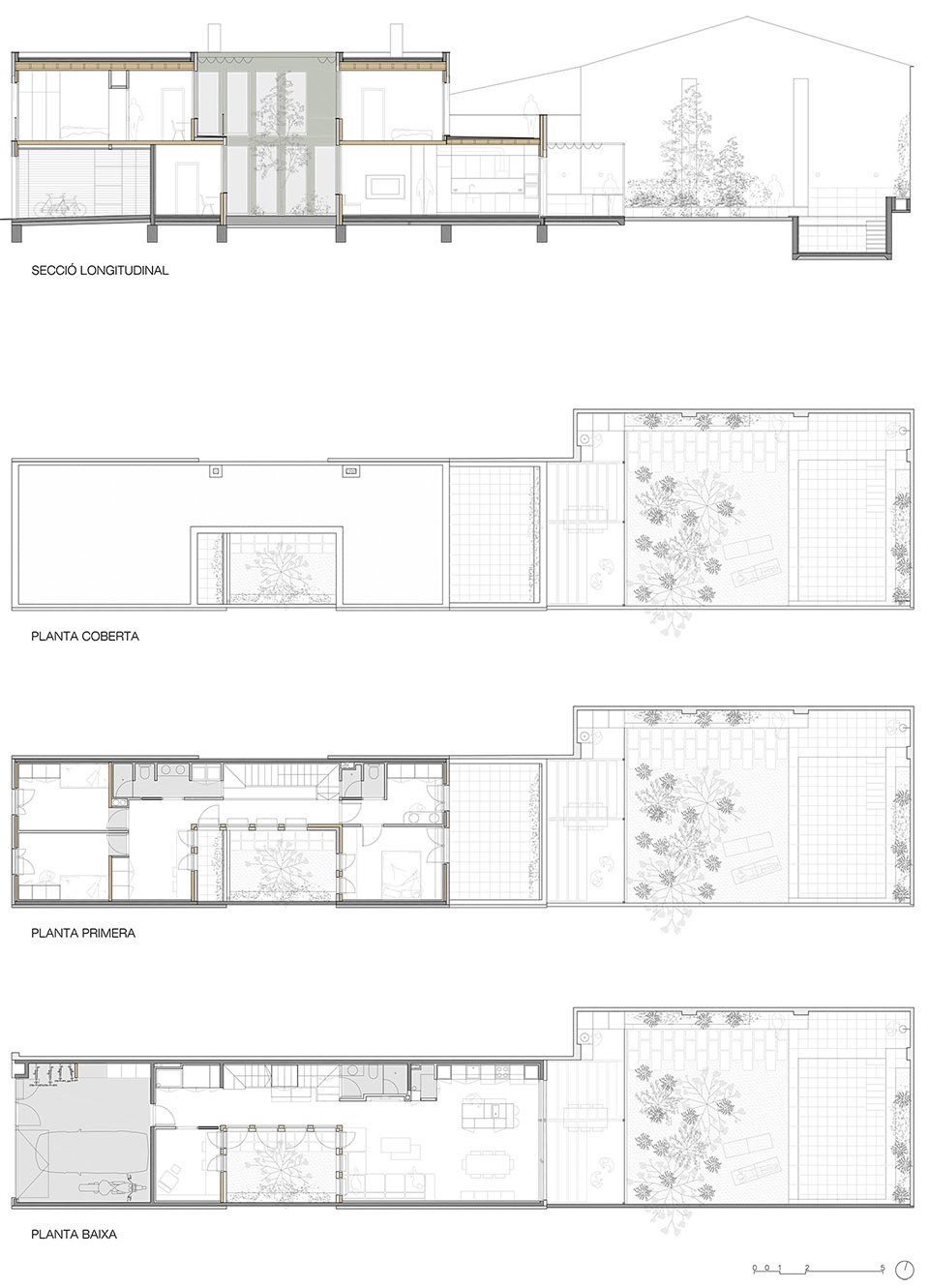
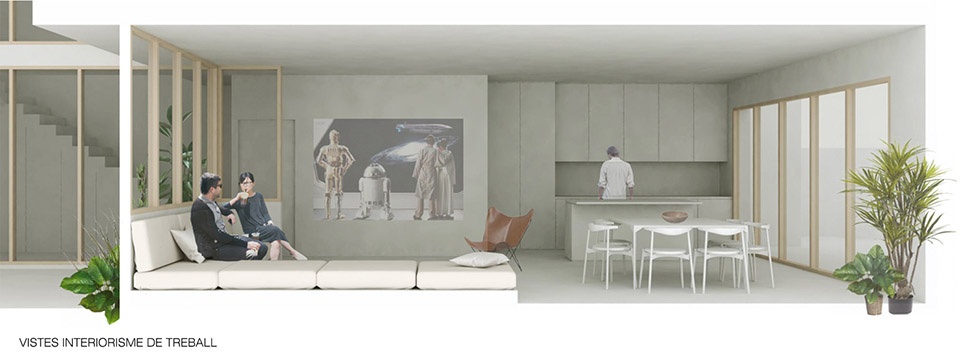
首层为日间区域:停车空间、远程办公书房、客厅、餐厅、厨房和一间浴室。二层为夜间区域:儿童卧室及其浴室,通过一间游戏兼学习室同时面向街道和室内庭院。夫妇的卧室设有衣帽间和套间式浴室,面向室内庭院、露台和花园。
On the ground floor is the day area: parking, a study for remote work, the living room, the dining room, the kitchen, and a bathroom. On the first floor is the night area: the children’s bedrooms, with their bathroom, open to the street and the interior courtyard through a games-study room. The couple’s bedroom, with a dressing room and suite-type bathroom, overlooks the interior courtyard, the terrace, and the garden.
▼日间区域,day area
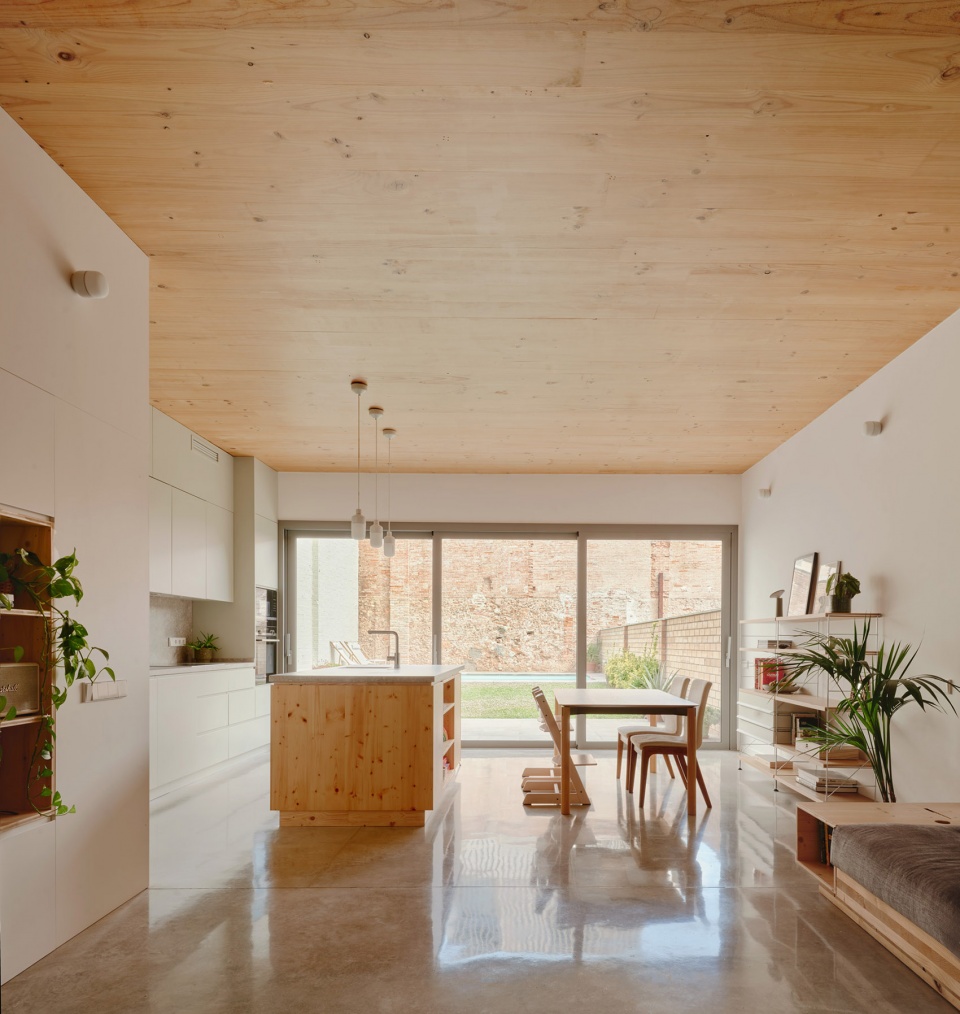
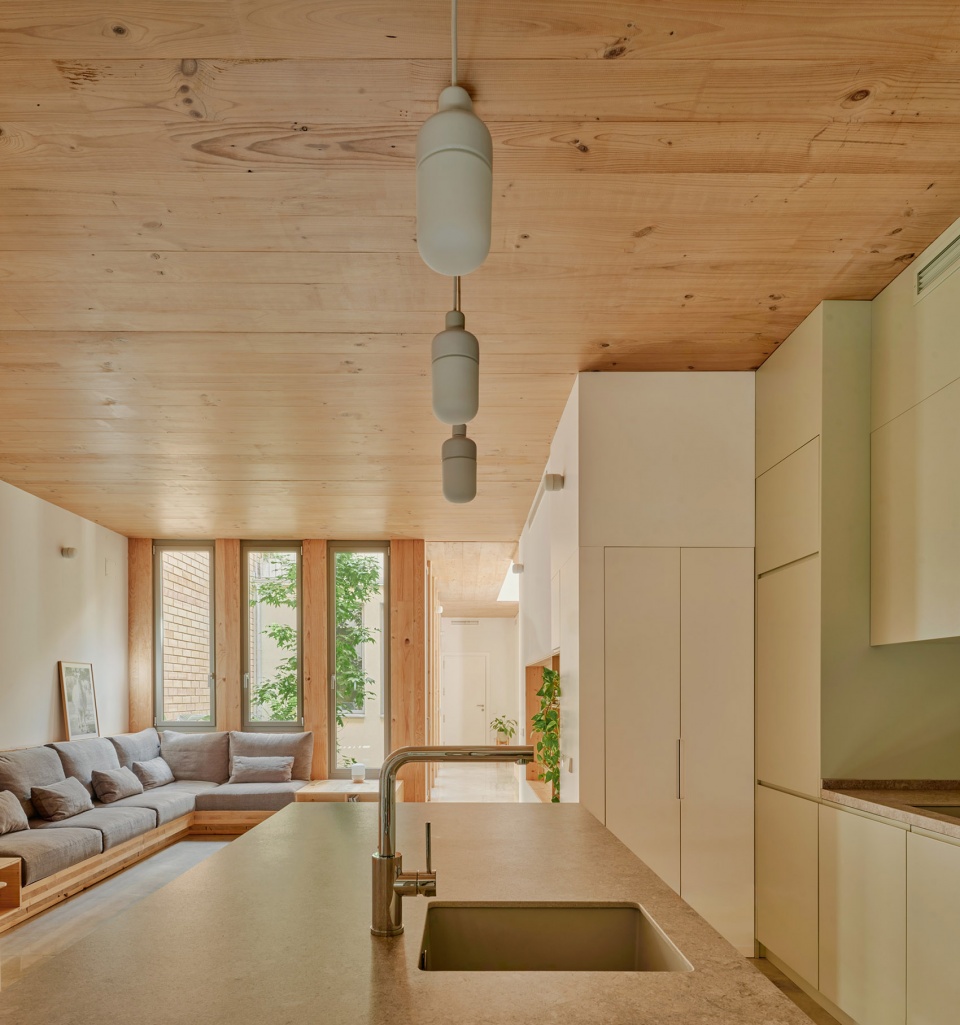
▼厨房区域,kitchen
到这里为止,这是一个合乎逻辑且功能明确的方案。但一座住宅如何充分利用一块宽敞而充裕的基地?这个项目并非由任何限制条件所解释,而是源于一种关于何为良好生活的共同想法。
So far, a logical and functional approach. But how can a house make the most of a wide and generous plot? This project is not explained by any restriction, but by a shared idea of what it means to live well.
▼客厅区域,living room
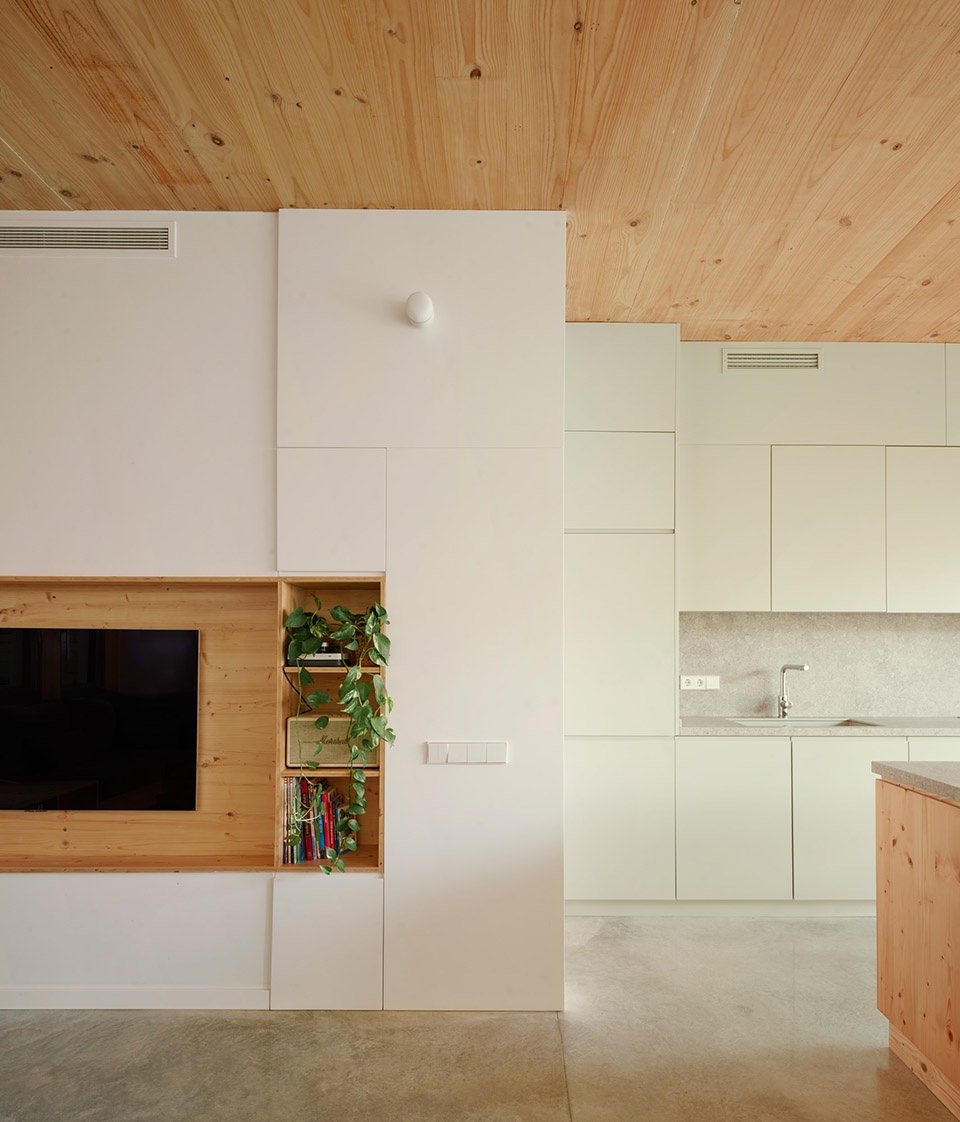
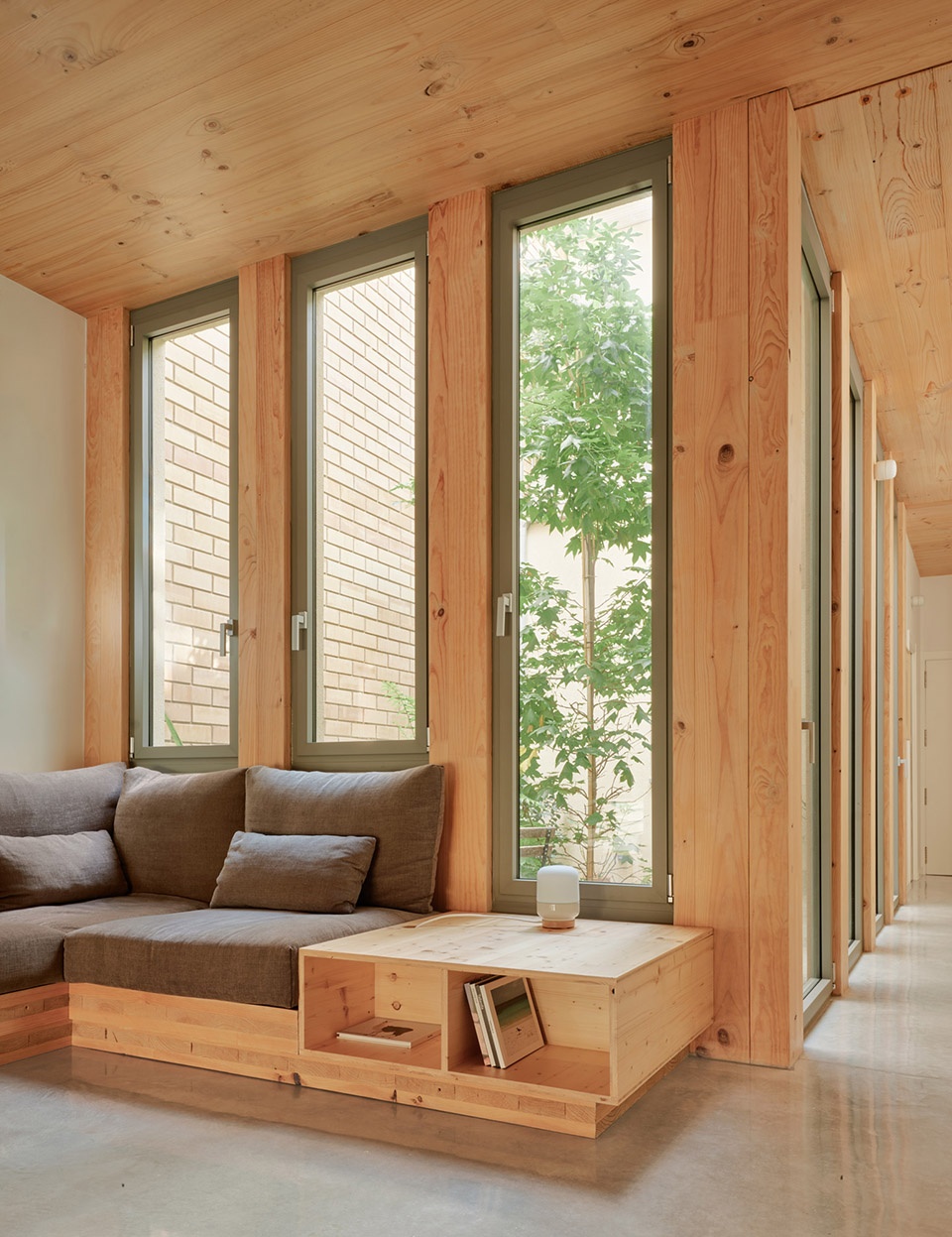
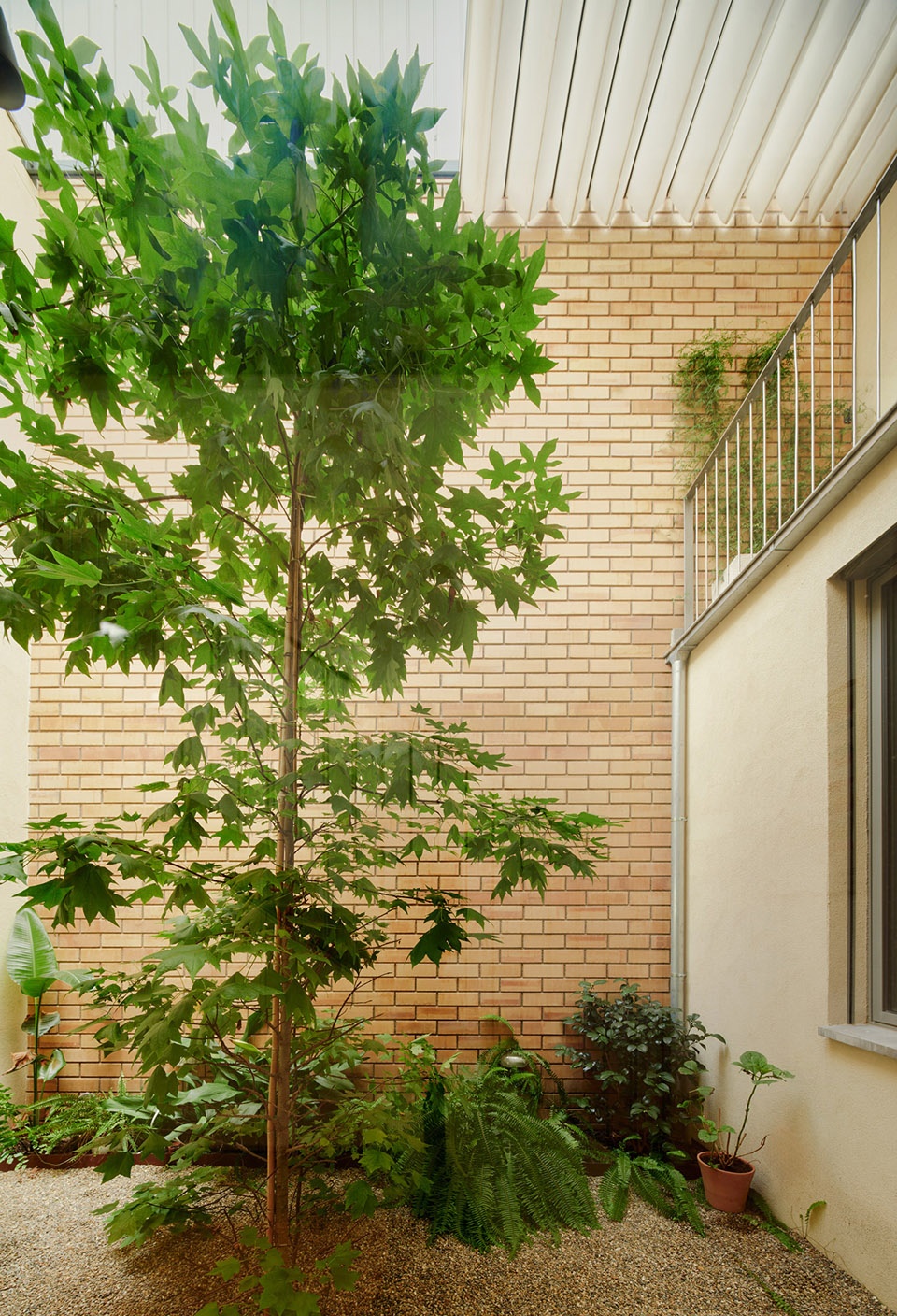
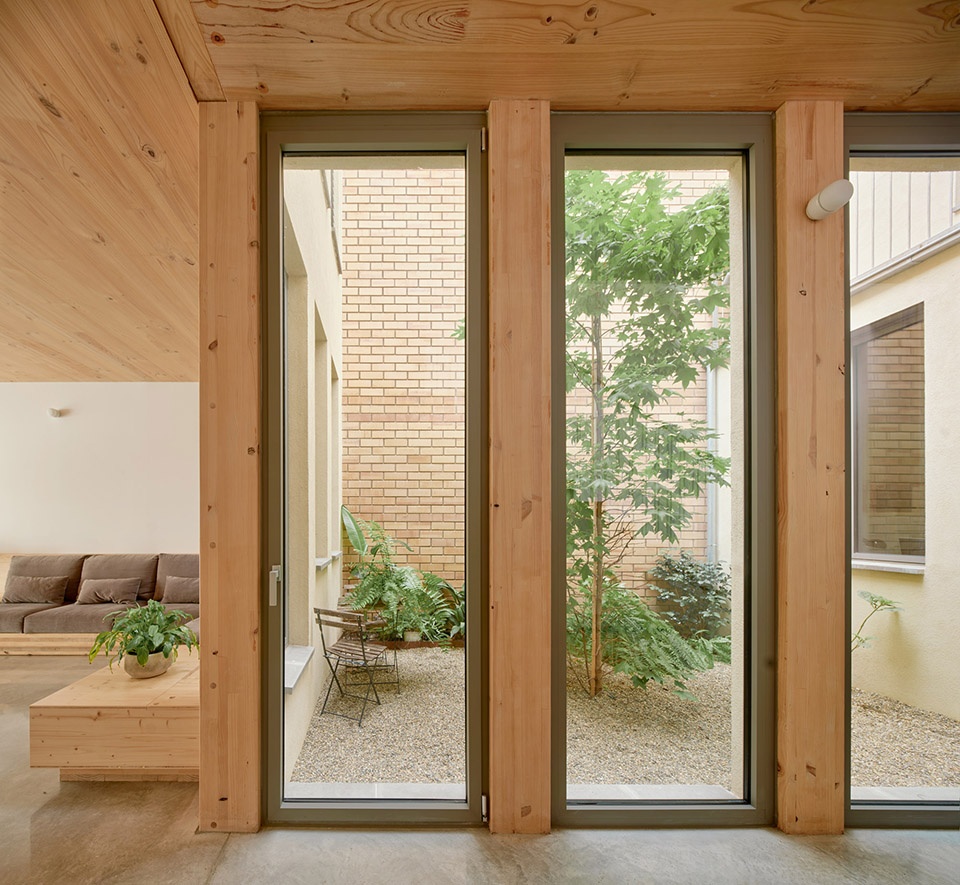
室内庭院赋予了住宅额外的价值。这里的奢侈,无非是拥有更多立面、更多窗户、更多通风和更多光线。庭院中甚至种有一棵北美枫香树(Liquidambar styraciflua),从室内任何位置都能看到它的枝叶。
An interior courtyard is what gives the house extra value. The luxury here is nothing more than having more facades, more windows, more ventilation, and more light. There is even a tree, a Liquidambar styraciflua, whose branches and leaves can be seen from any point inside.
▼从室内任何位置都能看到它的枝叶,
ranches and leaves can be seen from any point inside
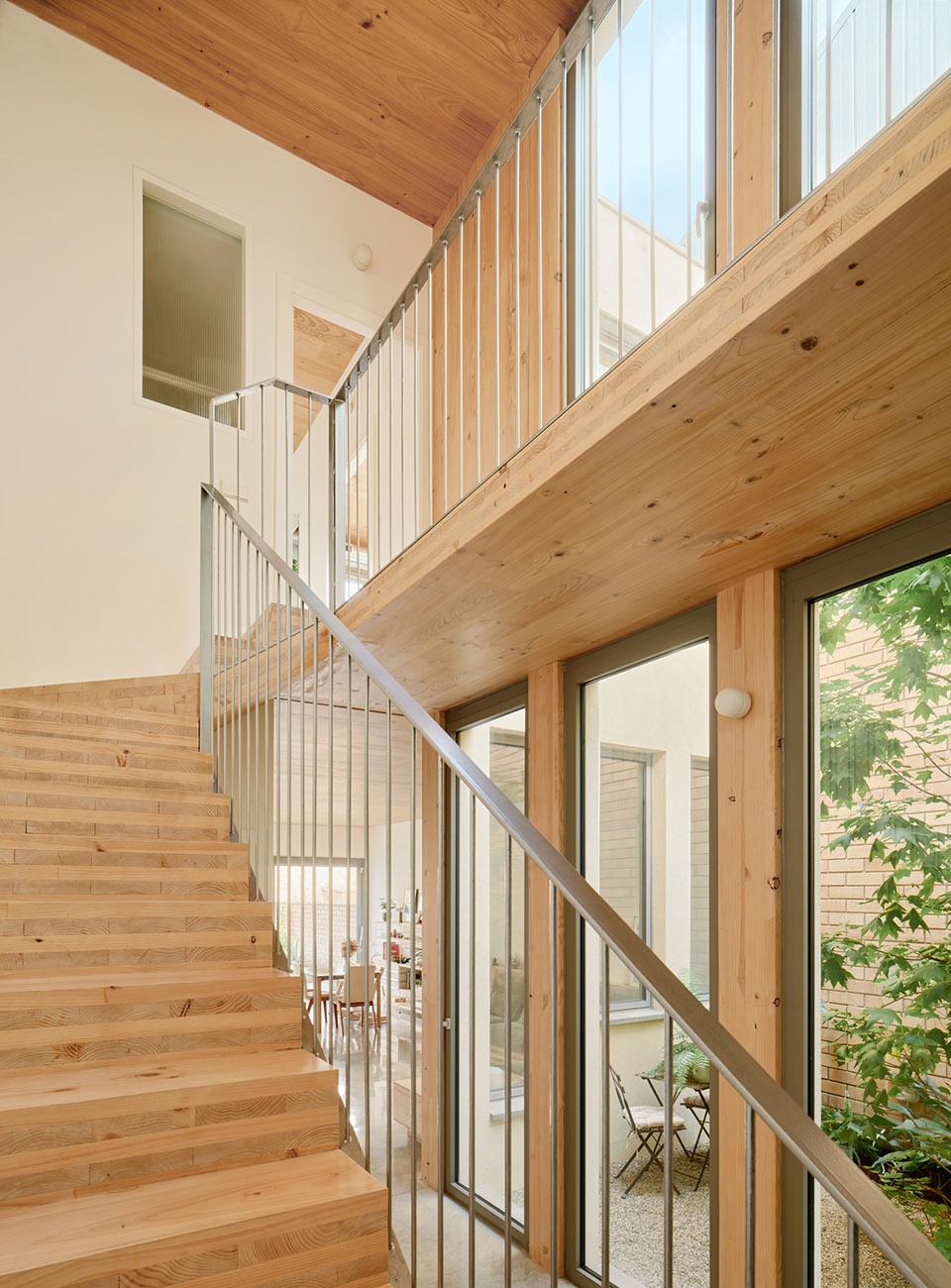
建筑采用承重砌体墙,以及CLT和CLT-MIX楼板(大幅面交叉层压木板)建造。我们当然可以再次谈论木材的湿热性能、低碳足迹、抛光混凝土地面所提供的热惰性,或者住宅能耗低于 Passivhaus 标准这一事实。这些都存在于项目之中,但并不是我们此次最想阐述的内容。若想深入了解这些主题,可以阅读我们的博客或其他已发表项目。
The construction is made with load-bearing masonry walls and CLT and CLT-MIX slabs (large-format cross-laminated wood panels). We could talk again about the hygrothermal qualities of wood, its low carbon footprint, the inertia provided by the polished concrete floor, or the fact that the house’s energy demand is below the Passivhaus standard. All of that is there, but it is not what we are interested in explaining. If you want to delve deeper into these topics, you can read our blog or other published projects.
▼住宅采用交叉层压木板建造,
constructed with CLT and CLT-MIX slabs
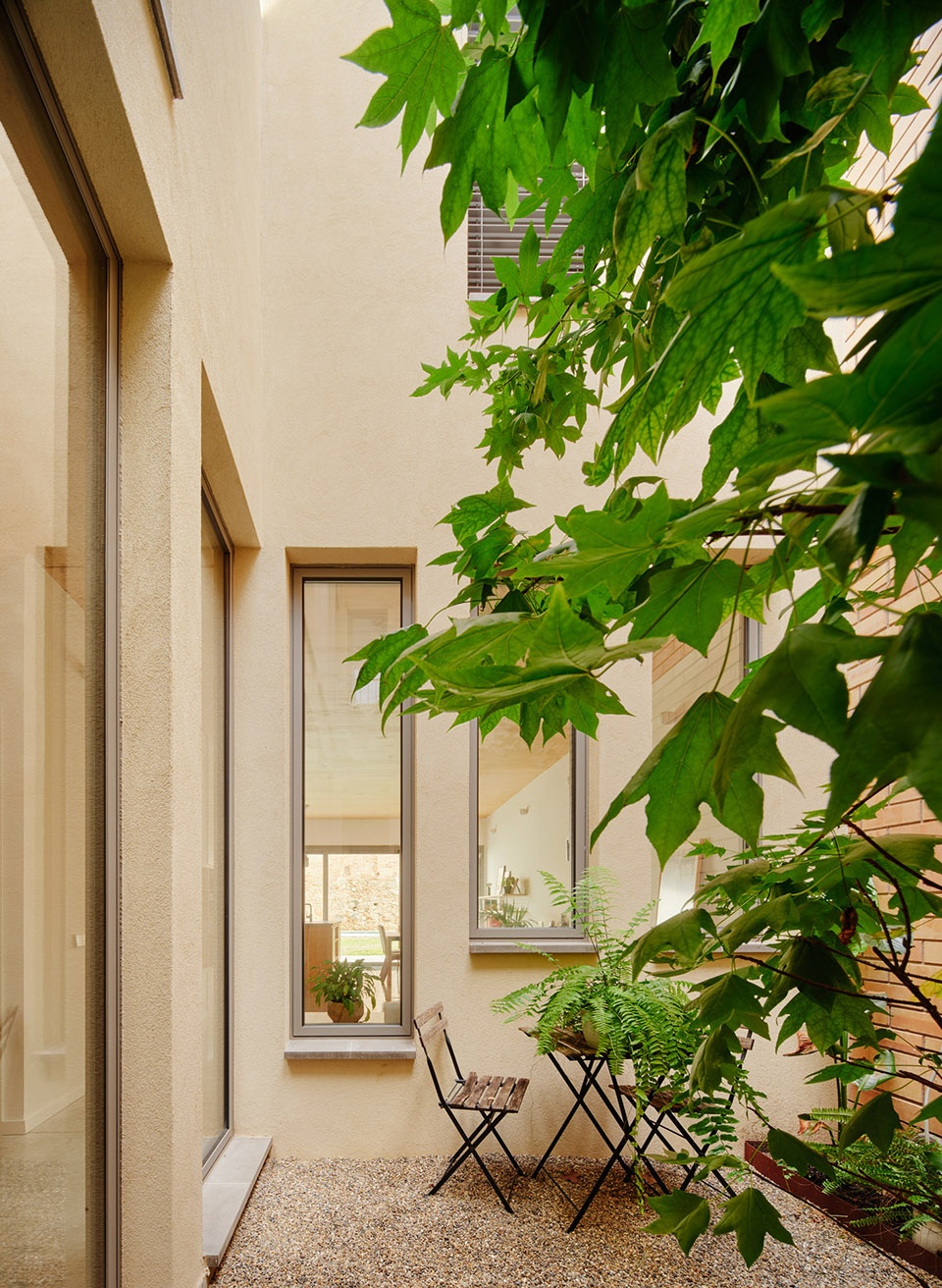
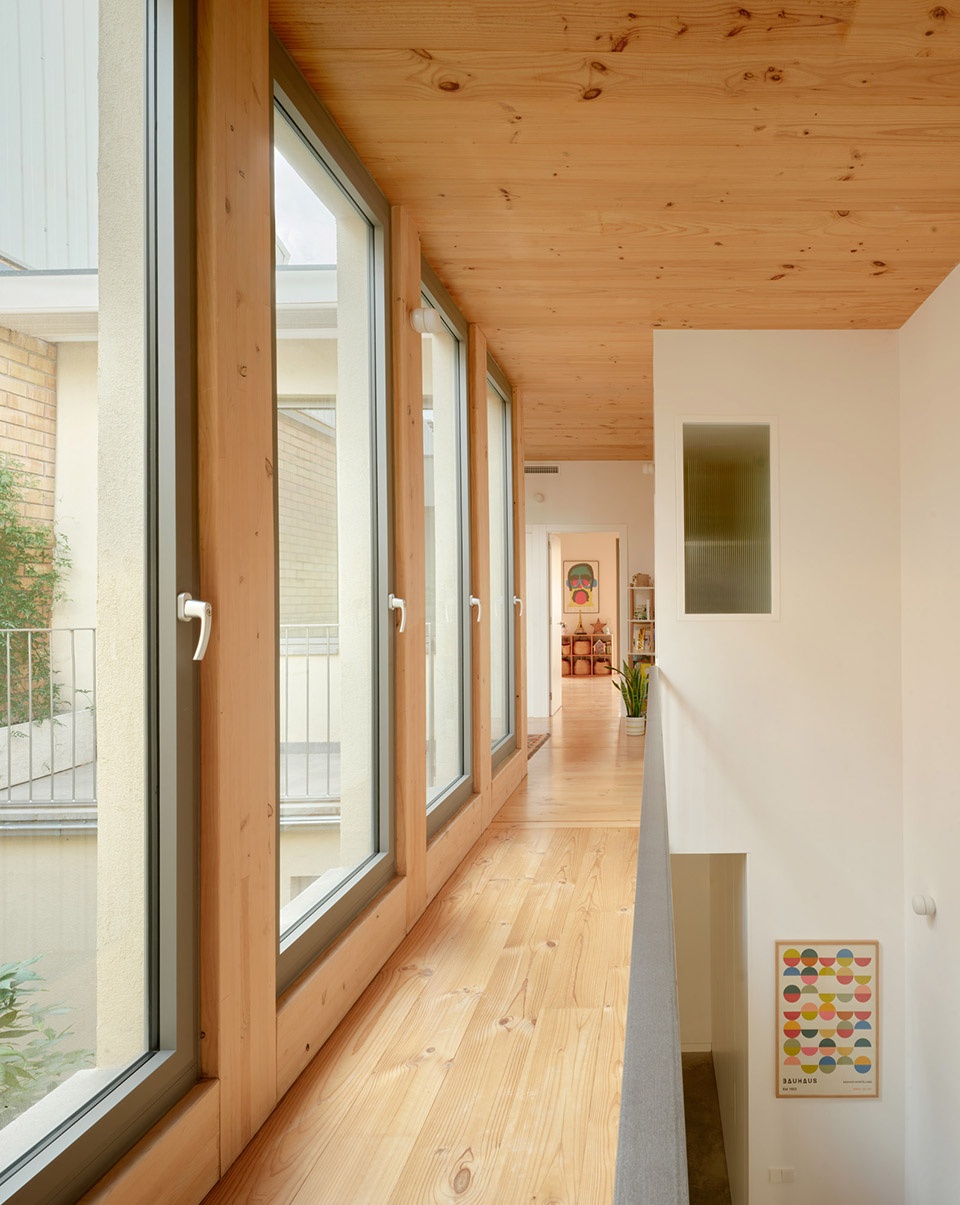
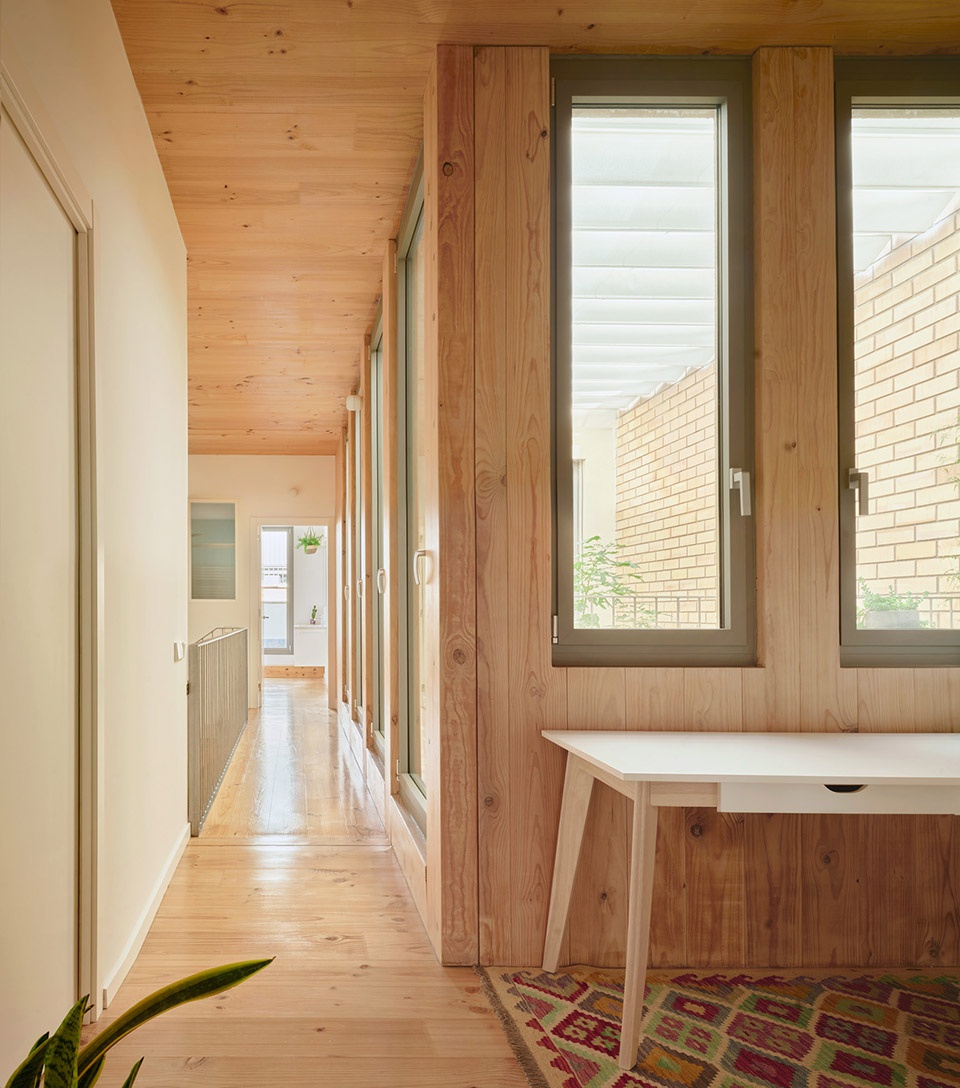
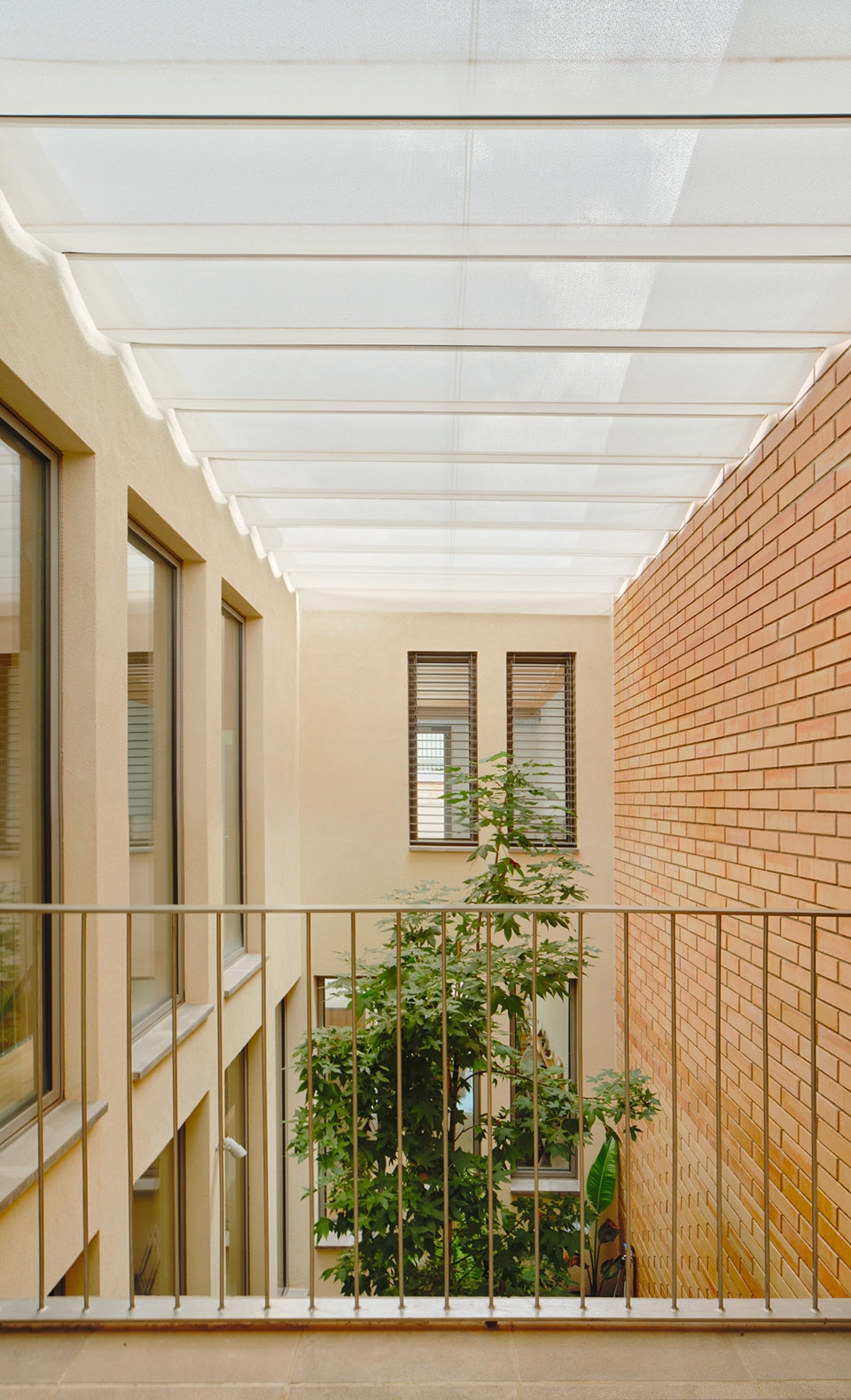
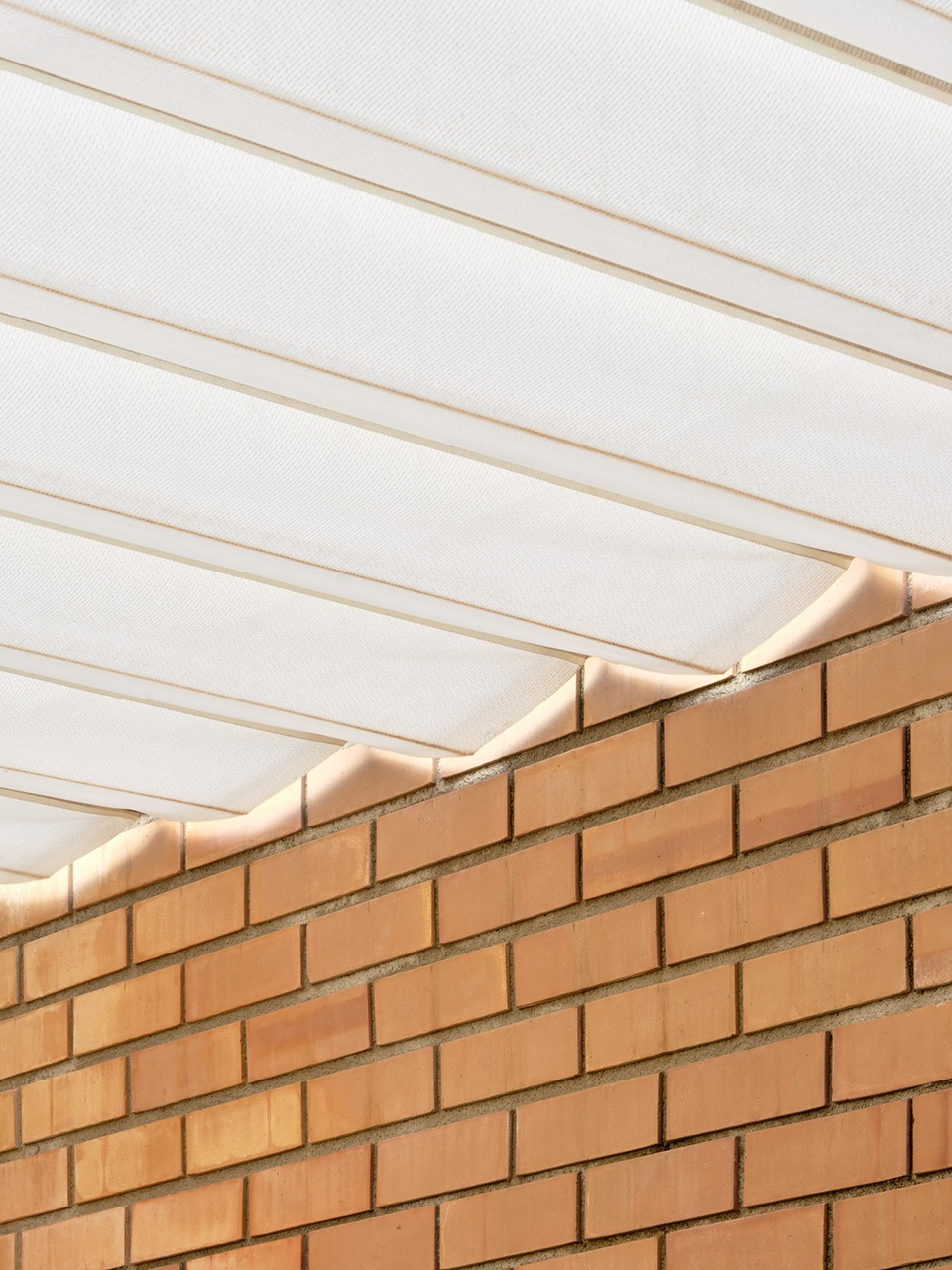
这一次,我们更想谈论住宅内部拥有庭院的优点。这个庭院设有遮阳篷,可以调节日照,并在冬季和夏季都形成极为舒适的微气候,如同一座科尔多瓦庭院。请注意,每个区域都拥有面向外部的窗户,同时也拥有面向这个室内生物气候庭院的窗户。这些标准尺寸的窗户共同形成了一种姿态,回应着那些古老建筑中回廊的记忆。
This time, we prefer to talk about the virtues of having a courtyard inside the house. A courtyard with an awning that regulates sun exposure and allows for a microclimate of maximum comfort in both winter and summer, like a Cordoban patio. Notice that each area has windows to the exterior and, at the same time, windows to this interior bioclimatic courtyard. Standard-sized windows that, together, become a gesture in memory of the cloisters of immemorial buildings.
▼每个区域都拥有面向外部的窗户,
each area has windows to the exterior
▼庭院设有遮阳篷,a courtyard with an awning
▼遮阳篷细节,an awning detail
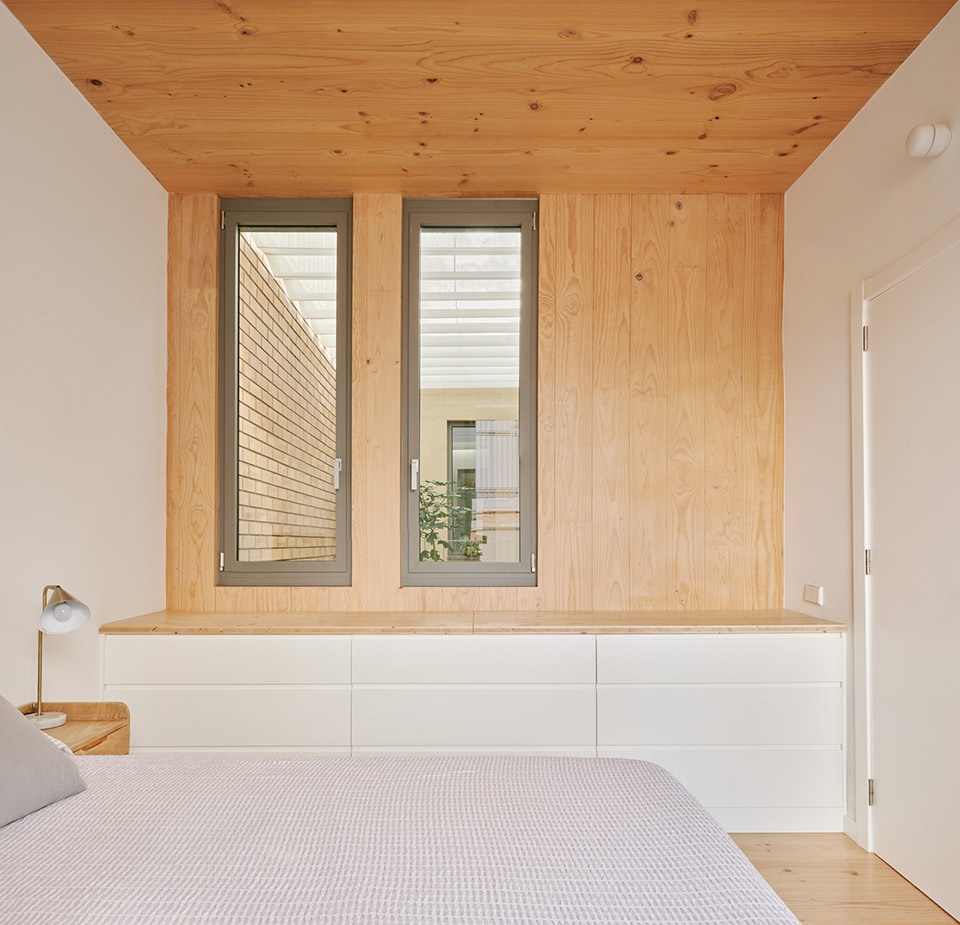
我们更想谈论主卧室:它拥有一个非常规的浴室和衣帽间,可通往露台,并享有花园与庭院的景观。每天清晨在这样的空间中醒来,是开启美好一天的好方式。
We prefer to talk about a master bedroom with an unconventional bathroom and dressing room with access to the terrace and views of the garden and the courtyard. Waking up every morning in this space is a good way to start the day well.
▼主卧室,master bedroom
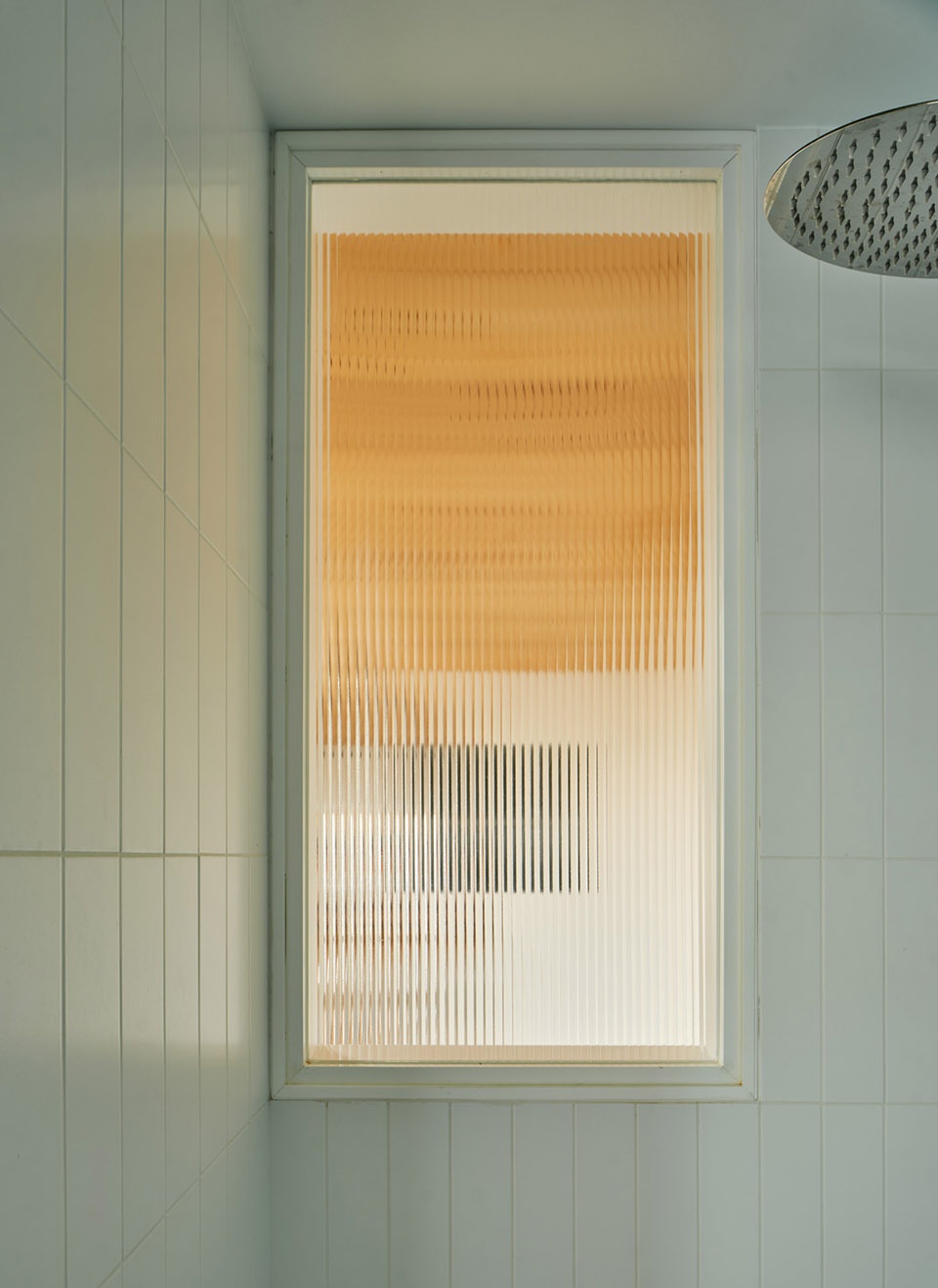
▼主卧室配备的浴室,master bedroom features bathroom
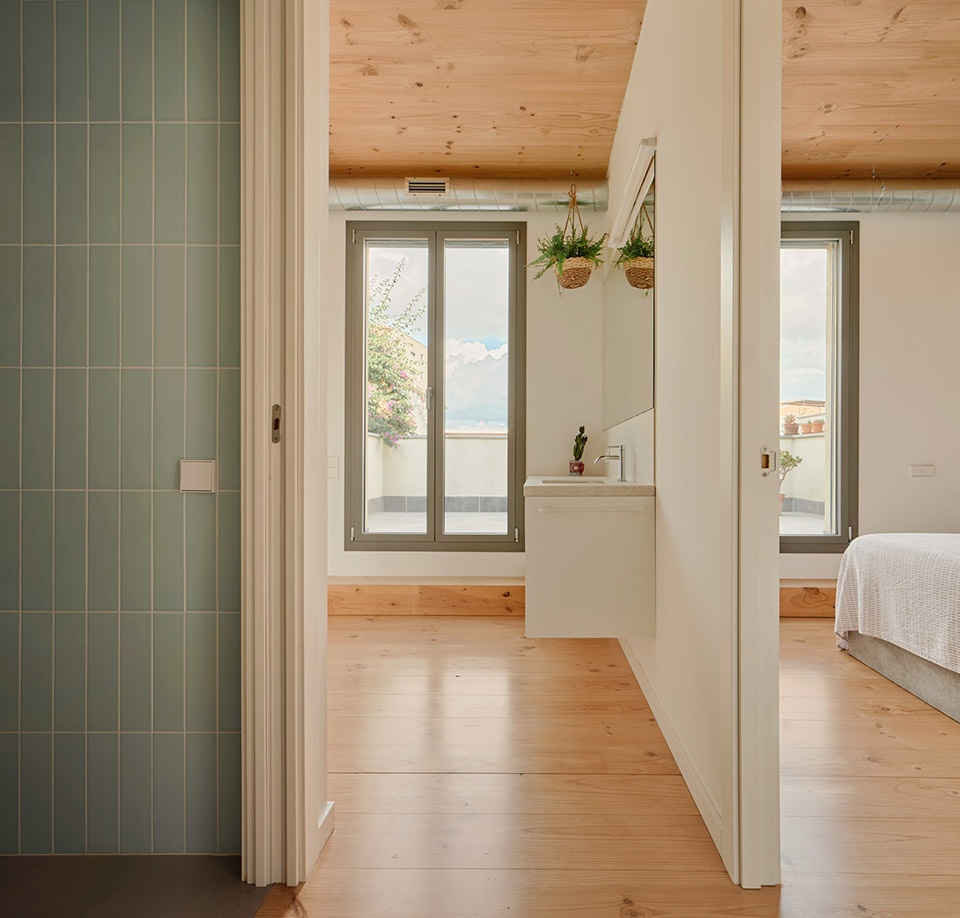
▼从浴室看向主卧,look towards the bedroom from bathroom
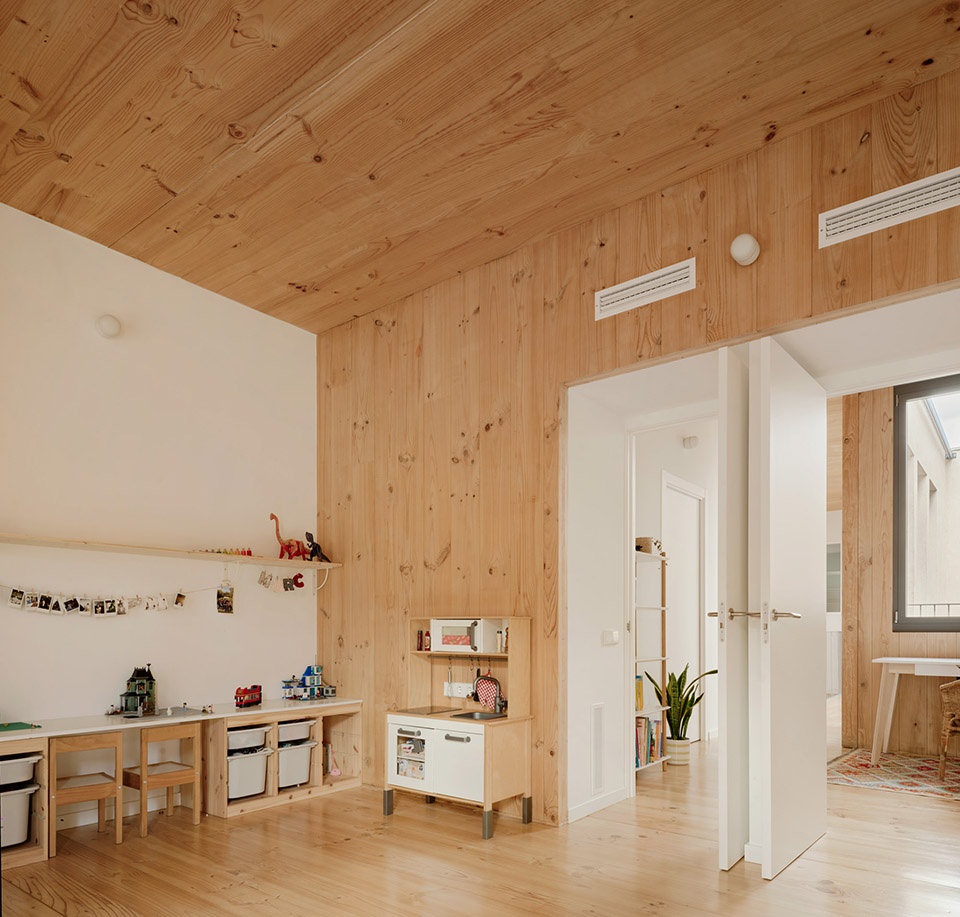
我们更想说明,儿童卧室彼此相连,并向一个公共空间开放;这个空间现在是游戏区,未来将成为他们的学习室。当孩子们长大后,房间可以彼此分隔,但他们仍将保留这个可通往庭院的共享学习空间,而树所传递的平静感也将帮助他们集中注意力。
We prefer to explain that the children’s bedrooms are connected to each other and open to a common space that is now a play area and will later be their study. When the children are older, the rooms can be separated, but they will maintain the shared study with access to the courtyard, and the peace transmitted by the tree will help them concentrate.
▼儿童卧室,children’s bedrooms
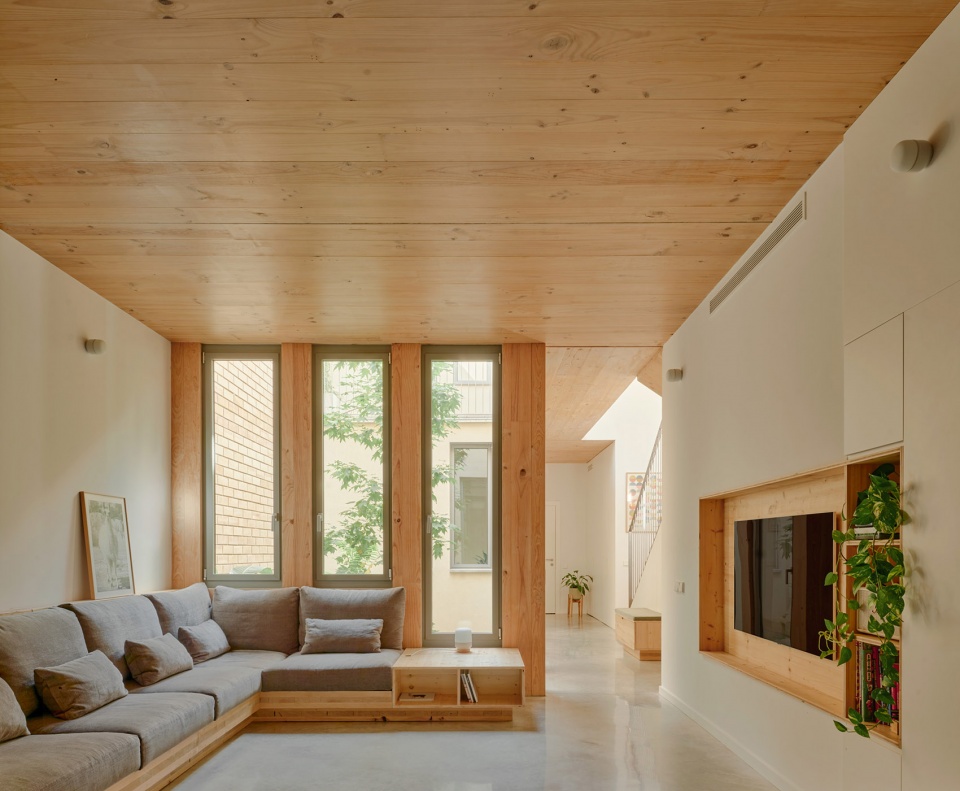
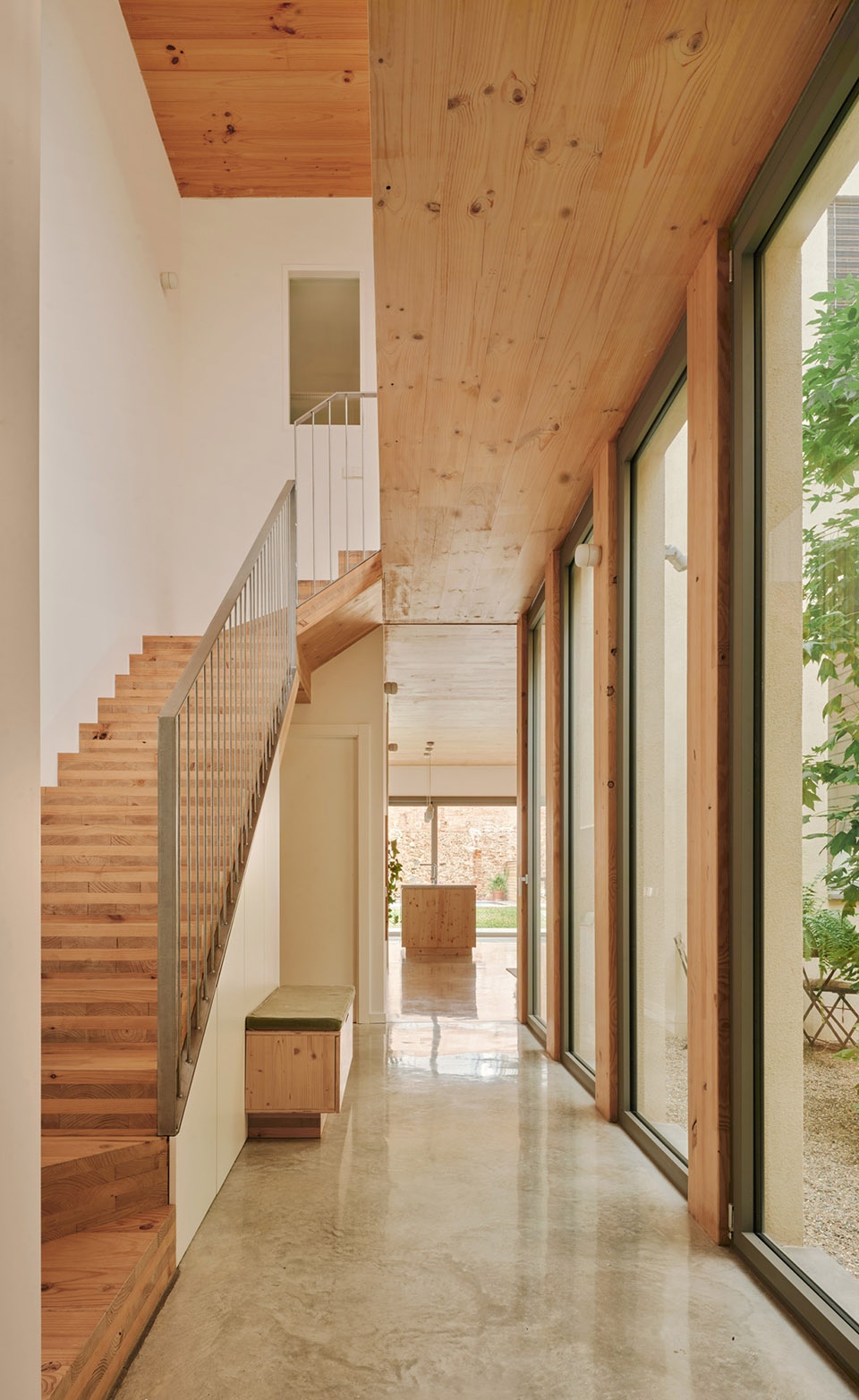
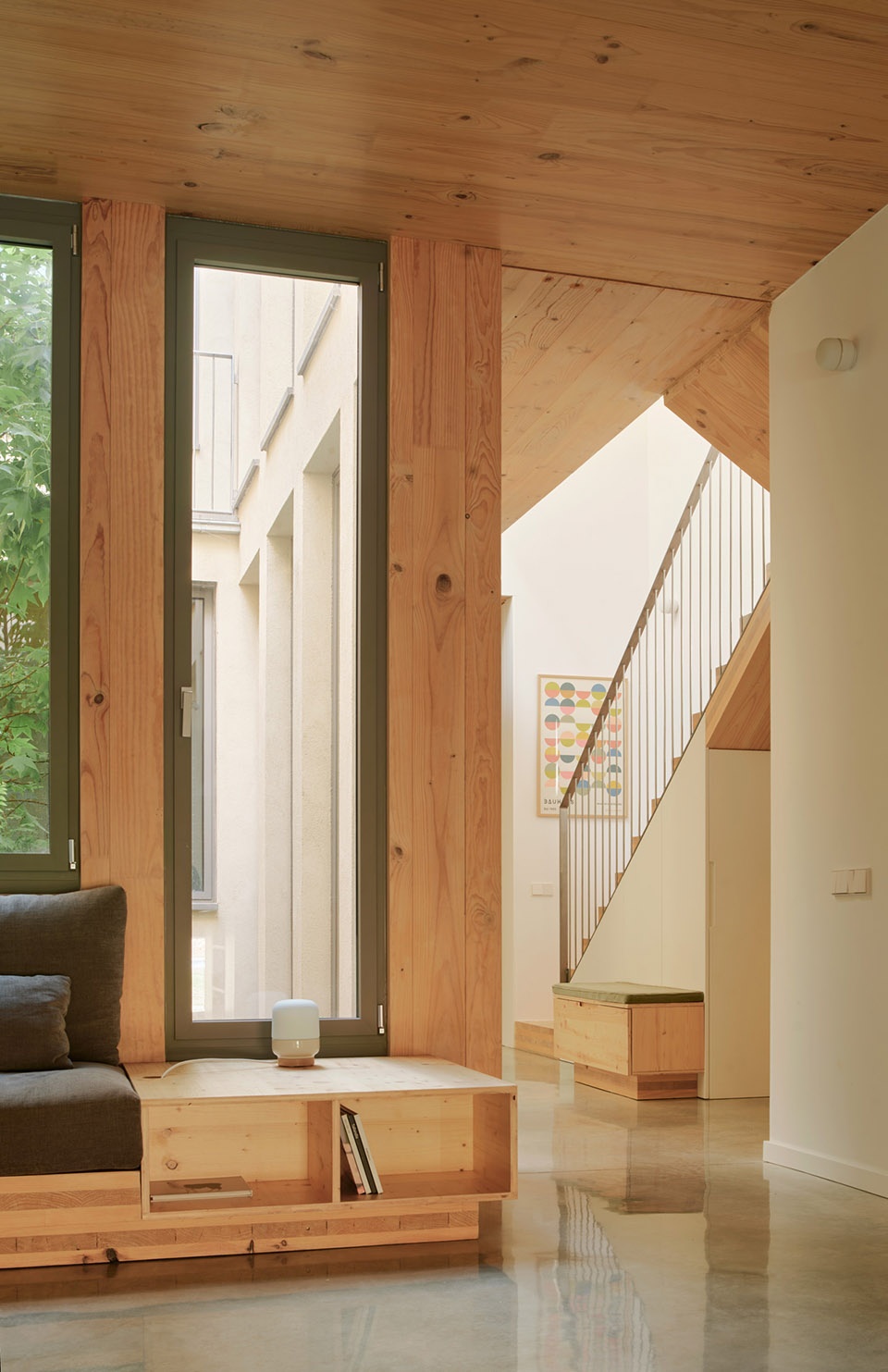
我们更希望你注意到,住宅的门厅位于楼梯与庭院之间,并在象征意义上设置了一张长凳,让人可以坐下脱鞋,赤脚进入家中。我们更希望你看看那张定制沙发,它由木板剩余材料制成,并顺应庭院窗户的形态展开,形成可收纳书籍的角落,以及为手机充电的位置。我们更希望你看到那些来自瑞典的瓷质灯具(Ifö electric),它们优雅、恒久,几乎不被察觉。
We prefer you to notice that the house’s vestibule is located between the staircase and the courtyard and that, symbolically, it incorporates a bench to take off your shoes and go barefoot.We prefer you to look at the custom-made sofa with leftover pieces from the wood panels and how it adapts to the courtyard windows, generating storage corners for books and a place to charge the mobile phone. We prefer you to see the porcelain luminaires that come from Sweden (Ifö elèctric), elegant, timeless, and almost unnoticeable.
▼门厅位于楼梯与庭院之间,
vestibule is located between the staircase and the courtyard
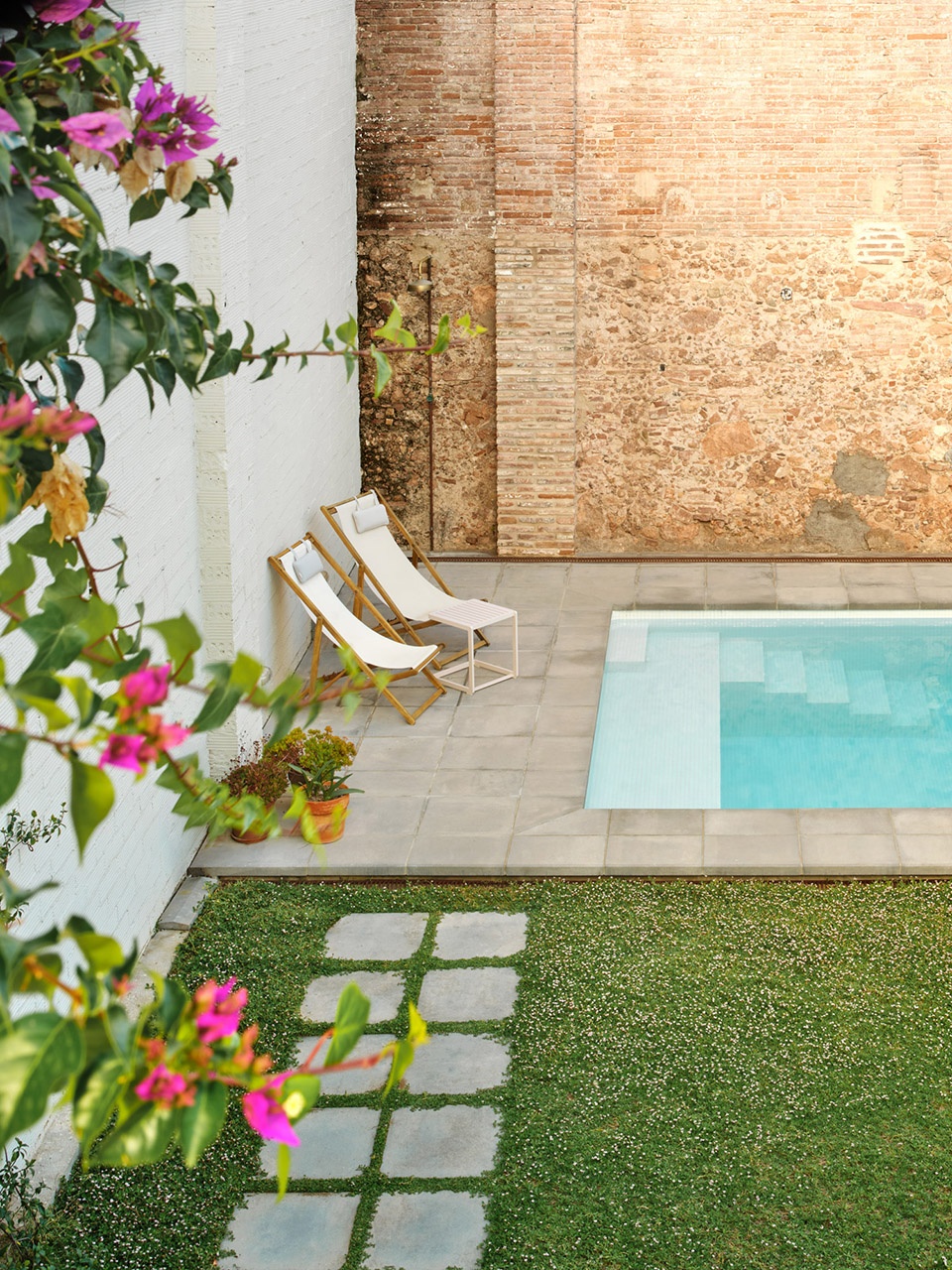
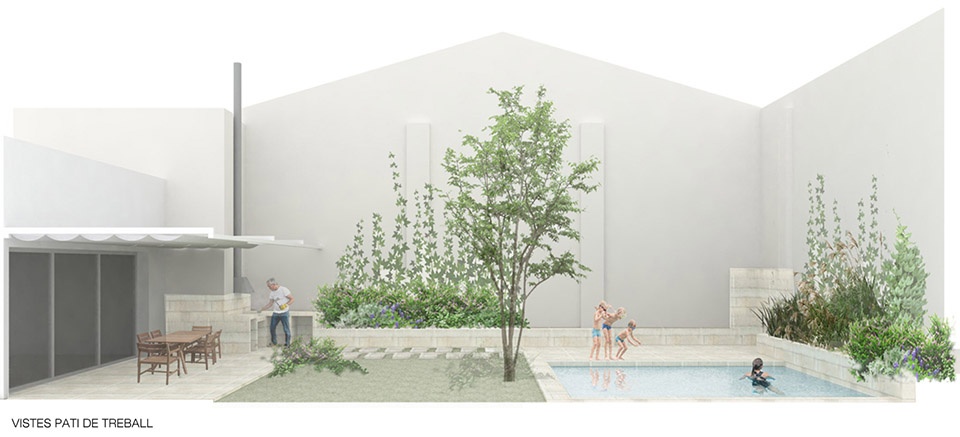
我们更愿意享受泳池和花园;花园中种植了蓬莱草,以取代其他开发项目中常见的绿色塑料荒漠。
We prefer to enjoy the pool and a garden where Lippia nodiflora has been planted, replacing the green plastic deserts of other developments.
▼泳池与花园,swimming pool and garden
我们还可以谈论隐藏在每一个决定、每一个细节中的更多小巧思。它们并不是魔术,而是一种把事情做好、做妥帖的愿望。不过现在,我们不会解释全部;之后再说。
We could talk about more hidden tricks in every decision and every detail we have designed. They are not magic tricks, but a desire to do things well. But, for now, we will not explain everything; we will do it later.
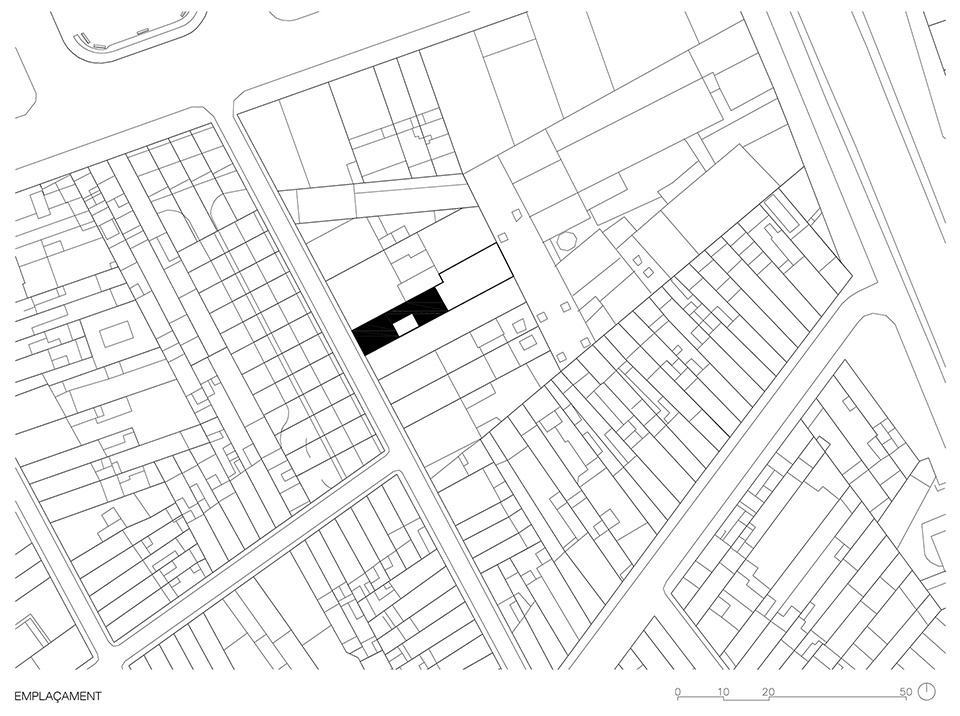
▼场地平面,site plan
▼平面图及剖面图,plan and section
▼剖透视效果图,perspective section rendering
Project: 117BOF A house to live around a tree
Location: Sabadell, Barcelona
Phase: Completed work
Total project area: 210 m²
Project Year: 2021
Construction Year: 2022-2023
Developer: Private
Architects: Llorenç Vallribera Farriol, Aleix Gil Noray
Collaborators: Sergi Ballester, architect; Joan Fontanet, technical architect; Míriam Molina (MVA), structure consultant; Daniel Vilavedra, energy and environmental consultant; Jaume Balanyà (Quadrant), installations engineering; Nacho Villegas, computer graphics
Non-renewable primary energy consumption: 30.64 kWh/m²year
Total CO2 emissions: 5.22 KgCO2/m²year
Heating demand: 11.57 kWh/m²year
Cooling demand: 8.49 kWh/m²year
Energy rating: A
Photographs: © José Hevia