Xoltic住宅,墨西哥 / AMASA Estudio
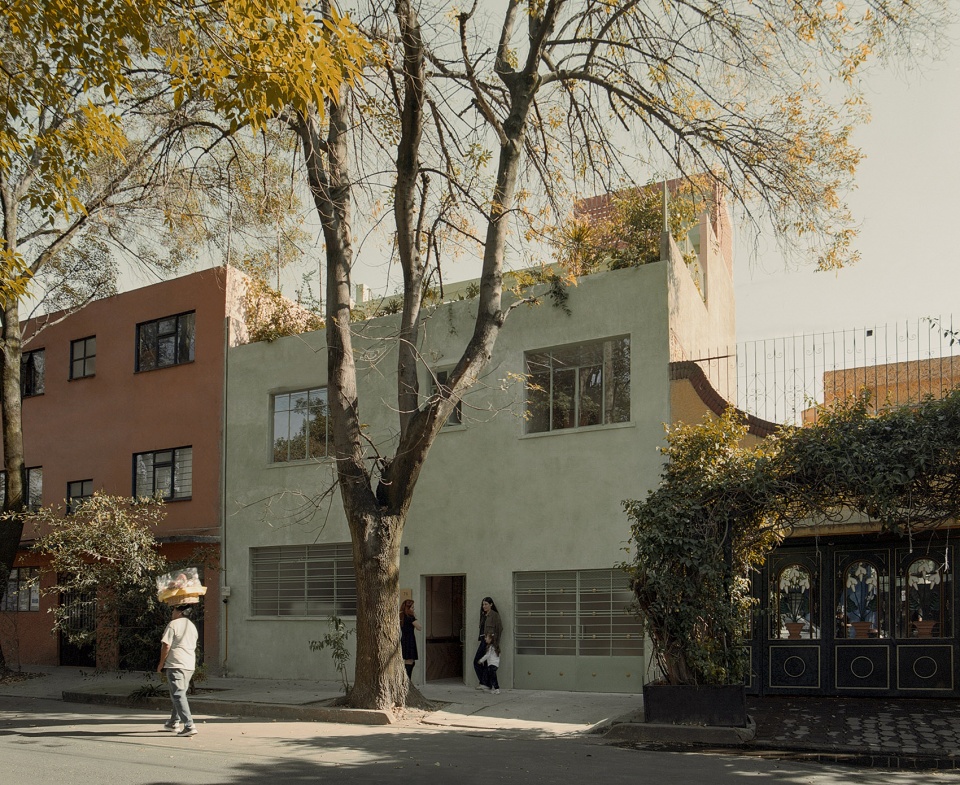
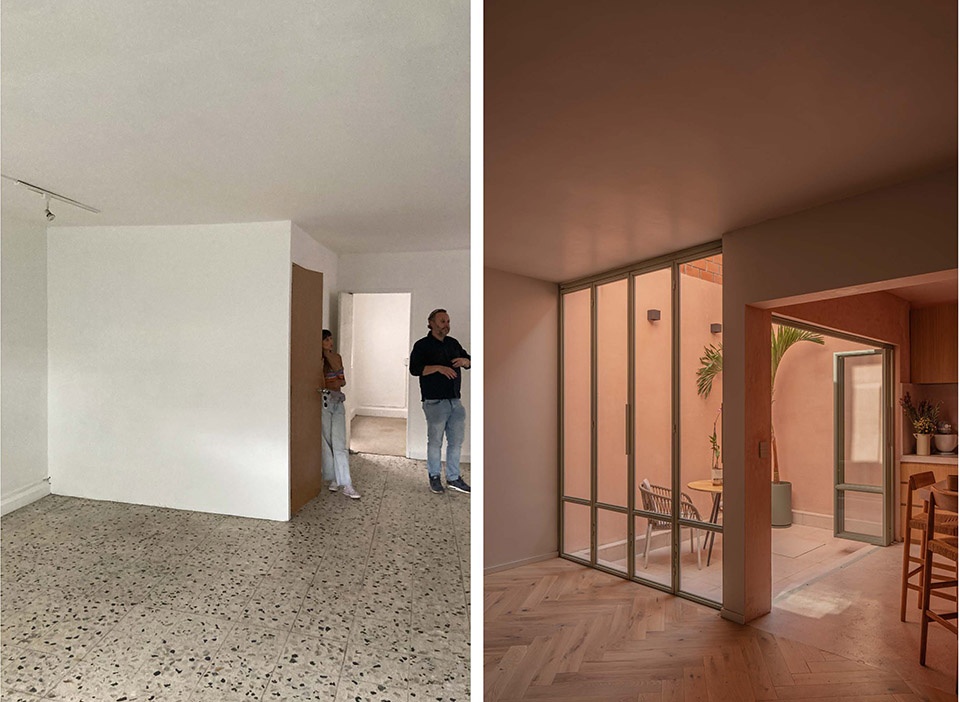
CASA XOLTIC 始于一种信念:在一座常常以拆除和替换来回应房地产压力的城市中,修复并延续一栋既有住宅,本身也是一种城市立场。项目位于科约阿坎中心的 Del Carmen 街区,原住宅建于20世纪40年代,保留着坚实的结构和清晰的居住尺度,尽管随着时间推移经历了多次改造,原有的空间逻辑已被打散。项目并未选择将其替换,而是通过一次深度重构延长其生命周期,使其结构、空间和技术性能符合当代标准,同时不抹去其自身特征。在首层,一个主要的设计动作是重新组织入口,以恢复私密性,并在街道与室内之间重新建立过渡性的门槛空间。
CASA XOLTIC begins with a conviction: in a city where real estate pressure is often resolved through demolition and replacement, recovering an existing house is also an urban stance. Located in the Del Carmen neighborhood, in the heart of Coyoacán, the original dwelling — built in the 1940s — retained a solid structure and clear domestic proportions, although it had undergone successive interventions over time that fragmented its spatial logic. Rather than replacing it, the project proposes to extend its lifespan through a deep reconfiguration that updates its structural, spatial, and technical performance in accordance with current standards, without erasing its character. On the ground floor, one of the principal gestures was to reconfigure the entrance in order to restore privacy and reestablish a transitional threshold between street and interior.
▼住宅外观,house residence
▼住宅外观,house residence
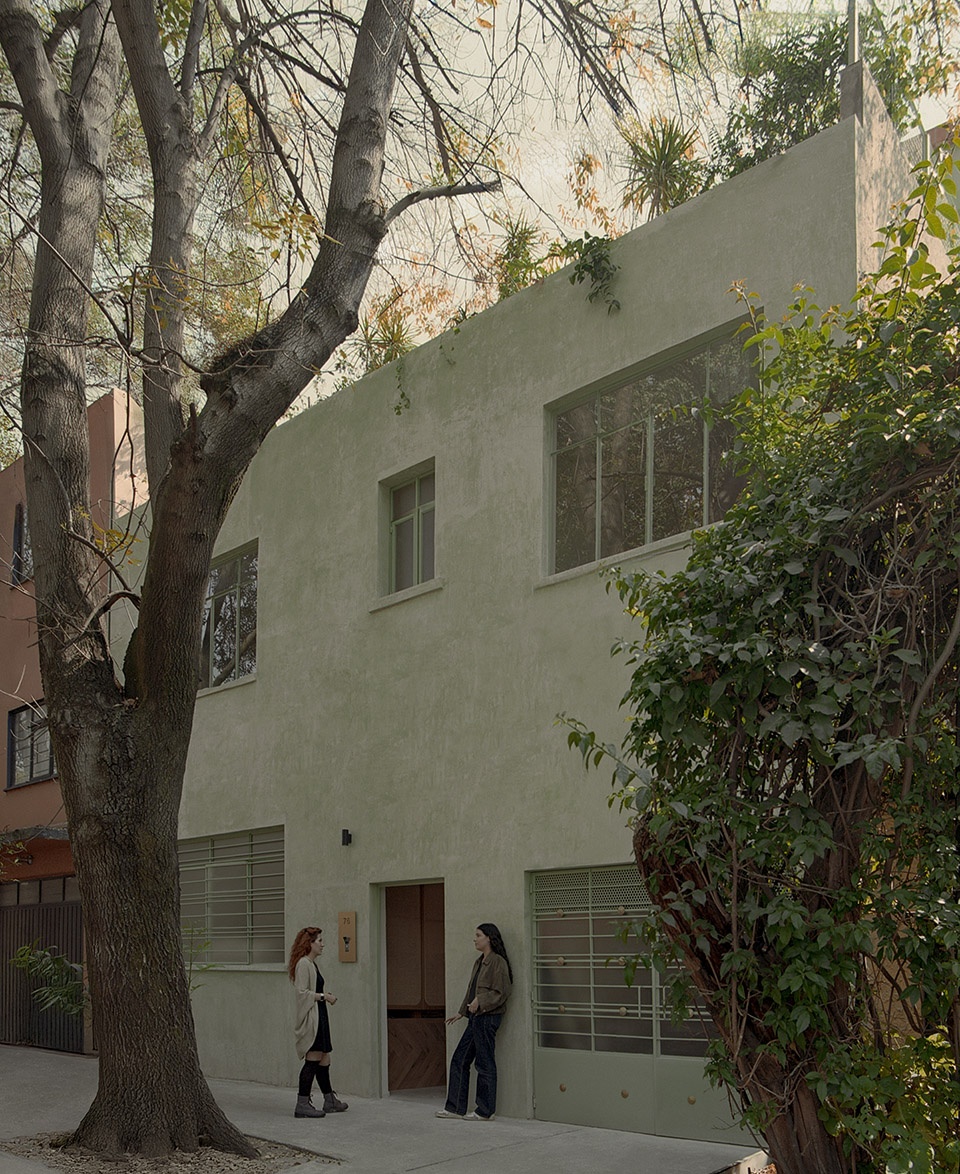
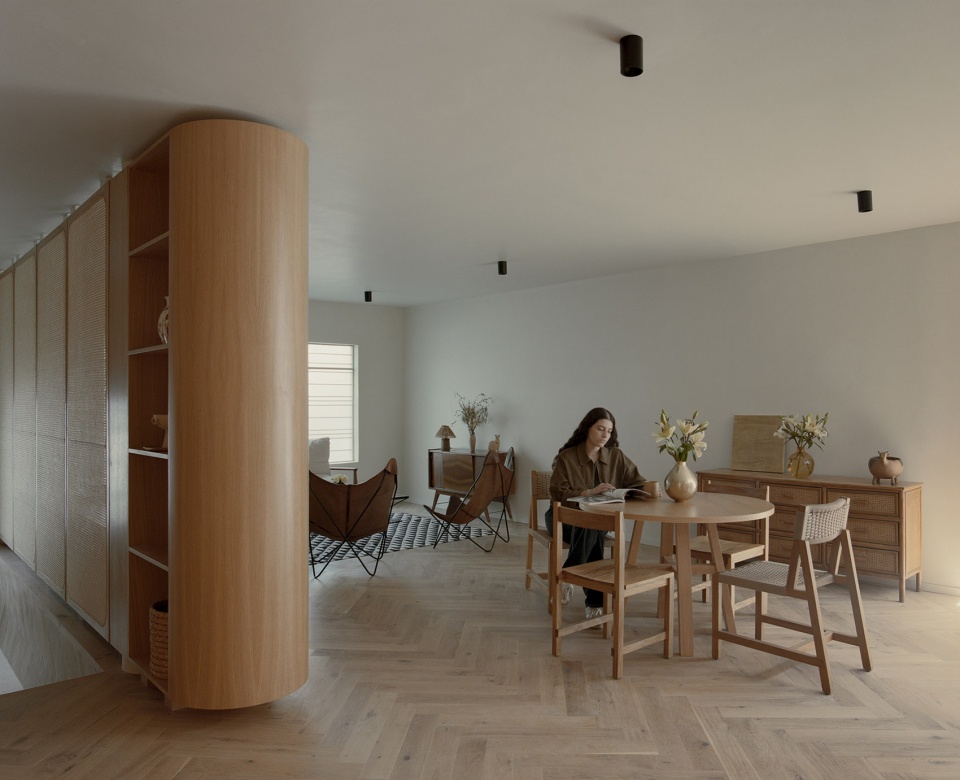
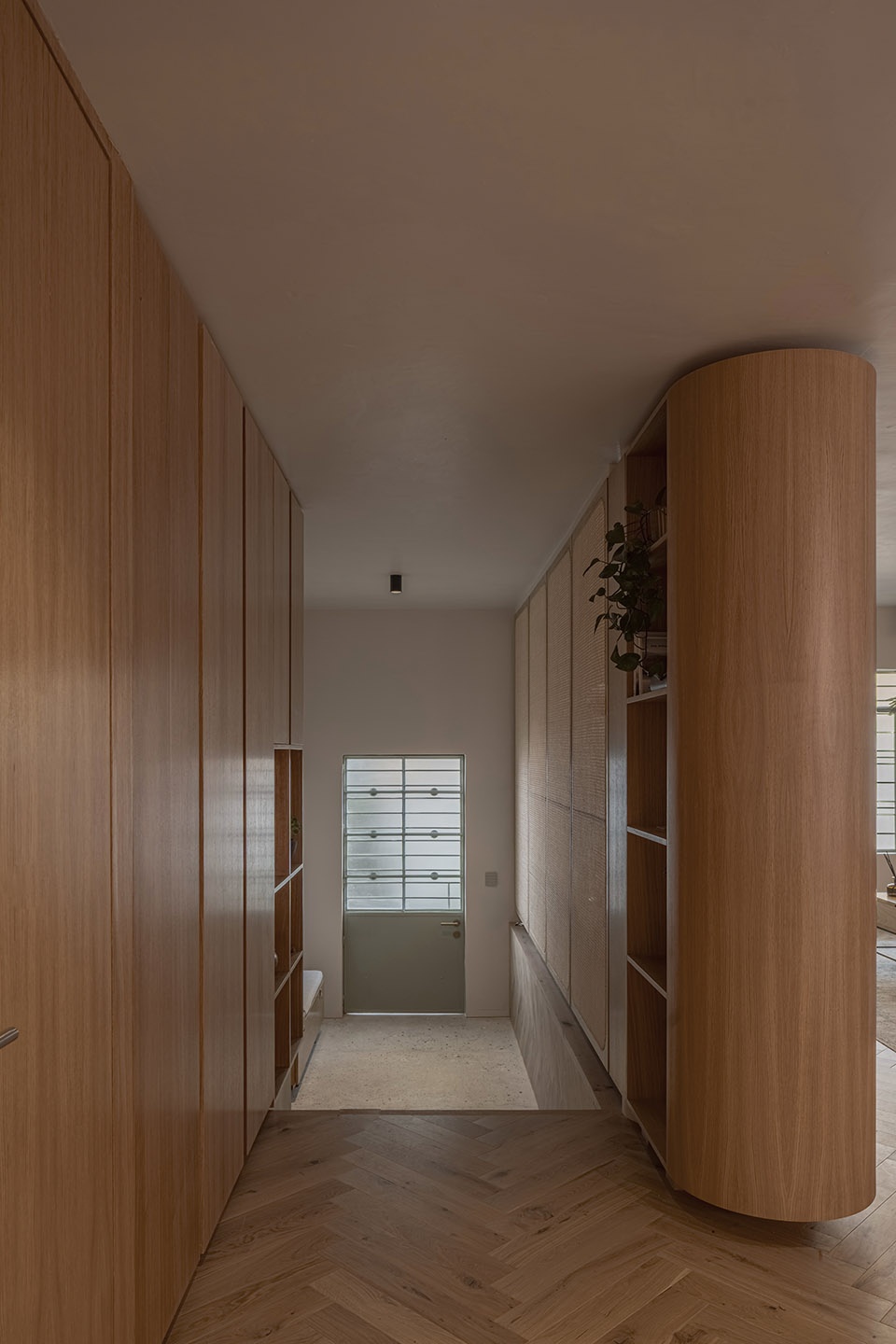
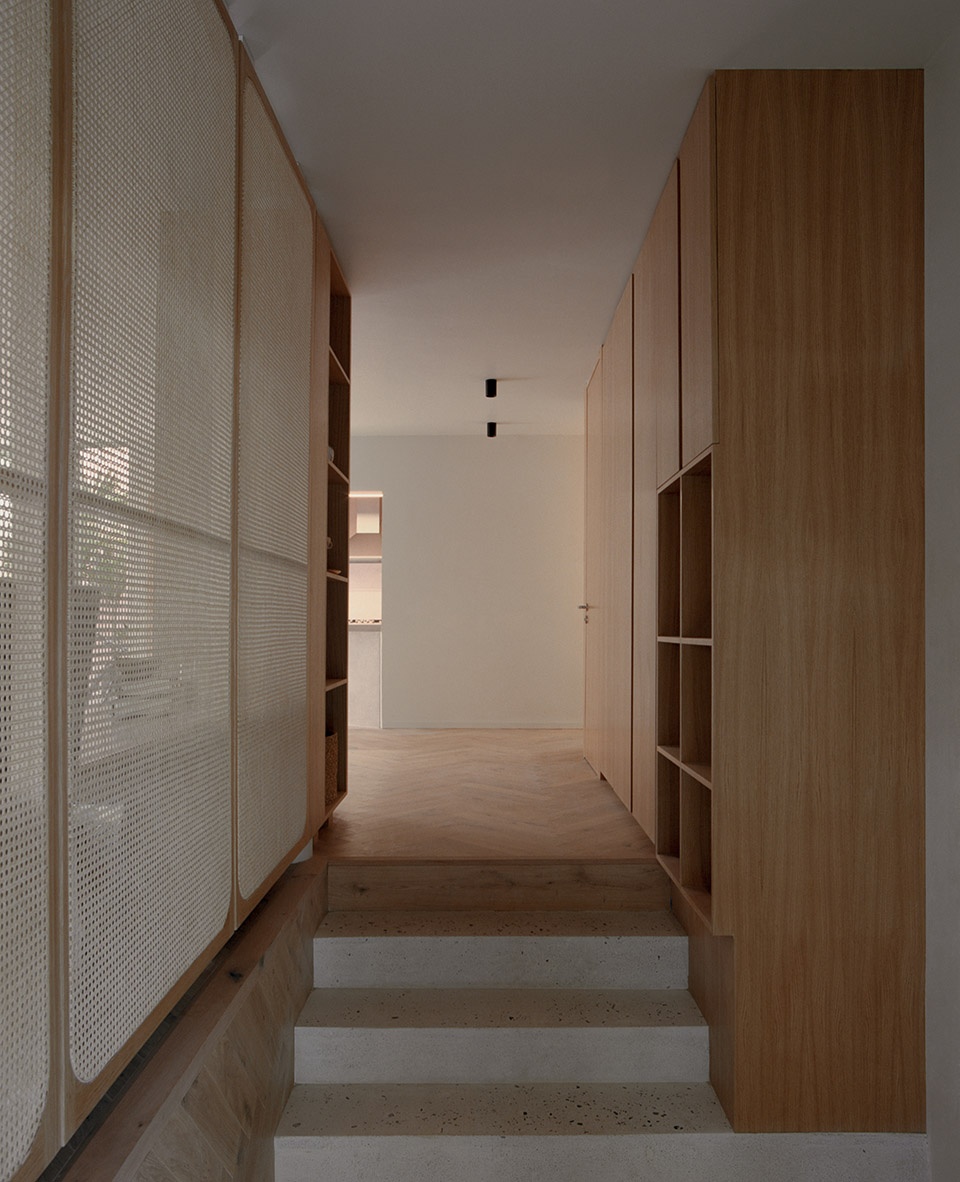
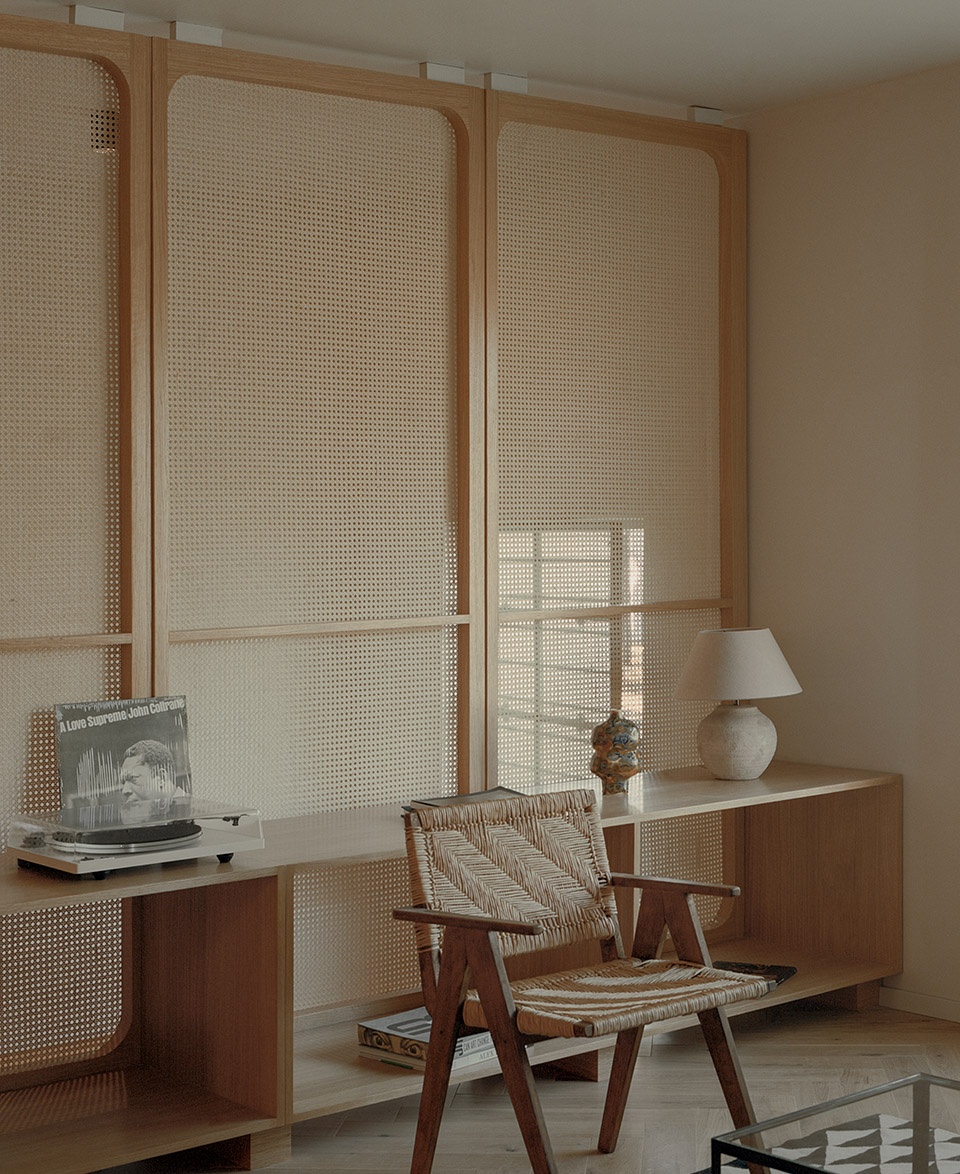
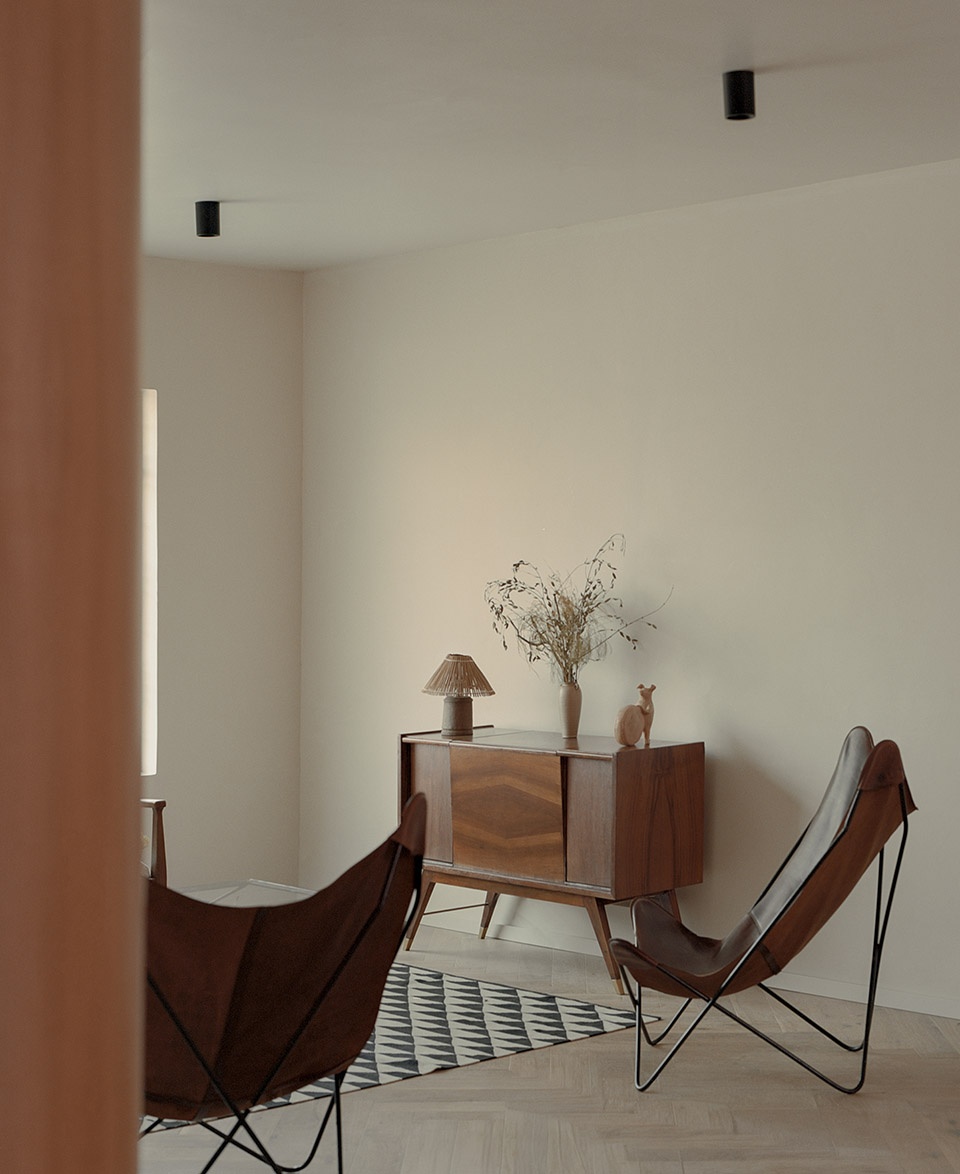
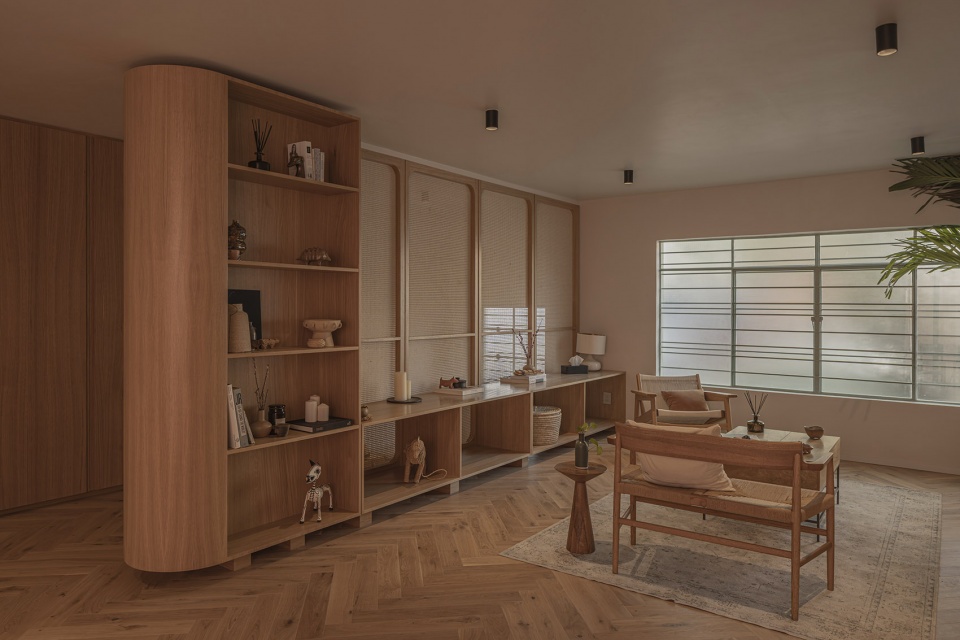
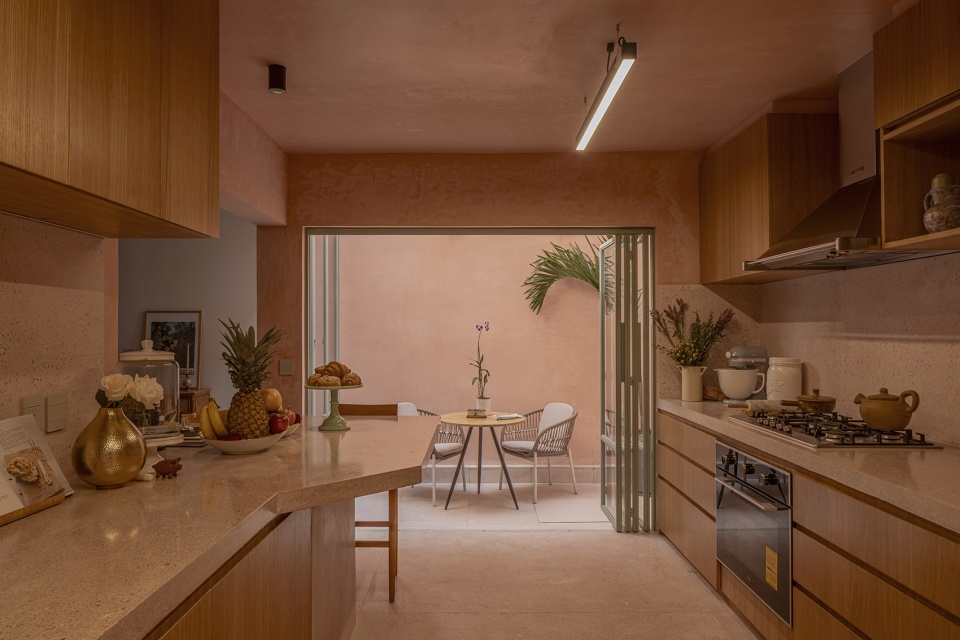
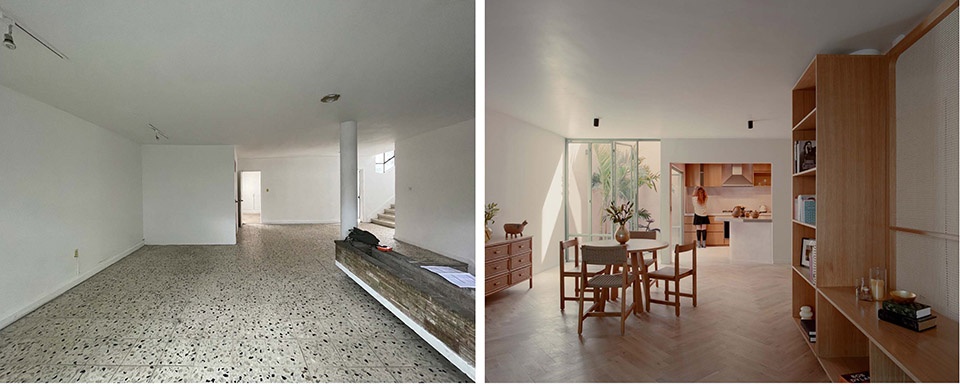
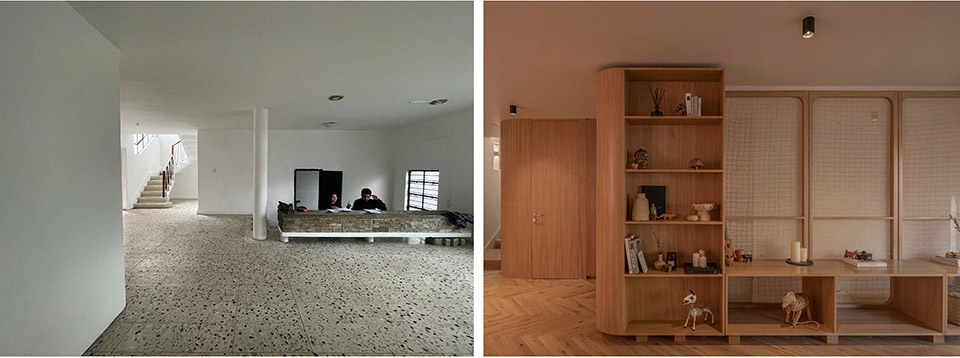
项目设计了一套定制木作系统,在整合收纳功能的同时,也作为玄关装置发挥作用:这一连续的内置构件组织了归家动线,过滤了直接视线,并在进入公共区域之前建立起清晰的空间界面。该构件串联起客厅、餐厅和交通空间,在无需增加隔墙的情况下提供秩序与围合感。客厅、餐厅和厨房以开放序列的方式面向庭院布置,形成穿堂通风和视觉纵深。厨房采用现浇水磨石饰面,既是首层的组织核心,也是连接室内与室外的节点。
A custom millwork system was designed that integrates storage while functioning as a vestibular device: a continuous built-in element organizes arrival, filters direct views, and establishes a clear threshold before entering the social areas. This piece articulates the living room, dining area, and circulation, providing order and containment without the need for additional walls. The living room, dining area, and kitchen are arranged in an open sequence facing the patios, allowing cross-ventilation and visual depth. The kitchen, finished in cast-in-place terrazzo, operates as the organizing core of the ground floor and as a point of connection between interior and exterior.
▼玄关区域,lobby area
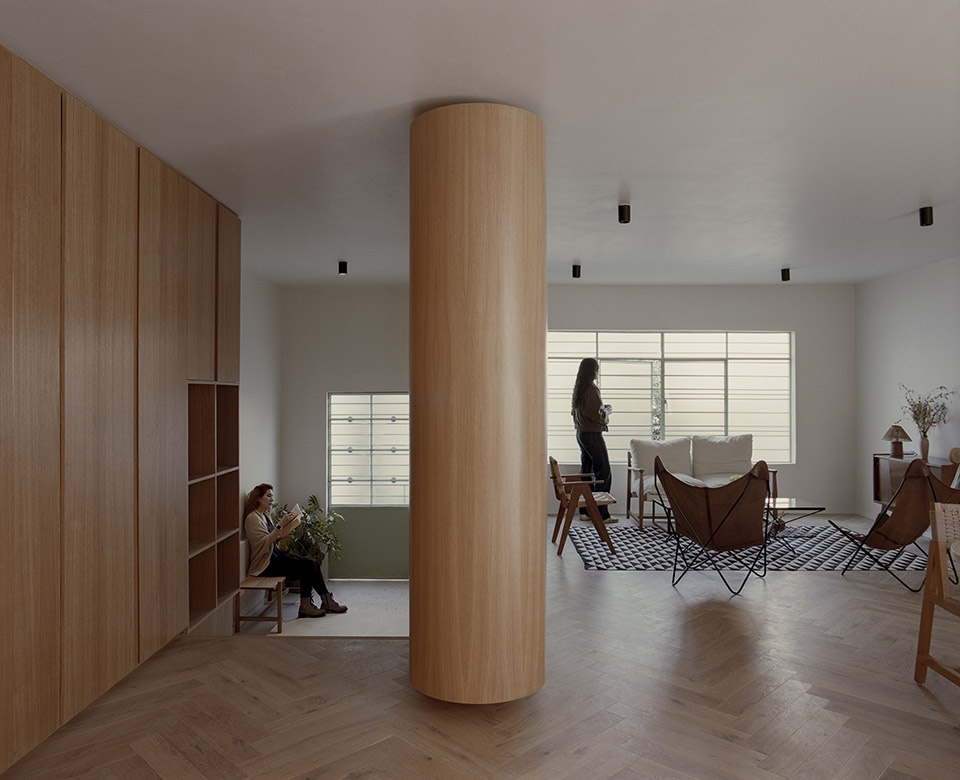
▼玄关区域,lobby area
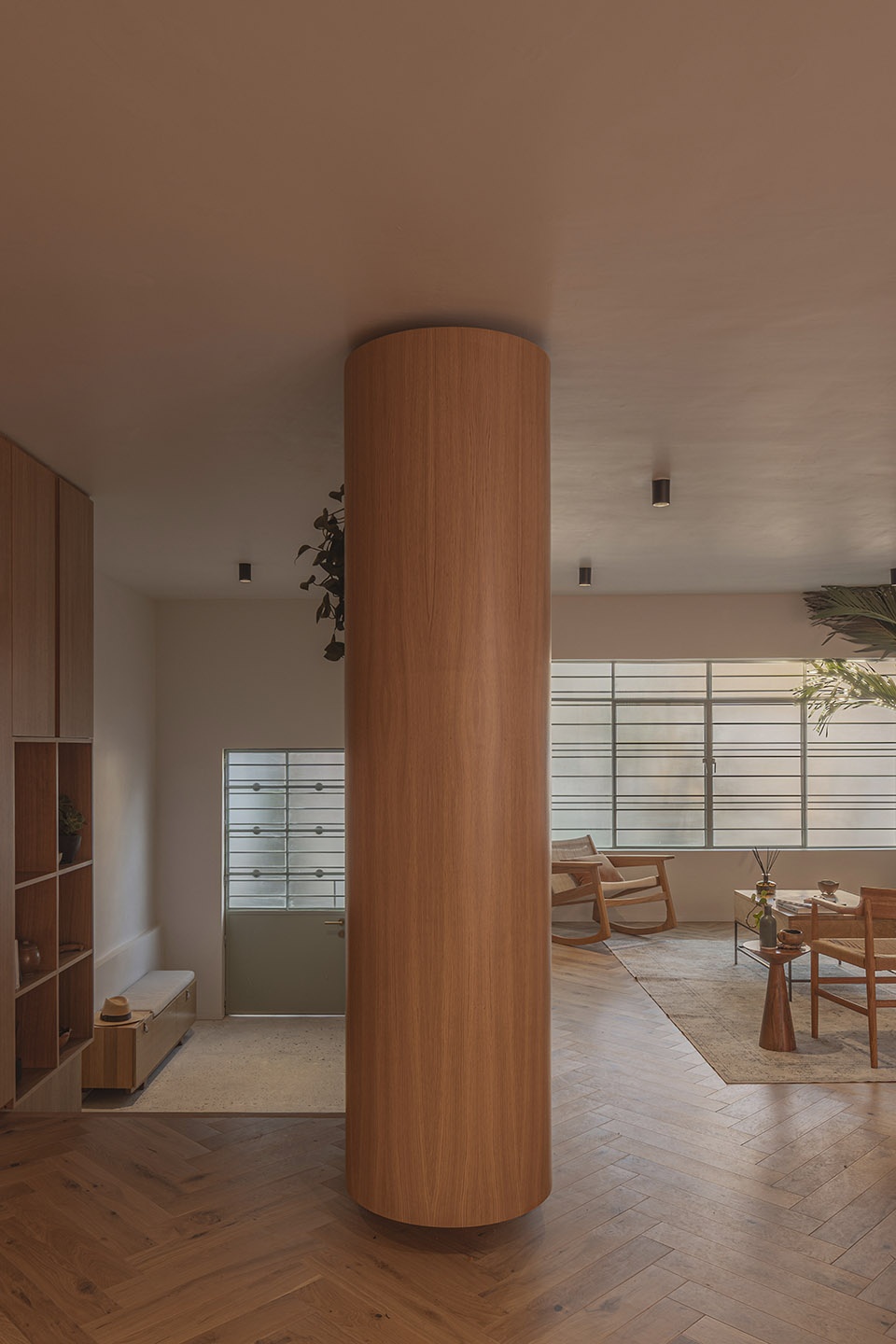
▼客厅区域,living room
▼客厅区域,living room
▼厨房及餐厅区域,dining area and kitchen
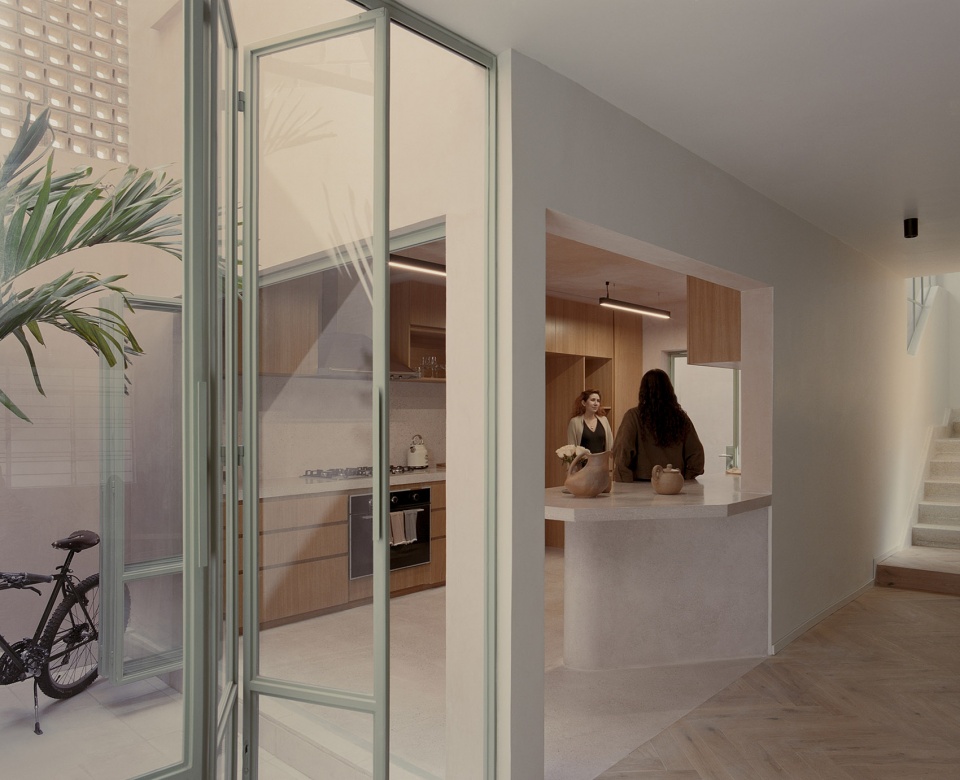
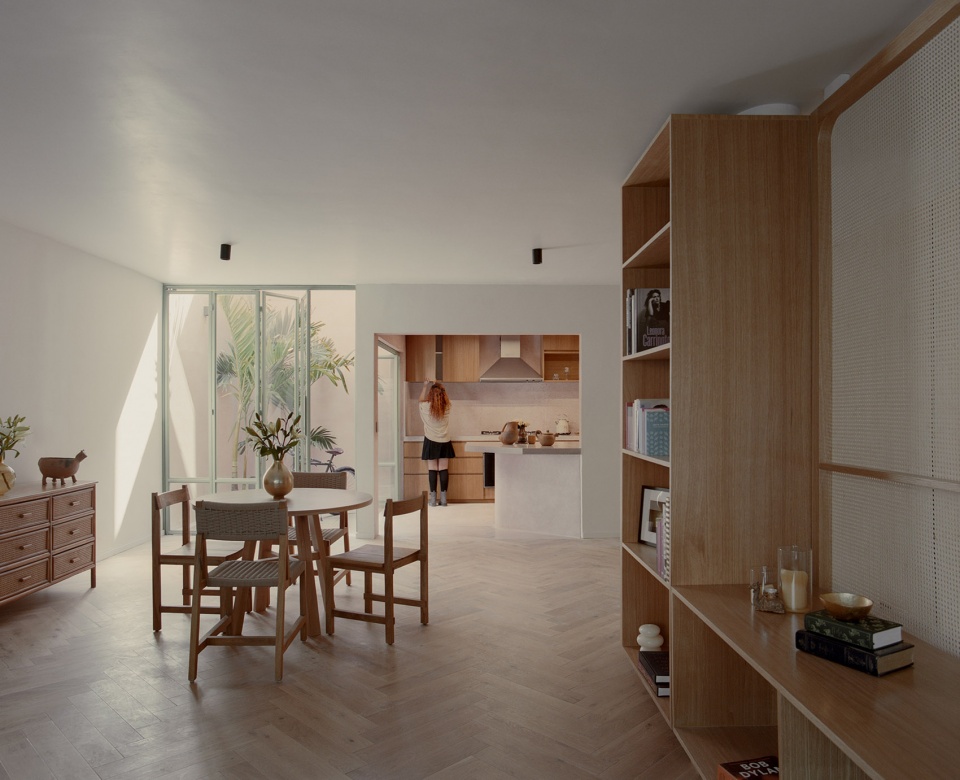
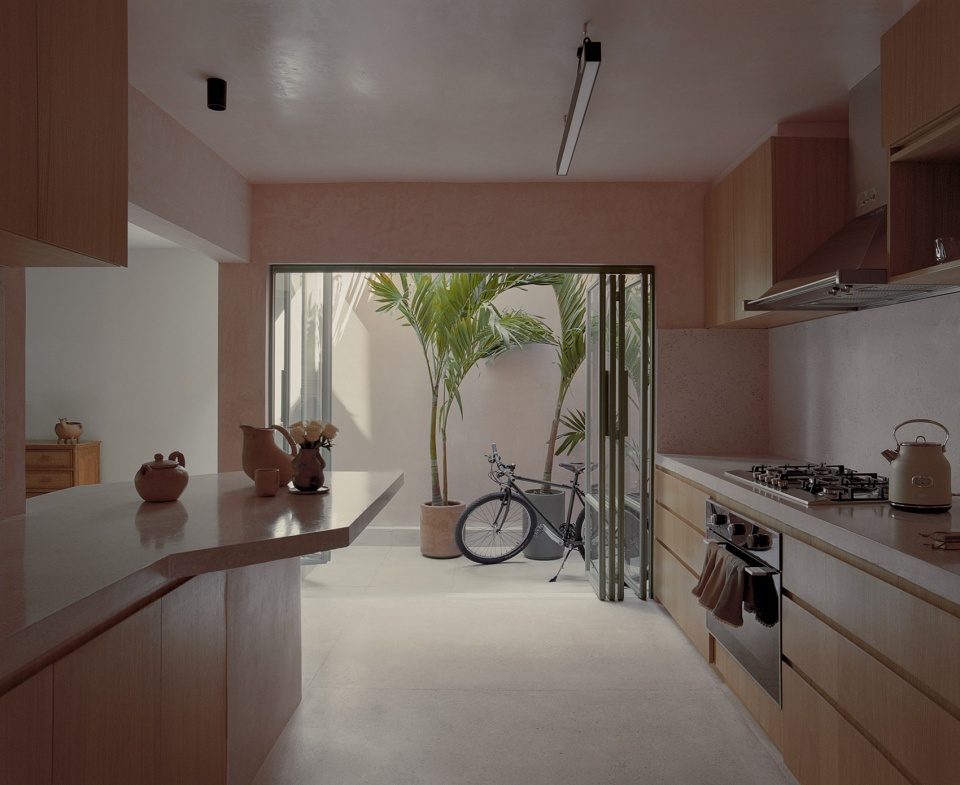
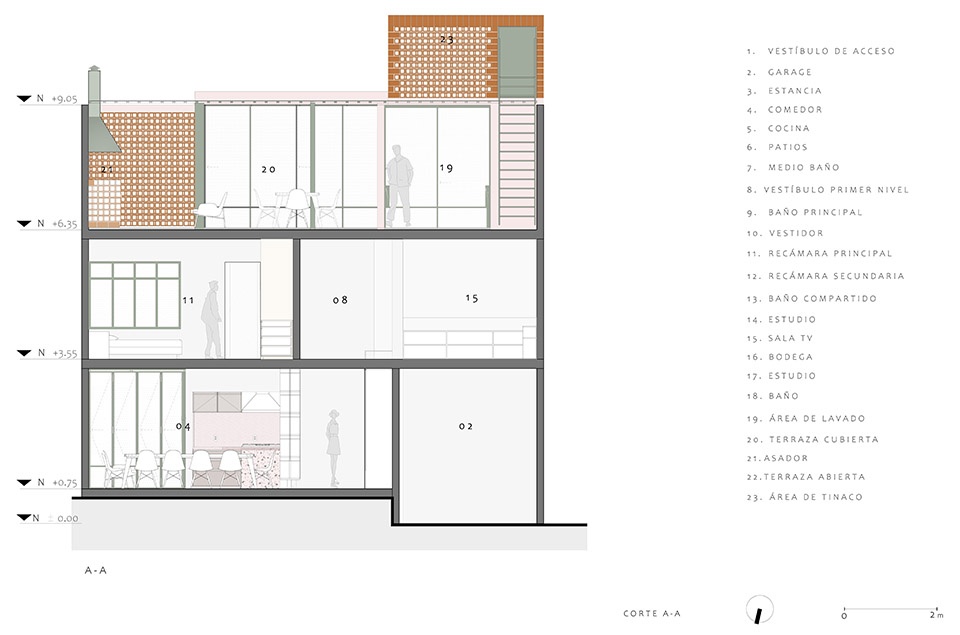
垂直交通的重组是项目最重要的设计动作之一。主楼梯组织了首层与二层之间的过渡,而通往屋顶露台的路径则通过一座新的悬挑钢楼梯实现。该楼梯从二层向外伸出,不在首层设置支撑,并由结构梁承托。这一设计释放了下方庭院空间,避免了中间立柱,同时最大化自然光的进入。
▼轴测图,axonometric
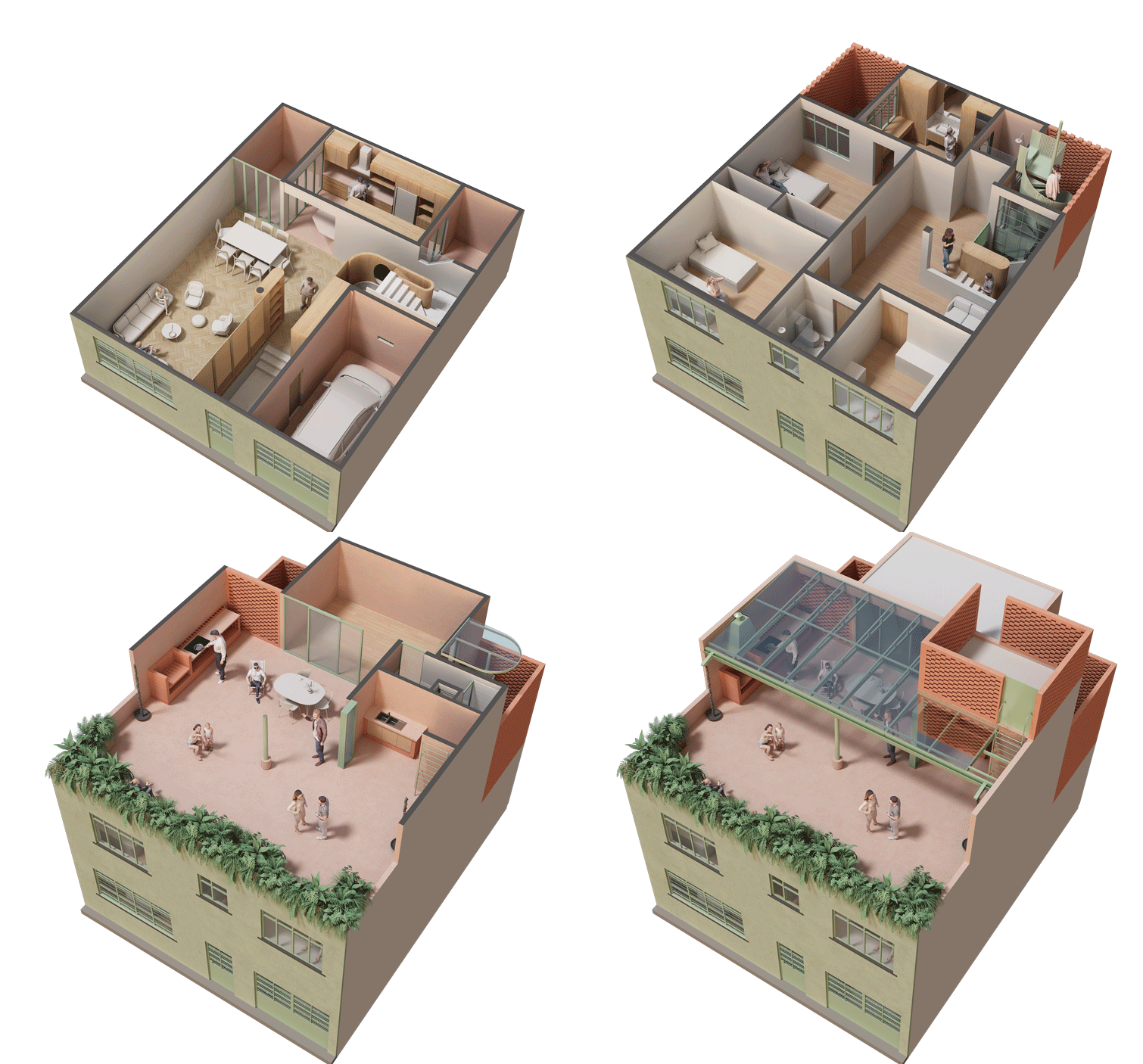
The reorganization of vertical circulation was one of the project’s most significant moves. The main stair structures the transition between ground and first floors, while access to the roof terrace is resolved through a new suspended steel stair that projects from the first level without supports on the ground floor. Supported by a structural beam, this decision allowed the lower patios to be fully liberated, avoided intermediate columns, and maximized natural light penetration.
▼悬挑钢楼梯连接上层,
The main stair structures the transition between ground and first floors
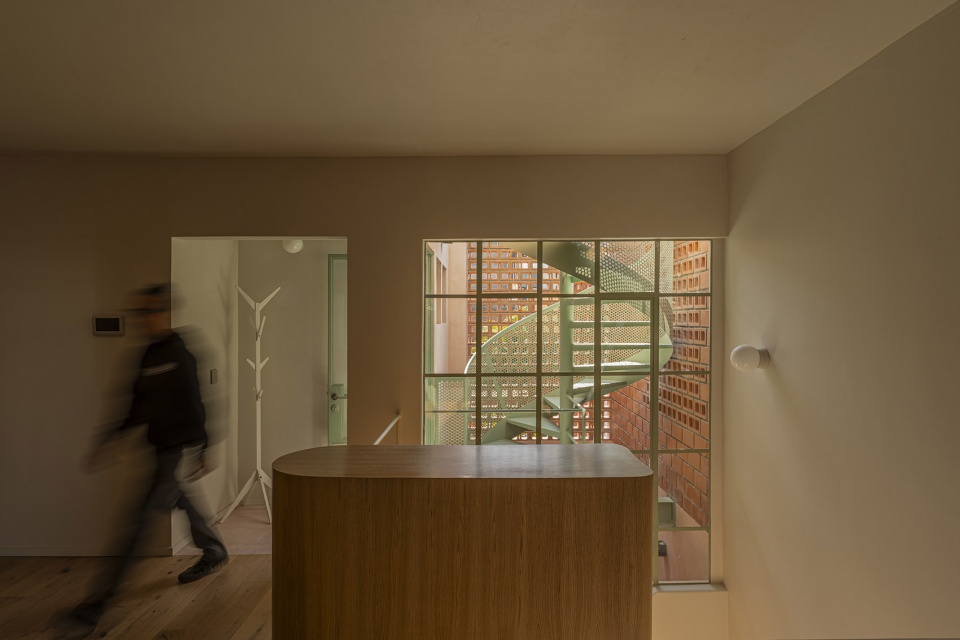
▼释放了下方庭院空间,
allowed the lower patios to be fully liberated
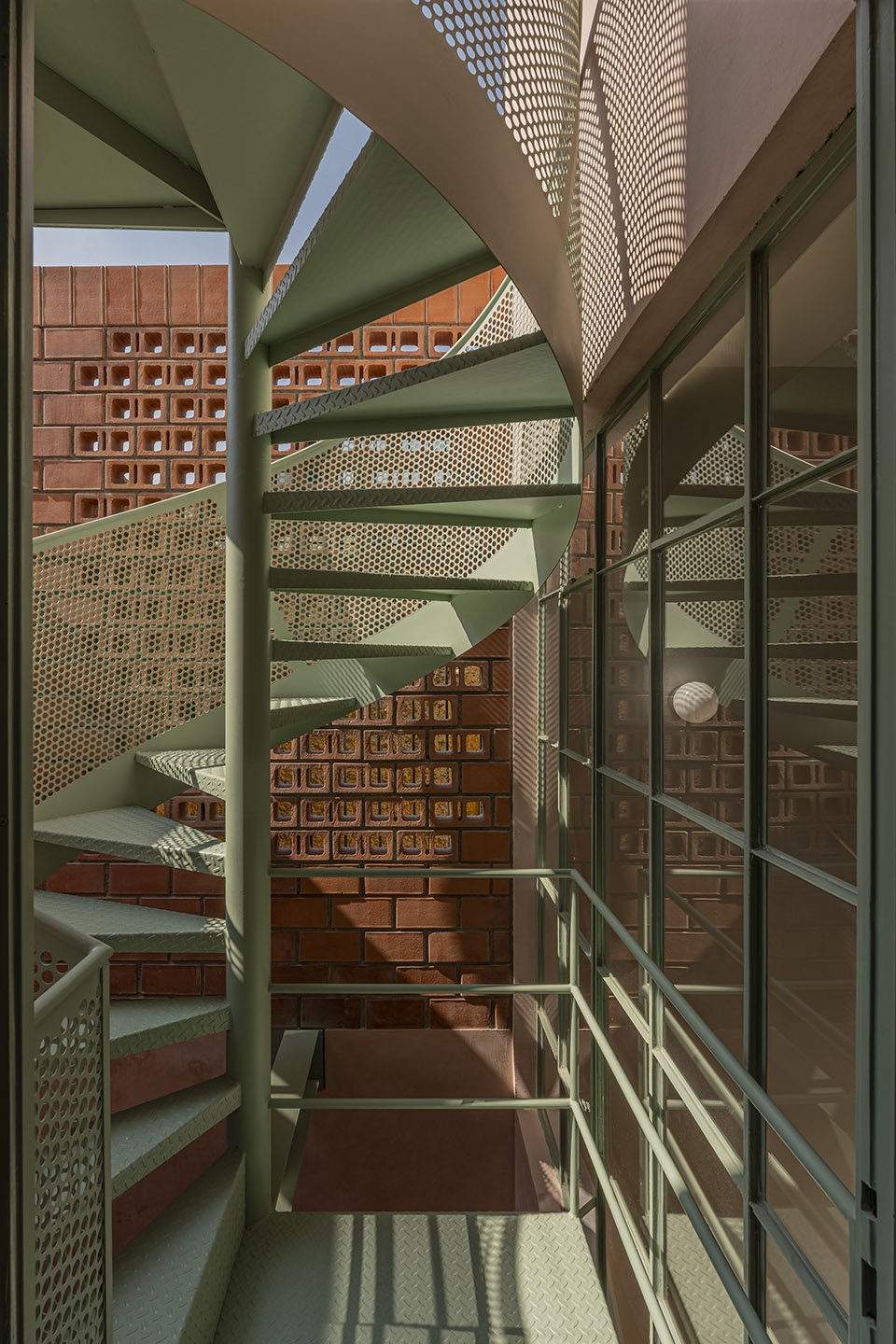
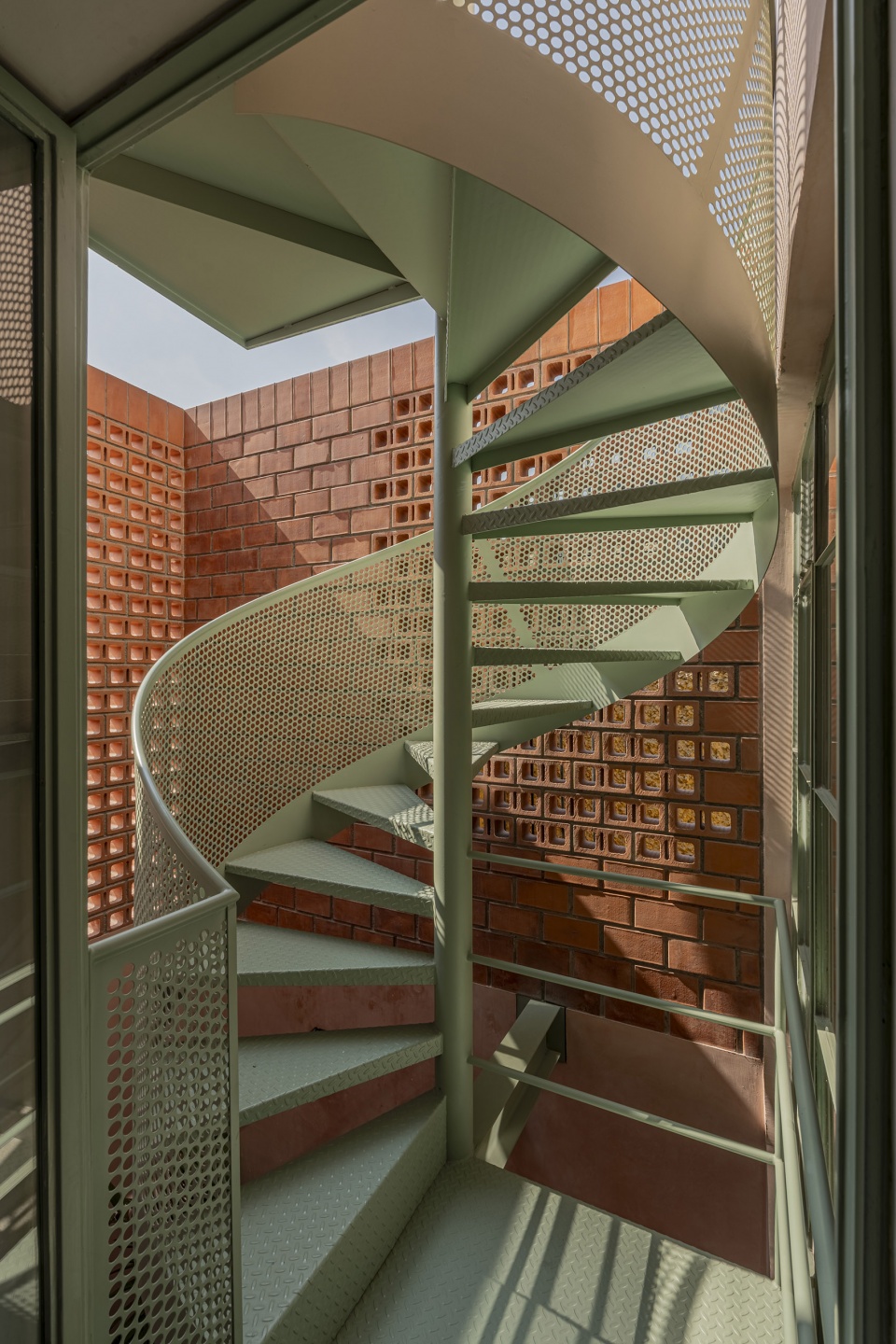
▼最大化自然光的进入,maximized natural light penetration
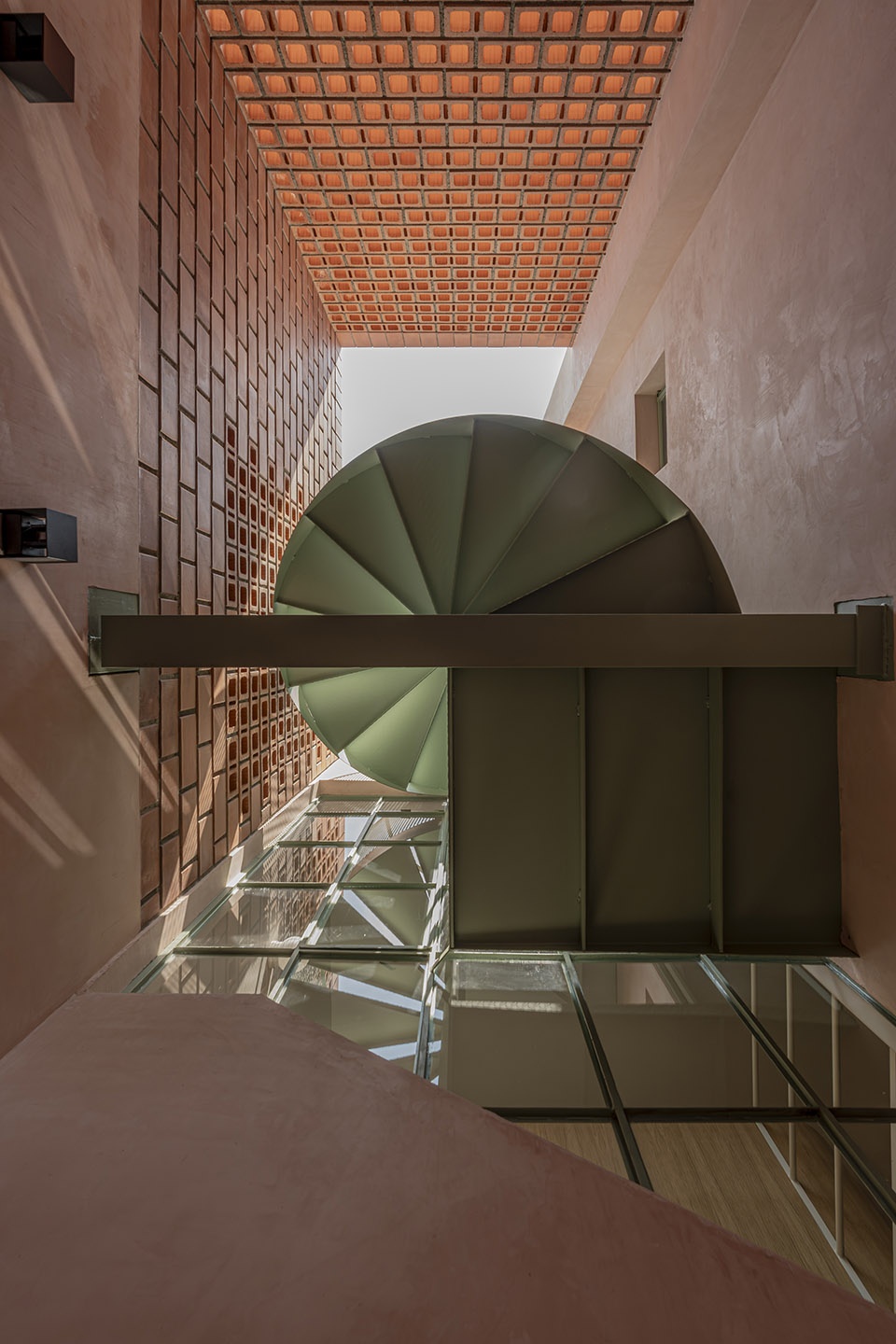
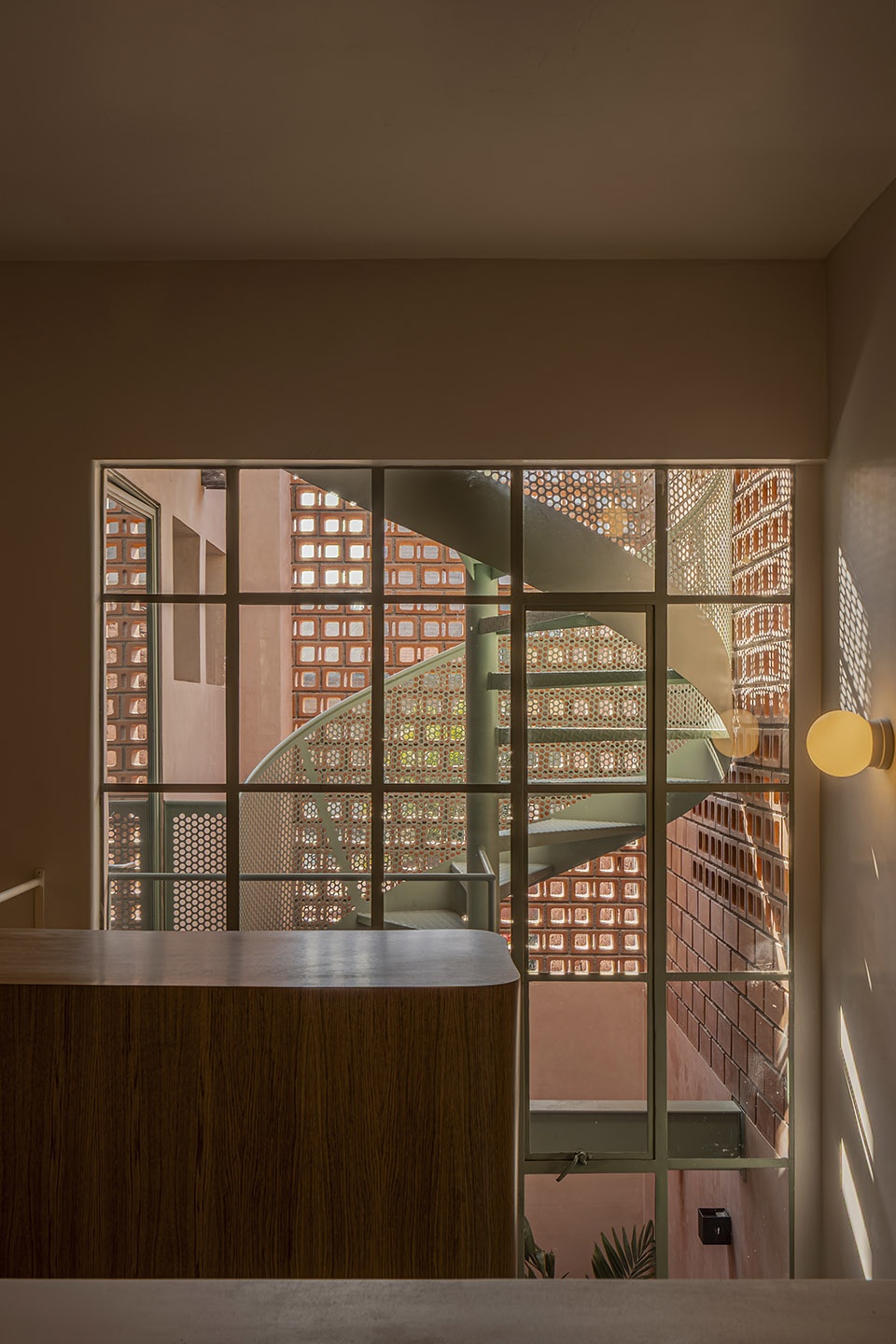
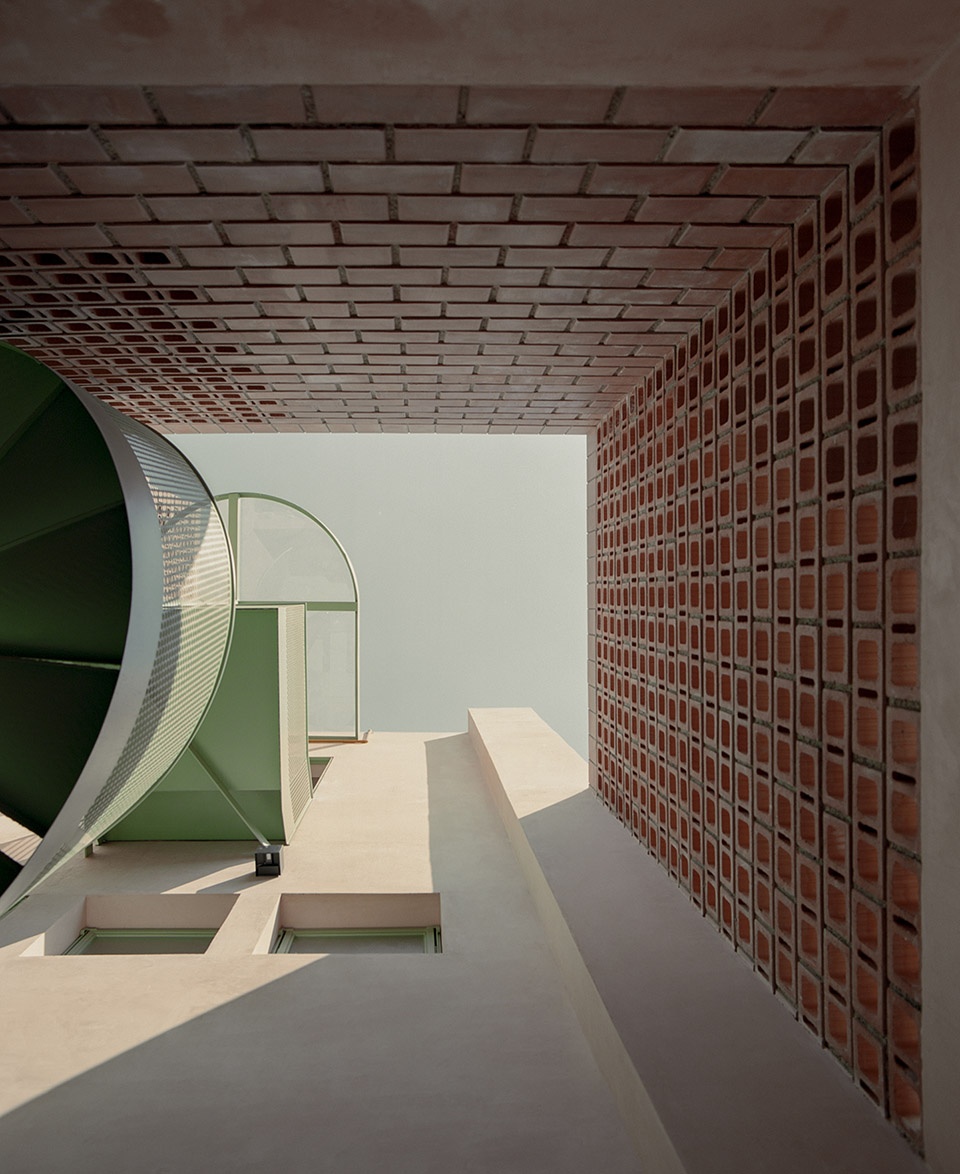
因此,交通空间成为一个连续的系统,使每一层都能彼此连接,又不干扰下方空间,而露台则成为整个空间序列的自然终点。住宅原有的南北朝向使室内主要依靠间接光。建筑策略通过引入新的开口、扩展视觉联系,并加入烧制砖格栅,使东西向光线能够穿越建筑体量。房屋在一天中被不断激活:清晨柔和,正午出现侧向光影,日落时则充满温暖的反射。
Circulation thus becomes a continuous system in which each level connects without interfering with the one below, and the terrace functions as the natural culmination of the spatial sequence. The original north–south orientation produced interiors characterized primarily by indirect light. The architectural strategy introduced new openings, expanded visual connections, and incorporated fired brick lattice screens to allow east–west light to traverse the volume. The house activates throughout the day: soft mornings, lateral flashes at midday, and warm reflections at sunset.
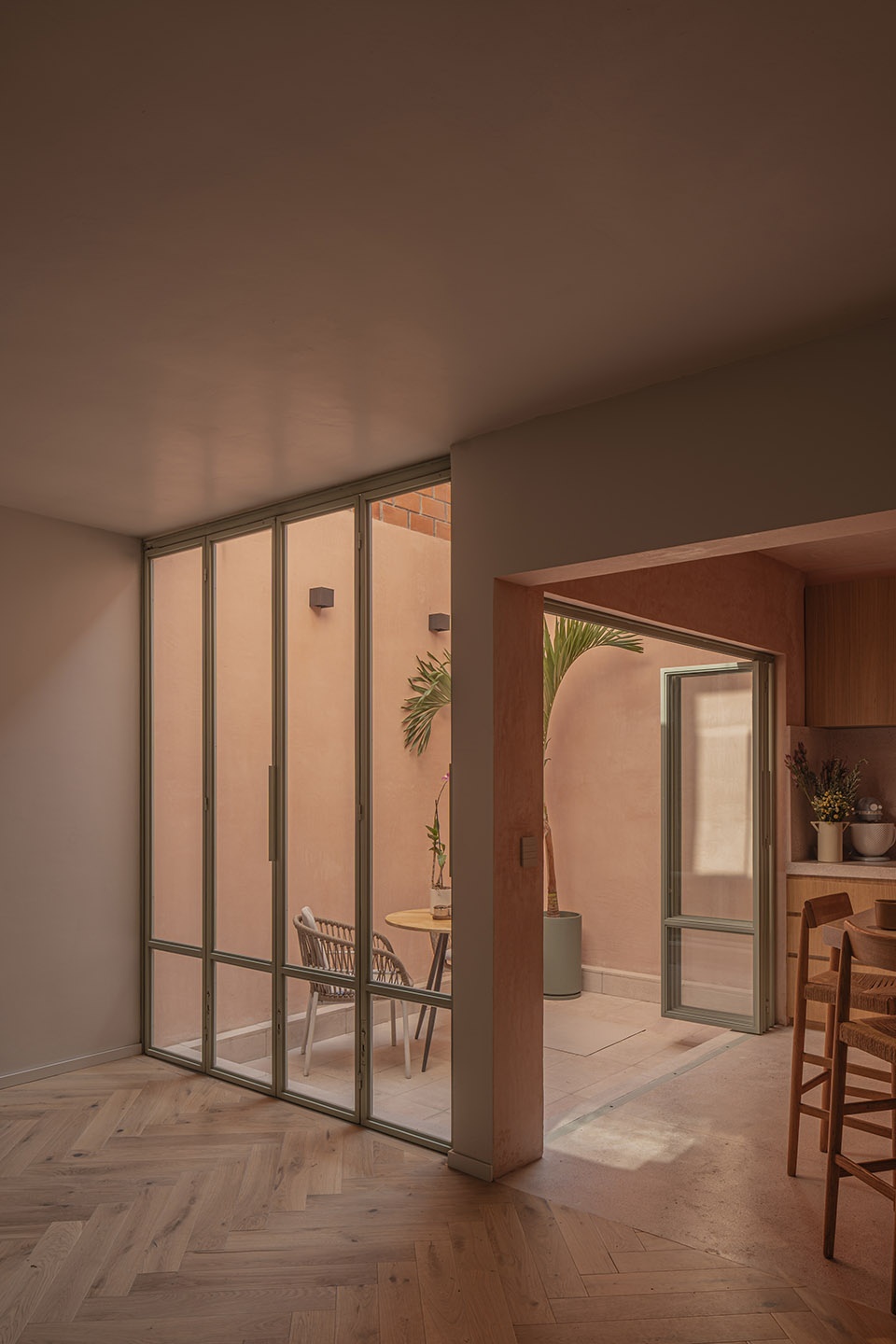
▼庭院引入自然光,courtyard introduces the natural lighting
▼庭院引入自然光,courtyard introduces the natural lighting
▼烧制砖格栅,fired brick lattice screens
在材料层面,项目回应了一种复杂的当代状况:如何处理近年来墨西哥建筑中被广泛使用的饰面材料,例如 chukum灰泥和矿物基灰泥。除了这些材料的普遍存在之外,其重复使用也在一定程度上造成了建筑与室内表达的同质化:相似的表面出现在住宅、文化中心和商业空间中,却常常缺乏与具体语境的清晰关联。在许多情况下,近年的建筑几乎可以被放置在任何地方。
Materially, the project engages with a complex contemporary condition: working with finishes widely used in recent Mexican architecture, such as chukum and mineral-based plasters. Beyond their generalized presence, the repetition of these materials has contributed to a certain homogenization of architectural and interior expression, where similar surfaces appear in houses, cultural centers, and commercial spaces without a clear relationship to context. In many cases, recent architecture could be situated almost anywhere.
▼二层公共区域,the public area on the upper level
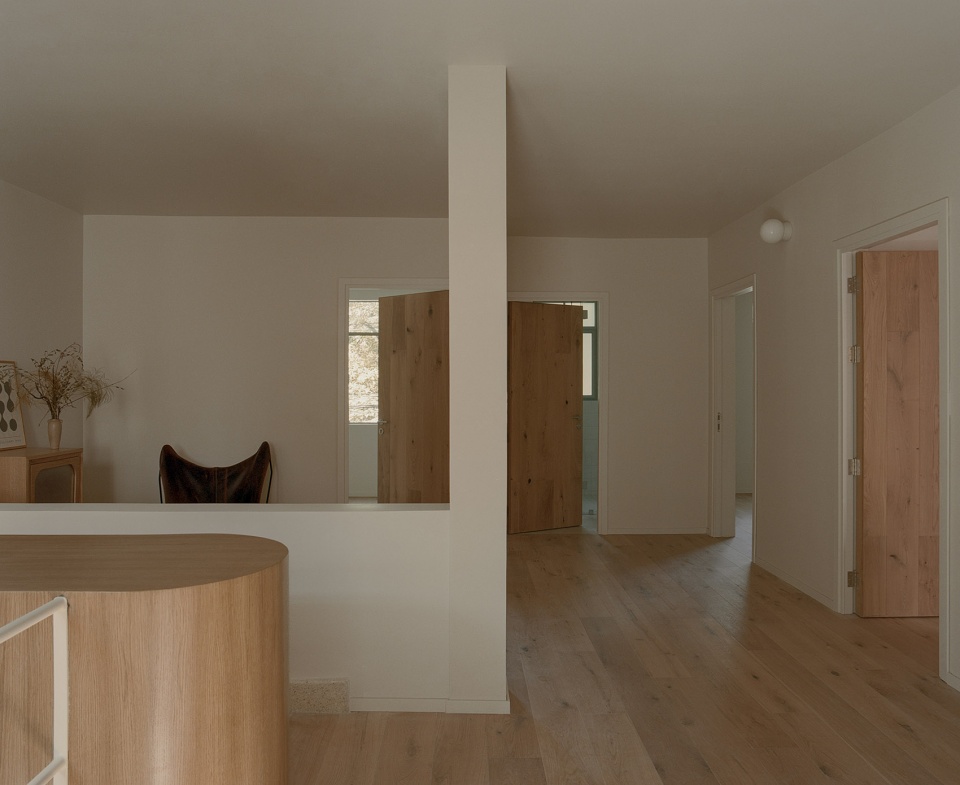
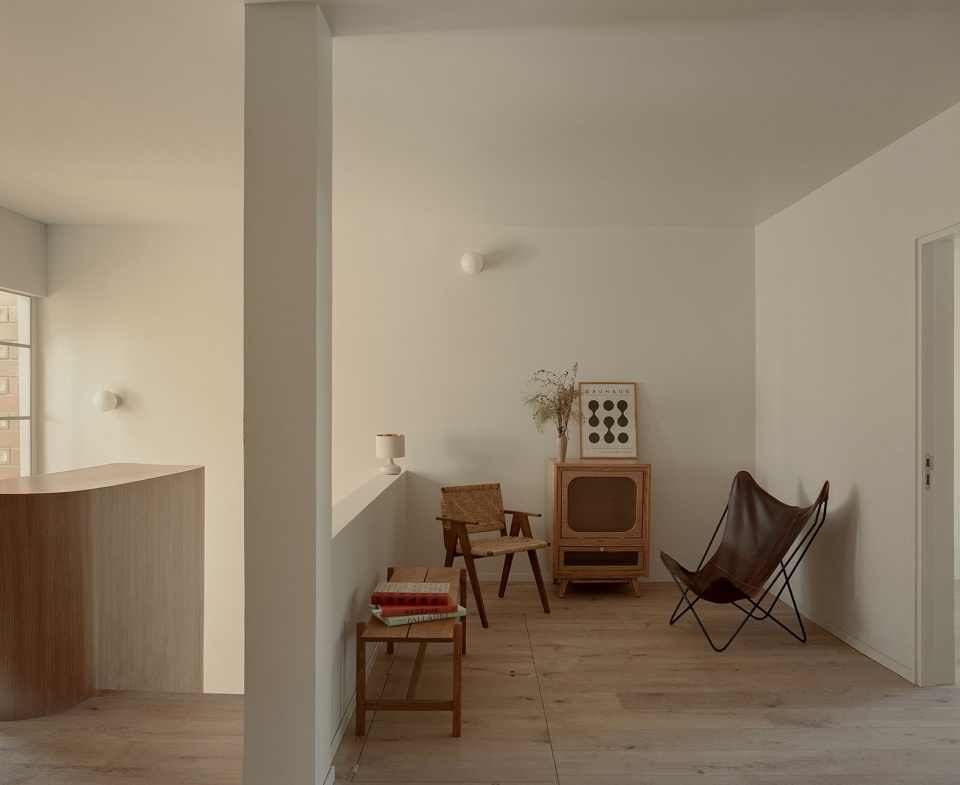
▼二层公共区域,the public area on the upper level
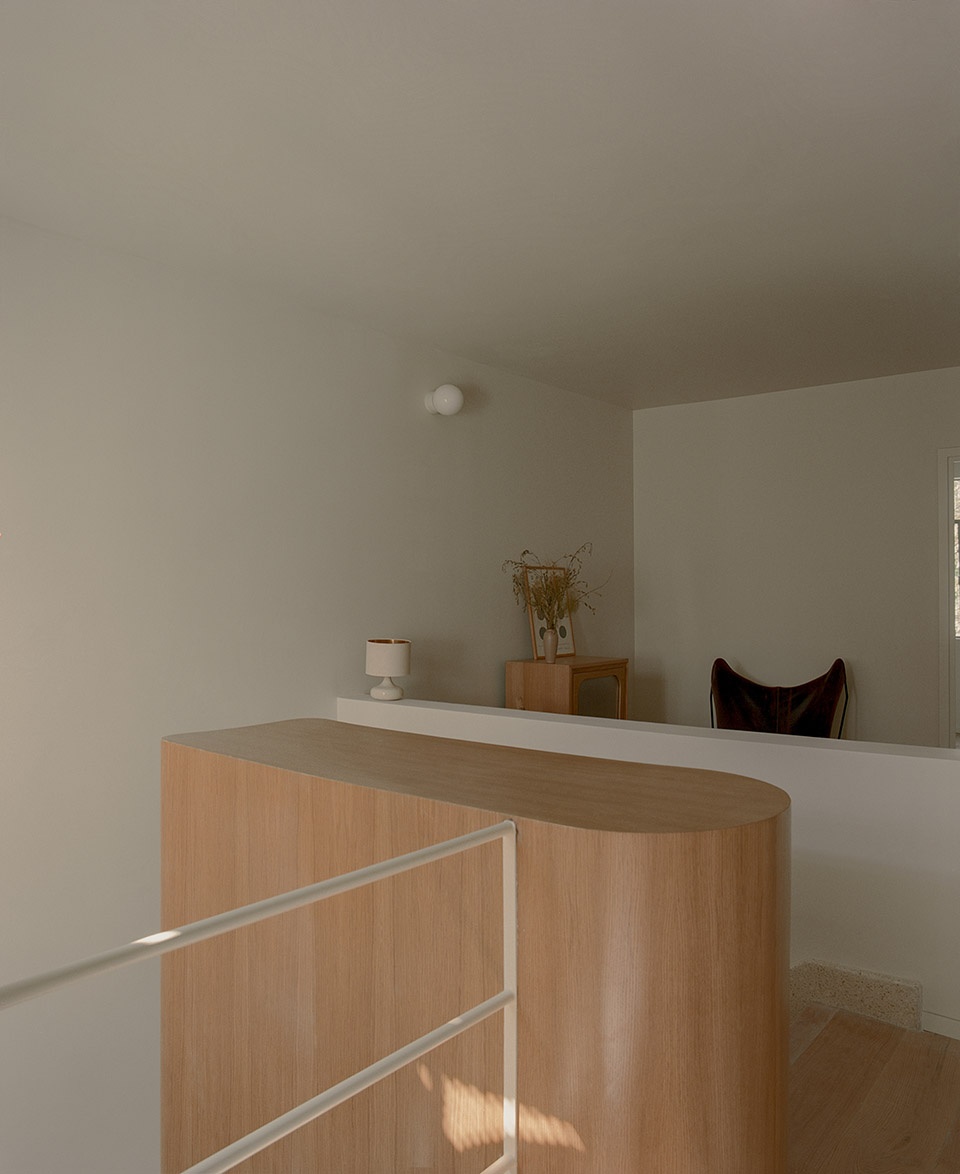
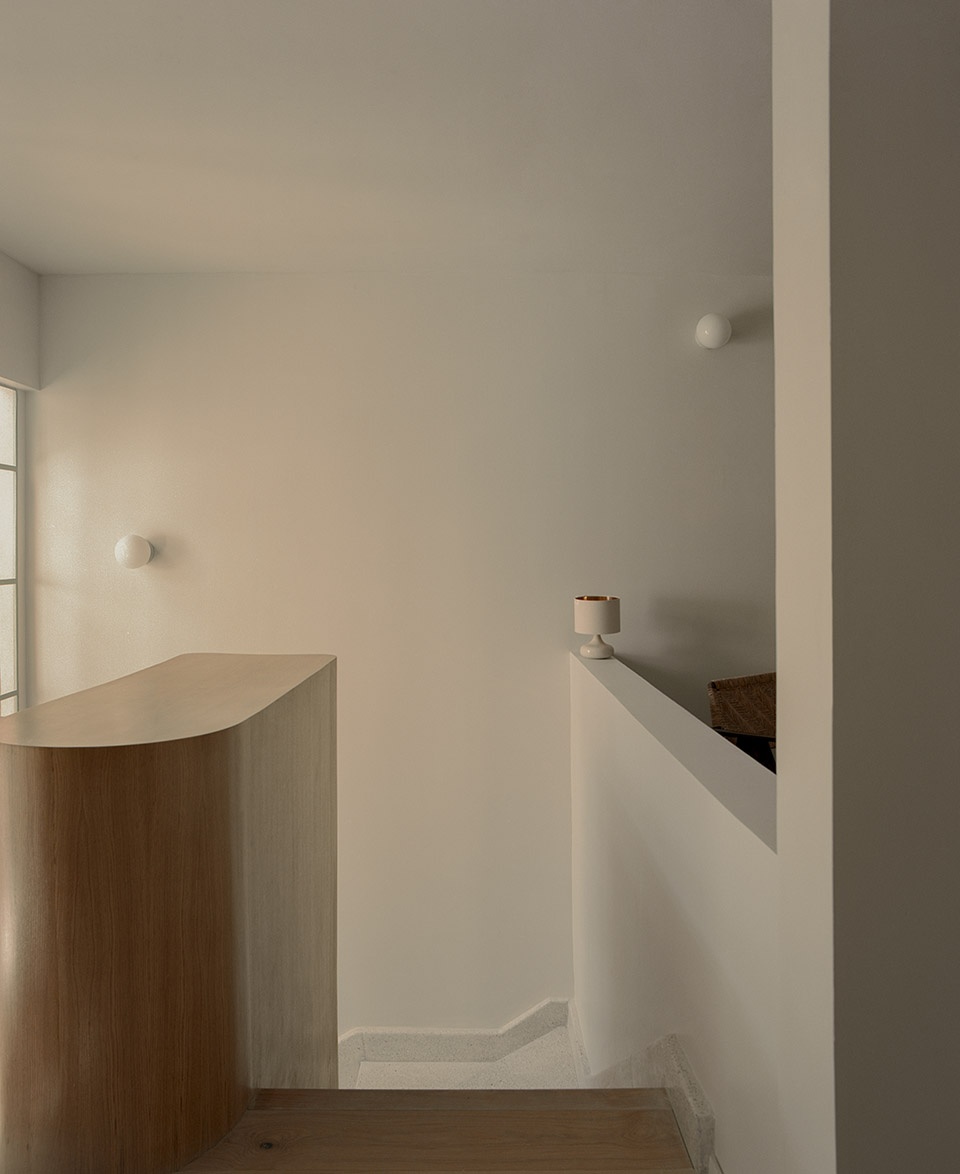
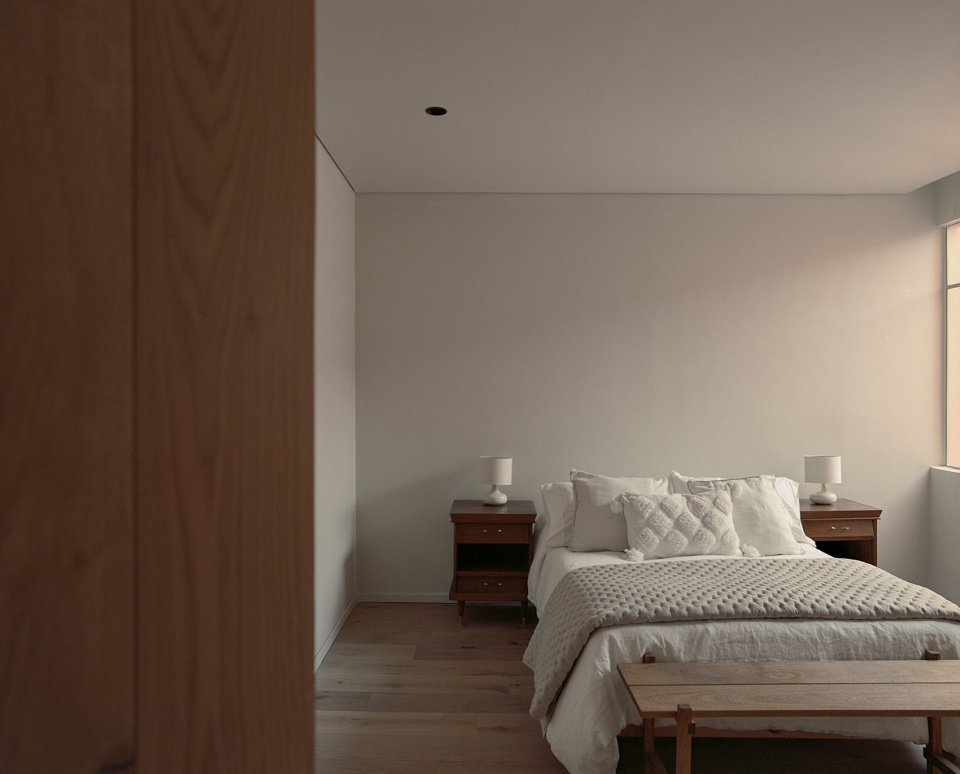
▼卧室区域,bedroom
▼卧室区域,bedroom
与之相对,科约阿坎在历史上始终由色彩定义。人们只需想到 La Casa Azul(蓝屋)这样的参照,便能理解色彩如何构成城市身份。从一开始,我们便希望与这种色彩记忆建立联系。业主要求将 chukum 作为主要饰面材料,而设计过程也逐渐发展为一场积极的对话:关于对比关系和材料应用的决定,都是在协作中形成的,旨在寻求地方身份与当代性之间的平衡。
Coyoacán, by contrast, is historically defined by color. One need only think of references such as La Casa Azul, where color constitutes urban identity. From the outset, we were interested in engaging this chromatic memory. The client requested chukum as a primary finish, and the process evolved into an active dialogue: decisions regarding contrast and material application were developed collaboratively, seeking a balance between local identity and contemporaneity.
▼露台区域,terrace area
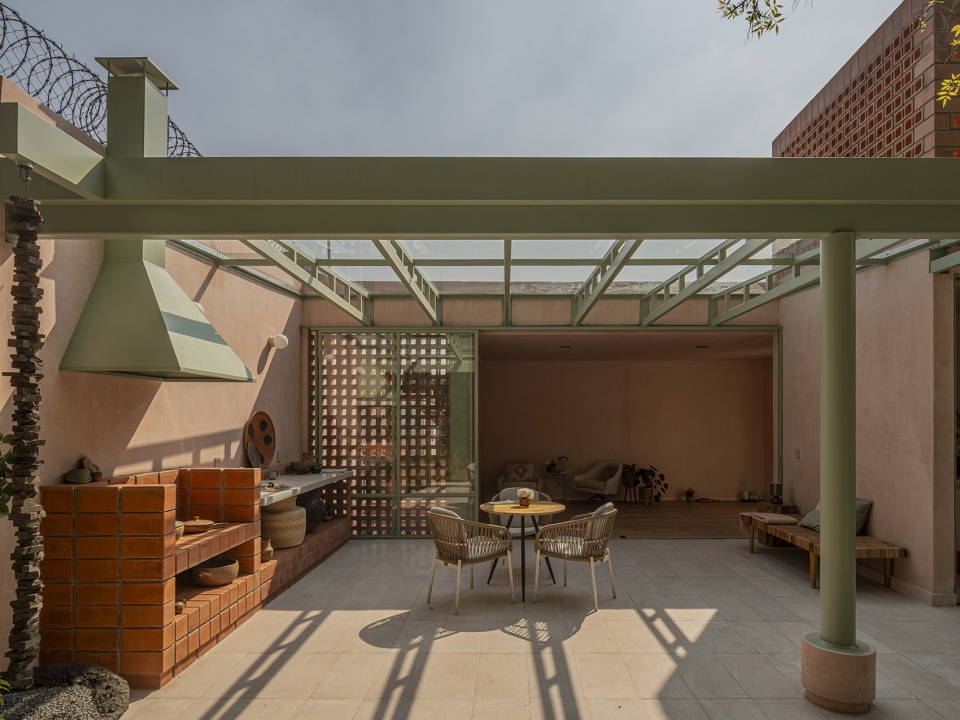
▼露台区域,terrace area
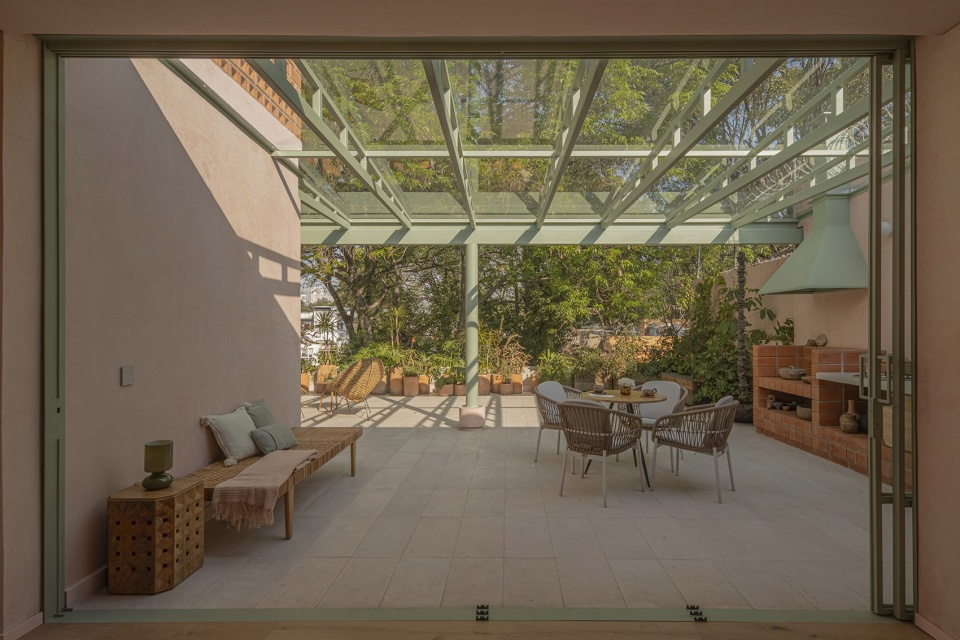
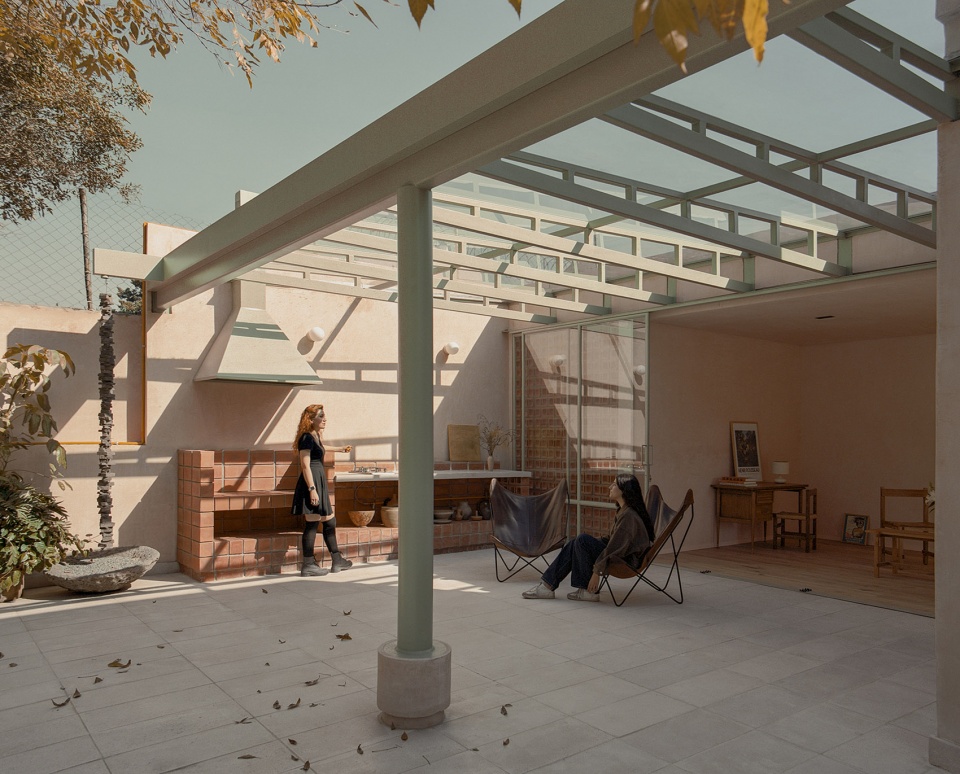
▼露台区域,terrace area
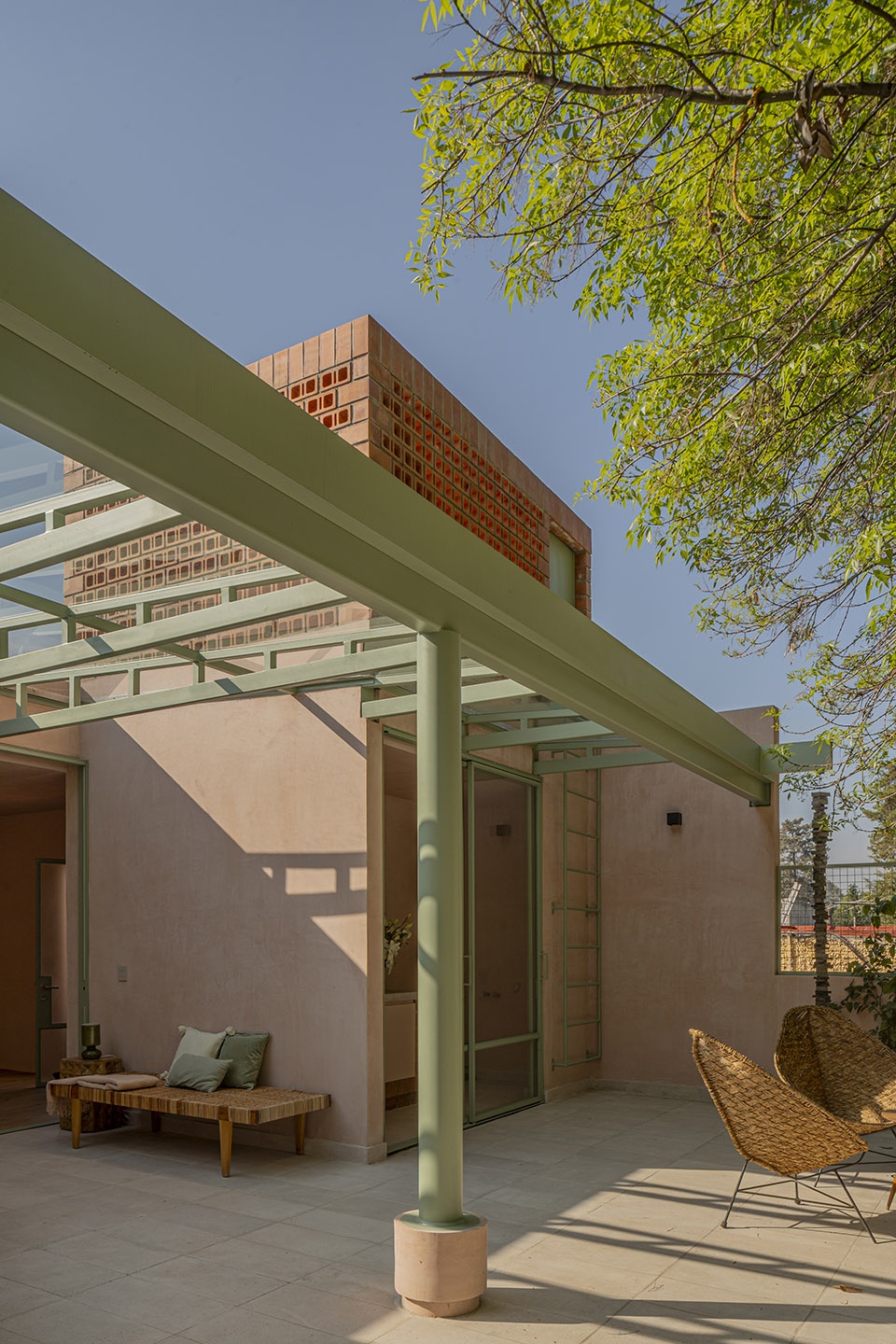
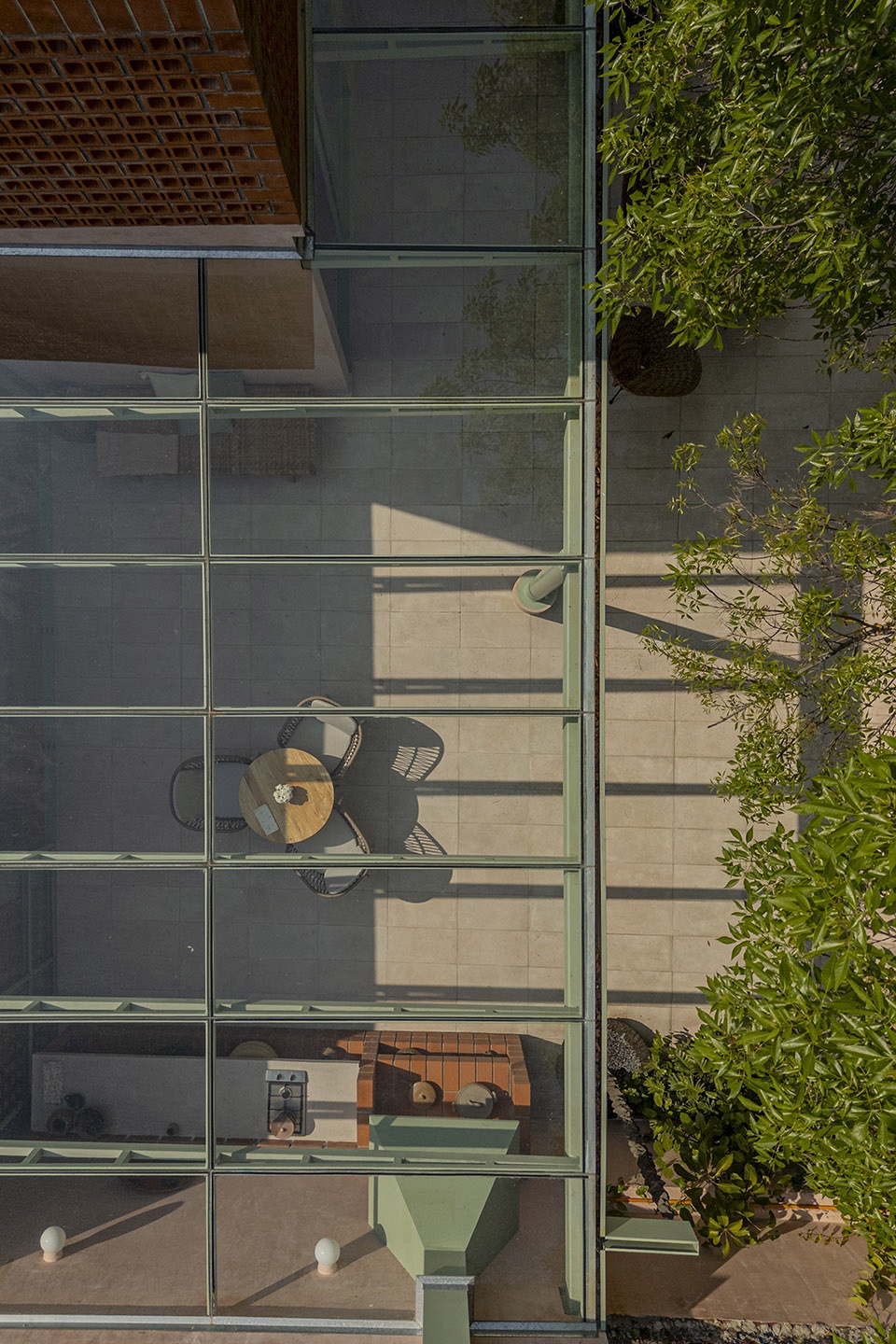
一个关键决定是限制这种材料的使用范围。Chukum灰泥并未作为主导饰面覆盖整栋住宅,而是用于直接面向外部或涉及潮湿条件的表面:立面、庭院和屋顶露台——作为朝向城市开放的延伸空间——以及浴室和厨房区域。其余室内表面则采用更平滑、更具居住感的灰泥饰面,营造出克制、宜居且具有鲜明城市气质的氛围。
A key decision was to delimit the material’s use. Chukum was not applied as a dominant finish throughout the entire house, but rather on surfaces that directly engage the exterior or conditions of moisture: façades, patios, and the roof terrace — as an open extension toward the city — as well as bathrooms and kitchen areas. The remaining interior surfaces were finished in smoother, more domestic plaster, generating an atmosphere that is restrained, inhabitable, and distinctly urban.
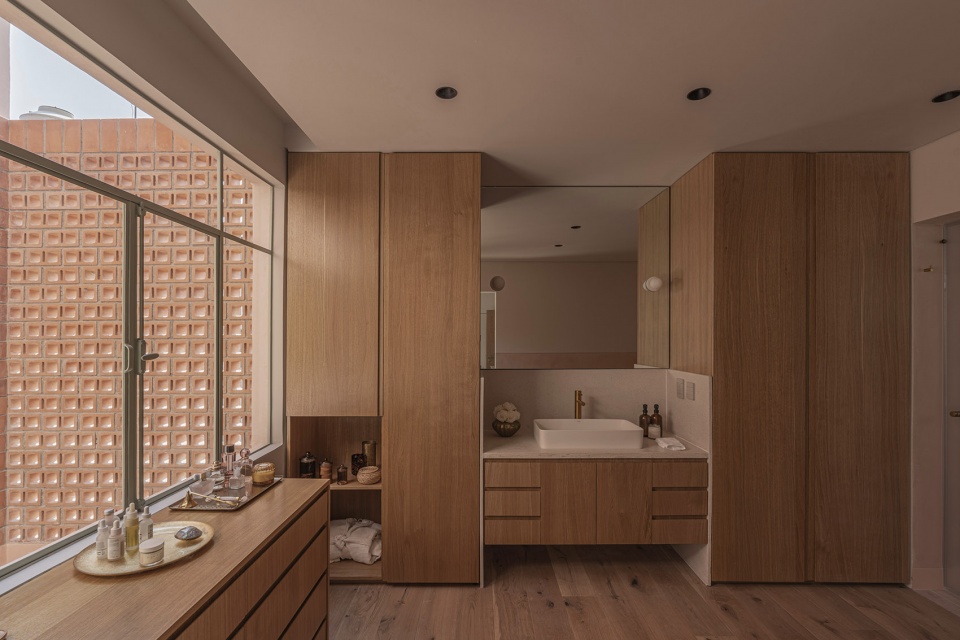
▼浴室区域,bathroom
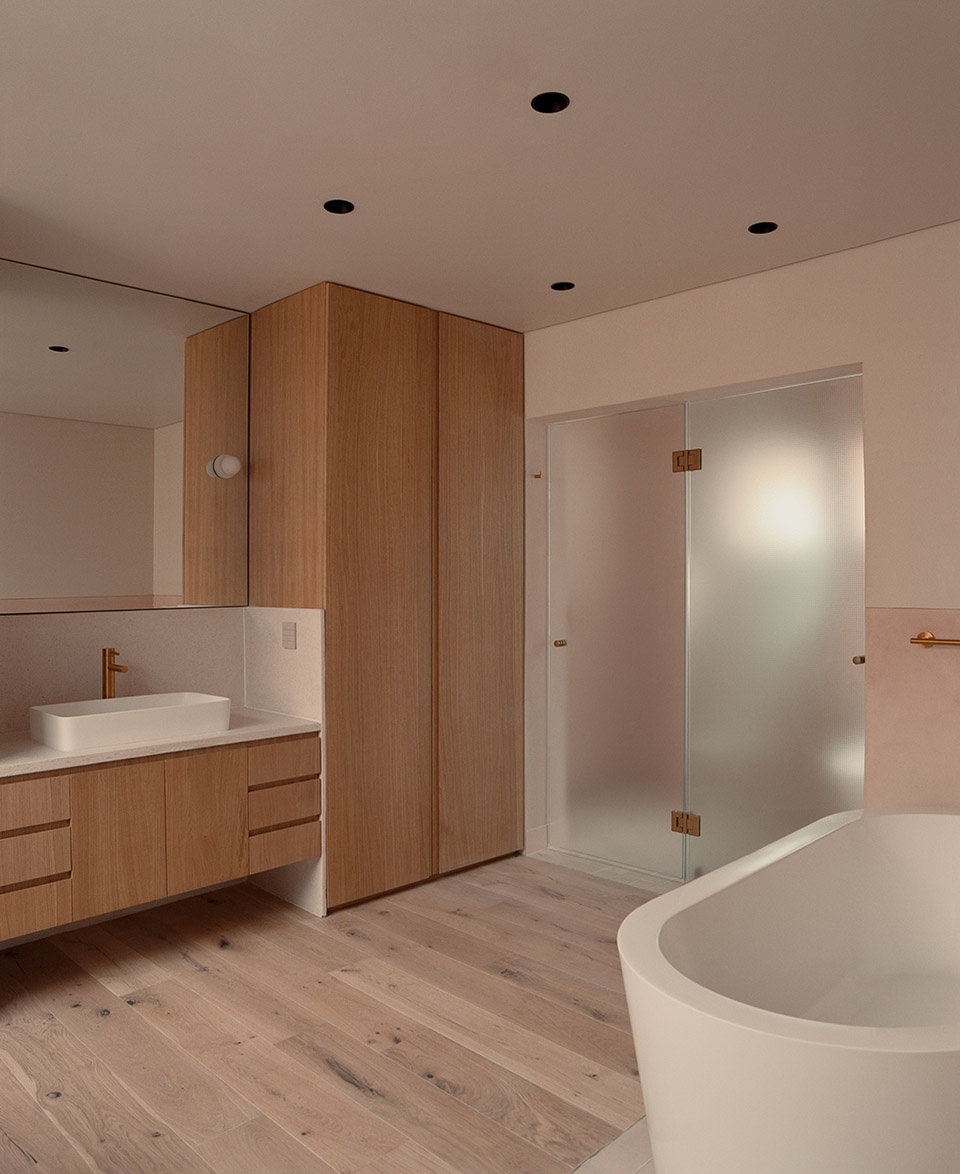
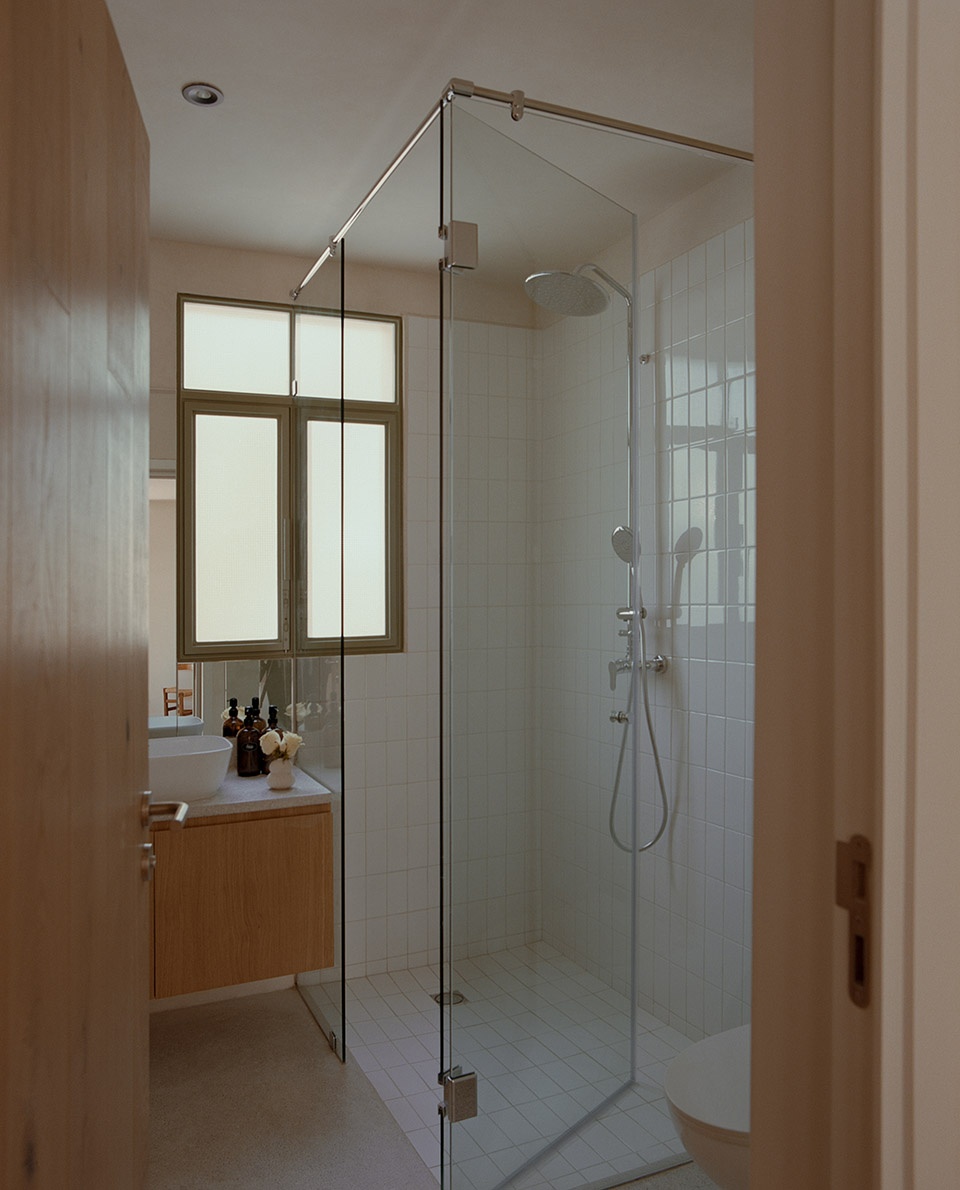
这种区分建立起清晰的逻辑:暴露于天气或水汽中的表面承担更强的肌理、色彩和材料密度;干燥的室内空间则强调连续性与平静。由此,材料不再是一种覆盖整体的风格化姿态,而成为一种策略性资源,被应用在其技术与感官特质最具意义的位置。
This differentiation establishes a clear logic: surfaces exposed to weather or water assume greater texture, color, and material density; dry interior spaces privilege continuity and calm. In this way, the material ceases to be a totalizing stylistic gesture and instead becomes a strategic resource, applied where its technical and sensory qualities are most meaningful.
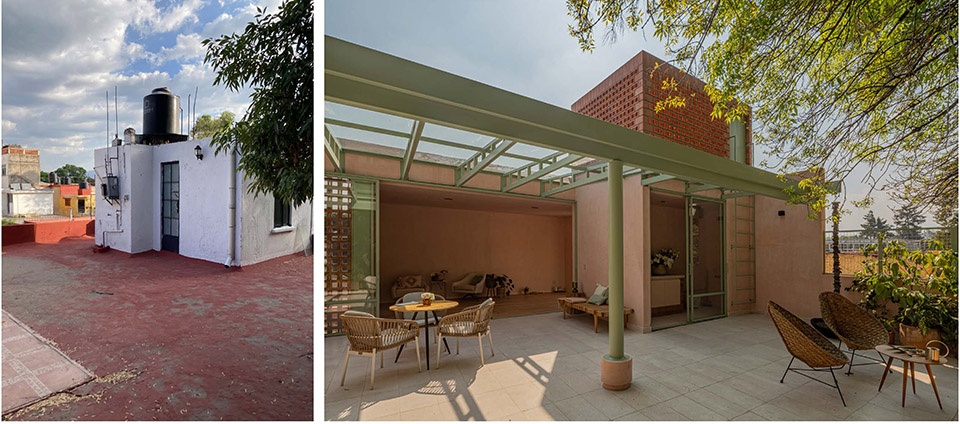
▼改造前后对比,before and after renovation
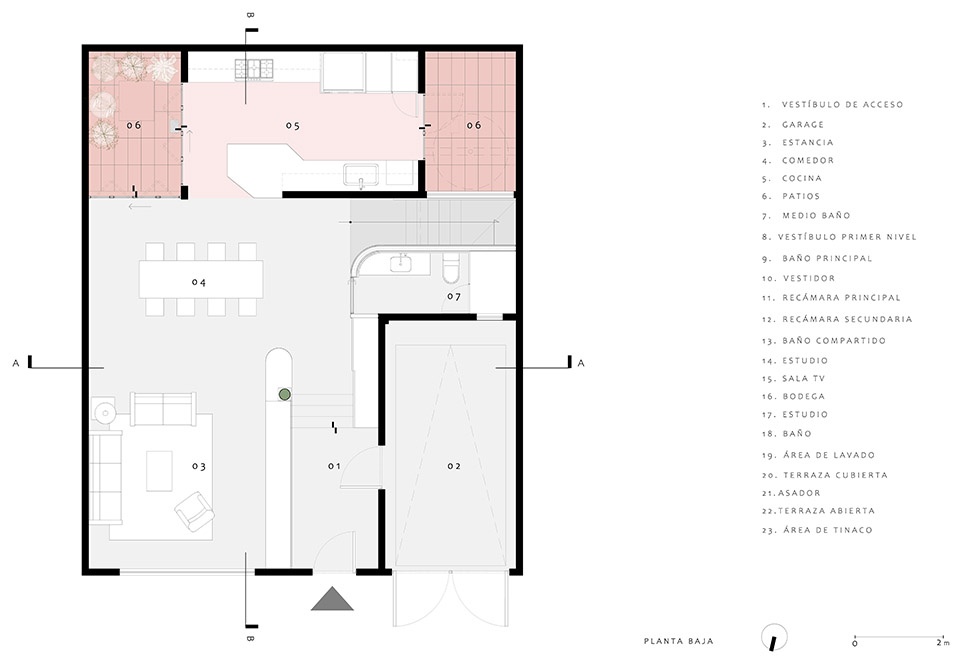
▼一层平面图,ground floor plan
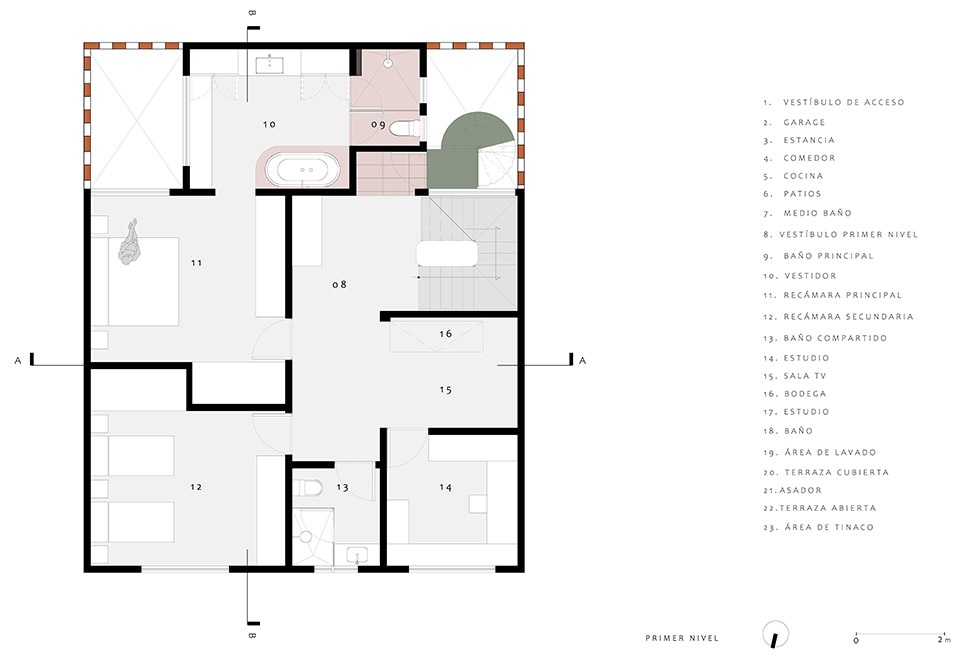
▼二层平面图,first floor plan
▼三层平面图,second floor plan
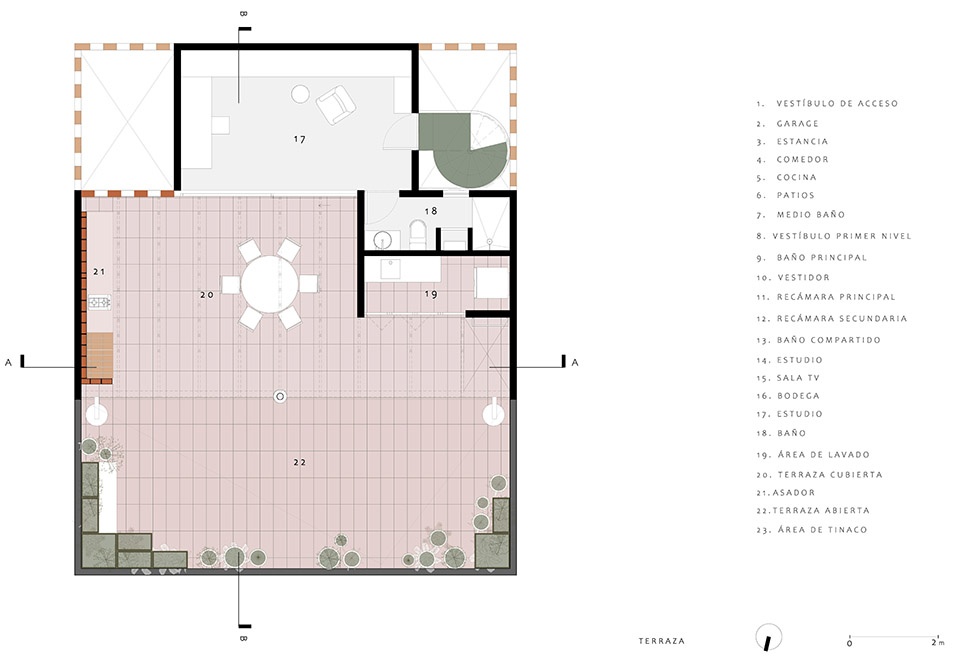
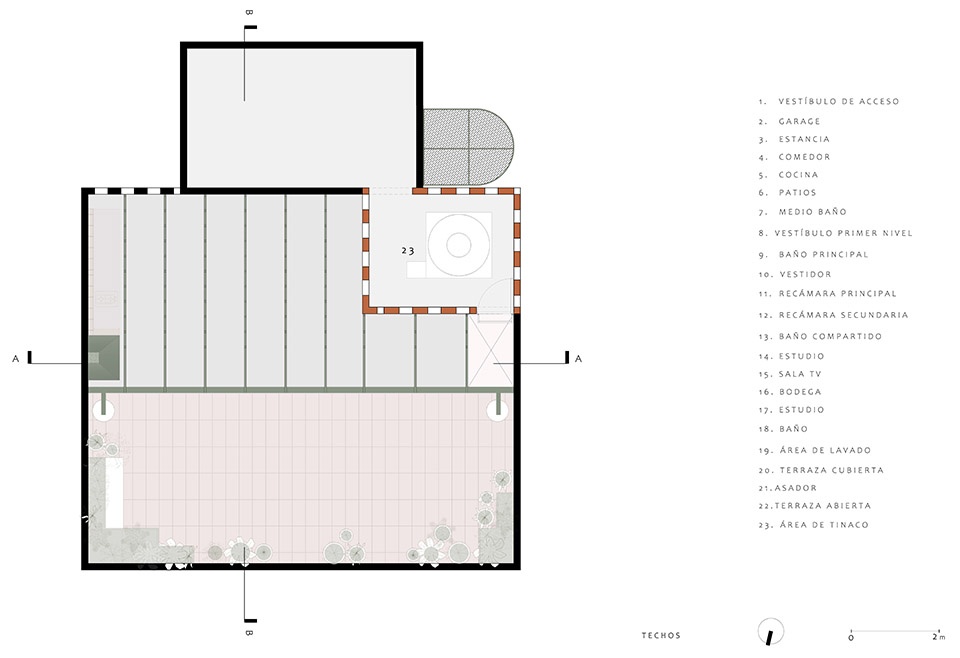
▼屋顶平面图,roof plan
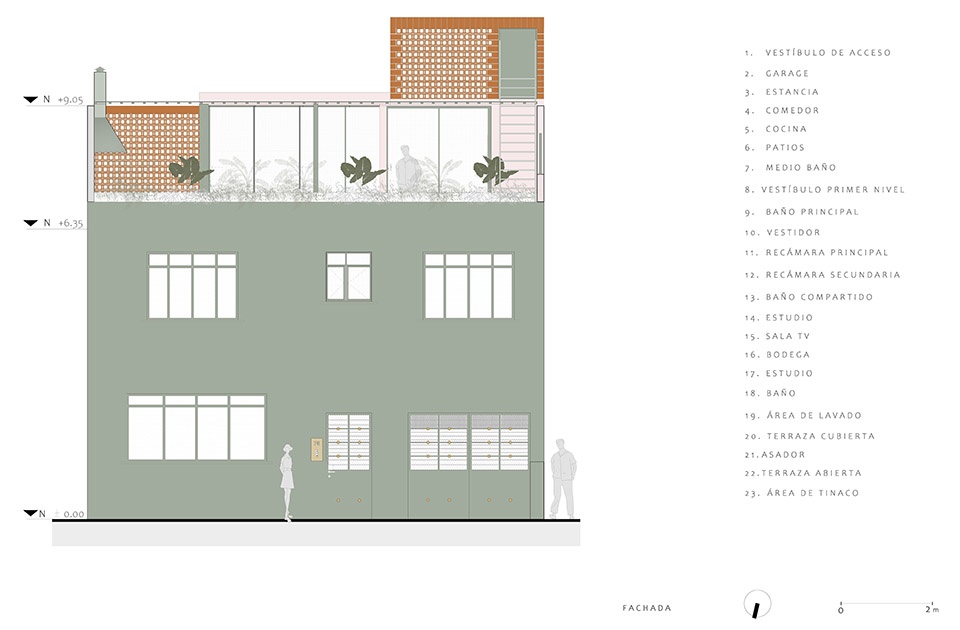
▼立面图,elevation
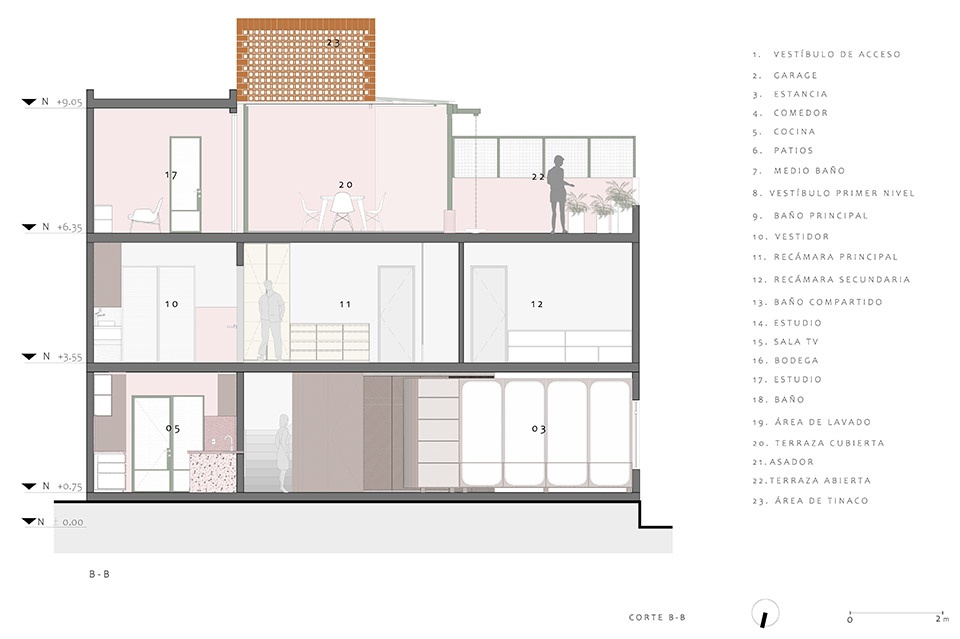
▼剖面图,section
Architecture office AMASA Estudio, Andrea López + Agustín Pereyra
Use Residencial, Restauración / Residential, Restoration
Area 337.3 M2
Location Ciudad de México, México
Status Construido / Built
Year 2025
Architects Andrea López, Agustín Pereyra
Client Stacy Perskie, Sofía Sisniega
Construction AMASA Estudio, Andrea López + Agustín Pereyra
Restructuring Engineering Juan Felipe Heredia
Installations Engineering AMASA Estudio, Andrea López + Agustín Pereyra
Lighting AMASA Estudio, Andrea López + Agustín Pereyra
Team Ileana Tajonar, Roxana León
Photography Andrés Cedillo, Zaickz Moz
Furniture & Interior Styling Casa Purux