KOSMALT住宅改造,斯洛伐克 / Atrium Architekti
KOSMALT原为科希策钢铁厂(VSŽ)规模最大的工人宿舍,建于20世纪60年代,由建筑师Ladislav Greč和Róbert Kandrík设计。建筑名称源自一种搪瓷钢材“Kosmalt”,这是当地钢铁厂具有代表性的产品。建筑坐落于斯洛伐克科希策的Terasa住宅区,凭借鲜明的轮廓和富有辨识度的立面,成为城市肌理中的重要地标。
KOSMALT is originally the largest workers’ dormitory of the Košice steelworks VSŽ, built in the 1960s according to the design of architects Ladislav Greč and Róbert Kandrík. The name of the building refers to a type of enameled steel, the production of which was specific to the local steelworks. The building is located in the Terasa housing estate in Košice and, thanks to its distinctive silhouette and characteristic façade, forms a dominant feature of the urban structure.
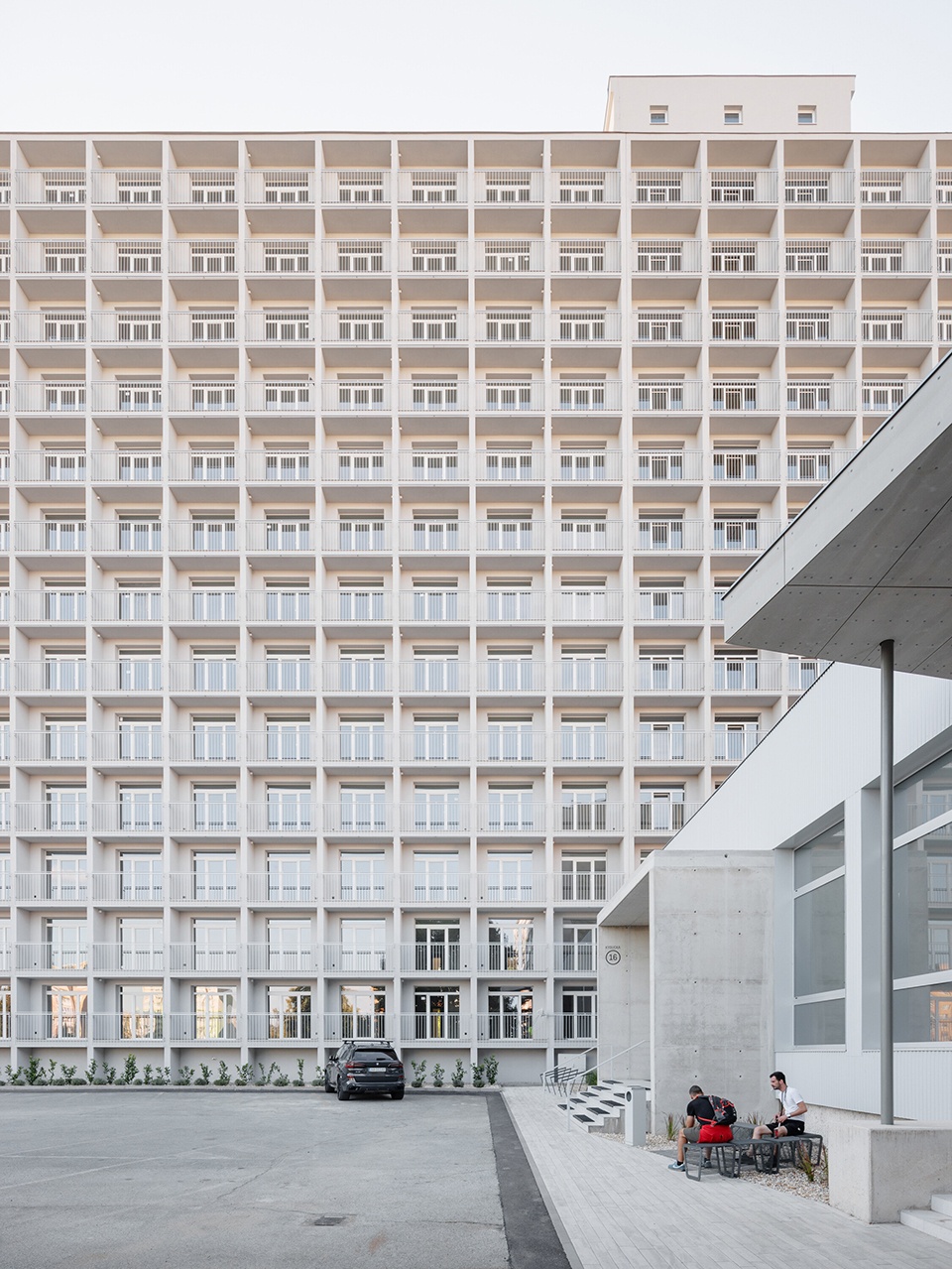
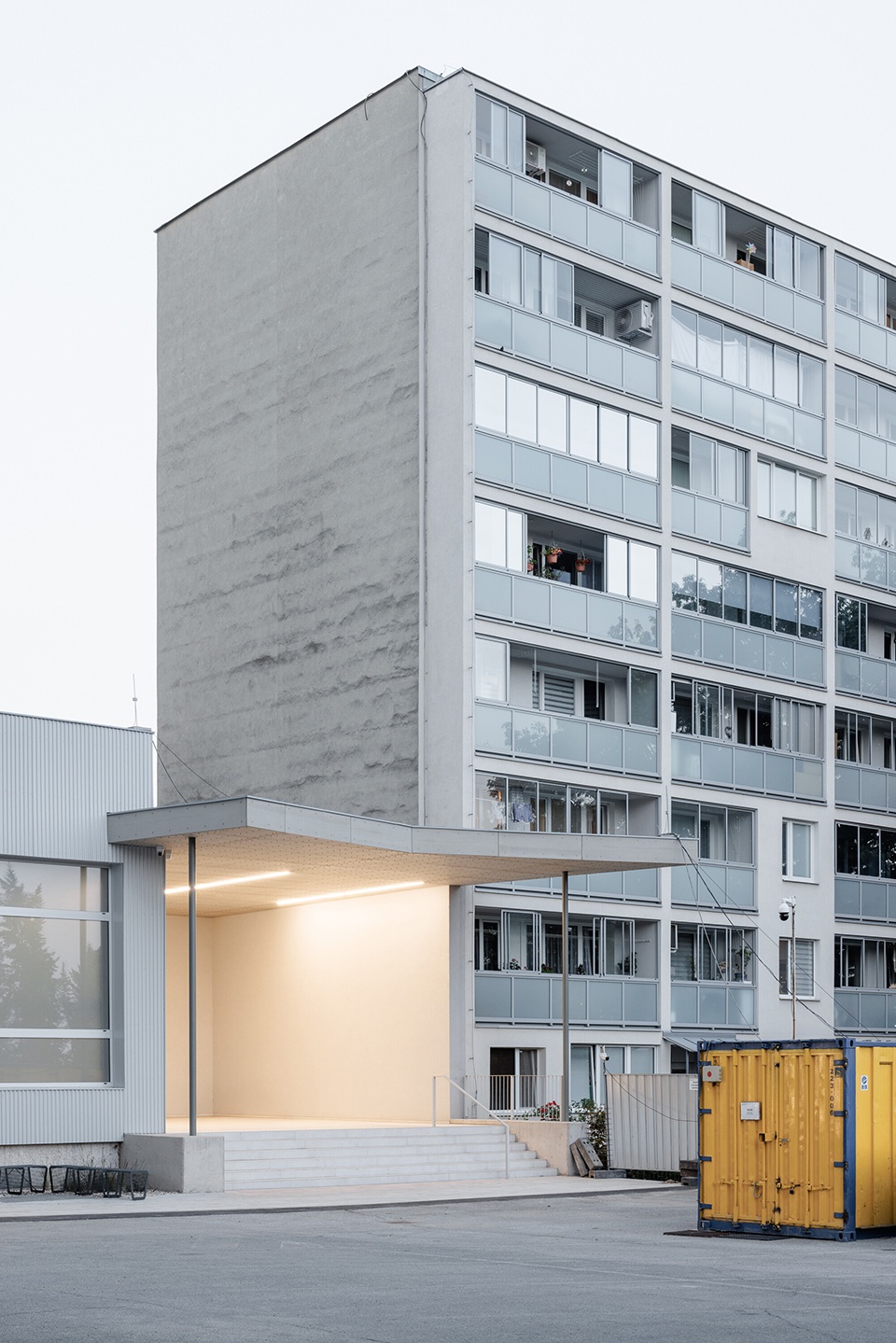
▼建筑外观,Building exterior
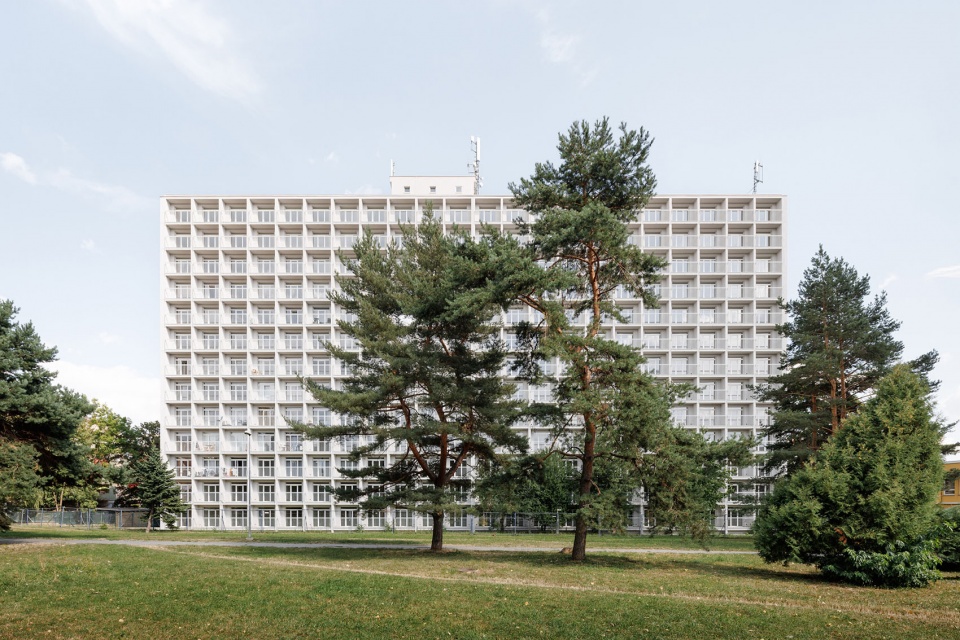
此次建筑内外全面改造的目标,是在保留建筑原有身份特征的基础上,修复其原有品质,并使其满足当代居住需求。建筑师的设计理念建立在这样一种信念之上:即便是20世纪下半叶具有功能主义特征的类型化建筑,只要经过细致而审慎的更新改造,同样能够提供高品质且富有吸引力的城市居住环境。
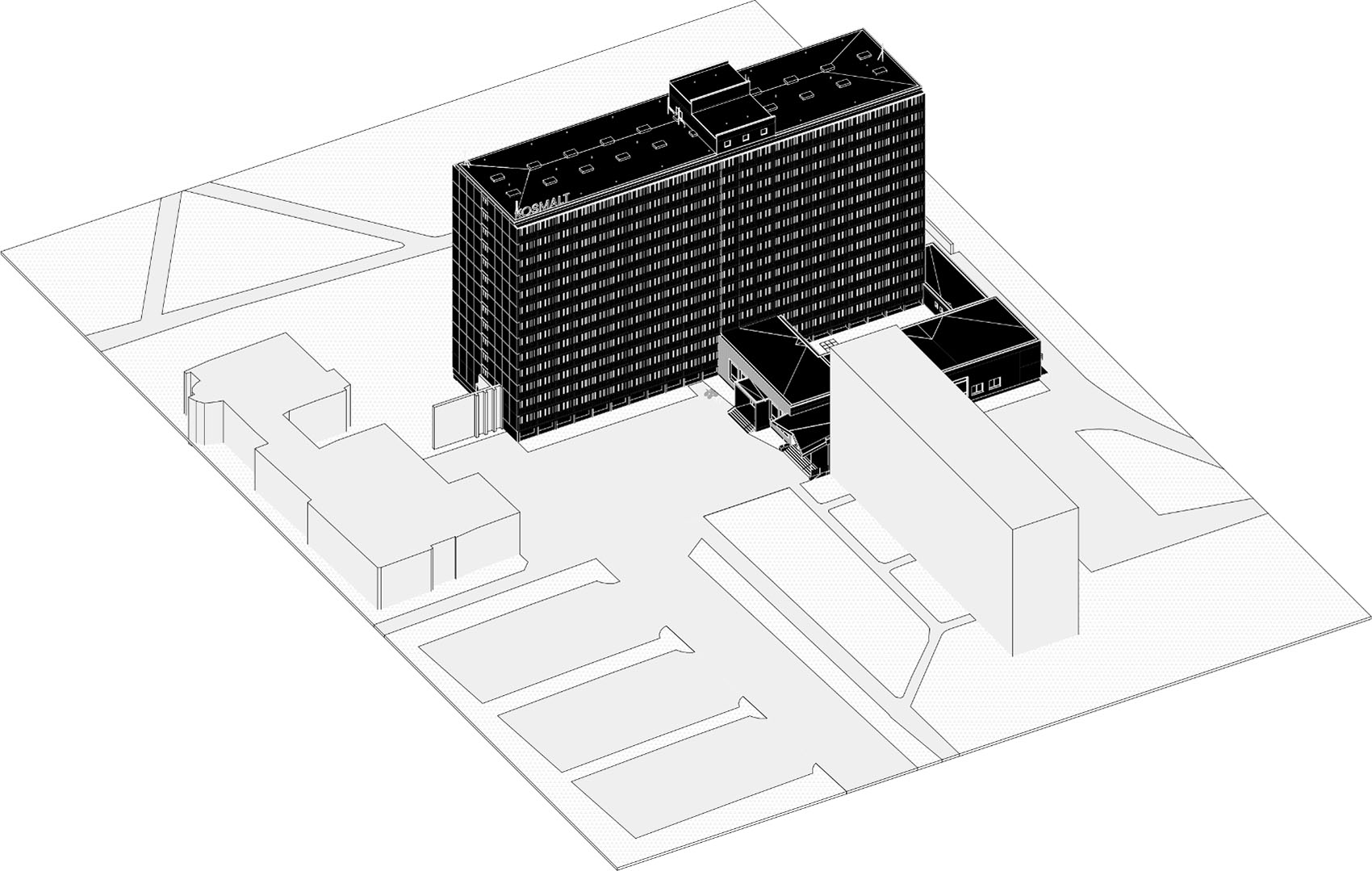
▼场地轴测图,Site axonometry
The aim of the comprehensive renovation of both the exterior and the interior of the building was to preserve the identity of the structure, rehabilitate its original qualities and at the same time adapt it to today’s housing requirements. The approach of the architects is based on the belief that even typologically utilitarian buildings of the second half of the 20th century can, after a sensitive transformation, offer full-fledged and attractive urban housing.
▼住宅立面,Residential façade
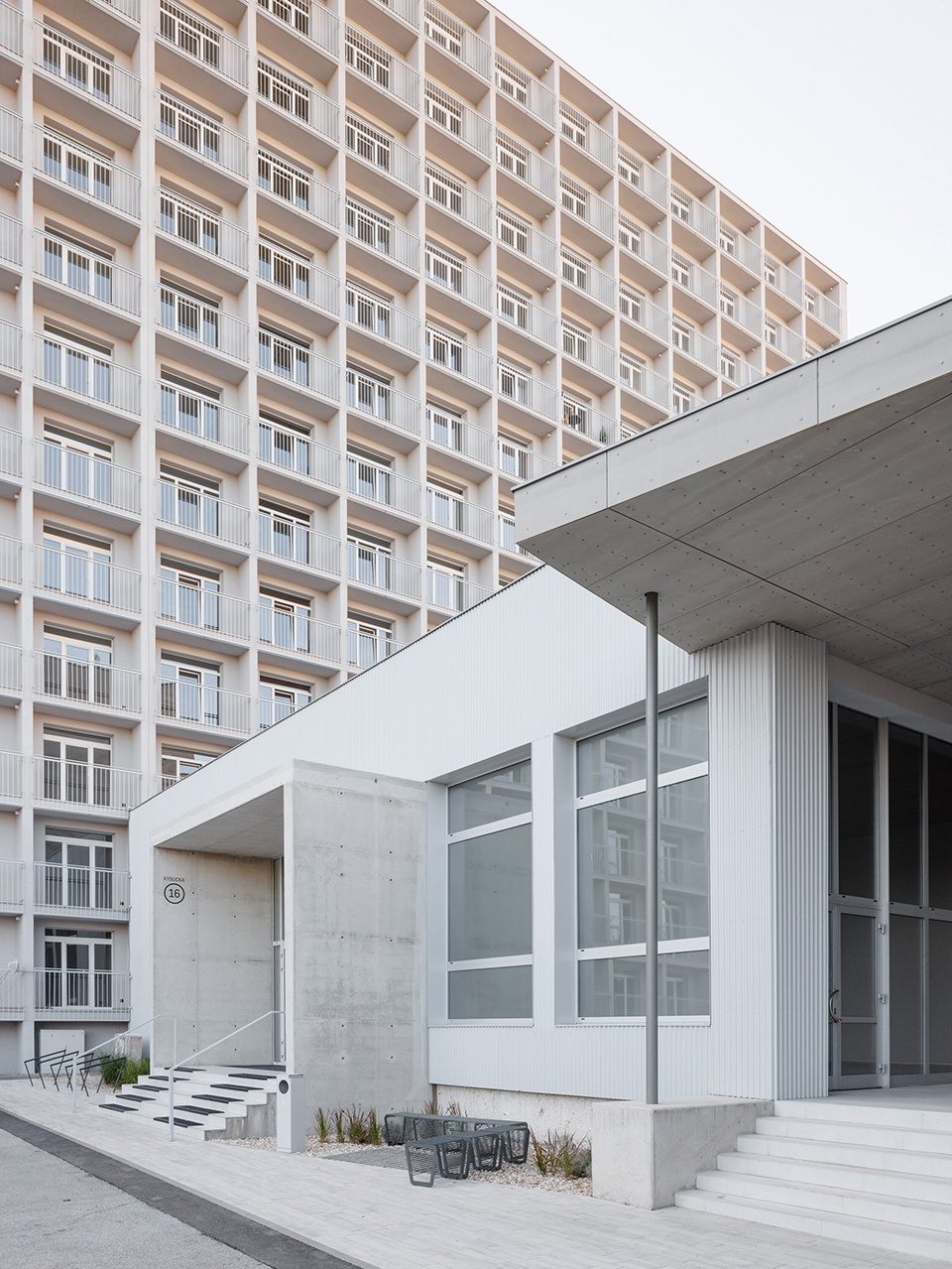
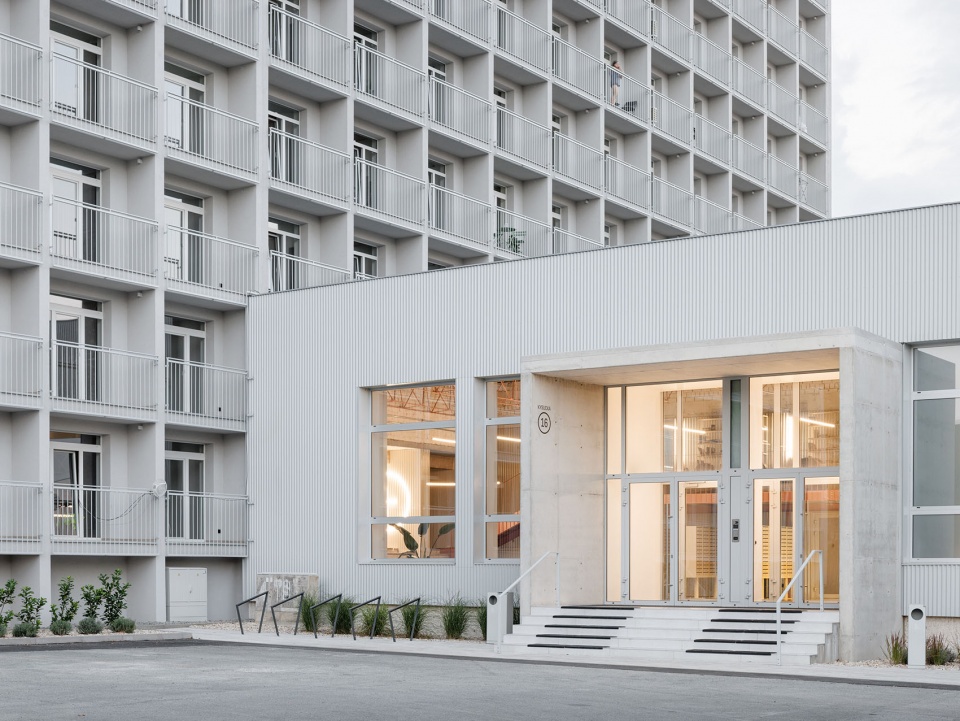
▼入口近景,Entrance close view
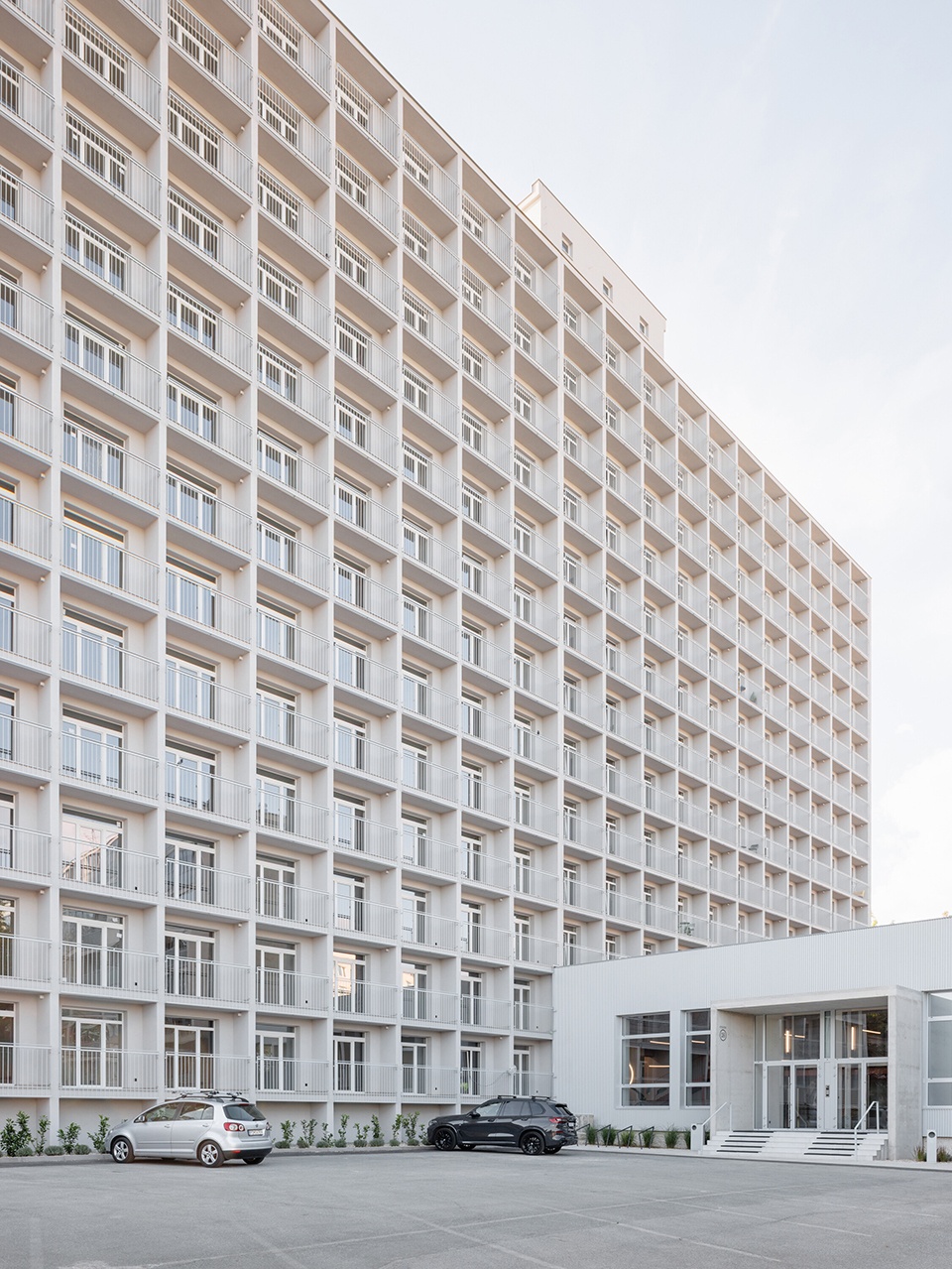
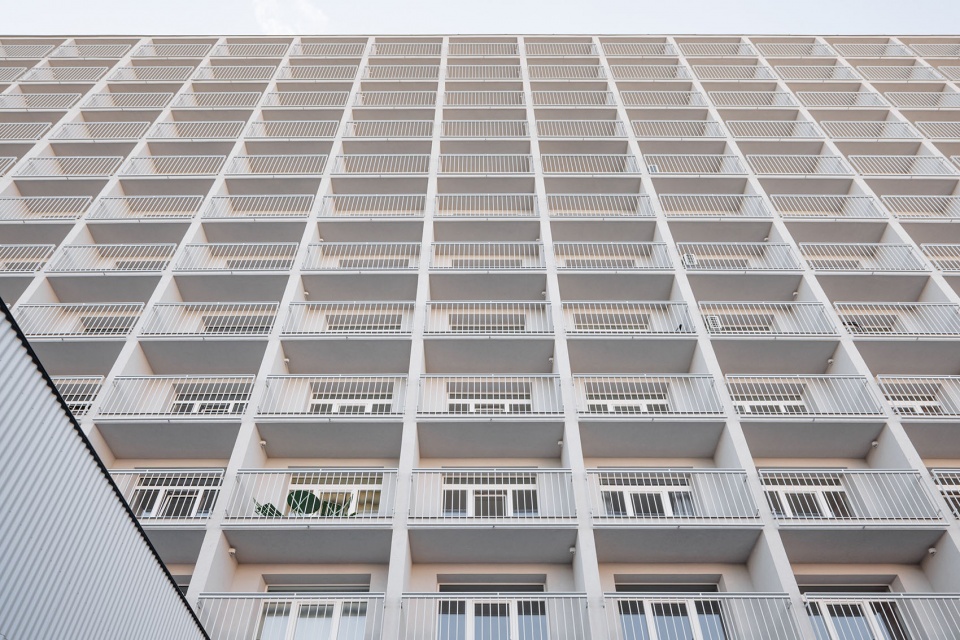
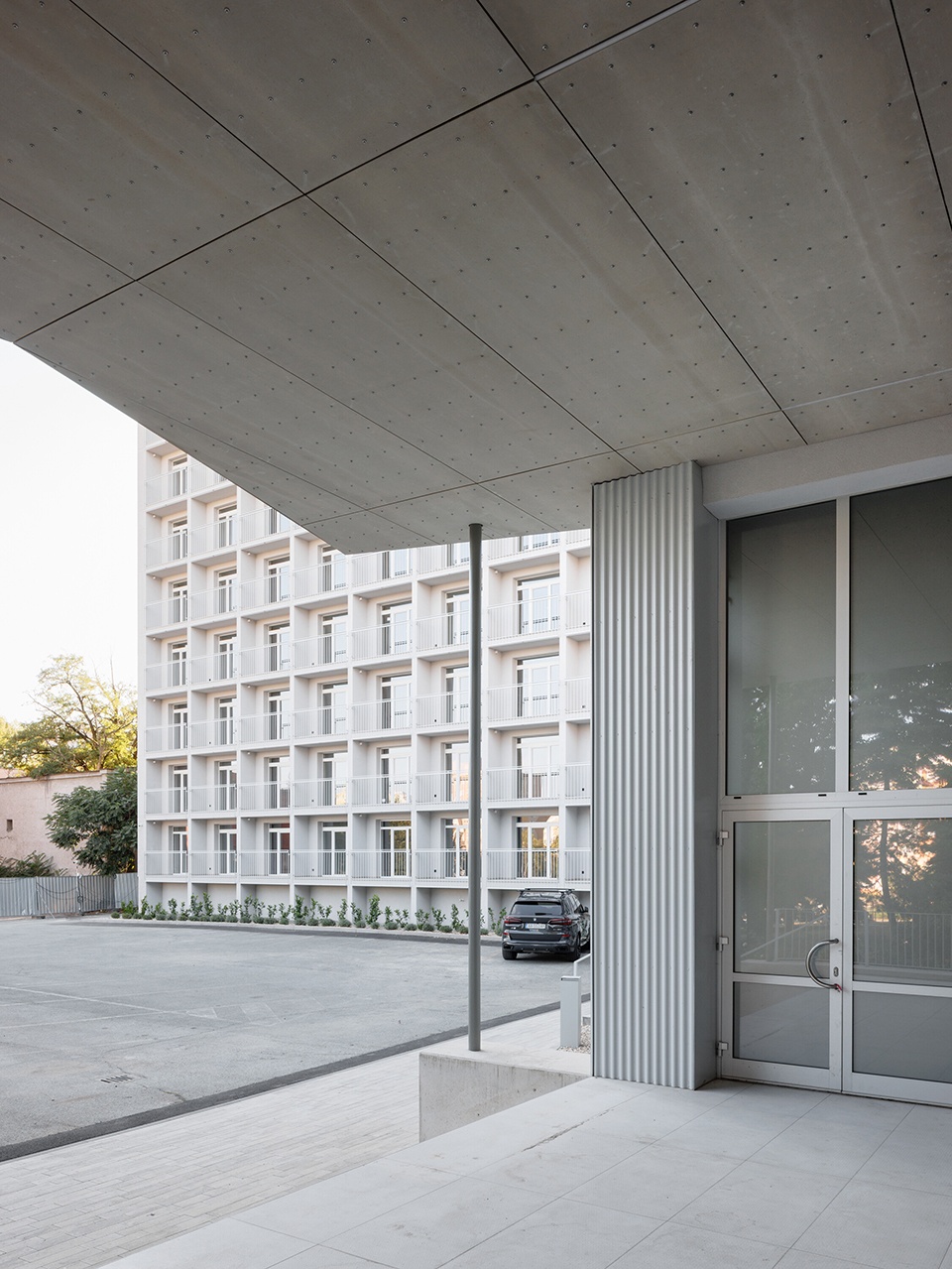
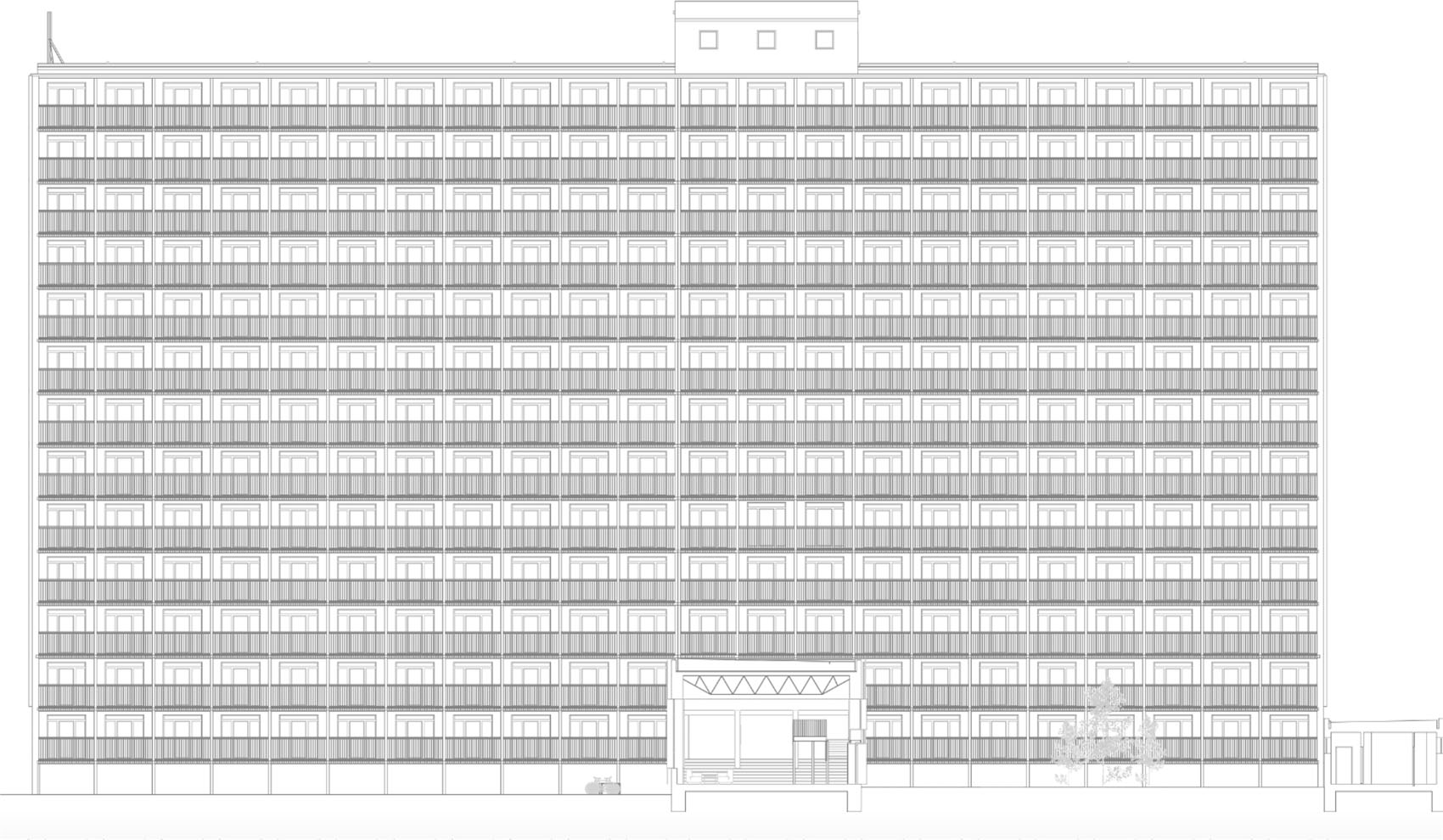
这座十三层建筑由严格的结构与空间网格所定义,这一网格同样决定了建筑外观的形式。由预制混凝土模块构成的几何立面网格赋予建筑鲜明而独特的形象。东西两侧立面均由22×13个完全相同的模块组成,成为此次改造最核心的设计主题。更新设计充分尊重这一原则,在原有基础上进一步发展,并将其提升为建筑最具表现力的建筑元素之一。单一灰色调的立面进一步强化了建筑的纪念性与构图的纯粹性。
▼建筑轴测图,Building axonometry
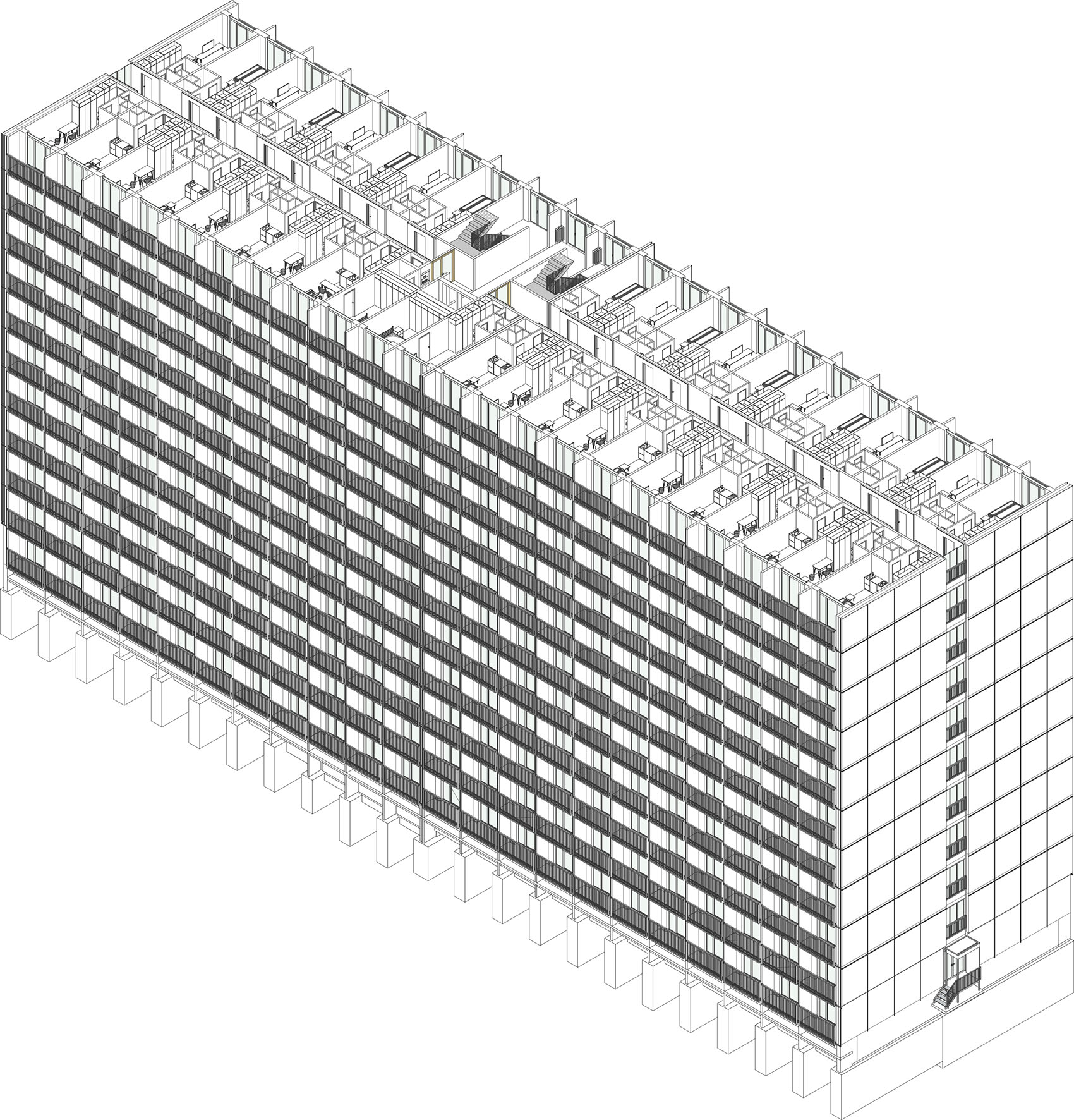
The thirteen-storey building is defined by a strict structural and spatial grid, which also determines the form of the exterior. The geometric grid of the façade created from prefabricated concrete modules gives the building an unmistakable expression. The strictly modular eastern and western façade, formed by a grid of 22 × 13 identical fields, became the main motif of the renovation. The reconstruction respects this principle, develops it and elevates it into one of the strongest architectural elements of the building. The monochromatic grey colour of the façade supports its monumentality and purity of composition.
▼立面近景,Façade close view
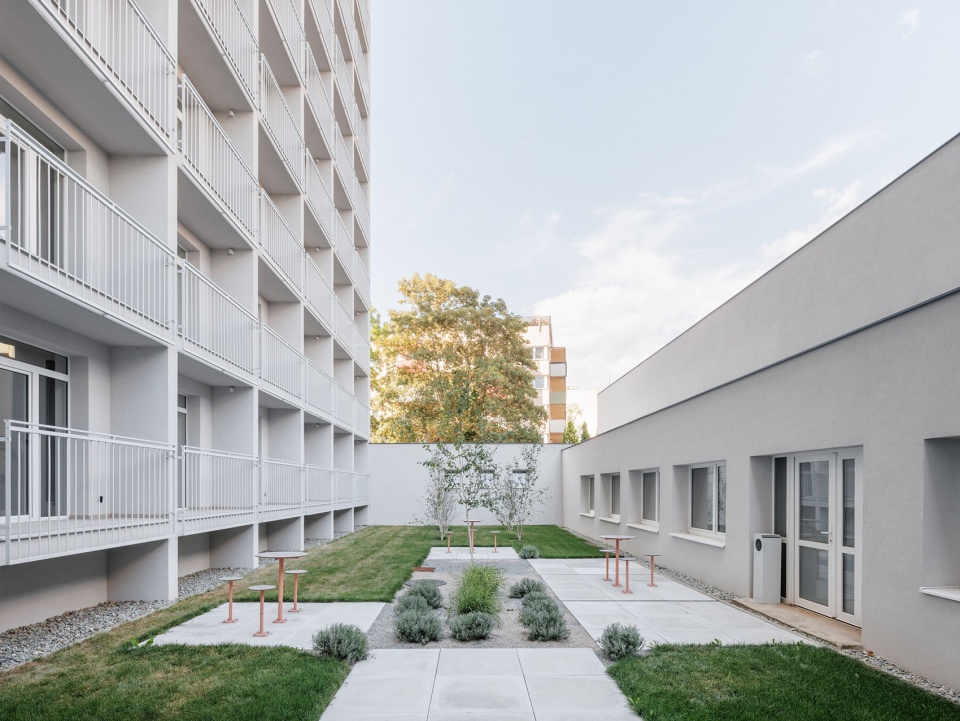
▼庭院概览,Garden overview
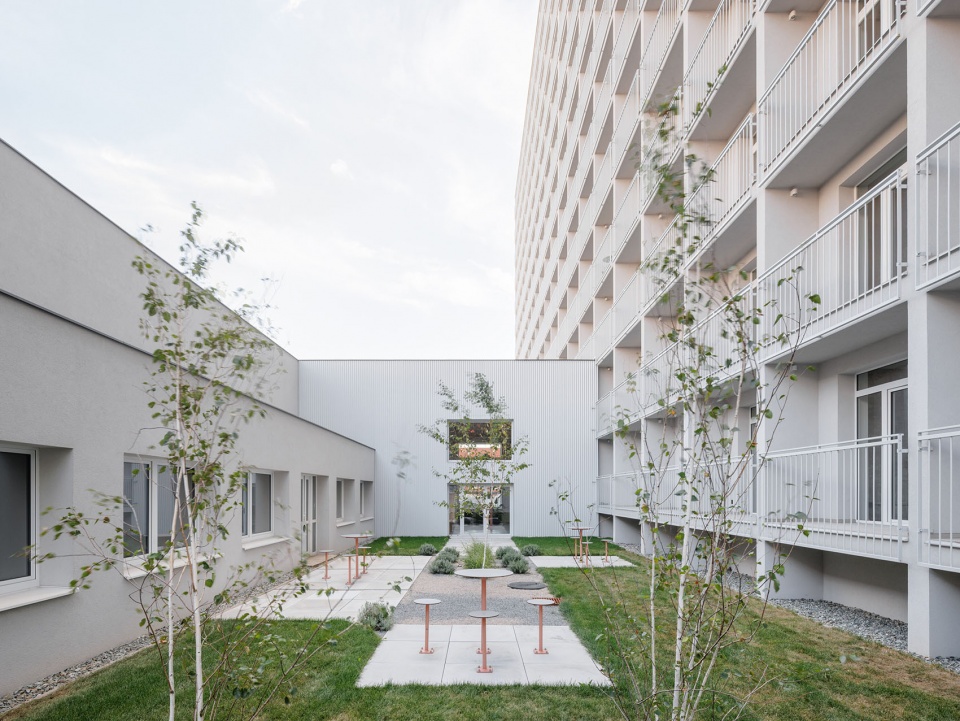
▼庭院一角,Corner of garden
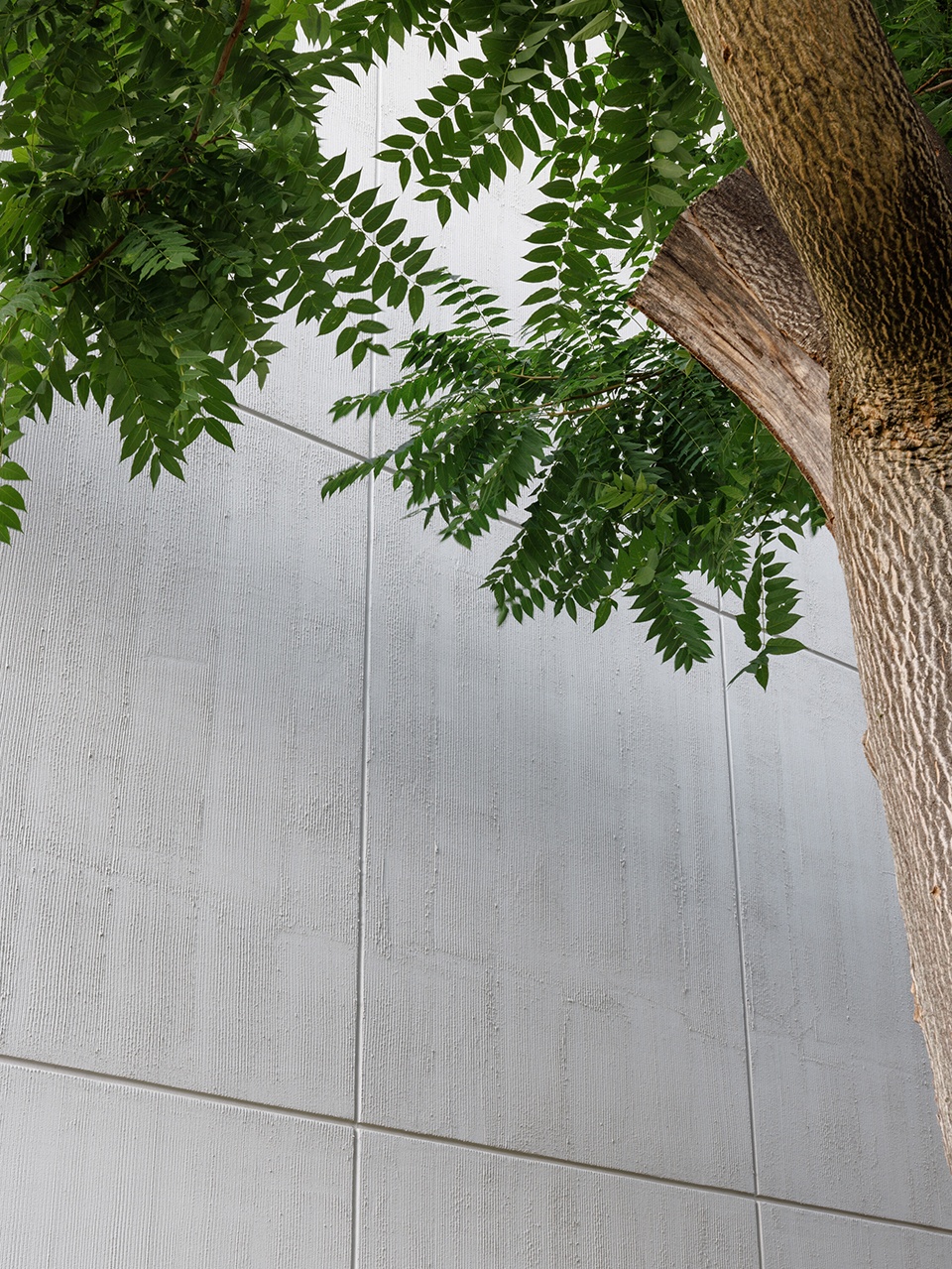
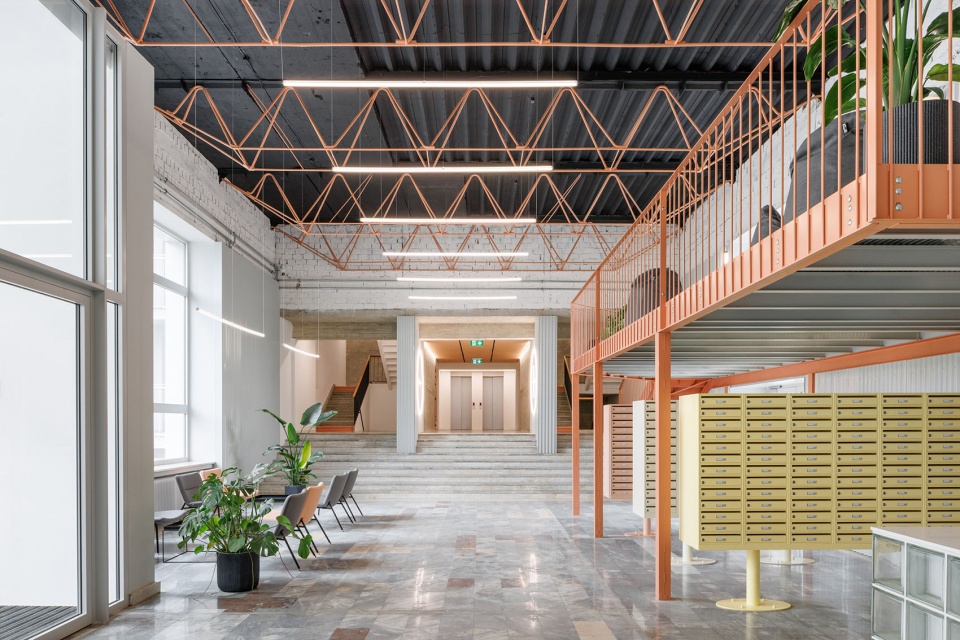
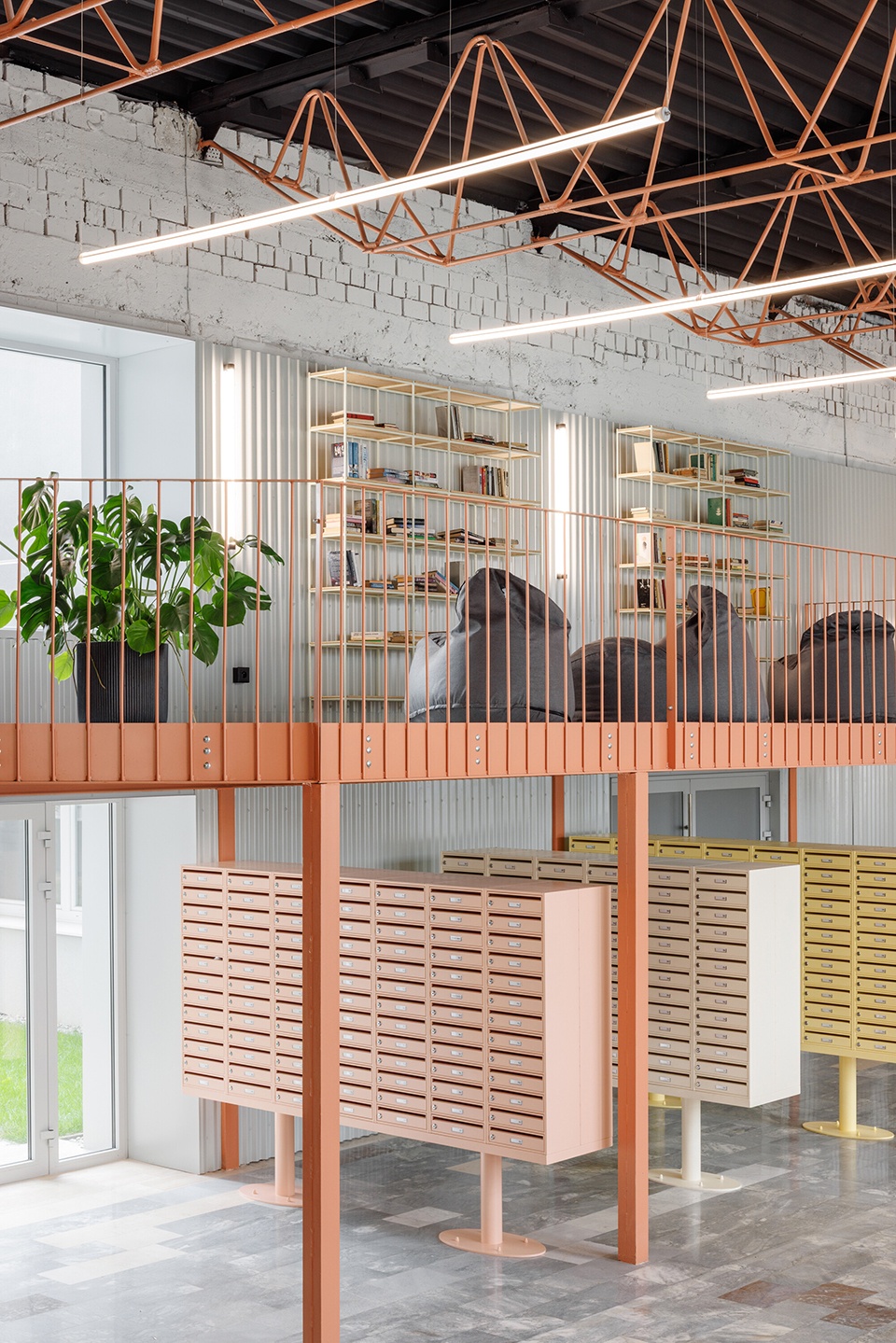
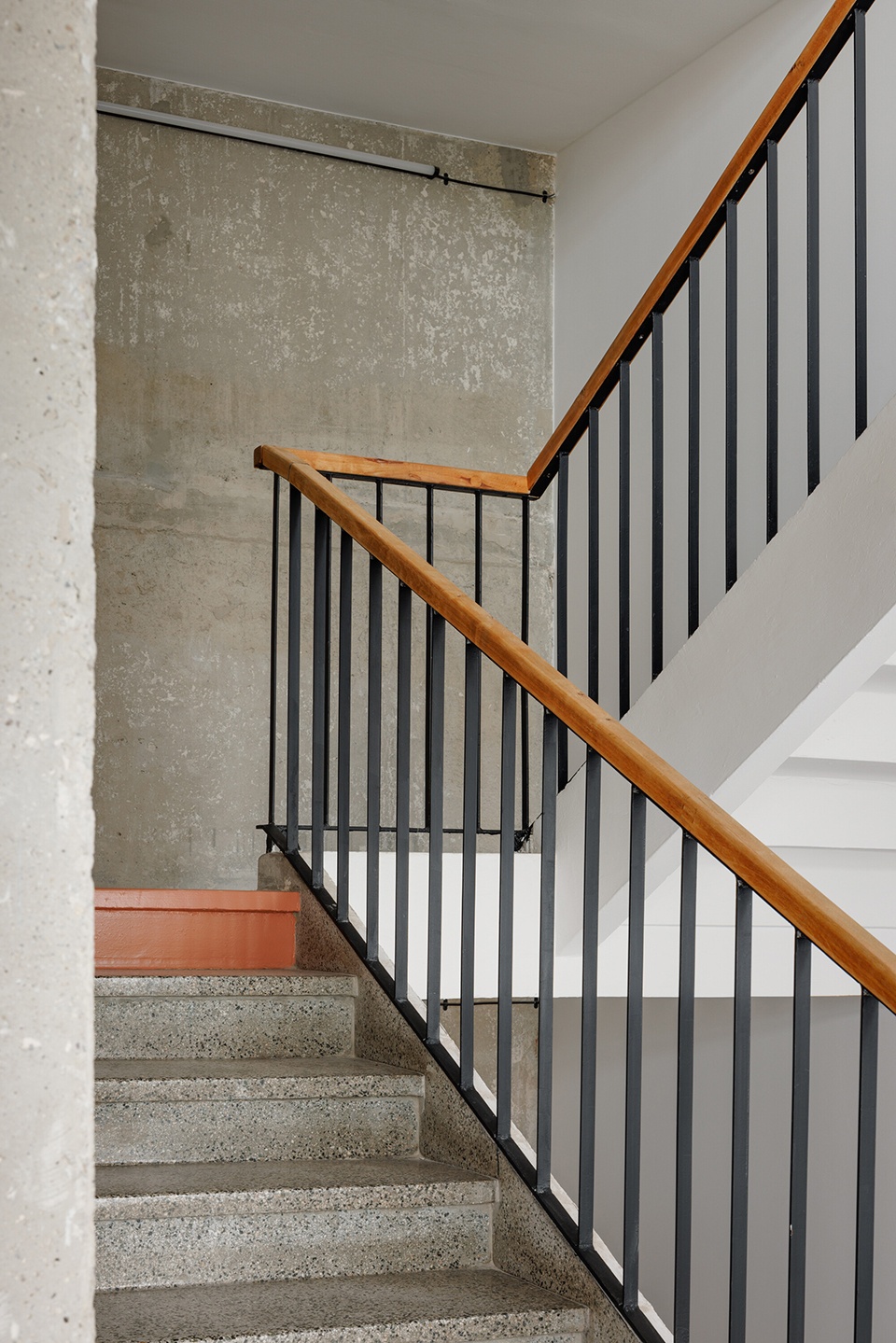
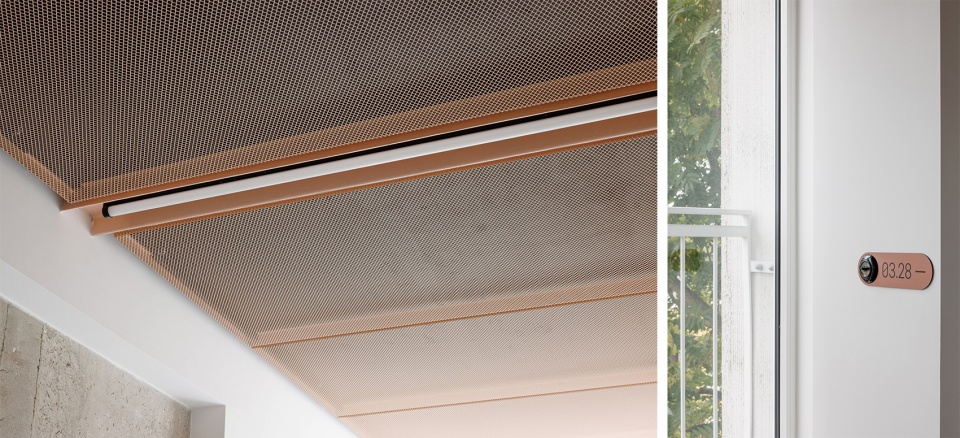
设计的重要内容之一,是揭示并修复那些在数十年间被后期覆盖层掩藏的原始材料与珍贵细部。公共走廊及楼梯间的原铸造水磨石地面、门厅的大理石饰面、立面底座的洞石基座、公共空间内原有钢梁,以及入口大厅中的钢结构廊道与钢楼梯均得到保留与修复。新增设计则以当代建筑语言介入,采用钢板网、波纹钢板、定制照明以及鲜明的色彩元素。新旧元素自地面至天花清晰区分,同时保持整体建筑语言的平衡与协调。
An important part of the design was the uncovering and restoration of valuable original materials and details that had been covered by newer layers over the decades. The original cast terrazzo in the common corridors and staircases, marble cladding of the vestibule, travertine plinth of the façade, original steel beams in the common areas as well as the steel gallery and staircase in the entrance hall were preserved and refurbished. New interventions enter the building through a contemporary language by means of expanded metal, corrugated sheet metal, newly designed custom lighting and strong colour accents. The old and the new remain clearly distinguished from floor to ceiling, yet architecturally balanced.
▼檐下灰空间,Transitional space under the eaves
▼入口大厅,Entrance hall
▼入口大厅垂直空间,Entrance hall vertical space
▼入口大厅看向庭院,Entrance hall viewing towards garden
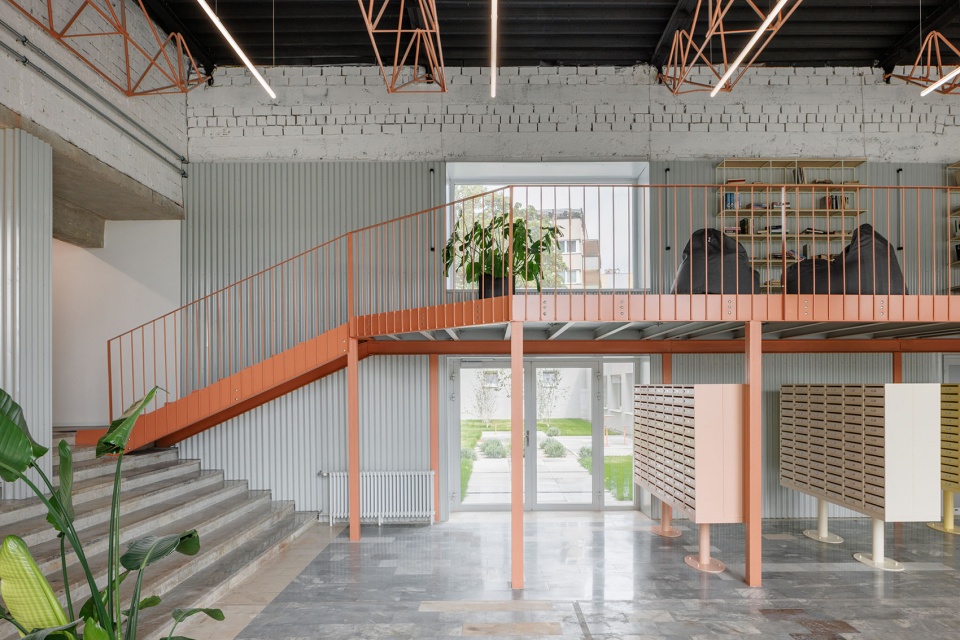
▼入口大厅夹层空间看向庭院,Entrance hall mezzanine space viewing towards garden
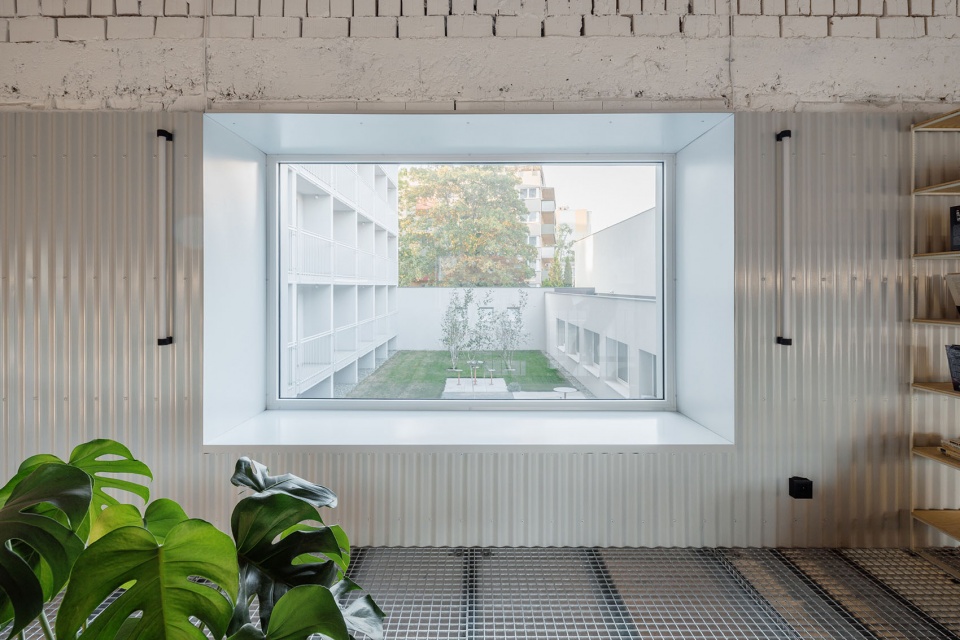
▼入口大厅一角,Corner of entrance hall
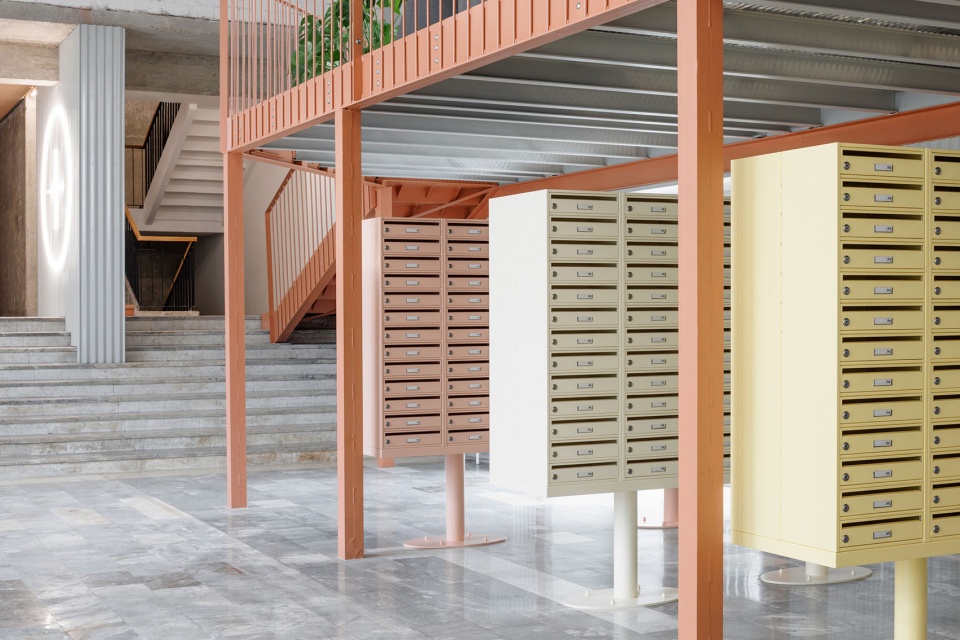
▼接待处,Reception
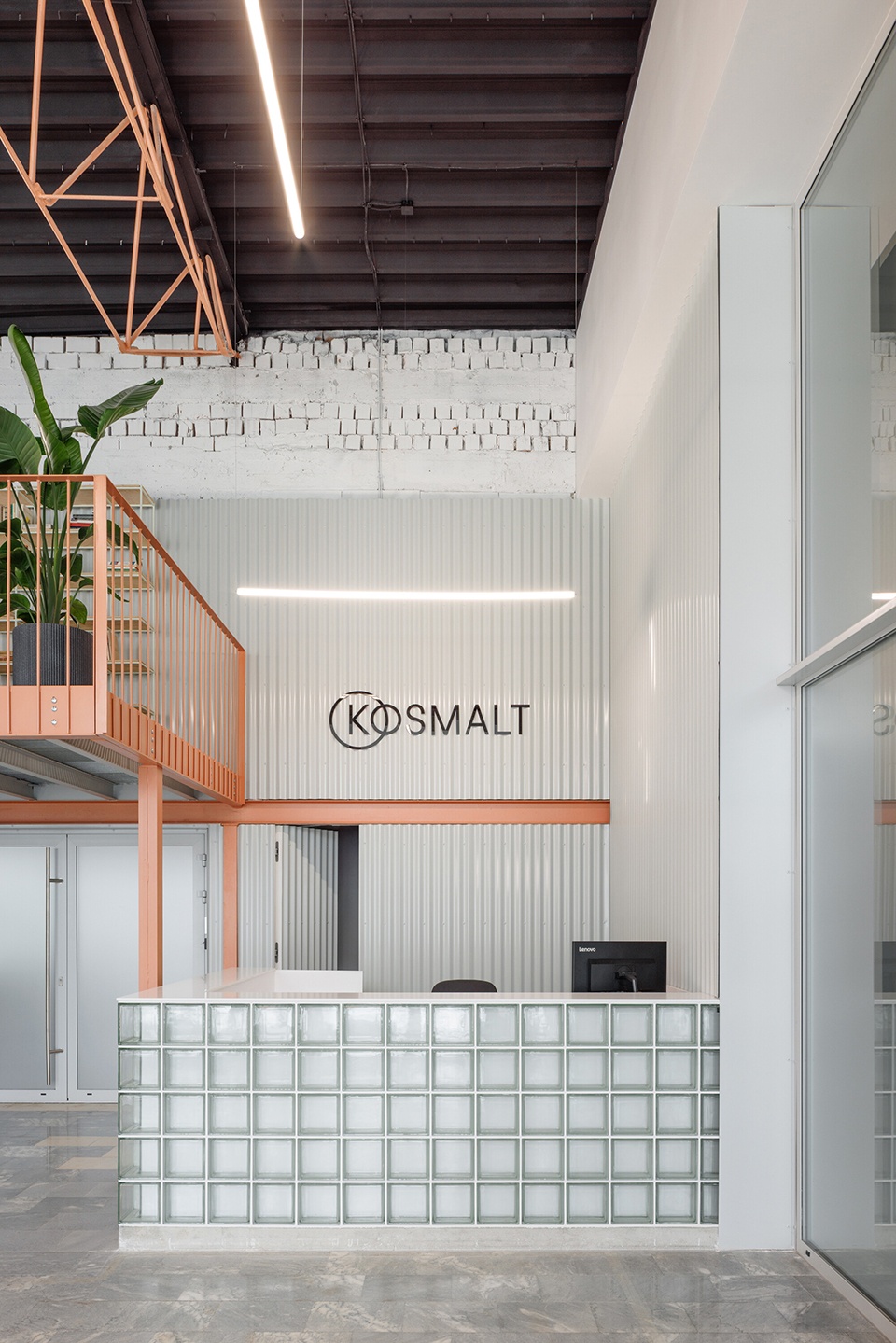
建筑继续保留其原有的居住功能。新的平面布局既遵循原有结构逻辑,又充分挖掘其空间潜力。设计过程中最大的挑战,是将原本完全一致的宿舍单元转变为符合当代居住标准的高品质私人住宅。前期分析表明,面积约21平方米的紧凑型XS户型,无论对于单人居住还是双人居住均具有良好的适用性。宽大的玻璃窗、阳台以及高层开阔的城市景观进一步增强了居住空间的通透感。建筑共提供507套住宅单元。
▼公寓设计概念图,Apartment design concept diagram
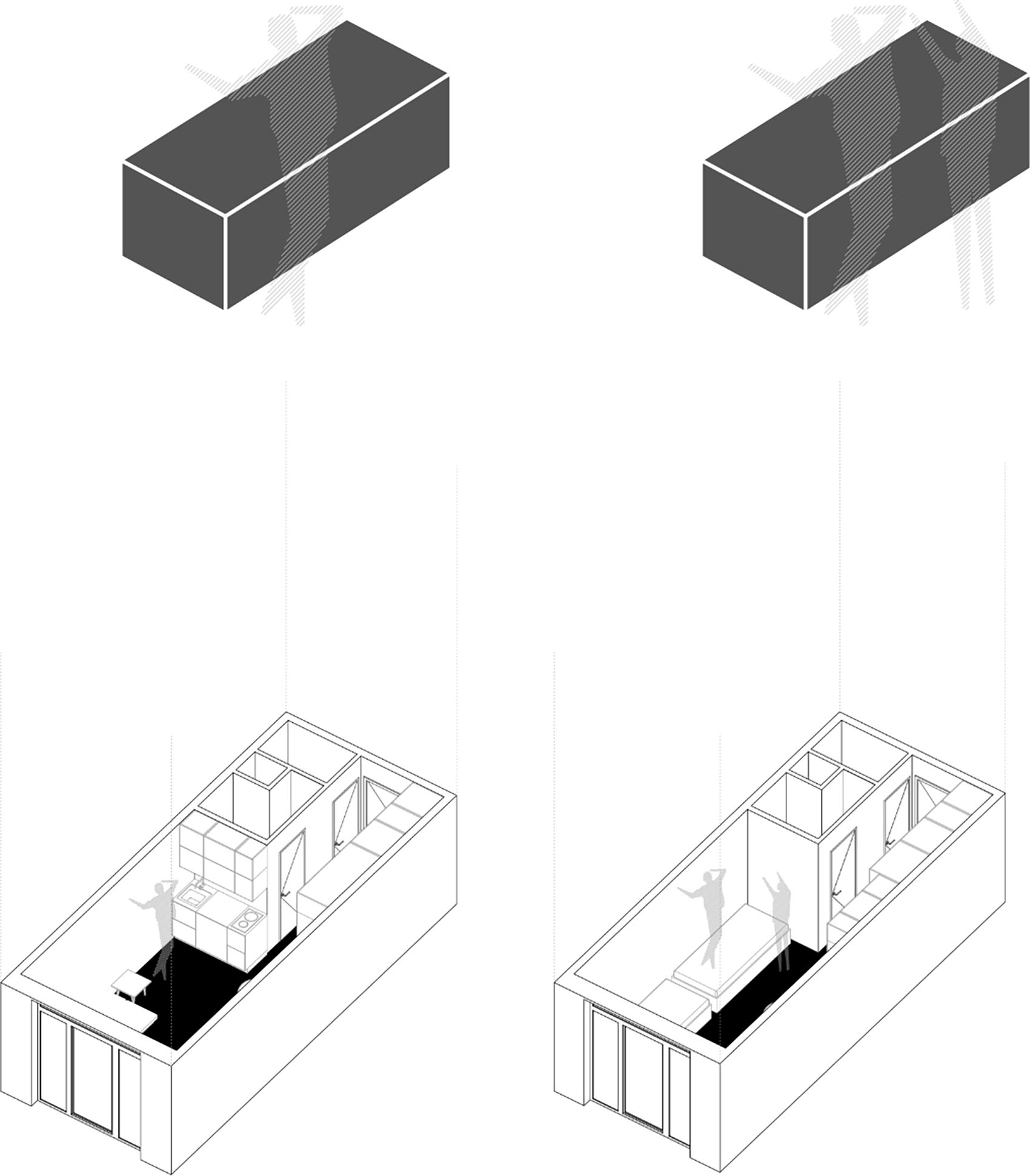
The building has retained its original residential function. The layout respects the logic of the structure and at the same time fully uses its potential. The main challenge was to transform the original identical residential cells into quality private units corresponding to the current standard. Analyses in the design phase confirmed that compact XS layouts with an area of 21 m² work for individuals as well as for couples. The feeling of airiness is supported by generous glazing, loggias and views of the city, especially from higher floors. In total, the building offers 507 residential units.
▼公寓单元室内,Apartment unit interior
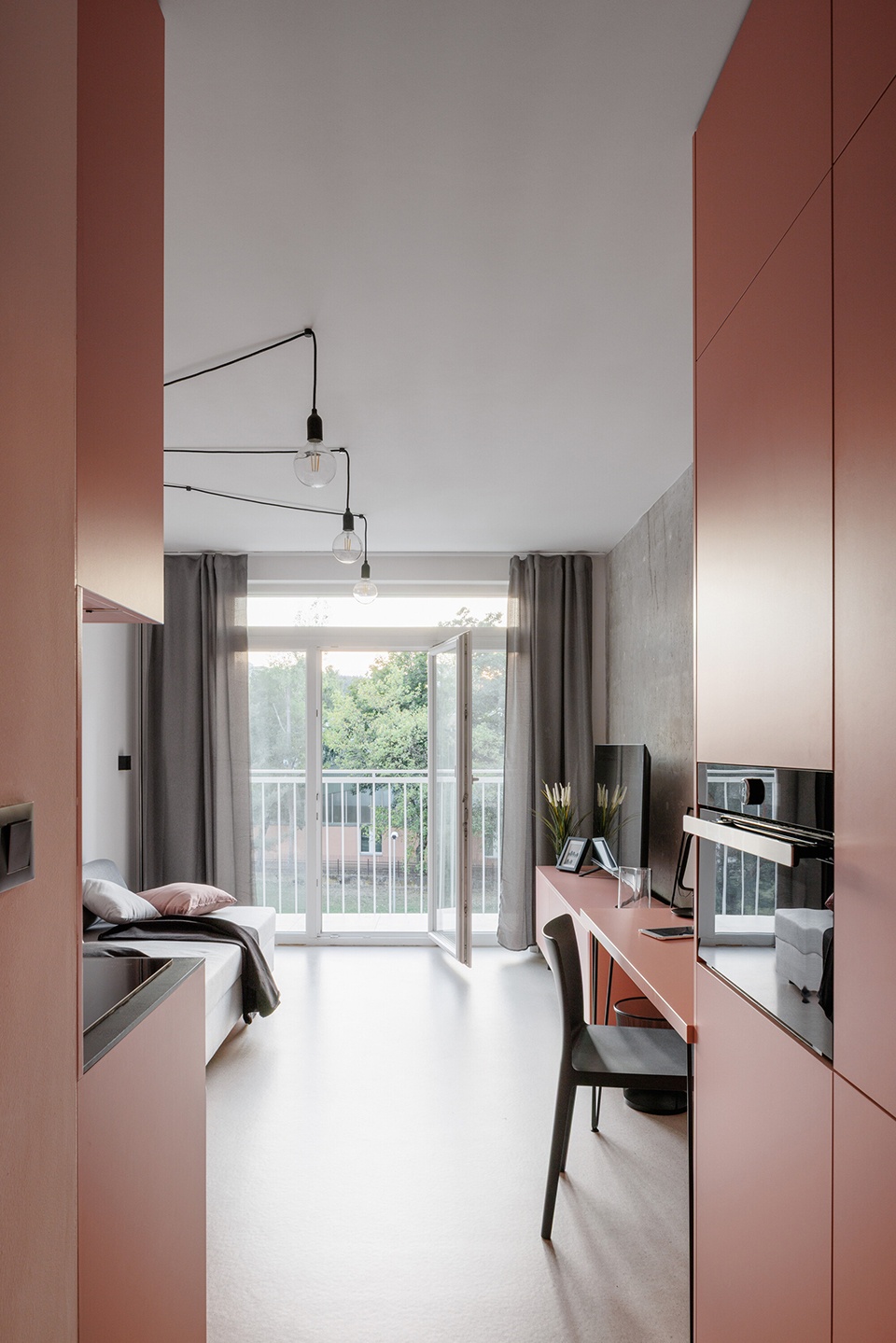
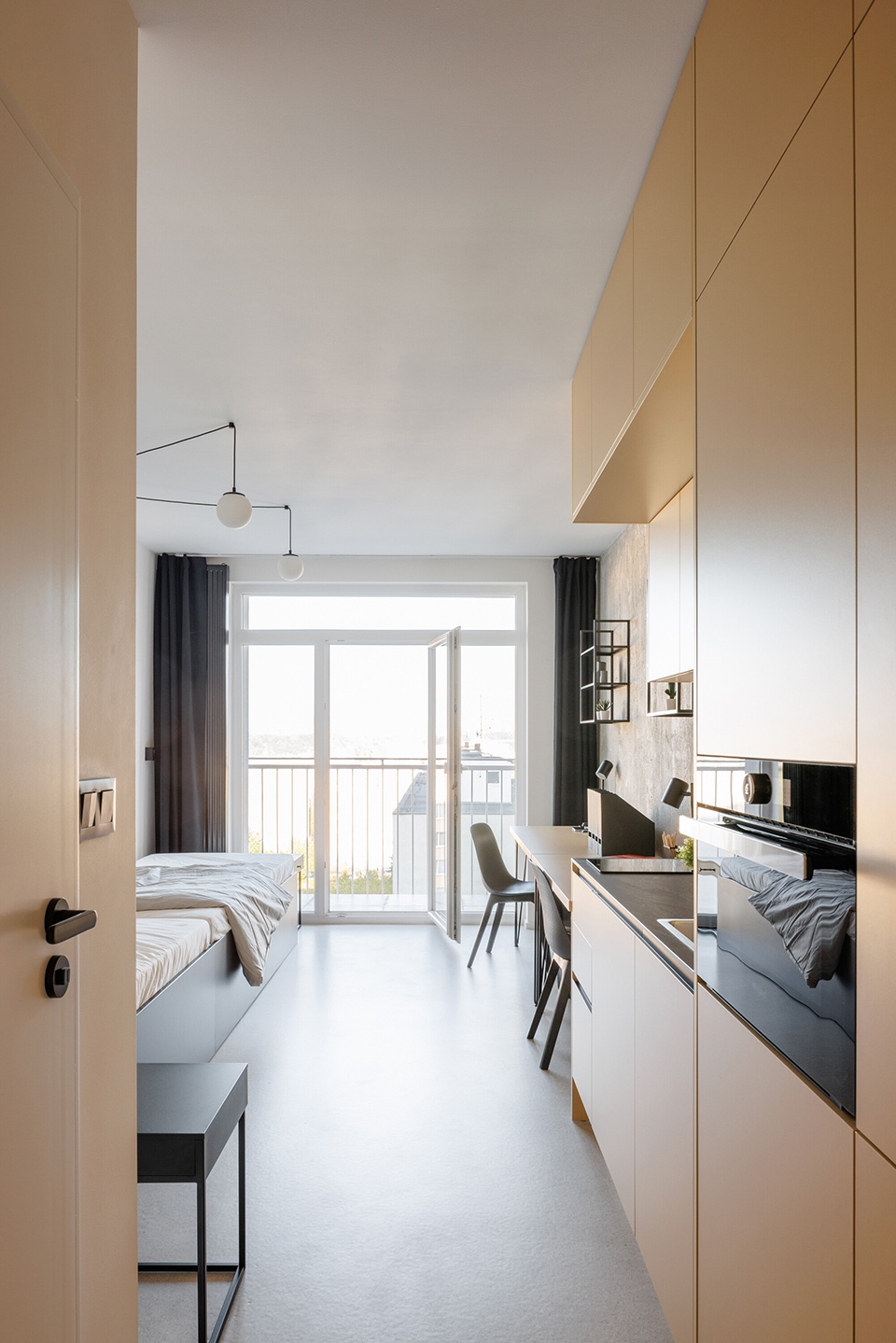
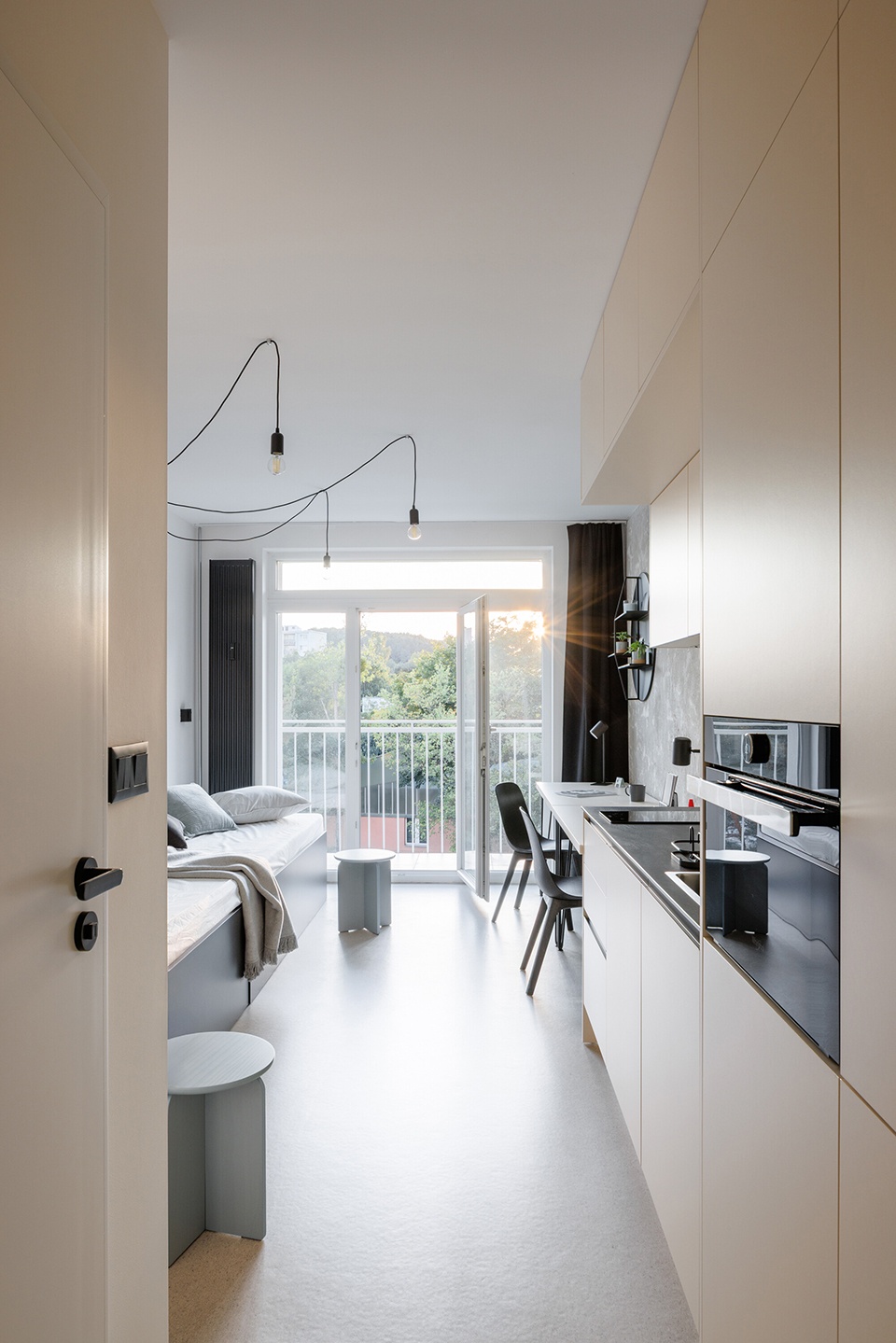
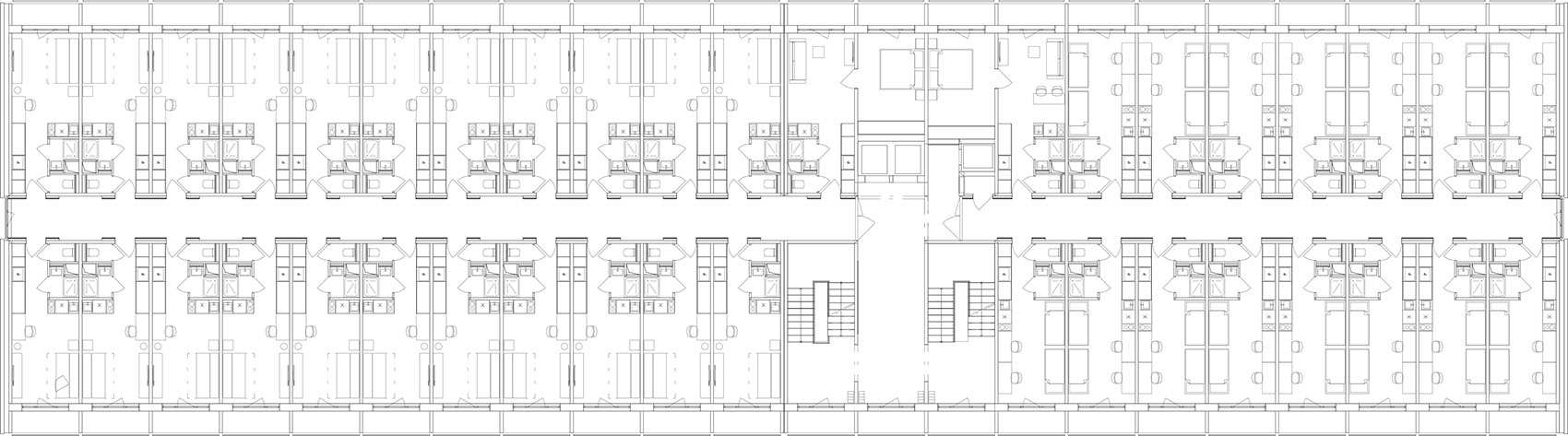
与住宅单元本身相对紧凑的尺度形成对比的是,入口空间、公共走廊以及垂直交通空间则显得宽敞而富有仪式感。充足的自然采光、开阔的视野以及宽裕的空间比例,使十三层楼中的公共区域均具有社交空间的属性。两座完全对称布置的楼梯依旧清晰地将建筑划分为两个区域,这一布局延续了建筑最初男、女宿舍分区的组织方式。
In contrast to the scale of the apartments themselves, the entrance spaces, corridors and vertical communications appear generous and representative. Thanks to sufficient natural light, views and generous proportions, they acquire the character of social spaces on each of the thirteen floors. Two identical, symmetrically placed staircases continue to clearly divide the building into two parts, originally male and female.
▼底层楼梯间看向入口大厅,Ground floor staircase space viewing towards entrance hall
▼楼梯间,Staircase
▼公共走廊,Public corridor
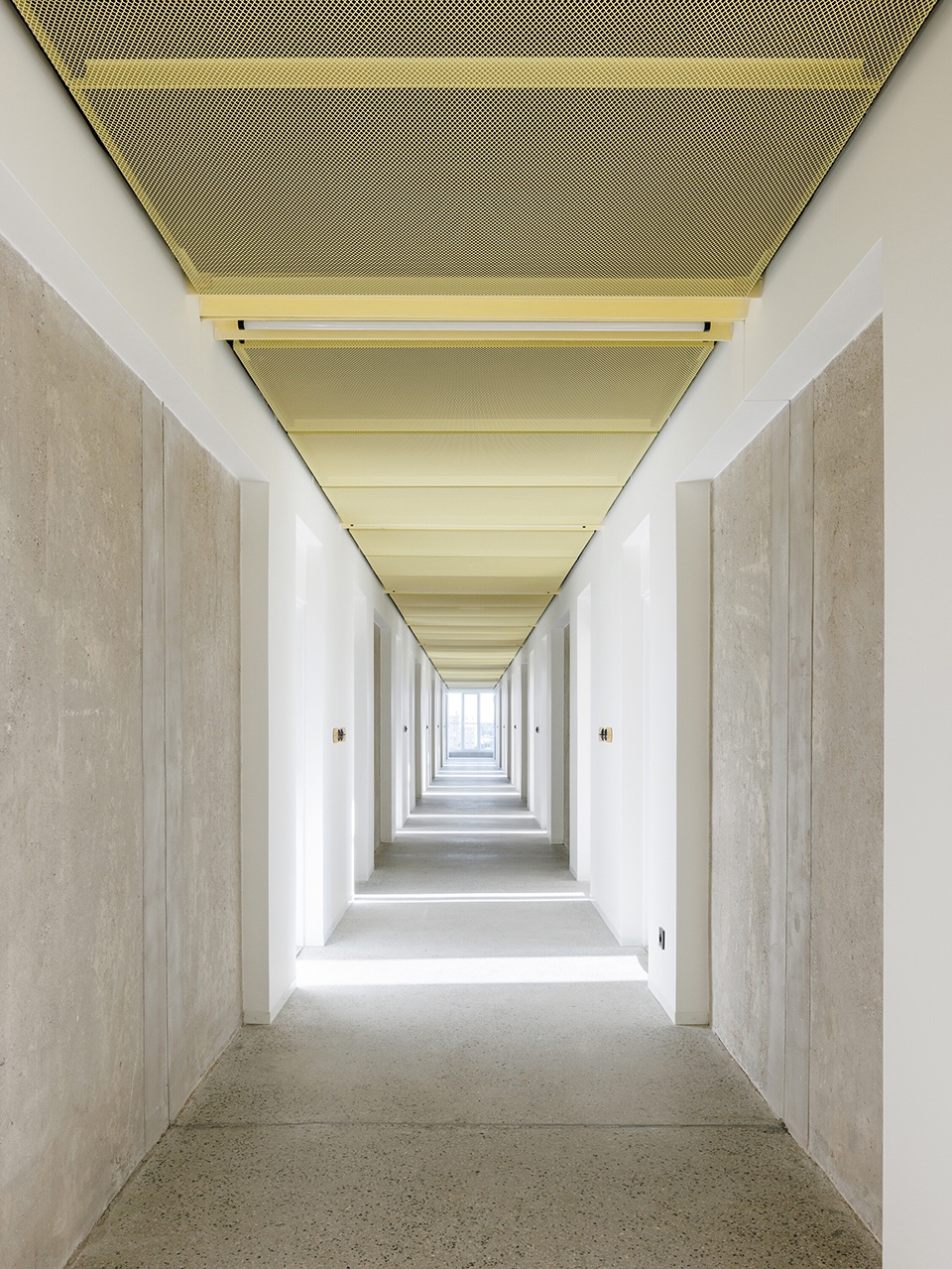
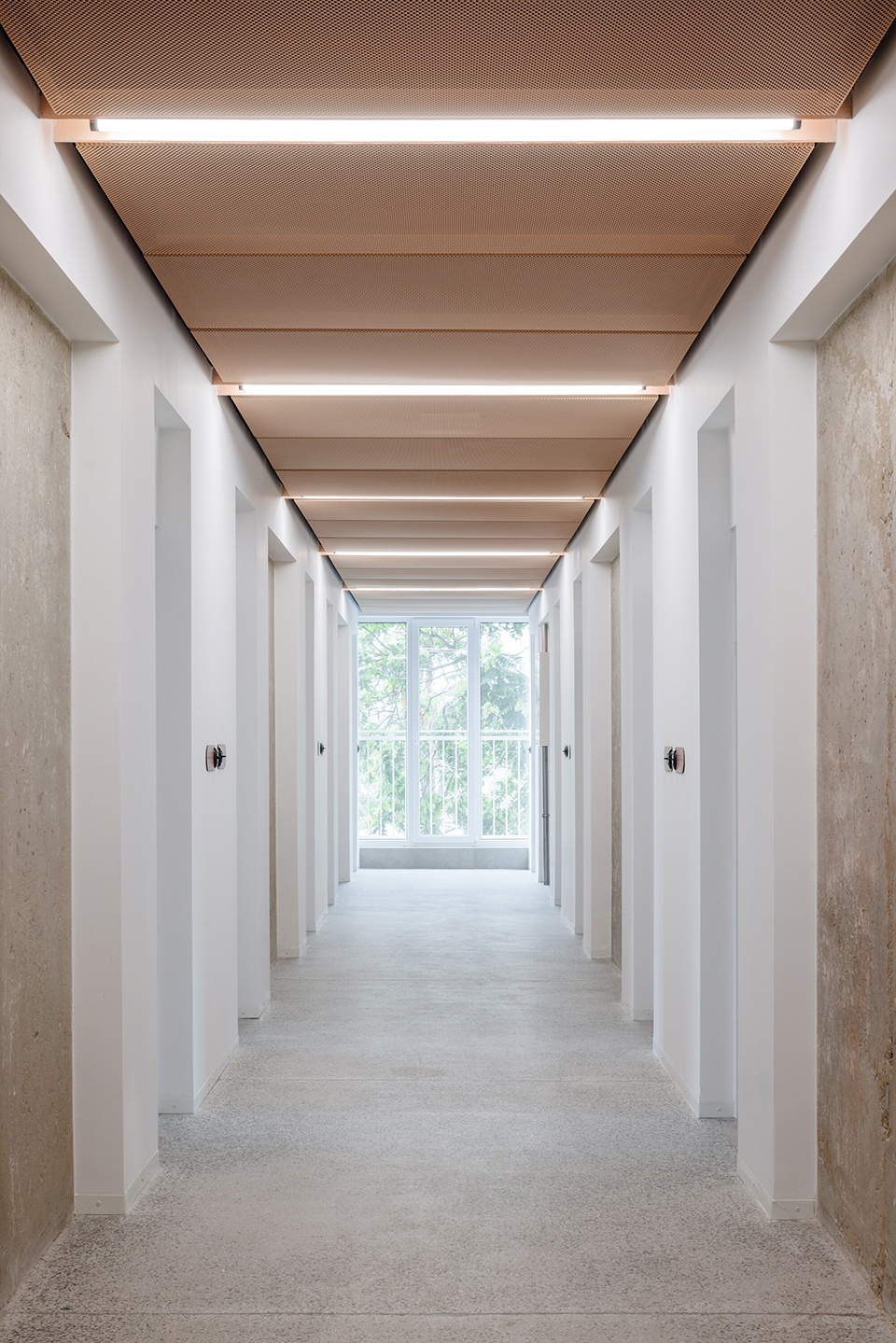
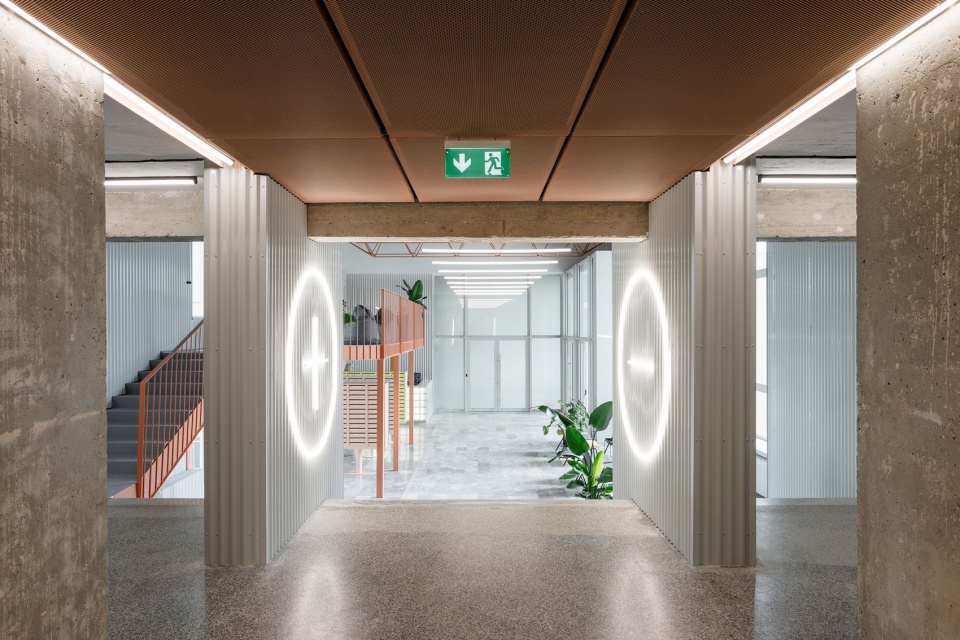
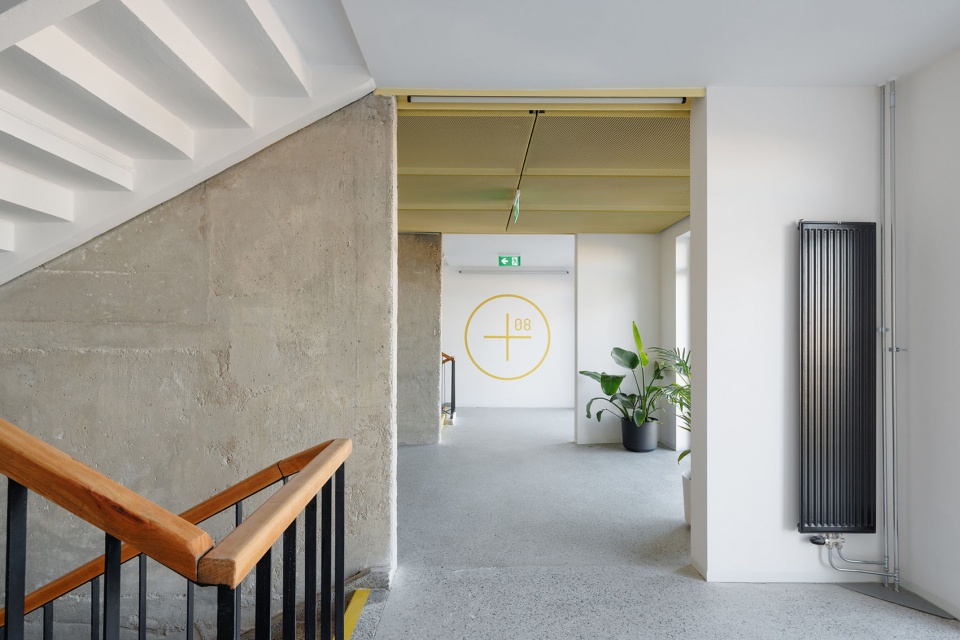
设计还包括一套全新的导视系统,以色彩与符号为基础。鲑鱼粉色、象牙白和黄色配合“+”“−”符号,对不同走廊区域进行区分,帮助访客更加直观地理解建筑内部布局。
Part of the design is also a new orientation system based on colour and symbol. Salmon, ivory and yellow colours together with plus and minus signs distinguish the individual corridor wings and help visitors intuitively read the layout of the building.
▼公共空间与导视系统,Communal space and wayfinding system
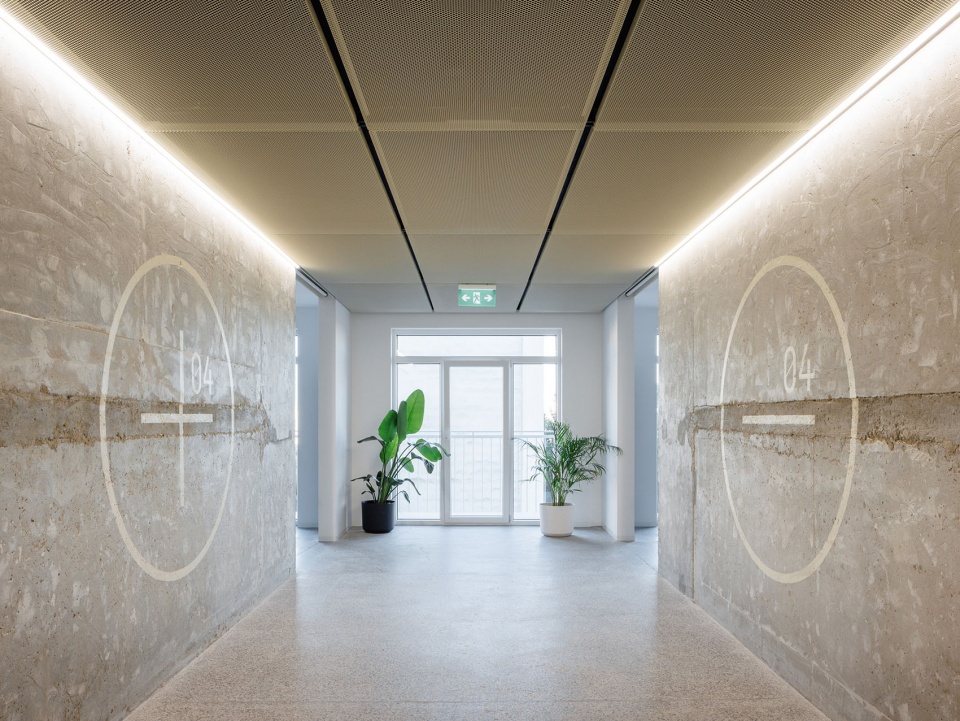
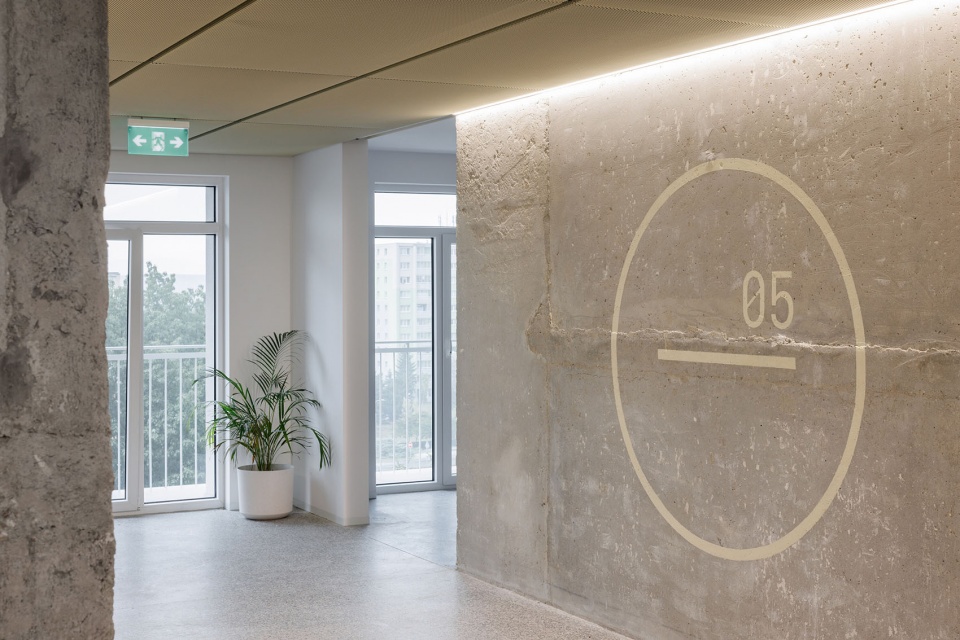
▼走廊与导视系统一角,Corner of corridor and wayfinding system
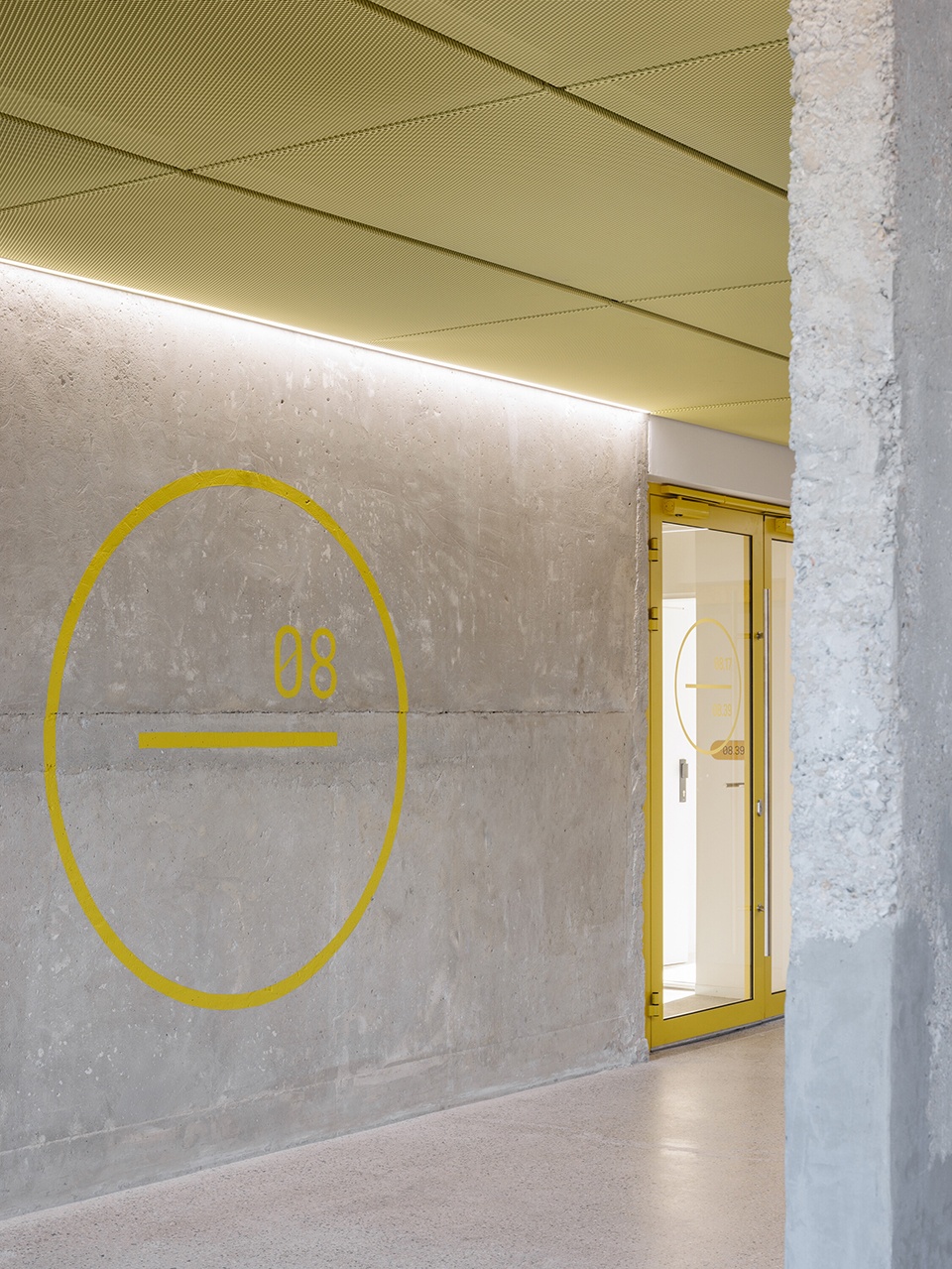
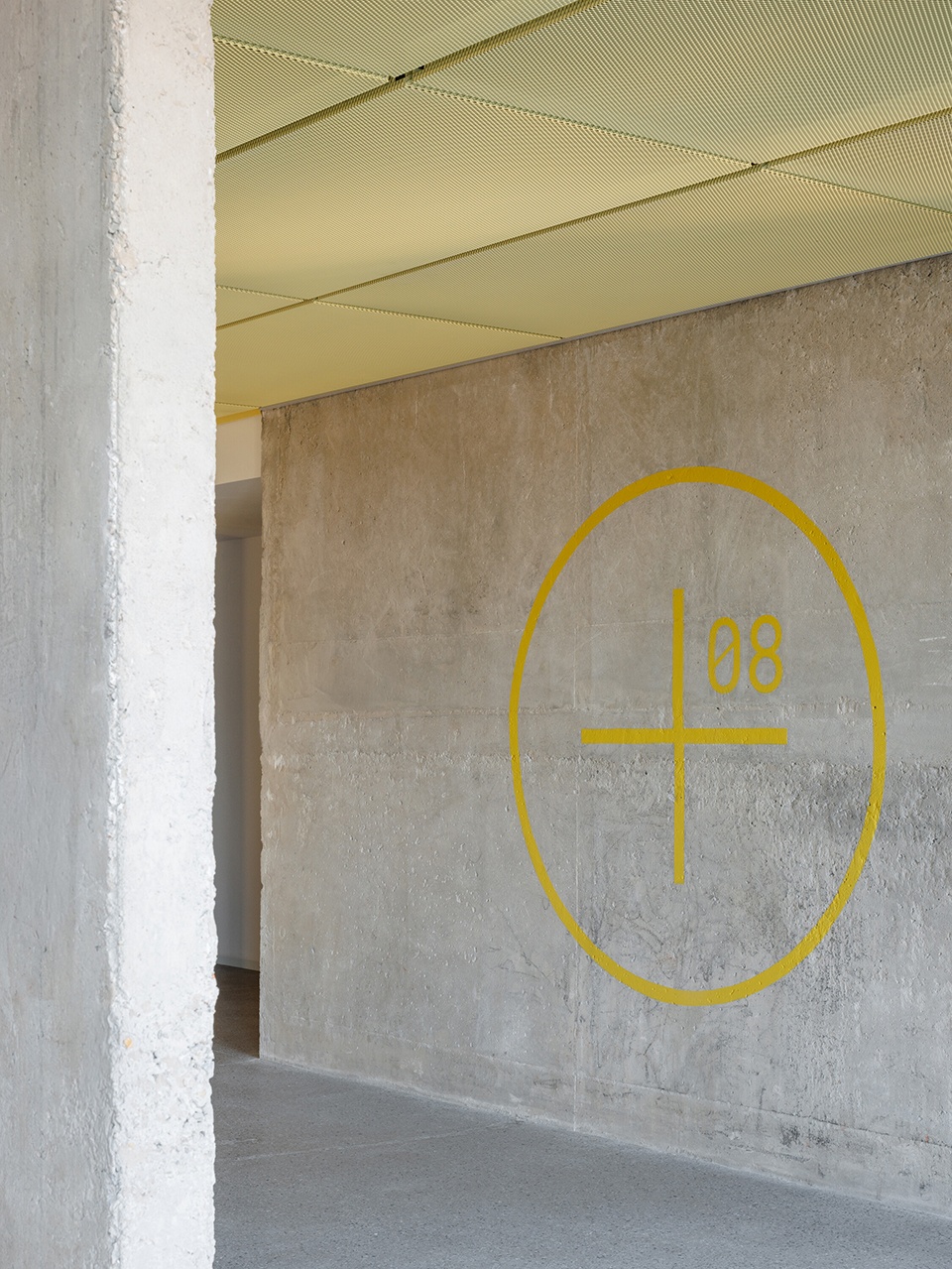
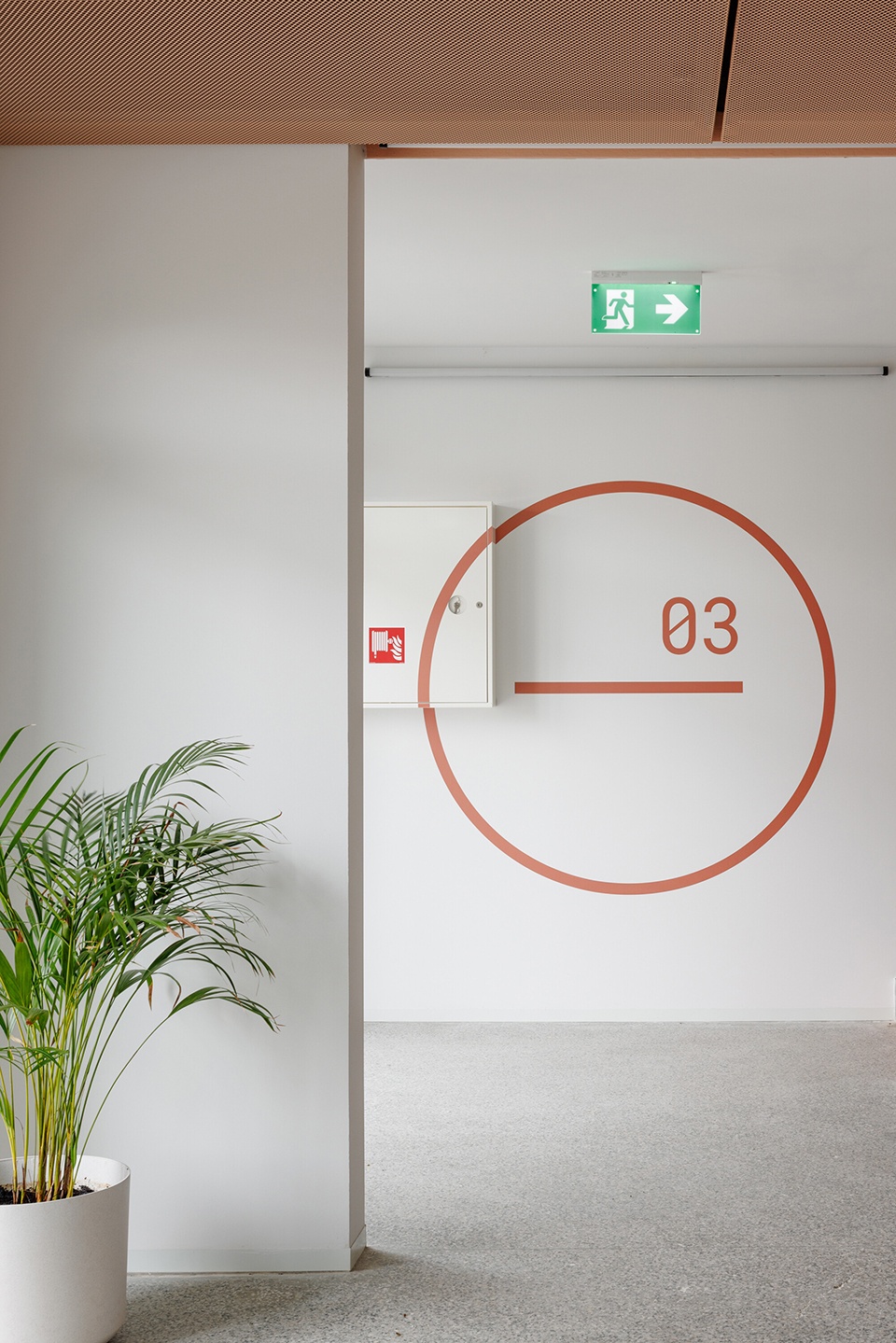
▼导视系统细部,Wayfinding system detail

KOSMALT最初并非按照可适应性建筑进行设计,但此次改造成功为其赋予了这一特质。该项目因此提出了一种在当地仍不常见的建筑更新方式——将既有建筑的敏感改造,即“板式住宅改造”,作为一种完整而成熟的建筑设计策略。
KOSMALT was not originally designed as an adaptable building; however, its renovation managed to introduce this quality into the structure. The project thus brings an approach that is still not common in our conditions – a sensitive transformation of an existing building, the “renovation of a panel building” as a full-fledged architectural strategy.
▼空间构造细部,Spatial structure detail
建筑最初作为社会主义时期的工人宿舍而建,是一种面向单身工人的居住类型,既提供基本生活设施,也承担着一定的社会管理功能。如今,这座建筑进入了完全不同的社会语境,为居民提供更加独立、有尊严且符合当代生活方式的居住环境。KOSMALT的更新证明,建筑能够灵活适应不断变化的社会需求,并回应居住者不同人生阶段的生活方式。
Originally, the building served as a socialist dormitory – a type of accommodation intended for single workers, which was to provide basic facilities as well as social supervision. Today, the same building enters a completely different social context and offers individual, dignified and contemporary forms of housing. The transformation of KOSMALT confirms that architecture can flexibly adapt to diverse needs and reflect the life cycles of those who inhabit it.
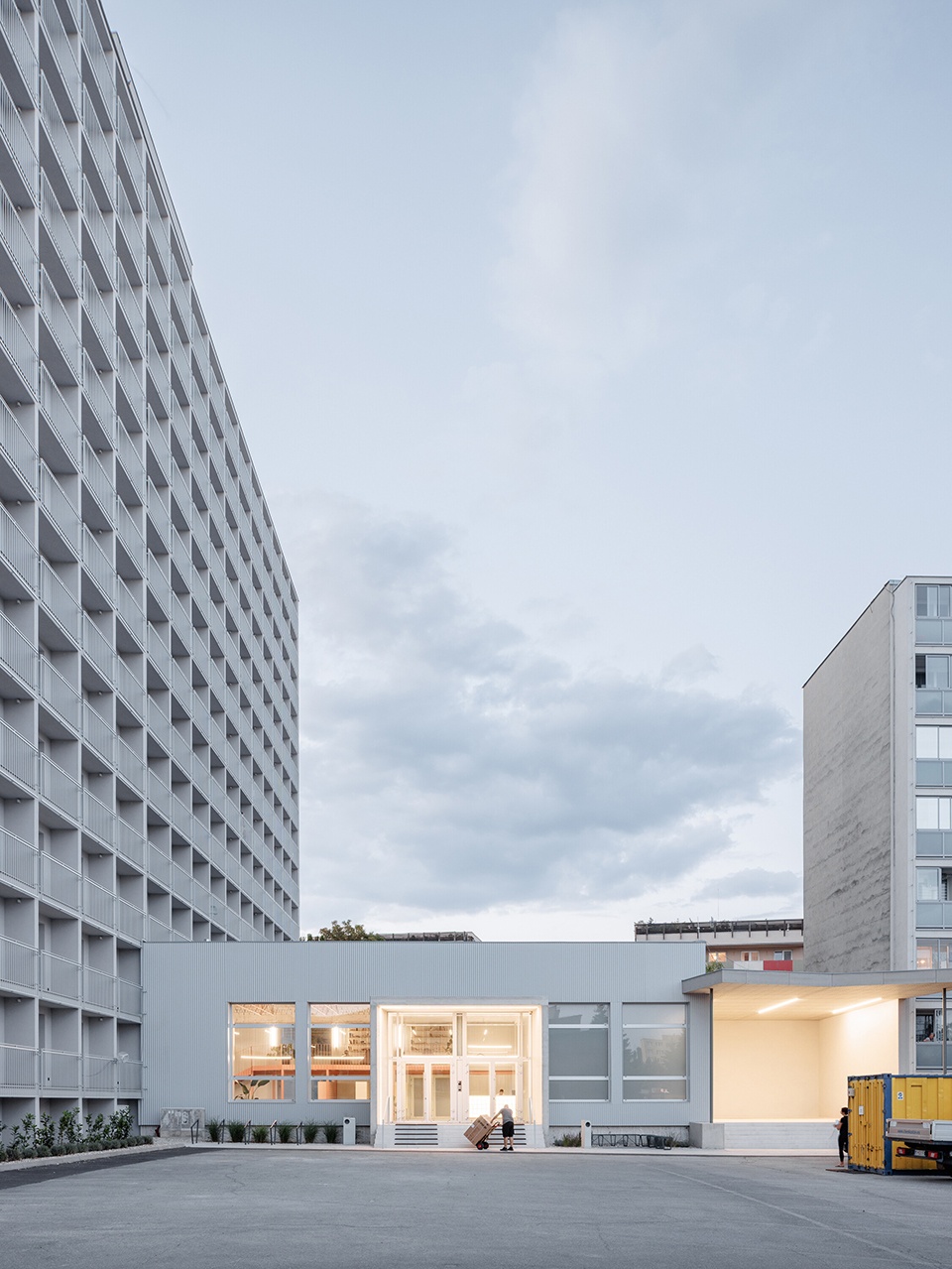
▼建筑外观夜景,Building exterior night view
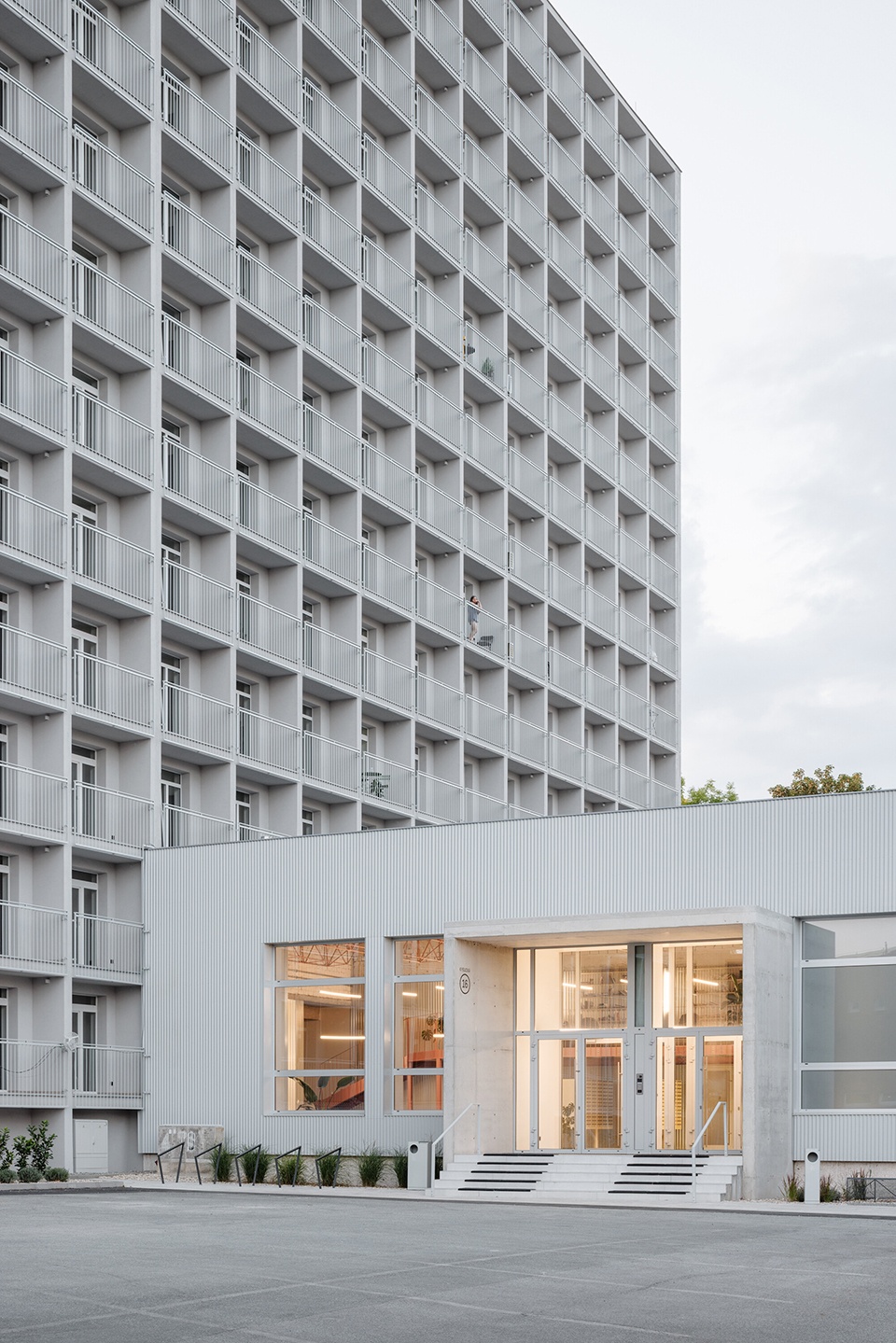
▼夜晚入口近景,Entrance close view at night
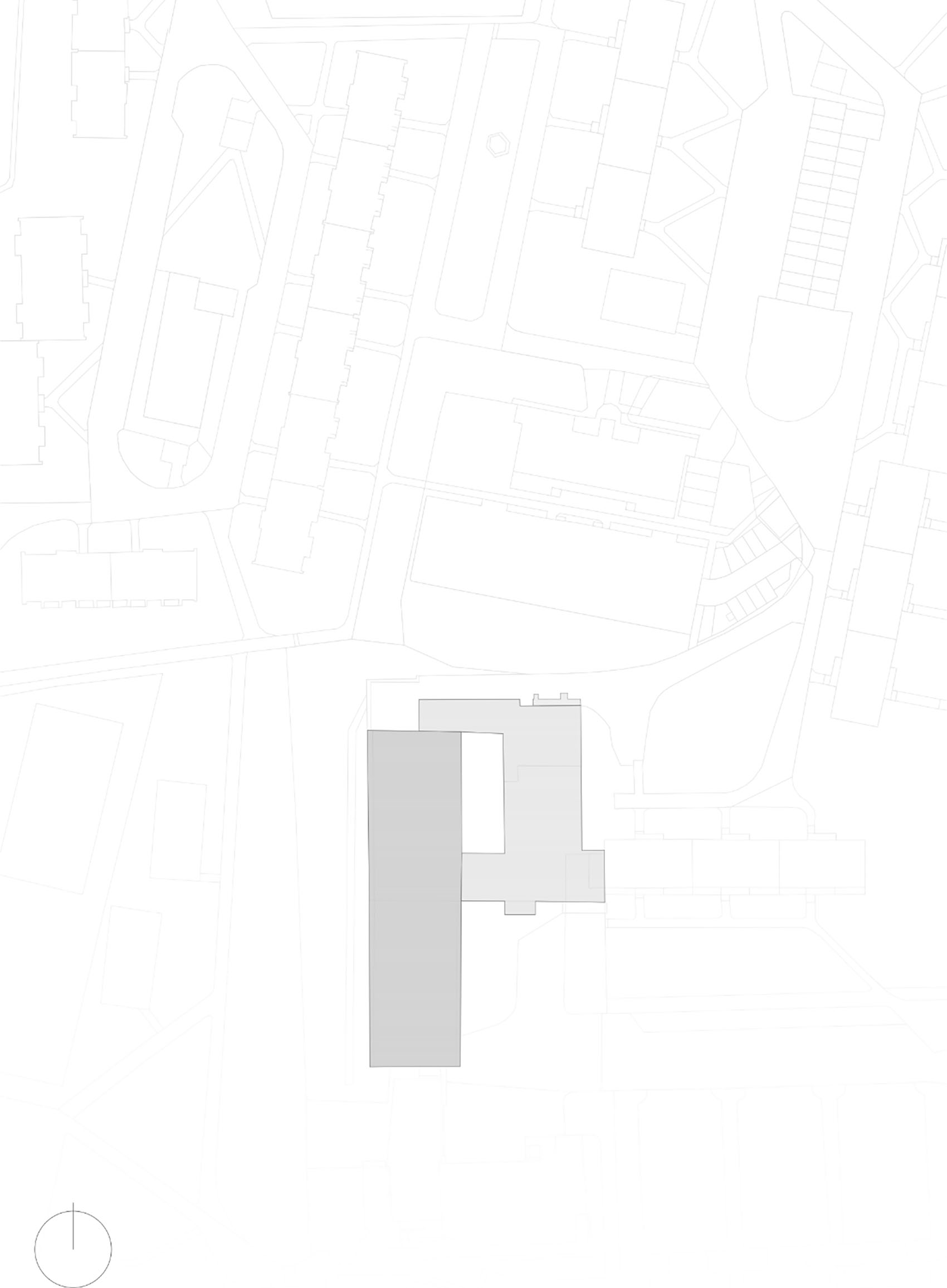
▼总平面图,Site plan
▼标准层平面图,Typical floor plan
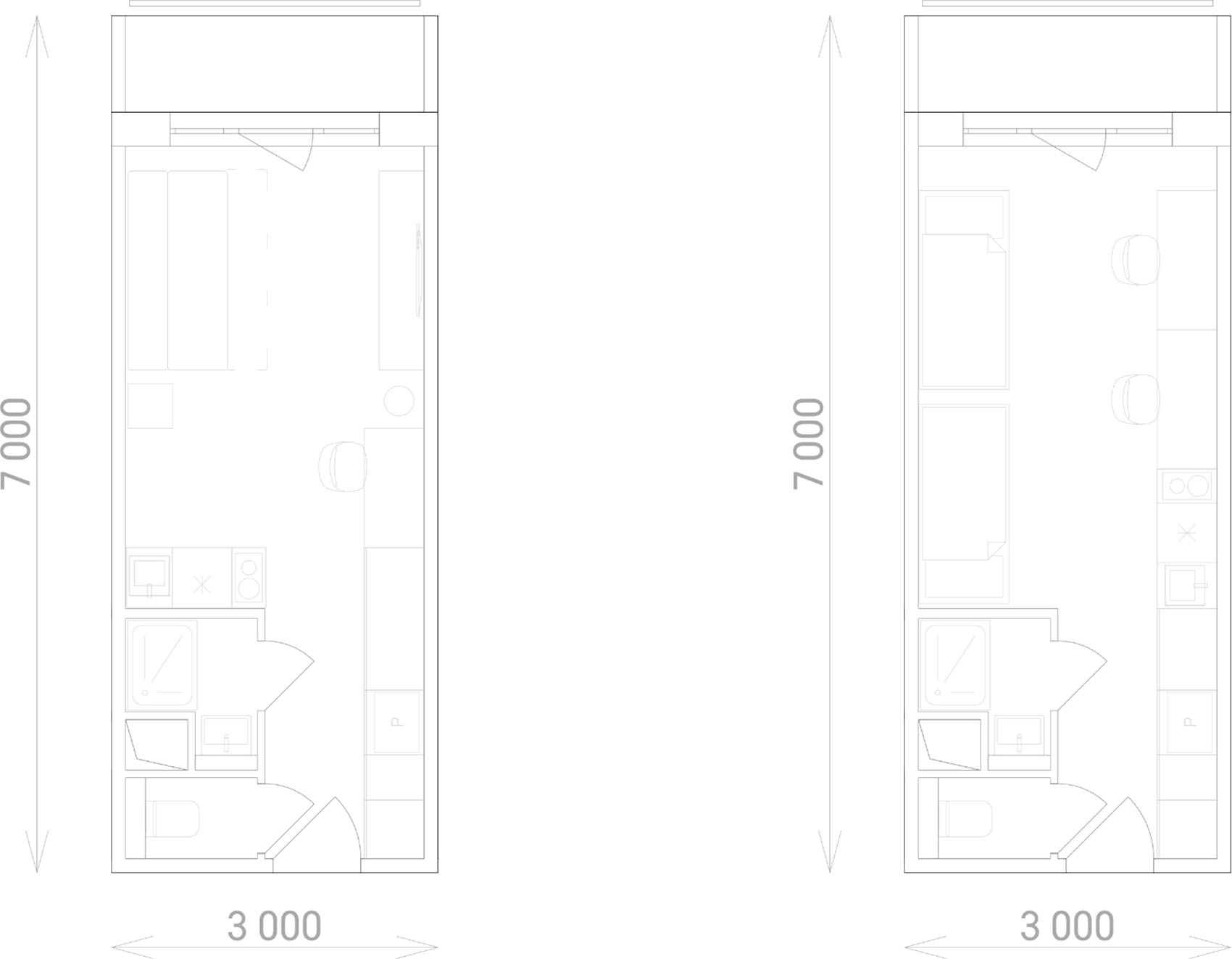
▼公寓单元平面图,Apartment unit floor plan
▼立面图,Elevation
Studio: Atrium Architekti
Author: Michal Burák, Dušan Burák, Jana Varchola Buráková
Contact E-mail: info@atriumarchitekti.sk
Website: www.atriumarchitekti.sk
Social Media:
www.facebook.com/atriumarchitekti
www.instagram.com/atrium_architekti
www.linkedin.com/company/atrium-architekti
Studio Address: Mlynská 27, 040 01 Košice, Slovakia
Co-author: Tomáš Eisner
Design Team: Matúš Gomolčá
Project Location: Kysucká 16, Košice
Project Country: Slovakia
Project Year: 2021
Completion Year: 2025
Built-up Area: 1,695 m²
Usable Floor Area: 15,625 m²
Plot Size: 3,700 m²
Photographer: Matej Hakár(www.matejhakar.com,info@matejhakar.com)
Collaborators and Suppliers:
Structural Engineer: Erik Duhaň
Graphic Design: Tomáš Eisner(www.eisner.sk)
Statics: Michal Varga
Building Services: Štefan Petkanič
Electrical Installation: Erik Špak
General Contractor: Chemkostav(www.chemkostav.eu)
Graphics Realization: Sedem(www.sedem.sk)
Concrete Paintings: Natreto(www.natreto.sk)