从陆方茶室到茅山叮当谷,常州 / UAO瑞拓设计
茅山叮当谷位于江苏常州金坛区的茅山脚下,多年前,金坛还是金坛市,也没有通高铁,从武汉去金坛还需要在常州或南京转大巴。
Nestled at the foot of Maoshan Mountain in Jintan District, Changzhou, Jiangsu Province, Maoshan Dingdang Valley sits beside Xinfu Reservoir. Years ago, Jintan had not yet been connected by high-speed rail, so traveling here from Wuhan required transferring to intercity buses in Changzhou or Nanjing.
▼项目概览 – 建筑与景观相融,
Project Overview – Architecture Blending with Landscape
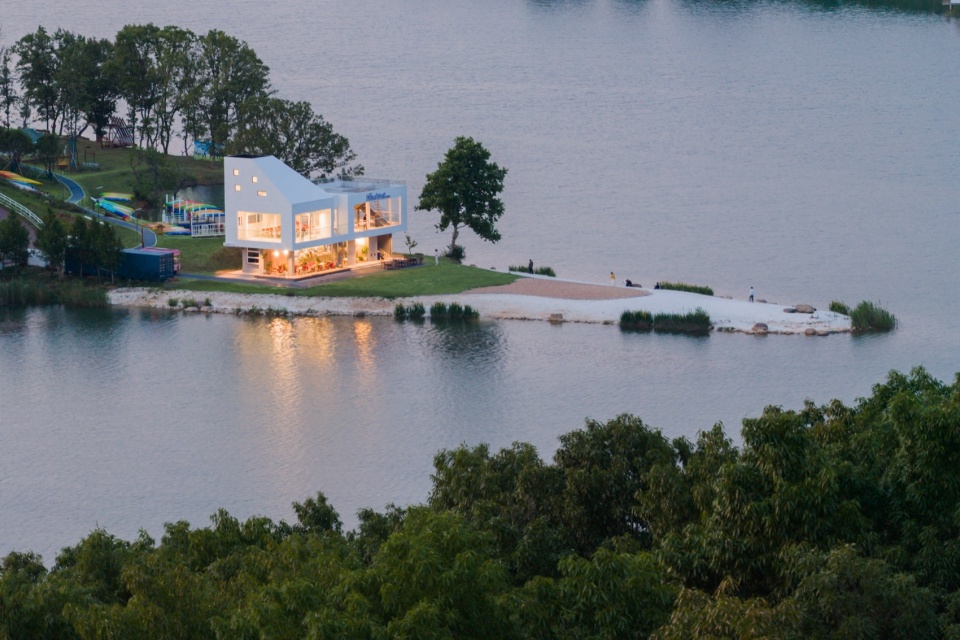
▼项目概览,Project Overview
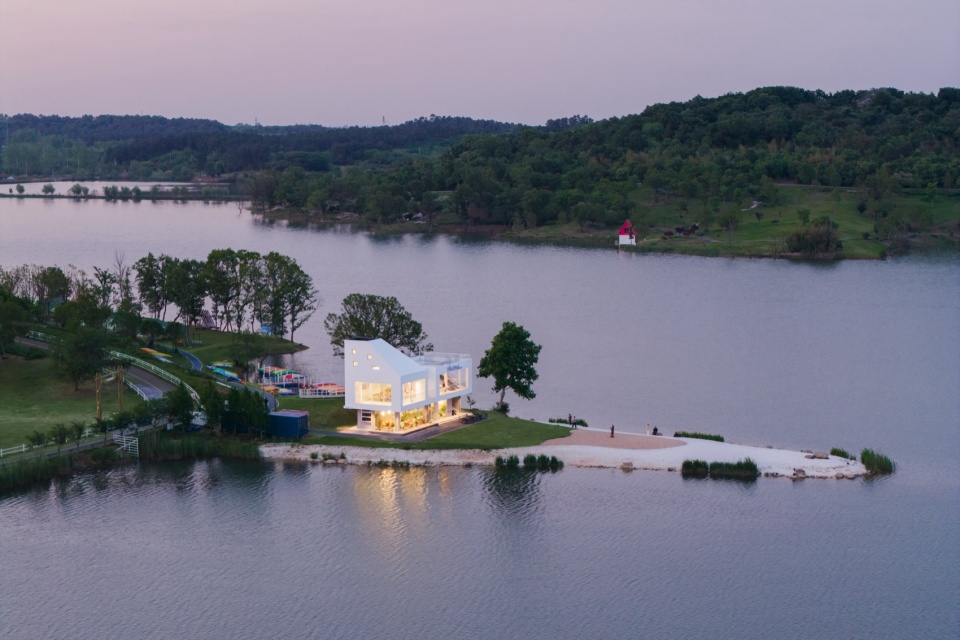
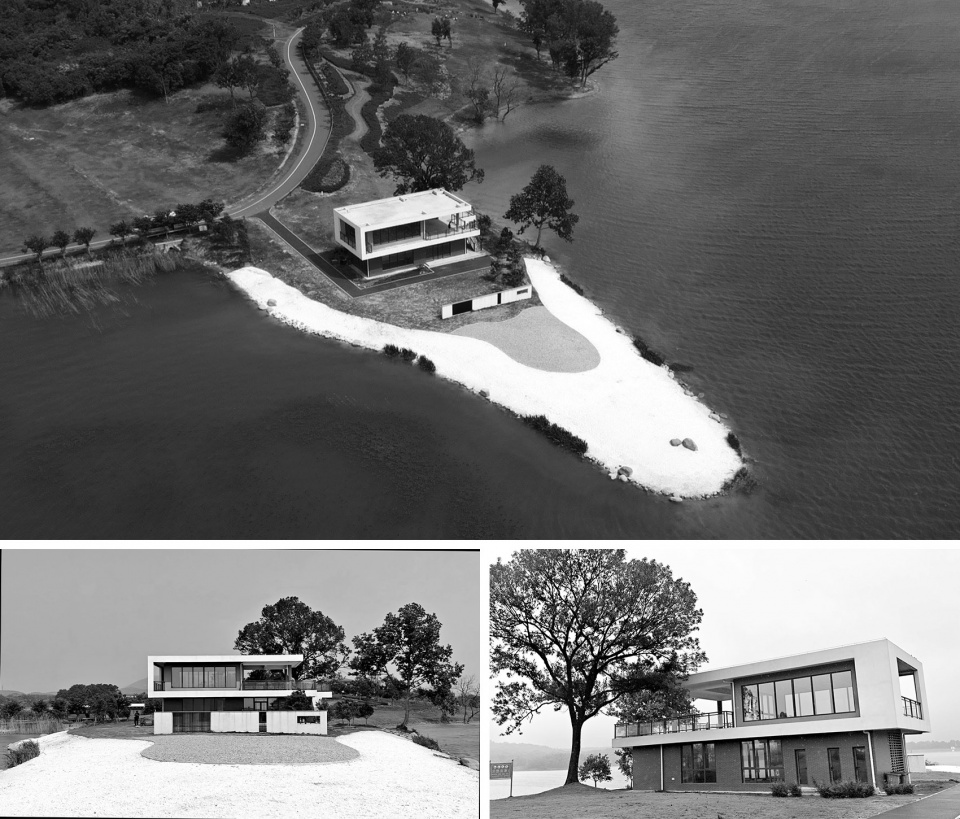
这个项目的甲方杨总是我的20多年的老甲方,更是老朋友。当年杨总委托我设计的只有六个平方的“陆方茶室”现在还矗立在他的一席婚礼公园的池塘边。这个建成于2016年的迷你小作品,当年的竹百叶现今已经换成了铝合金百叶,但其木纹清水混凝土经过十年的岁月,却继续散发出恒久的质感。
The client, Mr. Yang, has been my long-term partner and close friend for over two decades. Back in 2016, I designed the Six-Square Tearoom for him — a tiny 6-square-metre structure that still stands beside the pond at his Yixi Wedding Park today. Its original bamboo louvers have been replaced with aluminium ones over the years, yet the wood-grain fair-faced concrete retains a timeless texture after a decade of exposure to the elements.
▼原建筑,Original Building
▼李涛草图,Li Tao’s Sketch
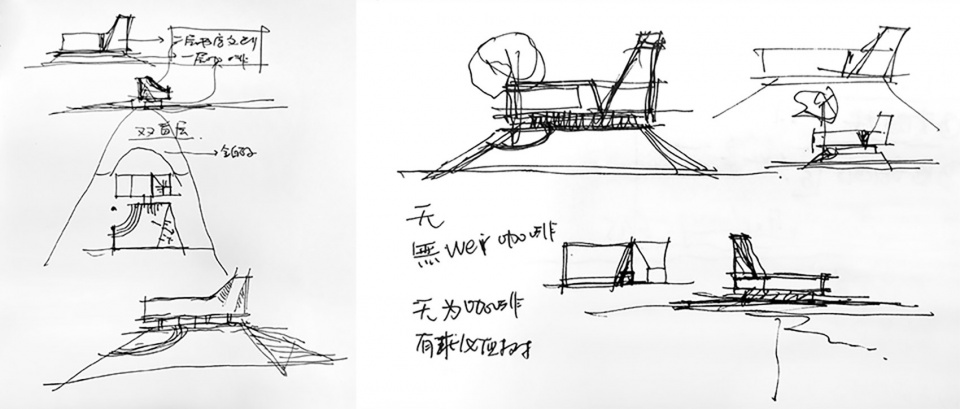
当年我从柯布西耶的拉图雷特修道院的住宿单元里出来,给陆方茶室找到了神性的依据。虽然茶室构思和建成是在我去法国考察柯布西耶作品之前,但我骄傲的发现,我找到了最小尺度包裹身体的神性建筑单元,与柯布西耶那么的类似:我将可以坐下6个人的最小尺度单元,用木纹清水混凝土浇筑,在池塘边下沉450mm,外面用竹子百叶包裹遮挡视线,让进去的人必须坐下来低头才能看到周边的美景——那是一种内敛而且克制的表达,我说:限制的景观才是美景,克制的感觉才是设计。
The design of Six-Square Tearoom drew spiritual inspiration from the residential units of Le Corbusier’s La Tourette Monastery. Though the teahouse was conceived and completed before my field trip to France to study Le Corbusier’s works, I was delighted to find an intriguing resonance: it is a small-scale architectural unit that encloses the human body with a sense of sanctity. Built with wood-grain fair-faced concrete, this compact space for six people is set 450 millimetres below the pond’s ground level and enclosed by bamboo louvers. Visitors have to sit down and lower their gaze to catch glimpses of the surrounding scenery. It embodies a restrained design philosophy: Scenery framed by limitation is the most charming, and design lies in moderation.
▼项目概览,Project Overview
▼项目概览,Project Overview
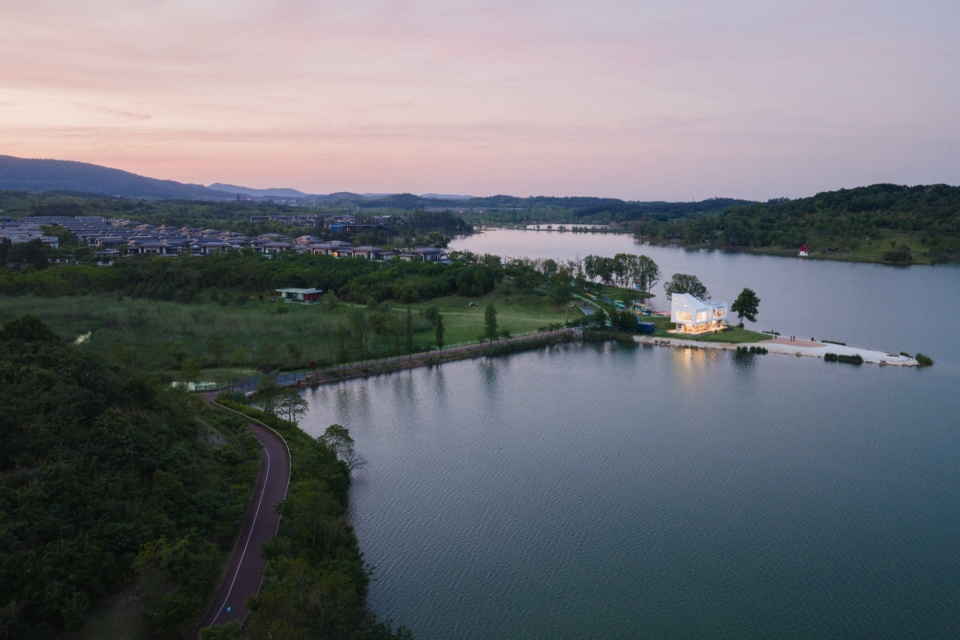
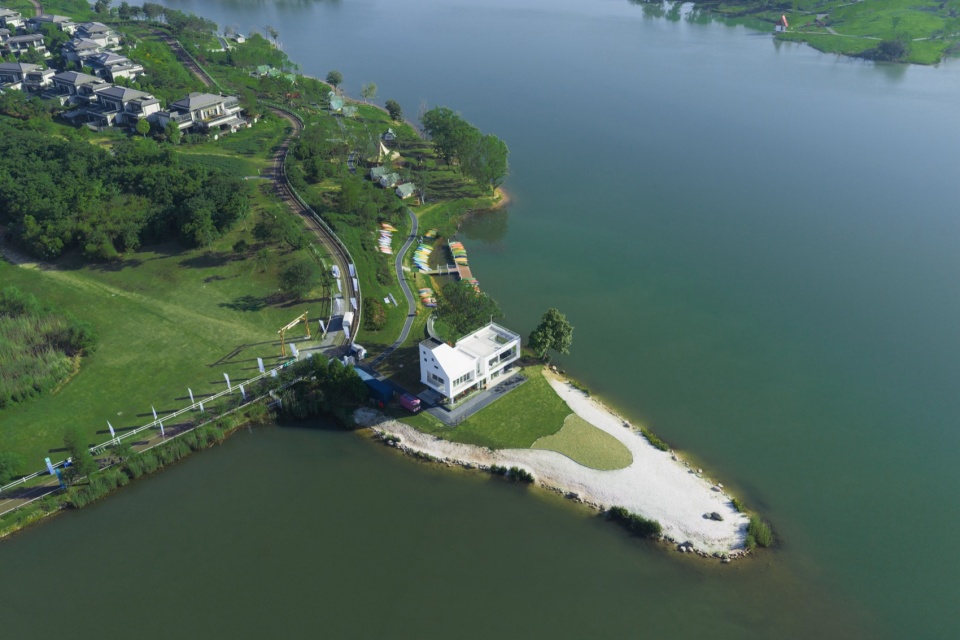
前年,杨总继续委托我们设计位于茅山脚下的露营地,场地位于湖水中一个景色绝美的半岛,原有建筑是环湖的驿站,一个空置多年的两层小楼。小楼背后有一棵多年生的大树,高出小楼一倍高度。半岛伸入水面的场地,已经建设有白石子沙滩和一堵景墙。我用量词“一堵”是因为这个景墙真的堵住了小楼看向水面的景观。于是在第一次看现场的时候,我就建议甲方把这个景墙拆掉,也是从这个出发点开始,把限制的景观都开放,变成了这个项目从一而终的逻辑。
Two years ago, Mr. Yang commissioned our team to design a campsite at the foot of Maoshan Mountain. The site occupies a scenic peninsula stretching into the lake, with an idle two-storey building originally serving as a lakeside rest station. A tall mature tree behind the building rises twice its height. The peninsula is fitted with a white pebble beach and a landscape wall, which unfortunately blocks the building’s view of the water. During our first site visit, I suggested demolishing the wall. This decision set the core design direction for the entire project: unfolding restricted landscapes to embrace openness.
▼自然伸入水面的半岛,
Peninsula Naturally Extending into the Water
▼茅山脚下的“福禄”小屋,
“Fulu” Cabin at the Foot of Maoshan
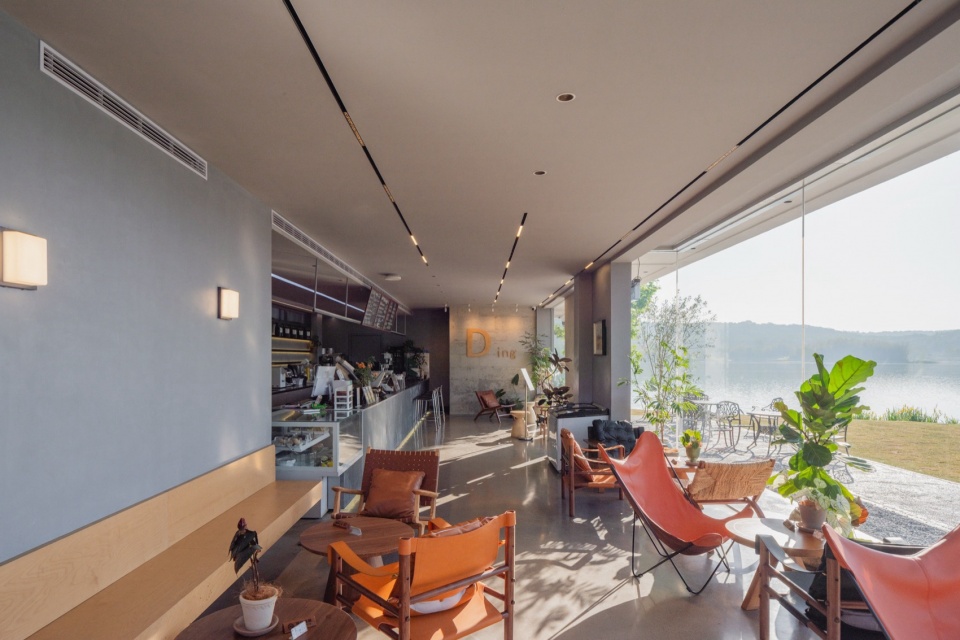
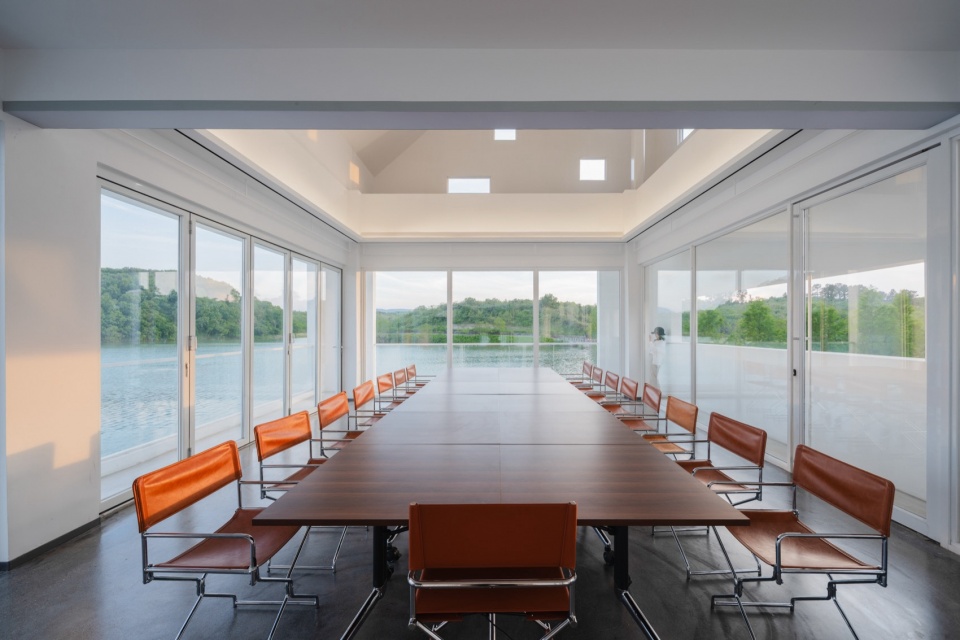
于是,有了一层面向南边的大落地玻璃,也有了二层会议室的三面大落地玻璃和二三楼的观景平台,让四周的景观都进入游客的视野。
Expansive floor-to-ceiling glass windows were installed on the south facade of the ground floor, while the second-floor meeting room features full-height glass on three sides. Viewing platforms were also added on the second and third floors, allowing visitors to fully appreciate the surrounding lake scenery.
▼与室外无边界的景观视野,
Seamless Integration with Outdoor Views
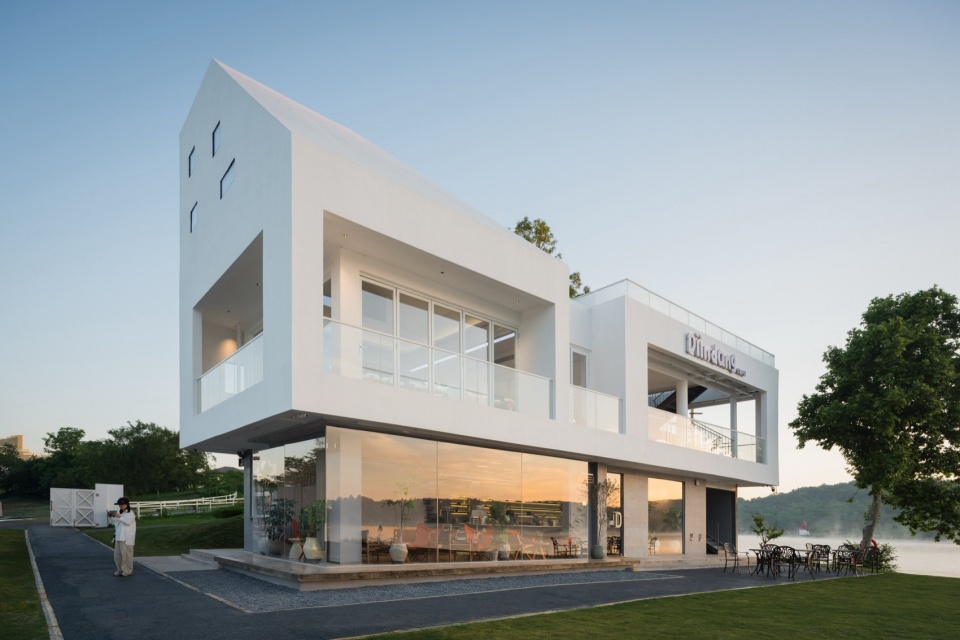
▼一层面向南边的大落地玻璃,
Large Floor-to-Ceiling Glass Facing South on the Ground Floor
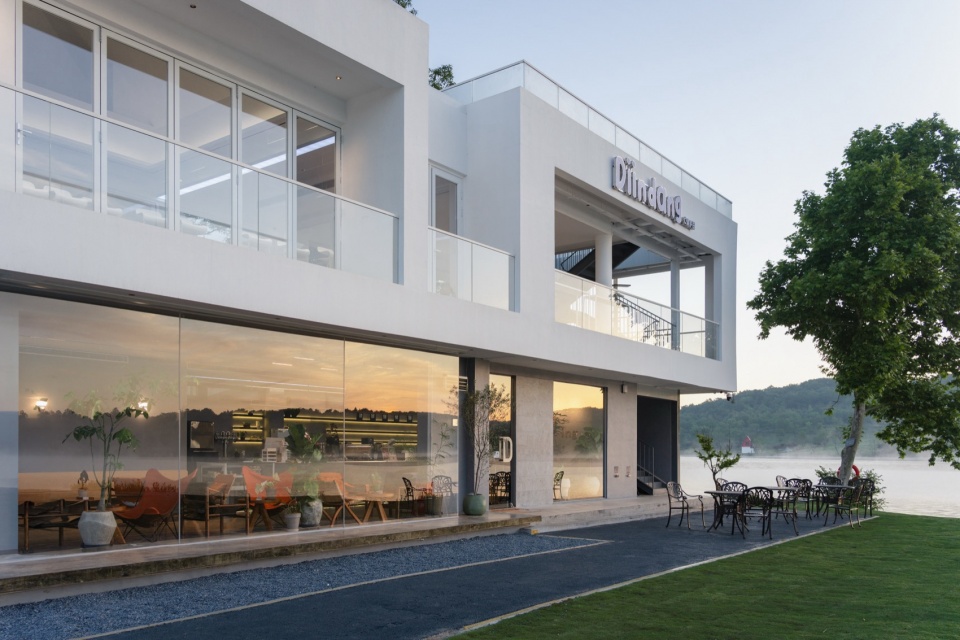
▼一层通透的观景视线,
Transparent Viewing Sightlines on the Ground Floor
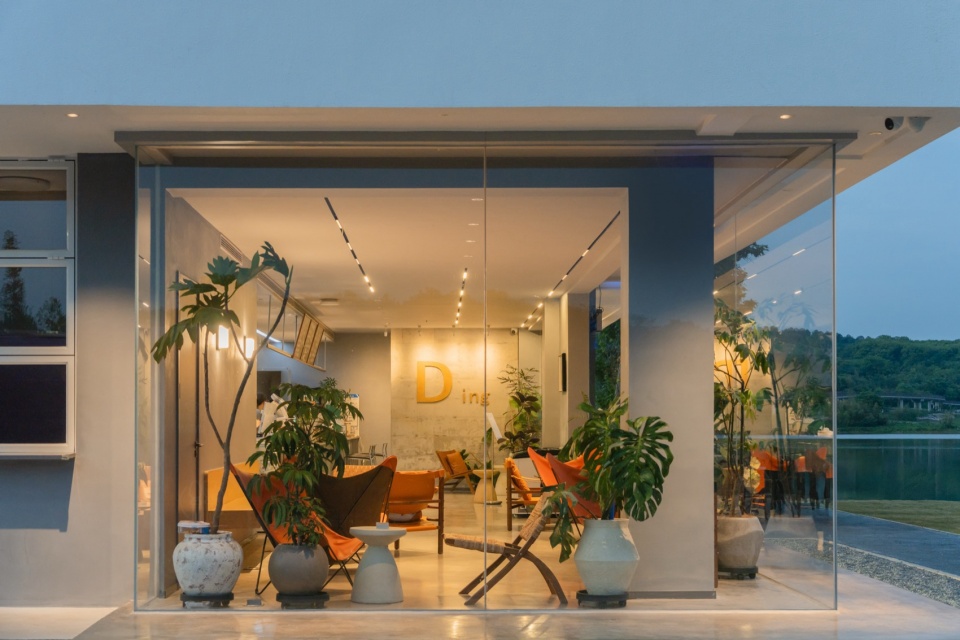
▼一楼室内,Interior of the Ground Floor
▼二楼三面大玻璃的会议室,
Conference Room with Three Large Glass Walls on the Second Floor
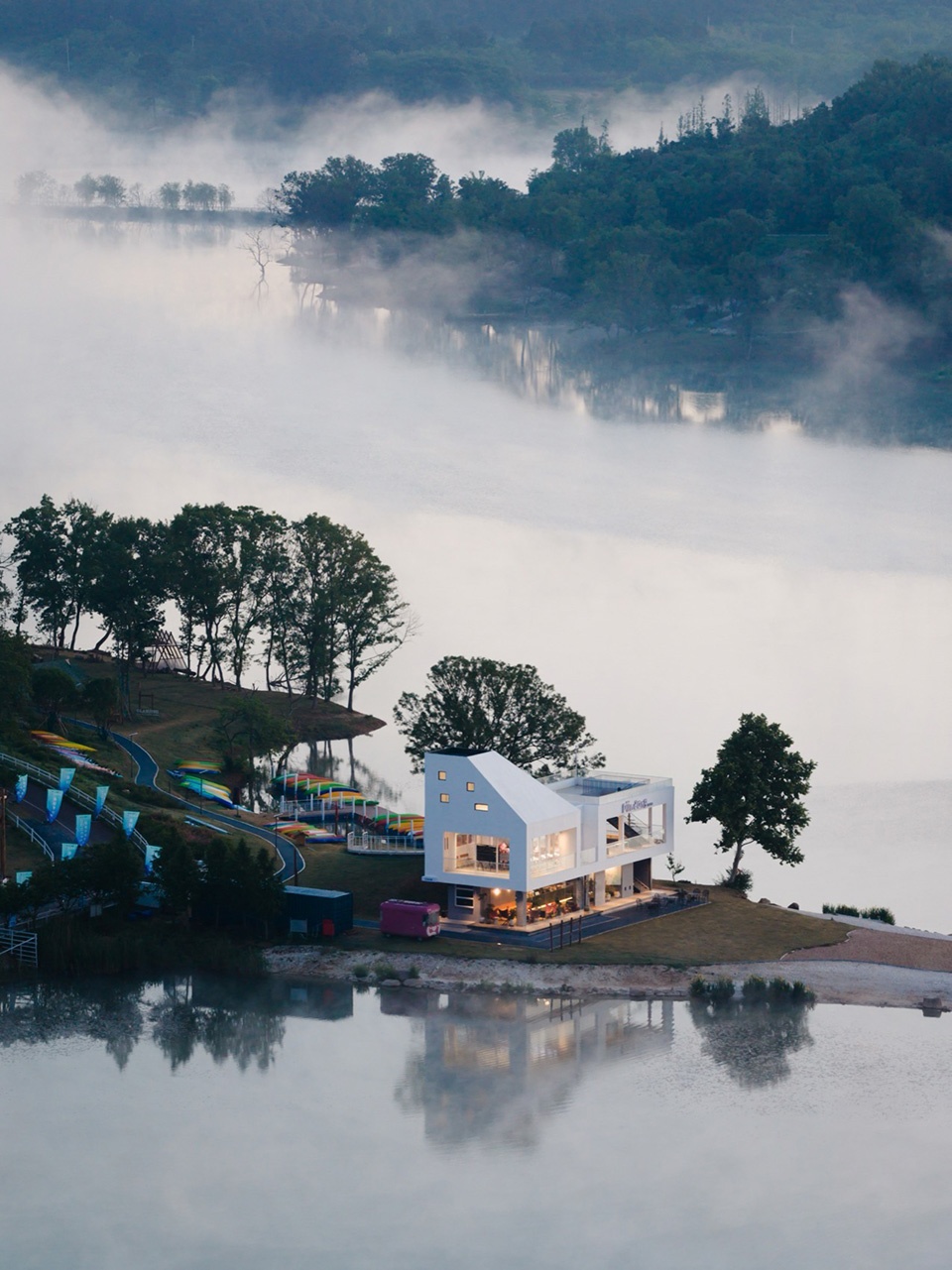
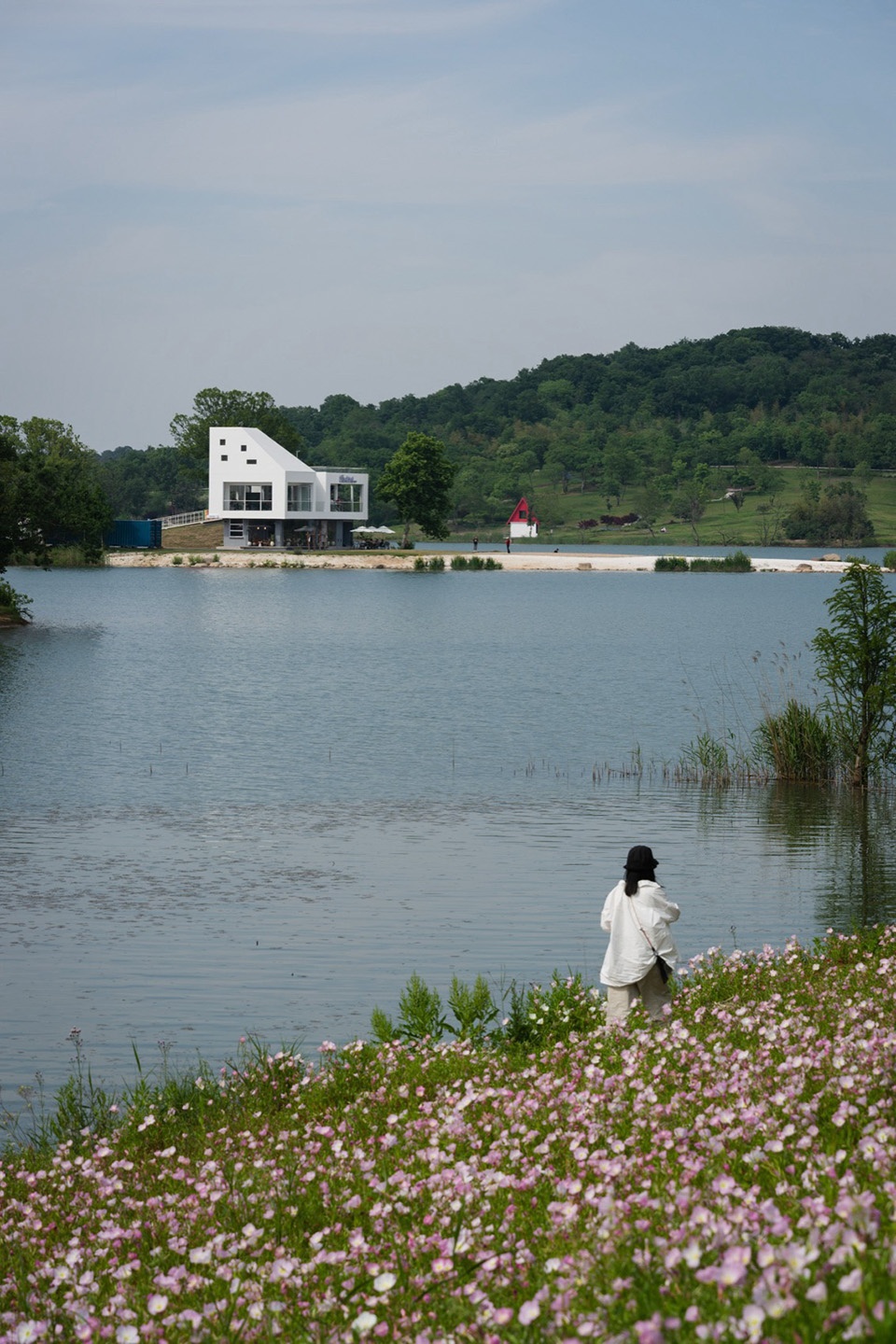
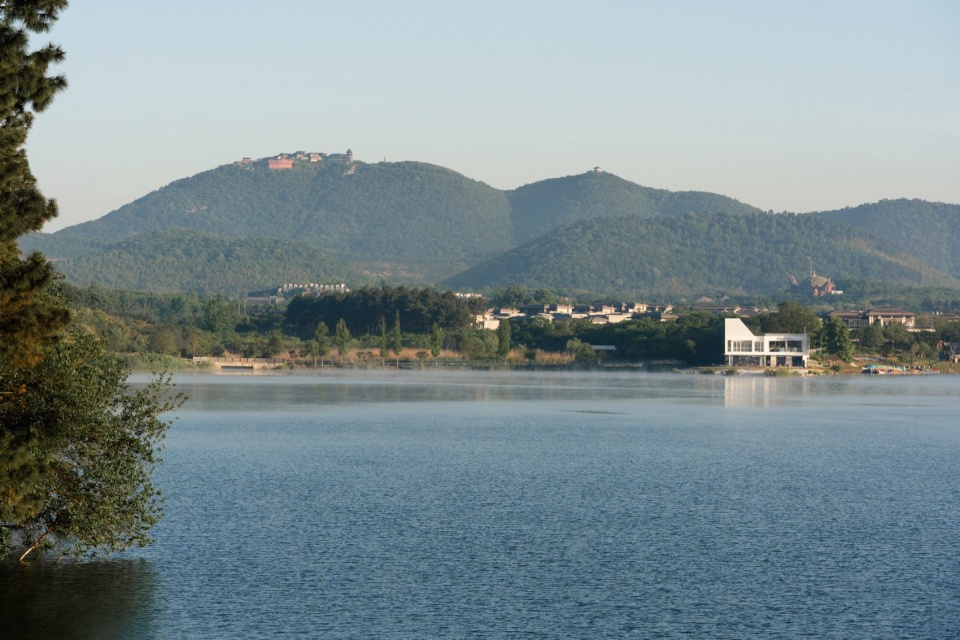
湖水周边的景观充满着江南水乡的氤氲晨雾,湖对岸原来的原色小木屋,也是在第一次看现场的时候,我提出把它加坡顶改红色。在半岛小建筑未建成之前,这个红色小屋就已完工。小屋瞬间成为了湖面一个亮眼的对景,它在对岸起伏的绿色山脉与碧蓝湖水的水平线之间 ,投入了一颗红色小种子,世俗的看法是模拟冰岛小红房子——那个存在于检查视力的机器里“标的物”,被时空平移到现实生活中,我想它们的共同点是:都在对岸,都在远处。
Misty morning vapours often linger over the lake, creating a typical poetic ambiance of the Jiangnan water town. I also proposed renovating the original wooden cabin on the opposite bank by adding a pitched red roof. Completed ahead of the peninsula building, the cabin has become a striking focal point across the water. Like a vivid red seed set against rolling green mountains and blue lake waters, it evokes the image of the iconic small red houses in Iceland — a familiar sight reminiscent of the target markers on eye-test charts, relocated from instruments to real life. What unites them is their position: always across the water, standing in the distance.
▼晨雾缭绕下的叮当谷,
Dingdang Valley in Morning Mist
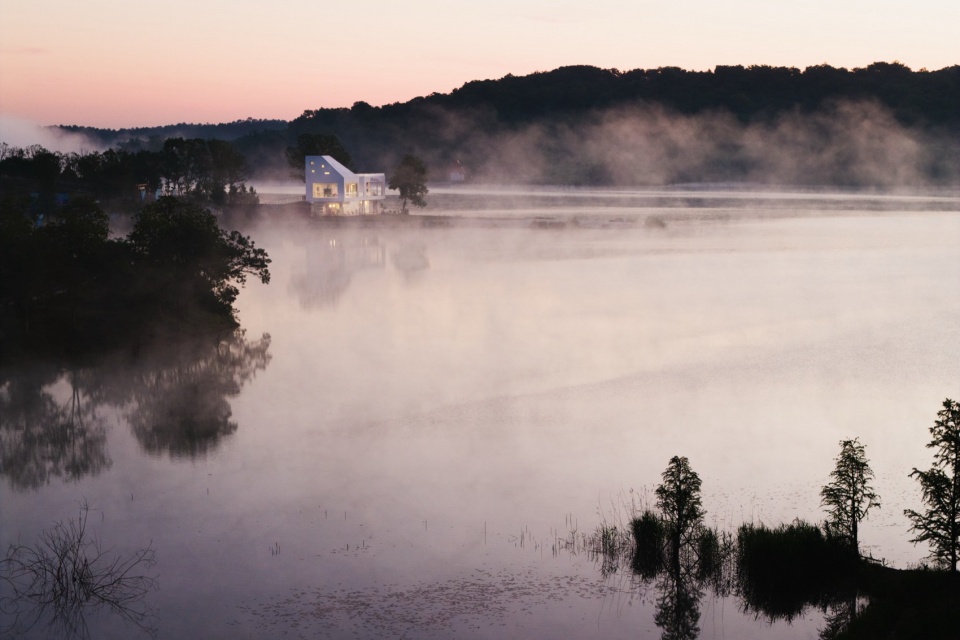
▼从对岸看向建筑,View from the Opposite Bank
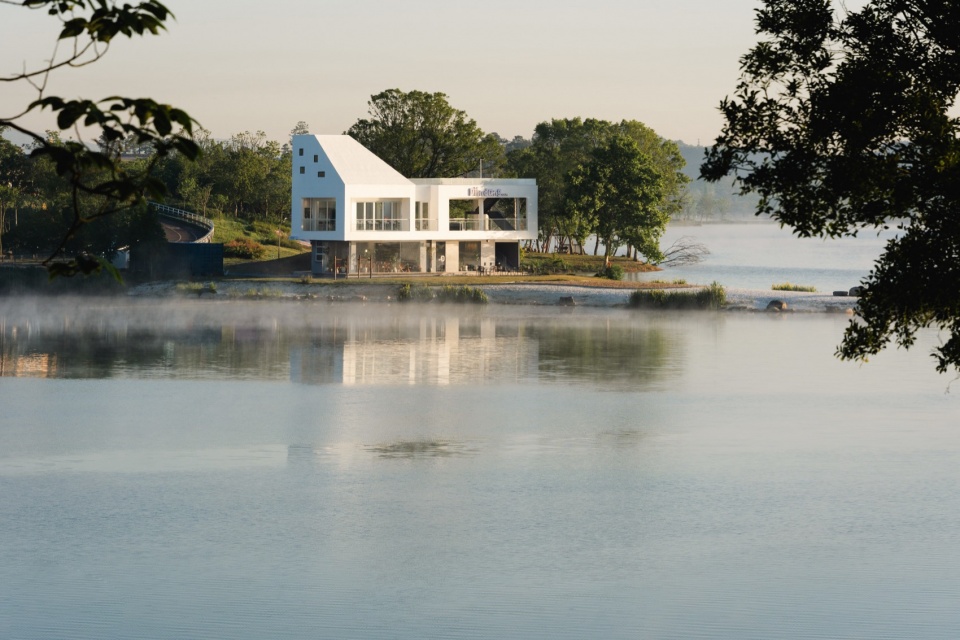
好像我把设计的思绪从半岛场地给扩展到了湖面对岸,这也是当年做陆方茶室设计时提出的一个核心理念:大景观+微建筑。它不仅是形态上大小尺度的对比,更是思考范式上的不局限于核心建筑场地周边,而扩展至能影响场地气场和对景的更大场域范围。
This design approach extends the vision beyond the building itself, carrying forward the core concept of the Six-Square Tearoom: grand landscape paired with micro architecture. It is not merely a contrast between scales, but a design mindset that breaks boundaries, taking into account the broader context that shapes the site’s atmosphere and visual dialogue.
▼深入水中的半岛和建筑则形成了完美的轴线关系,
Peninsula Extending into the Water and the Building
Forming a Perfect Axial Relationship
▼水平面和岸上高差很小,
Minimal Elevation Difference Between Water and Bank
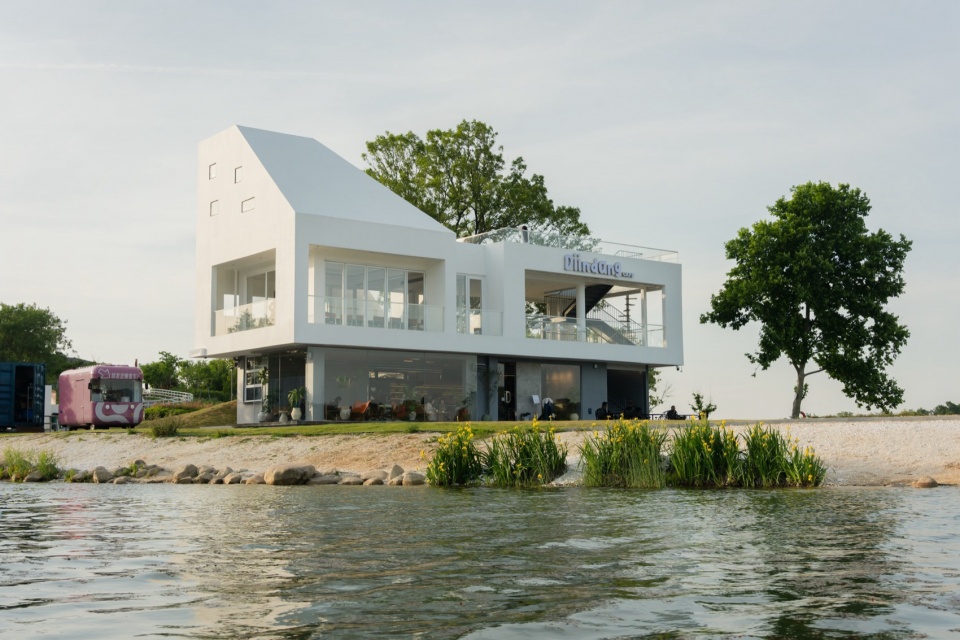
说回到场地本身,当你站在深入水中的半岛中间时,有那么一瞬间会有在海边的恍惚,因为水平面和岸上高差很小。深入水中的半岛又和建筑则形成了完美的轴线关系,但原有建筑水平横断在场地中间,其实阻隔了与水的关系。
Standing at the centre of the peninsula, one may momentarily feel as if standing by the sea, thanks to the minimal elevation difference between the water surface and the land. The peninsula forms a perfect axial relationship with the building, yet the original horizontal layout cut off its connection with the lake.
▼水平面和岸上高差很小,
Minimal Elevation Difference Between Water and Bank
▼建筑外观,Exterior View
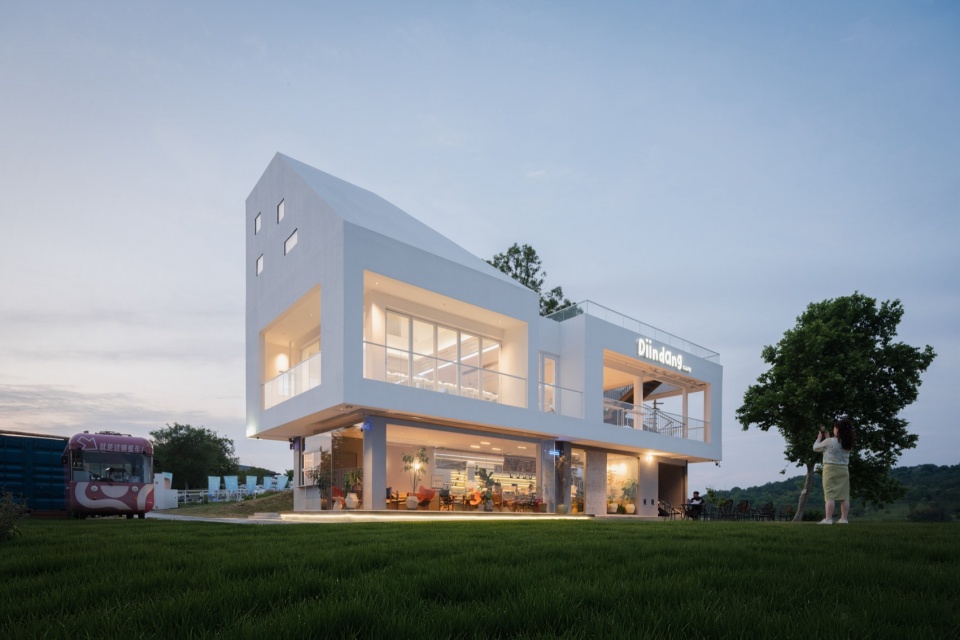
▼建筑外观,Exterior View
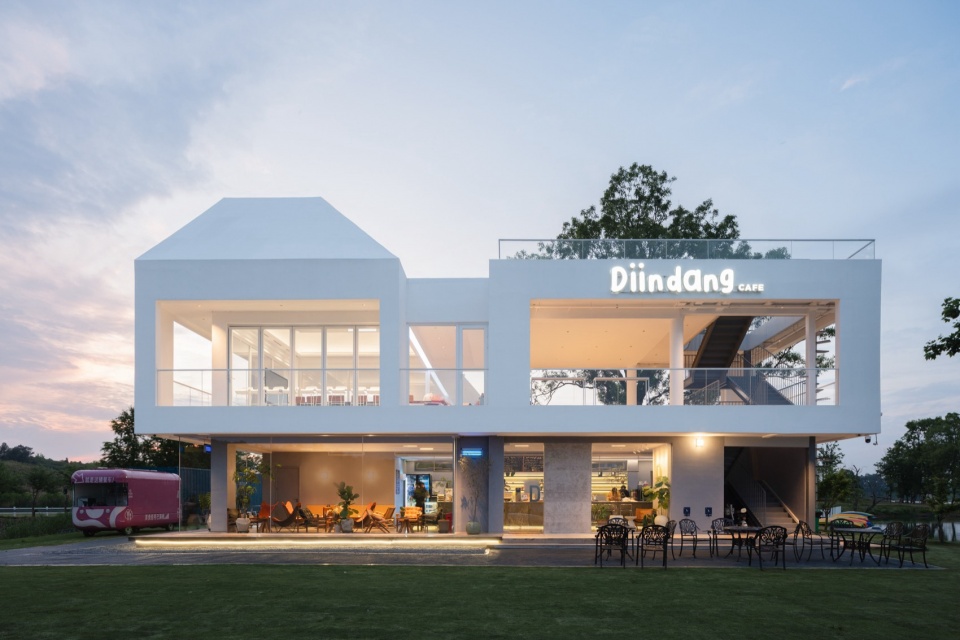
▼建筑外观,Exterior View
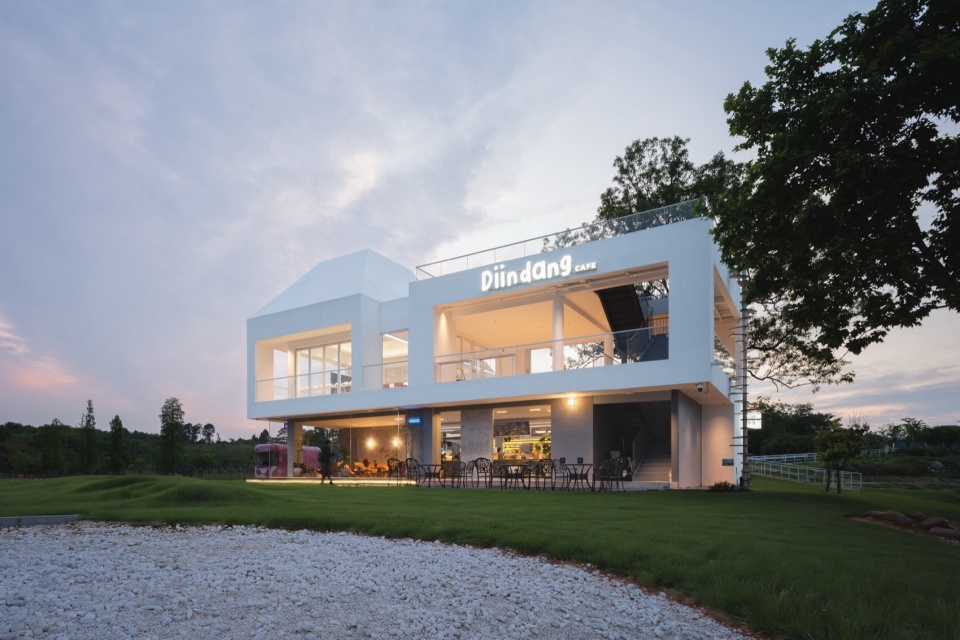
▼建筑外观局部,Exterior Detail
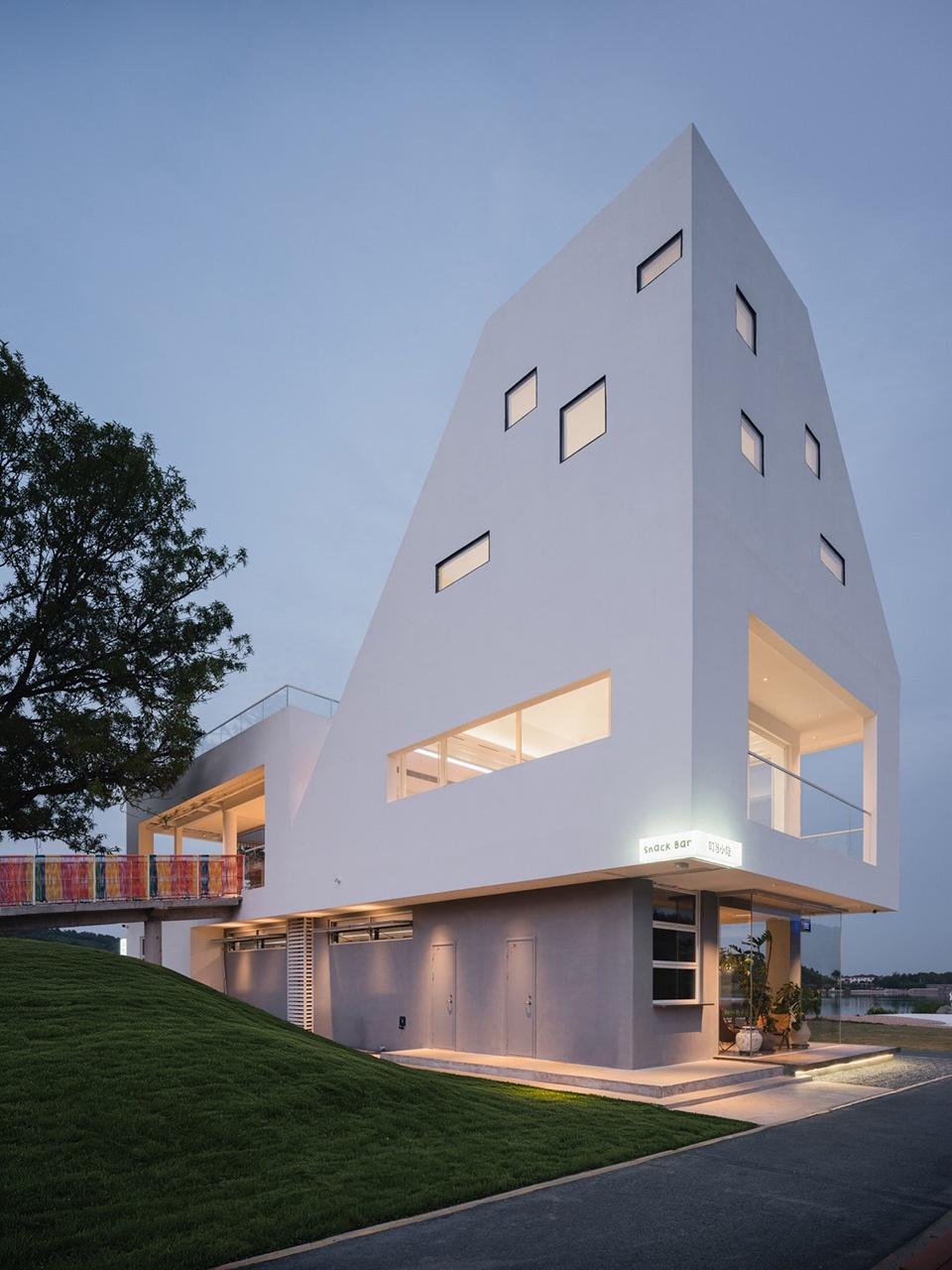
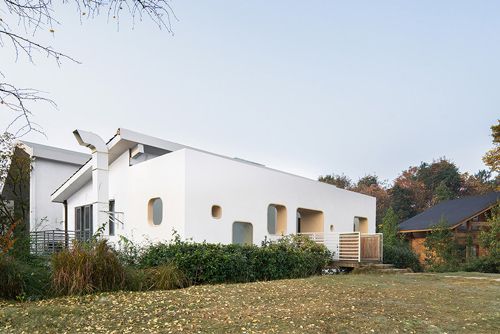
在方案思考过程中,我最先想到的是打破原有建筑的水平对称的关系,当时正在举办茅山云游节,其LOGO是一个葫芦的形状,因为福禄的吉祥含义——于是我思考把建筑的一角拉起高度,类似一个葫芦嘴的形态。二层都刷白,一层则控制在灰色水泥色的状态,这样以来,建筑二层的白如同漂浮在空中。面向水面的一层,尽量打开墙体,落地玻璃推到外墙边,营造与室外无边界的景观视野。门口的墙体本想用现浇的光纤清水混凝土,但立起来的光纤不好固定,遂改为在地面现浇预制光纤混凝土预制块,然后再砌筑、打磨。
We decided to break the building’s original symmetrical form. At that time, the Maoshan Wander Festival was underway, whose gourd-shaped logo symbolizes good fortune. Inspired by this, we raised one corner of the building to resemble the neck of a gourd. The entire second floor is painted white, while the ground floor is finished with grey cement, creating a visual effect that makes the upper level seem to float above the ground. On the waterside elevation, walls are maximally set back with floor-to-ceiling glass, delivering a boundless view of the landscape. We originally planned to cast cast-in-place optical fiber fair-faced concrete for the entrance wall, yet the optical fibres proved difficult to fix during construction. We adjusted the solution: prefabricated optical fiber concrete blocks were made on-site, then laid and polished for installation.
▼建筑外观,Exterior View
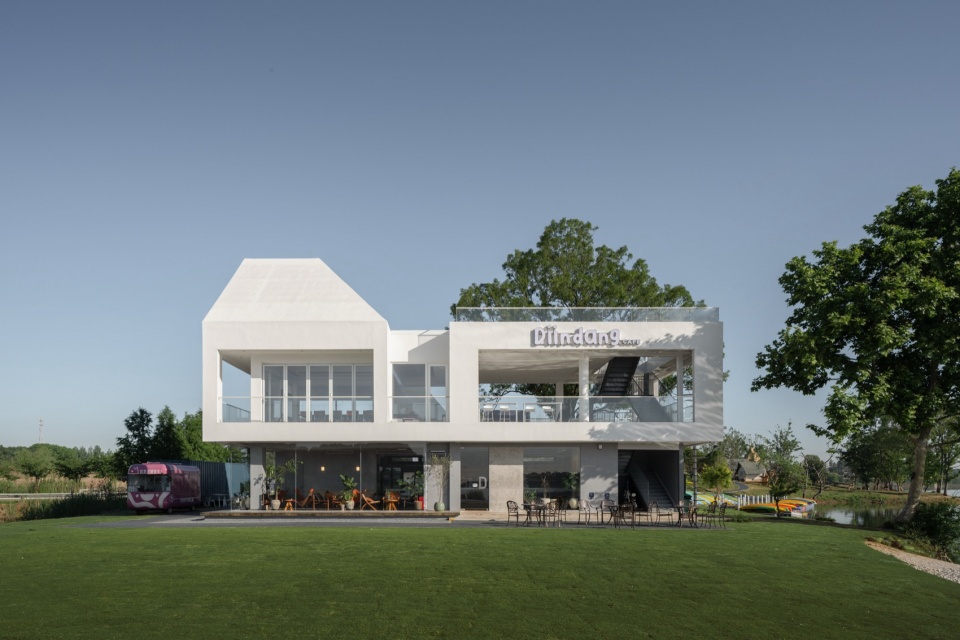
▼建筑外观,Exterior View
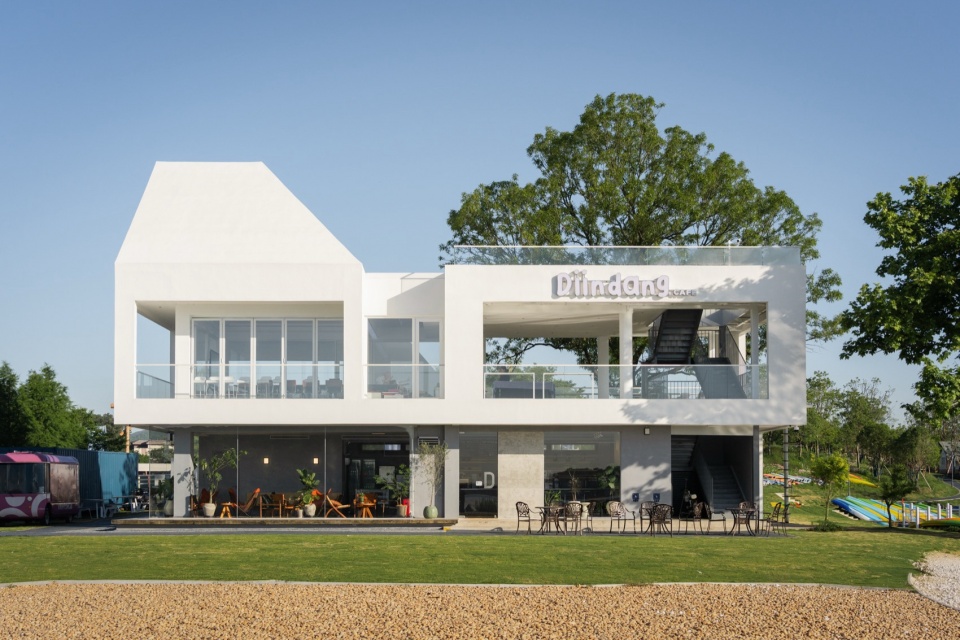
▼建筑外观局部,Exterior Detail
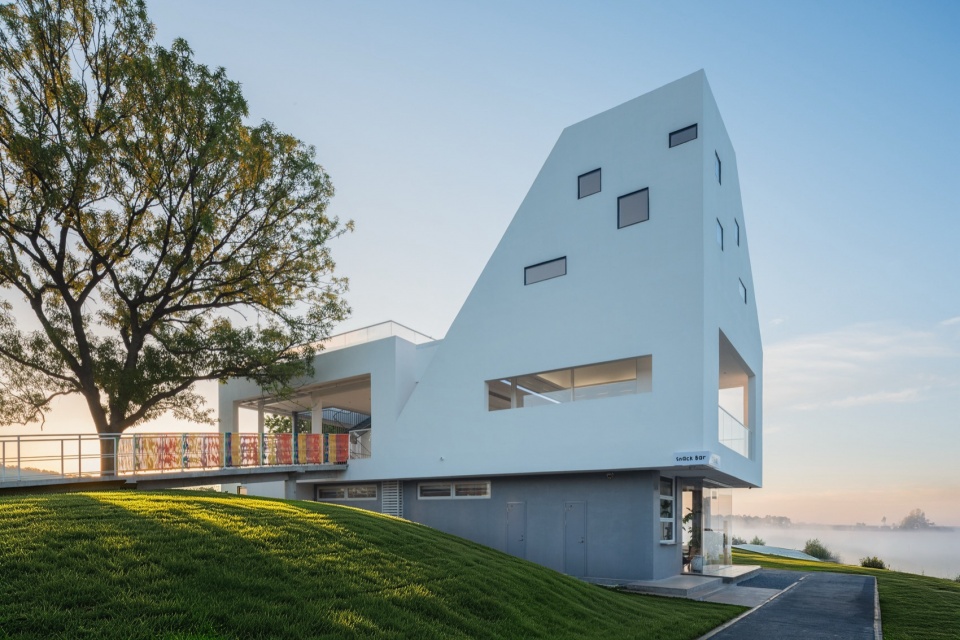
▼建筑外观局部,Exterior Detail
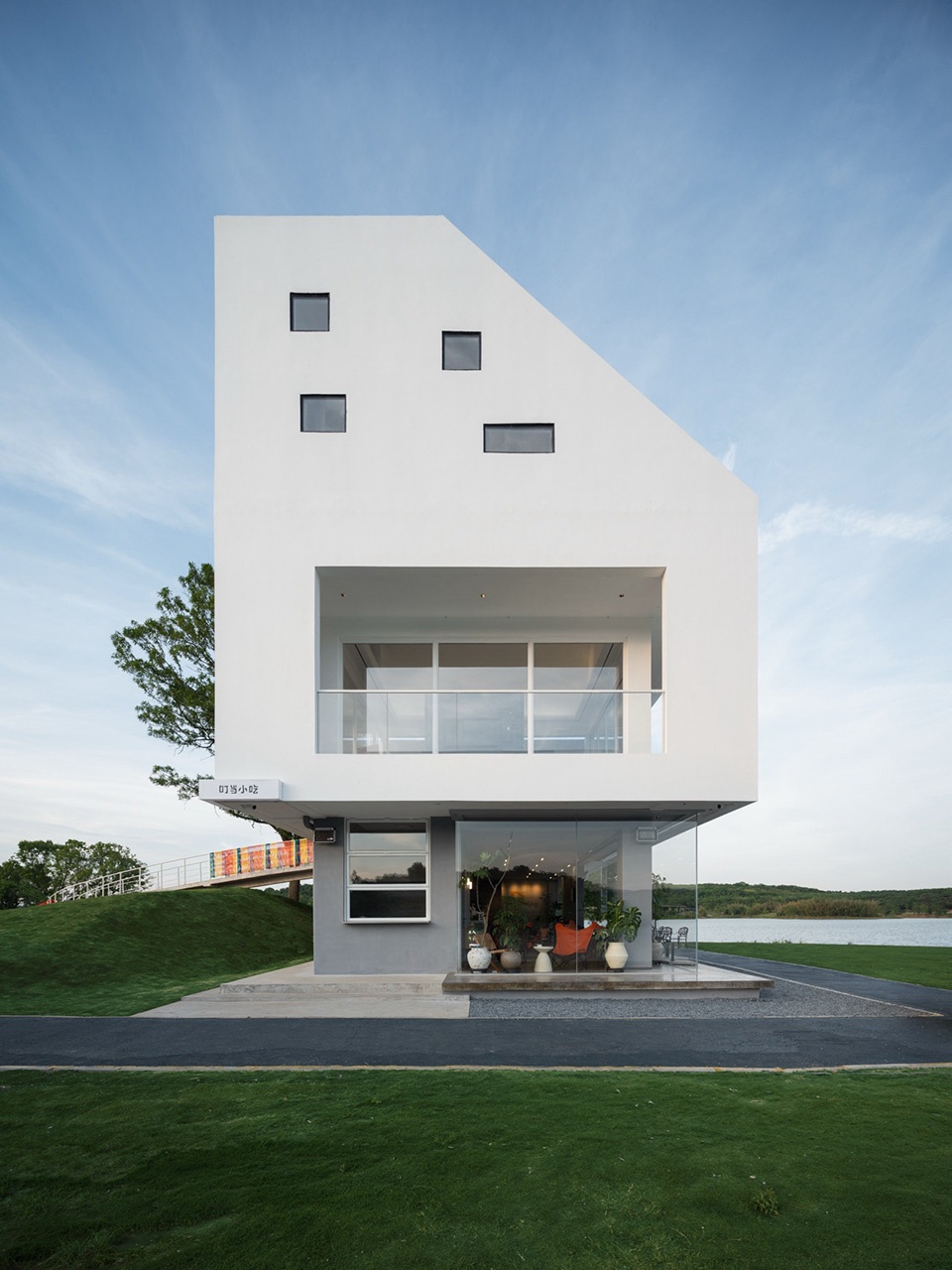
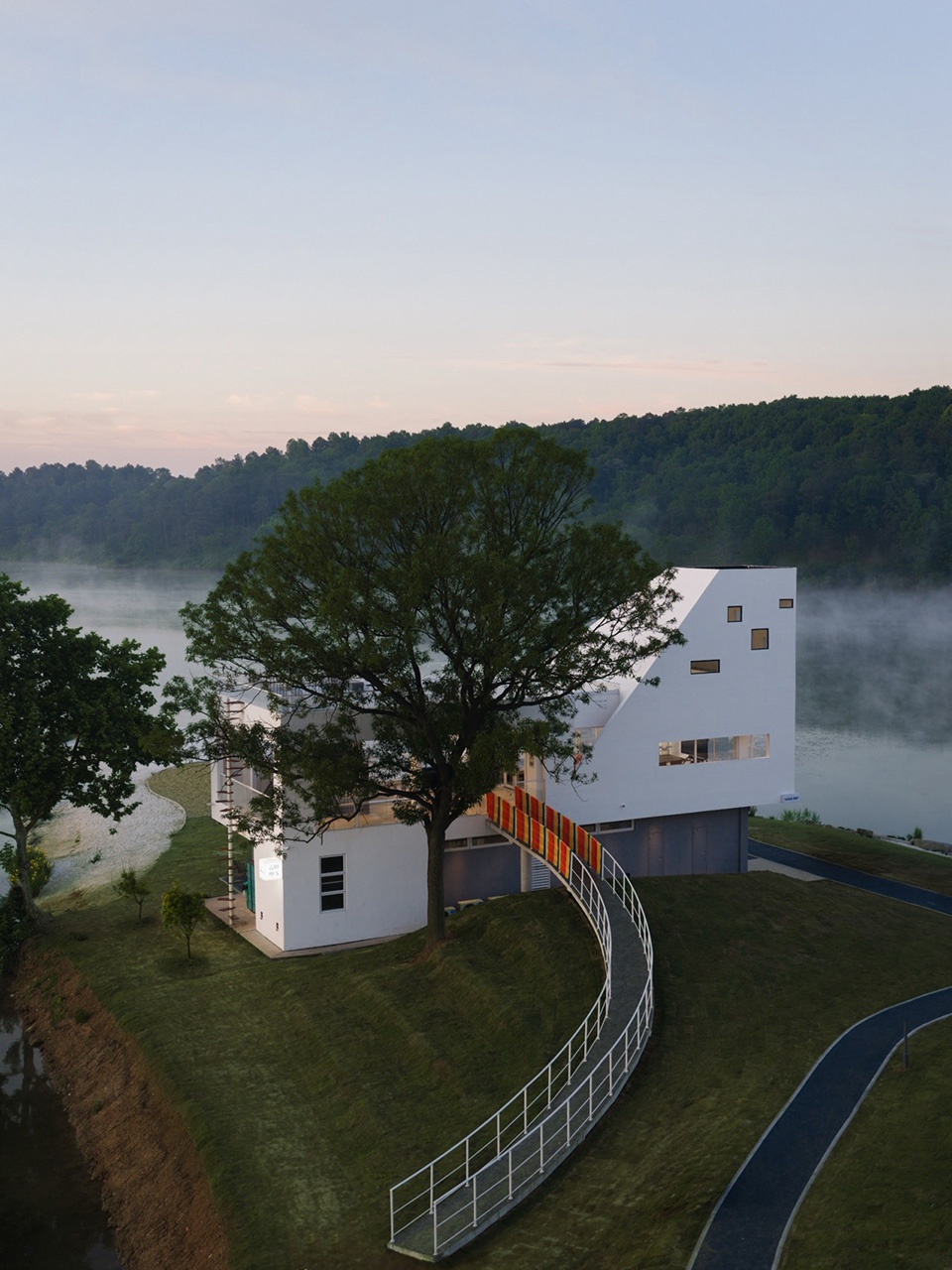
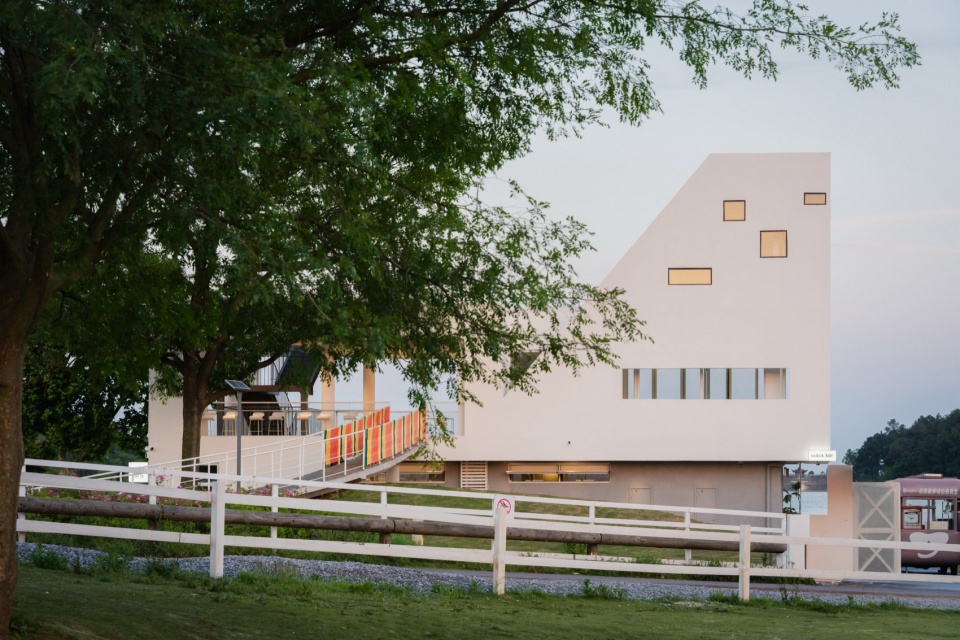
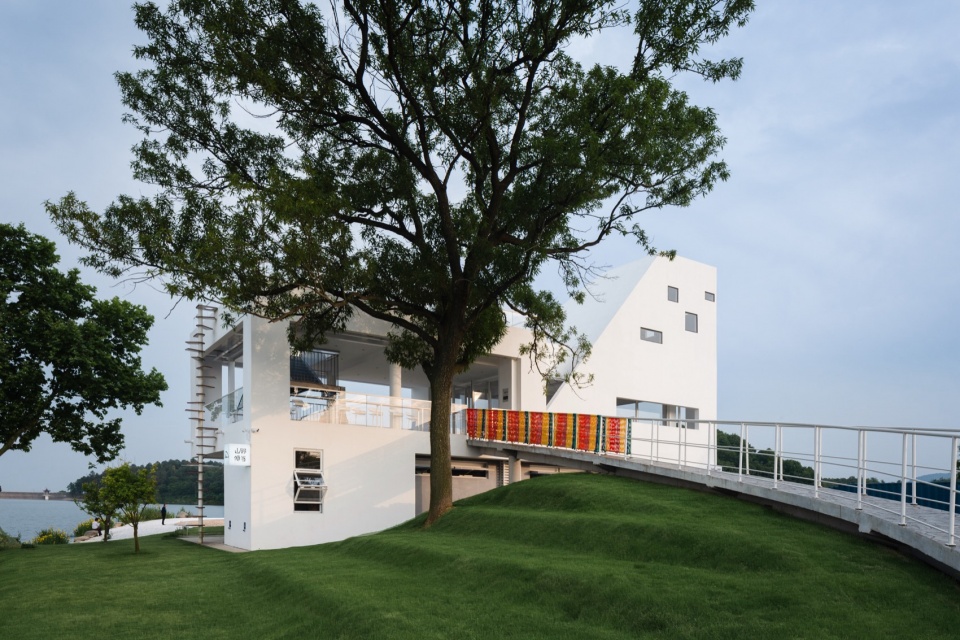
临水一面因为面对水面的开放观景原因,无论怎么设计都会觉得“嗯,还可以”。但是建筑背面一层是厕所的门,还有空调外机,怎么做都觉得差了点什么。某天看航拍照片,总觉得建筑和东北角那颗大树缺少点关系,于是思考做一个弧形坡道把树包围,坡道直接接到二层平台,在坡道下方填土再造一个草坡——草坡高度比一层略低,刚好把卫生间门挡住;也有了放置室外机的位置,室外机同时也被草坡挡住。
The waterside facade works naturally with open viewing spaces, yet the rear elevation presented challenges. The ground floor houses restroom doors and outdoor air conditioning units, which marred the overall appearance. Reviewing aerial photos, I noticed a disconnection between the building and the large tree in the northeast corner. To resolve this, we designed a curved ramp wrapping around the tree and connecting directly to the second-floor platform. Earth was backfilled beneath the ramp to form a gentle grassy slope, slightly lower than the ground floor. It cleverly conceals the restroom entrances and air conditioning units.
▼弧形坡道,Curved Ramp
▼建筑外观局部,Exterior Detail
▼草坡,Grass Slope
▼草坡,Grass Slope
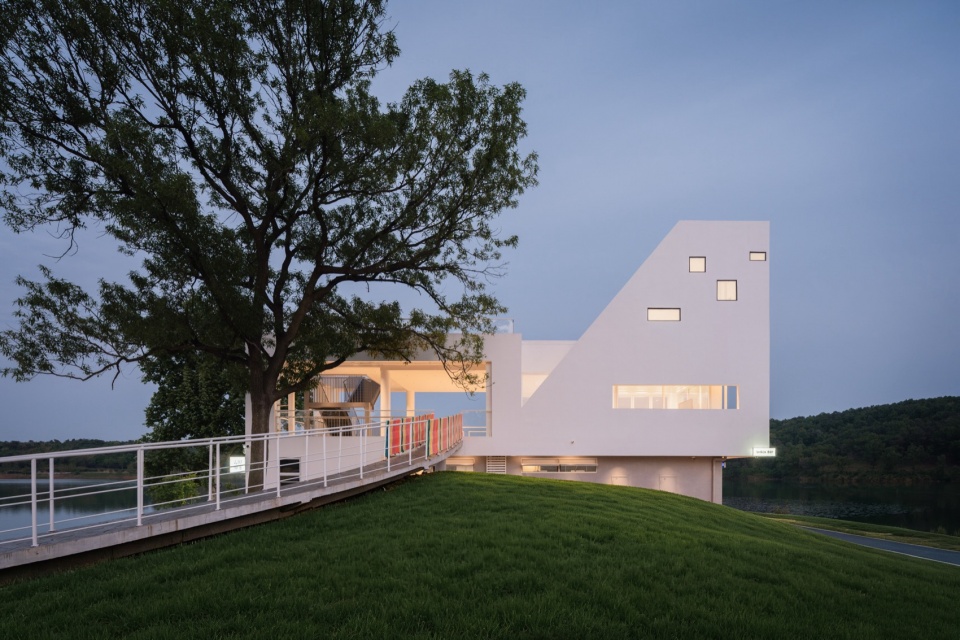
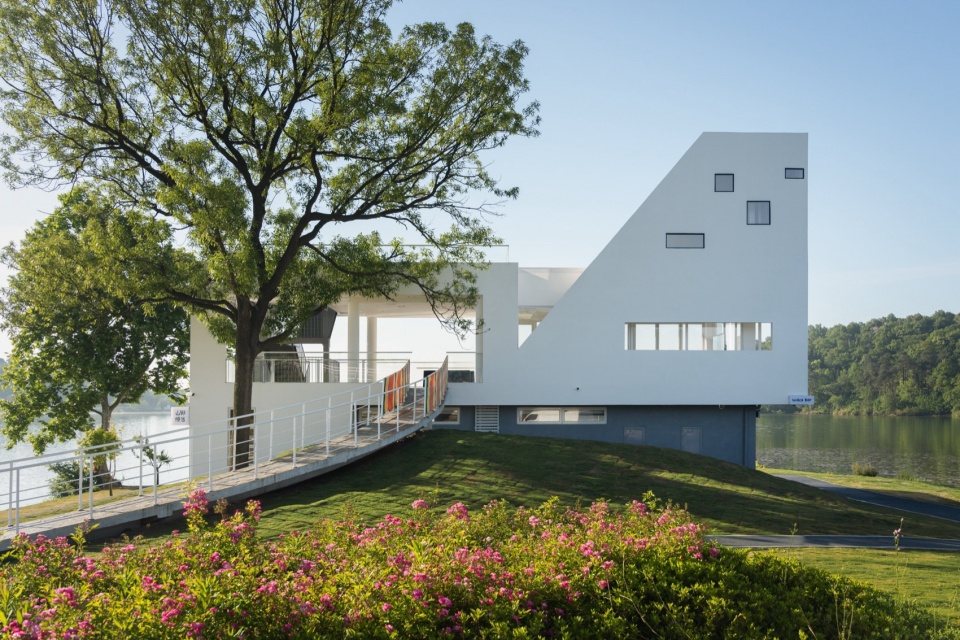
新增的弧形坡道扭转了建筑的背水面的消极背面的形象,增加了通达性。最关键的是,它把建筑、地形(新增草坡)、保留的大树三者完美的结合在一起了,也让建筑的动线活了起来。为了强化弧形坡道的水平感,栏杆尽量简化,少立杆,强化横杆,在临空高差较大的地方(从草坡顶到建筑二层的桥梁段),用彩色尼龙绳绑扎做防坠落防护。这段彩色尼龙绳,自然成为了纯白建筑锦上添花的亮点,有点像湖对岸的红色屋顶小屋一样,饱和度高的色彩,不要多,但就那么集中的一点,成为风景中的视觉焦点。
The curved ramp revitalizes the dull rear facade, improves accessibility, and harmoniously integrates the building, new terrain and the preserved ancient tree, revitalizing the overall circulation. To accentuate the ramp’s horizontal rhythm, railings are simplified with fewer vertical posts and prominent horizontal bars. For the elevated section linking the grassy slope to the second floor, colourful nylon ropes are used as fall protection. This vibrant detail becomes a delightful highlight against the all-white building, just like the red-roofed cabin across the lake. As a subtle pop of colour, it serves as a captivating visual focal point within the landscape.
▼建筑、地形与保留大树的完美结合,
Perfect Integration of Architecture, Terrain, and Retained Trees
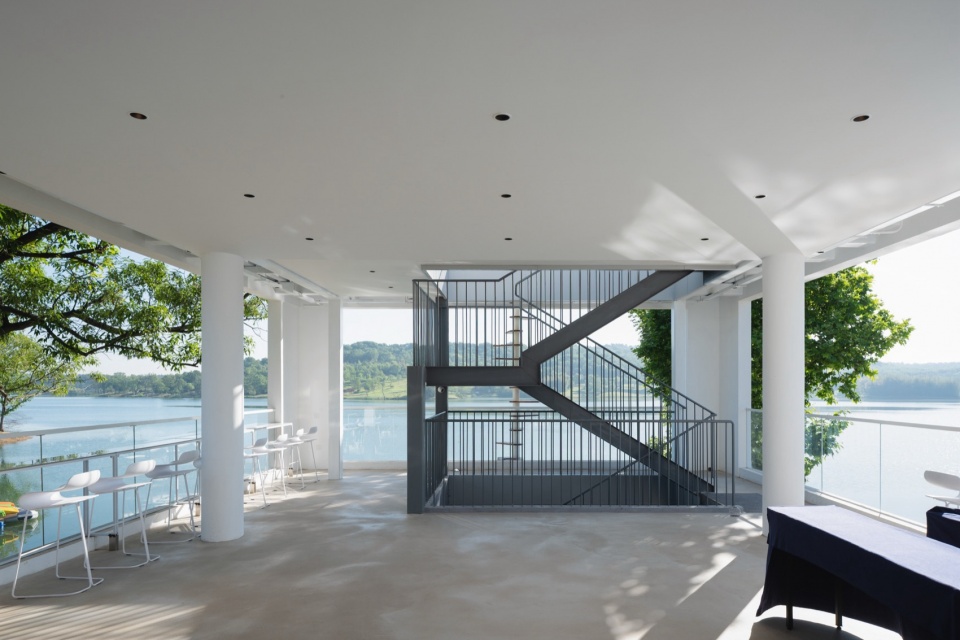
▼二楼的开放空间,
Open Space on the Second Floor
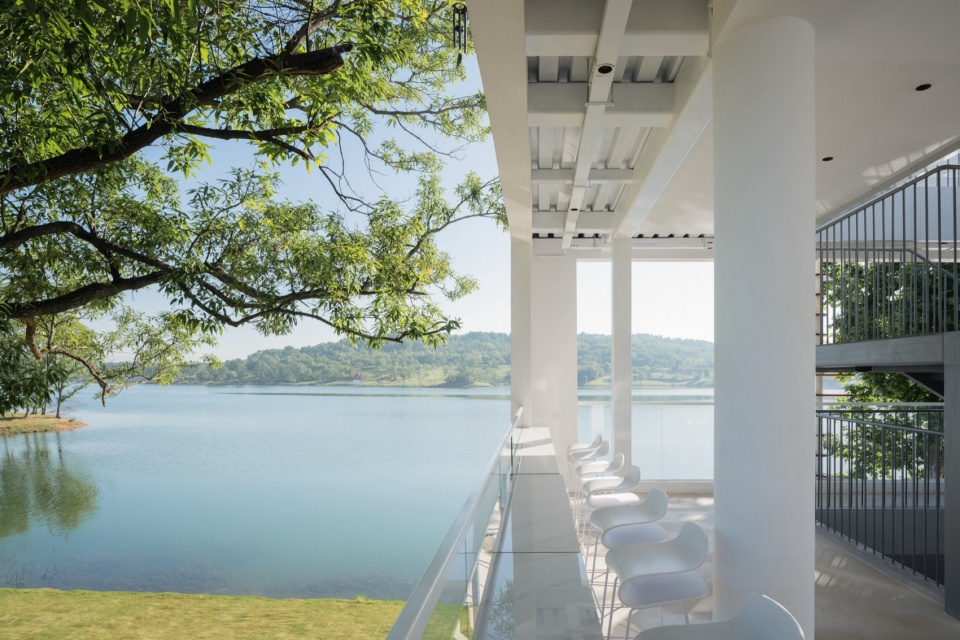
▼二楼的观景平台,
Viewing Platform on the Second Floor
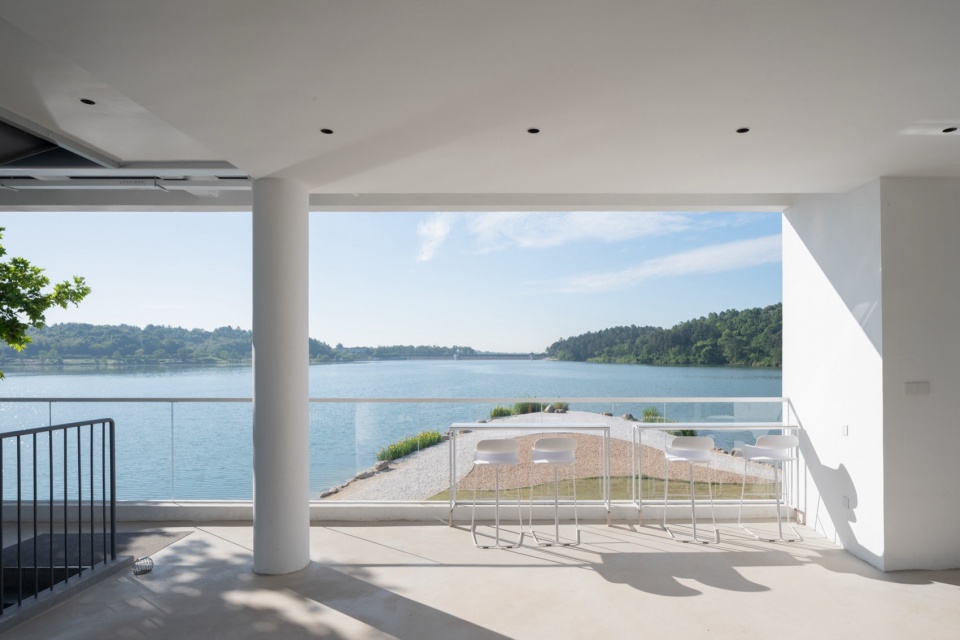
▼二楼正对小岛的观景视角,
View toward the Island from the Second Floor
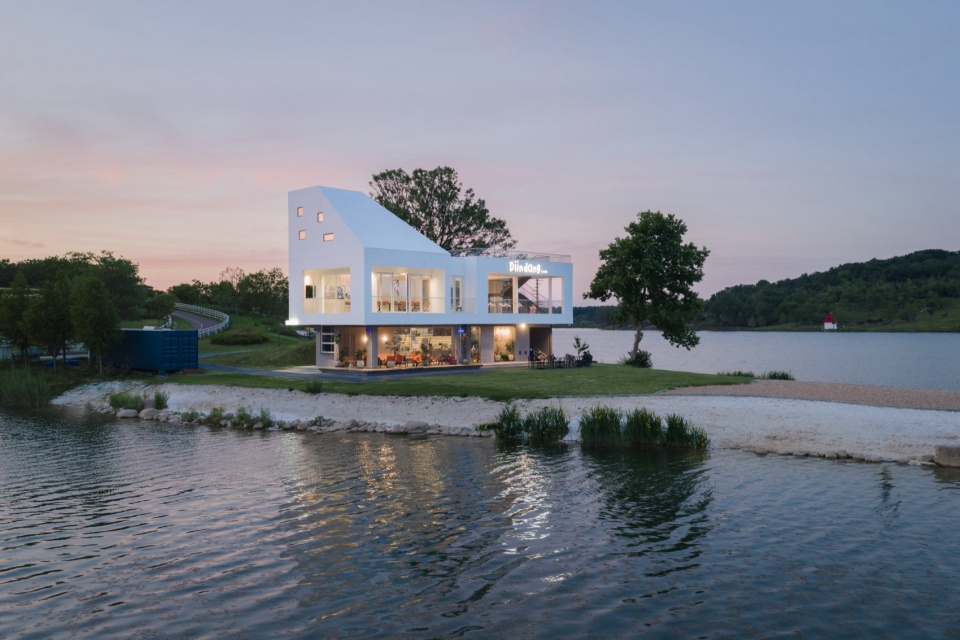
项目建成后,迅速成为江苏常州地区的网红名片,网上称这里为“常州小洱海”,这是我们在设计之初意料之外的,但意料之内的是,我和甲方都有信心让很多人喜欢这里,因为那藏在我们对场地各要素的整合和尊重之上,不刻意去凹造型,但每一条弧线、每一个开洞、都是响应了场地本身的特征。
Upon completion, the project quickly rose to fame as an internet-famous landmark in Changzhou, nicknamed “Changzhou’s Little Erhai Lake” — an unexpected pleasant surprise. What we did anticipate was its popularity among visitors. Every curve and opening in the design responds faithfully to the site’s natural features, without deliberate stylization. The whole scheme balances respect for the site, cost control and operational practicality.
▼深入水中的半岛和建筑则形成了完美的轴线关系,
Peninsula Extending into the Water and the Building
Forming a Perfect Axial Relationship
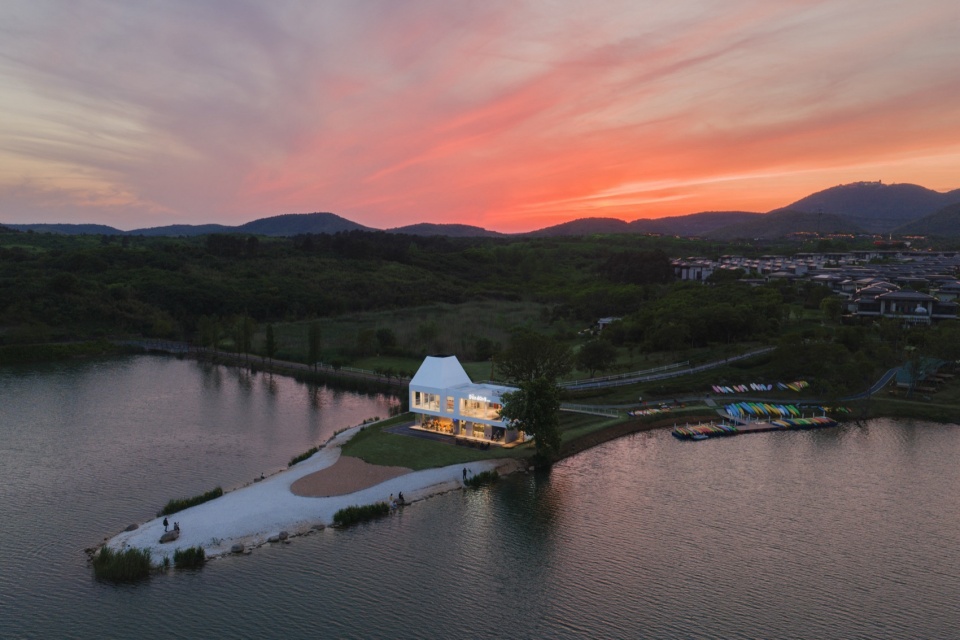
▼茅山脚下的“福禄”小屋,“Fulu” Cabin at the Foot of Maoshan
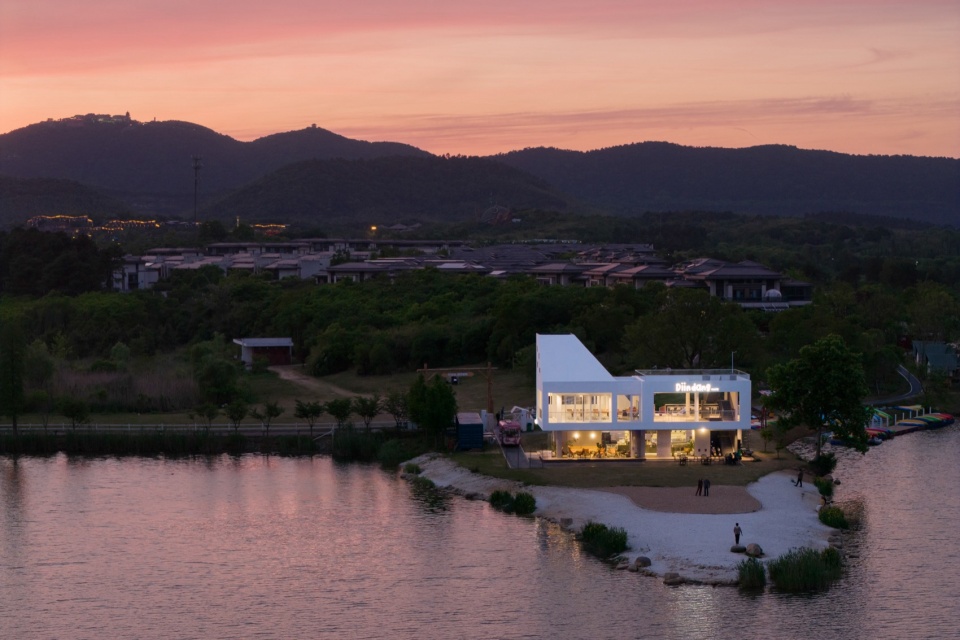
▼建筑外观-黄昏景,Exterior View at Dusk
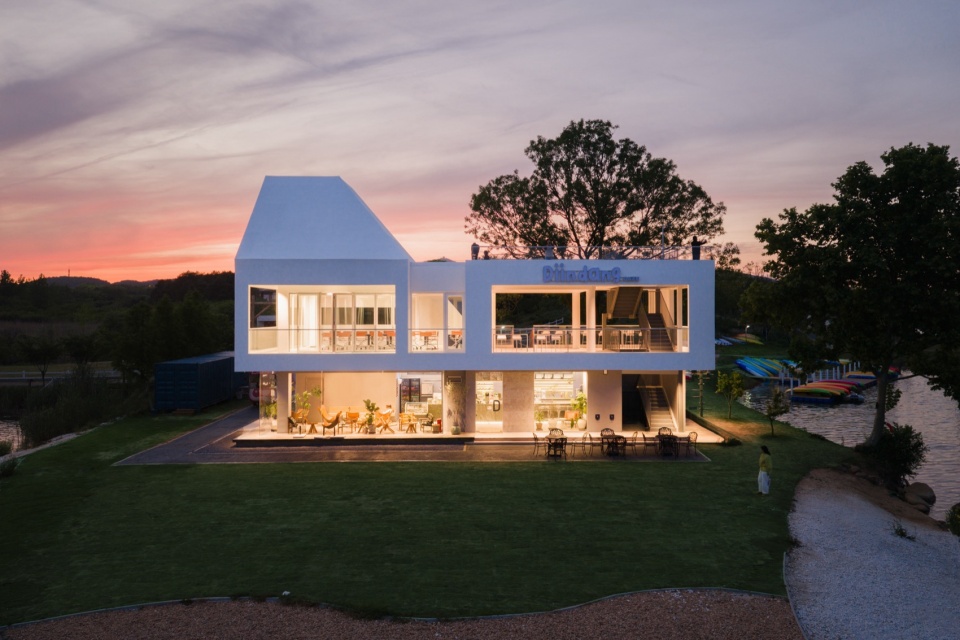
回顾设计过程,克制而精确的几个设计改动,源于尊重场地,源于控制造价,源于结合运营思维。对比10年前的陆方茶室,外人也许看到的是叮当谷这个建筑的商业化,但我心里很清楚,自嗨容易共情难,满足自己容易,调和众人的口味难。建筑的商业化和网红化,不应该污名化;反而是商业建筑,需要去解决经济性、可持续营收等难题。尤其会更多的去思考人的行为模式,这方面比自嗨自私的某些建筑更贴近最后的使用者,更纯粹的服务于人——
我称之为走向轻建筑之理念轻:不再宏大叙事,就专注于身体感知,专注于使用者、专注于人。
Looking back at the design journey, I reflect on the shift from the Six-Square Tearoom a decade ago. Outsiders may view Dingdang Valley as a purely commercial project, but I see a deeper transformation. It is easy to create architecture for self-satisfaction, yet far harder to design with empathy for others. There is no need to stigmatize commercial or internet-famous architecture. Commercial buildings must address economic efficiency and sustainable operation. They require in-depth research into people’s behavioural patterns, serving end-users in a more down-to-earth way than works driven solely by personal aesthetic expression.
This leads me to the concept of light architecture: moving away from grand narratives, and focusing instead on human sensory experience and the people who use the space.
▼项目手工模型,Physical Model
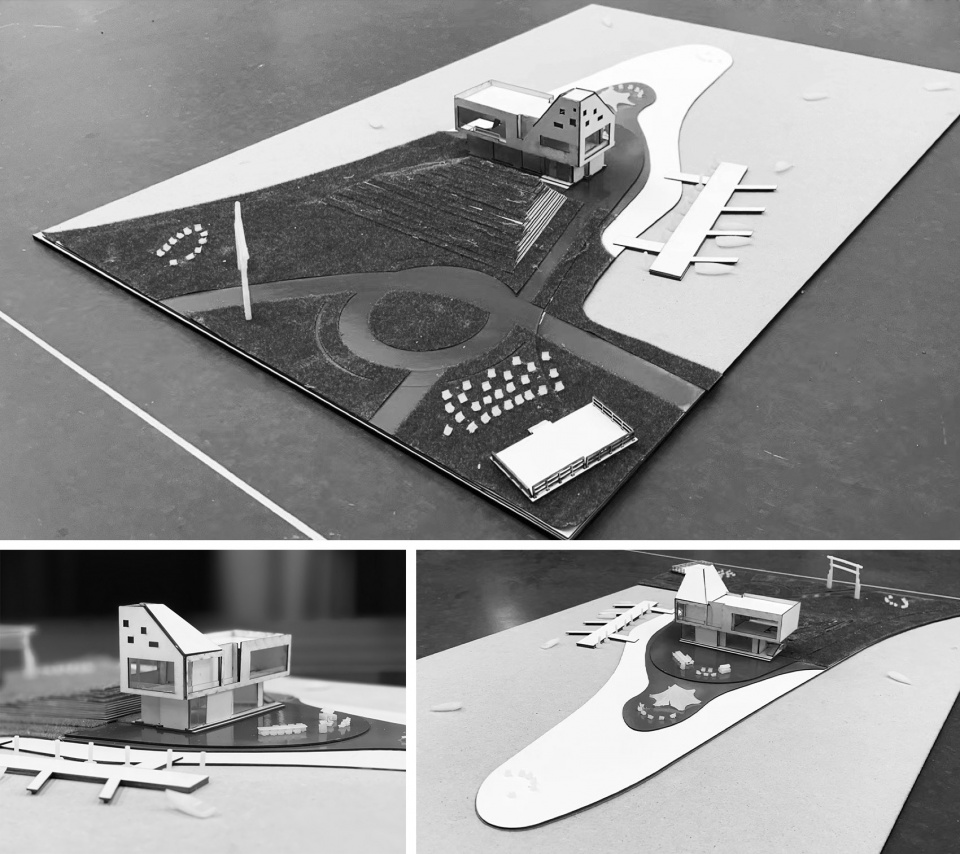
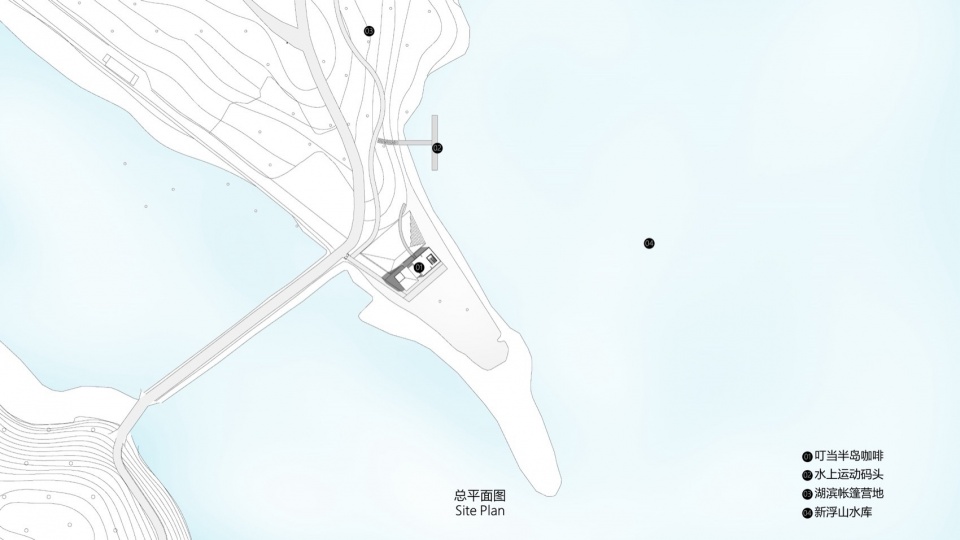
▼总平面图,Master Plan
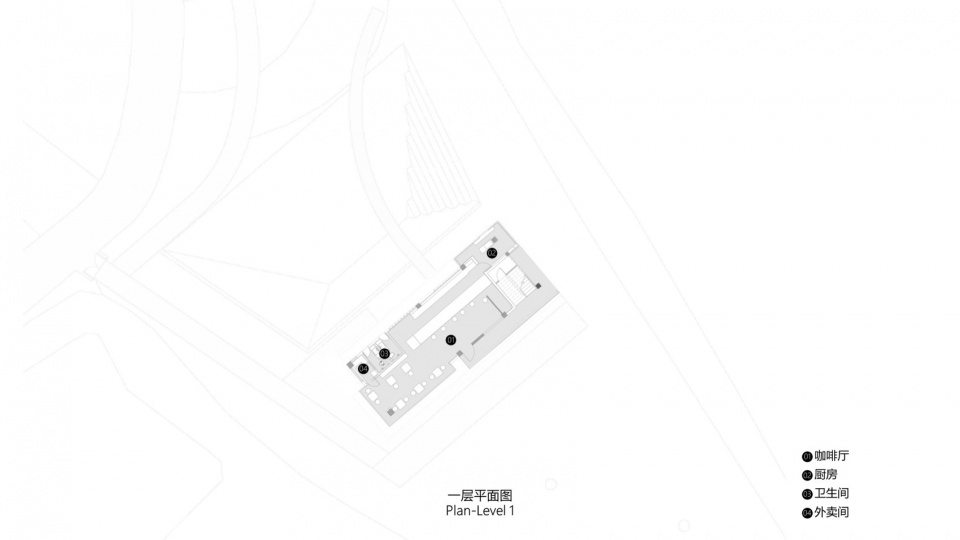
▼一层平面图,Ground Floor Plan
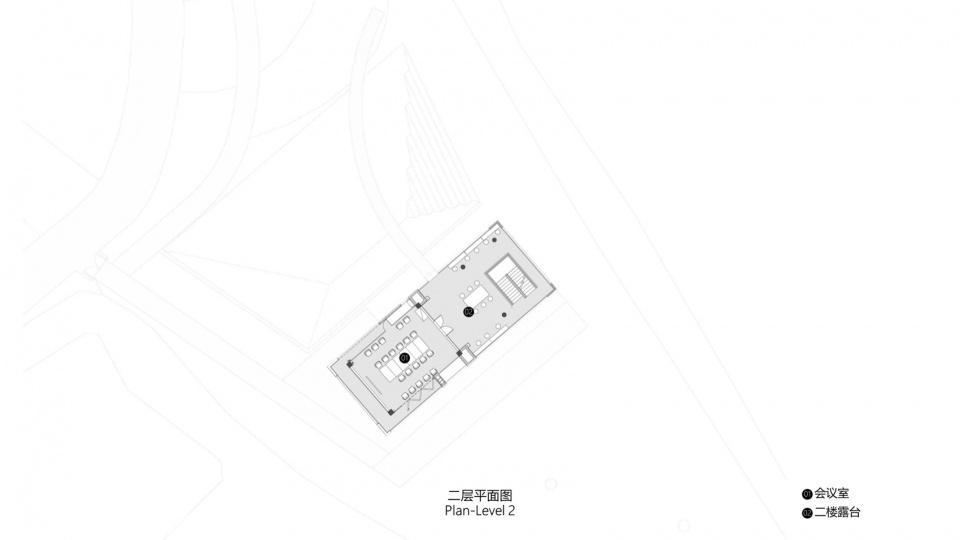
▼二层平面图,Second Floor Plan
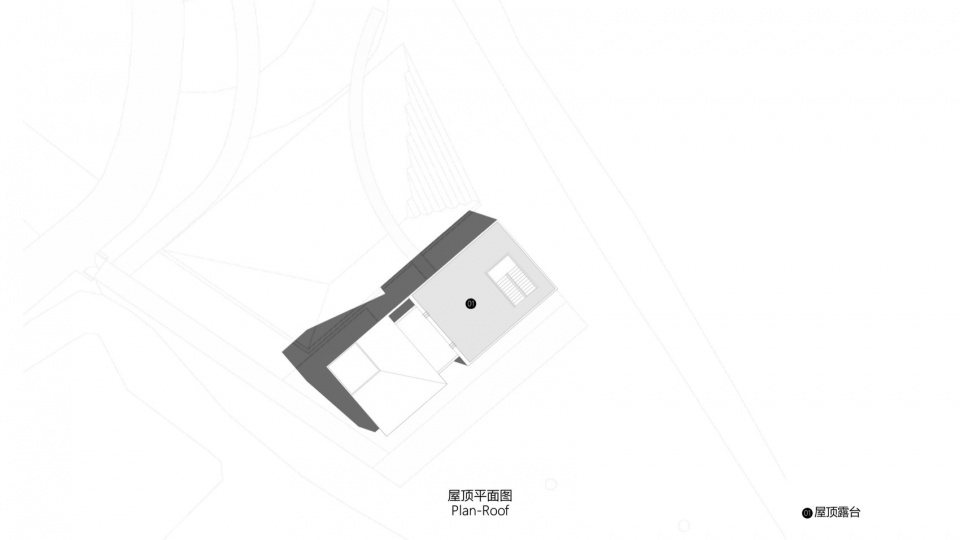
▼屋顶平面图,Roof Plan
▼立面图,Elevation
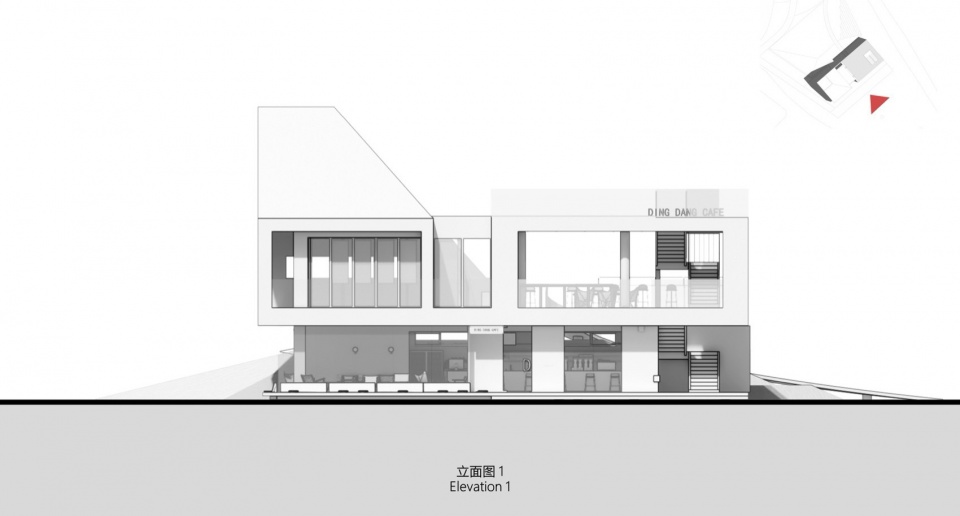
▼立面图,Elevation
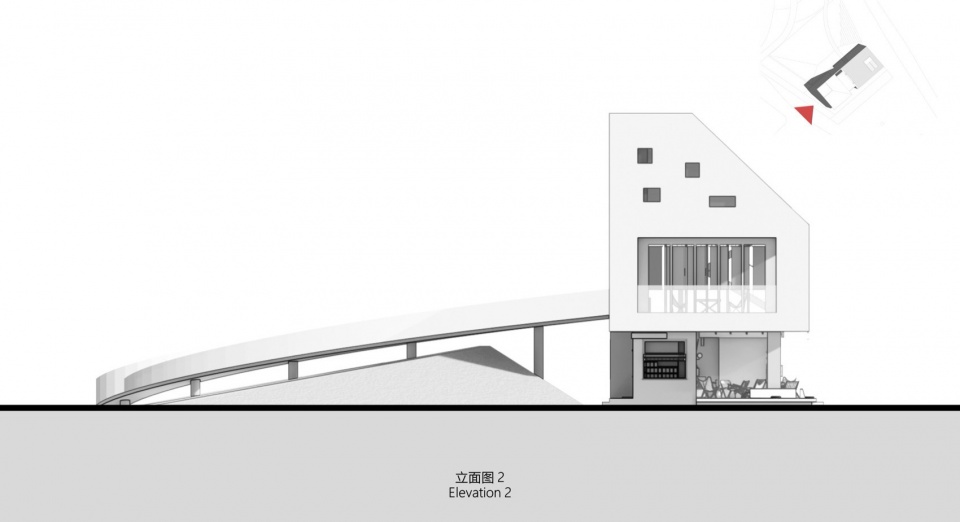
▼立面图,Elevation
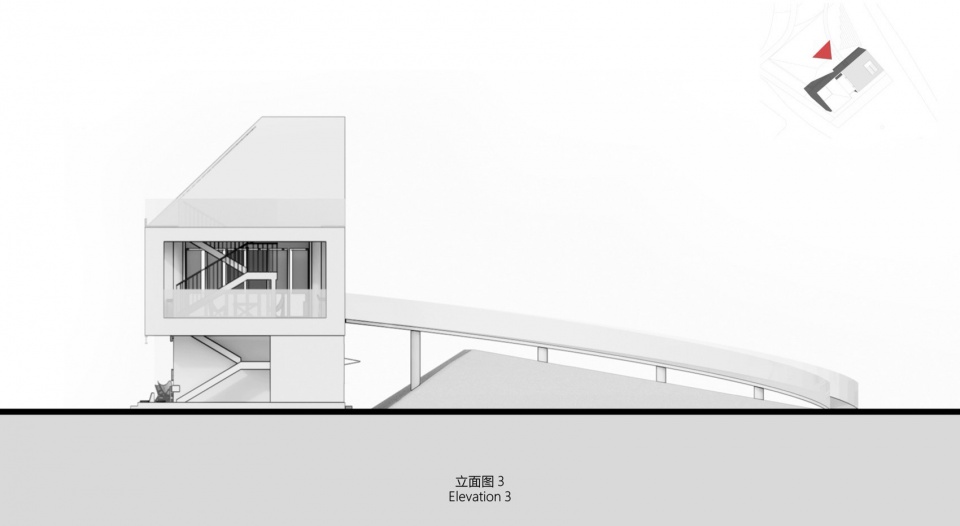
▼立面图,Elevation
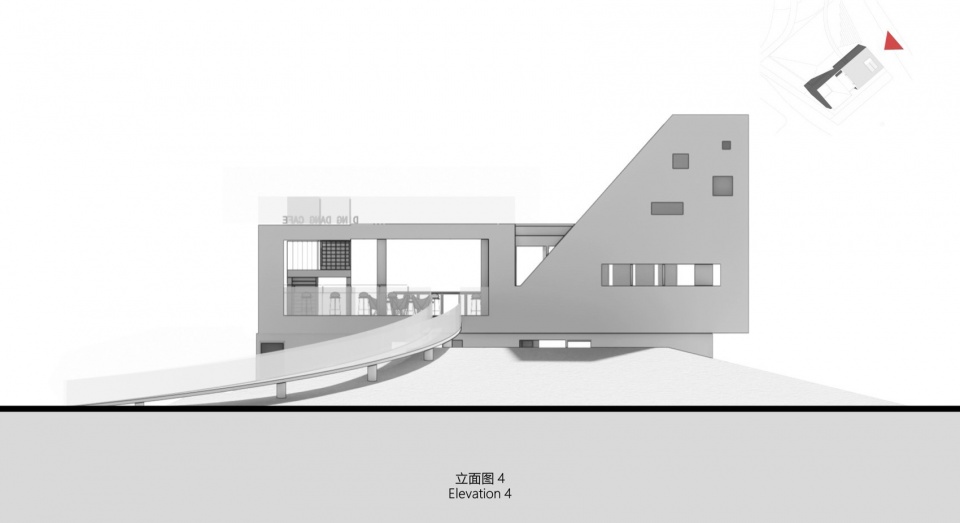
Project name: Maoshan Dingdang Valley Café & Campsite
Location: Maoshan Xinfu Reservoir of Jintan, Changzhou, Jiangsu
Clients: Jiangsu Dingdang Valley Cultural Tourism Development Co., Ltd.
Project size: building area233.8㎡, campsite area 16964㎡
Office Name: UAO Design
Chief Designer: Li Tao
Design team: Lu Zhou, Zhang Jieming, Liu Ye, Xiao Jian, Li Long, Long Kecheng, Kong Fanyi, Shen Jianxia, Tong Ting, Zhang Kun, Wang Dunju
Construction team: Jiangsu Chengdong Construction Co., Ltd.
Photographer: Naturespace Photography_Jia Ran
Design time: April 2024 – November 2025
Construction time: December 2025 – March 2026
Main materials: Self-made optical fiber concrete, paint, glass
Chinese: Li Tao