RAW工作室,意大利 / Moroni Architettura 2.0
Moroni Architettura 位于松德里奥的 RAW Studio 完成之时,并不意味着施工队的离场;相反,那一刻凝结为建筑师意识到工地本身已成为最终空间定义的时刻。项目将一处原有储藏空间改造为一间完整运作的建筑事务所,并有意保留未完成的抹灰墙面。这些表面成为施工过程的永久档案,记录着电线管线的走向、管道的排列,以及结构留下的痕迹。在石材、铁、木材和多孔混凝土砌块构成的克制材料体系的补充下,每一个构件要么被保留在其原始的工业状态中,要么从结构元素被创造性地重新置入语境,转化为室内家具。
The completion of Moroni Architettura’s RAW Studio in Sondrio did not coincide with the departure of the construction crew; rather, it crystallized the moment the architects recognized the worksite itself as the final spatial definition. Converting a former storage unit into a fully operational architecture office, the project deliberately preserves the unfinished plaster walls. These surfaces serve as a permanent archive of the construction process, mapping out the trajectories of electrical conduits, pipe alignments, and structural scars. Complemented by a strict material palette of stone, iron, timber, and perforated concrete blocks, every component is either left in its raw industrial state or creatively recontextualized from structural element to interior furniture.
▼长桌组织开放办公空间,Long table organizes the open workspace
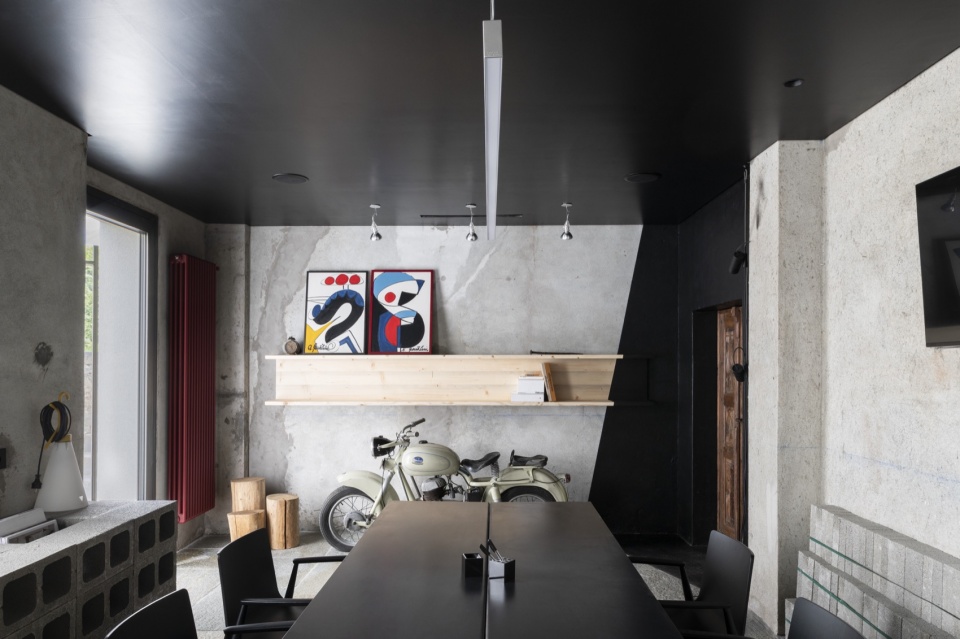
暴露建造的“解剖结构”,而非将其隐藏,代表的是一种明确的理论立场,而不只是单纯的审美趣味。RAW Studio 的垂直表面成为自身演变的物理编年史:记录着为布线而开凿的墙面、管道修补的痕迹,以及新旧材料相交处清晰可见的节点。传统设计或许会将这些视为未完成的状态,而 Moroni Architettura 则将其重新定义为一种历史记录——一部建筑可触摸的传记。由此,施工现场的临时状态被提升为一种永久性的建筑语汇。这一位于松德里奥的适应性再利用项目,本身就是一场关于材料的具象论证。既有围护结构所呈现出的工业性、非精确性与层层累积的特征,并未被视为需要修正的缺陷,而是被当作一种主动的催化因素。设计并没有压制这些固有条件,而是与之共同工作,使场地过去的生命痕迹得以在每一处表面上保持可读。此次介入并非传统意义上的翻新,而是一种严谨的编辑过程;空间的力量恰恰来自那些被保留下来的部分,而不是被替换掉的部分。
Exposing the anatomy of construction rather than concealing it represents a definitive theoretical position rather than a mere aesthetic whim. The vertical surfaces of RAW Studio serve as a physical chronicle of their own evolution: tracking chased walls for wiring, plumbing patches, and the explicit junctions where old and new materials meet. What conventional design might dismiss as incomplete, Moroni Architettura reframes as a historical record a tactile biography of the building. The temporary state of the construction site is thus elevated into a permanent architectural vocabulary. This adaptive reuse project in Sondrio functions as a tangible material argument. The pre-existing envelope characterized by its industrial, imprecise, and cumulative nature is treated as an active catalyst rather than a flaw to be corrected. By working with these inherent conditions rather than suppressing them, the design allows the site’s previous life to remain legible across every surface. The intervention is not a traditional renovation but a rigorous editing process; the room derives its authority precisely from what was preserved rather than what was replaced.
▼复古摩托车置入工作室一角,
Vintage motorcycle placed in a corner of the studio
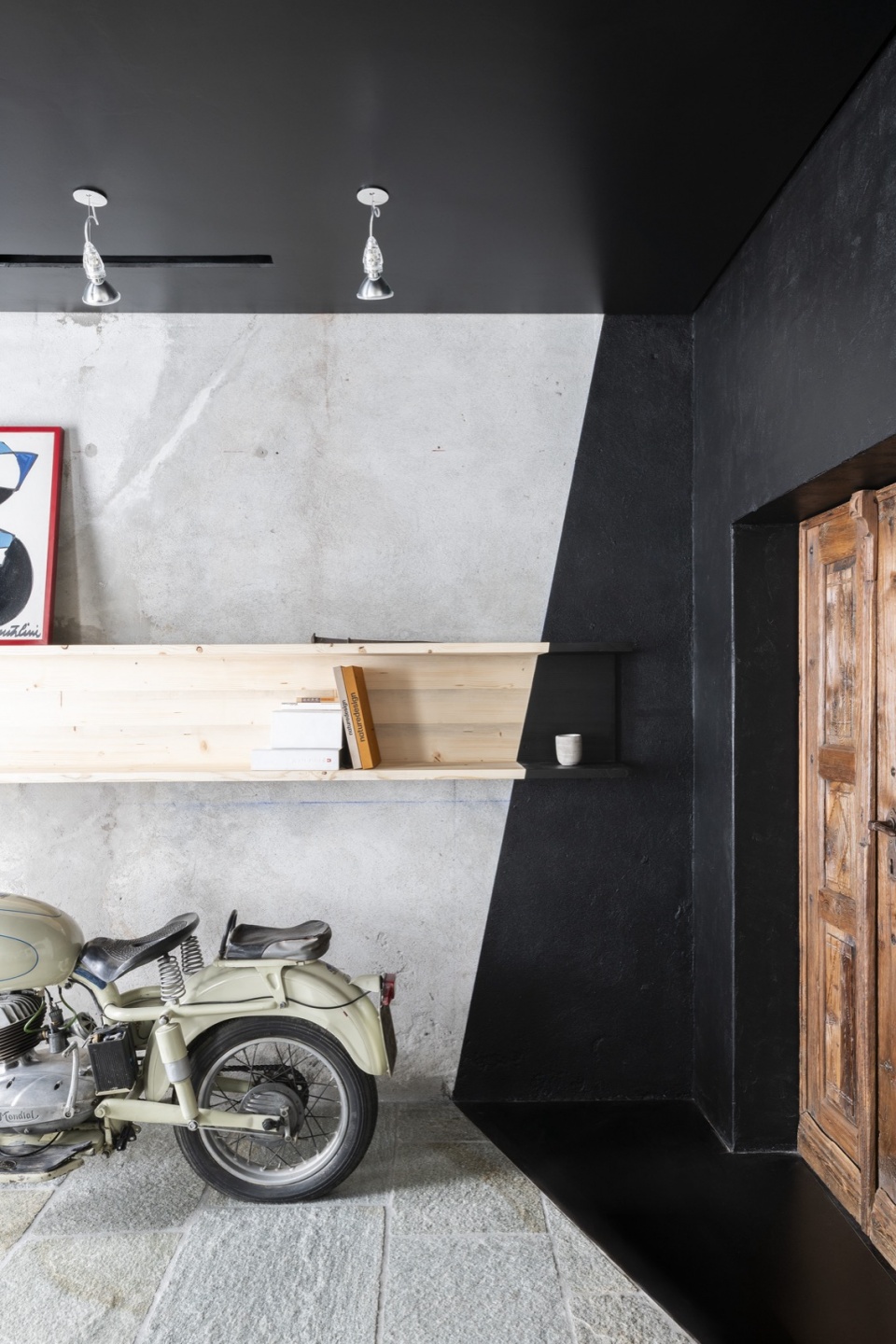
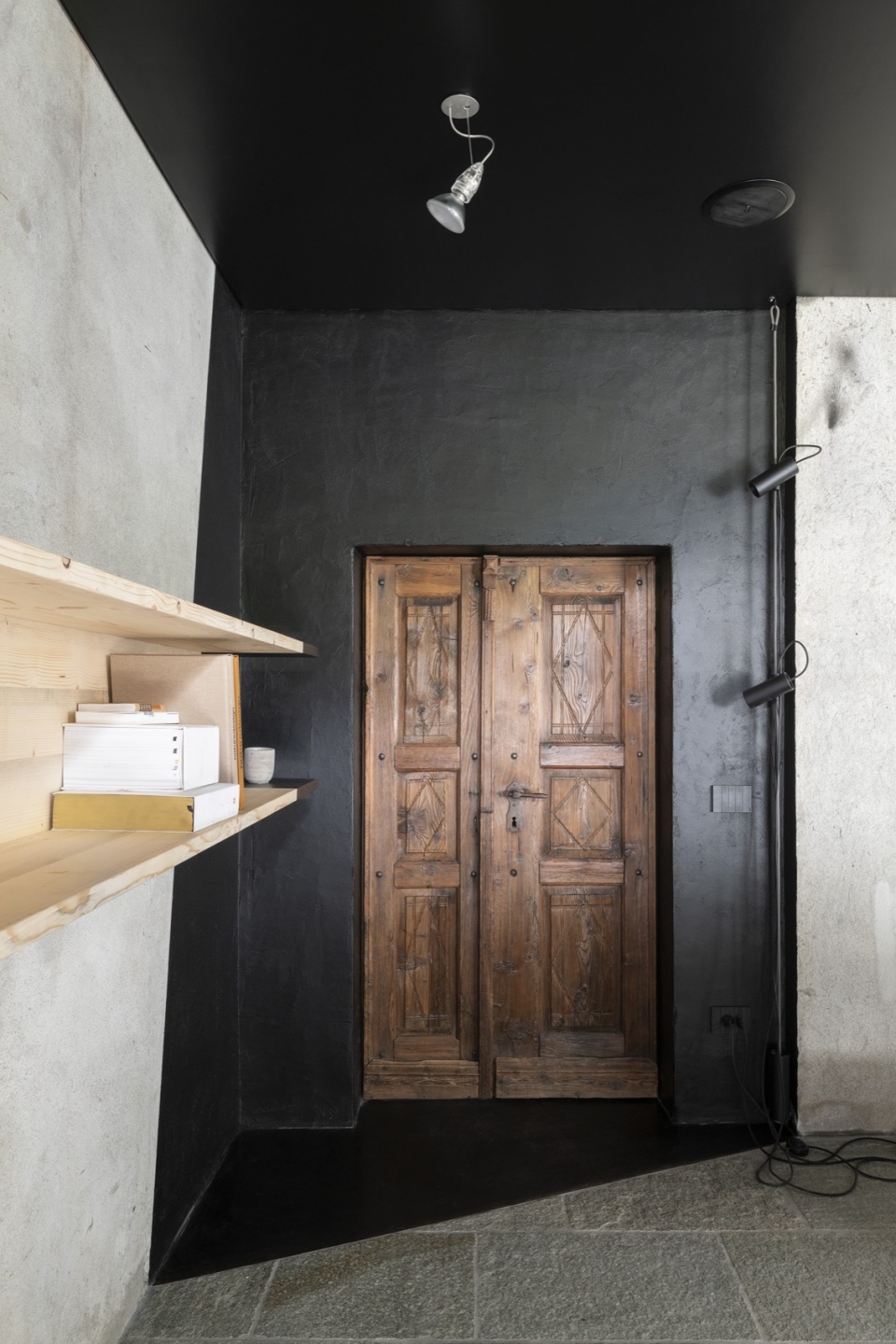
一道醒目的黑色斜向图形重新组织了后墙的体量关系,将原始且被使用的墙面与一处更暗、更具包裹感的核心区域区分开来。位于这一几何构图中心的是一扇具有纪念性尺度的古董实木门。作为空间的枢纽,这件被发现并再利用的物件同时承担着功能性门槛与雕塑性中心物的角色。当代黑色斜线的锐利精确,与旧门经岁月侵蚀后的厚重体量形成对话,制造出强烈的时间摩擦感:一边是即时的设计决定,另一边则是比这间工作室早存在数十年的物件。
A striking black diagonal graphic reconfigures the volumes of the rear wall, delineating the raw, inhabited surfaces from a darker, more enclosed core. Positioned at the center of this geometric composition is a monumental, antique solid wood door. Acting as a spatial pivot, this found object serves simultaneously as a functional threshold and a sculptural centerpiece. The dialogue between the sharp precision of the contemporary painted diagonal and the weathered mass of the salvaged door creates a powerful temporal friction, juxtaposing immediate design decisions with an object that predates the studio by decades.
▼古董木门嵌入黑色墙面,
Antique wooden door set within the black wall
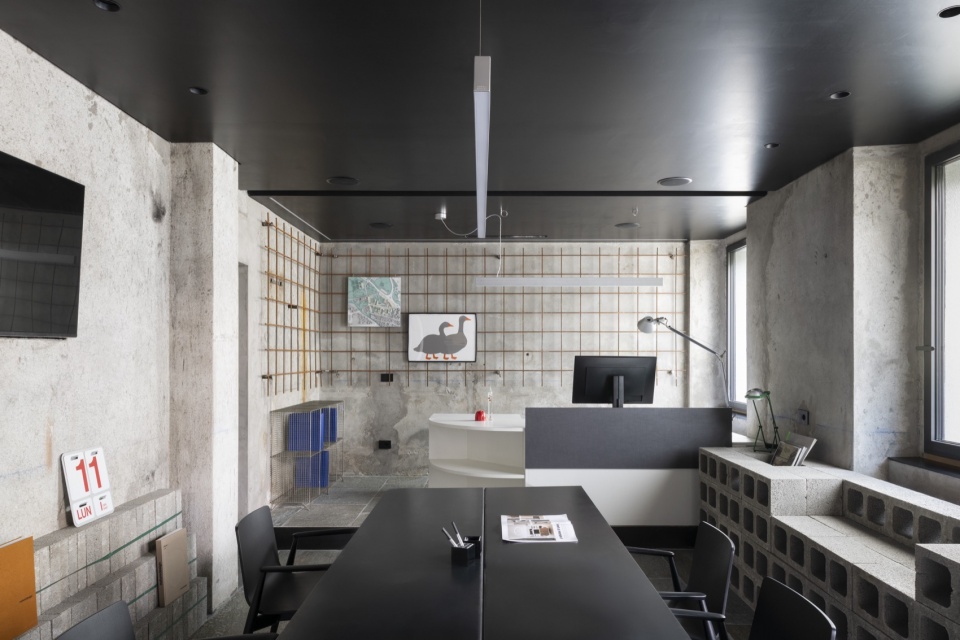
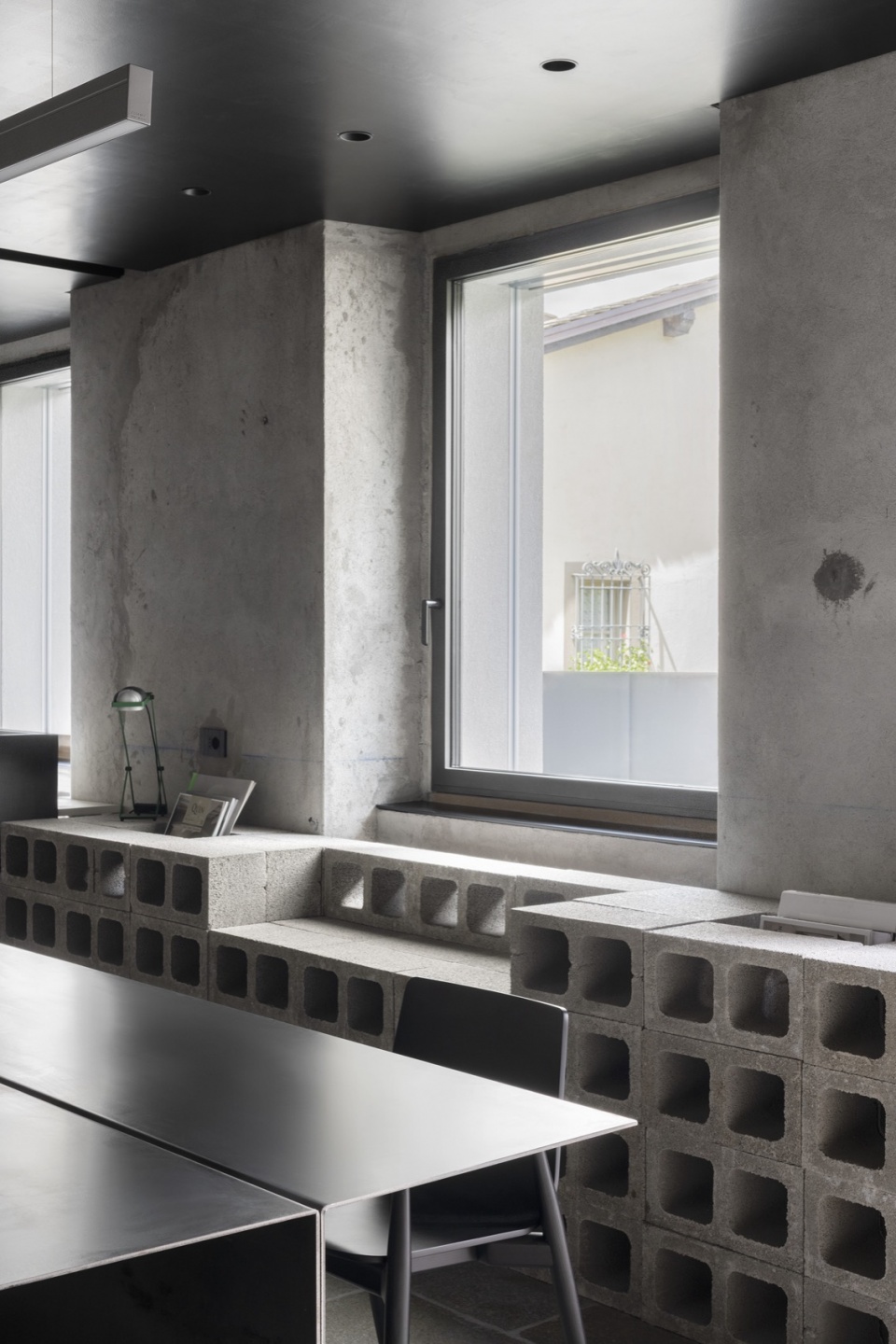
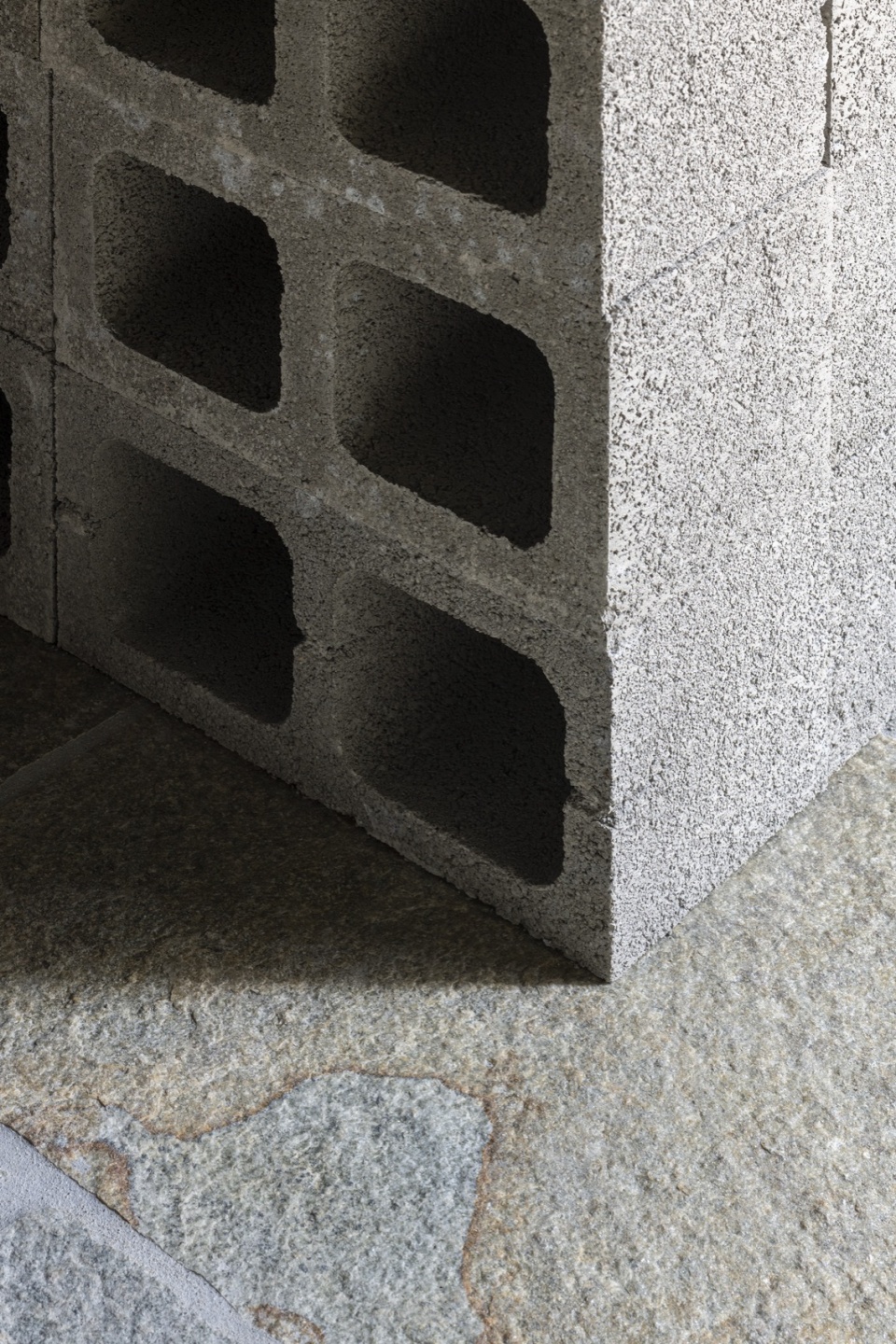
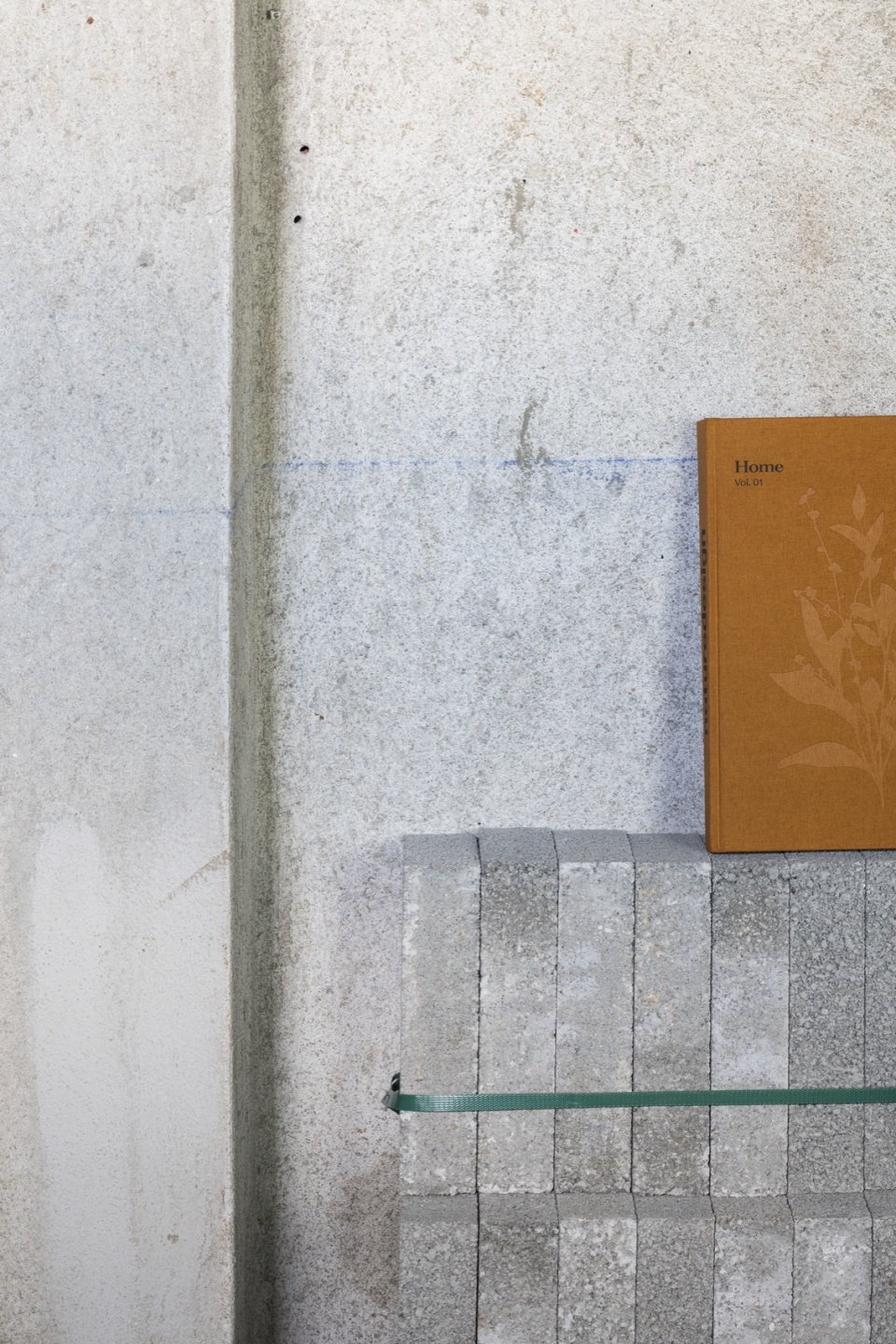
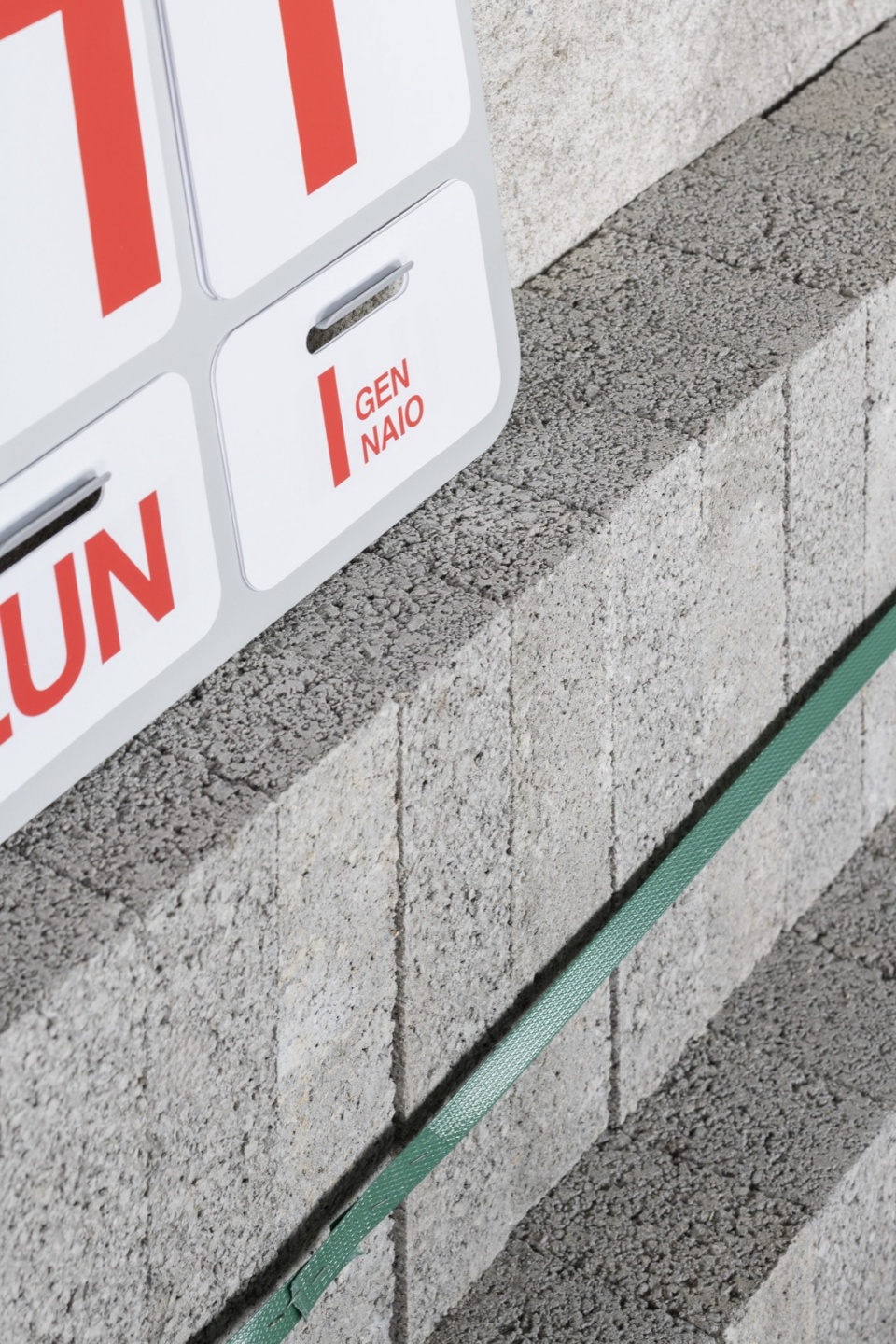
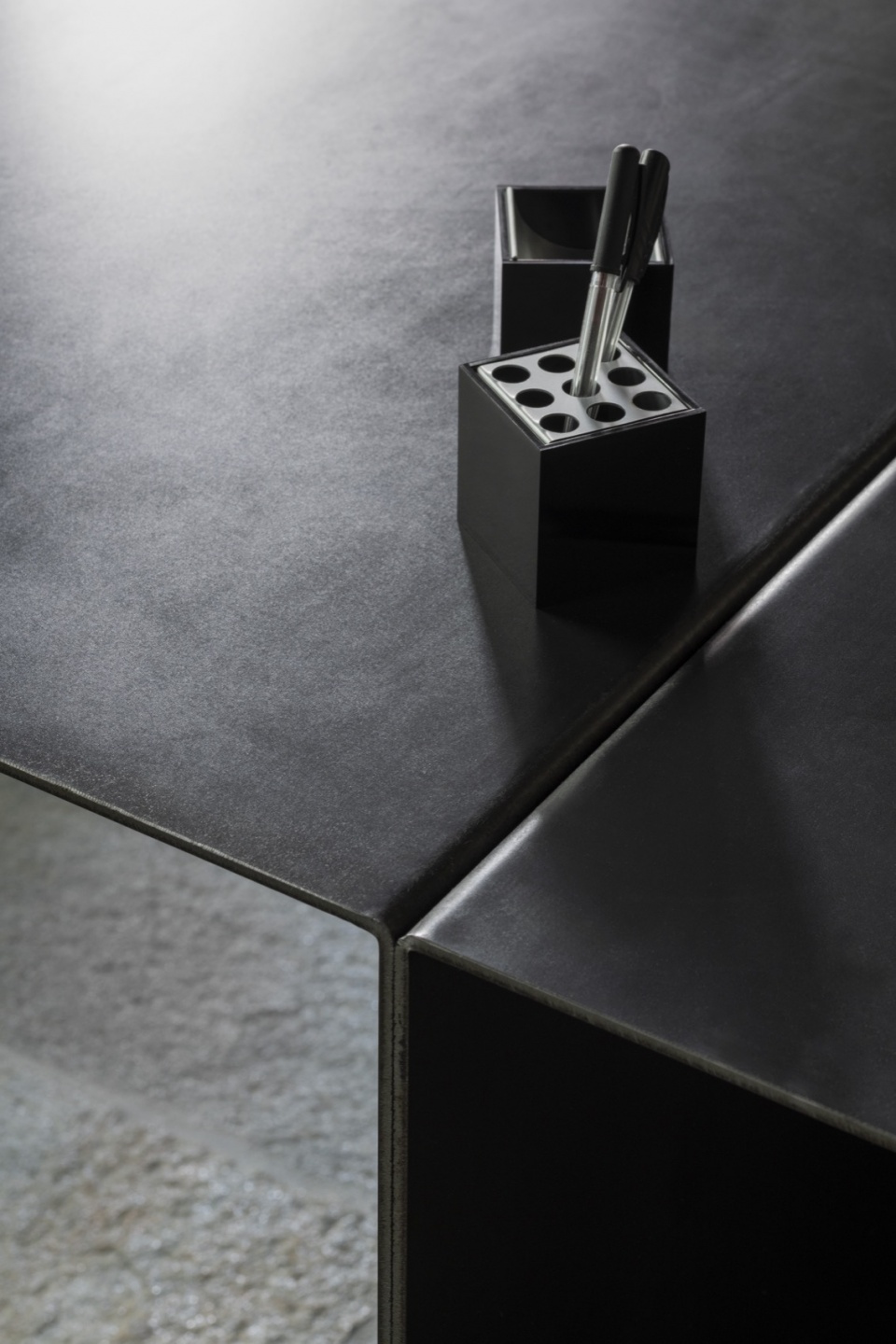
家具系统则将这种毫不妥协的材料诚实性延伸到激活空间的物件之中。多孔混凝土砌块——这些原本属于重型建造体系的标准承重构件——被干砌堆叠起来,在窗边形成几何化的长凳与置物架。没有胶黏剂、饰面或表面处理,这些砌块保留着其原始身份,在不丧失工业可读性的前提下,从结构构件自然转化为功能家具。房间的中轴线由一张定制设计的铁桌占据。这件由事务所直接制作的整体性家具,展现出弯折金属板原始而经过拉丝处理的质感,完全没有保护涂层,也没有任何审美上的柔化处理。这张桌子拒绝将其工业尺度调整为适应房间的居住尺度;相反,它正是在二者之间形成的张力中获得力量。在这一尺度下,物件如同一份沉默的宣言,在任何语言被说出之前,便已清晰表达出事务所对于材料真实的立场。
The furniture program extends this uncompromising material honesty into the objects activating the space. Perforated concrete blocks-standard load-bearing elements from heavy construction—are dry-stacked to form geometric benches and shelving along the window bays. Void of adhesives, cladding, or surface treatments, the blocks retain their original identity, seamlessly shifting from structural components to functional furniture without losing their industrial legibility. The central axis of the room is dominated by a custom-designed iron table. This monolithic piece, fabricated directly by the firm, showcases the raw, brushed texture of bent sheet metal, entirely free of protective coatings or aesthetic softening. The table refuses to adapt its industrial scale to the domestic proportions of the room; instead, it thrives on the tension generated between them. At this scale, the object functions as a silent manifesto, articulating the studio’s stance on material truth before a single word is exchanged.
▼开放办公区与接待界面,Open workspace and reception area
▼混凝土砌块形成窗边坐席,
Concrete blocks form seating along the window
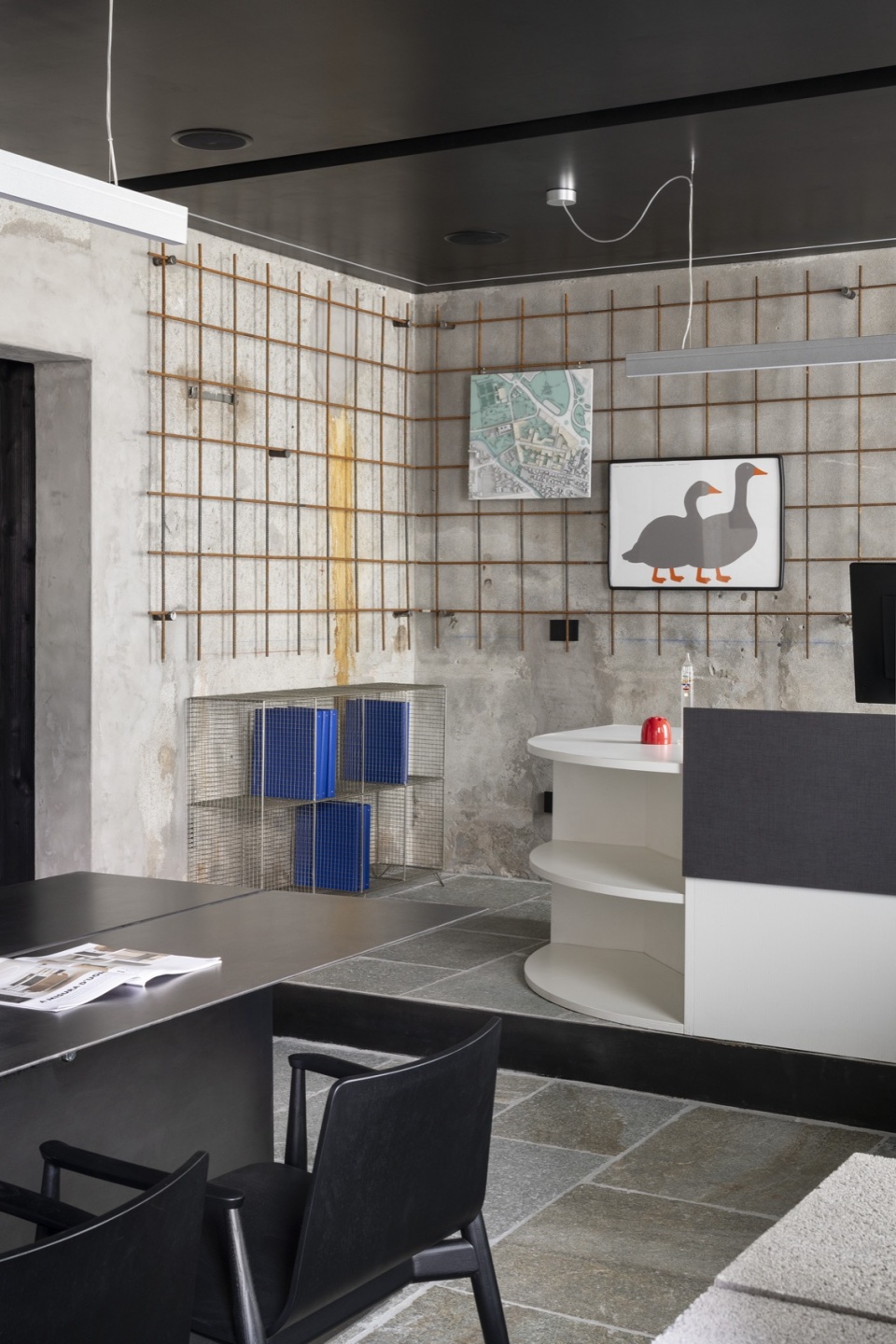
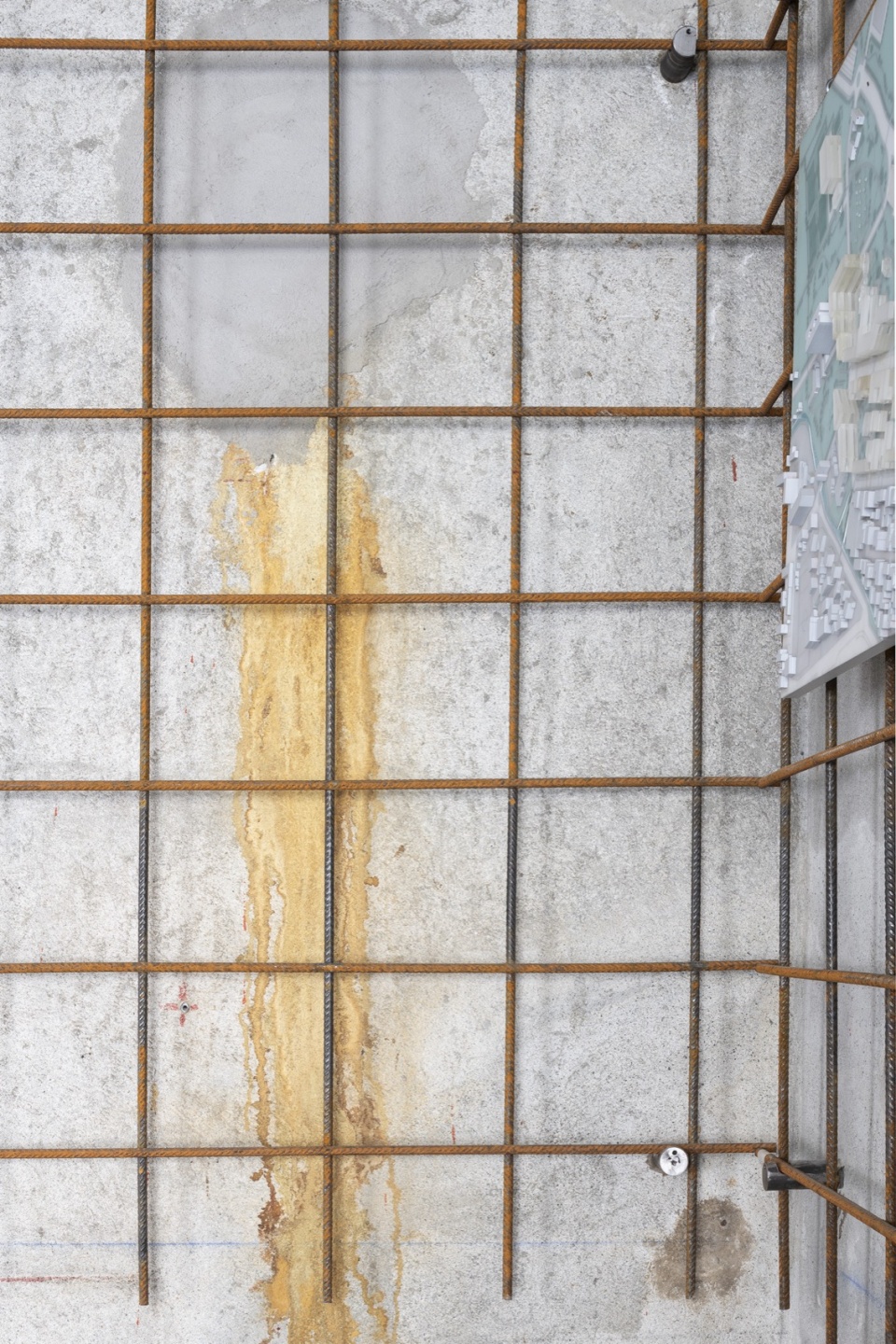
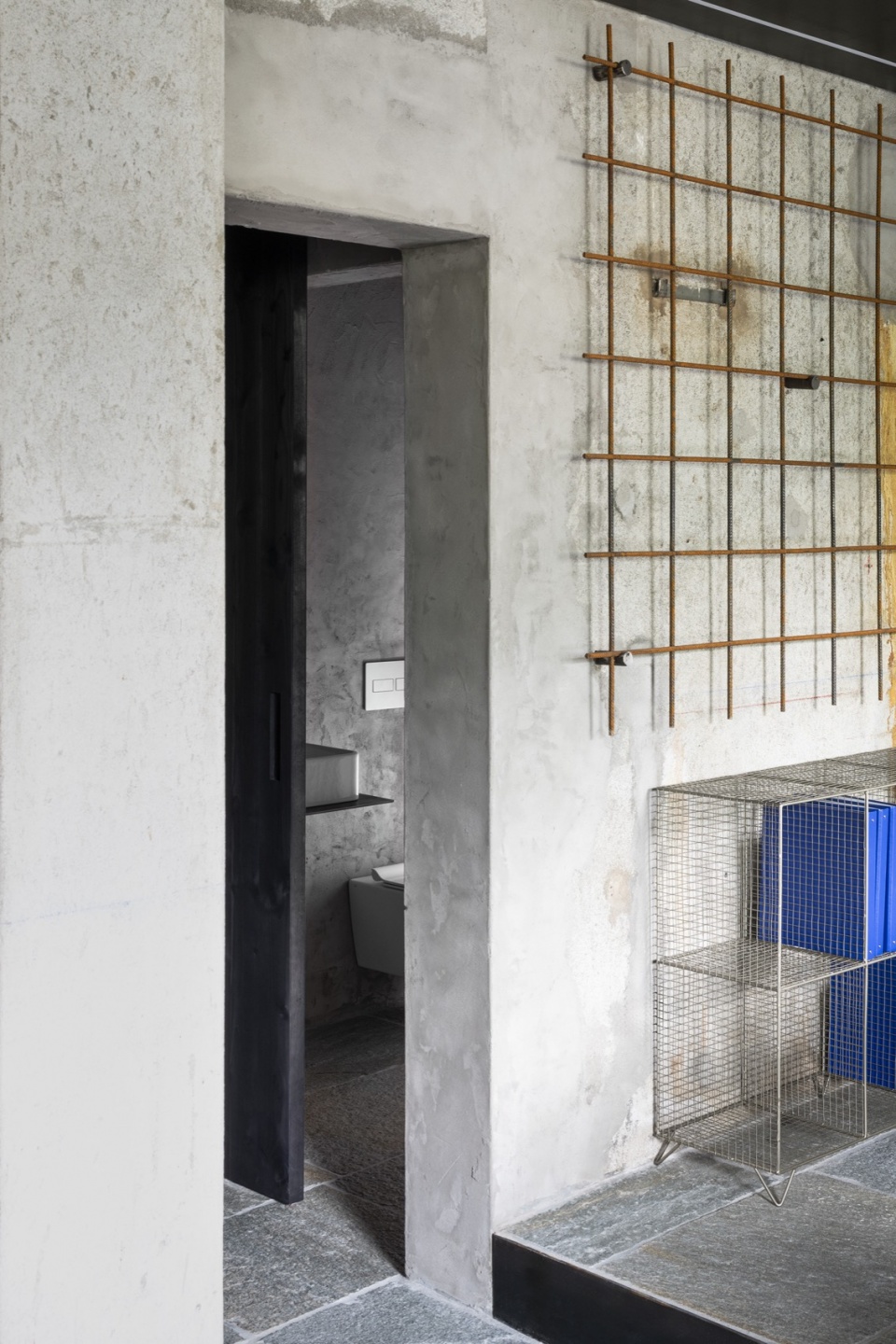
同样,焊接钢筋网——这种传统上会被埋入浇筑混凝土之中的材料——被允许自然氧化,并被重新用作展示建筑模型、场地图纸与设计图纸的网格架。它的转化极为克制:未经涂装,也未被过滤式地美化,其新的功能角色让它原本隐藏的结构身份直接显现出来。一种本应保持不可见的材料被推至前台,承载着事务所正在进行的实践成果。
Similarly, welded reinforcement steel mesh a material traditionally buried within poured concrete is allowed to oxidize naturally and repurposed as a display grid for architectural models, site maps, and drawings. The transformation is radically minimal: left unpainted and unfiltered, its new programmatic role brings its hidden structural past into plain sight. A material engineered to remain invisible is brought to the foreground, supporting the active output of the practice.
▼氧化钢筋网覆盖原始墙面,Oxidized reinforcement mesh covers the raw wall
▼卫生间入口,Bathroom entrance
这间工作室本身就是一份建成的宣言;在这里,每一处表面都明确表达着其与材料诚实性、过程以及结构真实之间的特定关系。室内的简洁与克制并非绝对的禁欲,而是经过精确校准的结果。若干具有温度与叙事性的元素被策略性地置入其中,例如鲜艳的红色竖向暖气片、长凳上的彩色软垫、一辆复古摩托车,以及被用作凳子的原木木段,它们丰富了空间,却没有削弱其工业气质。这些具体元素并没有与建筑的原始性相矛盾,反而证明这种原始性是一种经过深思熟虑且高度成熟的选择。工业化的冷峻与经过精心策划的个人物件之间形成的对话表明,这里的“未完成”是一种有意为之的表达,而不是预算限制的结果。
The studio itself functions as a built manifesto, where every surface asserts a specific relationship with material honesty, process, and structural truth.The austerity of the interior is precisely calibrated rather than absolute. Strategic injections of warmth and narrative, such as a vibrant red vertical radiator, colored upholstery on the benches, a vintage motorcycle, and raw timber logs used as stools enrich the space without diluting its industrial character. Rather than contradicting the rawness of the architecture, these specific elements validate it as a deliberate, sophisticated choice. The dialogue between industrial austerity and highly curated personal artifacts demonstrates that the finish is an intentional statement rather than a budgetary constraint.
▼混凝土砌块与石材地面细节,Detail of concrete blocks and stone flooring
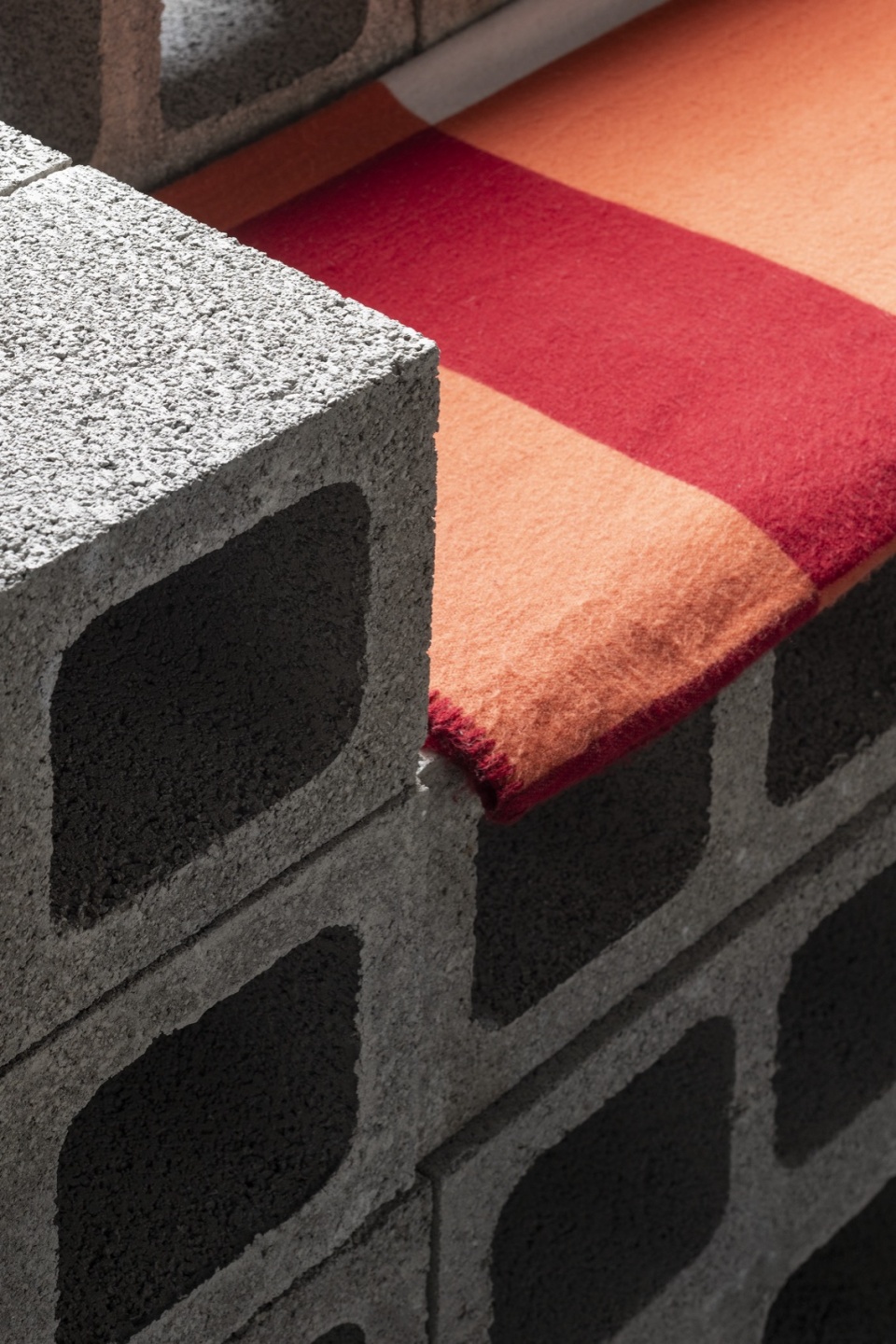
▼绿色绑带嵌入砌块缝隙,Green strap inserted between concrete blocks
最终,RAW Studio 挑战了人们对于建筑工作场所的传统期待。常规实践往往倾向于营造中性、近似画廊的空间,使空间自身退居到所展示的作品之后;而 Moroni Architettura 则将这个容器置于主动参与的位置。项目也为未来留下了一个耐人寻味的问题:这样一个具有强烈教学意味与材料特性的环境,是否能够在时间中持续作为高效的工作空间,抑或其毫不妥协的表面最终会让使用者感到疲惫?
Ultimately, RAW Studio challenges the traditional expectations of architectural workplaces. While conventional practice favors neutral, gallery-like spaces that recede behind the work on display, Moroni Architettura positions the container as an active participant. The project leaves an intriguing question open for the future: can an environment with such intense pedagogical and material specificity remain a productive workspace over time, or will its unyielding surfaces eventually exhaust its inhabitants?
▼黑色铁桌呈现弯折边缘,Black iron table reveals its folded edge
▼平面图,Floor plan
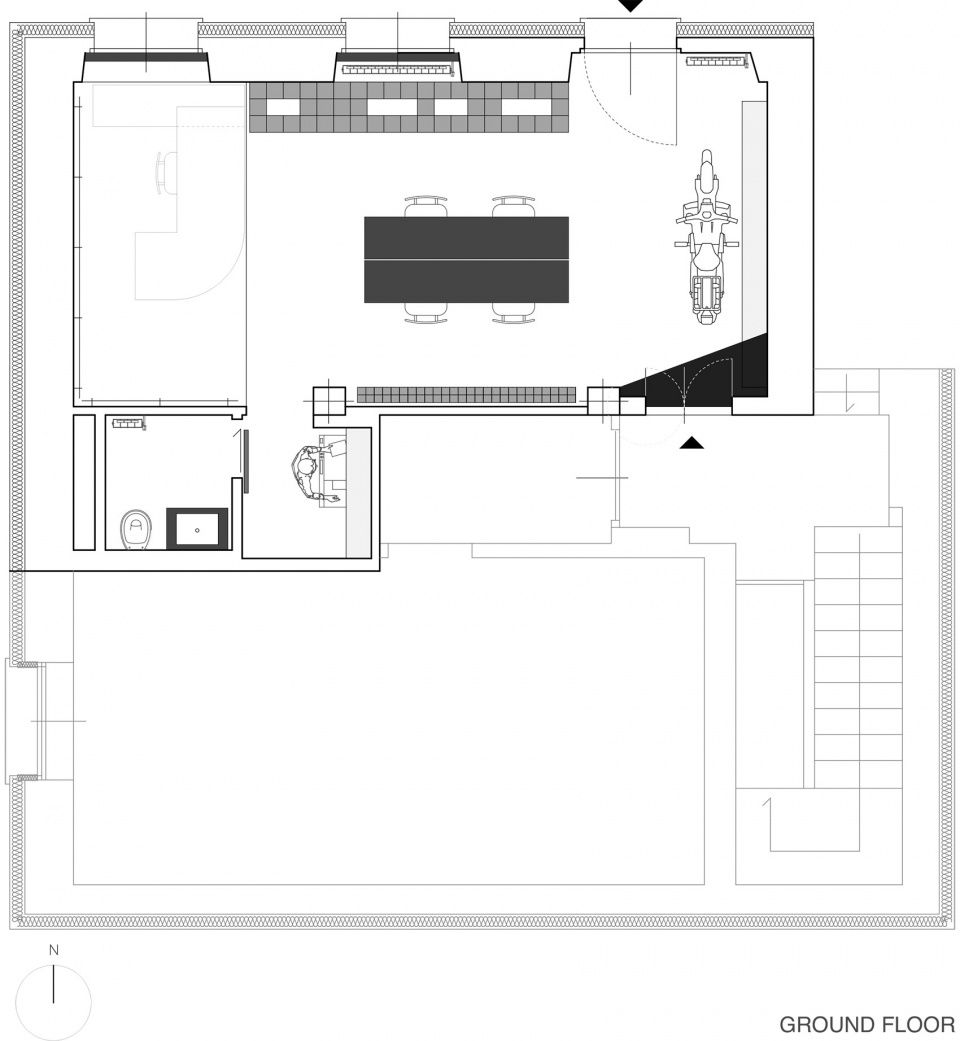
Conversion and renovation project of a storage room into an Architecture Studio
Year: 2026
Design:
Arch. Davide Moroni
Age: 43
Studio:
Moroni Architettura 2.0
Via Orobie n. 1960 – 23010 Albosaggia (SO)
www.moroniarchitettura.it
Ph.
Federico Villa