未来社会创新中心,宁波 / 直距建筑设计
本案的诞生,正如其主题“在不确定性中寻找确定”一样,充满了戏剧性的变化。从最初的二楼、到三楼、再到最终执槌的四楼;从四楼的半层,到最终拿下的整层全域。伴随着空间的物理位移,功能场景也在不断推翻与重构。面对一个“未来要做什么、谁来使用、如何使用”皆无定论的初始状态,这种充满想象力的“不确定性”,恰恰成为了未来最好的注脚。
The birth of this project, much like its theme “Finding Certainty Amid Uncertainty,” was full of dramatic twists and turns. The location shifted from the second floor, to the third, and finally to the fourth floor where the gavel came down. The scope also expanded from half of the fourth floor to eventually taking over the entire level. Along with these physical shifts in space, functional scenarios were constantly being overturned and reconstructed. Faced with an initial state where “what to do in the future, who will use it, and how to use it” were completely undecided, this imaginative “uncertainty” turned out to be the perfect footnote for the future.
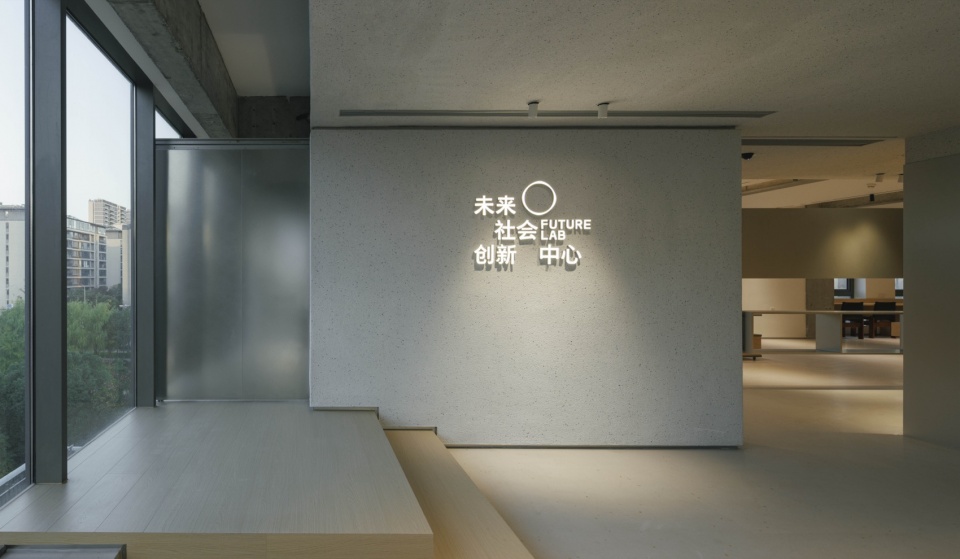
▼入口接待区与发光标识,Reception area with illuminated signage
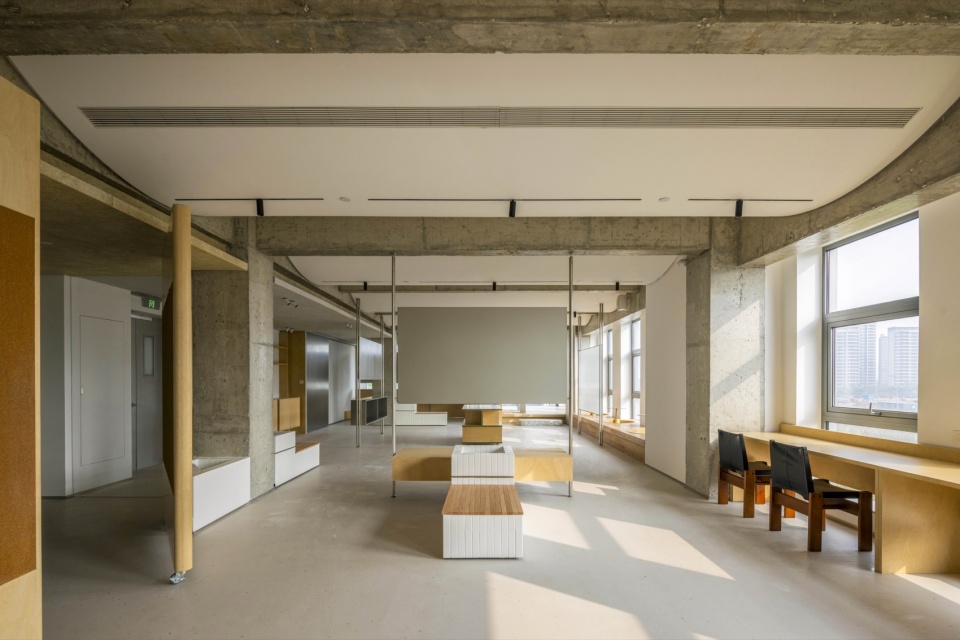
▼开放活动区与环形动线,Open activity area with circular circulation
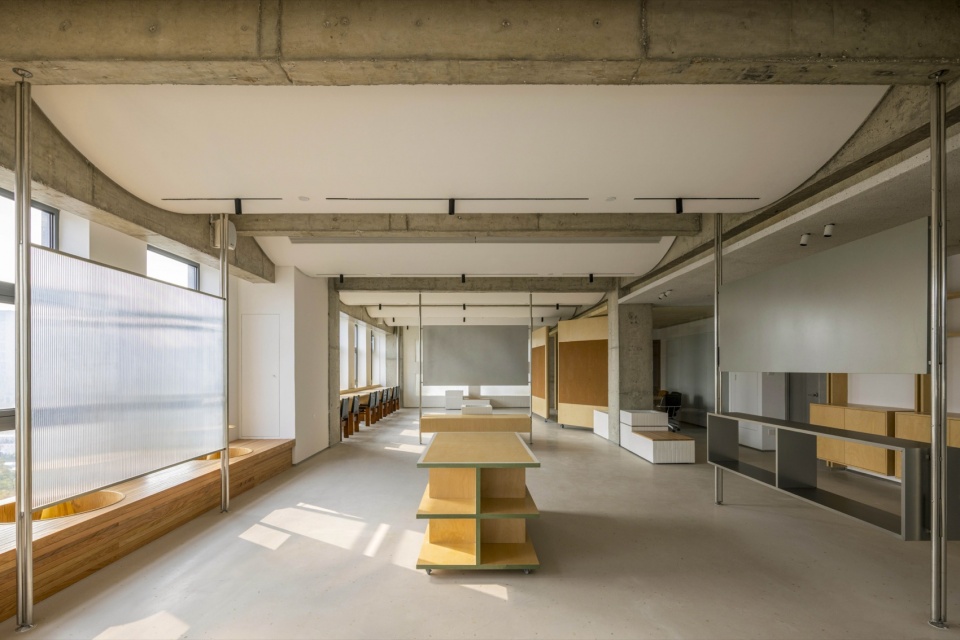
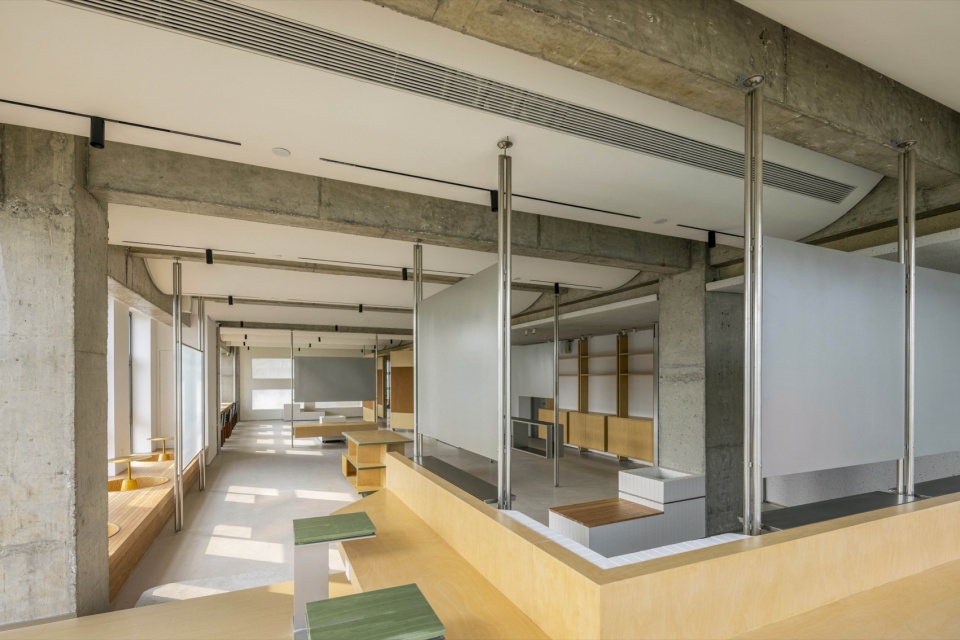
传统笃定 VS 动态可变 Traditional Certainty VS Dynamic Flexibility
面对未知,如何做确定的设计?过去那些基于“笃定”做出的硬性空间决策,在落成后往往因需求变更而造成巨大的空间浪费。因此,可变、多元、可编辑、可再利用,成为了本次设计的核心思考。我们放弃了僵化的界定,转而赋予空间极高的自由度。
Faced with the unknown, how do you design with certainty? In the past, rigid spatial decisions based on “certainty” often led to a massive waste of space after completion due to changing needs. Therefore, flexibility, diversity, editability, and reusability became the core considerations of this design. We abandoned rigid boundaries and instead endowed the space with the highest degree of freedom.
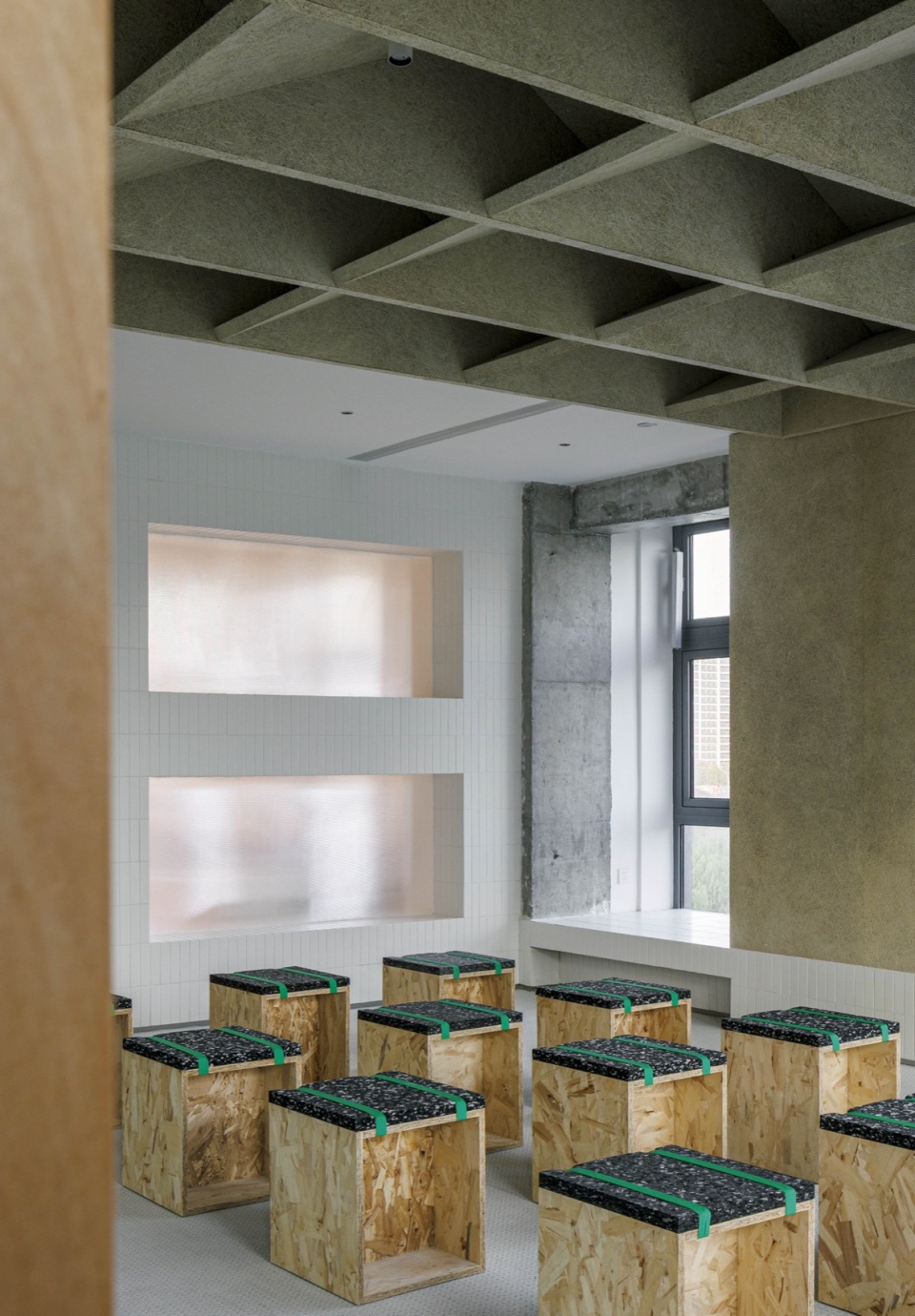
▼开放场地中的多层次坐席,Layered seating within the open area
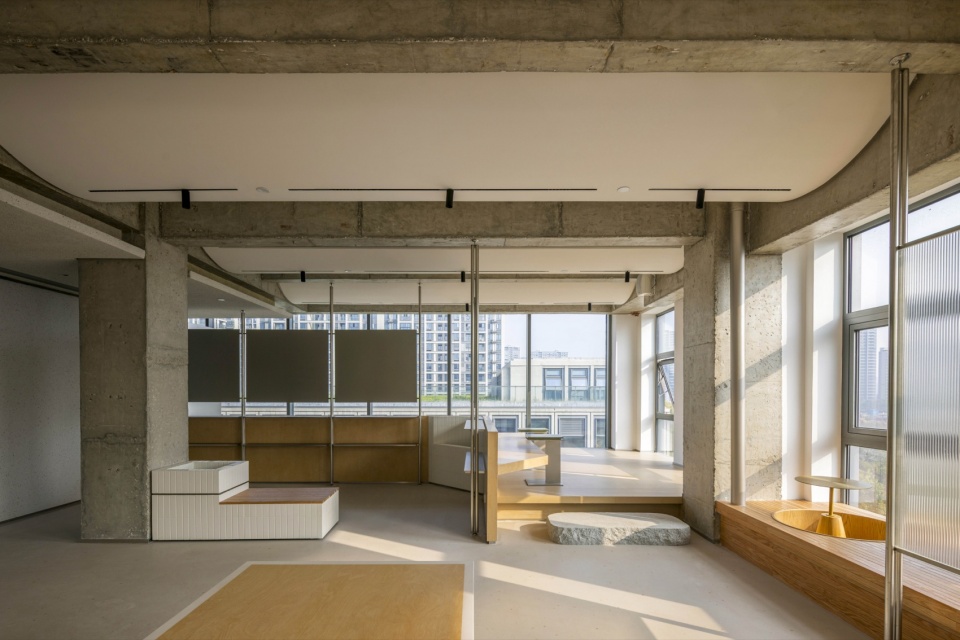
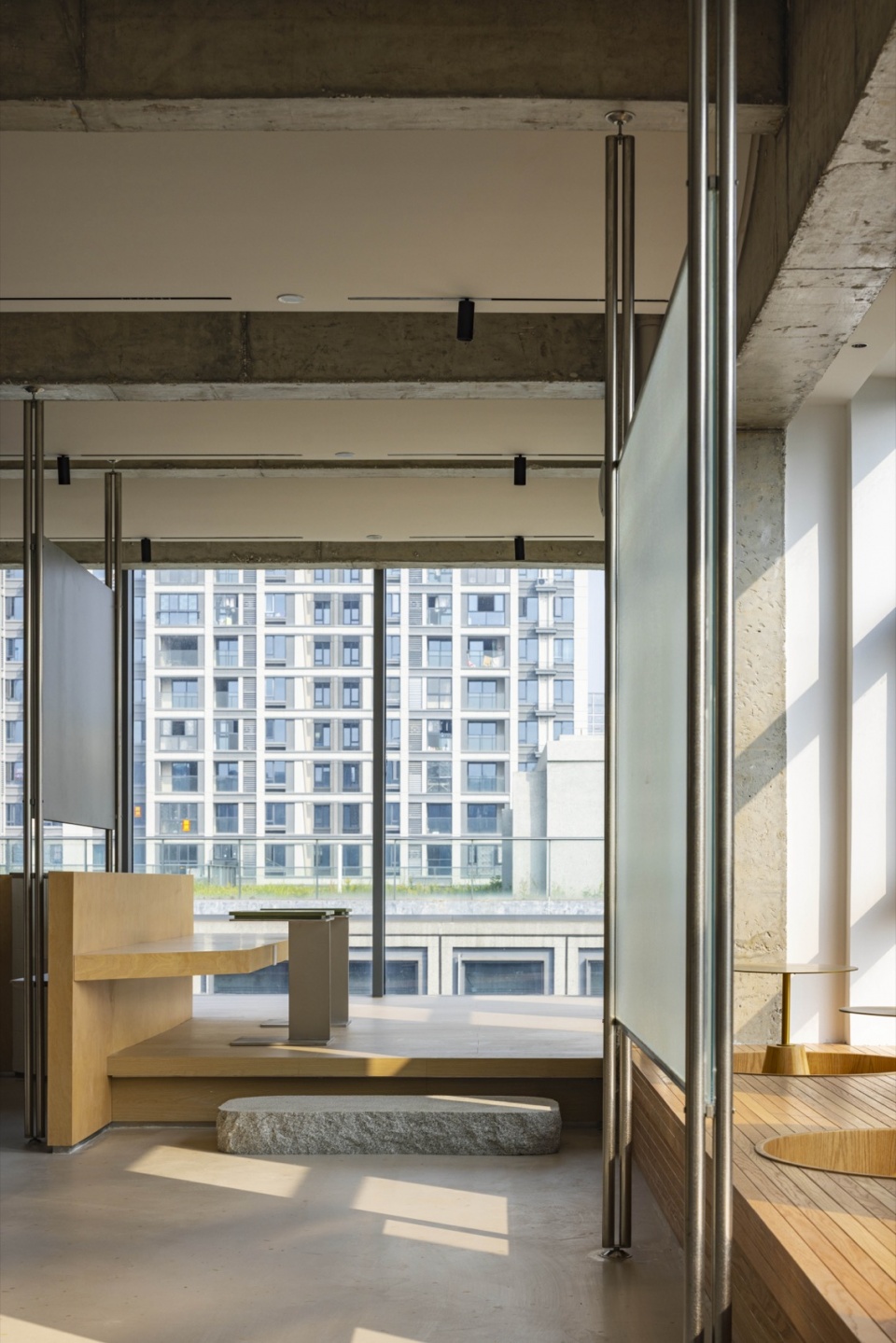
▼木质家具嵌入开放场地,
Wooden furniture inserted into the open area
打破边界的共享生态 A Shared Ecosystem Breaking Boundaries
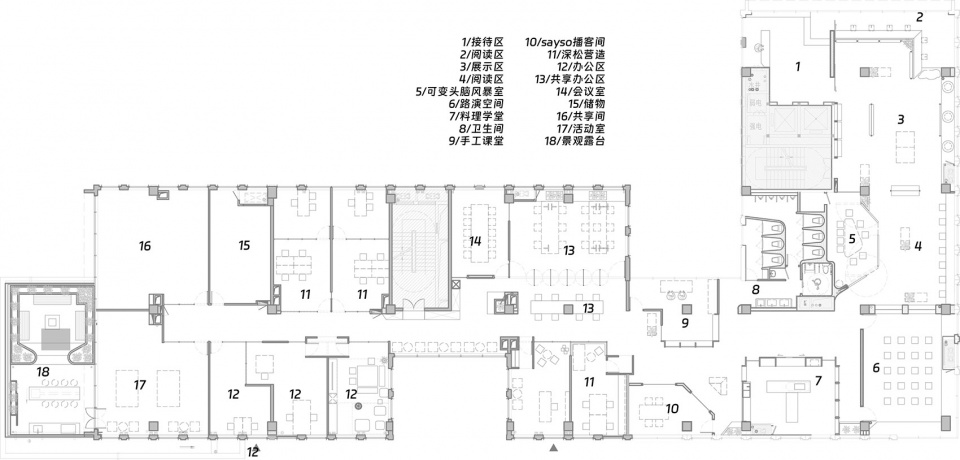
项目整体划分为两大区域,彼此交融,无绝对的物理隔断:前区(社区活动中心): 定期围绕社区、社会、学校举行多元活动。后区(运营方办公区): 采用开放式布局,为未来潜在的合作伙伴预留弹性工作位,回归“真共享”的办公状态,将工作自然融入社群服务之中。
The overall project is divided into two major areas that blend into one another without absolute physical partitions: The Front Zone (Community Activity Center): Regularly hosts diverse activities centered around the community, society, and schools. The Rear Zone (Operator’s Office Area): Utilizes an open-plan layout, reserving flexible workstations for potential future partners. This returns the office to a state of “true sharing” and naturally integrates work into community services.
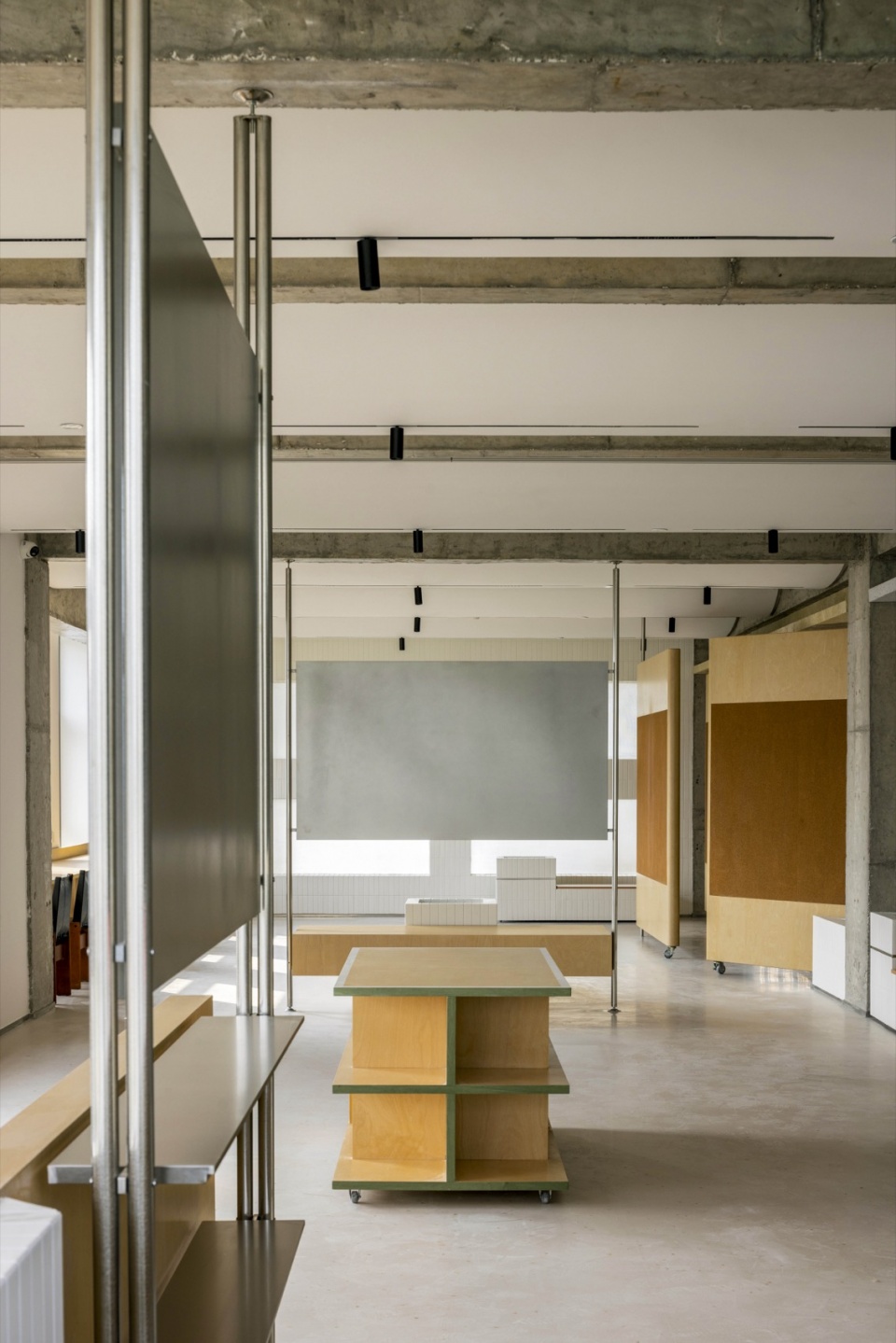
▼移动家具回应多功能使用,Mobile furniture supporting multi-functional use
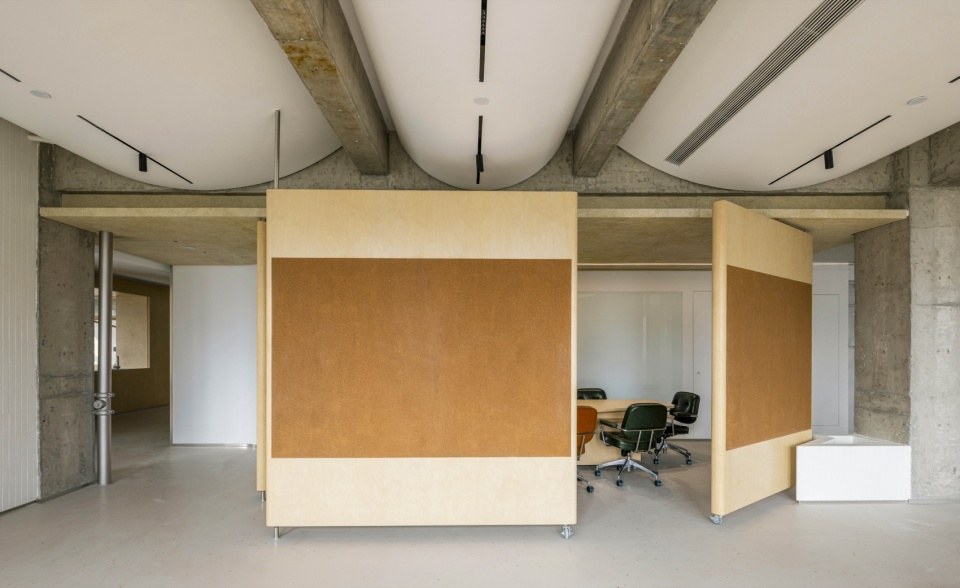
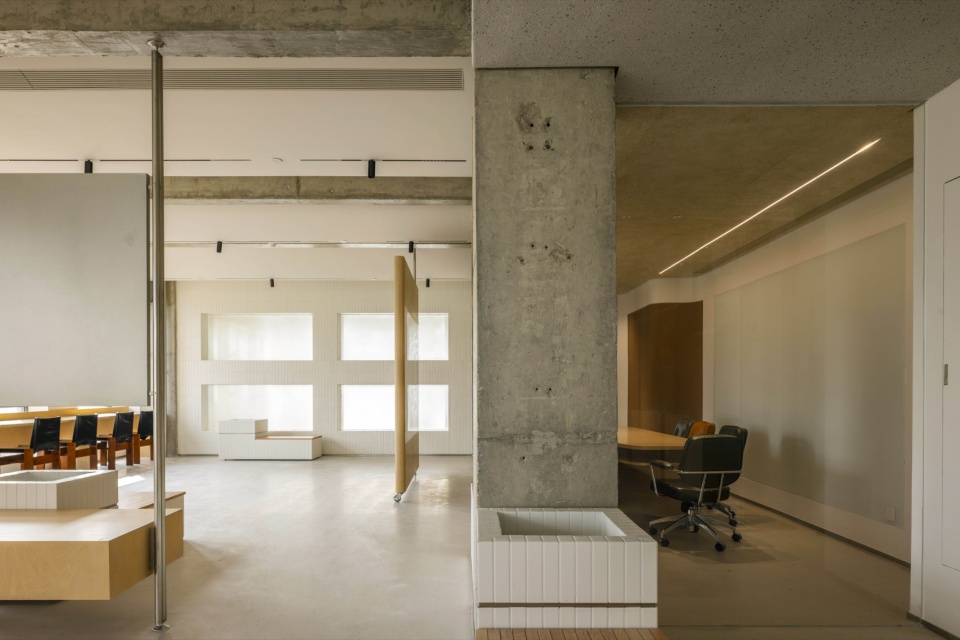
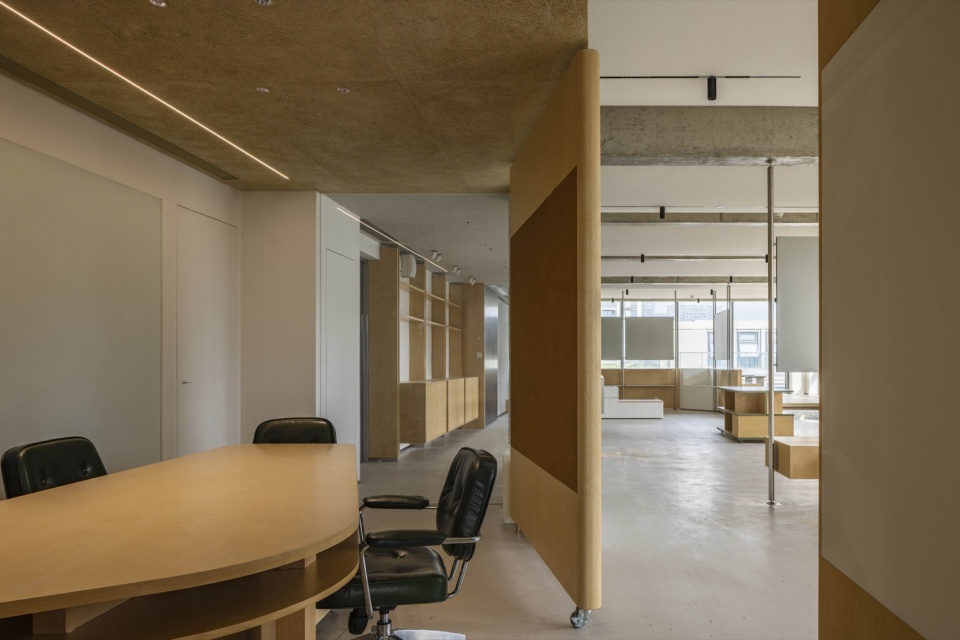
前区设计:流动的场景编辑 Front Zone Design: Flowing Scenario Editing
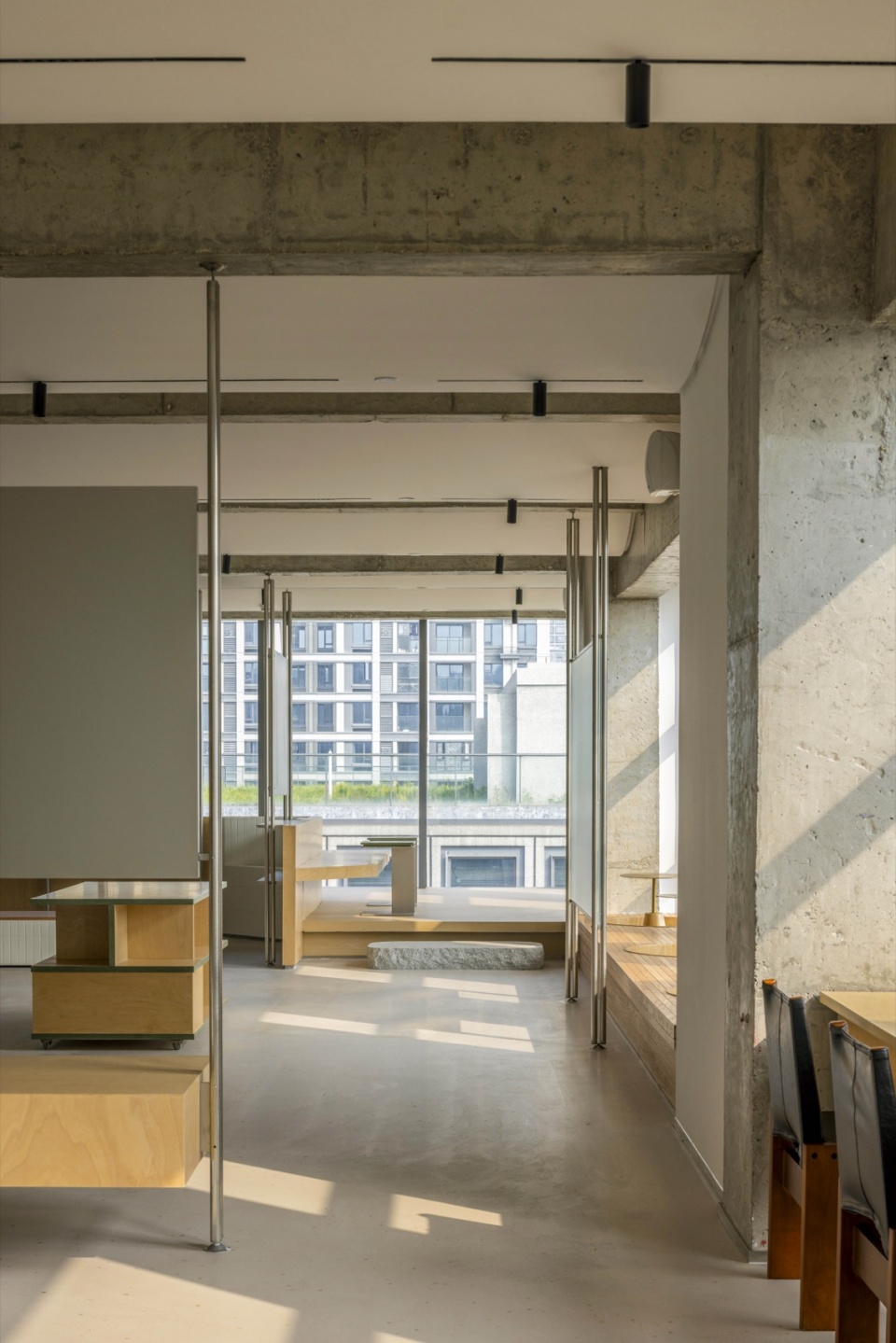
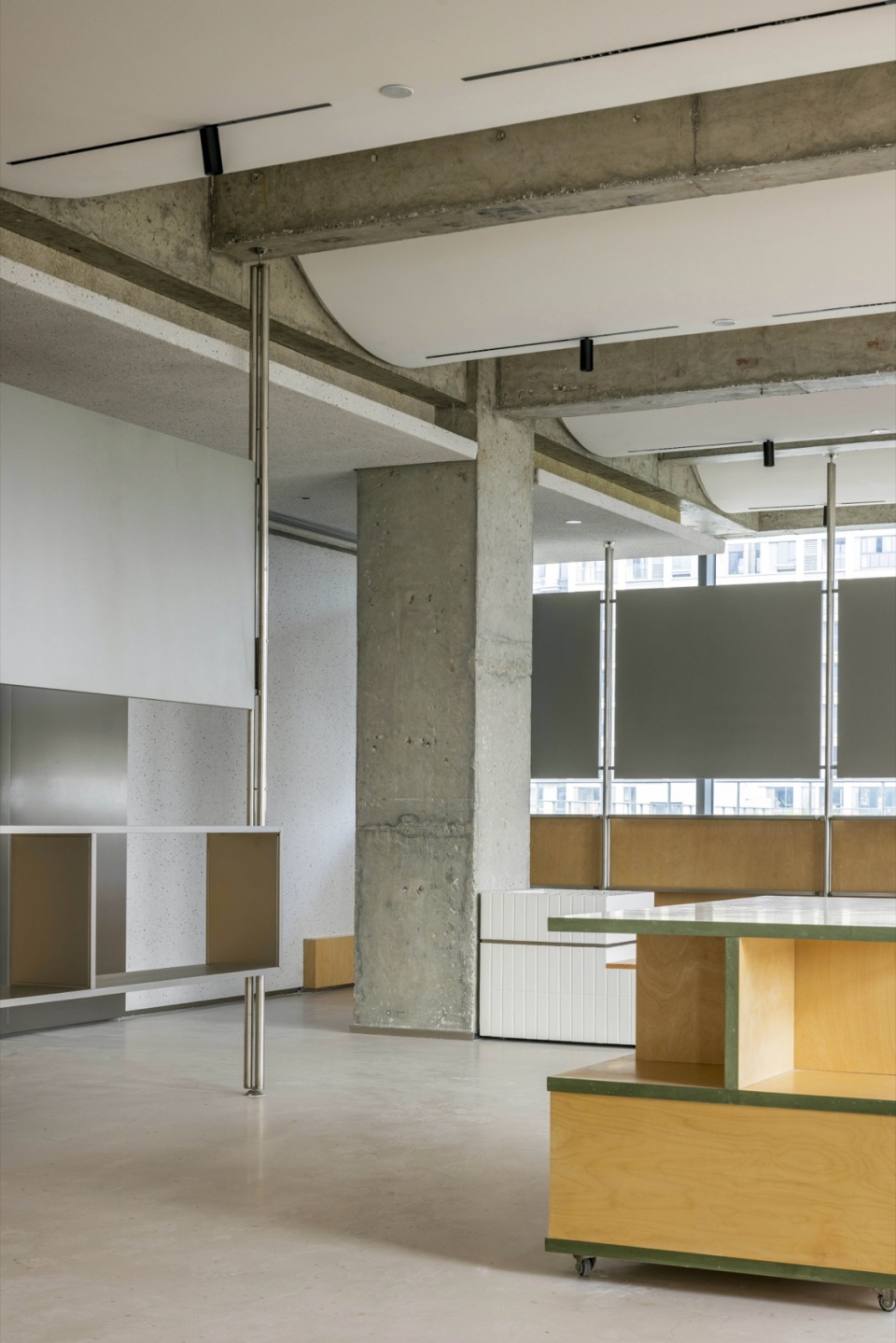
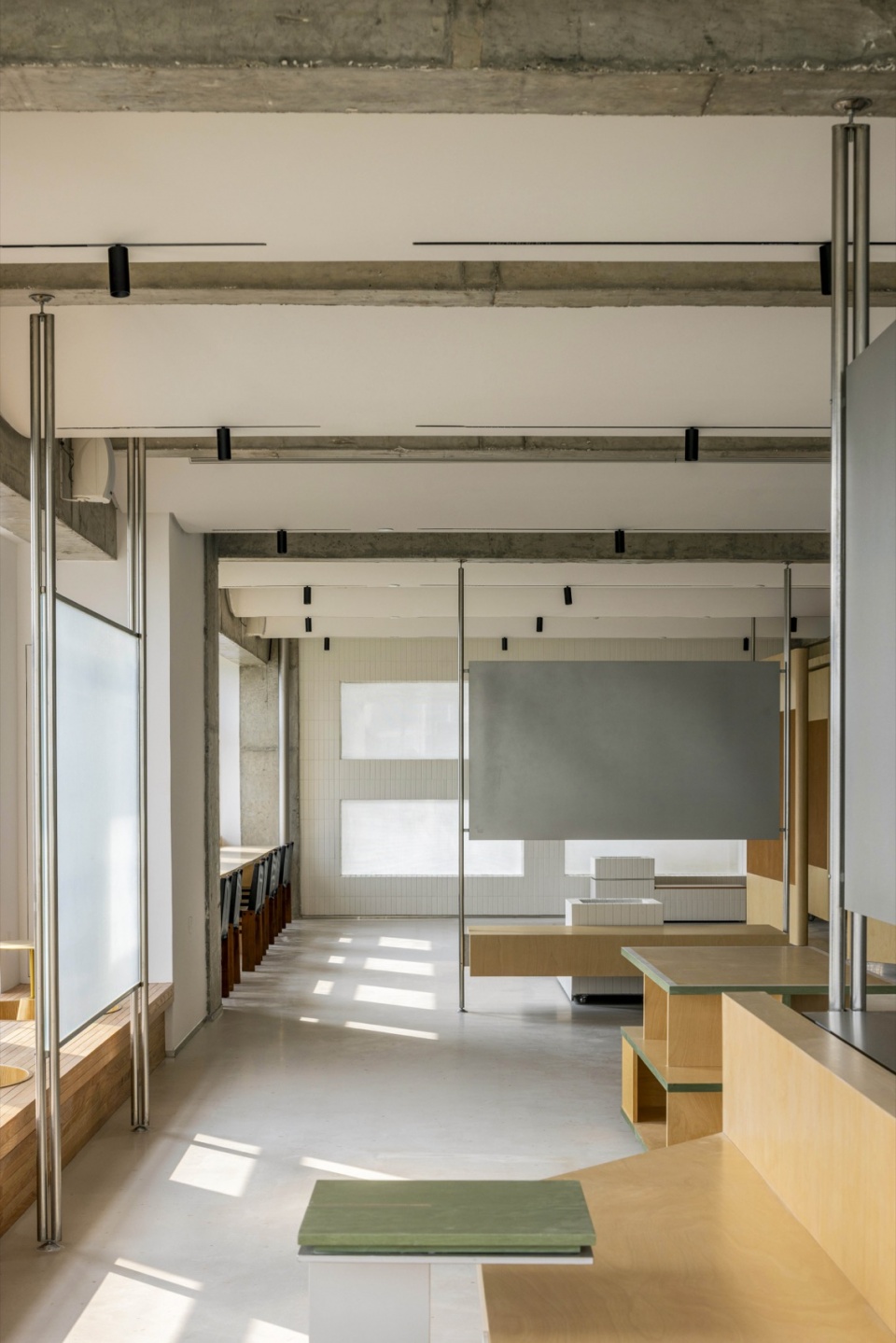
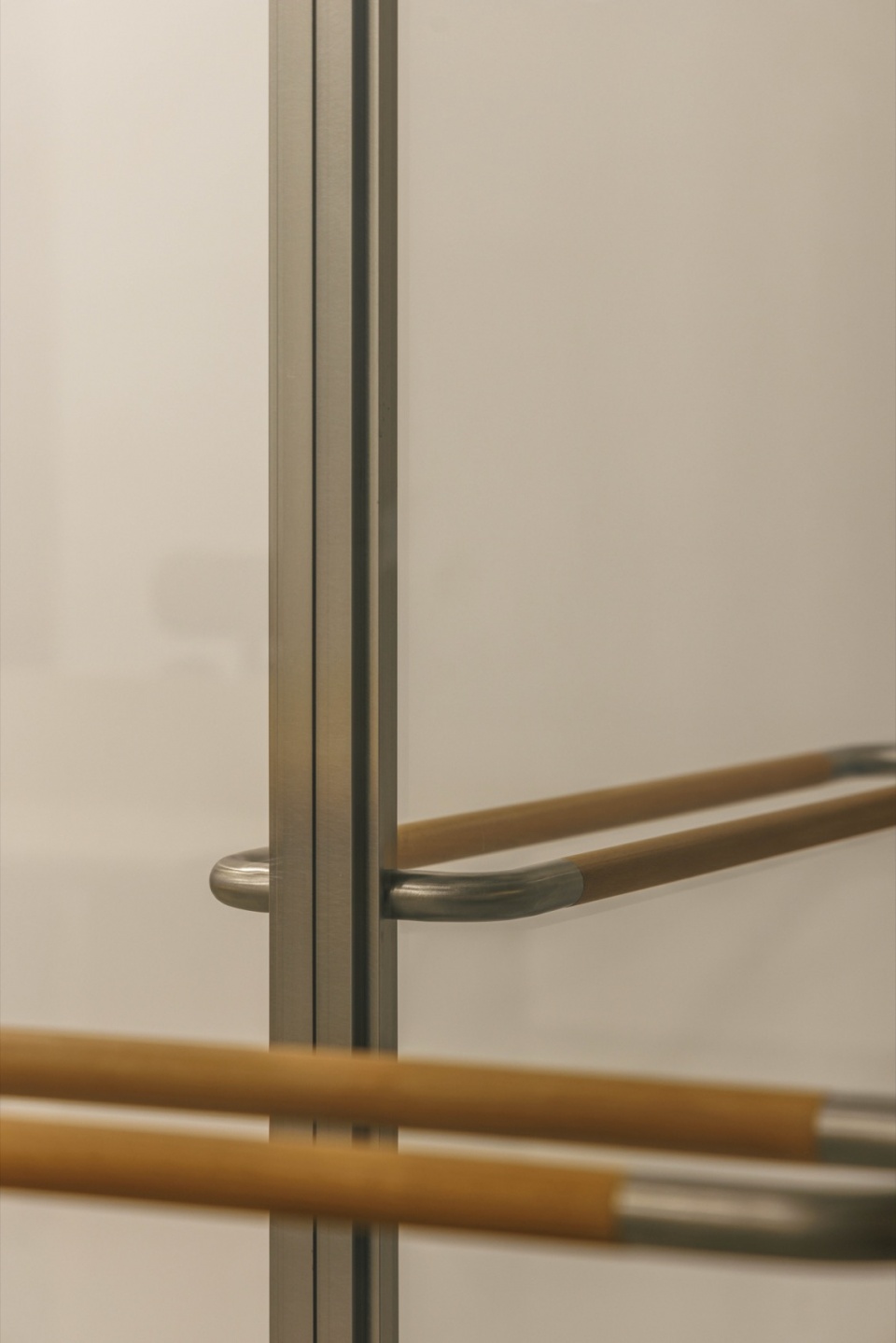
环形步调与弹性隔断: 电梯厅出来即是完全开放的接待区。右侧设置两道移门,常态下完全敞开,形成一个流畅通透的小环形动线。空间隔断采用直径 25 金属管搭配镀锌板,运用可调节的固定件,实现高度的快速调整或整体搬离;金属板同时支持磁吸,可作为活动时的灵活展板。中轴旋转与功能集聚: 再往内步入核心敞开区,空间通过几扇中轴旋转门进行灵活划分,既可随时开启一场高效的头脑风暴,也能转化为小范围的开放式讲堂。靠窗区域则顺势打造了与外界衔接的歇息地台与工作长台。
Circular Circulation & Flexible Partitions: Emerging from the elevator hall, you are greeted by a completely open reception area. To the right, two sliding doors remain wide open under normal conditions, creating a smooth, transparent, small circular circulation path. The space partitions utilize 25 mm diameter metal pipes paired with galvanized plates. By using adjustable fixtures, they can be quickly adjusted in height or completely removed. The metal plates also support magnetic attachments, serving as flexible display boards during events. Pivoting Axis & Functional Aggregation: Walking further inside to the core open area, the space is flexibly divided by several center-pivot doors. This allows it to instantly kick off an efficient brainstorming session or transform into a small-scale open lecture hall. The window area naturally creates a stepped resting platform and a long workbench connected to the outside world.
▼木质框架限定独立工作间,Wooden frames defining the private workspace
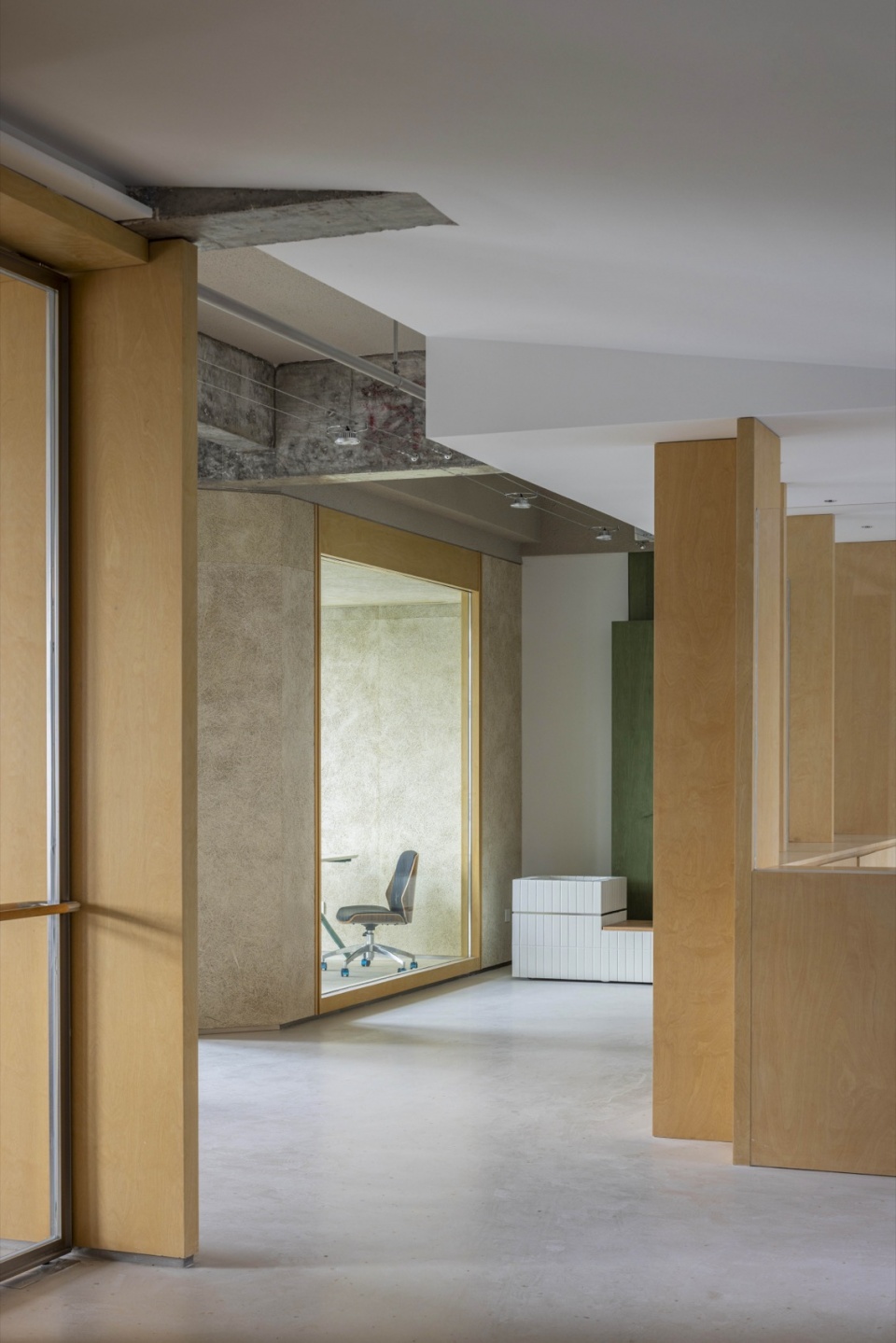
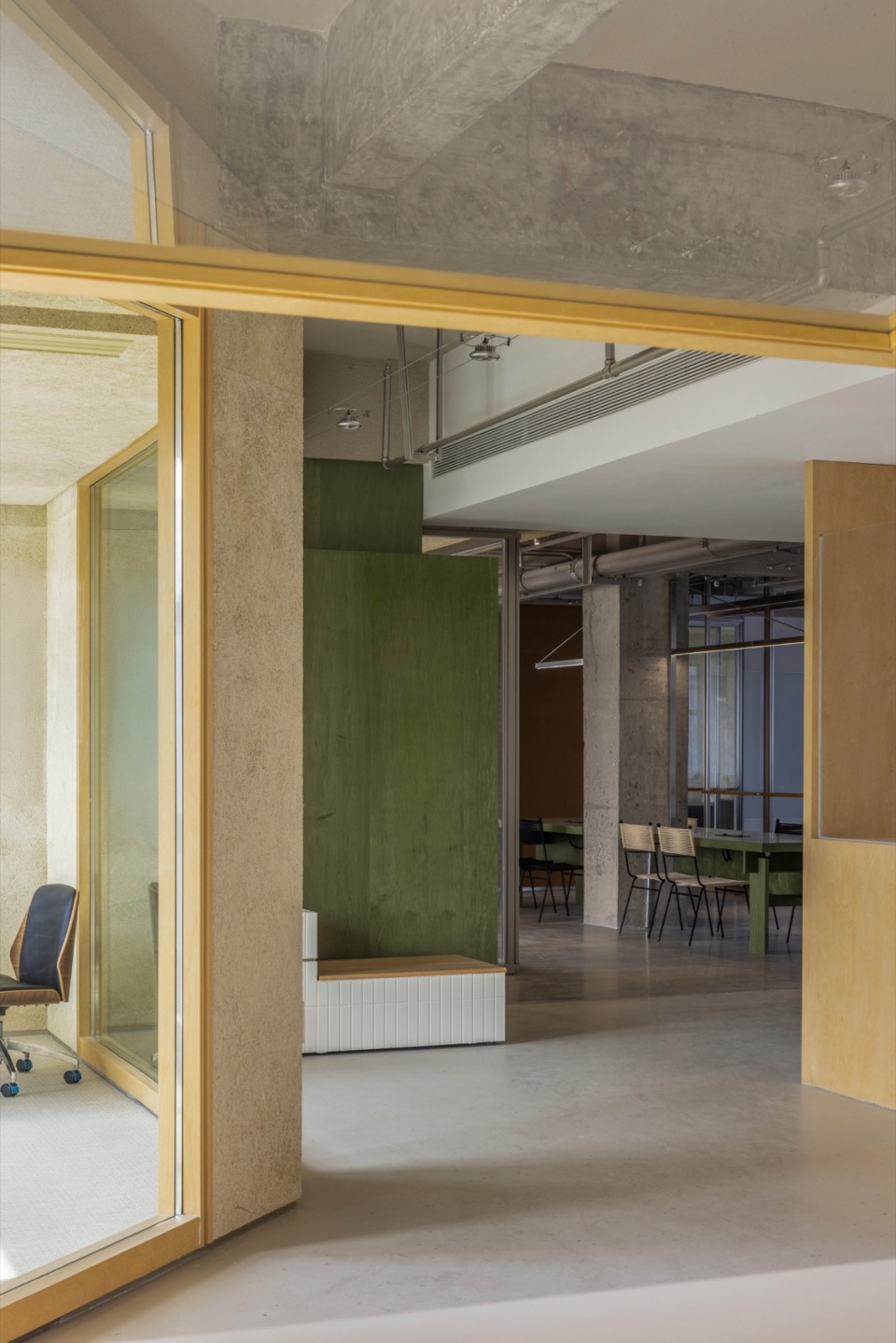
▼上翻窗连接内外视线,Awning window connecting interior views
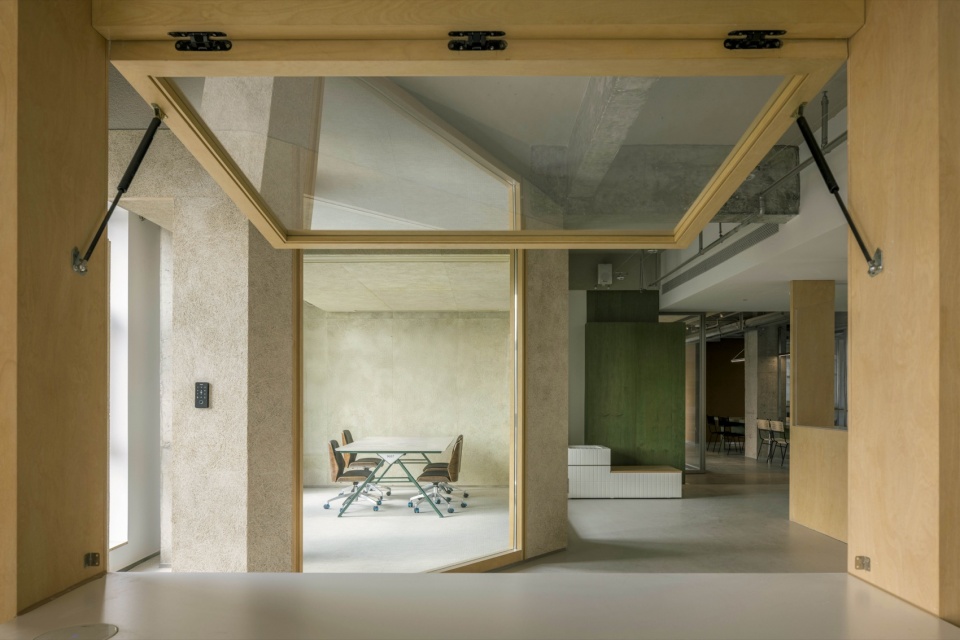
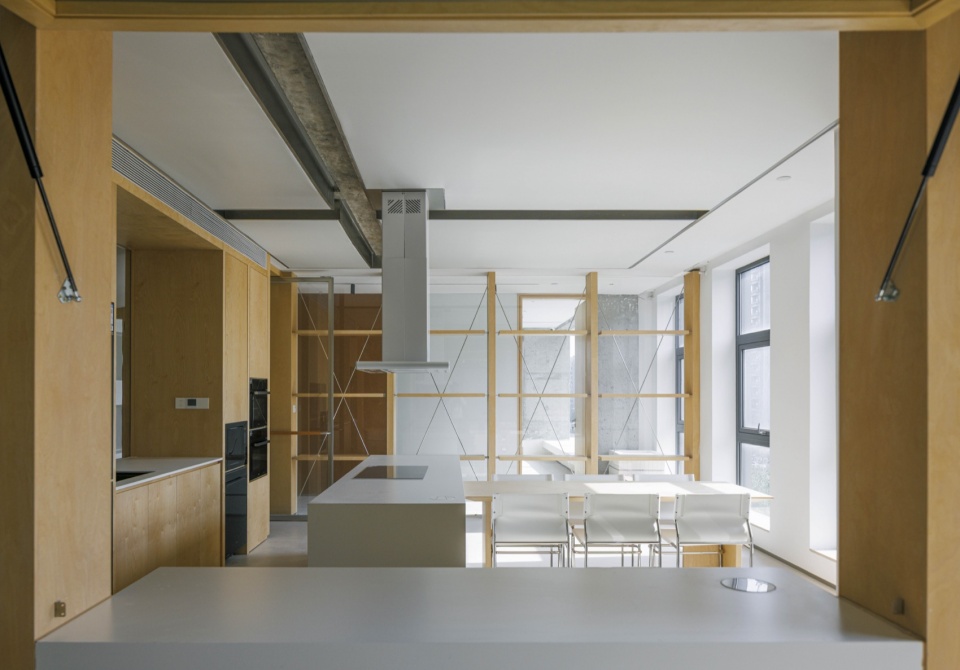
功能内核的具象化: 最内侧是功能的复合集聚区。这里容纳了一个约 40 人的多功能活动空间、一个创意料理厨房工作室、一个播客录音室以及一个手工制作间。至此,所有关于社区未来的美好畅想,均找到了落脚点。
Materialization of the Functional Core: The innermost area serves as a composite aggregation zone for various functions. It accommodates a multi-functional event space for about 40 people, a creative culinary kitchen studio, a podcast recording studio, and a handicraft workshop. At this point, all beautiful visions for the community’s future have found their grounding place.
▼厨房工作室面向活动空间,Kitchen studio facing the activity area
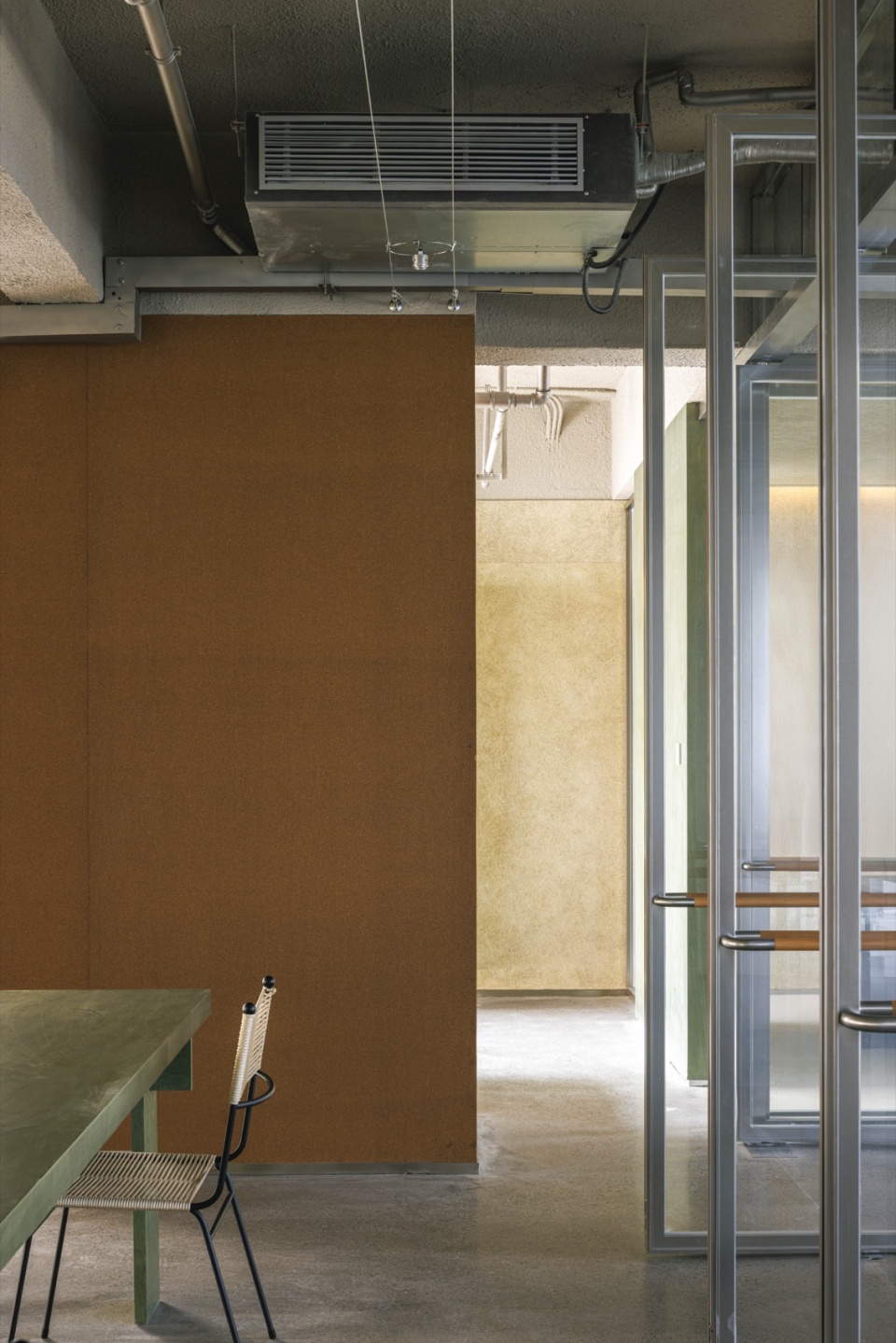
▼材料与色彩转换,Material and color transition
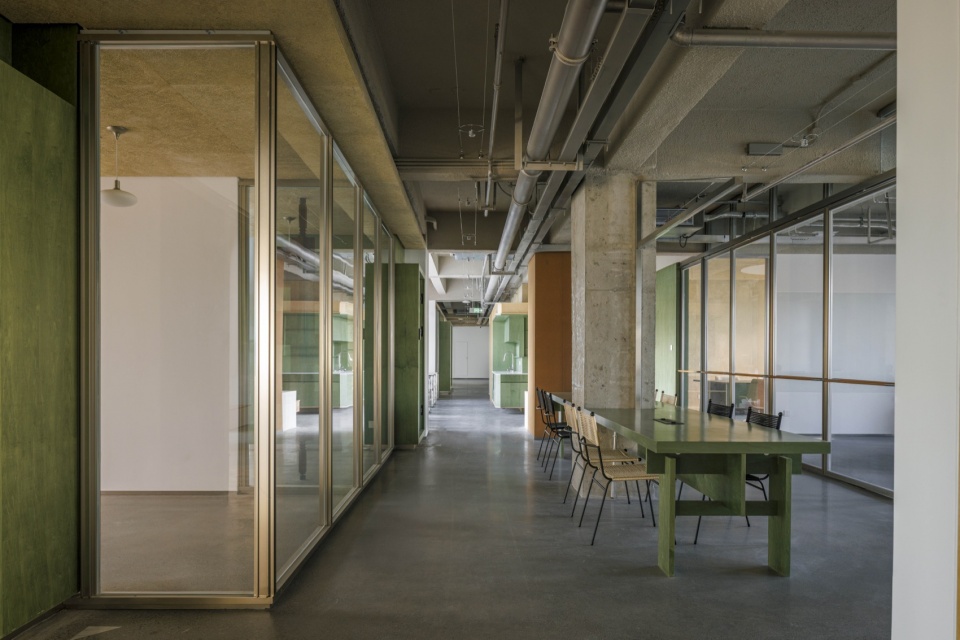
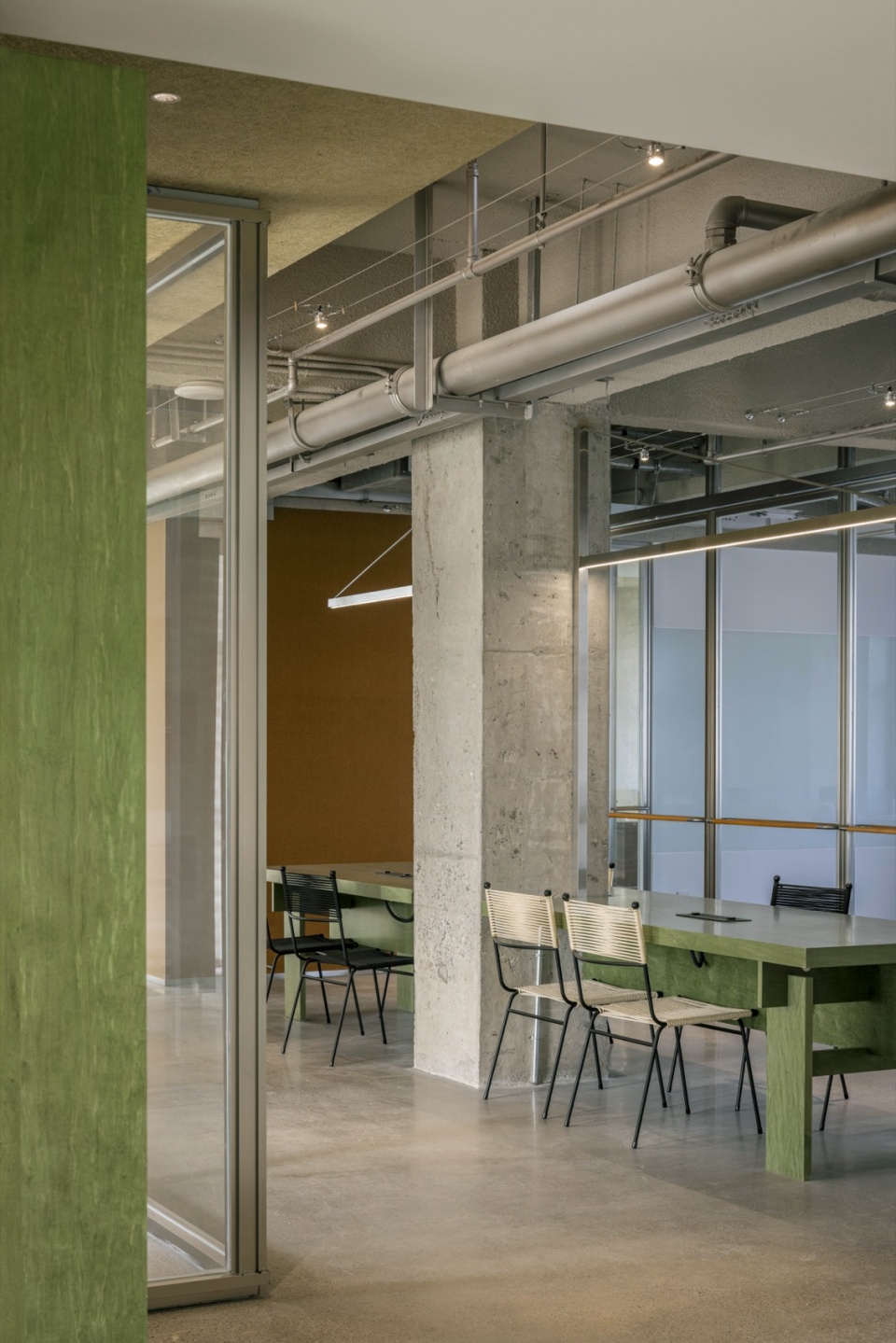
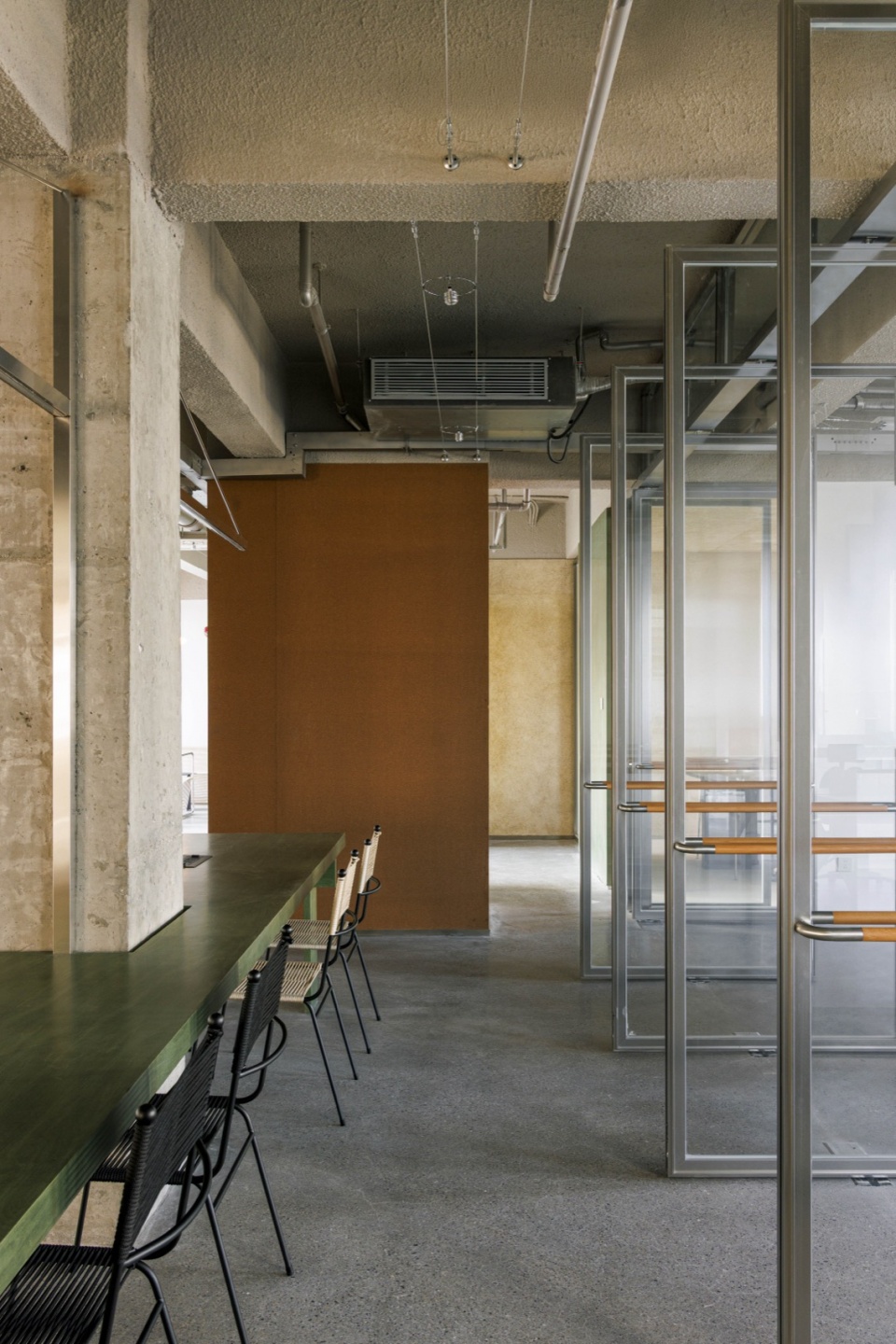
▼光影穿过走廊休憩区,Light and shadow crossing the corridor lounge
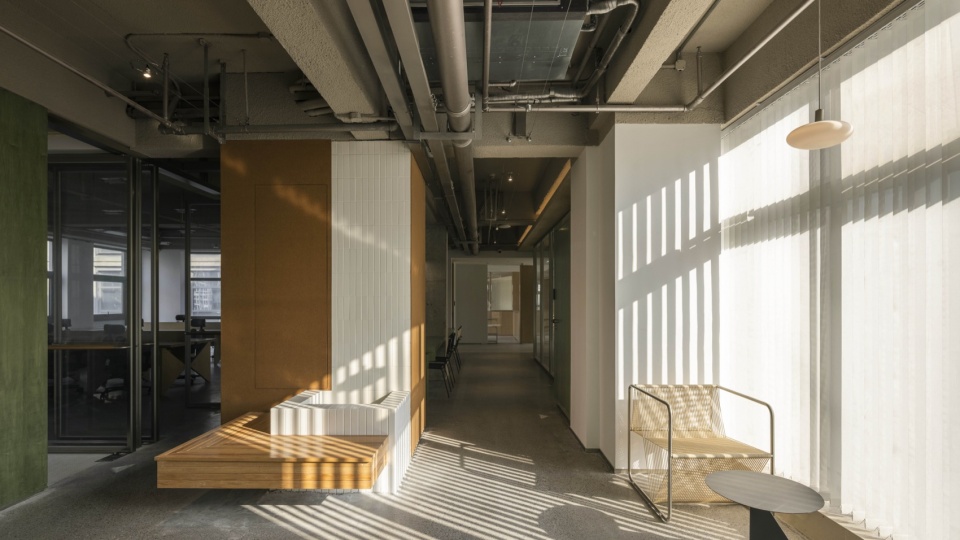
▼开放办公区中的休息节点,
Resting node within the open office area
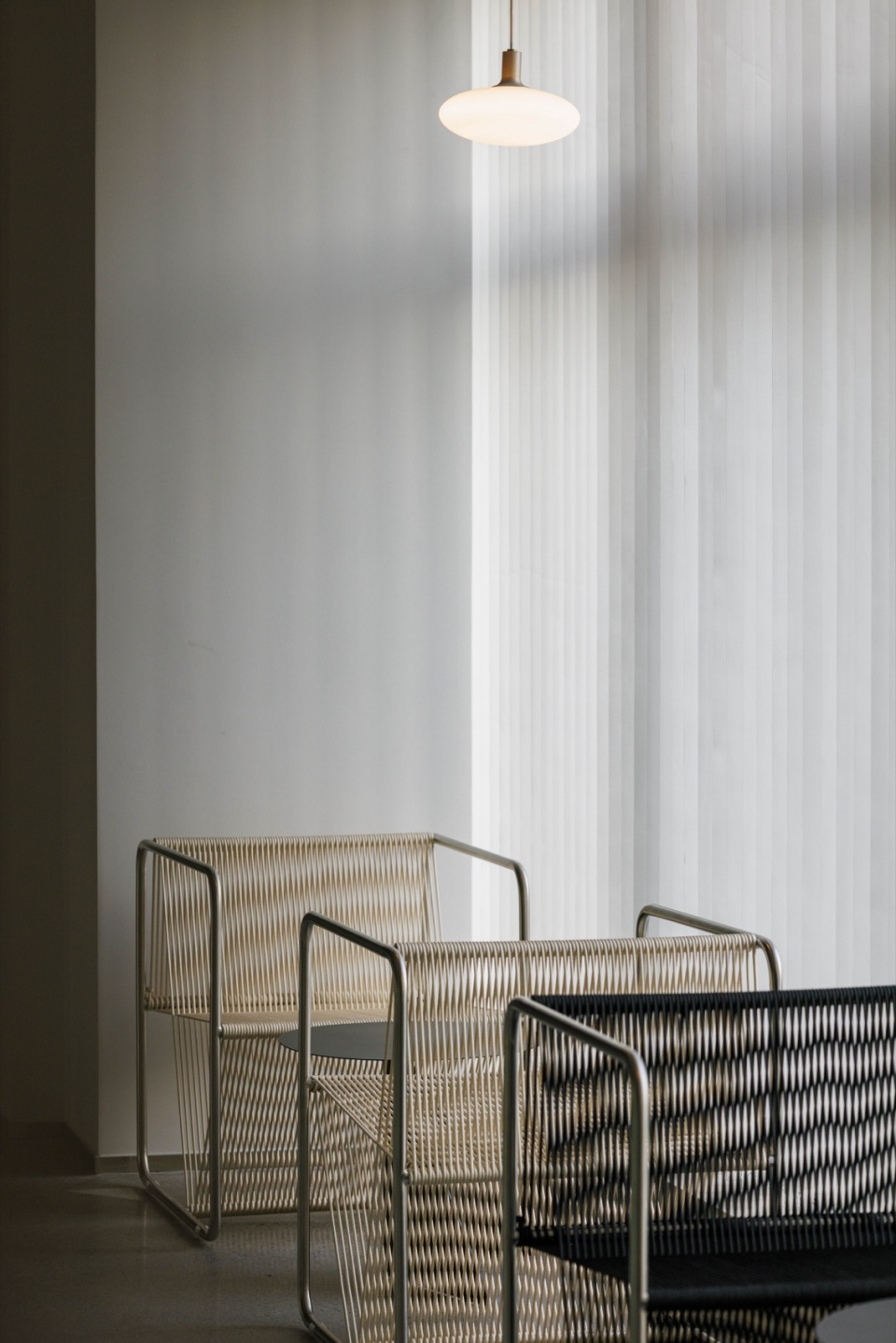
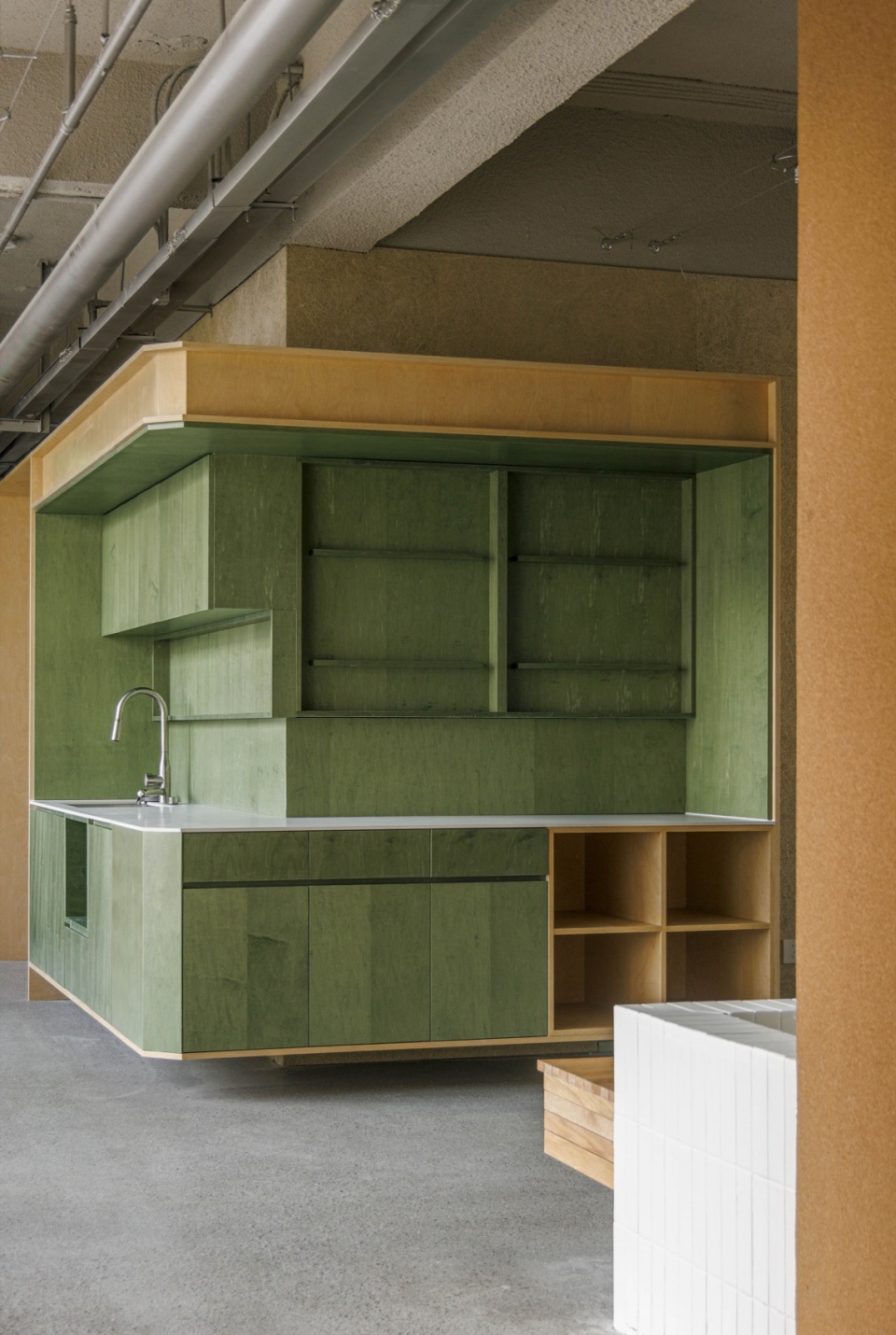
▼绿色木作柜体,Green wood cabinetry
▼深色木隔断界定办公区,
Dark wood partitions defining the office area
材料与美学:材质的延续与变奏 Materials & Aesthetics: Continuation and Variation of Textures
在约 500 平方米的后区办公空间中,设计通过材质的微调实现了微妙的场域转换:色彩与情绪: 前区活动空间采用温暖的原木本色,后区办公空间则切换为沉稳的染色木皮。既在视觉上做出了功能区分,又通过同类材质保持了空间的整体延续性。
In the approximately 500-square-meter rear office space, the design achieves a subtle shift in the field through minor adjustments in materials: Color & Emotion: The front event space utilizes warm, natural wood tones, while the rear office space switches to a composed, dyed wood veneer. This visually distinguishes the functions while maintaining spatial continuity through similar materials.
▼绿色木作嵌入办公场景,Green woodwork inserted into the office setting
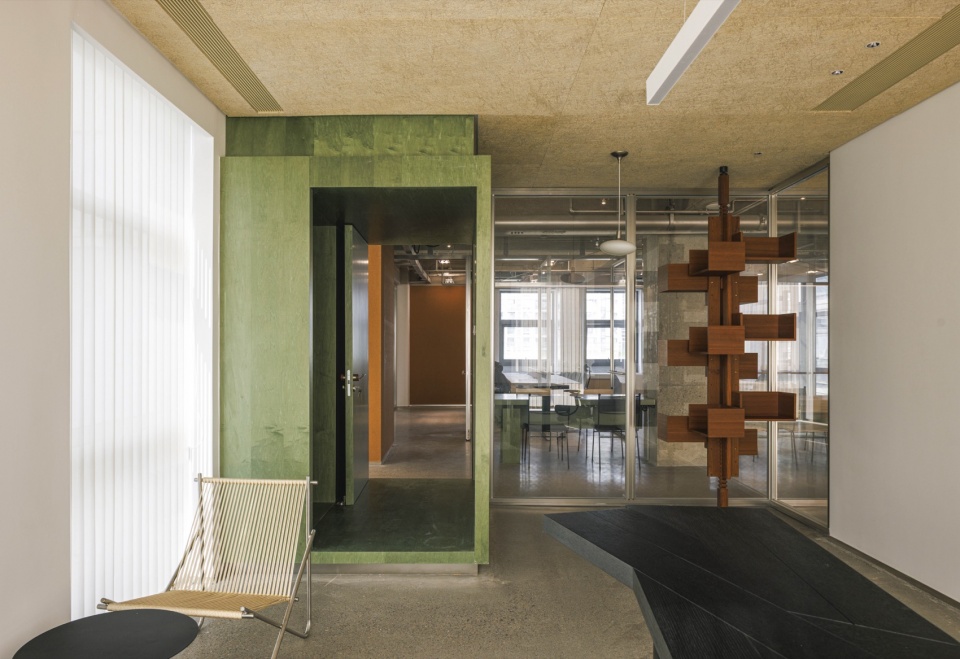
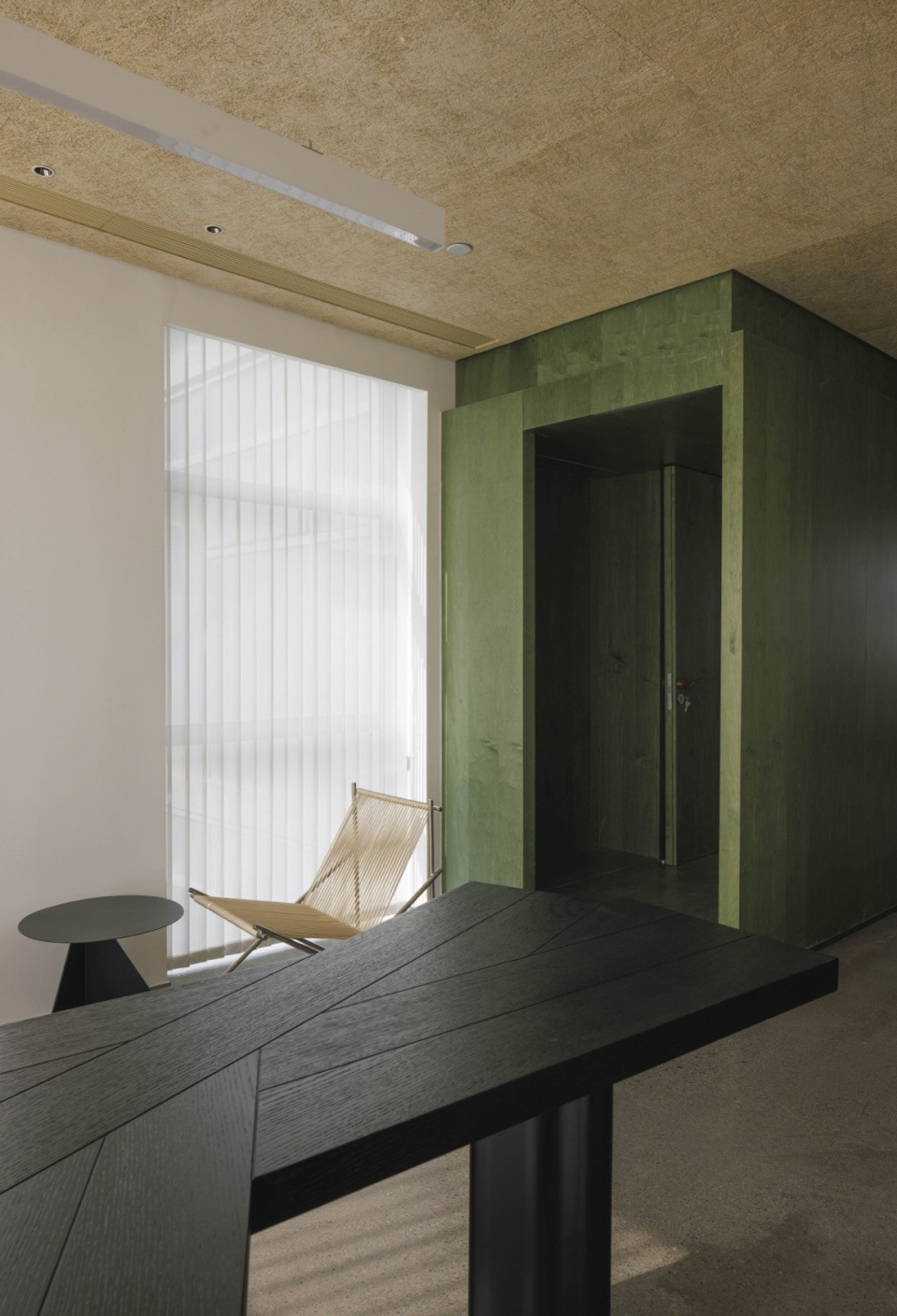
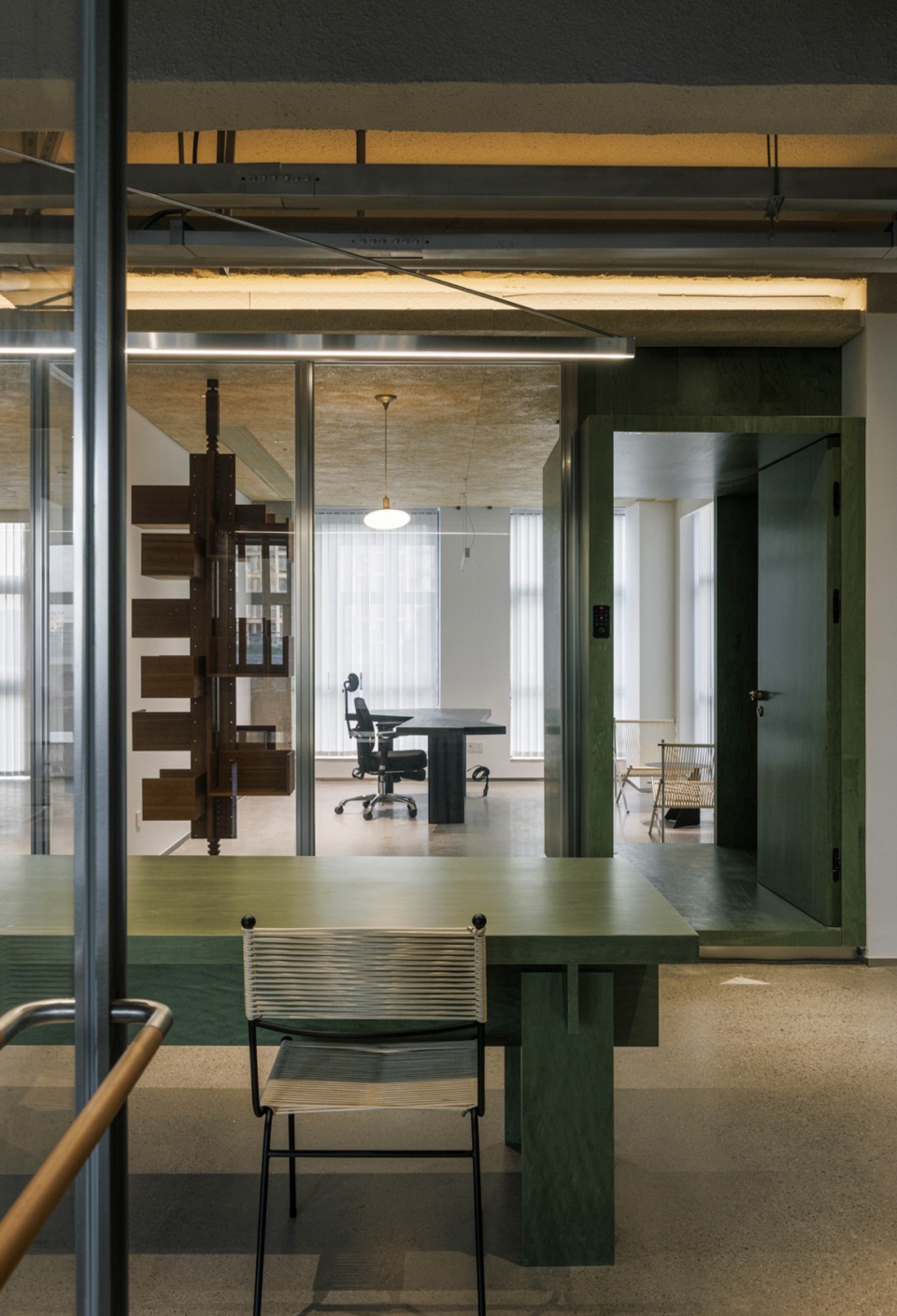
▼沉稳色彩营造办公氛围,Composed colors shaping the office atmosphere
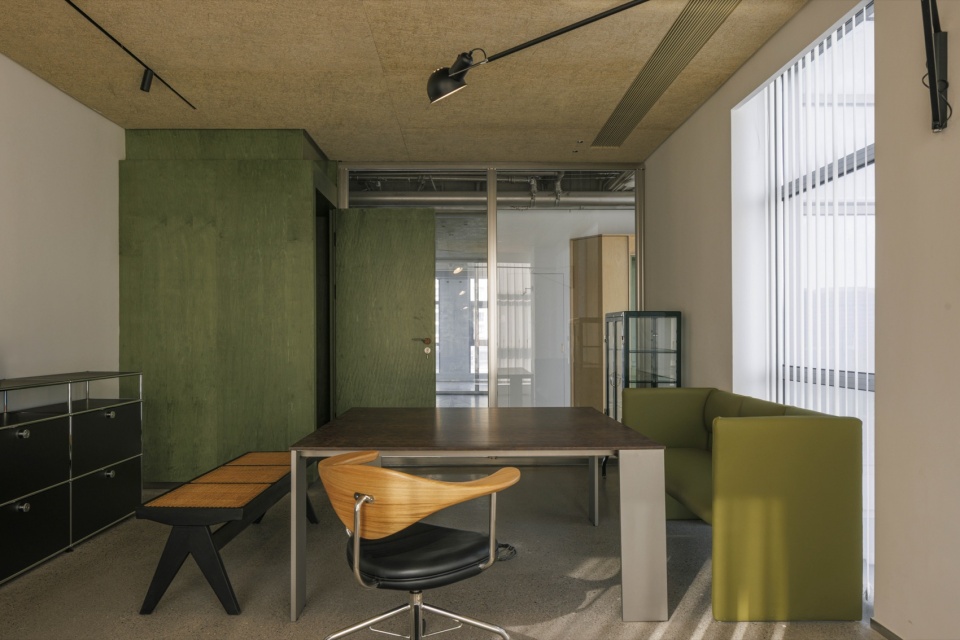
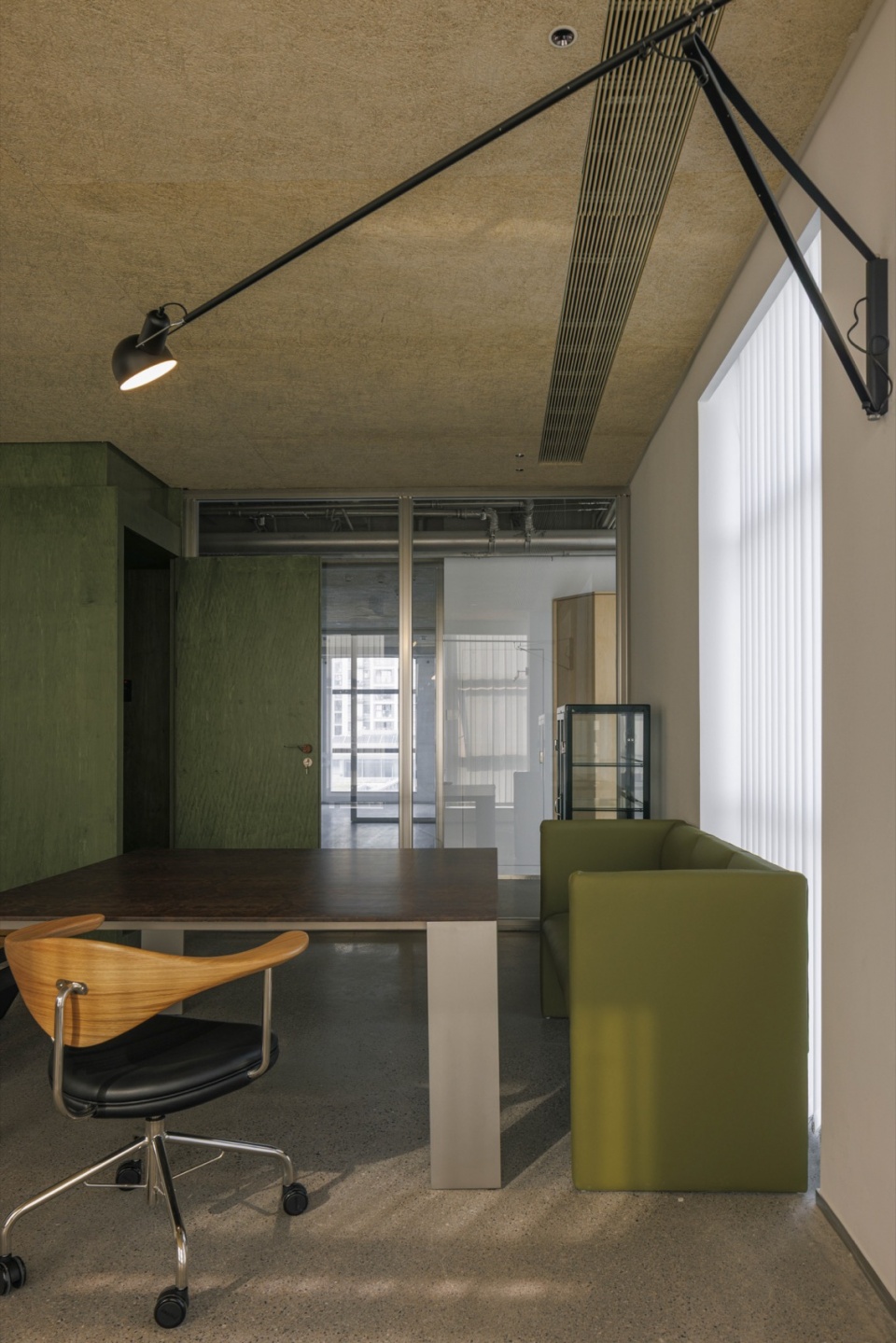
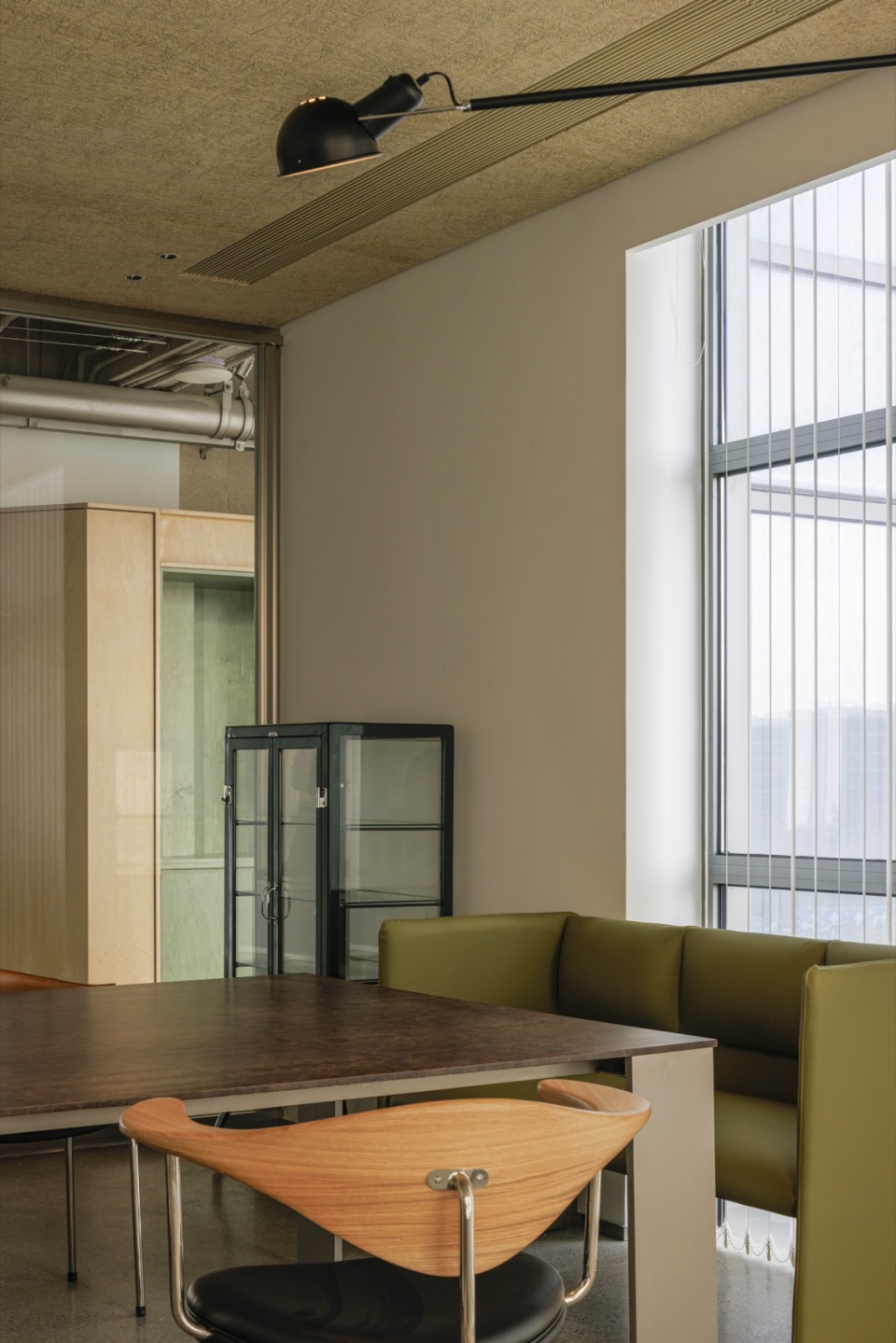
▼多功能活动空间,Multi-functional event space
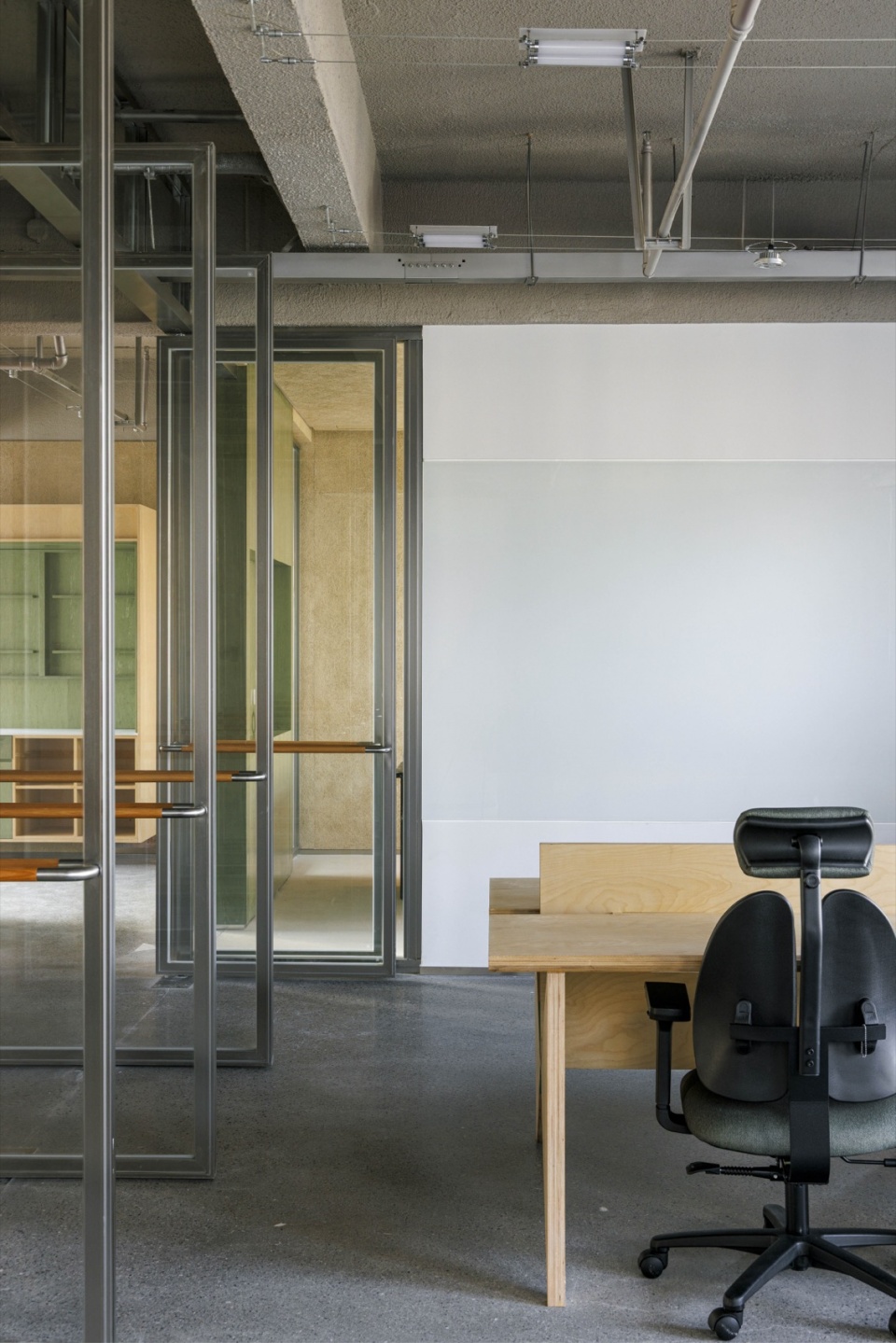
元素的共生: 前区的金属元素被延续至后区,用作独立办公室的物理隔断。整个空间在水磨石、金属、混凝土与木色的交织衔接中,达成了一种粗粝与温暖、松弛与严谨的动态平衡。它不再是一个固化的容器,而是一个可以随时代共同生长的“未来生命体”。
Symbiosis of Elements: The metal elements from the front zone are extended to the rear zone, serving as physical partitions for private offices. Intertwined and connected by terrazzo, metal, concrete, and wood tones, the entire space achieves a dynamic balance between rawness and warmth, relaxation and rigor. It is no longer a solidified container, but a “future living organism” that can grow alongside the times.
▼木质桌面回应办公使用,Wooden desktop responding to office use
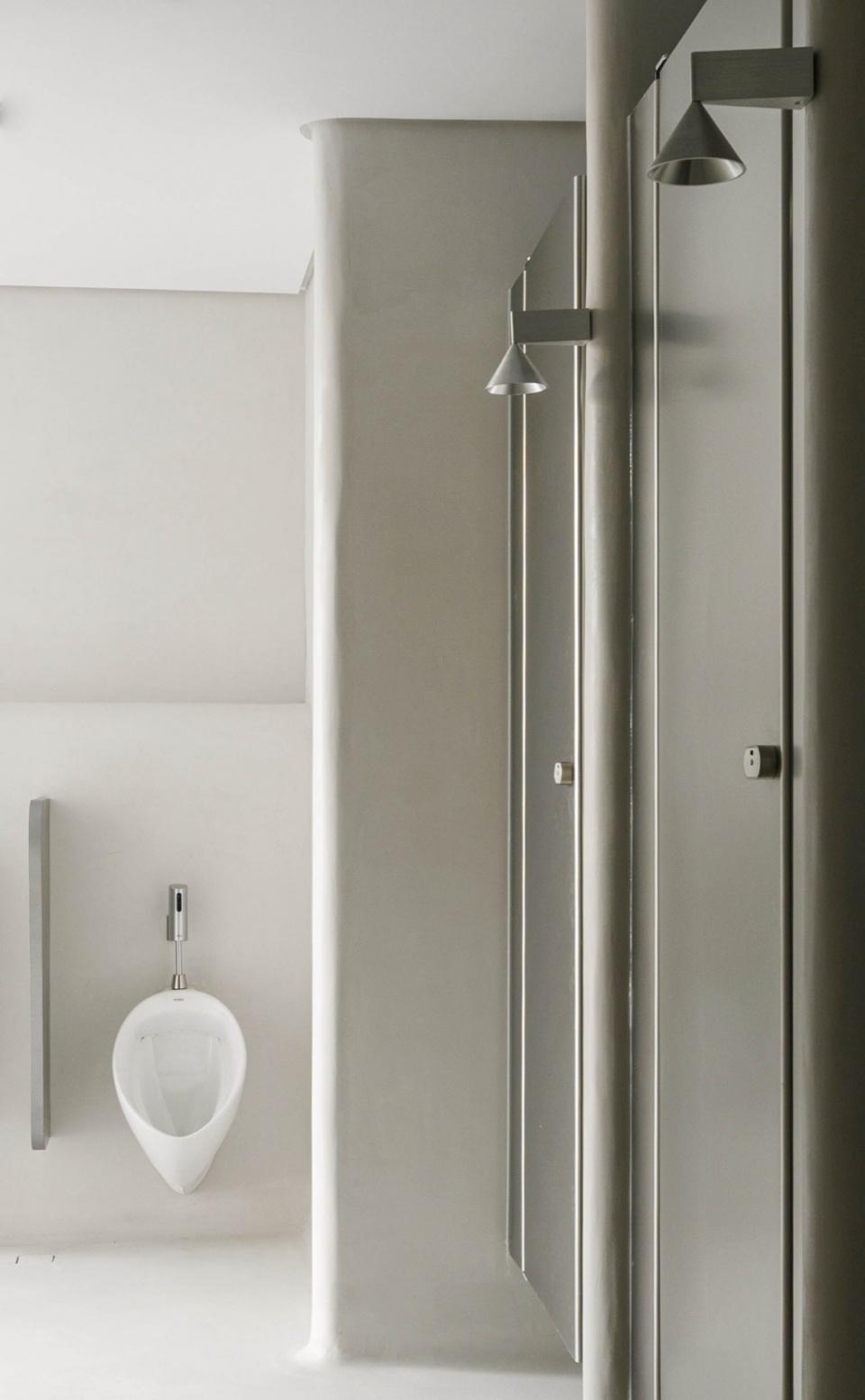
▼卫生间空间,Restroom space
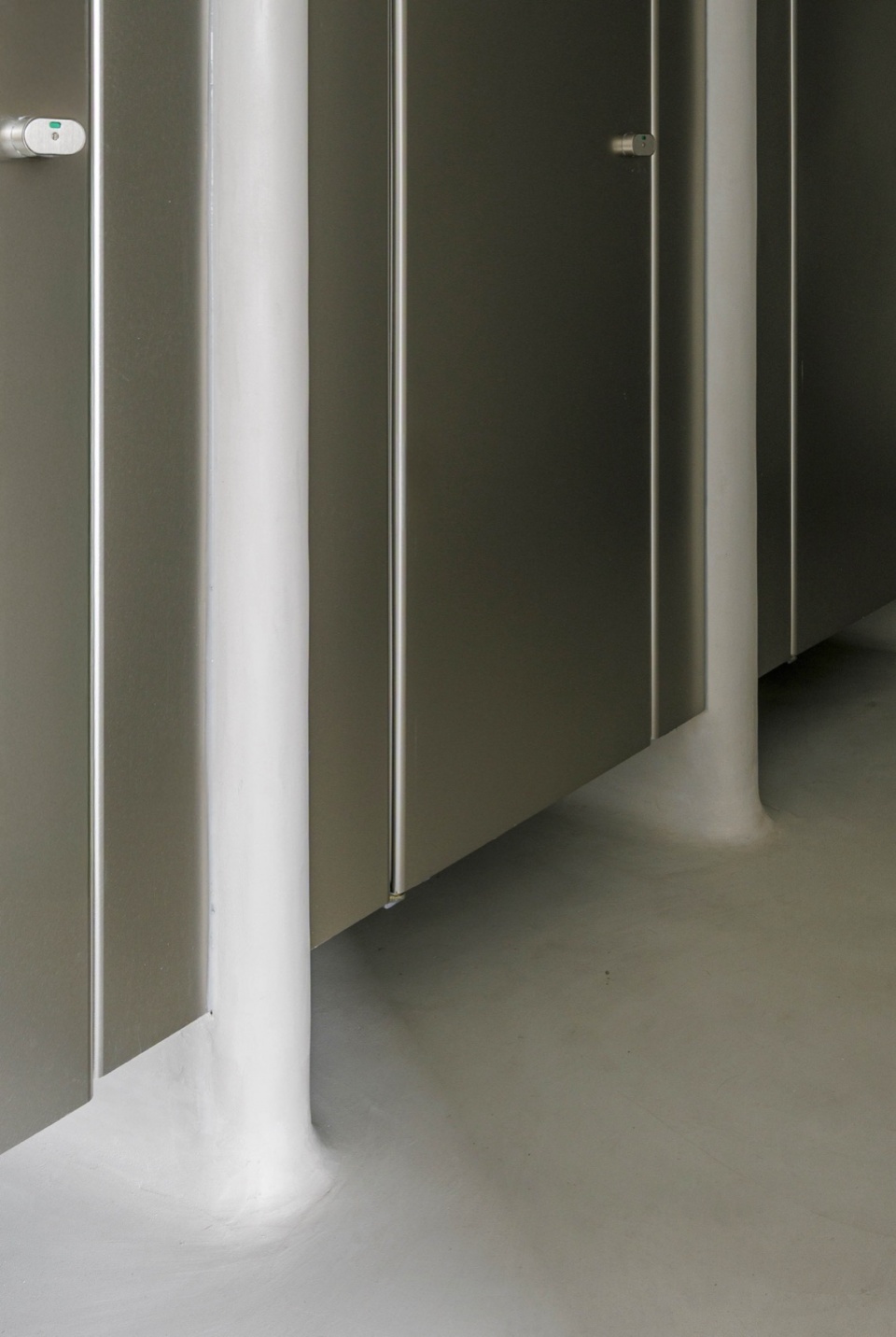
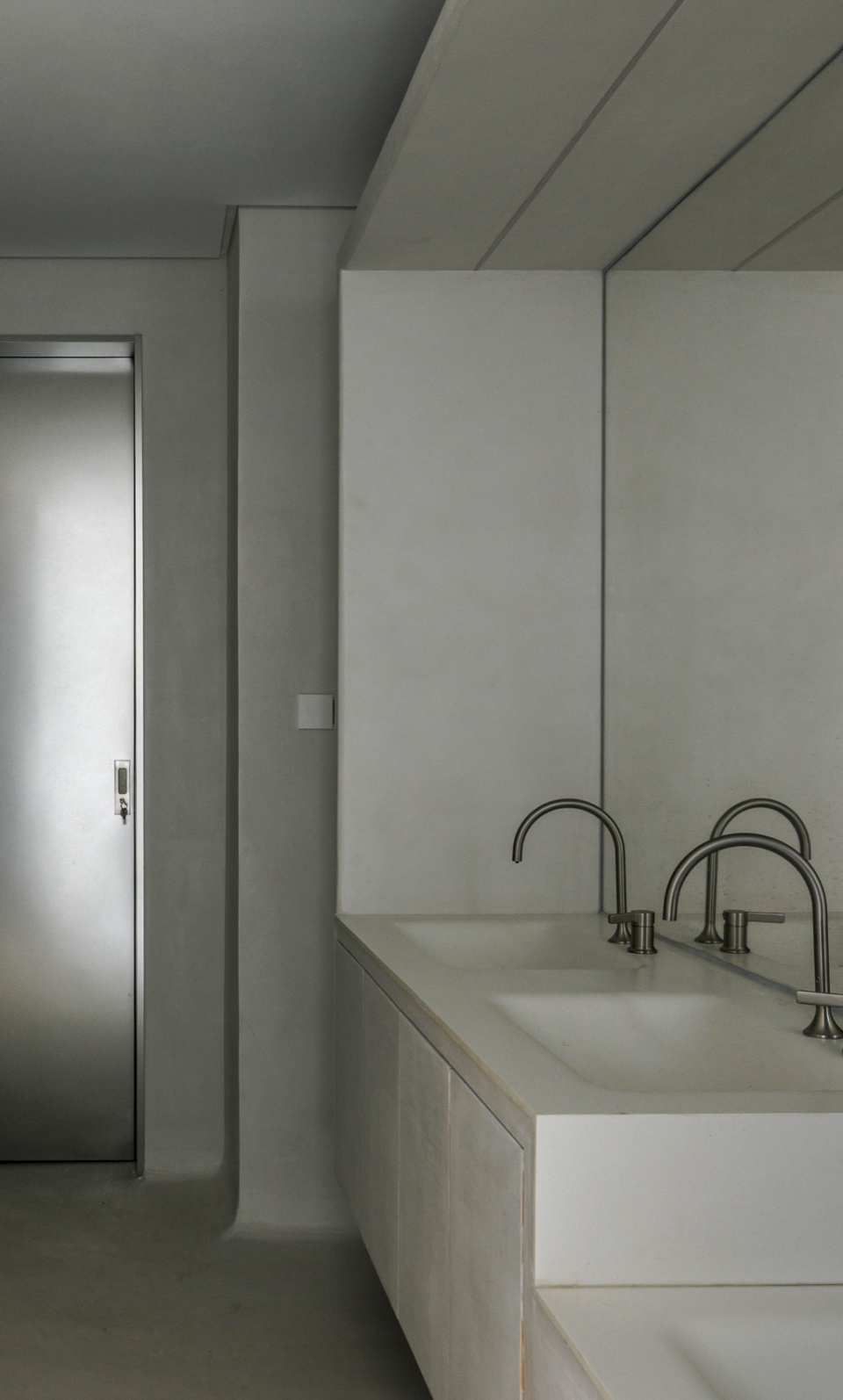
▼细节,Detail
▼平面图,Floor plan
Project name:Future LAB
Project type:Community Office
Design:Displacement Architectural
Contact e-mail:443228854@qq.com
Design year:2024.12
Completion Year:2025.10
Leader designer & Team:WILLIAM
Project location:Ningbo
Gross built area: 1050㎡
Photo credit: Liuguowei
Materials:Stainless Steel,Washed Stone,Anodized Aluminum,Marine Plywood,Terrazzo,Concrete