798 COFFEE七九八艺术区店,北京 / 借光实践建筑设计工作室
项目背景 Project Background
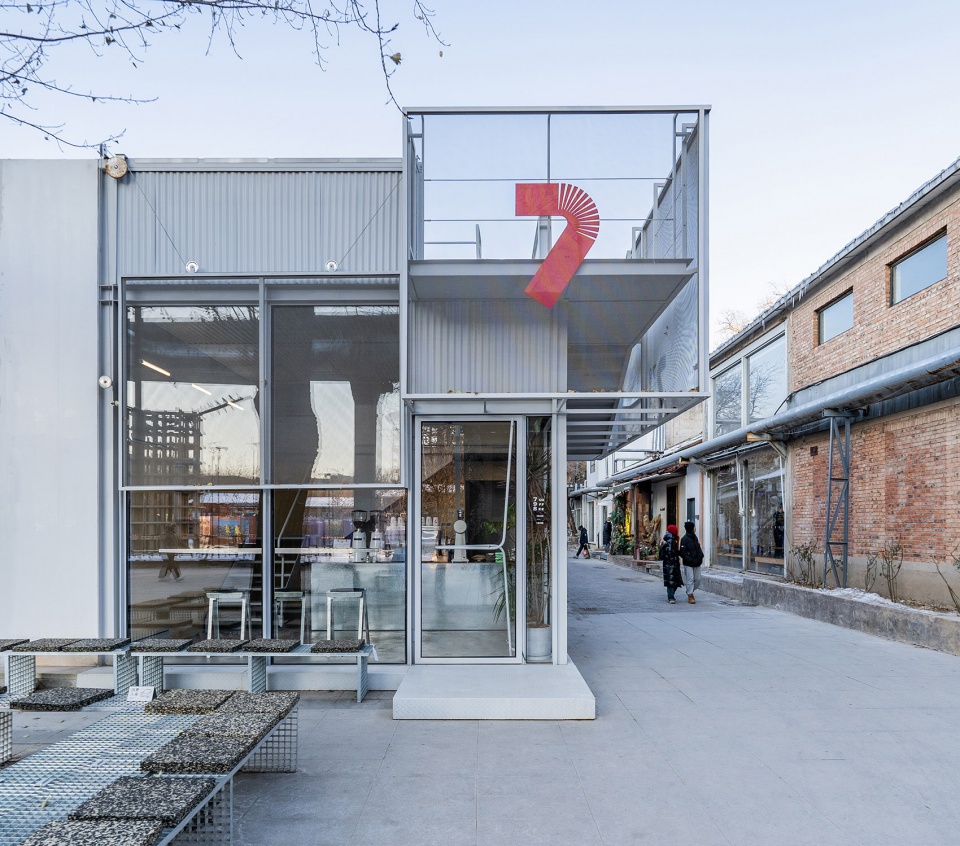
798COFFEE 艺术园区店于2023年9月竣工,为该品牌的首家实体门店。随着使用方式的变化,室内的家具布局与表层材料也在时间的推移中不断记录着空间的演变。项目原址为一处转角便利店,占地面积仅约22平方米。原有轻钢结构因腐蚀变形,无法满足新功能需求,因此被全部拆除。需在低预算、短工期的条件下,完成咖啡厅的设计与建造。因此钢结构成为首选的主体结构材料。由于此前曾与主理人合作完成 This is C5 Cafe & Shop & Sake 系列店铺,双方对整体风格与氛围很快达成共识,并给予设计师一定程度的创作自由度,进行诸多实验性的设计尝试。
798COFFEE Art District Store was completed in September 2023, marking the brand’s first physical store. As usage patterns shift, the interior furniture arrangement and surface materials quietly record the space’s evolution over time. The site was originally a corner convenience store, occupying a footprint of only about 22 square meters. The existing light-gauge steel structure had corroded and deformed, rendering it unable to meet the new functional requirements, and was therefore completely dismantled. The café’s design and construction had to be completed under a low budget and tight schedule. Having previously collaborated with the owner on the This is C5 Cafe & Shop & Sake series of stores, both parties quickly reached a consensus on the overall style and atmosphere, granting the designer a degree of creative freedom to pursue a variety of experimental design approaches.
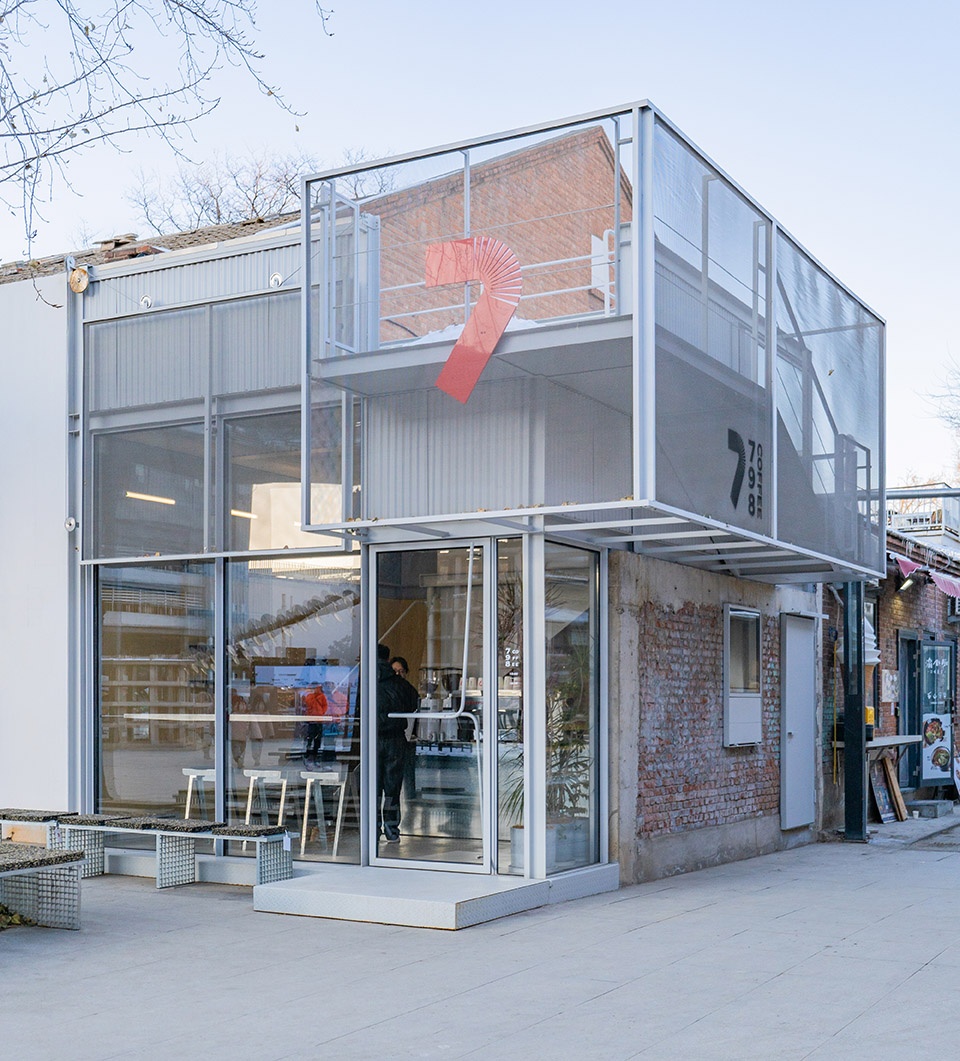
▼南外立面,the south facade
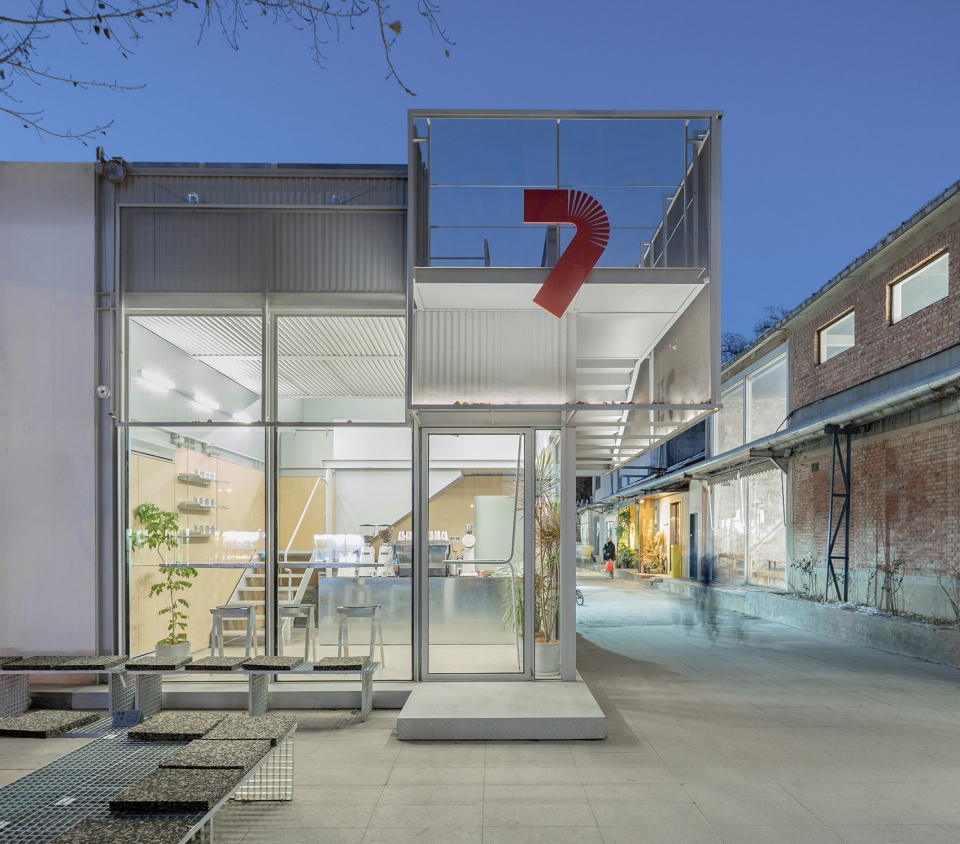
▼夜景,the nightscape
项目设计介绍 Project Design Introduction
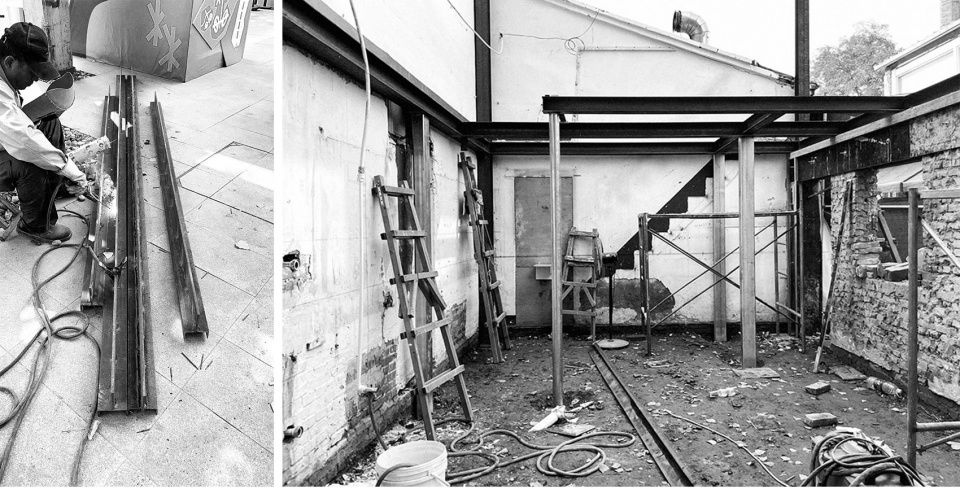
咖啡厅以外带业务为主,仅设置少量堂食座位。改造后室内外总面积约70平方米,包含室内两层空间及一处上人屋面。为控制造价与工期,所有主体钢结构均采用现场裁切与焊接的方式完成。同时,为实现设计的统一性,门窗、家具等构件均纳入整体设计范畴。并充分利用钢结构的截面特性,最大程度减少结构所占用的面积与空间;并通过错层处理,有效利用建筑高度,以满足有限的堂食需求。
The café is primarily takeout-oriented, with only a small number of dine-in seats. After renovation, the total indoor and outdoor area is approximately 70 square meters, comprising two interior levels and an accessible roof. To control cost and construction time, all main structural steelwork was cut and welded on site. To achieve design coherence, elements such as doors, windows, and furniture were incorporated into the overall design scope. The cross-sectional properties of the steel members were fully exploited to minimize the area and volume occupied by the structure, and a split-level design made efficient use of the building height to accommodate the limited dine-in requirement.
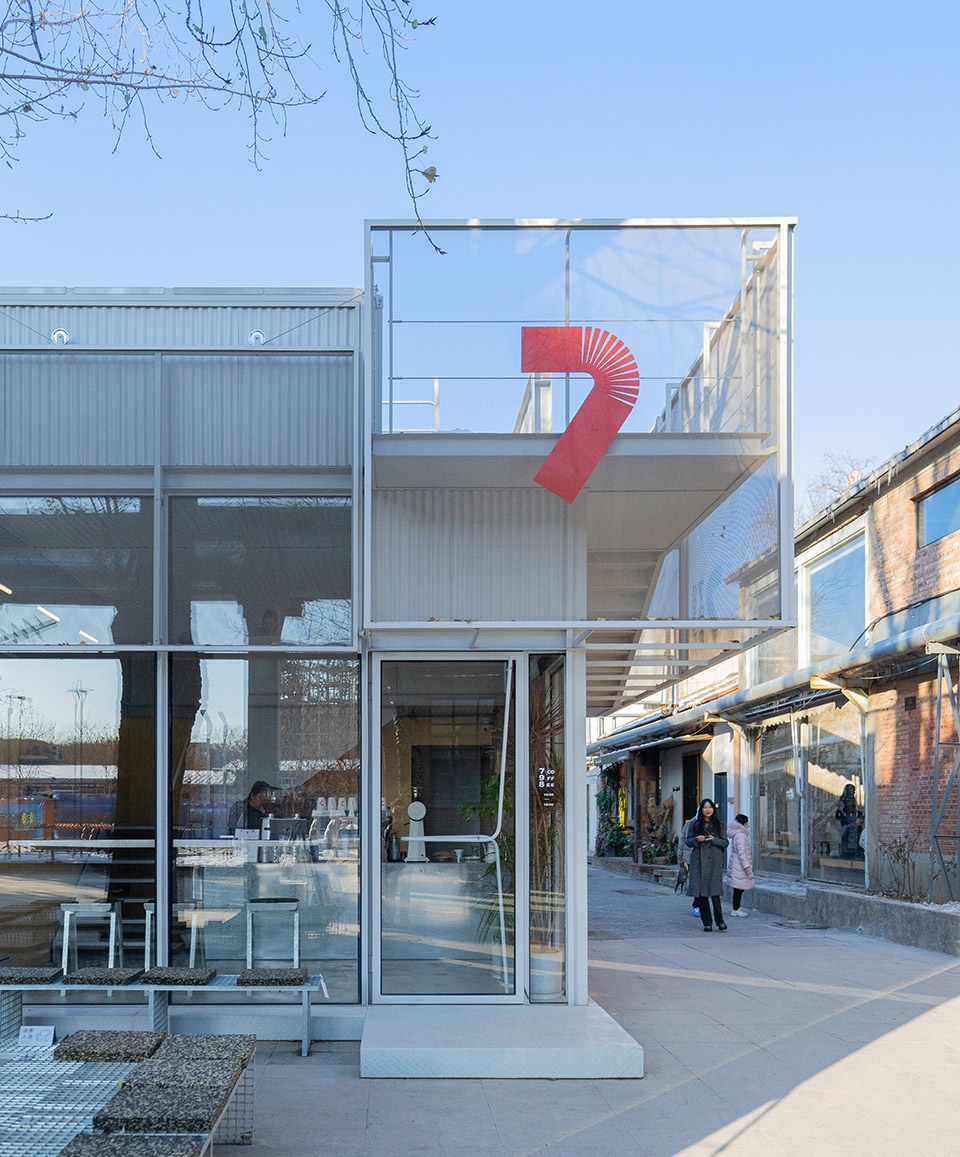
▼南外立面局部,the south facade
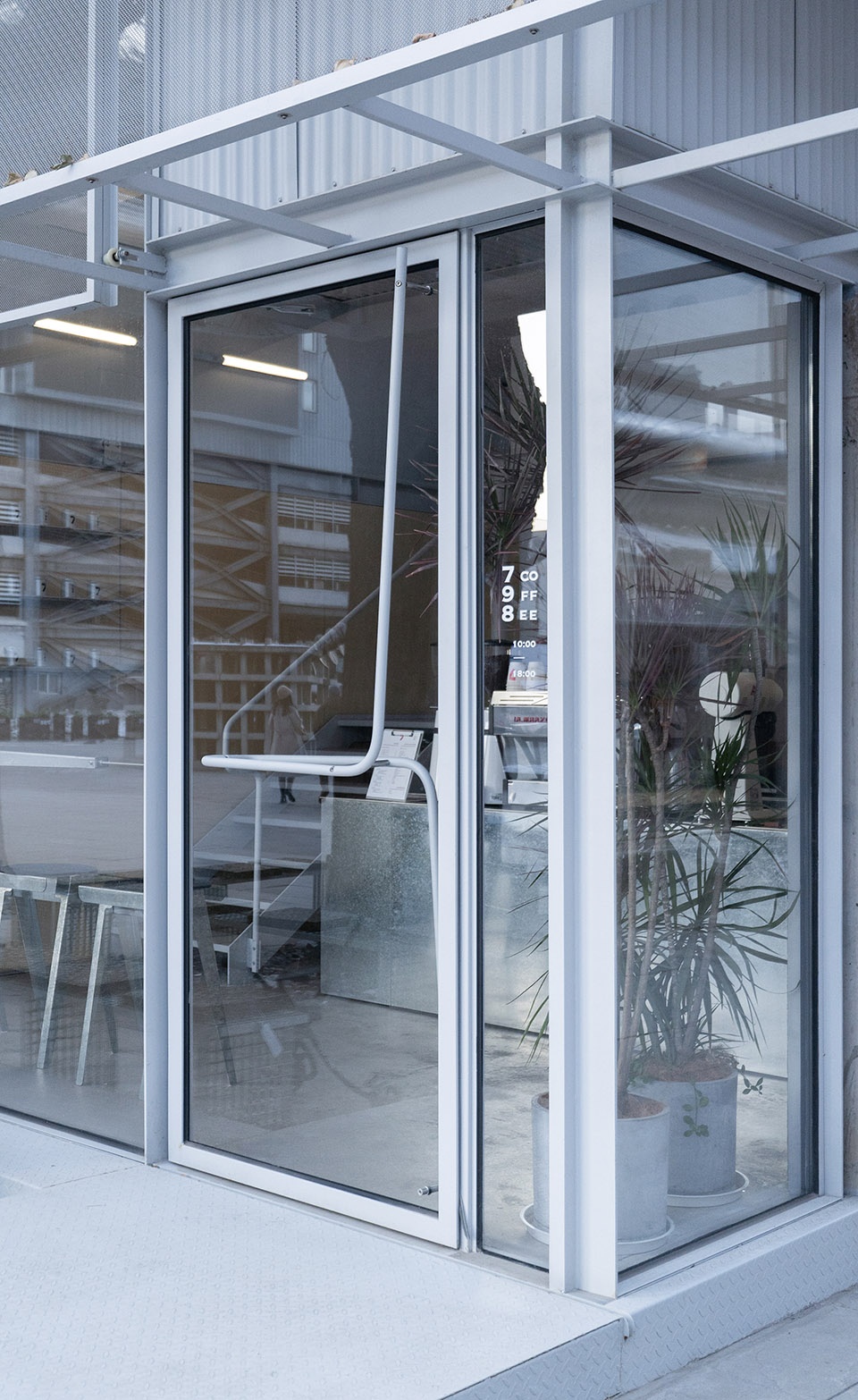
▼入口照片,the entrance
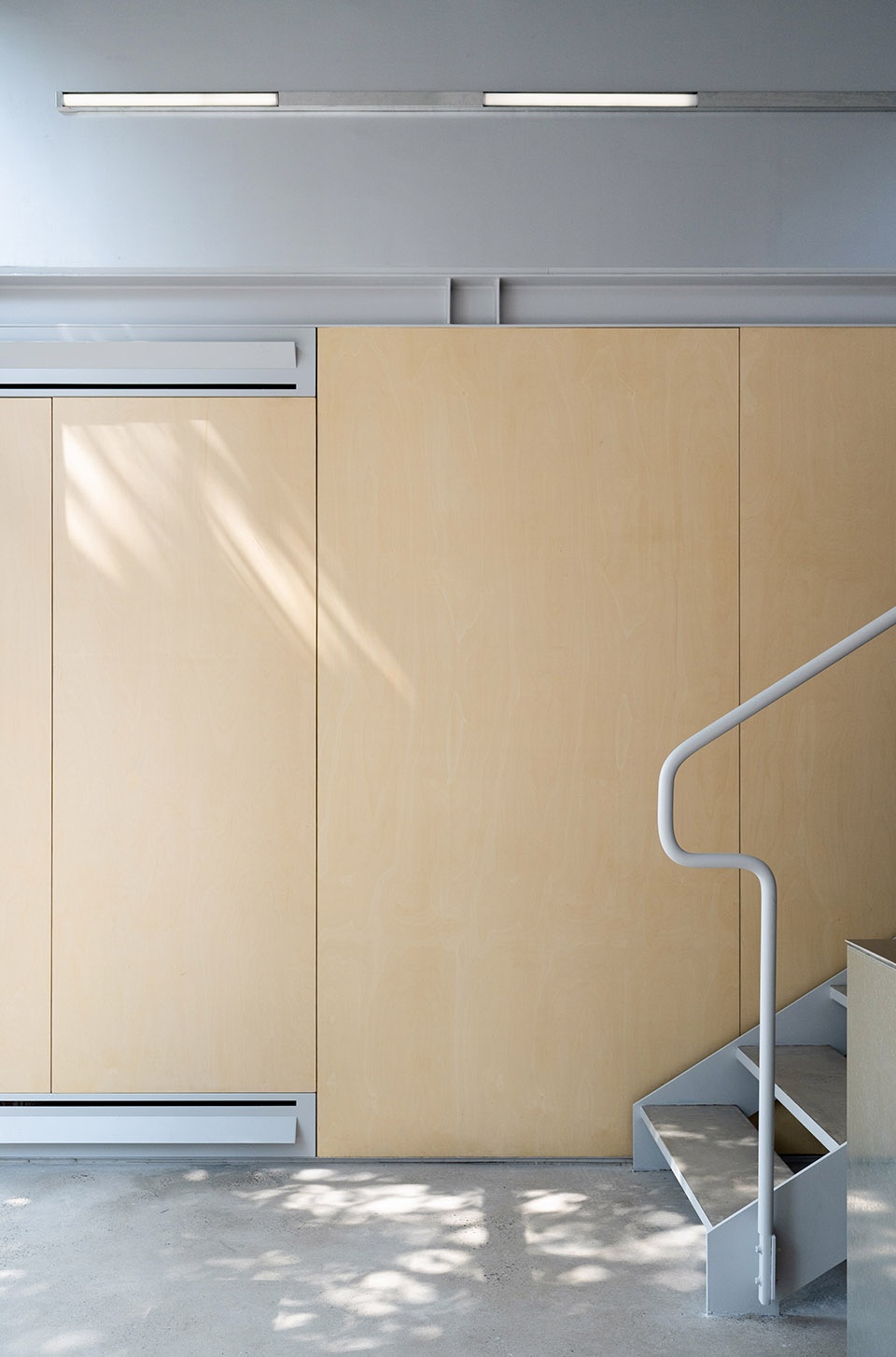
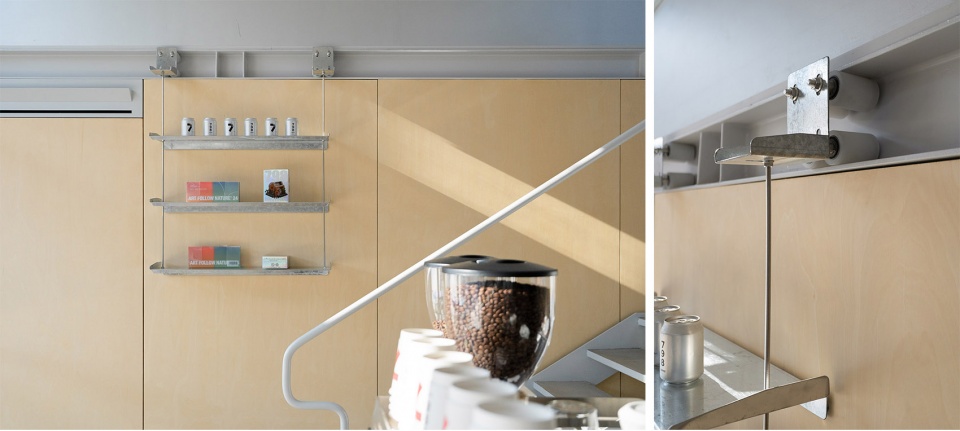
室内露出的钢结构优先选用H型钢,既满足视觉上的轻盈感,也便于日后在该结构上固定各类道具。考虑到层高有限、空间紧凑,设计利用杂物间作为回风静压箱,将原本吊顶侧出下回的风机盘管改为立面出回风方式。
For exposed interior steelwork, H-shaped steel was the preferred choice, offering both visual lightness and the practical convenience of attaching fixtures to the structure over time. Given the limited ceiling height and compact space, the design repurposed a utility room as a return air plenum, converting the original ceiling-mounted side-supply, bottom-return fan coil unit to a vertical supply-and-return configuration.
▼立面空调出回风系统,Wall-integrated air supply and return system
▼室内活动家具与展示道具设计,
the furniture and display device design
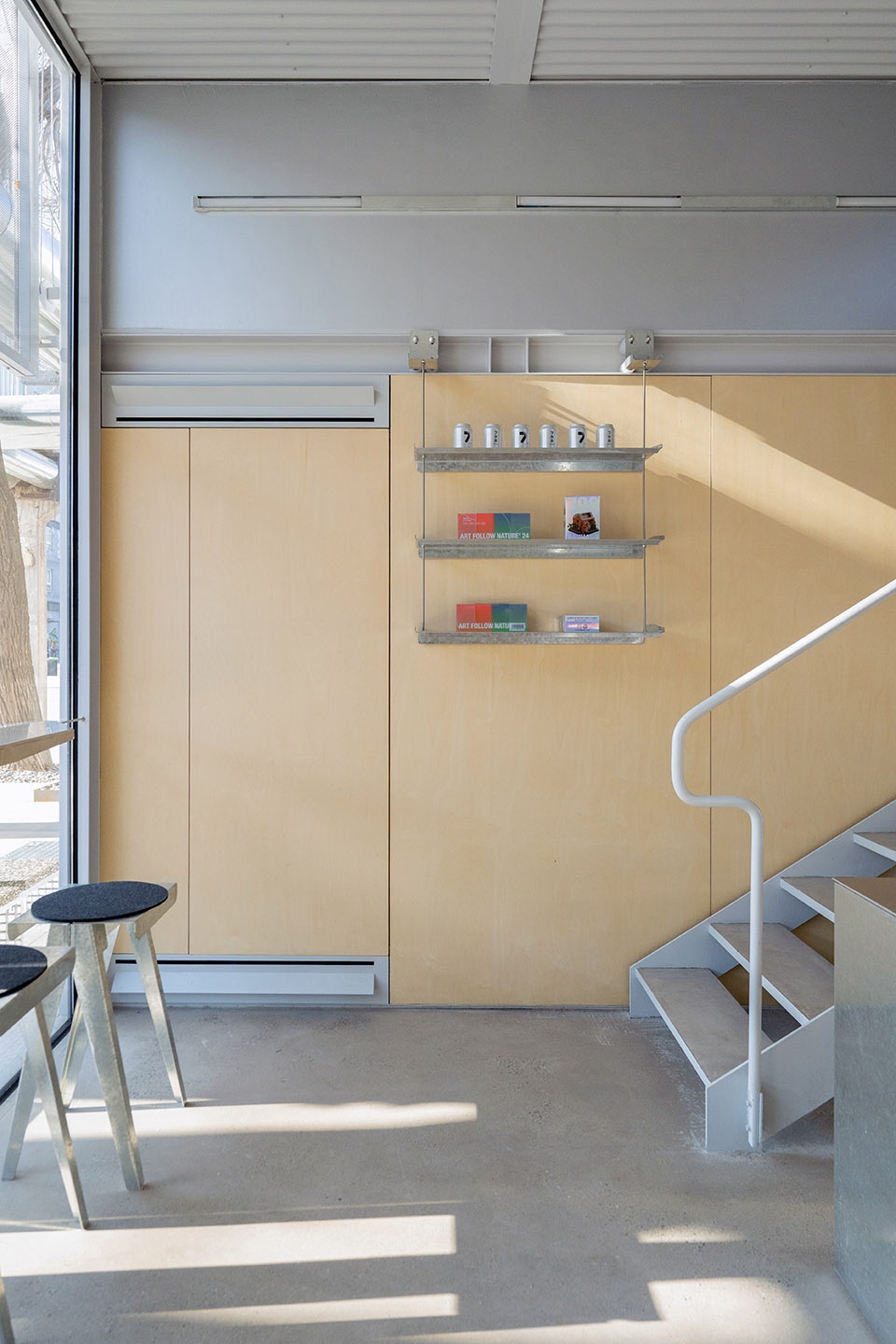
▼利用型钢截面悬挂道具和局部节点,Steel profiles used as hanging points for devices
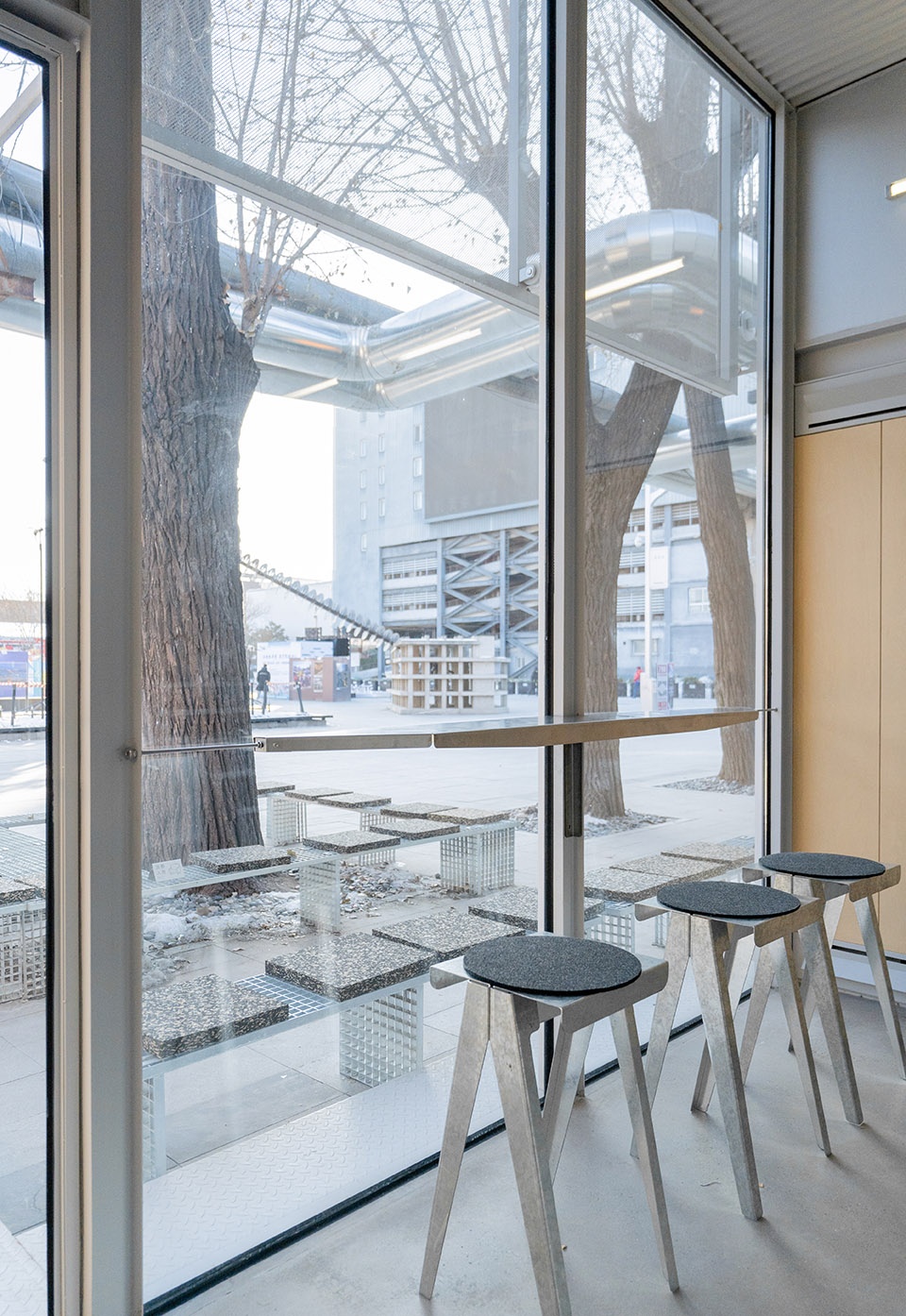
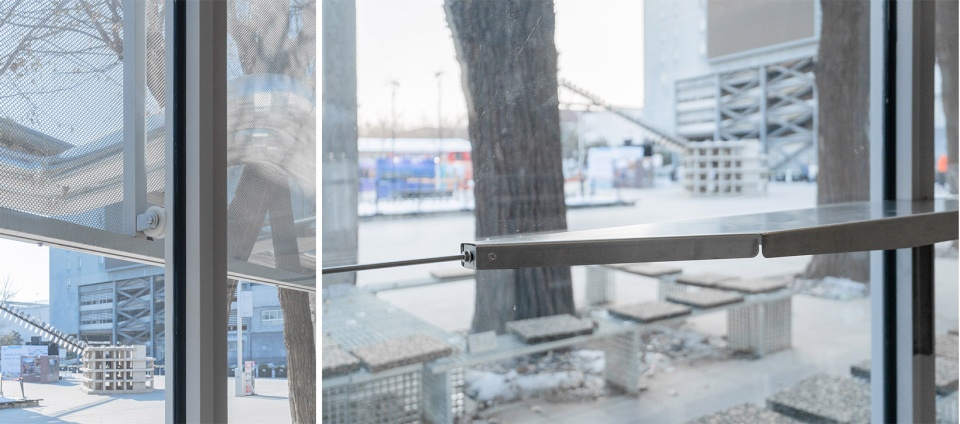
▼不锈钢桌面固定在幕墙立柱上,
the stainless steel tabletop fixed to curtain wall columns
▼独立设计的幕墙立柱,内侧用于悬挂桌面,外侧则兼作滑动轨道,Custom curtain wall mullion, interior side supports tabletop, exterior side acts as sliding track
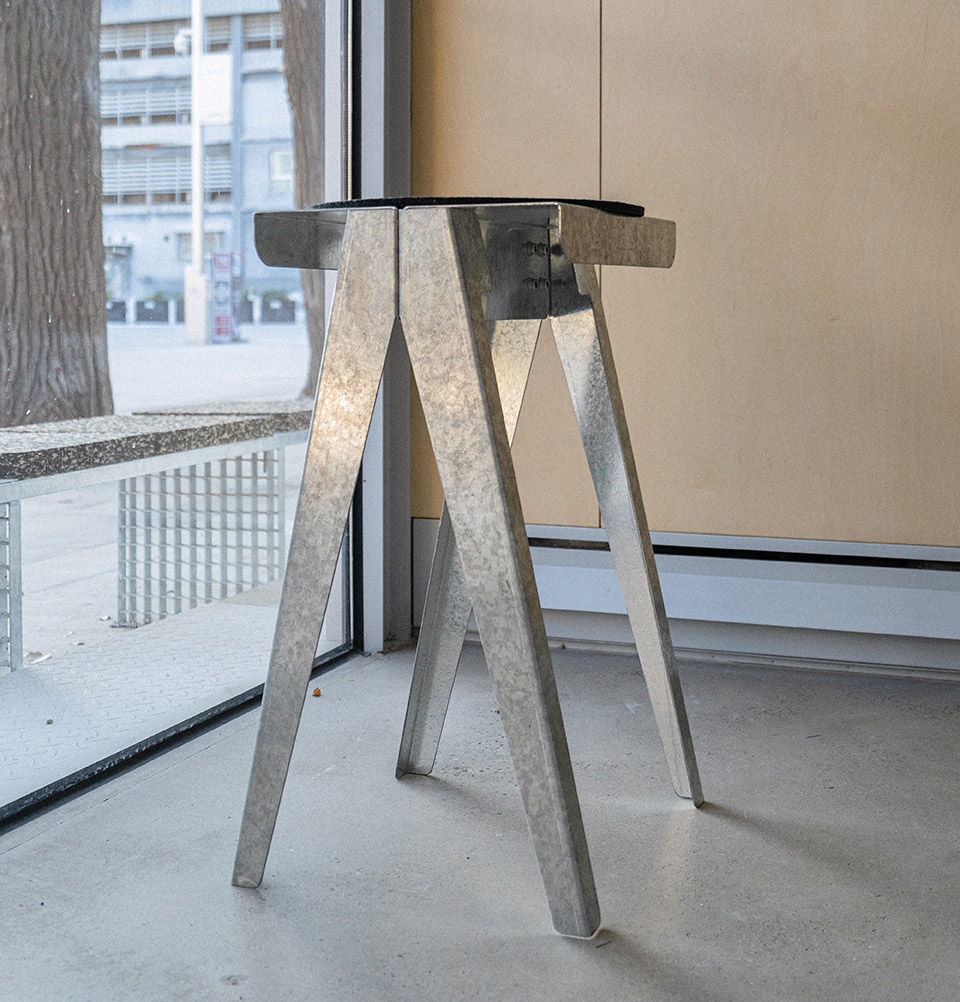
▼故意加高的窗边吧凳设计,elevated window-side bar stools
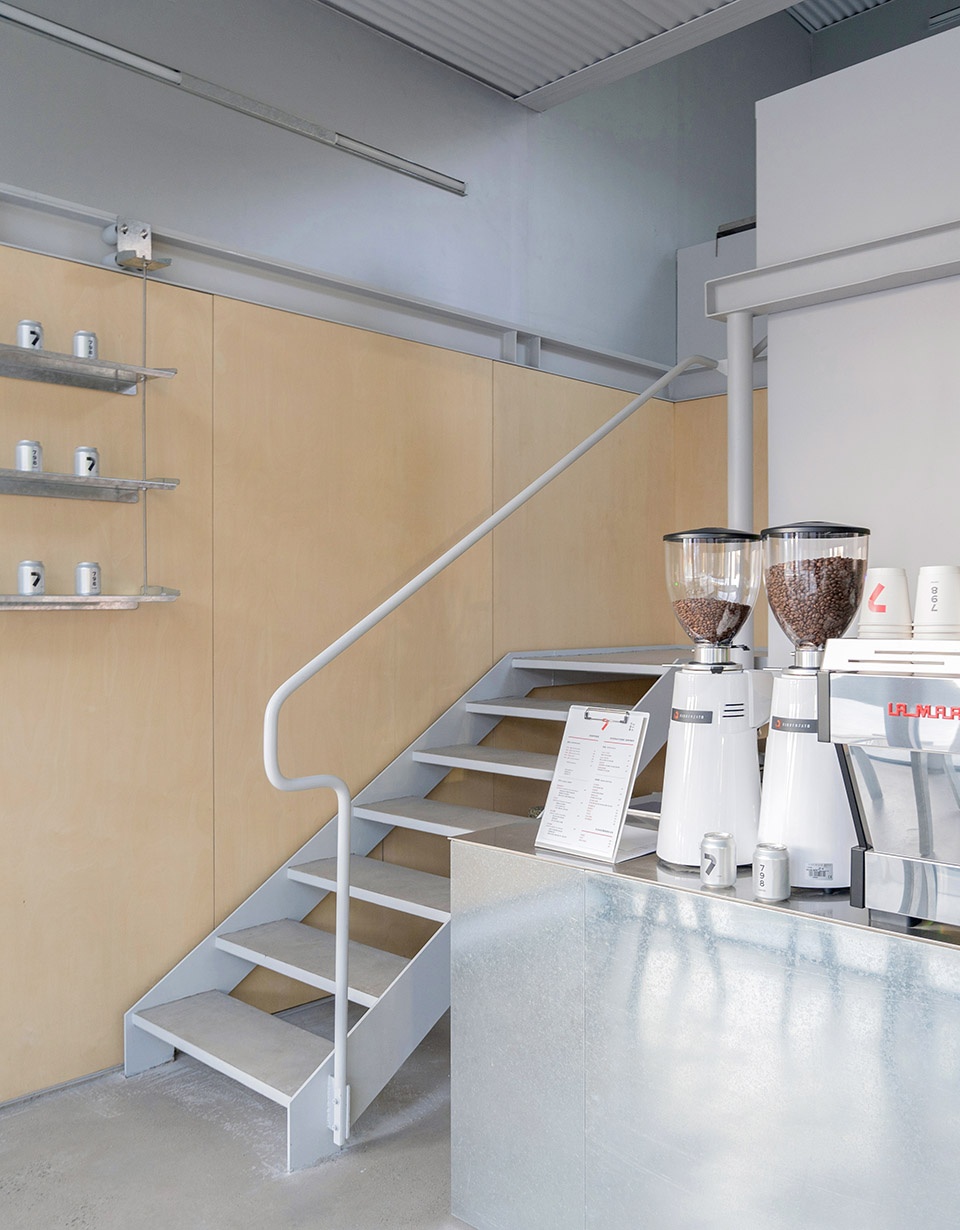
▼通向二层的室内楼梯,the interior stair to upper level
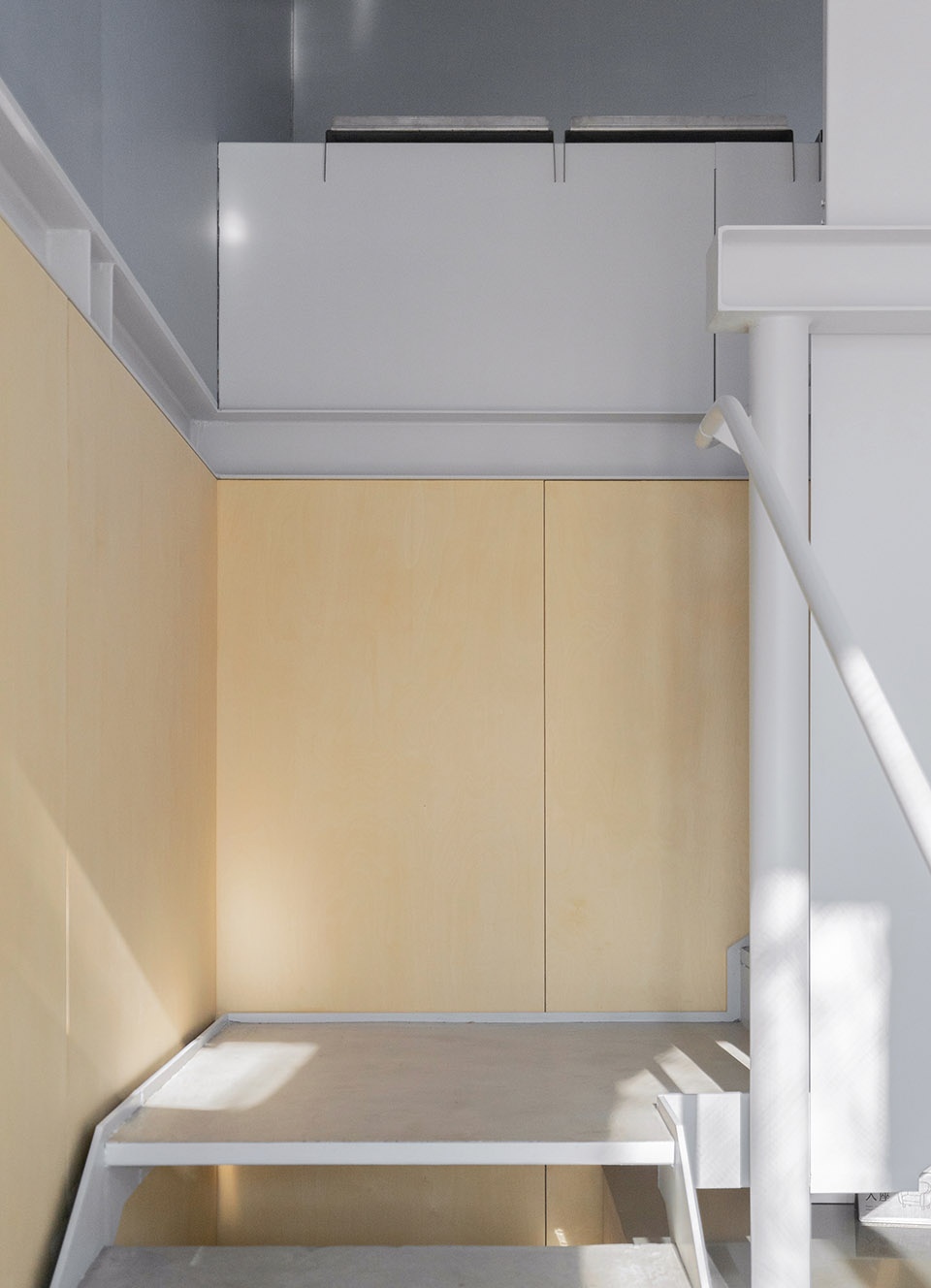
▼楼梯休息平台,the platform
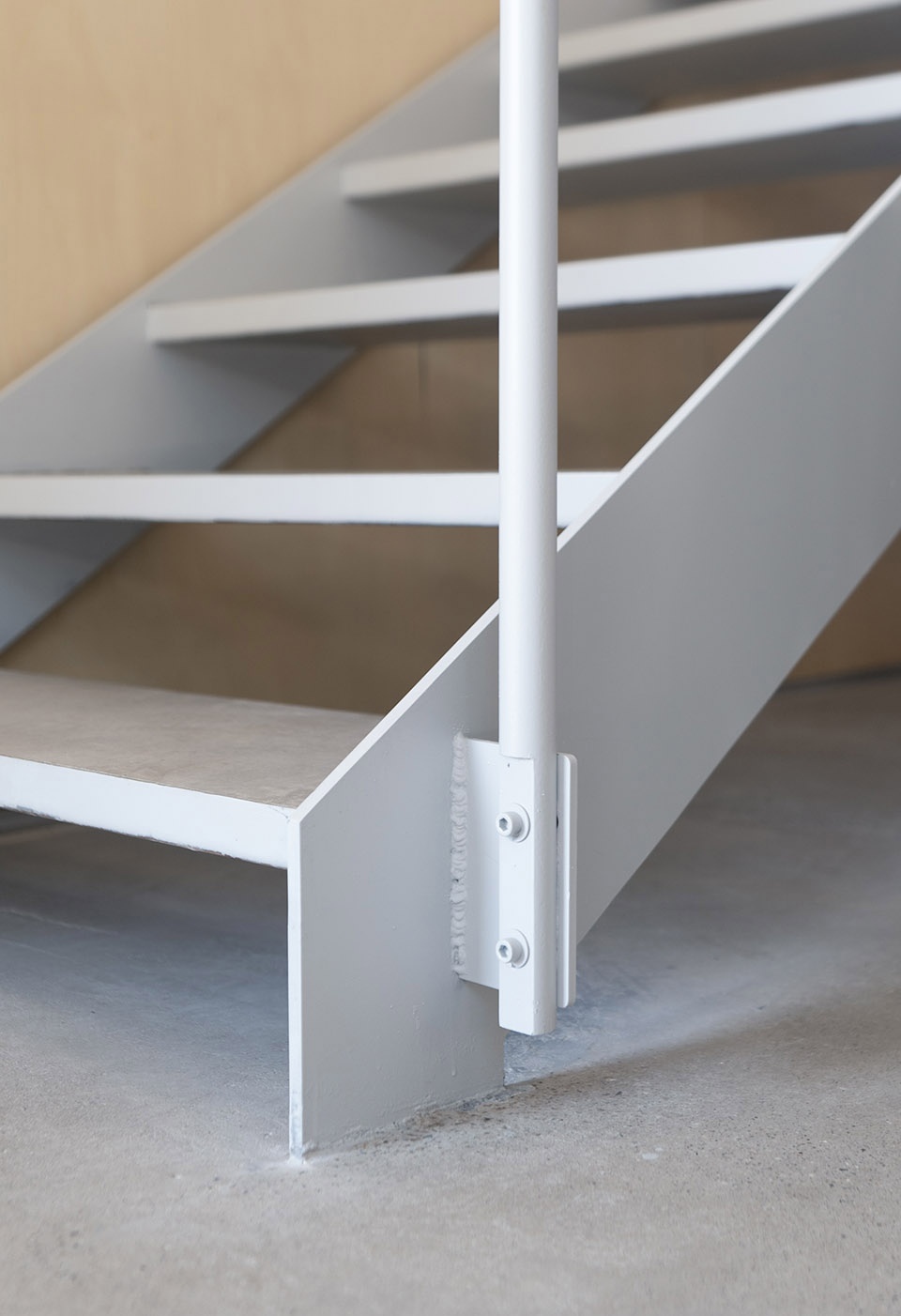
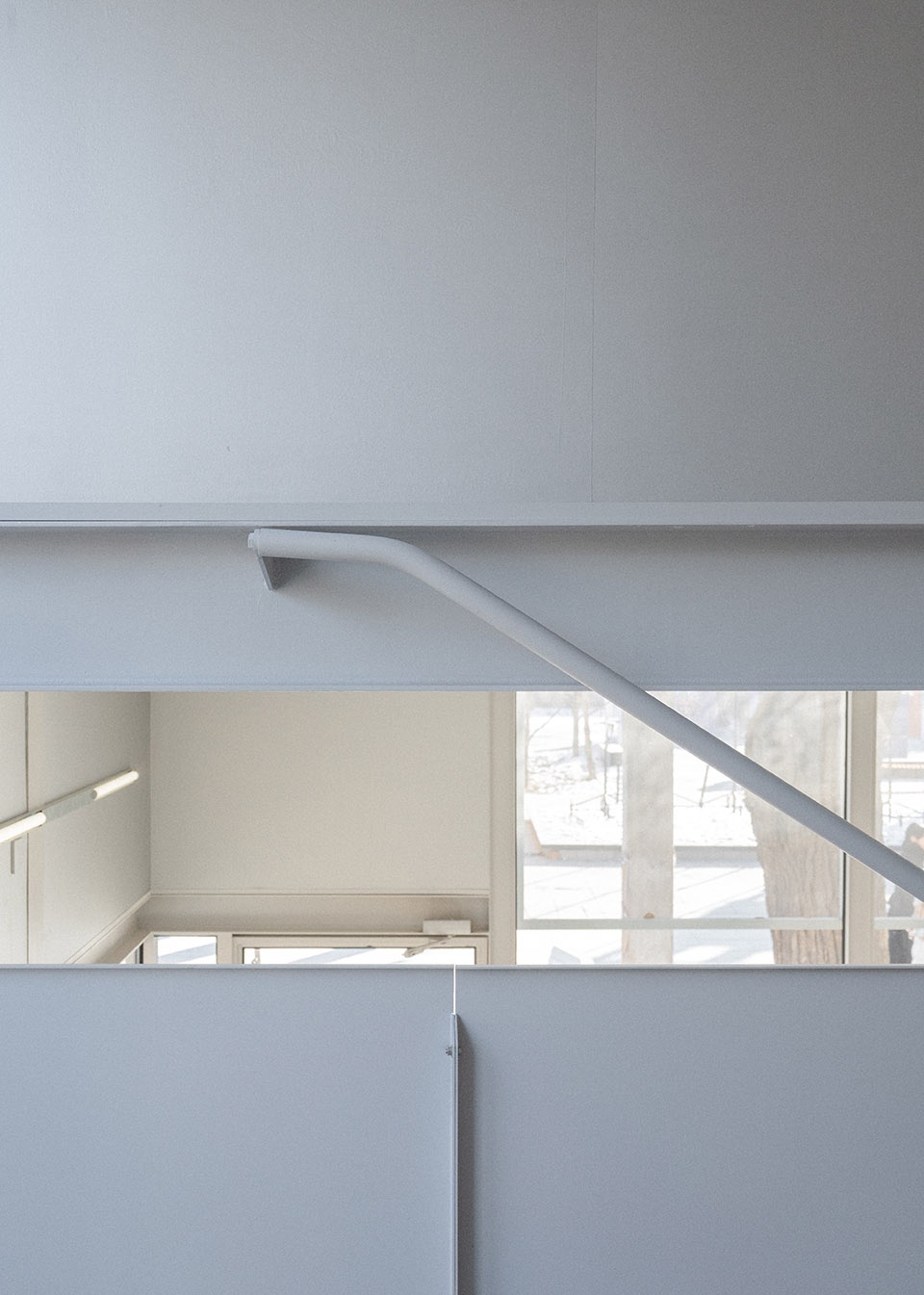
▼扶手固定细节,details of the handrail
▼从二层看楼梯休息平台,View from 1F to stair landing
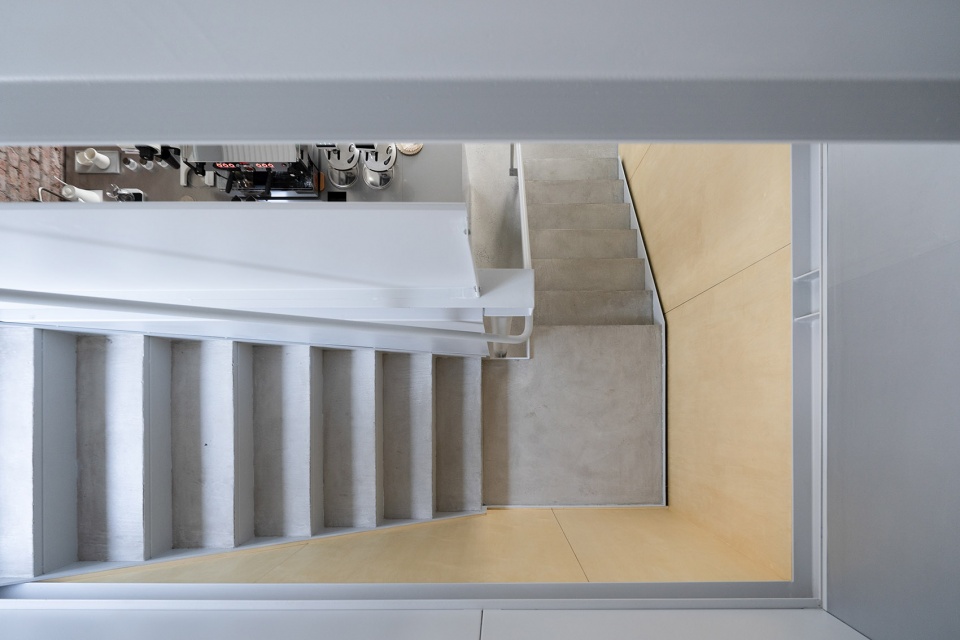
二层以上的室内墙面采用了低成本的黑色底镀银遮光布,既呈现出银色的漫反射质感,触感也比涂料墙面更为温润。随着时间推移,日常使用留下的痕迹也将在这层表面上逐渐显现,成为空间记忆的一部分。
On the upper floors, interior walls were clad in a low-cost black-backed silver-coated blackout fabric, which delivers a silver diffused-reflective finish and a warmer, softer touch than painted surfaces. Over time, the marks of daily use will gradually emerge on this surface, becoming part of the space’s memory.
▼室内错层关系与桌面设计,the staggered floor and table design
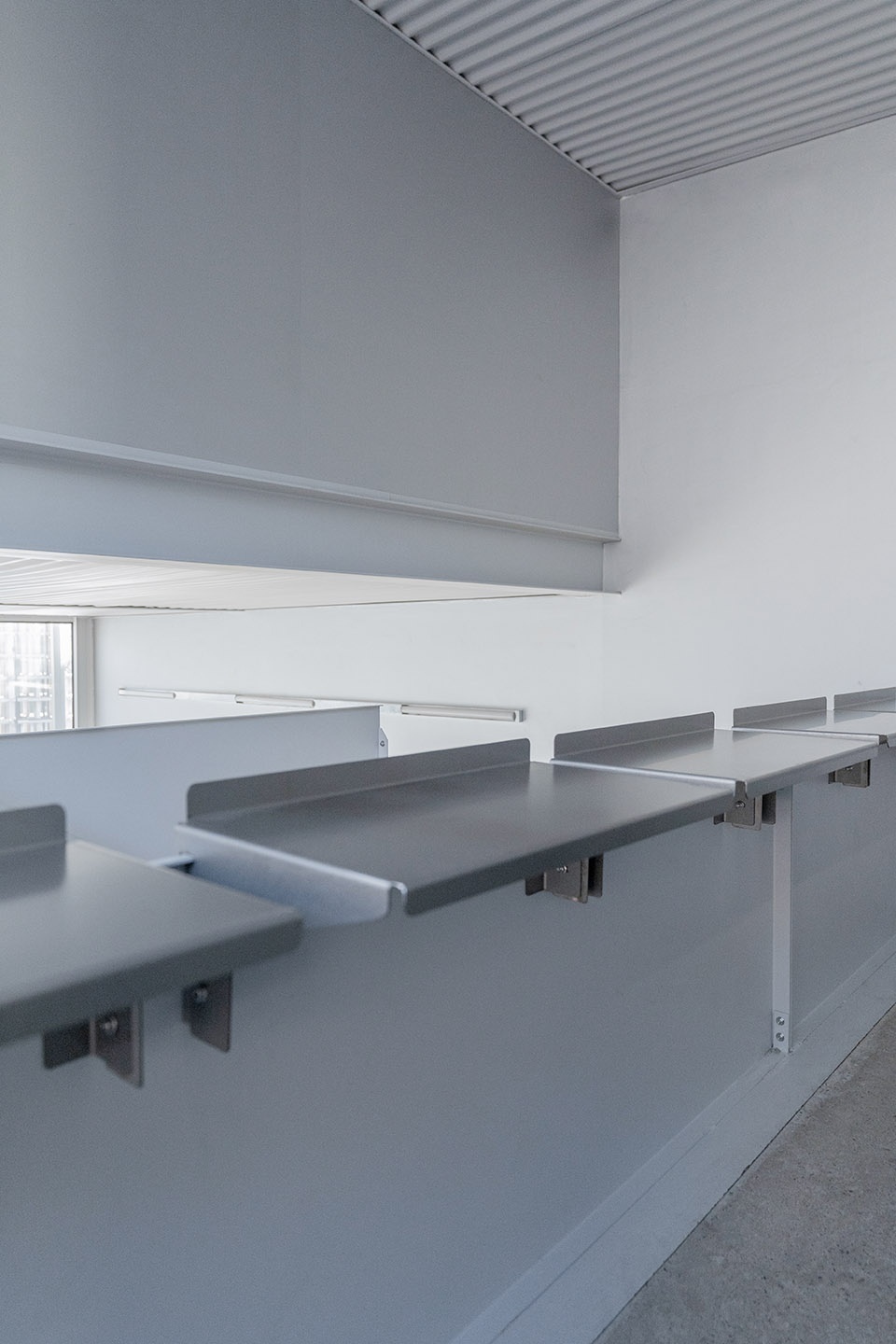
▼二层视角看向镀银布墙面,the view from the first floor to the silver-coated fabric wall
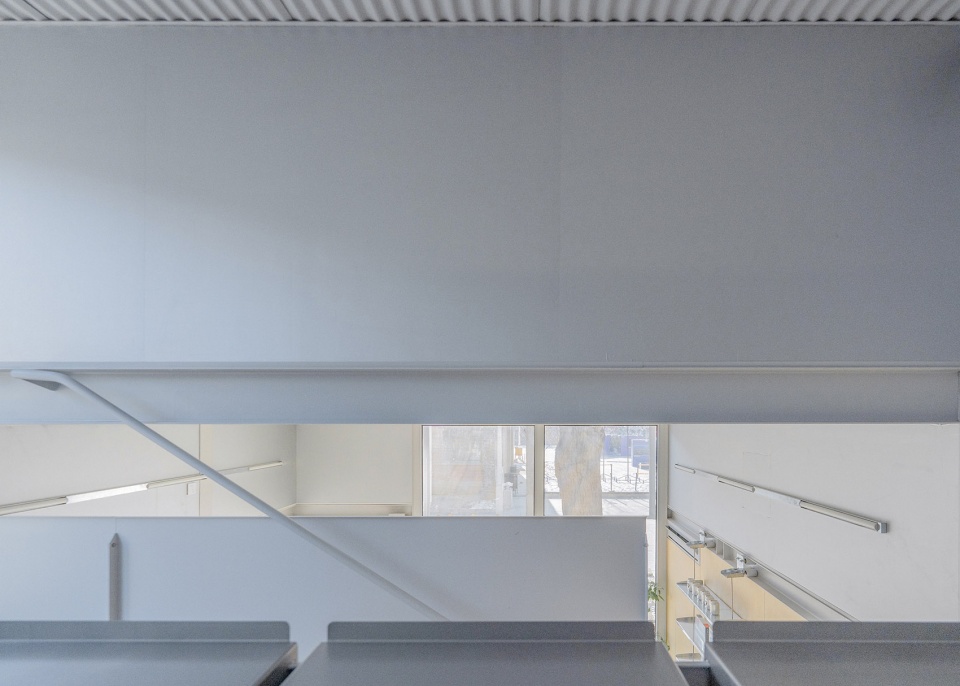
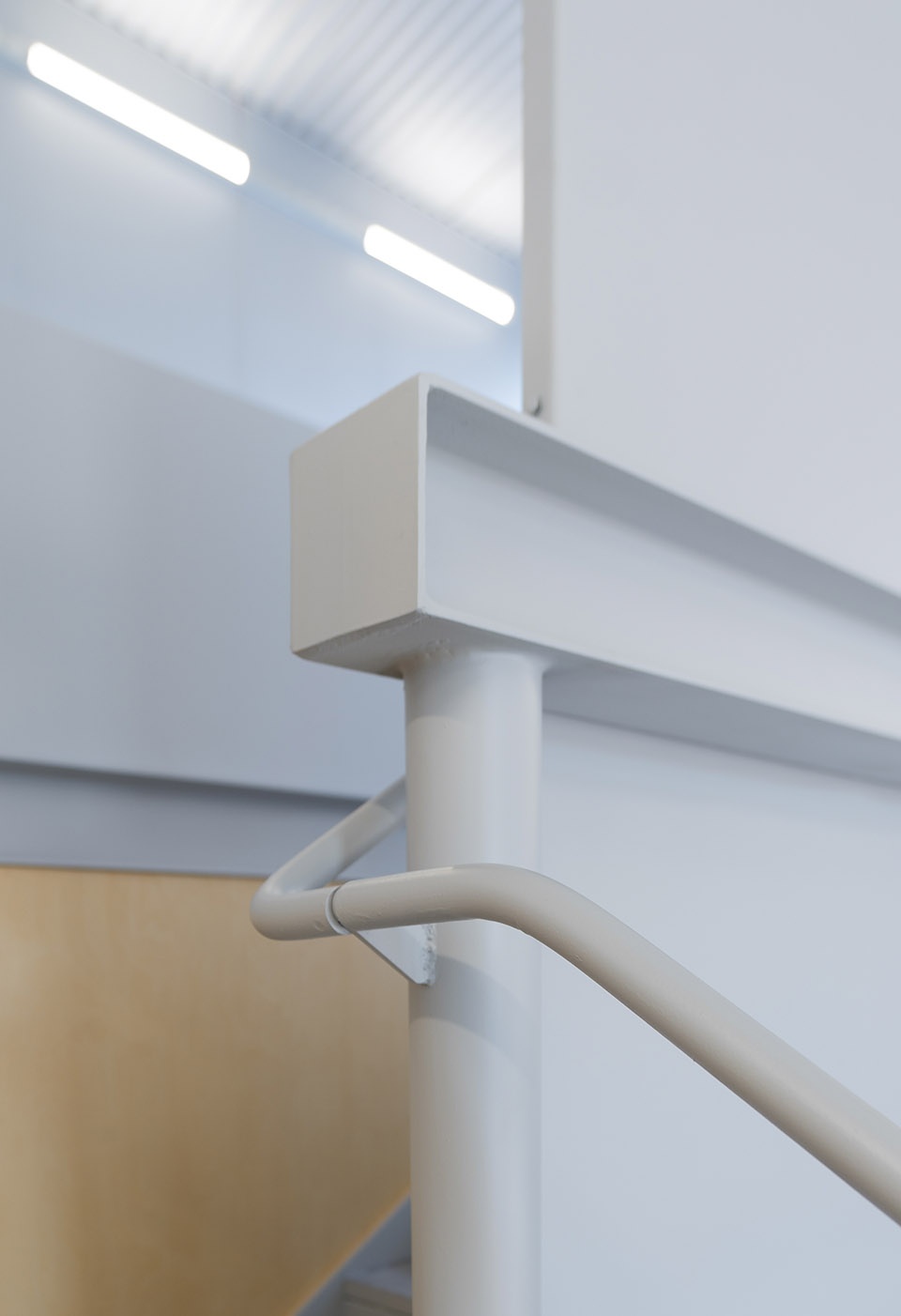
▼栏杆收尾节点,Railing Termination Detail
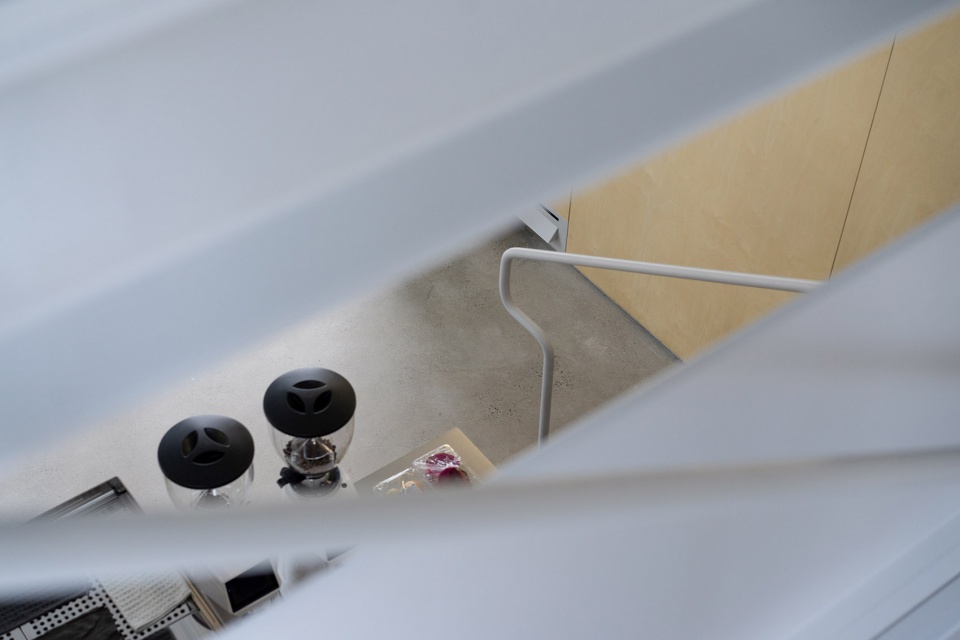
▼从二层看向一层,the view from the first floor looking down to the ground floor
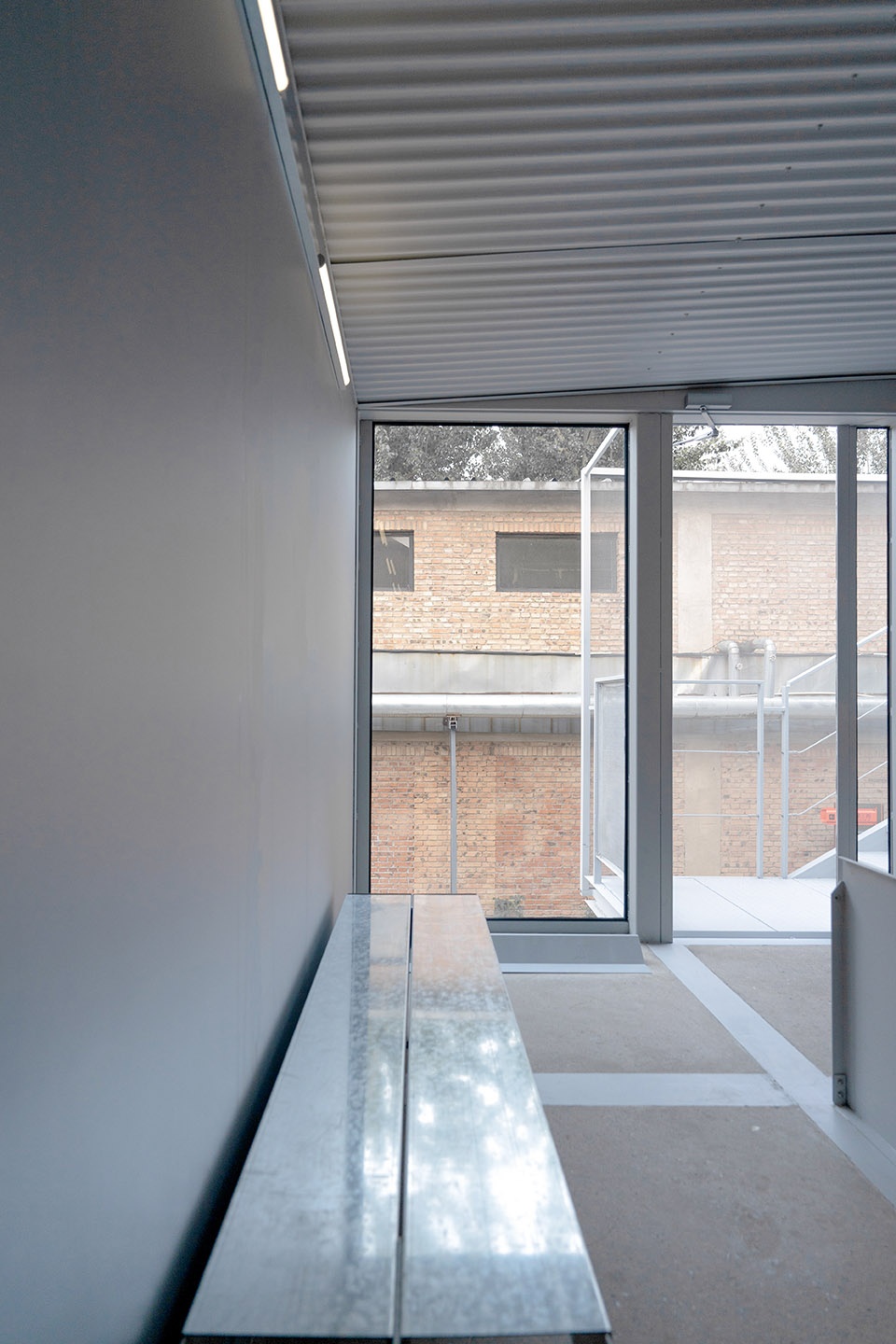
▼从二层看向室外,the view from the first floor to the outside
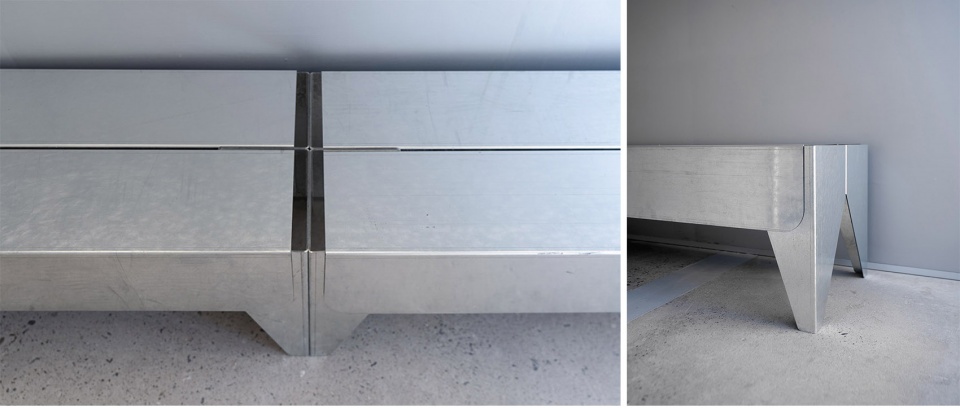
▼二层条凳设计,the bench design
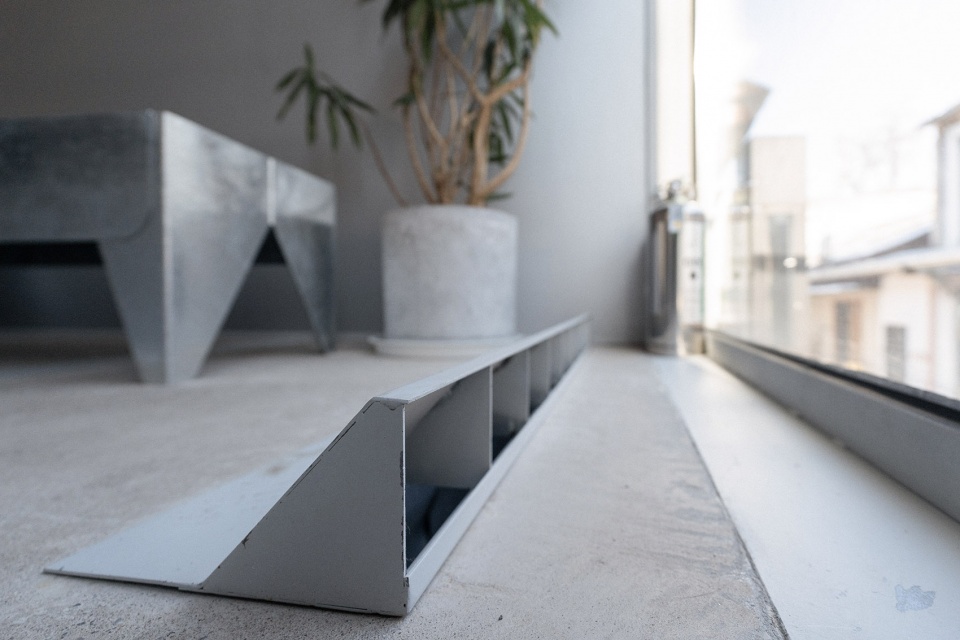
因二层净高有限,将空调设备置于楼板下方操作间的吊顶内,并通过楼板开洞,将传统的吊顶侧出侧回风机盘管改造为从二层地面送风的形式。
Due to the limited ceiling height on the second floor, the air conditioning equipment was placed in the suspended ceiling of the operation room beneath the floor slab. By cutting openings through the floor slab, the conventional ceiling-mounted fan coil unit with side supply and side return was converted into a floor-level air supply system on the second floor.
▼二层地面出风口设计,the first floor air supply outlet — detail
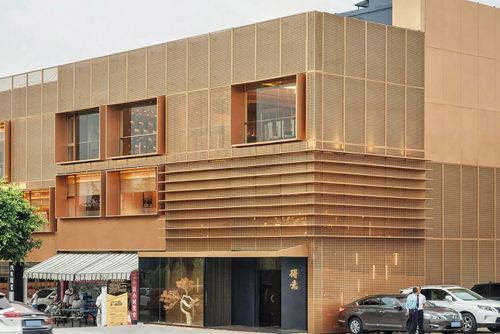
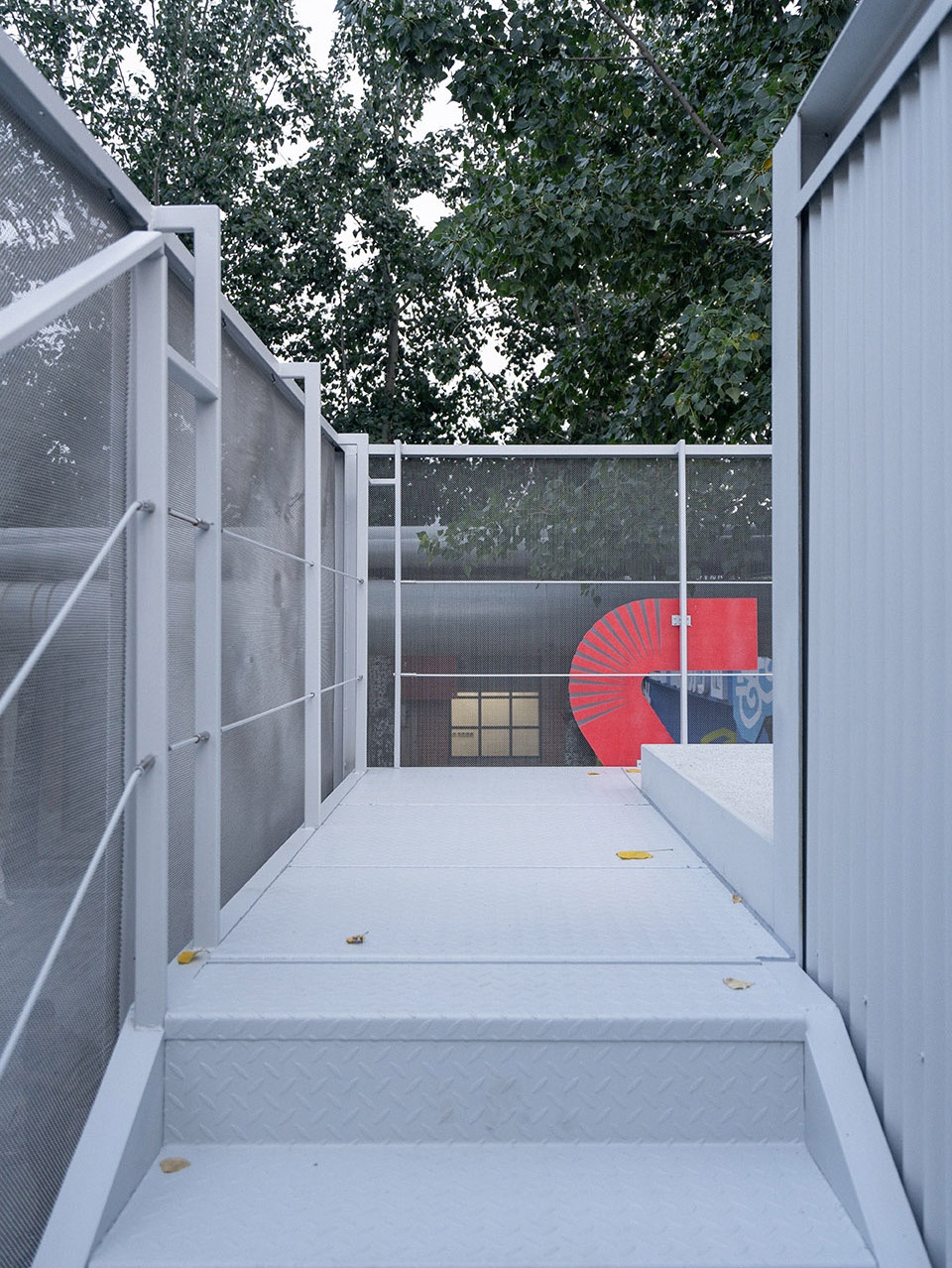
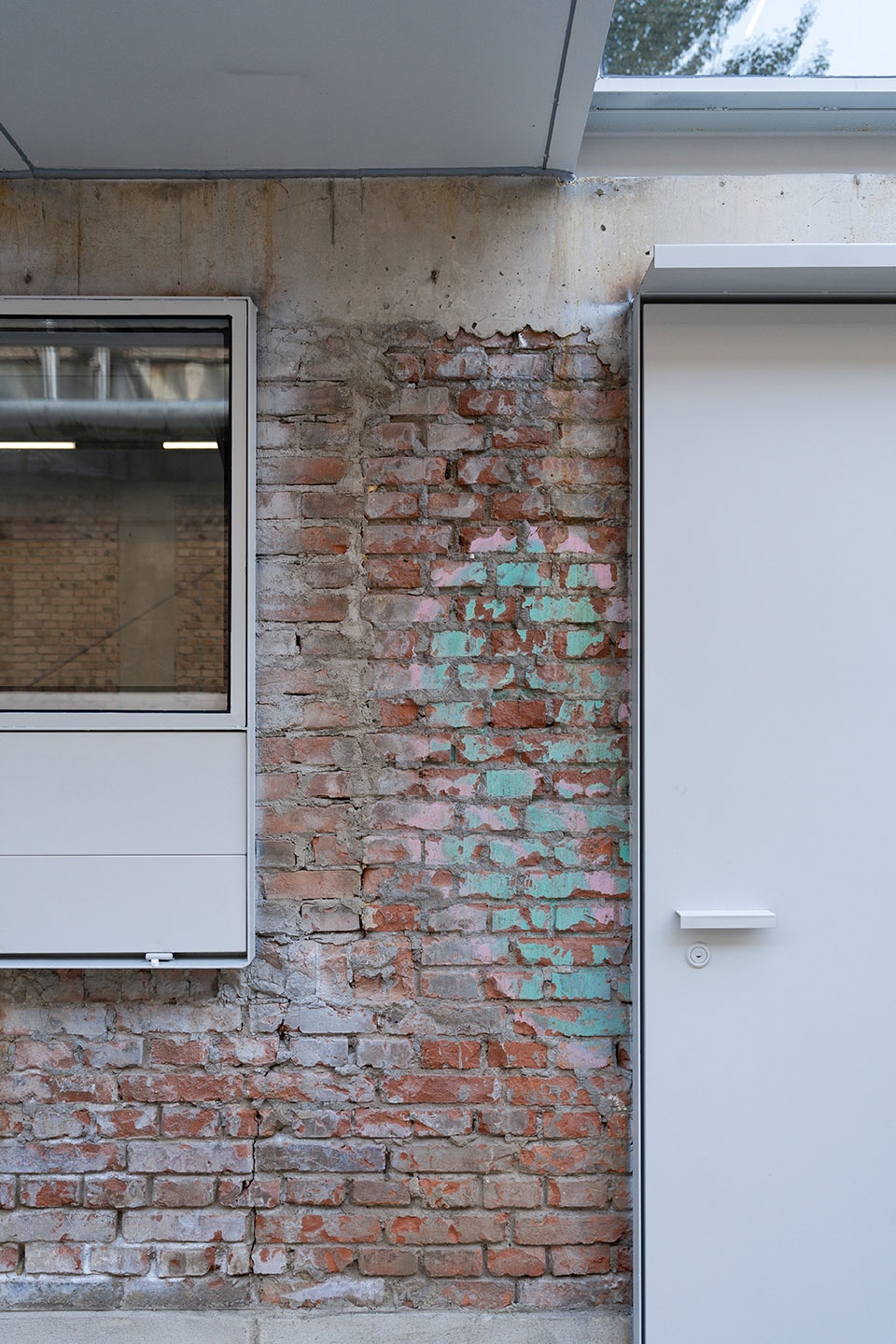
二层通往露台的楼梯采用悬挑方式外置于建筑主体之外,既缓解了内部空间的局促,也在外部形成转角处的视觉焦点。同时,二层以上的外立面以不锈钢金属网包裹,通过双层表皮的设计手法削弱结构的视觉重量与压迫感,并借助金属网的透明性与模糊性特征,增强建筑立面的可读性与趣味性。除新建钢结构主体外,将原始场地仅存的一面老砖墙与新浇筑的混凝土结构相连,使其承担竖向荷载,从而赋予砖墙超越装饰层面的结构意义,并在新钢构与旧砖墙之间建立起材料与时间上的对话关系。
The staircase leading from the second floor to the roof deck is cantilevered from the main building volume, relieving the cramped interior while creating a visual focal point at the exterior corner. Above the second floor, the exterior is wrapped in stainless steel metal mesh, a double-skin façade strategy that reduces the visual weight and imposing presence of the structure while the mesh’s transparency and ambiguity enhance the legibility and visual interest of the building elevation.In addition to the new main steel structure, the single remaining old brick wall from the original site was connected to the freshly poured concrete structure, allowing it to carry vertical loads. This gives the brick wall a structural significance beyond mere decoration and establishes a dialogue between the new steelwork and the old brick wall — a conversation in material and time.
▼楼梯外侧的金属网, metal mesh cladding on the exterior side of the stair
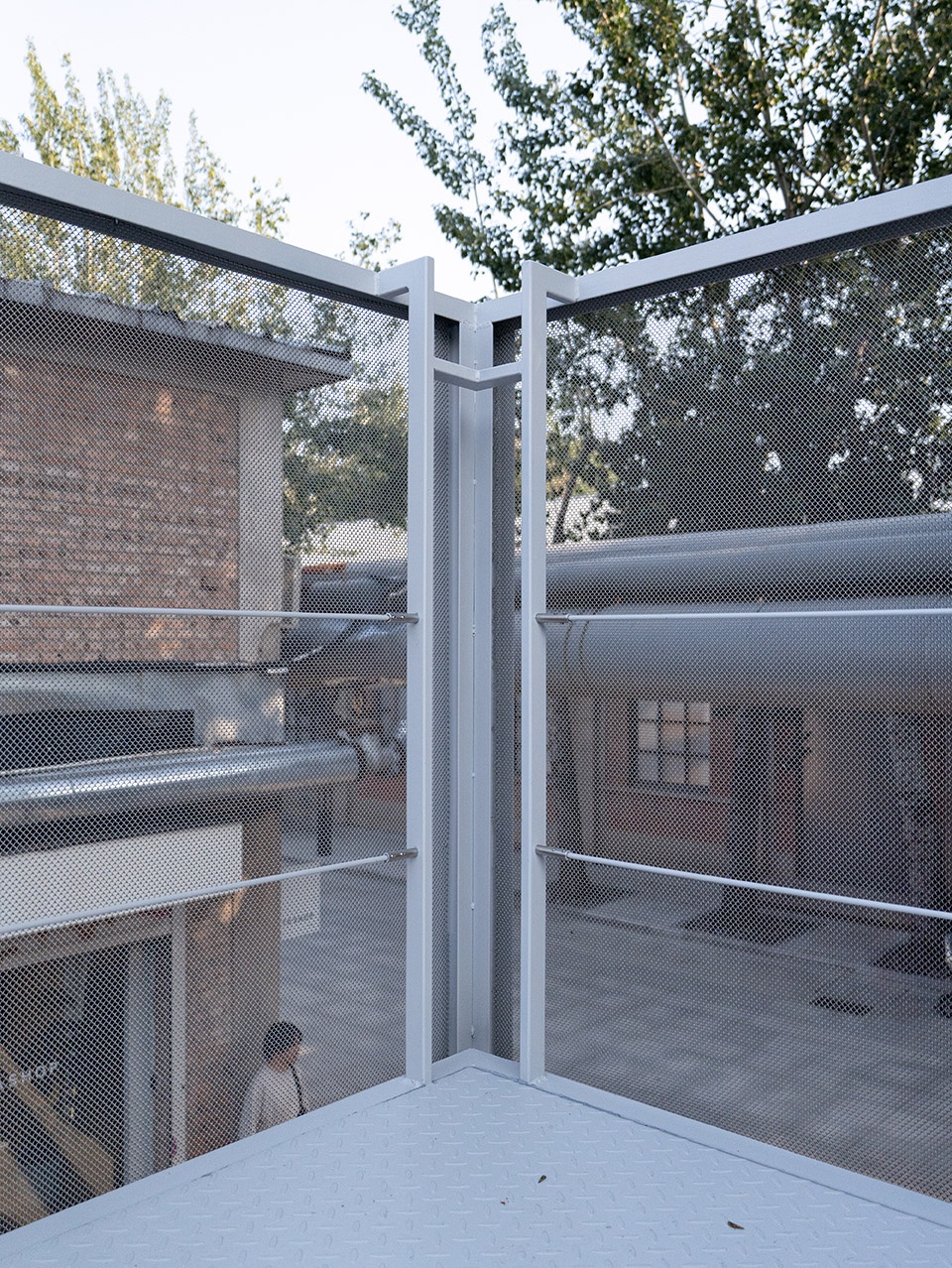
▼二层至露台楼梯和栏杆节点,the stair from 1F to the terrace,the detail of the handrail
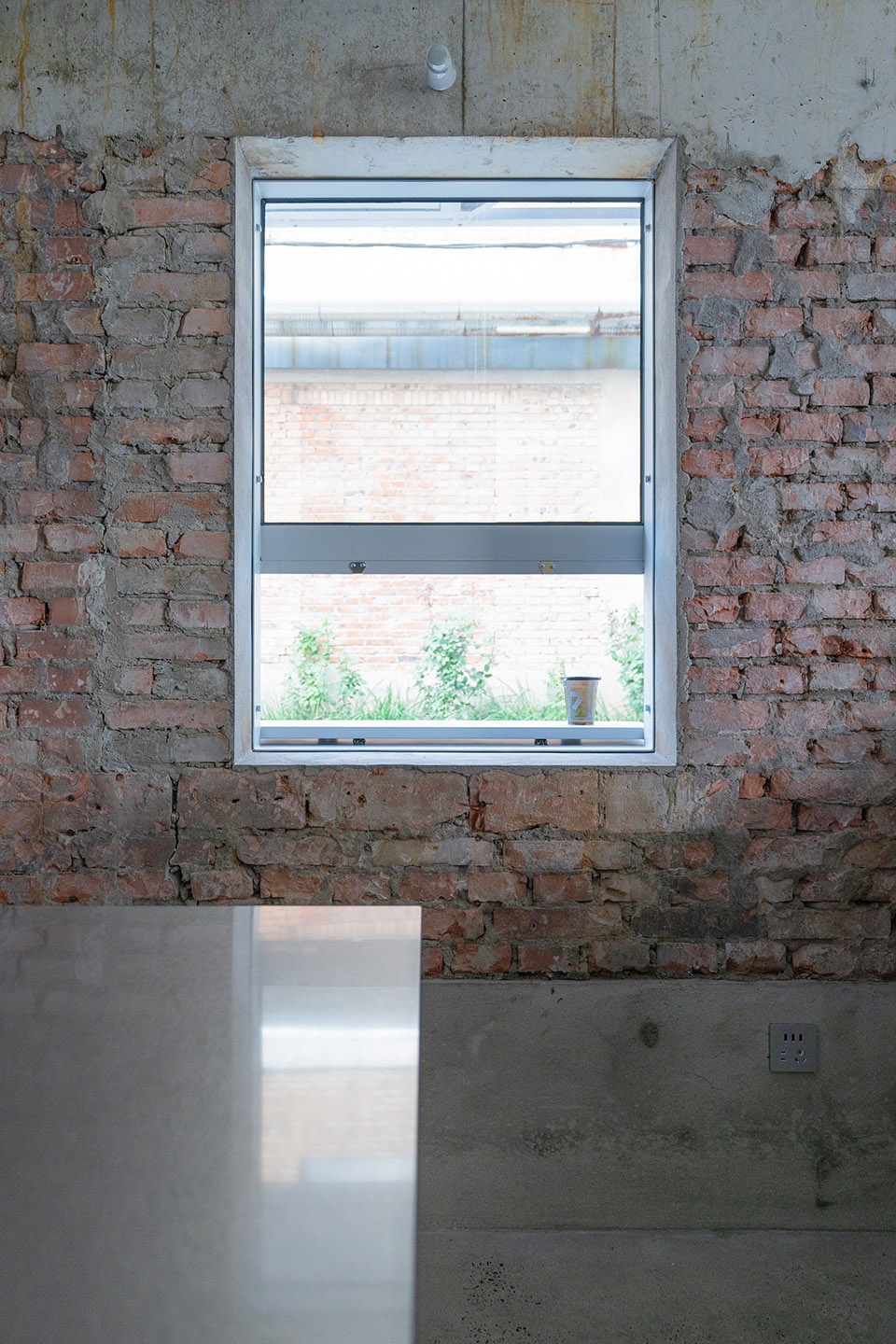
▼旧砖墙表皮抹灰铲除后,显现出了以往所有的改造痕迹,With the plaster removed, the old brick wall exposed every mark of past renovations
▼ 幕墙立柱及整体框架施工,curtain wall mullions & main frame construction
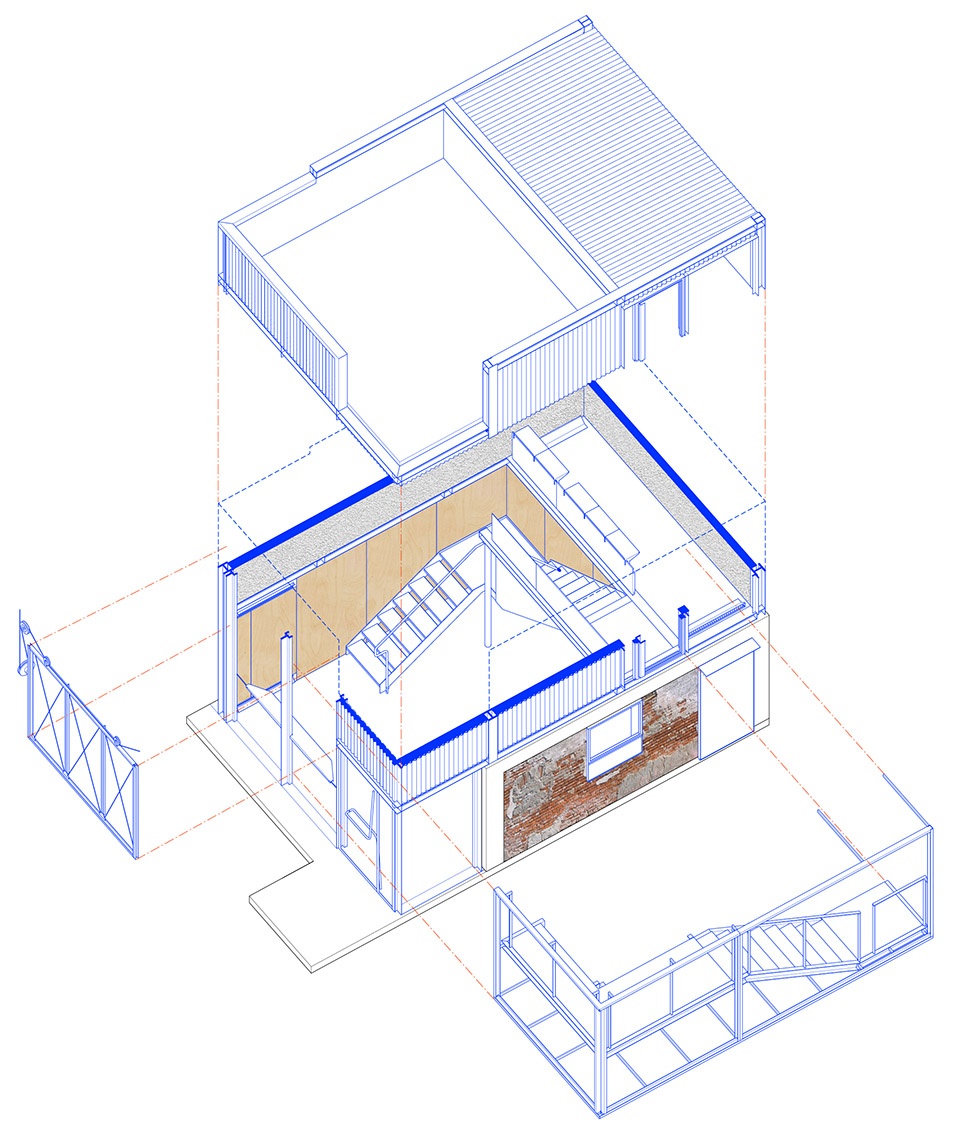
▼单体轴测分析图,the axonometric
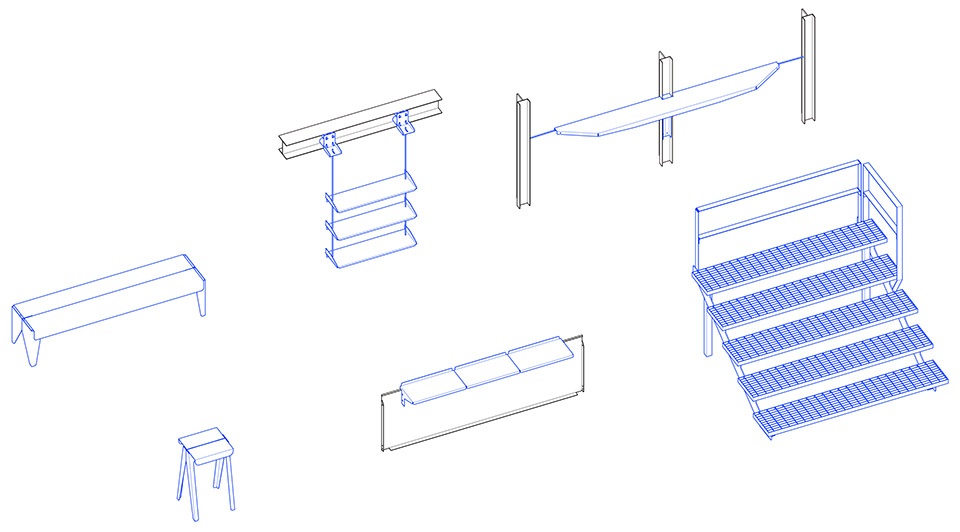
▼部分金属家具设计,selected metal furniture design
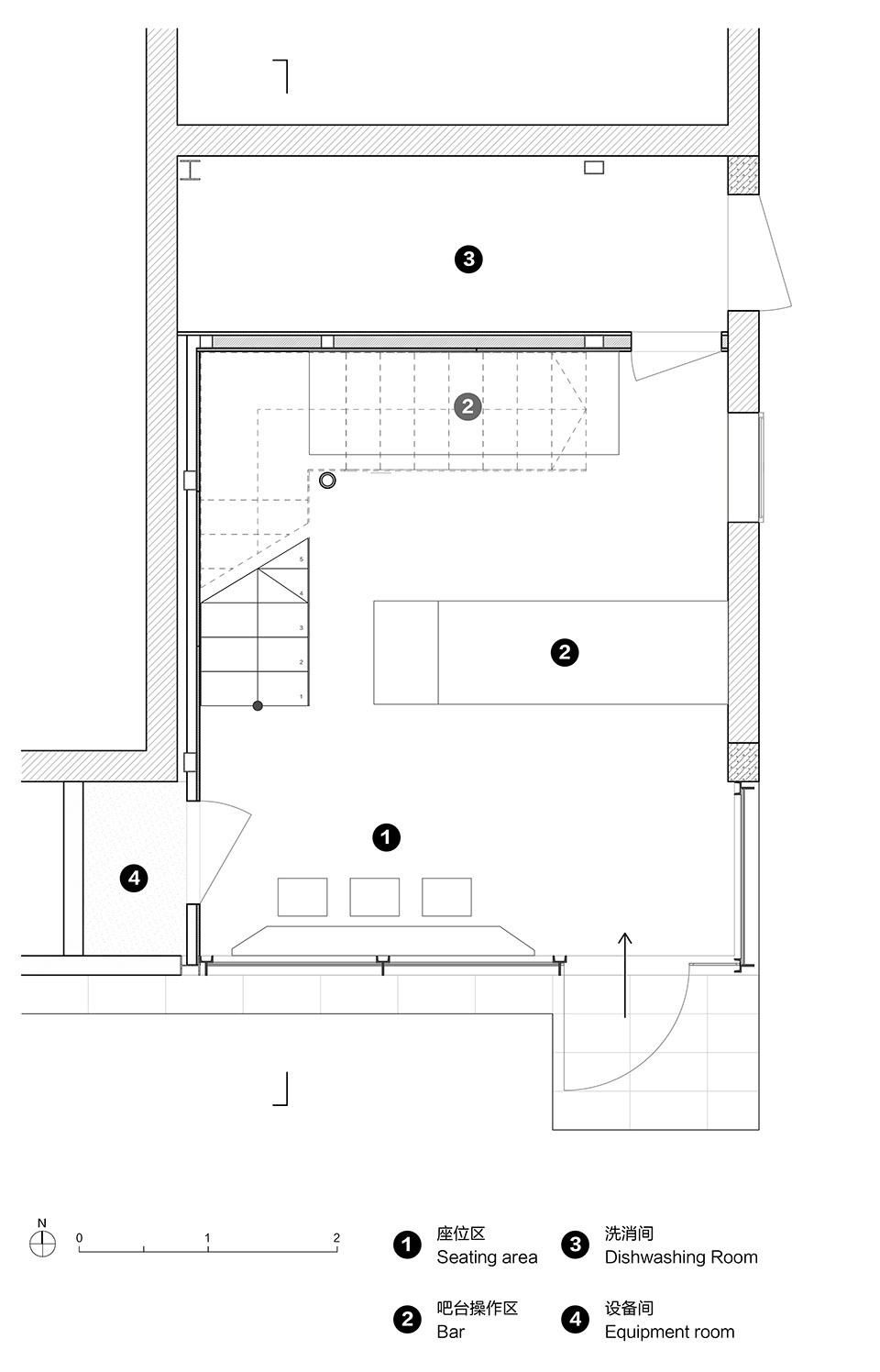
▼首层平面图,Ground floor plan
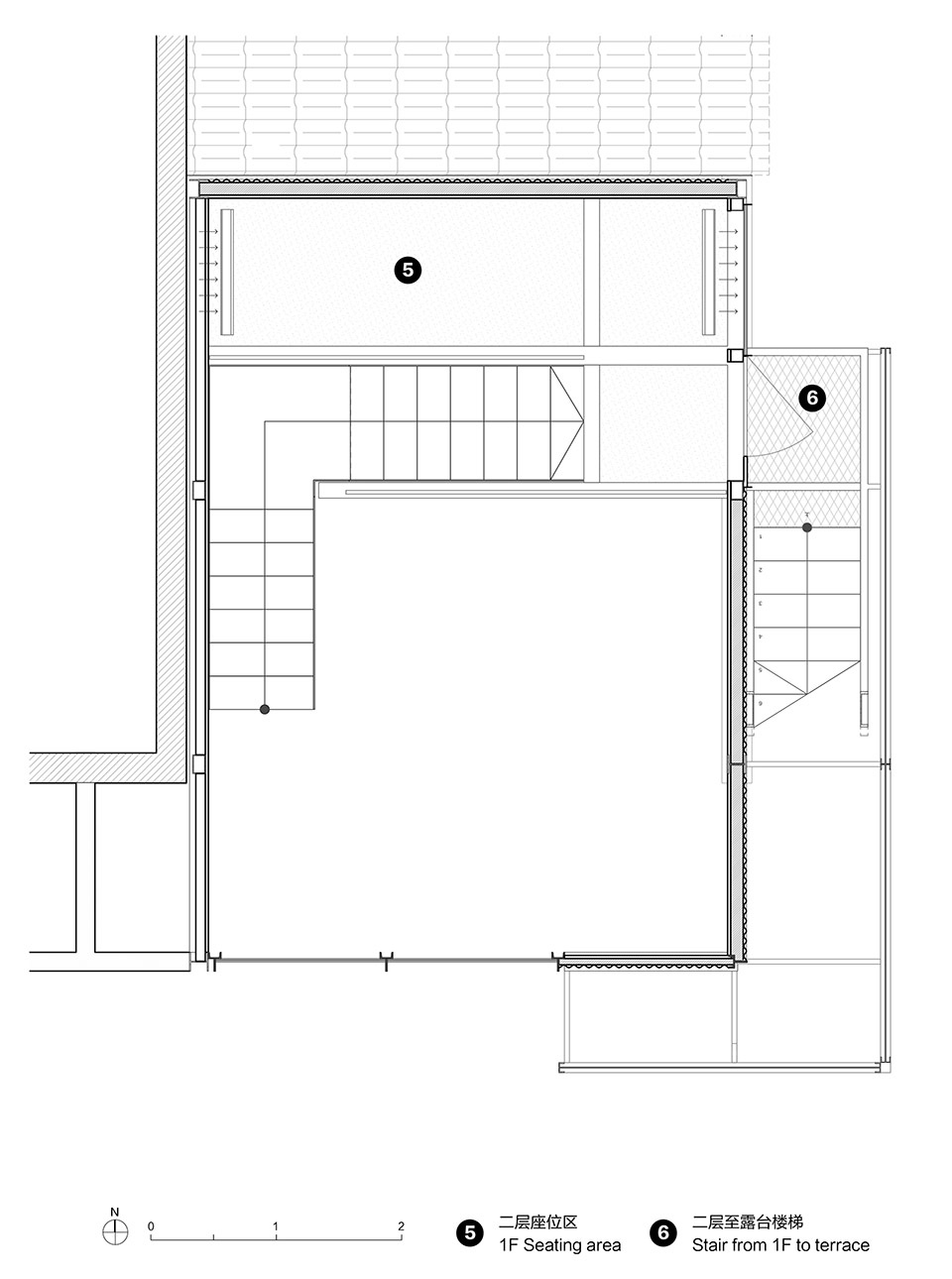
▼二层平面图,1F plan
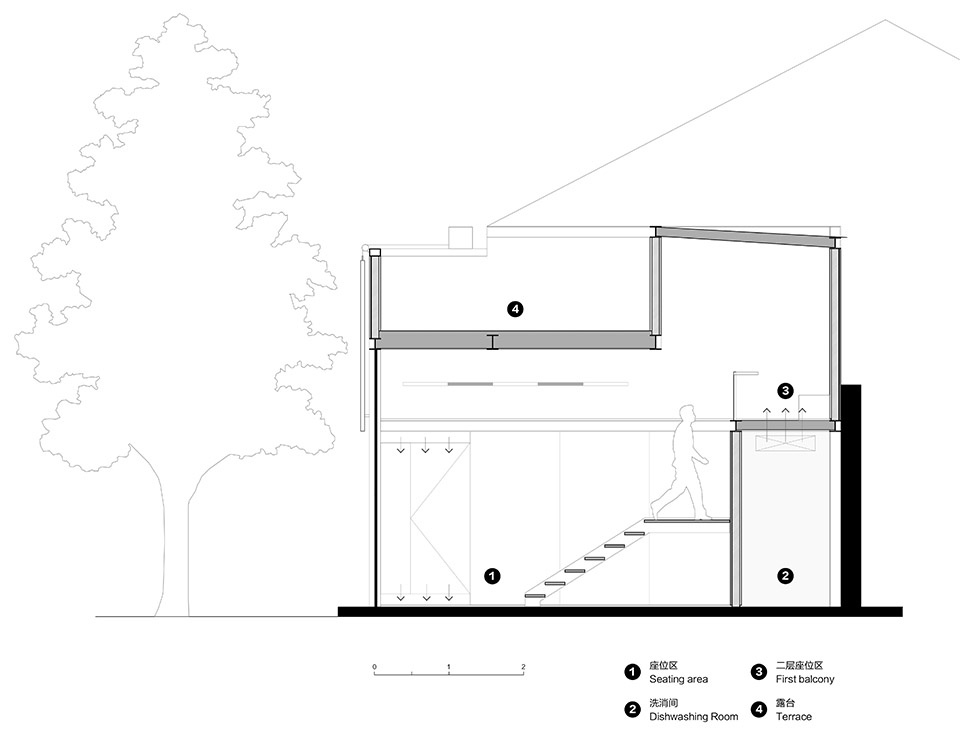
▼剖面图,section
Project Name: 798 COFFEE (798 Art District Store Design)
Project Type: Architectural and Interior Renovation design
Design: Enlightenarch Studio
Website: http://www.enlightenarch.com
Email: info@enlightenarch.com
Lead Designer: Guanghui Chen
Completion Year: September 2023
Location: 798 Art District, Beijing
Building Area: Approx. 70 m²
Photography: Guanghui Chen, Chen Zhou
Client:Beijing 798 Culture Technology Co., Ltd.