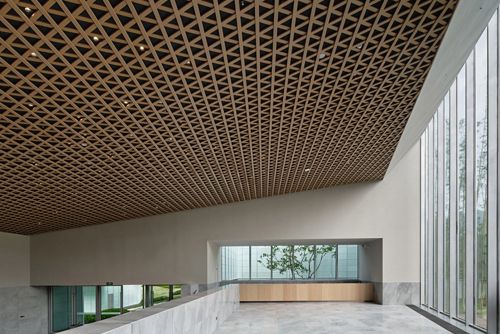
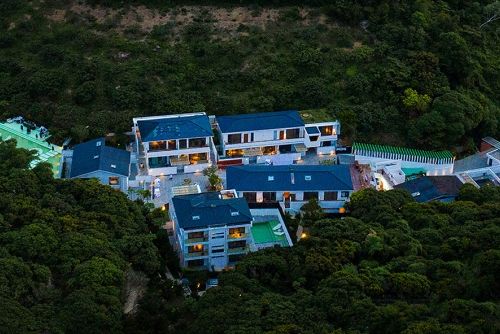
南头古城数字展厅建筑群,深圳/建筑设计
深空间
Deep Space
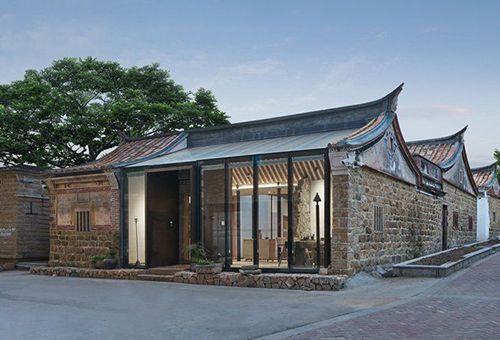
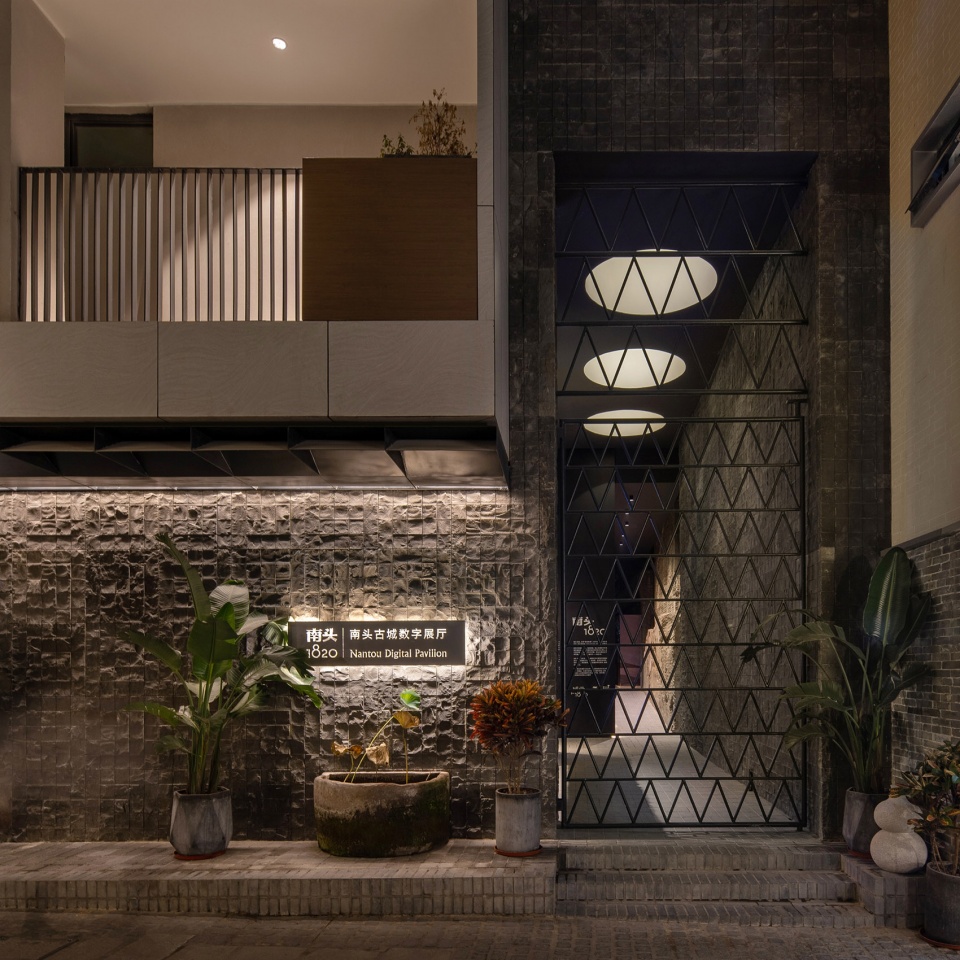
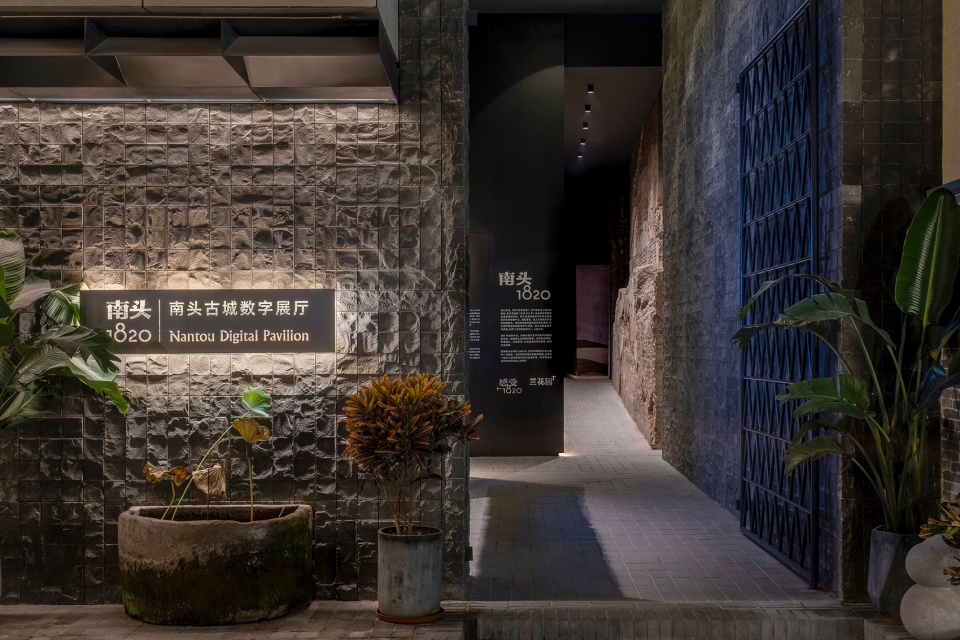
这个小型博物馆利用数字技术和多媒体影像展示了南头古城的历史风貌。包括沉浸式数字展厅、陈列展厅、花园、小型商业租赁等。该项目距离古城标志性建筑物老城门不远。人们穿过老城门,沿着主街步入这座博物馆,获得一种连续的历史感的体验。博物馆两层高的主入口门洞朝着热闹的主街打开,将人们引入前厅和后面狭长的通廊,一系列黑色的立面吸收光线,使空间显得更有深度。裸露的原始建筑结构和保存下来的老砖墙将过去带入了现实。穿过通廊走到后面的花园,是一条未经改造的安静街巷,直接面对城中村原始住户的真实生活。
This small museum displays the historical imprint of the old town of Nantou using digital technology and images. It includes an immersive digital theater, an exhibition hall, a garden, small commercial rentals, and so on. The site is not far from the old symbolic South Gate of Nantou. The people who come through the gate are able to get a continuous experience in this museum with the sense of history. The visitors will see the opening along the lively main street, leading to the entrance hall and the narrow corridor with their black surface absorbing light. The exposed building structure and preserved old walls bring out the past to the presence. Walking through the corridor to the garden at the back is another quiet place facing the life of local people.
▼项目概览,overall of the project
项目背景
Project Background
拥有两百年历史的南头古城经过大规模更新,引入了更多时尚的商业元素。数字展厅位于南北主街的中间;它是一座公共建筑,具有文化和社区属性。
The old town of Nantou, which has a history of two hundreds years, has undergone a large-scale renewal introducing more trendy commercial elements. The Digital Exhibition Hall is situated in the middle of the main street; it is a public building and carries cultural and community attributes.
▼改造后中山南街航拍,Aerial photography of Zhongshan South Street after transformation
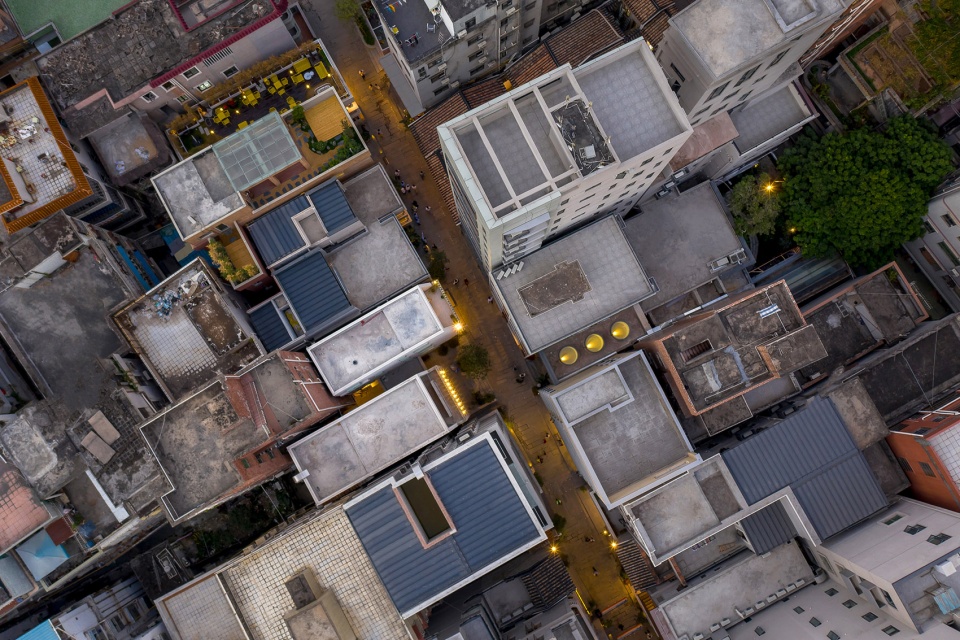
与深圳的大多城中村不同,南头古城多一些历史文脉,不同时期的建筑并存。这个小型博物馆由6栋分属不同业主的村屋的一楼和部分二楼组成,并且将以租赁的形式进行改造和运营,租赁期满后将返还给业主。因此,改造工作必须非常细致地考虑区域和边界问题。此外,在设计中还必须考虑场地条件,如拥挤的建筑体量和狭窄的街道空间,因为它会影响施工过程,对材料的选择和尺寸带来限制。但最大的设计挑战是如何回应南头的历史脉络,决定场地中应该“保留什么”,以及如何表达“深空间”的概念。
Unlike many other Shenzhen’s urban villages, the old town of Nantou has a little more historical context, and buildings from different periods are coexisted. This small museum is composed of the first floor and a part of the second floor of 6 buildings with different owners. And it will be renovated and operated with the form of lease, meaning that the parts will be returned to the owners after the end of the lease. Therefore, the work of renovation has to consider the issue of areas and boundaries very carefully. In addition, the site condition such as packed building blocks and narrow street space has to be also considered in the design as it influences the construction process. But the real design challenge is to decide “what to keep” from the site and response to the historical context of Nantou.
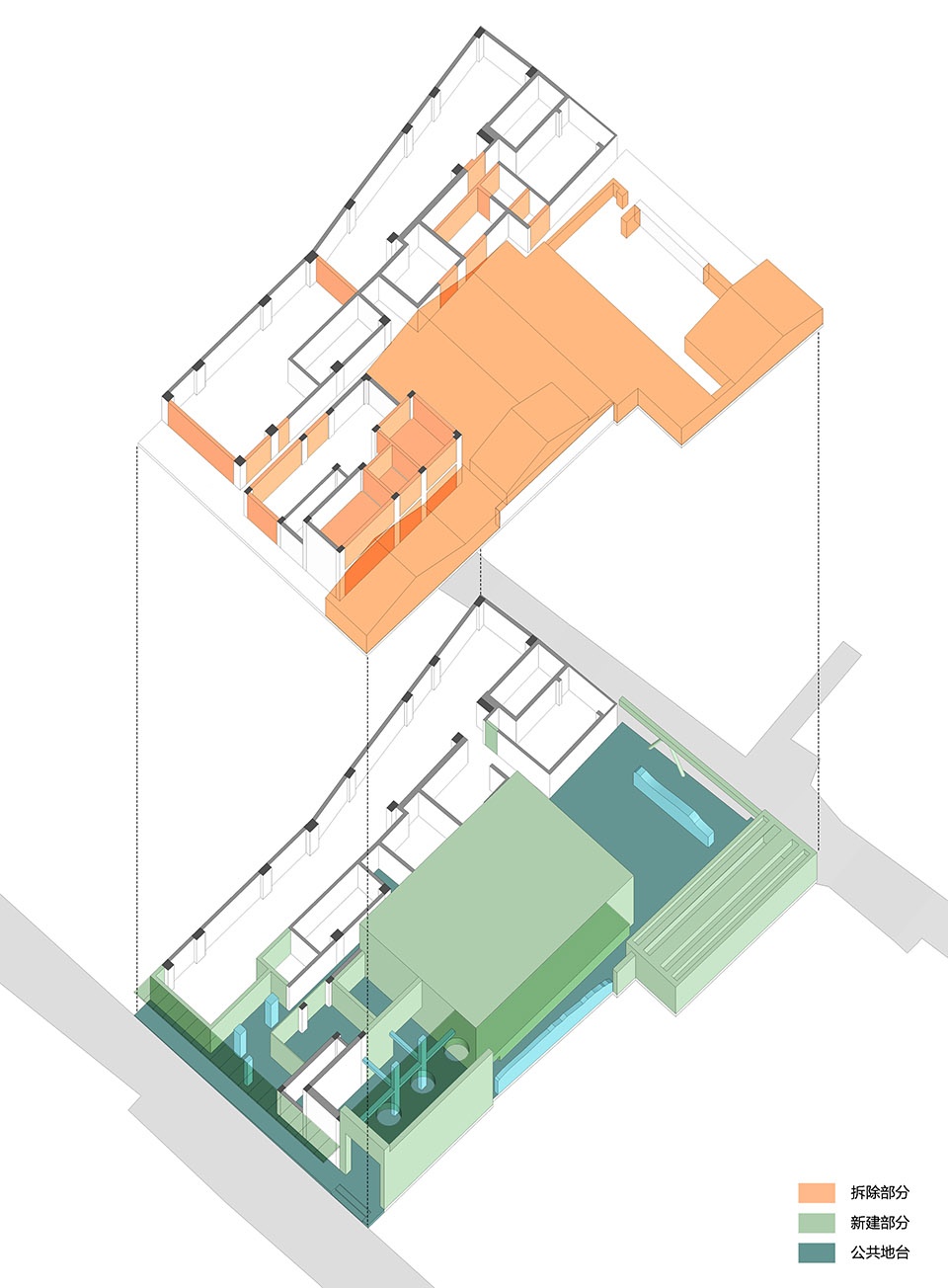
▼改造过程分析图,Transformation process
社区
Community
博物馆楼上是青年长租公寓。为了营造社区氛围,我们在底层公寓入口处设置了一个小型公共空间和一个啤酒吧;结合街道另一边的双子店前的口袋广场(也由一十一建筑改造),在博物馆附近形成了一个小型公共节点。
Above the museum is rental flats for young professionals. We planned a small public space and a beer bar on the ground floor next to their entrances in order to create community atmosphere. Combined with the pocket plaza in front of the Twin Shop-Houses (also renovated by 11Architecture) on the other side of the street, a small node for public was formed around this museum.
▼中山南街和对面的双子楼,Zhongshan South Street and the Twin Shop-Houses on the opposite
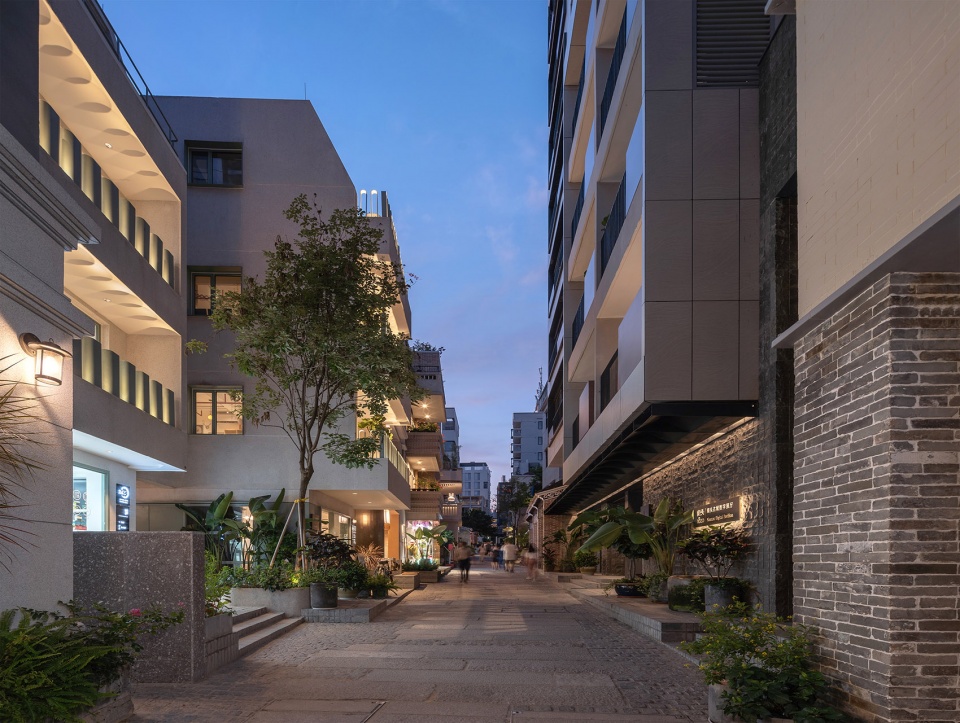
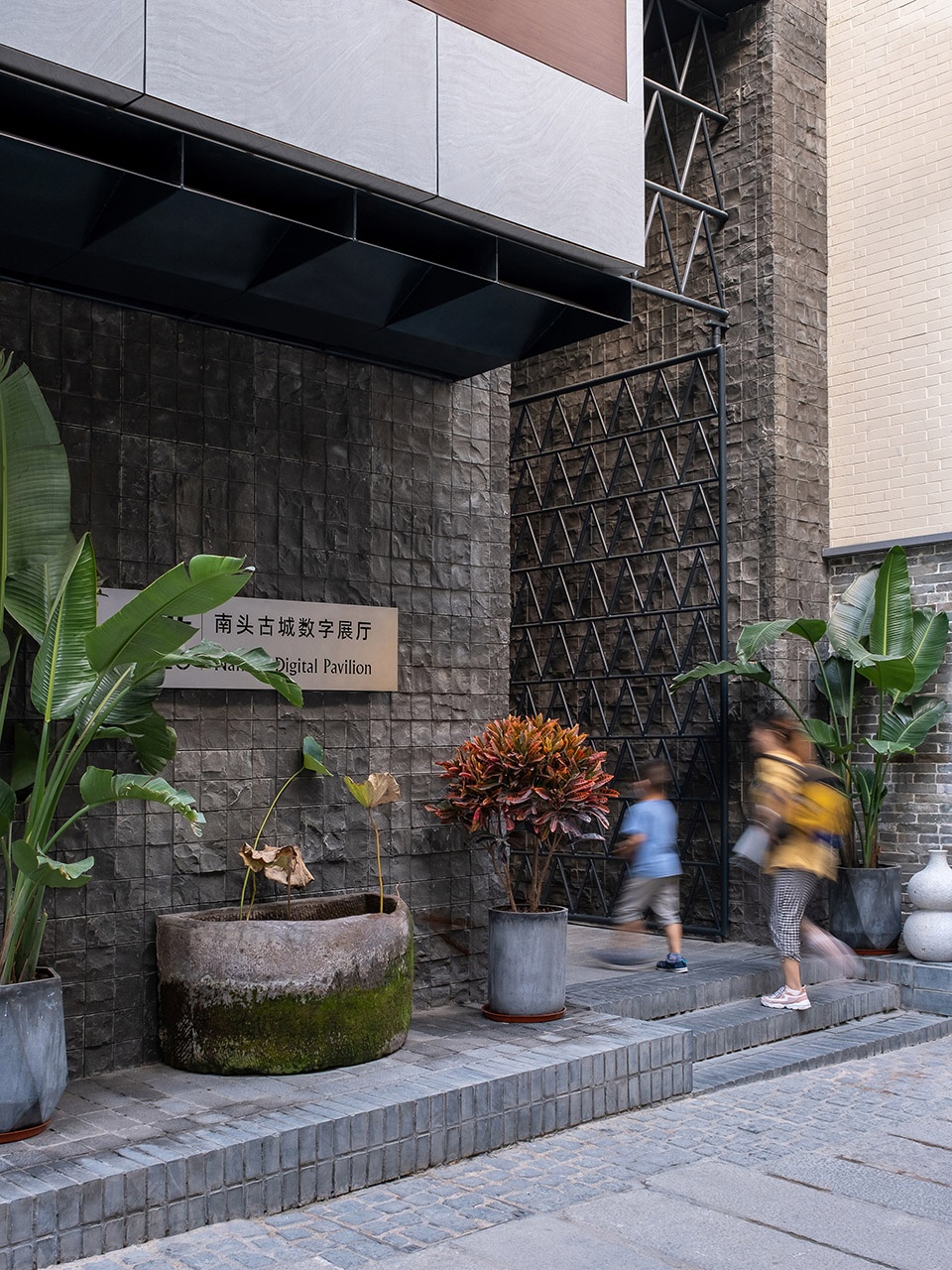
▼首层沿街立面,View from the street
雨蓬
Canopy
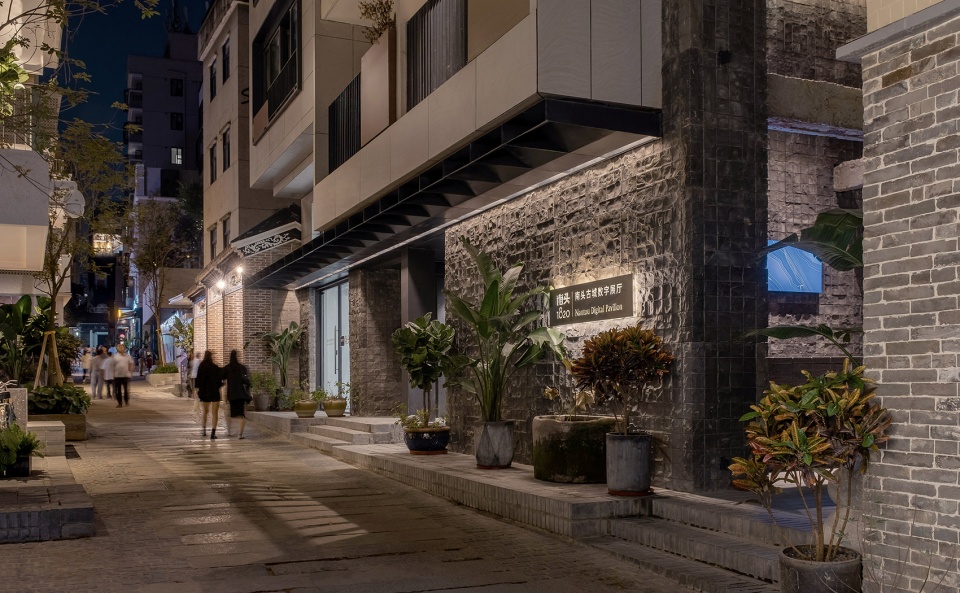
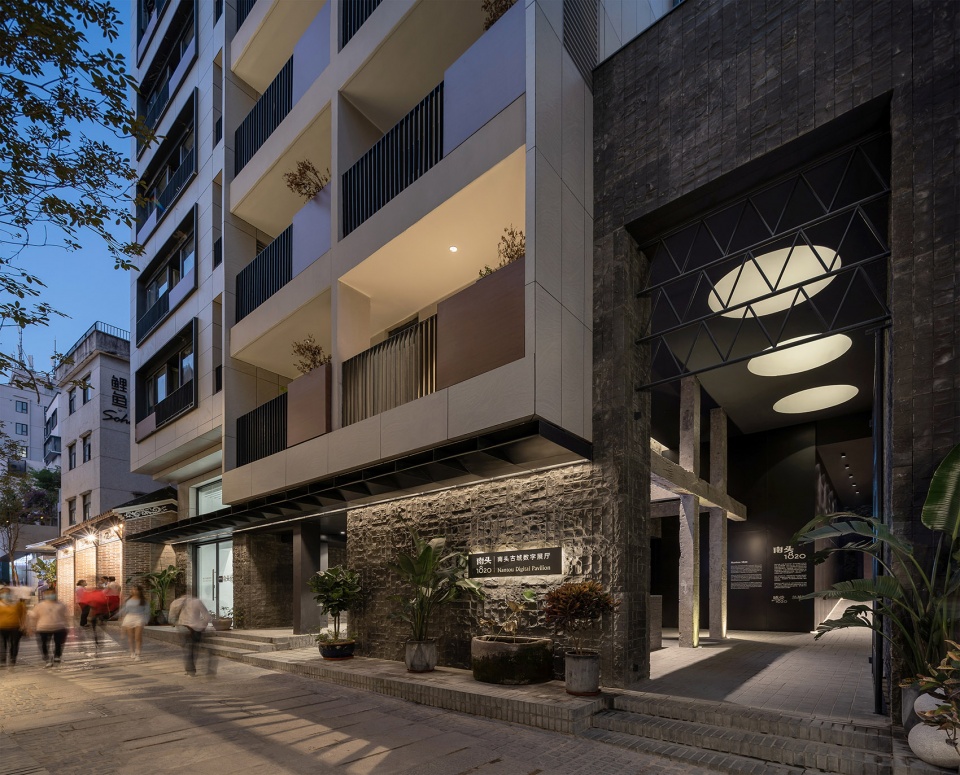
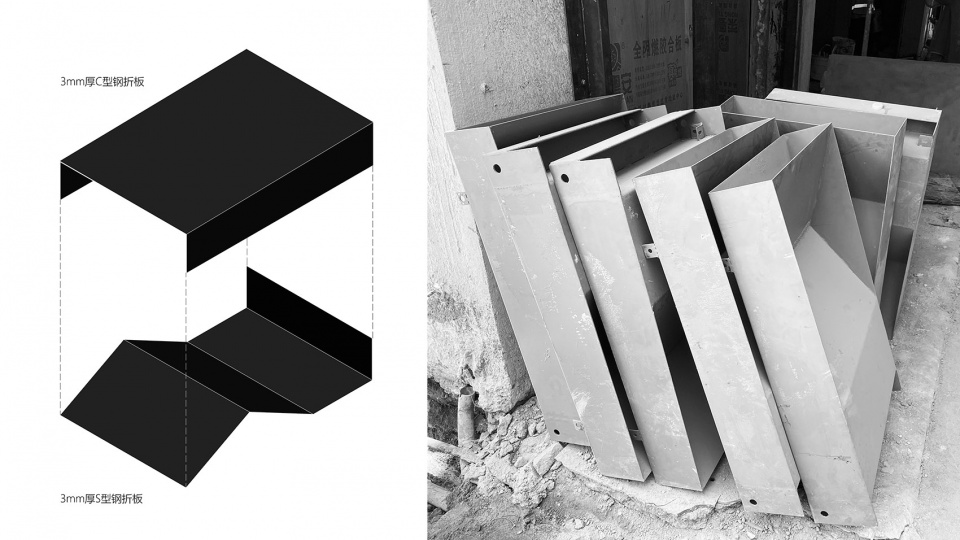
主立面上的黑色钢制檐篷清晰了博物馆和上层出租公寓之间的界限。这是一个长达14米的雨篷,由20个预制单元组成,方便三轮车穿过窄巷运输到现场组装。每一块都由两个折叠的钢板组成,这些面板互扣并焊接在一起自成结构。面板互扣时形成的三角形缝隙吸收光线,加强了视觉的深度。
The black steel canopy on the main elevation clarifies the boundary between the museum and the upper rental flats. It is a 14 meters long canopy, composed of 20 prefabricated units and assembled on the site. Each piece is made of two folded panels interlocked and welded together to be self-structured. When the two panels were interlocked it created triangular corners absorbing light, and it was designed to respond the visual deepness.
▼钢制雨篷示意图,Steel canopy diagram
▼黑色钢制檐篷清晰了博物馆和上层出租公寓之间的界限
The black steel canopy on the main elevation clarifies the boundary between the museum and the upper rental flats
▼入口细部夜景,detailed night view of the entrance
博物馆之旅
Museum Tour
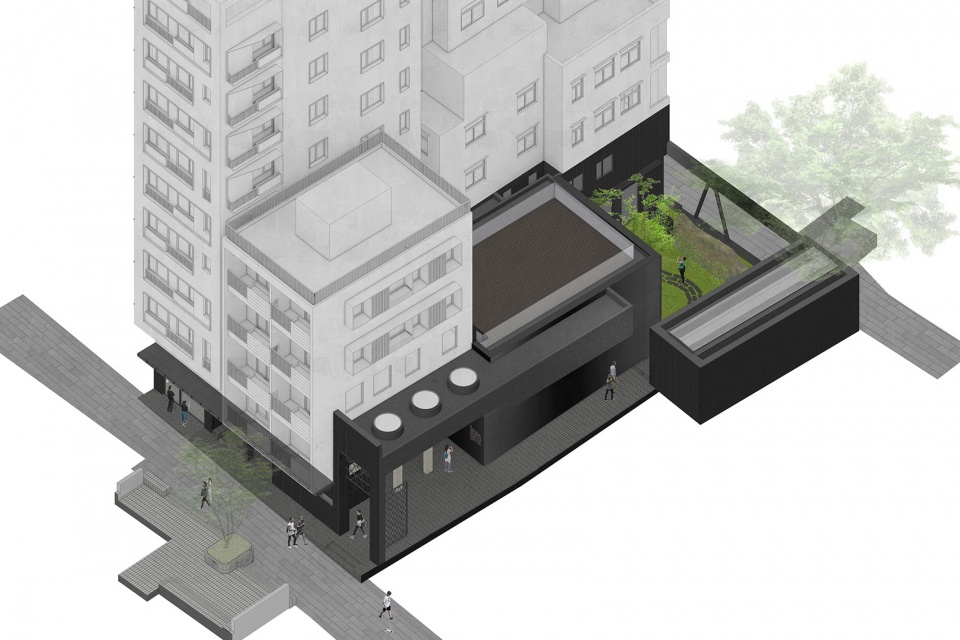
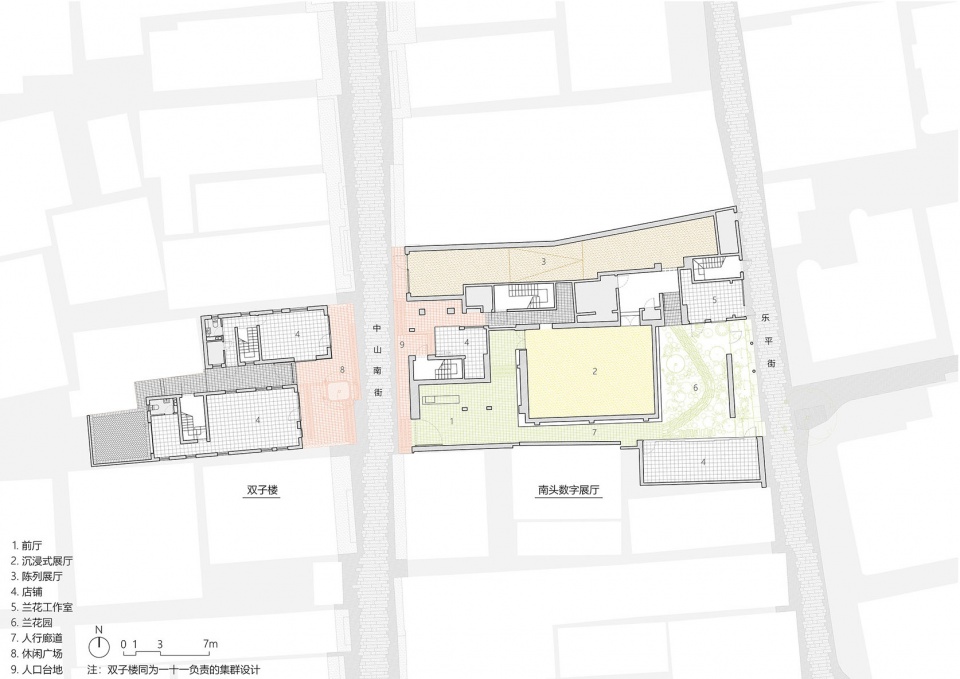
拆除存在结构隐患的旧房和临时棚屋,在场地中部新建了沉浸式数字展厅盒子,北侧现有建筑内布置了一个线性陈列展厅。场地南侧的入口大厅、狭窄的通廊和后花园呈线性排列,连接前方的商业主街和后方的当地居民生活巷道,向游客展示了南头生活的全貌。面向后花园新建了一个茶室,可以从博物馆和后巷进入。
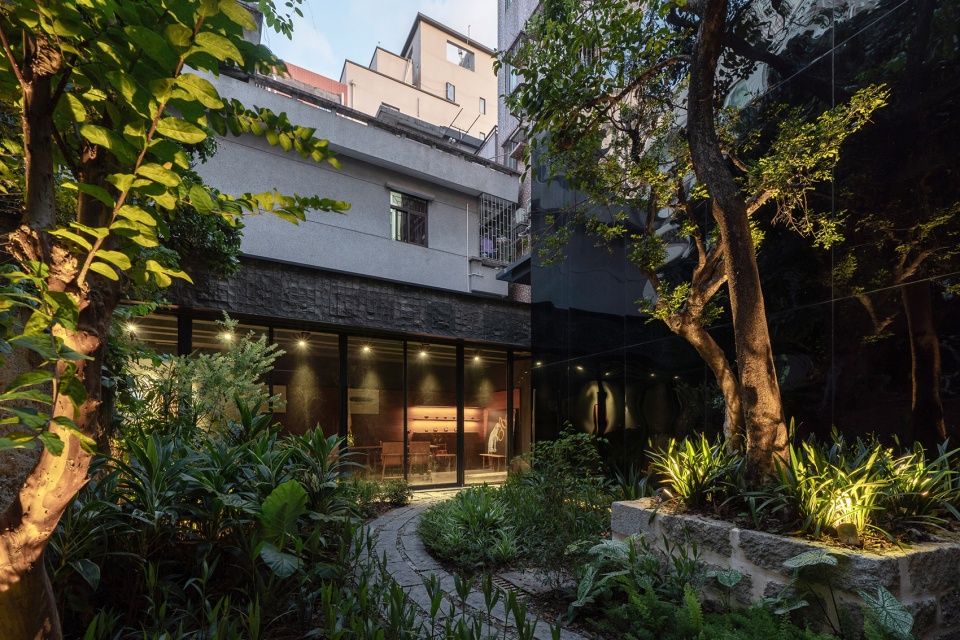
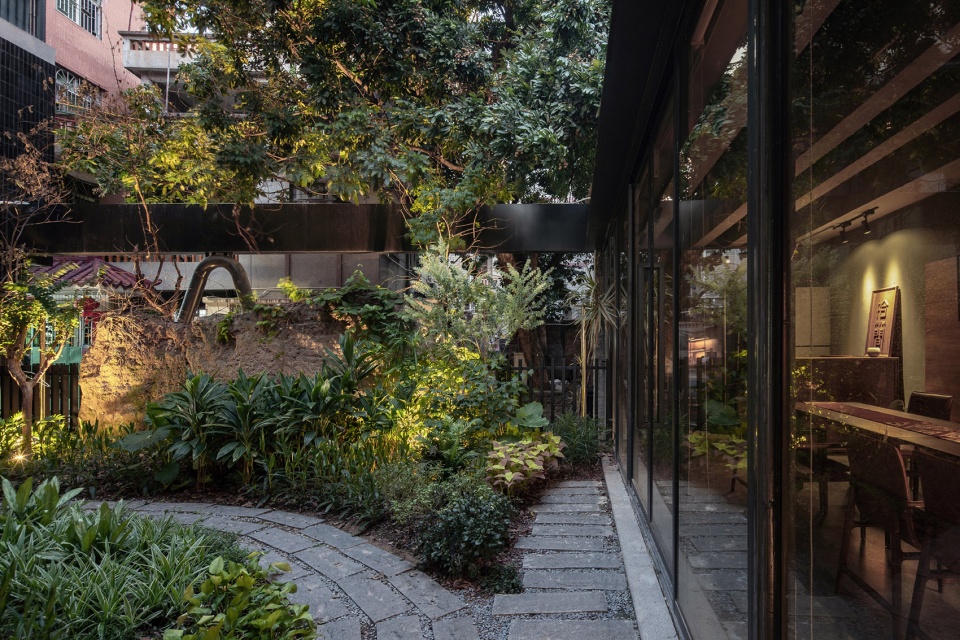
The old houses and temporary sheds with hidden structural hazards were removed. The immersive digital theater box was newly built in the middle of the site, and a linear exhibition hall was planned at its north in the existing buildings. The entrance hall, the narrow tunnel, and the back garden was planned in linear at the south of the site, connecting the main commercial street at the front and the local living space at the back, showing the visitors a complete picture of life in Nantou. A tea house was planned at the back garden, accessible from the both the museum and the back street.
▼轴测图,axonometric drawing
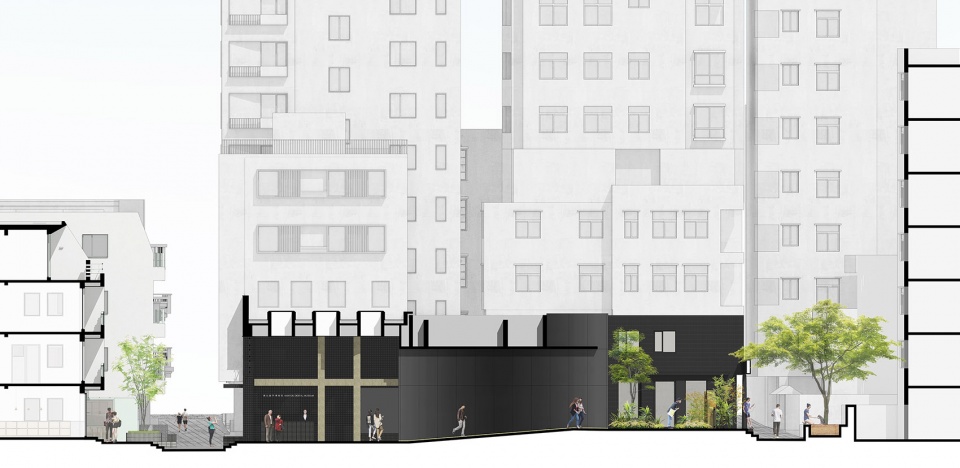
▼剖面图,Section drawing
▼后花园与茶室,The back garden and the tea room
博物馆大堂
Museum Lobby
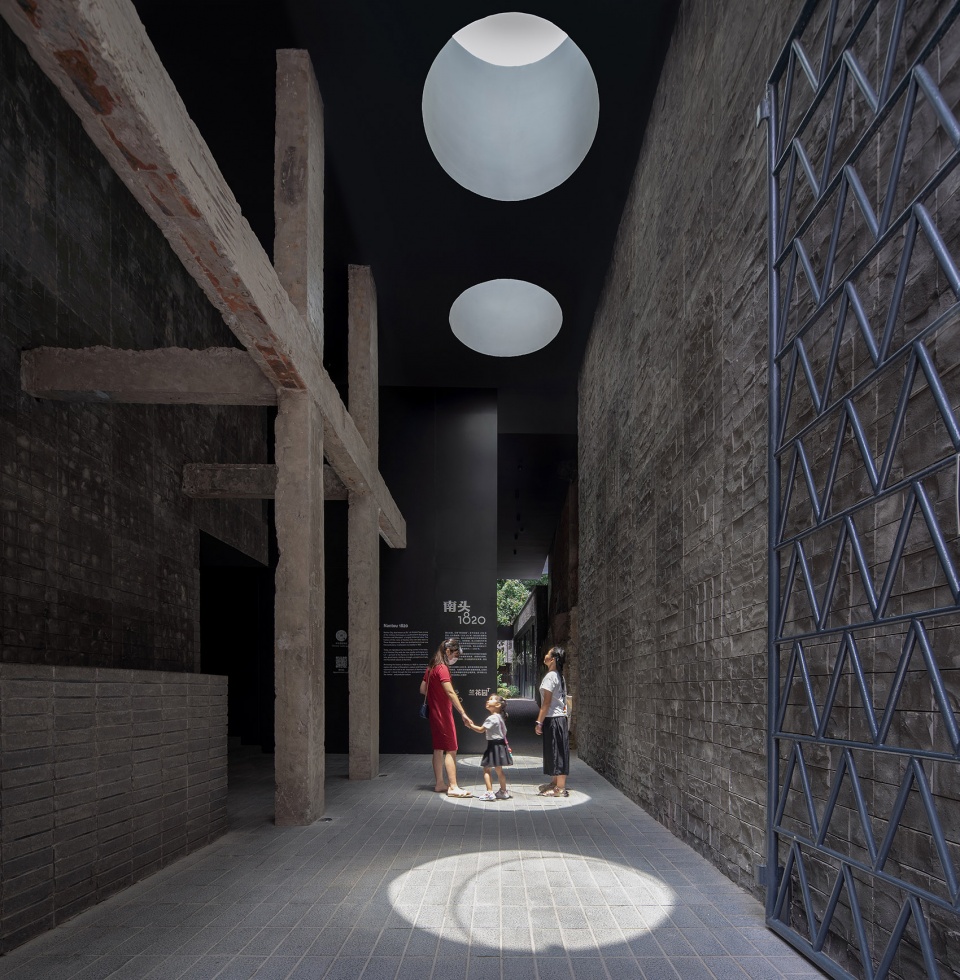
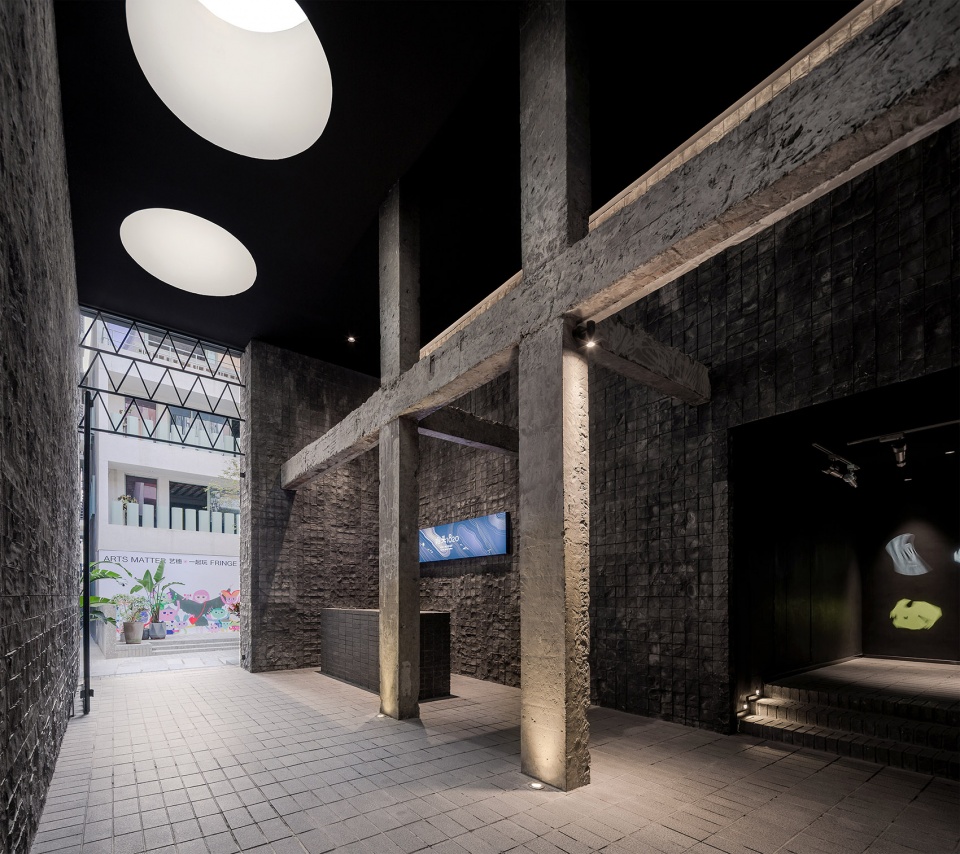
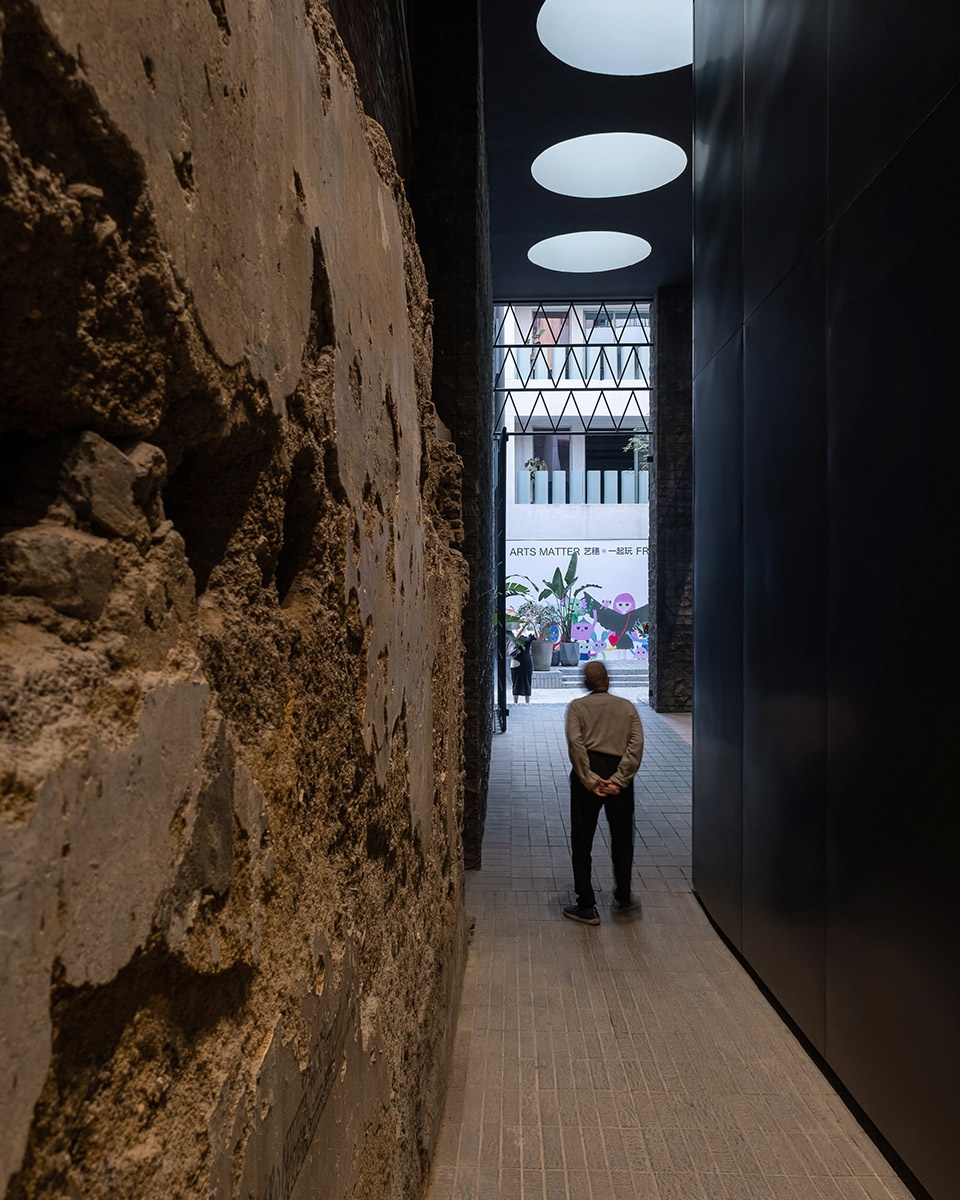
一个两层高的博物馆大堂正对主街,大堂中间是保留的老建筑的结构梁柱。砂浆层剥除后,原来的混凝土表面显露出来。通道南侧和后花园东侧的老砖墙也保留了下来。他们展示了改造建筑新旧并存的理念,增强了南头老城区的在地感。
Facing the main street, there is a two-story-height museum lobby with beams and columns of the existing building structure exposed in the middle. Their mortar layer was removed and the original concrete surface was revealed. The old walls were also retained at the south side of the tunnel and the east side of the back garden. They displayed the idea of building renovation and strengthened the sense of place in the old town of Nantou.
▼主入口与人行通廊,The main entrance and the pedestrian tunnel
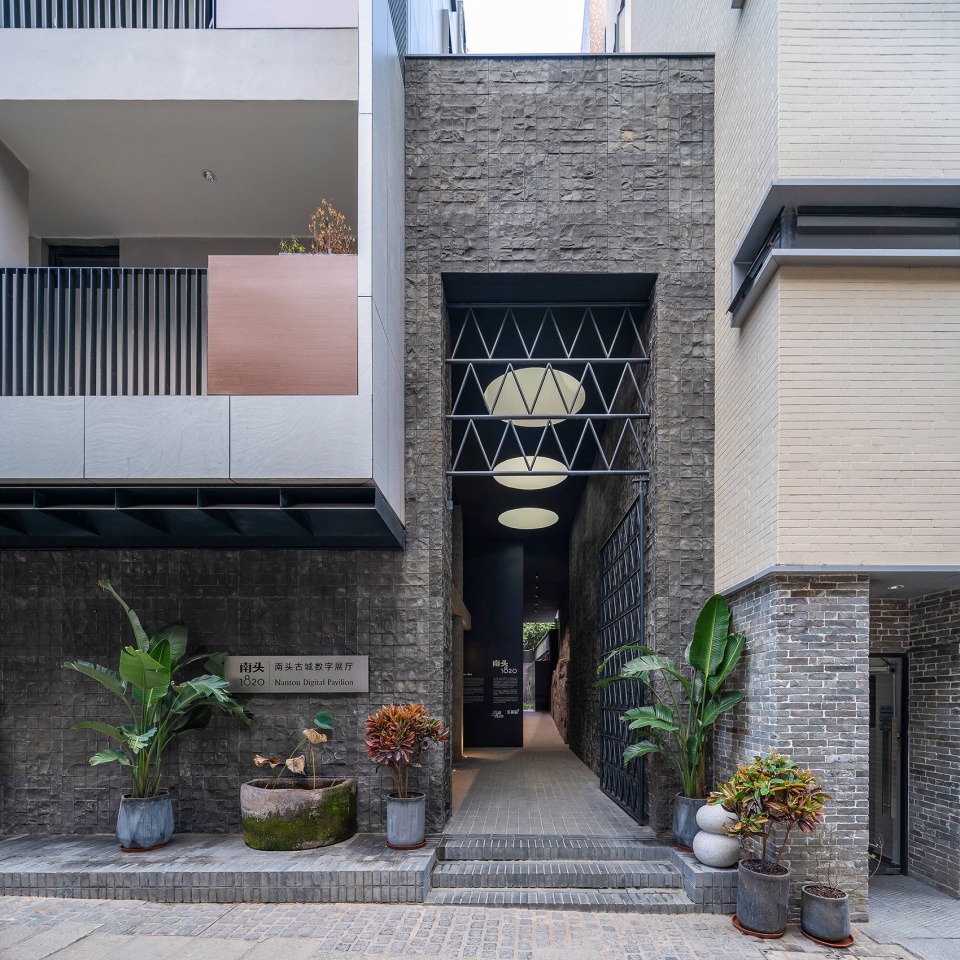
▼主入口,The main entrance
▼由入口看前厅空间,The entrance lobby
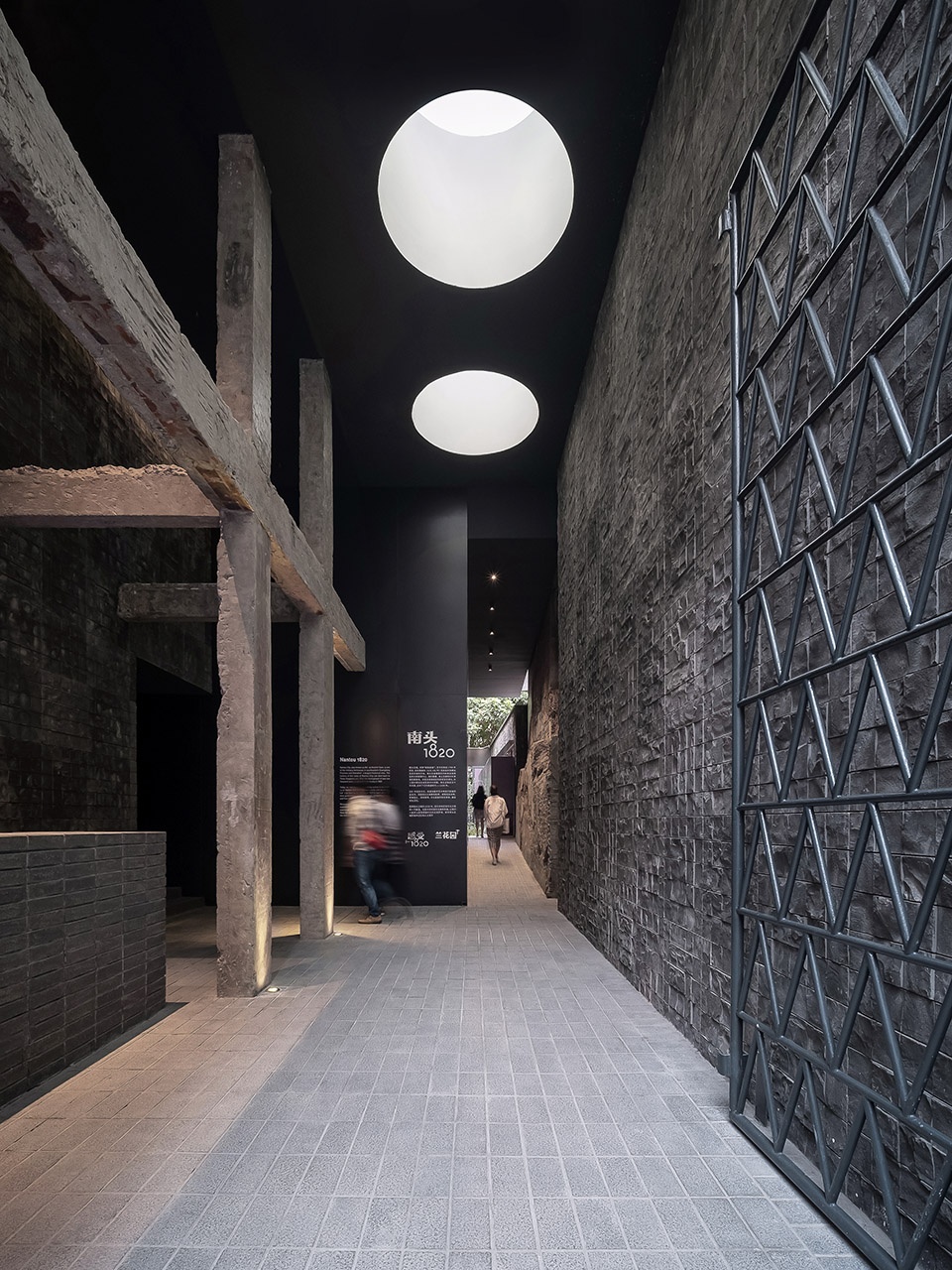
黑色
Black Color
我们以“黑色”作为设计策略,将6座建筑不同部分统一成博物馆的整体。黑色空间与黑暗中的沉浸式数字展厅流畅相连,参观者在其中体验从深色背景中浮现出来的多媒体影像。在选材上,我们运用了不同质感和反光的黑色,例如:黑色中国石、黑色不锈钢、黑色瓷砖、黑色油漆等。新材料与旧建筑肌理的并置,形成了富有深度感的有趣视觉对话。
We designed the museum in black as a strategy to integrate different parts of 6 buildings. The black space is smoothly connected to the immersive digital exhibition hall in darkness, in which the visitors experience the digital movie emerging out from the room. In terms of material selection, we applied blacks with different textures and reflections, such as: black Chinese stone, black stainless steel, black tile, black paint and so on. The juxtaposition of new materials and old building textures made an interesting visual dialogue with a sense of deepness.
▼前厅空间回看主街,The museum lobby
▼圆形天窗在地面形成有趣的光影,Circular skylights create interesting shadows on the ground
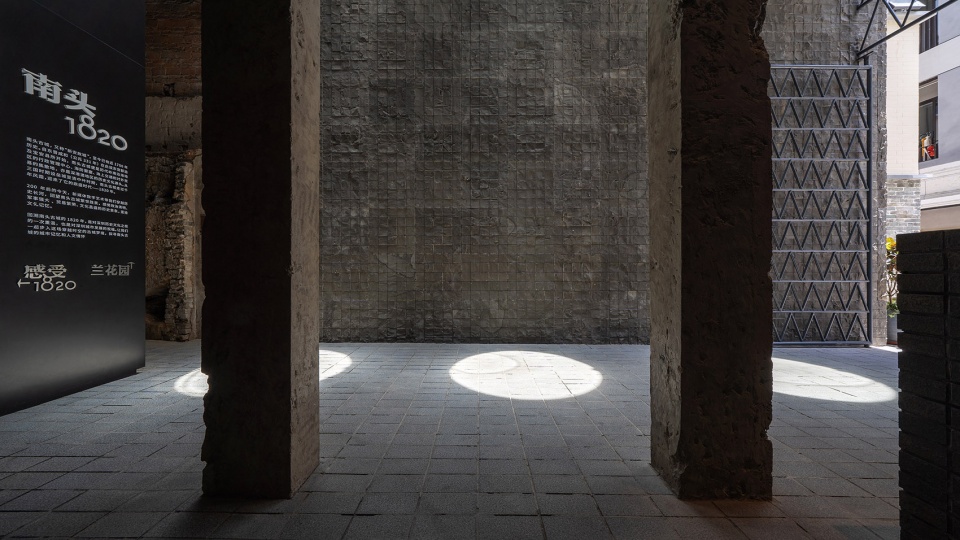
▼圆形天窗细部,detail of the Round-shape skylights
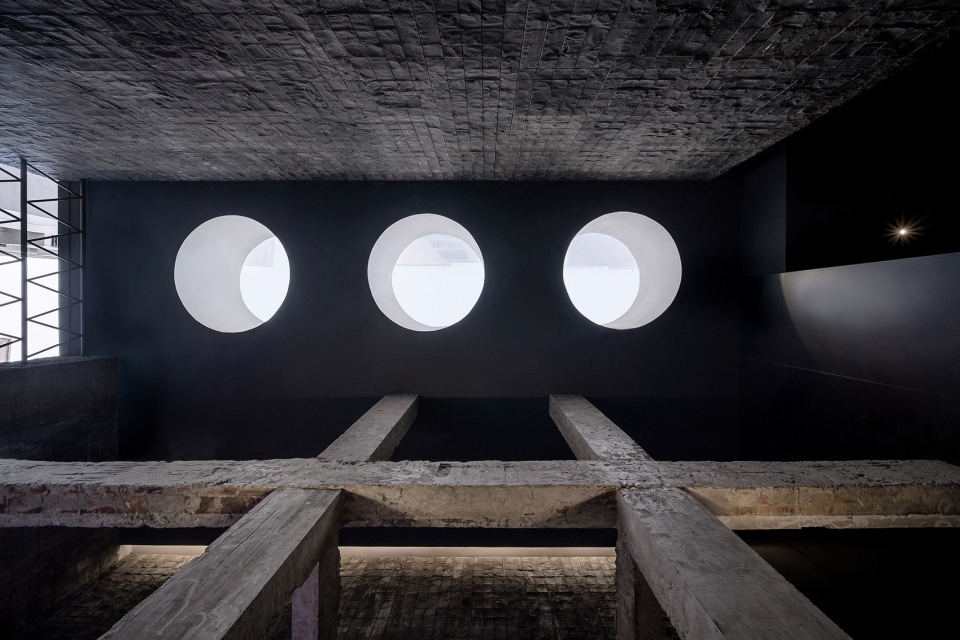
▼原建筑的梁柱,the beams and columns of the existing building
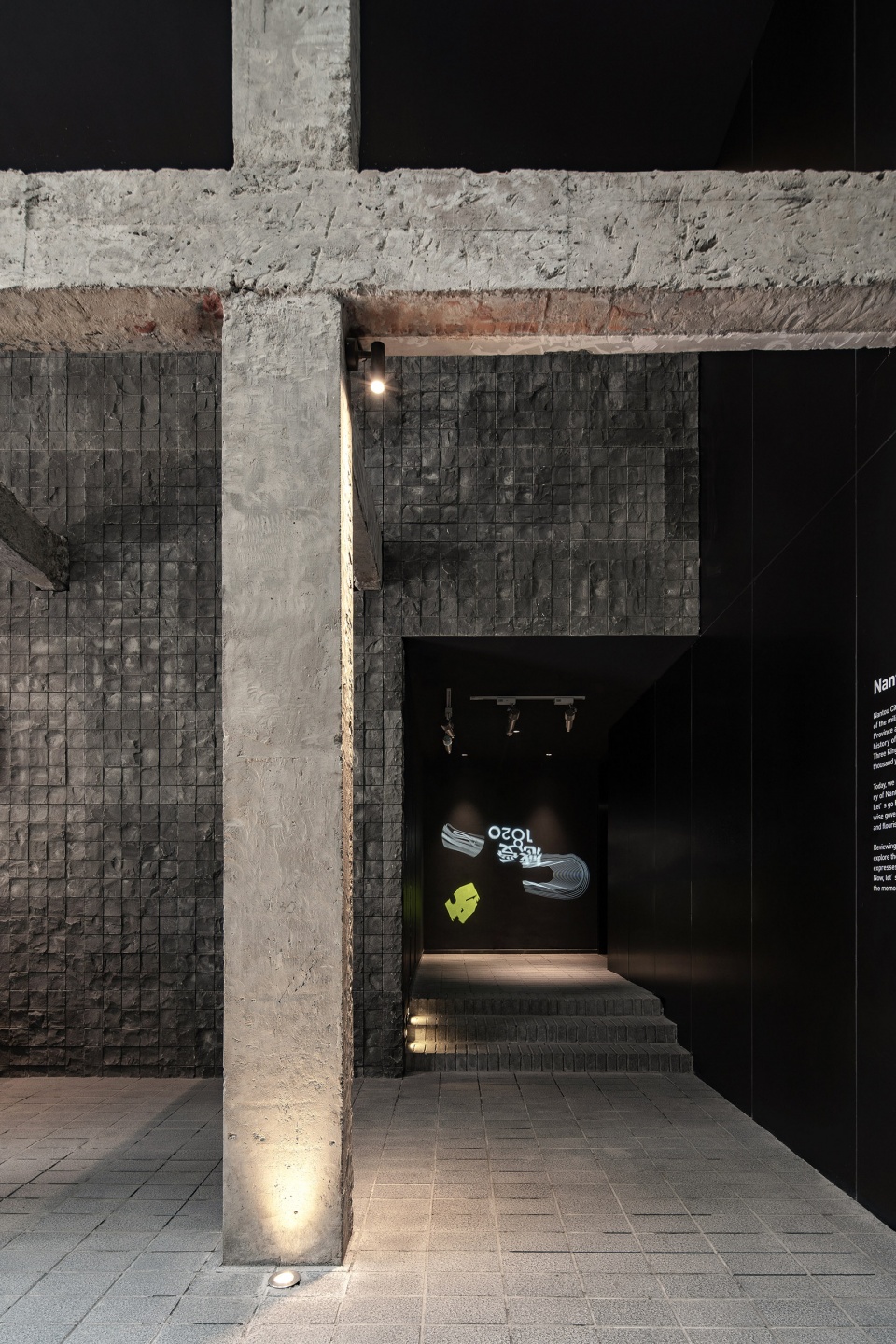
▼黑色中国石与保存下来的老砖墙并置,Black Chinese stone with Preserved old wall
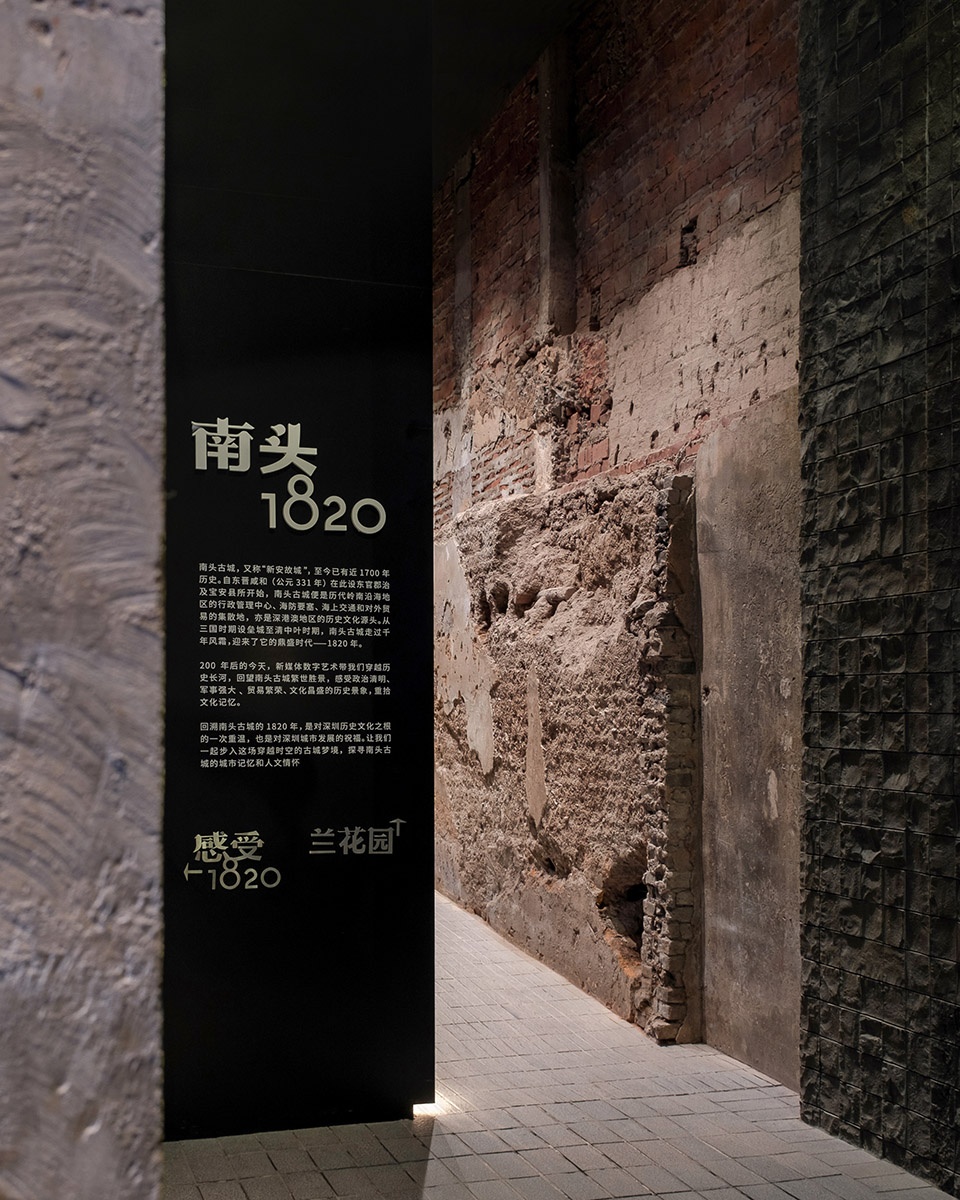
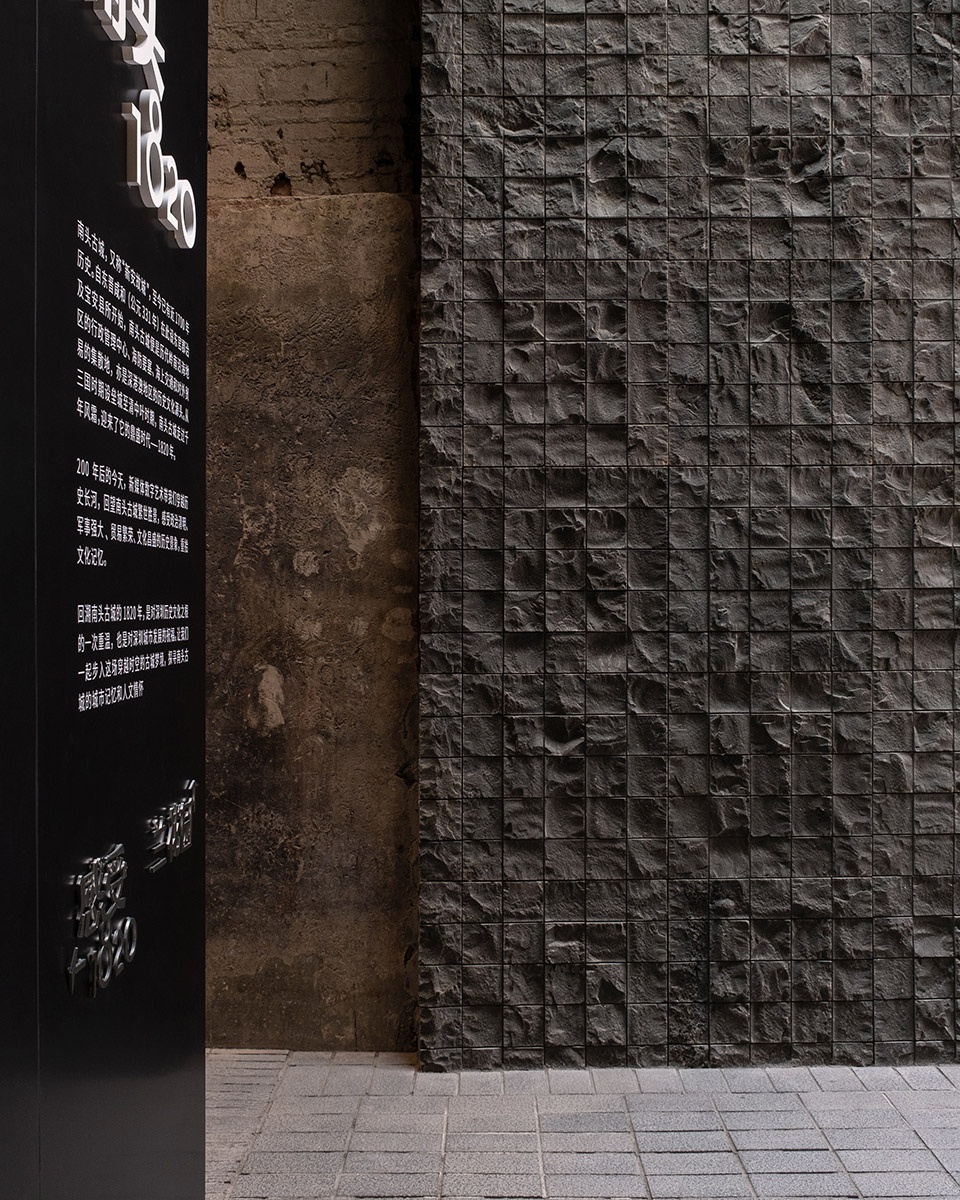
▼狭长的通廊和保留的老墙,The narrow corridor and the old wall
展览空间
Exhibition Space
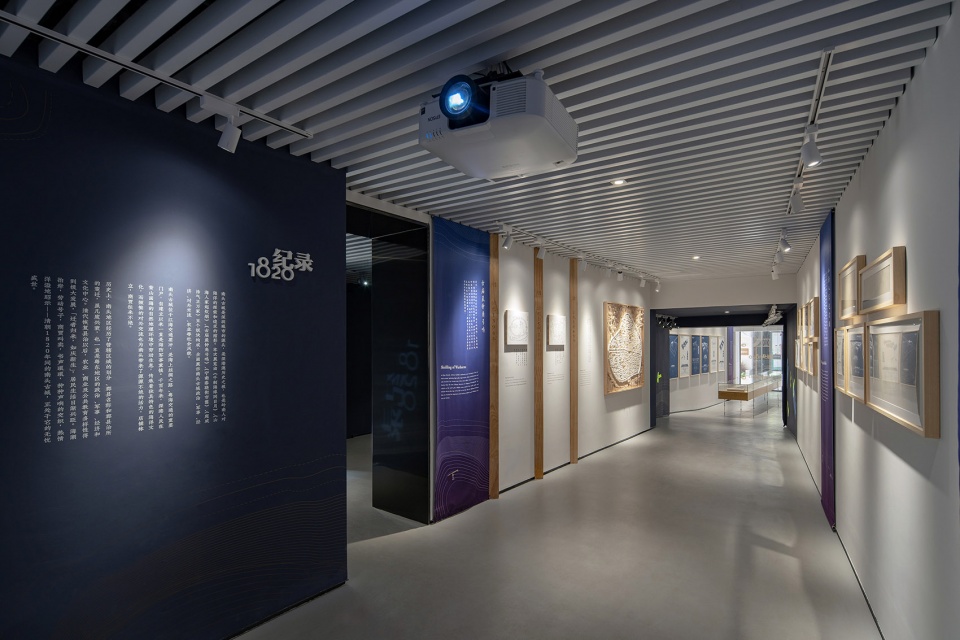
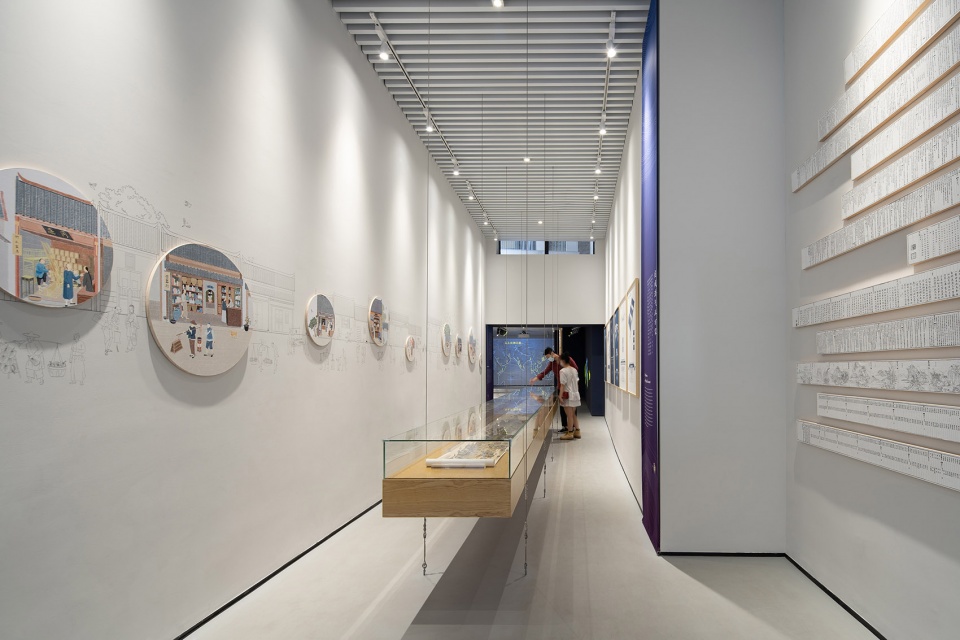
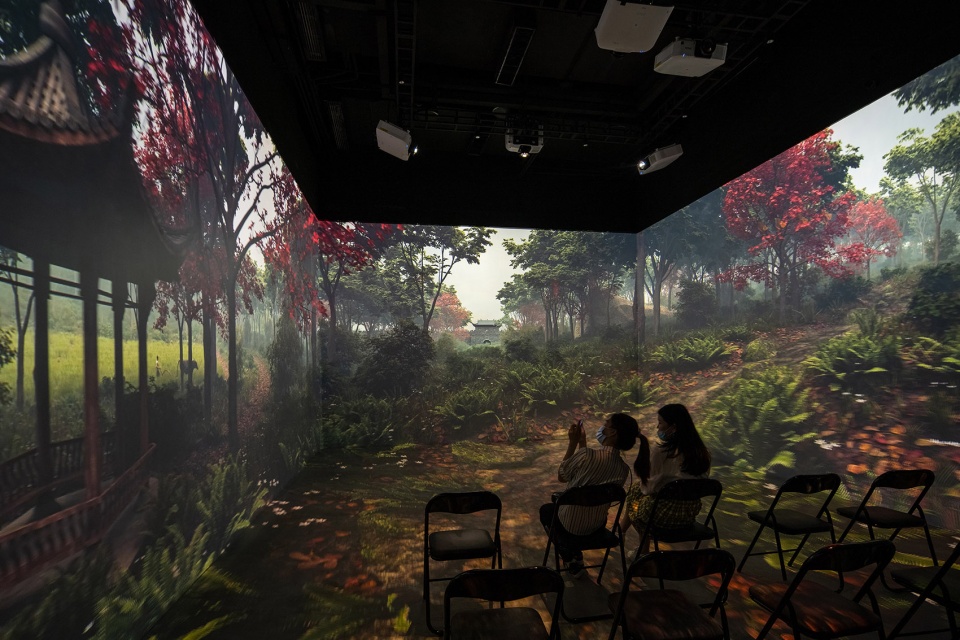
博物馆分为两个展区,展示1820年以来的南头历史风貌:沉浸式数字展厅和陈列展厅。北京SHARDISLAND负责所有展览内容,深圳SD Design负责室内设计。
The museum has two sections showing the stories of Nantou since 1820: an immersive digital exhibition hall and a display exhibition hall. SHARDISLAND in Beijing is responsible for all exhibition contents, and SD Design in Shenzhen is responsible for the interior design.
▼陈列展厅入口,Eentrance of Exhibition hall
▼陈列展厅,Exhibition hall
▼沉浸式展厅,Immersive digital exhibition hall
▼平面图,plan
项目信息
项目名称:南头古城数字展厅建筑群
文章分类:建筑设计-展览展示
设计公司:一十一建筑设计(深圳)有限公司
项目地址:深圳
项目规模:约551.02㎡
设计团队:罗明钢(项目建筑师)、周子豪、许森茂
主建筑师:谢菁、FUJIMORI Ryo
摄影师:张超
Project information
Project Name: Nantou ancient city digital exhibition hall complex
Article classification: Architectural Design - Exhibition
Design company: 11 architectural design (Shenzhen) Co., Ltd
Project address: Shenzhen
Project scale: about 551.02 ㎡
Design team: Luo Minggang (Project Architect), Zhou Zihao, Xu Senmao
Main architects: Xie Jing, Fujimori Ryo
Photographer: Zhang Chao