涩谷AXSH综合体,日本 / Mitsubishi Jisho Design Inc. + Tokyu Architects & Engineers INC.
该项目是一项位于快速发展的涩谷站地区的城市更新计划,旨在有机连接车站、城市与社区,同时构建全新的城市步行流线。不同于传统局限于单一地块内部的更新模式,本项目回应场地起伏的地形与周边城市环境,建立起向外辐射的多方向步行网络。项目团队通过与当地土地所有者开展工作坊,重新解读场地历史与既有步行路径。设计以“Tsunagi-ba”(道路交汇之处)这一概念为灵感,在建筑中设置中庭与室外公共空间,营造出可供人们穿行、停留与交流的开放环境。
The project is a redevelopment plan in the rapidly evolving Shibuya Station area, aimed at organically connecting the station, city, and community while establishing new urban circulation routes. Unlike conventional redevelopment approaches, which tend to be confined within a single site, this plan responds to the area’s hilly terrain and urban context to establish a multidirectional pedestrian network that radiates outward. Through workshops with local landowners, the project team reinterpreted the area’s history and pedestrian routes. Inspired by the concept of “Tsunagi-ba” (connecting points where paths intersect), the design incorporates atriums and outdoor spaces to create welcoming environments where people can pass through, relax, and interact.
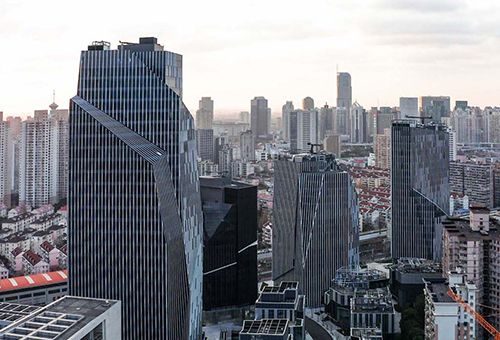
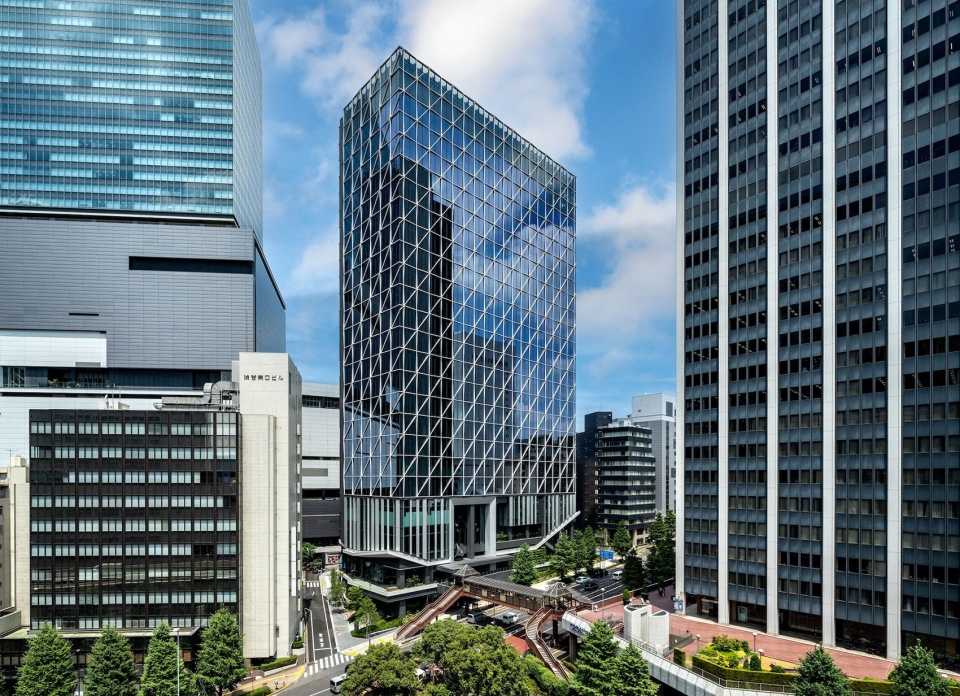
▼东南侧立面,Southeast façade
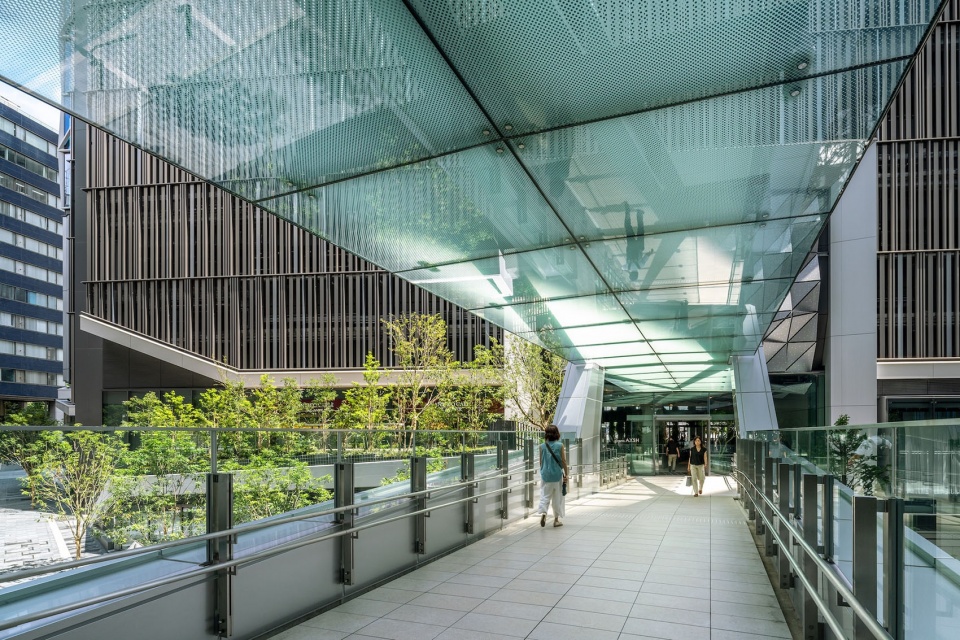
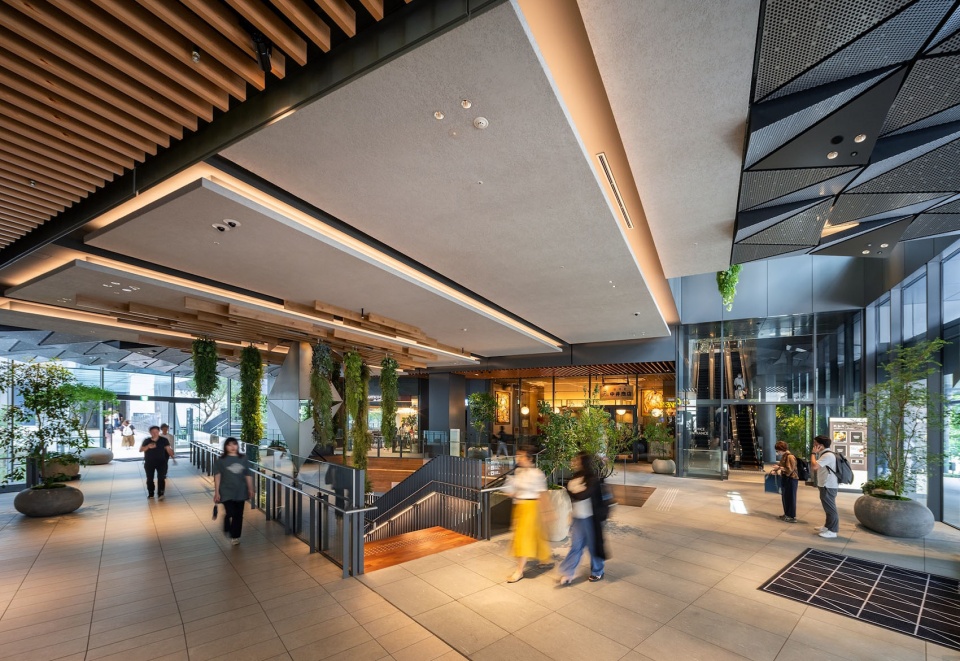
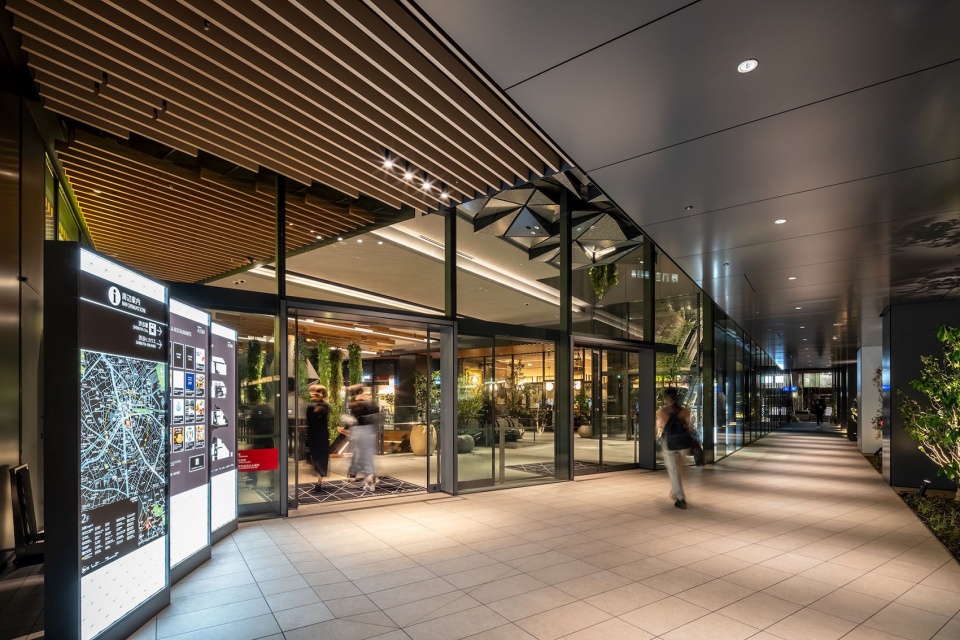
项目基地位于连接涩谷站与青山地区的青山通沿线,周边汇集了文化、教育及商业等多元设施。然而,由于道路拓宽等城市建设,当地的空间联系逐渐减弱。基地四周被道路包围,且存在约6米的高差,使原有步行路线陡峭且迂回。设计将步行网络引入建筑内部,重新恢复区域连通性。中庭补充了垂直交通系统,并与人行道、建筑入口、周边连桥及人行天桥相连接,促进人流流动,提升街区可达性,并整合整个区域。围绕基地设置的公共停留空间则邀请人们驻足休憩,与城市建立联系。项目重新构想了城市景观,实现建筑与场所环境的协调融合。
The site is along Aoyama-dori Avenue, which links Shibuya Station and the Aoyama district, in an area dense with cultural, educational, and commercial facilities. However, local connectivity had declined due to road widening and other developments. Encircled by roads and with a 6-meter elevation change, the site had steep, indirect pedestrian routes. The design places a pedestrian network through the building, restoring connectivity. An atrium supplements vertical circulation and links to sidewalks, facility entrances, nearby decks, and a pedestrian overpass. This promotes movement, improves district access, and unifies the area. Gathering spaces around the site invite people to relax and connect with the city. The design reimagines an urban landscape, harmonizing architecture and context.
▼低层整体鸟瞰,Low-rise exterior aerial view
项目将环境因素作为设计核心,在材料、结构及建筑系统等多个层面贯彻可持续理念。立面采用可回收铸铝遮阳百叶,在增强遮阳性能、降低楼板热增益的同时,通过保留既有地下结构及采用轻量化结构体系,减少资源消耗与环境影响。定时控制的建筑外部照明及高效机电设备进一步降低建筑运营能耗。项目获得了BELS体系下的ZEB Oriented认证,以及办公区域的ZEB Ready认证,同时取得CASBEE-WO的“S”级评价,彰显其在舒适性与使用者健康方面的优异表现。项目旨在成为一座与城市共生、推动环境友好型社会发展的可持续建筑典范。
Environmental considerations were central, with sustainability pursued across materials, structure, and systems. Recyclable cast aluminum louvers on the facade enhance solar shading and reduce floor heat gain, while reusing an existing underground structure and adopting lightweight structural systems minimize resource use and environmental impact. Time-controlled exterior lighting and high-efficiency mechanical equipment reduce operational energy use, and the project earned ZEB Oriented certification and ZEB Ready certification for office areas under BELS. It also received an “S” rank under CASBEE-WO, recognizing high comfort and occupant health. The project aims to be a sustainable architectural model that blends with the city while promoting an environmentally responsible society.
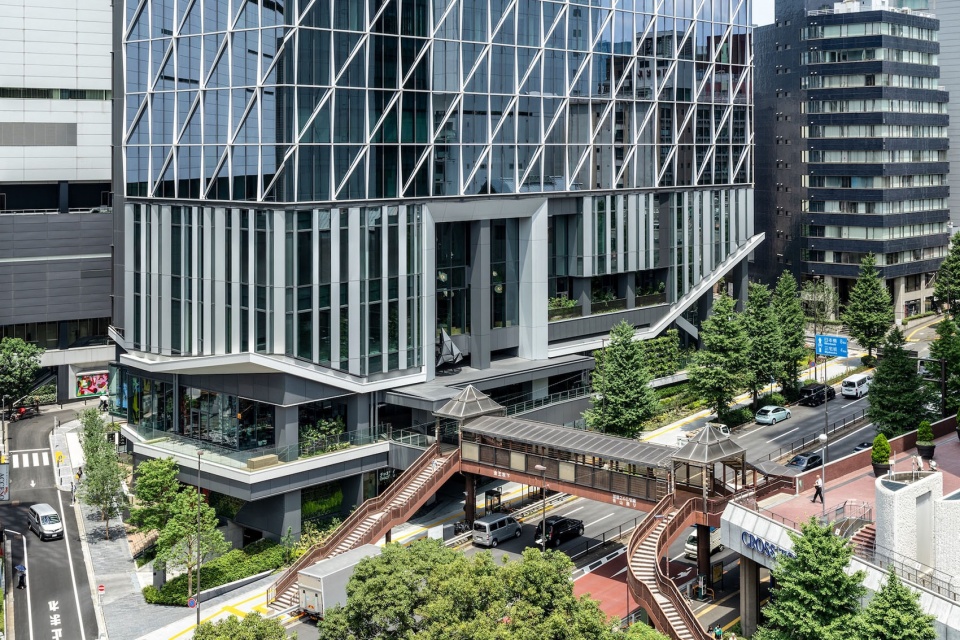
▼青山侧立面近景,Aoyama-side façade close view
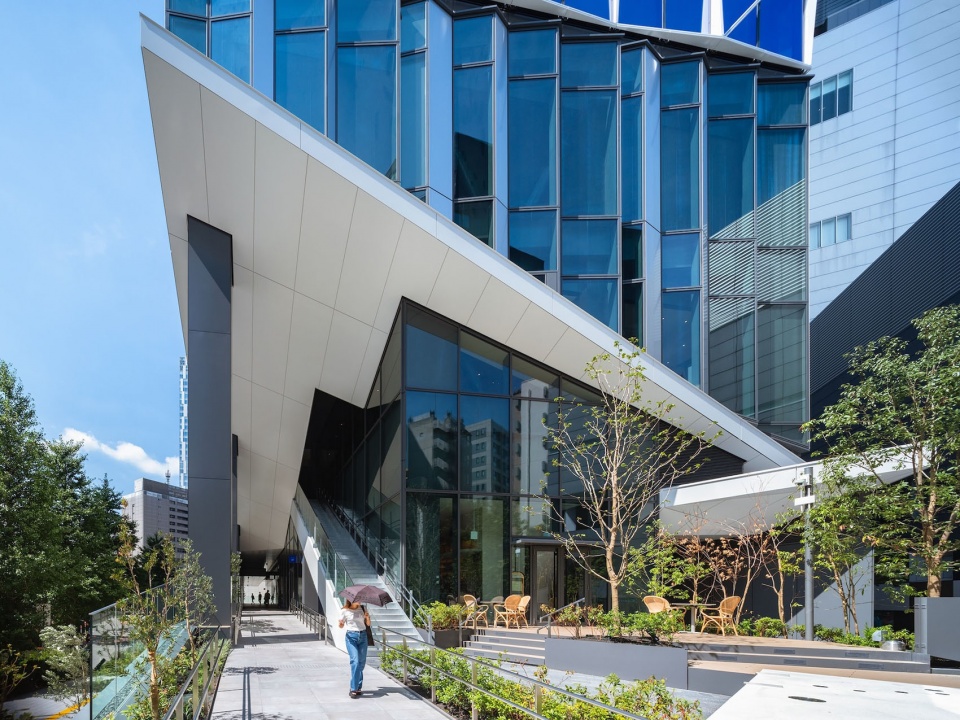
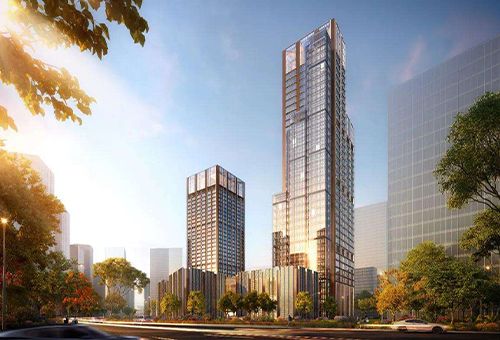
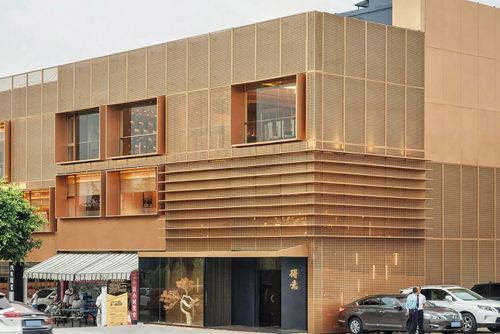
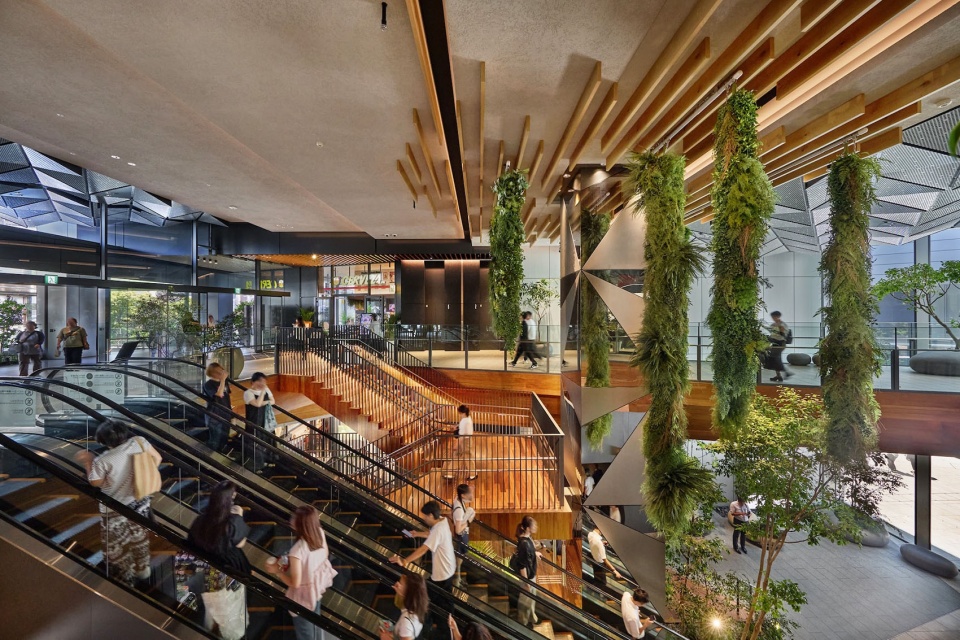
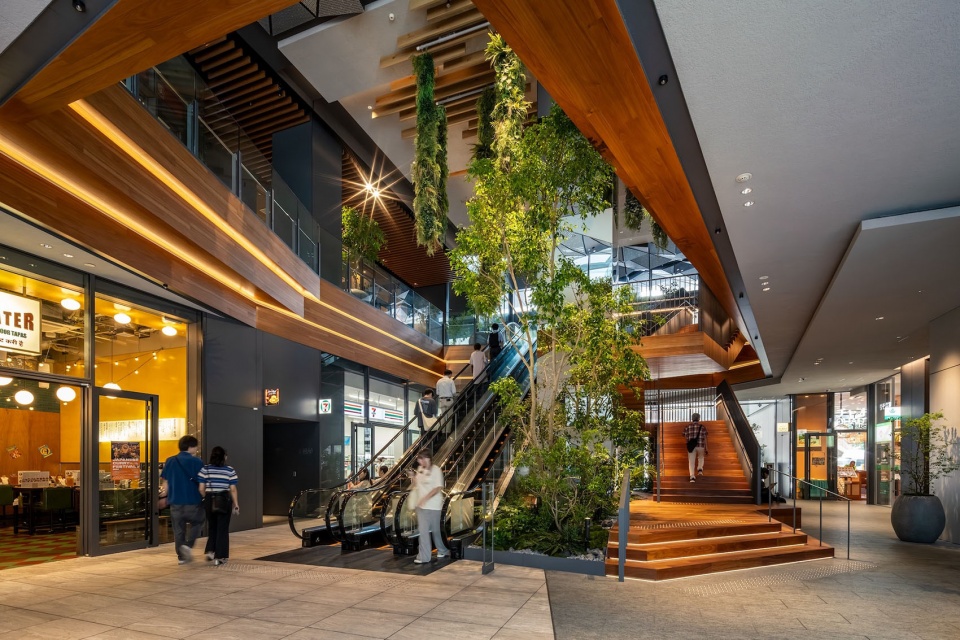
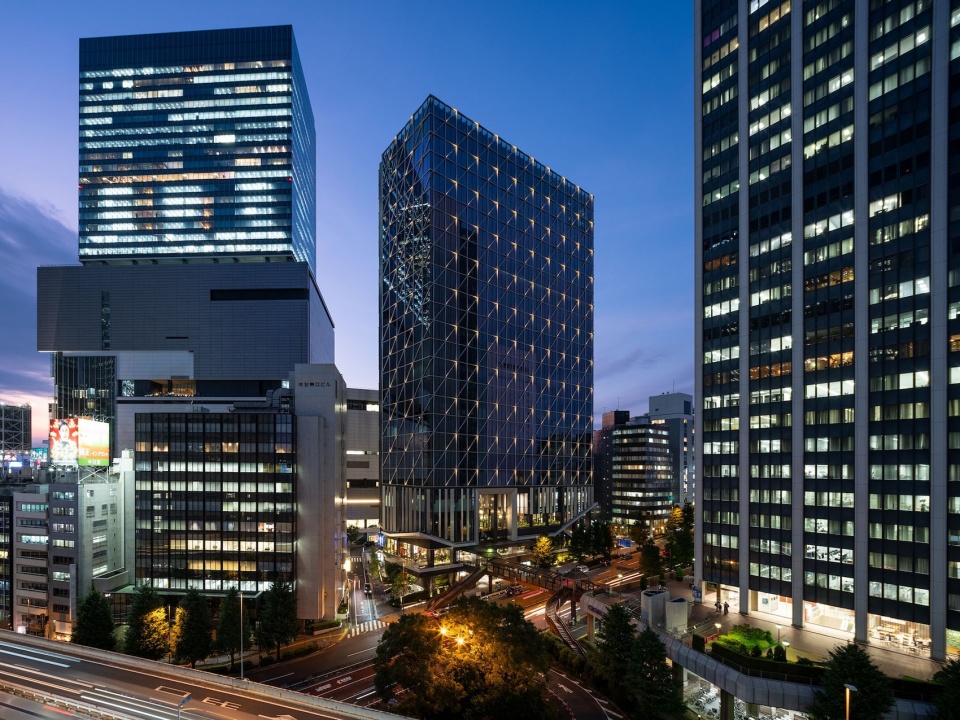
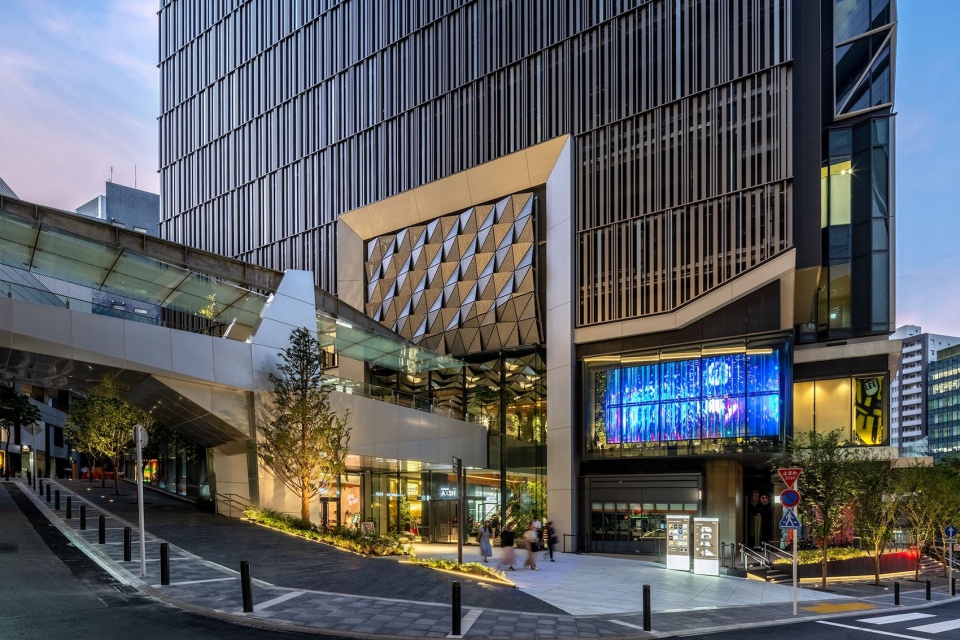
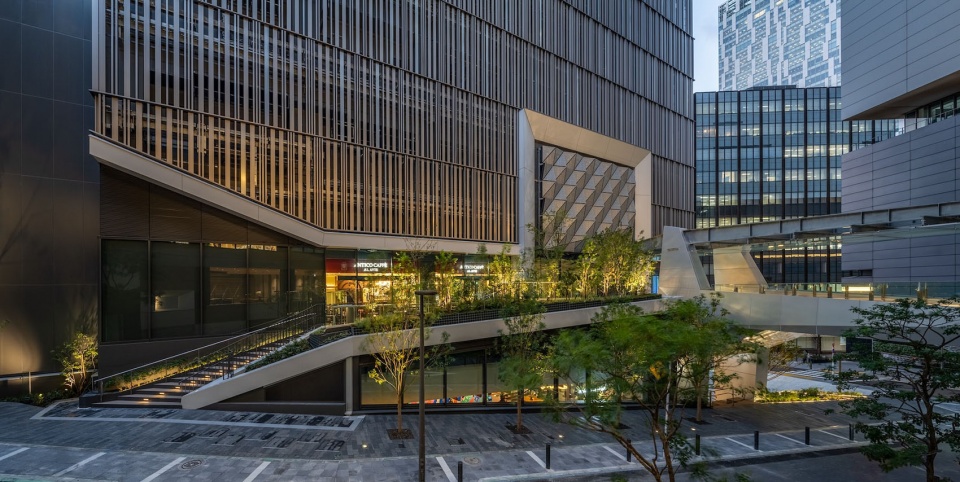
本项目聚焦于提升公共价值,并结合城市步行友好性,以回应城市开发过程中产生的空间割裂问题。位于建筑中心的中庭贯穿整个高差场地,构建出多层次的步行网络,重新连接周边区域。沿着这一网络,丰富的室内外公共空间为人们提供休憩与交流的场所,不仅鼓励穿行,更促进人与人之间的互动。通过与当地土地所有者开展工作坊形成的“つなぎ場(Tsunagi-ba,交汇与连接之所)”概念,以场地地形与历史为设计依据,赋予建筑更鲜明的场所特征,并加深其与社区之间的联系。在建筑设计层面,立面表达将步行网络及其所形成的联系关系具象化呈现:裙房部分采用门状框架,标示贯穿建筑的步行通道入口,并以开放、友好的姿态迎接行人;宽大的挑檐向街道展开,将人流自然引入建筑内部。上部楼层则采用以六向步行网络为设计意象的渐收型铸铝竖向构件,为玻璃幕墙赋予富有动感的立面表情,同时体现基地多元而复杂的城市联系。整个项目将形式与功能紧密融合,使建筑获得统一而鲜明的整体形象。
The project focuses on enhancing public value in tandem with urban walkability in an effort to address the urban fragmentation caused by city development. A centrally positioned atrium cuts through the sloped site, allowing for the creation of a multilayered pedestrian network that restores connection throughout the area. Along this network, myriad indoor and outdoor spaces offer room for relaxation and interaction, encouraging not only movement but also engagement. The concept of “Tsunagi-ba” (points of intersection and connection), developed through workshops with local landowners, draws on the site’s topography and history to inform the architecture, endowing the site with a stronger presence and fostering a deeper connection to the local community. Architecturally, the facade design visualizes the pedestrian network and the connections it generates: At the podium level, a gate-like frame marks the entrance to a through-path and strikes a welcoming presence for pedestrians, while wide eaves open to the street, drawing people inward. On the upper floors, tapered cast aluminum fins, designed with the six-directional pedestrian network as a motif, give the curtain wall a dynamic expression and embody the site’s diverse urban linkages. Across the design, form and function are seamlessly integrated, endowing the architecture with a cohesive identity.
▼步行连桥,Pedestrian bridge
▼中庭概览,Atrium overview
▼首层中庭,Ground-level atrium
▼二层中庭,Second-floor atrium
▼二层架空空间,Second-floor piloti
▼青山通夜景,Night view from Aoyama-dori
▼街侧低层立面夜景,Street-side façade night view
Credit Information
Architecture : Mitsubishi Jisho Design Inc. + Tokyu Architects & Engineers INC.
Photography : Kawasumi・Kobayashi Kenji Photograph Office, Tomoyuki Kusunose
Project Outline
Location: Tokyo, Japan
Completion: May, 2024
Gross floor area: 44,540 sqm
Specification: Office-retail complex and pedestrian network hub