EL BORN阁楼住宅,西班牙 / Roman Izquierdo Bouldstridge
位于巴塞罗那埃尔博恩(El Born)街区的一处旧商业空间被改造为住宅,这一项目被构想为一次关于“空”的探索。其设计理念呼应了老子所提出的空间观:“埏埴以为器,当其无,有器之用;凿户牖以为室,当其无,有室之用。故有之以为利,无之以为用。” 项目的核心概念围绕“空”的四个相互关联的维度展开:时间、空间、材料与功能。
▼轴测图,axonometric diagram
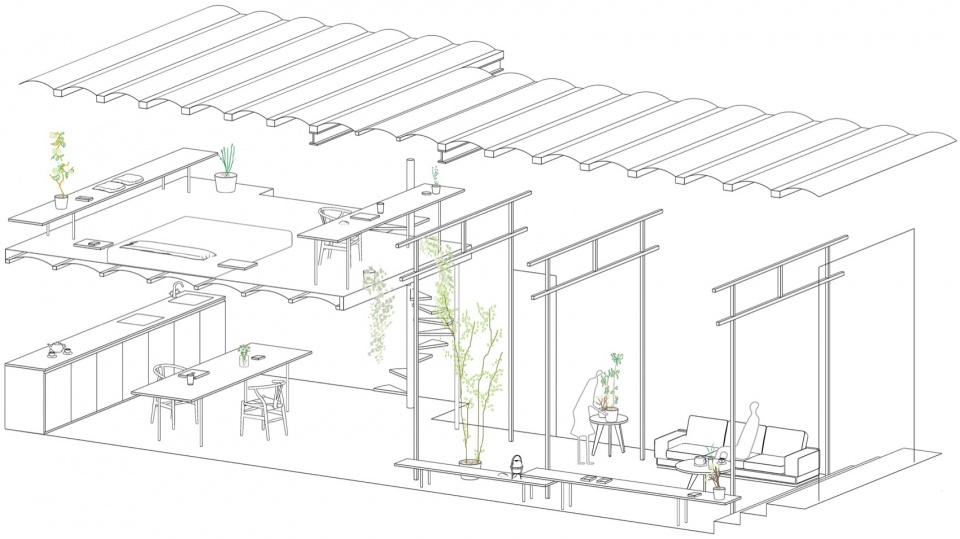
The conversion of an old commercial space into a dwelling, located in the Barcelona district of El Born, is conceived as an exploration of the void. The project aligns with the spatial conception developed by the master Lao-Tse: “We make a vessel from a piece of clay; it is the empty space inside that gives it its utility. We build doors and windows for a room; but it is these empty spaces that make it habitable. Thus, while the tangible has its advantages, it is the intangible from which the useful emerges.” The core concept is articulated across four interrelated dimensions that embody the void: time, space, material, and program.
▼项目概览,overview of the project
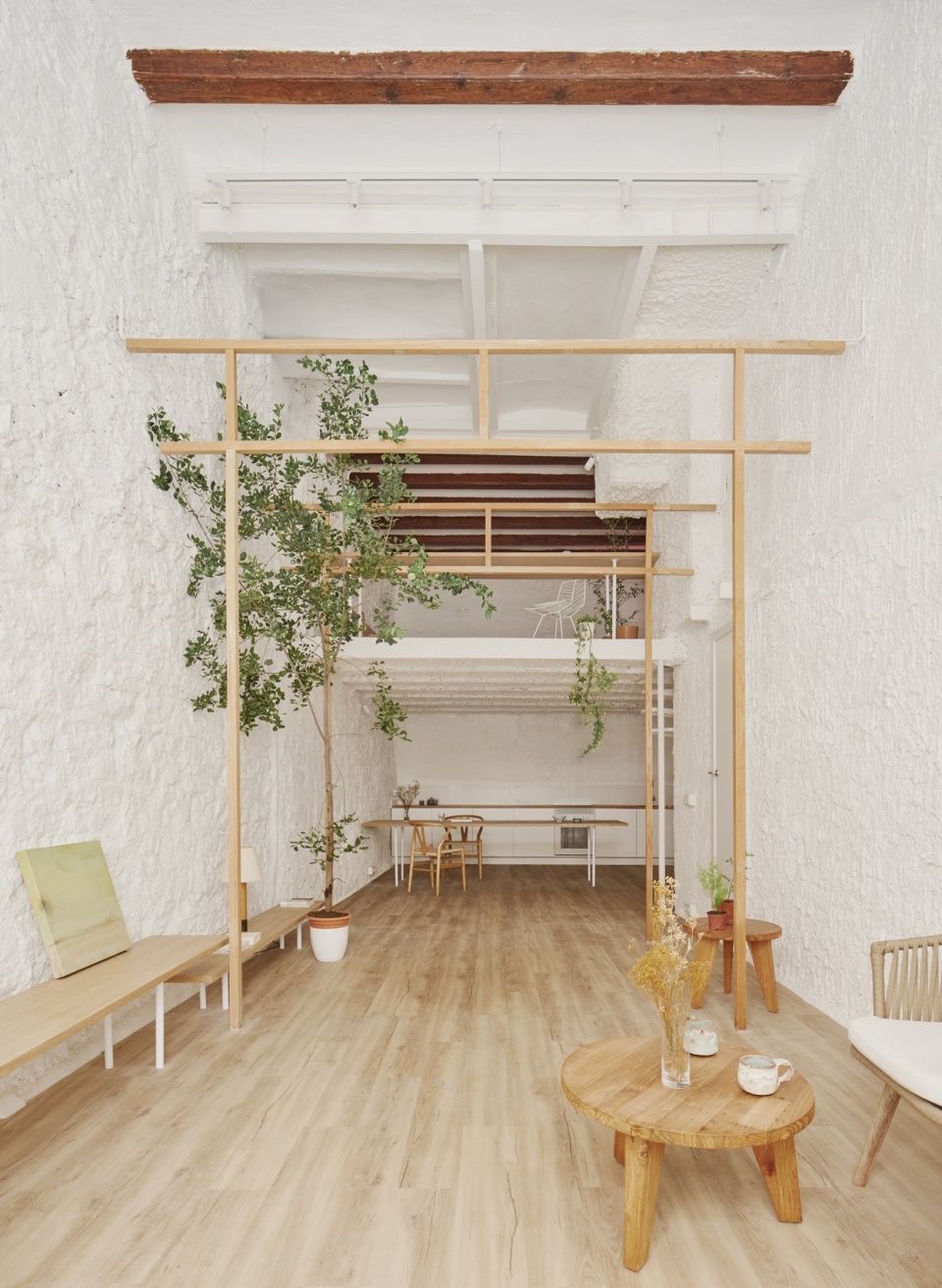
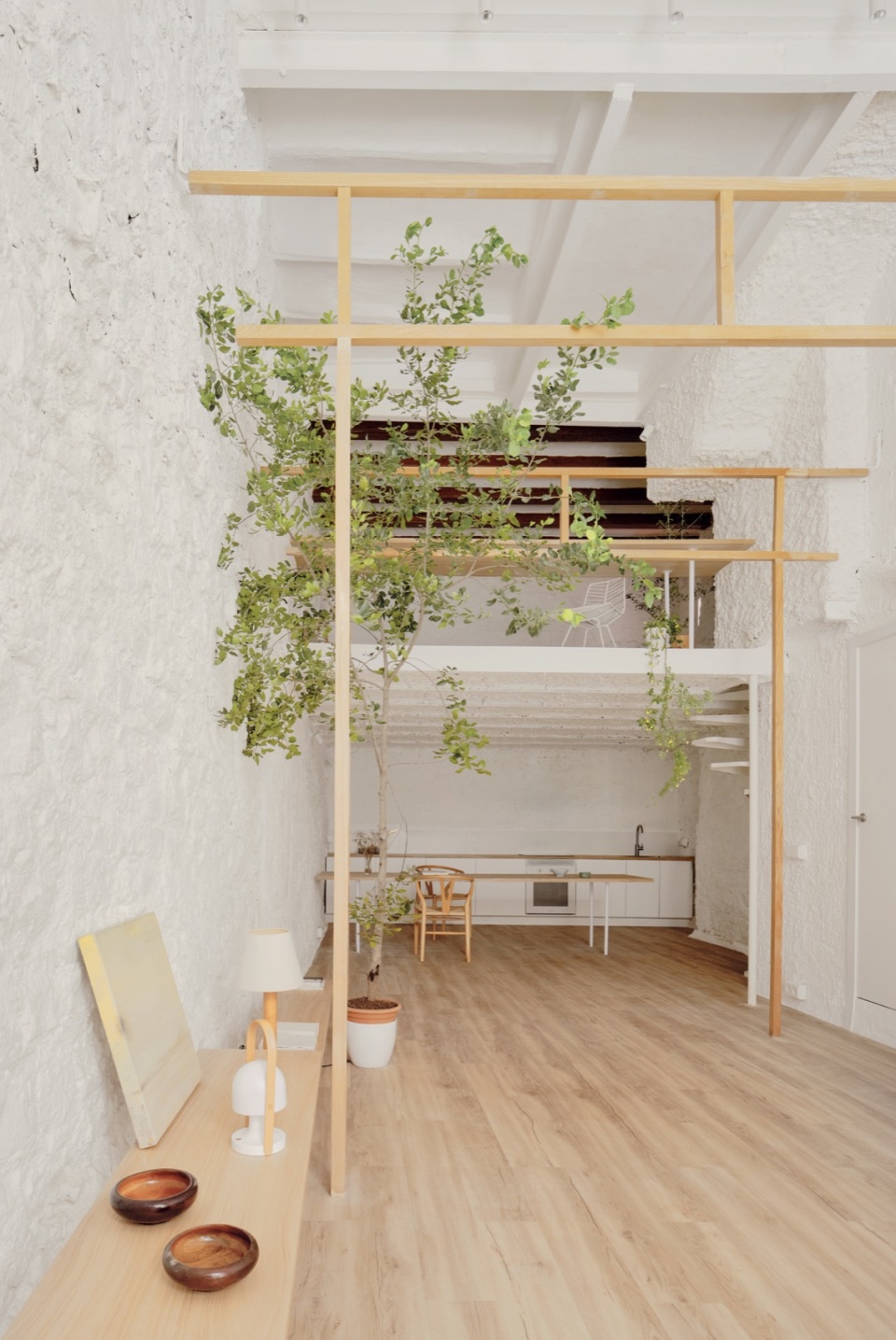
时间中的空:一个系统的转化 The Void in Time: Transformation of a system
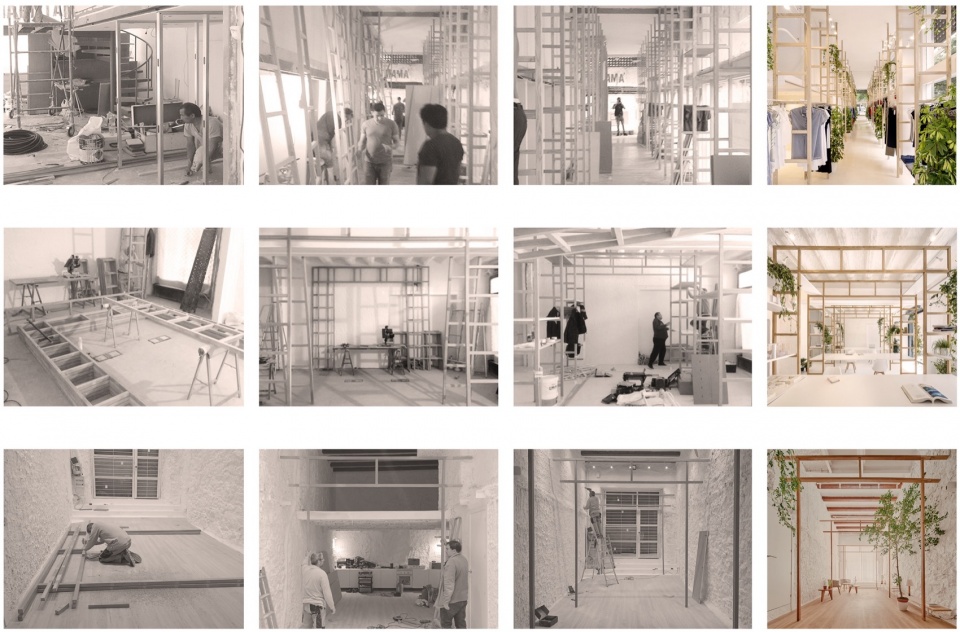
模块化白蜡木系统最初并非为这间阁楼而设计。在长达十年的时间里,它经历了多种不同配置,最初作为商业空间设施使用,随后成为办公空间系统,并不断适应新的需求,而始终未改变其结构逻辑。
The modular ash wood system was not originally designed for this loft. Over a span of ten years, it has adopted various configurations, initially serving as commercial infrastructure and later as office spaces, adapting to new needs without compromising its structural logic.
▼模块化白蜡木系统,The modular ash wood system
这种做法不仅仅是对一个系统的再利用,更是在其生命周期的每个阶段赋予其新的意义。这一结构先后被重新诠释为商业支撑系统、办公家具,最终成为具有象征意义的居住元素。木材保留着痕迹、色差以及时间留下的印记,将老化过程转化为一种建筑品质。
This approach goes beyond merely reusing a system; it involves attributing new meanings at each stage of its lifecycle. The structure is successively reinterpreted as commercial support, workplace furniture, and finally, as a domestic element with symbolic value. The wood retains marks, tonal variations, and traces that bear witness to the passage of time, incorporating aging as an architectural quality.
▼木材保留着痕迹、色差以及时间留下的印记,
The wood retains marks, tonal variations, and traces that bear witness to the passage of time
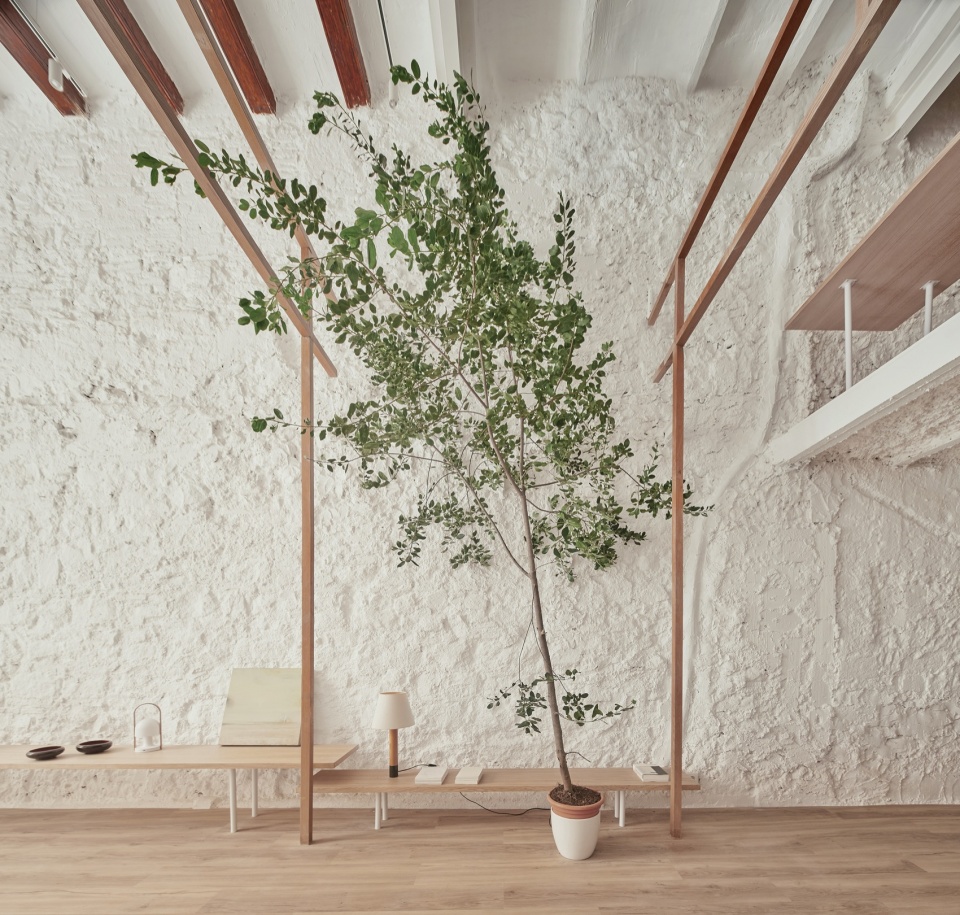
因此,建筑接受了一种非恒定的状态:系统在时间中的连续性并不依赖于其固定存在于某一场所,而在于其能够适应新的形式与功能,同时保持自身身份。时间之中存在着一种“空”——即便结构与用途不断演变,其内在逻辑始终保持不变。
Architecture, therefore, embraces a state of impermanence, where the continuity of the system over time depends not on its permanence in a specific place but on its ability to adapt to new forms and functions while maintaining its identity. A void exists in time; even though structure and use evolve, its underlying logic remains unchanged.
▼装配施工过程,assembly construction process
空间中的空:三个鸟居构成的连续序列 The Void in Space: A succession of three torii
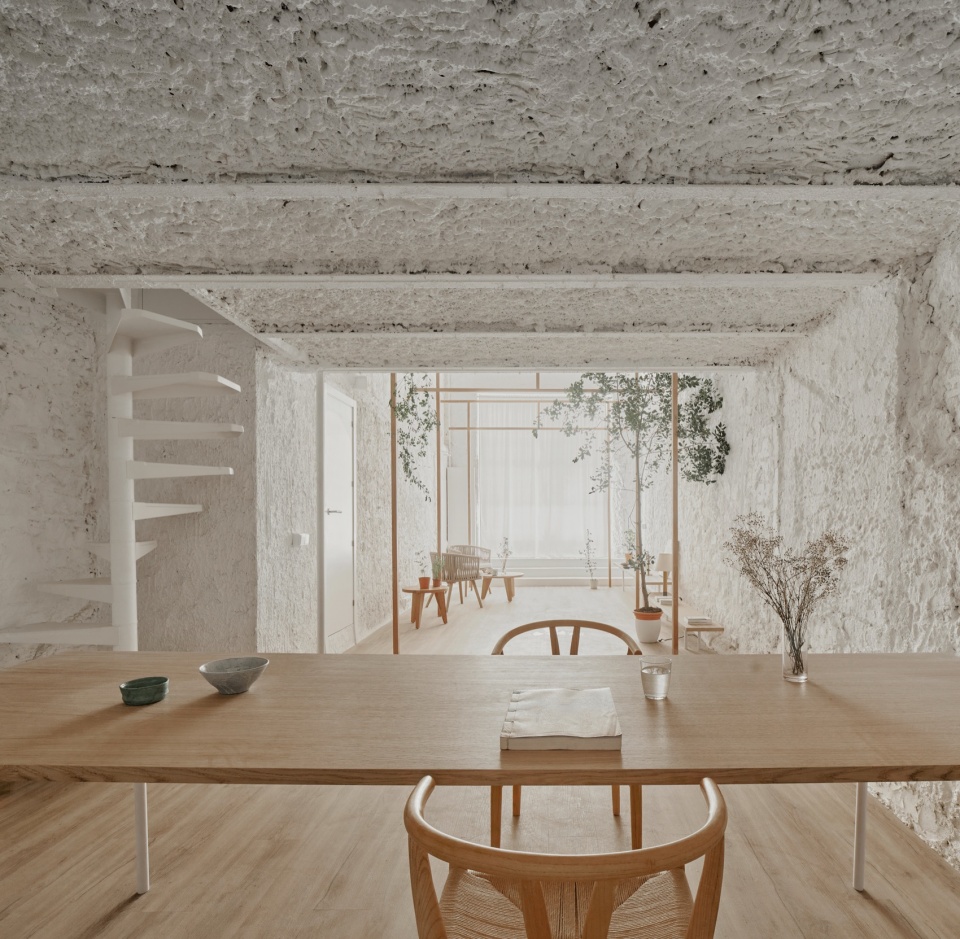
项目创造了一处由三个连续鸟居(torii)构成的新场景。鸟居是日本传统建筑中的门形构筑物,象征着从世俗走向神圣的过渡。它们的作用并不在于物质层面的使用功能,而在于为使用者创造一种全新的感知体验。在这些门槛之间形成了间隔与停顿,从而构建出一条具有内部路径感的空间景观。
The project involves creating a new scenery formed by a succession of three torii, traditional Japanese gateways symbolizing the transition from the profane to the sacred. Their function lies not in their material use but in the new perception provided to the user. Between these thresholds, intervals and pauses are generated, giving rise to a landscape with an interior path.
▼三个连续鸟居,three torii
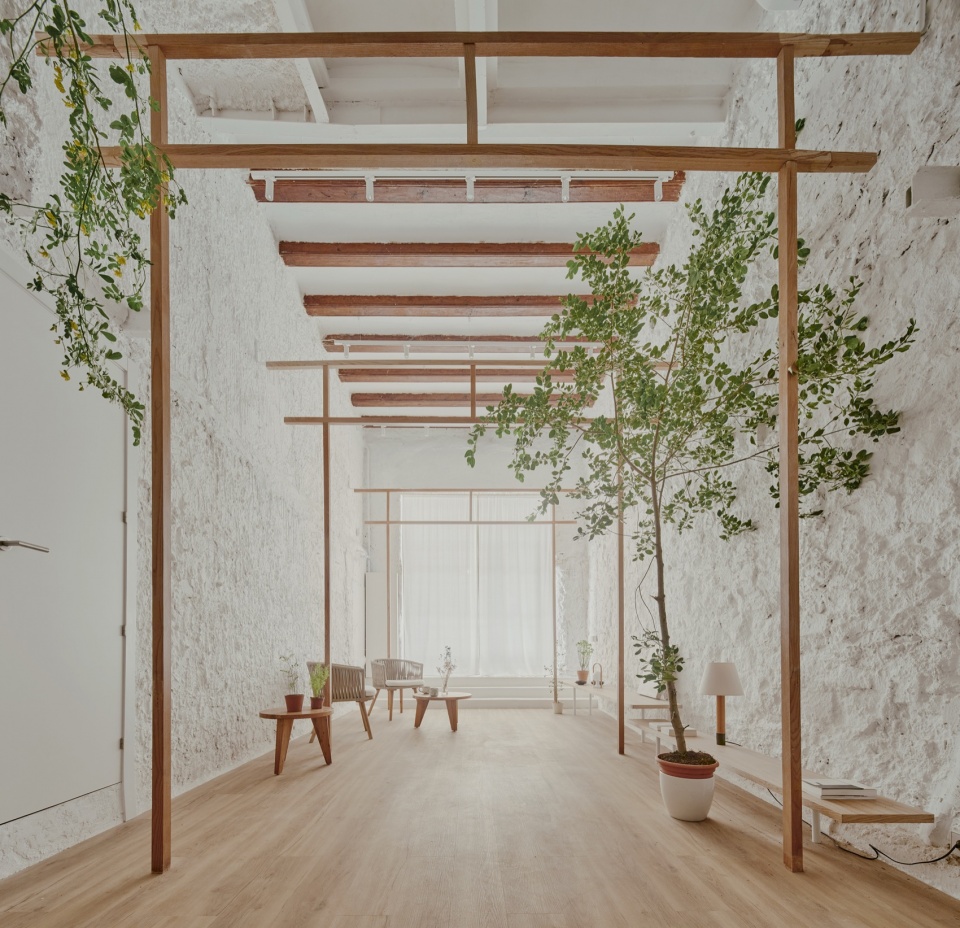
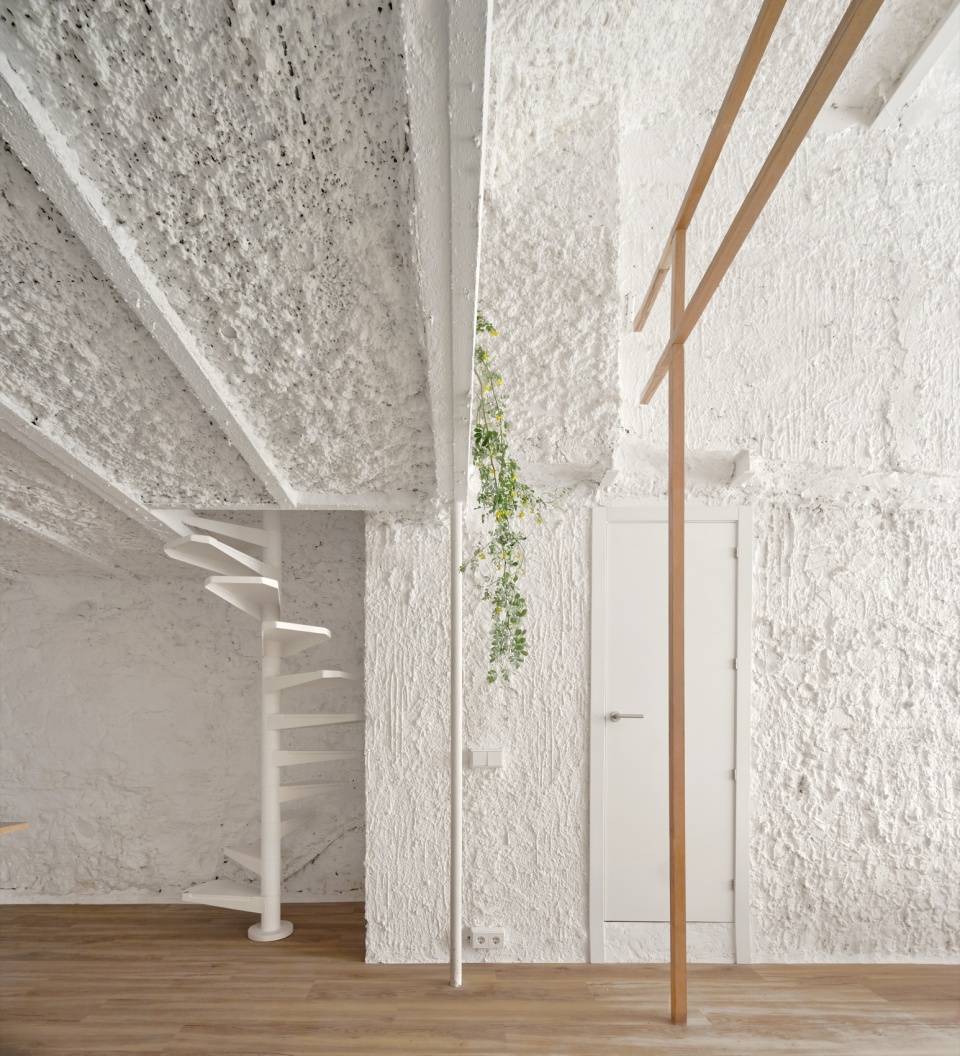
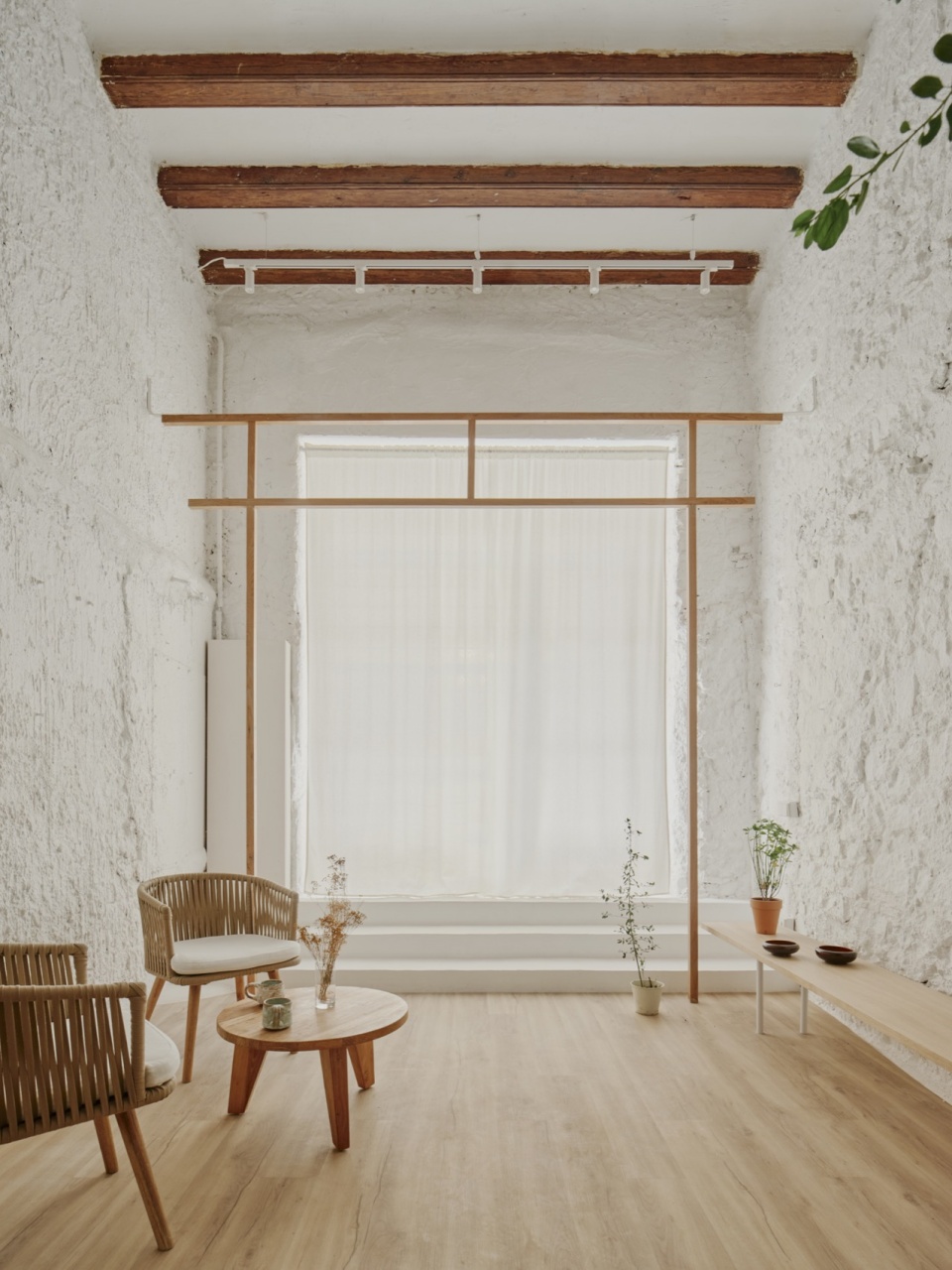
日本“间(ma)”的概念强调中间空间作为意义生成者的重要性。定义场所的并非孤立的元素本身,而是元素之间的关系与距离。重复带来了节奏感,并改变了人们对空间的感知。空间序列最终抵达一段通向自然光的楼梯,从而强化了抵达另一空间的体验。虽然人们看到的是鸟居本身,但真正重要的是其所框定出的空无。
The Japanese concept of ma emphasizes the significance of the intermediate space as a generator of meaning. It is not the isolated element that defines the place, but rather the relationships and distances between elements. Repetition introduces a rhythm that transforms spatial perception. The sequence culminates in a staircase leading to natural light, enhancing the experience of reaching another space. Although the visible is the torii, the essential lies in the void it frames.
▼空间序列最终抵达一段通向自然光的楼梯,
The sequence culminates in a staircase leading to natural light
材料中的空:白色作为可能性的场域 The Void in Material: White as a field of possibility
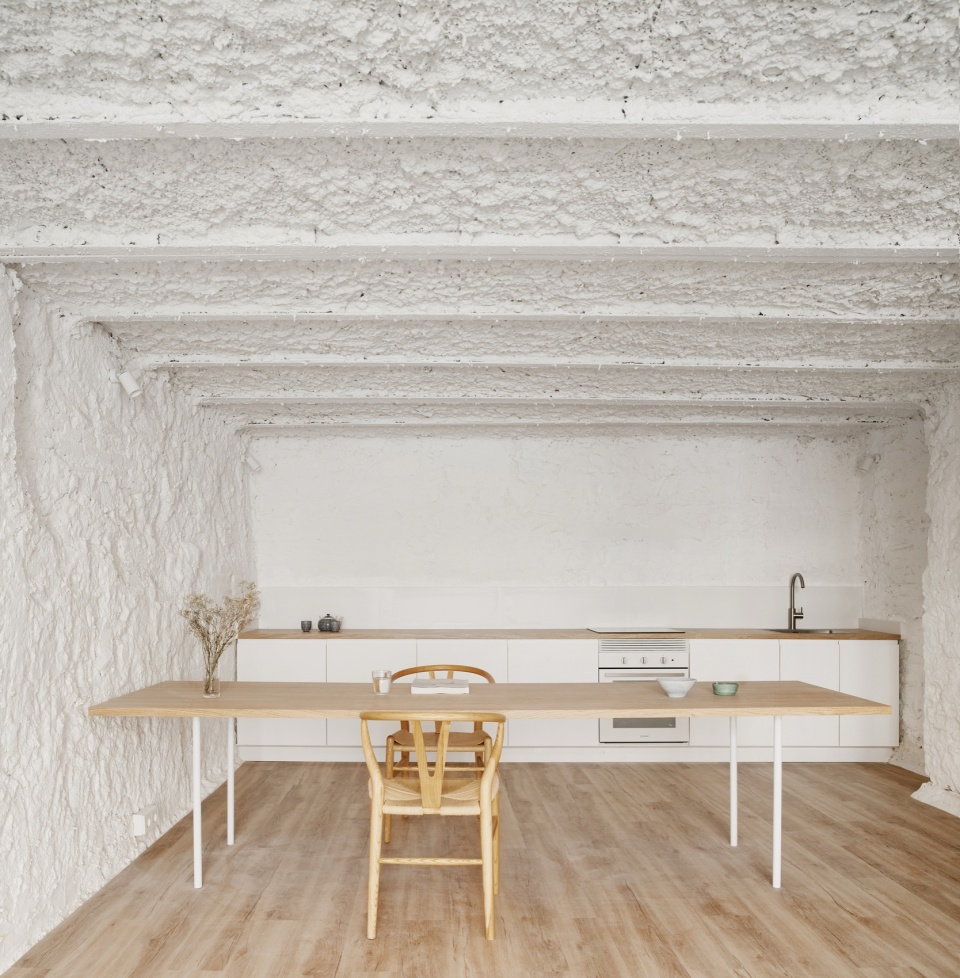
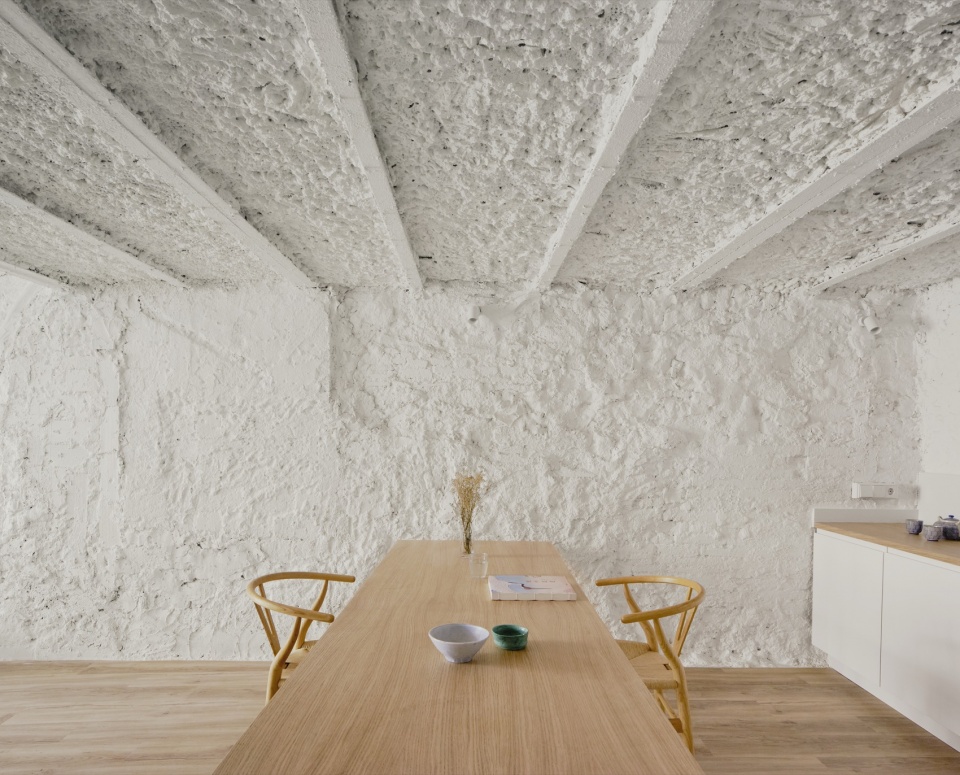
设计介入采取了一种尽可能减法的策略——移除尽可能多的元素,仅增加绝对必要的部分。墙体被剥离至原有石材与砖砌结构显露出来;吊顶被拆除,以展现木梁和加泰罗尼亚陶瓷拱顶;整个空间围护界面则被统一覆盖于一层白色之下。白色并非作为一种饰面存在,而是作为“空”的视觉对应物——它并非颜色的缺失,而是一片等待被占据的可能性场域。
The intervention starts with an approach that seeks to remove as much as possible while adding only what is strictly necessary. The walls are stripped back to reveal the existing stone and brick masonry, false ceilings are removed to expose the wooden beams and Catalan ceramic vaults, and the entire envelope is unified under a layer of white. White does not act as a finish, but rather as the visual equivalent of the void; it is not an absence of color, but a field of possibility to be inhabited.
▼石材、木材与陶瓷从这一中性的背景中浮现出来,
Stone, wood, and ceramics emerge from beneath this neutral surface
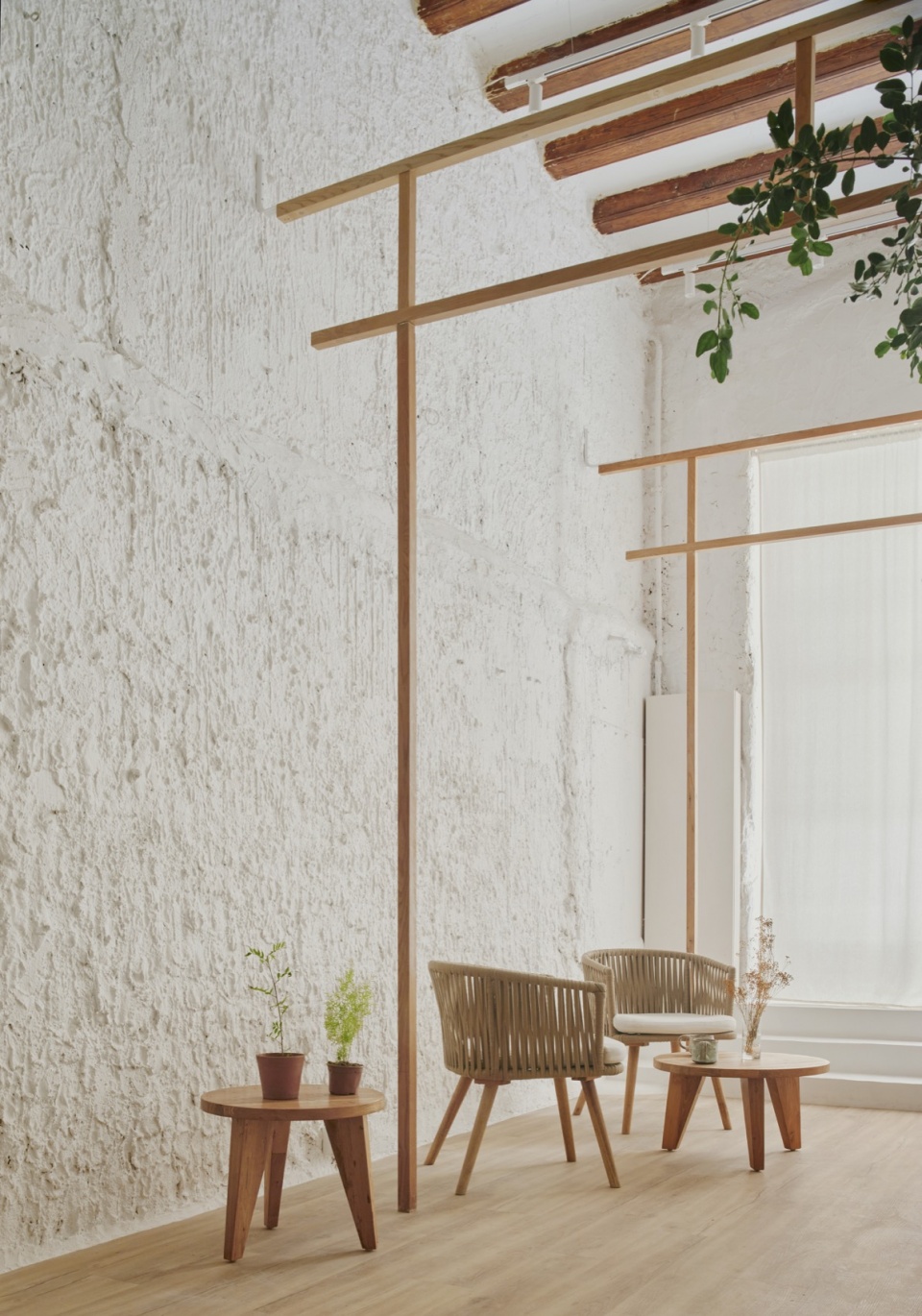
石材、木材与陶瓷从这一中性的背景中浮现出来,并在一种抽象的语言中强化其存在感。空间边界被弱化,自然光得以扩散,同时突出鸟居木构件的存在,并营造出温暖的空间氛围。减少并不意味着删减,而是让建筑聚焦于光、空间与材料这些最根本的要素。
Stone, wood, and ceramics emerge from beneath this neutral surface, intensifying their presence in an abstract language. Boundaries dissolve, and natural light expands, while highlighting the wood of the torii and fostering a warm atmosphere. Reduction does not imply subtraction, but rather the concentration of architecture on light, space, and material as fundamental elements.
▼厨房,kitchen
功能中的空:灵活且可互换的使用方式 The Void in Program: Flexible and interchangeable use
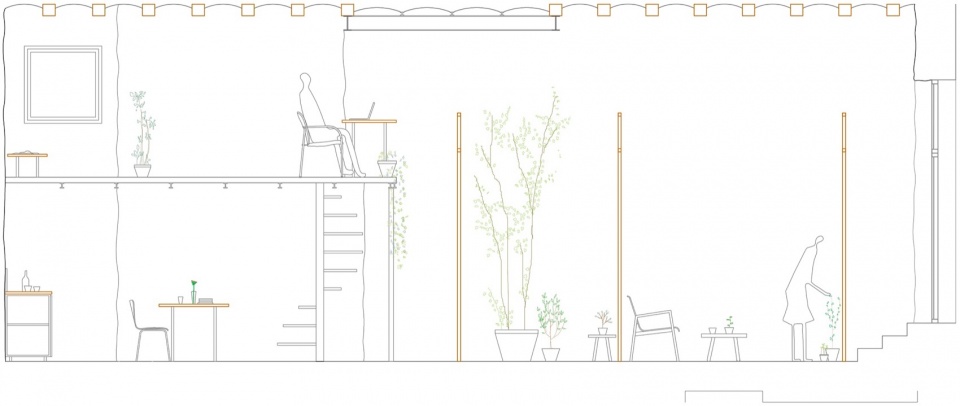
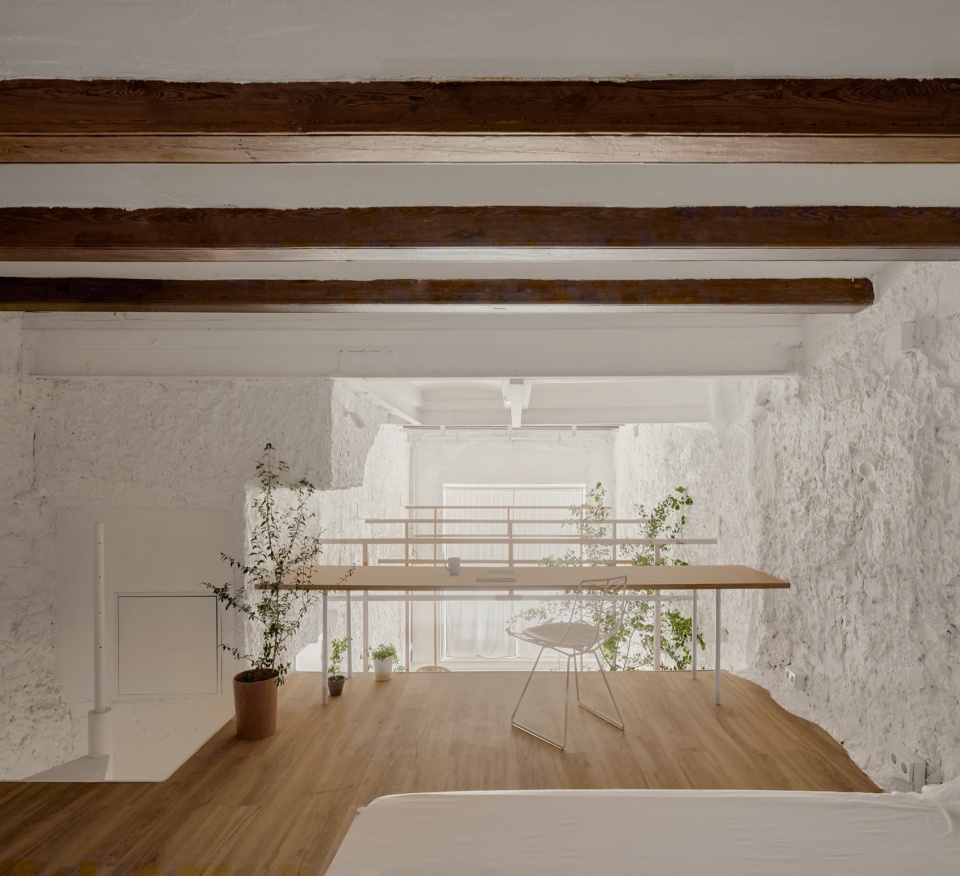
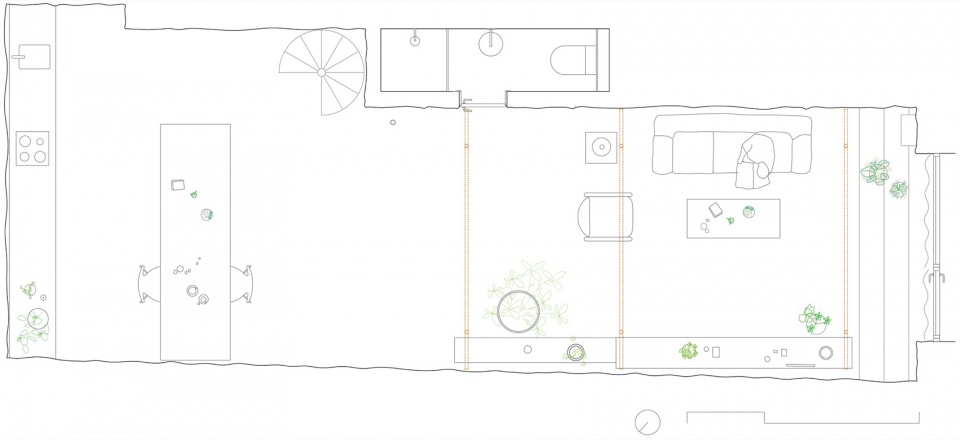
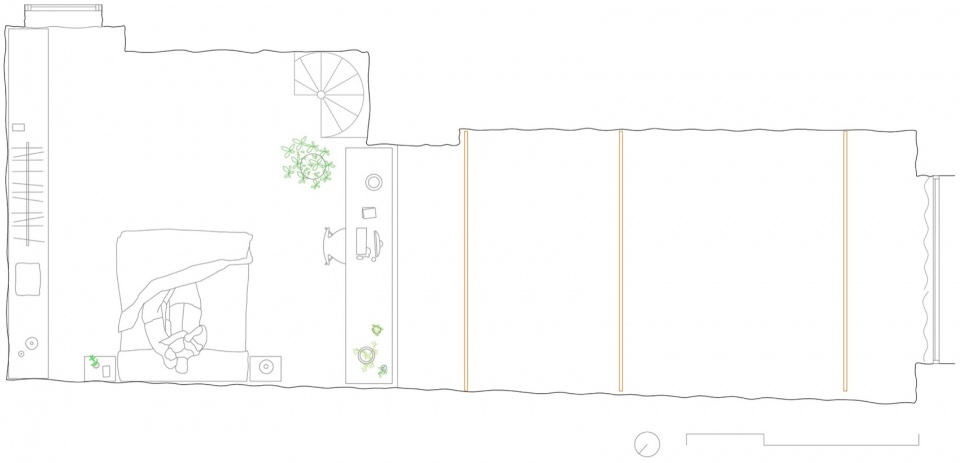
空间布局遵循同样的克制逻辑。一个层高接近五米、由夹层组织的开放空间构成连续平面,浴室是唯一被封闭起来的房间。空间内部没有建立等级关系或功能分隔,从而形成一个开放的功能体系。项目并未预先定义固定用途,而是创造出一个能够随时间演变的灵活框架。目前,这间阁楼作为住宅使用,但无需改变建筑本身,便可轻松转变为办公室、商店或其他用途。
The layout follows the same logic of containment. A single open space, nearly five meters in height, articulated by a mezzanine, forms a continuous floor plan where the bathroom is the only enclosed space. No hierarchies or partitions are established, giving rise to an open program. The project does not define specific functions, generating a flexible framework capable of evolving over time. The loft is currently a residence, but could easily be converted into an office, shop, or another use without altering its architecture.
▼阁楼,loft
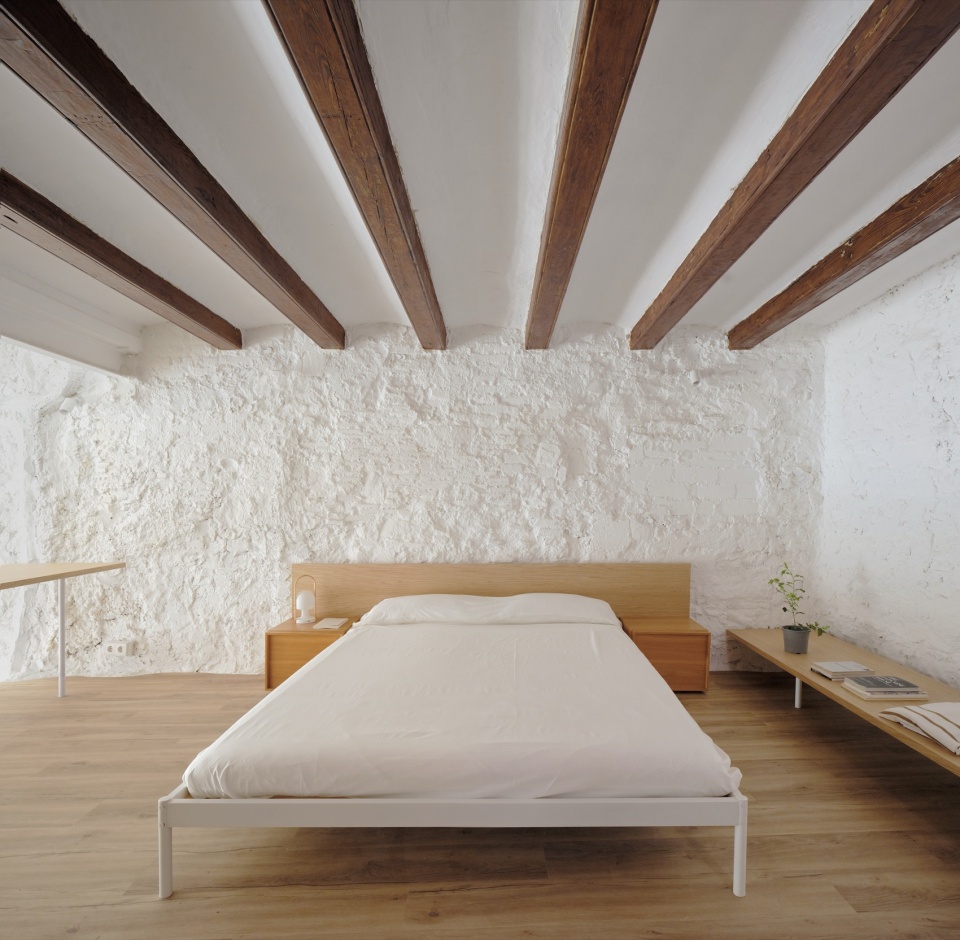
▼卧室,bed room
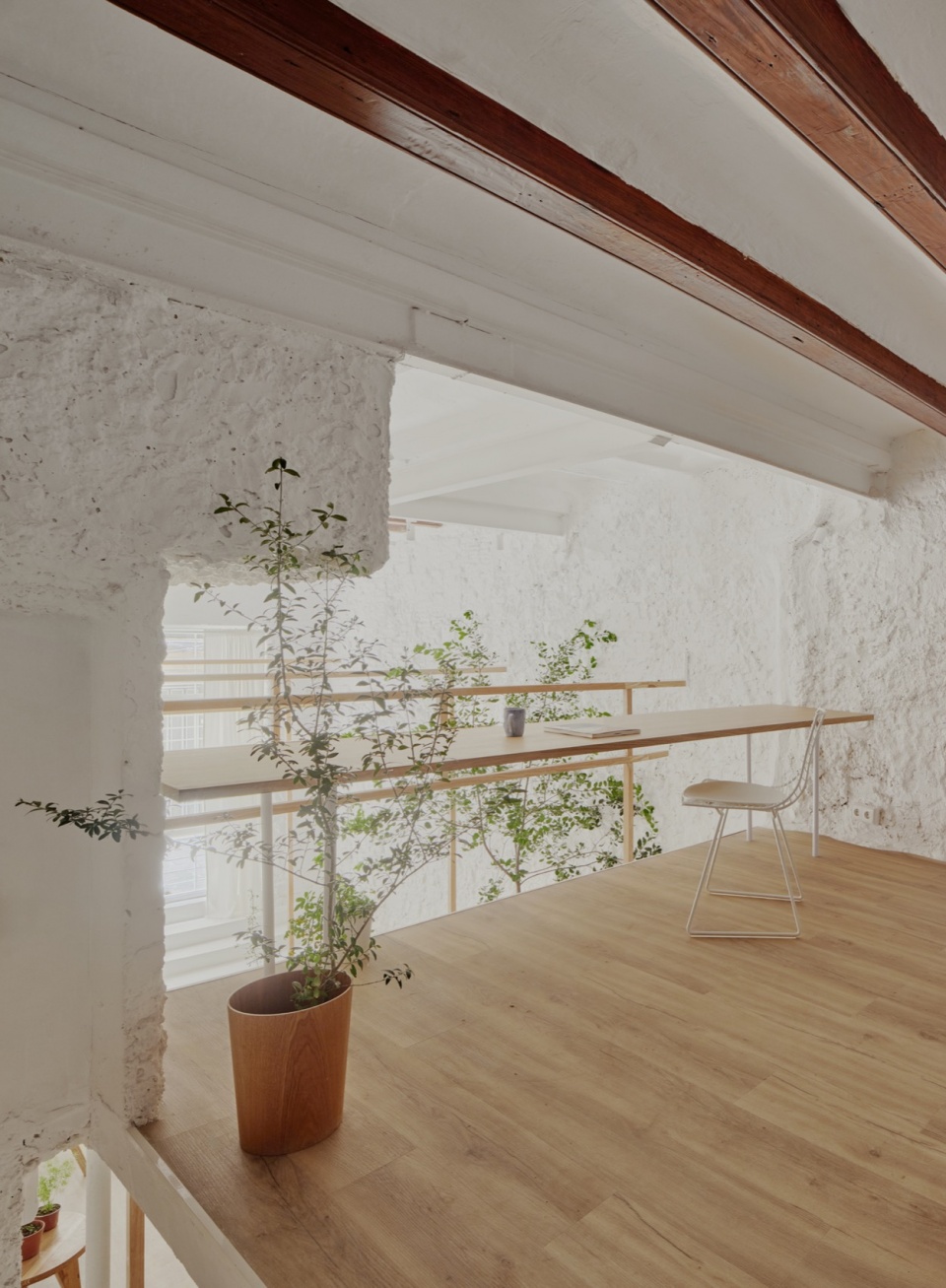
▼办公空间,office
▼家具细部,Furniture detail
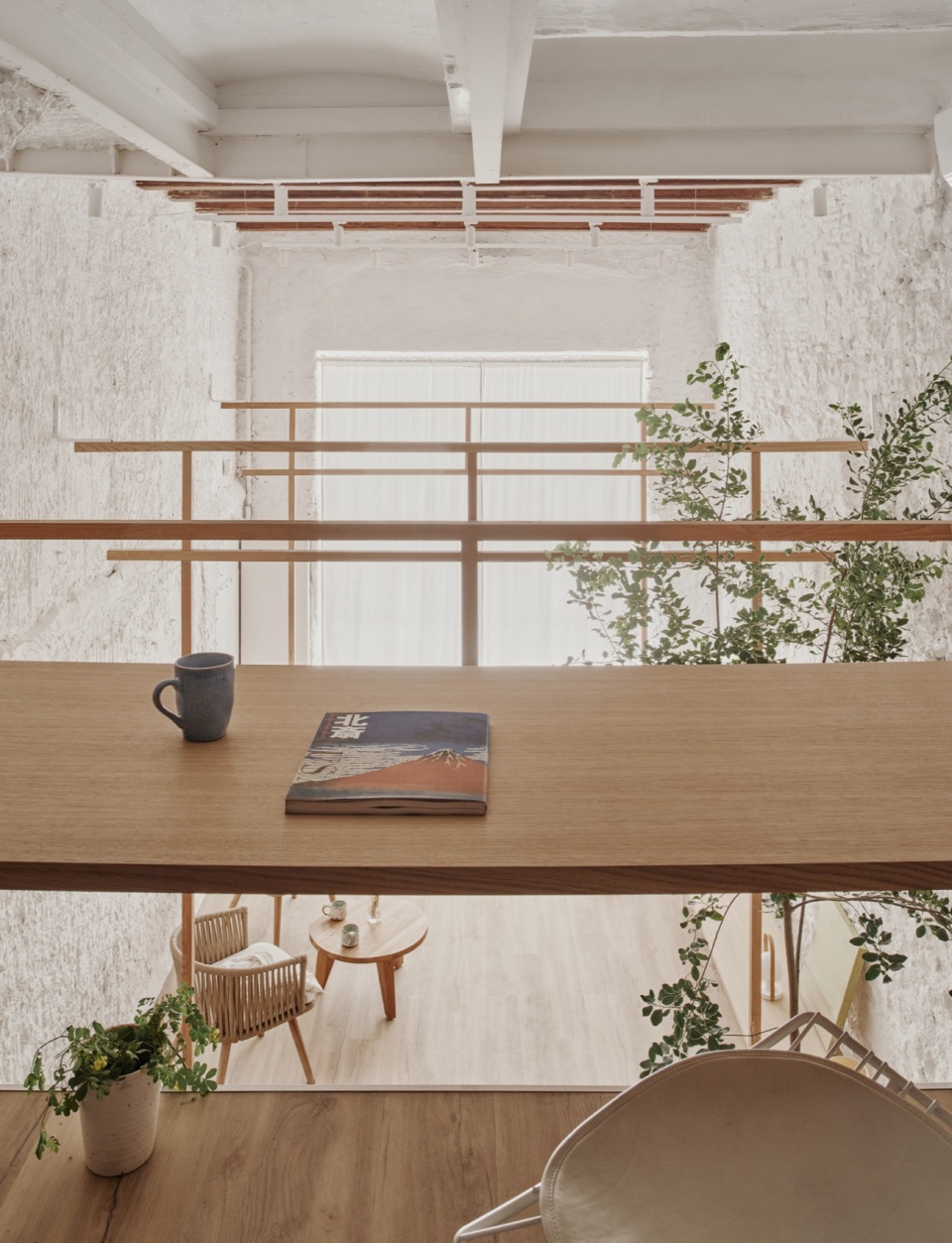
家具则以最基本的结构形式构成:由四条支腿支撑的板面,根据不同用途调整高度与比例。系统再利用、最小化建造介入、资源节约以及功能灵活性,并非源于某种特定的可持续发展目标,而是自然地来自对简约性的追求。正是在这种克制之中,最小化之美得以显现。一棵大型树木与植物被视为占据空无却不固定空无的生命体。建筑并不将自己呈现为一个对象,而是提供一种安静的支撑;一种留白的空间,使材料、光线与生活能够和谐地进入其中。
The furniture is resolved through the most elemental structure: panels on four legs, varying in height and proportion according to their function. The strategy of reusing a system, minimal construction intervention, resource reduction, and flexibility do not respond from a specific sustainability goal, but rather emerge naturally from the search for simplicity. In this containment arises the beauty of the minimum, where a large tree and plants are conceived as living elements that occupy the void without fixing it. The architecture does not present itself as an object, but offers a silent support; a blank space allowing matter, light, and life to enter in harmony.
▼平面,floor plan
▼剖面,section