农舍改造,法国 / Atelier AJO
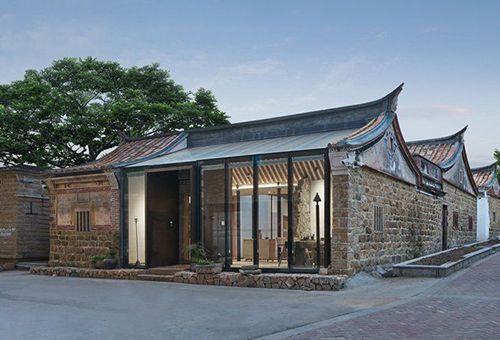
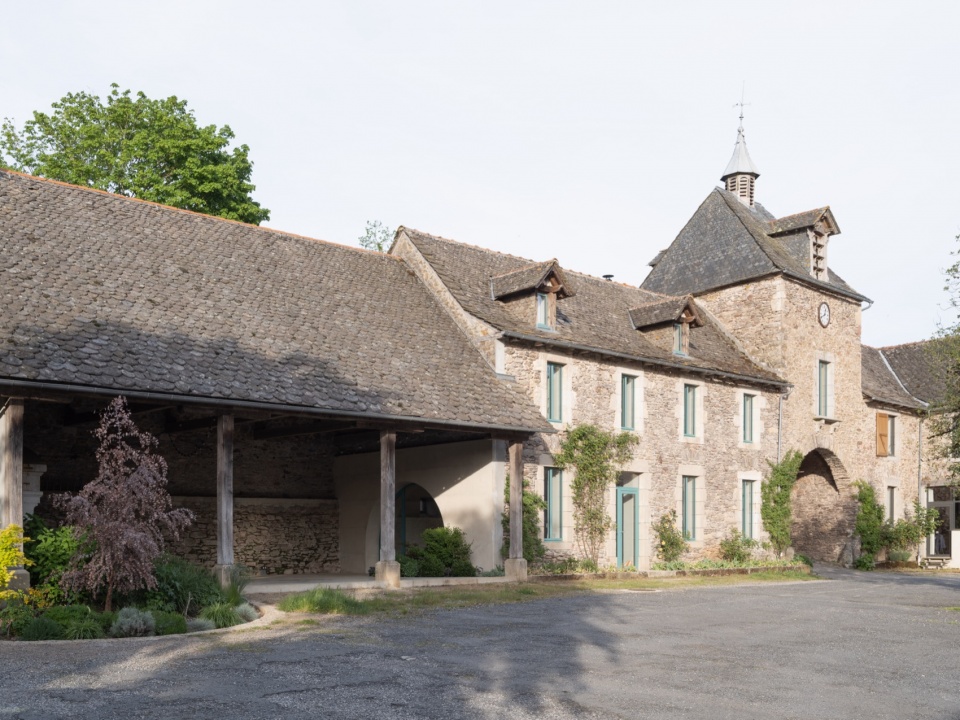
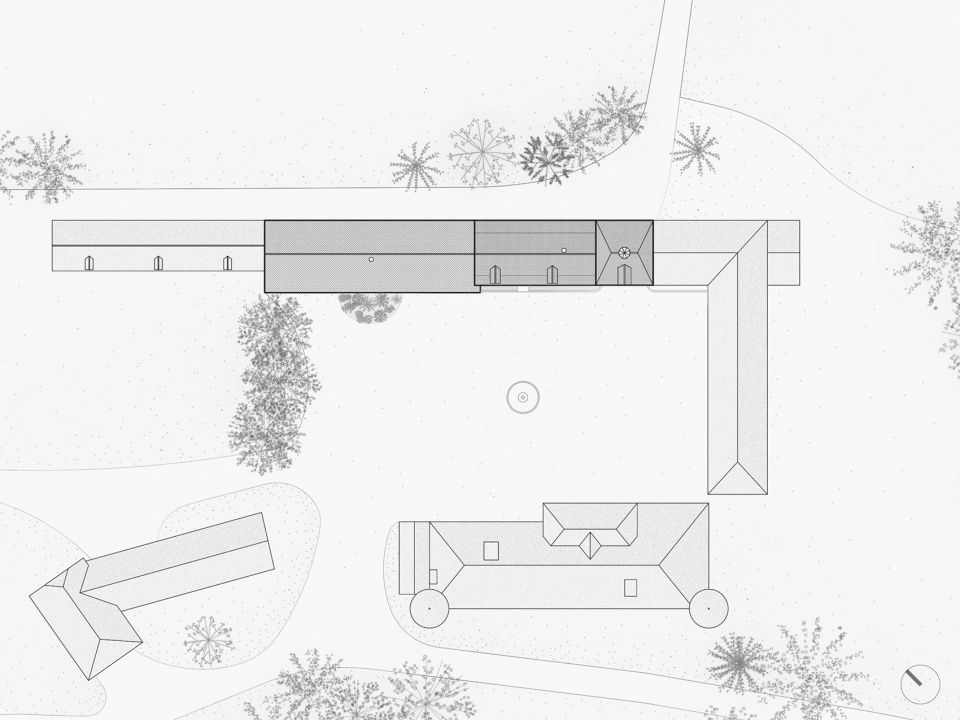
项目涉及对一栋长期闲置的旧农舍建筑进行改造修复。该建筑原本用于安置农业工人,属于围绕中央庭院布局的一组建筑群的一部分。业主最主要的愿景,是将这里转变为一个温馨的聚会场所,让家人与朋友能够在周末相聚并共享时光。
The project involves the rehabilitation of a former farmhouse building that had long stood vacant. Originally used to accommodate agricultural workers, it forms part of a group of structures arranged around a central courtyard. The clients’ primary ambition was to transform this place into a welcoming retreat where family and friends could gather and spend weekends together.
▼改造后的农舍建筑,Renovated farmhouse
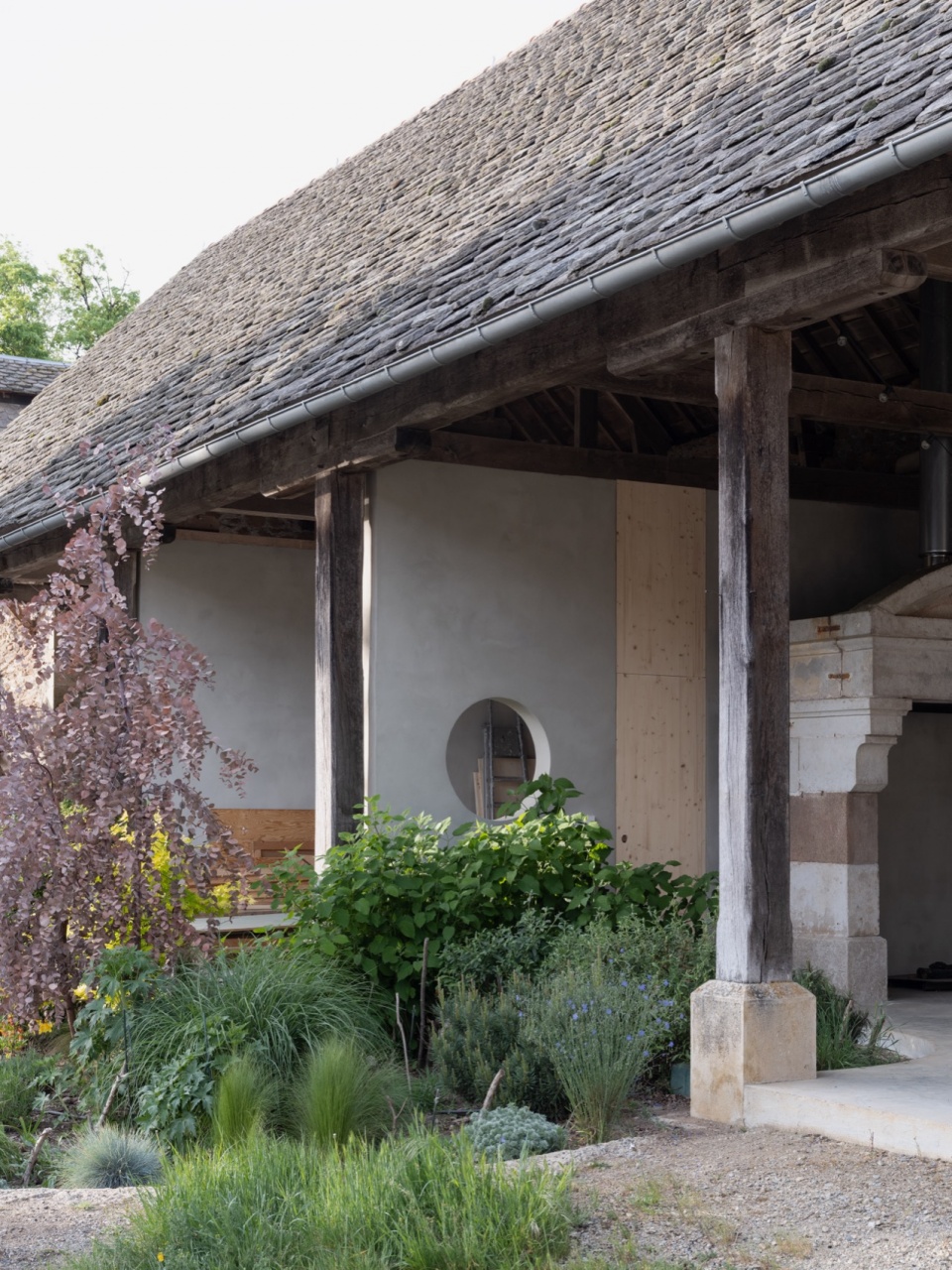
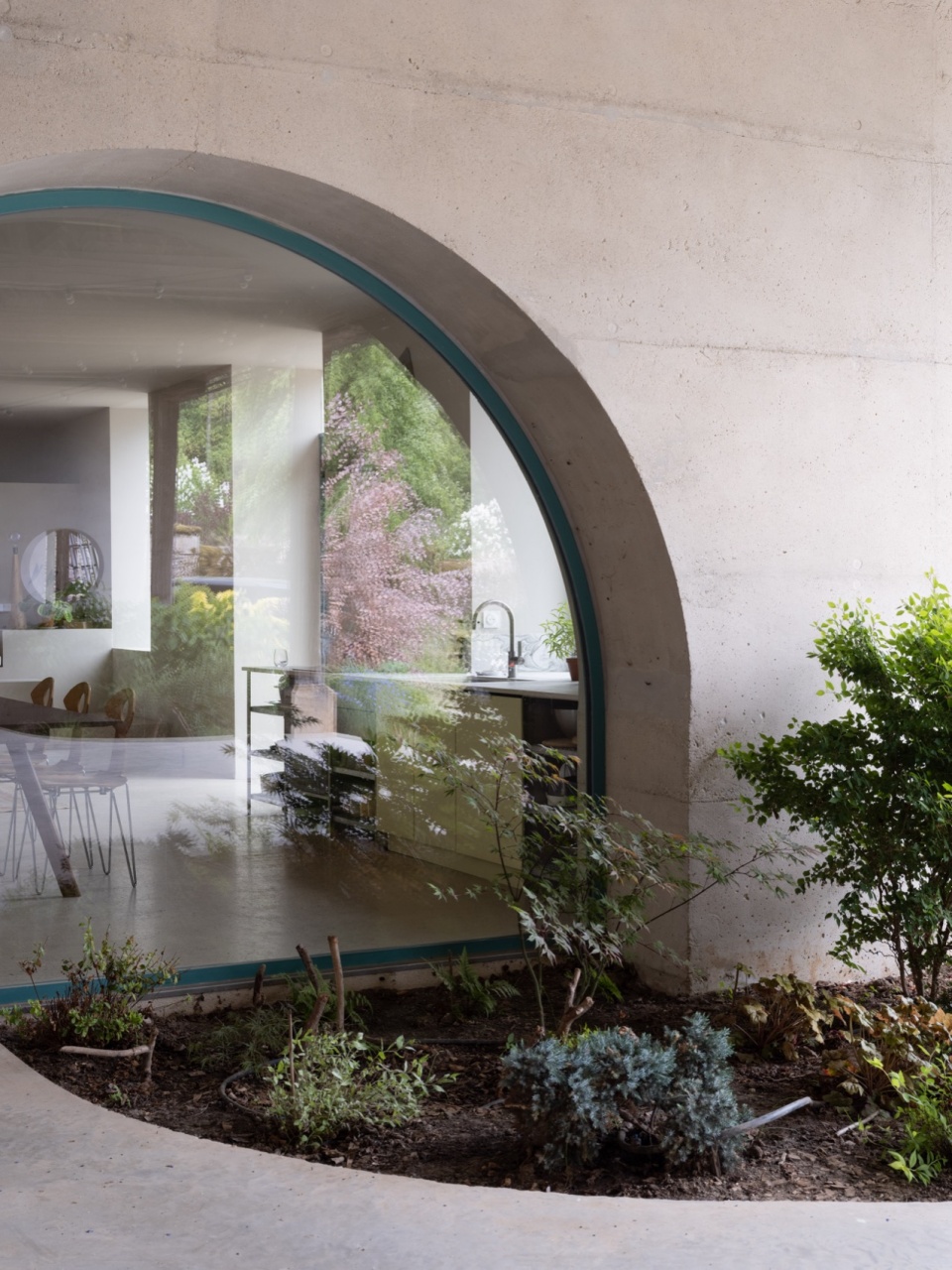
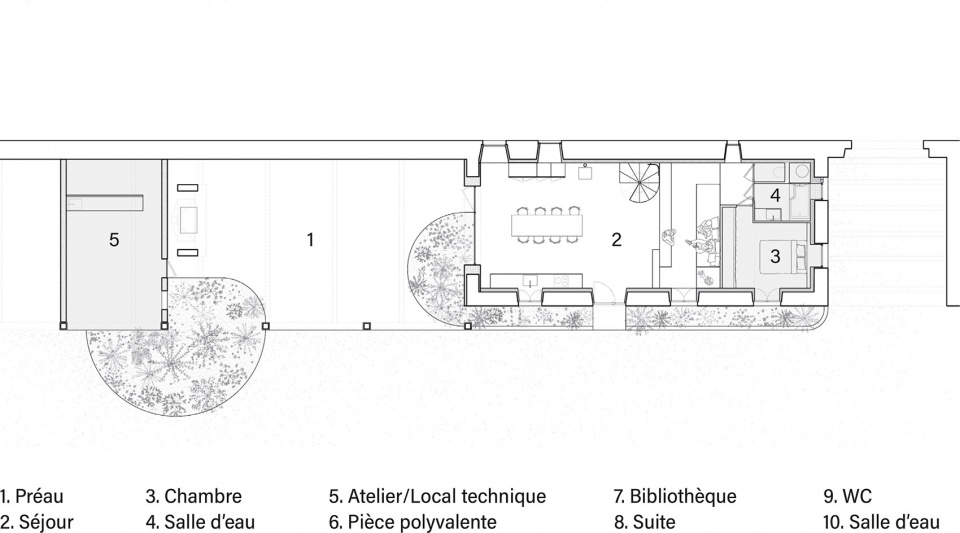
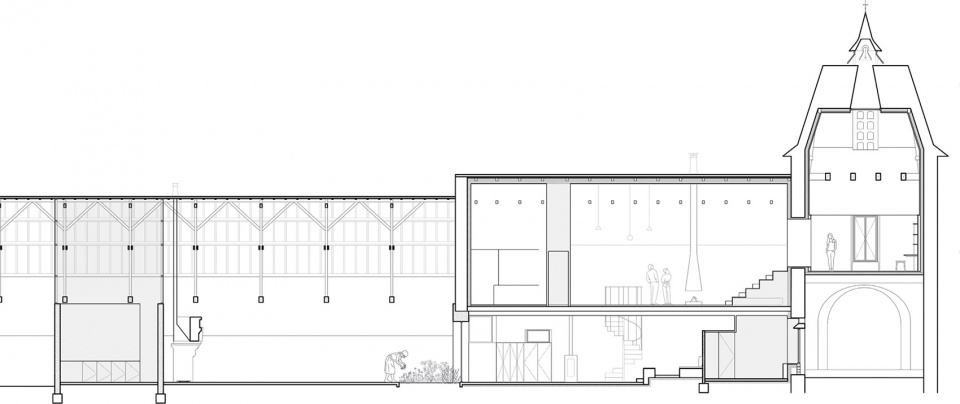
设计旨在重新建立三大主要体量——开放式谷仓、中央主体建筑以及鸽舍塔楼——之间的连续关系。此前,这些空间被分割成一系列狭小且彼此独立的房间。项目通过在承重墙上开设两个具有标志性的开口,实现从塔楼到种植谷仓之间的空间联通。过去,建筑几乎没有真正意义上的户外生活空间,因此原有谷仓被重新构想为居住空间的主要景观界面:一个介于室内与室外之间的半开放景观空间。其弧形构造呼应新开设的洞口,与农庄庭院形成对话,同时框定了被精心保留并重新启用的大型石砌壁炉。
The design seeks to establish a new continuity between the three main volumes—the open barn, the central building, and the dovecote—which had previously been fragmented into a series of small, compartmentalized rooms. This continuity is achieved through the creation of two distinctive openings in the load-bearing walls, linking the spaces from the tower to the planted barn. Until now, the building lacked any true outdoor living area. The former barn has therefore been reimagined as the main outlook from the living space: a semi-interior landscape whose curved forms echo the newly created openings, establish a dialogue with the farm courtyard, and frame the massive stone fireplace, carefully preserved and brought back into use.
▼拱形开口连接室内外空间,Arched opening links interior and exterior spaces
▼开放式厨房沿墙展开,Open kitchen arranged along the wall
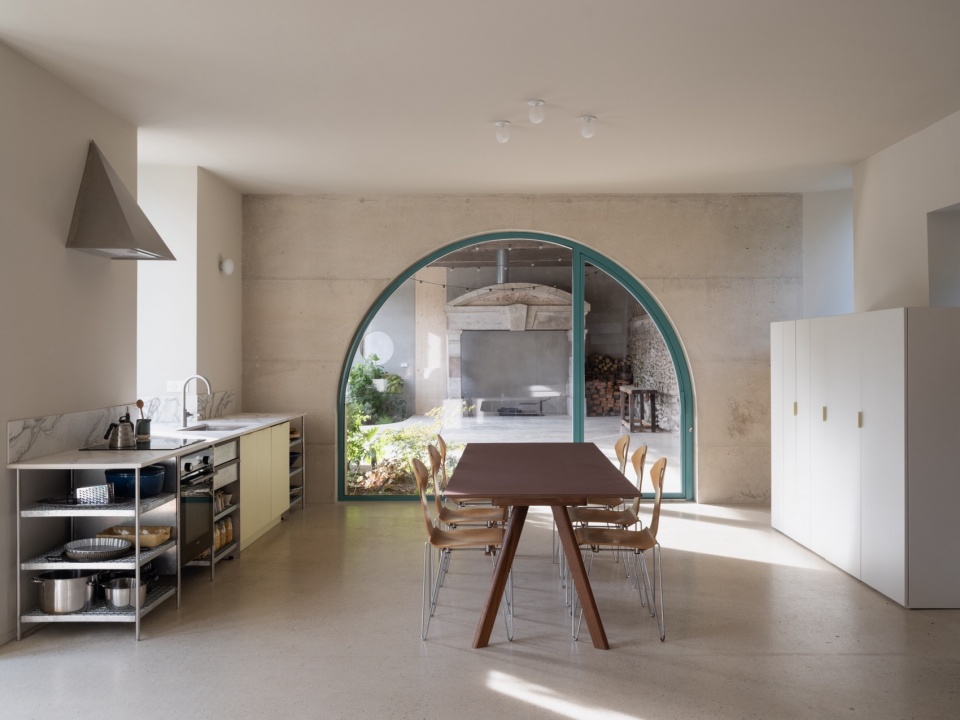
房间布局遵循既有立面开口的逻辑进行组织。所有原有开口均被完整保留,没有进行改动或拆除;相反,项目试图充分发掘并利用每一个开口所具有的独特空间特质。在上层空间中,部分中间楼板被拆除,以展现原有建筑体量的开阔尺度,并最大化利用主立面老虎窗所带来的自然采光。塔楼也恢复了其原本的垂直空间特征,重新显露出上方钟楼结构的机械装置。这些装置曾是农庄日常生活的重要时间标识,如今已得到修复和保留。
The layout of the rooms is determined by the logic of the existing façade openings. None of these openings has been altered or removed; instead, the project seeks to make full use of the specific qualities of each one. On the upper floor, the intermediate ceilings have been removed to reveal the generosity of the original volumes and to maximize the natural light provided by the existing dormer windows on the main façade. The tower regains its original vertical character, exposing once again the mechanisms of the bell structure above, which formerly punctuated daily life on the farm and have now been restored.
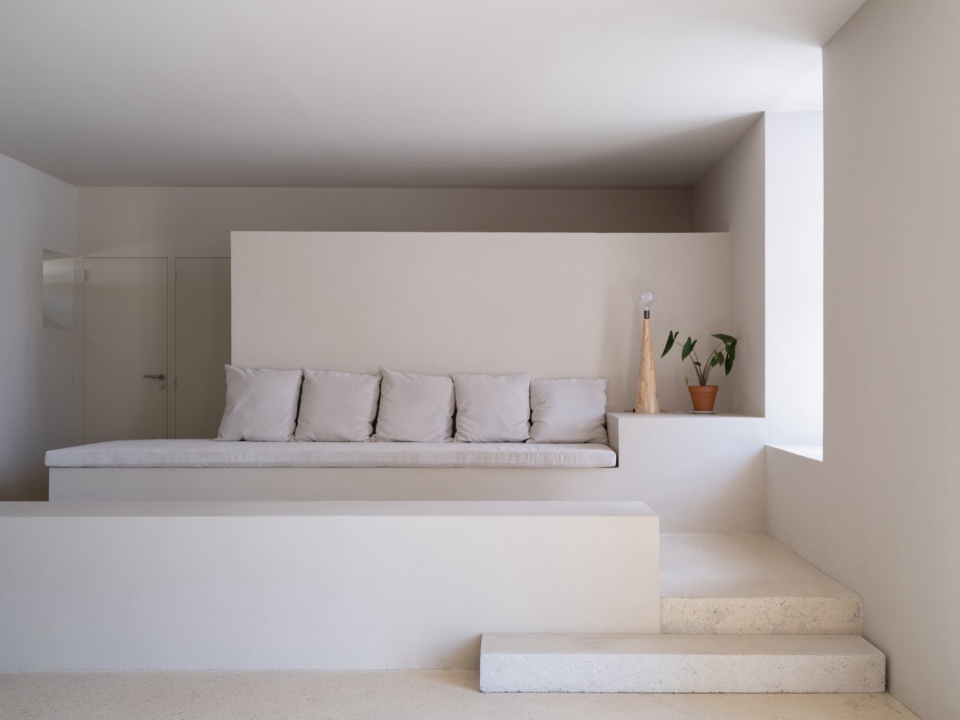
▼高差组织空间使用方式,Level changes organize spatial use
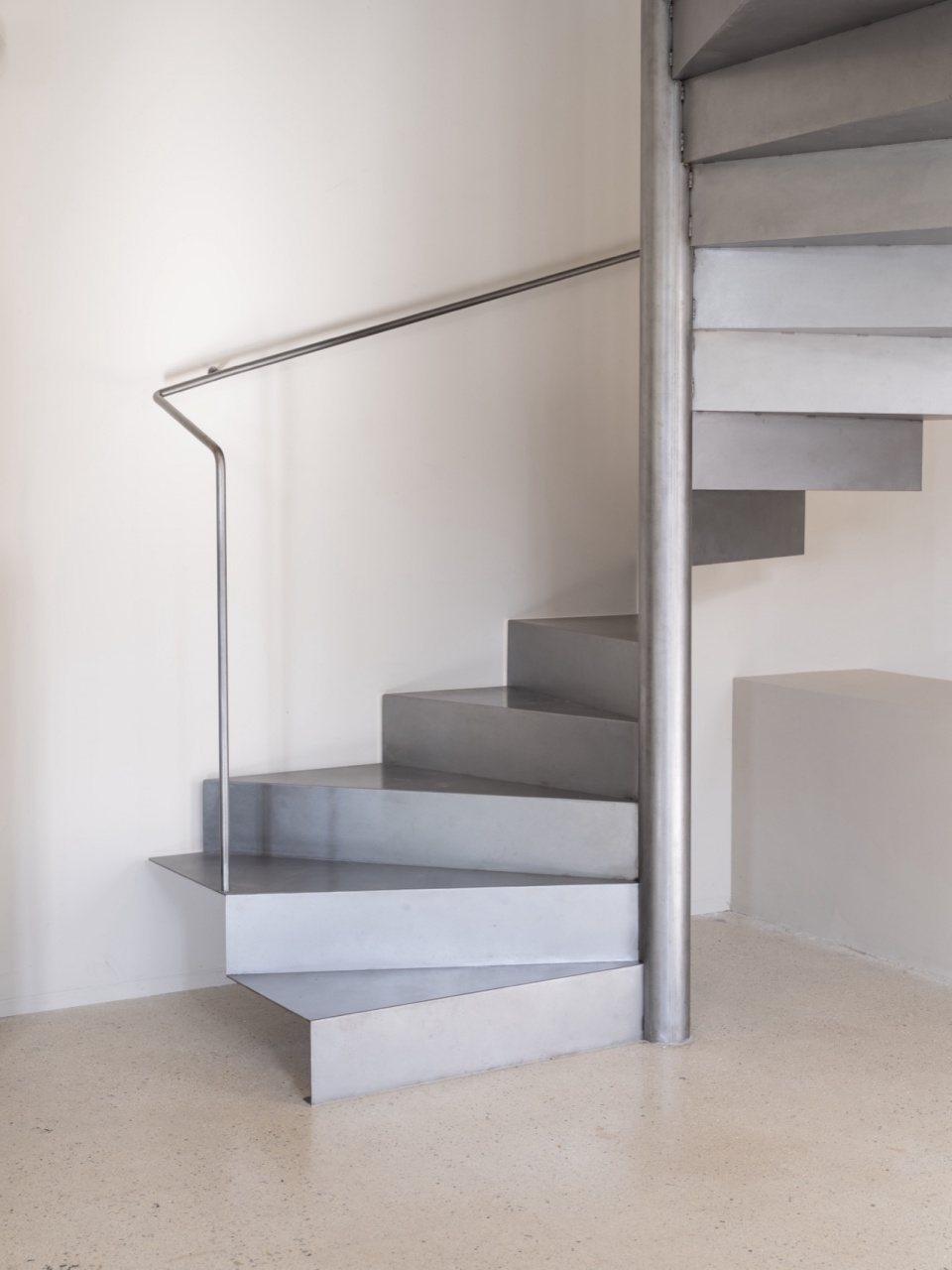
▼旋转楼梯,Spiral staircase
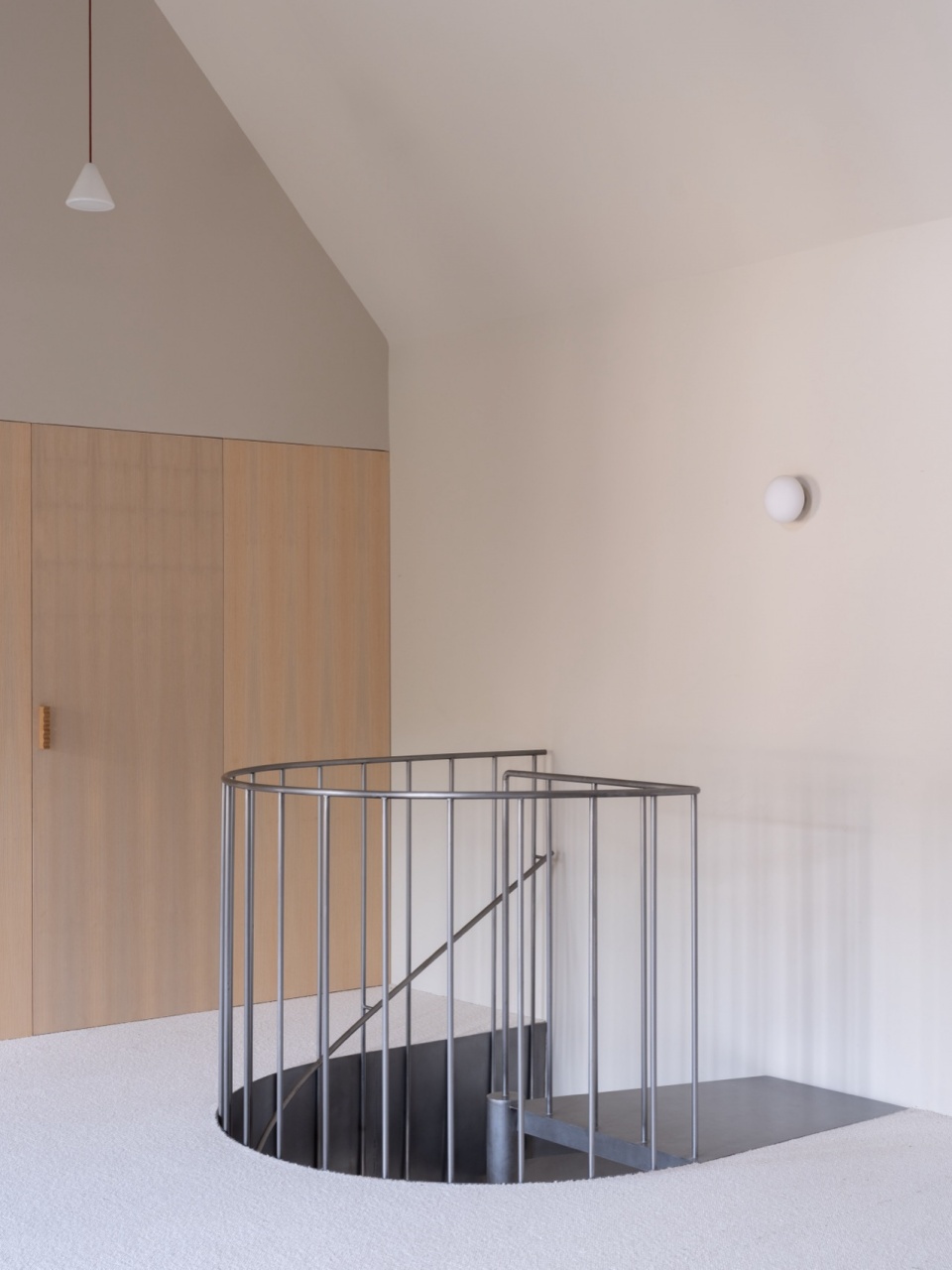
▼二层开放式空间布局,Open-plan layout on the upper floor
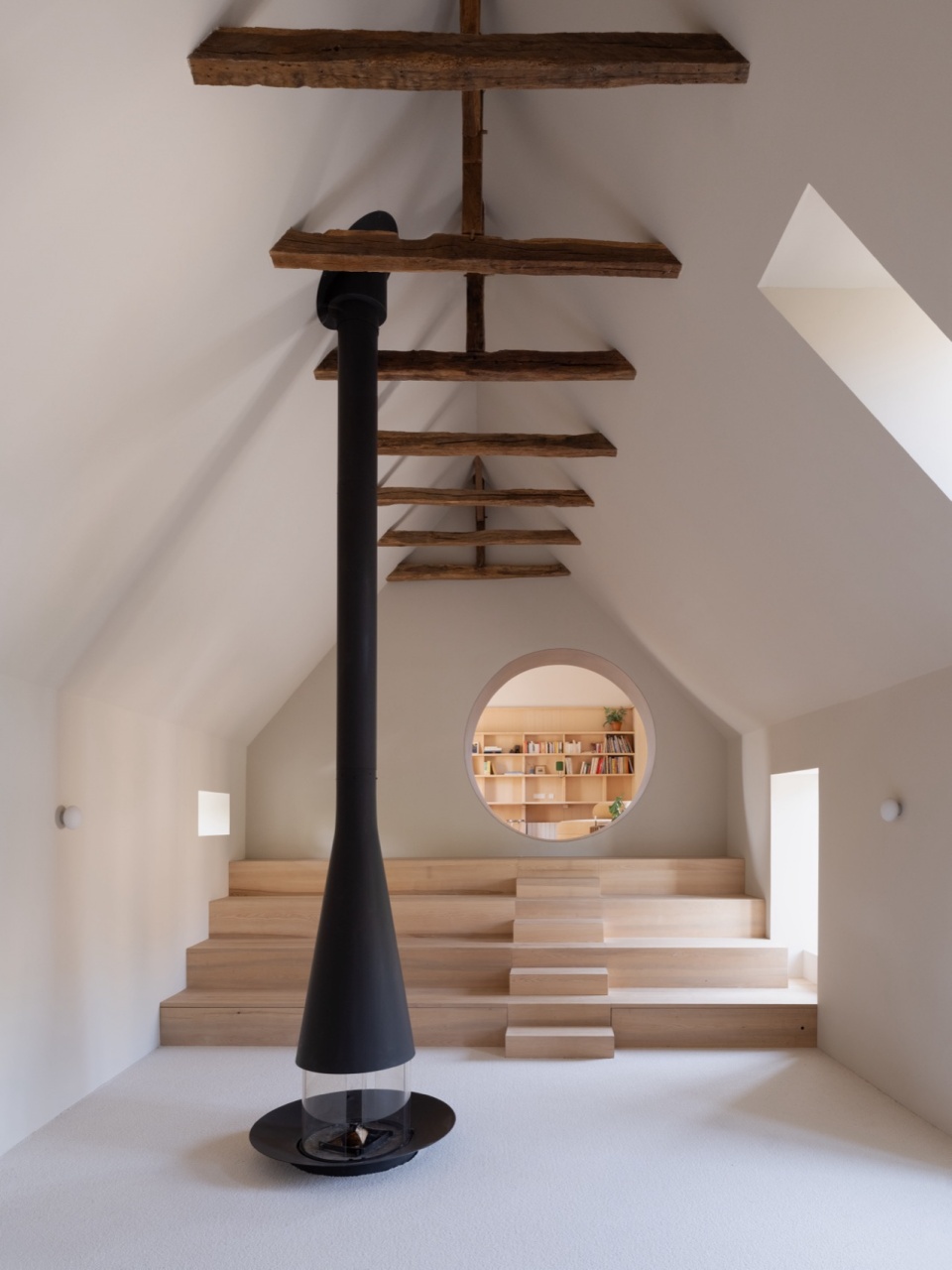
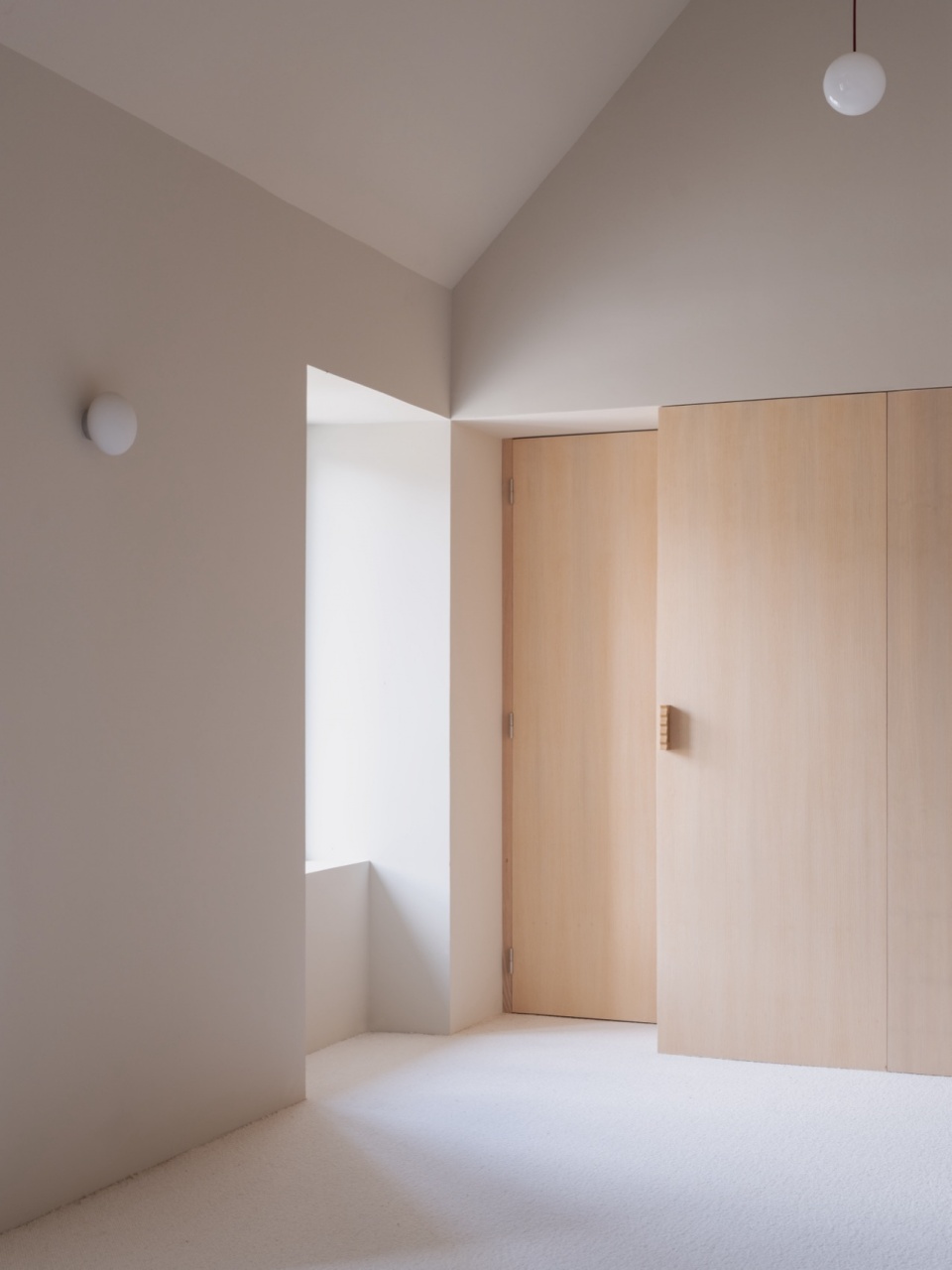
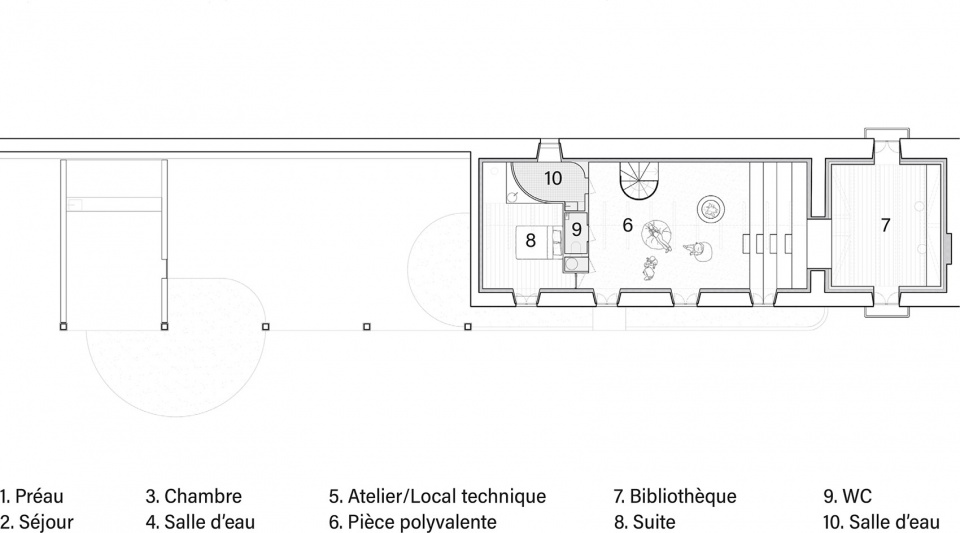
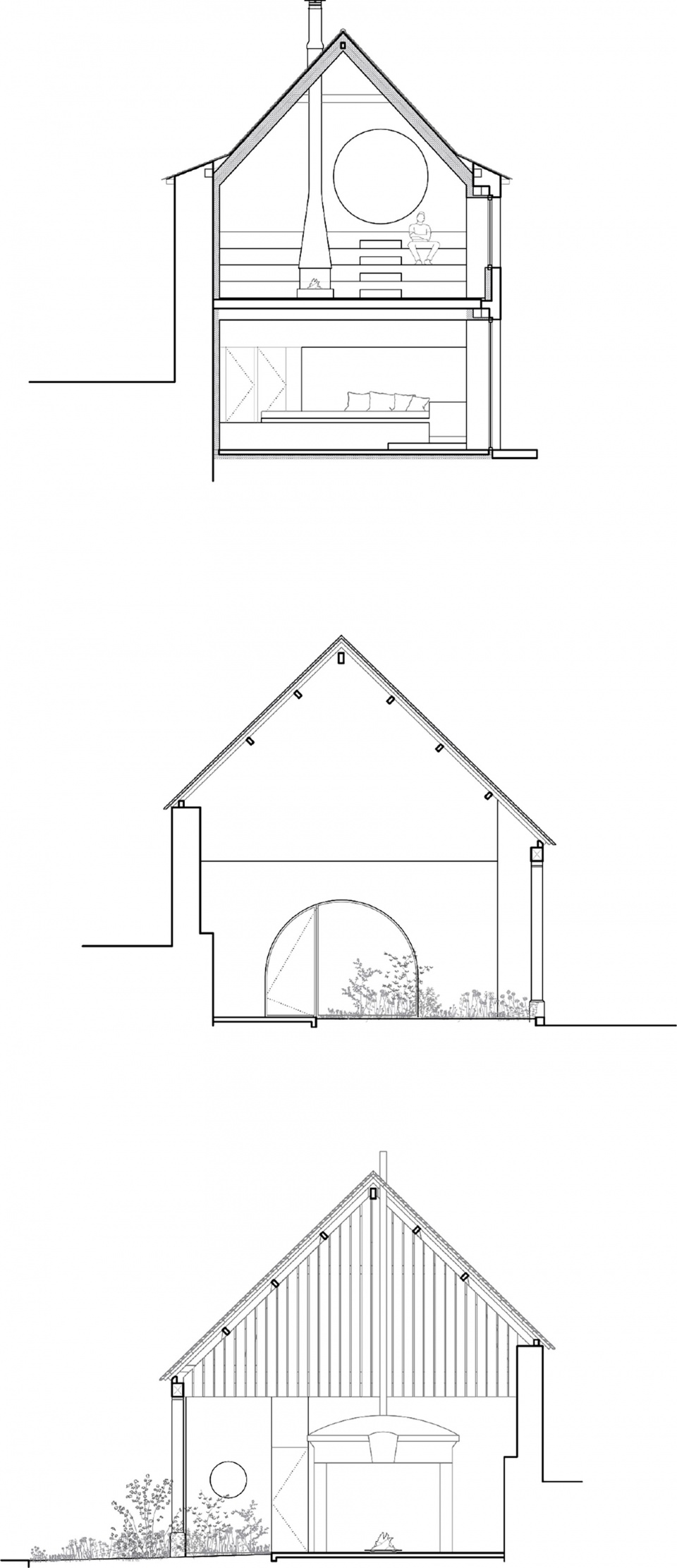
新增空间被设计为能够容纳灵活且不断变化的使用方式,并在未来持续保持适应性。位于上层的起居室在聚会期间可转换为集体宿舍,床垫可收纳于围绕中央壁炉设置的阶梯式座席之中;同时,这里也可以利用阶梯看台和后方幕帘转变为私人演出空间、放映室,或满足其他多种活动需求。这一空间重组同时伴随着全面的建筑热工改造。厚重的既有石砌墙体结合新增的内保温系统,不仅增强了建筑的热惰性与整体舒适度,也使原本被不透气水泥抹灰层覆盖的石材立面重新显露出来。
The new spaces are designed to accommodate flexible and evolving uses while remaining adaptable over time. The upper-level living room can alternately function as a dormitory during gatherings, with mattresses stored within the stepped seating arranged around the central hearth; a private performance venue using the tiered seating and curtain at the back of the room; a screening room; or a variety of other uses. This reorganization is accompanied by a comprehensive thermal renovation. The thickness of the existing masonry walls, combined with new internal insulation that reveals the original stone façades previously concealed beneath a non-breathable cement render, contributes to both the building’s thermal inertia and overall comfort.
▼书房与阅读区,Study and reading area
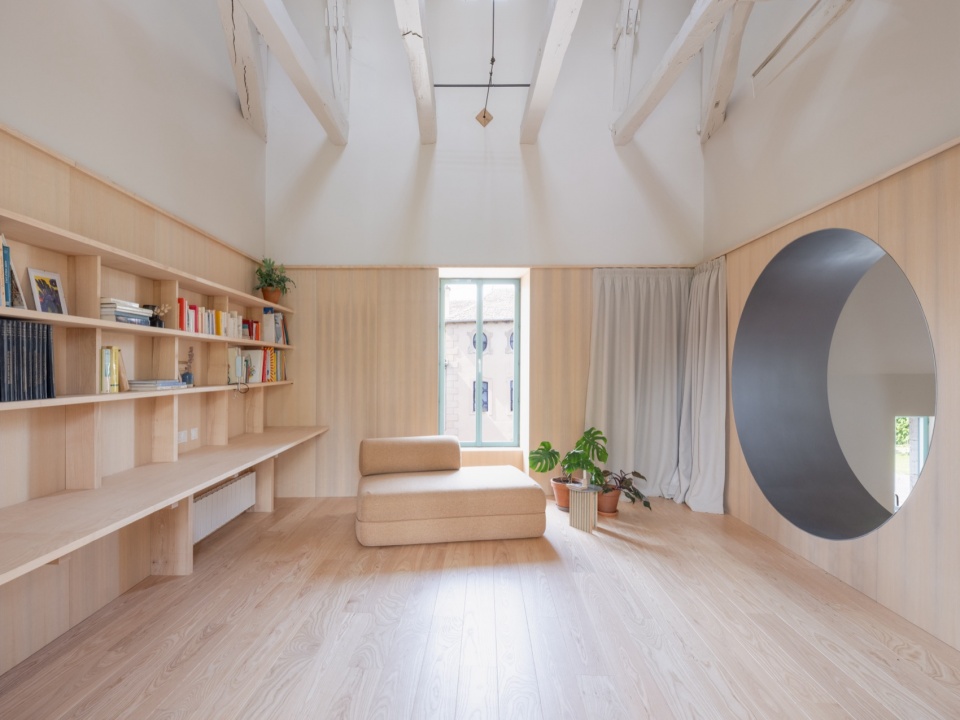
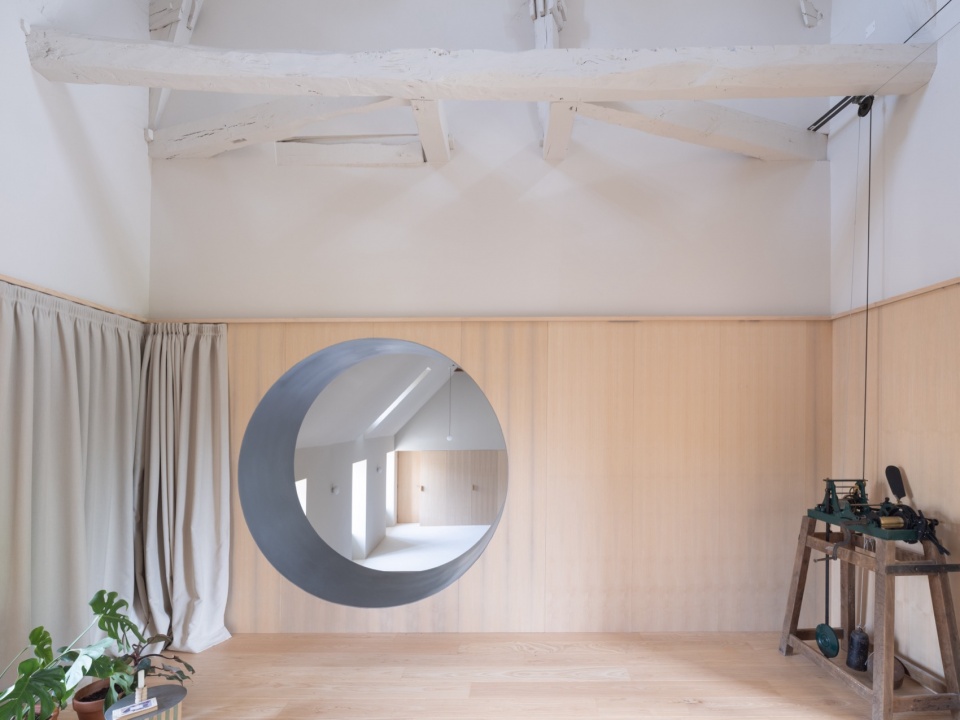
▼书架细节,Bookshelf detail
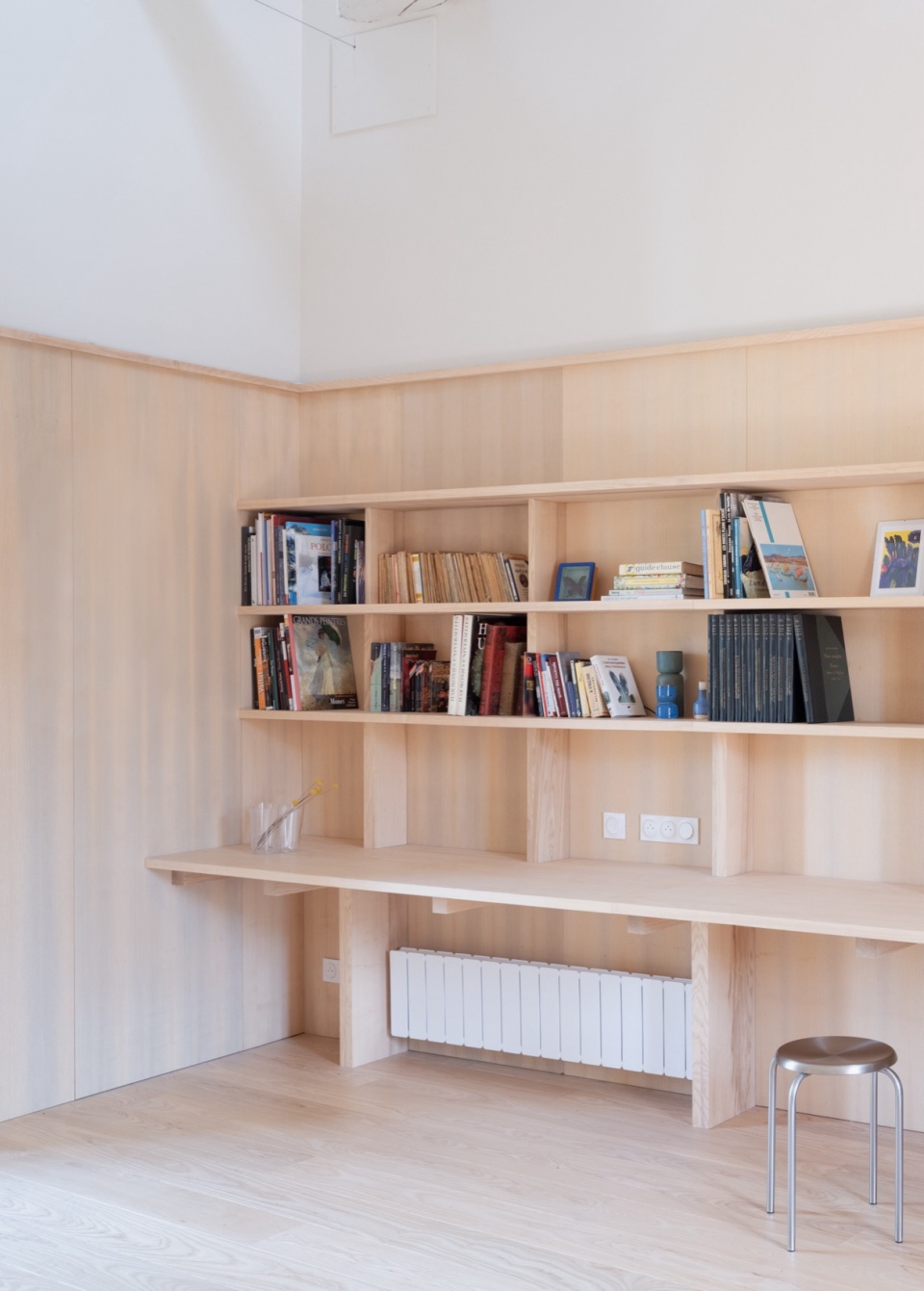
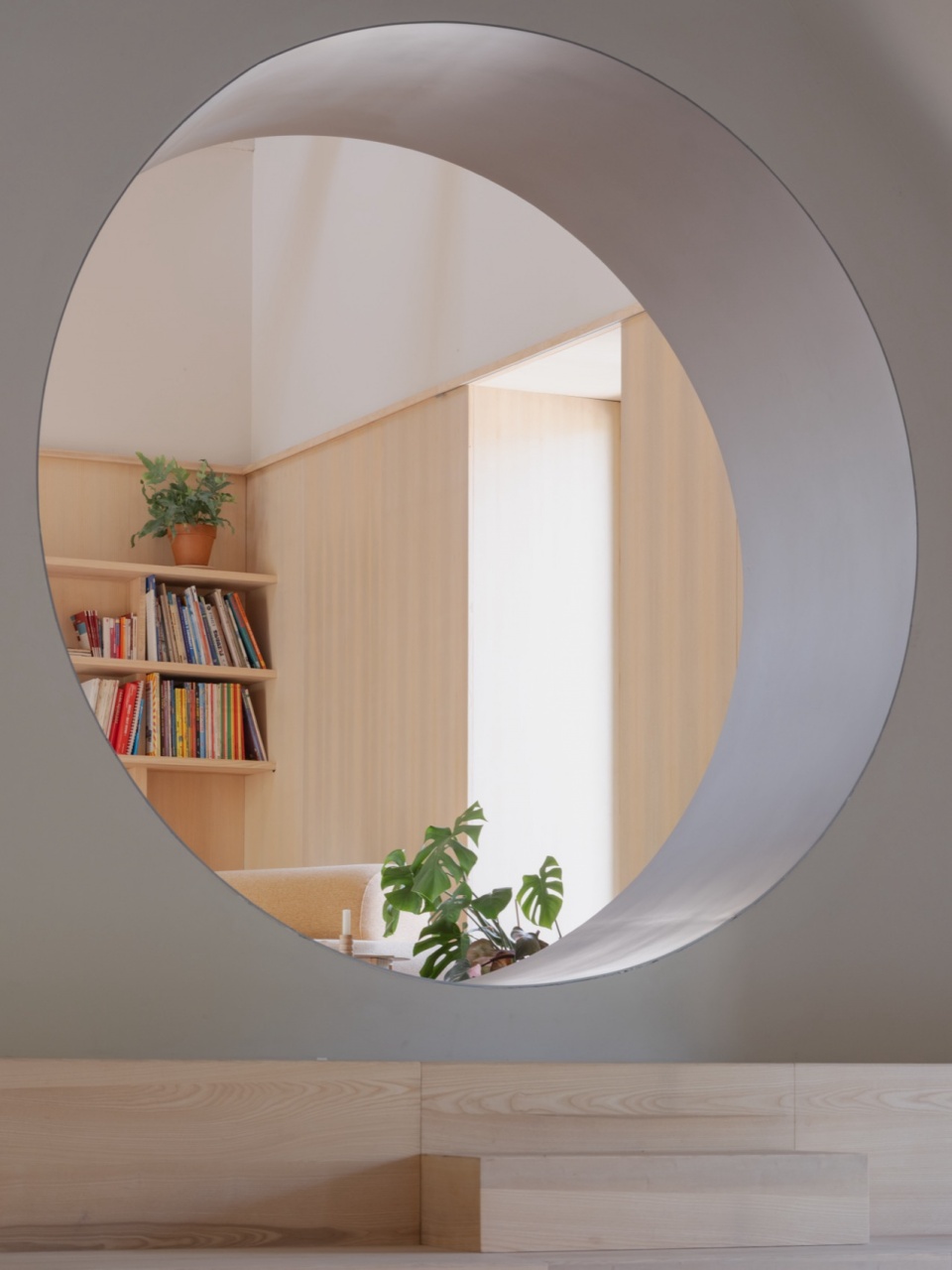
设计同样注重定制化一体家具的营造。内置砌体长凳强化了原有地面高差的空间特征;连续设置的柜体系统巧妙隐藏了通往私密房间的入口;阶梯式座席既连接鸽舍半层空间,又兼具储物与休憩功能;而整面书墙则强调了圆形开口背后的实体墙面。混凝土、白蜡木、不锈钢与羊毛等原始材料相互结合,并辅以鲜明的色彩点缀,与柔和的曲线语言及自然色调形成丰富对话。
The design also includes careful attention to bespoke integrated furniture. Built-in masonry benches emphasize the existing changes in floor level; a continuous run of cabinetry conceals the entrances to private rooms; stepped seating provides access to the half-level of the dovecote while incorporating storage and seating; and a library wall highlights the blind wall positioned behind the circular opening. Raw materials—concrete, ash wood, stainless steel, and sheep’s wool—are combined with bold accents of colour, creating a dialogue with the softness of curved lines and natural tones.
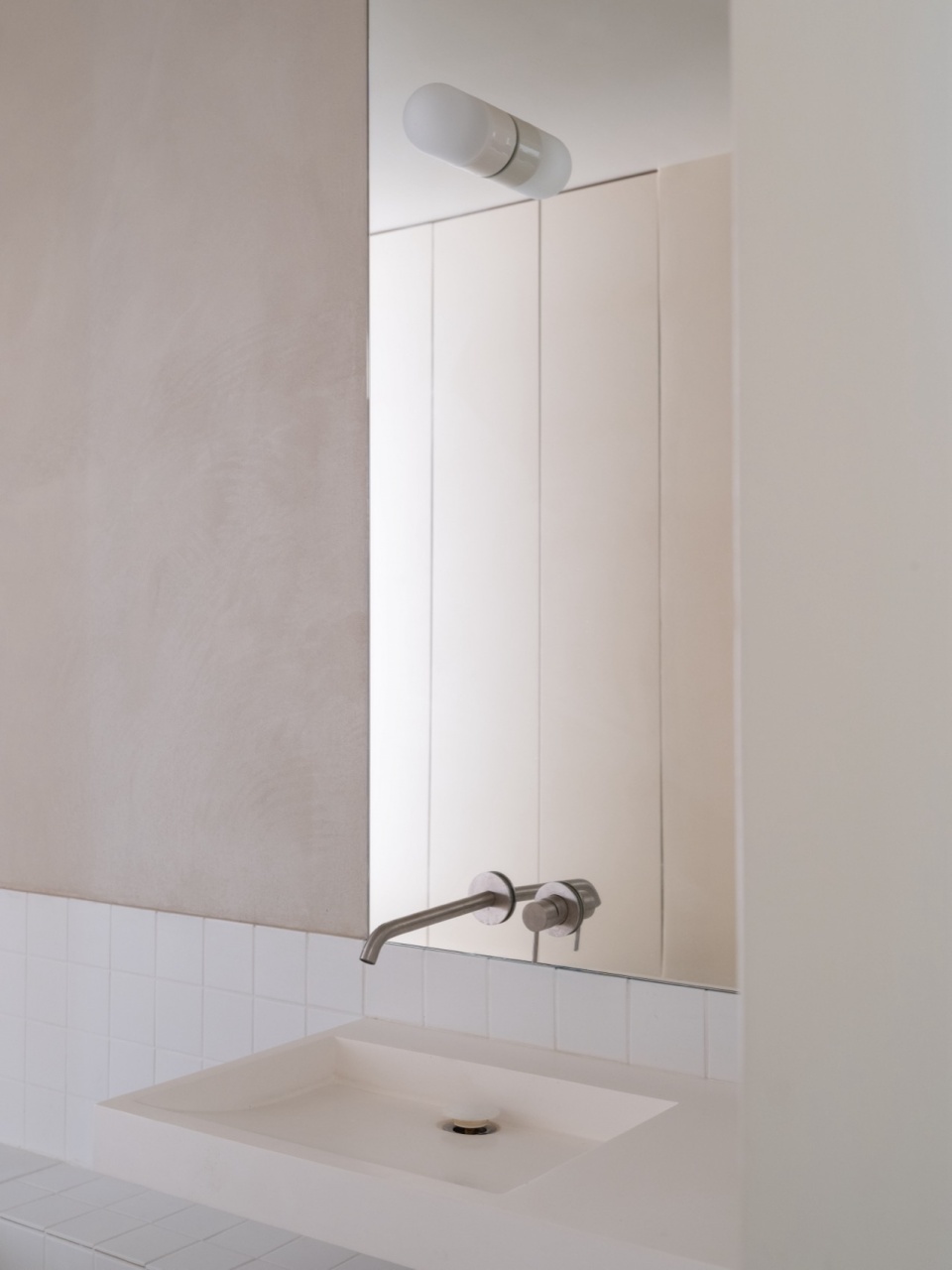
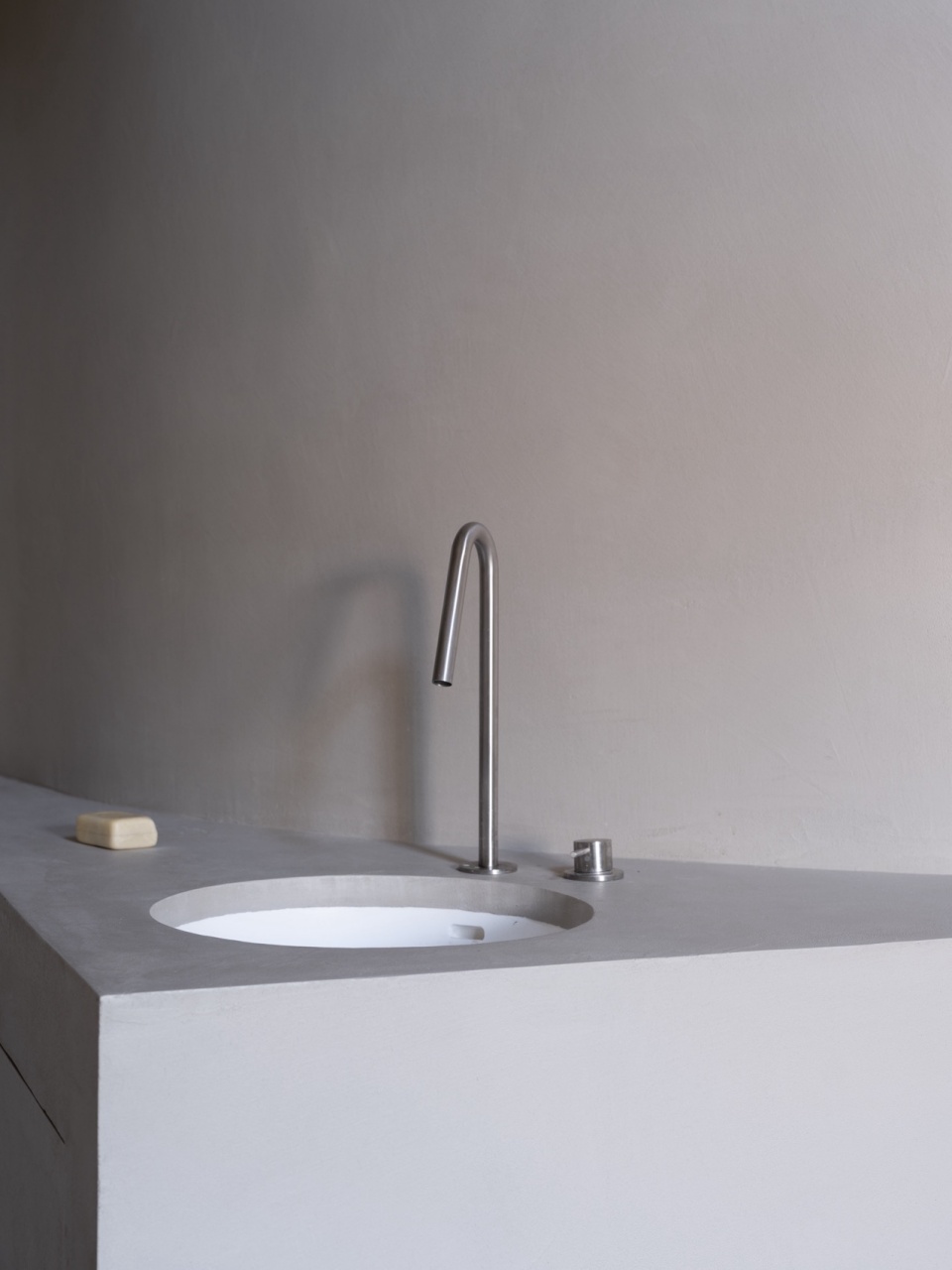
▼洗手池细节,Washbasin detail
▼项目区位图,Site plan
▼一、二层平面,1st and 2nd floor plan
▼剖面图,Section
Client : private
Location : Pont-de-Salars, France
Architects : Atelier AJO
Area : 170m²
Year : 2024
Photographs : Sandrine Iratçabal