潘塔纳尔生物公园,巴西 / Ruy Ohtake Arquitetura e Urbanismo Ltda.
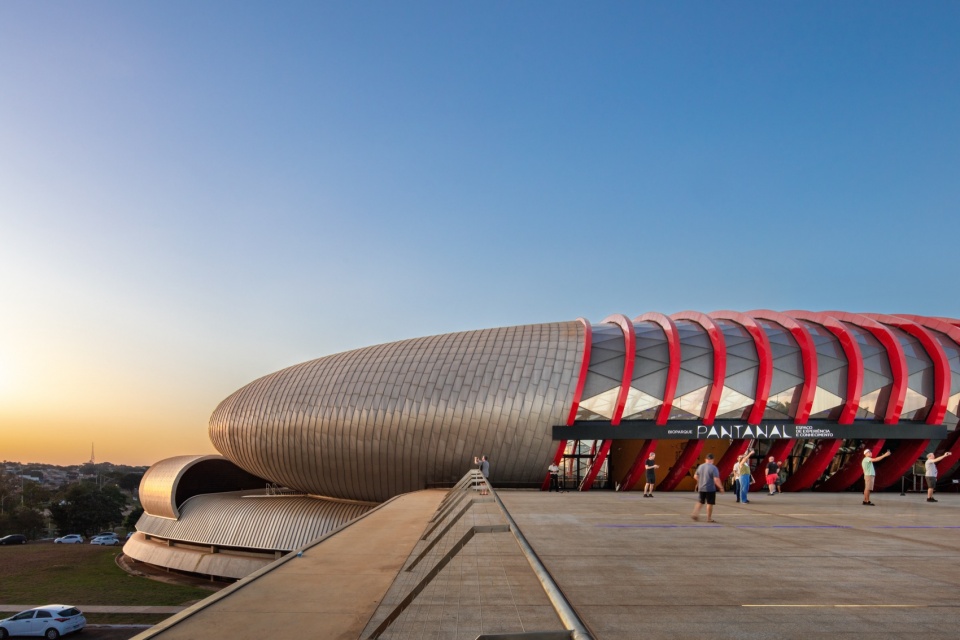
潘塔纳尔生物公园被构想为一座体现新技术的标志性建筑,其出发点是该地区在相关研究领域投入建设的需求,并强调这一世界上最重要的湖泊与潟湖系统。生物公园建筑位于大坎普的主干道旁,其令人惊讶的形体、材料和设计前提格外引人注目。例如,立面上覆以锌板的部分,第一眼便显露出项目建造中所涉及的技术;同时,建筑也将一些在当地并不常见的元素带入了南马托格罗索州首府,例如用于限制太阳热量进入的双层处理玻璃,以及支撑部分建筑体量的金属结构。
The Pantanal Biopark was conceived as an icon of new technologies, and based on the need to invest in research in the area, highlighting the most important lakes and laggons system in the world. Located at the main avenue in Campo Grande, the Biopark building draws attention for its surprising shape, materials and premise. The part of the façade covered in zinc, for instance, reveals at first glance the technology involved in the construction of the project, which also brought to this building in the capital of Mato Grosso do Sul state elements that are not usual in the area – such as double treated glass to limit sun heat and the mettalic structure supporting part of the building.
▼建筑外景,Exterior of the building
▼中央花园,Central park
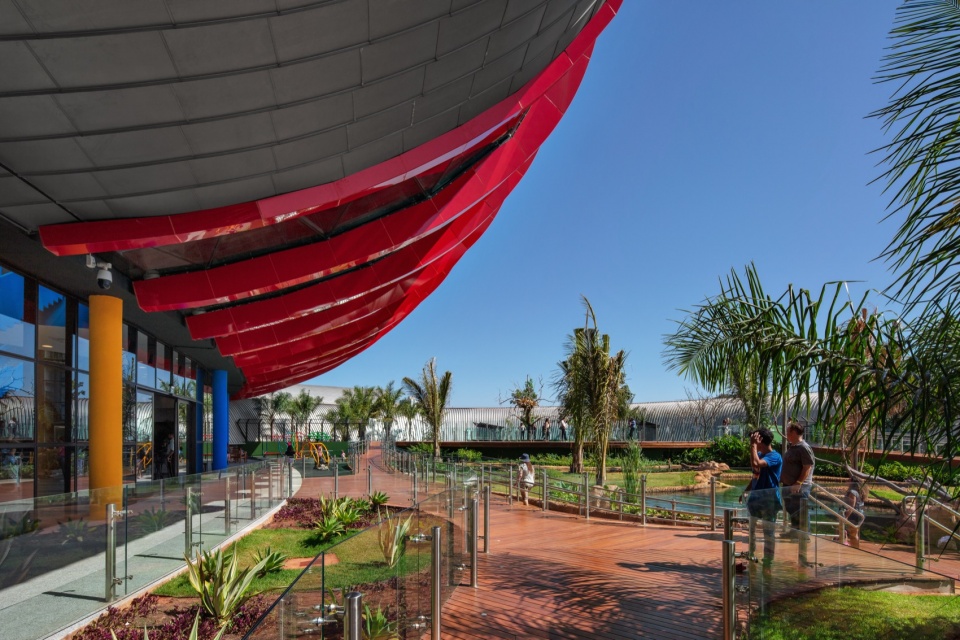
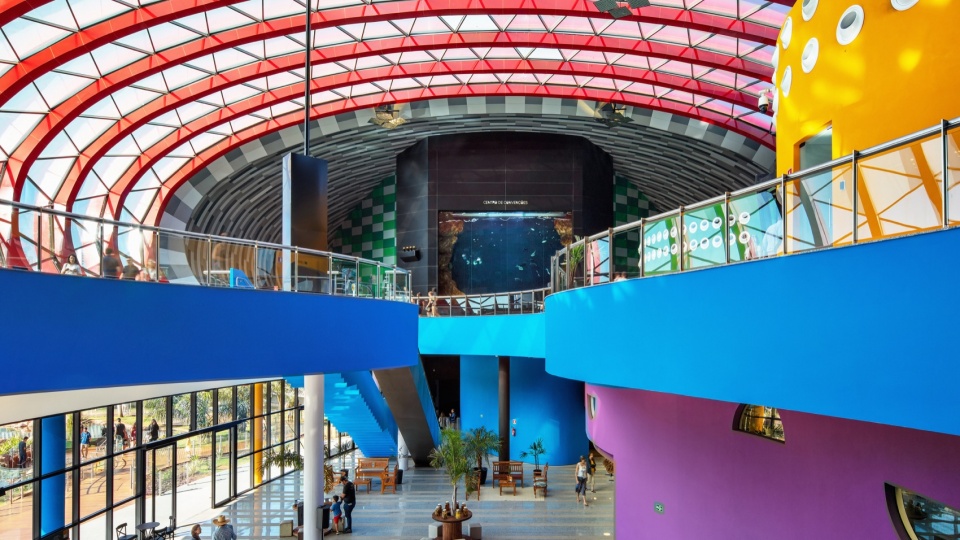
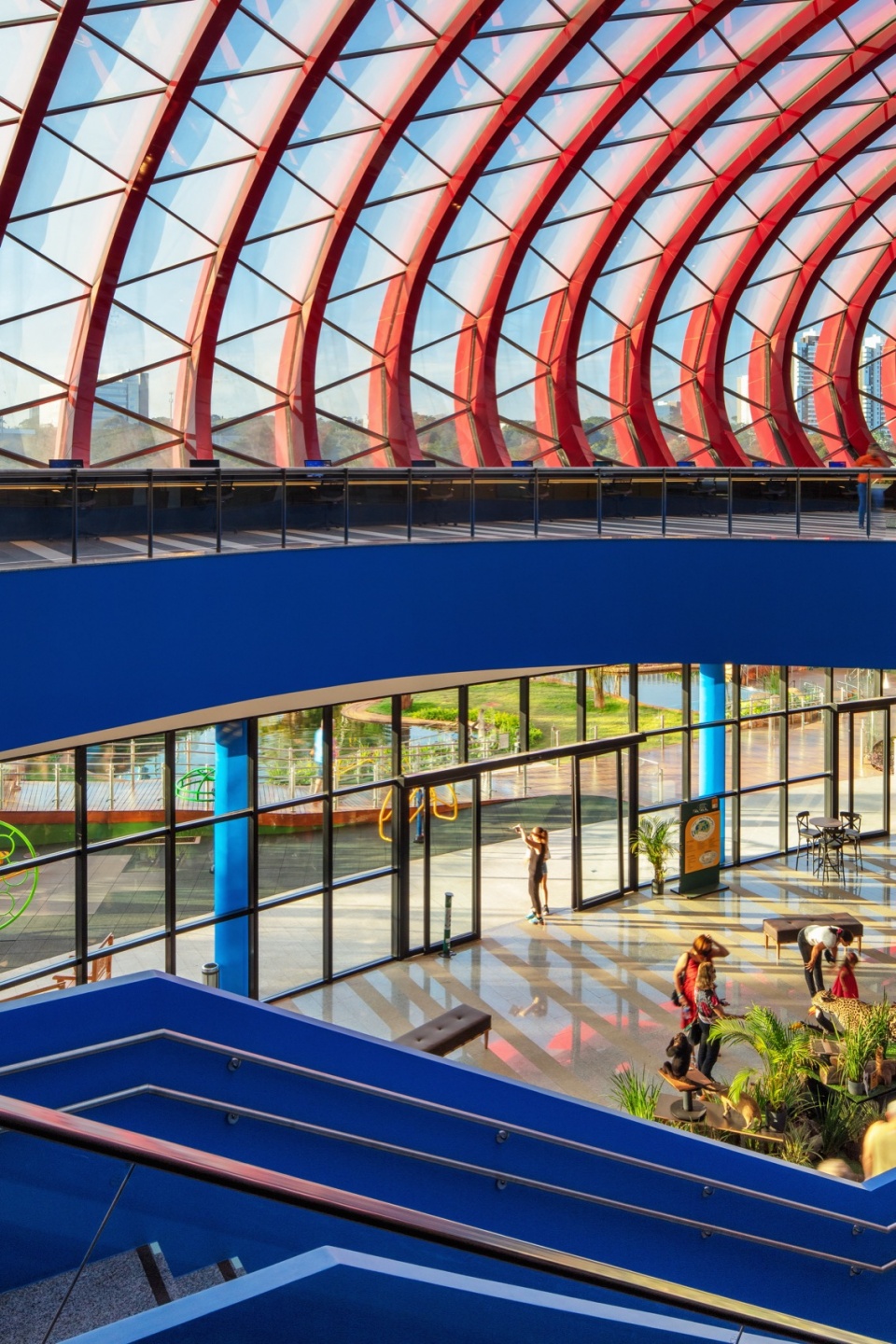
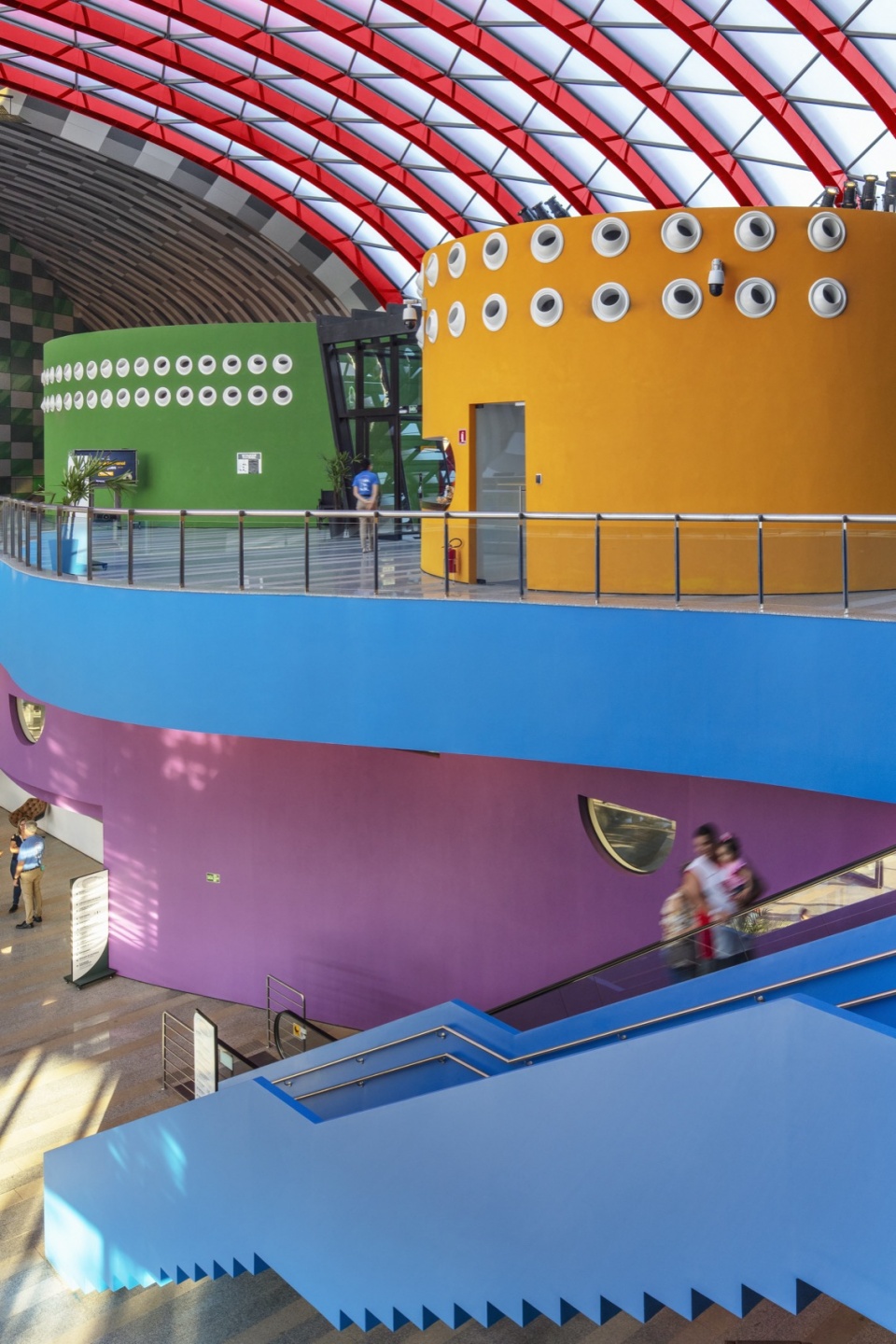
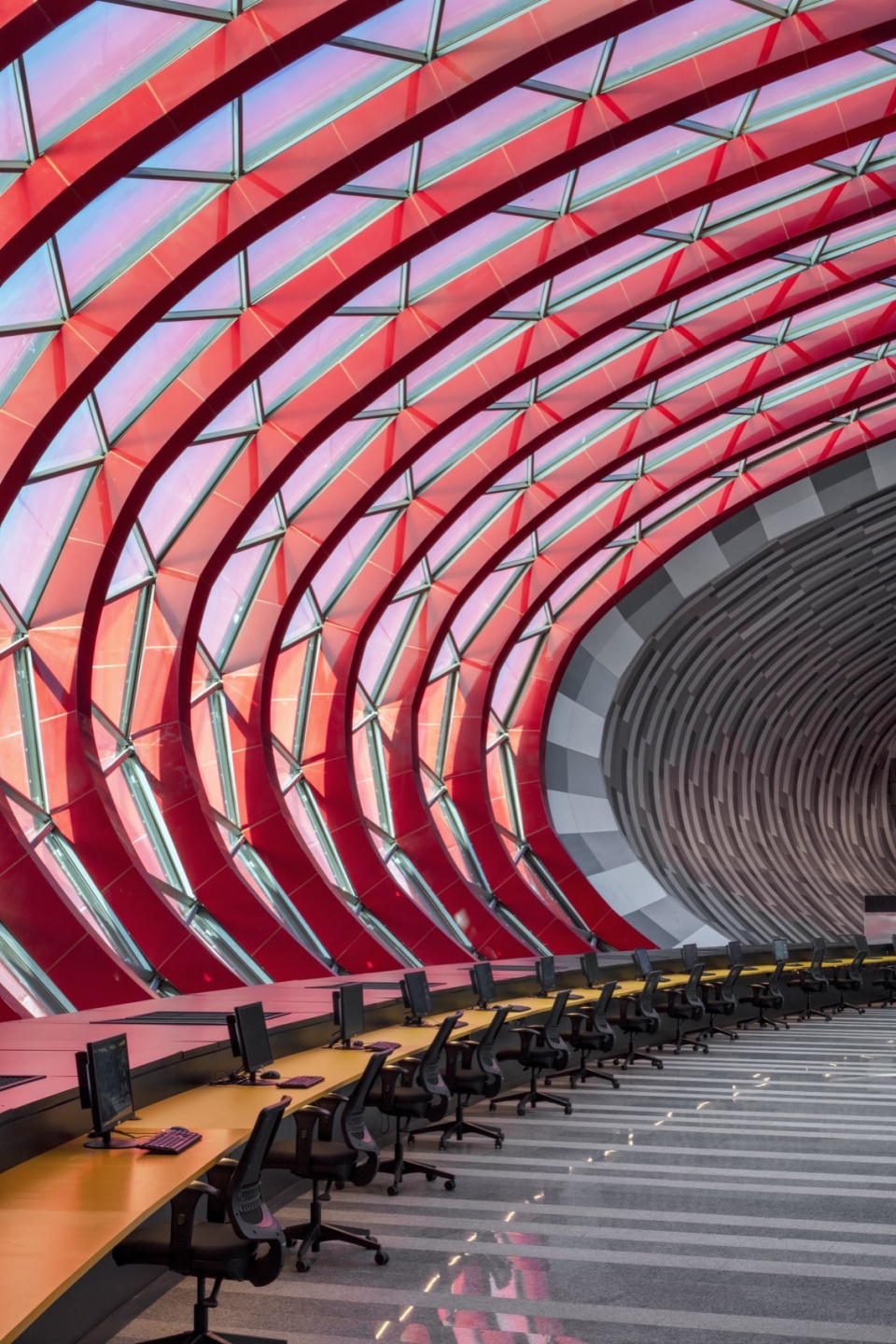
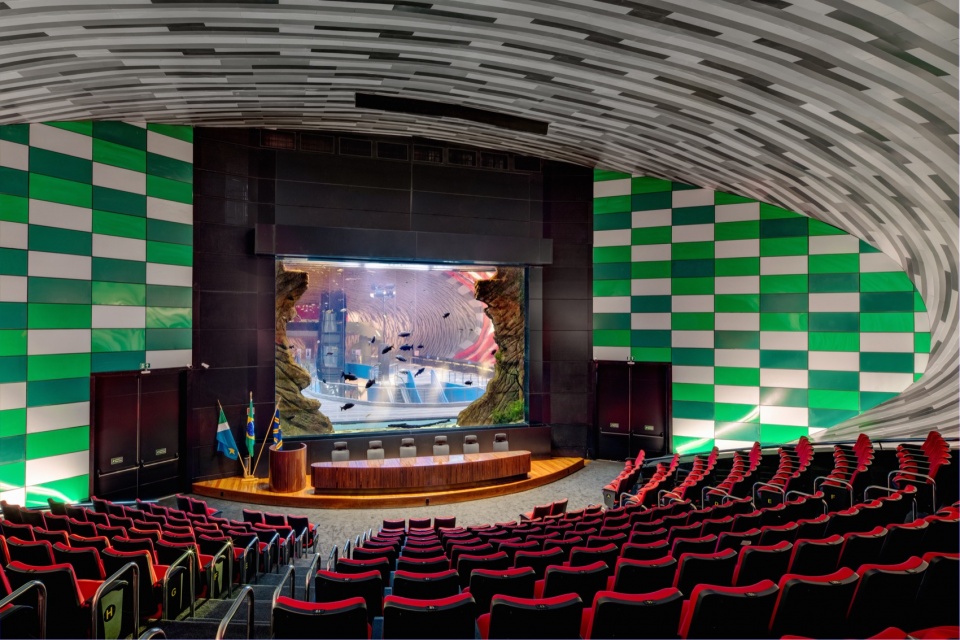
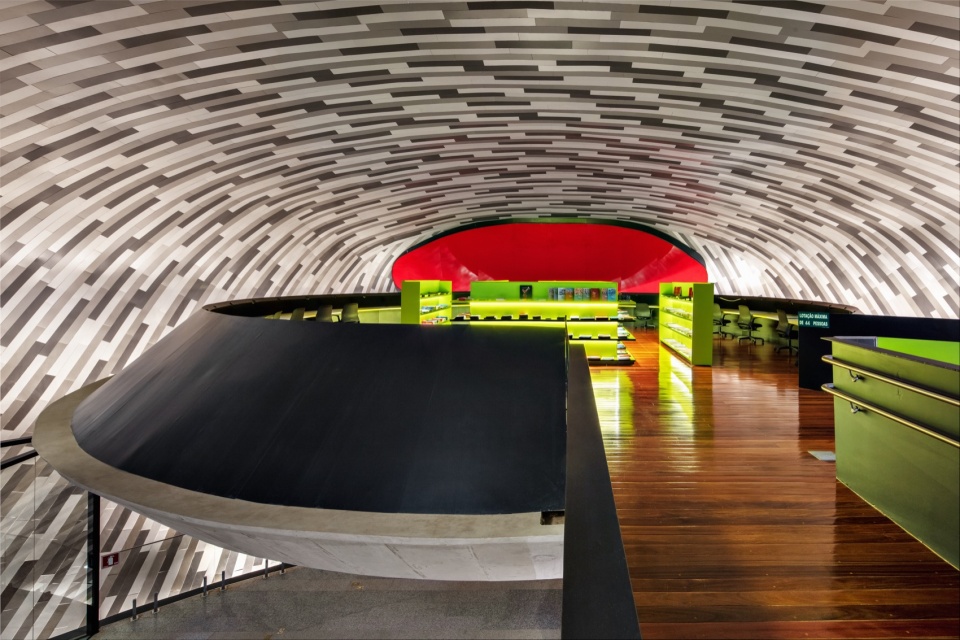
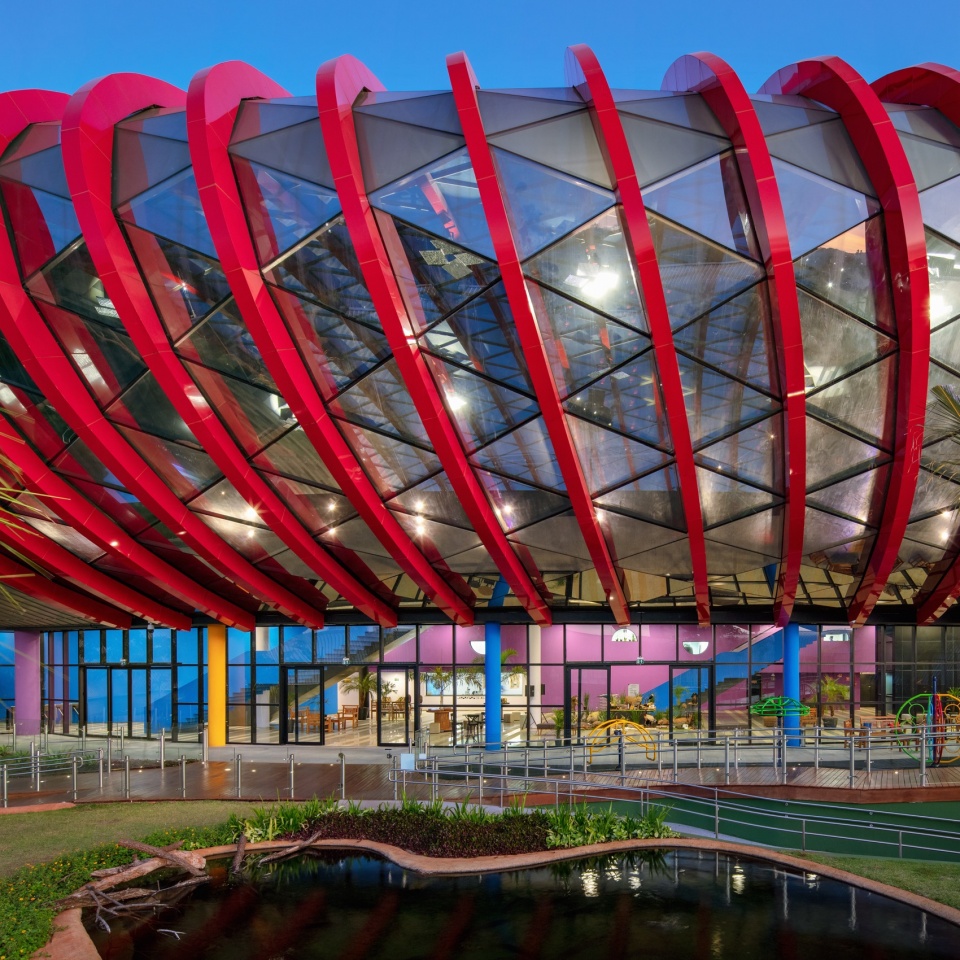
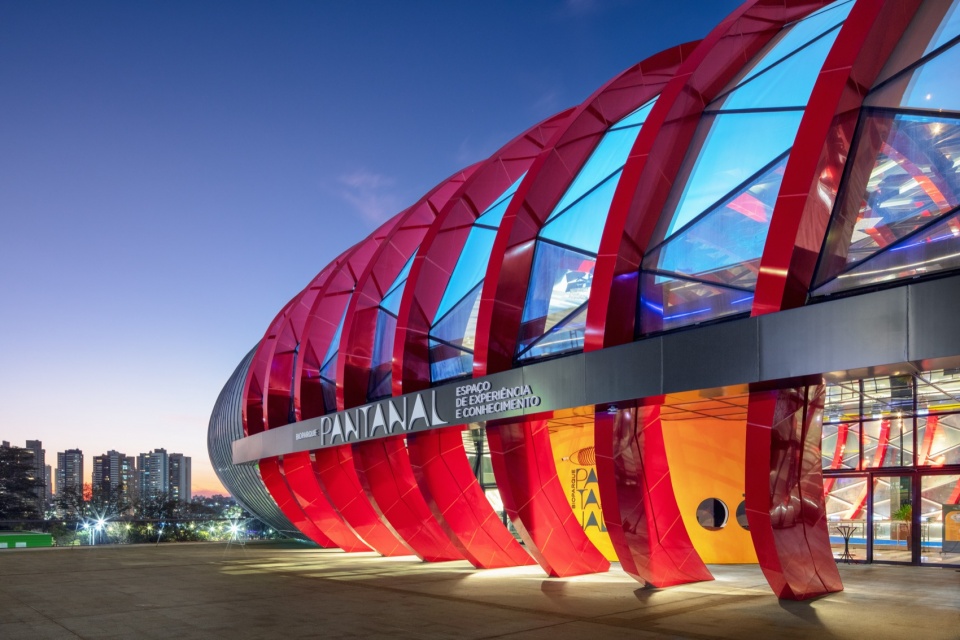
面向主干道的第一组体量,以其椭圆形形态和位于立面中央、涂成红色的金属结构,成为整个项目的象征。在建筑最高处,天花高度达到 46 英尺。入口便位于此处,通过一条广场坡道进入;这里还设有一座悬挑图书馆,专门收藏与潘塔纳尔相关的资料,同时包含展览空间和一座可容纳 250 人的礼堂。
▼草稿,Sketch

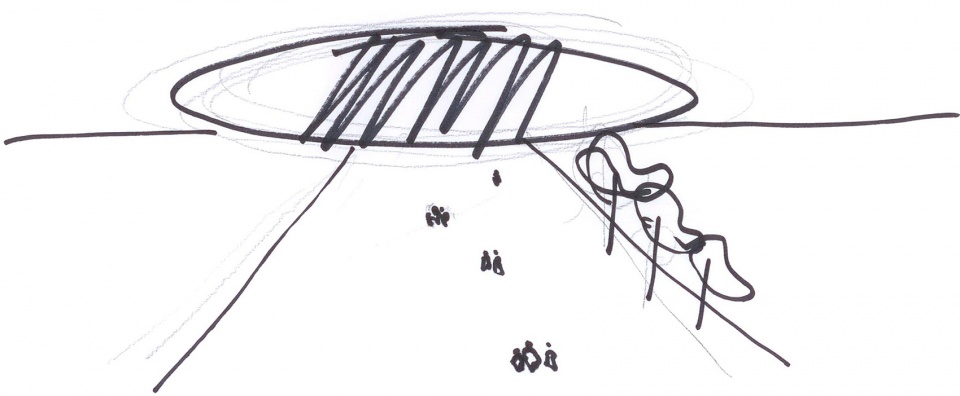
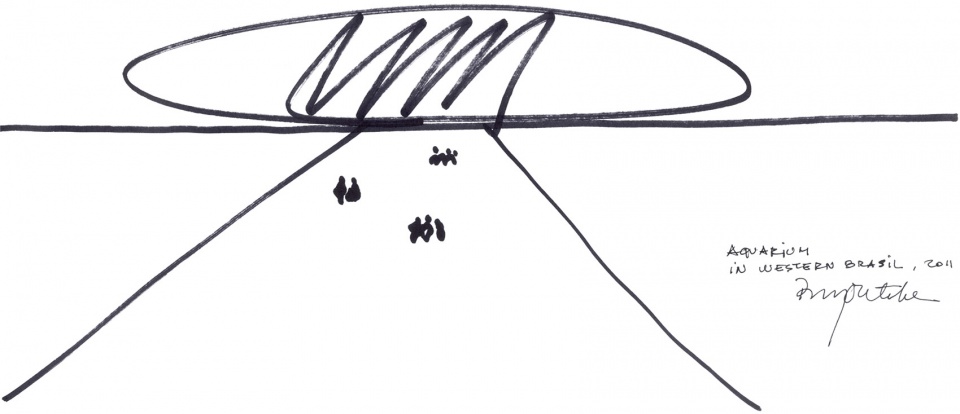
The first volume, facing the avenue, is also the symbol of the project with its oval shape and metallic structure painting red at the center of the façade. On its highest point, the ceiling is 46 feet high. That is where the entrance is located, through an esplanade ramp, as well as a suspended library, specialized on Pantanal issues, a space for exhibitions and a 250-seat auditorium.
▼彩色体量与拱形屋顶,Colorful volumes and arched roof
▼贯通上下层的公共空间,Public space connecting multiple levels
▼礼堂,Auditorium
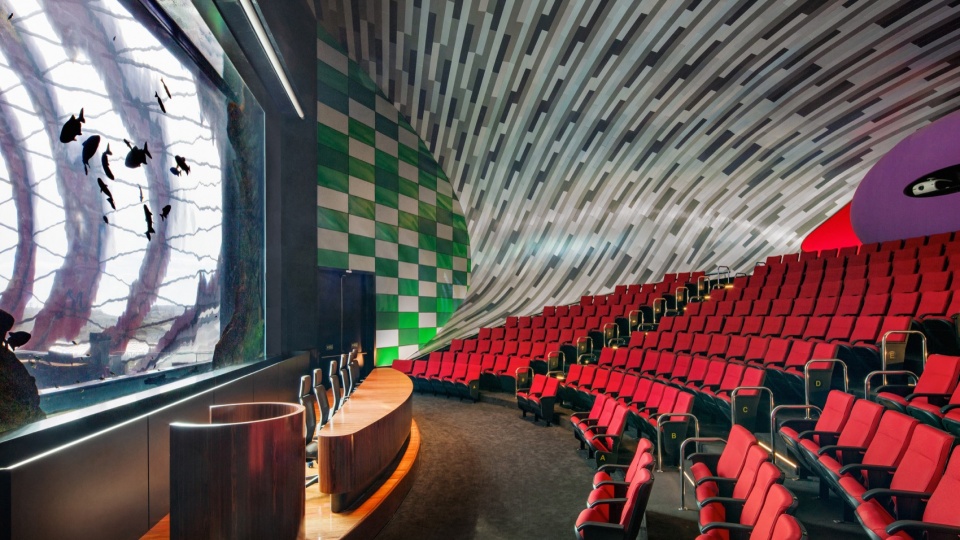
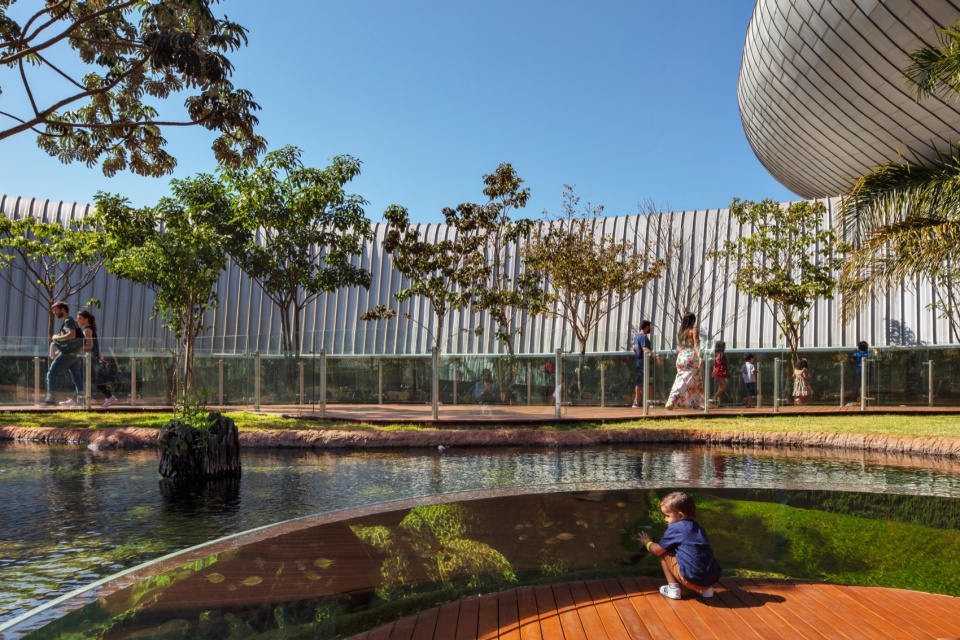
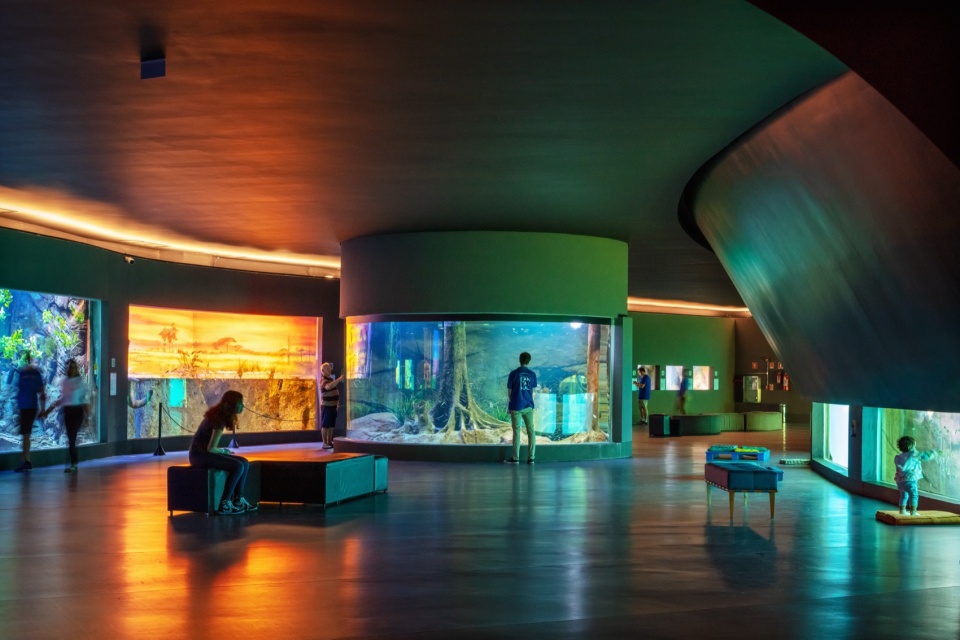
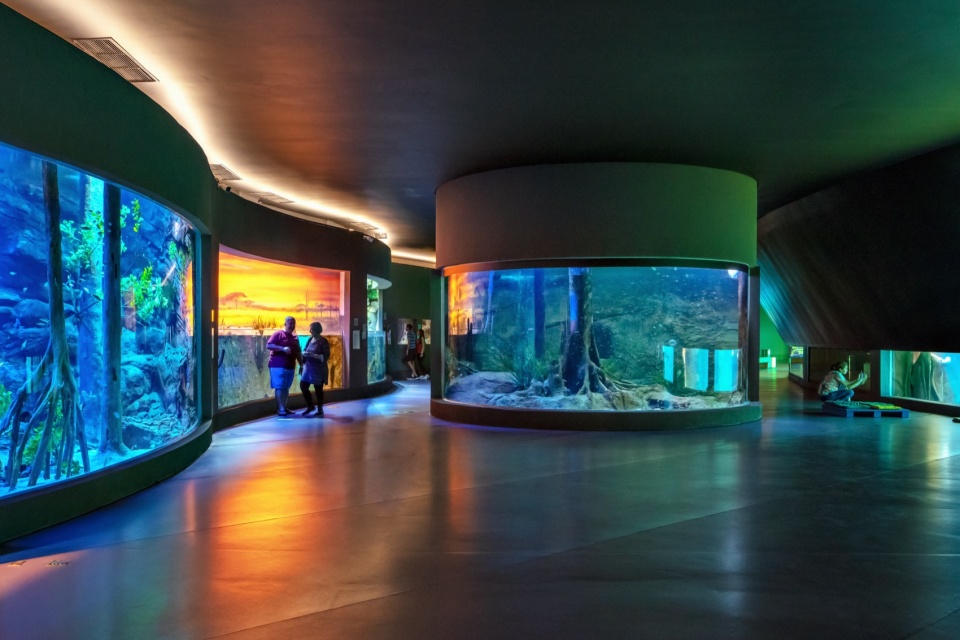
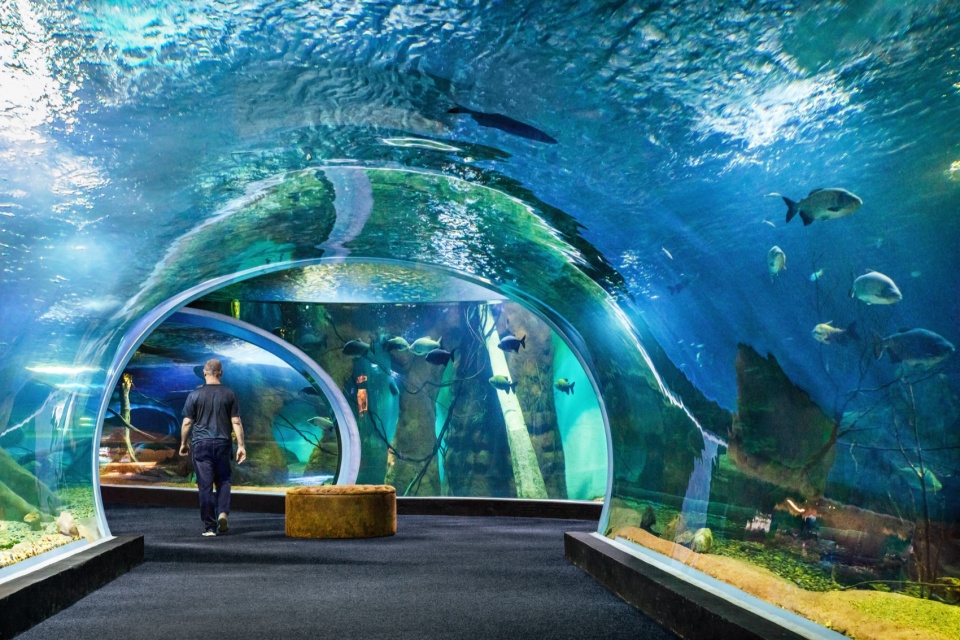
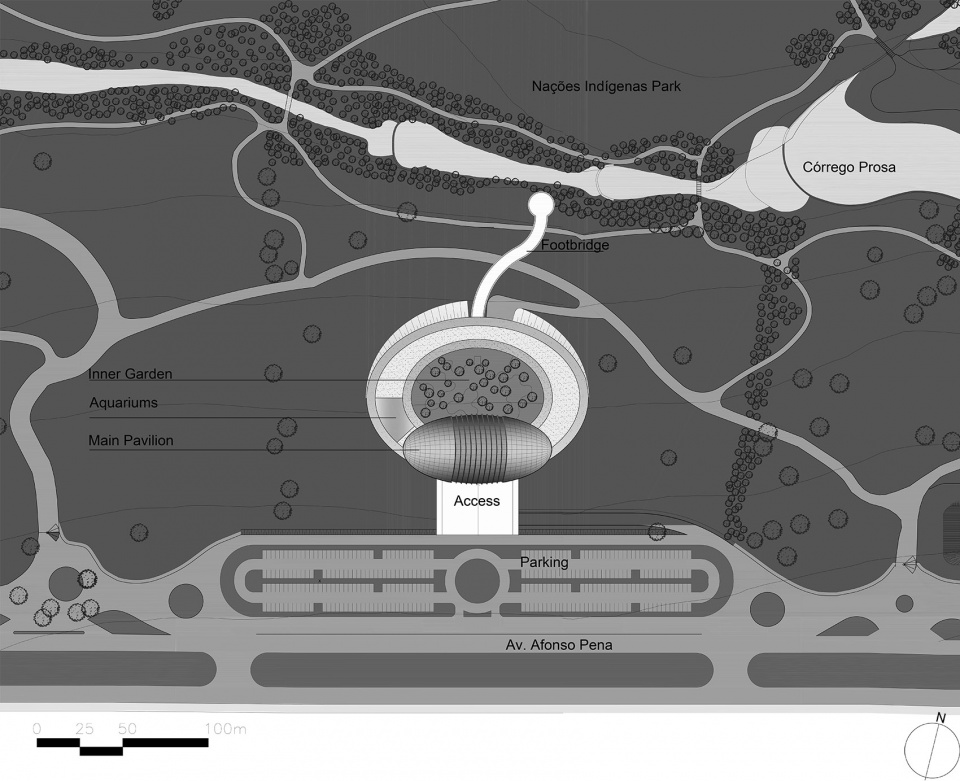
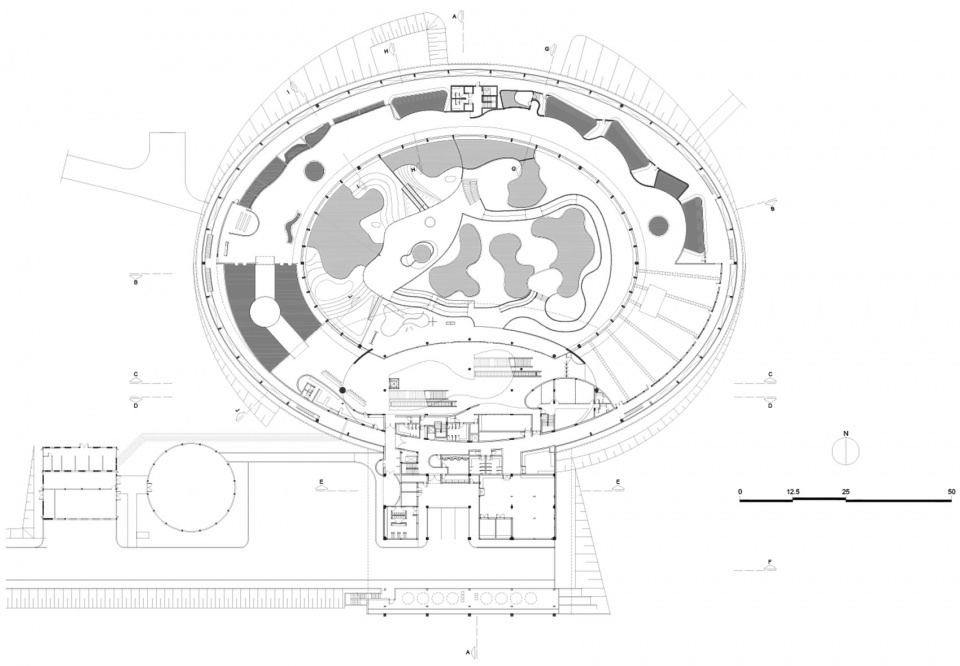
真正的水族馆则位于后侧较低的椭圆形体量中,并顺应场地坡度设置。这也是带给游客的另一重惊喜,因为他们从外部只能看到主入口体量。在游览路线的第一部分,设有一座介绍潘塔纳尔地质形成、区域代表性动物以及当地居民(被称为 Pantaneiros)的博物馆。生物公园内共有 13,000 条鱼,涵盖 135 个不同物种,游览过程主要发生在椭圆形体块中;大小不一的水箱主要布置在路线右侧。阳光通过连续的侧向玻璃窗带进入室内,照亮参观路径,并连接室内外空间。椭圆形中心设有一片开放区域:一个带湖泊的大花园,未来将供短吻鳄和水獭生活,它们由不同凸起形成的伪装隔断分隔开来。
The aquarium itself, however, is located on the back ellipse-shaped, lower volume, taking advantage of the plot’s slope. It is another surprise for visitors, who can only see the main volume from the outside. On the first part of the visitors’ route, there is a museum about the Pantanal geological formation, the animals that are characteristic of the region and the local dwellers (called Pantaneiros). The tour on the biopark, containing 13,000 fishes of 135 different species, happens in the elipse-shape block with tanks of varied sizes located mainly on the right-hand side of the route. Sunlight coming in through a continuous, lateral glass frame bathes the path and connects interior and exterior spaces. Located in the center of the ellipsis an open area: a large Garden with lakes where alligators and otters will live, separated by camouflaged partitions formed by different saliencies.
▼水族馆内部,Aquarium interior
▼拱形内壳与阅读区域,Arched inner shell and reading area
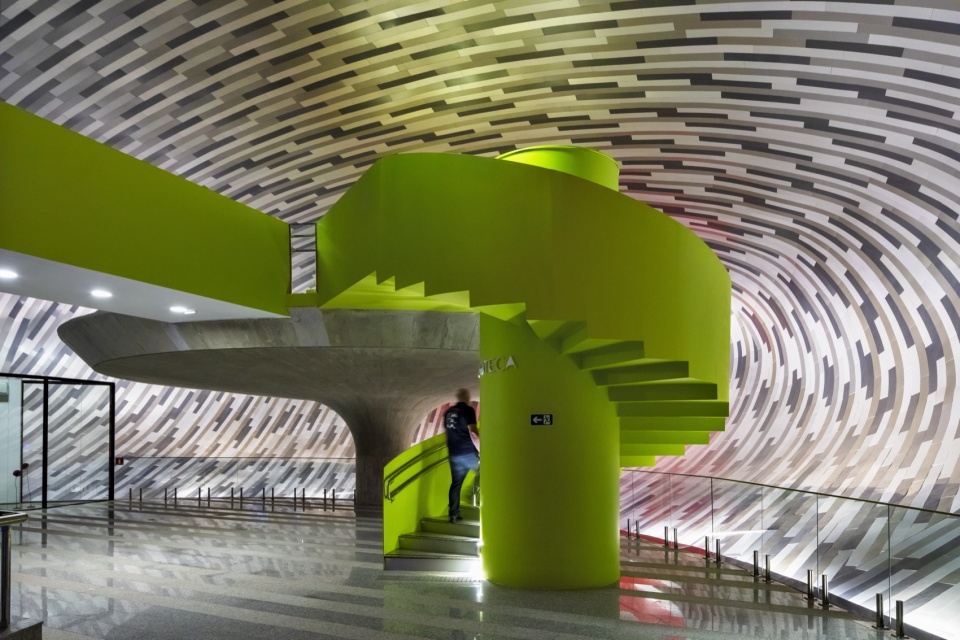
▼旋转楼梯,Spiral staircase
生物公园的重要性并不止于其直接的旅游吸引力:除游客区域之外,项目还设有五个用于当地生物学、植物学和人类学研究的实验室;生物多样性研究也是生物公园研究部门的另一项重要目标。
The importance of the biopark goes beyound the immediate appeal of tourism: in addition to the visitors’ area, there are five research labs for local biology, botanic and anthropology; the studies in biodiversity are another goal for the Biopark’s research division.
▼红色金属结构与玻璃立面,Red metallic structure and glass facade
▼夜景,Night view
▼项目区位图,Site plan
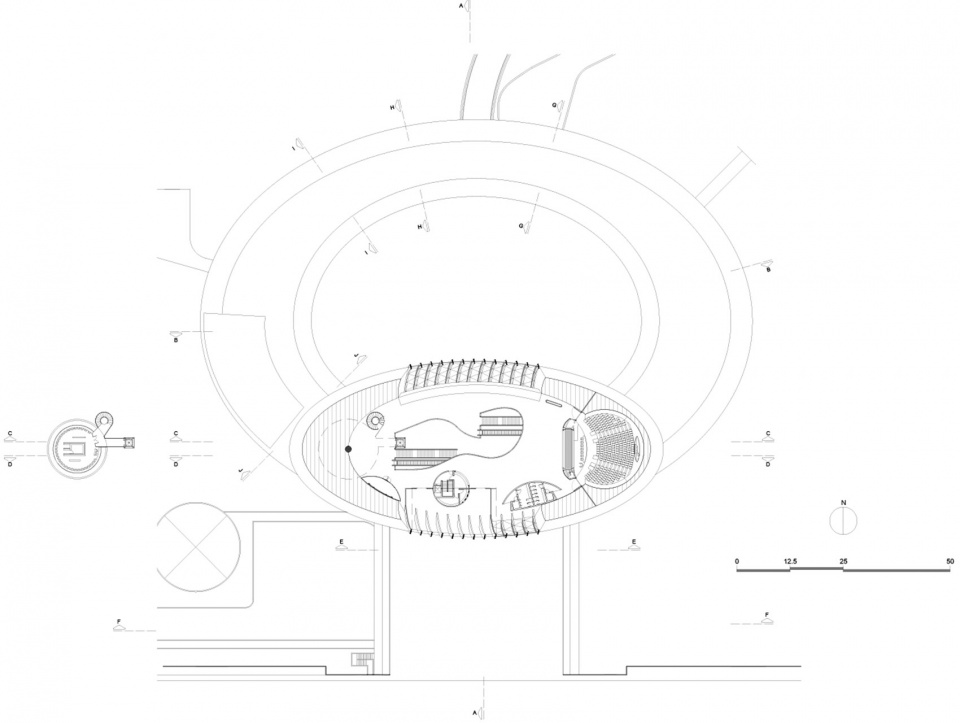
▼平面图,Floor plan
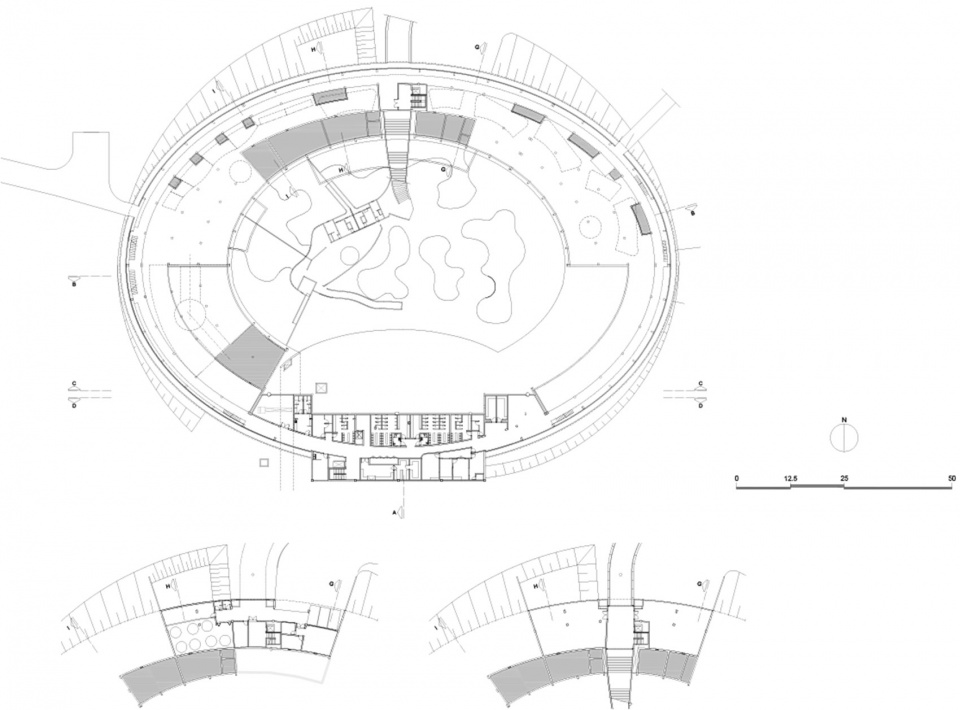
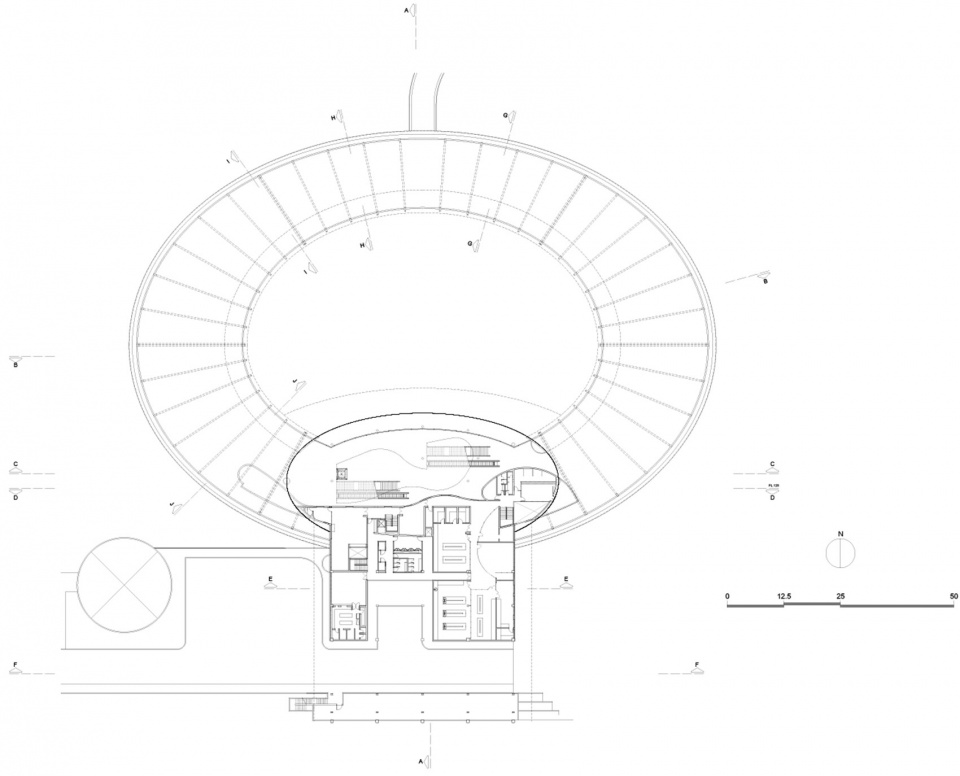
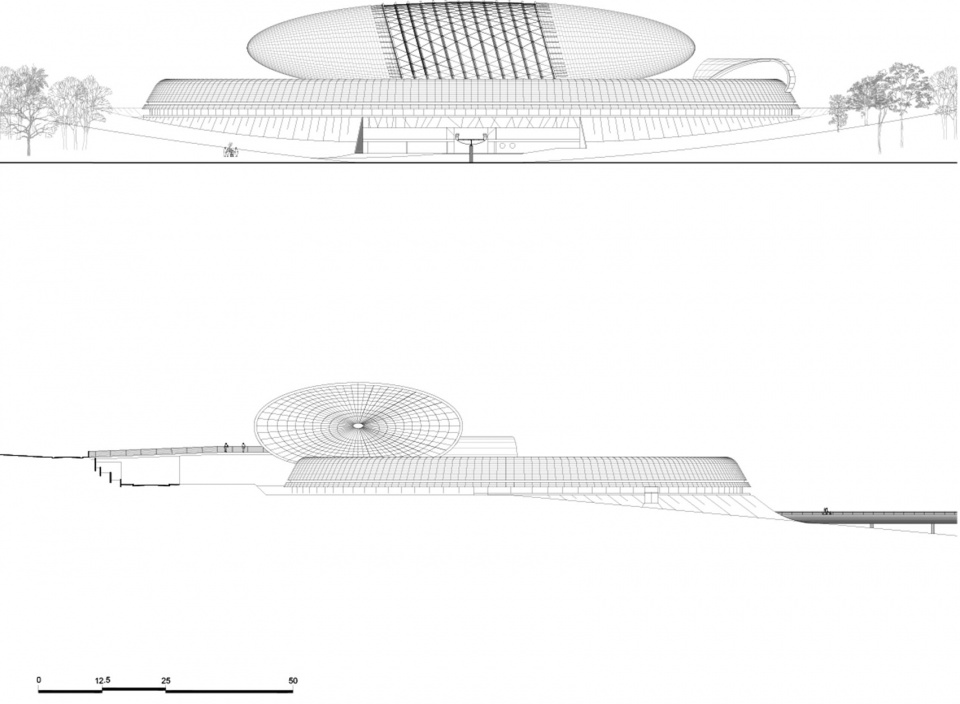
▼立面图,Elevation
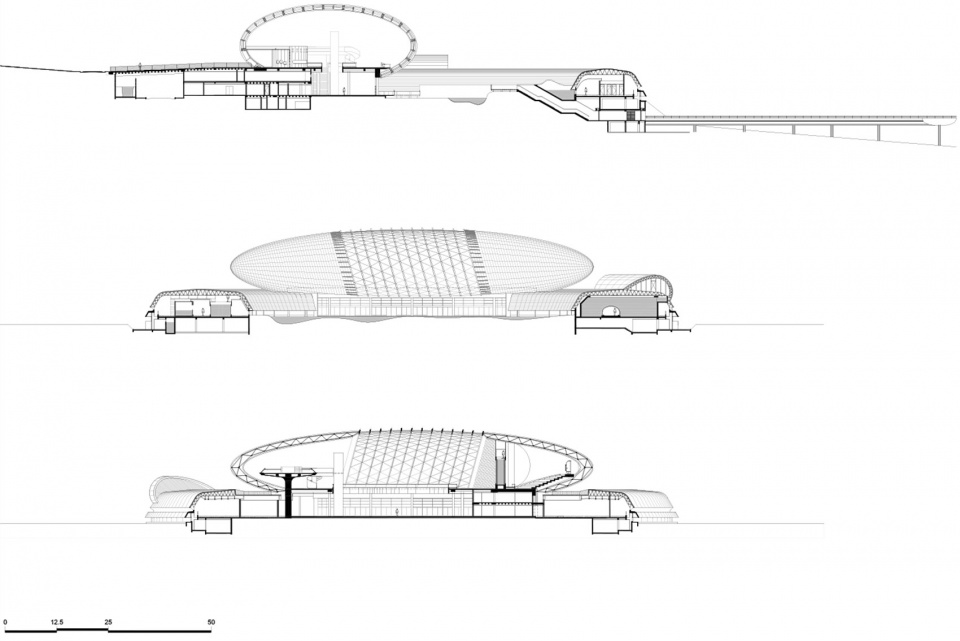
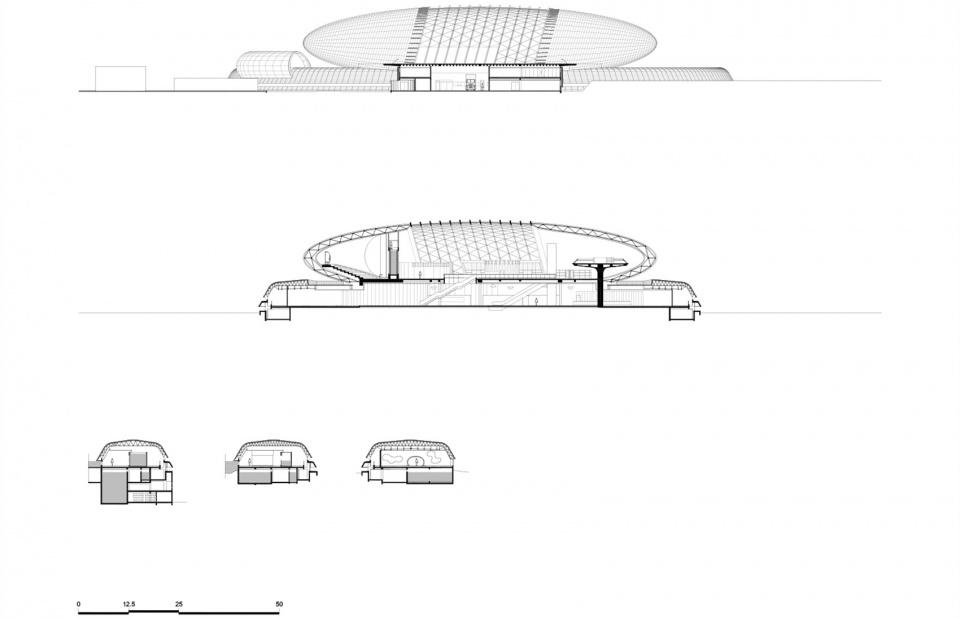
▼剖面图,Section
Project title: Pantanal Biopark
Location: Campo Grande, MS
Design year(s): From 2008 to 2010
Construction year(s): From 2014 to 2022
Opening: 28/03/2022
Architect(s) or architectural firm(s): Ruy Ohtake Arquitetura e Urbanismo Ltda.
Principal(s) in charge: arq. Ruy Ohtake
Coordination: arq. Alfred Talaat, arq. Lilian Wexler, arq. Carla Willik
Work supervision: eng. José Areias, coordenador; eng. Ricardo Alves; eng.
Jorge Cardoso
Project team: arq. Eduardo Prieto; arq. Rodrigo Peregrina;
arq. Rogério Gava de Oliveira; arq. Paula Van Roey;
arq. Alexandra Lopes; arq. Adriano Batista dos Santos;
arq. Rafael Otsuka; arq. Rodrigo Ohtake
Client(s): Governo do Estado do Mato Grosso do Sul
Structural engineer(s): Alena / Lanik / FHECOR
Concrete Structure:Edson Bispo
Metallic Structure: Flávio D’Alambert
Interior designer(s): Ruy Ohtake Arquitetura e Urbanismo Ltda.
Foundatrions: Alena
Installations: Hunter Pelton Engenharia S/S Ltda. / Prolux
Air Conditioning: ArplanTecnologia e Planejamento do Ar Ltda. / Climateck
Roof: Bemo
Frame: Alusul
Facade: Coberfuzi / Lanik / Bemo
Lighting Design: Gilberto Franco
Museology: Votupoca
General contractor: Proteco Construções
Program: aquarium
Structural system: mettalic
Major materials: glass and metal
Site area: 296,52 acre 1.200.000 m2
Building area: 6,42 acre 26.000 m2
Total floor area: 6,41 acre ____ 26.000 m2