抖音集团华东中心,浙江杭州 / gad
效率是互联网企业的生命线,但真正的效率并非一味求快,而是在高速运转中仍能保持清醒与从容。总部建筑作为这种文化的空间载体,既要支撑快节奏的协同作业,也要为日常交流与灵感碰撞留出余地。如果仅止于此,建筑仍只是效率的工具。gad设计的抖音集团华东中心项目,正是以此为出发点——在高效之外,寻求承载人本体验、对话城市肌理的公共载体。
Efficiency is the lifeline of internet companies. Yet true efficiency is not merely about speed, but about maintaining clarity and composure amid rapid operation. As the spatial embodiment of this corporate culture, a headquarters building must not only support fast-paced collaborative work but also leave room for daily interaction and the spontaneous collision of ideas. If that were all, however, the building would remain merely a tool of efficiency. The Douyin Group East China Center, designed by gad, takes this as its very starting point—seeking, beyond efficiency, a civic-oriented place that supports human experience and engages with the urban fabric.
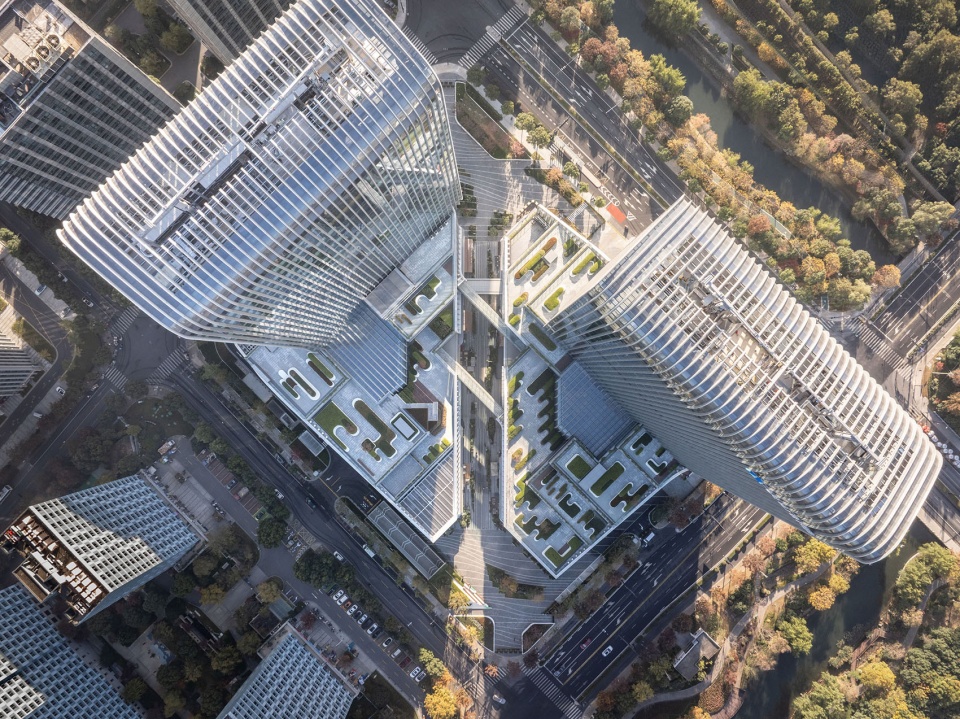
▼项目鸟瞰,Project Aerial View
01在地转译——为杭州而生的总部 01 Local Interpretation — A Headquarters Born for Hangzhou
总部办公建筑最容易陷入“无地方性”的困境——脱离场地文脉、缺失城市辨识度,成为孤立的功能建筑。gad尝试以柔和的设计语言,大尺度的柔化,于杭州未来科技城,回应杭州柔软的城市气质。
Headquarters office buildings are all too prone to falling into the trap of “placelessness”—detached from site context, devoid of urban identity, reduced to isolated functional containers. In Hangzhou Future Sci-Tech City, gad responds to the city’s soft, gentle character with a design language that is itself gentle—softening at a large scale.
▼造型回应杭州柔软气质,The architectural form echoes the spirit of Hangzhou’s landscape
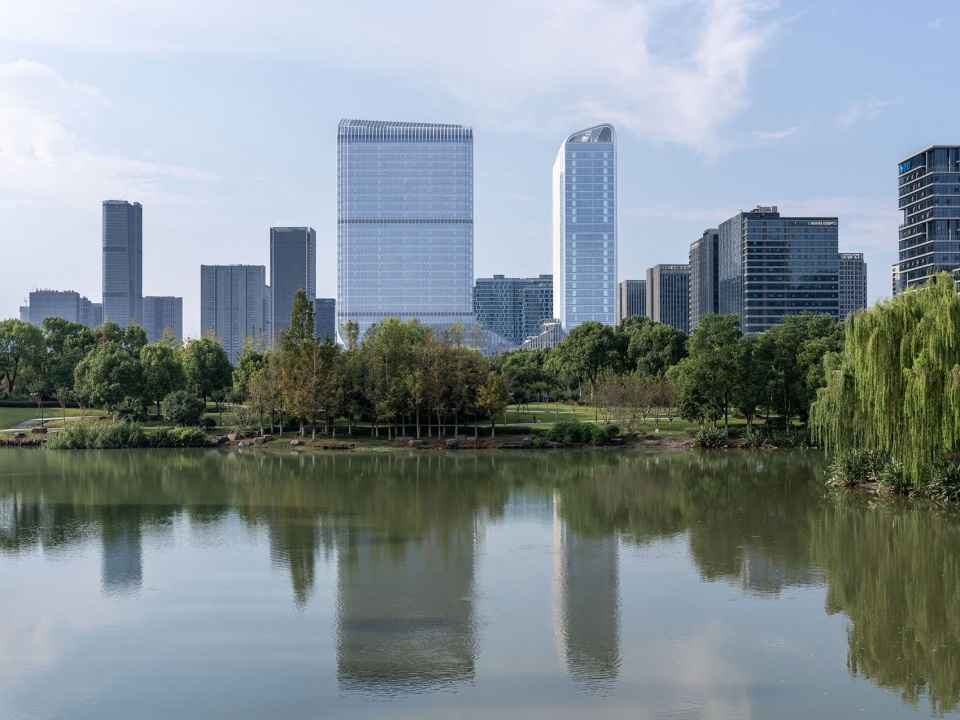
▼为杭州而生的造型,The architectural form born for Hangzhou
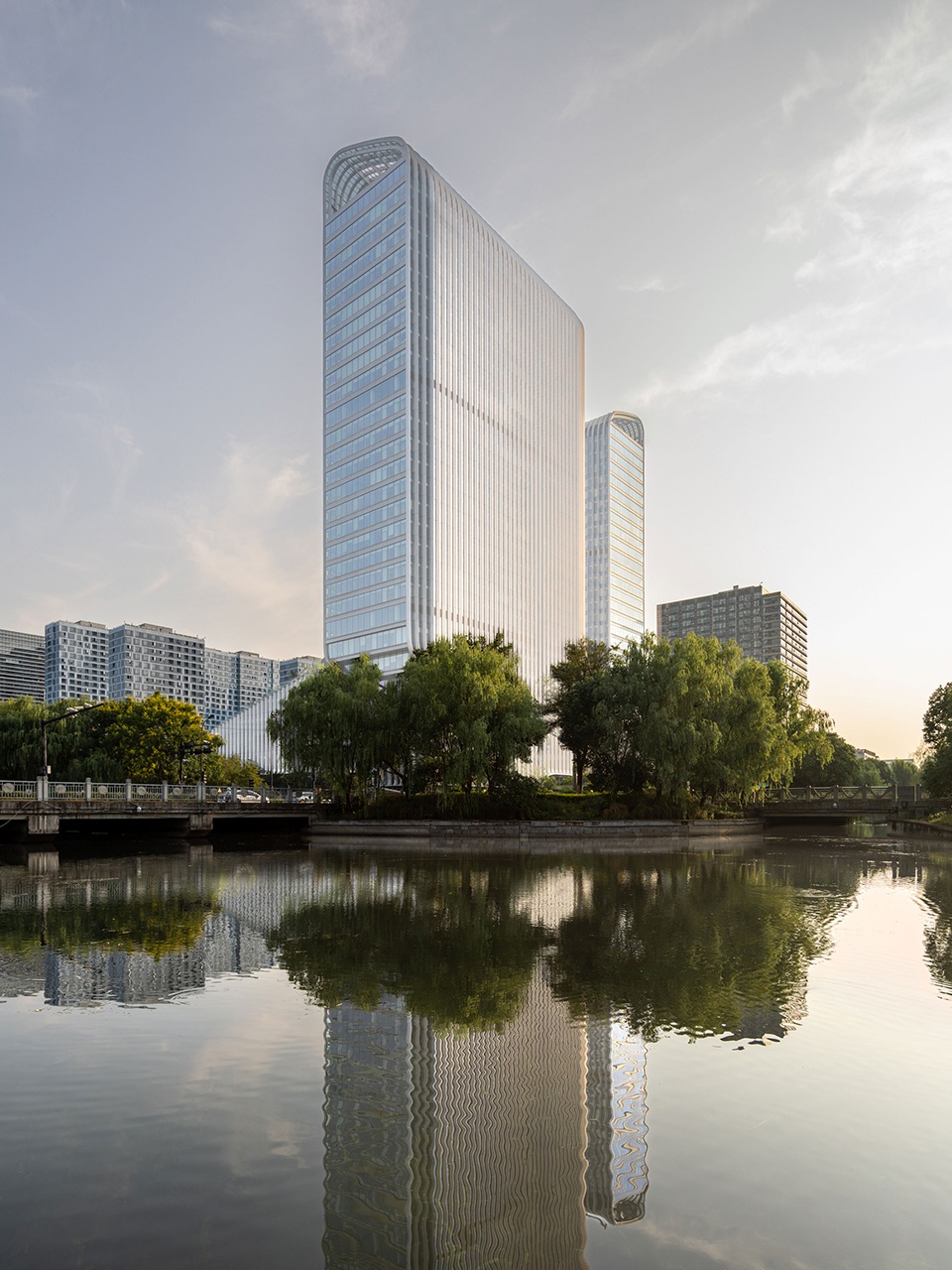
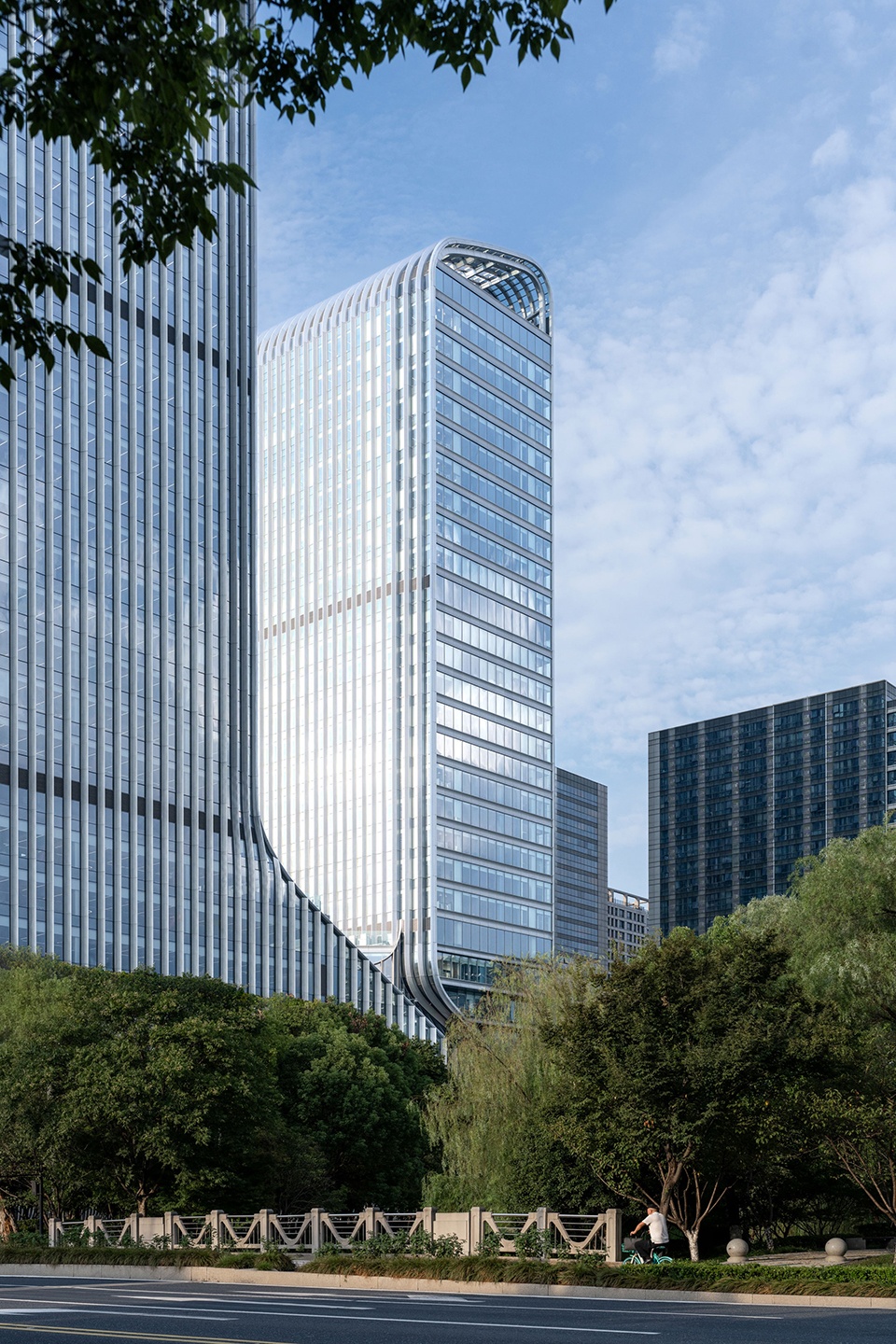
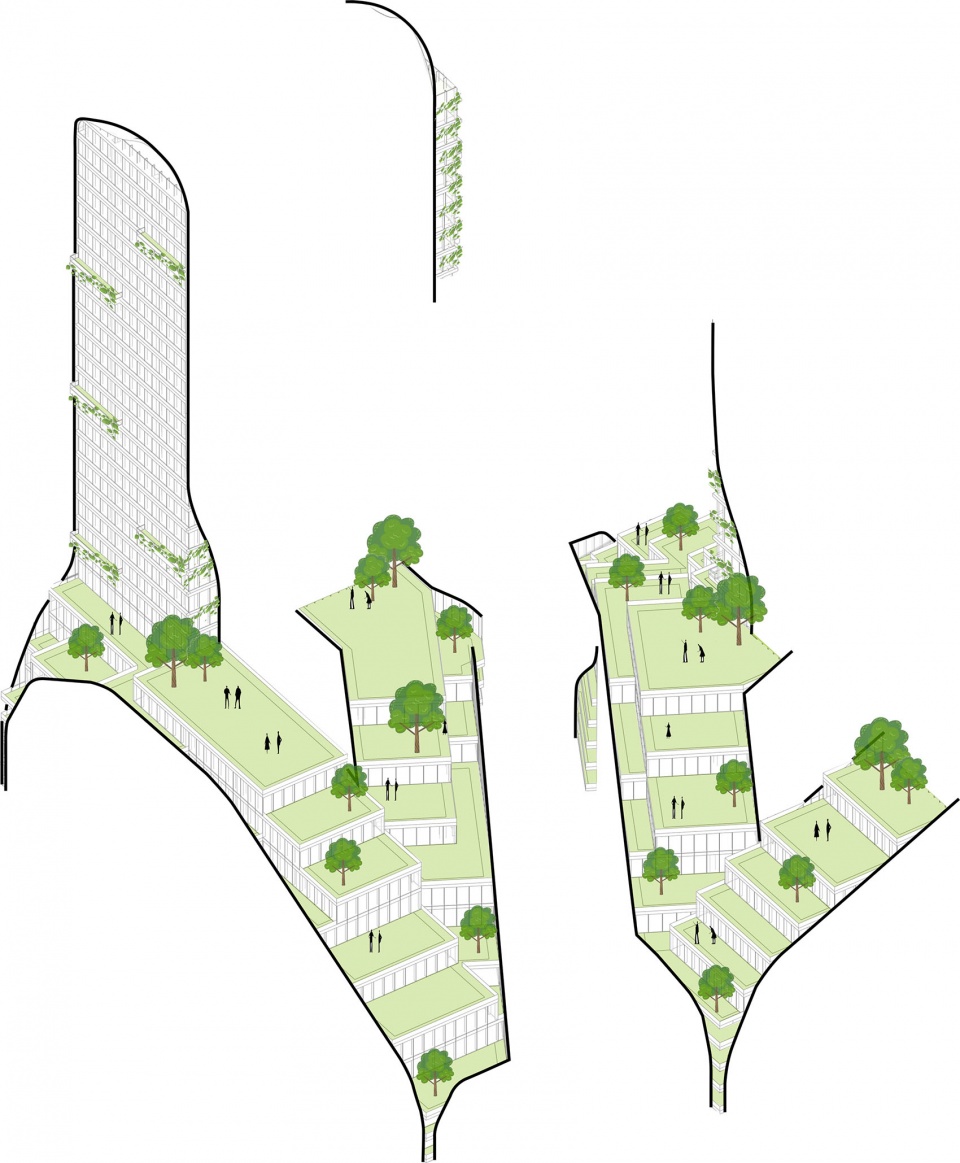
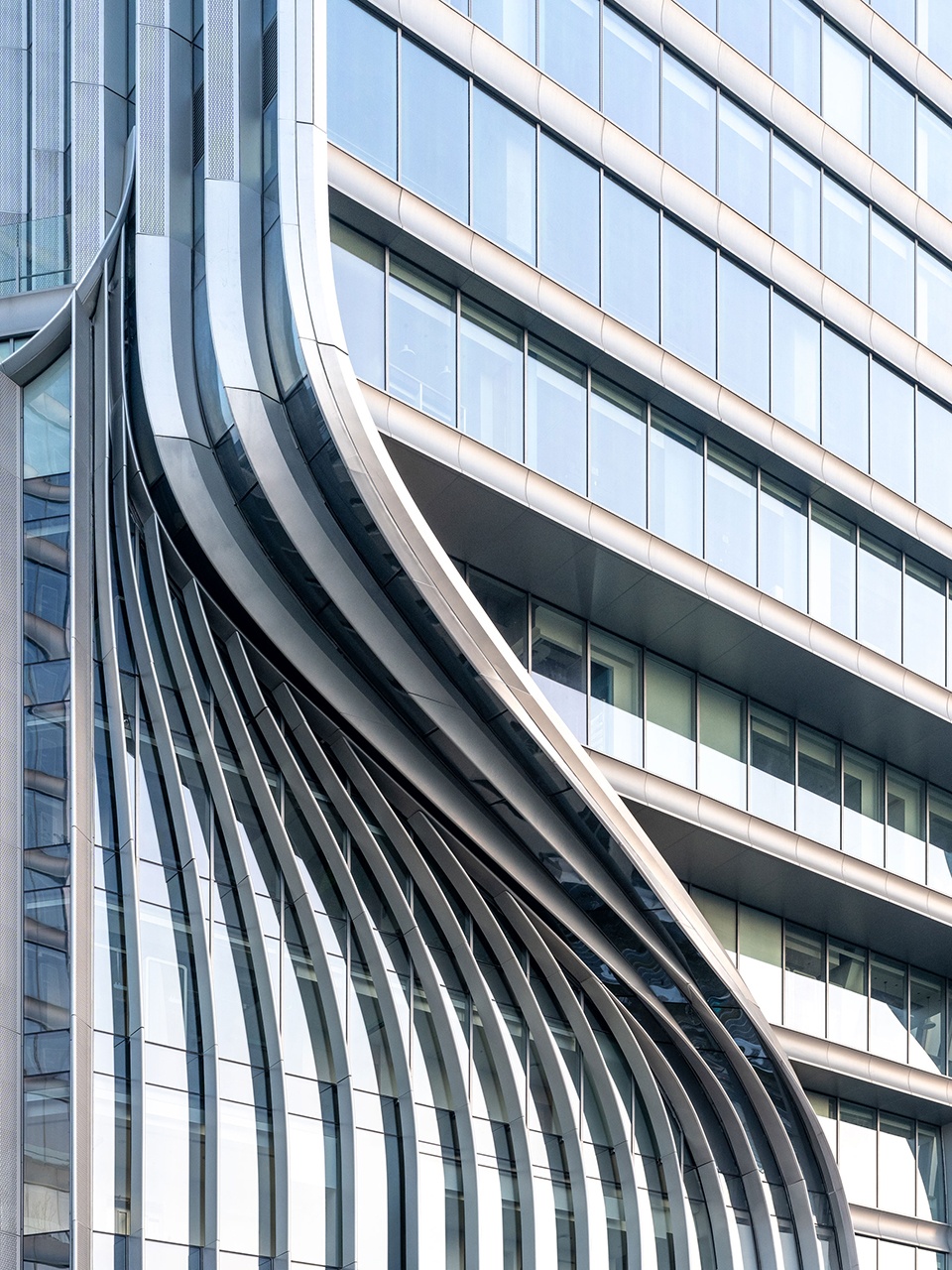
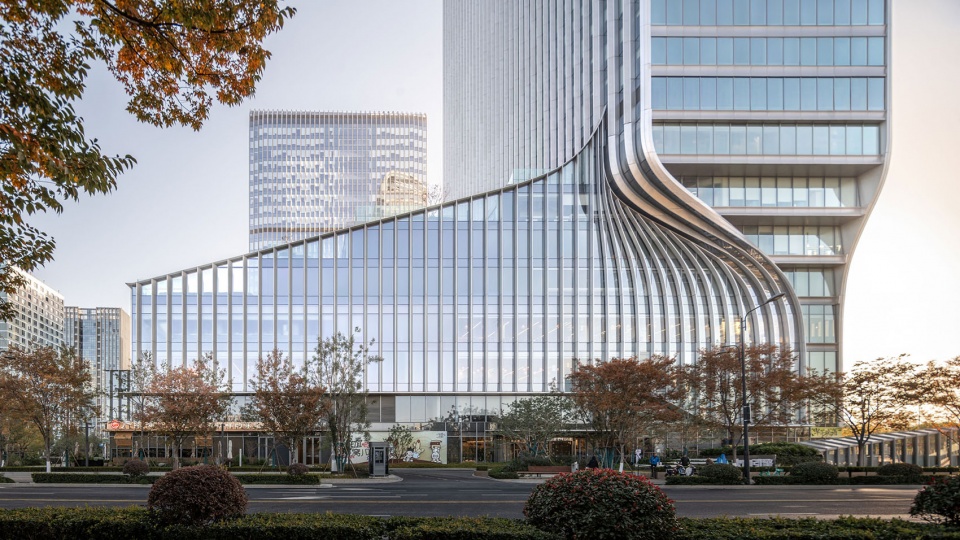
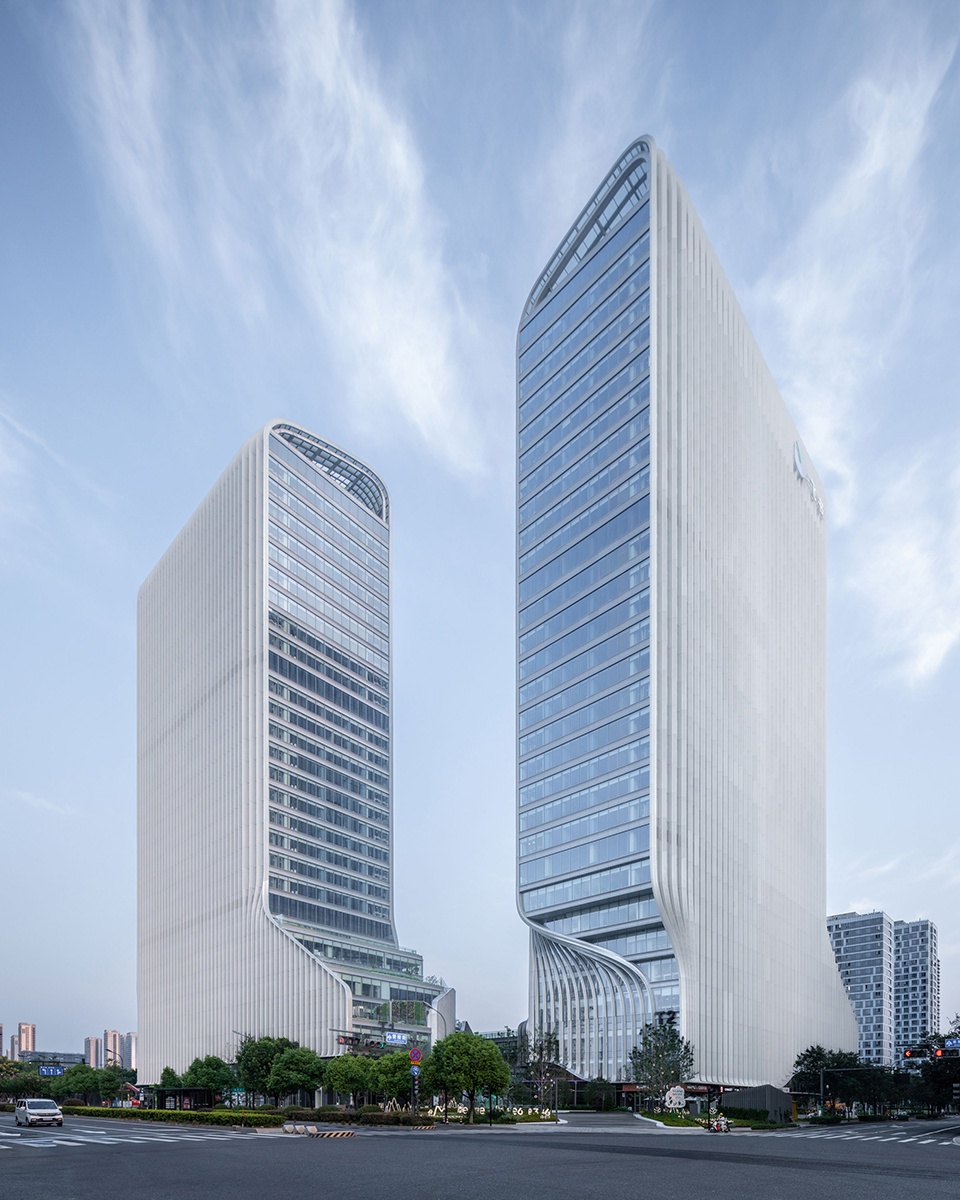
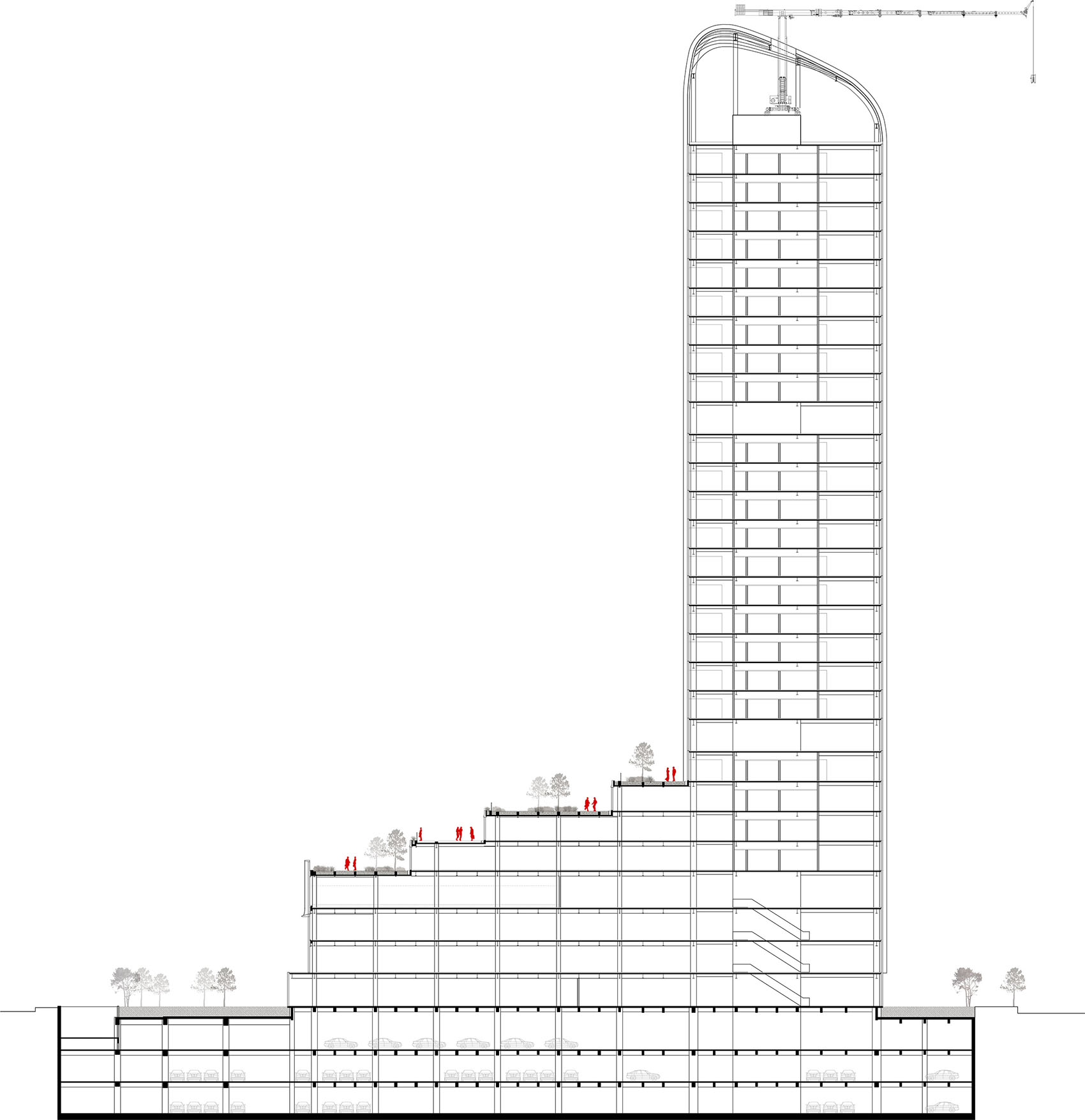
两栋145米塔楼通过阶梯式退台消解体量压迫,让轮廓如层叠山峦融入天际;流线型玻璃幕墙以柔和质感呼应杭州水韵。多层屋顶花园打造为“空中梯田”,让生态景观垂直渗透进办公楼层,使整座建筑如流动水景般生长于大地。这一系列决策并非来自业主方的强制要求,是gad基于对城市文化和使用者心理的主动洞察。团队认为,一座优秀的总部应当让员工和访客第一时间感知到场地性,而非任何一座城市的标准化产物。通过对江南文化中“人与自然共生”的当代转译,建筑既满足了企业全球化的审美需求,也建立了深厚的地域归属感。
▼空中梯田分析图,Hanging Terraces Diagram
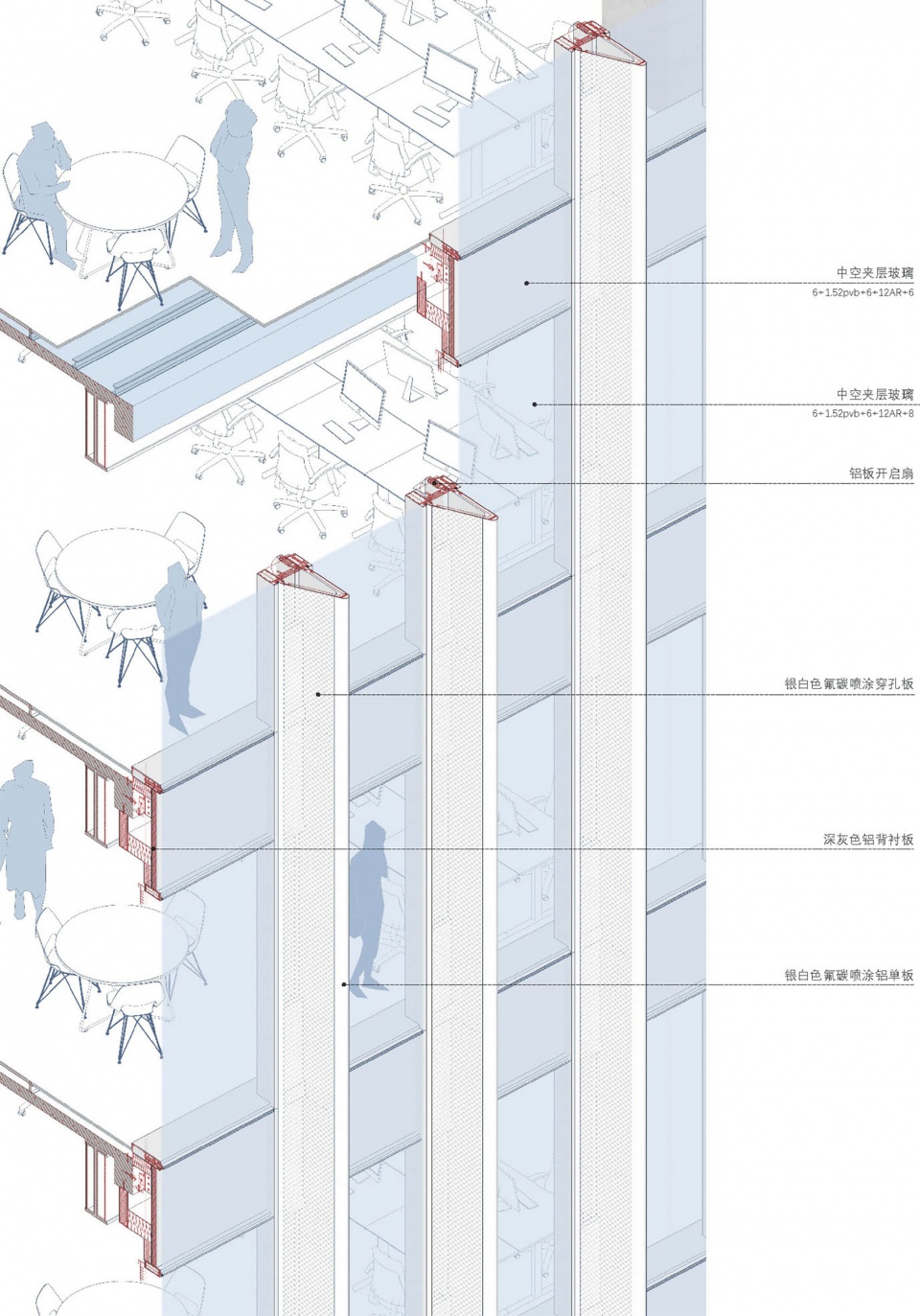
▼幕墙细部分析图,Curtain Wall Detail Analysis Diagram
The two 145-meter towers employ stepped setbacks to dissolve the massing and reduce visual bulk, allowing their silhouettes to merge into the skyline like layered mountain ranges. The streamlined glass curtain walls, with their soft texture, echo the fluid grace of Hangzhou’s waters. Multi-level rooftop gardens are conceived as “hanging terraces,” allowing ecological landscapes to vertically permeate the office floors, so that the entire building grows from the earth like a flowing waterscape. This series of decisions did not come from mandatory requirements of the Douyin Group, but rather from gad’s proactive insight into urban culture and the psychology of the building’s users. The team believes that an excellent headquarters should allow employees and visitors to perceive its sense of place the moment they arrive—rather than appearing as a standardized product that could belong to any city. Through a contemporary reinterpretation of the Jiangnan cultural ideal of “harmony between humans and nature,” the architecture not only satisfies the global aesthetic aspirations of the enterprise but also establishes a profound sense of regional belonging.
▼建筑与城市道路的关系,The Relationship Between the Building and the Urban Road
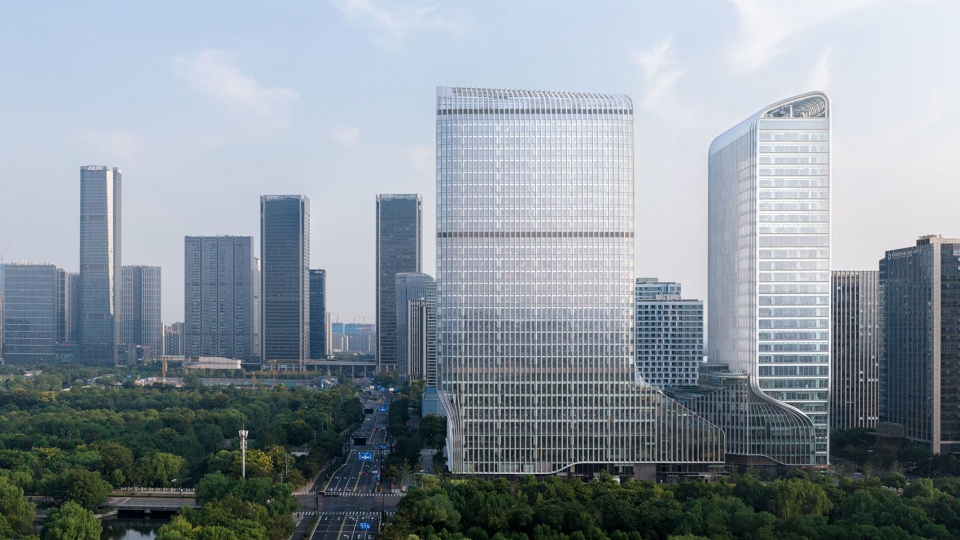
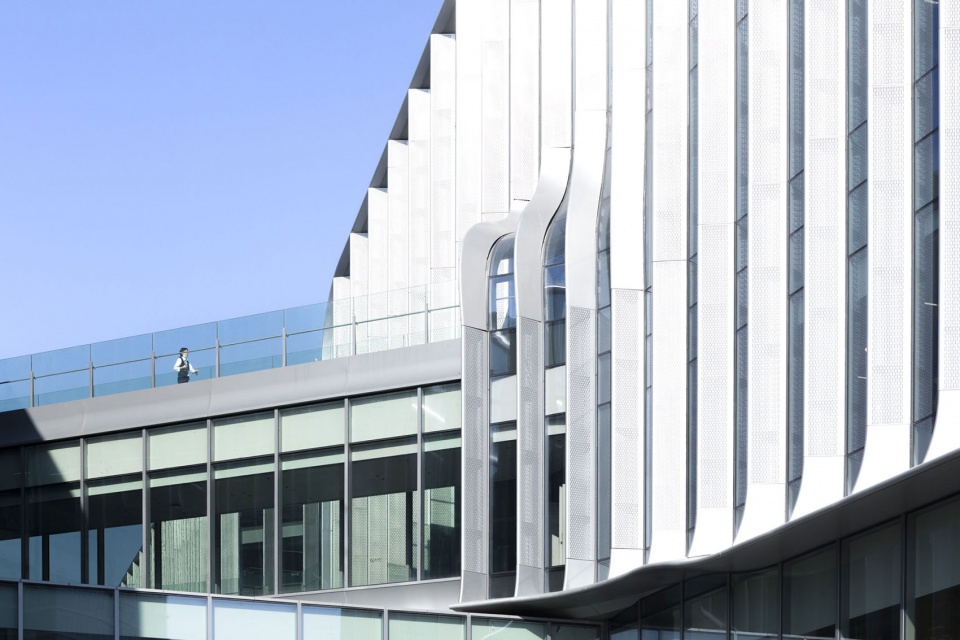
▼模拟自然山峦的表皮设计,A Facade Design That Simulates Natural Mountain Ridges
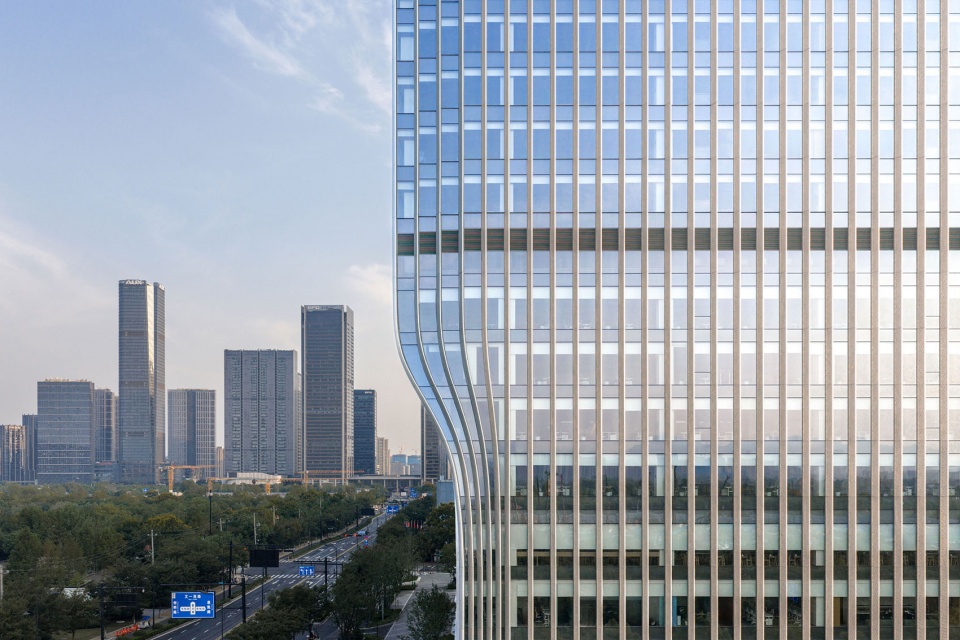
▼廊道与立面关系,The Relationship Between Corridor and Facade
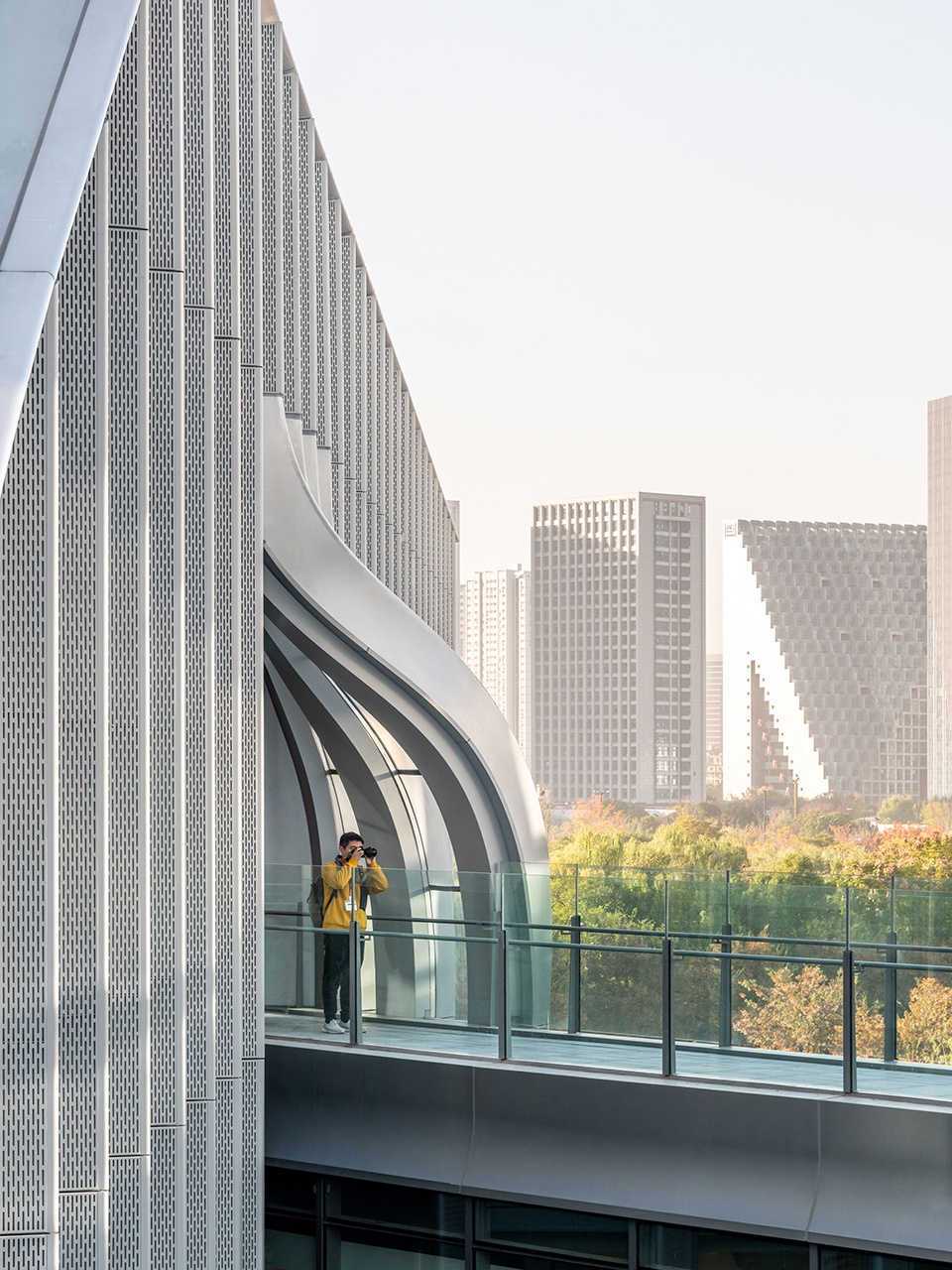
▼立面细节,Facade Details
02 内部优化——为使用者预留的“非效率”空间 02 Internal Optimization — “Spaces Beyond Efficiency” Reserved for Users
互联网企业的工作模式并非单纯追求效率,而是在高效运行之中为创造力保留弹性与自由。总部建筑不只是办公容器,更是这种文化的空间载体——既要支撑快速协作,也要容纳日常交流与生活场景。
The work model of internet companies is not about pursuing efficiency alone, but about preserving flexibility and freedom for creativity within the framework of high-performance operations. A headquarters building is more than just an office container—it is the spatial embodiment of this very culture, supporting not only rapid collaboration but also everyday interaction and the scenes of daily life.
▼沿街入口立面,Street-Level Entrance Facade
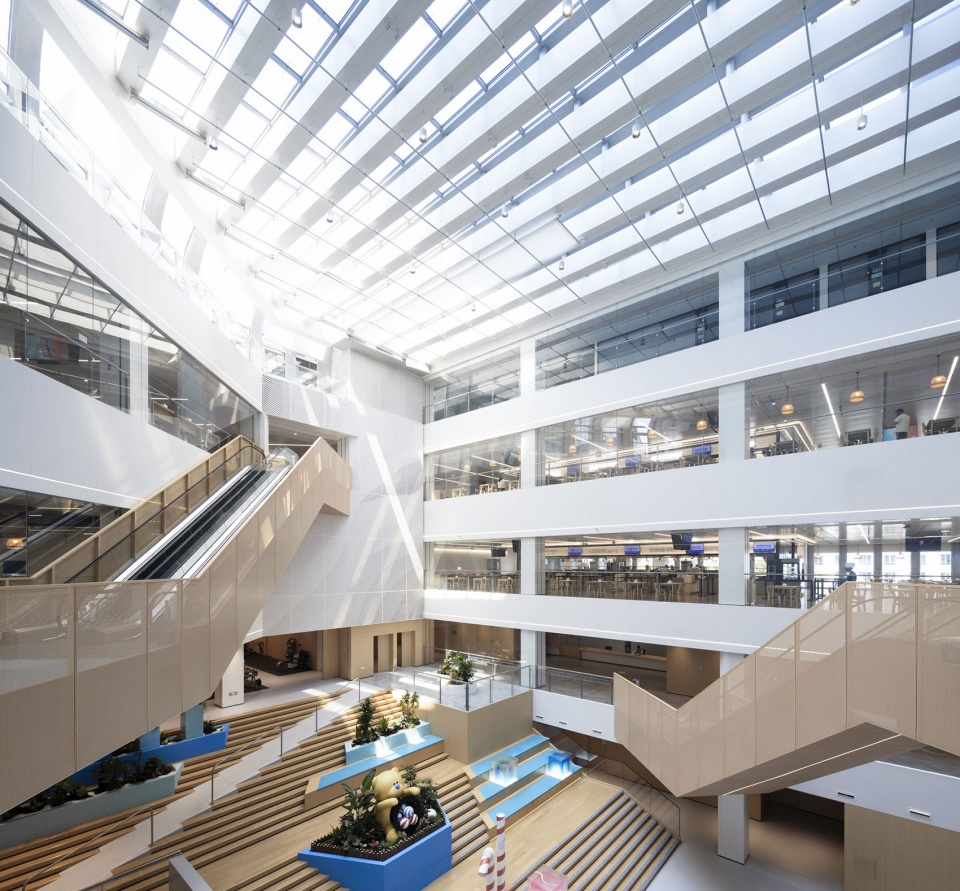
五层通高的大堂串联起底层空间,健身房、服务中心、健康中心、食堂等公共功能围绕中庭分布在裙房一到四层,通过扶梯与台阶形成便捷舒适的动线,为密集的垂直社区提供视觉与心理缓冲。员工从高强度节奏中走出电梯,便能感受到光线与空间层次带来的松弛感。gad 主动保留了这一空间的完整与开放,而非一味追求利用效率。
A five-story atrium connects the ground-level spaces, with public functions—including a gym, service center, wellness center, and cafeteria—distributed across the first through fourth floors of the podium around the central court. Escalators and stairs create a convenient and comfortable circulation loop, offering visual and psychological relief within this dense vertical community. When employees step out of the elevator, away from the intense pace of work, they are immediately met with a sense of relaxation brought by light and spatial layering. gad proactively preserved the integrity and openness of this space, rather than pursuing efficiency at all costs.
▼大堂通高空间,Atrium Double-Height Space
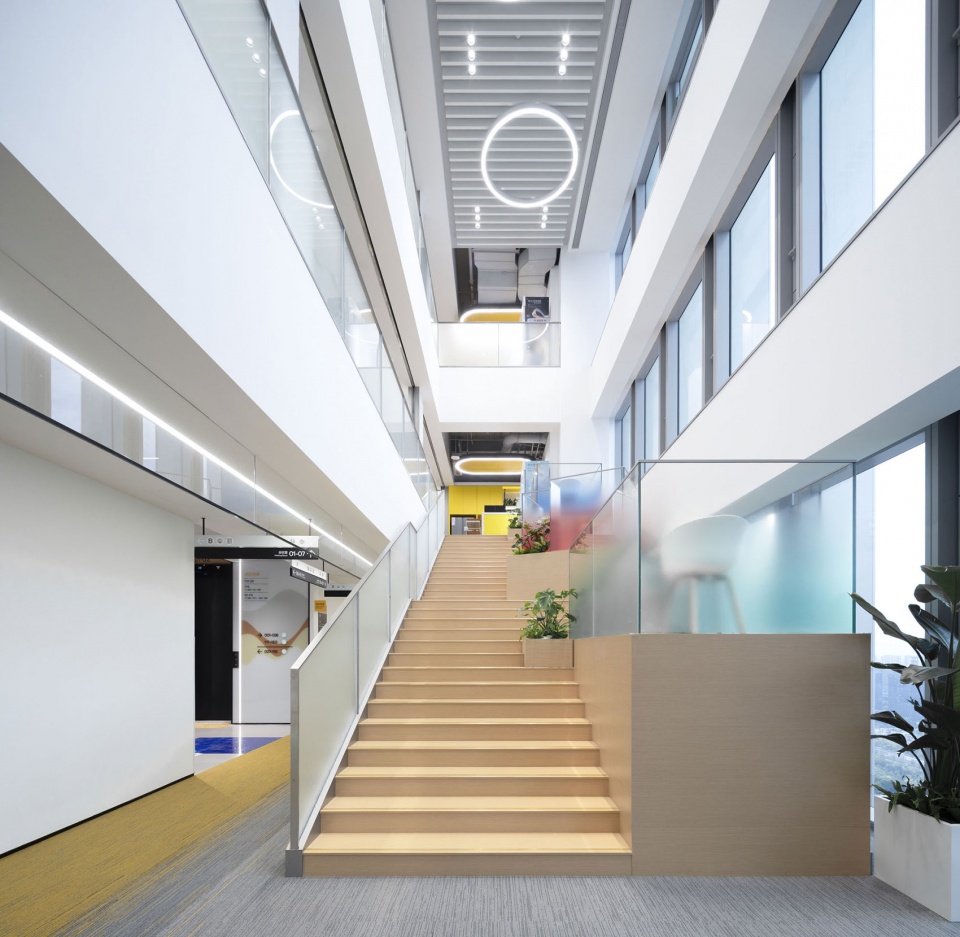
在标准办公层,我们植入了多处共享区。它们并非简单的茶水间,而是可站立开会、可短暂独处、可非正式交流的“第三场所”。这些区域打破了纯工位布局的单一性,让员工之间的偶遇与自然对话成为可能,为办公环境注入了更多层次。
Throughout the standard office floors, we have integrated multiple shared zones. These are not merely pantry areas, but “third places” where one can hold standing meetings, enjoy a moment of solitude, or engage in informal conversation. By breaking the monotony of a purely workstation-based layout, these spaces make chance encounters and spontaneous dialogue between colleagues possible, injecting a richer, more layered texture into the office environment.
▼室内共享空间,Indoor Shared Space
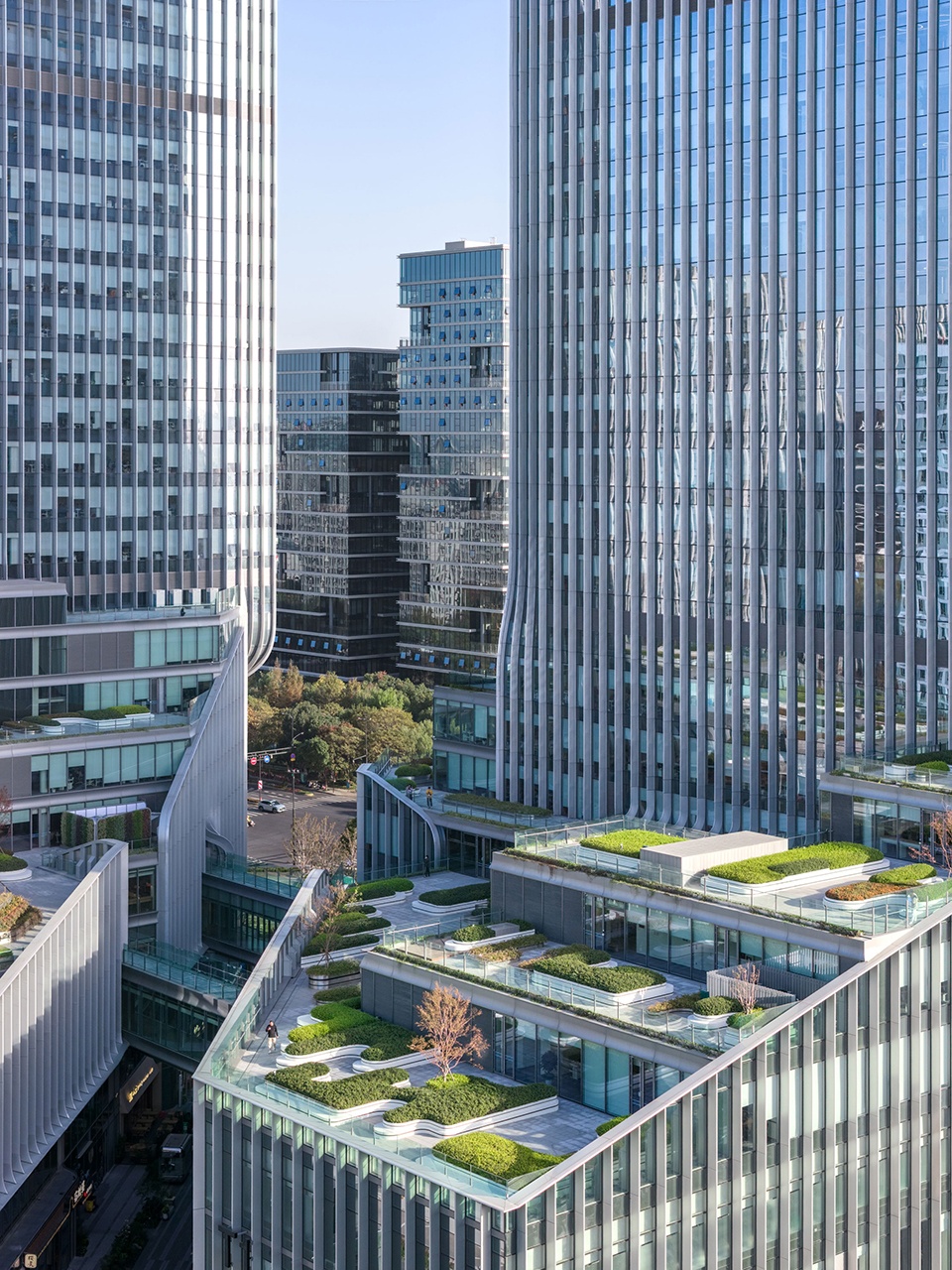
食堂围绕中庭设置在裙房三、四层,通过中庭扶梯及空中连廊串联动线,四层再以室内台阶连接至五层的共享露台。裙房采用层层退台的设计,体块咬合错位,生成一系列尺度各异、功能多元的户外空间——从地面广场到空中梯田,再到塔楼间的景观平台。这些露台不仅服务餐饮时段,也可用于非正式会议、团队活动或短暂休憩,将“与自然接触”从偶发变为日常。整个退台体系并非单一的屋顶花园,而是系统性地回应了员工活动的多元需求。
The cafeteria is located on the third and fourth floors of the podium around the central atrium, with circulation connected by atrium escalators and sky bridges. On the fourth floor, interior stairs further link to a shared terrace on the fifth floor. The podium adopts a layered setback design, with interlocking volumes generating a series of outdoor spaces of varying scales and diverse functions—from ground-level plazas to hanging terraces and landscaped platforms between the towers. These terraces serve not only dining hours but also accommodate informal meetings, team activities, or brief moments of rest, making contact with nature a daily occurrence rather than an occasional event. The entire stepped-terrace system is not merely a rooftop garden, but a systematic response to the diverse needs of employee activities.
▼退层景观露台,Stepped Landscaped Terraces
所有这些“非效率”空间的保留,是 gad 站在使用者立场主动提出的服务内容。团队相信,真正的好建筑不是让空间服从效率,而是用效率之外的余量去容纳人的舒适感。
The retention of all these “inefficient” spaces represents a service proactively proposed by gad from the perspective of the end users. The team believes that a truly good building does not subordinate space to efficiency, but rather uses the surplus beyond efficiency to accommodate human comfort.
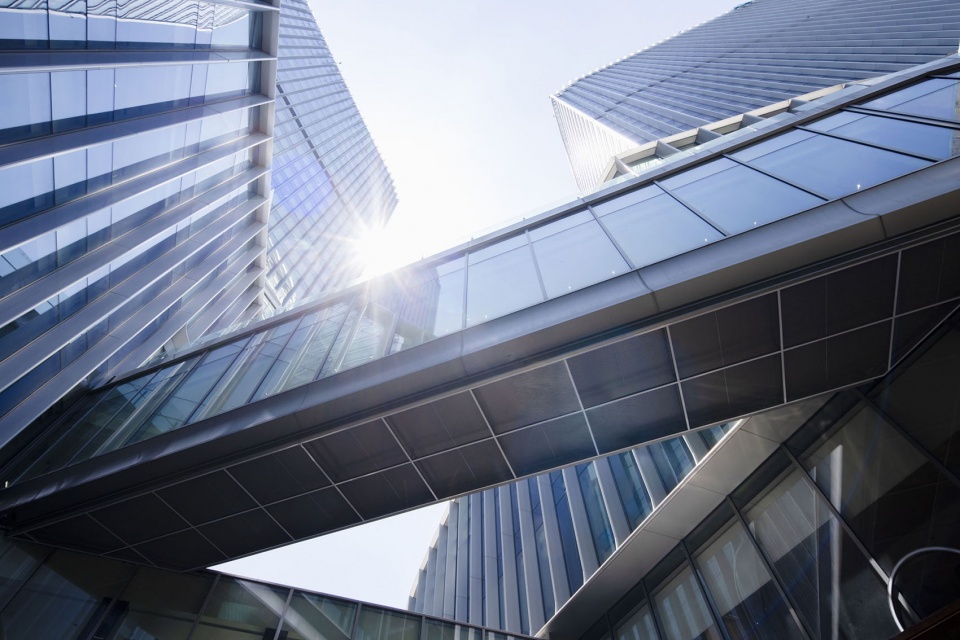
▼空中交通廊桥,Sky Bridge
03 外向关怀——向城市开放,为交通解题 03 Outward-Oriented Care — Opening to the City, Solving for Mobility
总部建筑往往天然内向——围墙、门禁、仅员工的专属动线,与城市保持着礼貌的距离。而 gad 在抖音集团华东中心的设计中,主动向城市释放了空间,使场地由封闭转为开放。
Headquarters buildings are often inherently inward-looking—defined by perimeter walls, access control, and employee-only circulation routes that maintain a courteous distance from the city. In contrast, gad’s design proactively releases space back to the city, transforming the site from closed to open.
▼主动向城市释放空间,Proactively Release Space Back to the City
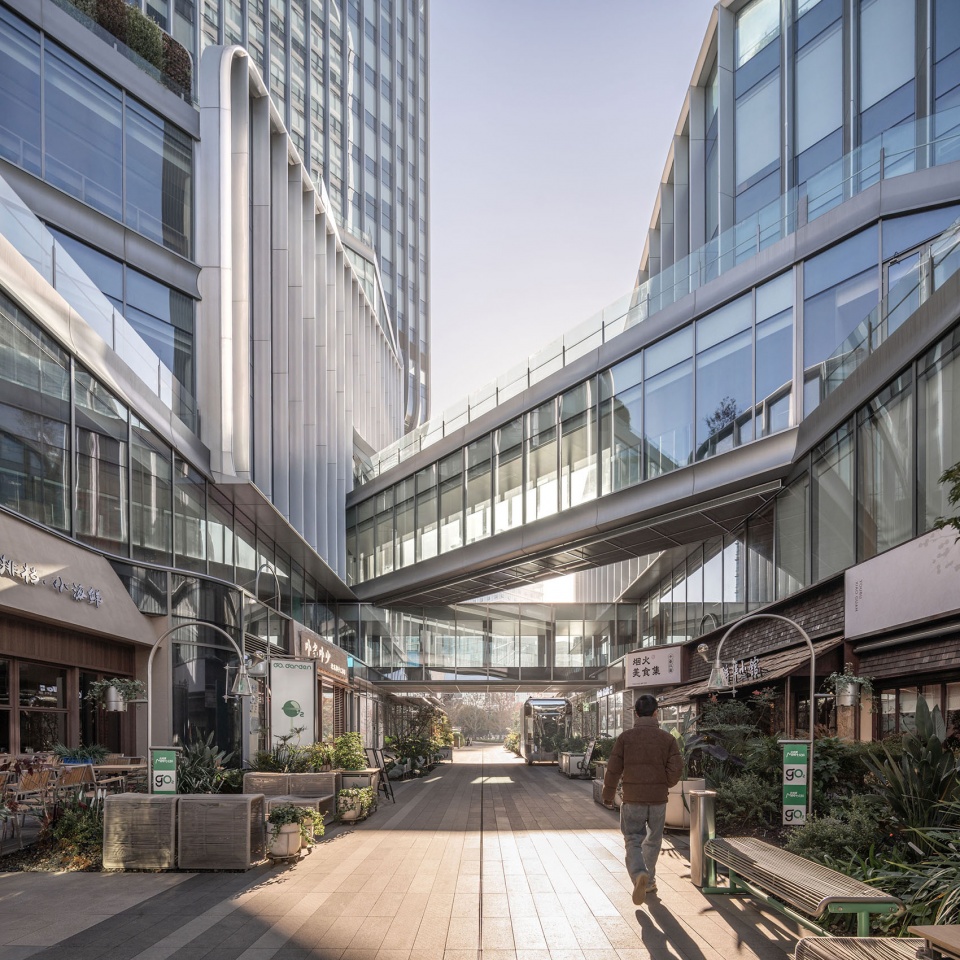
项目沿街设置了街区穿越型商业街,将原本可以封闭管理的底层面积转化为精品商业配套,如今入驻的多家商户均为杭州首店。这一做法既服务了楼内员工,也优化了周边行人的步行体验——路人经过建筑,不再面对冰冷陌生的玻璃幕墙,而是可以逛店、停留、甚至在广场上小坐。建筑从“企业的墙”变成了“城市的廊”。
Along the street, the project incorporates a pass-through commercial block, converting the ground-floor area—which could have been reserved for exclusive management—into a boutique retail complement. Many of the tenants now operating here are Hangzhou’s first stores. This approach serves both the employees within the building and enhances the pedestrian experience for passersby. Rather than confronting a cold, unfamiliar glass curtain wall, pedestrians can browse shops, linger, or even sit for a while on the plaza. The building has thus been transformed from a “corporate wall” into a “urban corridor.”
▼底层的商业配套,Ground-Floor Commercial Amenities
在大楼的交通组织上,gad 回应了互联网总部的高峰通勤需求。研究发现,网约车是员工的重要通勤方式,高峰时段大量聚集易占用市政道路资源。因此设计将交通组织作为总部设计的重要组成部分,而非简单的地下停车功能。具体上,利用北侧坡道为入口、西侧坡道为出口,形成单向车行动线;地下层单独设置网约车接驳区,配备候车平台及临时车位,接驳厅直接串联双塔楼核心筒,实现人车高效转换。地面同步配置引导标识与道闸系统,有序管理网约车流线。整套系统将原本可能外溢至市政道路的交通压力,有效化解在场地内部。
▼立体交通分析图,Multilevel Traffic Flow Diagram
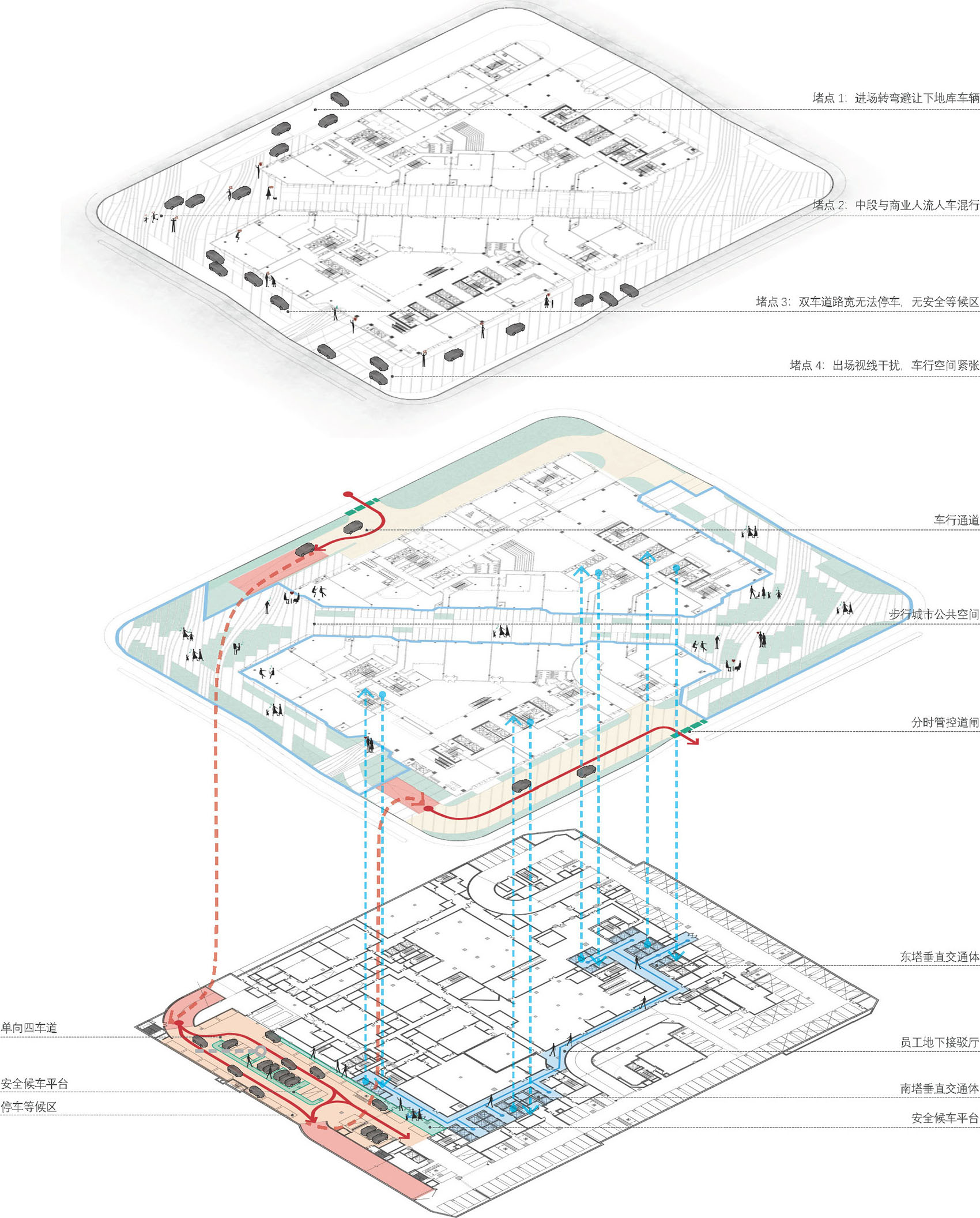
In organizing the building’s traffic flow, gad responded to the peak commuting demands typical of an internet headquarters. Research revealed that ride-hailing services are a primary mode of transport for employees, with large numbers of vehicles converging during peak hours—often spilling over into public roadways. The design therefore treats traffic organization as a core component of the headquarters, rather than reducing it to a mere underground parking function. Specifically, a ramp to the north serves as the entrance and a ramp to the west as the exit, forming a one-way vehicular loop. A dedicated ride-hailing pick-up and drop-off zone is provided on the basement level, equipped with waiting platforms and temporary parking bays. This lobby connects directly to the core towers’ circulation cores, enabling seamless and efficient transfer between vehicles and the building’s vertical transportation system. Above ground, wayfinding signage and a barrier system are deployed to manage ride-hailing vehicle flows in an orderly manner. The entire system effectively internalizes traffic pressure that might otherwise spill onto municipal roads, resolving it within the site itself.
▼华灯初上的总部大楼,Headquarters Building at Nightfall
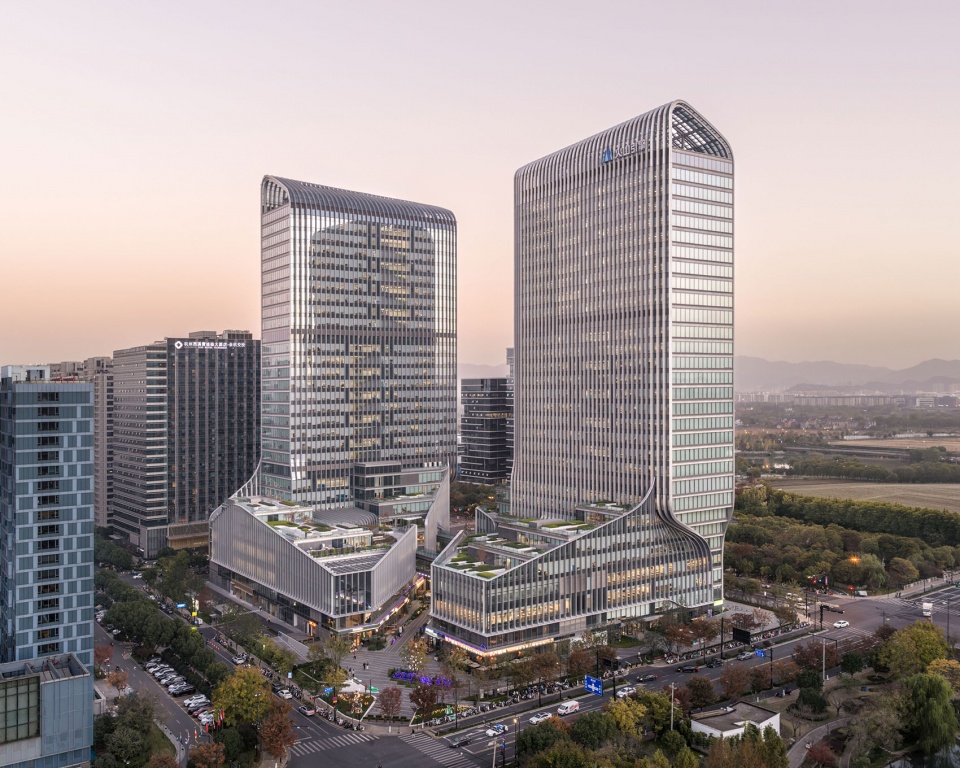
gad从业主实际运营需求出发的主动思考,首次在总部设计中系统性地将网约车动线纳入交通组织,在地下构建集网约车、自驾、地铁接驳和人行交通于一体的中央车站,一次性解决了高密度总部的通勤拥堵难题。这一做法不仅体现了业主作为互联网企业对城市交通承载力的主动担当,也因其高效与可复制性,在后续多个总部项目中得到沿用,成为内部设计范本。
Driven by gad’s proactive thinking grounded in the Douyin Group’s actual operational needs, the design systematically integrated ride-hailing vehicle routes into the traffic organization of a headquarters building for the first time. A central mobility hub was established underground, bringing together ride-hailing services, private cars, metro connections, and pedestrian circulation in one unified space—resolving the commuting congestion challenges of a high-density headquarters at a single stroke. This approach not only reflects the client’s sense of responsibility as an internet company toward urban traffic capacity, but also proved so efficient and replicable that it has been adopted in subsequent headquarters projects, becoming an in-house design benchmark.
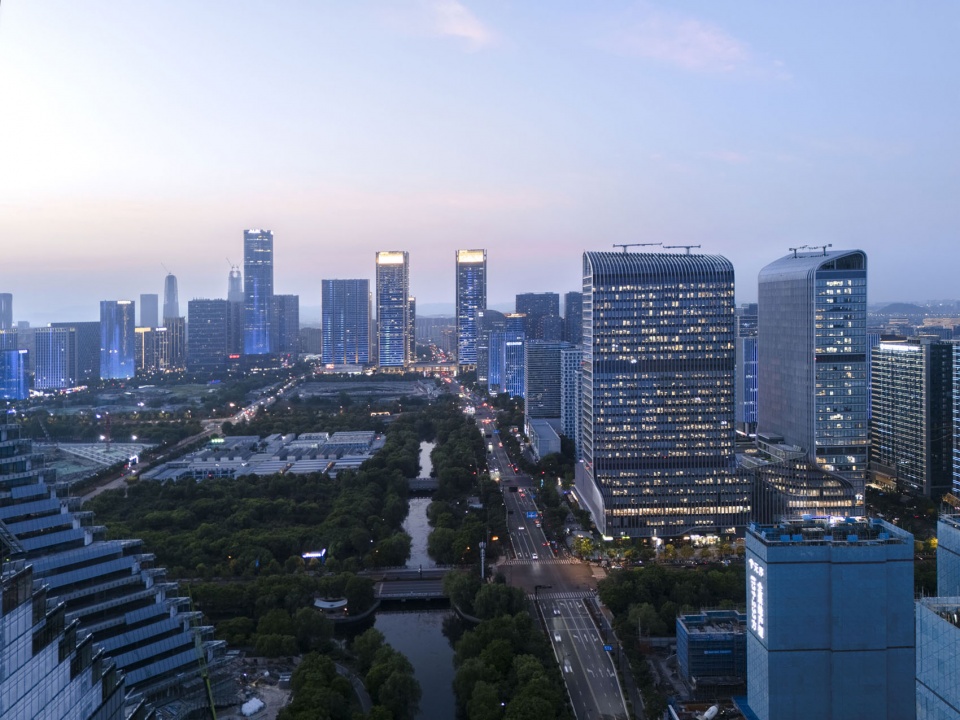
▼建筑与城市景观,Architecture and Urban Landscape
▼夜景透视图,Night Perspective
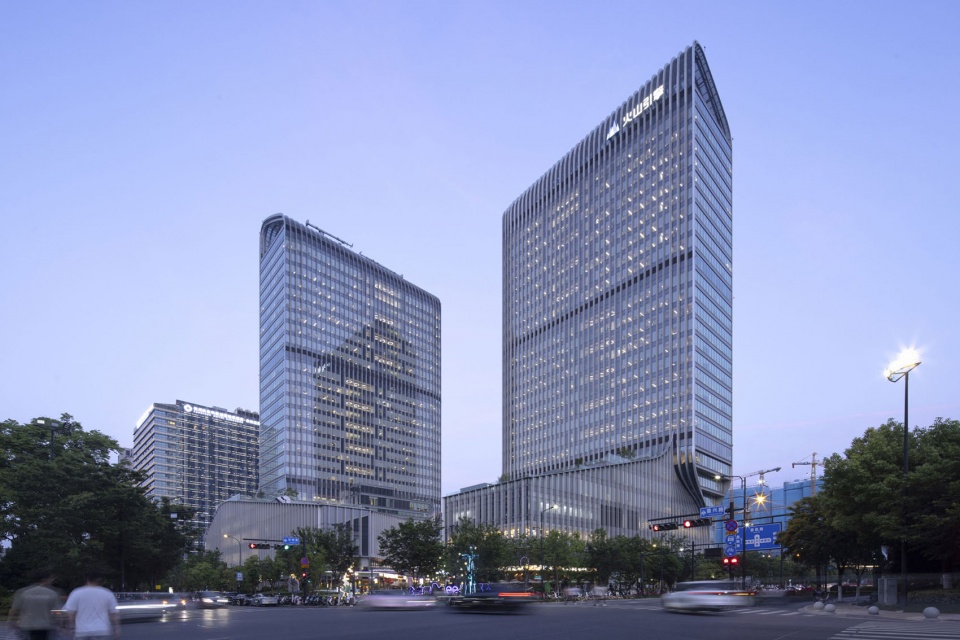
在杭州的城市肌理中,gad为抖音集团勾勒了一座“跳动的山水”,它并非一味迎合高效运作模式,而是在原有框架中寻找优化突破口。从杭州气质的在地表达,到楼内的共享空间,再到向城市敞开的底层与优化后的交通系统——每一项都源于设计师对使用者与城市的同理心。最终,这两栋145米塔楼所承载的,不只是一家公司的华东总部,更是一种建筑服务意识的样本:在追求高效的时代,依然愿意为舒适、为风景、为路人,多做一点点。
Within the urban fabric of Hangzhou, gad has envisioned a “living landscape” for the Douyin Group—a design that does not simply cater to high-performance operations, but seeks opportunities for optimization within the existing framework. From the local expression of Hangzhou’s character, to the shared spaces within the building, to the ground floor that opens to the city and the refined traffic system—each decision stems from the designers’ empathy for both the users and the city. Ultimately, these two 145-meter towers carry not only the regional headquarters of a major corporation, but also a model of architectural service: in an age that pursues efficiency above all, still willing to do a little more—for comfort, for views, for the passerby.
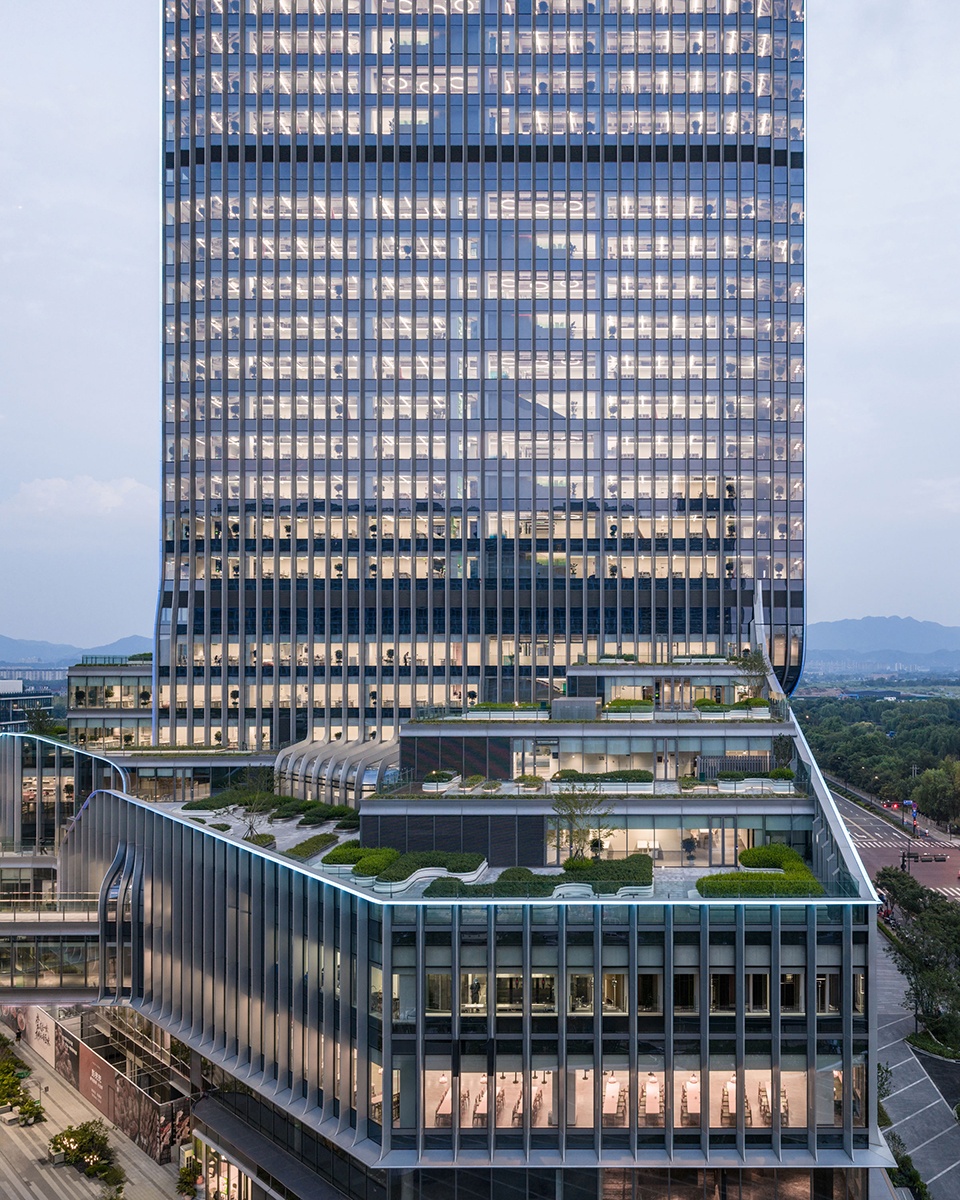
▼露台与建筑立面夜景,Terraces and Building Facade Night View
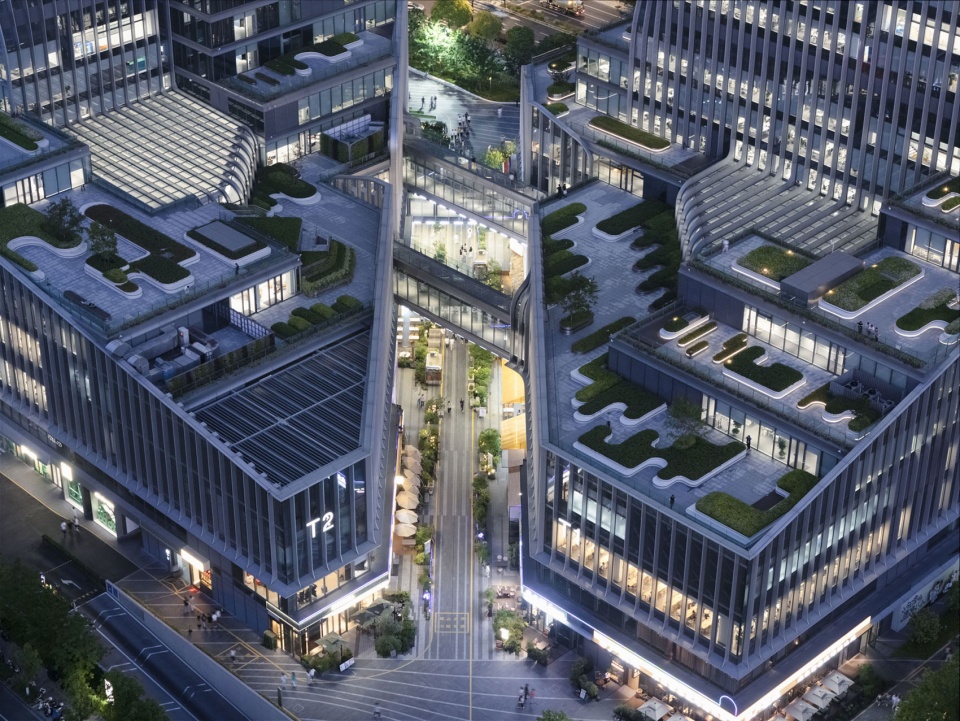
▼向城市开放的廊道夜景,A Corridor Open to the City Night View
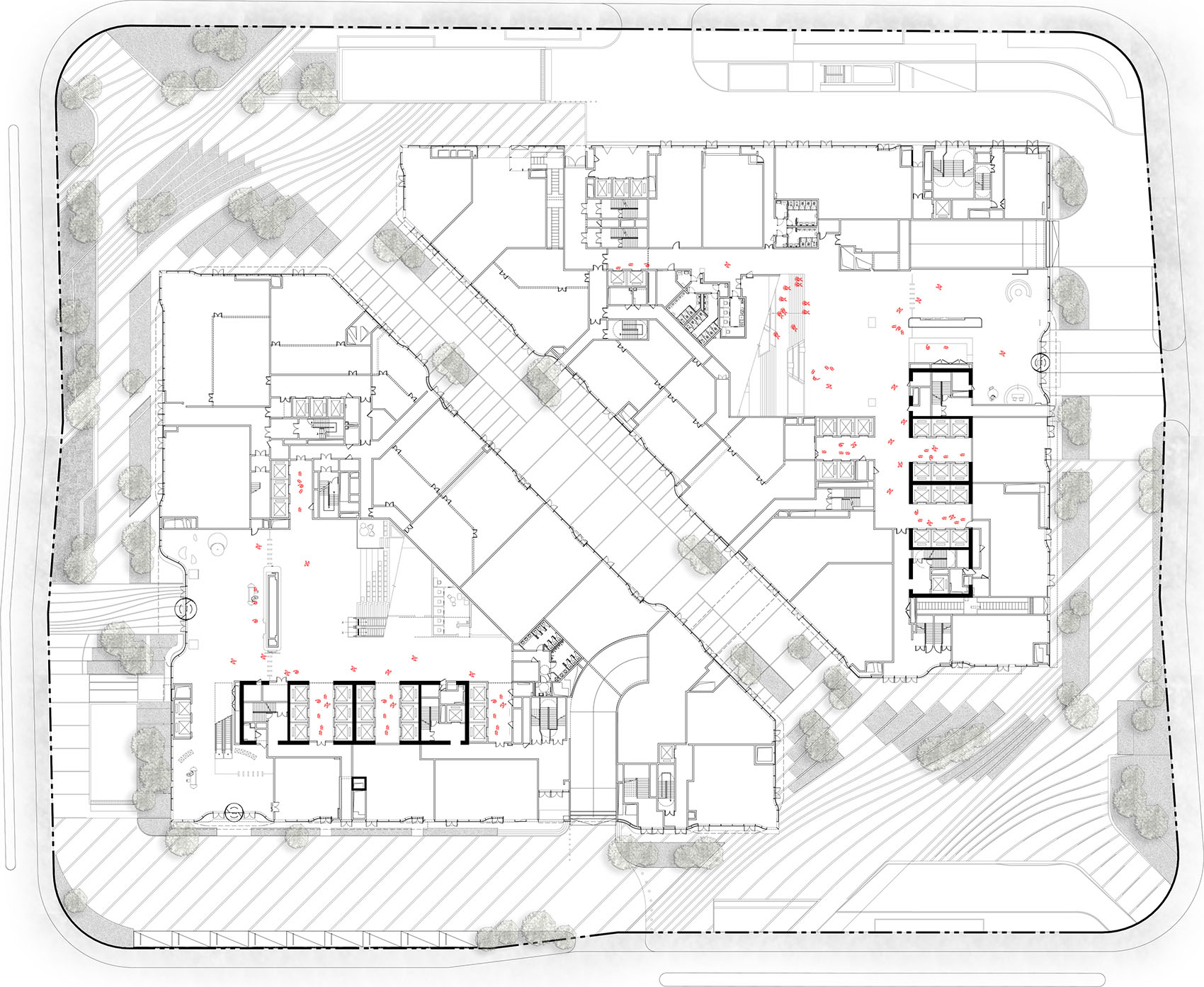
▼裙房一层平面图,Podium Ground Floor Plan
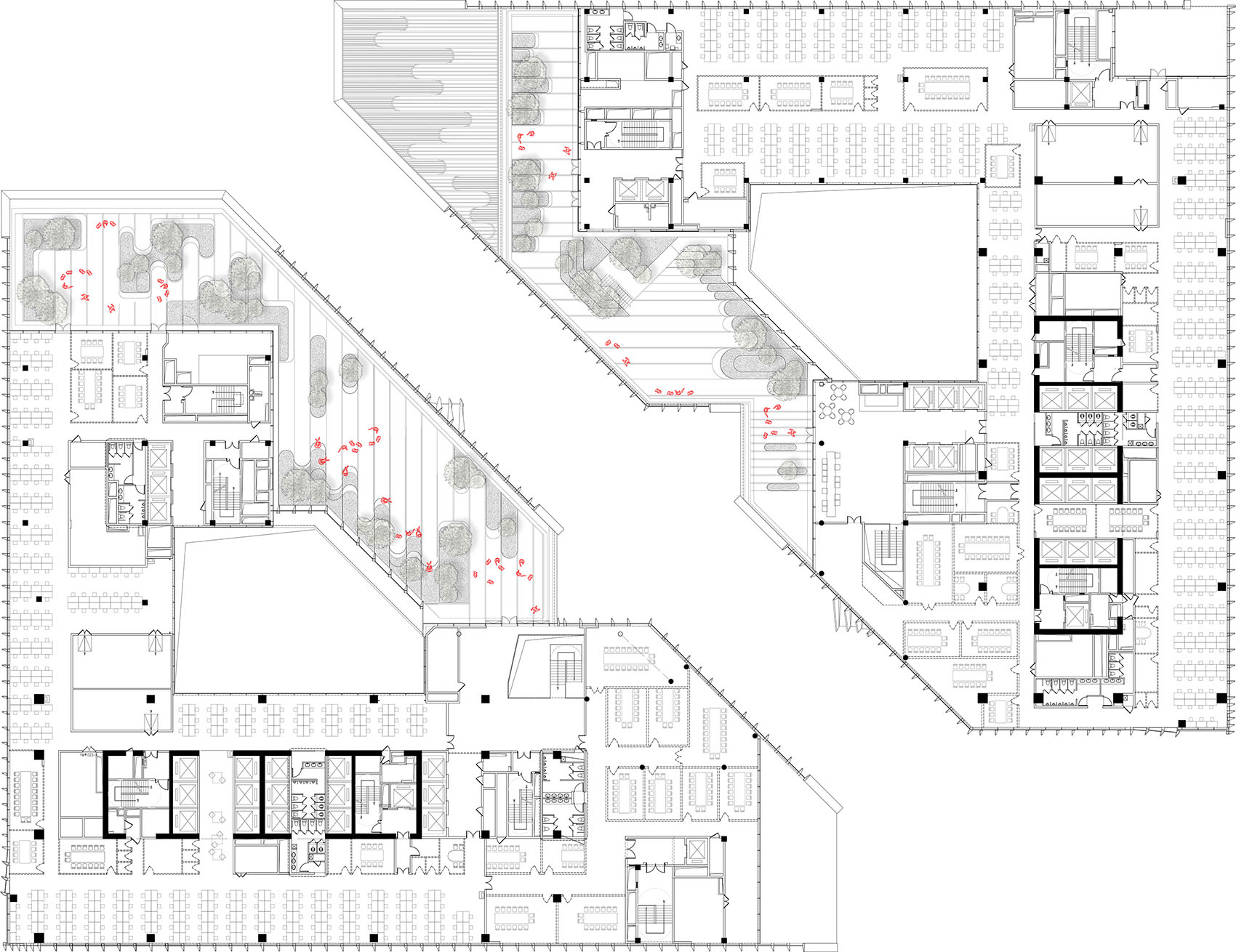
▼裙房五层平面图,Podium Fifth Floor Plan
▼剖面图,Section
Project Name: Douyin Group East China Center
Location: Hangzhou, Zhejiang
Full Address: No. 636 Jingxing Road, Yuhang District, Hangzhou
Building Type: Corporate Headquarters Office
Design Year: 2021
Completion Year: 2025
Site Area: 24,743 ㎡.
Gross Floor Area: 210,341 ㎡ (143,510 ㎡ above ground, 66,831 ㎡ underground)
Floor Area Ratio (FAR): 5.8
Developer: Douyin Group
Design Institute: gad
Design Team: Zhang Wei, Cheng Yue, Sun Jun, Liu Zhe, Zheng Yilin, Zhang Jing, Cai Rongxiao, Zhao Yuting, Lin Jinzhen
Interior Design: CCD Cheng Chung Design (Hong Kong)
Landscape Design: Lab D+H
Structural Design: The Architectural Design & Research Institute of Zhejiang University Co., Ltd.; RBS Rong Baisheng Structural Engineering Design Office (Structural Consultant)
Curtain Wall Design: The Architectural Design & Research Institute of Zhejiang University Co., Ltd.; Inhabit (Curtain Wall Consultant)
Mechanical & Electrical Design: The Architectural Design & Research Institute of Zhejiang University Co., Ltd.; AECOM (MEP Consultant)
Construction Drawing Design: The Architectural Design & Research Institute of Zhejiang University Co., Ltd.
Photography: Chen Xi Studio, Arch-Exist Photography