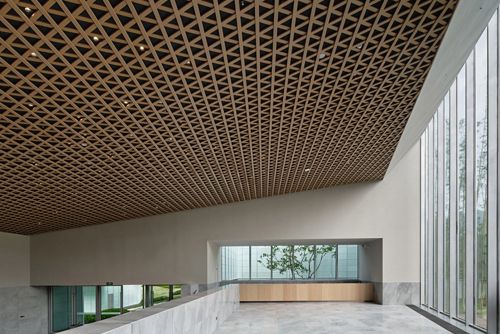
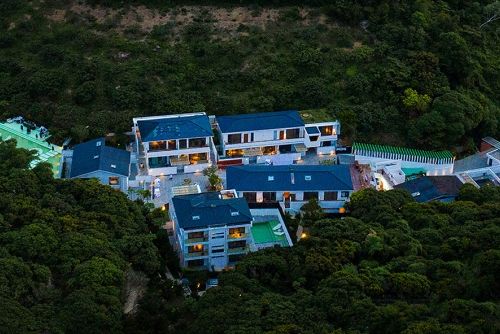
大河村国家考古遗址公园大河村遗址博物馆,郑州 / 中国建筑设计研究院有限公司
1.
项目概况
Project Overview
大河村遗址,沉睡于黄河中下游腹地六千八百余年,具有中原核心地区仰韶文化标尺的突出意义,2001年公布为全国重点文物保护单位,2025年正式列入国家考古遗址公园名单。
The Dahecun Site, which has lain dormant in the hinterland of the middle and lower reaches of the Yellow River for over 6,800 years, holds outstanding significance as a benchmark of Yangshao Culture in the core Central Plains region. In 2001, it was designated as a National Key Cultural Relic Protection Unit in China, and in 2025, it was officially included in the list of National Archaeological Site Parks.
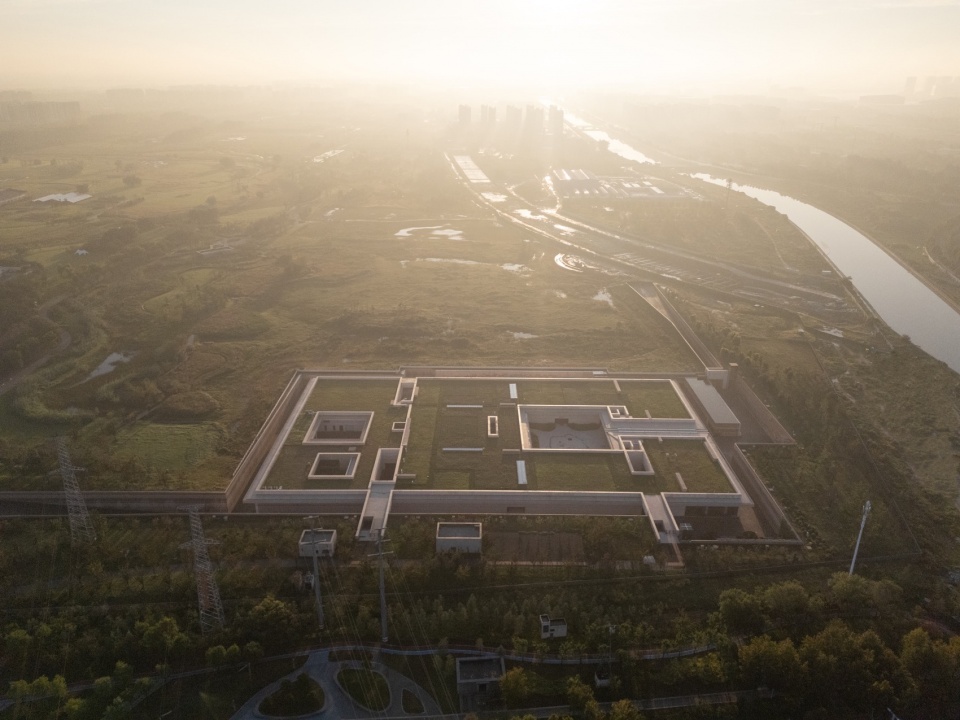
▼从遗址核心区鸟瞰博物馆,Aerial view of the museum from the core area of the heritage site
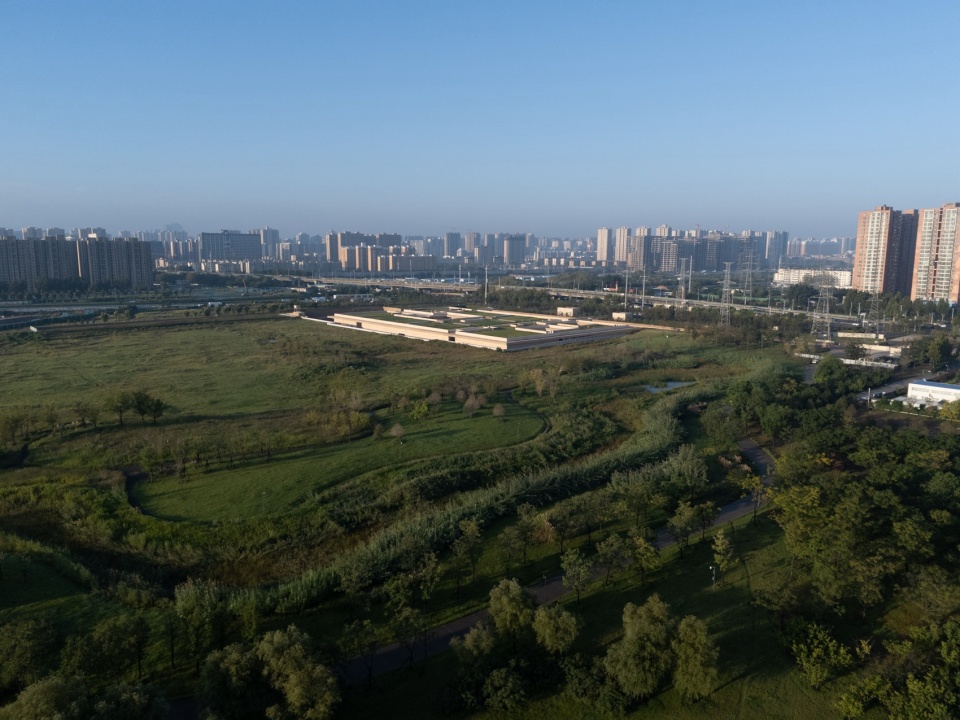
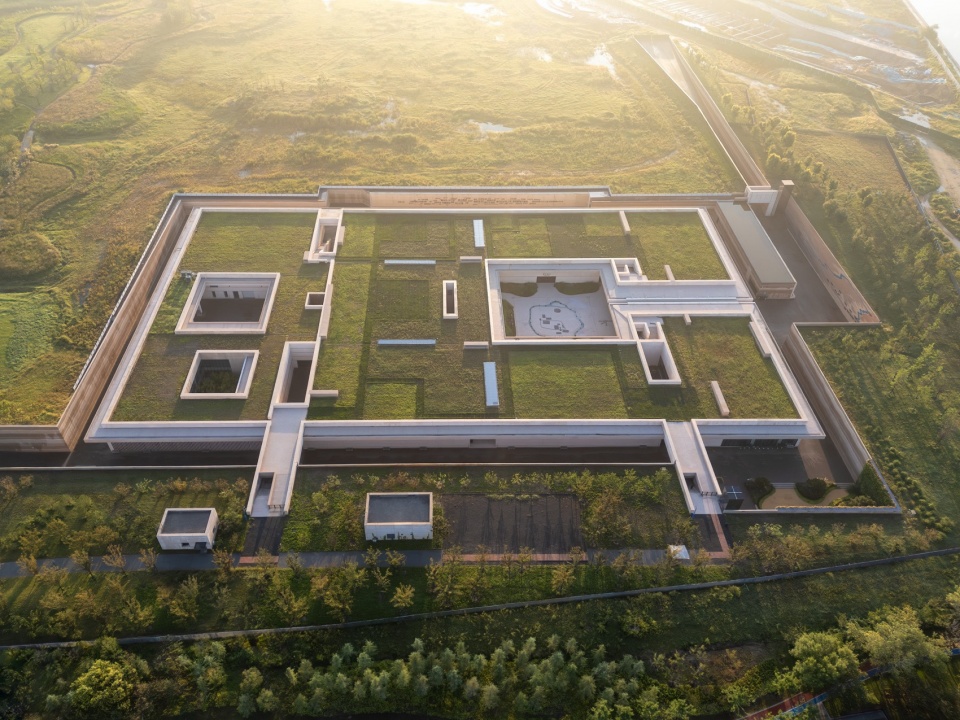
大河村遗址博物馆,是全国唯一一处全景式展现仰韶文化的专题博物馆,是国内规模最大的全主体下沉式遗址博物馆,以谦逊的姿态退让遗址,种植屋面重构野趣生境并融入生态景观,让风雨与鸟鸣重新覆盖这片曾被污染侵蚀的场地。
The Dahecun Site Museum is the only thematic museum in China that offers a full‑panorama presentation of Yangshao Culture, and the largest fully sunken archaeological site museum in the country. With a modest gesture, it steps back from the archaeological remains; its green roof reconstructs wild habitats while blending into the ecological landscape, allowing wind, rain, and birdsong to once again reclaim the land that was once eroded by pollution.
▼博物馆西侧鸟瞰,West Aerial View – Museum
2.
面临问题
Challenges
(1)史前遗址保护与展示困境|Conservation and Presentation Dilemmas of Prehistoric Sites
本体脆弱,扰动敏感:史前遗址分布稀疏零散,成分复杂且易崩解,极易受外界环境影响、结构稳定性较差的复合体。
环境割裂,联系缺失:史前遗址被掩埋后漫长的历史演进过程导致其与环境的联结被割裂,加之地表人类活动的破坏,遗址周边风貌更加破碎,遗址本体失去了赖以阐释自身存在原因的景观环境。
传达困难,认知不明:首先,史前遗址耐久性较差,多仅留存房基和建造痕迹,难以适应周边现代城市风貌;其次,史前遗址展现器物以陶器、石器为主,在技术水平上要低于其余文明发展阶段所创造的器物,加之年代久远导致破损严重,感染力不足;最后,史前时代除图案外文字较少,对于公众来讲信息解读较为困难,进一步降低了其社会认知程度。
Fragile fabric, sensitive to disturbance: Prehistoric sites are sparse, scattered, complex in composition, prone to disintegration, highly vulnerable to external impacts, and structurally unstable.
Environmental disconnection, loss of context: Prolonged burial has severed the sites’ natural ties to their surroundings; surface human activities further fragment the landscape, stripping the remains of the landscape context essential for their own interpretation.
Difficult to interpret, poorly understood: First, the remains—mostly foundation traces and construction marks—are of poor durability and hardly compatible with modern urban settings. Second, the artifacts (chiefly pottery and stone tools) are technologically less advanced than those of later civilizations and severely damaged over time, thus lacking visual appeal. Third, prehistoric writing is scarce beyond decorative patterns, making public decoding difficult and further lowering social recognition.
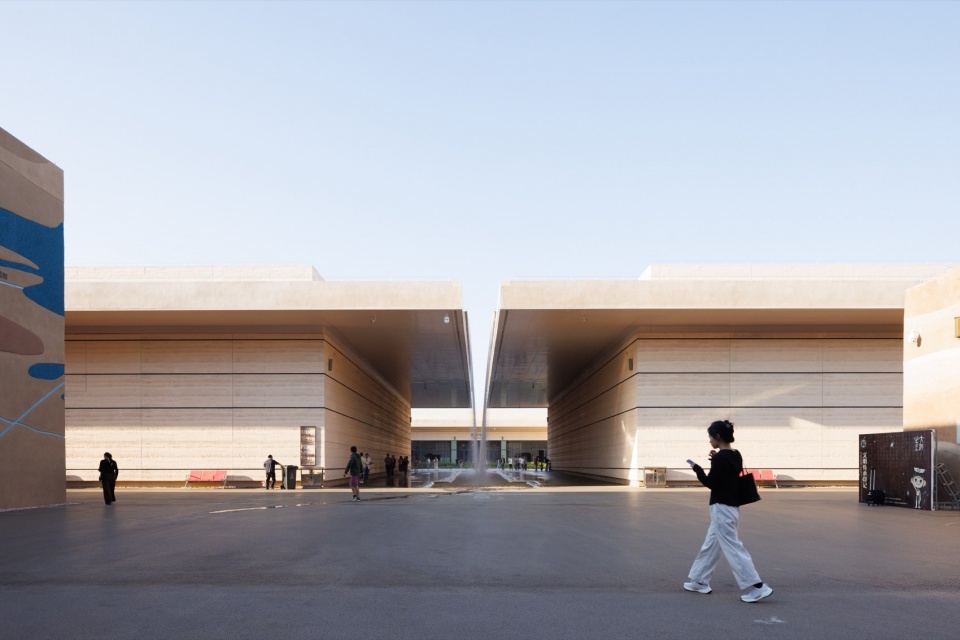
▼主入口广场及水幕甬道,Main entrance plaza and water curtain corridor
(2)极端气候频发|Increasing Extreme Weather Events
自2019年以来,在全球气候变化的影响下,郑州地区的极端天气事件愈发频繁和强烈,带来了严峻挑战。
Since 2019, under global climate change, the Zhengzhou area has seen more frequent and intense extreme weather, posing severe challenges.
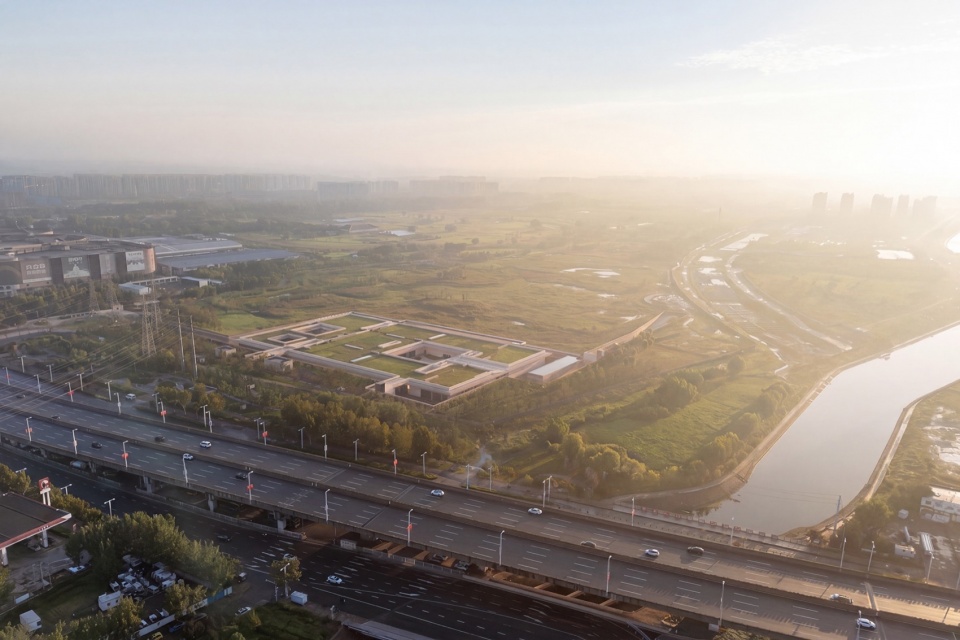
▼遗址公园西南侧鸟瞰,Southwest Aerial View – the Archaeological Park
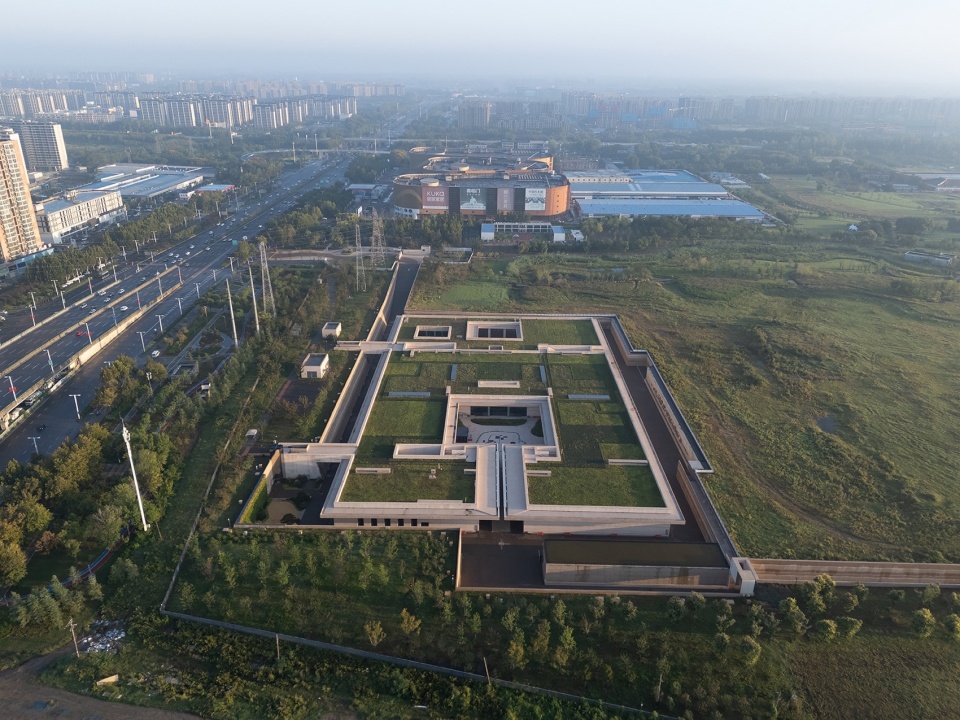
▼博物馆南侧鸟瞰图,Aerial view of the south side of the museum
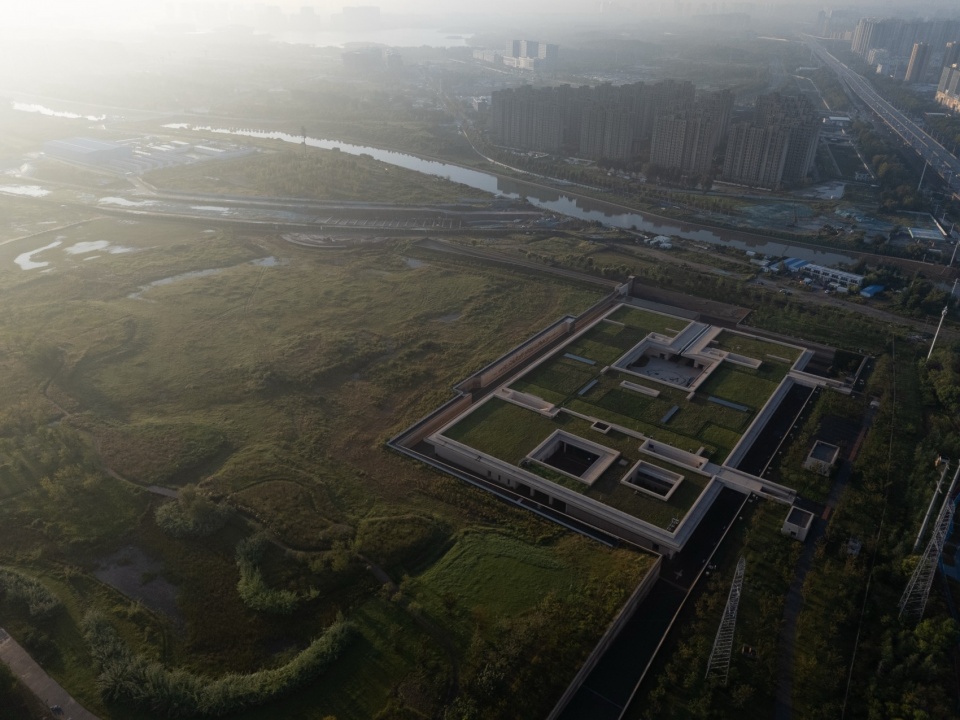
▼博物馆西北侧鸟瞰,Aerial view from northwest of the museum
(3)生态功能退化严重|Severe Ecological Degradation
场地由于垃圾倾倒及管理匮乏,污染加剧,生态功能下降,生物几乎绝迹。
Waste dumping and poor management have aggravated pollution, degraded ecological functions, and virtually eliminated wildlife on the site.
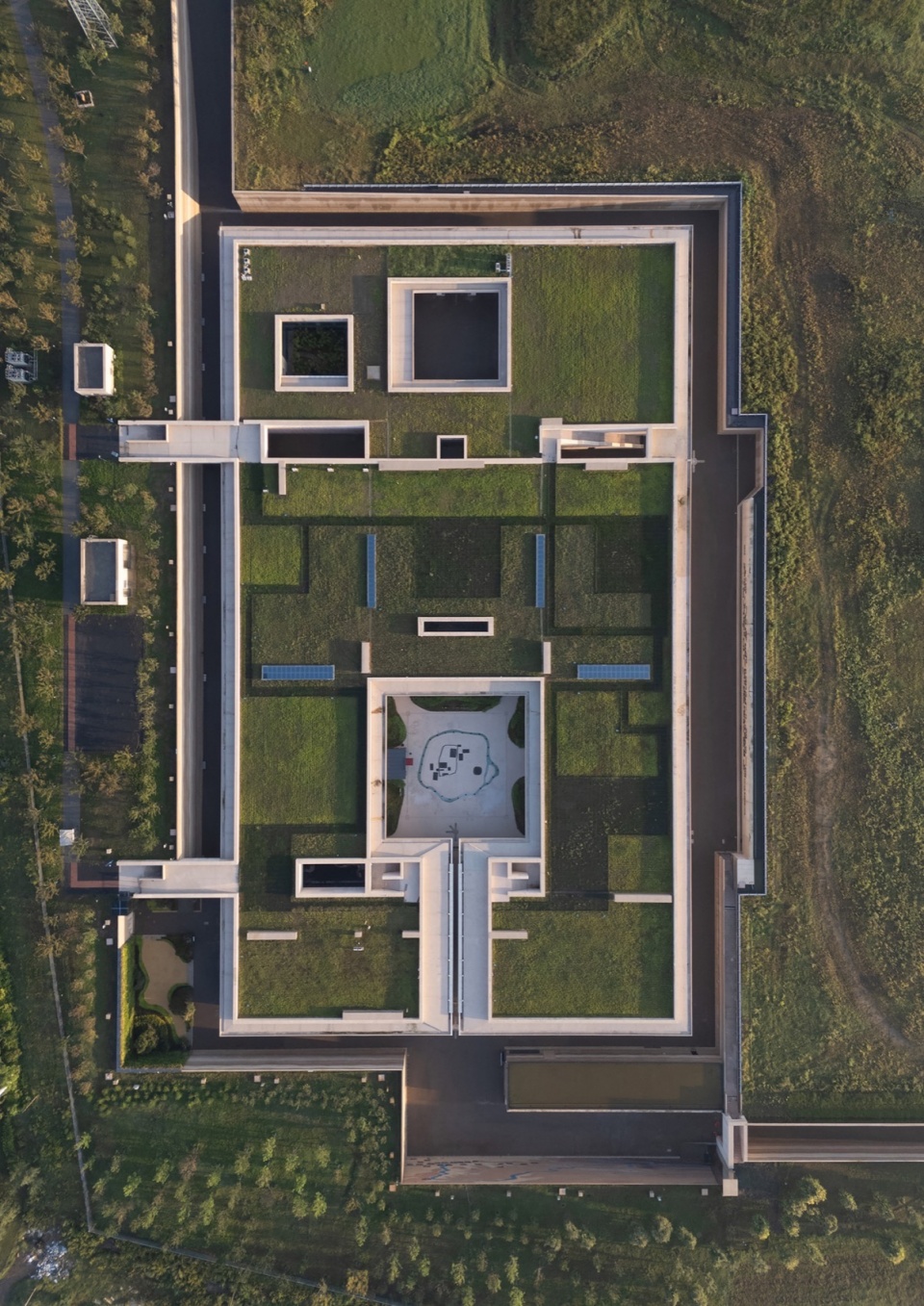
▼博物馆俯视,Top view of the museum
3.
退让遗址本体,消解建筑体量
Massing & Earthwork Savings
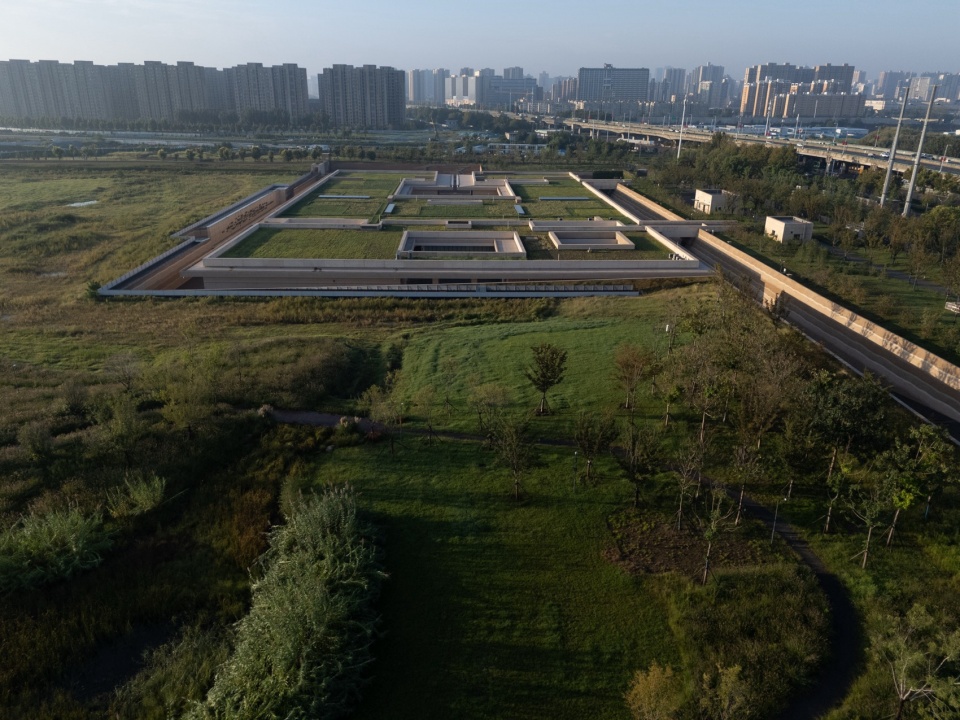
工程选址于无文物遗存区域,避免影响潜在文物区域,远离遗址本体避免工程建设对地下遗存造成扰动。建筑采用下沉式设计消解现代建筑体量,尊重遗址本体,塑造下行游览路线,呼应地下遗存场景。建筑筏板下沉与垃圾土换填深度基本一致,避免回填造成的土方工程,节约造价,缩短工期。
▼建筑形体形成,Massing Generation Diagram
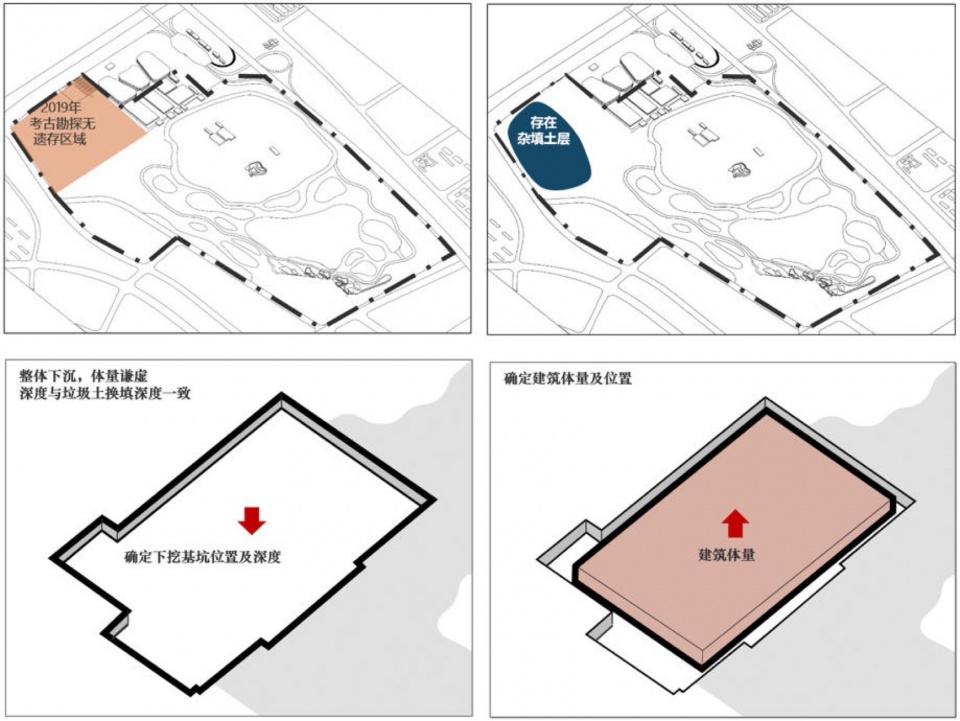
The project is sited in areas devoid of archaeological remains, avoiding potential artifact-bearing zones and keeping a safe distance from the core site to prevent construction disturbance to buried deposits. A sunken design is adopted to reduce the apparent mass of the modern building, pay respect to the site, and create a descending visitor route that echoes the subterranean archaeological context. The raft foundation is lowered to roughly the same depth as the contaminated soil replacement, eliminating the need for backfill earthworks—thereby saving costs and shortening the construction schedule.
▼博物馆北侧视角,North Aerial View – Museum
4.
重构遗址生境,预留筑巢空间
Ecological Restoration & Biodiversity
工程采用种植屋面,进一步与公园景观融合,消解建筑体量影响。根据考古成果及地方原生物种,以“野趣”为特征重构遗址公园生态环境,协同阐释遗址价值。
▼重构遗址生境,Site Environment Reconstruction
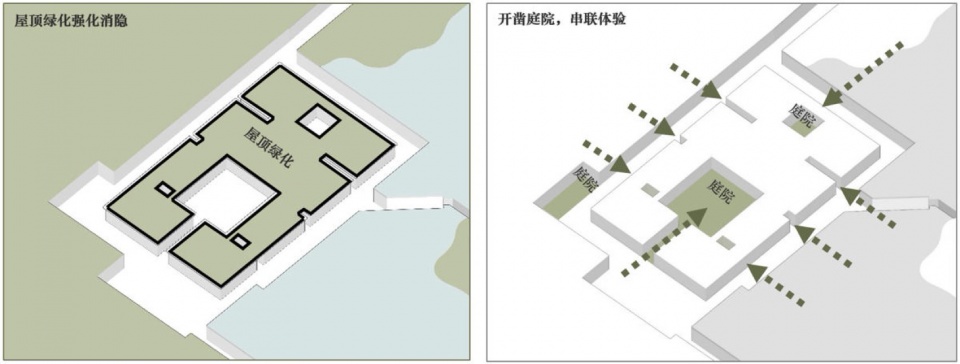
A green roof is employed to further integrate the building into the park landscape and mitigate its massing impact. Based on archaeological findings and indigenous species, the site’s ecological environment is reconstructed with a “wilderness” character, synergistically reinforcing the interpretation of the site’s values.
▼博物馆绿化屋面,Museum Green Roof
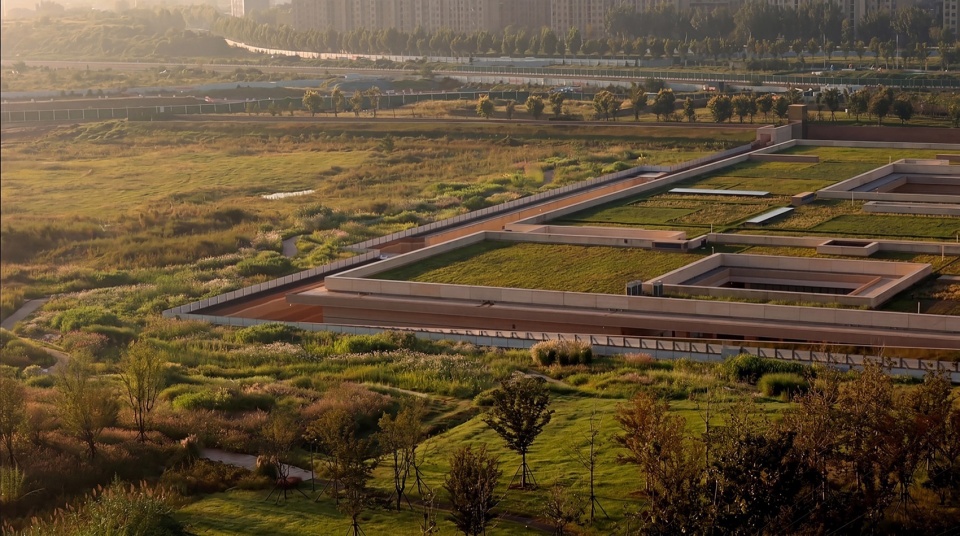
▼博物馆绿化屋面,Museum Green Roof
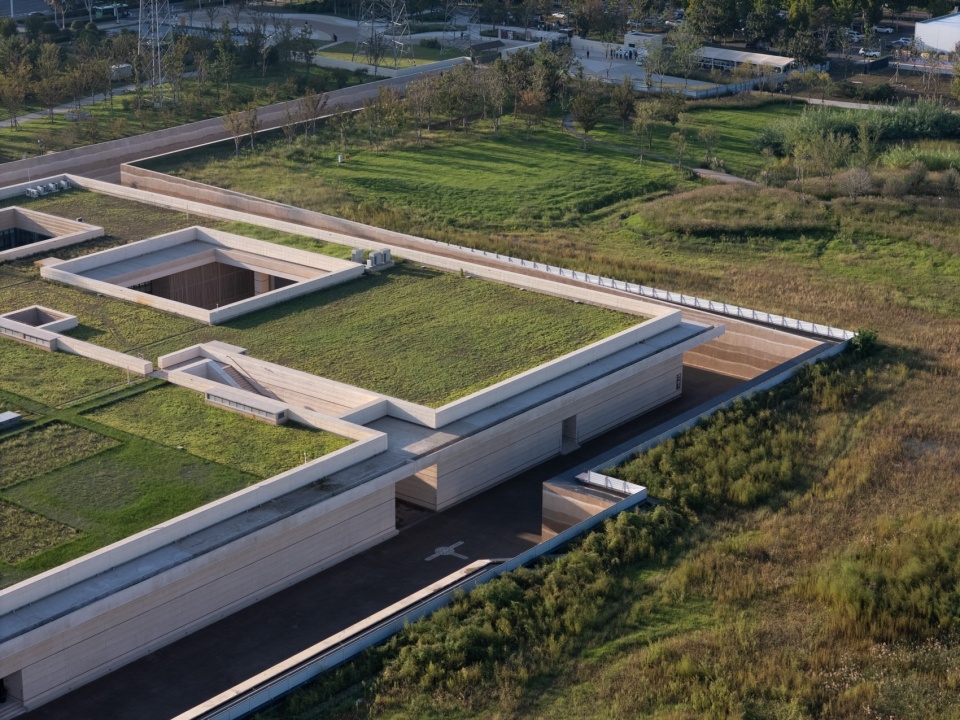
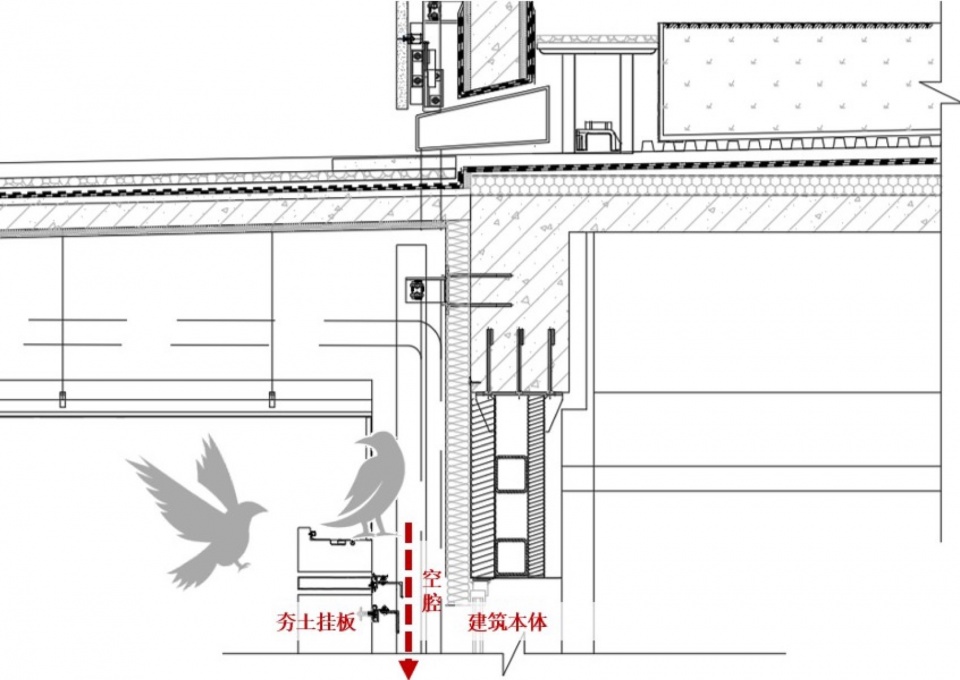
下沉式设计基础上,建筑本体采用生物友好设计,重建生态栖息地,檐下筑巢空间与建筑本体互不影响。双层墙板设计确保鸟粪等杂物可以通过空腔落入地面,避免脏污墙面,实现生物-建筑协同。
Beyond the sunken configuration, the building itself adopts biodiversity-friendly design to restore ecological habitats. The nesting spaces beneath the eaves are physically independent from the main building envelope. A double-skin wall panel system allows debris such as bird droppings to fall through the cavity to the ground, keeping the facade clean and achieving harmonious coexistence between biology and architecture.
▼博物馆主入口广场,Museum Main Entrance Plaza
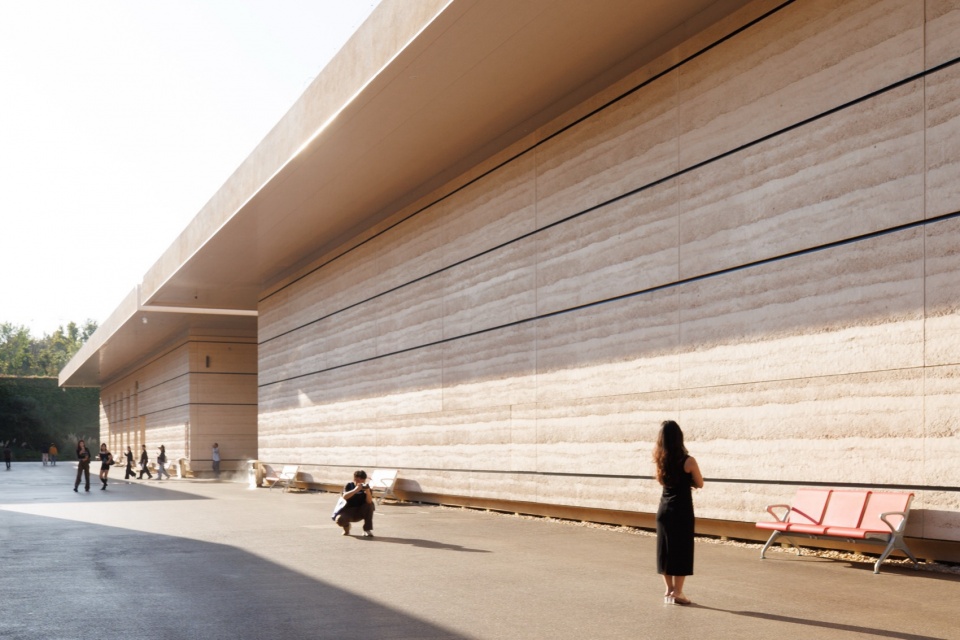
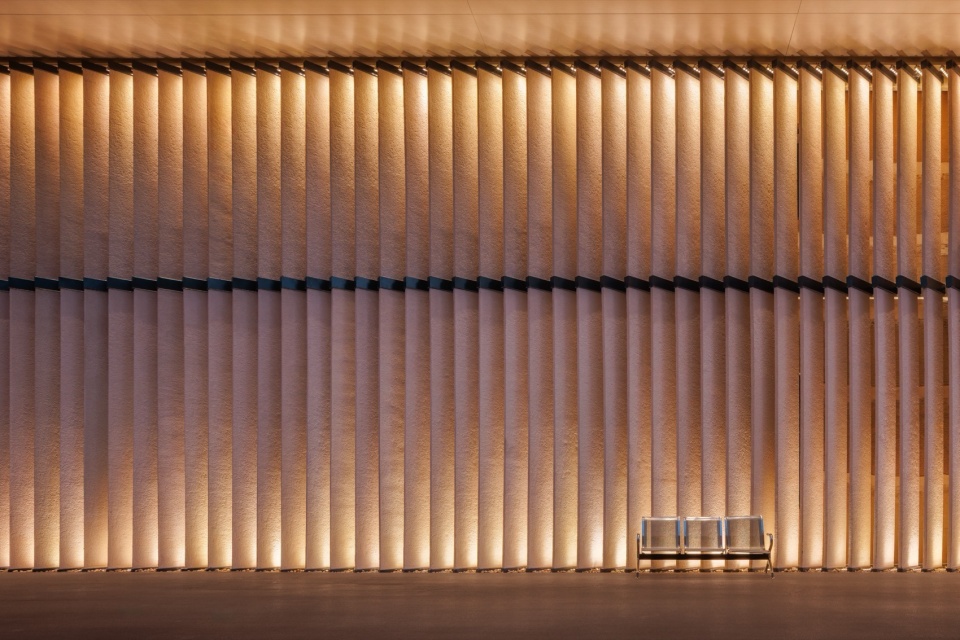
▼夯土百叶,Rammed Earth Louver
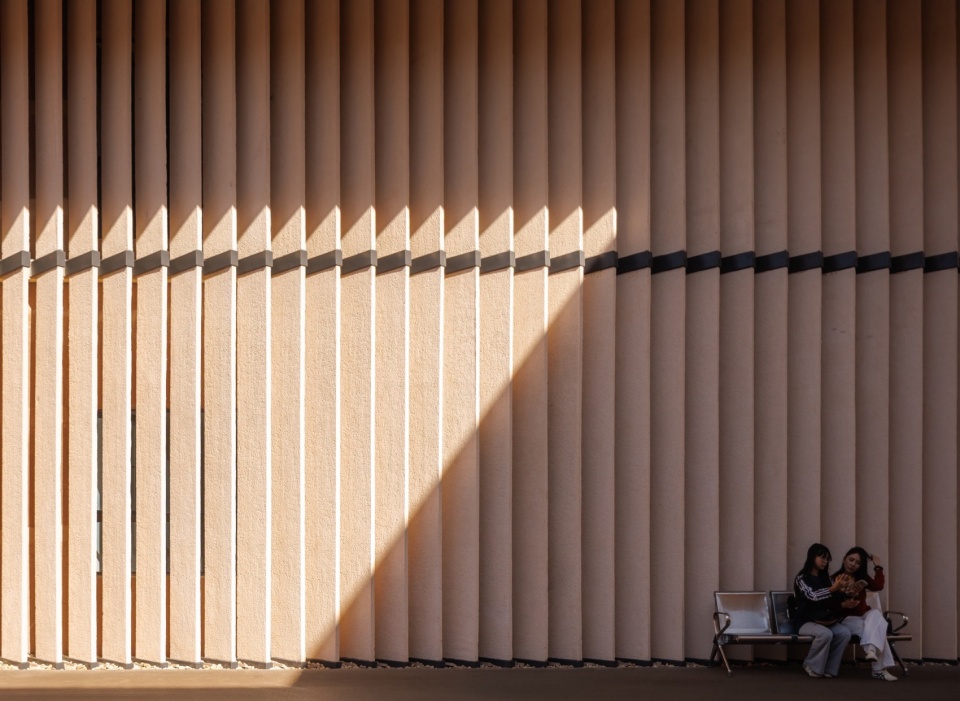
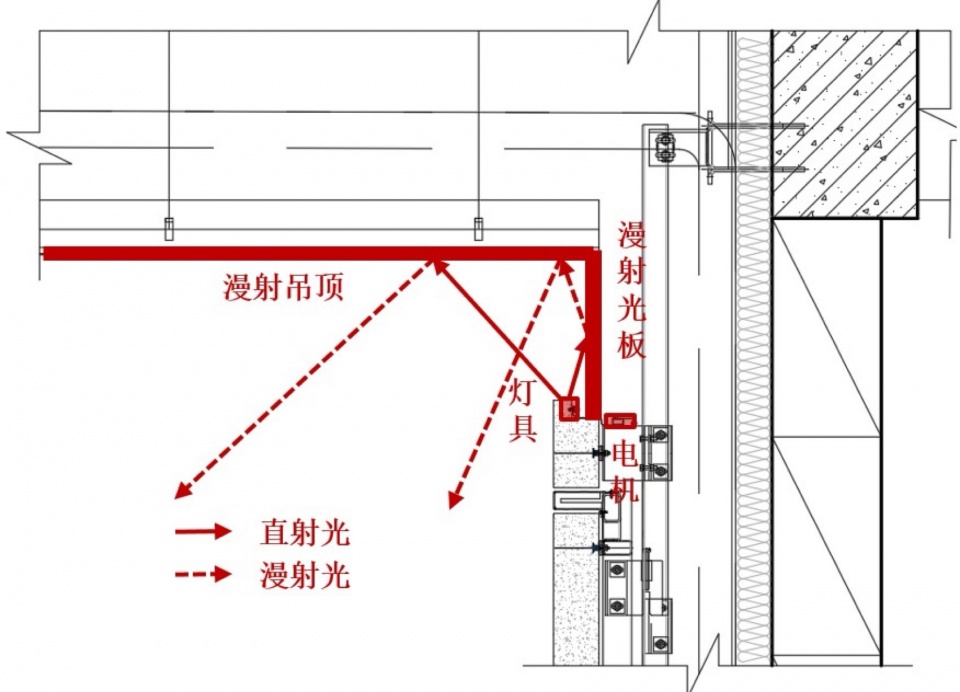
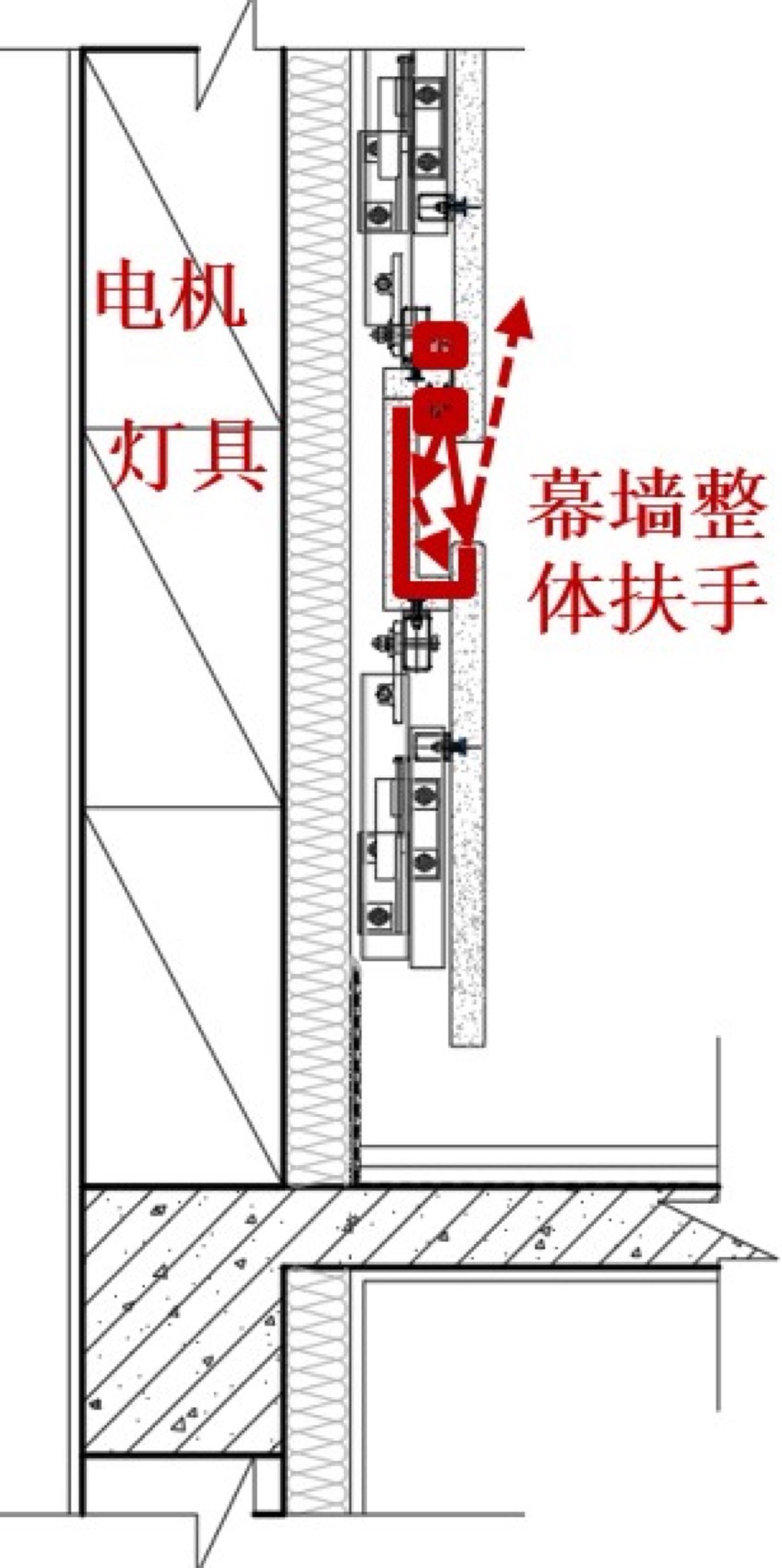
在建筑本体设计上,注意建筑-门窗-幕墙挂板一体化设计,隐藏泛光照明、给排水、强弱电等设备、管线,建筑外观浑然天成,也避免了直射灯具造成光污染,成为罕见的城市低照度区域,还城市一片星空。
The building envelope is designed as an integrated system of architecture, fenestration, and curtain wall panels, concealing floodlighting, water supply and drainage, and weak/strong current equipment and conduits. The resulting monolithic appearance not only prevents light pollution from direct luminaires but also makes the museum a rare urban low-illuminance zone, giving back to the city a view of the starry night sky.
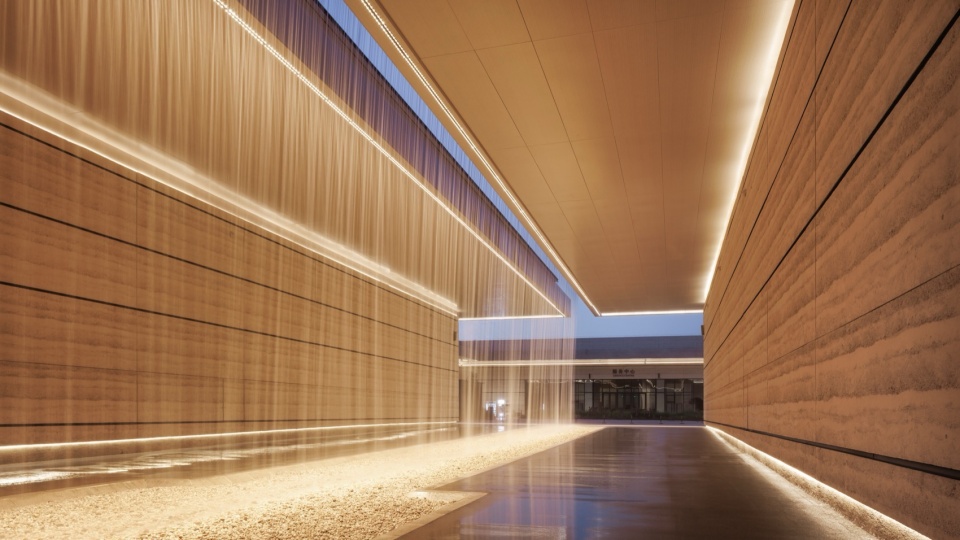
▼博物馆水幕甬道夜景,Water Curtain Corridor Night View
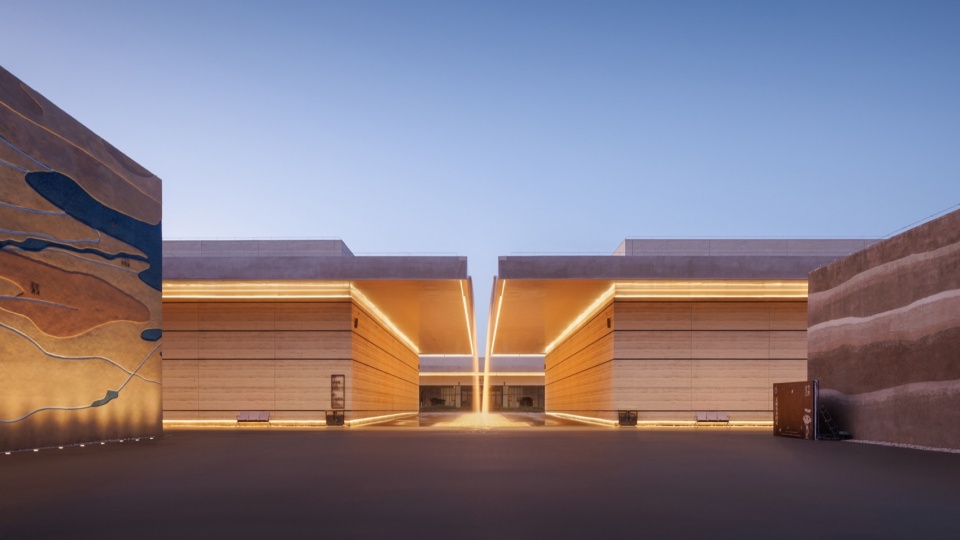
▼水幕甬道夜景,Water Curtain Corridor Night View
▼夯土百叶夜景,Rammed Earth Louver Wall Night View
5.
被动节能先行,优化物理性能
Passive Environmental Performance & Innovative Envelope Technology
方案深化阶段开展风环境模拟,场地内人员活动高度(距地面1.5m 处)的风速冬季小于5m/s,风速放大系数小于2。在夏季和过渡季,室内外压差在50%的建筑可开启面积范围内均超过0.5Pa,适合采用自然通风措施,室外风环境和建筑通风条件良好。在正压区域设置进风百叶,在负压区域设置排风百叶,并与幕墙设计进行隐藏设计。
During the schematic design development, wind environment simulations were conducted. At pedestrian level (1.5 m above ground), winter wind speeds remain below 5 m/s, with a wind speed amplification factor of less than 2. In summer and intermediate seasons, the indoor-outdoor pressure differential exceeds 0.5 Pa across 50% of the operable building envelope, enabling effective natural ventilation. Air intake louvers are positioned in positive pressure zones, and exhaust louvers in negative pressure zones, both discreetly integrated into the curtain wall design.
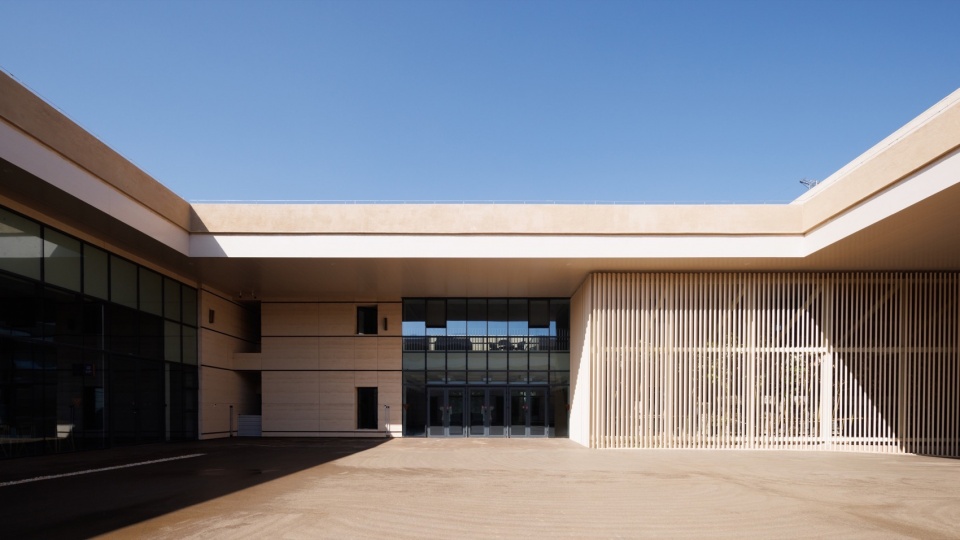
▼办公区广场及设备区,Office Plaza & Service Area
热环境模拟显示场地遮阴率良好。种植屋面大大降低过渡季能耗。
Thermal environment simulations carried out in the same phase indicate favorable shading ratios on site. The green roof significantly reduces energy consumption during intermediate seasons.
▼多功能厅外种植庭院,Multipurpose Hall Planting Courtyard
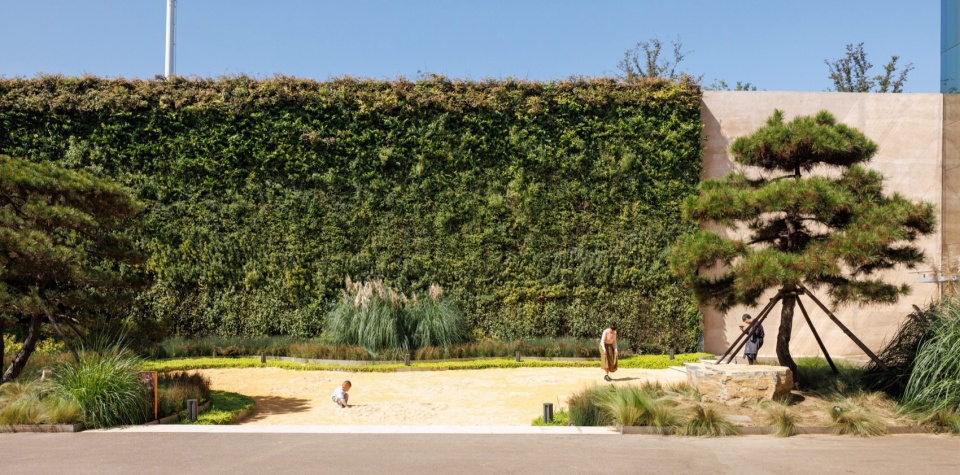
内部空间较为完整,展厅过厅中设有天窗,因而在外墙及屋顶的构造中采用防结露措施,以保证在冬季当外围护结构内表面温度高于室内露点温度,从而不会导致外围护结构内表面结露。
Thermal performance analysis confirms that the interior spaces are largely continuous, with skylights over the exhibition hall foyer. Anti-condensation measures are incorporated into the exterior wall and roof assemblies to ensure that, in winter, the internal surface temperature of the envelope remains above the indoor dew-point temperature, thereby preventing surface condensation.
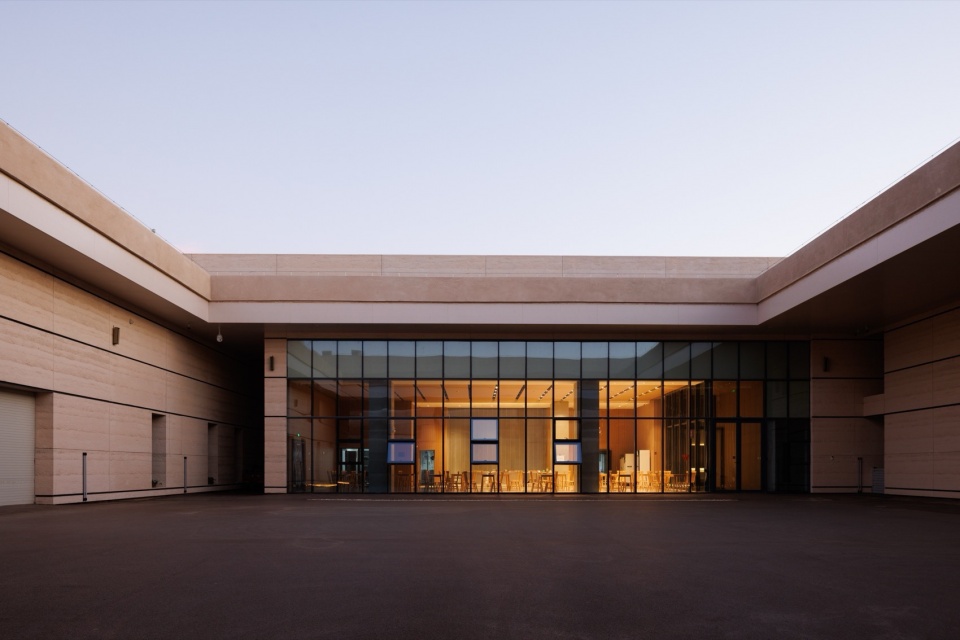
▼办公广场夜景,Office Area Night View
6.
实现遗产韧性,应对自然灾害
Climate Resilience
2021年7月20日,郑州地区出现罕见的持续特大强降水过程(以下简称7.20暴雨),为保障公园内博物馆及遗址核心保护区(以下简称核心区)工程顺利推进,项目组于7月29日奔赴现场调查博物馆基坑灌水、考古工地受损情况,并提出系统性的防水防涝技术措施。
On July 20, 2021, the Zhengzhou region experienced an exceptionally rare and persistent extreme rainstorm (hereafter referred to as the “7.20 Rainstorm”). To ensure the smooth progress of the museum and the core protected area of the archaeological site, the project team conducted an on-site inspection on July 29 to assess the conditions of the flooded foundation pit and the damaged archaeological trenches, and subsequently formulated systematic waterproofing and flood prevention technical measures.
▼从公园内部鸟瞰博物馆,Aerial View from Park Interior – Museum
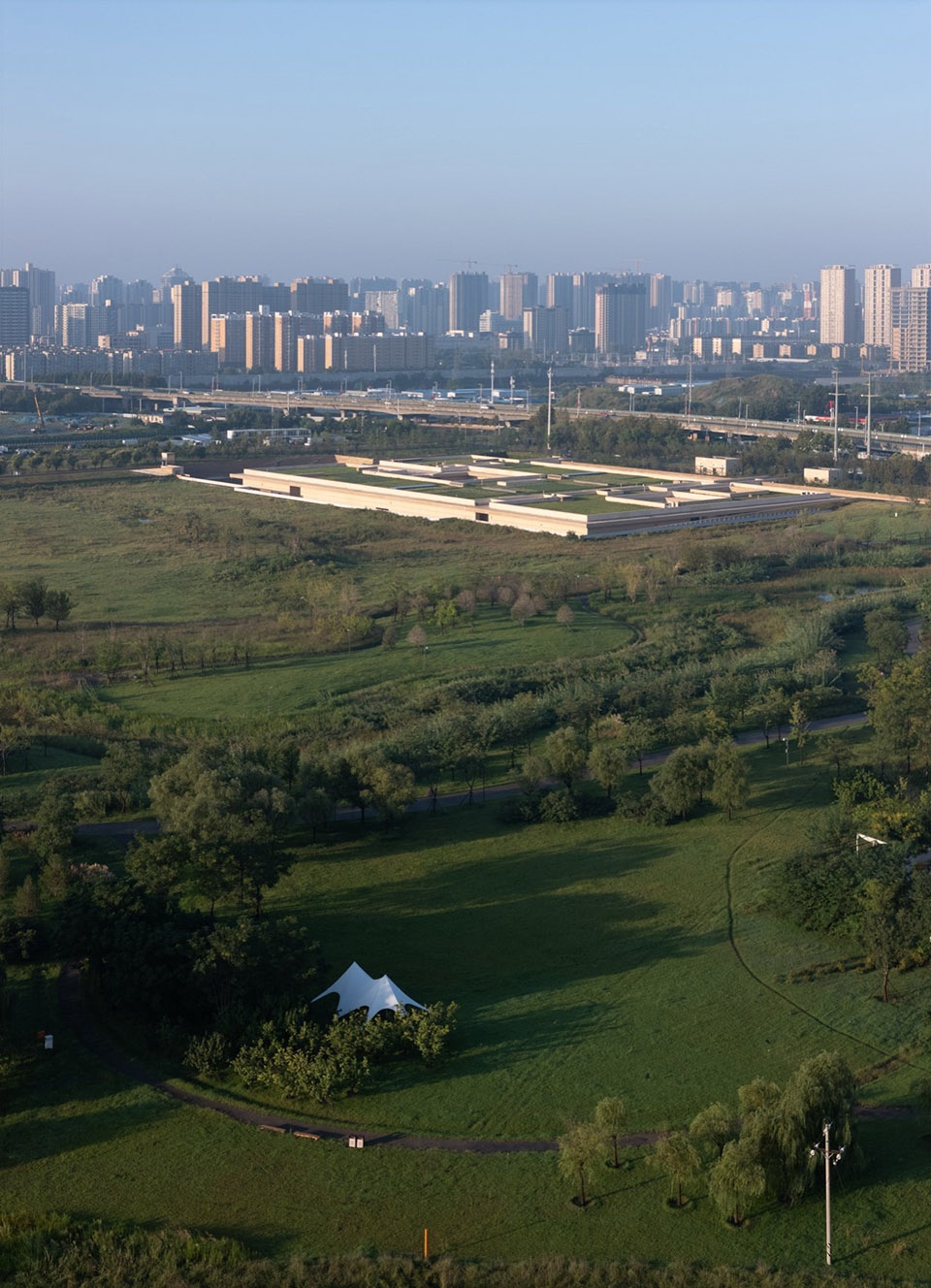
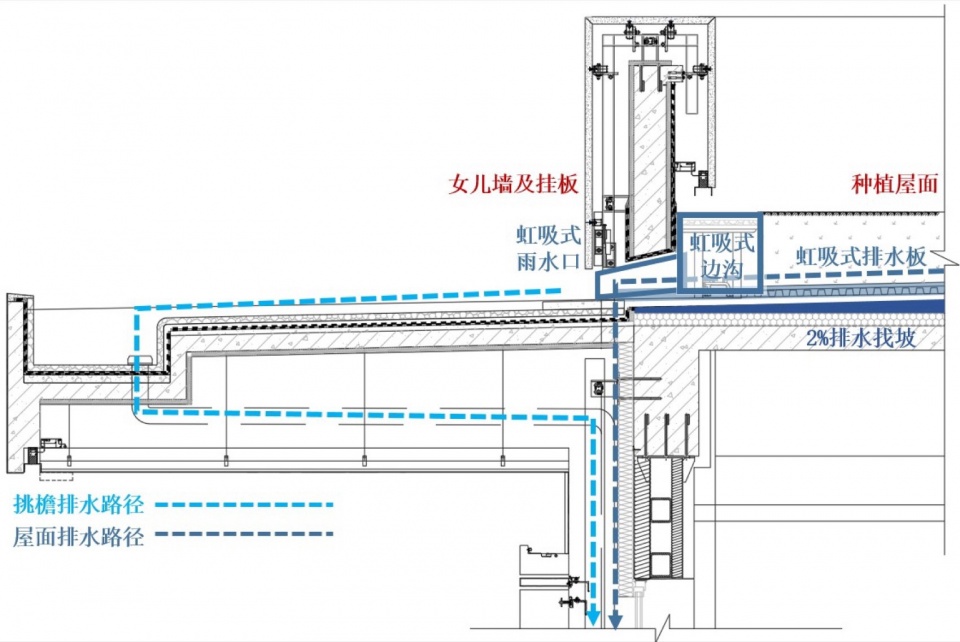
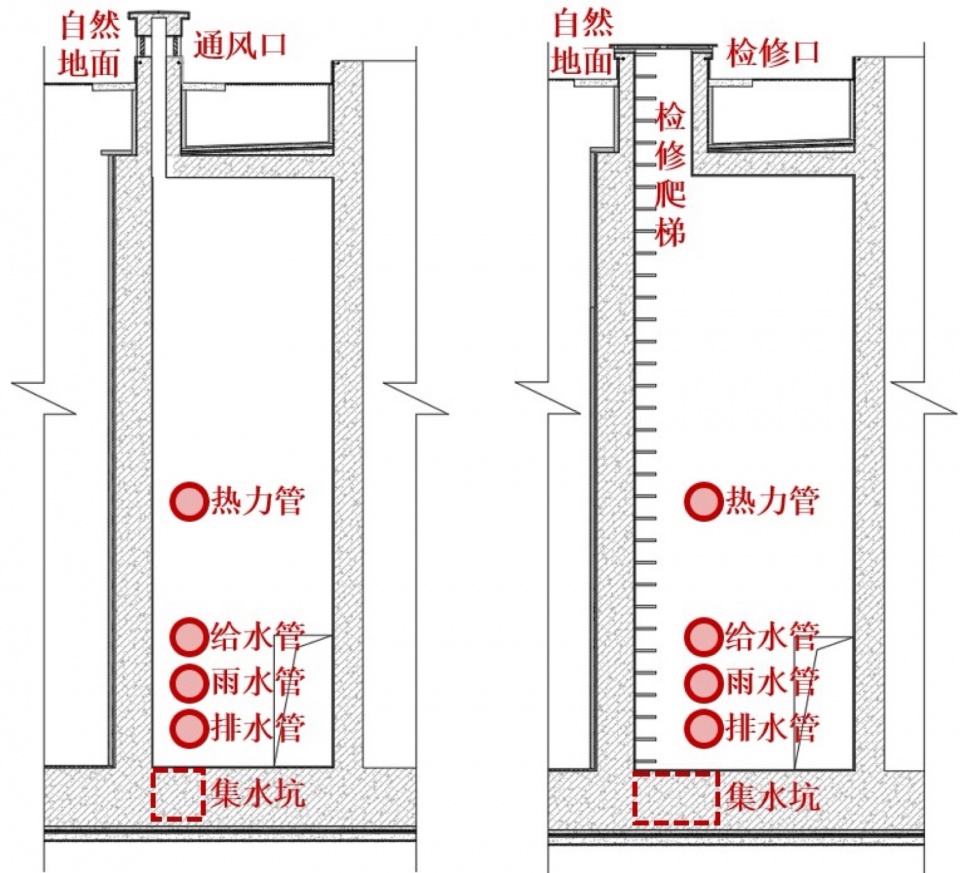
以“调控结合、适度响应”为基本原则建构下沉式空间防水防涝体系,以“控外水、调内水、防重点、设预案”为脉络建构关键技术体系,研发双层多功能超高挡墙、双系统屋面排水、下沉式绿地及公共空间雨水收集系统、文物库房防洪系统、下沉式空间外围防护体系、幕墙支撑结构等专利。
Guided by the principle of “regulated water management with adaptive response,” a waterproof and flood control system for sunken spaces was established. The key technical framework follows the strategy of “controlling external water, regulating internal water, safeguarding critical areas, and establishing contingency plans.” Patented innovations include a double-layer multifunctional ultra-high retaining wall, a dual-system roof drainage system, rainwater harvesting systems for sunken green spaces and public areas, a flood protection system for the artifact repository, perimeter protection for sunken spaces, and a curtain wall support structure.
▼双系统屋面排水系统,Dual-System Roof Drainage Detail
▼多功能挡墙体系,Multifunctional Retaining Wall System Detail
7.
总结
Conclusion
作为深入贯彻保护传承弘扬黄河文化重要指示精神的具体实践,亦是落实黄河流域生态保护和高质量发展国家战略的标杆项目,大河村国家考古遗址公园自规划建设以来,便承载着守护文化遗产、活化历史资源的重要使命。
As a concrete endeavor to implement the guiding principles on the protection, preservation, and promotion of the Yellow River culture, and a flagship project fulfilling the national strategy for ecological conservation and high-quality development in the Yellow River basin, the Dahecun National Archaeological Site Park has, since its planning and construction, shouldered the vital mission of safeguarding cultural heritage and bringing historical resources to life.
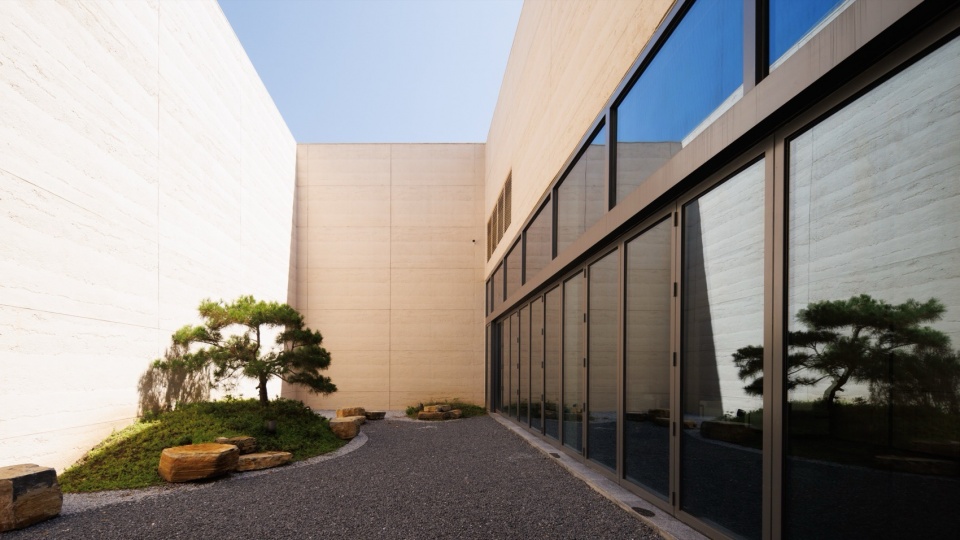
▼VIP接待庭院,VIP Courtyard
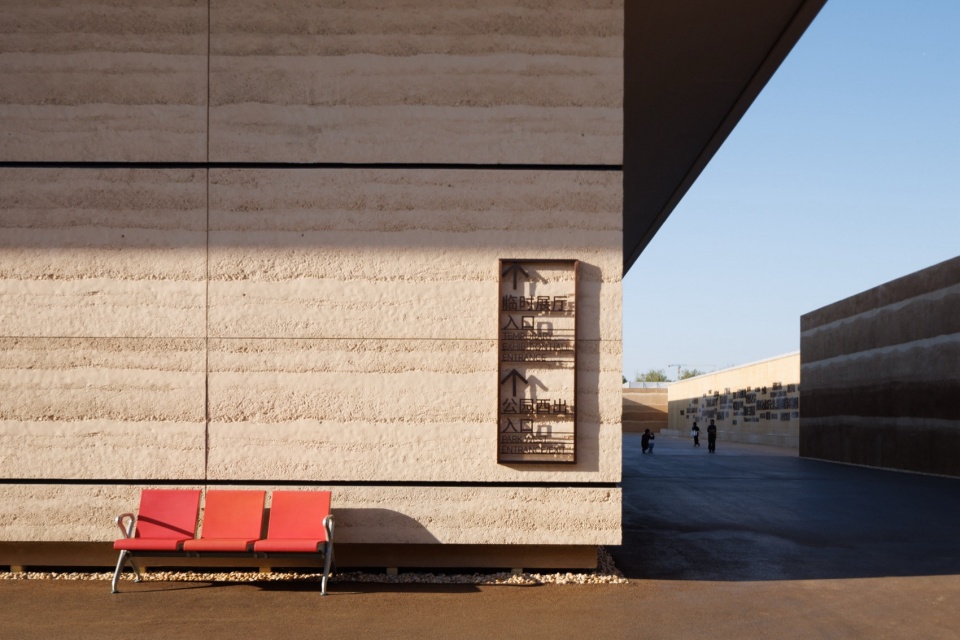
▼甬道标识,Corridor Signage Design
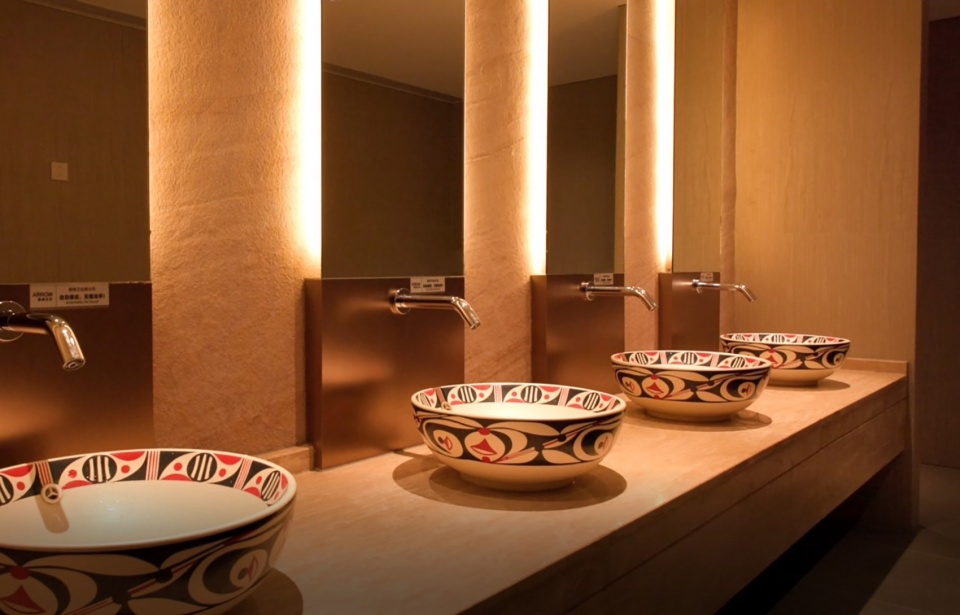
▼白衣彩陶主题手盆,White-Painted Pottery Hand Basin
▼展厅,Yangshao Culture Exhibition Hall Interior
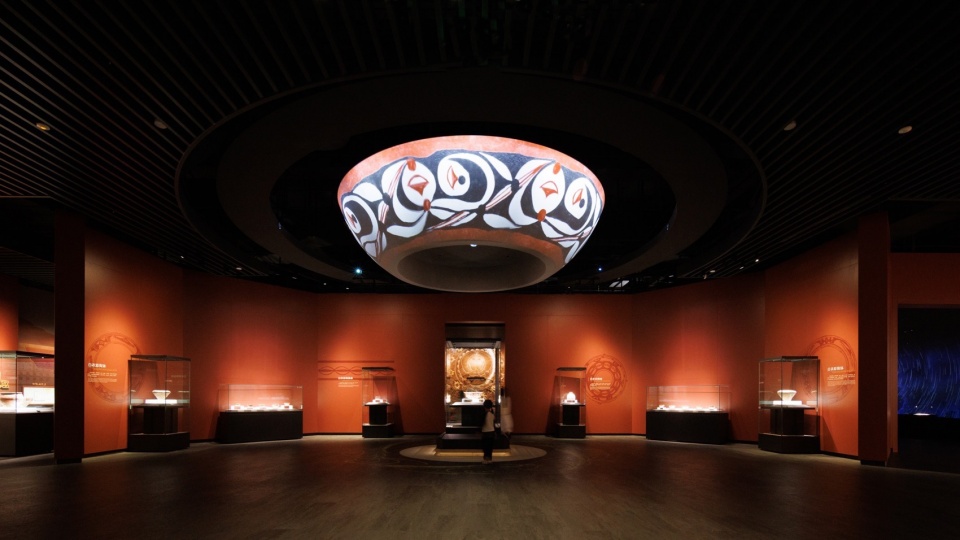
大河村遗址博物馆开放以来,沉浸式的展陈、丰富的文物、创新的讲述,赢得了广泛赞誉。但比这些更动人的,是檐下归鸟的鸣叫,是遗址之上重新丰茂的野趣。当人类学会退让,生命自会找到回家的路。
大地沉,飞鸟归。
Since the opening of the Dahecun Site Museum, its immersive exhibitions, rich artifacts, and innovative narratives have garnered widespread acclaim. Yet more moving than these are the calls of returning birds beneath the eaves and the renewed wilderness thriving above the ancient remains. When humanity learns to step back, life finds its way home.
The earth settles; the birds return.
▼博物馆西侧鸟瞰,West Aerial View – Museum
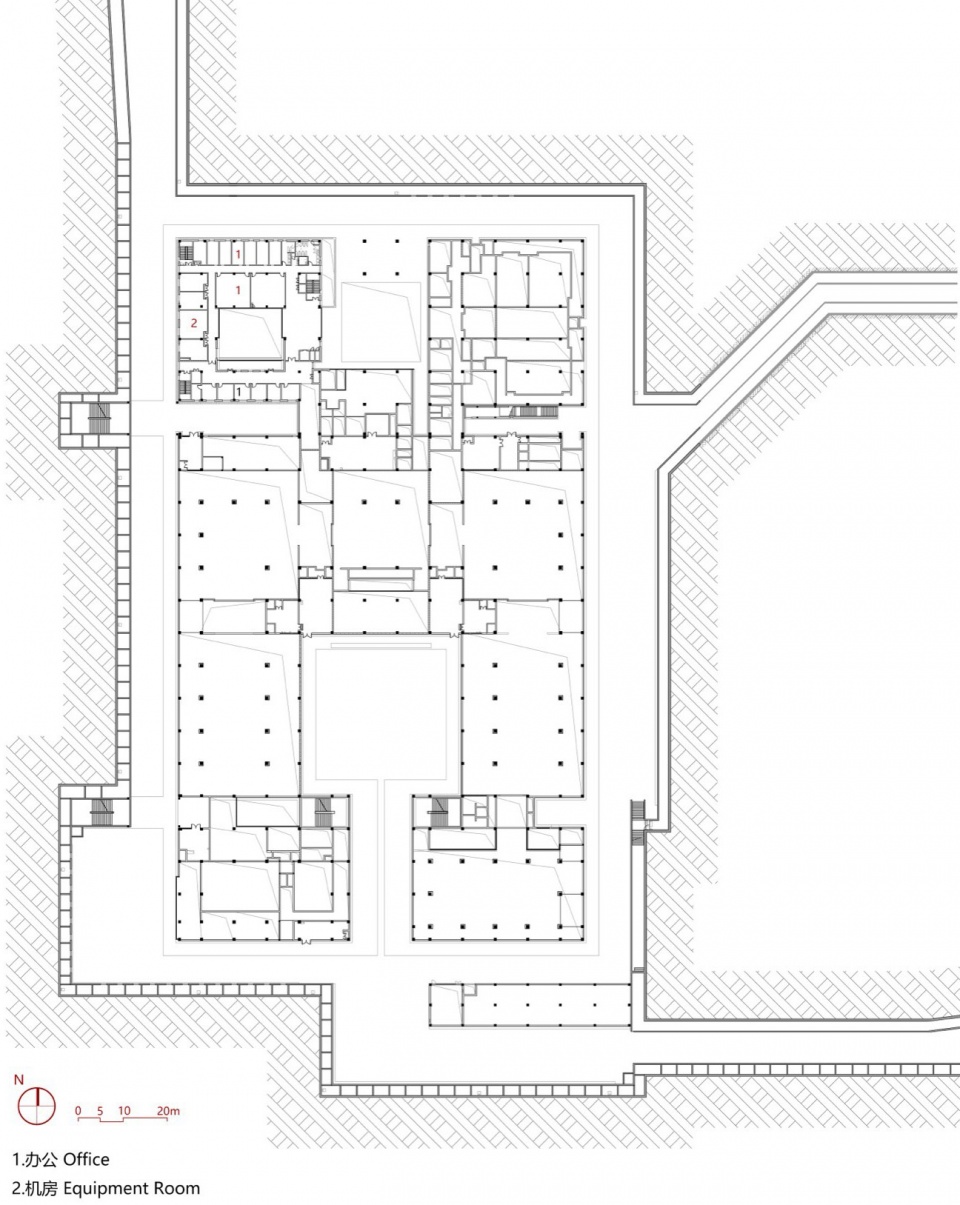
▼首层平面,Ground floor plan
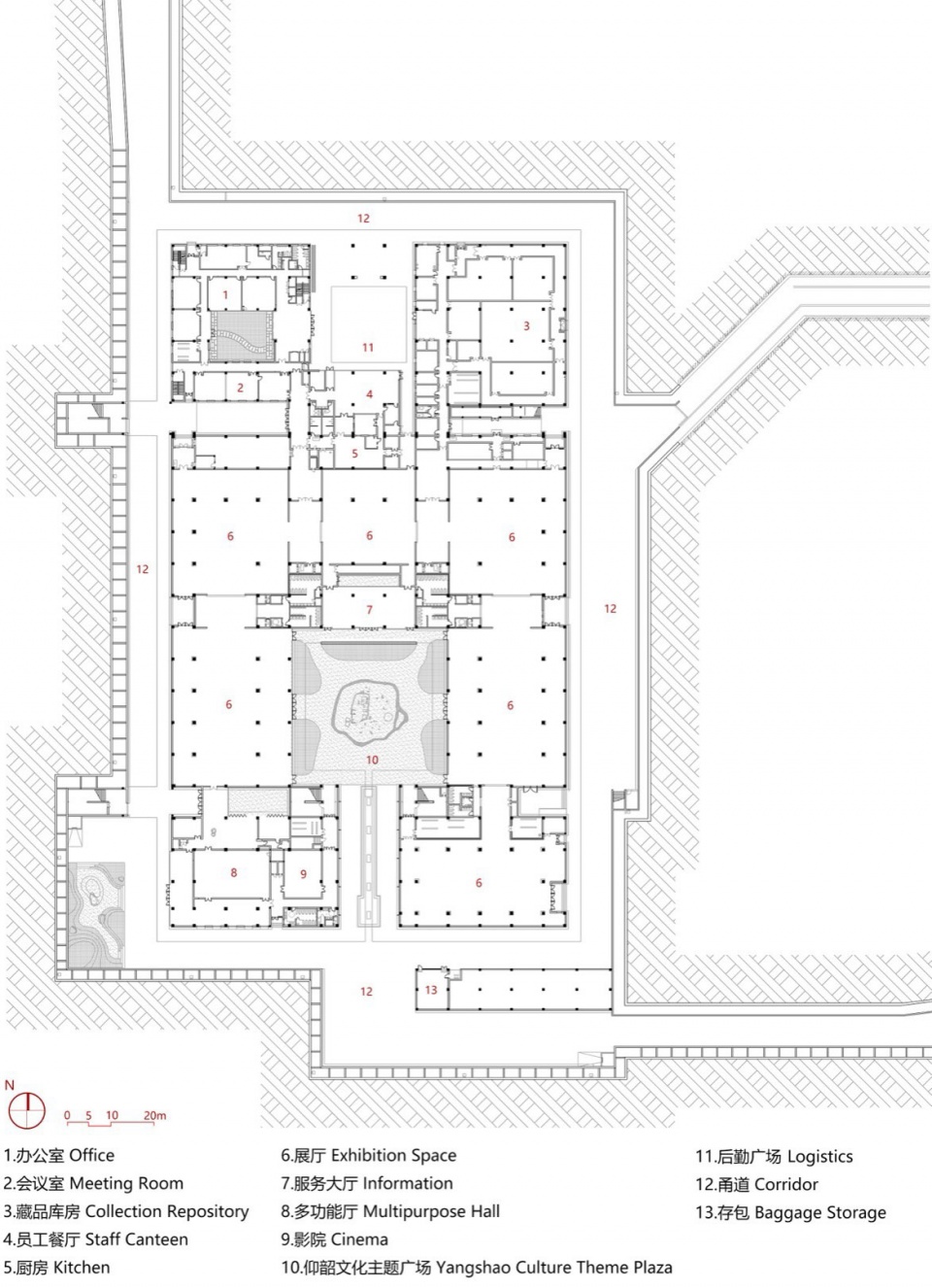
▼二层平面,Second floor plan
▼屋顶平面,Roof plan
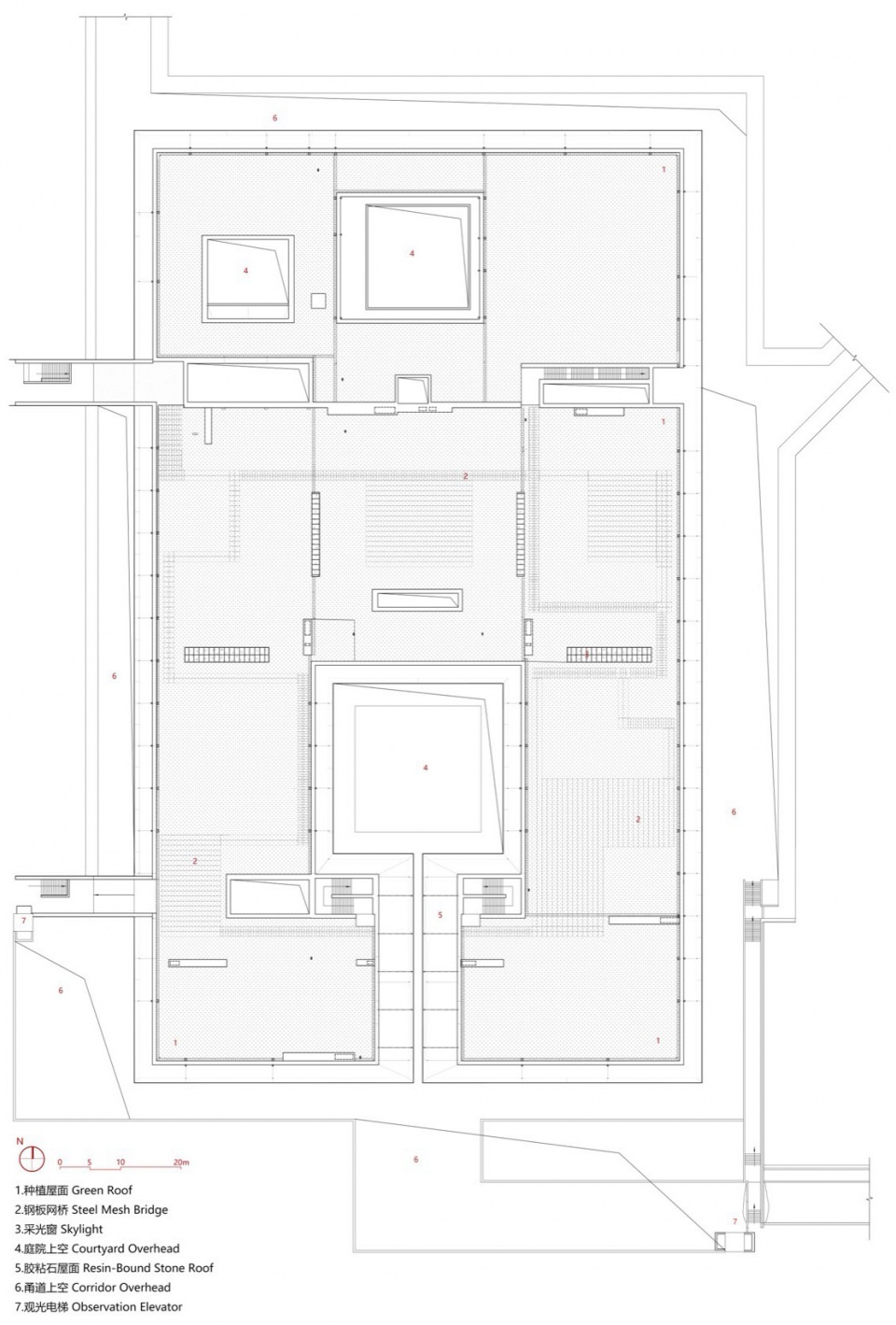
▼北立面,North elevation

▼南立面,South elevation

▼东立面,East elevation

▼西立面,West elevation

▼1-1剖面,Section 1-1

▼2-2剖面,Section 2-2

▼鸟类友好设计示意,Bird-Friendly Detail Diagram
▼挑檐根部及吊顶照明设计,Eaves & Ceiling Lighting Detail
▼女儿墙检修照明设计,Parapet Maintenance Lighting Detail
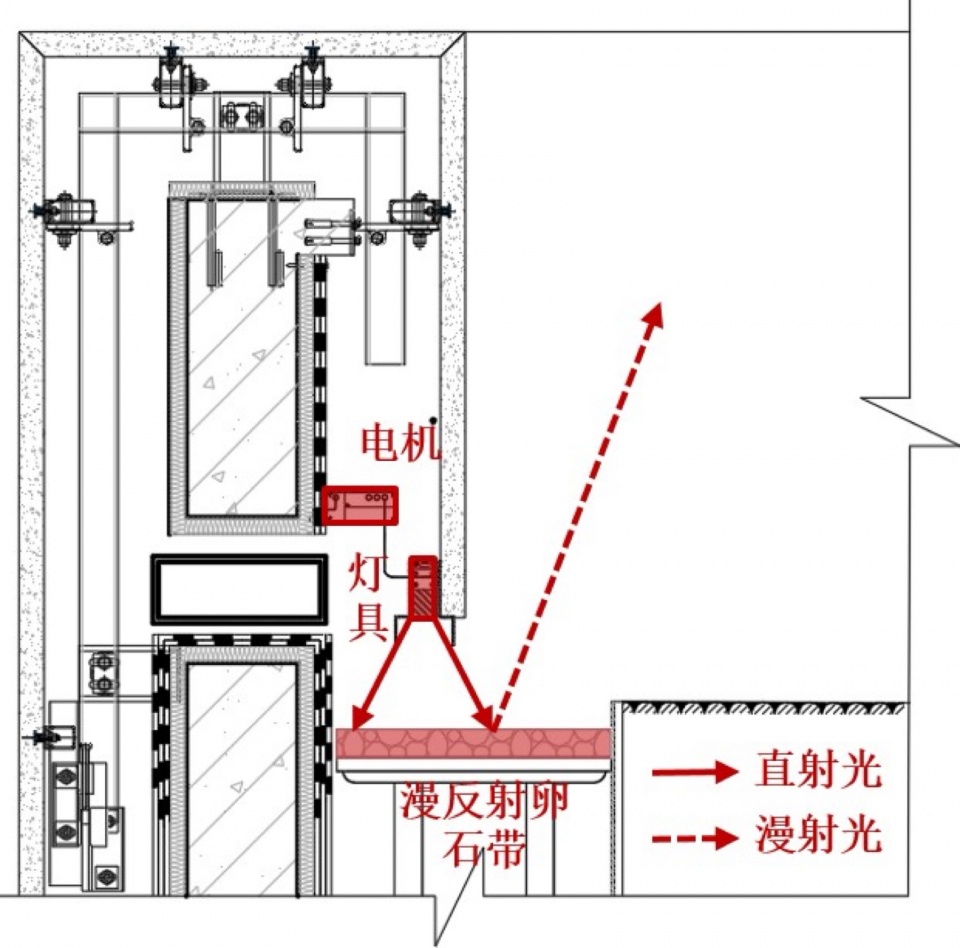
▼建筑幕墙根部照明设计,Curtain Wall Soffit Lighting Detail
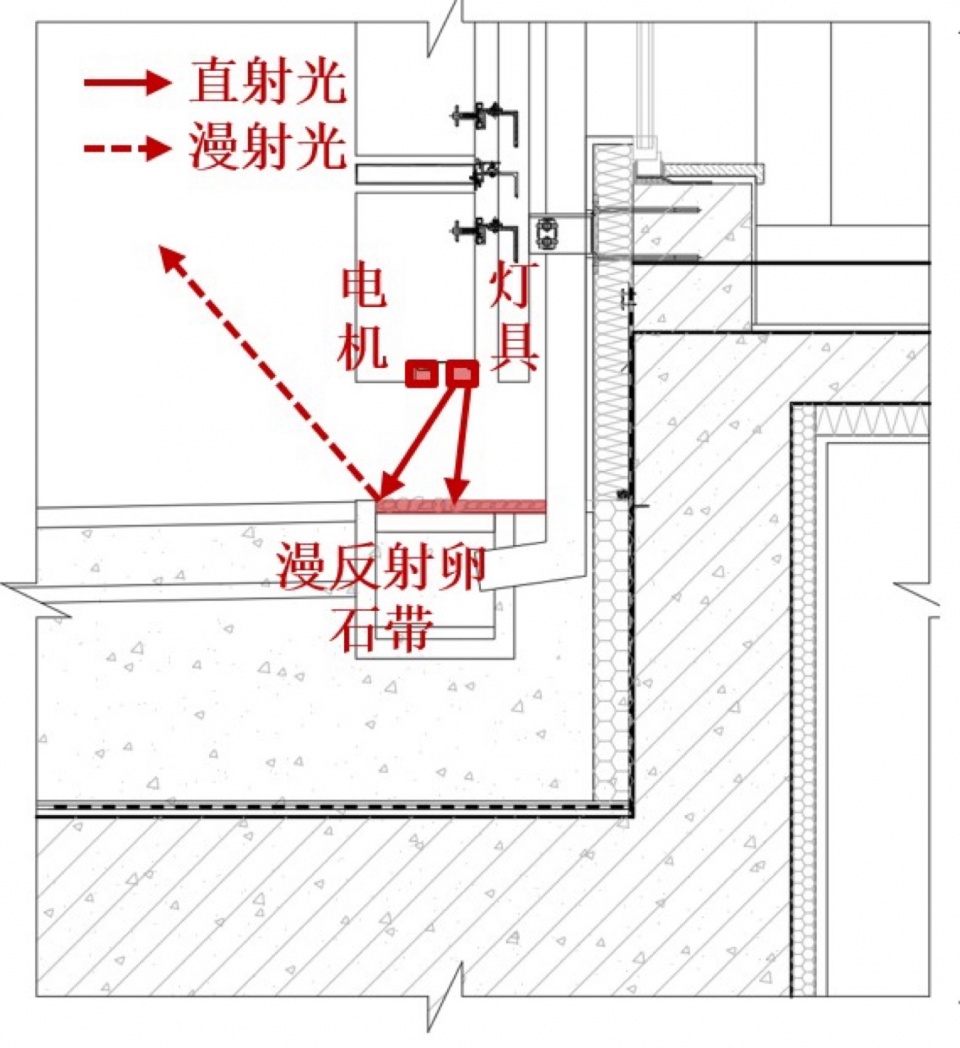
▼室外楼梯照明设计,Exterior Stair Lighting Detail
Project name: Dahecun National Archaeological Site Park and Dehecun Site Museum
Project type: Architecture & Landscape
Design: China Architecture Design and Research Group
Website: cadg.com.cn
Contact e-mail: 2020087@cadg.cn
Design year:2020-2021
Completion Year:2025
Leader designer & Team:
Lead Architects: Chen Tongbin, Jing Quan, Xu Yuanqing
Architecture: Liu Chang, Zhang Jie, Geng Bihui, Yan Dong, Zhai Yuhang, Wu Nanwei, Li Bizhou
Heritage Conservation: Wang Linfeng, Ren Jie, Han Boya, Wang Yafen, Yang Keke, Zhu Yifu, Wang Xu
Landscape: Wang Hongtao, Sun Hao, Mu Ze, Qi Shimingyue
Site Planning: Gao Zhi, Dong Yikun
Interior Design: Zhang Zhejing, Wang Qiang, Xing Lu
Structural Engineering: Ren Qingying, Liu Wenting, Liu Shuai
Plumbing: Liu Hai, Liu Yang
HVAC: Hu Jianli, Shi Kai, Chang Chenchen
Electrical Engineering: Chang Liqiang, Song Haiwei
Intelligent Systems: Pei Yuanjie
Green Building Consulting: Yi Wenting, Lin Bo
Project location:Zhengzhou, Henan
Gross built area: 19977㎡
Photo credit: Li Xiang, Wang Haoquan
Clients: Dahecun National Archaeological Site Park & Zhengzhou New Development Real Estate Co., Ltd.
Materials:Architectural Concrete Wall Panel